A Dawning of Hope

I didn’t initially grasp the significance of witnessing something I hadn’t for far too long: That feeling of hope that comes with the breaking of a new day. It seemed as if inspirational author Jayita Bhattacharjee was speaking directly to me when she wrote: “Let me tell you about the dawn, the birds, and the opening buds, so you will feel hope in your veins.”

Perhaps I’m not the only one searching for some semblance of hope in these trying times, times a friend described as “marinating in a cesspool of vulgarity.” Could an obscure, singular sunrise create such magic, such mental peace, such hope? Admittedly it has been awhile since I had awakened in time to catch the breaking of a new day, let alone birthing a sense of hope. Maybe this sleeping in is an “age thing” for in my younger, working days I was late to bed and early to rise. Always. Rising early enough to get in a jog or walk while making it to the C-Store for the morning newspaper by 6 a.m. 
Nowadays I miss most the sunrises, of being greeted by a soft, ground-hugging fog, of the sounds as nature awakens. I remember backpacking into the Rockies and heading to a stream with my fly rod for an early morning trout to fry with eggs. Or paddling as fog shrouded an island in the Boundary Waters. One of my last sunrises came at Crex Meadows last November, the morning after a gorgeous full moon gifted me with many beautiful images of Sandhill Cranes. Perhaps there was one or two since … over a half-year span.

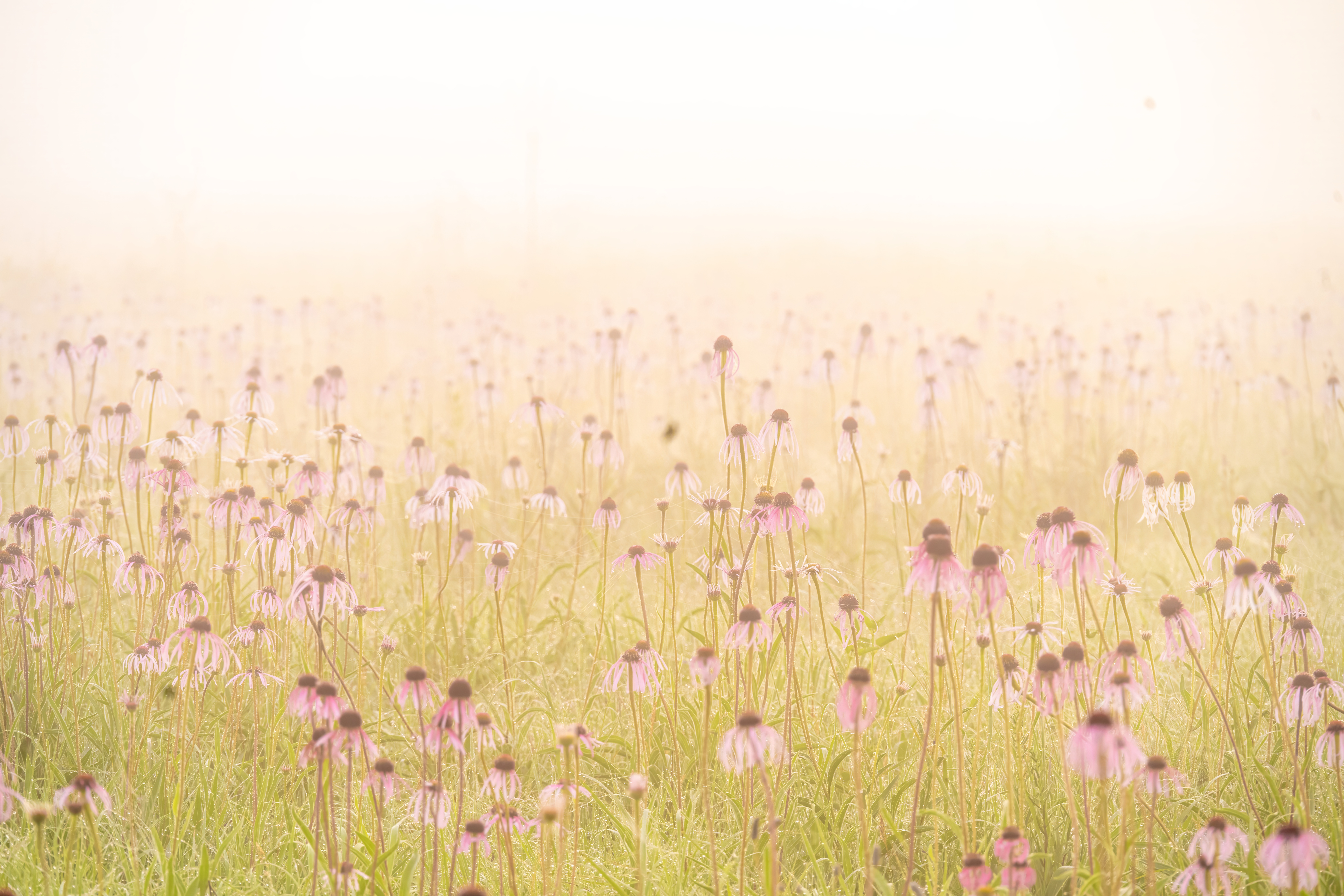
A few weeks ago a promise was made to set my alarm one morning each week to revisit those day-breaking joys of nature. We’re not in a city where horns and the sounds of commerce increase with the awakening of a new day. Our home is now in the prairie where places exist to greet birds and the opening of buds. So when a friend with delightful tastes, Khadija Benaissa, posted some photographs of prairie flowers she had taken on a recent jaunt along the auto trail at nearby Big Stone National Wildlife Refuge, she included a pictures of beautiful meadow of coneflowers that for the past few years seemed hidden within heavy foliage. A thorough prairie burn this past spring appeared to have given those precious flowers some freedom in the meadow; thousands of coneflowers dance in the prairie breezes on sunny afternoons. 
To count the number of images I’ve made of those flowers in that same meadow through the years would take several hours, yet I can’t recall many being made at dawn. Let alone on a foggy dawn. One of my favorite images was of a high school senior, the daughter of a long, dear friend. With this humidity we’ve experienced these past few days the visualization of capturing images of coneflowers bracketed with a foggy dawn was much too alluring. My alarm was set for 5 a.m. which would hopefully allow for the 11 mile trip to arrive early enough to greet the new morning with my Nikon in hand a full half hour before sunrise. Ah, that anticipation of hope, of capturing beautiful moments of a prairie sunrise!

Those hopes rose even higher looking out the bathroom window after the alarm sounded, for even our home prairie was shrouded with a fog hugging those rising purplish leaves of big bluestem, and the short drive moments later certainly didn’t diminish my hope. Coming over the last hill that descends into the valley that is home to the headwaters of the Minnesota River even offered more promise. And there is this: Khadija has never, to my knowledge, led me astray. That blanket of coneflowers would be waiting.
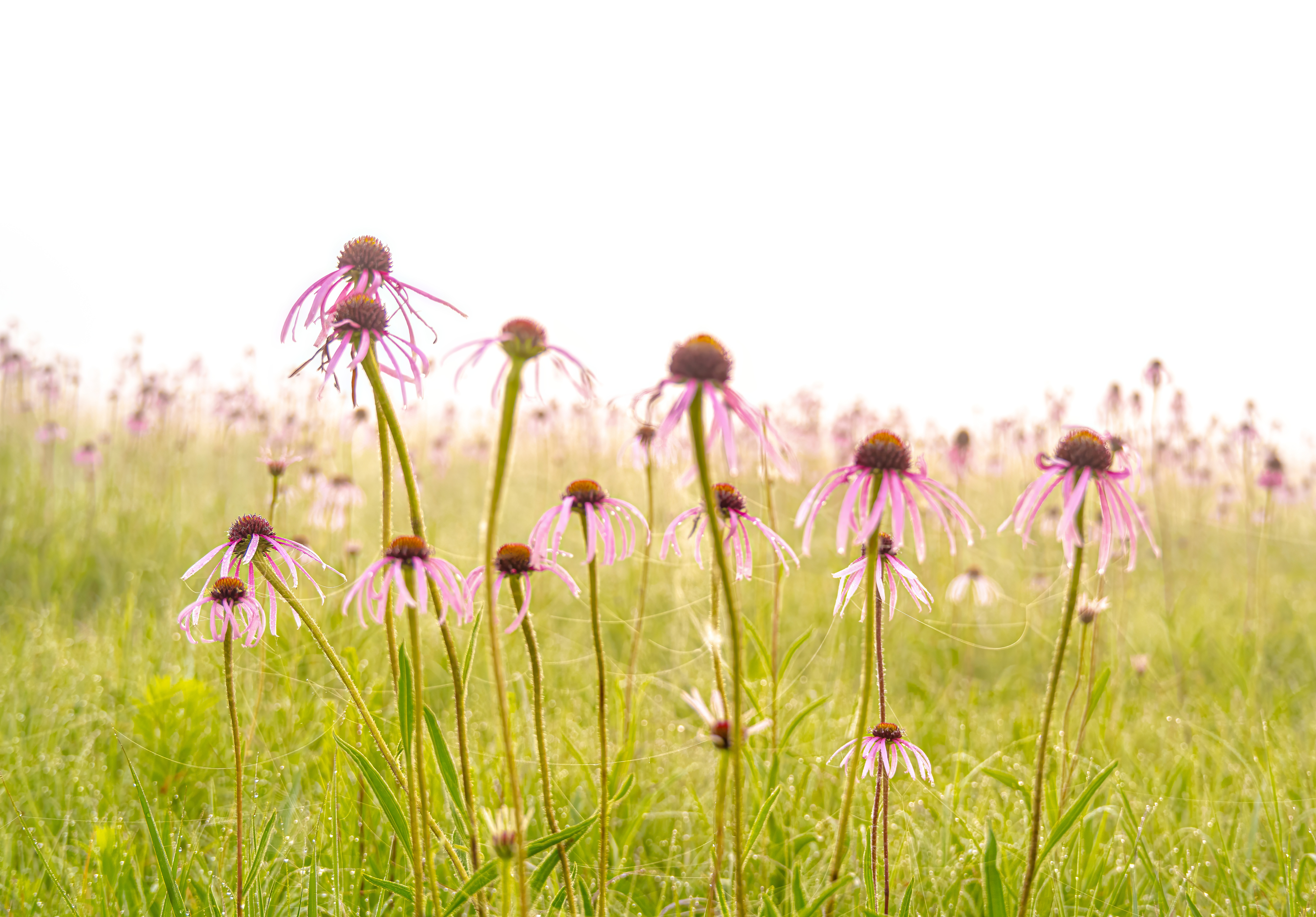
Perhaps I entered the auto tour at speeds frankly frowned upon, and hopefully there aren’t skid marks on some of the sharp turns. When I finally crossed that last speed hump that meadow of pinkness spread out before me as a sight to behold. Acres of pink dotted through the grayness, blossoms so delicate, yet staunch enough to fight against a prairie wind. A softness prevailed, and the depth disappeared into the muted grayness of morning. 

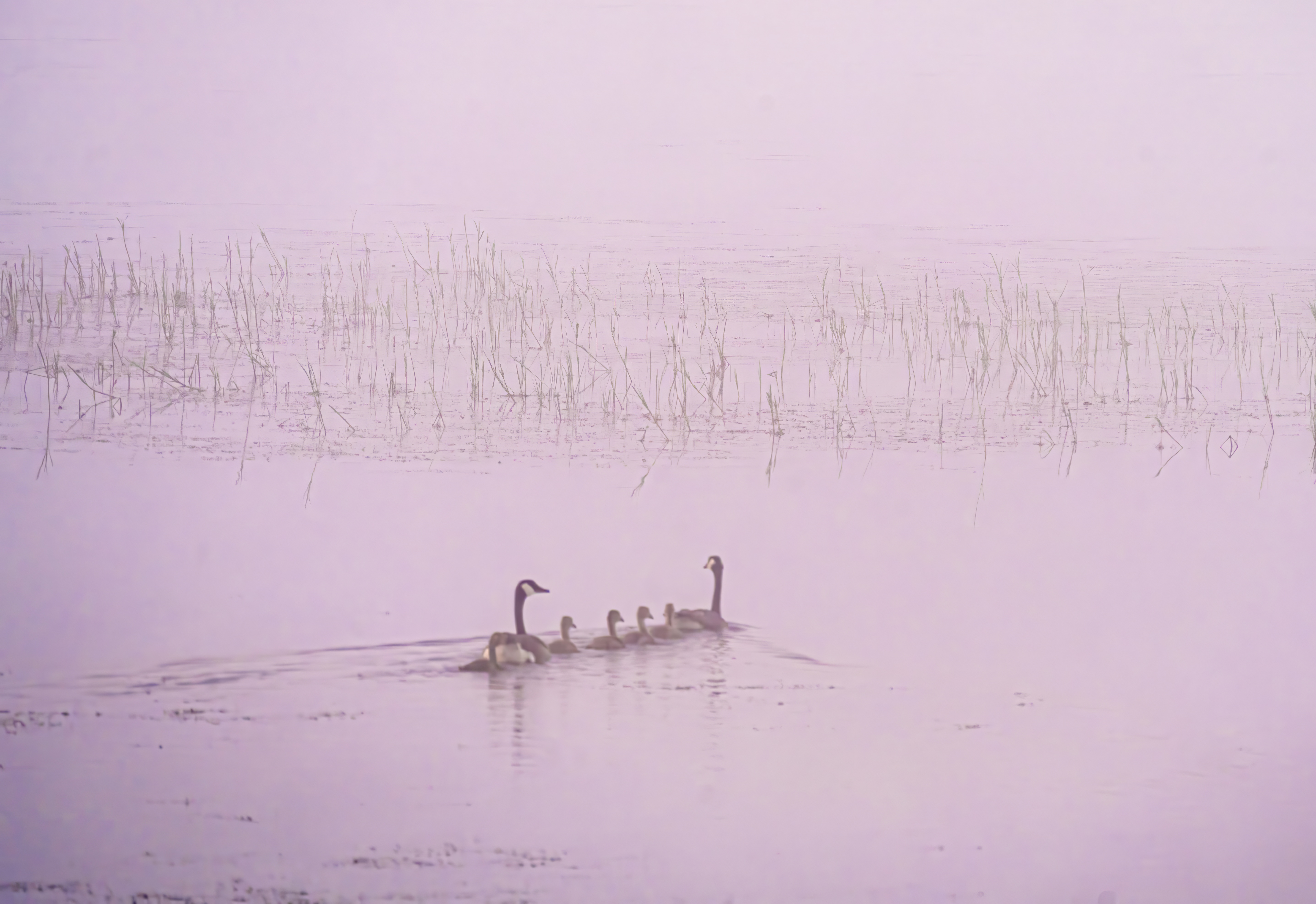
Interestingly, the fog was quite thick, much more so than on the Big Stone Moraine where our prairie is located. After a good 20 minutes of playing around with the coneflowers, I left to see what was visible in the West Pool, although a few stops were made to capture some photographs of first a family of Canada geese easing across the stilled waters of the pool, then moments later those of a prolific chick-sitting merganser with her numerous brood cutting across the wetland directly across the West Pool dike. 
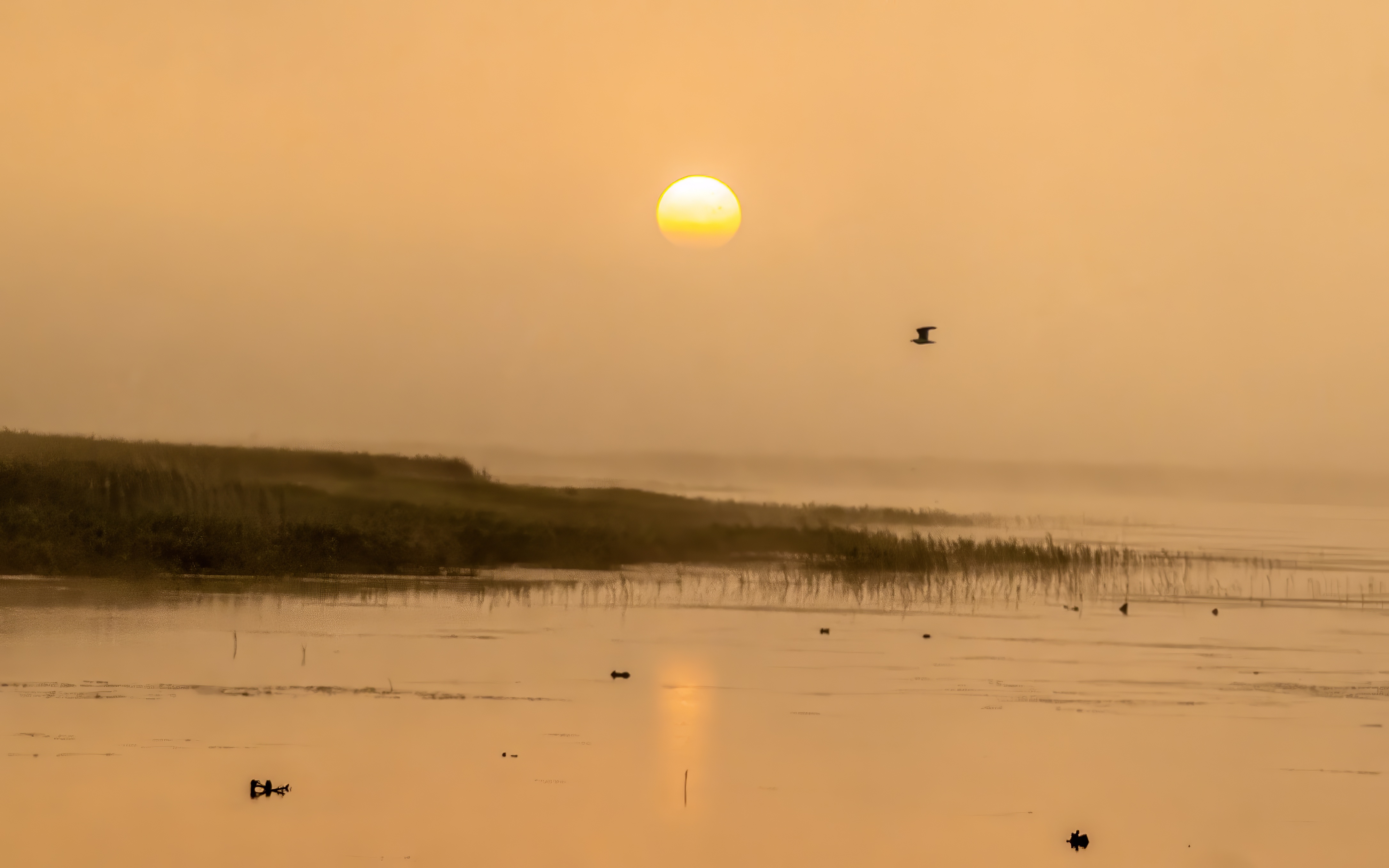
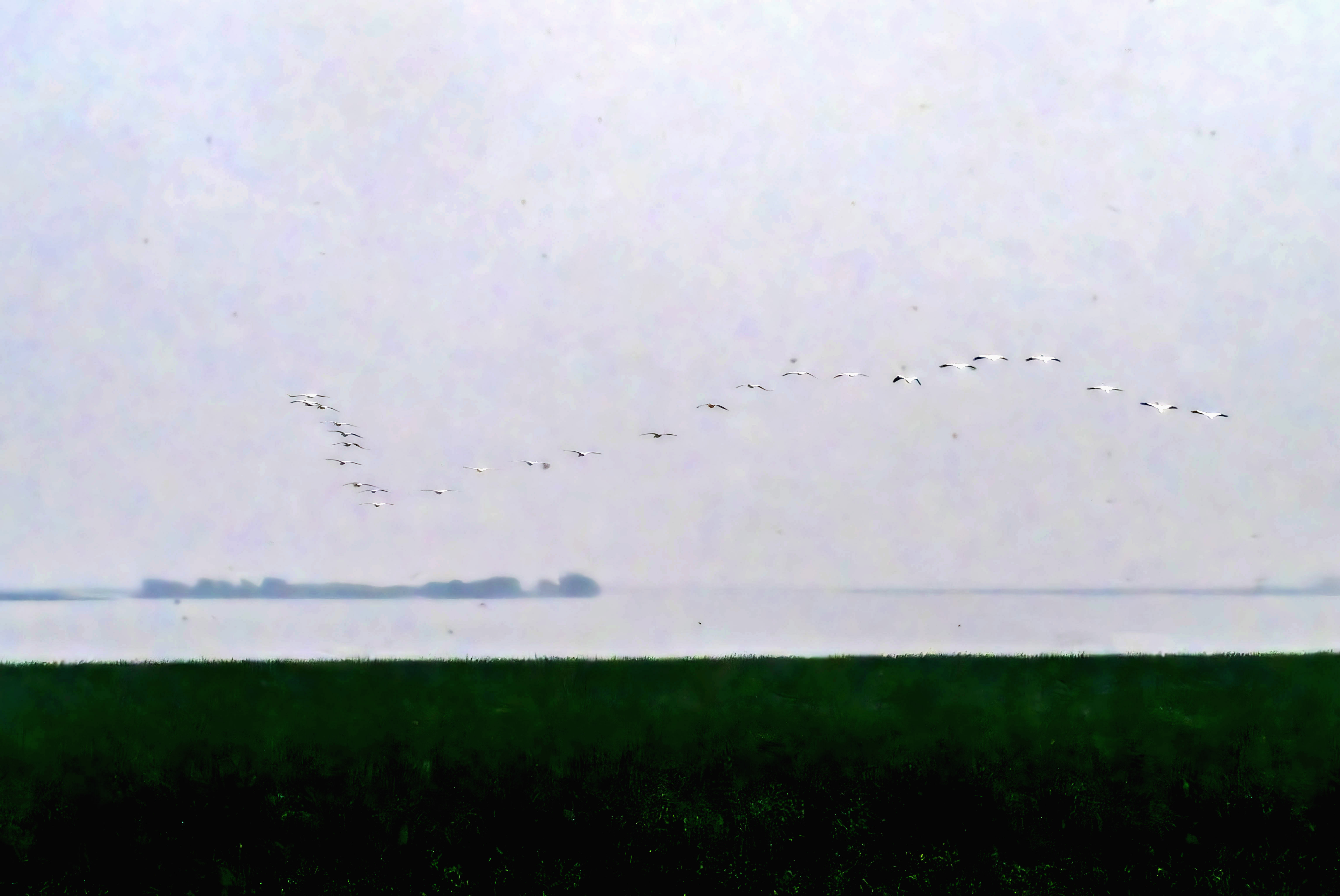
Since my goal was to experience the beauty as much as humanly possible, I was quickly out of the car with camera in hand. As I stood along the edge of the dike, mesmerized by an awakening morning as the sun began its assent into the grayness, a golden hue colored the eastern sky and the realm of water. Nature’s gold. Ring-billed gulls drifted across the sky and stilled waters, silhouettes peeking through the misty dawn to answer my prayers of magic. In that moment I realized what I’ve been missing for far too long. I noticed, then, the calmness of my breathing, as if I had just spent an hour forest bathing or practicing meditative yoga. Those feelings Bhattacharjee writes about in her meditative journals that speak glowingly of the magic of such moments of breaking light. Of experiencing a rising sun in the quiet of an evolving new morning.

After the sun had gained it’s foothold of the forthcoming day, I stepped back into the car and momentarily thought of the meadow. Perhaps I was mistaken, for there were thoughts that by the time I made it back around the prairie loop to the meadow the sun would have lifted too high for anything magical. 
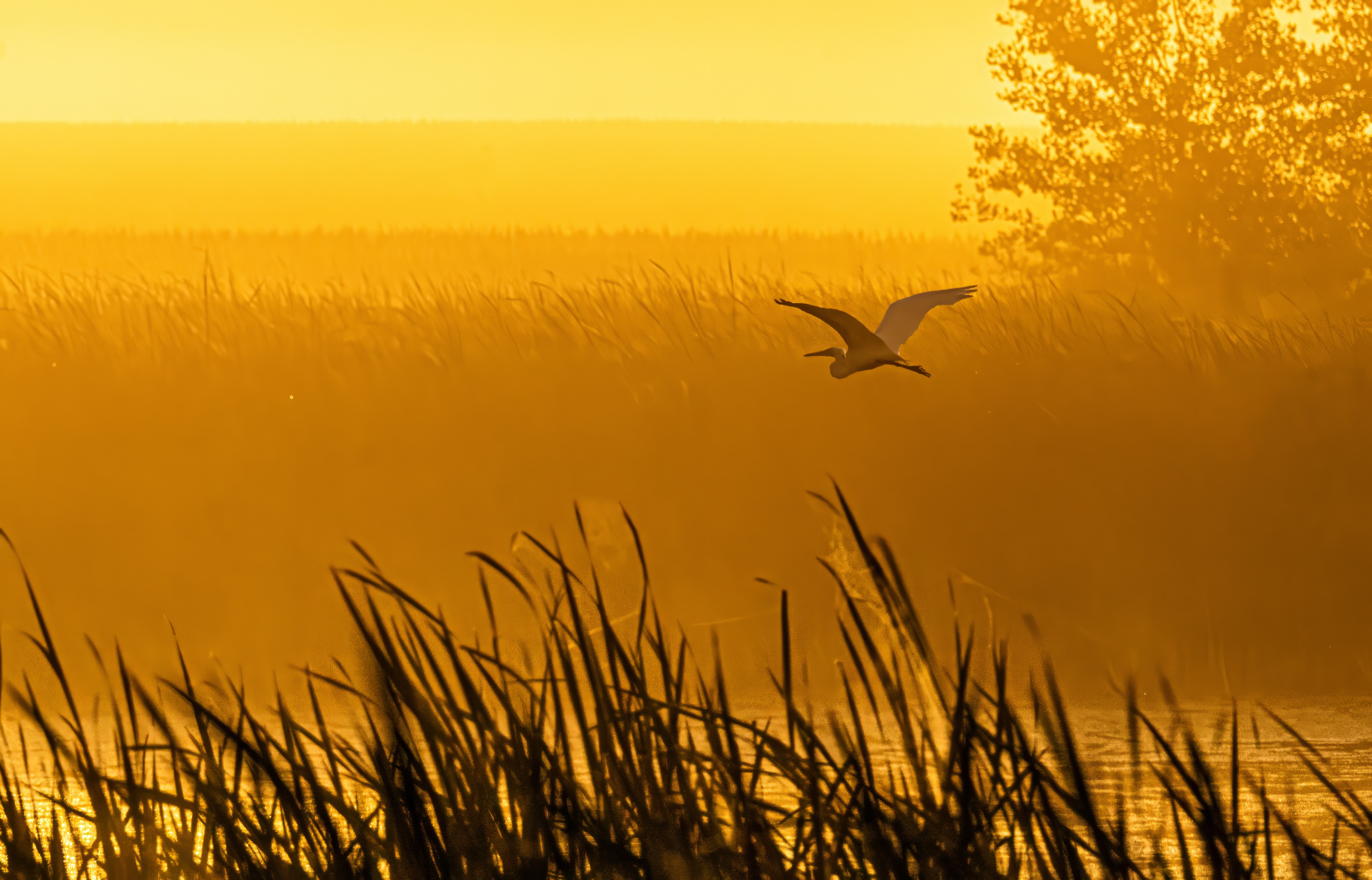
Yet the magic was far from over. Heading toward home I remembered a grouping of Great White Egrets hanging around a Pleasant Valley wetland, those surviving pothole treasures of this old glacial moraine. When dropping Joe Pye off at the kennel a few weeks earlier I had passed the tall white birds congregating in a marshy area, although several trips past that spot since has been unsuccessful. Once again the marsh was barren of birds, so I made a turn toward a series of wetlands to the north where I received an early morning bonus —  a lone egret lifted up from the cattails, all bathed by those beautiful, soft golden hues of the fresh, early morning light.

So much beauty for one obscure sunrise, and one could wish that every sunrise offered as much beauty and opportunity for imagery. For one morning, though, it was thoroughly fulfilling. I had escaped from that “cesspool of vulgarity” that nowadays seems as real as breathing. So I offer my sincere gratitude to Khadija for her tip that provided the inertia I needed for such a fulfilling and special experience. I came home feeling the hope in my veins!

A Calmness in ‘Colorful Silence’

There, at the foot of my driveway, came an unexpected moment of peace. Drifts from the seemingly endless winds had edged the blowing snow over the rise and into the lip of our south prairie in near parallels, forming a fan-like array. I was en route to the mailbox as the sun was lowering into a sunset. Fortunately I had my camera along. A quick single paragraph back story:

Moments before I had looked through the plateglas window of our kitchen when I noticed odd poetic lines crossing a smooth expanse of snow. A “blue hour” color tinted the snow. At the moment and the distance it was difficult to see what might have created the burrowing lines, so I quickly dressed for the elements and grabbed my camera. Closer to the two inch depths of the lines were literally thousands of tiny paw prints. Voles were my assumption. Just beyond the half tunneled lines were telltale rabbit prints, which were enormous compared to those inside the small crevices. It was moments later that I came upon that unexpected moment of peace.

It was impressionist artist Henri Mattisse who noted that “a certain blue enters your soul.”

From the “snow waves” at the foot of our driveway.

Was that my “certain blue?” This was late afternoon mere hours after the brutal murder of Alex Pretti in Minneapolis, the second of two ICE murders and the third resident ICE had shot. Renee Good’s murder, and the short film of her comment to her killer seconds before she was murdered, was challenging enough for my son had lived for a few years within a block of her murder. Pretti’s murder two weeks later hit me almost in the same manner as the second plane crashing into the World Trade Center. This time the attack against our nation was from within, perpetuated by our own president and his minions. After plodding through a trying day of distress came this unexpected sense of calm.

As this wave momentarily washed over me my breathing was easier. That cloud of discontent and anger was slightly lifted. Bluish colors eased from the images an hour of so later when I brought them up on my computer along with various shades of violets streaking through. Although I had driven and or walked past those drifts a few times before, there was hardly a reaction. Which made me wonder if the colors could have possibly created such a near instant sense of calmness?

The yellow light seemed a beacon of hope on the day of the Winter Solstice.

A study by the Moffit Cancer Center found that colors can affect your subconscious, and the color blue is strongly associated with peace, calm, and tranquility, evoking feelings of serenity, stability, and relaxation. Shades of violet, or purple, adds the Center, can evoke spirituality and inner balance. Perhaps that might explain the psychological finger-snap of calmness I had felt.

Other colors the Center says may have a similar impact: Green represents nature and offers a calmness and restfulness, while lighter shades like soft pink may promote physical soothing, and even white symbolizes peace through symbols like a dove. Snow and ice perhaps isn’t quite as soothing and comforting as, say, Richard Bach’s “Jonathan Livingston Seagull.” 

According to their website, yoga mat company, Manduka, did numerous studies on the affects of color as they searched for hues they felt would create a more mellowing mood for practitioners, and blue was among their favored colors.

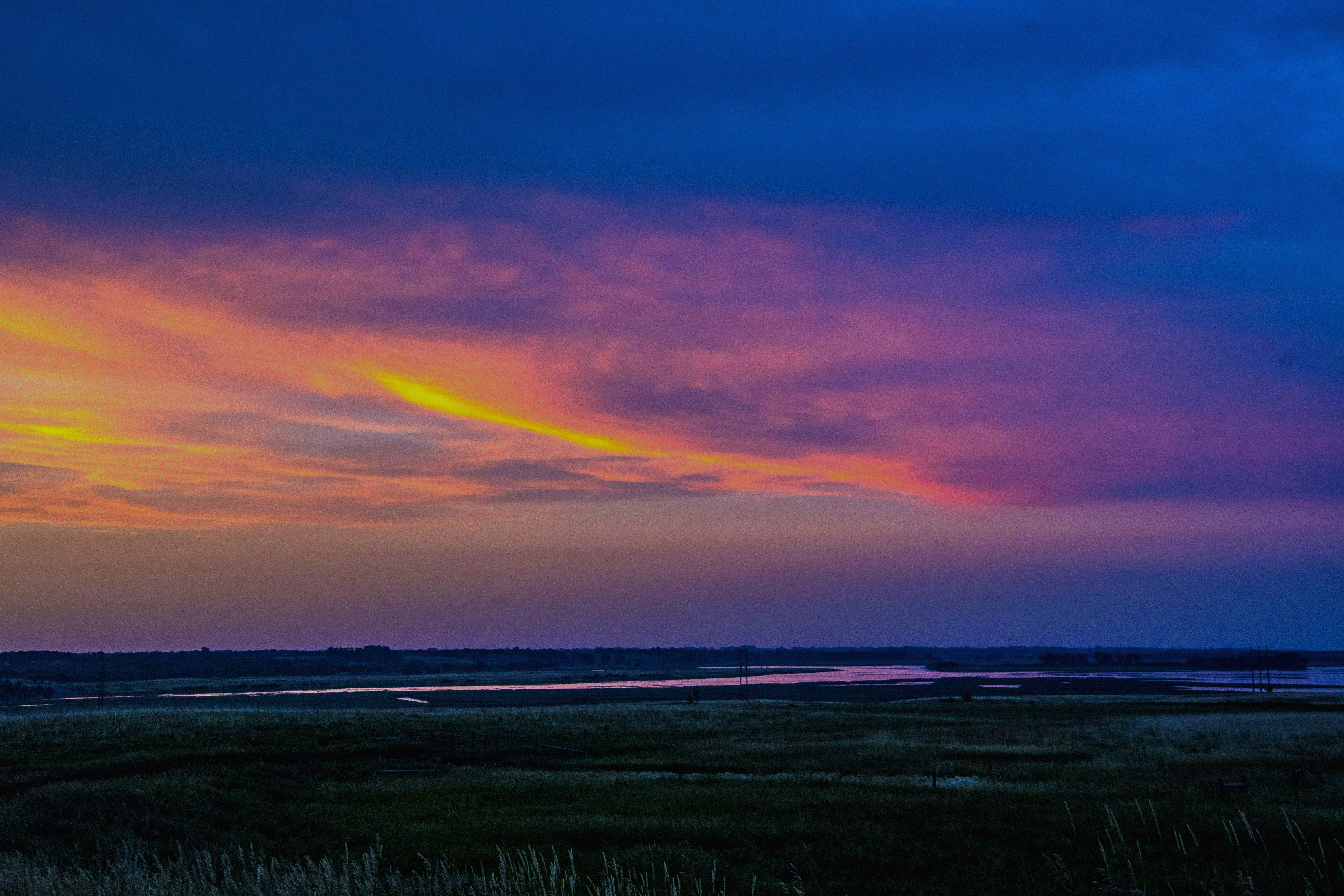
An ambient sunset over the Big Stone National Wildlife Refuge.

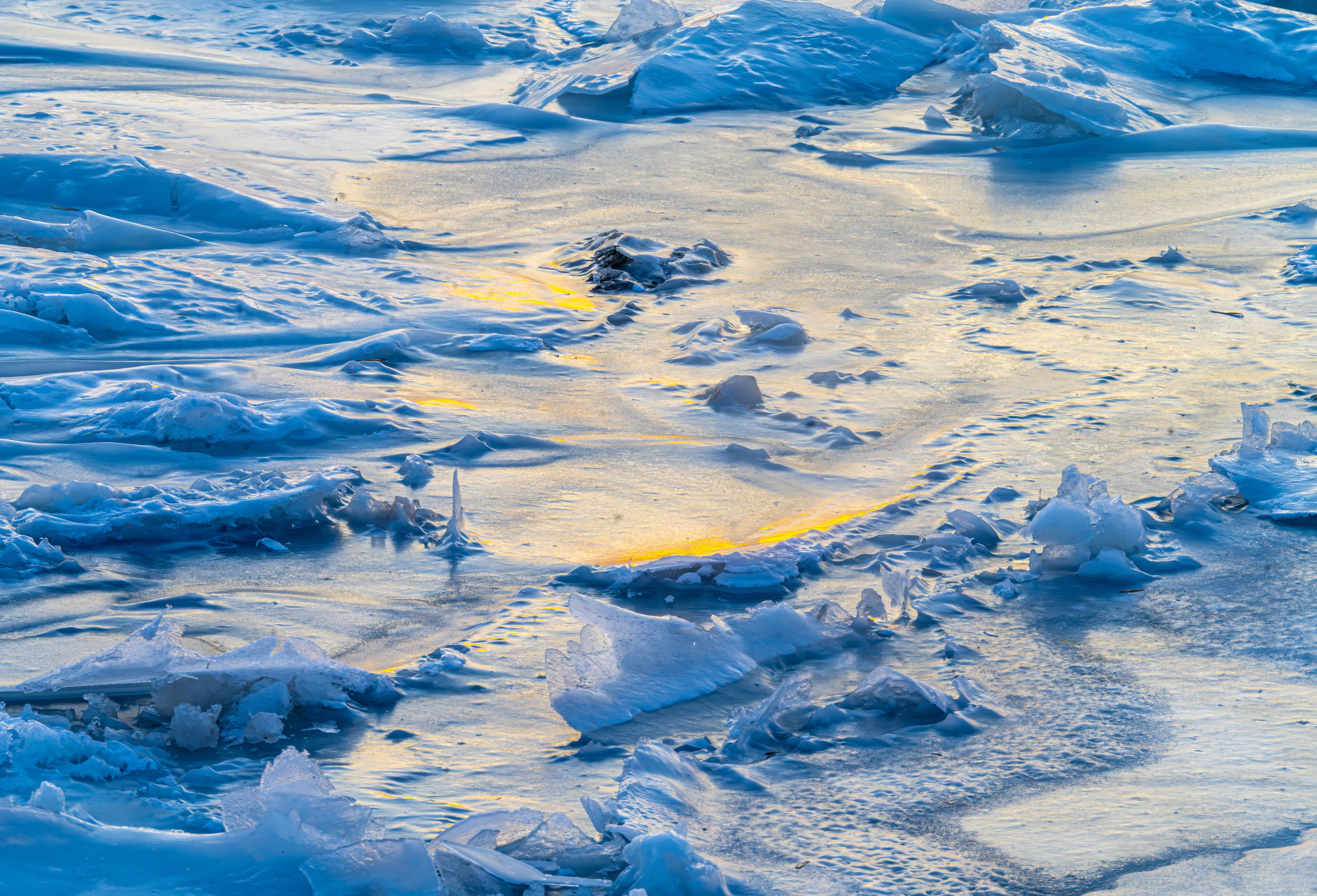
Enough of science. How does this fit into the spectrum of the arts? After looking at the colorful blue and purplish sunset colors amplified by the wind waves at the base of our driveway, a quick review was made of some of the earlier images that had affected me at some point. One example was a Winter Solstice image taken last December. Although I had visualized a different image, a walk to the river’s edge allowed me to find a slight hint of yellowish light in the midst of a jagged ice floe bathed in a soft blue. That yellow seemed to symbolize an emergence of resistance in the depths of the blueish ice ­— this was barely a week after ICE had landed in Minneapolis, and only a few weeks before their two murders. Within the comfort of blue the yellow seemed a beacon of hope.

Impressionist Claude Monet described such a sensation as a “colorful silence,” while Ralph Waldo Emerson noted, “Nature always wears the colors of the spirit” while capturing the serene, grounding influence of softened hues. 

As I look around in these dour and dangerous times, there seems a need to find a some sense of inner peace and comfort. Moments in nature are offered as a way as do colors. Mine momentarily came in remnant colors of a sunset on a cold winter afternoon at the foot of our driveway. And a day or so later, walking along the edge of the prairie as evening settled in came another moment of calm that is much more common, that of what a young friend once labeled as a “rainbow” sky ­­— those “twilight hues” of softened blues that meld into a soft violet along the prairie horizon as darkness settles in. I have a deep longing for such moments.

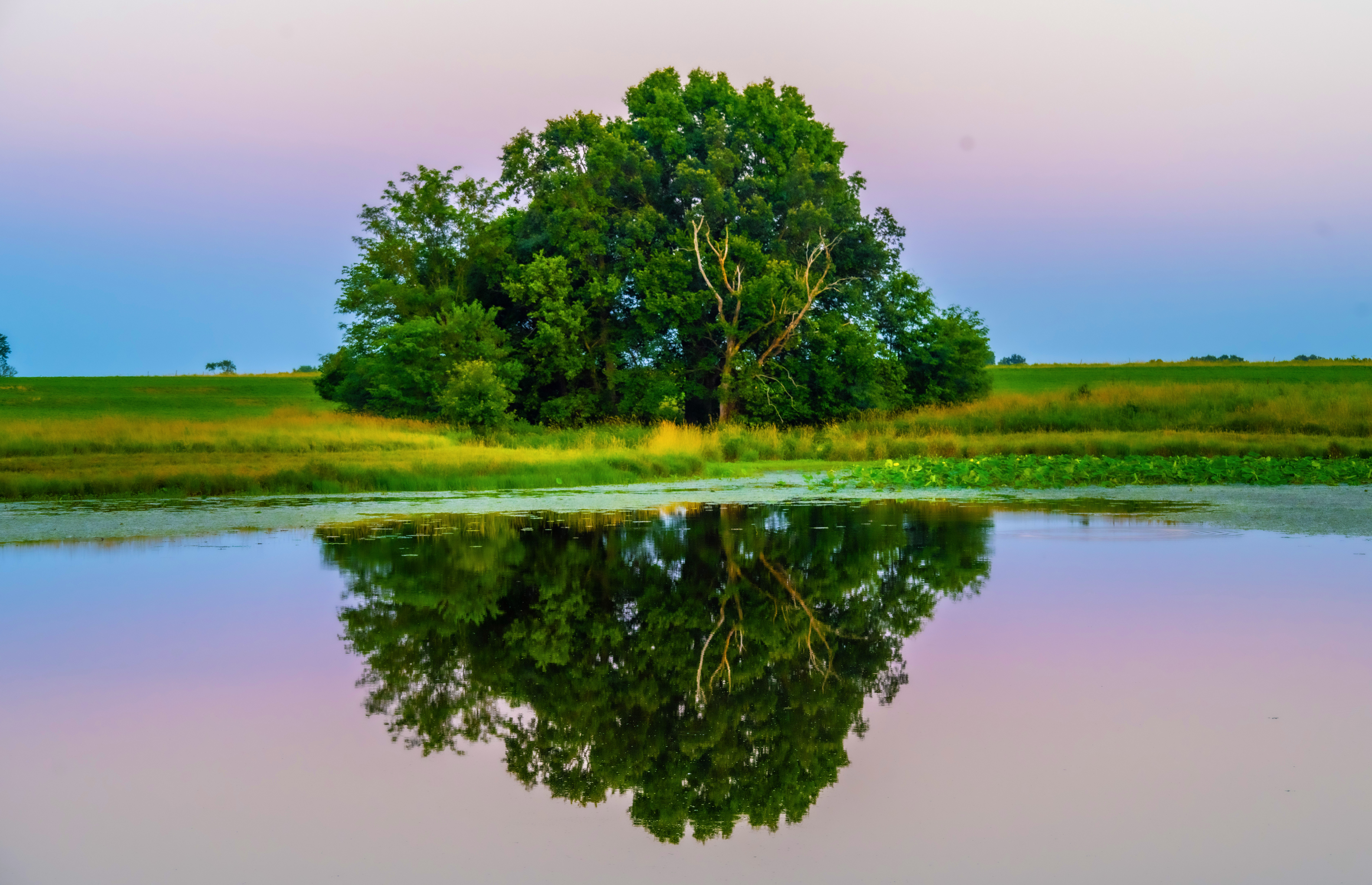
A ‘rainbow sky’ above our family’s Shagbark Waters farm pond.

Long ago my eyes were drawn to the eastern sky more so than a setting sun, seeking those ambient and softened colors along  the horizon, those same twilight colors I remember from my teenage years while casting flies close to the cattails of a farm pond and feeling the coolness of the evening surround me. That softened violet that yields ever so slightly to a milky blueness, of how those pastel colors of an approaching evening would slowly ebb away the cares of the day. Yes, Monet’s “colorful silence.”

Unless we are blanketed with deep cloud cover, the beauty of ambient colors banking off distant clouds in easterly skies have captured me for decades. Then there are those rare moments of being unexpectedly surprised by the soft blues and purples in wind blown snowy drifts that offers a sudden calmness in the midst of our nation’s turmoil. In these changing times. In these times when a hint of “colorful silence” seems a blessing.

The Gracefulness of Being

Perhaps it was the title: “How to Age Gracefully.” I was hopeful that this was a question more so than a statement for I’m not getting any younger, and now in my 80s, a time when many of my peers have sequestered themselves into a recliner or couch, I sense a need to keep charging forth creatively with an intense fear that my slowing down is the first step toward the grave. Following, perhaps, a lengthy time of acute boredom!

For the past few weeks hours have been spent in my wood shop and studio preparing items for the area Christmas Markets, and then an old friend, Dale Pederson, arrived with a pickup full of pre-cut timbers to install a planned canopy over our studio door to keep snow and ice away from the entrance. We were both fighting the calendar and weather.

In trying to balance all of that, by bedtime for three straight nights my mind and body was a wreck. There was nothing graceful about it, or me, and yes, on one of my ventures into the wood shop to rip a board on our last afternoon a misstep sent me sprawling across the concrete floor. Grace? Hardly. Fortunately my head missed a standing concrete block that was off to one side. Does that count as an old man’s fall? 

Grace is what I sometimes find in nature …

A few days later at the library while returning a great nonfiction book called “Sea of Grass,” an in depth portrayal of the complete destruction of American’s vast prairie between the Smokies and Rockies by Dave Hage and Jo Marcotty, this new book … “How to Age Gracefully” … seemed to jump off the shelf and into my waiting hands. 

Like Hage and Marcotty, the author, Barbara Hoffbeck Scoglic, was also a former reporter for the Star Tribune. My wonder was if my quest for grace was irrational, if not impossible; is there an emerging path for my unstoppable aging? Scoglic’s was an interesting read, though basically she wrote a day by day journal of her moving into an assisted living senior center. Now in a wheelchair, and being completely unreliable on her feet, Scoglic recounted various conversations and personal memories along with a morning ritual of coming off the elevator to see who might have survived for another night.

Perhaps I missed the “graceful” piece. No, her’s was not a “how to” effort. So my venture continues as I wander down a different path. 

Grace … a moment of tenderness of a burly bison cow with her newborn calf …

While I was working with Dale, and on various pieces for the Christmas Markets, an old conversation from years ago kept cropping up. It was on a cold, windy and snowy day “way back when” that I unloaded my collection of items from my van into one of Montevideo’s Chippewa Village historical buildings to discover my display partner was a 91-year-old man, a flat-plane wood carver and painter of Norwegian trolls, gnomes and Ole and Lena farm characters. After our introductions and getting set up, I asked the elderly artist about his work  and what kept him going.

“At my age,” he said with a wry smile, “what else would I do?”

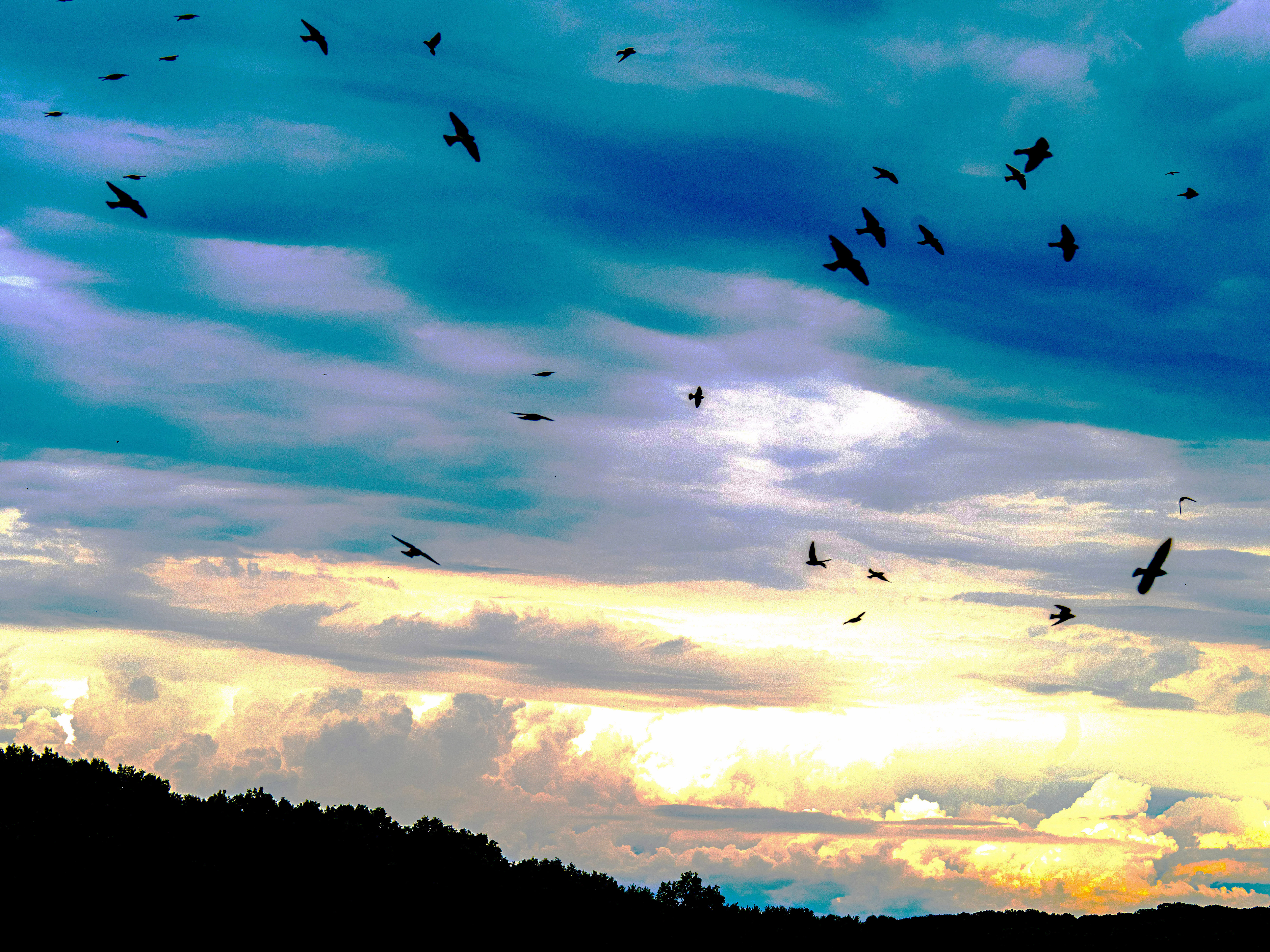
Grace … when unexpected swallows appear to give ambience to an image …

Often I think of him, and have told that story to other artists who confide that they’re thinking of retiring, of giving up. Nowadays I sometimes wonder about myself. It’s not so much about aging gracefully, whatever that means, rather than wondering what else would I do? The walls and panels in my studio are full of canvases, and I make numerous smaller items featuring my photographic work. Over these past few weeks I’ve poured through a few thousand images created over the past 15 or so years, from when I retired from the country weekly to begin my efforts of portraying the last one percent of an ancient and nearly completely destroyed original prairie pothole biome. 

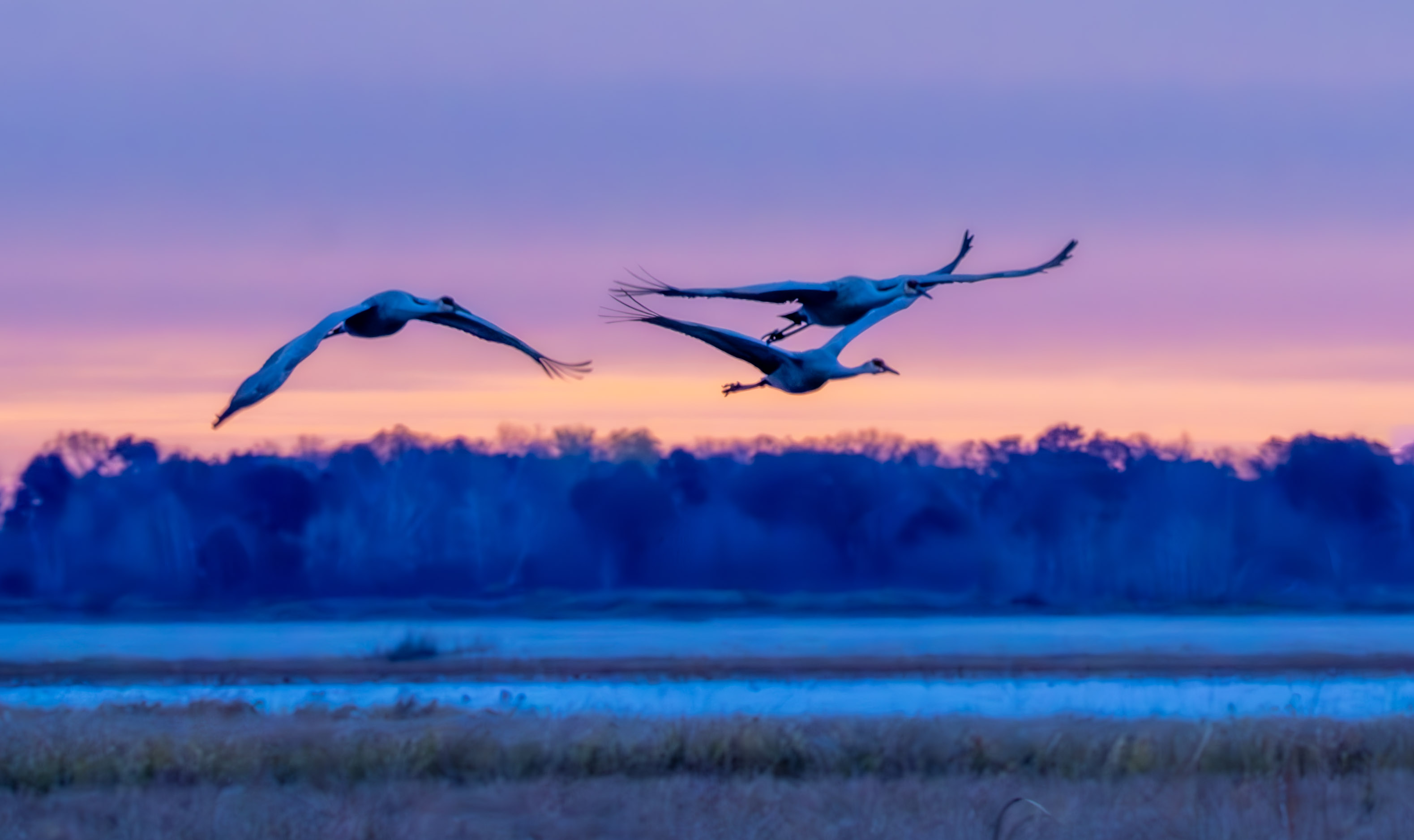
In so doing I sometimes find a choice image previously overlooked, or marvel at something long ago printed onto canvas and sold, and still hopefully hanging on someone’s wall. I also have thoughts of why continue? Do I need more images? Yet, quitting seems so unreasonable since I still throughly enjoy working with the magic of natural light, composition, ambient colors and those quirky surprises your find in nature. Those valued moments of internal celebrations when all those artistic elements come together … like when a trio of Sandhill Cranes flew over me recently at Crex Meadows in the ambient softened colors of a prairie sunrise. Yes, a portrait of grace. Color. Movement. Poetry. Nature. Perhaps finding grace in the imagery is more than can be expected. Then there’s this: What else would I do?

Grace … when poetry of nature blesses you with a memorable moment …

I still find magic in the prairie, in the skies, the timberlands, the BWCA, the mountains and in those sweeping landscapes all around. I find joy in the wild beings, in an unexpected flush of birds over a prairie meadow, or a poetic surprise of birds suddenly appearing in an otherwise mundane landscape; the immense poetry of trees, of their hefty, spreading limbs, of how a single tree within a forest can portray such stark individualism, of how the symmetry of autumn leaves can bring a smile; plus the wonder of the beyond, be it a breathtaking full moon coursing light across water or a sea of prairie grass, or offering a special moment to silhouette a crane or heron, or the fluid aerial ballet of an Aurora Borealis offering graceful waves of heavenly beauty; or even that of my dog, Joe Pye, ambling through our tall grass prairie at Roberta’s side sniffing at mysteries I’ll shall never know, of his pure excitement of simply being alive and free.

Yes, alive and free, of an ability to create and hopefully capture beauty that so long ago was basically erased from our collective consciousness. Hopefully in my aging I’ll continue to embrace those joys of capturing natural poetry more so than in my seeking some sense of personal grace. My fear is if I don’t note that discovery of natural poetry with my art that I will no longer find joy or the magic in life. Without that magic and joy, what would be the point? What else would I do?