That Notice of Peace

As my dear friend, Steve Bruns, began piecing together his final thoughts and stories for his family, the deeply religious man began with a simple statement: “I’m learning how to die.” His aim was in providing his thoughts about his personal view of eternity and how he now faces what remains of what has been and continues to be a full and vivid life. 

Among his thoughts were these: “The older I get, the more I notice colors. Maybe because life itself feels more precious now. Maybe because suffering sharpens your awareness of beauty. When you understand life is fragile, you stop rushing past sunsets. You stop overlooking robins’ eggs. You notice frost-blue snow early in the morning before footprints disturb it. You notice chickadees flashing blue-gray wings in winter trees. You notice the reflection of clouds in a quiet lake. You notice peace wherever you can find it.”

Although we’ve been friends for a quarter century, I hadn’t considered Steve a poet. An inventor. A creator. A story teller without par. A freind. Now I humbly stand corrected. Like Steve, though, I too notice peace.
A few months after learning his cancer had spread and is basically untreatable, Steve was encouraged by his beautiful and supportive wife, Jill, and his family to share his thoughts, to give his perspectives on his four sons and their families, to place in black and white those wonderfully entertaining stories his friends and family have enjoyed and laughed at over the years. They found a computer program that allows him to tell his stories as he always has and the words are printed as if he had written them. That moment of poetry was among his spoken thoughts.

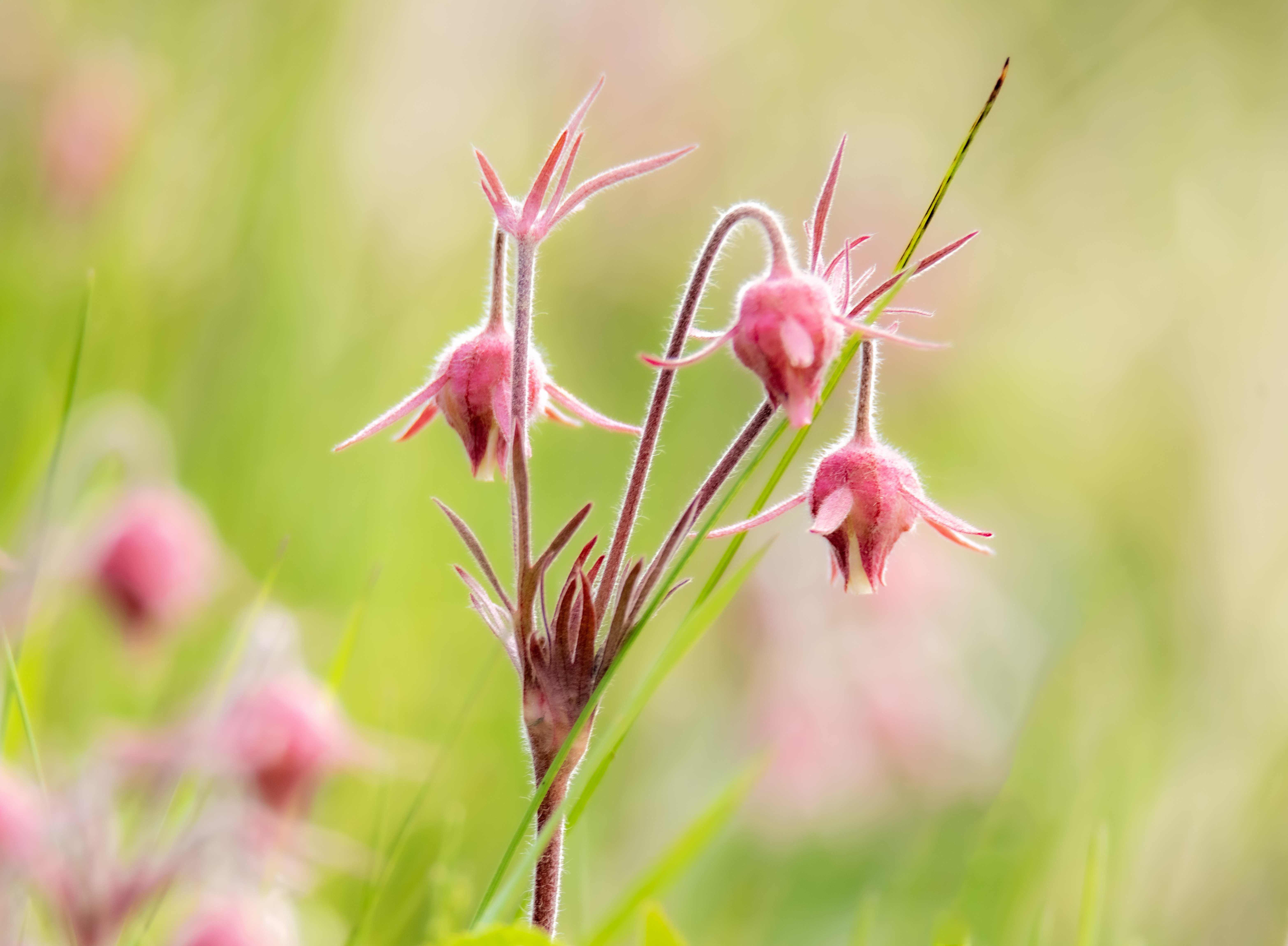
His thoughts of peacefulness and colors resonated with me as I laid in the crunchy browned prairie duff focusing on one of my favorite and most interesting prairie forbs, Prairie Smoke. This “awareness of peace and beauty” was at the Lake Johanna Esker north of Sunburg and a bit east of the tallgrass Ordway Prairie. Such vivid colors, of such interesting shapes, mingled naturally with other May flowers on a haze-blessed sunny afternoon.

While Steve has found his peace in the color of blue, mine is more universal, more defined by the moment, and certainly as he stated, such moments seem more precious with age. For years Prairie Smoke has attracted my interest, an affection that has not waned with age.  
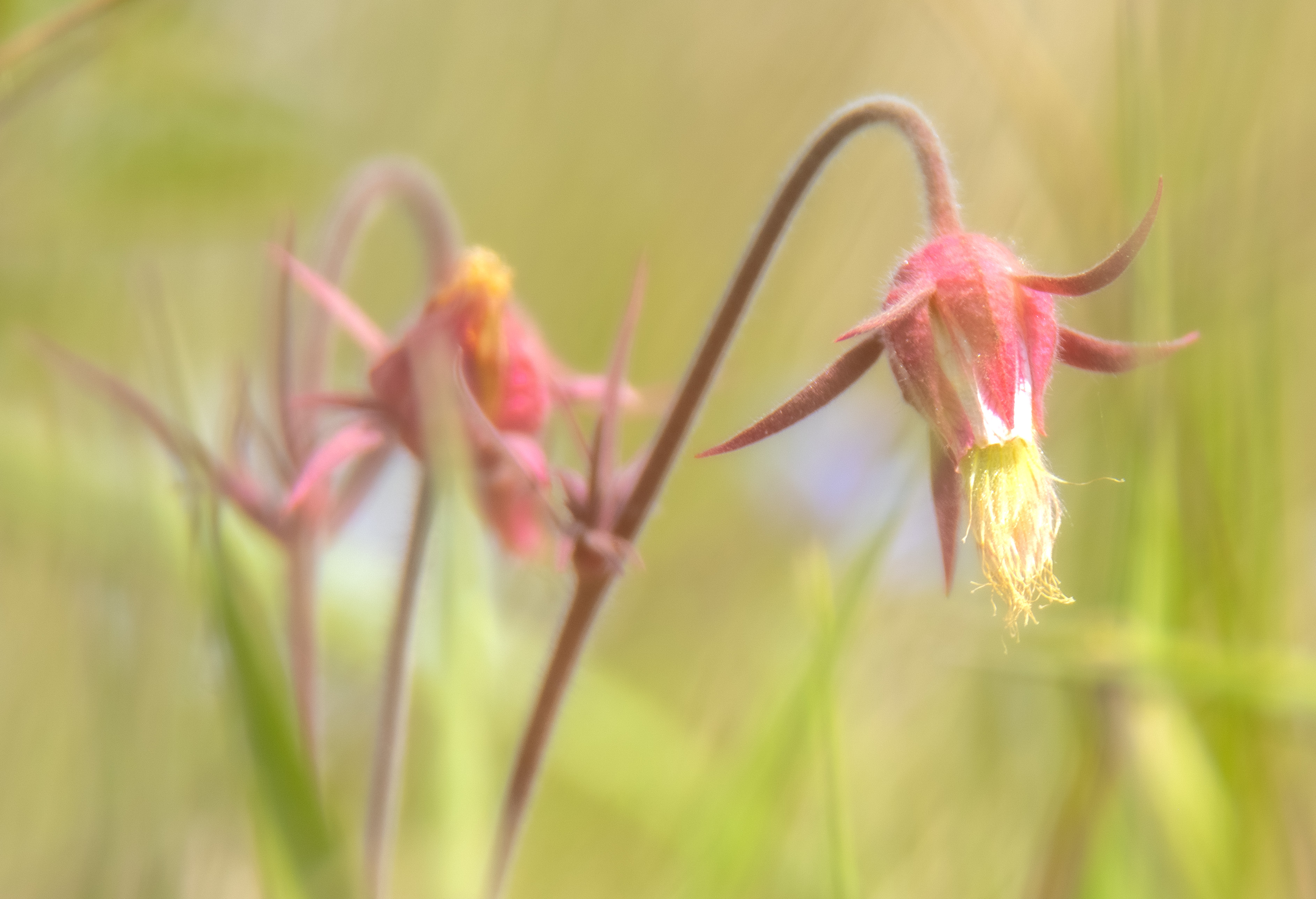
My discovery of Prairie Smoke began when we first moved here to Listening Stones Farm in 2013, moving into a house that Steve and I had labored to convert into the modern era with new insulation, wiring and plumbing, working seven days a week and long past “eight hour shifts.” A few weeks after he returned home to Hector, my soon-to-be (and long divorced) wife and I were rummaging through the nearby native Clinton Prairie when we came across my first sighting of Prairie Smoke. Immediately hooked, I would return time after time to find various angles of portrayal until the “smoke” eventually disappeared.

A few years later word came about a broad blanket of the spiky flowers existing at the Esker where acres of them brighten that virgin prairie with such color, beauty and joy. Our trip this past weekend was one of many over the years and once again added both peace and joy. Our adventure began by spotting several Prairie Blue-Eyed Grass blossoms just inside the fence, yet the pinkish allure of Prairie Smoke beckoned from the nearby rise, the pink vividness arching in contrast to the blooming White Pussy-toes and speckles of Blue-Eyed Grass. A bountiful floral vision!
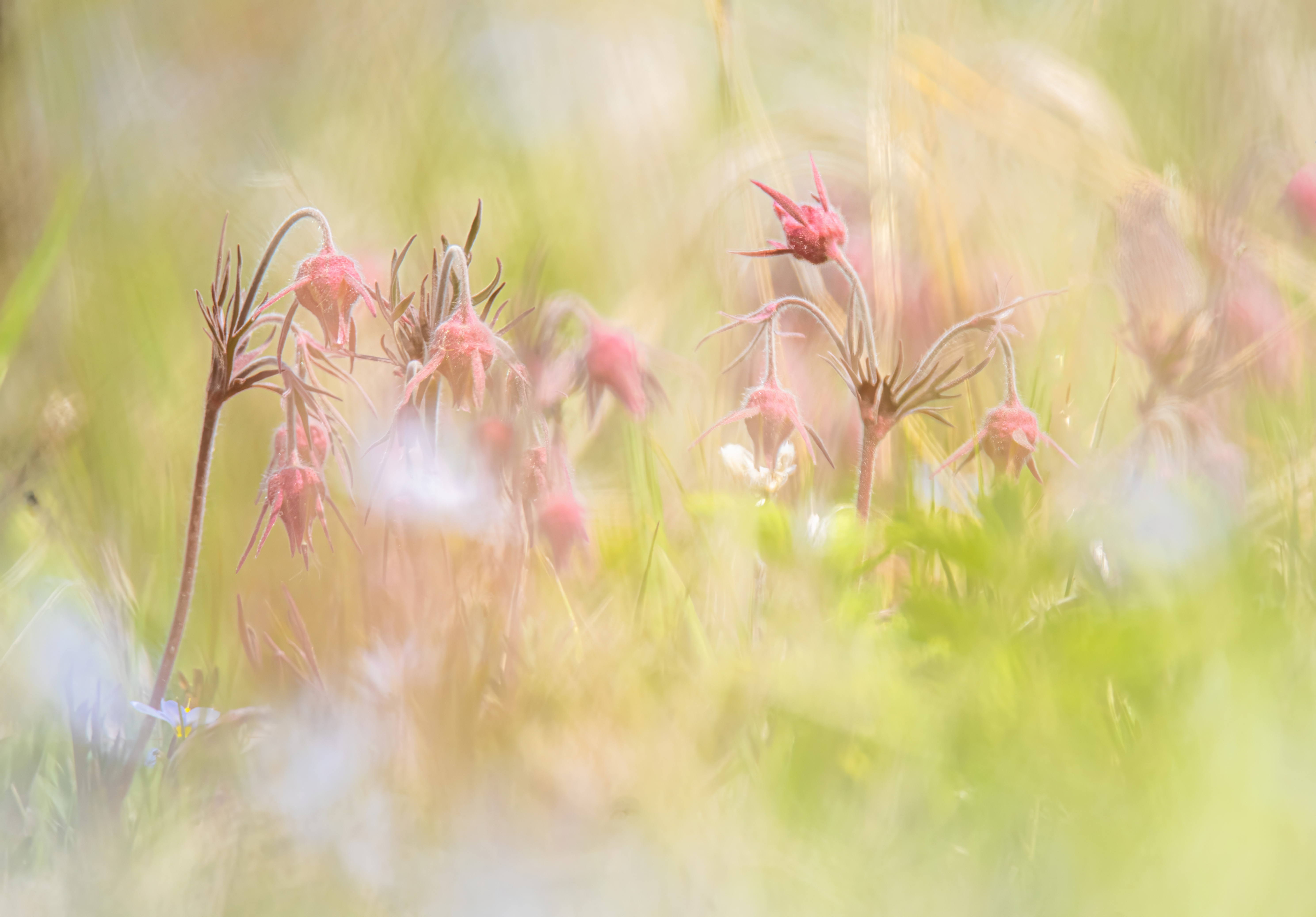
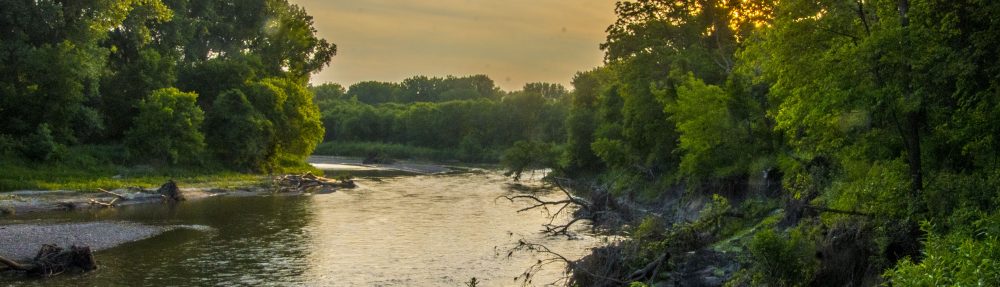
This is such precious geological remnant, for an esker is basically a rocky stream bed created within a glacier, and that mound of historical wonder dominates the landscape. Such an esker is a rare find nowadays for many have been destroyed for gravel mining. In the prairie below was where the colorful carpet lay. And it didn’t take much hesitation to find just enough space to lay with a camera to search through the emerging “jungle” of greenery and colorful blossoms for interesting imagery. And Steve’s bit of poetry rang true for every moment I lay prone and in awe. Prone and in peace.

Prairie Smoke has long been one of my annual “photographic seasons” that begins with Steve’s favorite blues ­— beginning with post-melt Pasque Flowers and ending with that of autumn Asters. Since that first sighting of Prairie Smoke I’ve captured it throughout it’s short lifespan, and yes, we’ve even purchased plants from the nearby Morning Sky Nursery in Morris to plant in our native prairie gardens. Unfortunately, the “bully” Compass Plant has all but crowded out almost everything in that particular garden including our three Prairie Smoke plants.
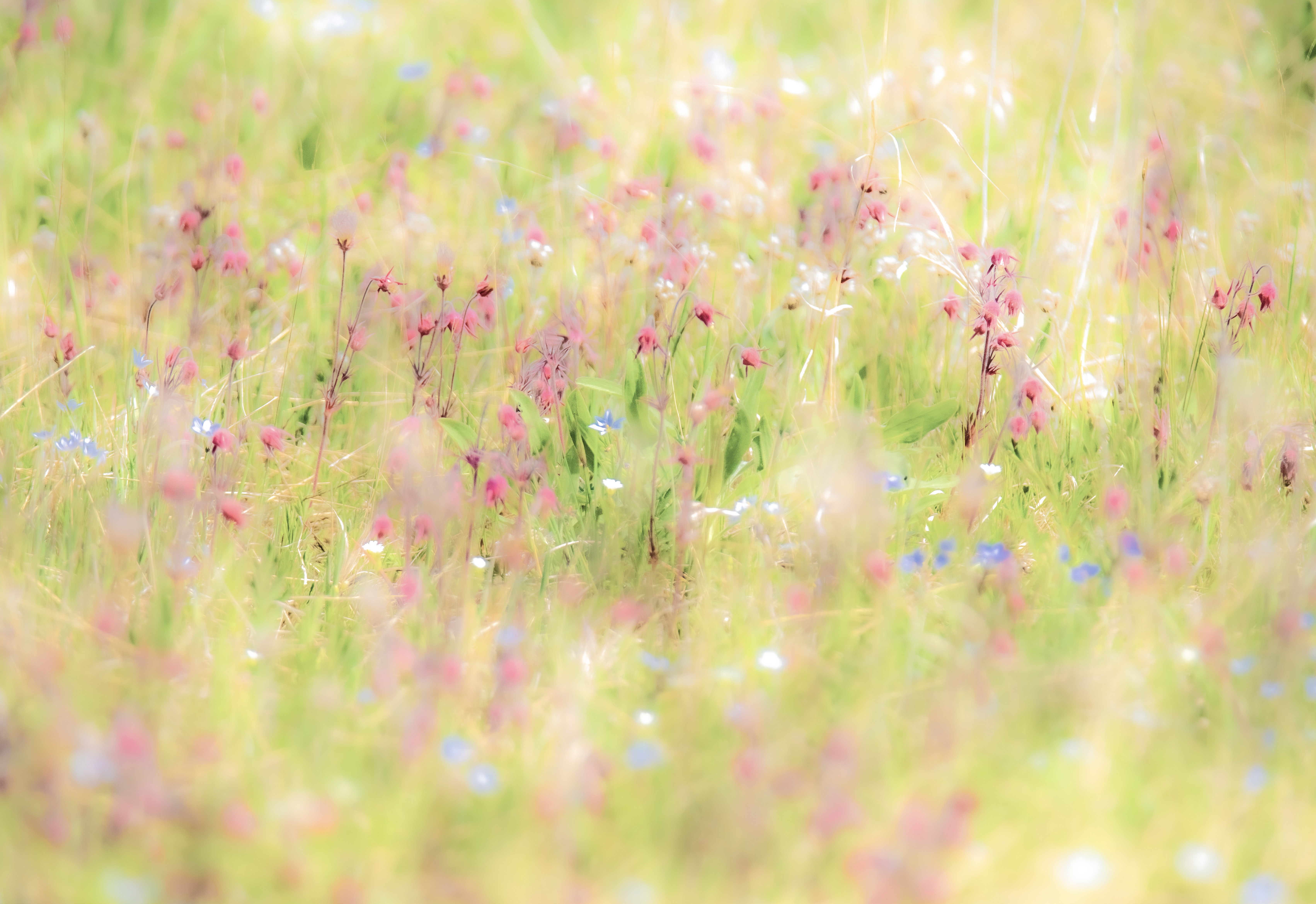
So, yes, I suppose there are ample images stored in my files, so many I probably have no need for more. Ah, but there’s that difference between “need” and “want!” Yet, there is always a quest of perhaps capturing a perfect moment or image. If such a moment or image should exist.

Then there are the unexpected moments that have come along in those numerous quests: An unexpected fly-over of a pair of Sandhill Cranes offering a rare glimpse of timelessness for an image that was surreal geologically; or that muted blueness of pre-dawn light in such contrast to the softened pinkishness of the Prairie Smoke; or that explosive blast of a setting sun searing through silhouetted spikes; or the standing fluff of “smoke” from three individual blossoms made at sunrise that appeared as beautifully splendid and fanned widely as would a trio of fluffing peacocks. And, on and on. 
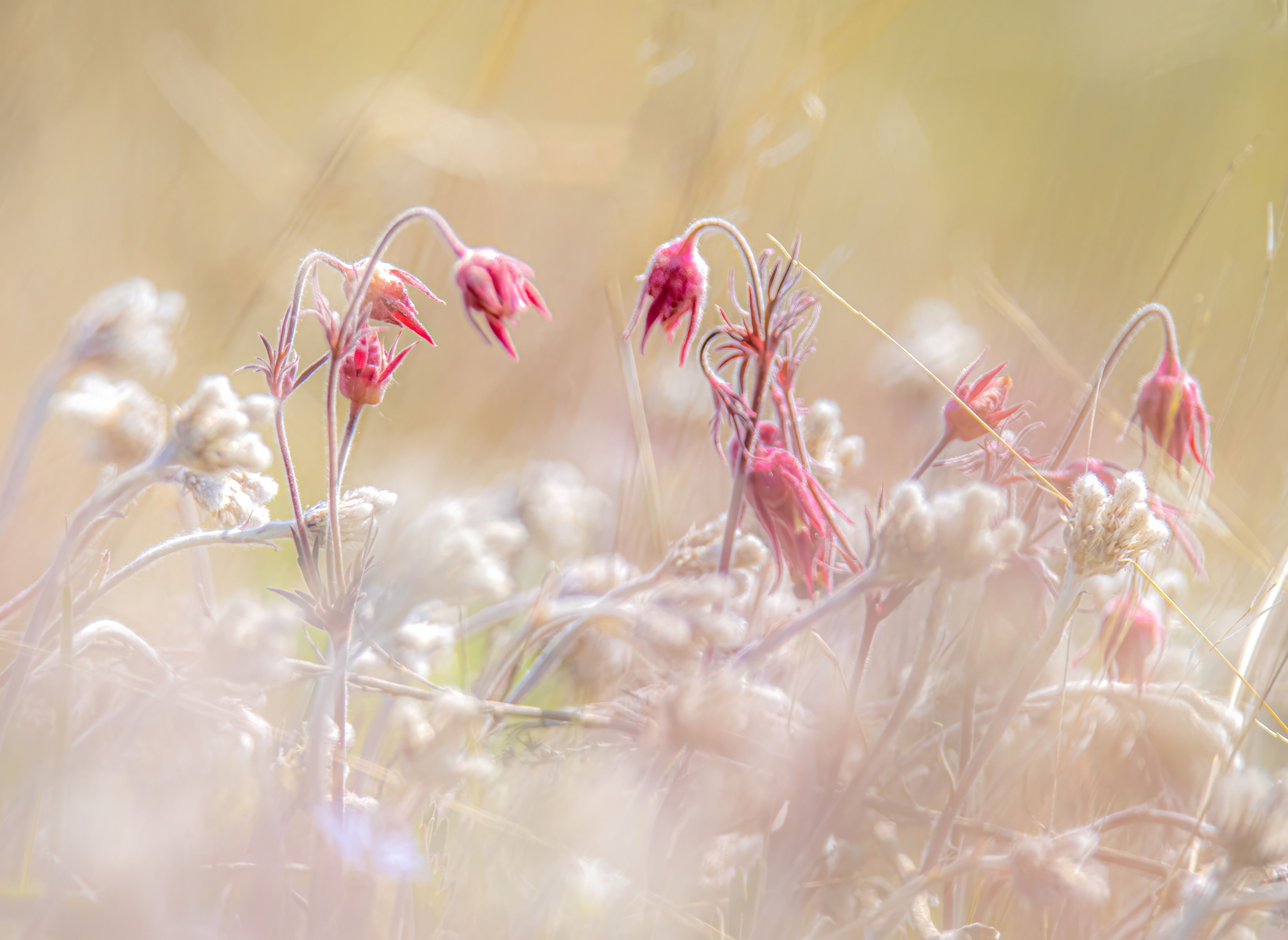
Which leads me back to another touch of poetry from my dear friend as he faces his conclusion of a full and beautiful life, one where he fears not his path toward eternity though he does his actual act of dying: 

“Back home on the prairie, the sunsets may still be my favorite. There is a moment just before darkness arrives when the entire sky becomes layered with oranges, pinks, purples, and deepening blues. The fields grow quiet. The wind softens. Trees become silhouettes. Sometimes the clouds catch the sunlight so perfectly it feels like heaven cracked open for a few minutes just to let us peek inside.”

Peeks into a heaven where he awaits a calmness in finding. A notice of eternal peace.
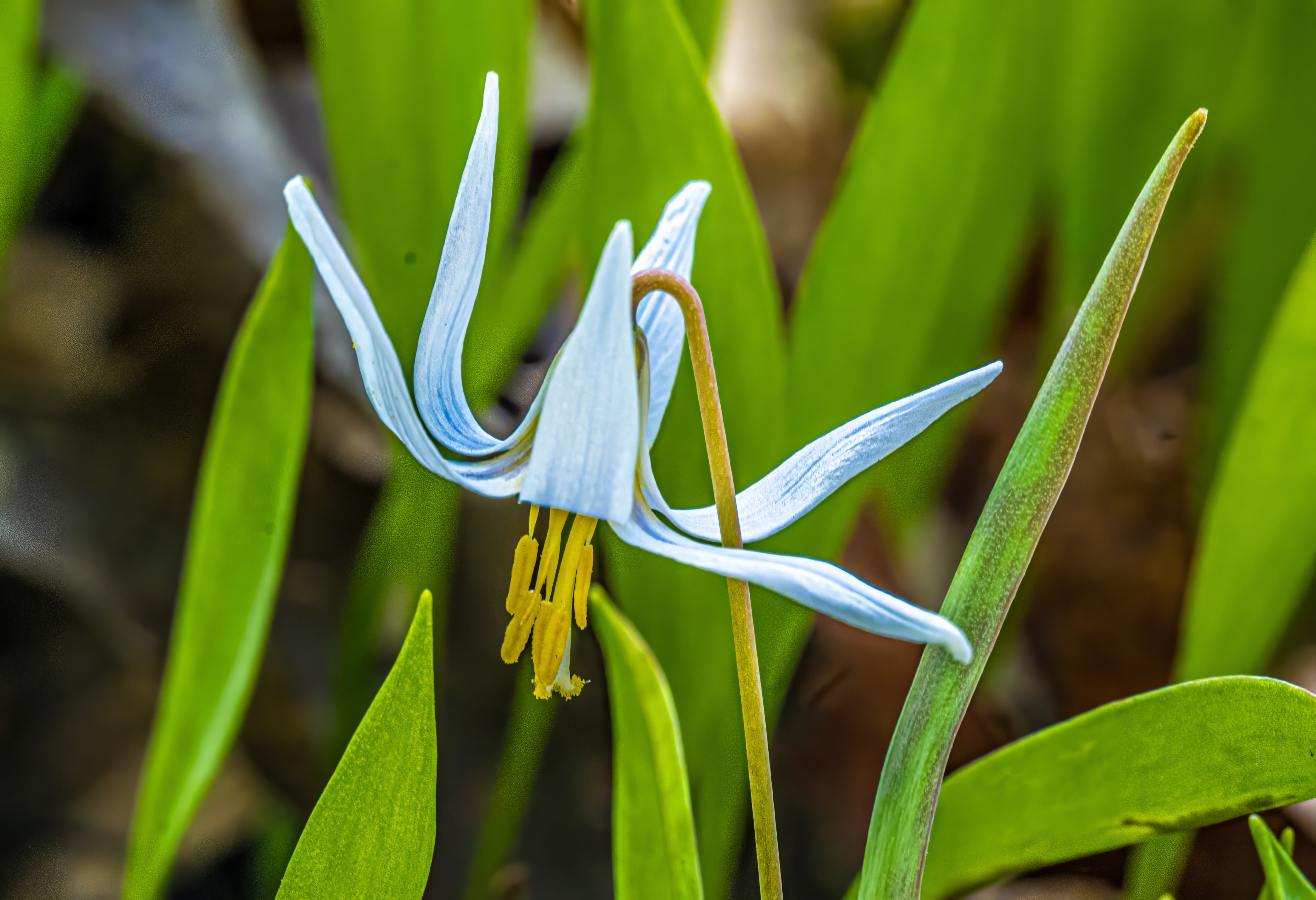
A Lingering Light

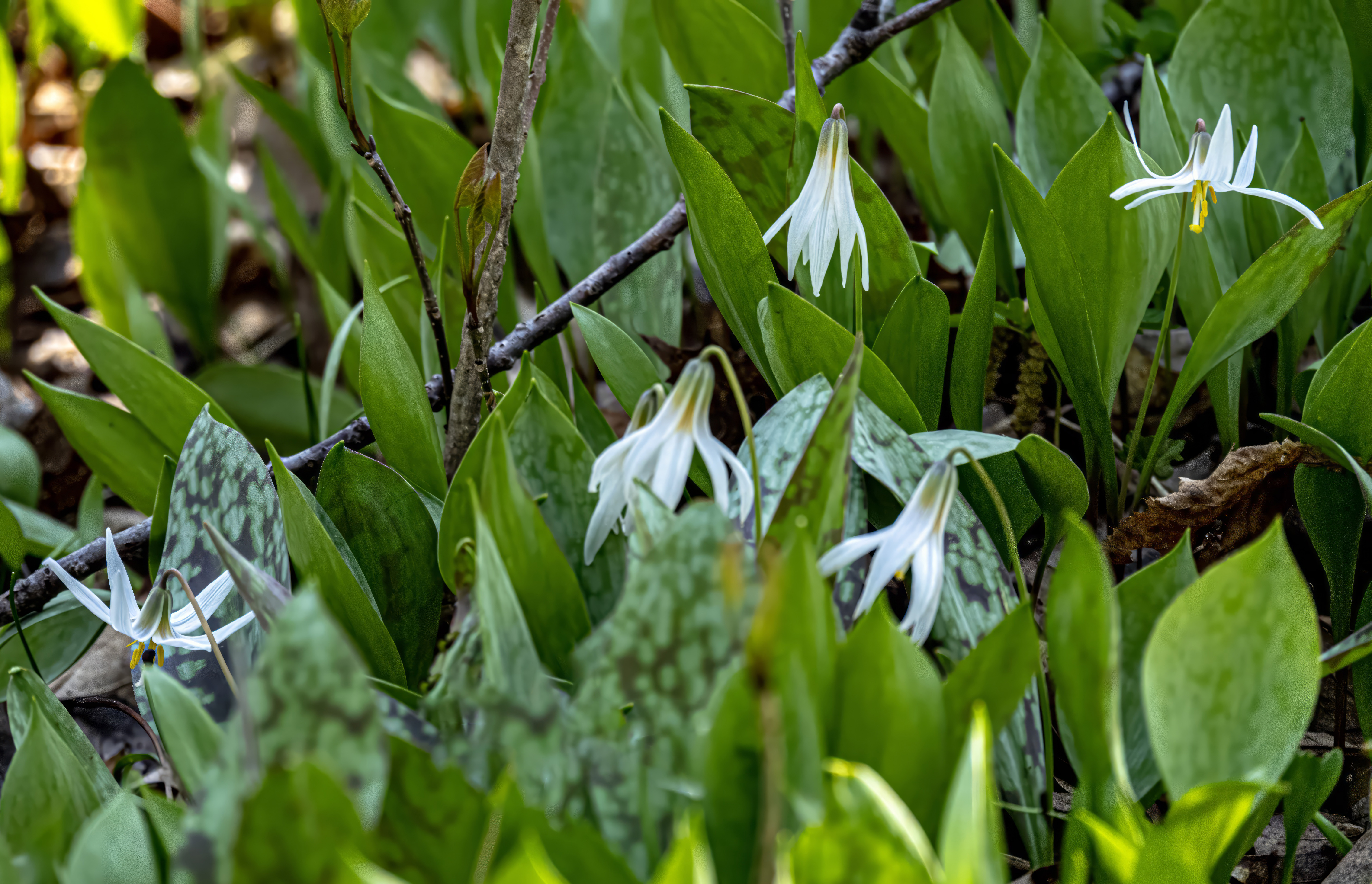
How is this for good company within a delightfully sunny woodland? Kneeling in thought beside me as I focus my lens on our collective favorite brilliant harbingers of spring, the lovely trout lilly, are the aged-old naturalist John Burroughs and the delightful poet Mary Oliver. My mental companions would no doubt be loving every moment of this sun-blessed morning in the wooded hills of Nerstrand-Big Woods State Park just as I was as those tiny and delicate flowers reached preciously from the stem, hugging the white and yellow stamens.

Although I can’t recall the exact moment of a social media message that offered a much needed sprig of hope in these trying times, there is no uncertainty of the muse: “Now is the time to head to Nerstrand-Big Woods for the trout lillies and marsh marigolds!” read the message.

Both are wood-harbored wildflowers that offer as much hope and joy of spring as pasque flowers give us here in the grassy prairie. When I’m near such a shady ecosystem this time of year, both species are difficult to resist. Burroughs spoke of the possible reason behind the common name by pointing to the leaves he claimed seemed  “painted” like a flank of a freshly caught trout. Oliver? While her’s was the more easterly located yellow trout lilly, there is little doubt that seeing them here in the hills of Nerstrand would likewise have given her hope in these trying times as she painted so beautifully in her poem on trout lillies.

“All I know is,” she wrote upon seeing trout lillies in bloom, “there was a light that lingered, for hours,

under her eyelids – that made a difference

when she went back to a difficult house, at the end of the day.”

It was about this time a year ago when an overheard mention of trout lillies being in bloom near Nerstrand-Big Woods State Park caught my attention. We were about an hour north at a gallery where my canvases were hanging when naturalist and former State Senator Tedd Suss, whose spacious little farmstead lies just outside of the park, offered the information to a friend of his. Interestingly, earlier in the day we had walked the wooded path on the grounds of the Izaak Walton League’s gallery in search of various wild flowers including trout lillies.

Suss assured me there was a significant chance of photographing them so after our reception we added a couple of hours to our drive home to check out the park. Initially we were disappointed for no matter where we looked on the path downhill toward Hidden Falls there wasn’t a blossom to be seen. Then, on a set of wooden stairs created to perhaps ward off a nasty face plant on the rocky path, we met up with two women where pleasantries were exchanged. Within that my intent was spoken, and one of them said, “Oh, my. You’re much too late for those beautiful little lillies are long gone.”

Imagine my disappointment. Regardless, or perhaps in thoughts of dire protest, we continued our search into then knee-high growth along the pathway when suddenly Roberta asked, “Is this what you are looking for?” And, it was. Eventually we found about a half dozen hidden within the tall greenery in full maturity, and my sigh of recognition and relief perhaps fluttered those delicate white petals.

And, this time Mr. Suss was correct, for I had texted him before we left on the four hour, one-way drive. We were a week to ten days earlier this year, and yes, hundreds of them poked from the molted shade. In all stages, from pre-bloom to maturity. And yes, Burroughs’ description of the dappled leaves offered obvious evidence.

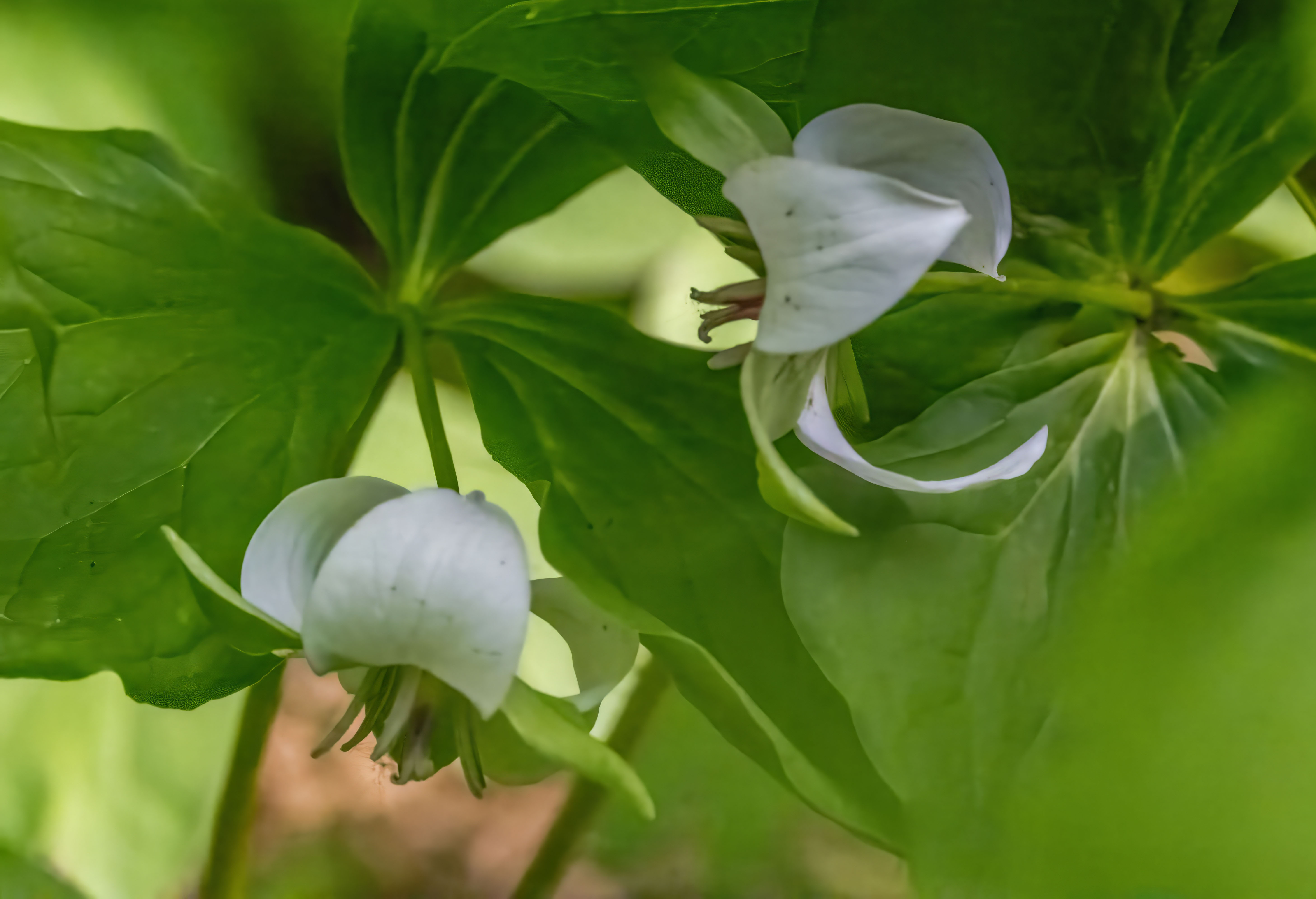
Among the lillies were other beauties of the woods including Jack-in-the-pulpits, wild blue phlox, hepatica, Dutchman’s breeches and those yellowish bellworts. We spied some trillium aching to blossom. Yet it was the trout lillies that drew me in. Delicate white petals hugged the stamens on the newly bloomed, their curtains widened with age. A slight breeze gave them the look of dancers offering a delicate ballet within the woodlands.

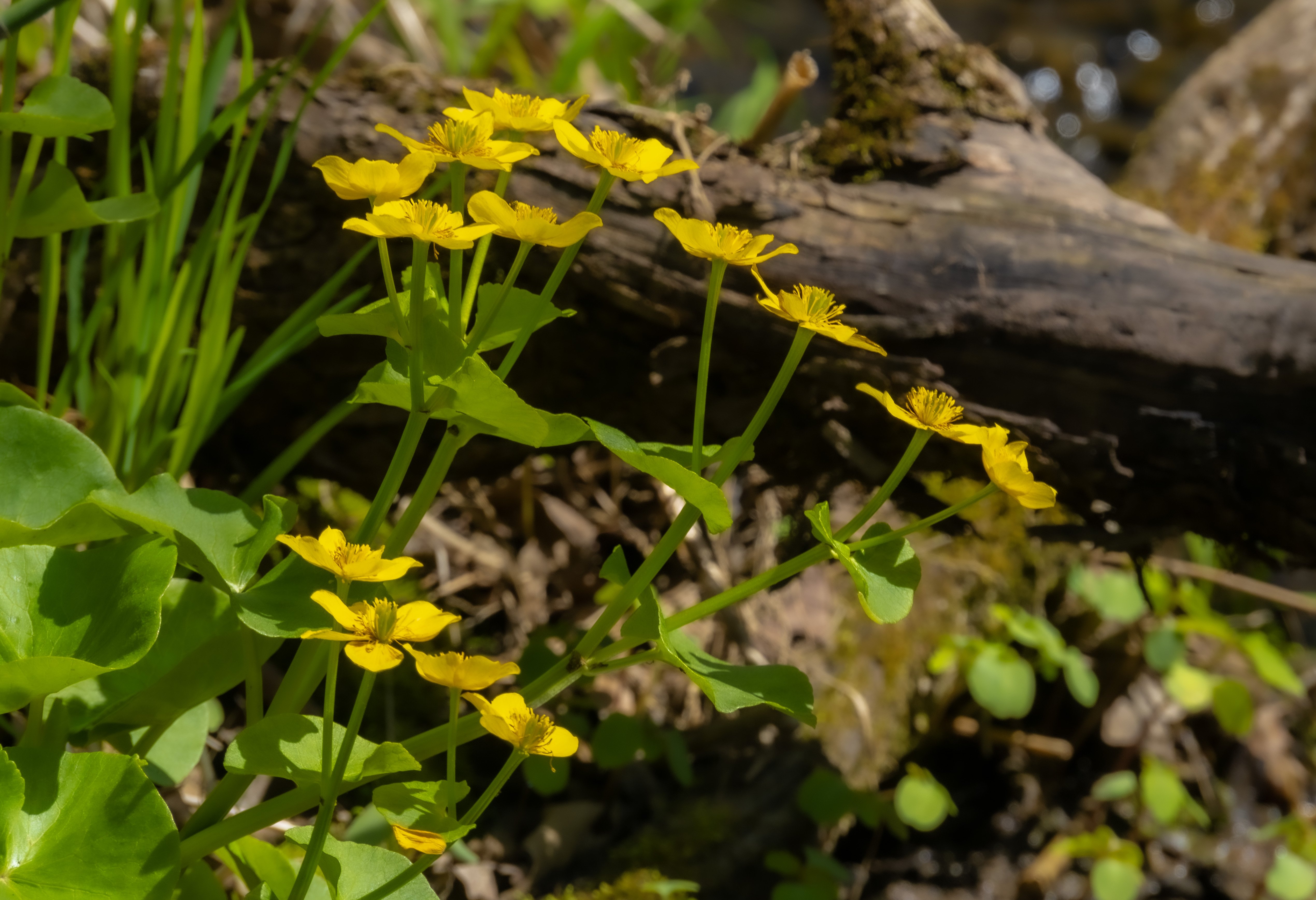
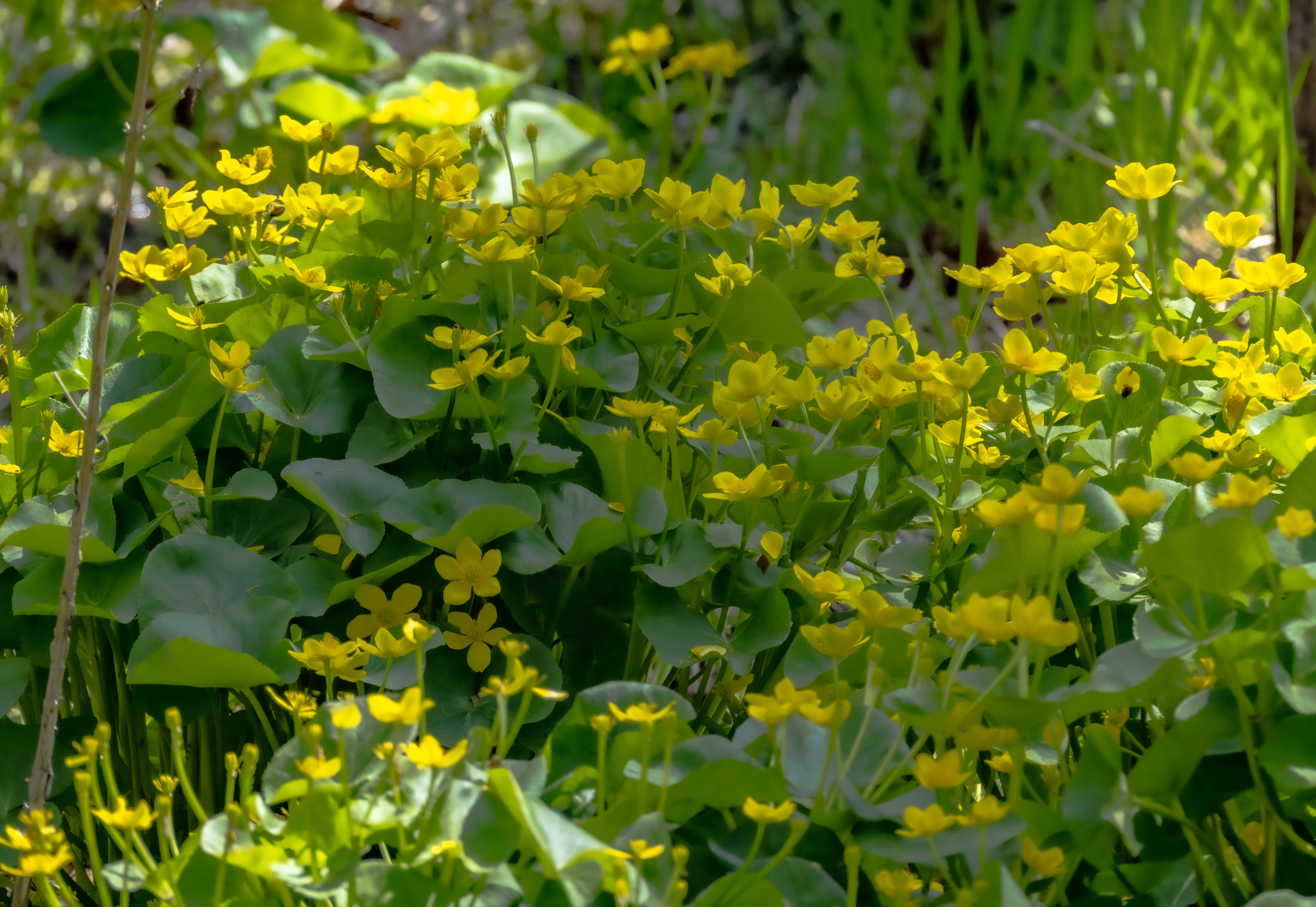
As we neared the Prairie Creek falls the dazzling yellows of marsh marigolds seemed to explode from the watery dampness. Seemingly acres of them, and all in mid-season form. With the harmonious sounds of the nearby falls one couldn’t ask for a more beautiful moment in nature. While others were drawn to the falls, my eyes were on the marigolds, of how they blended so perfectly with weathered wood and stair stepped their way up the glen toward the now distant trout lillies and the other woodland-based beauties of spring.

I find it so lovely here in this beautiful state park where the old growth Big Woods stands as a small memorable remnant of an ecosystem long-since destroyed for farming and commerce, much like the prairie that once extended from Canada to the tip of Texas was. Both are now basically erased from human memory. Like the pasques, trout lillies and marsh marigolds now offer a quaint reminder.

Nerstrand-Big Woods is one of a few of such remnants that the state of Minnesota has blissfully placed into permanent sanctuaries as state parks. Rice Lake State Park and Myre-Big Island State Park, due south of Nerstrand,  also come to mind, all laying east of the interstate highway. Once in the woods you can almost imagine these hills on the lip of the Driftless full of passenger pigeons back in Burroughs’ day as we can envision trout lillies and marsh marigolds hugging the nearby Canon and Straight River wildernesses for miles through dense woods.

Trout Lilies ... by Mary Oliver

It happened I couldn’t find in all my books
more than a picture and a few words concerning
the trout lily,


so I shut my eyes,
And let the darkness come in
and roll me back.
The old creek


began to sing in my ears
as it rolled along, like the hair of spring,
and the young gir
l I used to be
heard it also,


as she came swinging into the woods,
truant from everything as usual
except the clear globe of the day, and its
beautiful details.


Then she stopped,
where the first trout lilies of the year
had sprung from the ground
with their spotted bodies
and their six-antlered bright faces,
and their many red tongues.


If she spoke to them,
I don’t remember what she said,
and if they kindly answered, it’s a gift that can’t be broken
by giving it away.
All I know is, there was a light that lingered, for hours,
under her eyelids – that made a difference
when she went back to a difficult house, at the end of the day.

Winging it with the Birdman

We made it back in town in time to join a small caravan to Big Stone National Wildlife Refuge on chilly afternoon to hopefully catch some shorebirds passing through. Our leader was the “Birdman,” who has an encyclopedic recall of about everything you can expect on any bird you might encounter. Officially, Jason Frank is our head librarian who has given life to that aged institution not only in his selection of books and a more friendly organized layout for both kids and adults, but also in hosting seed propagation classes, art classes for both children and adults along with his birding expeditions. To me, though, he’s the Birdman!

As we eight stood on the wooden deck-like platform below the huge monolith of an outcrop with both mounted and provided spy glasses, binoculars and cameras, he spoke of our possible sightings. American Avocets, Yellowlegs, White-faced Ibises and perhaps even a pair of Western Grebes he suggested that seemed to hang around further down the road. As we waited with high expectations he explained various migration patterns, and explained that this Refuge was perhaps a halfway point between the arctic breeding grounds and their wintering below the equator. Here, like the Sandhill Cranes and Snow Geese find in central Nebraska each March, the passers-through hope to rest and fatten up before the next good southerly wind.

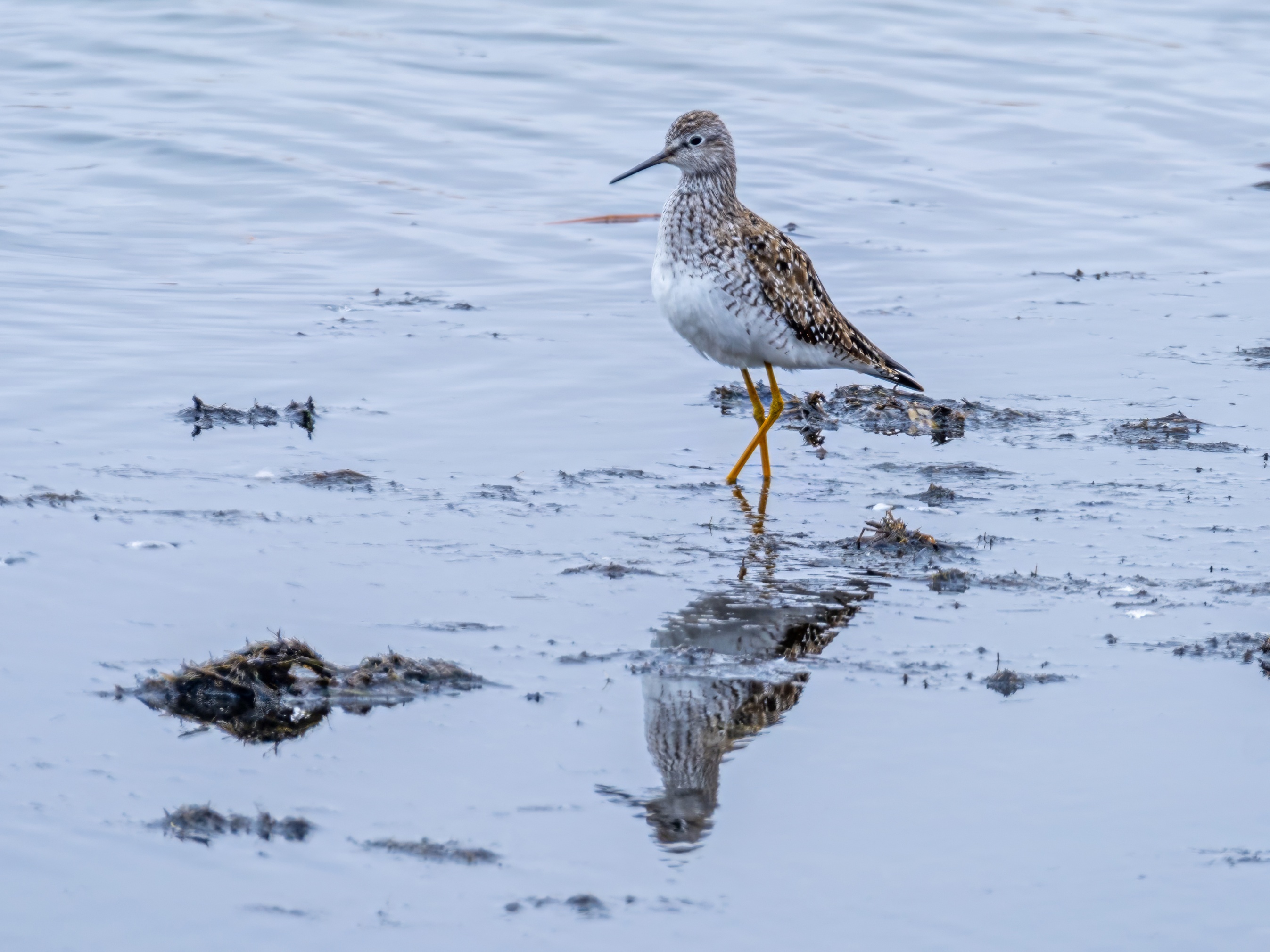
A Greater Yellowlegs was our only shorebird sighting.

“You never can predict when they’ll leave,” the Birdman explained. “Some night, when the southerly wind is just right, they’ll rise in the sky to catch a current and they’ll be gone. That’s how they cross the Gulf of Mexico and the Caribbean. Hummingbirds do the same thing. Often they’ll find that current a few hundred meters high in the sky.”

For years Frank organized the annual Salt Lake Birder’s Weekend at nearby Salt Lake, just southwest of Marietta. That event draws dozens of birding enthusiasts from throughout the Midwest. He’s also a co-organizer of the annual Audubon Christmas Bird Count. This is on a December Saturday, and I’ve joined the count for the past several years. This past December Jason and I shared a car taking in the “pie wedge” from Big Stone Lake State Park to Clinton, our slice of the circular pie that extends from Marsh Lake and the Refuge into South Dakota that surrounds our town of Ortonville. Our slice is a beautiful stretch that includes nearly a dozen wetlands, woody  ravines and both abandoned and lived-in homesteads surrounded by old-wood windbreaks. Several overwintering arctic species can be counted along the roadsides. 

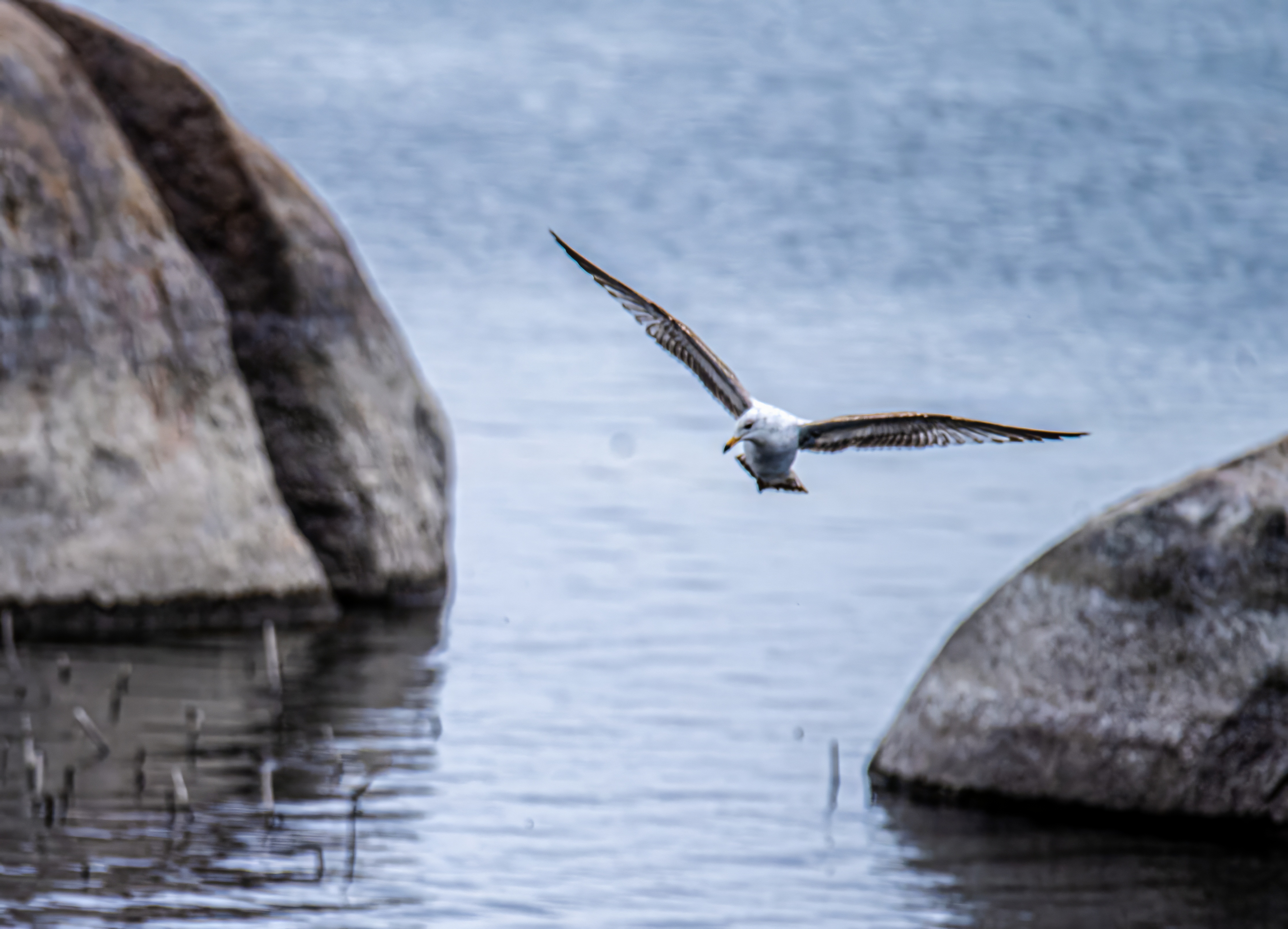
Ring-billed Gulls provided us with beautiful flight along the drive.

We’re fortunate to be living in a birding byway thanks to the multi-state “chain” of waterways that includes the tri-state stretch of the Missouri River up to our neck of the woods that eventually includes the headwaters of both the Minnesota and Red Rivers along with various potholes and river lakes. Another bonus is that we’re on the fringes of both the Eastern and Western flanges of the flyways.

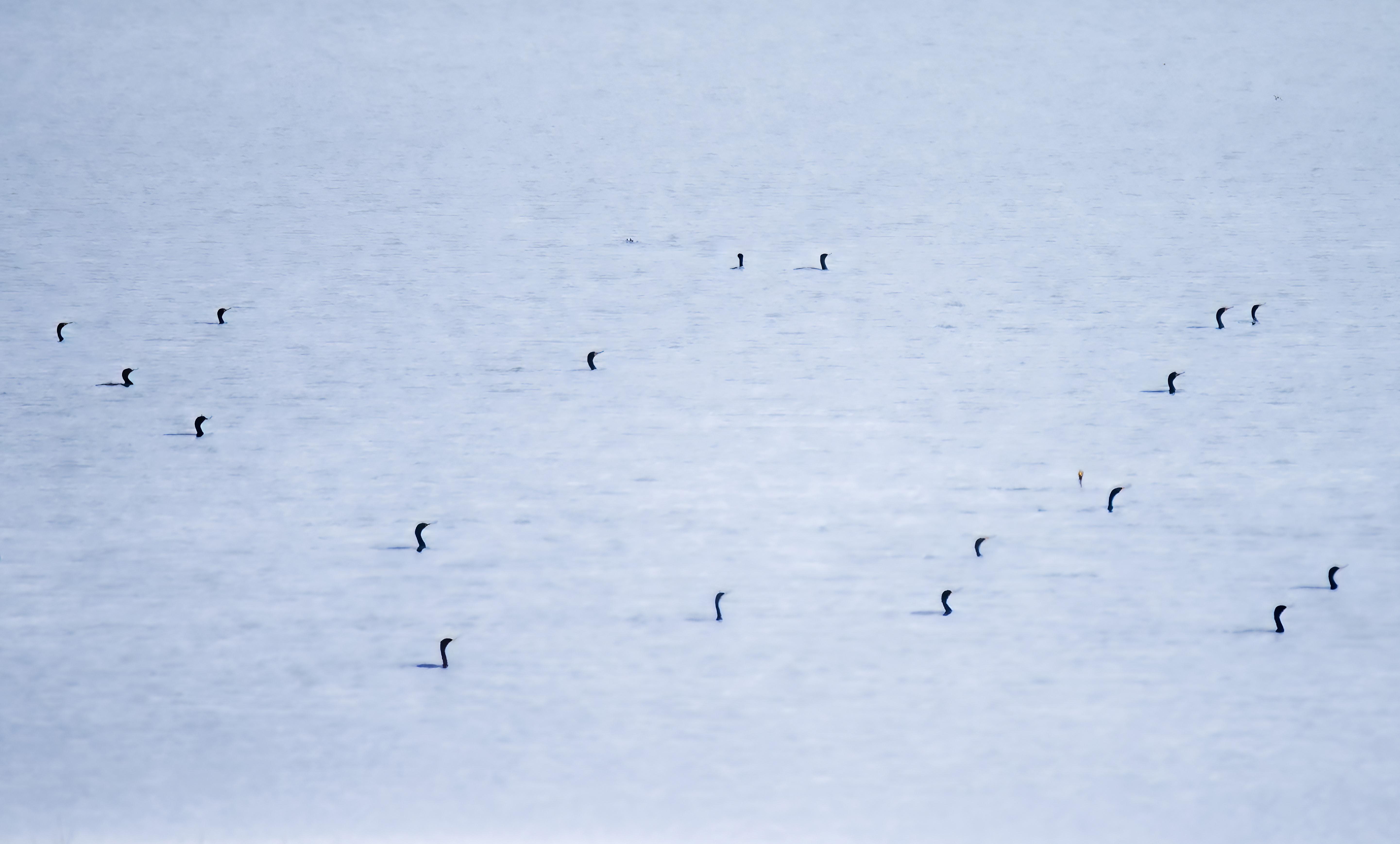
As the Birdman talked we eight scanned the water’s edge and looked up into the grayish sky. As can be expected, cormorants commanded the shallow waters in front of us. Many people, and by this I mean mostly fishing fanatics, have a jaundiced view of these interesting, fish-eating birds who seem to spend as much time underwater as they do on the surface. Of all the feathered species, cormorants with their hooked beaks and body shape, appear to me as the most remnant prehistoric-looking of all the bird species and personally I can’t seem to get enough images of them. I’m simply fascinated.

Ah, but the cormorants, so prehistoric looking. To me, so poetic.

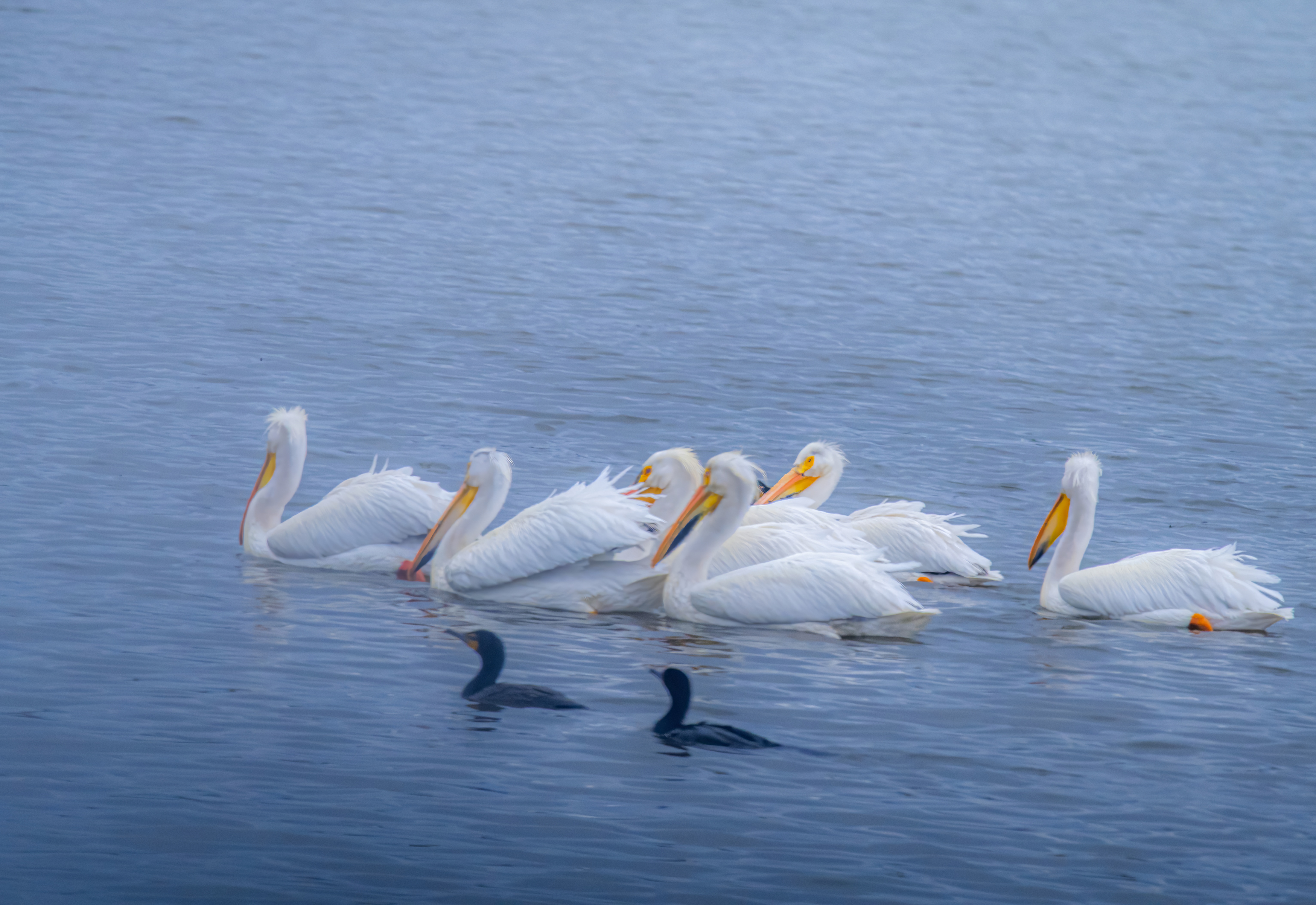
White Pelicans made flights over us, and cruised the waterway along with the cormorants. Every species spied brought more information from the Birdman, the pelicans included. He explained that the next Minnesota River “lake” … Marsh Lake …  downriver typically hosts around 20,000 breeding birds on a remote island, and that the ones we were actually seeing were immature birds younger than five years of age. 

With a chilly breeze some of us were becoming antsy, and the decision was made to return to the motor drive where he suggested at least three possible sites along the shore for the shorebirds. As we drove we did pass a single Yellowlegs, a skitterish bird who quickly waded away as if it didn’t want any attention. Frank then explained how shorebirds use different techniques to capture their food, and that most seemed to have specific diets. One species swirled its beak to stir up vitals, for example, while other probed and pecked at the muddy shoreline for morsels. As he pointed out various identification markers I realized my long-time friend was perhaps a savant with an unlimited ornithology knowledge. As he talked, Ring-billed Gulls circled overhead and along the shore. Ducks were both airborne or working the shallows, including a few Shovelers …. a beautiful species with the long bills. And the information just kept coming.

Pelicans and cormorants share a wetland waterway.

This wasn’t going to be a day for the shorebirds, however, and the lone Yellow Legs was our only sighting. As we turned the corner along the western shore of the West Pool several more pelicans and cormorants worked the waters. Three Great Blue Herons were working the weedy bank to the east. This wasn’t quite the end, though.

He told of a possible sighting of a beaver family on one of the bends of the Minnesota River along perhaps one of the more interesting and beautiful quarter mile stretches of Big Stone County roadways. “Earlier this week I caught the parents teaching their growing youngsters how to build a dam,” he explained.

Oh, and there was an eagle’s nest along another river bend where he told of watching one of the eagles land with a fish, and began tearing it apart to feed the two newly hatched eaglets. Earlier on the deck he pulled out a paper to show the markings that distinguished the differences between an immature Bald Eagle and a Golden, for often the  immatures are mistaken for the larger, more western-based Golden.

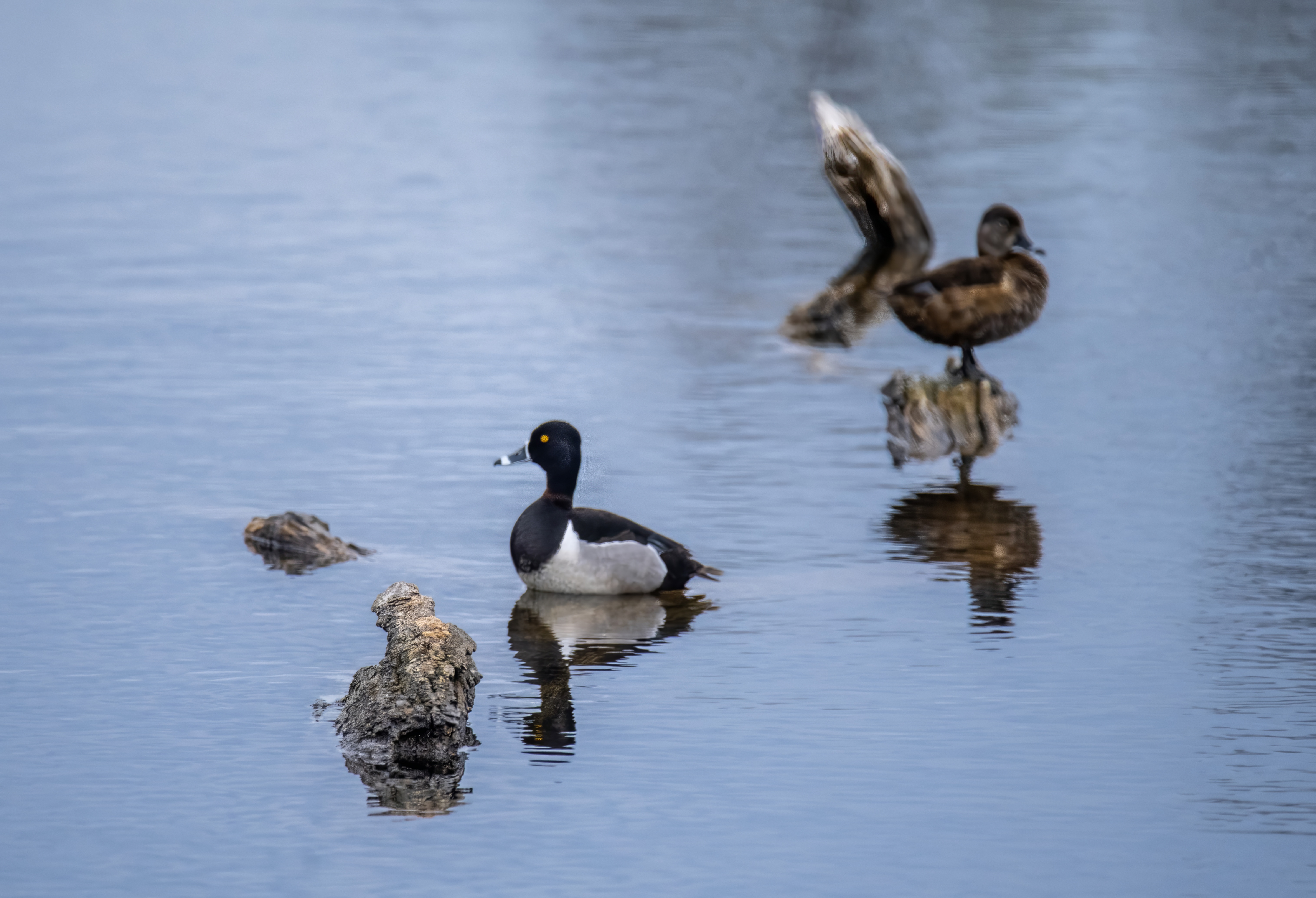
As a fitting conclusion to a delightful tour, Ring-necked Ducks was a benediction.

In all, the Birdman was clearly in his element for the 90 or so minutes we were on the tour as tidbits of birding life and identification continued to emerge. Jason does so rather matter-of-factually, and it seems to roll off his tongue as common conversation. 

We slowed to check the bends for the beavers, and again for the eagle’s nest before catching the route out of the Refuge. On a small wetland where I’ve photographer dozens of ducks over the years, a male and female Ring-necked Duck rested on weathered stumps. Stoic and beautiful, they seemed a fitting conclusion to an interesting early evening of birding, all under the gifted direction of the Birdman.