A Lingering Light

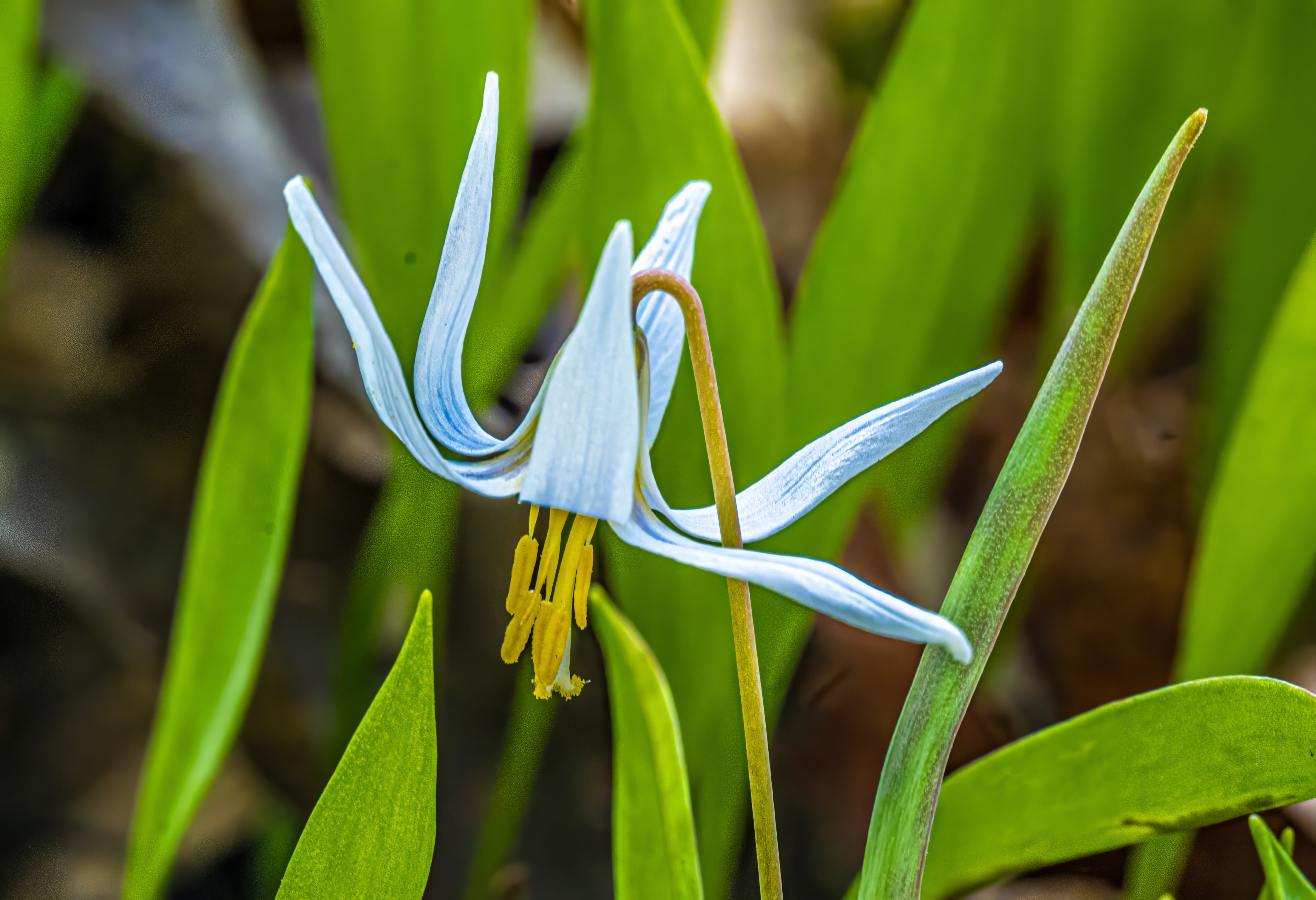
How is this for good company within a delightfully sunny woodland? Kneeling in thought beside me as I focus my lens on our collective favorite brilliant harbingers of spring, the lovely trout lilly, are the aged-old naturalist John Burroughs and the delightful poet Mary Oliver. My mental companions would no doubt be loving every moment of this sun-blessed morning in the wooded hills of Nerstrand-Big Woods State Park just as I was as those tiny and delicate flowers reached preciously from the stem, hugging the white and yellow stamens.

Although I can’t recall the exact moment of a social media message that offered a much needed sprig of hope in these trying times, there is no uncertainty of the muse: “Now is the time to head to Nerstrand-Big Woods for the trout lillies and marsh marigolds!” read the message.

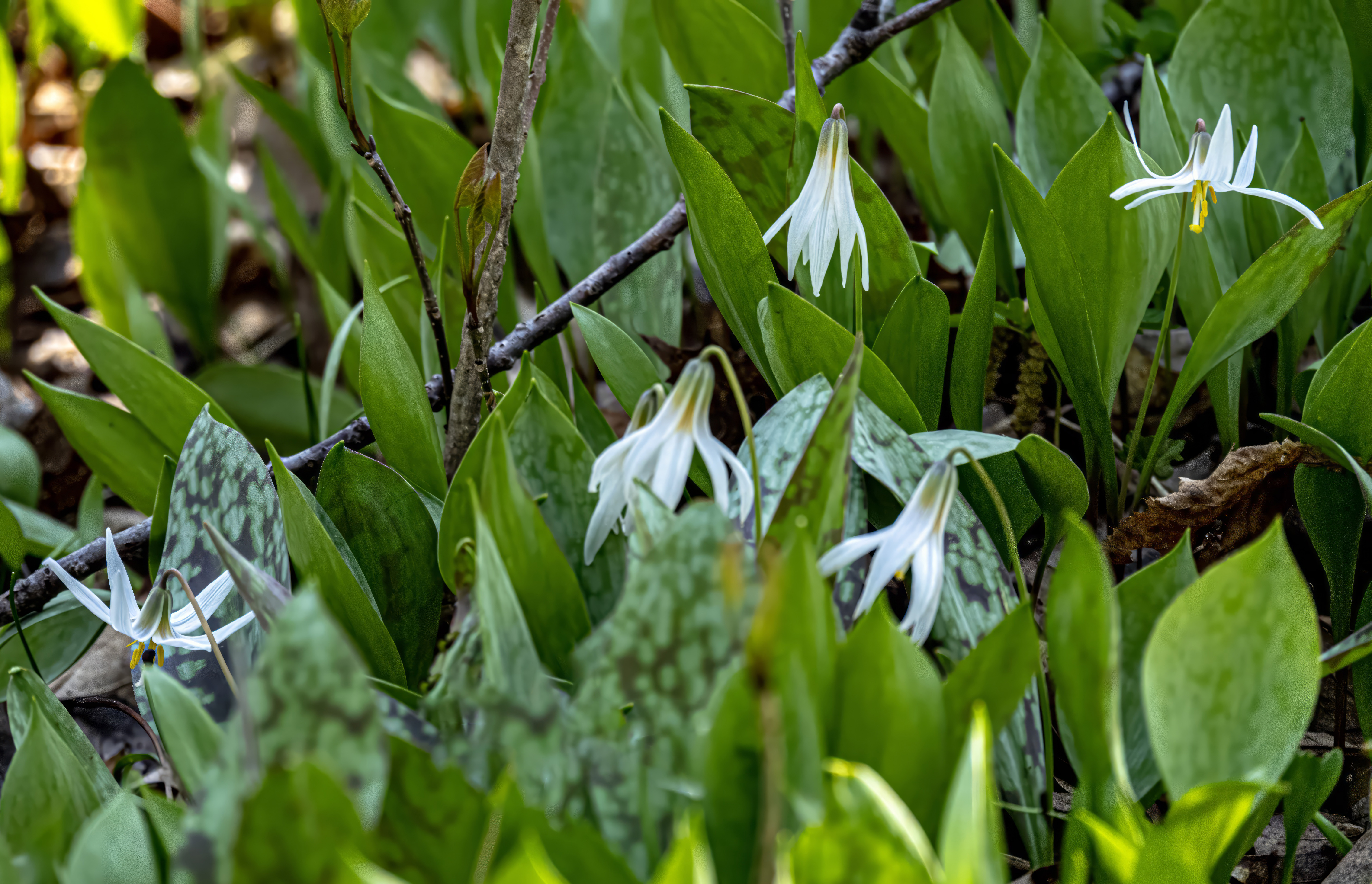
Both are wood-harbored wildflowers that offer as much hope and joy of spring as pasque flowers give us here in the grassy prairie. When I’m near such a shady ecosystem this time of year, both species are difficult to resist. Burroughs spoke of the possible reason behind the common name by pointing to the leaves he claimed seemed  “painted” like a flank of a freshly caught trout. Oliver? While her’s was the more easterly located yellow trout lilly, there is little doubt that seeing them here in the hills of Nerstrand would likewise have given her hope in these trying times as she painted so beautifully in her poem on trout lillies.

“All I know is,” she wrote upon seeing trout lillies in bloom, “there was a light that lingered, for hours,

under her eyelids – that made a difference

when she went back to a difficult house, at the end of the day.”

It was about this time a year ago when an overheard mention of trout lillies being in bloom near Nerstrand-Big Woods State Park caught my attention. We were about an hour north at a gallery where my canvases were hanging when naturalist and former State Senator Tedd Suss, whose spacious little farmstead lies just outside of the park, offered the information to a friend of his. Interestingly, earlier in the day we had walked the wooded path on the grounds of the Izaak Walton League’s gallery in search of various wild flowers including trout lillies.

Suss assured me there was a significant chance of photographing them so after our reception we added a couple of hours to our drive home to check out the park. Initially we were disappointed for no matter where we looked on the path downhill toward Hidden Falls there wasn’t a blossom to be seen. Then, on a set of wooden stairs created to perhaps ward off a nasty face plant on the rocky path, we met up with two women where pleasantries were exchanged. Within that my intent was spoken, and one of them said, “Oh, my. You’re much too late for those beautiful little lillies are long gone.”

Imagine my disappointment. Regardless, or perhaps in thoughts of dire protest, we continued our search into then knee-high growth along the pathway when suddenly Roberta asked, “Is this what you are looking for?” And, it was. Eventually we found about a half dozen hidden within the tall greenery in full maturity, and my sigh of recognition and relief perhaps fluttered those delicate white petals.

And, this time Mr. Suss was correct, for I had texted him before we left on the four hour, one-way drive. We were a week to ten days earlier this year, and yes, hundreds of them poked from the molted shade. In all stages, from pre-bloom to maturity. And yes, Burroughs’ description of the dappled leaves offered obvious evidence.

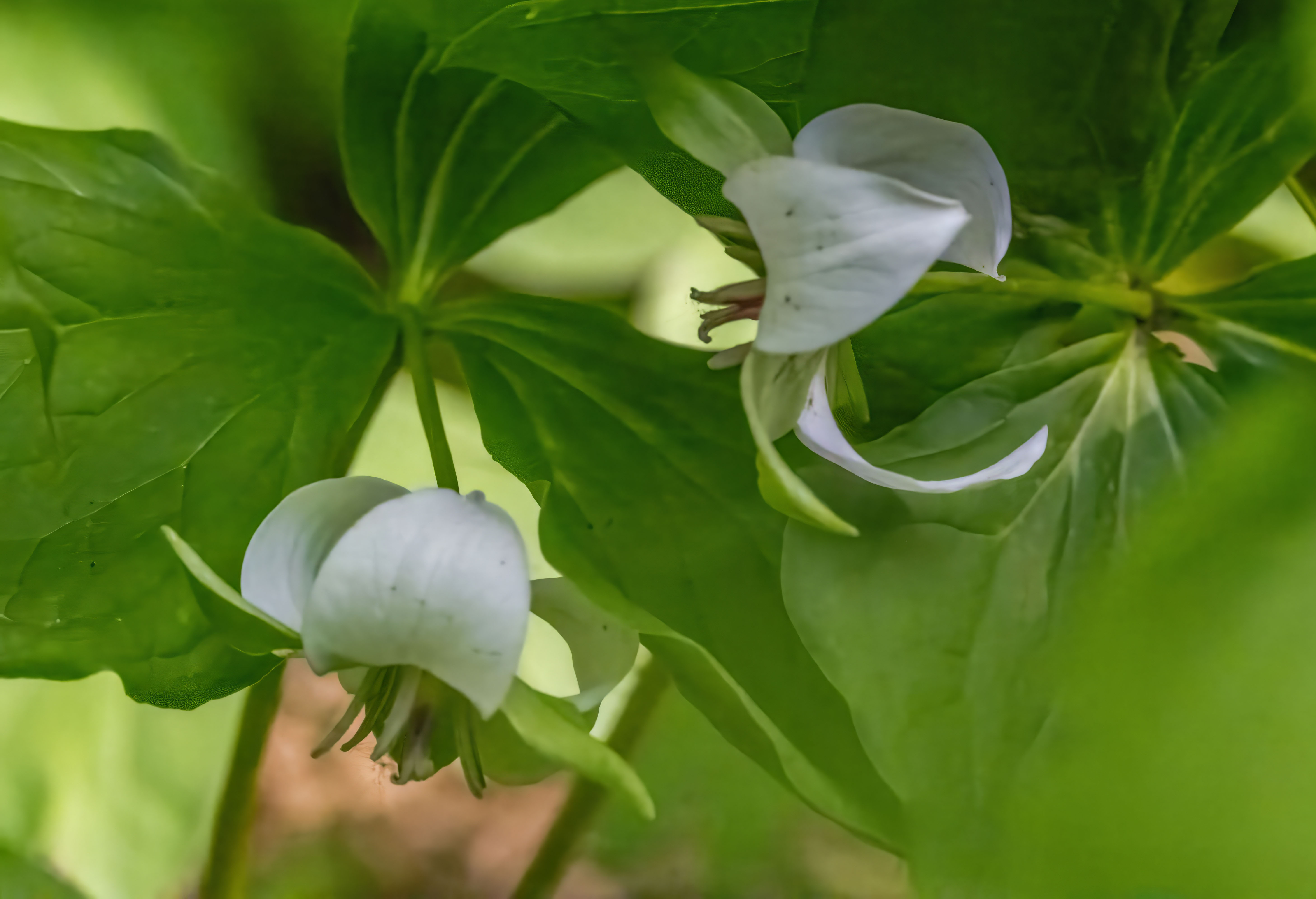
Among the lillies were other beauties of the woods including Jack-in-the-pulpits, wild blue phlox, hepatica, Dutchman’s breeches and those yellowish bellworts. We spied some trillium aching to blossom. Yet it was the trout lillies that drew me in. Delicate white petals hugged the stamens on the newly bloomed, their curtains widened with age. A slight breeze gave them the look of dancers offering a delicate ballet within the woodlands.

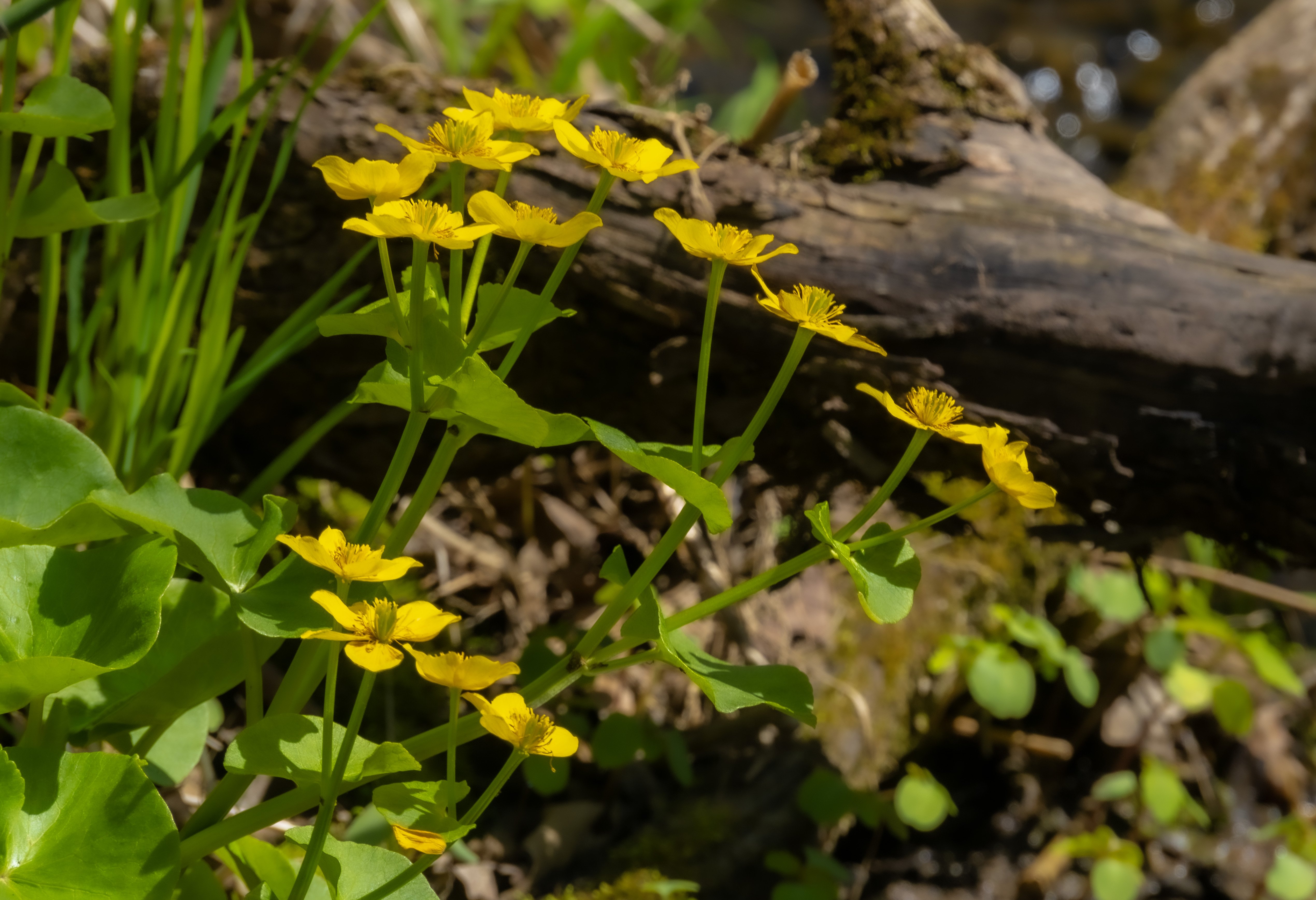
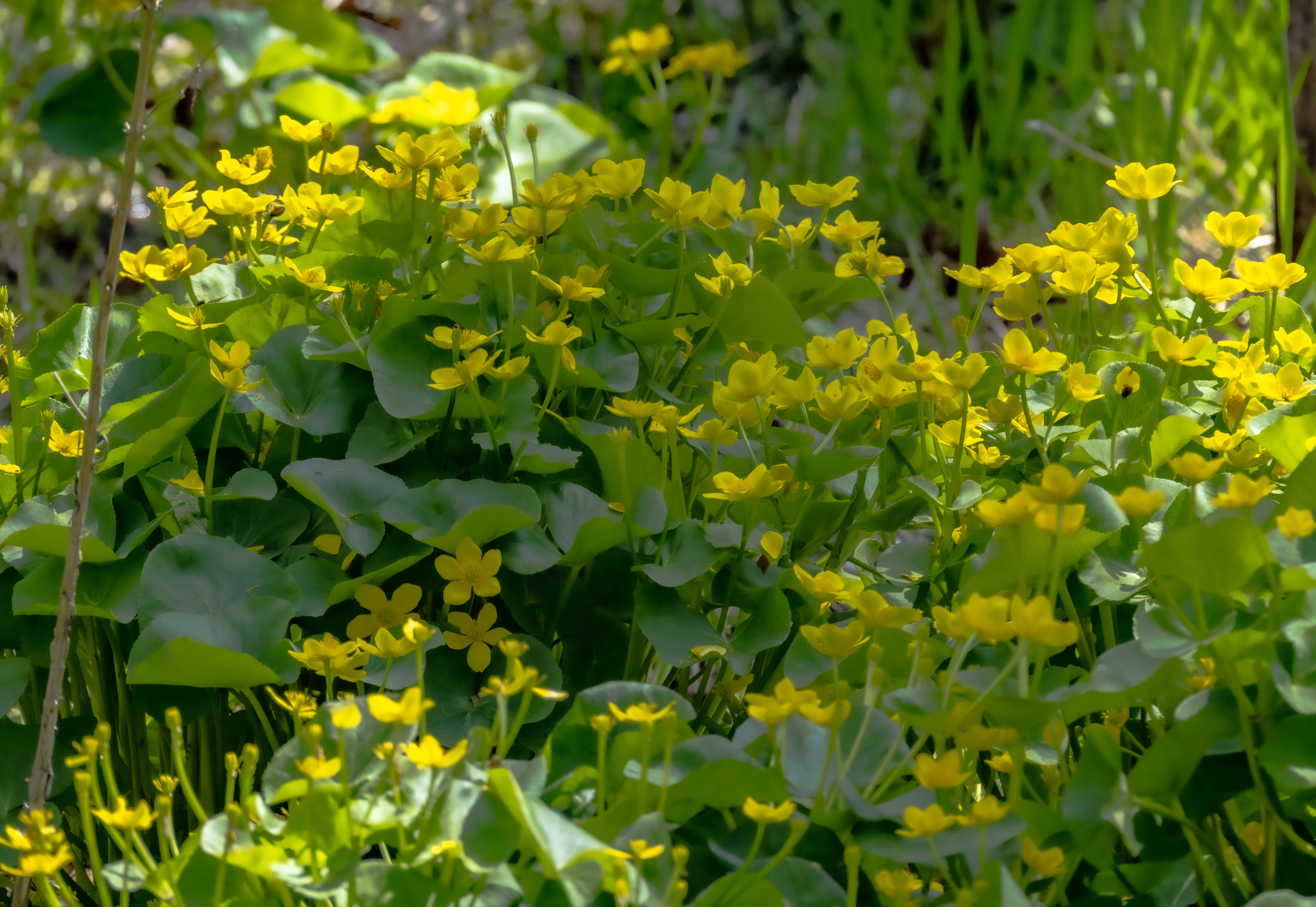
As we neared the Prairie Creek falls the dazzling yellows of marsh marigolds seemed to explode from the watery dampness. Seemingly acres of them, and all in mid-season form. With the harmonious sounds of the nearby falls one couldn’t ask for a more beautiful moment in nature. While others were drawn to the falls, my eyes were on the marigolds, of how they blended so perfectly with weathered wood and stair stepped their way up the glen toward the now distant trout lillies and the other woodland-based beauties of spring.

I find it so lovely here in this beautiful state park where the old growth Big Woods stands as a small memorable remnant of an ecosystem long-since destroyed for farming and commerce, much like the prairie that once extended from Canada to the tip of Texas was. Both are now basically erased from human memory. Like the pasques, trout lillies and marsh marigolds now offer a quaint reminder.

Nerstrand-Big Woods is one of a few of such remnants that the state of Minnesota has blissfully placed into permanent sanctuaries as state parks. Rice Lake State Park and Myre-Big Island State Park, due south of Nerstrand,  also come to mind, all laying east of the interstate highway. Once in the woods you can almost imagine these hills on the lip of the Driftless full of passenger pigeons back in Burroughs’ day as we can envision trout lillies and marsh marigolds hugging the nearby Canon and Straight River wildernesses for miles through dense woods.

Trout Lilies ... by Mary Oliver

It happened I couldn’t find in all my books
more than a picture and a few words concerning
the trout lily,


so I shut my eyes,
And let the darkness come in
and roll me back.
The old creek


began to sing in my ears
as it rolled along, like the hair of spring,
and the young gir
l I used to be
heard it also,


as she came swinging into the woods,
truant from everything as usual
except the clear globe of the day, and its
beautiful details.


Then she stopped,
where the first trout lilies of the year
had sprung from the ground
with their spotted bodies
and their six-antlered bright faces,
and their many red tongues.


If she spoke to them,
I don’t remember what she said,
and if they kindly answered, it’s a gift that can’t be broken
by giving it away.
All I know is, there was a light that lingered, for hours,
under her eyelids – that made a difference
when she went back to a difficult house, at the end of the day.

That Hue of Blue

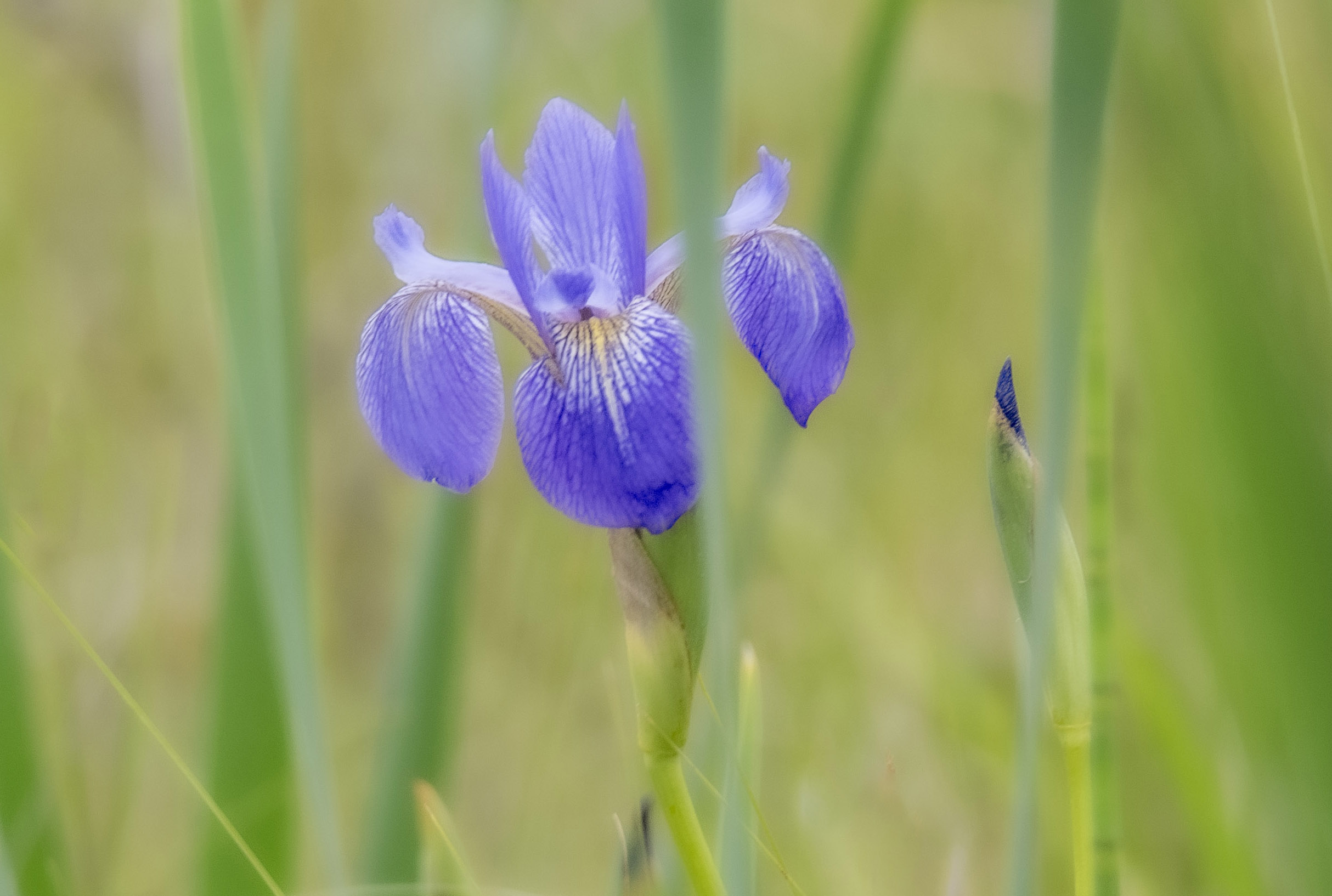
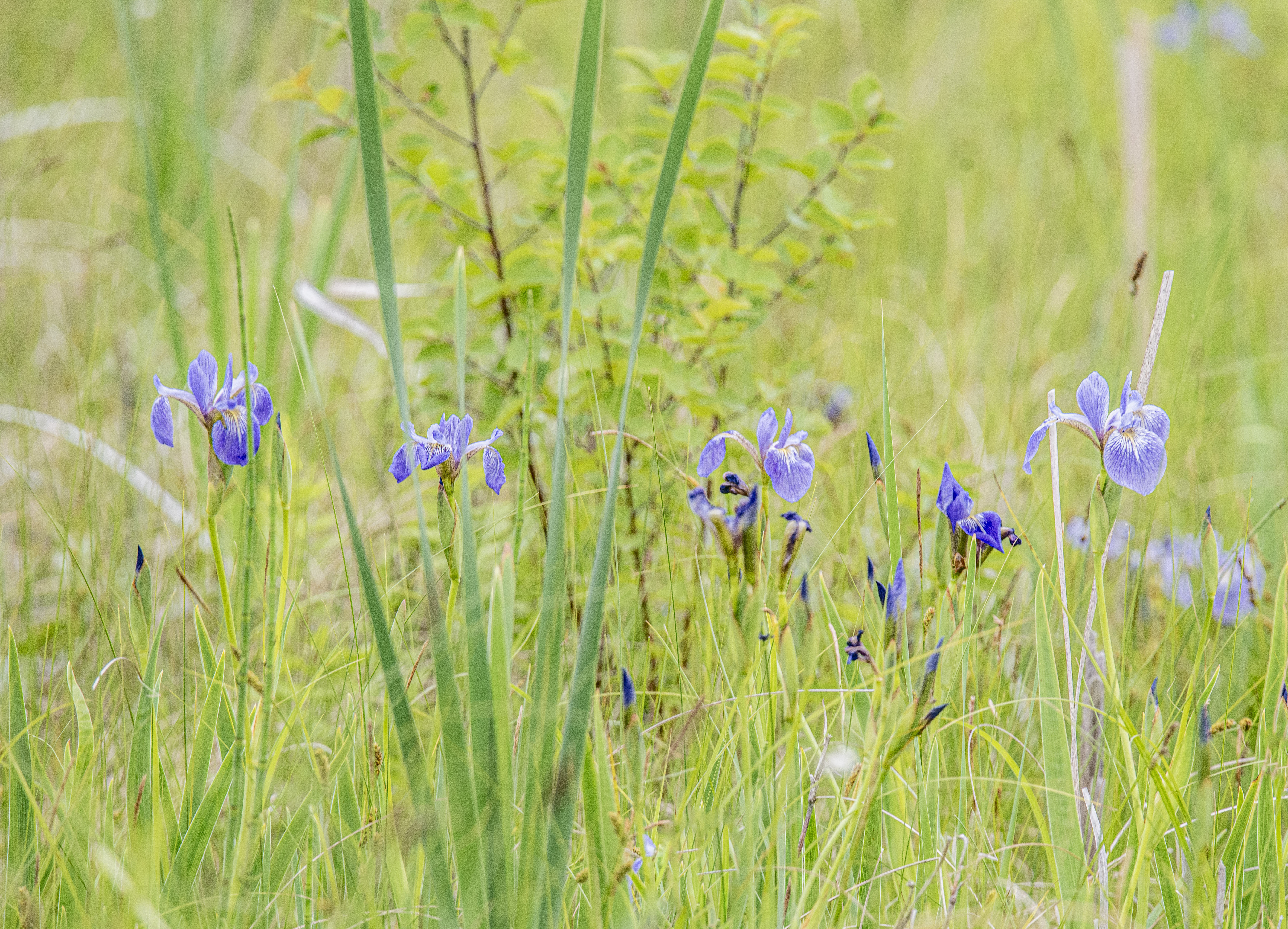
Several years ago while driving toward Blackbird Trail, that winding sweetheart of a drive through the Tamarac National Wildlife Refuge near Detroit Lakes, my eye caught a lone beauty of an interesting flower that I couldn’t believe was either “native” or “wild.” Yet there stood a beautiful lone blue iris, radiating and standing tall against the greenish nearby native marshy plants … with exception of the adjacent gangly cattails.

Was this some sort of garden remnant? Did someone luckily hoist a bulb into the marsh from the graveled road? 

After returning home a little research confirmed the identification, noting that Minnesota actually has two closely related “Blueflags” or native blue irises with territories divided on a loose geographic border drawn horizontally across the state from our largest city. Iris versicolor is the northern and predominant species from the Twin Cities up into Canada while Iris virginica similarly reaches from the Twin Cities south toward the Texas coast. 

According to the scientific explanation the upstate species is typically more richly pigmented on the outer sepal edges, fading lighter towards the “throat” with veins prominently tinted toward a faded greenish yellow. While microscopic characteristics might cause a botanist to giggle, the northern iris is typically a darker blue than its faded cousin. There! Science has spoken. 

Now here is a bit of poetry, thanks to Margaret Atwood’s “The Handmaid’s Tale” — “Then we had the irises, rising beautiful and cool on their tall stalks, like blown glass, like pastel water momentarily frozen in a splash, light blue, light mauve, and the darker ones, velvet and purple, black cat’s ears in the sun, indigo shadow, and the bleeding hearts, so female in shape it was a surprise they’d not long since been rooted out.” 

Science, or blown glass like a pastel splash of velvity water, these beauties stand awash in the nearby greenery of Tamerac, catching a wandering eye like a thin metal washer drawn instantly to a demanding magnet.

While we had a free day and a will of once again hopefully capturing blooms of both the yellow and showey ladyslippers that bless this northern refuge, I also held hope that we might catch the wild blue of irises in bloom. All three wild flowers came through splendidly along with a host of other colorful wild flora. We were blessed. 

Not so much by the fauna, however. Not one songbird, including the fluttering and shy warblers, allowed me a moment. While the swans were cooperative, we had some near misses along the way: a grouse with three chicks slithered like spies deep into the trail grasses before scooting out to escape my hungry lens into the dense woods. This was just moments before I caught sight of a beaver in my rear-view mirror tugging a six foot willow branch by the clamp of his teeth while charging across the motor trail in a beaverish waddle. Like the spy-like grouse, it dragged the branch through the dense woody underbrush while successfully remaining obscured by the leafy branches. We then came over a rise to find a bald eagle posed perfectly on a branch of a dead tree. I quickly raised the camera although apparently not rapidly enough. My image was of the perfectly weathered grayish branch, a bunch of blue sky and the feet and butt of the rising raptor. Ah, but those wild irises!

It was in the midst of all that commotion that we finally came across the irises. In three distinct locations, each marshy, each different and distinct from the other. On our last sighting a broad curved broad grassy looking leaf of a plant would have made a nice arc over two near perfect younger blossoms. Without hip boots, though, my idea of making an image with a composition of the plants beneath the arc of leaf simply didn’t work. A thought of wading into the marsh with the hordes of mosquitoes was as much of a deterrent as was the possibility of sinking knee deep into the muck. Even laying onto the gravel didn’t provide the angle I envisioned. It was what it was. Welcome to nature. And those were the last of the dozens of irises we came across.

Our first batch was quite numerous, and I actually let out an exclamation of delight when they initially came into view. Time had played a role in their aging, however, with spent blossoms hanging blackish along with those struggling to grasp their fading beauty. What can one do when faced with these situations in nature? You simply do what you can. Between this incredible array of blossoms and those arching above the arc, we found another set that hadn’t aged so distinctly. Being partially shaded, it seemed, might have helped. This batch allowed me to play with light and depth of field, those tools of our odd trade. Perhaps too much time was spent attempting to create a bit of art from such a wonderful blessing of nature.

Yes, it was delightful to once again see the rich blues of the irises, along with the white and pink of the showeys. Those vivid colors of the yellow ladyslippers and the bright crimson of the columbines added joy as well. My partner, Roberta, suggested on our way home that I was smiling. Internally there was certainly a sense of peace and joy, that those six hours of drive time had been well worth the effort. 

Sometimes these seasons I photograph, be they birds, trees, prairie grasses or native flowers, help me check off a mental list. Do I need more images of wild turkeys fluffed in sexual desire, or the first poking of pasque flowers through dormant grasses after another long and dreary winter, or of those lady slippers I chase from the prairie to the northern woods as was the reason for this drive, or even the pastel waters of little black cat’s ears in the sun? As a naturalist and photographer, though, these are seasons of life, of nature, of the knowledge that for one more year all is surviving nicely in the natural world. Myself included. So yes, I was smiling! 

Balls on the Outcrops

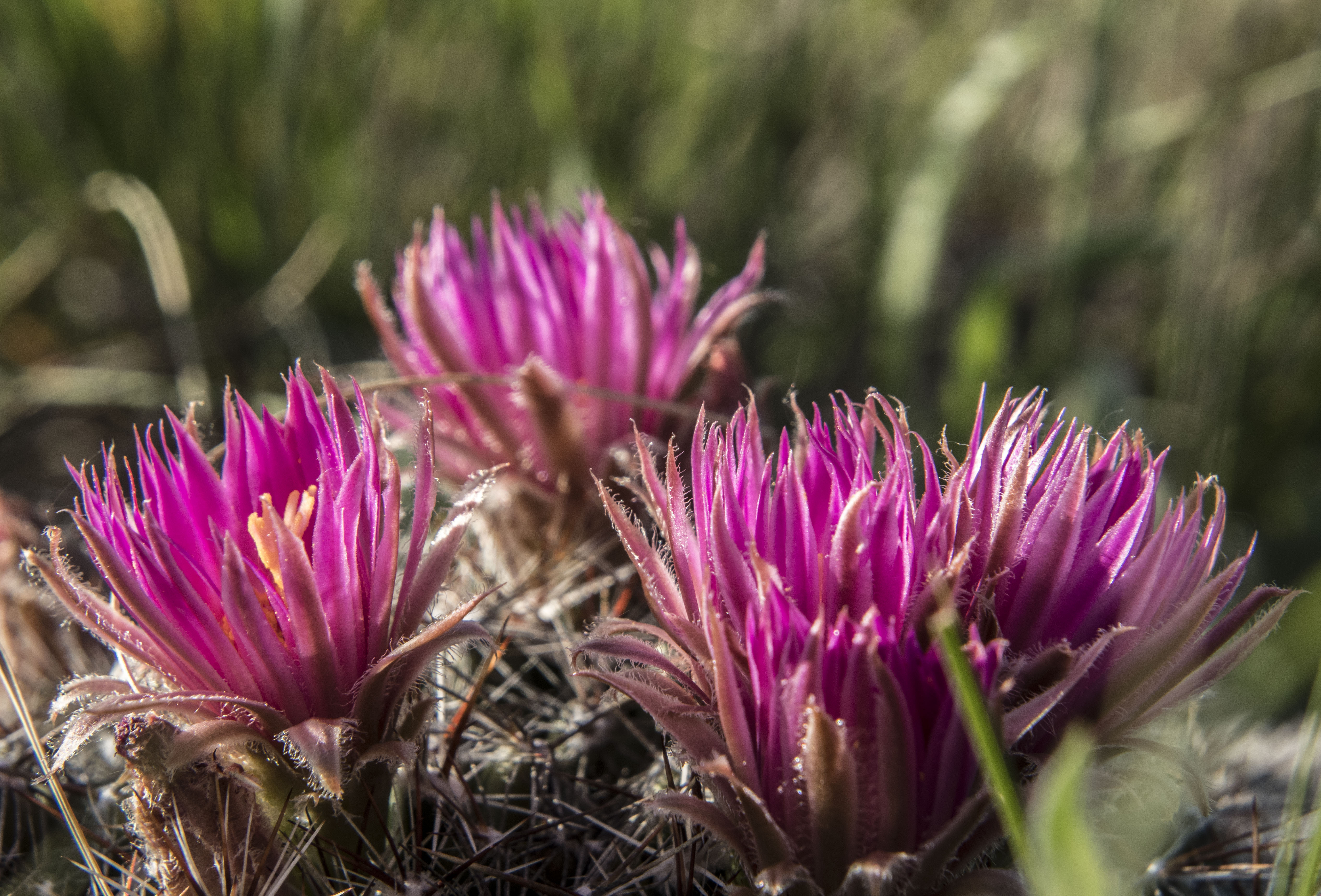
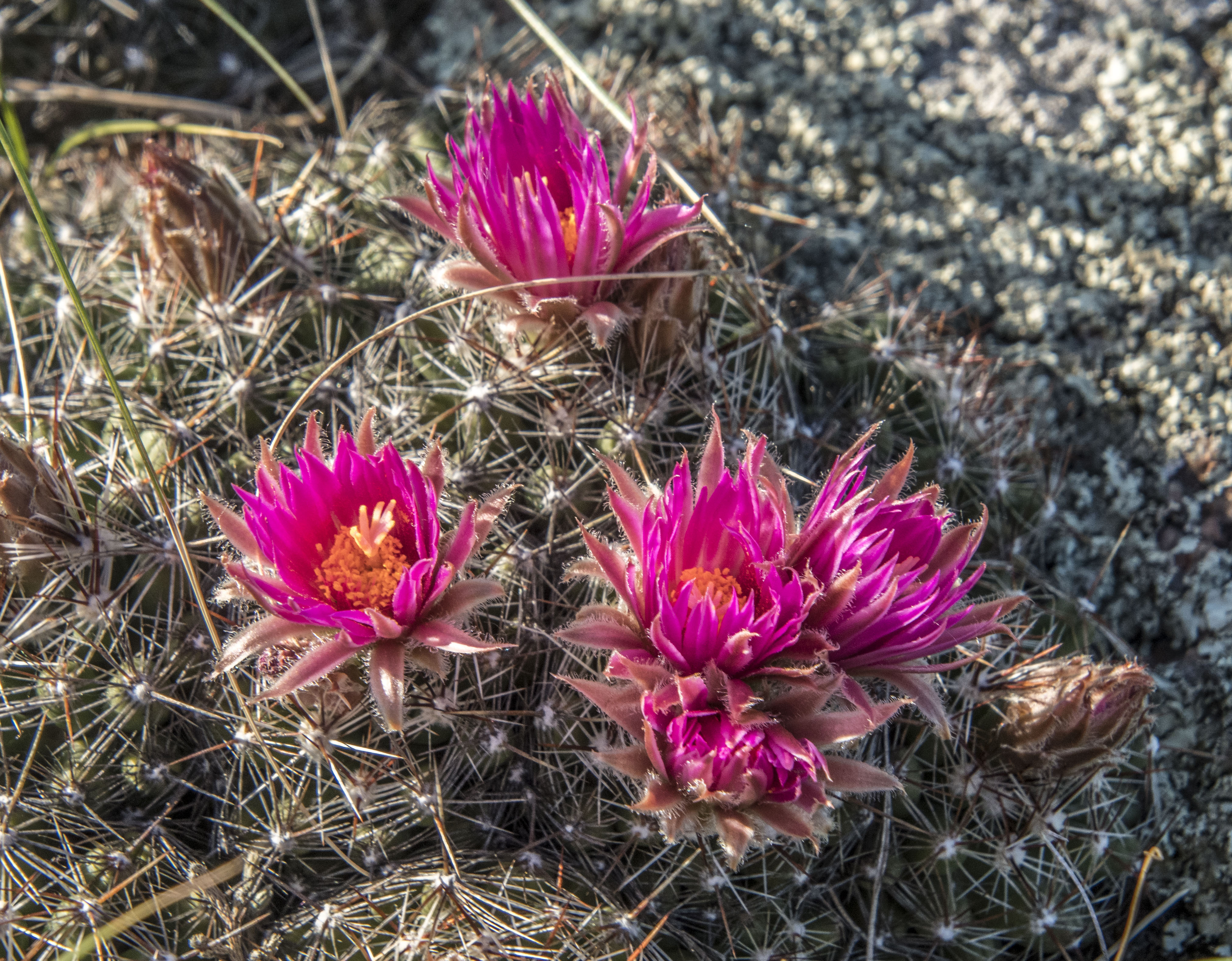
Ball cactus (Escobaria vivipara) are not only extremely rare, they’re also apparently rather shy in showing off their magnificent stark red and yellow blossoms. Catching them in their full glory has been a personal quest come June for several years, so imagine both my surprise and delight the other day when we climbed onto one of the granite outcrop flats at Big Stone National Wildlife Refuge and found not one, but literally dozens in full bloom.

After several moments of looking for different angles and light possibilities, my eye caught a minute bright red spot on a neighboring granite flat about 20 meters away that was perhaps surrounded by some of the other rare plants of this ancient biome to grasp my interest. How fortune seemed to have blessed me in this particular moment, for it was there I found an almost perfect image of the blooms. 

This trio of ball cactus blooms caught my eye from a distant outcrop.

We are actually quite blessed to have such a wonderful and beautiful resource near us, from the outcrops to increasingly rare birds like bob-o-links and nighthawks, and to all the water-friendly species who find this patch of ancient prairie, stocked with bedrock outcrops, such a haven. Almost every trip around the circular drive yields nice imagery for me to photograph, and I seem to be drawn here several times a week and usually come home with what in the old film days would be three or four rolls of film. Finding the balls in bloom, though, just about tops the list.

About the size of half a tennis ball, with long protective spikes, the small cacti seem to cluster in packs in a unique ecosystem that has somehow survived several thousands of years since the dam broke on glacial Lake Agassiz to form the glacial River Warren, which scoured the valley and exposed some of the oldest rock in the world bringing along a small collection of quite rare plants. Those with knowledge say that the ball cacti are found only in a small two to three mile area, and only in the crevices and kinks of the original granite bedrock exposed by the ancient river.

Small clusters were found across the flats of the outcrops to add incredible beauty to the hard granite outcrops.

Although small, the cacti might be huge for the security of these sacred and holistic outcrops between the Refuge and the town of Ortonville, for their vulnerability may be the only hope remaining to prevent the gravel mining company that purchased this area from creating a new, deep gravel pit mining operation that will basically destroy a rare and beautiful relic of glacial history. It was while writing stories on what was known as the Strata Conflict about a dozen years ago that a local historian, Babou Don Felton, pointed out my first viewing of a small cluster of ball cactus on a hike across the acreage. At the time I doubt that any of us realized just how powerful that rare little cacti might be.

Nor did I realize back then the beauty of their blooms, and wouldn’t until a few years ago when State Park Manager Terri Dinesen published her photograph of one of the blooms from the refuge on a social media site. Since then I’ve been hooked, so much so that when Madison Eklund, the first kayaker and first solo woman to paddle the Canoeing with the Cree trip to the Hudson Bay, was resting here for a few days, we made trips in hopes of seeing the blossoms. We were “skunked.”

Since several dozen trips have been made to the Refuge in search of the blooms, a quest that started a few days after Terri made her post. Yet, I had northing. After several attempts, sometimes making three trips in a day to the Refuge hoping for the just the right circumstances of light and heat or whatever, I sent her samples of my images in frustration to which she suggested I might have been too late. That the blooms were already gone.

According to the Center for Plant Conservation, ball cactus (one of three native cacti in Minnesota) was probably found more frequently and on a broader basis on drier, thinly vegetated prairie habitat, but it was eventually reduced to only undisturbed granite surfaces like found just south of Ortonville and into the refuge. 

According to its website, “Granite and quartzite outcrops in Minnesota are home to ephemeral pool habitats – shallow depressions where water can pool for a few weeks each year. These accumulate biotic matter and host several plants rare to the state, including Bacopa rotundifolia and Heteranthera limosa (both state Threatened). With only one ball cactus population left in Minnesota, it is hard to generalize about its preferred local habitat, but it appears to favor moss shields that occupy some of the same kinds of shallow depressions that form ephemeral pools. The plants also hug cracks in the granite and may even anchor an accumulation of duff and moss material around them as prairie winds blow over the rocks.”

A few days after catching the height of the bloom, the party ended. It was delightful while it lasted!

The Center applied for and received a grant to collect seeds from a nearby quarry site and since has received germination rates to over 70%. “As a result, we will eventually be planting roughly 2000 cacti seedlings across the three recipient sites over a several year period,” read the report.

So there may be hope for a future for this rare species. 

For me, finding the balls in their full glory was a dream come true. Interestingly, a day or so ago we stopped back and wandered onto the flat to find that the outcrop nearly reminded me of what my apartments looked like a day or so after a party, when the balloons have withered and the festivity’s merely a memory. Those blooms were now but a memory, and had clasped tightly together to appear much like they had in the images I’d sent to Terri Dinesen a few years ago. Yet, we were there for the fun, the glory and the beauty. How can one be disappointed?