We made it back in town in time to join a small caravan to Big Stone National Wildlife Refuge on chilly afternoon to hopefully catch some shorebirds passing through. Our leader was the “Birdman,” who has an encyclopedic recall of about everything you can expect on any bird you might encounter. Officially, Jason Frank is our head librarian who has given life to that aged institution not only in his selection of books and a more friendly organized layout for both kids and adults, but also in hosting seed propagation classes, art classes for both children and adults along with his birding expeditions. To me, though, he’s the Birdman!
As we eight stood on the wooden deck-like platform below the huge monolith of an outcrop with both mounted and provided spy glasses, binoculars and cameras, he spoke of our possible sightings. American Avocets, Yellowlegs, White-faced Ibises and perhaps even a pair of Western Grebes he suggested that seemed to hang around further down the road. As we waited with high expectations he explained various migration patterns, and explained that this Refuge was perhaps a halfway point between the arctic breeding grounds and their wintering below the equator. Here, like the Sandhill Cranes and Snow Geese find in central Nebraska each March, the passers-through hope to rest and fatten up before the next good southerly wind.
“You never can predict when they’ll leave,” the Birdman explained. “Some night, when the southerly wind is just right, they’ll rise in the sky to catch a current and they’ll be gone. That’s how they cross the Gulf of Mexico and the Caribbean. Hummingbirds do the same thing. Often they’ll find that current a few hundred meters high in the sky.”
For years Frank organized the annual Salt Lake Birder’s Weekend at nearby Salt Lake, just southwest of Marietta. That event draws dozens of birding enthusiasts from throughout the Midwest. He’s also a co-organizer of the annual Audubon Christmas Bird Count. This is on a December Saturday, and I’ve joined the count for the past several years. This past December Jason and I shared a car taking in the “pie wedge” from Big Stone Lake State Park to Clinton, our slice of the circular pie that extends from Marsh Lake and the Refuge into South Dakota that surrounds our town of Ortonville. Our slice is a beautiful stretch that includes nearly a dozen wetlands, woody ravines and both abandoned and lived-in homesteads surrounded by old-wood windbreaks. Several overwintering arctic species can be counted along the roadsides.
We’re fortunate to be living in a birding byway thanks to the multi-state “chain” of waterways that includes the tri-state stretch of the Missouri River up to our neck of the woods that eventually includes the headwaters of both the Minnesota and Red Rivers along with various potholes and river lakes. Another bonus is that we’re on the fringes of both the Eastern and Western flanges of the flyways.
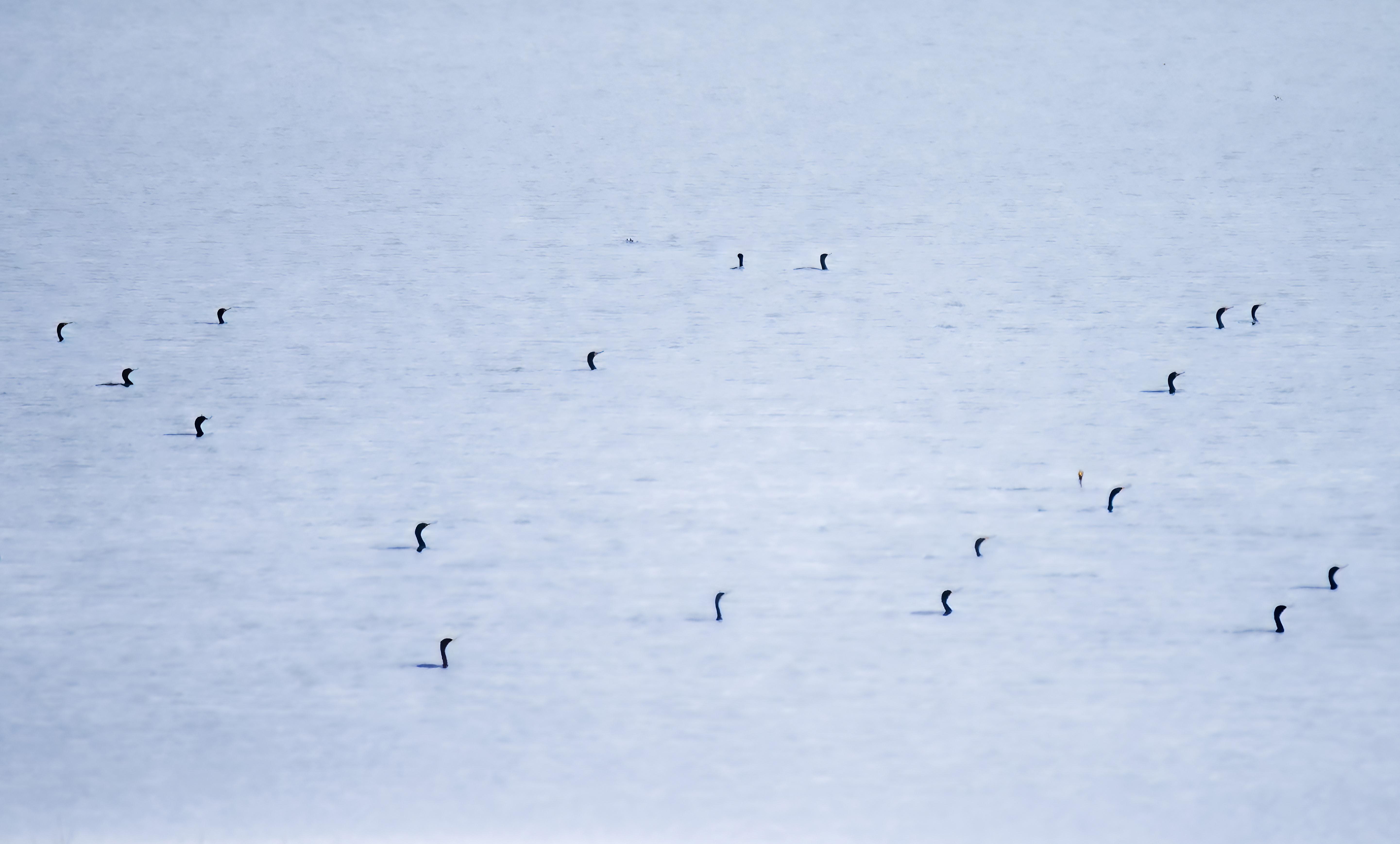
As the Birdman talked we eight scanned the water’s edge and looked up into the grayish sky. As can be expected, cormorants commanded the shallow waters in front of us. Many people, and by this I mean mostly fishing fanatics, have a jaundiced view of these interesting, fish-eating birds who seem to spend as much time underwater as they do on the surface. Of all the feathered species, cormorants with their hooked beaks and body shape, appear to me as the most remnant prehistoric-looking of all the bird species and personally I can’t seem to get enough images of them. I’m simply fascinated.
White Pelicans made flights over us, and cruised the waterway along with the cormorants. Every species spied brought more information from the Birdman, the pelicans included. He explained that the next Minnesota River “lake” … Marsh Lake … downriver typically hosts around 20,000 breeding birds on a remote island, and that the ones we were actually seeing were immature birds younger than five years of age.
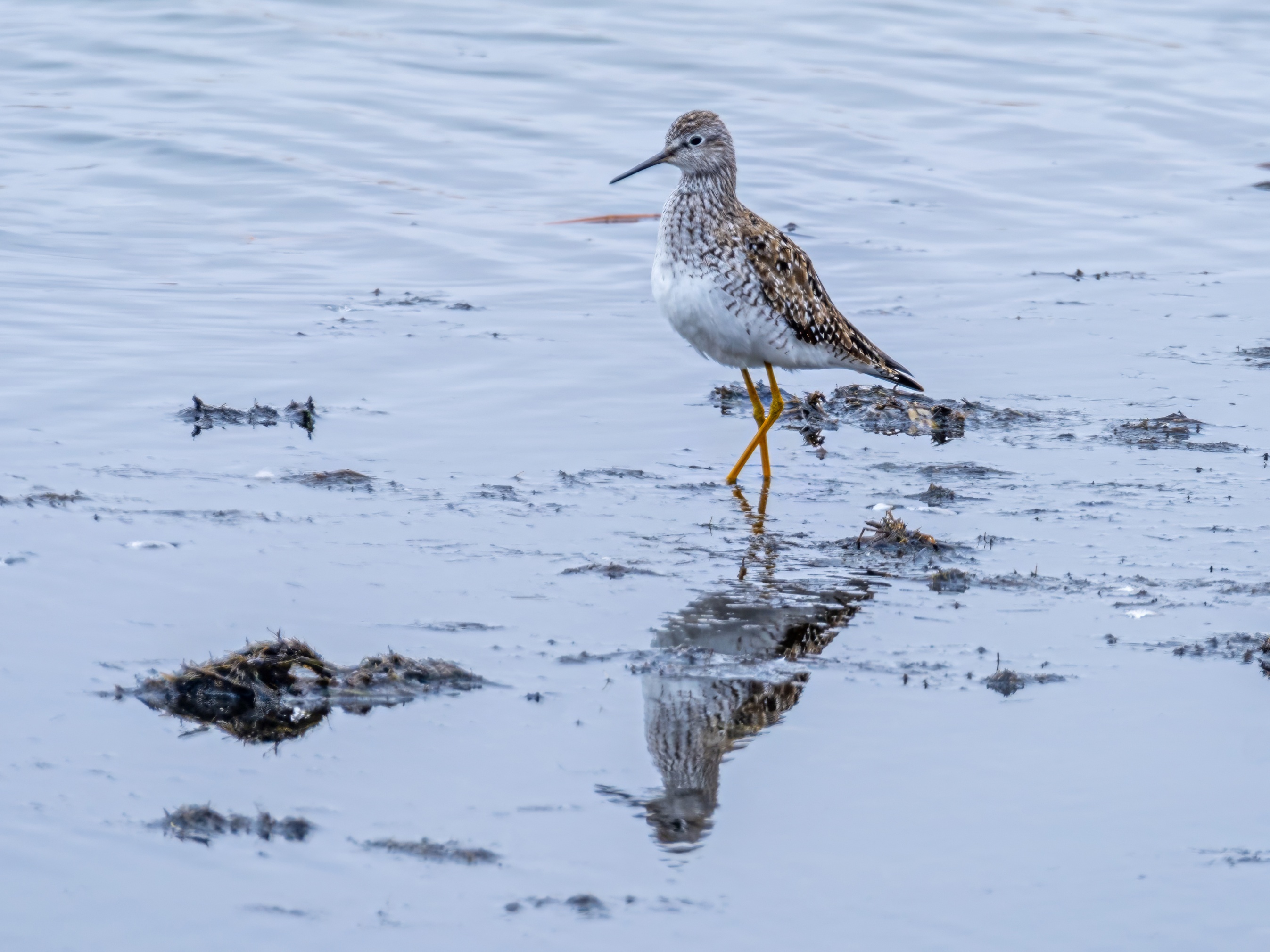
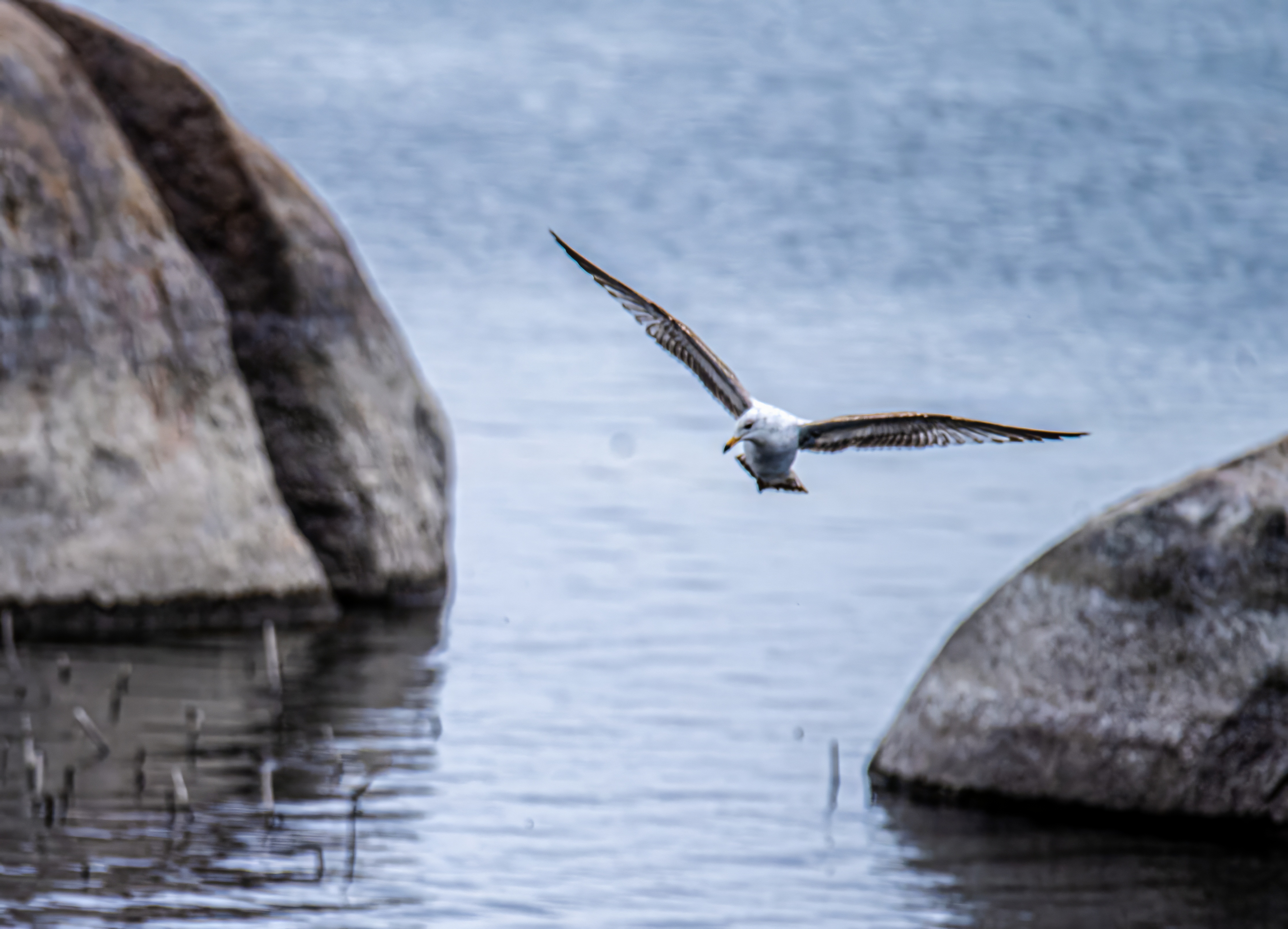
With a chilly breeze some of us were becoming antsy, and the decision was made to return to the motor drive where he suggested at least three possible sites along the shore for the shorebirds. As we drove we did pass a single Yellowlegs, a skitterish bird who quickly waded away as if it didn’t want any attention. Frank then explained how shorebirds use different techniques to capture their food, and that most seemed to have specific diets. One species swirled its beak to stir up vitals, for example, while other probed and pecked at the muddy shoreline for morsels. As he pointed out various identification markers I realized my long-time friend was perhaps a savant with an unlimited ornithology knowledge. As he talked, Ring-billed Gulls circled overhead and along the shore. Ducks were both airborne or working the shallows, including a few Shovelers …. a beautiful species with the long bills. And the information just kept coming.
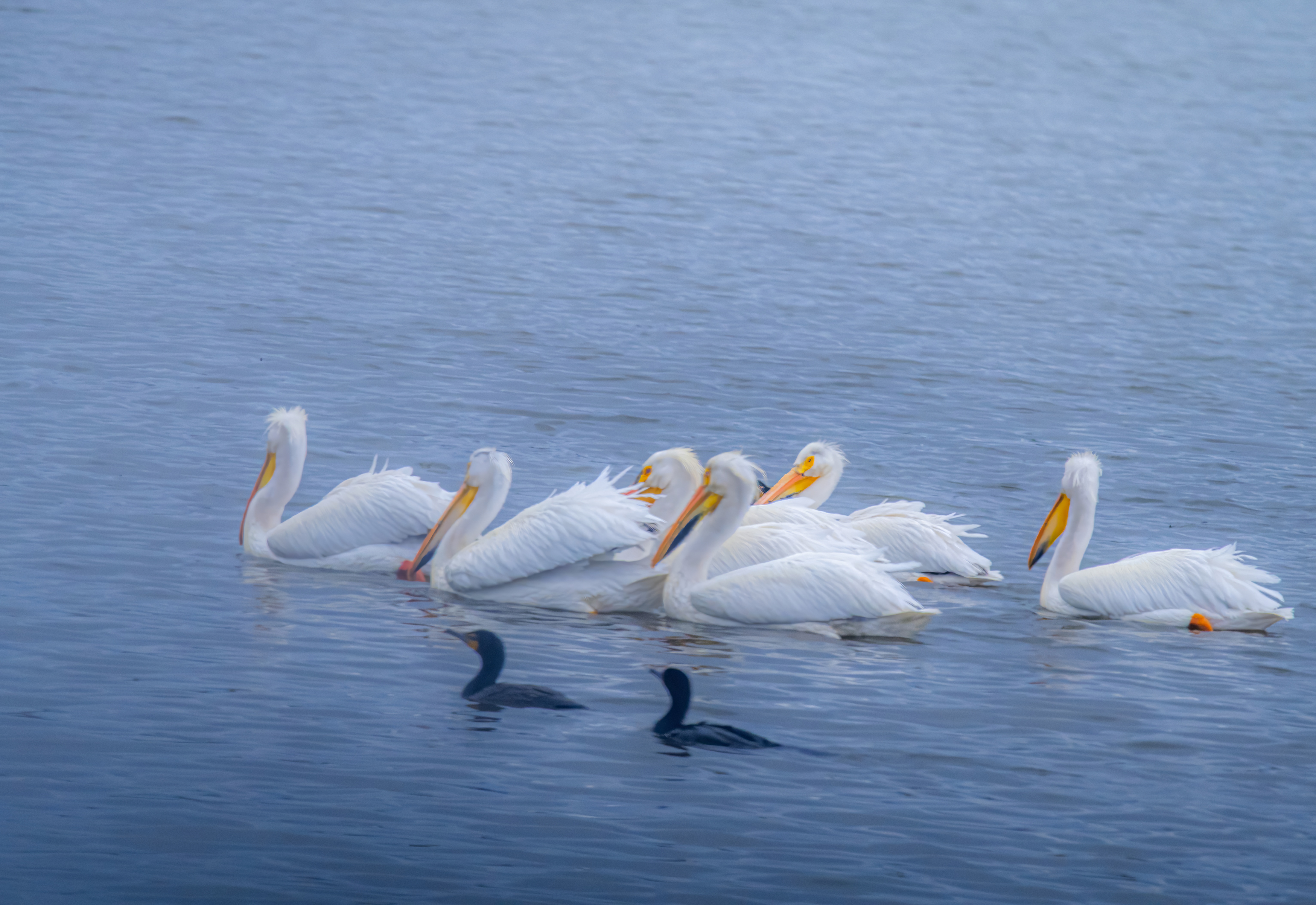
This wasn’t going to be a day for the shorebirds, however, and the lone Yellow Legs was our only sighting. As we turned the corner along the western shore of the West Pool several more pelicans and cormorants worked the waters. Three Great Blue Herons were working the weedy bank to the east. This wasn’t quite the end, though.
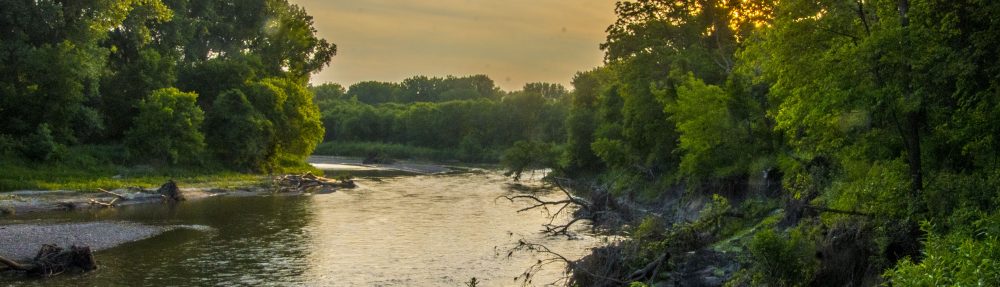
He told of a possible sighting of a beaver family on one of the bends of the Minnesota River along perhaps one of the more interesting and beautiful quarter mile stretches of Big Stone County roadways. “Earlier this week I caught the parents teaching their growing youngsters how to build a dam,” he explained.
Oh, and there was an eagle’s nest along another river bend where he told of watching one of the eagles land with a fish, and began tearing it apart to feed the two newly hatched eaglets. Earlier on the deck he pulled out a paper to show the markings that distinguished the differences between an immature Bald Eagle and a Golden, for often the immatures are mistaken for the larger, more western-based Golden.
In all, the Birdman was clearly in his element for the 90 or so minutes we were on the tour as tidbits of birding life and identification continued to emerge. Jason does so rather matter-of-factually, and it seems to roll off his tongue as common conversation.
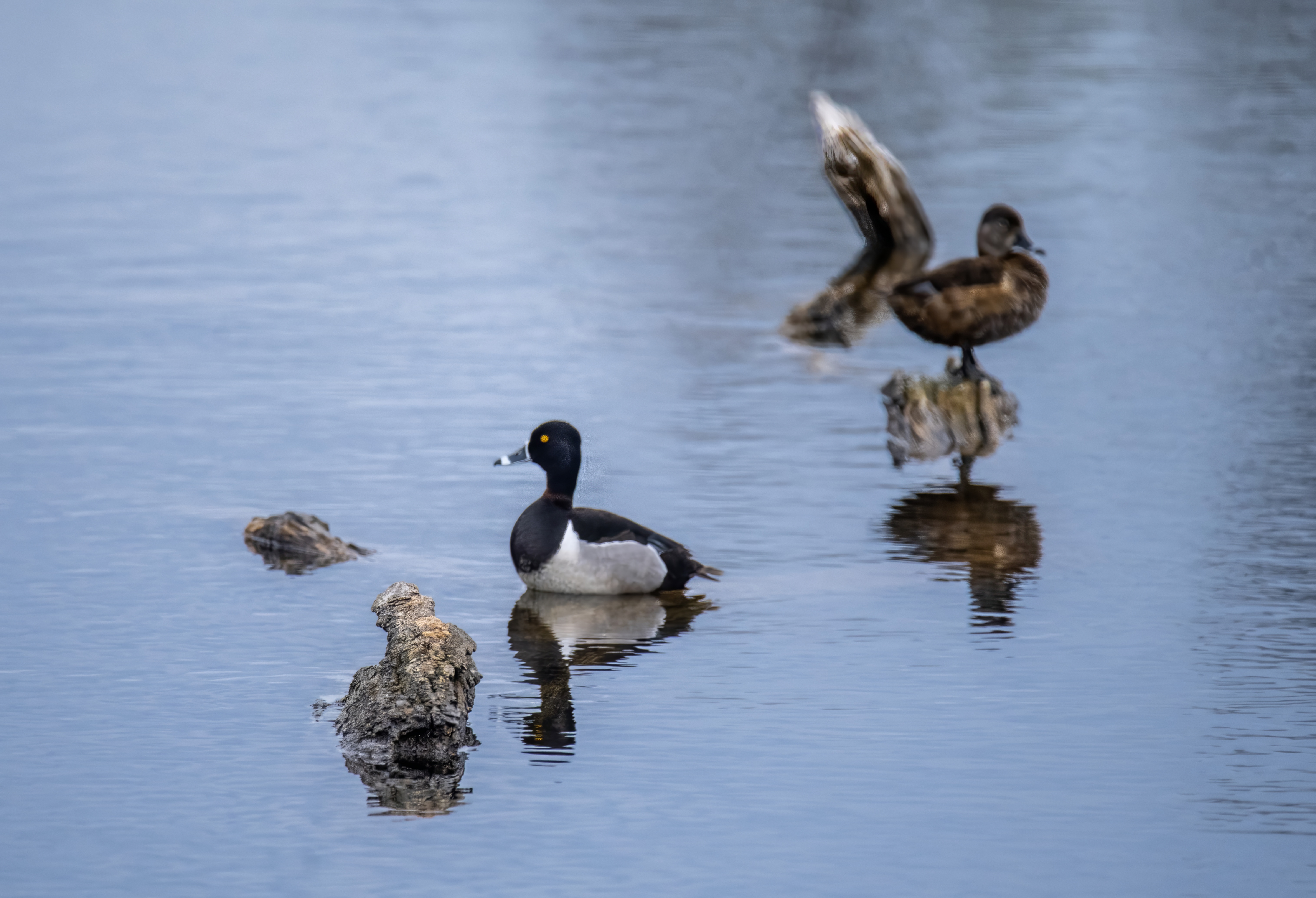
We slowed to check the bends for the beavers, and again for the eagle’s nest before catching the route out of the Refuge. On a small wetland where I’ve photographer dozens of ducks over the years, a male and female Ring-necked Duck rested on weathered stumps. Stoic and beautiful, they seemed a fitting conclusion to an interesting early evening of birding, all under the gifted direction of the Birdman.

