Pepper Gumbo!
Reply

Seemingly we can hold our own in the kitchen, and we sometimes find ourselves gushing with such glee that we’re eager to share our excitement over a meal one of us has placed on the table. After one such dinner last year, which happened to be one of our “pepper gumbo” shrimp delights, an enthusiastic gush was posted a social media site.
Moments later a Cajun fly fishing friend offered an online rebuttal: “I don’t know what you’ve got there, my friend, but I can assure you that it is isn’t a gumbo.”

Rebecca tends to one of her pepper plants in her huge garden.
Say what? I was momentarily taken back, and since have rarely spoken of this tangy, peppery dish outside of our home. Of course, this didn’t bother us here on the farm and when the peppers started coming in out of the garden again this fall, we eagerly began preparing them again for the freezer. Recently, though, that conversation resurfaced with a suggestion that “gumbo” is merely a Cajun word for okra, and that gumbos may consist of any ingredients “including the kitchen sink!” as long as it contains okra.
All of which is enough to cause a smile. Which is how I got involved in this gumbo mess to begin with. It all started several years ago with a transplanted Minnesota “returnee” who had a penchant for cowgirl boots, ankle-length flowing “hippie” skirts and gorgeous “chrome” hair that hung to her waist. Kim mixed a voice softer than a down pillow with the staunch will of steel plow blade. Her little white pickup often had a beer keg strapped securely in the back bed. She let it be known that it was her keg. How someone so small and skinny could love beer that much was both daunting and surprising. “I’m the beer drinker, not my husband,” she revealed on the day I chose to tease her about the keg.

Peppers! Peppers! And, more peppers!
One day she popped her plastic food container in the microwave we kept at the country weekly and a most delicious aroma soon filled the office. “Wow, what is that?” I had to ask.
“Pepper gumbo,” she answered, and moments after retrieving the nuked container, she offered a spoonful. It was peppery and flavorful, and full of shrimp, pieces of crab and other seafood, and carried that rich gravy ladened flavor and look about it.
She was kind enough to share a recipe that was quite detailed and involved a specific count of peppers. Being neither a chef nor scientist, specific recipes are of little use to me. Yet, I loved the idea, and that fall I made up my first batch that was reliably close to Kim’s directions. Since then I’ve strayed, as one might expect. After a set of life events that completely changed the course of my life, Rebecca and I began our relationship just about the time her immense bounty of garden produce was entering the kitchen … including bushels of various peppers.
“Can I play with those?” I asked as she walked in with a tub full one afternoon.
“Please!” Rebecca said before breaking into a bit of a smile. “Are you thinking of your pepper gumbo?”

Prepping the peppers to start the gumbo. Note the okra?
With apologies to dear Kim, and to those hunkered down below the I-10 umbrella, here is what we do: Melt a tall yogurt container of frozen chicken stock in the crockpot, then add a couple of okra, some chopped celery and onion, and stuff all the peppers you can muster (minus the stems and seeds) beneath the lid. Jalapenos. Hot Thais. Hot Portugals. Fish (yes, there is a pepper called that). Martin’s Carrot. Napoleon. Three-sided Syrian. Aconcagua. Tolli’s Sweet. Hungarian Hot Wax. All of these and more. Simmer this on low for eight to ten hours. If you’re not overcome with the pepper fumes and tantalizing aroma, you allow the mushy concoction to cool before hitting it with an emulsifier to puree. A couple of tablespoons of squeezed lime are added before the thick, peppery puree is divided into four cup measurements into individual freezer bags for “saving summer.”

A ladle of a recently made pepper gumbo with shrimp and sausage.
Come winter we pull a bag from the freezer and the actual gumbo comes together. It begins, as most do, by making a roux. Equal amounts of melted butter and flour are whisked around a cast iron skillet until it turns a deep amberish hue. Brown rice is started on another burner as the frozen pepper mix is added to the roux. Various vegetables are then added, including chopped onions and garlic. As the rice nears readiness, raw peeled shrimp and slices of Andouille sausage are added. If that hint of lime is missing, add another squeeze. Remember, the original mix already had the Cajun trilogy included … celery, onion and pepper … as well as the okra.
You might be surprised in that the gumbo isn’t terribly hot in the spicy sense. Peppery, yes. Yet, not so hot, which might be a function of the added rice. To serve, you ladle the gumbo over a mound of rice in a bowl. Rebecca will sometimes add a little plain yogurt to her bowl, although we mostly take the gumbo straight.

In the bowl! Bon appetit!
Although there are rumors of perhaps having a drop or two of French blood in my soul, and that I’m a fan of both Cajun food and music, there is little about that heritage I can honestly claim. So, there you have it. A recipe from a sweet hippie chick. Peppers of various variety and Scoville heat indexing, grown by my lovely wife right on our farm. And a “gumbo” that cuts through the cold of a cruel winter’s night. Joie de Vivre!
A few weeks ago in a fit of hopefulness, and in what many of the “river valley liberals” seemingly call “holistic” planning, a suggestion was made that we create a list of goals, dreams and forward thinking for our Listening Stones Farm. That suggestion was met with a bright and eager neon smile, one of the many rewards of being married to community organizer. Instantly materializing was a Magic Marker and her huge stand-alone flip chart with a tablet full of road map-sized blank sheets.
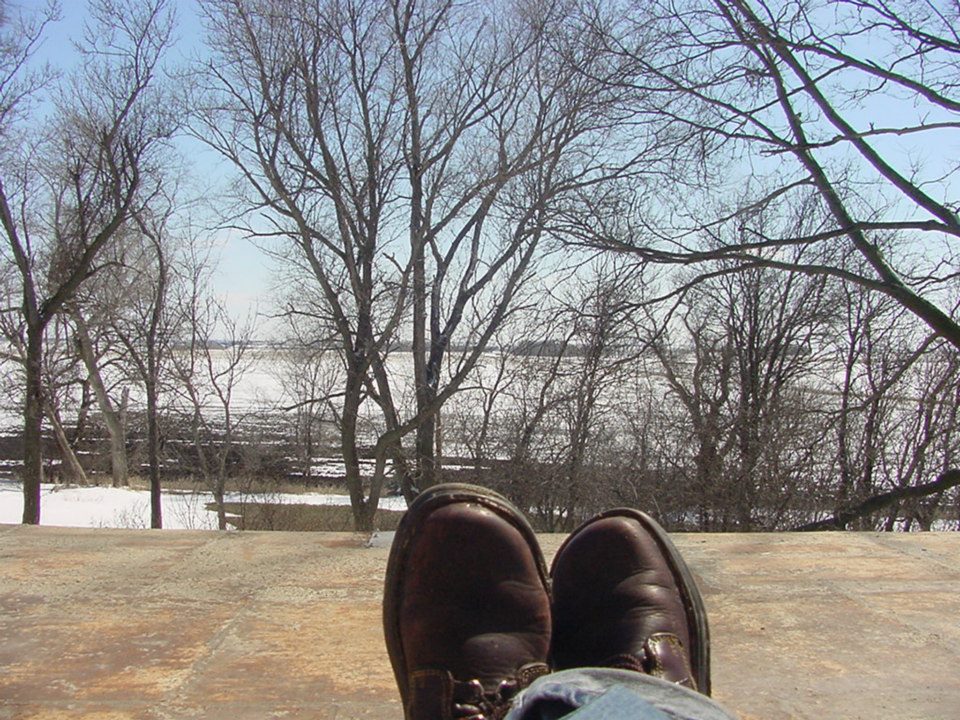
Looking out toward the south prairie over Rebecca’s boots when we first moved here.
So began our exercise of holistic thought. All we could possibly conceive became a Magic Marker reality. Chickens. Turkeys. Lambs. Lawn reduction. Wood chipper. Orchard expansion. A sauna. Rain garden. Two whole flip chart sheets of dreamy plans in startling black and white reality were soon taped to the office wall. Many of those points came to life in conversation, each one discussed, expanded, dashed with a hint of spicy realism, then stored for further thought and expansion as we made our twice daily jaunts through our prairie pathways.
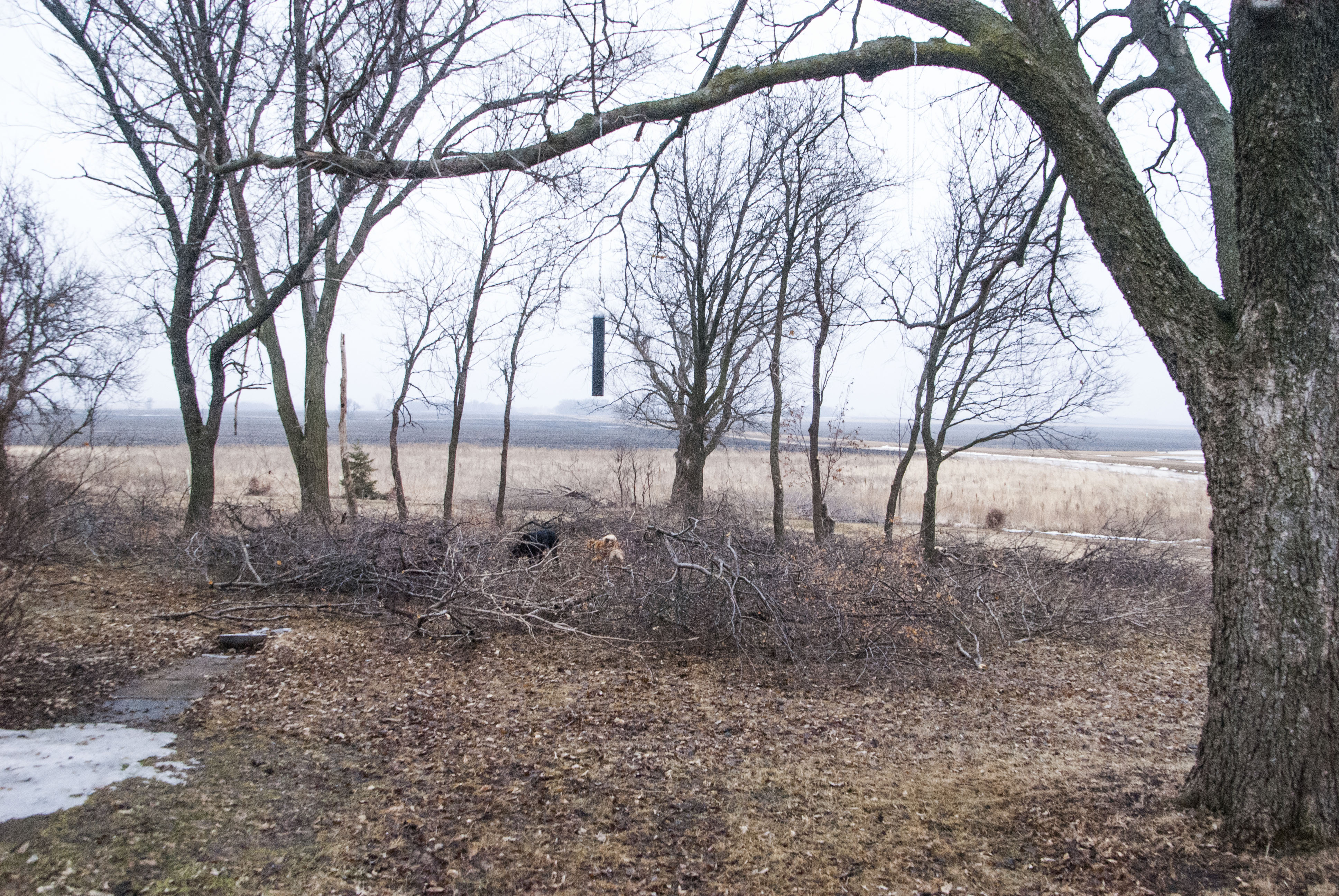
Kurt hit the “island” of buckthorn in the south yard yesterday … reference how it looked over Rebecca’s boots.
Though we have not actually taken the time to settle in for a formal discussion, some of items on the list are already in the works. Take the orchard expansion, or if you wish, a continuation of the grove cleanup, or if you look at our holistic list, improving the tree and shrub mix here on the farm. Trees for a Vermonter, and perhaps for a transplanted Missourian as well, are key points of our collective lives even on our prairie land farm, which might seem odd since “prairie” is technically comprised of grassland and wide open skies.
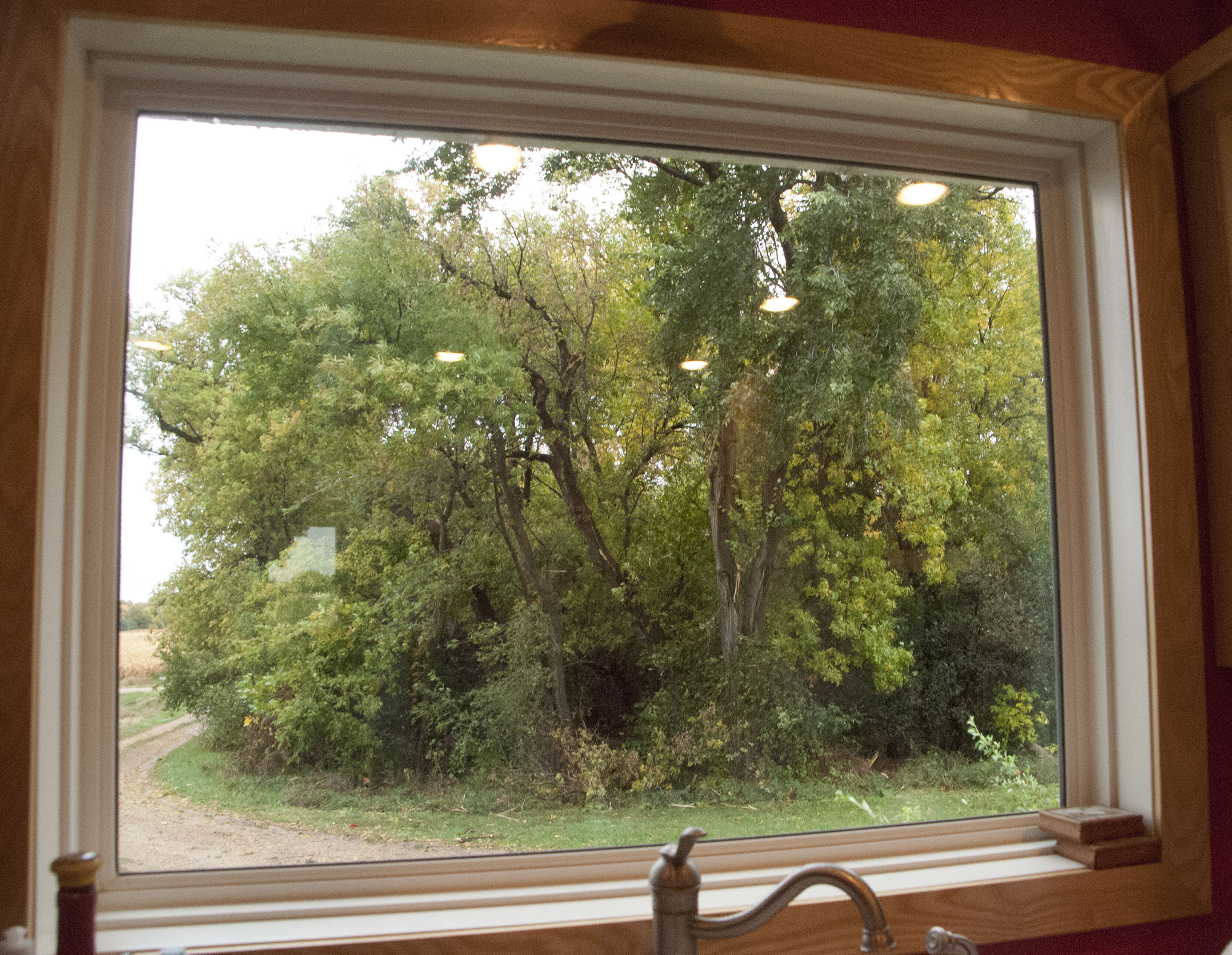
A glimpse of the grove before we began the clearning.
In our second summer here we began the cleanup of the buckthorn jungle in the grove. It was a huge task and was “part two” of the stretch of laborious razing of two decrepit and dangerous outbuildings. Both were burned and buried in a hole that inexplicably came with the farm, over which we planted our orchard. Our sawyer, Kurt Arner, did the honors of slashing the jungle. On the lower end he windrowed piles of the ever present invasive buckthorn, while in the upper grove he slashed and dropped the 20 footers while creating a beautiful path complete with a listening bench in the center of the loop. Which brings me back to our holistic list … along with our ongoing conversations from our walks with the dogs over the farm. Kurt’s slash and drop left a huge pile of downed buckthorn and scraggly trees — besides the buckthorn, the grove was marred with downed and rotted trees, and many more misshapen and severely damaged ones — between that path and the orchard. What he left behind was minor mirror of the big BWCA blowdown a few years ago. It wasn’t meant to be walked through.

Looking at some of the fruit trees we planted in the orchard last spring.
Rebecca was hoping to expand the orchard while planting wildlife-friendly bushes alongside replacement trees that will eventually maintain the integrity of the wooded loop. The area she wanted to clean was perhaps 50 ft. by 200 ft., and one of our bullet points in the holistic planning was to clean that mess little by little … hopefully to have the area clean enough to plant when the bare root fruit and hawthorn trees, along with a row a nannyberry bush for the birds, arrived later this spring.

Just to the left of the orchard is where we’ll plant this year.
Last week, in a mild surprise, Kurt returned to the farm to finish the saw work. We described our thoughts as we walked through the grove, and he said it wouldn’t be a big deal for him to prep the cleanup. Initially we considered pulling the slash out for stacking and burning, although what Rebecca really wanted was wood chips. Remember, a wood chipper was on our list! This past weekend we started pulling the larger chunks of trunks he had pruned from the branches to pile while stacking the branches and smaller limbs for the shredder. A neighbor, Rick Schneck, brought over both a chipper and a willingness to help. A long afternoon later two of the piles were reduced to feathery chips. We might have another long half day to fully clear that space for our spring planting. Thanks to Kurt and Rick, we are almost ready to mark one of the holistic dreams off the list.

Another view of the area we’re clearing for the new fruit trees, hardwoods and bird-friendly shrubs.
In our short time together, nothing about Rebecca surprises me when it comes to her will, drive and work ethic. Since Kurt first arrived with his battery of chainsaws, we’ve unleashed the “Vermonter” in her. My guess is that within the next decade our grove will have an entirely different feel and look about it. Indeed, our whole farmstead will hopefully have been ridded of “junk” trees and be surrounded by good hardwoods, fruit trees and bird-y bushes. In the grove we’ll likely have some healthy looking trees rising in the many holes that has been created, and hopefully, if the bushes produce the berries she anticipates, we’ll have a new menagerie of songbirds residing with us here on the farm. Her orchard will be bearing bountiful fruit as well, all of an incredible transformation of our old farm into perhaps a “permaculture” paradise. As I write, I gaze at the list and smile. Our goals stare at us in our office, and we wonder if and when we will get through all those many items of need, for each seems important. We’ve yet to prioritize our holistic list. There is so much, and some of things we didn’t bother to list might have an even higher priority. Finishing the “Taj Magarage” comes to mind, and that includes the painting of the exterior.

Some of Kurt’s slash against a few of the trees we’ll leave standing because of their unique shape.
Many years ago my father said the beauty of a farm is that one never runs out of things to do, and we might add that transformations don’t happen overnight. While we must continue to remind ourselves of that, being able to draw a Magic Marker slash through the first of those many line items on our list will feel mighty fine.
Sometimes, no words are necessary …. •

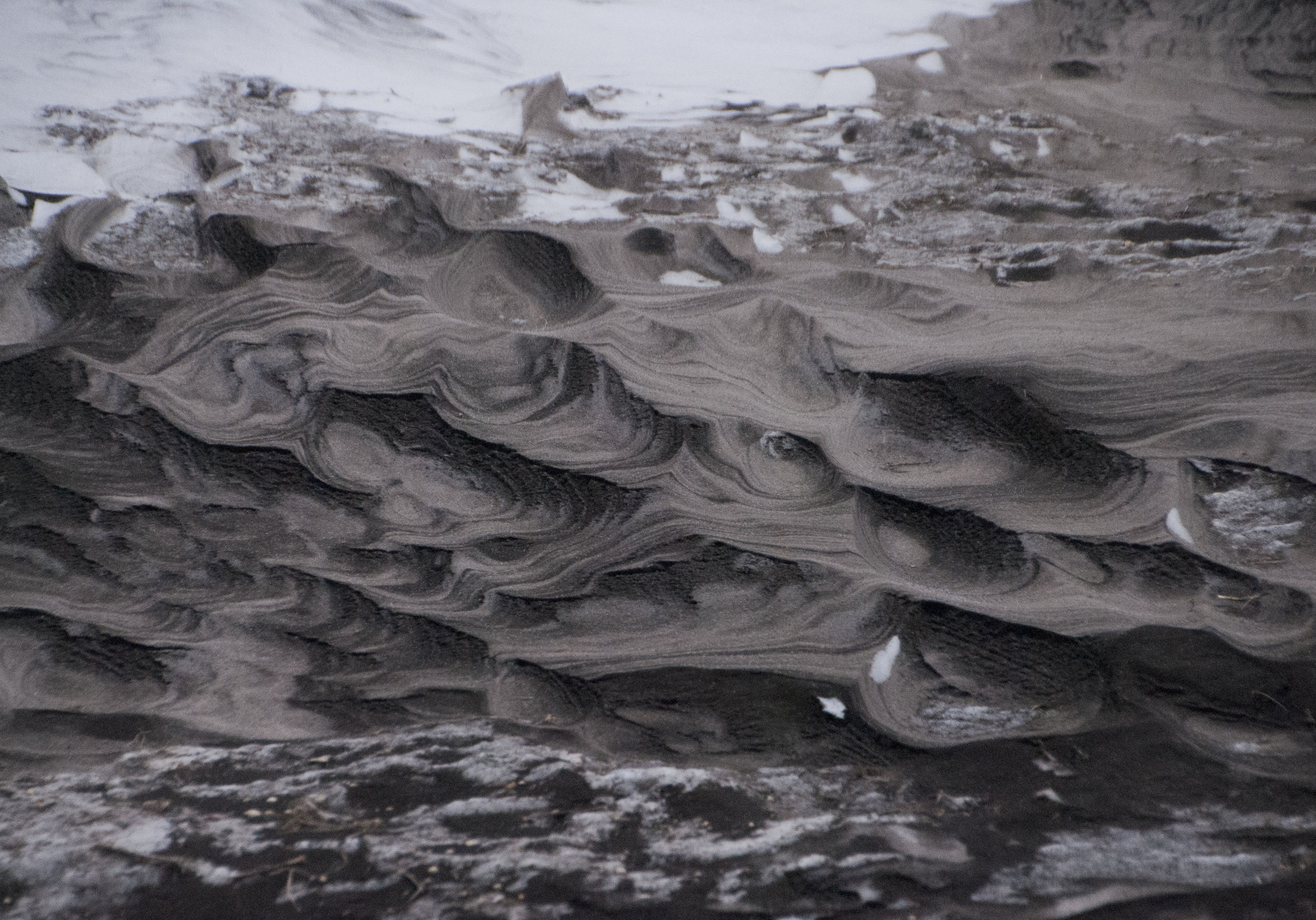

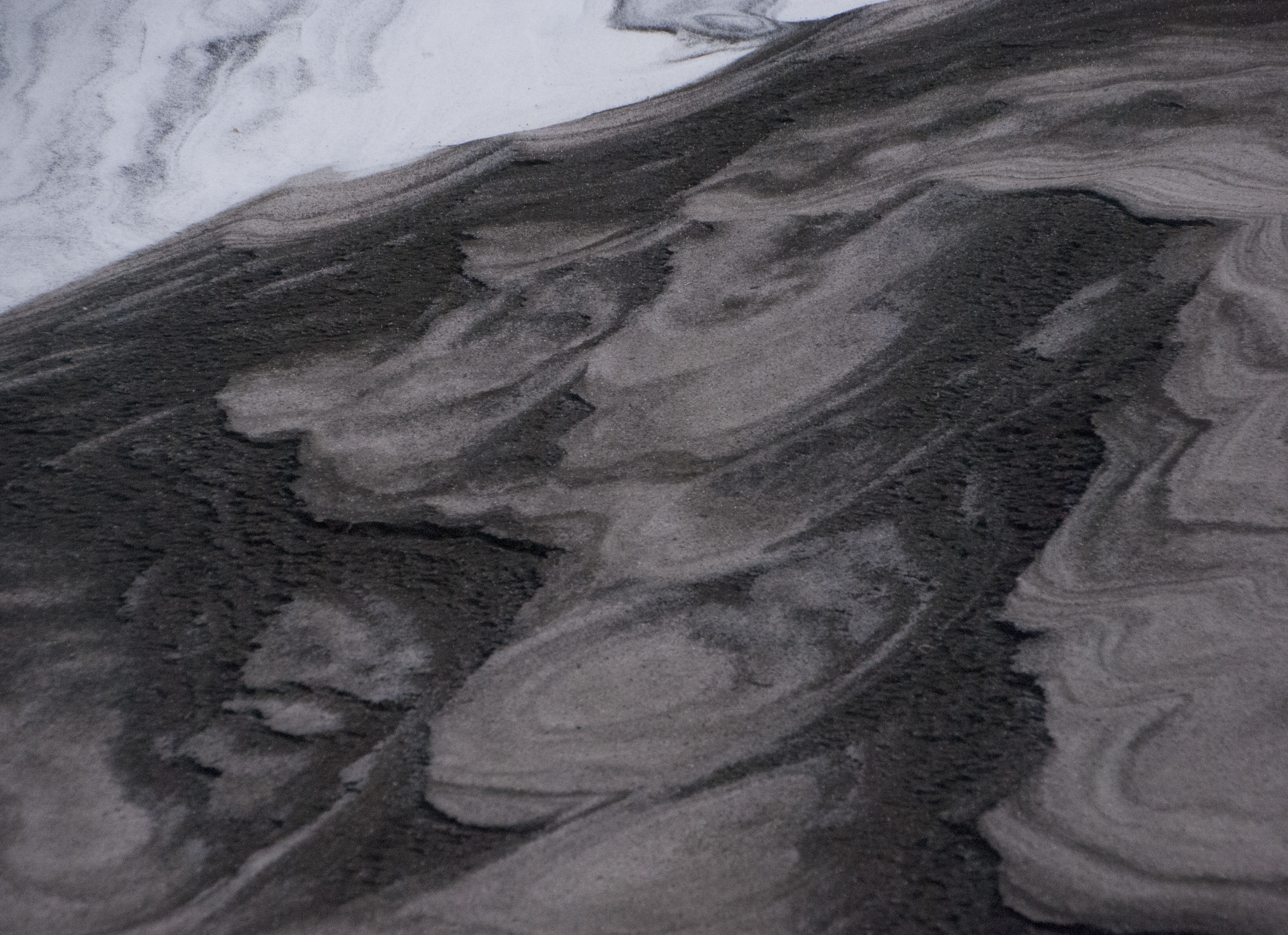

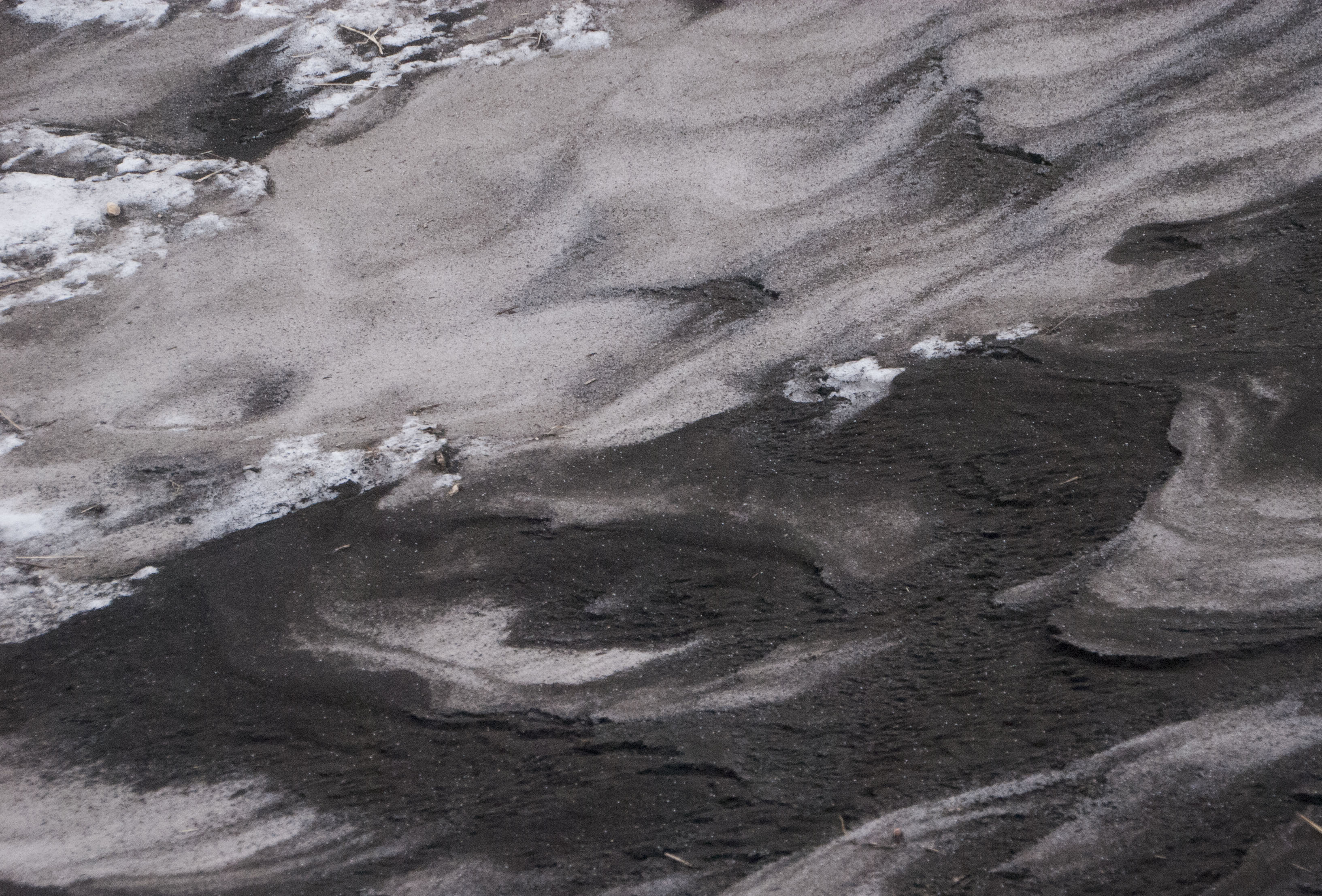


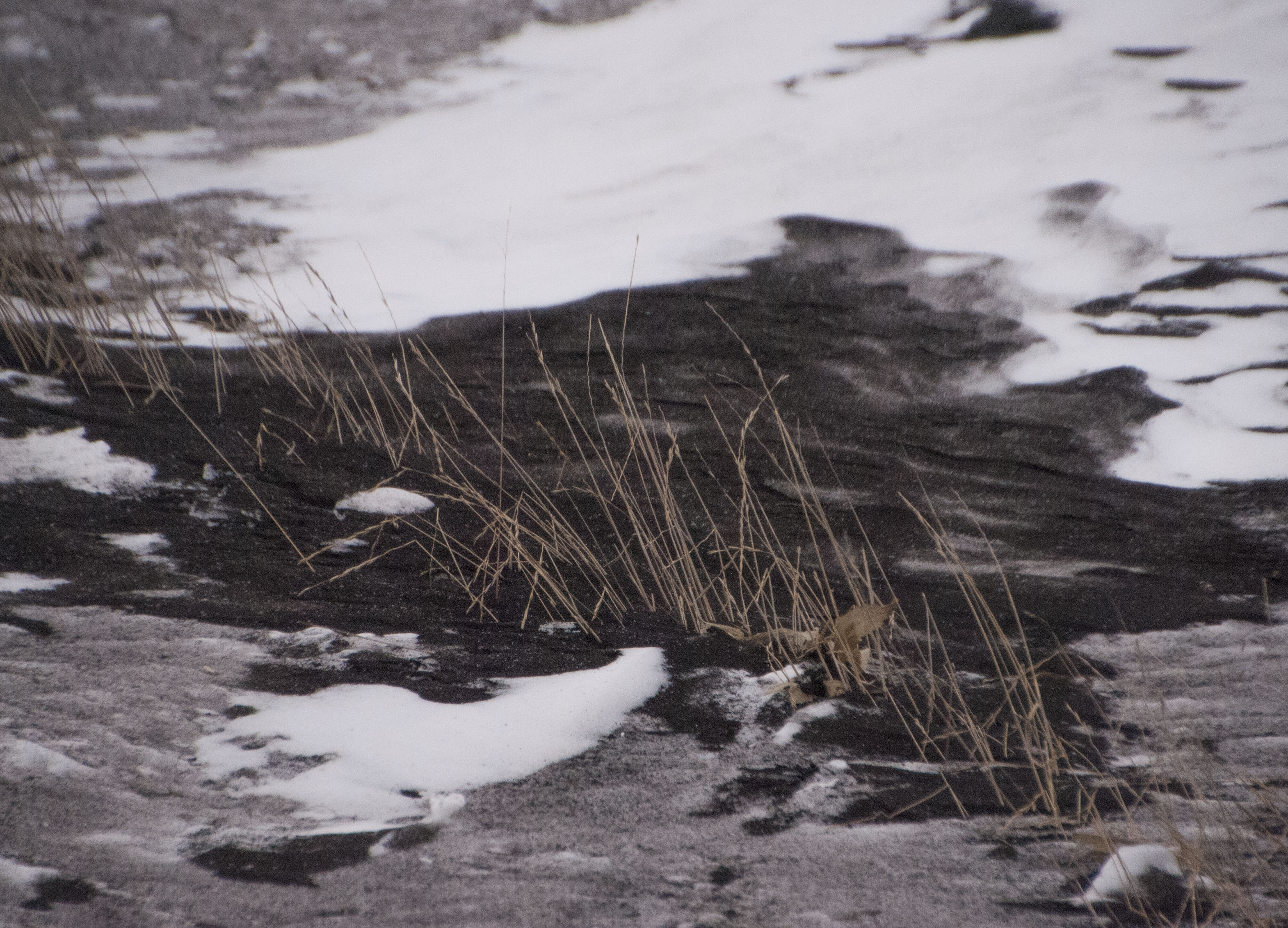
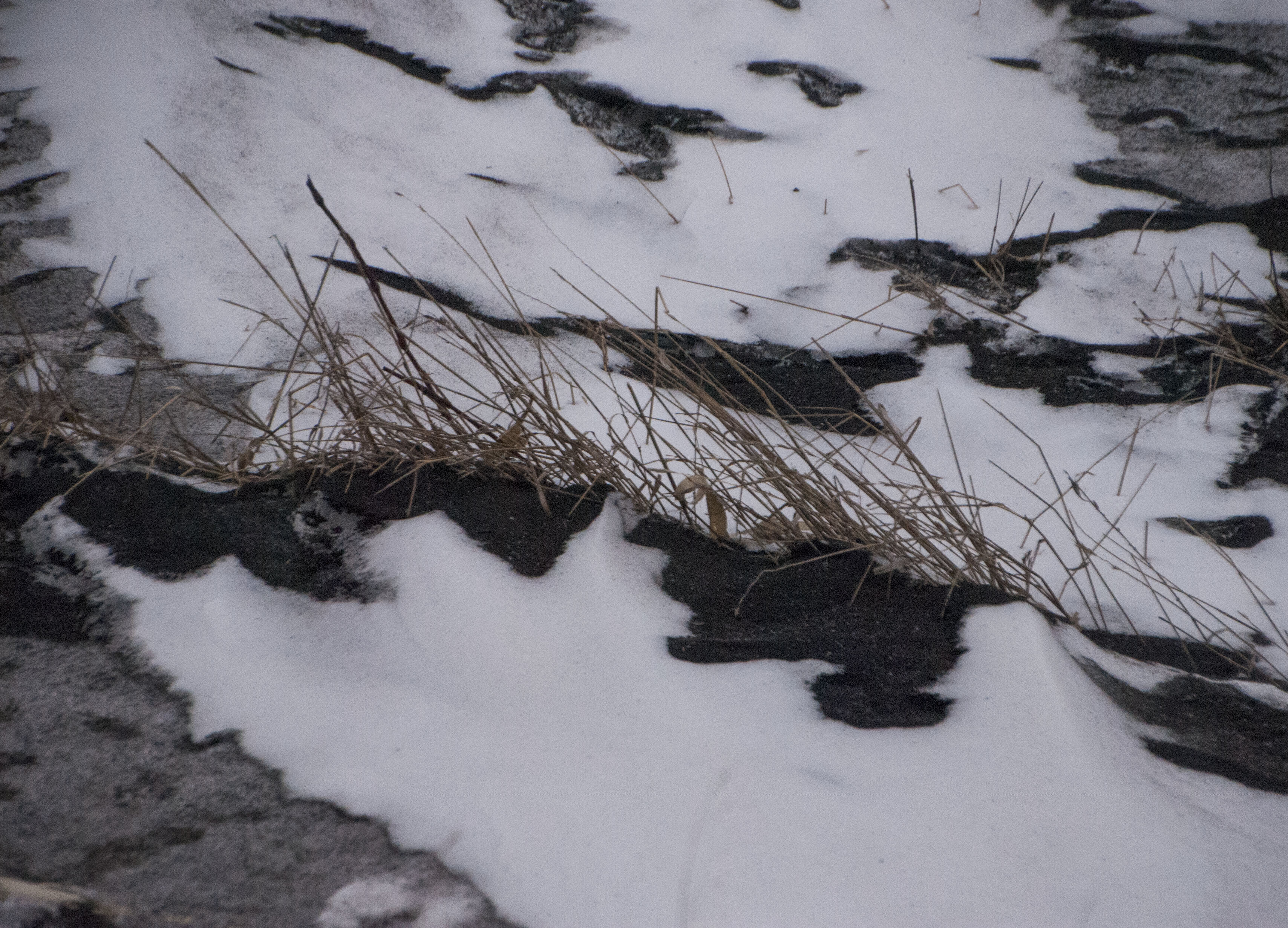


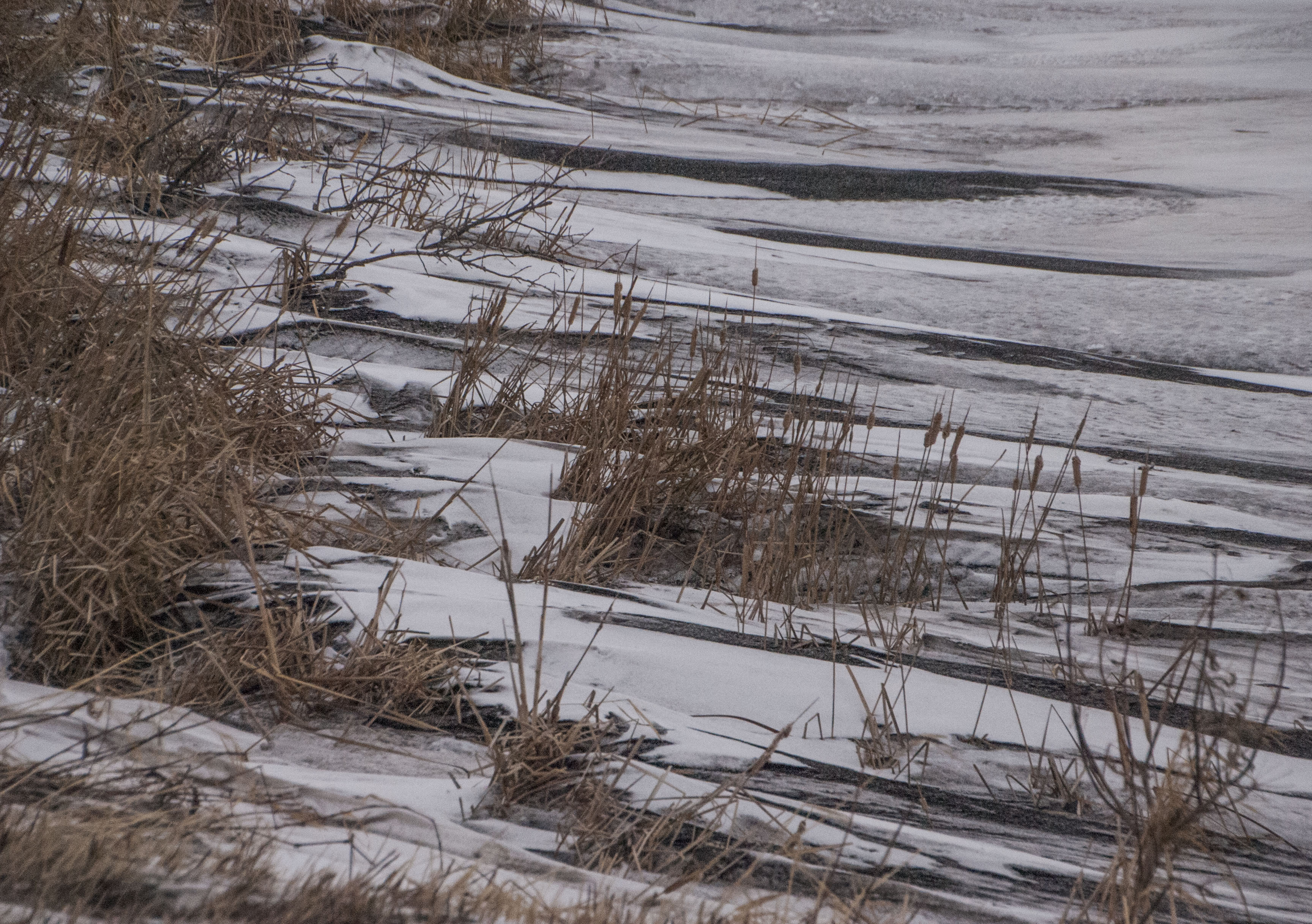

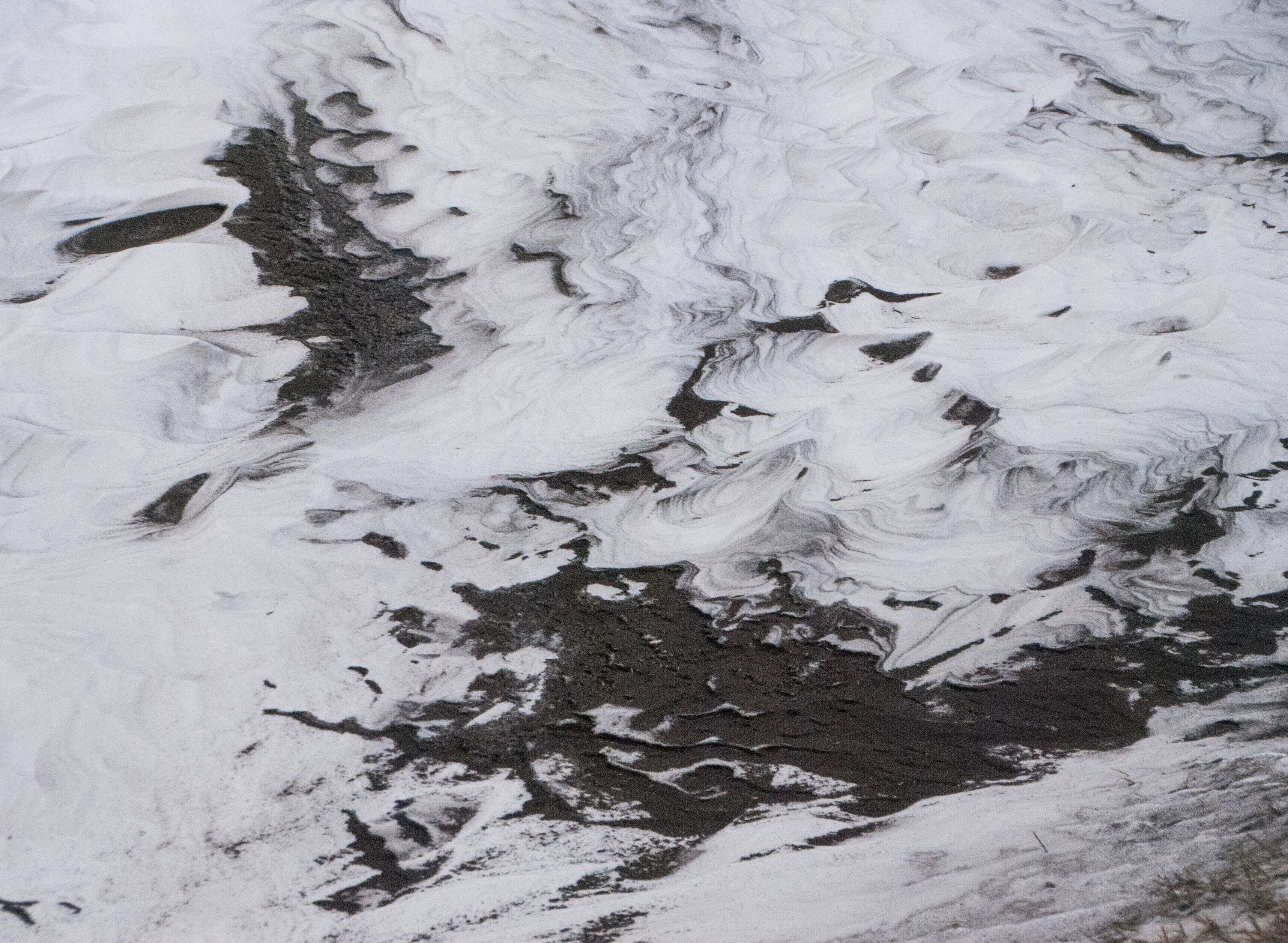
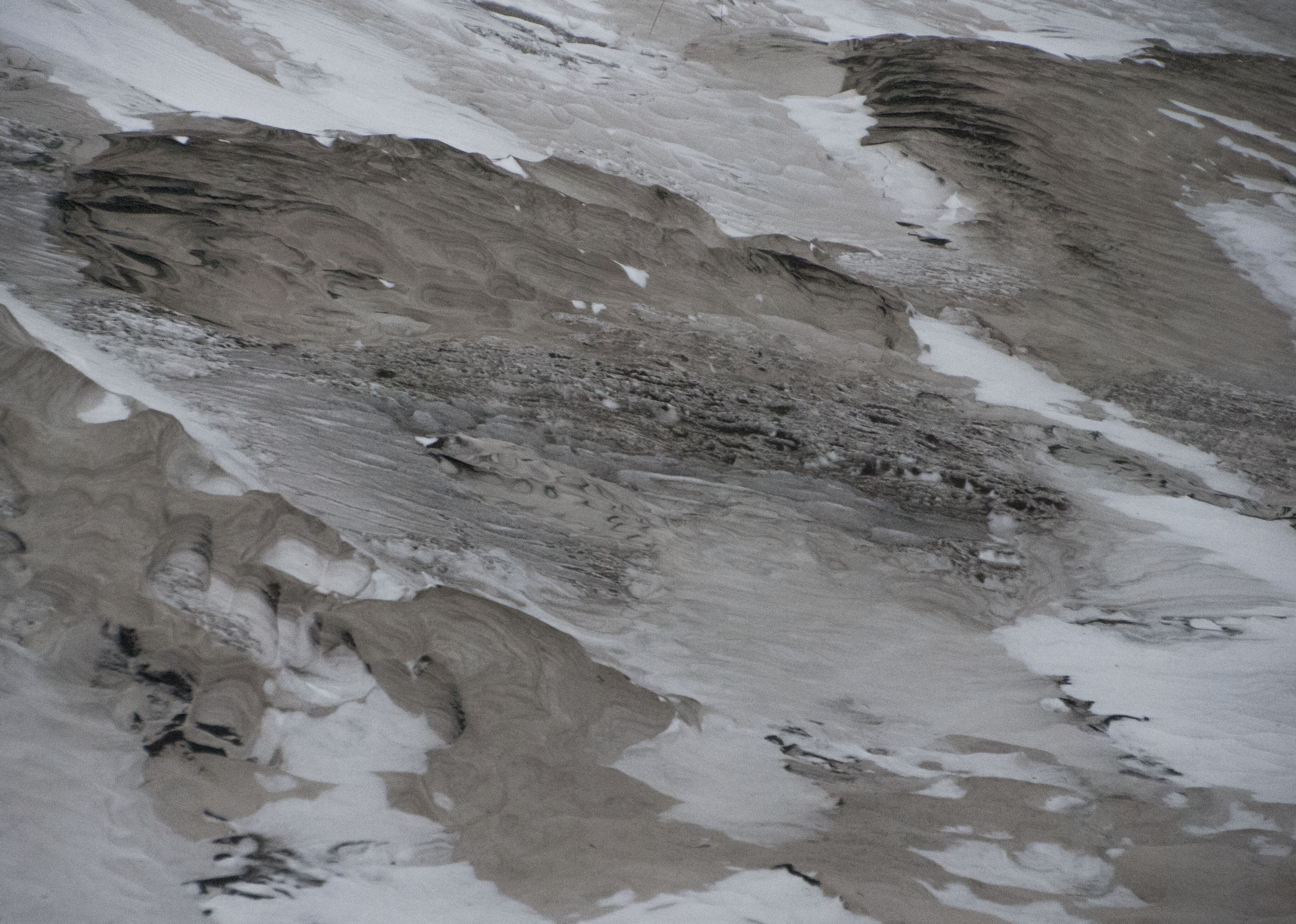


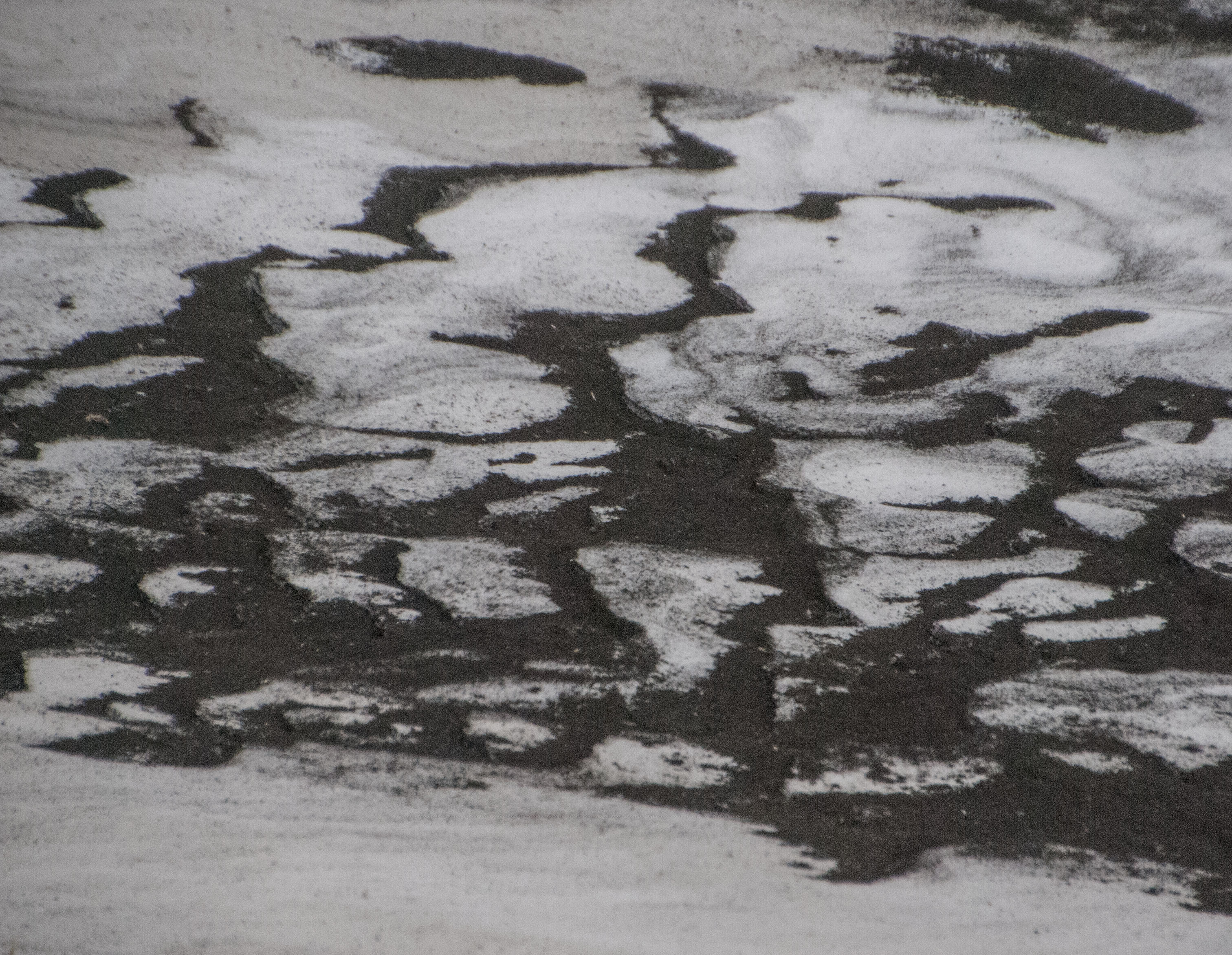



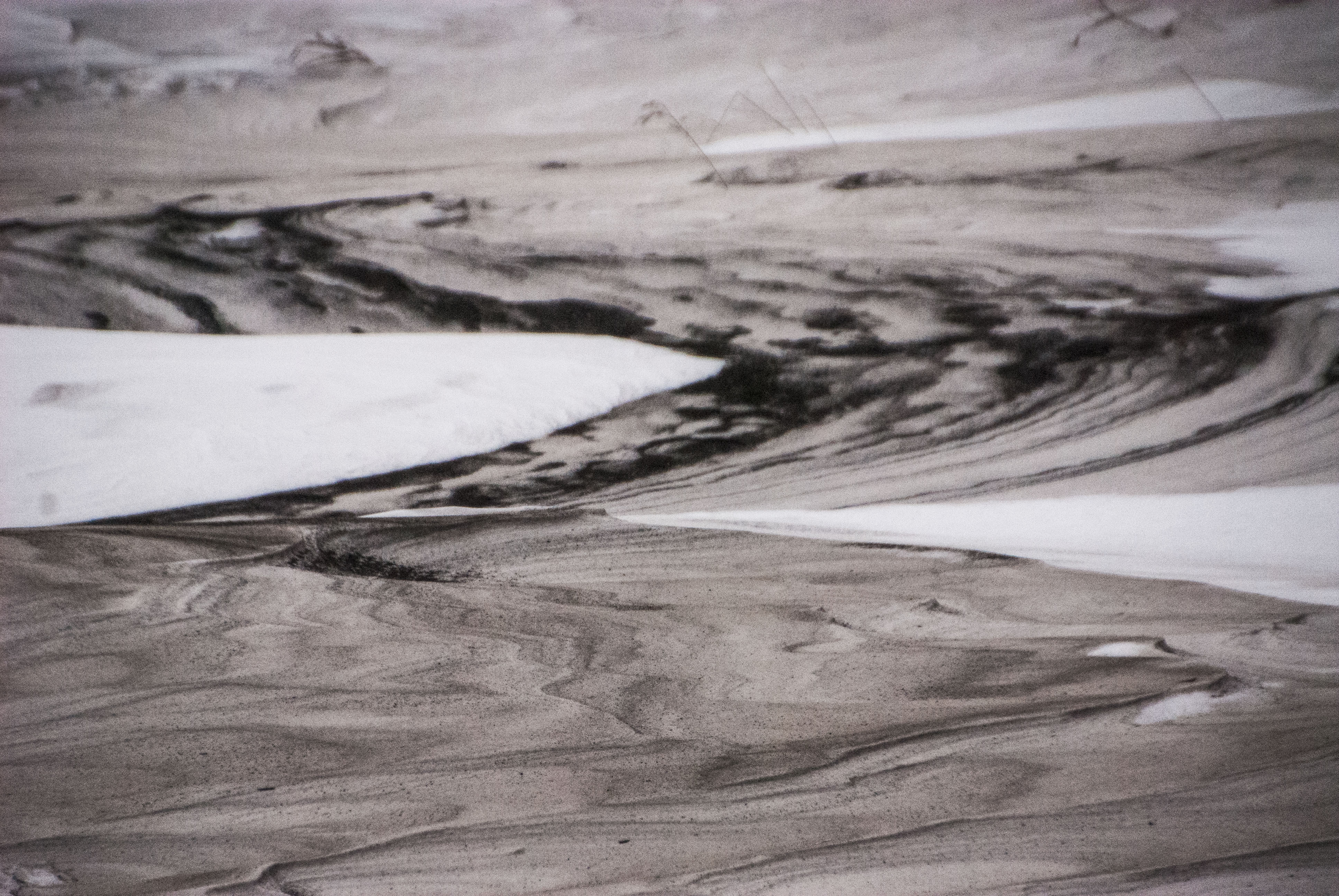
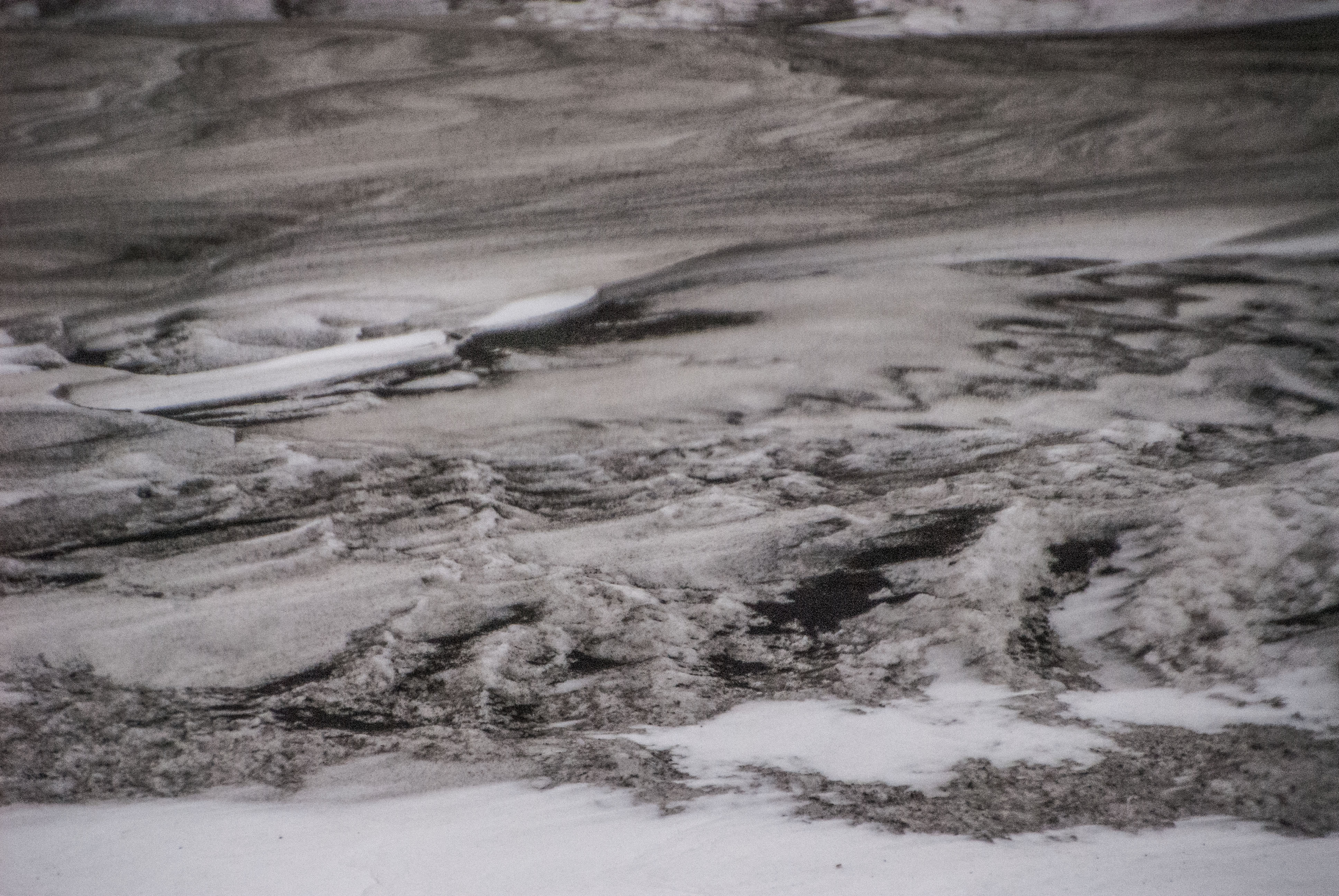
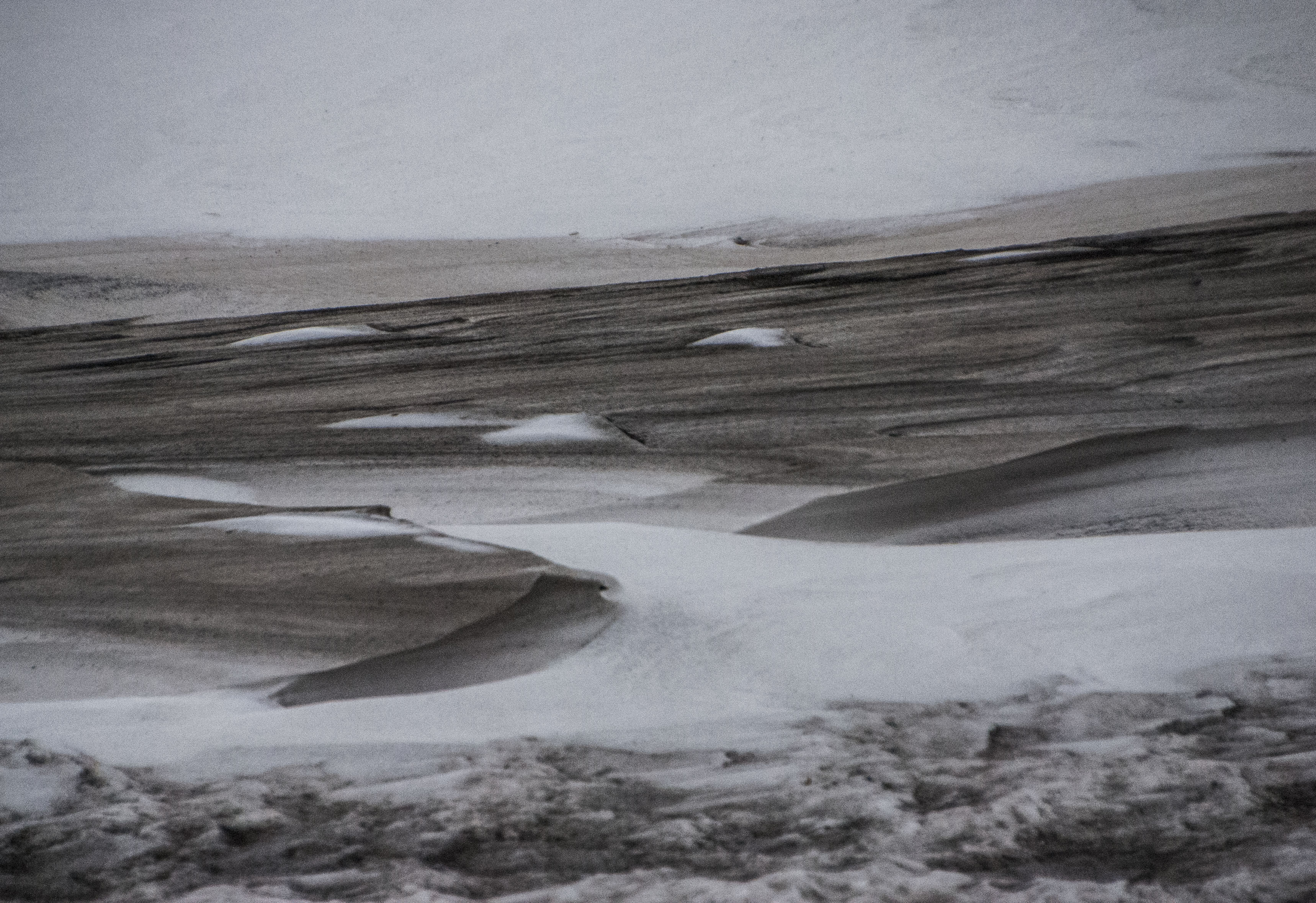
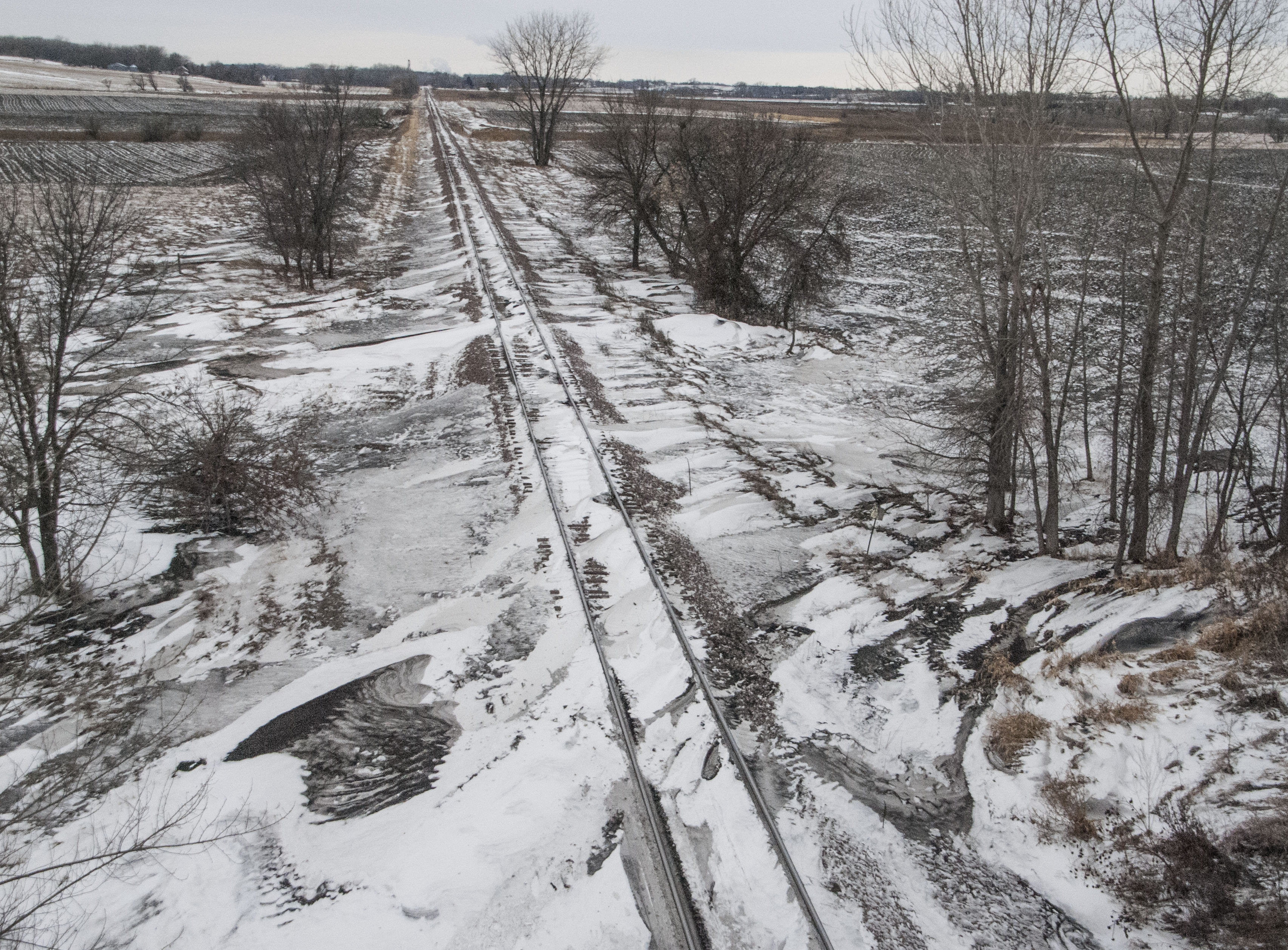


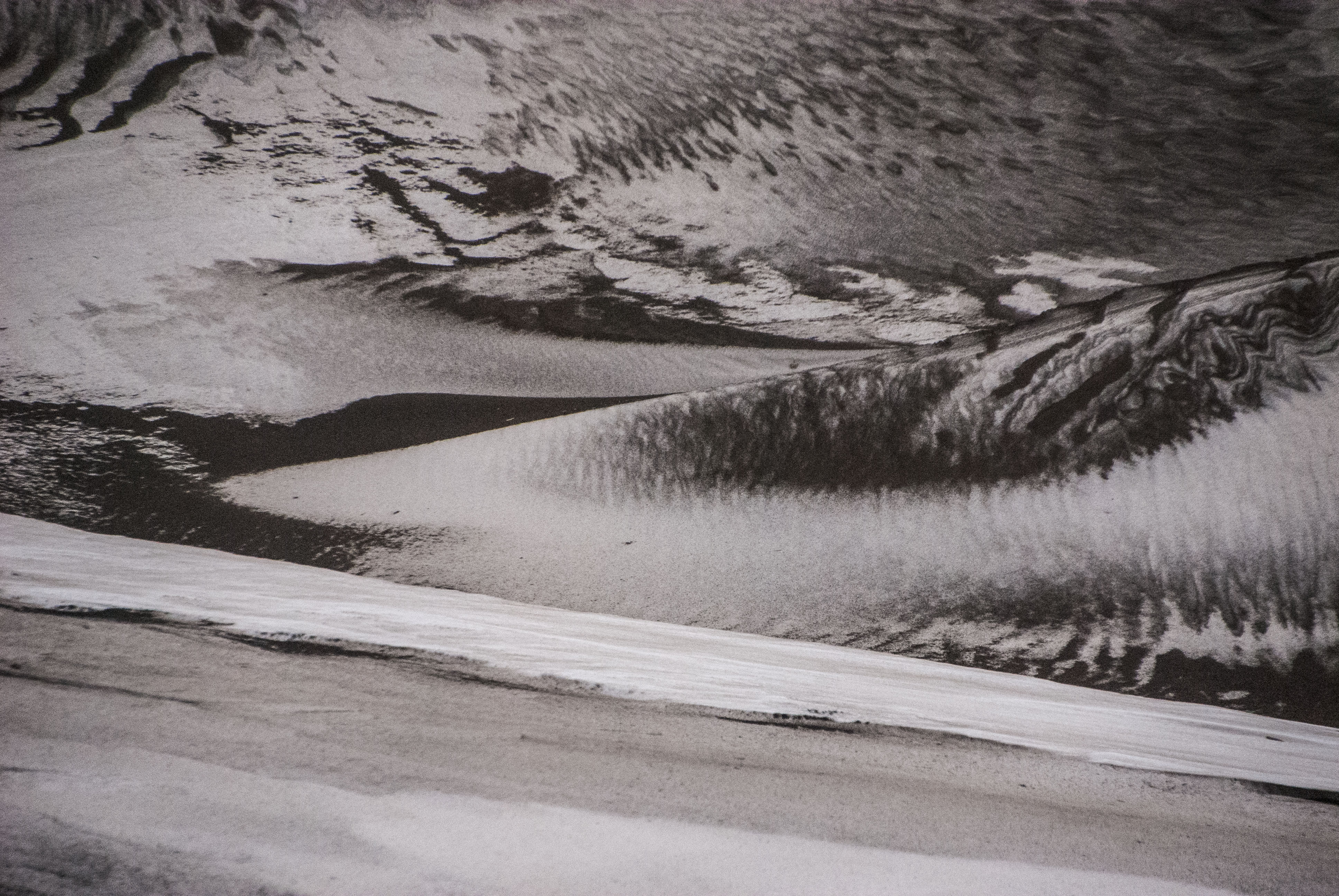
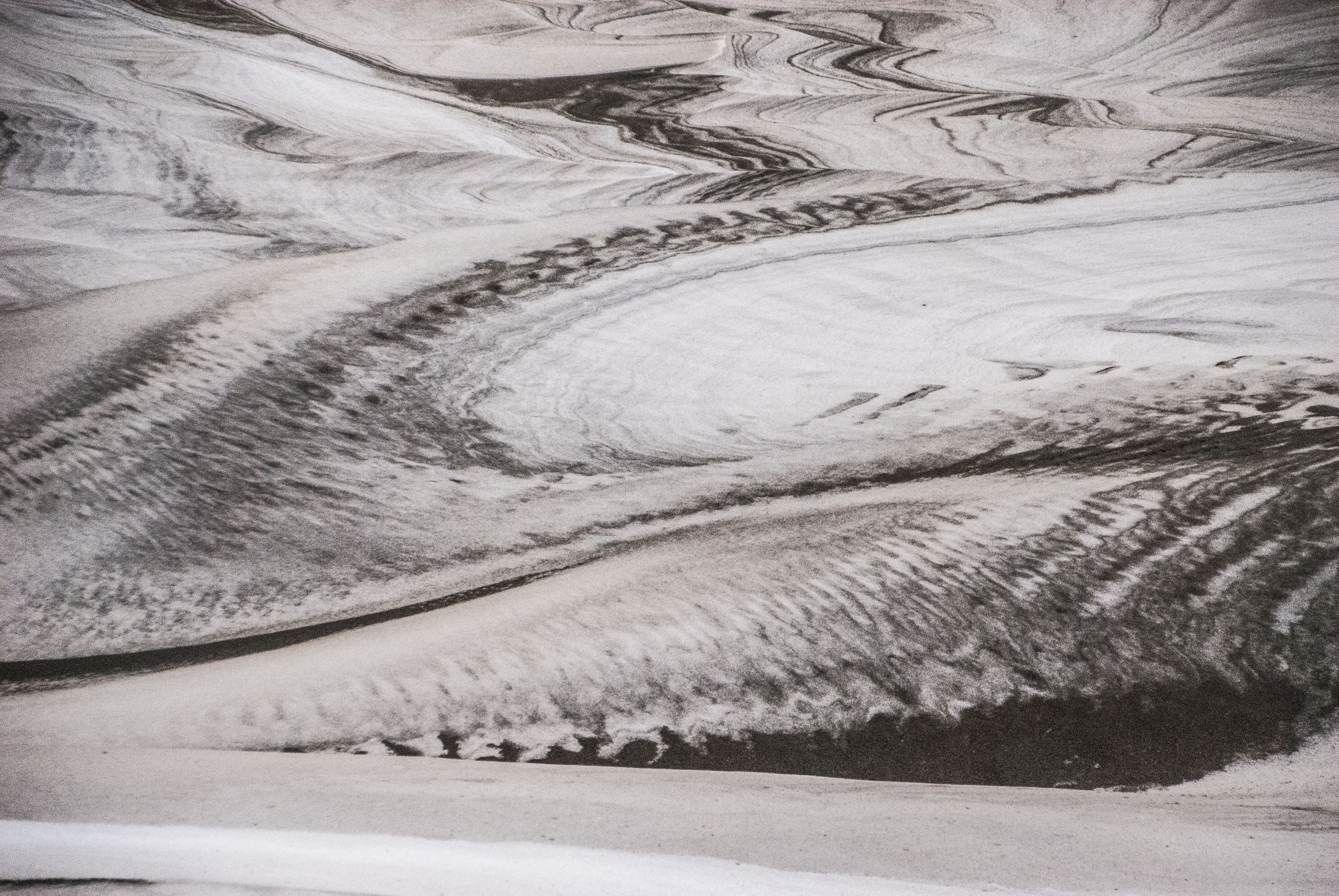




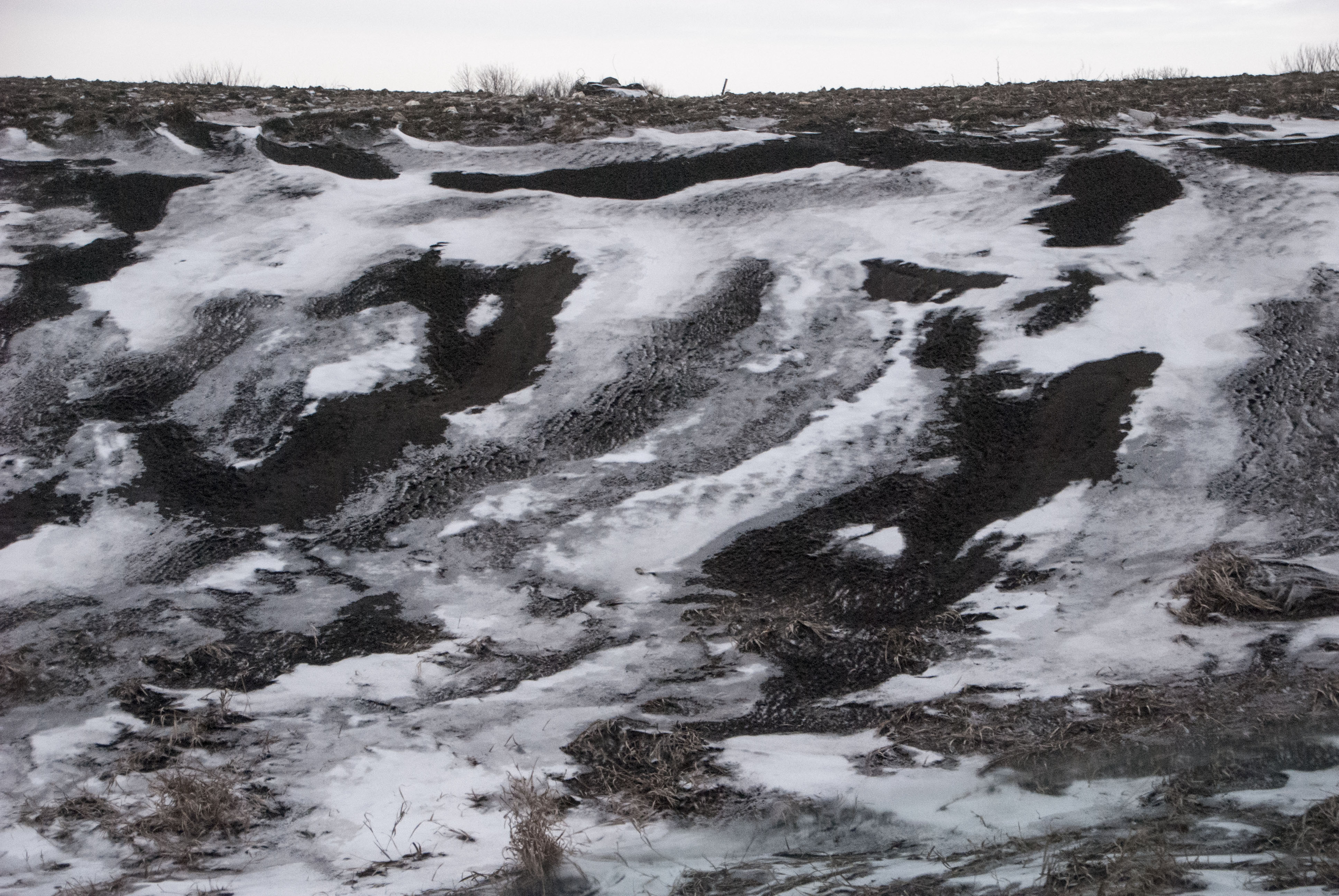
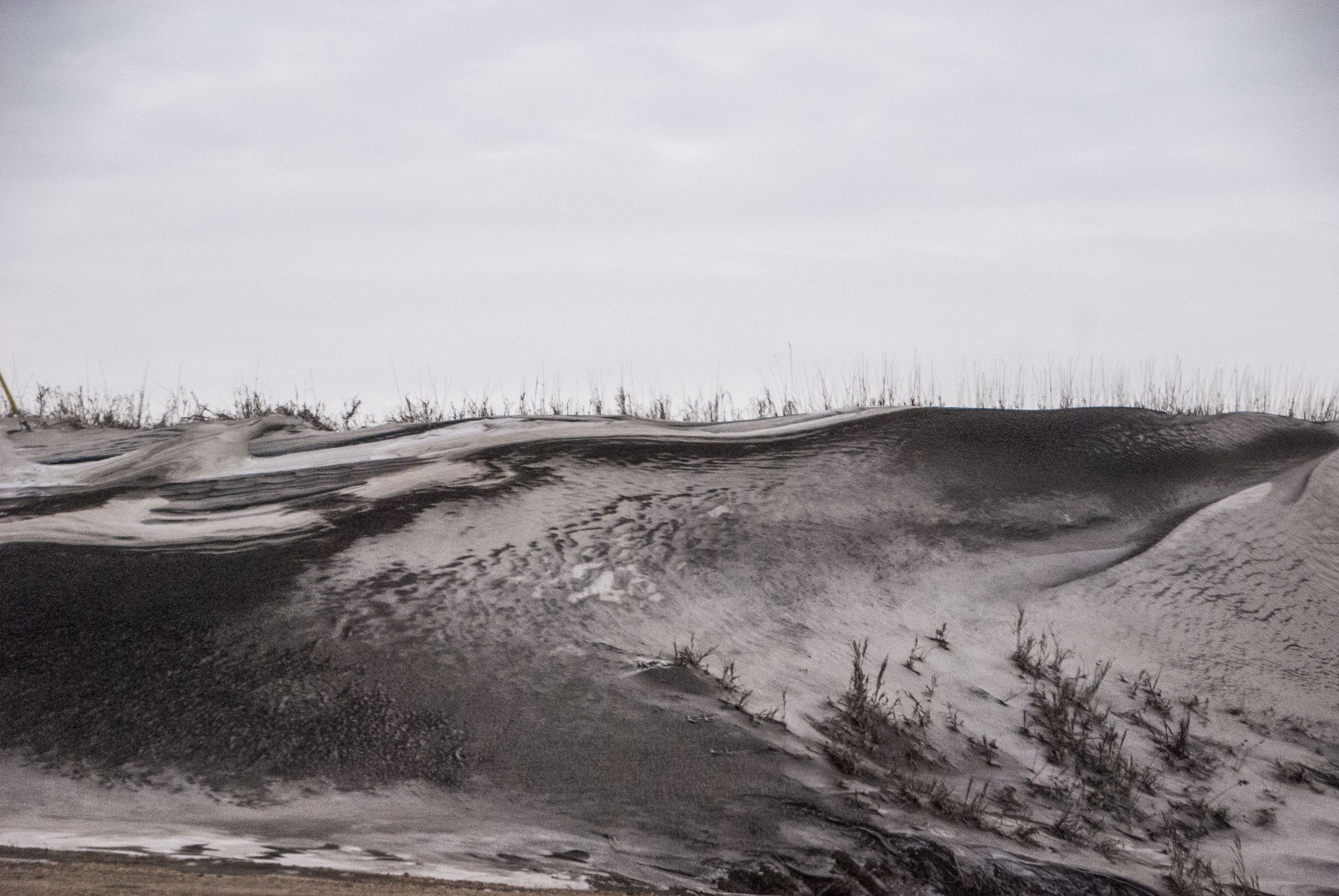
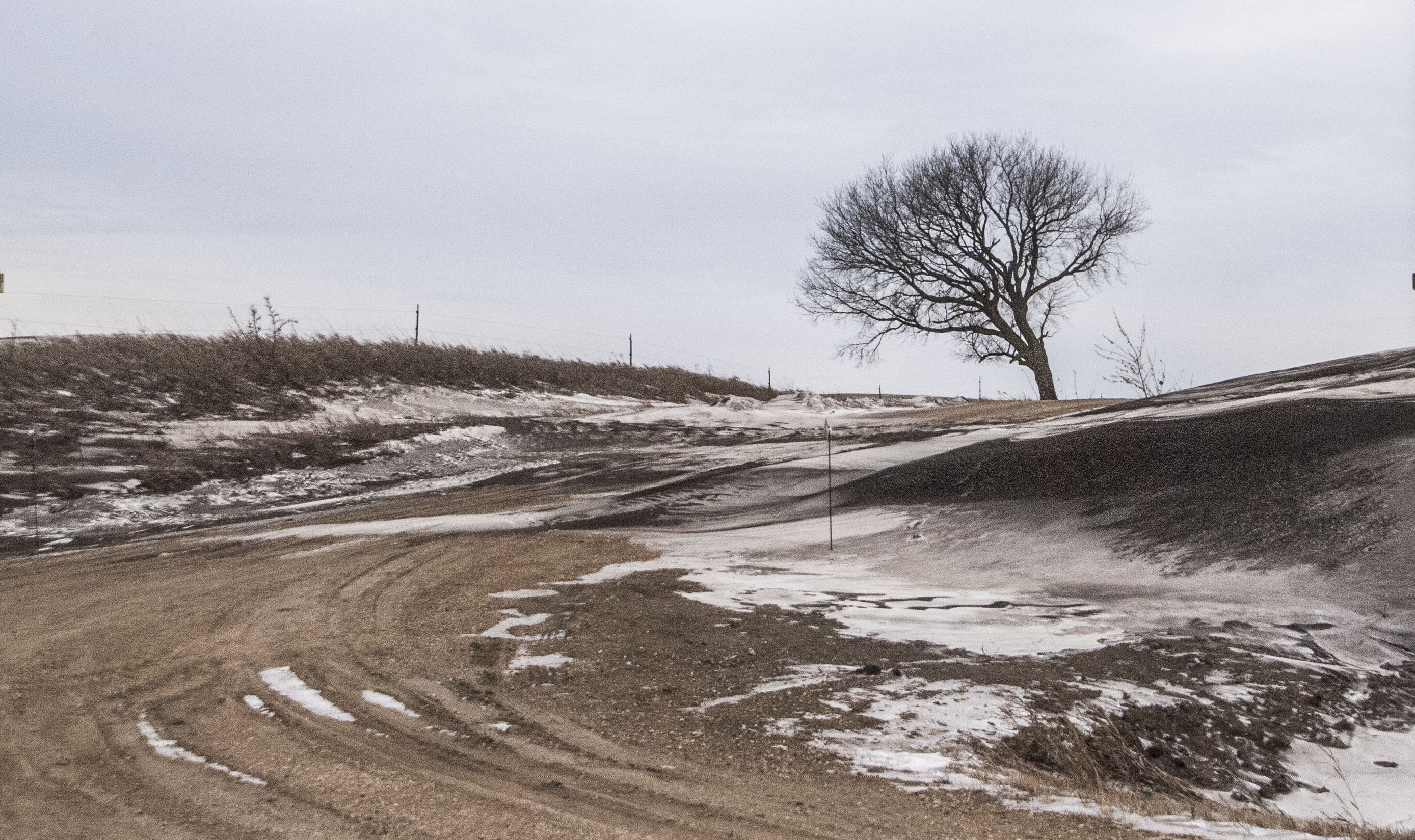
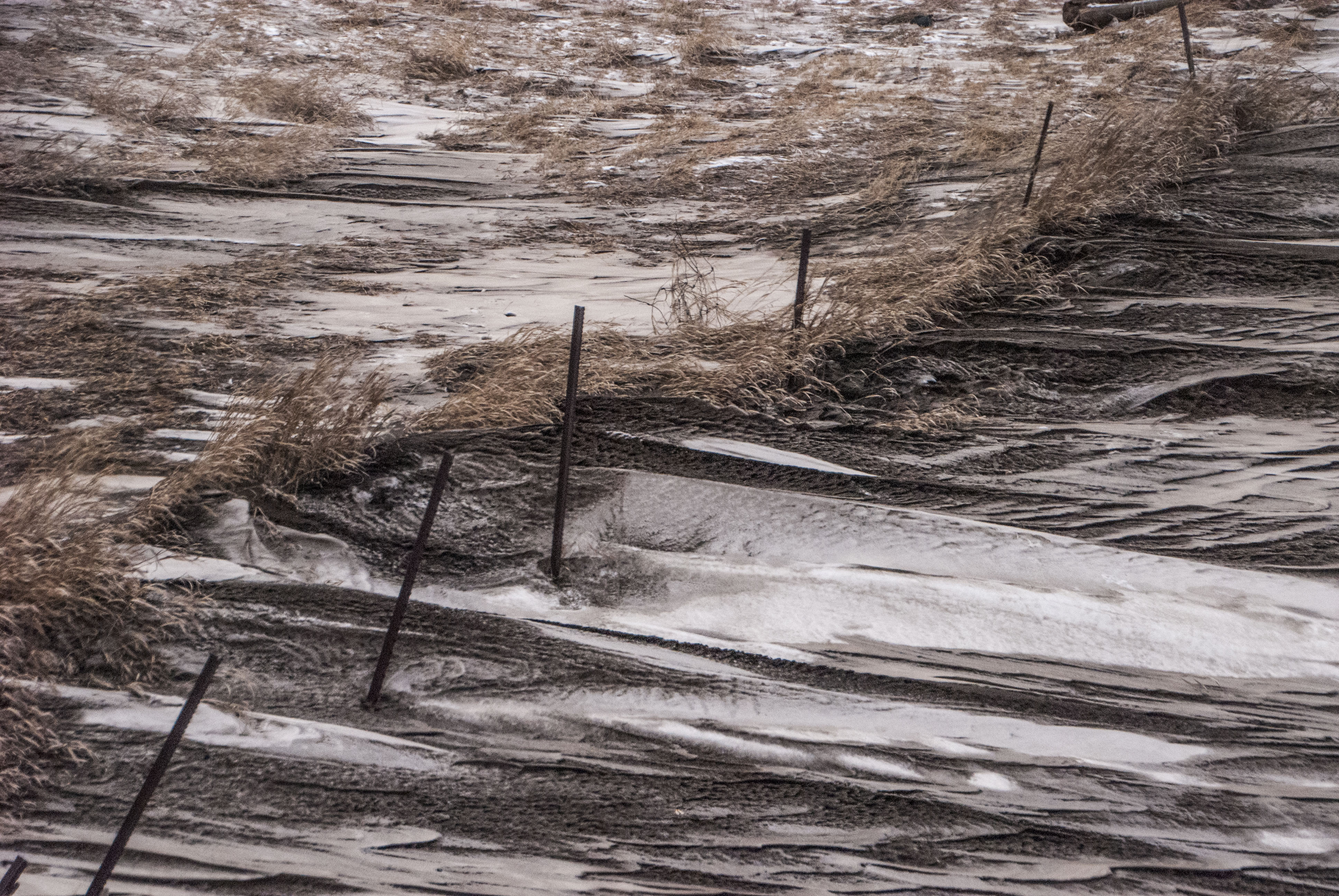
* Brought to you by a failed Federal Farm Policy and a lack of due diligence on area croplands. Images were made on the morning of January 11, 2015, in Big Stone, Chippewa and Lac qui Parle Counties.
With the blizzard blasting the prairie, most of our afternoon was spent working inside, Rebecca on a mailing and me evaluating grants. Winds have been gale force, often leaving our house here on Listening Stones Farm as a blue island of warm comfort. Thankfully her meeting in Glenwood was canceled, or I’d been worried sick of her safety.
Like she was of mine earlier in the morning. I’ve taken on a new project … just to see how far I can take it. My goal is to make one “keeper” photograph every single day of the year, one that would hopefully be sort of a “diary” of each given day. To capture this day, when winds whipped our prairie grasses and the spindly stalks of the dormant forbs with wild and windy frenzy, I walked out into our eight acres of prairie in hopes of coming home with an image.

Winds whipped the prairie yesterday in gusts of up to 50 mph, but there was prairie grasses to protect the soils.
As with many prairie blows, the winds were not consistent. They gust and ebb, whirling here for a moment before sliding over a few hundred feet. Our weather sites told of gusts of up to 50 mph. This meant taking my time, and because of the nature of the wind and my age, my camera was placed on the tripod. Since I was dressed warmly and in layers, the cold was not an issue. With a ground blizzard though, the bigger danger was in becoming lost. This can happen in an instant, so when Rebecca looked out the kitchen window and could barely make out the grove less than 50 feet away, she donned her winter clothing and came looking for me. It was enough to make a grown man smile.
We then hunkered down in the warmth of our 1912 four square doing our respective business.

Snirt in the front yard of a Boyd-area farm site. (Photo by Julia Ness)
Hours later pictures began coming across a social media site of gray snow. We have a word for that: Snirt, a combination of snow and dirt. Snirt is a country tragedy. I don’t believe our “original conservationist” and “true environmentalist” neighbors comprehend the severity of the situation, nor do the executives of the multi-national agri-chemical and seed companies that drive our federal farm policy. Already this winter many of us have posted blogs and photographs of significant snirt issues. On many of the prairie highways alert drivers were witness to the unmistakable black swirls in the snow drifts. Our “true environmentalists” may have received a break when the uncharacteristic melt erased the first signs of wind blown evidence, but the images posted today brings the sorry truth right out there for all of us to see once again. And, it’s sickening.
Folks, they’re just not making any new soil. We’ve plowed it up from the Smokies to the Rockies and beyond. More topically, on a recent trip from Minneapolis I chose to return on Highway 7, turning off of I-494, and much to my surprise, the horse farms on the rolling hills just past Victoria — basically on the windward banks of Lake Minnetonka — had all been plowed and planted to corn this past year. In 2014, I drove on this highway from Victoria to Watertown, SD, and my guess is that you couldn’t find 10 fields in that expance of prairie that weren’t in row crops. This is a direct result of federal farm policy.

A snow-covered country lawn gray from wind-blown soils. (Photo by Julia Ness)
While it’s arguable that those fields are “feeding the world” as the “original conservationists” and their puppet masters like to proclaim, most of what we saw being grown was inedible until it was digested in the bellies of factory-farmed chickens, turkeys, hogs and cattle (with a goodly share actually targeted for ethanol, where we’re also consuming an average of 40 gallons of water to produce a single gallon of ethanol). This on soils that took thousands of years of glaciation and natural forces to form. In a word, this soil is being mined of not just tilth and microbial activity, but is also being left vulnerable to blow away in winds from November through early June when the next crop is tall enough to protect the soil. And, if the soil isn’t being blown away, it is carried away in melt water. Reliable research estimates that a dump truck of dirt per second pours into the Gulf of Mexico. Seemingly, very few farmers act concerned.
Travels across the prairie this winter has shown little if any planted to cover crops, nor many stalk fields left standing to anchor the soils. Little but bare soils are left vulnerable to the winds of winter. I hesitate to guess how many millions of tons of soil were blown from tilled crop fields during this latest blizzard, much of which could have been prevented and wasn’t. Until federal farm policies are tweaked to address the true conservation of the soils, our future generations are being put at risk.
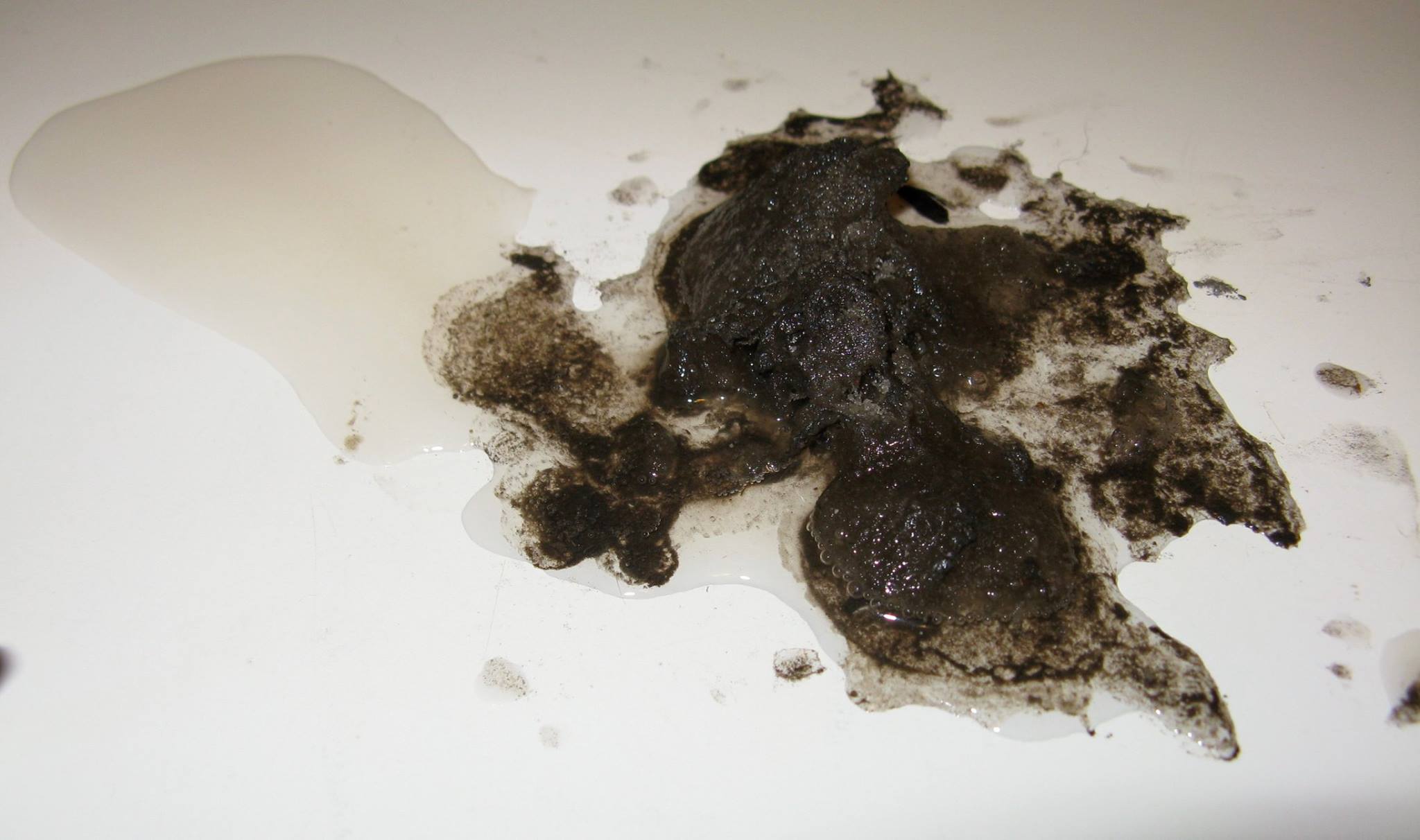
From a handful of snow pulled from dog paws. (Photo by Julia Ness)
Here is as idea: That any and all landowners, and especially crop farmers, as well as the powers to be at major farm lobbying multi-nationals and farm organizations, be required to read David R. Montgomery’s book, “Dirt: The Erosion of Civilizations.” Then to qualify for any future government support programs, be required to pass a test on the importance of saving their soil for the good of the human race. If you want the “right to farm,” then farm right. Consider your soil as a precious gift, an investment, a commodity you should surely want to protect for as long as you live. Buffer the ditches. Invest in a cover crop. If you want a cheaper solution, hold off the plowing those corn stalks until next spring.

The parking lot in front of the Renville County SWCD office. (Photo by Tom Kalahar)
After reading Montgomery’s book, Rebecca said: “There are several things that stick with me from this excellent book, but one of the biggest is his point about the Middle East. We learned as school children that it held the ‘Cradle of Civilization,’ but what we see there now just doesn’t square with that land of milk and honey described in the schoolbooks. And a big part of the reason that picture doesn’t ‘fit’ is because they squandered their topsoil, just like almost every ‘great’ civilization that has fallen on almost every continent, and on many islands as well, on the planet. Almost all of them knew better. They saw the soils lighten, gully, and thin on the hillsides. They saw the dust blow. And almost all of them continued to pursue the quick profit, the biggest bragging rights, the most bushels per acre. They were ‘feeding the world’ as they knew it. And then, with their soils plundered and blown, their world collapsed, and those that didn’t starve led the next exodus to new, unspoiled lands to try again. Where will we go this time?”

Closeup of tracks made in the snirt. (Photo by Julia Ness)
For you can rest assured we can see those black wavy lines in the snow drifts, or like in this latest blizzard, when from Boyd to Olivia, pictures were made and posted of snow grayed by particles of your precious soil. What we’re really seeing, though, is nothing short of a country-wide tragedy!
While on my traipse through the new snow on the upper prairie loop this morning, Mr. Roggenbuck came to mind. Fleetingly so, for in the fresh snow were the loping tracks of a coyote. It may have been the one Joe Pye chased from the farmstead just as we were headed to bed last night, although the tracks didn’t appear to have been made in a flight of fright.
Rebecca enjoys having the new snow, for the winter brown was weighing on us. Besides the freshness, a new snow can also give you a glimpse of what goes on in the blackness of night. Coyote tracks, for one. Rabbit tracks, for another. There were the telltale tracks of a single rabbit in a short portion of the trail that suddenly veered off toward the orchard. In the orchard the tracks told a different story. Here were the tracks of an obviously nervous rabbit, circling here and there, heading off toward piled buckthorn then back between the apple and pear trees. If these were the tracks of a single rabbit, it was one with a nervous and fearful heartbeat in a flight of fright.
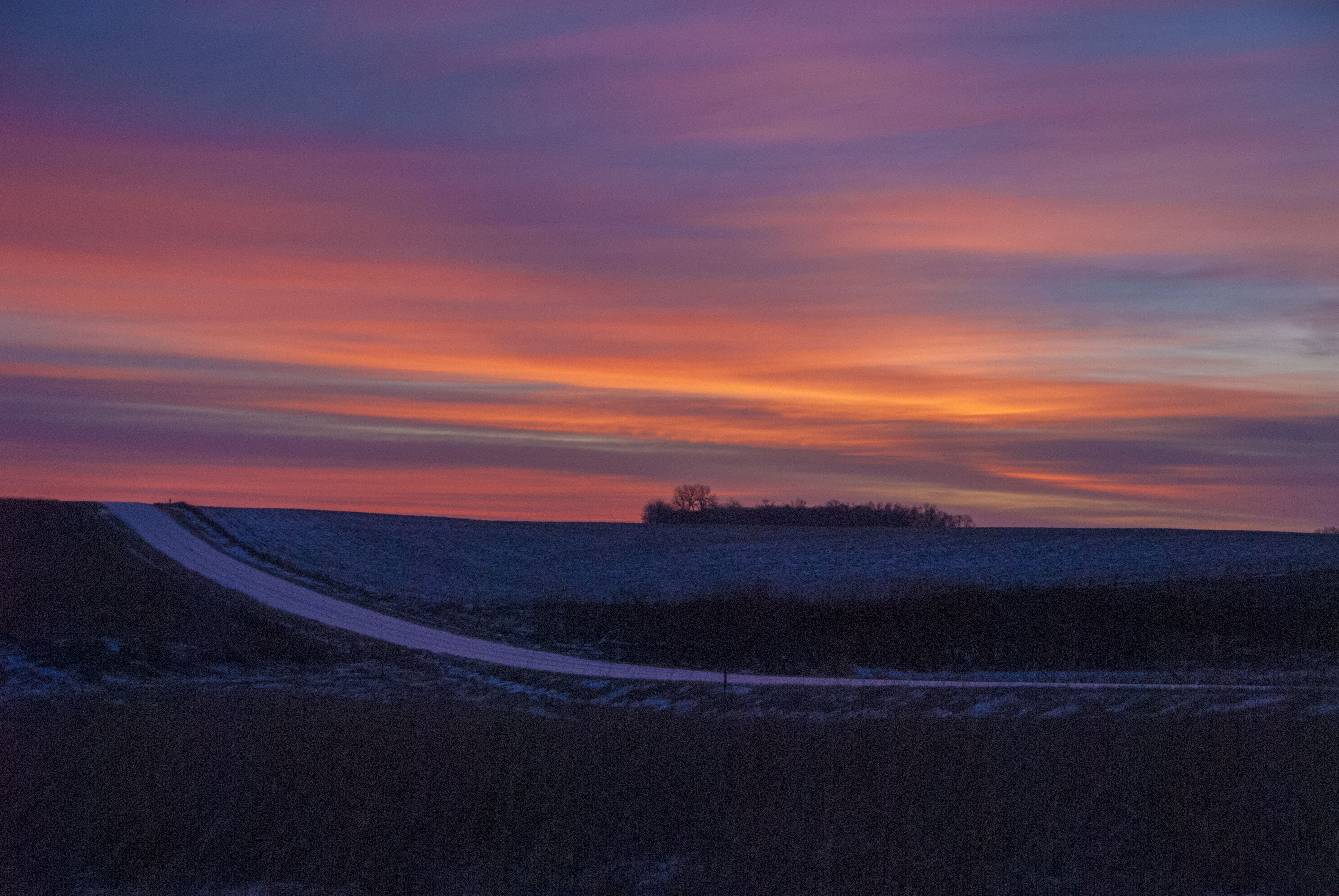
The minimum maintenance road where the Verse bottomed out.
Right through the midst of the haphazard circles were, once again, the loping tracks of the coyote. A single thread that cut right across the topographical map of fear. This was like many good mysteries, though written in fresh snow. In our walk around the edges of the orchard and through the winding trail of the grove, the dogs and I found no evidence of a severe ending. Nor were there tufts of bloody fur along the upper prairie loop. If Joe Pye, who has quite a nose for prairie grass clues, missed it, the ever studious and ponderous Vega was on task to back up the investigation. Good cops, both!
Which brings me back to Mr. Roggenbuck, our local collision and glass entrepreneur. En route to the upper loop we passed a spot where I had laid in the browned prairie two nights before to take a photograph of the full moon rising into the prairie sky. It was one I made safely, which I’m sure will disappoint Mr. Roggenbuck … who never misses an opportunity to suggest that he has my car on a waiting list for this coming summer. There is precedent.
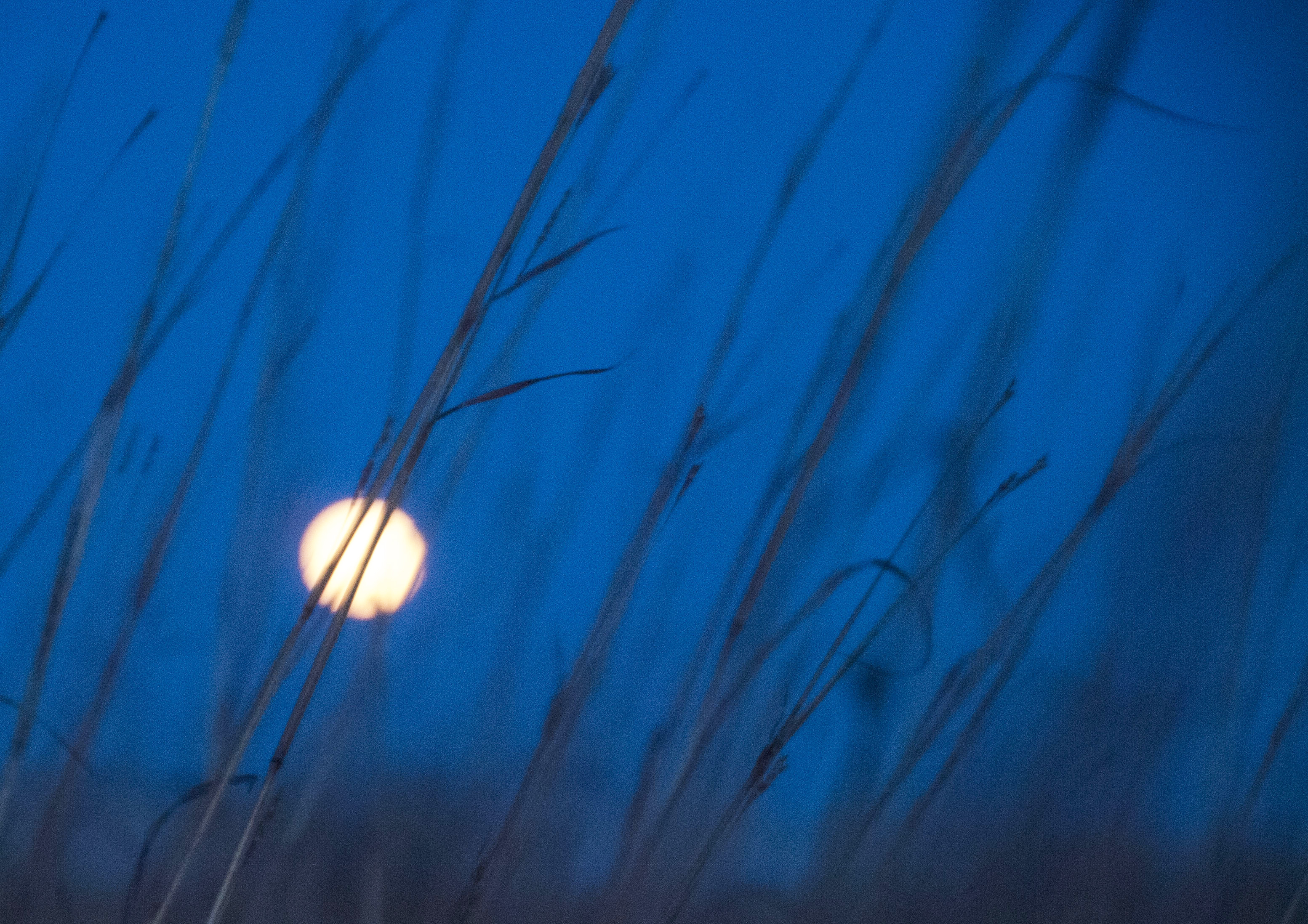
Moon is peaking through the bluestem in this photo from a year ago.
Two years ago the front on my little plastic, Japanese car was destroyed by a deer. My fault was perhaps one of fate. Ten seconds either side of that exact moment when the doe decided to turn course and head back onto the highway right in front of the car coming from the opposite direction was all that was necessary. That car broadsided the deer, which careened across the country road right into the “grill” of my car. That summer I met Mr. Roggenbuck, a fine man with a stellar reputation and keen sense of humor, for the first time.
Then there was last winter, which on the night of January’s full moon, the little car met a different fate. Since Mr. Roggenbuck had every little part back in place, and even had the headlights focused properly, the Versa was running like a charm. When the moon eased up over the eastern horizon I took note, grabbed the keys and sped quickly to the end of our gravel road where off to the east sits a concise, hillside oak savanna. Ever since we moved here that savanna, which bespeaks the past of the prairie pothole biome, has caught my eye. Here was an opportunity to make a really nice photo, since the savanna is far enough away that my telephoto lens could possibly pull the moon up into one of those iconic coastal images.
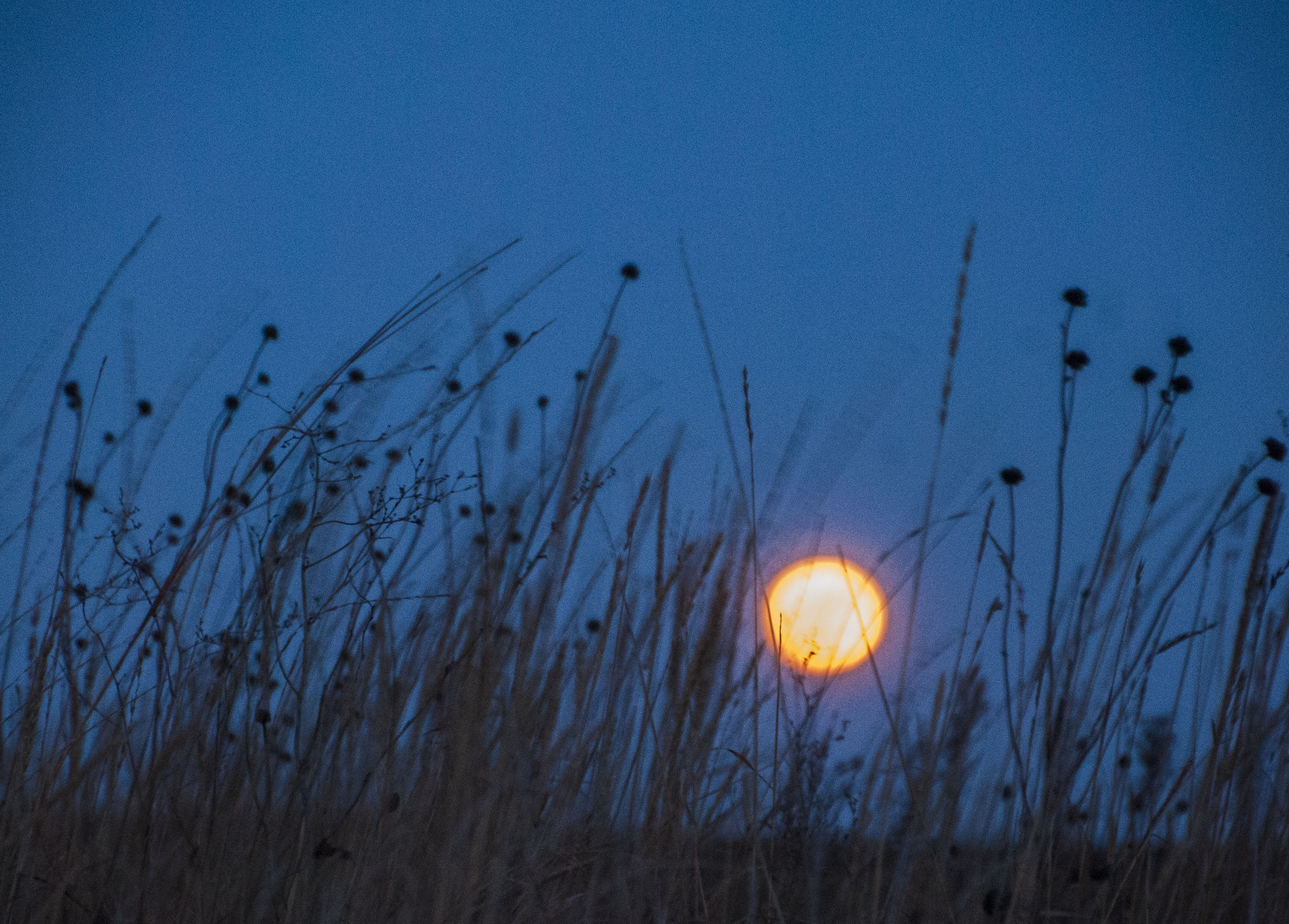
Though lacking the drama of the full moon image of a year ago, this one was much less expensive!
One must move quickly with a rising moon, not unlike a coyote in search of a meal in the prairie. It took perhaps 90 seconds to get down the road to the savanna … however, it was not to be. The moon was nowhere to be seen. The rise was much too far to the left. Disappointed, I started back toward the house where Rebecca was in the midst of preparing a great dinner, and one I was hesitant to leave despite her assurances that she would save some for me. At the end of the section a sudden thought came about a WMA with a wonderfully rich growth of big bluestem.

Another image from the Steen WMA, with bluestem in the sunrise.
Again, a rising moon moves fast, so when I turned I hit the gas. Steen’s WMA was a mile and a half distant, and the snow-covered road, complete with icy ruts, jostled the little car. It wasn’t long before I passed the one mile intersection. A third of a mile distant is an abandoned farm, with the grove still standing. Edging across the low-maintenance gravel road was an impressive finger drift, a peninsula of snow. Having lived here long enough to know that if I didn’t hit the drift with enough speed and muscle I would be stuck, I pushed down on the accelerator and hit the drift. The drift was solid ice and the Versa went airborne. That the car landed without rolling was both impressive and incredibly lucky, yet it crashed with such force that the entire front end was crushed. Pieces of plastic flew past the windshield as I pulled the car to a stop. Fortunately the right headlight was still headed in the right direction and the wheels appeared to aligned, so after taking a deep breath I drove on up the hill to the WMA and took a half dozen pictures.
This past summer Mr. Roggenbuck had his second chance with the car, and after I told him the story of what happened, he said, “We’ll fix ‘er up for you, and we’ll hold a spot open for you for next summer.” Since then we’ve run into one another at least a half dozen times, and he never fails to mention that he has saved me a spot.
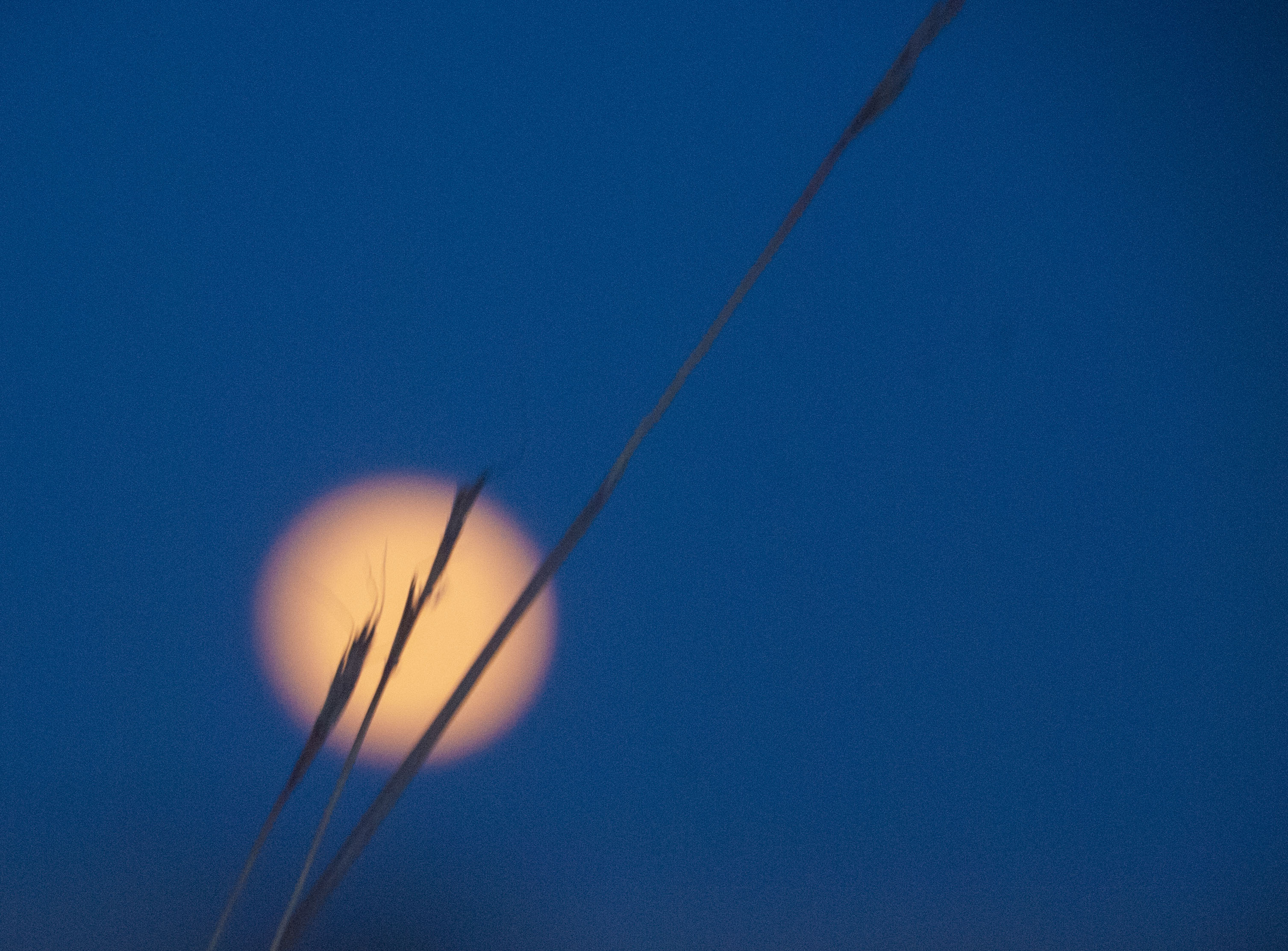
So getting an image in our home prairie of the rising moon was cause for a quiet and pleasing celebration … until this morning. Before I took the dogs for the walk I once again headed to Steen’s WMA to take in that luminous light of pre-dawn, and the prairie wind was creating a new drift across the one-lane country road at the exact spot. Experience is a great teacher. That drift was approached slowly and delicately, and the Versa remains in one piece.
Between the track mysteries left in the snow, this was also a sense of satisfaction as the dogs and I circled the upper loop.
 Listening Stones Farm