Unknown's avatar

About John G. White

Somewhat retired after a long award-winning career in newspapers (Wisconsin State Journal, Dubuque Telegraph-Herald, Denver Post and a country weekly, the Clara City Herald). Free lance photographer and writer with credits in more than 70 magazines. Editor with various Webb Publishing magazines in St. Paul, and a five year stint as editorial director at Miller Meester Advertising.

Canary of the Prairie


(Writer’s Note: Portions of this blog were based on media reports from the St. Paul Pioneer Press, the Minneapolis Star Tribune, the Marshall Independent and the New York Times.)

This past Saturday some 300 folks assembled in Marshall, MN, for the Pheasant Summit, where Minnesota’s DNR Commissioner suggested that the ring-necked pheasant is the “canary” of the prairie.  “[Pheasants] represents the health of the landscape,” he said.

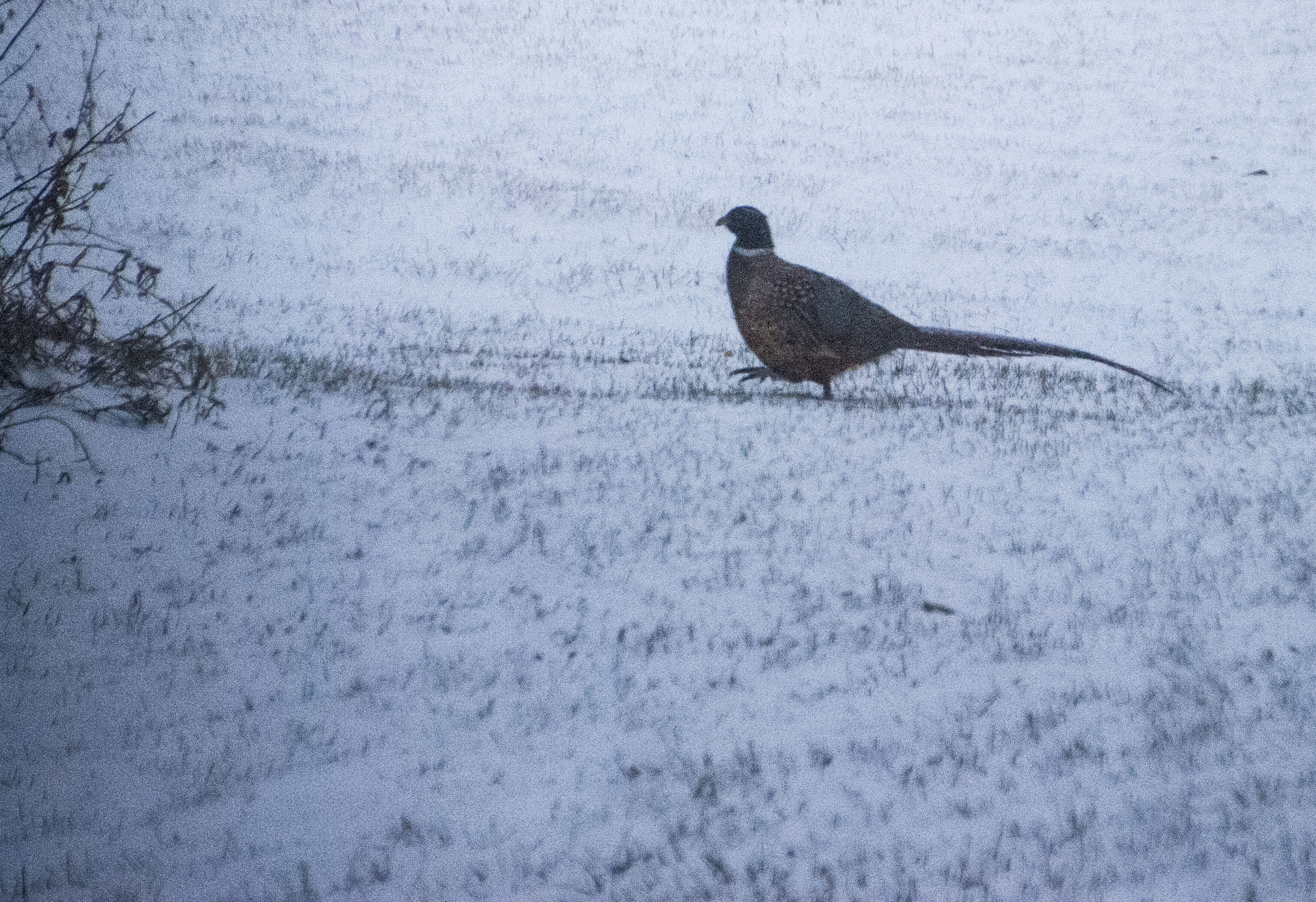
Our very own "canary of the prairie" strutting across our prairie.

Our very own “canary of the prairie” strutting across our prairie.

Wise choice, since there is barely enough grasslands left to support the lives of original “canary of the prairie” — the prairie chicken. Translated, grasslands equate habitat, and habitat was the key buzzword for the day long conference.

While it is fine to point to the pheasant as a symbol, the overall situation may be more dire than a sportive and beautiful bird. Rest assured, there is a relation between pheasants and that beautiful black glacial till we call soil. Pheasants, black soil swirls in the snow banks, and corn and other crops planted right to the edges of drainage ditches, are all related, for that soil is a precious, if not appreciated, commodity that the lives of future generations will rely on for its food supply. Just as it was important that the pollinator crisis seemed to be the focus of the winter meetings a year ago, perhaps our vast blackened landscape will garner some attention this time around. If it takes bird hunters and their beloved pheasants to do so, then bully for them. Bully for all of us, and our children’s children, too.

A "rock jockey" digs out glacial rocks in a grassland that, if like adjacent fields, will be converted to row crops.

A “rock jockey” digs out glacial rocks in a grassland that, if like adjacent fields, will be converted to row crops.

Soil mixing with snow, know as “snirt,” should be as much of a “canary” to the hunters and farmers as is the decline of the pheasant. Consider the lack of buffer strips and other grassy habitat, for example. Grasses protect the soil, as does holding off tillage until the spring or the planting of cover crops. In our many trips through the “black desert” of the former prairie pothole biome this fall and winter, we’ve seen two (2) small fields planted to cover crops despite the number of meetings that addressed the issue last winter. Two.

Certainly there are strategies available for holding precious soils in place. The least expensive for farmers is to simply forgo fall tillage, since corn stalks are anchored in the soil. Stalks also capture moisture, and for pheasants there would be more protection and spilled grain on the surface to provide a food source to survive winters. However, until the innovators, followed by the early adopters, give this idea a shot, it’s a practice that will go nowhere. Other strategies might include fall planted cover crops and even the enforcement of buffer strip statutes. In other words, ground cover. Grasses. Strategies that will help preserve the soil and enhance life for pheasants, and people as well.

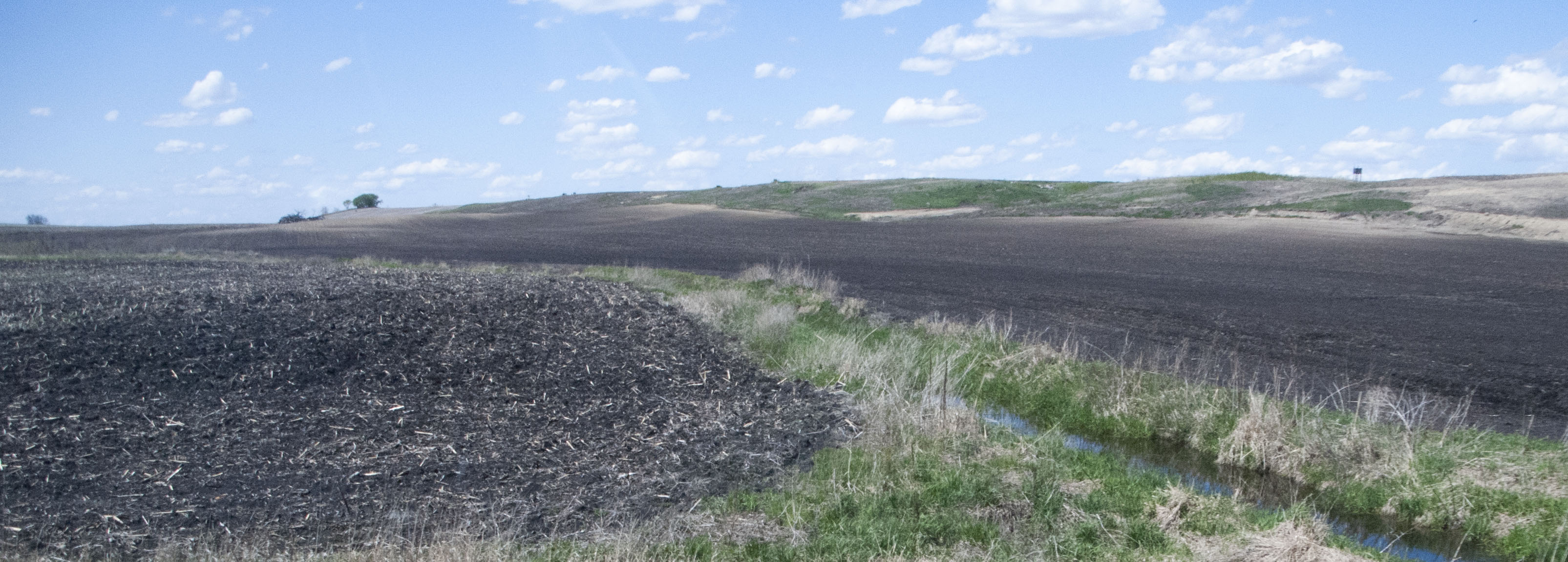
An example of "no buffer" farming.

An example of “no buffer” farming.

So, you may ask, how did it come to this? For the past 60-some years industralized farming practices have brought continued ditching and tiling, and an end to basic crop rotation practices, grass waterways and buffer strips. Of the 18 million acres of native prairie the Minnesota landscape once had, about one percent remains today, with habitat loss primarily attributed to farming and development. With last year’s $7 corn, Conservation Reserve Program (CRP) acres in the state dwindled from 9 million to 3 million acres. In short, what took natural history 12,000 years to accomplish since the last glacier has basically been destroyed in less than 200 years by mankind.

That said, there appears to be neither much concern nor urgency from the agricultural community, including the major farm organizations, nor in legislative circles as it applies to overall soil conservation issues. This past election cycle saw the passage of a “right to farm” amendment to the Missouri statutes that basically erodes any oversight efforts by government and private citizens from industrialized CAFOs and crop farming, including the use and misuse of agricultural pesticides. Nor did concern reach the Halls of Congress with its recent passage of the emergency budget bill where pro-industrialized big-ag legislation was “hidden”-within which states that the government (meaning the EPA) cannot require farmers to report “greenhouse gas emissions from manure management systems.” Nor can it require ranchers to obtain greenhouse gas permits for “methane emissions” produced by bovine flatulence or belching. The Environmental Protection Agency says on its website that “globally, the agriculture sector is the primary source” of methane emissions.

According to the news report, the spending bill requires the EPA to withdraw a new rule defining how the Clean Water Act applies to certain agricultural conservation practices. It also prevents the Army Corps of Engineers from regulating farm ponds and irrigation ditches under the Clean Water Act. Said Rep Mike Simpson (R-ID), “This is a major victory for farmers and ranchers, who consistently tell many of us that they are concerned about the potential of the EPA and the Army Corps of Engineers’ overreach into their operations.” While this involves CAFOs and the EPA, grassland proponents had best not relax their guard.

Crops planted right to the lips of drainage ditches are not legal and rarely enforced, prompting the Ag Commissioner to suggest repealing the law.

Crops planted right to the lips of drainage ditches are not legal and rarely enforced, prompting the Ag Commissioner to suggest repealing the law.

Which brings us back to the Pheasant Summit in Marshall this past weekend as a case-in-point, where state’s largest farming organization, the pro-ag Farm Bureau, came away from the conference reportedly pleased there was no “blame game” involved. That should not come as a surprise. According to news reports, Doug Busselman, director of public policy, serving as Minnesota Farm Bureau’s lobbyist, said, “Most of the discussion here has been about how much habitat has been lost as opposed to focusing on how much habitat we have and how we can make the most of what we’ve got. I think those are some of the concerns that we’ve come here with. I think we’d benefit by recognizing where good is happening and building on that versus always looking at things lost.”

Read between the lines — status quo seems to get the nod from the Farm Bureau.

Rather than grass waterways, tillage equipment is run through fields to enhance a quicker drainage. Too shallow to qualify as an "official" ditch, these ditches won't qualify for buffer regulations.

Rather than grass waterways, tillage equipment is run through fields to enhance a quicker drainage. Too shallow to qualify as an “official” ditch, these ditches won’t qualify for buffer regulations.

Said Doug Peterson, president of the rival Minnesota Farmers Union, “We’re the resource owners. It’s time to stop pointing fingers. If we agree we need a state initiative for habitat for pheasants, wildlife, birds, pollinators and clean water, then it’s time for a policy that allows farmers to be part of the solution.’’ But, he added, landowners can’t be expected to give up income to implement conservation.

Then there was this from Minnesota Ag Commissioner Dave Fredrickson, who suggested in an interview to the St. Paul Pioneer Press that enforcement of existing buffer strip regulations — which requires vegetative strips along drainage ditches, streams and rivers of between 17.5 ft. to 50 ft. — is nearly impossible, and if local government entities aren’t doing the enforcement then perhaps the regulations should be repealed … that it isn’t up to the state to step in with enforcement.

None of which seems very positive for that ring-necked canary of the prairie.

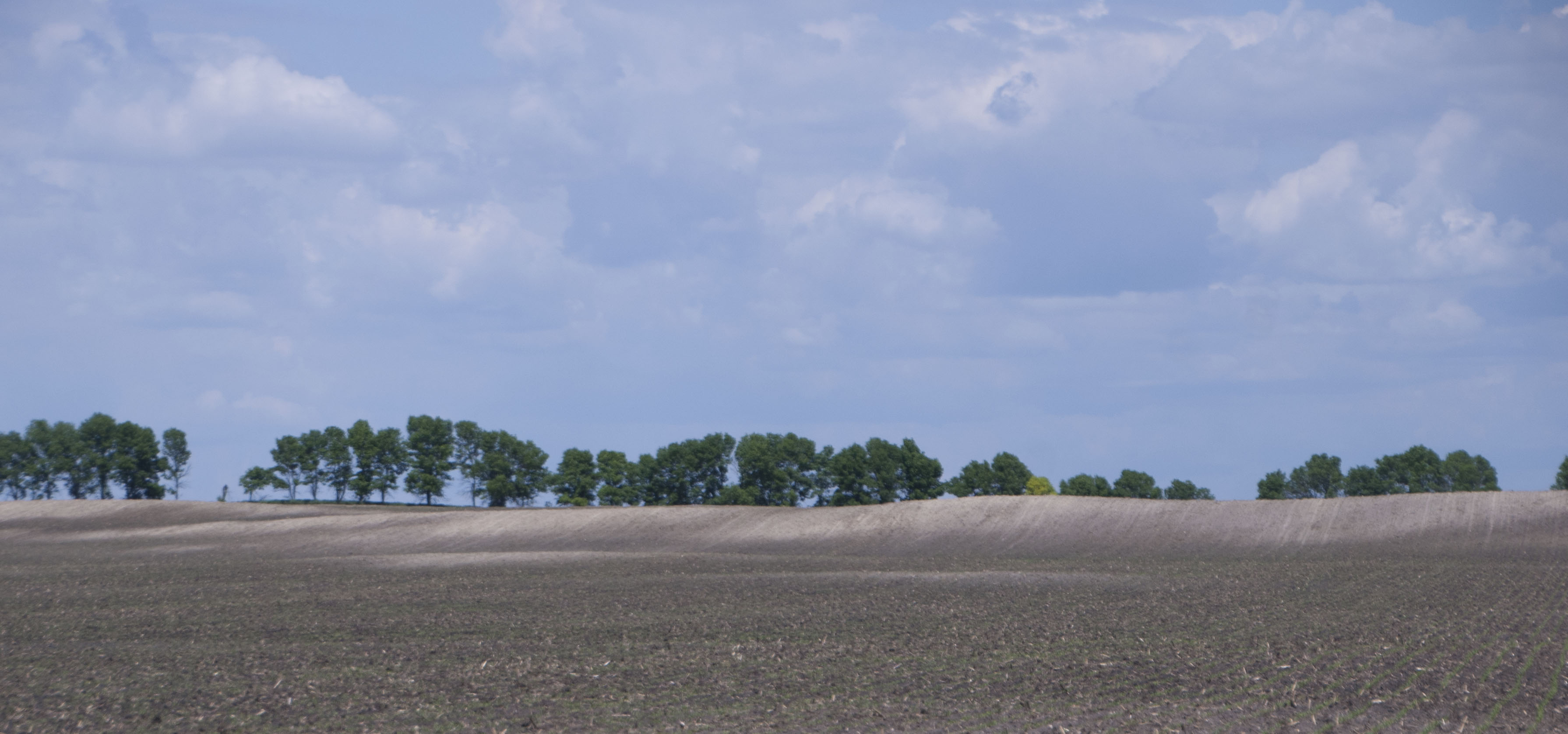
If one looks around the farmed prairie, seeing  "blow outs" are common and seem to grow proportionately larger each growing season.

If one looks around the farmed prairie, seeing “blow outs” are common and seem to grow proportionately larger each growing season.

Here is what one of the attendees, an unnamed public servant and hunter, said following the meeting: “I’m profoundly sad that our state and country can not rise above the greed and lies to fix this very dangerous situation. We are running out of time before we have an ecological and biological collapse. Agriculture has been the demise of other civilizations and it will be ours, too, if we don’t wise up. Uncontrolled drainage policies, irresponsible pesticide use, total reliance and over application of commercial fertilizer, are just a few of the obvious races to the bottom. What scares me most is the absolute total control the agricultural ‘Mafia’ has on nearly all our politicians and agencies. We are being warned of the pending collapse but we are way too greedy and stupid to heed the warning.”

Enforcing existing laws, including buffers, roadsides and easements, actually topped the list among attendees at the conference, followed by efforts to increase bonding funds for Wildlife Management Area acquisition and target funding to specific high-quality habitat area through state, local and federal cost-share programs. Fourth on the list was to increase state and local funding, followed by the creation of competitive compensations for long-term/perpetual conservation practices.

Roadside snirt has already been seen throughout the prairie this winter ... and it's still December.

Roadside snirt has already been seen throughout the prairie this winter … and it’s still December.

One would think, though, that dirt — that common denominator between feeding a “nation” or “world,” depending on who is providing the hyperbole for the “original conservationists” out on the land — would matter most to those who are invested in farming it. Those are the folks who are denuding the grassy protections and whose soils are filling the road ditches with “snirt.”

See? No blame, no gain, apparently. And, thanks to an ignorant public and nicely financed lobbiest-pushed legislation, no accountability.

Then, there is this, from David R. Montgomery’s “Dirt – The Eroision of Civilization” —  “The estimated rate of world soil erosion now exceeds new soil production by as much as 23 billion tons per year, an annual loss of not quite one percent of the world’s agricultural soil inventory. At this pace, the world would literally run out of topsoil in little more than a century. It’s like a bank account from which one spends and spends, but never deposits.”

Which brings us back to the pheasant … our canary in the mining of the land.

Ole’s Canoe

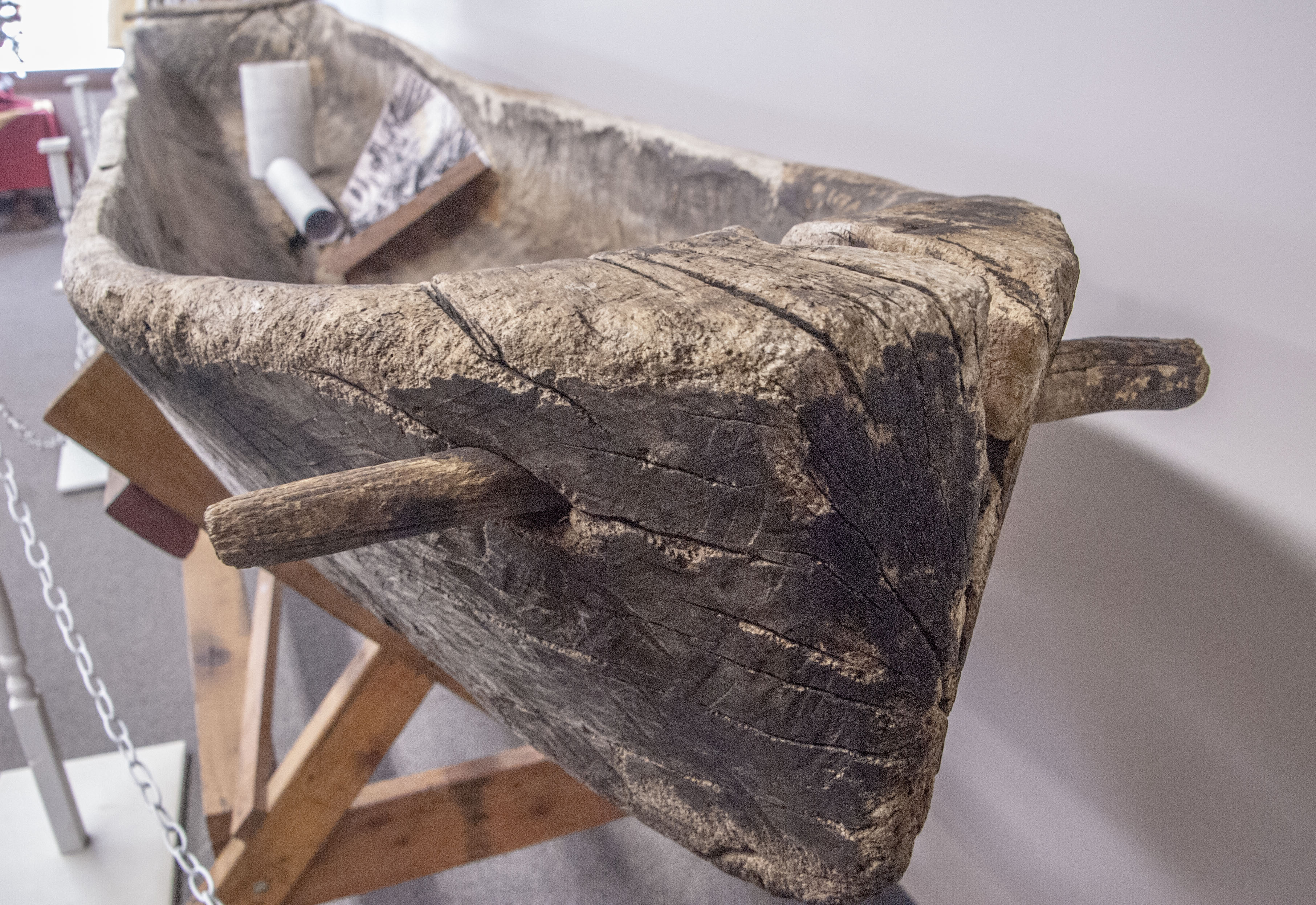
Ever since those initial spindly cedar strips were glued and stapled to the form of my first canoe project in the 1980s, wooden canoes and kayaks have haunted me. Small wonder that a rugged and weathered craft, with cracks of time cutting through the shoulder of wood like a running river slices a native prairie, stopped me in my tracks. June Lynne, executive director of the Chippewa County Historical Society, smiled. “She’s a beauty, isn’t she?”

Indeed, and as my canoe building buddy, Norman Andresen, used to remind me, “Every canoe has a story.”

Resting atop a makeshift standard in the main office of the Historic Chippewa Village in Montevideo, the ancient dugout awaits a more glorious future. While the story of the fire-hollowed cottonwood trunk will never be known, June, bless her huge historic heart, obliged me with what is known. “For years this was sort of an inside joke here at the village,” she began, acknowledging that it has been in storage at the Village since 1985. A small plaque beside it had read: “This Canoe was Owned by Ole Torgerson. He Built It From A Cottonwood Tree.”

Over parts of three centuries, the unearthed dugout canoe will find its place in history.

Over parts of three centuries, the unearthed dugout canoe will find its place in history.

That led to many inside jokes centering around both the age and significance of the find. Now, however, the jokes and laughter have been silenced. This is what is known: Torgerson discovered the canoe either in or alongside the Chippewa River on his farm around 1867, which appears to be at or near the current location of the Easy Bean CSA Farm on Highway 40. He initially stored the dugout in a shed on the farm where it remained until 1878 when another rush of high water cut through the valley that spring to leave behind a new oxbow lake. Torgerson then moved the canoe to a new shed he built on his farm across the river, where it remained for four more decades after his death in 1918.

His nephew, Lyle Torgeson (the “r” was apparently dropped from the family name in subsequent years), found the old canoe at the abandoned farmstead of his uncle and moved it to a new shed on his farm where it remained for another 25 years. When Lyle died, the historical society purchased the canoe for a pittance at a farm auction. “We moved it here to this site and have had it in storage ever since,” said Lynne.

Speculation has it that Ole placed the "dowel" through the bow of the canoe.

Speculation has it that Ole placed the “dowel” through the bow of the canoe.

Not unlike Ole Torgerson, many “river rats” hit the gravel bars searching for rare items such as bison bones, Indian artifacts and perhaps even a dugout canoe — another was located a few miles away just below the Churchill Dam on the Minnesota River in 1982 — after high waters scourge the river bottom and gravel bars. And, as a paleontologist or an archaeologist will tell you, such artifacts date to this side of the last glaciation of Minnesota. “Of course, Minnesota had dinosaurs,” a University of Minnesota geologist told me years ago on a canoe trip. “Their bones, along with all evidence of the ancient seas, were all crushed to smitherines by the weight of the glaciers.” While 12,000 years may not mean much in geological time, it still allows for some interesting finds thanks to the help of raging flood waters along the original bed of first, the Glacial River Warren, and later, the Minnesota River.

So, was Ole a crafty fellow who hollowed out the huge cottonwood? This is where Maritime Heritage Minnesota came in with a Clean Water Legacy Grant to study seven of the eight dugouts found in the state. In 2013 a minuscule hole was drilled in the hull to extract a 100 mg sample that was then sent to Florida for a radiocarbon dating study. The results shocked Lynne and her board … and brought Ole’s old dugout out of permanent storage and into the main hall, for the study estimated the date of the ancient canoe being burnt and honed with stone tools into a river-worthy vessel between1436 and 1522.

“Ole didn’t do it,” she said.

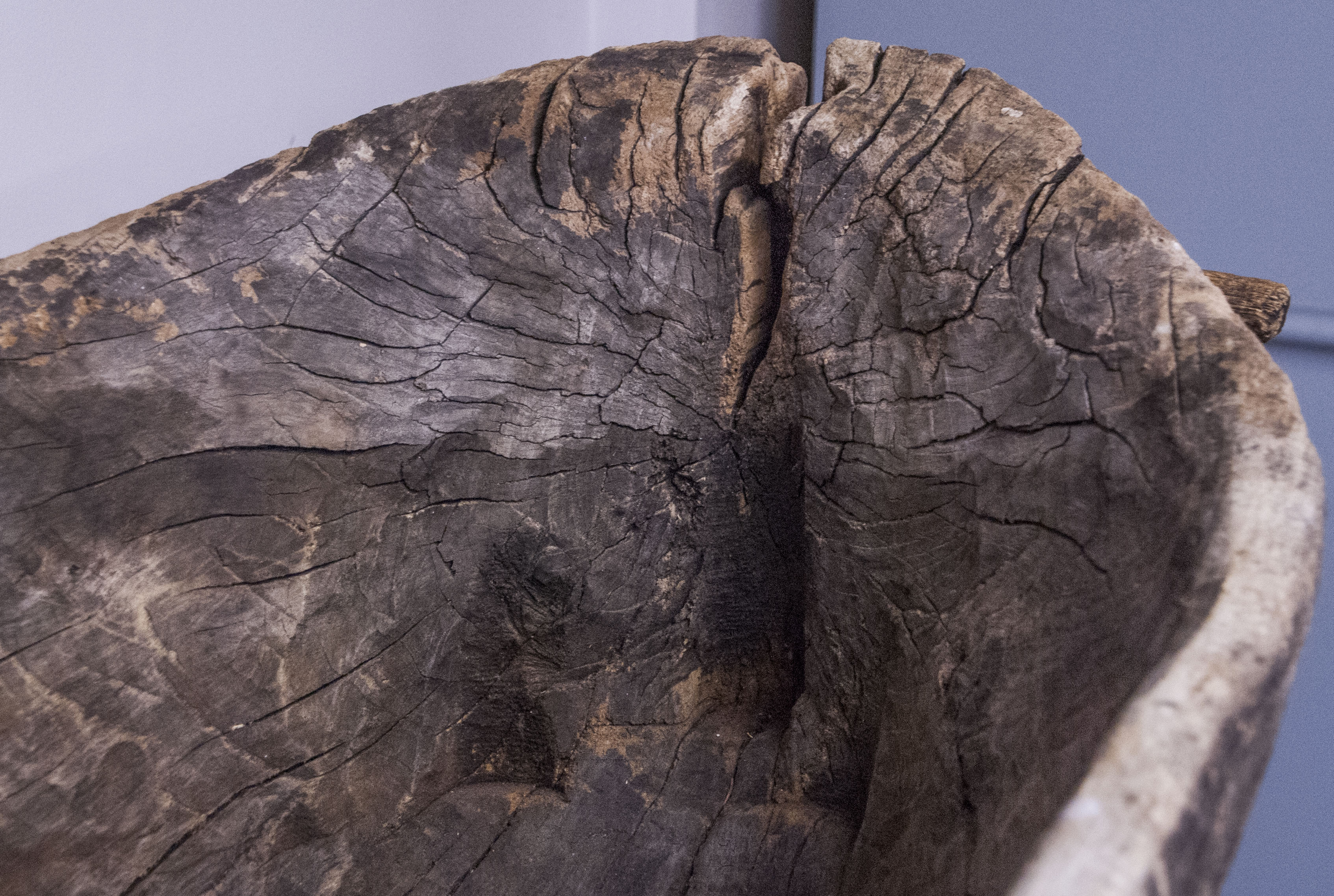
Weathering cracks in the bow of the cottonwood dugout tell the tale of time.

Weathering cracks in the bow of the cottonwood dugout tell the tale of time.

While members of a primitive culture (officially called the Late Prehistoric Period) along what we know as the Chippewa River painstakingly hollowed out and carefully burnt the innards of a cottonwood tree trunk to craft the canoe, German emperor Sigismund was signing a peace pact with Hussieten, peasants were uprising in Transylvania and Albrecht II von Hapsburg became king of Bohemia.

All of which happened several generations before that second dugout canoe (two of the entire eight that have been unearthed in the state are both stored at Chippewa Village) was similarly built. It dated back to 1626-1679. That both were unearthed literally within miles and over a finger of a prairie ridge from one another is also interesting. Unfortunately the “newer” dugout wasn’t as well preserved having been pulled from the sands and water more than a century later than when Ole found his.

“Initially, we were concerned about how bringing it inside would damage the wood, even though it had been through all those freeze and thaw cycles over the years,” said Lynne. “We’ve been very careful.”

June Lynne holds a drawing of the mural regional artist Malena Handeen will paint as part of the dugout canoe display.

June Lynne holds a drawing of the mural regional artist Malena Handeen will paint as part of the dugout canoe display.

Soon, too, regional artist Malena Handeen, who with her husband, Mike Jacobs, owns the land close to where Ole Torgerson found the dugout, has created a riverine mural she has been commissioned to paint on a bare wall inside the Village office. Lynne said a permanent and more stately display stand will hold the dugout in front of Handeen’s mural. “It should look really nice, and we think it will also look authentic to the time,” Lynne said.

Regional artist, Malena Handeen, is to paint the mural depicting the probably riverine scene for the display.

Regional artist, Malena Handeen, is to paint the mural depicting the probably riverine scene for the display.

She then smiled. “You know, every one of these little county museums have something unique and special about them.” She looked at the ancient dugout Ole unearthed that somehow luckily survived not just being buried in the sands of time, but even perhaps a possible dozing and burning of an old farmstead to make way for modern farming. “Maybe this is ours.”

The Art of Settling In …

A few days before the blizzard Rebecca walked along the edge of our prairie with her arms raised high letting the wind take ripened milkweed puffs from her hands to distribute them into the native grasses. Her gesture seemed quite symbolic of our finally settling in, although we’ve had many settling-in moments over these past few weeks as the light and warmth of autumn gave way to the ominous warning of our first blizzard of the approaching winter.

On the eve of the big storm she worked diligently through the day … often shooing me away because of the satisfaction of doing it herself … to remove the tiller from her garden tractor for the first time so she could attach the mower. Many trips were made between the mower and the wind-free inside of the goat barn as she consulted the owner’s manual to gauge her progress and to find the next step. It was late afternoon by the time she finished; by then the battery was charged high enough to start the tractor. As dusk gave way to darkness she was still out mowing a loopy path through the prairie grasses for us to walk, snowshoe or cross country ski without being covered with “preacher’s lice” and being tripped by the thick thatch of native grasses.

Rebecca's path cut through our prairie the day before the blizzard.

Rebecca’s path cut through our prairie the day before the blizzard.

Despite the hurried preparations, I doubt if either of us was mentally ready for the reality of the deep snow we now have for it is likely our winter cover until the spring melt. Couldn’t we have eased into this? Must we have had a raging blizzard blasting horizontal snow and leaving behind wind created sastrugis across the neighboring barren crop fields? Wouldn’t waiting until the timber frame building was completed been more reasonable? Asking such questions is futile, though excusable.

Blizzards, though, serve a good purpose in that you are given time for reflection, of which I’ll take advantage.

Rebecca and her son, Martin, have a quiet moment.

Rebecca and her son, Martin, have a quiet moment.

So begins our second winter here on the farm. Our first was one of nearly daily discovery of country living here at Listening Stones Farm and of learning the nuances of our new home. Seeing how our chickens would fare, and even the directional drifting of wind-blown snows. At this time last year we were razing two decrepit outbuildings as the first snow, a lazy and light snow by comparison, gently covered our prairie. One was a granary built at the same time as this house. Holes had worked through its roof as well as through that of an architecturally interesting hog barn nestled in the grove. Both were rotting from the inside out and caving in. The excavator used a pit that had been dug previously adjacent to the grove to drag, burn and bury the refuge from the two buildings. Although we had debated over the possibilities of saving and refurbishing both, realistically they were too far gone.

We decided to use that area for an orchard, and Rebecca ordered fruit trees … cherry, apple, crab apple and plum … that we planted in the spring. We hauled several loaded wheelbarrows of chicken manure to spread over the ruffled soil where she spread clover seed. All summer long I mowed over the weeds until a staunch stand of clover emerged between the trees — most of which survived their first year from bare root to leafing to fall color and eventual leaf drop.

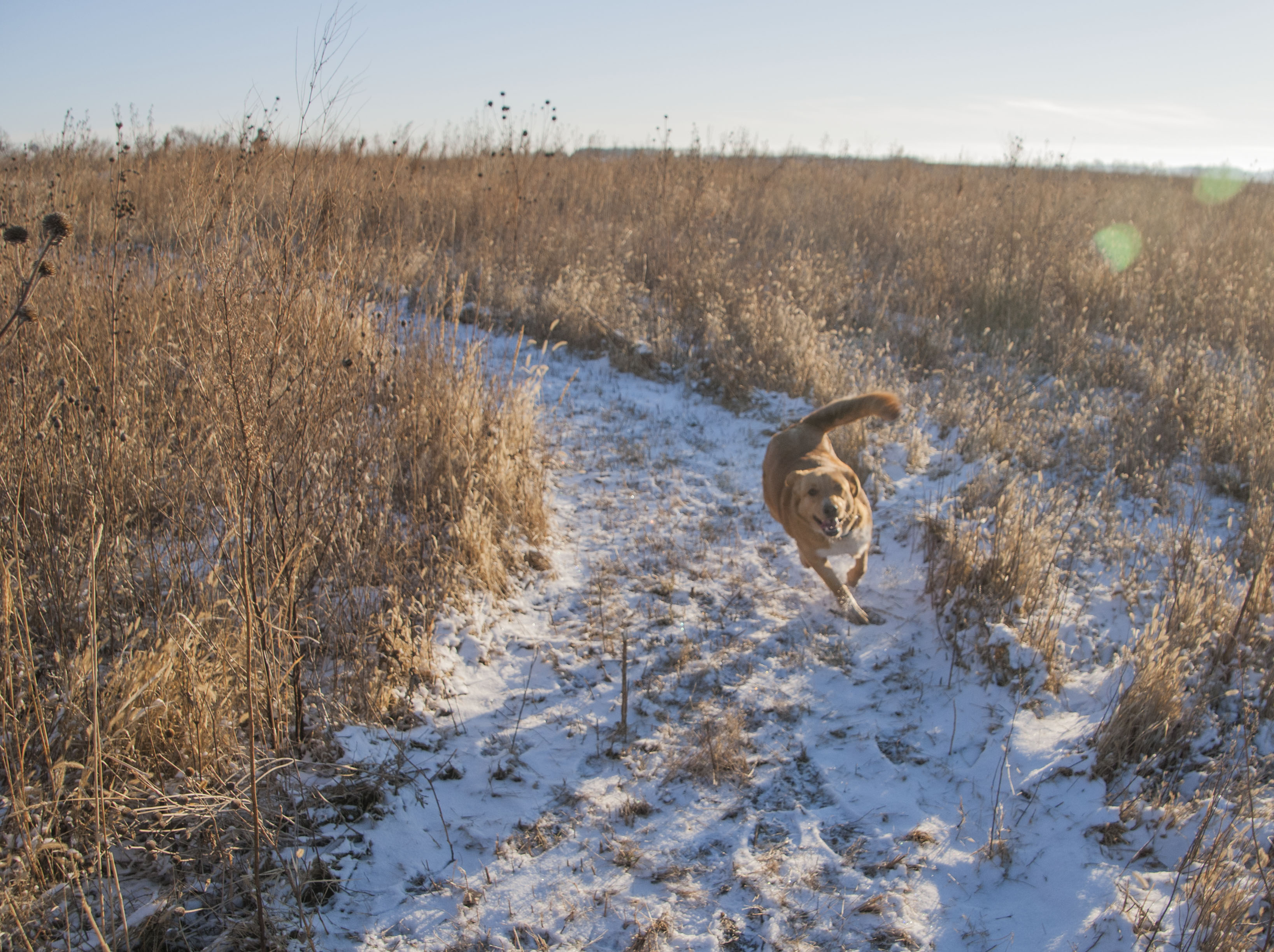
Vega gets a hug as a much-loved dog.

Vega gets a hug as a much-loved dog.

We considered erecting a yurt where the old pig barn stood, and we still might. Most of our energy and investment, though, has gone into building what we lovingly call our “Taj Magarage” near where the old granary stood. Our friend and wood artist, Dale Pederson, who teaches timber frame construction, designed and crafted the timber frame building we’ll use as a garage, summer kitchen and winter passive solar greenhouse, wood shop and office/studio. Dale has put his heart and soul into the project. He, along with our mutual friend, Mike Jacobs, co-owner of the CSA Easy Bean Farm with his artist wife, Malena Handeen, has been here for several weeks erecting and closing in the structure. Hopefully this week the finishing folks will come so we can actually use it yet this winter.

We eagerly await the completion of the beautiful timber frame.

We eagerly await the completion of the beautiful timber frame.

All of this sounds like we have scrunched a lot into a very short time, and I suppose we have. Yet, when I look back on my previous and recent life, all of this seems so simple and laid back. Back then I was juggling the weekly reporting and production of a country weekly newspaper with overseeing a region of Western Minnesota stretching from Bemidji to Worthington, and from the Twin Cities to the South Dakota border, for a foreign exchange student program. That meant motivating and managing a team of up to 15 community coordinators, working with high school administrators to further the program, and overseeing the placement of at least 100 students per year. This included multiple meetings as well as domestic and international travel. The pressure was constant from both jobs, and I’m sure my personal life suffered because of the pressures and time I devoted to both jobs. Interestingly and ironically, my retirement from the newspaper coincided with the unexpected death of my wife of 32 years, Sharon Yedo White. Near the end of the summer Rebecca and I began our relationship. In January of 2013, the exchange student work abruptly ended over policy and personnel disagreements. Those 21 years of recent life was suddenly no longer.

Snow covers the arbor leading into where we placed the garden.

Snow covers the arbor leading into where we placed the garden.

Two months after being fired we found this farm, had our offer accepted, and started the complete remodeling of this house while working to finish and sell both of our former homes — meaning we were working almost nonstop most of the year of our wedding on this place and our two houses. Both were sold around the end of last year.

Relatively speaking, this summer and fall has been comparatively easy. This was a year, with Rebecca’s continued encouragement, that I rediscovered the joys of photography. I have hung three exhibitions of my work and was invited to be among the 45 official artists on the Upper Minnesota Arts Meander. Life has truly moved forth for us both, and we anticipate growing on the experiences of our first winter with fewer issues and more wonderful surprises.

A moment on the prairie.

A moment on the prairie.

Our blizzard certainly enhanced a sense of settling in. Of slowing down, and discovering perhaps a different and slower pace. In a sense it’s similar to yoga, where  you are trained to align your breathing with the sense of your soul. Breathe in. Deeply. Slowly. Feel the energy surge through your veins. Hold and relax, then let it out. Slowly. Feel the tension ease from your tired and weary bones. Settle in. Deeply. Feel as your back becomes one with the soul of the earth. Breathe in …

Blizzard Meat

While running a small country weekly newspaper, one learned rather early that if the local prairie folks saw truth in a blizzard warning they would be standing four to five people deep at the local grocery cradling a half or quarter of “blizzard meat,” their eyes nervously eying the checkout lady who loved being neighborly even with doom on the threshold.

Translated, “blizzard meat” means ham. “Since they’re cured,” explained one of my coworkers, herself a native of the Western Minnesota prairie, “hams will still be good if your electricity goes.”

Ever since I’ve used hams as my blizzard yardstick. If a blizzard warning or watch is issued, just take a quick pulse of a local prairie grocery store.
11.10.14 blizzard1
So when the warnings came about a weekend blizzard I was in dismay since we’re too distant from a prairie grocery store to properly gauge the situation. One of the “Farmer’s Almanac” sure signs of a blizzard is having winds high in the treetops. Odd winds where you feel nothing on the ground, but you can hear a hushed roar up high and can see the very tops of the trees in wind stress.

We were outside most of the weekend tying up loose ends in preparation for the winter … putting up snow fences, pulling down the political signs, putting a “roof” over the chicken run and bolstering the sides with bales of straw, storing away the charcoal grill and bullet smoker, and Rebecca even took her garden tractor to mow a loopy cross country ski trail through the prairie. Sure, we kept an eye on the sky, and Rebecca kept looking at radar reports. Yet, we simply didn’t hear nor feel those high, treetop winds.

Later in the morning the winds whipped the snow across the prairie.

Later in the morning the winds whipped the snow across the prairie.

Throughout the weekend people from all around the prairie, from East River to Minneapolis, were all abuzz about the ravaging blizzard that would plant a foot or more of horizontal snow on our patch of earth. “It’s now moving north,” someone warned, meaning right in our path. Then came the posting of colorful radar-enhanced maps with concentric waves of disaster … with us right in the middle of the pool. “It’s still a fluff,” I said, time after time, for the wind just wasn’t right.

No ominous clouds were building to the west. From here we can see the distant “blue” of the Dakota Cocteau, and above it the clouds appeared peaceful, floating gently through the gray of the afternoon. Ours was a cold, gray Sunday, with a slight north wind. Dale Pederson even drove up from Wegdahl to retrieve his tractor so he would have means to clear his driveway. While here he hoisted and screwed wood panels to the north garage door opening. “The storm is supposed to hit from the north,” he warned, a look of worry crossing his face. Apparently I had been looking in the wrong direction all this time. Twice before bed on the eve of disaster I ventured outside to pace the deck and look up at the northern sky, and even the night sky seemed peaceful.

Even the pods of cone flowers bent with the wind.

Even the pods of cone flowers bent with the wind.

Those damp and chilly winds blasted us throughout much of last week and seemed more eventful than anything over the weekend … although late Friday afternoon gale force winds whipped up such a frenzy that the house wrap had torn into huge flapping pieces when we returned from an art show opening in Granite Falls. Those had calmed down by Saturday, and the calm continued into Sunday when a tall stack of wood scraps were burned in the fire pit. We were both busy doing chores around the farm not so much in preparation for the incoming blizzard as for winter itself. Over dinner we were both rather proud of ourselves and even made a few toasts of wine in self congratulations for being so organized and ready for winter.

Note I said winter, not blizzard. At midnight there was nothing, and I crawled back into a warm bed smiling about the fluff of impending doom.

Birds, like this American Tree Sparrow, took refuge in the grove.

Birds, like this American Tree Sparrow, took refuge in the grove.

By daybreak, though, the fluff had called my bluff as winds howled and horizontal snow sliced across the windows. Drifts were thigh high in places. We simply could not see past the edge of the lawn, which was further than we could see in at least a couple of complete white outs we had in our first winter here. “Know what we forgot?” asked Rebecca at one point. “The snow shovels are still down in the barn.”

So I was mistaken. This was a good, old fashioned blizzard, a day when those with the right frame of mind realize our modern world has come to a basic halt. Schools were closed. Our five mile stretch of country road was barren of traffic. Birds laid low in the cover. Neither the chickens nor cats dared venture outside. Our garden, a patch of summer life that will sustain us for months, sat cold and dormant; Rebecca’s arched arbor was an arc of dead, shimmering leaves in the mist of blowing snow.

The arbor leading into Rebecca's garden.

The arbor leading into Rebecca’s garden.

When I came back inside to the warmth of this old farm house, where those before us likely found refuge from similar blizzards since 1912, I came to a sad realization: We have no “blizzard meat!”

Cottonwood Coffin

One learns, over time, that upon entering a prairie roadhouse or tavern, a stranger will typically face an awkward moment of silence and over-the-shoulder stares. A way of handling that awkwardness is to simply walk in as if you was wearing blinders, take a seat on a stool or at an empty table, and cheerfully order a beer.

Which I did recently when entering a micro brewery some 90 miles from home. After a couple of refreshing sips a waitress tapped my shoulder and asked my name. “A man over there says he knows you.”

Many years have passed since we’d last talked, yet there was a sense of recognition despite the softening of middle age and a change in  hair style and color. Somehow I was able to pull off his name and was invited to join him at his table. “Have some,” he smiled, pointing to a plate of onion rings.

So began a late afternoon “happy hour” conversation. We caught each other up on the changes in our lives, of our sons, and if he was still growing his multiple rows of hot peppers in his country garden. Kayaking the Hawk came up, and we reminisced about this hidden treasure of the white water prairie river. Then, after a brief lull in the conversation, he asked if I’d heard about the farm accident that had killed a neighboring farmer we both knew.

I hadn’t, and images of the man flashed through mentally. There was that instant sense of sadness, for the farmer was a good person. At one point the farmer and his brothers were running a wide stretch of acres across the top of the county. Like the others in his generation of family, he was an outgoing man with a genuine smile, and was generally friendly and engaging even when realizing he was on a opposite side of the table on issues. One of the last of those table defining issues involved the clearing of miles upon miles of tall, stately cottonwoods that skirted a drainage ditch on his and neighboring farms.

“Have you ever farmed around cottonwoods?” the farmer had asked me at the courthouse when I was interviewing him for a story that was dividing not only members of his church and friends in nearby communities, but certainly many of his neighbors … my friend among them. “They’re dirty trees,” the farmer continued.

He didn’t need to define “dirty.” Cottonwoods join a litany of tree species some consider “dirty,” meaning limbs, leaves and sometimes bark interfere with various human endeavors. Then he did: “The limbs break off, fall and crush your crops. They get in the way of your planter, or clog up a combine. Besides, they’re clogging the flow of water and are making that ditch totally inefficient. They’re just a constant nuisance.”

He and his brothers were quite influential, and much of the 20 plus miles of the drainage ditch they were petitioning the ditch authority to have cleaned snaked through their land. Enough of it wasn’t. The trees were noticeable for miles around, for the cottonwoods the farmer wanted cut, dug out and burned stood defiantly tall. A prairie landmark south of the main highway. One could suggest many of the cottonwoods were at least 50 years old, maybe older. Hunters and nature lovers loved the “wildness” they offered, but the neighboring land owners who shared the ditch … including my friend and his father on different quarter sections … had a far different concern. They would be assessed to pay for a cleanup they simply didn’t want or felt was necessary.

Those landowners and nature lovers joined forces for the second hearing by the ditch authority … the first official notice was mostly unheeded, as most published agate-sized notices in the country weeklies generally are by those who are not directly involved. At many such meetings, the county commissioners — each of three counties had representatives on the ditch authority — seemingly lend a deaf ear to those protesting. Among those seas of faces are anti-growth, NIMBY’s, they say. Indeed, the farmer had eventually lost out on an earlier effort to push through a joint farrow to finish factory pork operation when township residents stood up to the county commissioner-spiked planning and zoning commission, and later the county board itself, by pushing through a moratorium that provided the township a window of time to develop its own more strict zoning and land use plan. So the farmer was nervous seeing a large enough crowd that the ditch clean up meeting was moved into the assembly room of the courthouse.

Few were surprised that the ditch authority’s recommendation to the county commissioners was in favor of the ditch “improvement.” Later that month the commissioners in the affected county used that recommendation as reason to approve the clean out of the trees by a split, majority vote. It was not a popular decision at the county seat, in the nearby communities, nor with many of the farmers and neighbors in the northern part of the county.

Even when the dozers and sawyers came tension surrounded the project. When I stopped to take pictures two pickups parked nearby  to watch me. Moments later the farmer himself drove up, jumped from the pickup and extended an outstretched hand with a smile and friendly greeting. As we stood on the culvert on the gravel road I asked of his plans for the ditch since the trees certainly fell within the vegetative definition of a buffer strip. “Oh,” he promised as the distant dozer groaned to the resistance of a stubborn trunk of tree, “there’ll definitely be a buffer planted on both sides of the ditch.”

“He did plant the buffers,” said my friend as we chatted at the brewery. “But, already, within a few years, they had to bring in the dragline to clean out the sediment. Guess where they placed it? Right on top of one of the buffers. Another issue was in the burning of the logs and refuge during the clean out. There were piles in all of our fields, and both my dad and I have our land in CRP. It was in the fall when they set those piles on fire. I came home from work after dark and you could still see the red embers, and sparks were flying in the air out into the prairie. Remember, prairie grasses are browned and very dry this time of year. So I called the county sheriff, and when the deputy arrived he surveyed the situation before calling in the fire department.”

Fires, though, were the least of his angst with the project, an issue that still haunts him. “That clean up has cost me and my father, and many other farmers along the ditch, a lot of money in assessments and added property taxes … all for a project none of us wanted. But, the farmer had the name and the influence …” He let the sentence die as he sipped from his glass.

He looked up and asked: “You know what would be fitting?”

I waited.

Then, with more irony than anger, he added, “That he be buried in a cottonwood coffin.”

In Search of Color and Life

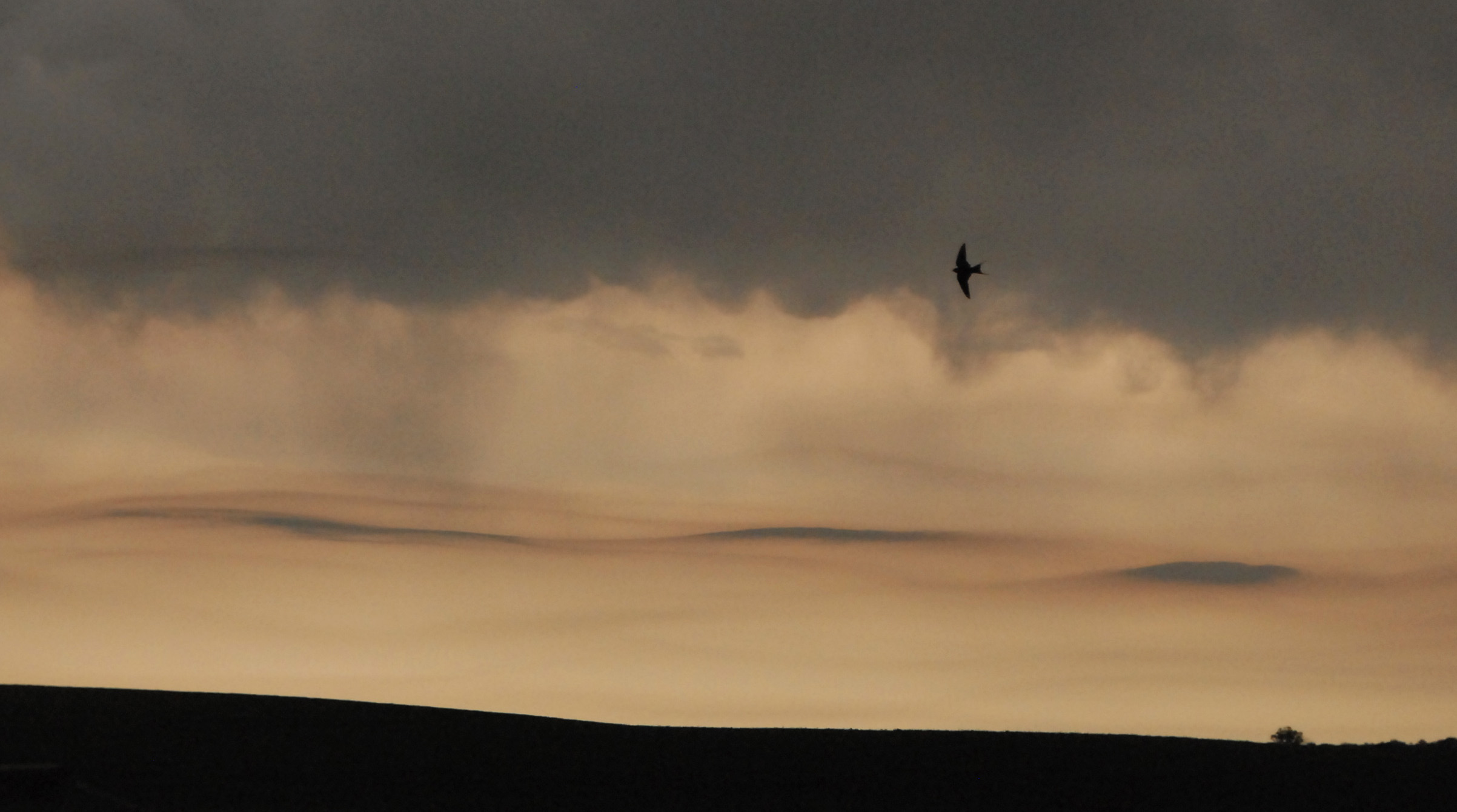
Storm clouds above the prairie ... likely a scene from the distant past.

Storm clouds above the prairie … likely a scene from the distant past.

My what a dreary morning. Our deck was a darker than the usual weathered drab gray, a color that was seemingly adopted by a sky filled with various levels of stormy looking clouds. A cold wind stirred what few leaves remained in the yard. All were signs of a winter foretold.

The rain from yesterday had discouraged the men working to erect our multi-purpose, timber frame garage, and any likelihood they would arrive this morning was nil. Too much wind, and too much dampness to attract those in the construction arts to don a tool belt. With exception of the howl of the wind through the trees in the grove, this would be a quiet day.
search1 search7
When the owner of the local grocery, Bonnies in Clinton, asked for one of my new calendars, this was just the excuse necessary for heading into town and jumping on a treadmill. Our gravel road is much too rough on my knees to encourage walking, and the stand-me-up wind offered more resistance than I needed.

Driving the 12 miles round trip provided enough fodder for negative thoughts even with 45 minutes of exercising. On this, my first full day after my milestone birthday — believe me, at my age every birthday is a milestone — the last thing I needed was to have my mood affected by the drab grayness of the day. Which made me curious. Was there even a possibility of finding color and life out on the nearby remnants of prairie?

Thousands of birds form a murmuration just down the road from the farm.

Thousands of birds form a murmuration just down the road from the farm.

Regardless, it was worthy of a try. Grabbing the camera, with just enough life left in the battery for a trip through paradise, the trip began. Despite the chill and dampness of the winds, which were seemingly celebrated by the willowy grasses common to native prairie, life and color was out there. My hope of finding deer and wild turkey down by Meadowbrook was quickly dashed, although I did drive upon a huge murmuration just around the corner from there. Have you every heard the sounds of a murmuration? Thousands upon thousands of birds, clamoring all at once, sounds that were actually overshadowed by the collective feathered flight.
search6search5
Then it was off to the Big Stone Wildlife Refuge where the grasses danced, the ducks too flight, and mushrooms peeked from the wooded old river bed.

I won’t write too much this morning. Instead I will provide some of what was found between Listening Stones Farm and the refuge.

Levels of color, even on a dreary day, are there for the finding.

Levels of color, even on a dreary day, are there for the finding.

Between the treadmill and the bounties found with the old camera, a sense of energy and excitement is now sourcing through my soul. It isn’t too much to ask even on a damp, dark and dreary day.

It’s Up!

First to arrive this morning was a surprise. Brad Fernholz, who last I heard could not put weight on a broken ankle, arrived chipper and smiling, which he seems to have a fine history of doing, and ready to work. Dale Pederson arrived next with Elmo Volstad and Mike Jacobs about 20 minutes later.

Timber frame and bent wood artist, Dale Pederson, designed the building.

Timber frame and bent wood artist, Dale Pederson, designed the building.

So after all these months of mushy deadlines, after the pouring of the slab in July and the arrival of the trailer-load of timbers last week, all cut to shape and diminsion at Dale’s Stoney Run studio over the summer, the group was finally here at Listening Stones Farm to erect the first, and perhaps the only, brand new building of my lifetime. Oh, we’ve had various options to consider. Personally knowing two house moving companies, there is no doubt we could have found a less expensive option. Thein Moving in Clara City, and Marcus Moving in Raymond, almost always have garages available to move in to erect on a foundation. We wanted something more than a “moved in” garage.

Our farm came with two outbuildings when we bought it. Without paying a whole lot of attention, since the exterior was sealed with metal siding, I thought a little turn of the century granary might serve us. Upon closer inspection it was a damned mess. There simply wasn’t any way it could be salvaged, so last year we had the granary and an iconic old pig barn razed, burned and buried beneath what became our orchard.

Last week the crew came to piece together the four sections.

Last week the crew came to piece together the four sections.

I suppose the muse came near the Summer Solstice the summer before last when we drove to Estilline, SD, to visit Rebecca’s old friend, Professor Karl Schmidt’s small permaculture layout, where I simply fell in love with his garage. Althought I had asked for plans, Karl and I could never quite get together on them. Last winter, as cold, snowy winter evenings go, I started playing around on the internet with a dream. That’s where I found a Nebraska firm that specialized in post and beam, timberframe buildings. They mailed a thick envelope full of materials, including a beautiful calendar, and eventually a friendly — aren’t they usually? — sales rep who lived near Sioux Falls, and who promised to stop on his way to his son’s hockey games in Bemidji. That never happened. That’s when I remembered that Dale Pederson had plenty of experience in post and beam construction, and even taught at cultural art schools in both Grand Marais and Milan.

The crane is ready to start lifting the four sections.

The crane is ready to start lifting the four sections.

We met for dinner to present our idea. Dale and his wife, Jo, are long time friends, starting with their hosting of a couple for foreign exchange students from my area program. Later I would buy several pieces of their bent wood furniture, and even took a couple of trellis classes from Jo. In short, Dale was interested, and after I laid down some earnest cash, he carried through with a design. When he presented the pencil drawings I might as well have been reading Russian. Give the man credit for being patient, and for helping find ways to maximize our costs in creating the building. He was also proud that his design would be framed for less money than what was listed in the slick brochures from Nebraska. We liked it because a dear friend could and would deliver what we wanted … and, it was money spent “locally.”

The first section was lifted with the crane early in the morning.

The first section was lifted with the crane early in the morning.

Rebecca and my original intent was to erect a combination garage, summer kitchen, workshop and studio, with the possibility of adding a passive solar greenhouse in a year or two. Initially we aimed to erect the building by June. That was pushed back to July, thanks to a South Dakota art show. July didn’t happen, so we tried to find a way around the trip to the BWCA come August. Nope, August was out, so September was targeted. Then it had to be wrapped around the Meander. “Let’s aim to have it up before Thanksgiving,” I told Dale at one of our last meetings. I was hoping this was a joke, since Elmo and Dale had poured the concrete in July.

Up goes the last section.

Up goes the last section.

Over this time many trips were made to Dale’s studio in Wegdahl where positive proof that progress was being made. In those several planning meetings Dale explained different ideas and options, and even drove to Cottonwood for a tour of the insulated panel factory. What was amazing was that he created the entire building off site and transported them to the farm to piece them together. “Like Lincoln Logs,” is how Elmo explained it to me while we watched another piece fit perfectly in place.

A view of the completed frame looking toward the house.

A view of the completed frame looking toward the house.

That is what happened on this day in October. Last week Dale came with the parts, and he, Elmo and Mike pieced together four separate frame sections. And everything fit together almost perfectly. This morning, not long after they arrived, the crane followed. And up it went, section by section with the crossbeams seemingly dropping perfectly into place. Much of my time was spent on the ground watching, for these fellows have erected several timberframe buildings over the years and work as a team, scrambling up ladders and scaffolding like human ants. My fear of being in the way along with a bum knee kept me on the sidelines most of the day. As we watched another of the connecting crossbeams fall perfectly in place without a touch of the mallot, Elmo smiled and said, “It’s magic!”

So now it’s framed, and we have the floor joists to install. On Friday the insulated panels come. Once those go up, then the windows, electricity, roofing and siding are scheduled. We’re not there yet, but watching the frame go up … one so well planned and constructed … was heartwaming. Having a heated floor for the garage will make winter more tolerable, and having a place for us to do our artwork, canning, and eventually, a winter greenhouse will be heavenly.

The crew included, from left, Mike Jacobs, Brad Fernholz, Jerry Parker, Dale Pederson and Elmo Volsted.

The crew included, from left, Mike Jacobs, Brad Fernholz, Jerry Parker, Dale Pederson and Elmo Volsted.

This is my first new building of my lifetime. While I can’t wait, I can also feel quite humbled. Frankly, I don’t have any idea of what to say or do. We love our home, and our new building will make a greater place to live. It will tie many of our hopes and dreams together, just as Dale had promised.