Bygone Ethics

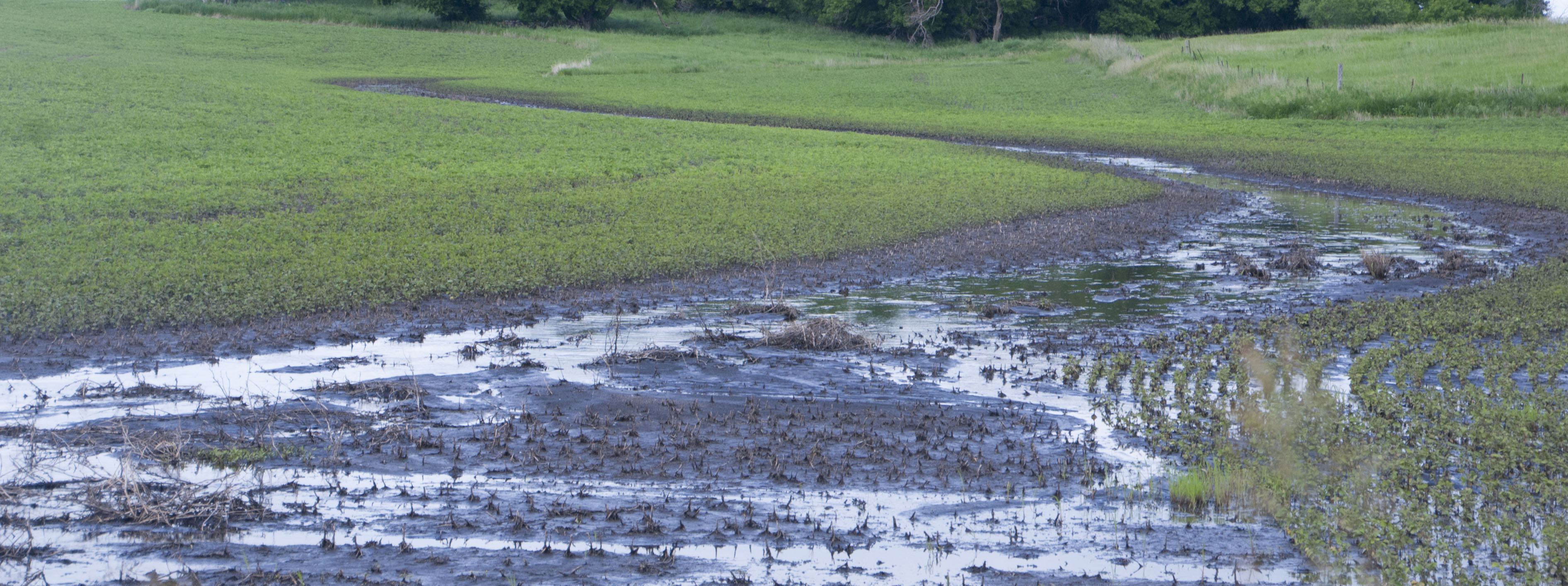
Recent rains have given us a rare opportunity to revisit the long-gone prairie potholes that were part of the original, post-glacial landscape.

Recent rains have given us a rare opportunity to revisit the long-gone prairie potholes that were part of the original, post-glacial landscape.

Recently a friend who happens to be a farmer asked, “When did you become so anti-farmer?”

After my initial surprise and denial, and later, after subsequently rolling through the countryside, I began to realize how my comments and rants could be taken in that manner. My growing up as a child and teenager was in a different era, when having a thick thatch of grass growing where water could create rills of erosion in a field was not only expected, but common. Also common was leaving a swath of anchoring vegetation along riverine embankments. I can also remember my father’s concern when Earl Butz, as Secretary of Agriculture, began preaching his “fence row to fence row” philosophy.

“That will ruin farming,” my father said. He meant the land, although it has also altered farming into a Catch 22 cash chase.

A recently "refurbishes" grassland where the rocks were removed and the trees cut and piled.

A recently “refurbishes” grassland where the rocks were removed and the trees cut and piled.

Realize, please, that my father and I had many rifts and disagreements, politically and otherwise. Despite that, I grew to firmly respect his attention to real conservation farming practices as well as his trepidation on the Butz preamble.

My father lived long enough to watch as neighboring farms grew quite large over the hills of northeast Missouri where grass and grazing was a better ecological fit. He watched as abandoned farmsteads were leveled, burned and the ashes buried, and he watched as hedge rows were dozed along with tree lines and windbreaks. Fences were pulled, wires rolled, and posts, mainly hedge, burned. Forty acre fields became 80’s, and 80’s 160’s, causing him to sadly shake his head. Folks back in my home country now call this “Minnesota farming.”

Where's the grass? Tons of soils have washed off fields where rills and gullies were created by heavy rains and moisture.

Where’s the grass? Tons of soils have washed off fields where rills and gullies were created by heavy rains and moisture.

Yes, this is precisely the treatment of the land we see all around us. Industrial road grading equipment is used to extract glacial rocks from fields (which are then stored for sale in faraway cities to landscapers), and groves and farmsteads dozed and burned. Sod and prairie grasses, CRP land … all being plowed. Painstaking efforts are made with a blade to cut just enough of a two-foot deep furrow through fields to aid in the rapid flush of water. In many cases these furrows are too shallow to qualify as a legal ditch, meaning a mandate for buffer strips, and once cut, are carefully skirted by tillage equipment and planters. Cattails are allowed to grow … until hit by contact killing Roundup.

In fields already tiled, new and more efficient patterned tile systems are being installed. Although the technology is readily available that would allow farmers better water table management, the devices have been a tough sell despite years of positive presentations at many winter meetings. At least one watershed project had staffers basically begging farmers and landowners for a single demonstration installation … to no avail. Flush is seemingly the norm for managing water tables, not the holding back or storage of melt nor rain.

Shallow water "escape routes" are cut in fields that won't technically qualify as a drainage ditch, therefore not mandated for buffer strips.

Shallow water “escape routes” are cut in fields that won’t technically qualify as a drainage ditch, therefore not mandated for buffer strips.

Hilly lands that should never have been tilled stretch for miles with no regard for erosion. In wet springs and early summers, like we’re having again this year, runoff water carries tons upon tons of soil off the higher land. We passed a field with corn nearly two feet tall in the valleys with spindly, four-to-six inch stalks poking up on the rest of the acres. “That’s where all the good soil has washed off to,” said Rebecca. Typically, 20 percent of a field has the healthy stalks. The rest? Will it qualify for USDA emergency subsidies?

Indeed, an observer can easily see the change in soil color and tilth … light tans compared to a rich darkness … in field after field, mile after mile. A keen observer can also tell that many are ignoring either the advice or statutes that call for grassed buffer strips along artificial drainage ditches, and any thought of a grass “waterway” would be considered absurd! Most of us know by now that 99 percent of the wetlands are drained, with a like percentage of native prairie tilled. Where is the rage you see with the distant Brazilian rain forest?

The banks have held and the buffer strips on either side have kept both the field and the drainage ditch in good condition.

The banks have held and the buffer strips on either side have kept both the field and the drainage ditch in good condition.

Driving through the rural byways in the winter months can just be sickening with mile upon mile of “snirt” — that dirty combination of snow and dirt. Overwinter cover crops are rarely planted, and any thought of leaving stalks to hold soils in place is basically unheard of. Our food supply is threatened in that one day fields will be barren of healthy prairie dirt. Realtor’s will be challenged to barker farms with no soil left to sell.

One wonders where the crops will be grown, of how subsequent landowners and farmers will continue to “feed the world.” Have we become so selfish as farmers that we can only think of today, of mining the soil for the most cash possible with crops with little direct food value and staunch government policy support? If we’re blaming policy for the woes and goals of the tractor jockeys, then perhaps some teeth should be placed into the policy smile … a net zero erosion factor as a qualification for any USDA commodity benefits ­— mandated buffer strips on all riparian waters, including drainage ditches; grassed waterways; winter cover crops, especially following soybeans and sugar beets; an actual crop rotation that includes nitrogen fixing legumes; banning practices that threaten pollinators; and so forth.

Common to many ares around the prairie are "ghosts" of the old prairie potholes — wetlands — that perhaps should not have been drained.

Common to many ares around the prairie are “ghosts” of the old prairie potholes — wetlands — that perhaps should not have been drained.

Am I anti-farming? Or, am I simply someone concerned about a future that appears ever more ominous for a climate challenged earth that will be incredibly feeble environmentally for our children and grandchildren — indeed, for all future generations.

Am I anti-farming, or am I someone who simply wishes for the bygone ethics of conservation farming practices that promotes soil health and keep earth’s dirt in place?

Am I anti-farming, or someone who wishes to keep our people, our land and our rivers healthy, and in place for future generations. Surely this answers your question.

A beautiful buffer found in Chippewa County.

A beautiful buffer found in Chippewa County.


Seeking Self Forgiveness

We were to flip a coin. Heads we drive around the lake to a favored restaurant on the South Dakota side, or tails for the Italian place in Morris? When the quarter landed in my palm, I hid it from Rebecca.

“So, when it was in the air, how did you want it to land?”

She smiled. “Bello Cucina.”

As we piled into the car after changing clothes, I considered running back for my camera. Nope, we were just going for dinner and would likely be home before the good light descends on the countryside. Take a deep breath and leave with thoughts of “no regrets.”

A doe in dewy grass.

A doe in dewy grass.

After a great dinner of some excellent pasta dishes — mine a wild mushroom and shrimp affair — we took a stroll around the block before starting home. A stop was also made to fill the tank. All of which pushed us into several miles of squinting into the lowering sun. What a relief it was when we turned south toward the “Clinton Road” just before reaching Chokio. When we turned back toward the west, an intense and colorful light graced the prairie. This is a favored beautiful and interesting stretch of highway hosting several restored patches of prairie, WMAs, a two-section wide federal waterfowl management area, and perhaps even some remnants of native prairie. When we passed a grassy wetland with a perfectly calm, mirror-like surface, my groan was audible. “Wow!” came the grouse. “That would have made a great picture.”

“Cell phone?”

“It fell under the seat and I can’t reach it.”

Just a few more miles further down the highway it happened again. There in a “ghost of prairie” wetland in a flooded corn field, a doe and her fawn waded in knee deep water lit by a perfectly intense glow of soft reddish purple light. Not a single ripple disturbed the surface as the doe nuzzled her fawn, and my moan was no doubt sickening.

“Hey,” Rebecca said, instantly recognizing my angst and trying to soothe my obvious disappointment, “we got to see it. It was a beautiful moment  and we got to see it with our own eyes. We and no one else.”

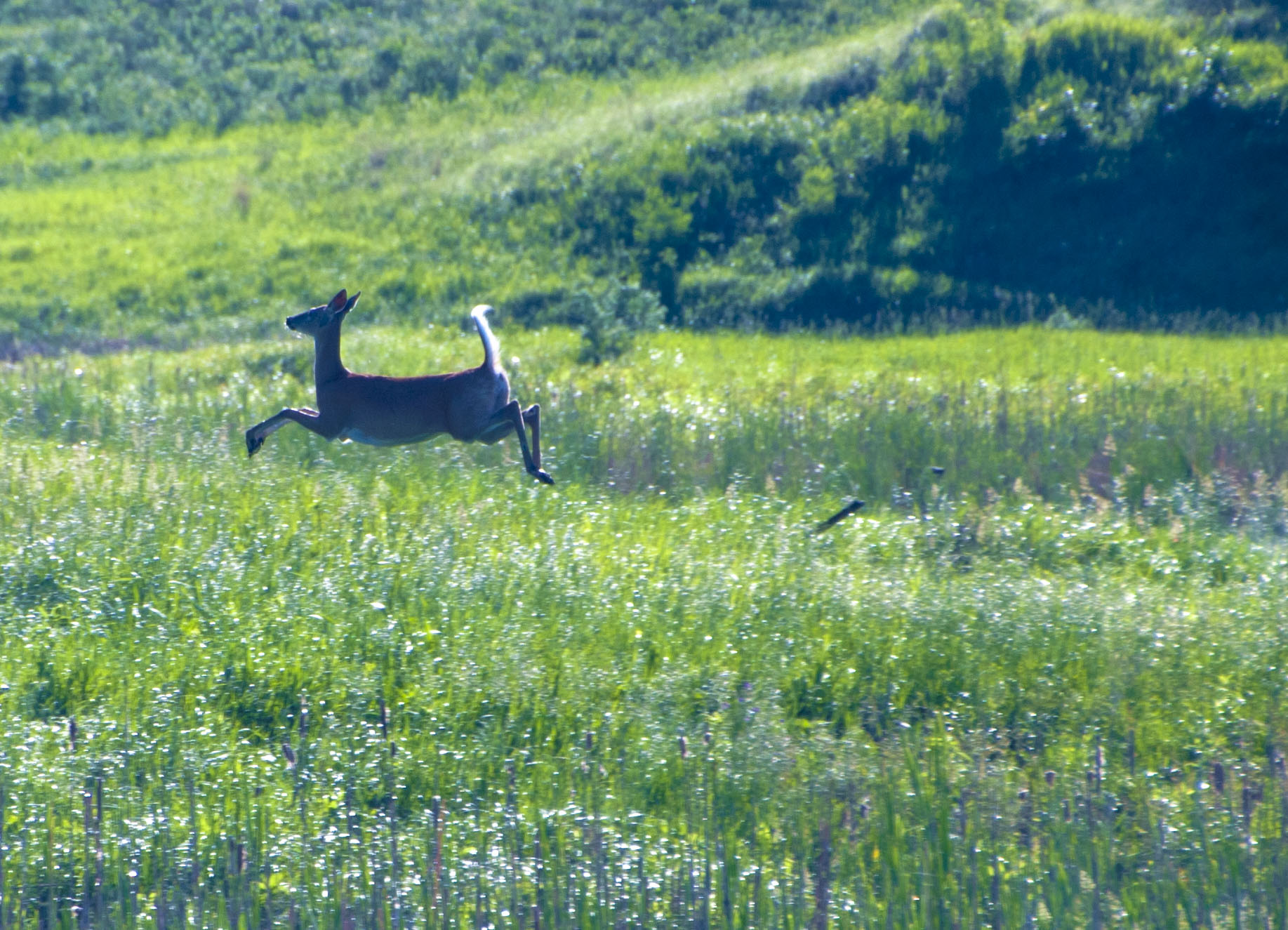
A startled doe, and a twin fawn I hadn't seen.

A startled doe, and a twin fawn I hadn’t seen.

Yes, but as a photographer, and especially as a recent nature photographing junkie, it was a missed image that will haunt me for several months if not years. Photographers who have missed such moments can identify with Hall of Fame pitchers like Bert Blyleven and the late Warren Spahn, the latter who told me (minus his frequent f-bombs) during an after-game interview when he was managing a Triple A team in the 1970s, “You remember the losses. The homers the jerks hit off you. Straight curves. That’s what you remember.” Blyleven has admitted as much during broadcasts of Minnesota Twins’ baseball games.

I'm pleased with my image of two deer at dusk, although this isn't the picture in the wetland I missed.

I’m pleased with my image of two deer at dusk, although this isn’t the picture in the wetland I missed.

Ah, the losses … those missed opportunities. Wild turkey toms facing off right after dawn just down the road. The trio of white-tails who were in ballet-like sync rounding the edge of a hill in the late afternoon light … also just down the road. And, now, the doe and fawn. All while “driving naked.” Each time my camera was back at the house. In fact, I still remember cresting a hill somewhere northwest of Dubuque in 1968 just as a farmer driving his tractor was silhouetted in a huge, bright red “sun ball” that was perfect for a 300 mm lens. I was speeding to a grass fire and didn’t stop. The next day I told my managing editor, Jim Galedis, about the near miss. “And you didn’t stop? Always shoot the picture. Always. Fires either get better or they’re nothing but ash. Always shoot the picture.”

Key to his advice, of course, is to never leave home without your camera.

After all these years I should know better.

And, there is this: A photographer never forgets, nor is there self forgiveness. You live, and will most likely die, remembering the misses, all of those “perfect” latent images.


After Thoughts

Martin Anderson was all smiles on the boat ride up the Minnesota River.

Martin seemed to enjoy his boat ride up the Minnesota River.

After an evening of interesting hill hugging lightning to the west of Glacial Lakes State Park, and a downpour that broke while in the depths of sleep, we were packing out a day earlier than we expected. More rain was forecast, and all of our gear was soaked after leaving open the largest “window” of the tent for some cross ventilation. So, yes, we can sleep through a storm in the grand outdoors.

Across the site Wes Konzin talked in a low murmur to his grandkids as another downpour drenched the campsite, meaning our breakfast would wait a little longer. It was my turn to cook breakfast, a treat of thick pepper bacon from Pastures of Plenty and a dozen eggs from our Listening Stones Farm that I would break into the peppery bacon grease.

Once breakfast was served and the soaked gear packed, stepson Martin and I left for home. As we weaved our way through the curvy road of the state park, he looked up and smiled. “I had fun, but I think when I look back on it I’ll have had more fun than I actually had.”

Martin is an indoorsy boy, so our camping out was definitely outside of his comfort zone. His “zone” would be challenged again a few days later when another river rat, Willie Rosin, boated us upriver from Waterman’s on a catfishing outing. What’s a boy to do when he has a stepfather river rat who viewed being indoors at Martin’s ripe young age of 11 as comparable to being stranded in a prison cell? I disliked inside as much as Martin does the outdoors.

The late afternoon sun kisses the grasses of an oak savanna ... the only sun we saw on the camping trip.

The late afternoon sun kisses the grasses of an oak savanna … the only sun we saw on the camping trip.

To his credit, Martin is adjusting — although he was rather quick and vocal when asked if he would like to join me on another fishing trip this past weekend. Martin reminds me of a cousin on my father’s side back when I was growing up who preferred reading to anything outside … until the day he somehow discovered fly fishing. Joe’s mother, perhaps my mother’s best friend, knew of how I had become completely immersed in the sport at about Martin’s age, and asked if I would help him get started. By then I was of driving age, so heading to farm ponds all around the area with my cousin was welcomed.

Since I was self-taught through the pages of Outdoor Life, Field & Stream, Sports Afield along with the iconic Herter’s, Inc., catalogs, Joe didn’t exactly have legendary fly caster Joan Wulff as his tutor. Those lessons went fine until an errant, wind influenced fly, snagged my poor cousin in the ear. Fortunately that didn’t deter his passion, for as an adult he became a hydrologic engineer with the Corps of Engineers when he wasn’t casting the long rod.

Fly fishing has a way of attracting the intelligent kids like the Joe’s and Martin’s of the world for it’s cerebral nature. Interestingly, people will ask about “fly fishing lessons” with an eye toward the casting rather than the line control and various retrieves necessary for successful fishing. This isn’t unlike learning the mechanical features of a camera and thinking this alone will make you a good photographer. Both the casting and the mechanical camera lessons are essential for reaching positive end results, though neither will be mistaken for the art of either.

Martin’s few weeks with us have been an adventure. He has really tried, and for that he deserves credit. He was mystified when his mother eagerly agreed to come on a one hour, one way jaunt to a swampy woodland savanna to see white prairie lady slippers. “All this way just for wild flowers?” He had balked, though gave in, to going on a few earlier trips to the nearby Clinton Prairie as I took pictures of prairie smoke.

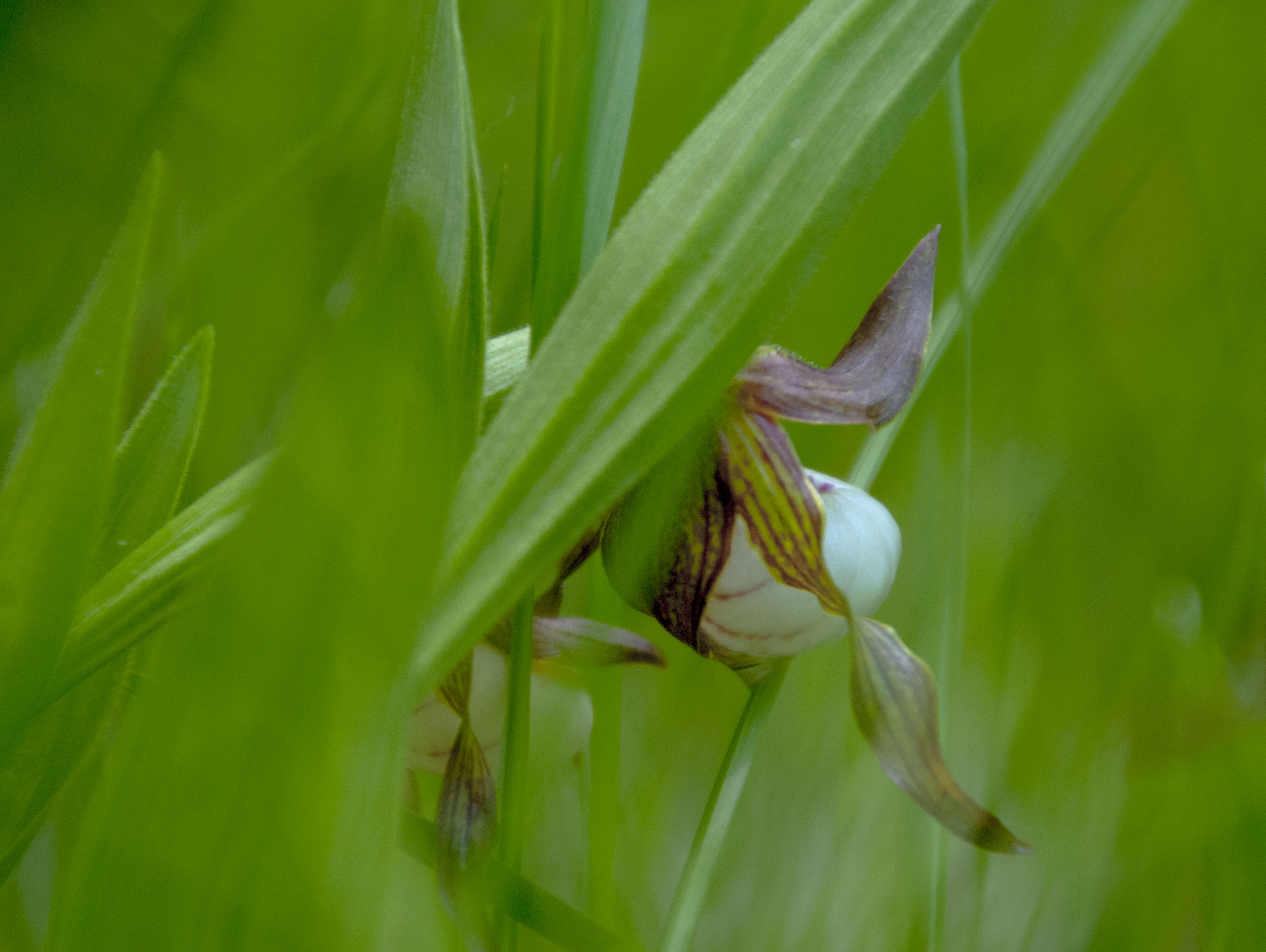
One of the Prairie White Lady Slippers we found on our foray.

One of the Prairie White Lady Slippers we found on our foray.

Yet, when I’m looking at my results at my computer after an outing Martin will often look over my shoulder to offer comments and compliments on the images. Yes, he had a good time on our camping trip and willingly took his seat along with Wes’ grandkids on their story telling stump. On one of our photography forays he asked if he could use my camera to make a picture. And, after the trip with Willie, Martin asked for a fillet knife to help clean the catfish we had caught. I hesitate to mention how proud he was for catching more fish than his stepfather.

His becoming a passionate outdoorsman may be way too much to expect, although we have taken a few baby steps into that odd universe we call a “comfort zone.” Like Kermit the Frog said, “It isn’t easy being green.” Martin was also right in his comment: “I had fun, but I think when I look back on it I’ll have had more fun than I actually had.”

What outdoorsman hasn’t said that at least a dozen times? Yes, the journey has begun.

A wetland, as we were leaving.

A wetland, as we were leaving.

Salad Days

June has sprung, and with it the gardens are growing like mad–right alongside the weeds.

Since the tomato garden is a newly cultivated spot that last year sprouted an impressive selection of summer weeds, the seedbank for pigweed and lamb’s quarter is well-stocked. After a weekend’s worth of rain, a second hoeing was in order to take out the germinating pigweed at the white thread stage.

photo 2(2)

Pretty much the entire sixteen hundred square feet of the garden looked like this, and with the forecasted rain Friday night and Saturday, these weeds had to go before they could get another drink and start creating a more complex (and difficult to kill) root system.

The tomatoes in their raked-up raised beds needed mulching, too–keeping the root systems a little more cool, suppressing the next flush of weeds, and preventing soil erosion from heavy rains. It took pretty much all day to finish the one garden, with chunks of time for breaks and other work. John pitched in at the end, helping rake the hoed soil back up onto the mounds while I laid straw.

photo 2(3)

So, things are starting to look a little more put-together in the gardens, and the deer have been fairly moderate in their incursions (Plantskydd helps). The raised beds are sprouting a few new crops since I went willy-nilly out into the rain last weekend and thumbed-in summer squash, cucumbers, flint corn, and okra. I took the early spinach and arugula out from either side of the peas a few days ago, and yesterday I pulled the last of the bolting bok choy, radishes, and sad-looking broccoli raab and rolled up the row cover.

photo 3

In the early brassica bed, that left a big, open space next to the Hakurei turnips. Thought about planting some fall carrots in there, but those beds are the original ones we inherited with the farm, and they’ve been gardened pretty intensively over the last few years. There’s really not much for organic matter in there, and I happened to have a big bag of my favorite summer soil-building cover crop: buckwheat. So, instead of a crop to feed us, I planted a crop to feed the soil–and the pollinators, too, when it flowers.

Speaking of pollinators, I finally saw the first bumblebee of the season!

photo 4

Bumbles love onion flowers, and they always seem especially drawn to these perennial Evergreen Hardy White green onions. They aren’t as refined as some varieties, but they are a great, sturdy, never-say-die crop. These are the descendants of the ones I started from seed back in 2005–they always get divided and tucked in the corners of beds and other odd spots, and I always let them bloom because then I know whether the bumblebees are surviving or not–if there are bumblebees anywhere near, you’ll see them on the onions.

Back to the soil organic matter issue–I took a few images yesterday of what it looks like when you have plenty of it and what it looks like when your soil is depleted of it.

photo 1(5)

The first image, which is the bed where I cultivated and sowed buckwheat yesterday, looks nice, doesn’t it? All smooth and dark-colored and pretty. It is depleted of organic matter, but looks better than the bed next to it because it had floating row cover on it, which helps absorb the impact of raindrops (and watering), plus it had had a nice leaf canopy from the spent greens I’d just removed. Still, the soil was compacted underneath, and the cool-loving greens that came up early and fast ended up going to seed faster than I’d anticipated–probably due to how warm this dark, bare soil gets when the sun hits it and their inability to sink their roots deeper and tap into moisture reserves.

photo 2(4)

But if you look at this second image of the bed next door, where the row cover and spent greens were removed a week ago, you can see that the lovely dark soil is crusting and cracking. Not a good sign. It’s hard for new seedlings to break through the surface, and once this soil is cultivated, the fine particles can easily blow in the wind or wash with heavy rain–the same thing that happens on a massive scale in all our clean-cultivated farm fields and leads to soil and nutrients clogging our rivers and streams. This bed will get a fall cover crop–maybe winter wheat–that will be incorporated into the soil in spring. Right now there’s flint corn planted on either side of the peas, and when that’s up enough, I’ll throw down some straw mulch to cover the soil.

photo 3(1)

The last image is of a bed that got a liberal dressing of composted goat manure and bedding last fall before I planted garlic. I’ve got a couple of summer squash seeded in the middle, and a few other herbs along the outside. Watering this bed is like watering a big sponge. There’s no puddling, no washing–it just all soaks right in and stays there. The plants in it have no trouble breaking through the surface, and are well fed from the decomposed organic matter. Turning a fork-full of this bed reveals lots of worms, whereas the “clean” looking beds devoid of organic matter are mostly absent of these great garden helpers–it’s too hot in there, and there isn’t anything to eat!

But it hasn’t been all soil-building and weed control around here lately. We’ve been dining on asparagus snapped from the many little patches spread around the farmyard and tender salad turnips from our patch and that of a friend with whom we shared the seed. The spent greens gave us some nice meals, and there is more spinach and lettuce ready for the plucking. John even made a rhubarb pie–his very first from scratch with local lard we rendered last winter for the crust.

The guys went fishing a couple of mornings ago and brought home some nice catfish filets. On the way back, they stopped at a pizza place for lunch, and John was telling me about their surprisingly good salad bar. Harrumph, says I, and headed out to the garden to create some supper salads to put that chain place to shame with fresh multi-colored lettuce and spinach, baby dill snippings, chive blossoms, and the last of the early radishes.

photo 1(4)

Beat that, Pizza Ranch!

And, John spirited us away one evening last week to a secret spot in the river valley. While Martin wasn’t too excited for a car trip to see flowers? Really? Flowers of all things?–the lady slippers were in bloom–literally hundreds of them along a boggy woodland edge in a magical display. Lucky us!

A pair of slippers ready for their lady

A pair of slippers ready for their lady

Pecking Order

If you ever want to see how apt a metaphor, “pecking order” is for hierarchical office politics, feed your laying flock an hour late.

I slept in this morning, and I usually wait about an hour after letting the chickens out to give them their daily (in the Drummies’ case, twice daily) ration. That gives them time to stretch their legs and forage for weed and bug appetizers before they’re sated with grain. So, it was 8:30 by the time I got out to fill the feeders.

Do not question my authority!

Do not question my authority!

The Barred Rocks, Ruby and Bea, are the unquestioned queens of the flock, along with Lacey, the Silver Lace Wyandotte. Lacey Does. Not. Allow. any younger or smaller hen anywhere near the feeder–they don’t belong there until she is finished, and she’s not sure they belong there at all. Ruby and Bea are a little more mellow so long as any interlopers don’t interfere with their right to eat from any and every part of the feeder they want. Insubordination is met with a harsh verbal and physical reprimand.

Spurz, our little Jungle Fowl rooster, is also at the top–the bigger ladies may not respect him in other ways, but they don’t chase him from the feeder. The second-tier hens are also fully mature from last year’s starter flock–they’re just smaller than the others (though as big as, or bigger than Spurz), so they have to wait their turn.

If they don't find you handy, they should at least find you handsome.

If they don’t find you handy, they should at least find you handsome.

While the Americanas (Gilda and Frannie) respectfully wait to eat until the big girls are getting full, the Silkies are always jockeying for position. Robeson especially likes to sneak in and grab a beak-full of grain with the big hens, then run back out when she’s pecked–proceeding to give as much and more grief to the younger pullets flocking around the periphery. Robeson’s broody mates, Fog and Micheaux, take turns running out of their corner to steal some grain, careful to keep their prize egg hidden from view and squawking loud warnings when the pullets come too close. Talk about micro-managers!

And the poor pullets? Well, the six I’ve collectively nicknamed “juvenile delinquents” are now as big as Spurz-the-rooster, and bigger than the Silkies. But it’s not size that matters at this point–it’s sheer meanness! One of the new-crop Americanas is almost as big now as Gilda and Frannie, and she lords it over her brooder-mates. But when it comes feeding time, she hasn’t yet developed the “pluck” to challenge the higher-ups–and especially the middle management Silkies.

Last on the pecking order are the youngest–the nine Buff Orps and Black Australorps that are catching up to the “delinquents” in size, but who know better than to venture into the henhouse when the big girls are eating. Well, all except for this one rogue Orpington, who starts to peek in the door once the big girls have gone out and the second-tiers are getting at the “goods.” I think she’s the same one who gives us such grief every evening when it’s time to go in–breaking off from the flock and dodging out of the run to hide back under the currant bushes. I don’t know if it’s cleverness or sheer obstinance, but I do know she’s careful to remain out of range of the Silkies’ cruel beaks.

Rouge in disguise.

Rogue in disguise.

There’s a lot less strife when it comes time for the two batches of this year’s pullets to eat. There are more of them, but they fit better around the feeder, and I think the fact that they’re merging in size and that they spent a few weeks in the brooder together makes them a little less likely to jockey for position.

While there’s plenty of politics in the henhouse during a late feeding, I haven’t noticed anything like it with the “Drummies.” Sure the Red Rangers are constantly challenging each other out in the run–standing up tall and facing off (I swear they’d beat their breasts with tiny fists if they had them) before forgetting what the big deal was and running off in different directions–but feeding time is something altogether different.

Hey buddy, what're you lookin' at? I outweigh you by an ounce!

What’re you lookin’ at? I outweigh you by an ounce!
They’re all the same age, they’re all close in size, and they’re all going all-out for the same three feeders without the comprehension that there’s plenty for everyone. When I put the first feeder down, they climb all over each other to get at it before a few of them realize there’s another fully-stocked feeder three feet away. Eventually, they all disperse at the different stations and realize they aren’t going to starve if they just calm down, look around, and leave the greedy scrum for a more convivial “table.”

Maybe a better metaphor here is the 99%?

Most of the time they’re running in all different directions satisfying each individual’s chicken-y desires and getting a little peevish if anyone or anything gets in their way. But occasionally, like when I open the kennel and they taste the freedom of the morning, or when a shadow or loud noise threatens the flock, they all move together with a whooshing of wing feathers and a collective purpose that’s beautiful, powerful, and incredibly fun to watch.


Hoe, Hoe, Weed & Mow

The onset of summer-like weather has jump-started the growing season–and the weeds. Last weekend, John, Martin, and I put in the tomatoes, peppers, and most of the rest of the onions and leeks.

This morning, before the real heat set in (I think it might’ve hit 90!) I hoed that whole new tomato garden to wipe out the first post-planting flush of weeds. They never look very menacing at that tiny “white thread” stage (named for their single thin taproot), but they are a lot easier to take out at that stage and in this hot weather, when any little soil disturbance makes them wither and die.

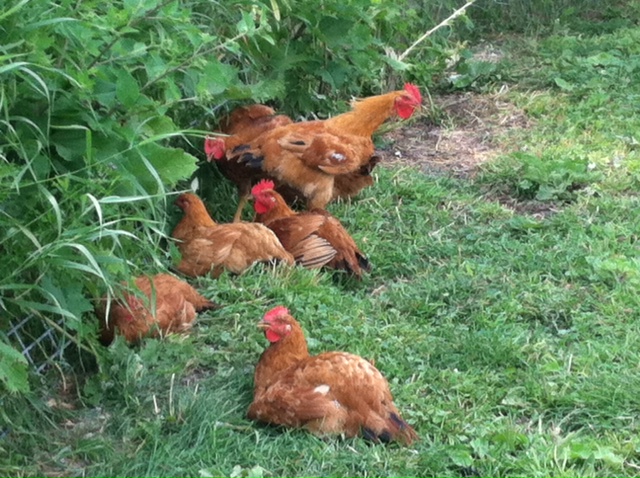
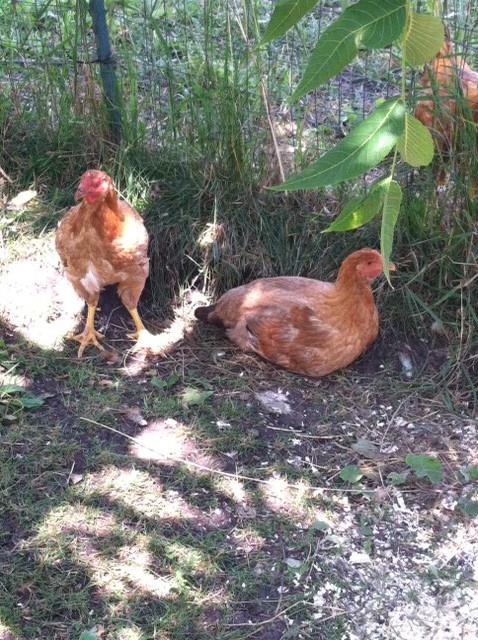
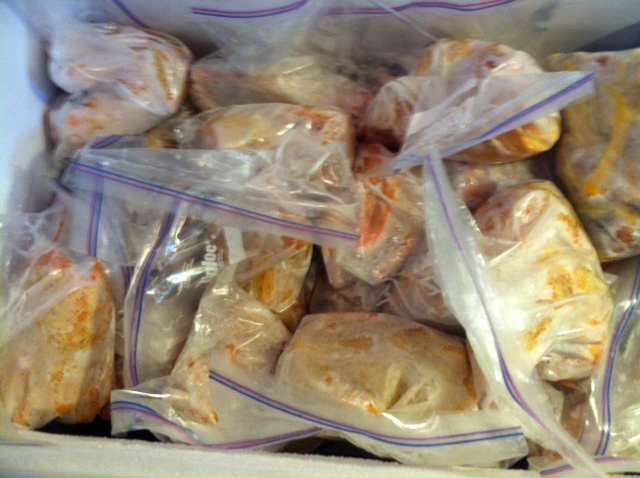
The Red Ranger broiler chickens are growing like the weeds, too. John took to calling them the “Drumsticks,” so I’m now referring to them as “Drummies.” They’re only three weeks old now, but I swear some of their legs are as thick as a full-grown laying hen.

I grabbed one up particularly recalcitrant one up in my hands this evening as I was trying to herd them into their kennel, and was amazed at how “meaty” it felt. Just solid and pulsing with heat and energy. I’ve never raised the typical Cornish Cross broilers, which some farmers I know are repulsed by for their tendency to do nothing but sit by the feeder and eat ’til their legs give out, but I’m impressed by the zip of these Rangers.

In the morning when I release them from their secure quarters, they all race out into the grass pen, flapping their wings and checking out anything that might’ve changed in the night. That’s not to say they don’t like their ration: I’ve taken to calling feeder-filling time, the “Drummie Scrum,” and I’ve also taken to filling a third feeder because fifty rapidly growing chickens at two feeders got to be a little too crazy for me to find amusing anymore.

The guys headed off to camp tonight, and I hope they have good weather for it (or at least that Martin is not scared, and the tent doesn’t leak–in that order). We have seen dark clouds roll through a few times today, and now there is lightning flashing in a few different directions. I got the raised bed garden watered early this morning, but I didn’t have time to water the tomato garden before work–I did water it yesterday, so it should be fine.

Instead of watering this evening, I stayed out ’til 9:30 or so weeding garden beds and cleaning things up with the gas trimmer–taking the cages off the rugosa roses and serviceberry and hazelnuts and trimming around them and the edges of border beds and around the buffalo berry bushes. We’ve got a couple of cattle panels leaning up against our power poles, and I pulled those out and trimmed underneath them, too. I think grass loves cattle panels more than anything–if you leave one sitting along a fenceline or in the yard for any length of time, it becomes a real project to pull it out.

I also took a hint from my friend and colleague Robin Moore, who is this amazing blacksmithing, flower-growing, skill-having woman I’m blessed to know. We were at a Women Caring for the Land gathering that Land Stewardship Project hosts in Glenwood, and she started talking about this guy who buys up all the old seed from garden centers and where-have-you and plants it all together in a big, crazy mix.

I got to thinking about all the one or two year-old flower and herb seed I have just sitting around, waiting for the perfect place to put it. Except there is no perfect place, and there is no time to individually plant every last thing I want to grow (or even that I have seed for). But what I did have is this kind of bare, ugly place along the west side of the goat barn that used to have a big pile of goat manure on it, and was sprouting a bunch of weeds.

There were plans for that spot–I was going to transplant the “secret stash” of hollyhocks that John has so far managed not to mow (my dear husband is a hollyhock-hater, but I will let him tell that story!), but with the weather so hot and the spot so remote from my normal watering route, that probably would’ve just led to more hollyhock demise. So instead I mixed up a great, big batch of flower and herb seed–from amaranth to cilantro to Thai basil to zinnias and everything in between–and I hoed up the area, kicked some soil over it, and we’ll see what grows. Oh, and dare I say the mix contains my mother’s special “no-mow” hollyhocks? Shhhhh!

Then I cracked a cold beer and sat on the corner of a garden bed in the deepening dusk–when all the bird calls sound as if they’re coming from far away, watching lightning play across the southern sky and the rain clouds curtain around the farm. The breeze was light, the mosquitoes were somehow absent, and I spent some well-earned time just enjoying the view of the work we’ve accomplished.


Joelie’s Dandelion Cookies

Have you ever had one of those Euwell Gibbons’ moments? Moments where you find yourself searching roadside ditches for wild asparagus or turning cattail “hotdogs” into a pancake mix, or even collecting and cooking dandelions?

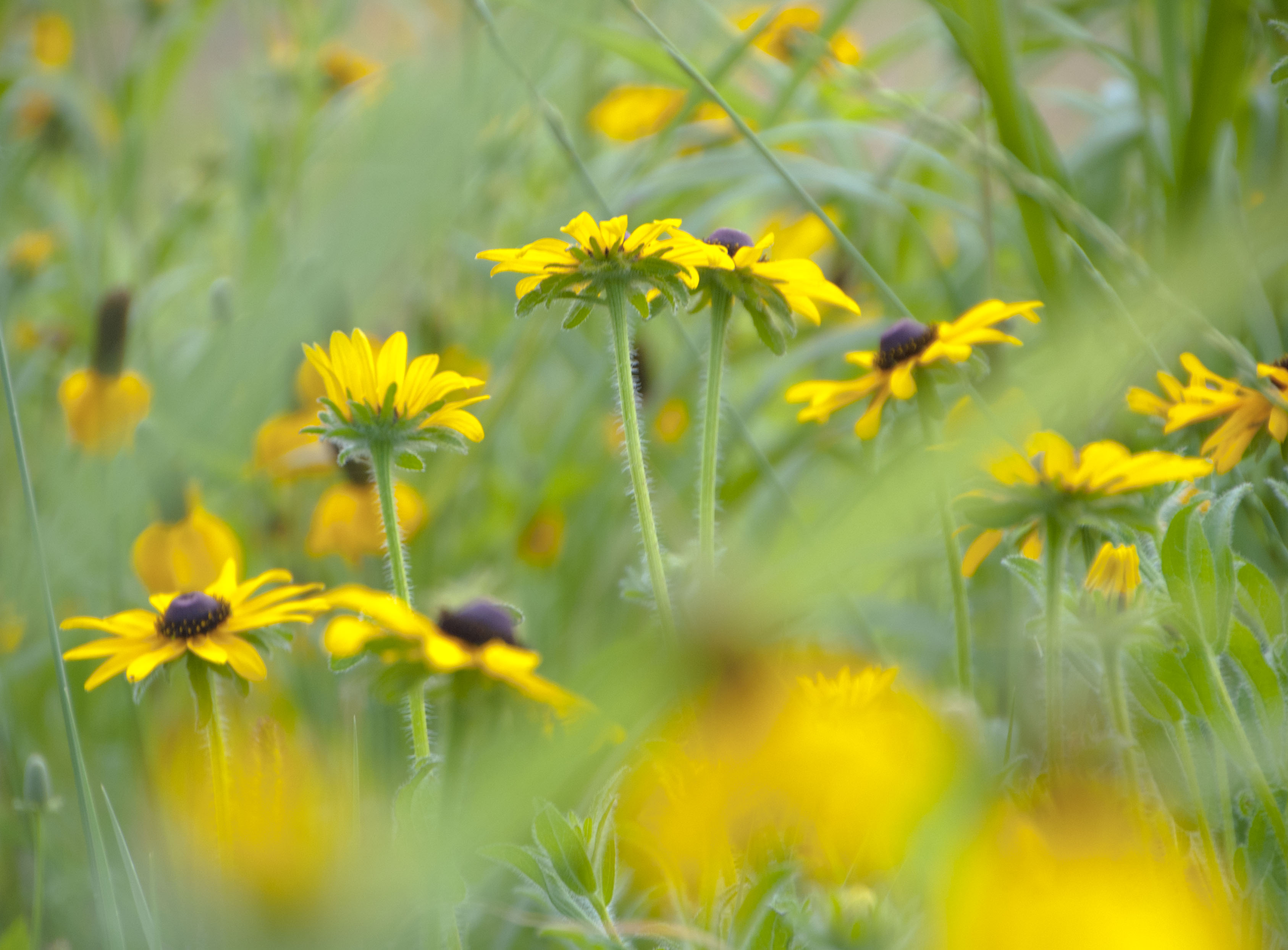
Our bountiful field of yellow!

Our bountiful field of yellow!

Earlier this week a friend of ours, Joelie Hicks, posted a recipe for dandelion cookies. Hmmmm?

Back in my Dubuque days with the exciting daily Telegraph-Herald, I wrote a story on a junk yard guy in his 70s who was married and, according to all involved, fathered a child with his 29-year-old wife. There was little doubt of her deep feelings for the old codger, for you could see love in her eyes as she talked of how he respected and treated her as a person. He was one of those tough exterior guys with a soft heart who acted and worked like a man half his age. After recording the interview and doing the pictures, he asked, “Say, Boy, how about I pour you a little glass of my homemade dandy-line wine?”

Those yellow petals are intense with color.

Those yellow petals are intense with color.

At that age I was far from being one to turn down an offered drink, so he pushed a paint-chipped chair past the prone German Shepard in his little office and reached for a label-free wine bottle, pulled the cork and filled my glass about a third full. Before jumping to conclusions, this was a little fruit juice glass. “Pour you any more, Boy, and you ain’t drivin’ back to no Dubuque.”

The old man was honest as a summer day is long, for I was challenged to make the drive even with what he poured.

Fortunately I have once again settled down with a dear woman who holds dandelions close to her heart. Actually, I find it a bit disheartening that couples aren’t asked in premarital counseling, “Which is more important to you, John and Rebecca, a field of golden dandelion goodness or to have a dandelion-clean and perfectly green lawn?”

Years ago when my brother, Mark, lived in Omaha, his next door neighbor woman became rather riled over his suspected failure to spray his backyard of the pretty yellow spring flowers. “Mam,” I said, aiming for a spot somewhere on the soft side of her heart, “have you ever heard of this new lawn technique they’re calling ‘naturalizing?’”

This was just enough to stop her rant for a precious moment.
dandelion4
“That’s where you plant native flowers so they will bloom to add interesting color and beauty to an otherwise boring green lawn. That was my dear brother’s intent here with his lawn. Look. You can’t call this a boring lawn.”

She stared at me for a good 45 seconds in what could be generously described as a rage of silence before turning on her heels and stomping off to her house.

Back in the present, a few days ago Rebecca asked, “Have you seen the incredible yellow in the goat pen? The bees are just loving those dandelions.” We have a rich carpet of them.

Between the two of us I’m sure we attended at least three or four meetings this past winter over the crisis facing bees and other pollinators, so we see dandelions as a bridge to our recently planted clover and hopefully the prairie flowers sure to rise in our tillable acres. And, of course, our garden. We hope to have enough blossoms around our little island of pollinator friendliness to withstand the expected GMO corn and soybeans that reportedly carry genes that are causing bee colonies to collapse. In the spirit of marital cohesiveness, I asked her permission before I took my half-cup measuring tin outside to fulfill Joelie’s recipe requirement.

Just a half cup is all you need ... without the green "crowns."

Just a half cup is all you need … without the green “crowns.”

As the cookies were baking Rebecca came inside to say it was hard to see where I’d even picked the blossoms. Our son, Martin, who is here for the month, also came inside to say, “John, I don’t think you even made a dent in the dandelions out there.” Hey, I’m good!

For those just dying for the recipe, here it is: Blend together 1/2 c. butter, 1/2 c. honey, 2 eggs and 1 teaspoon of vanilla, then stir in 1 c. flour, 1 c. dry oatmeal, 1/2 c. dandelion florets pulled or cut from the base of the flower.

Just before adding the flour and oatmeal.

Just before adding the flour and oatmeal.

All ready to drop on the pizza stone!

All ready to drop on the pizza stone!

Bake at 375 on a lightly oiled cookie sheet or pizza stone for 10-15 minutes. I added a cup of chocolate chips just because I could, so I suppose that should read as “optional.”

All baked and ready to eat ... and they were a big hit, even to Martin!

All baked and ready to eat … and they were a big hit, even to Martin!

Yes, they’re rather delicious, though they don’t seem to have the same kick as the old junk dealer’s dandy-line wine. In fact, I think I could eat the whole batch and still drive all the way to Dubuque.

On the Drive Home

Not long after pausing to capture a few images of a Bald Eagle perched in a tree along the shore of Lake Minnewaska, then the painstaking process of following a farmer with a grain drill who insisted on driving down the middle of Highway 28 going through North Morris and forcing oncomers to take the shoulder and the followers to bide time, it was back on the open road once again. Back in the country on the backstretch home, and off to the west, a plume of smoke rose from the prairie.

The Bald Eagle takes off.

The Bald Eagle takes off.

Fire in the prairie this time of year is considered a good thing, a time of renewal. By burning off the thick duff left behind by several seasons of prairie grass thatch, a prairie fire brings potential death to invasive shrubs and trees as well as a lush new birth to the deep rooted native forbs and grasses. A prairie, say many, is forest turned upside down. The vast vegetative portion of the plants are all underground, anchoring ever deeper into the soil profile. The smoke plume reaching into the distant sky brought a smile.

After a weekend conference of Minnesota Master Naturalists at Camp Friendship just outside of Annandale, my thoughts were generally positive from meeting with like-minded, environmentally-friendly peers. This was a nice reprieve from new reports of global warming incidents around the globe. Landslides and flooding in the Balkans. Reports and charts portraying perhaps the warmest December on record worldwide. Wildfires once again ravishing the U.S.’s Southwest, which involved a cousin who was forced to evacuate her home going into the weekend.

To the west, the plume was getting ever closer and was exhibiting that familiar profile of width. Immediately I had hopes of capturing the crew working a prairie fire photographically.

On a long drive home, the mind wanders … and mine was. Wondering about my cousin and the fate of her home; of a fire of destruction as well as one of renewal. Then other thoughts drifted in … of how our own sons will fare in an ever changing and warming world.

Will the Black Burnerian Warbler still find a home with the change in the biome species?

Will the Black Burnerian Warbler still find a home with the change in the biome species?

Global warming has been a nearly constant conference and meeting agenda item this winter. Seminars and conferences have included the threatened bees and pollinators, and we attended two different presentations by icecap explorer Will Steger. At both he showed the incredible footage from the documentary, “Chasing Ice,” showing a massive ice field suddenly and unexpectedly collapsing that was captured on film by a crew. Indeed, while wildfires threatened my cousin’s California home, news broke that a collapse of massive portions of the Antarctic ice sheet now appears inevitable and could trigger a far higher sea-level rise than once projected — up to 12 feet, or four meters — according to major new studies by University of Washington and NASA researchers.

Those who have read Jon Bowermaster and Steger’s page-turner, “Crossing Antarctica,” will realize that more than half of the book and the issues his team faced on the trip were on the West Antarctic ice sheet — which is about the size of New Mexico and Arizona combined. This won’t happen in my lifetime, since it is estimated to occur over 200 years …  a time span that, interestingly, sparked more thought from the weekend conference, again concerning global climate change.

It was during a keynote address by Dr. Lee Frelich, research associate and director of the University of Minnesota’s Center for Forest Ecology, that he described the expected changes in the boreal forest biome in Northern Minnesota. At one point he agreed that, yes, the boreal had migrated over time as far south as Tennessee and as deep as the northern wilds of upper Ontario. “Those changes, though,” he explained, “occurred over thousands of years, which geologically are snapshots in time. What we’re seeing now, within a century or two, has not happened so fast in the history of earth.”

Core samples taken from a Siberian lake that offer a portrait of earth over nearly three million years gave proof, he said. Frelich added the forest profile around the Boundary Waters will take on significant change over the next 30 to 50 years and maybe even sooner. “If you want a preview of what the Boundary Waters will look like by 2050, go to Granite Falls along the Minnesota River in the Western Prairie. All along the river you have the same rock formations as you find in the BWCA, and you’ll see a plant profile there now that is very similar to what we’ll see there. Scrub cedar. Burr oak. A dominance of the maple species. Prickly pear in the rock formations.” You could sense an audible murmur as that reality settled around the room.

As I turned south onto a county blacktop off Highway 28, the remembrance of the murmur was lost as the plume of smoke grew ever closer.

“For a scientist,” I remembered him saying, “these are exciting times, for we’re seeing events in our lifetimes that have historically taken thousands if not millions of years to happen. Another drought. Increased instances and severities of windstorms, and the resulting fires will complete the transition. Already the understories of the new forests have taken hold. Drought, wind and fire will bring this succession to life in our lifetimes.” In some areas of Minnesota and Ontario, he predicted, the succession might be only a summer or two in the making … depending on those three climate-driven conditions.

Outcrops and species profile of the Minnesota River valley might be the future BWCA area species profile.

Outcrops and species profile of the Minnesota River valley might be the future BWCA area species profile.

Finally, on the Clinton road, as I drew mental images of Lake One with a Minnesota River plant profile, the prairie fire grew closer and closer, and finally the field appeared. There, south of the highway, a farmer was burning off the last of a wide CRP buffer strip, and was following behind the fire with a huge tiller pulled by a tracked behemoth tractor, turning the newly blackened prairie sod upside down to plant his next crop right to the lip of the drainage ditch.

As the professor said, “In our lifetimes …”


Pushing Too Hard

It has been a long while since there’s been a “She Said” post. Trust me, there are a few drafts in the queue, but this is the season of all-out work. Last Spring, “He Said” and I were still living in my house in Clinton and the focus was almost entirely on getting the house buttoned back up, so we could move in and ultimately have a lovely summer wedding on the farm.

We accomplished all that and more, but the gardens and grounds got short shrift, and there was a pile a mile wide of tasks that got shoved from summer to fall to this spring–which ended up coming cooler and later than any of us would have wished. I keep reminding myself that the place I moved here from was the “banana belt” of South Dakota, and up here we’re about two weeks behind and ten degrees cooler than what I might’ve expected there–if expectations count for anything in our changing climate. From what my former farming partner has said, I got out of there just in time.

Of course, if you read on to learn the true nature of my personality when it comes to gardens, you’ll see that perhaps the “getting out just in time” comment wasn’t related to the global climate weirding at all. I am glad to see that others have taken over the garden space that once was Flying Tomato Farms–and less glad, though perhaps satisfied in some evil way that others are cursing that gumbo area along the western edge of the gardens that I cursed roundly on more than one occasion.

Listening Stones Farm lost three hens to Marek’s disease earlier this Spring, but it seems like everything has stabilized out in the coop now that the weather has somewhat stabilized. I’m down to eight hens a’ laying, but there are fourteen more pullets plus a young Black Australorp cockerel who’ve taken up residence in the hen house, and we’re getting about half dozen eggs a day–more than we can eat by a good measure, and eventually we’ll be offering eggs for sale rather than simply foisting a dozen upon every unsuspecting visitor.

A little over a week ago we picked up 50 Red Ranger broilers to fatten up over the next couple of months–part of a bulk order with a few friends over on the eastern edge of South Dakota. They (the chickens) are now out in their very own semi-secure quarters in the goat barn, awaiting the time they can set out within the grassy fenced pen to do what their name suggests (range, that is, not practice communism–we haven’t held a HUAC hearing as yet to know their political leanings, but rest assured, we are watching them very, very closely).

Communists? We are watching...

Communists? We are watching…

On an evening earlier this week, when Mr. White was getting ready for his MN Master Naturalist conference this weekend, I started getting anxious about a place to put the tomatoes. I knew where I wanted them, thanks to a brush-and-stump burning project down below the existing raised bed garden that left a small section of the prairie scraped and blackened.

I expressed my anxiety to the Mr., who was attempting to rest in order to get better from our latest plague (this winter and spring have been atrocious), and then I headed outside to pick eggs and survey my intended new garden spot. Heard a machine start, and here he came on the maiden Listening Stones Farm voyage of the 1979 JD 317 garden tractor that a friend recently gifted to us.

He did a couple of passes with me standing by a little disgruntled (My tractor! My garden! Waaah!) before he saw my tractor-tantrum coming on and willingly gave over the seat and went back inside to more fully recuperate. If you have somehow heard that I’m a saint for putting up with Mr. White, you have it exactly wrong. I am a serious pain in the arse when it comes to anything garden related (we can quibble over the other stuff, but in this arena, I humbly acquiesce).

Spent the next hour (or was it two?) cultivating my new garden space, and thinking very seriously that I should have bundled up better. But, you know, how can a gal leave her willing little tractor when it’s doing such a splendid job? Yup. And that’s how JGW got better enough to go on his splendid weekend adventure with the MN Master Naturalists, and I got what I deserved for not taking better care of myself.

I think I’m going to name the tractor Eunice. Or maybe Viola.

At any rate, I’ve been feeling rugged this weekend, though with the weather so perfect and no husband to remind me that resting on occasion and eating regular meals are reasonable things to do, it’s probably a good thing that my body is reining me in a little.

Puttered around with mowing on Friday evening–especially the goat pen where it was getting long (nope, we don’t have goats–the former owners built the pen and barn named for the beasts and we’ve stuck with it), but I avoided a big triangle of dandelions in full bloom and buzzing with early-emerging pollinators.

All at once I saw a crowd, a host of golden dandelions!

All at once I saw a crowd, a host of golden dandelions!

Saturday I felt the worst and only puttered slowly with broad-forking a bed running parallel to the road and planting with a buffer strip of sunflowers, amaranth, cosmos, zinnias, and broom corn to hopefully shield the tomato garden from spray drift from fields across the road (tomatoes are especially susceptible to herbicides). Moved a few finer-leafed daylilies from the raised bed in which they overwintered to a bed along the sun porch. They, along with several other perennials I’m still trying to figure out a place for, were gifted from Earth-Be-Glad Farm near Lewiston, MN.

Today…more small puttering repotting a bay tree and separating our tomato plants from the ones I’m offering for sale, plus a small amount of mowing that once again confirmed I am a total weenie when it comes to driving a riding mower over uneven ground. I remain convinced that I will tip over and kill myself on every bumpy patch–and we have quite a few of them even after I dumped several wheelbarrows full of sand into the foot-deep ruts where the septic pumper truck got stuck earlier in the week (a kindly neighbor came with his large tractor to pull the guy out).

Houseplants become deck plants in the summer.

Houseplants become deck plants in the summer.

It’s hard to slow down even being ill when it’s spring and you can finally get going on the pile a mile wide of projects. T.S. Eliot said that April is the cruellest month, but really it’s May–the month that everyone up here is really yearning for in the depths of winter…when it’s really and truly spring and the weather is so fine and suddenly all the projects of the past six months are falling upon your shoulders if only you were well enough and there were enough sunny days to accomplish them….

There aren’t enough sunny days or hours within all the days of the month, even if they were sunny, to accomplish all one dreams about doing in the first deliriously warm weeks of the spring. Best to just recognize the limitations of one’s capacity and also the importance of taking time for pure enjoyment–of listening to the birds, dozing with the windows wide, and spending time with loved ones over a glass of wine in the gilded evening light.


Freeze Warnings

Over the past few hours we have frantically put ourselves on the front lines in the battle against a red alert freeze warning. Our main concern is the new batch of broilers we just had moved outside into the goat barn. Only a week old, the 51 chicks had already become crowded in the horse trough we use as a brooder.

Using old sleeping bags, we covered as much of the 6 ft. by 8 ft. dog kennel as possible. As we moved plants inside we discussed our efforts with hopes that the covering along with the lights will be sufficient for the chicks to survive. In all, a snow fence was affixed to the dog kennel, and then she attached galvanized roofing panels to the outside of that, and then the blankets and sleeping bags were draped over the whole thing to try to keep them warmth through the night.

Despite the concern and worry, Rebecca came back to the house from her garden in complete ecstasy. Once again her little jewels, tiny yellow warblers, were there to keep her company. The warblers, with their intense hyper activity, rarely stay put for long, and she said her efforts to capture images of the little birds with her phone were nearly impossible.
yellowwarbler4
Since I am still smarting from not having my camera on the listening bench in the pathway through the grove a couple of weeks ago, I eagerly volunteered to bring my camera to the garden to see if I would have any luck. She was right. The warblers dart here and there, one second on the frame of a raised bed, the next on a cattle panel, then off to the edge of the prairie. We counted three. Perhaps there were more. Their name tags, if they wore them, were much too small to read!

For a half hour we sat in the lowering sun to watch as they flew in and away. Rebecca was nearly mesmerized. As much as I love our life on the farm, my love pales in comparison to hers. Warbler sightings and accompaniment are part of that love she has for the farm. I captured a nice picture of her as she sat watching the warblers.

Rebecca watches the warblers at the foot of her garden.

Rebecca watches the warblers at the foot of her garden.

For me, it was almost as comical as if I were doing a Whack-A-Mole. “Oh, there’s one!” she’d say. “Oops.”

Living jewels are indeed fleeting.

“Oh, look! By the bale!” Bingo.

By the bale.

By the bale.

Fortunately the warbler bounced from in front of the bale to the lower frame of a raised bed, then skirted that more deftly than an acrobat can balance on a thin train rail. It skittered along to hop onto some of her cattle fencing. Another warbler swept in, and a third … which took a perch on the erected fence panel itself — gave us a fine show. Her garden jewels were shining all over the place.

Like all good shows, this one had to come to an end. We headed back to the house excited about our short adventure, although about halfway there thoughts of the impending freeze warning emerged.

Despite the dire possibilities, I had to smile. Are we becoming farmers? People who cannot have a conversation without worry creeping in? Years ago I did a story on a woman farmer near Gluek for the sole purpose of portraying a happy farmer. I hadn’t known her for very long, yet her conversations were constantly filled with wonder, fine accomplishments of simple tasks, descriptions of her growing crops, and usually concluding with a report of riding around her farm on her horse as a sunset approached. Every conversation was somehow positive.
yellowwarbler2
And here we are on our own farm facing a freeze warning. When we go to bed tonight I’m sure we’ll both think of the chicks spending their first night in the “wilds” of the goat barn, huddled beneath lamps inside a large dog kennel covered with old sleeping bags to hopefully retain the heat. Yes, there is that. I’m also guessing we’ll both have smiles, too, as we recapture those precious moments in the garden with Rebecca’s jewels … those beautiful little yellow warblers!