It’s Up!
First to arrive this morning was a surprise. Brad Fernholz, who last I heard could not put weight on a broken ankle, arrived chipper and smiling, which he seems to have a fine history of doing, and ready to work. Dale Pederson arrived next with Elmo Volstad and Mike Jacobs about 20 minutes later.

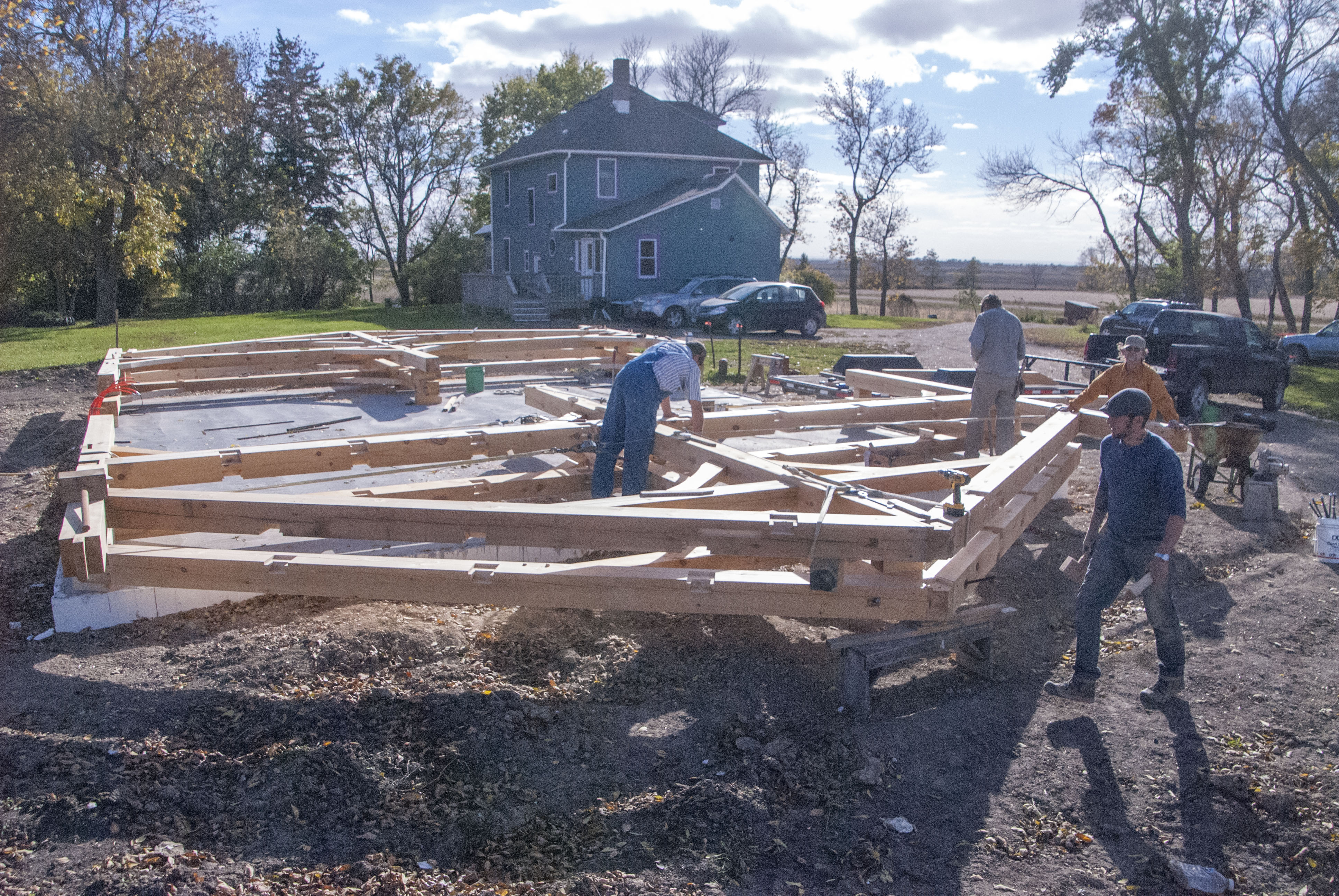
So after all these months of mushy deadlines, after the pouring of the slab in July and the arrival of the trailer-load of timbers last week, all cut to shape and diminsion at Dale’s Stoney Run studio over the summer, the group was finally here at Listening Stones Farm to erect the first, and perhaps the only, brand new building of my lifetime. Oh, we’ve had various options to consider. Personally knowing two house moving companies, there is no doubt we could have found a less expensive option. Thein Moving in Clara City, and Marcus Moving in Raymond, almost always have garages available to move in to erect on a foundation. We wanted something more than a “moved in” garage.
Our farm came with two outbuildings when we bought it. Without paying a whole lot of attention, since the exterior was sealed with metal siding, I thought a little turn of the century granary might serve us. Upon closer inspection it was a damned mess. There simply wasn’t any way it could be salvaged, so last year we had the granary and an iconic old pig barn razed, burned and buried beneath what became our orchard.
I suppose the muse came near the Summer Solstice the summer before last when we drove to Estilline, SD, to visit Rebecca’s old friend, Professor Karl Schmidt’s small permaculture layout, where I simply fell in love with his garage. Althought I had asked for plans, Karl and I could never quite get together on them. Last winter, as cold, snowy winter evenings go, I started playing around on the internet with a dream. That’s where I found a Nebraska firm that specialized in post and beam, timberframe buildings. They mailed a thick envelope full of materials, including a beautiful calendar, and eventually a friendly — aren’t they usually? — sales rep who lived near Sioux Falls, and who promised to stop on his way to his son’s hockey games in Bemidji. That never happened. That’s when I remembered that Dale Pederson had plenty of experience in post and beam construction, and even taught at cultural art schools in both Grand Marais and Milan.
We met for dinner to present our idea. Dale and his wife, Jo, are long time friends, starting with their hosting of a couple for foreign exchange students from my area program. Later I would buy several pieces of their bent wood furniture, and even took a couple of trellis classes from Jo. In short, Dale was interested, and after I laid down some earnest cash, he carried through with a design. When he presented the pencil drawings I might as well have been reading Russian. Give the man credit for being patient, and for helping find ways to maximize our costs in creating the building. He was also proud that his design would be framed for less money than what was listed in the slick brochures from Nebraska. We liked it because a dear friend could and would deliver what we wanted … and, it was money spent “locally.”
Rebecca and my original intent was to erect a combination garage, summer kitchen, workshop and studio, with the possibility of adding a passive solar greenhouse in a year or two. Initially we aimed to erect the building by June. That was pushed back to July, thanks to a South Dakota art show. July didn’t happen, so we tried to find a way around the trip to the BWCA come August. Nope, August was out, so September was targeted. Then it had to be wrapped around the Meander. “Let’s aim to have it up before Thanksgiving,” I told Dale at one of our last meetings. I was hoping this was a joke, since Elmo and Dale had poured the concrete in July.
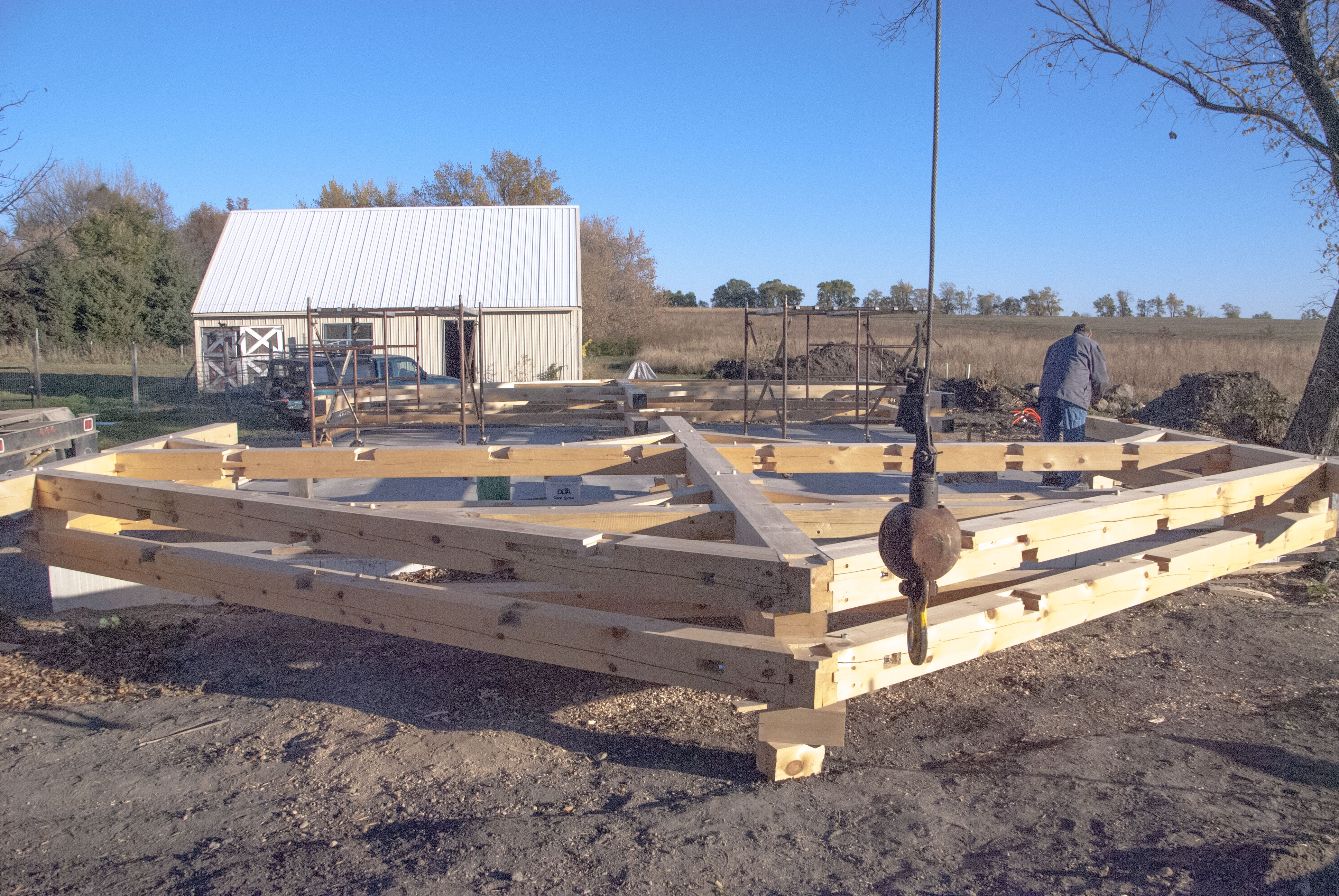
Over this time many trips were made to Dale’s studio in Wegdahl where positive proof that progress was being made. In those several planning meetings Dale explained different ideas and options, and even drove to Cottonwood for a tour of the insulated panel factory. What was amazing was that he created the entire building off site and transported them to the farm to piece them together. “Like Lincoln Logs,” is how Elmo explained it to me while we watched another piece fit perfectly in place.
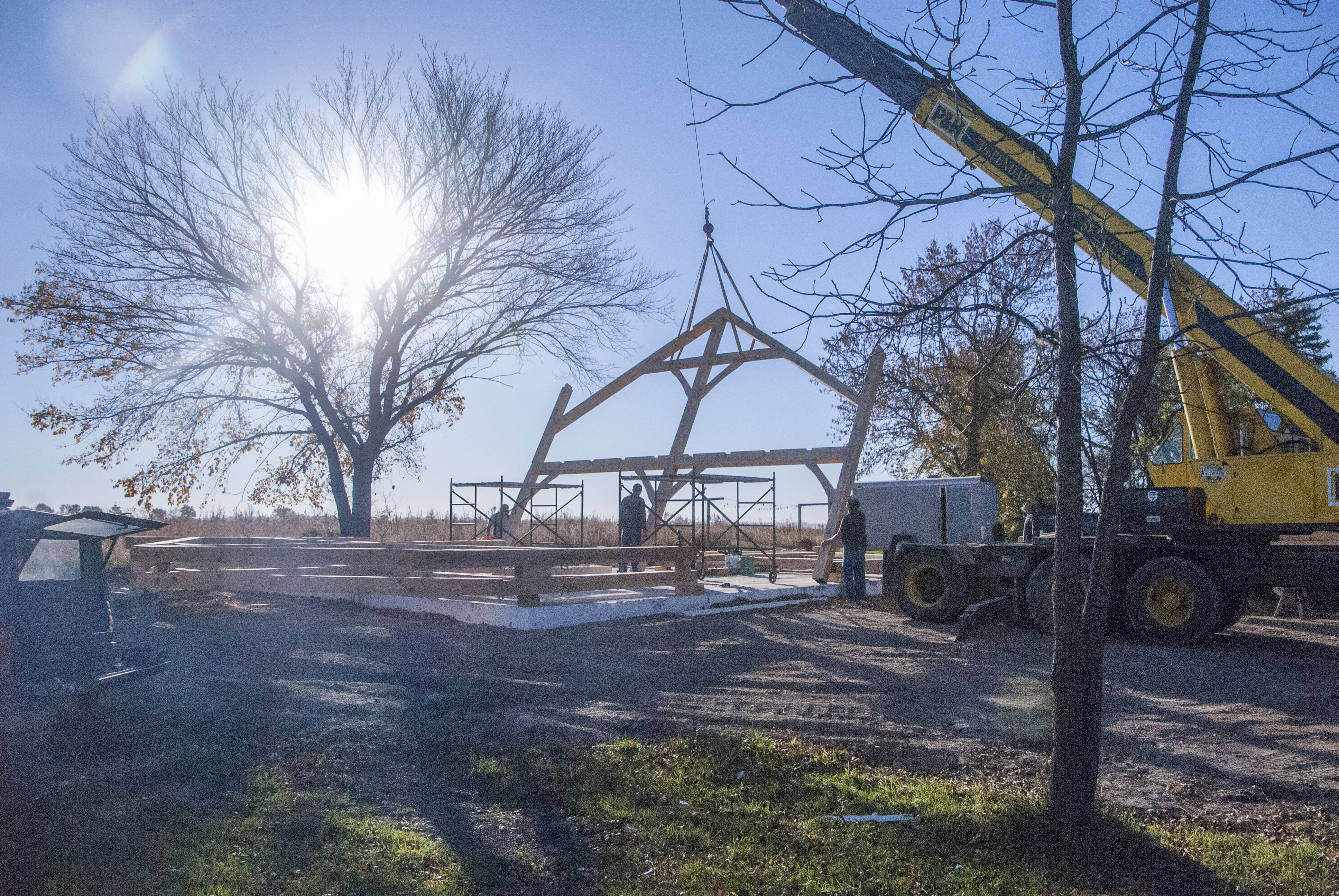
That is what happened on this day in October. Last week Dale came with the parts, and he, Elmo and Mike pieced together four separate frame sections. And everything fit together almost perfectly. This morning, not long after they arrived, the crane followed. And up it went, section by section with the crossbeams seemingly dropping perfectly into place. Much of my time was spent on the ground watching, for these fellows have erected several timberframe buildings over the years and work as a team, scrambling up ladders and scaffolding like human ants. My fear of being in the way along with a bum knee kept me on the sidelines most of the day. As we watched another of the connecting crossbeams fall perfectly in place without a touch of the mallot, Elmo smiled and said, “It’s magic!”
So now it’s framed, and we have the floor joists to install. On Friday the insulated panels come. Once those go up, then the windows, electricity, roofing and siding are scheduled. We’re not there yet, but watching the frame go up … one so well planned and constructed … was heartwaming. Having a heated floor for the garage will make winter more tolerable, and having a place for us to do our artwork, canning, and eventually, a winter greenhouse will be heavenly.

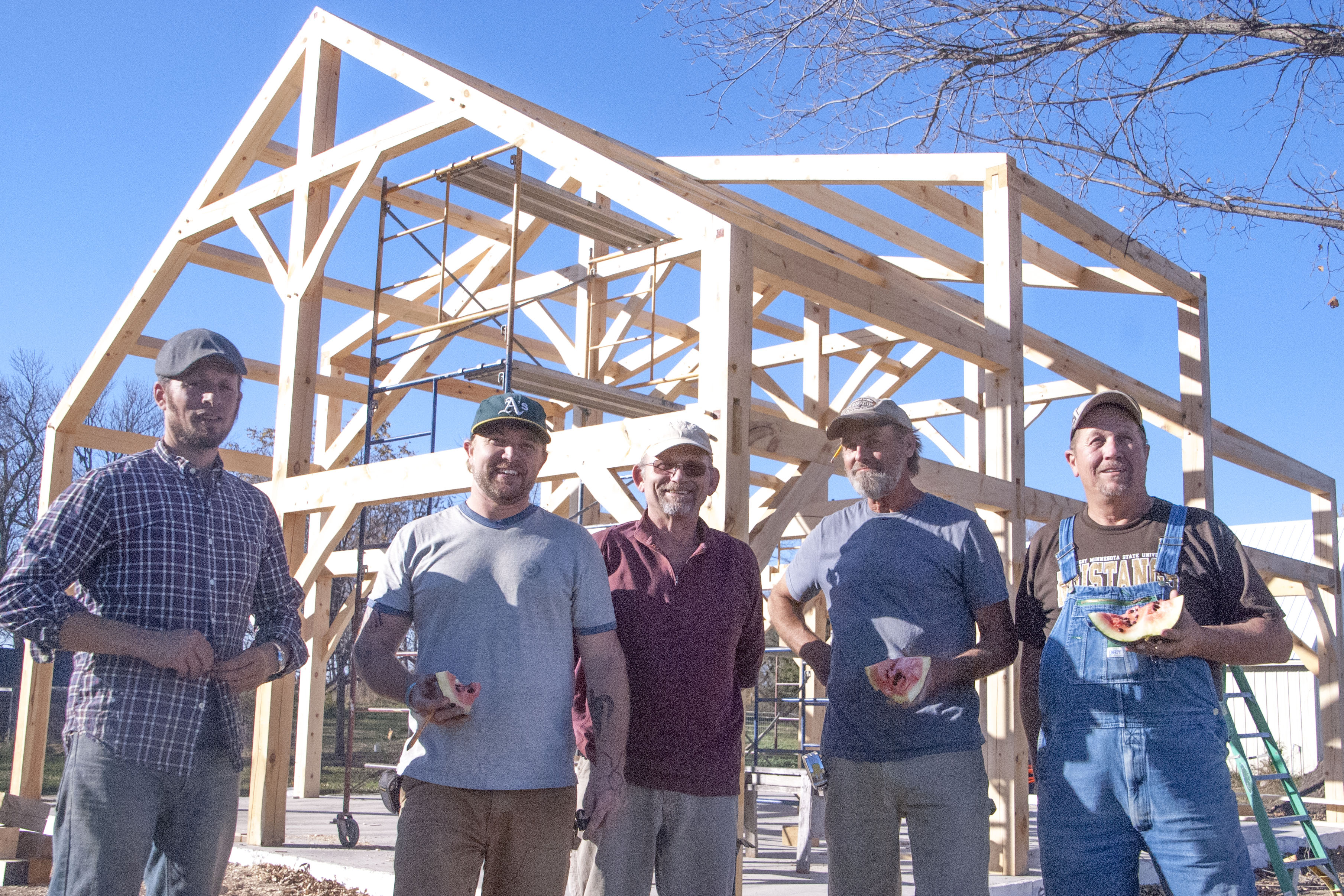
The crew included, from left, Mike Jacobs, Brad Fernholz, Jerry Parker, Dale Pederson and Elmo Volsted.
This is my first new building of my lifetime. While I can’t wait, I can also feel quite humbled. Frankly, I don’t have any idea of what to say or do. We love our home, and our new building will make a greater place to live. It will tie many of our hopes and dreams together, just as Dale had promised.
Sumac Chronicles
Sumac Chronicles
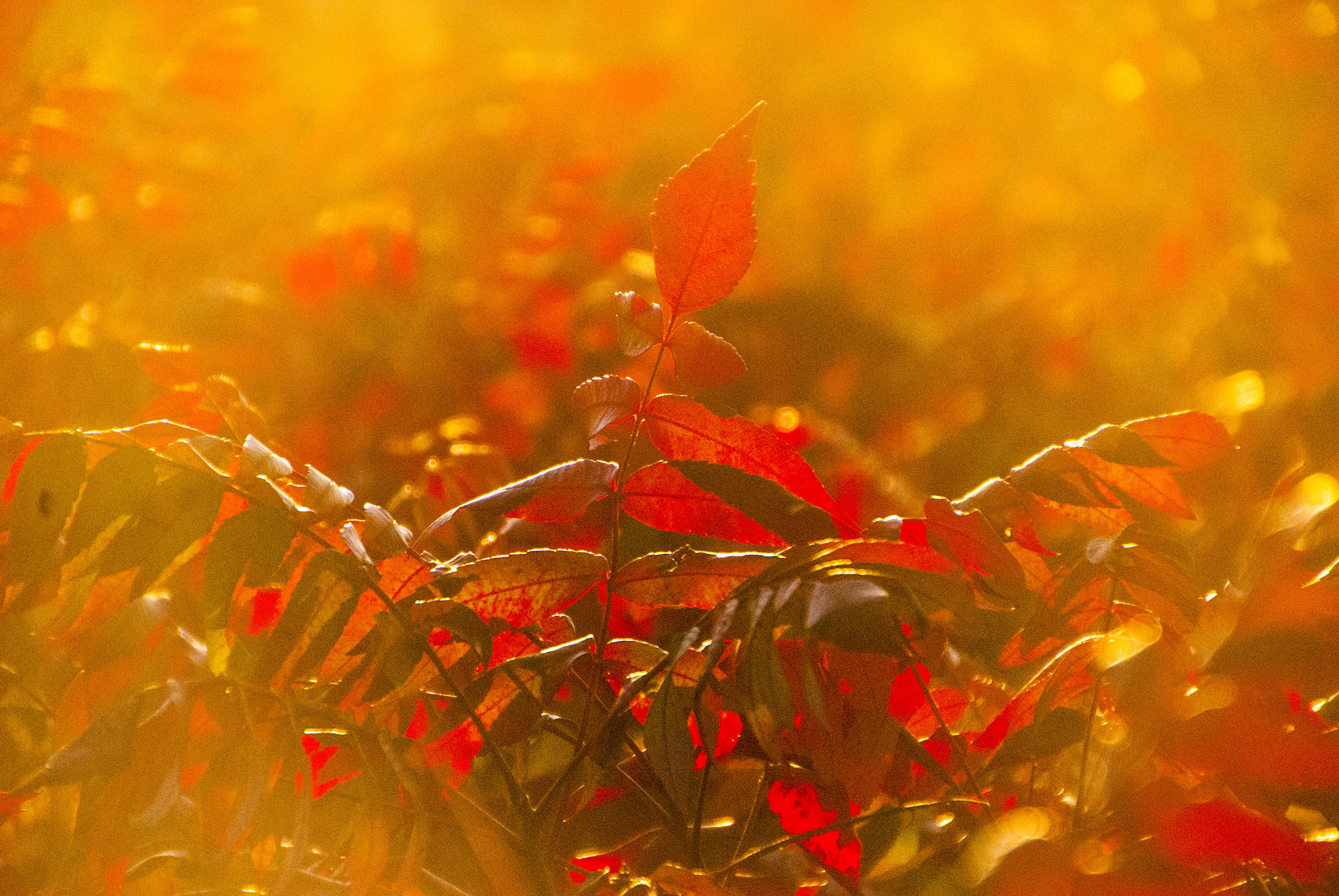
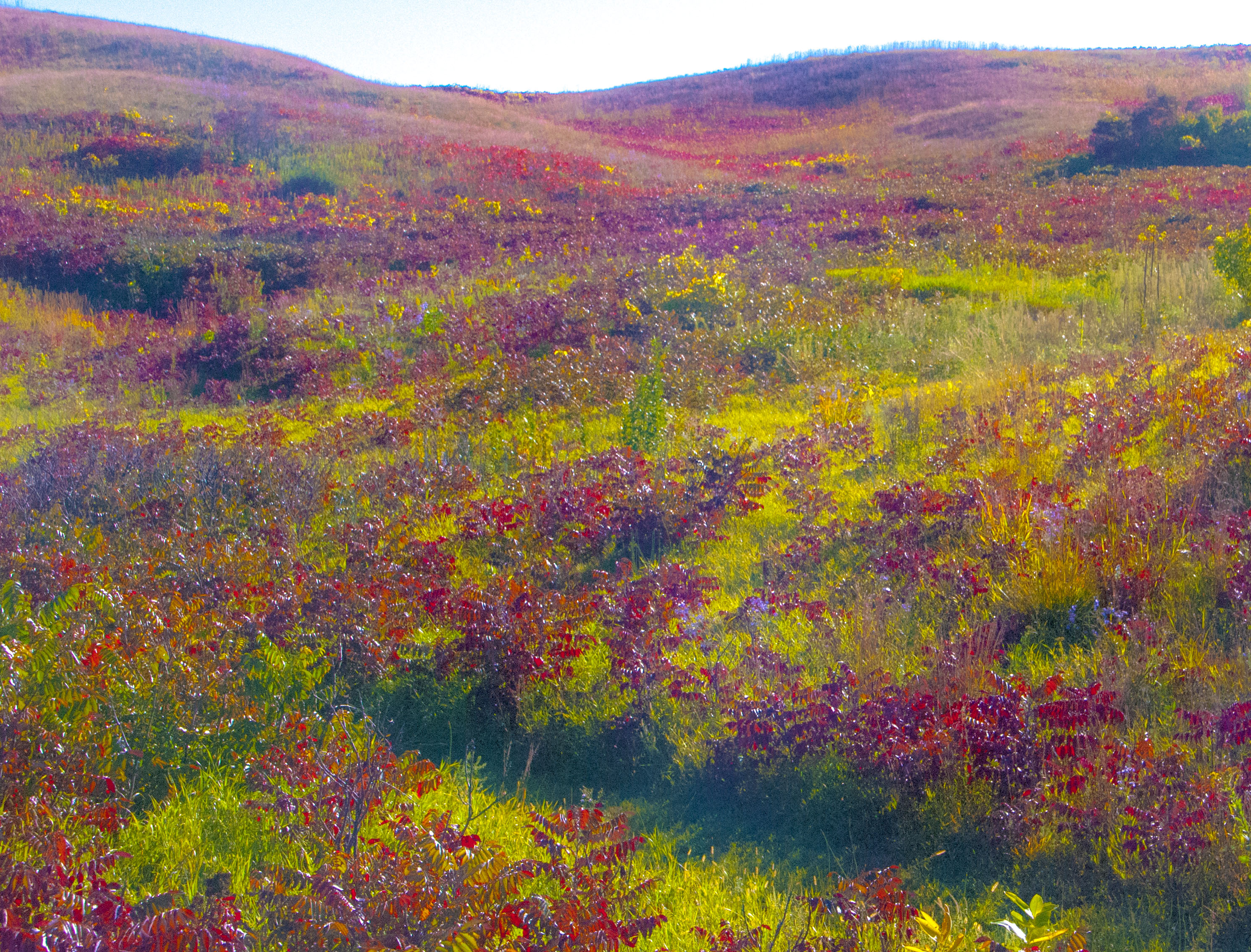
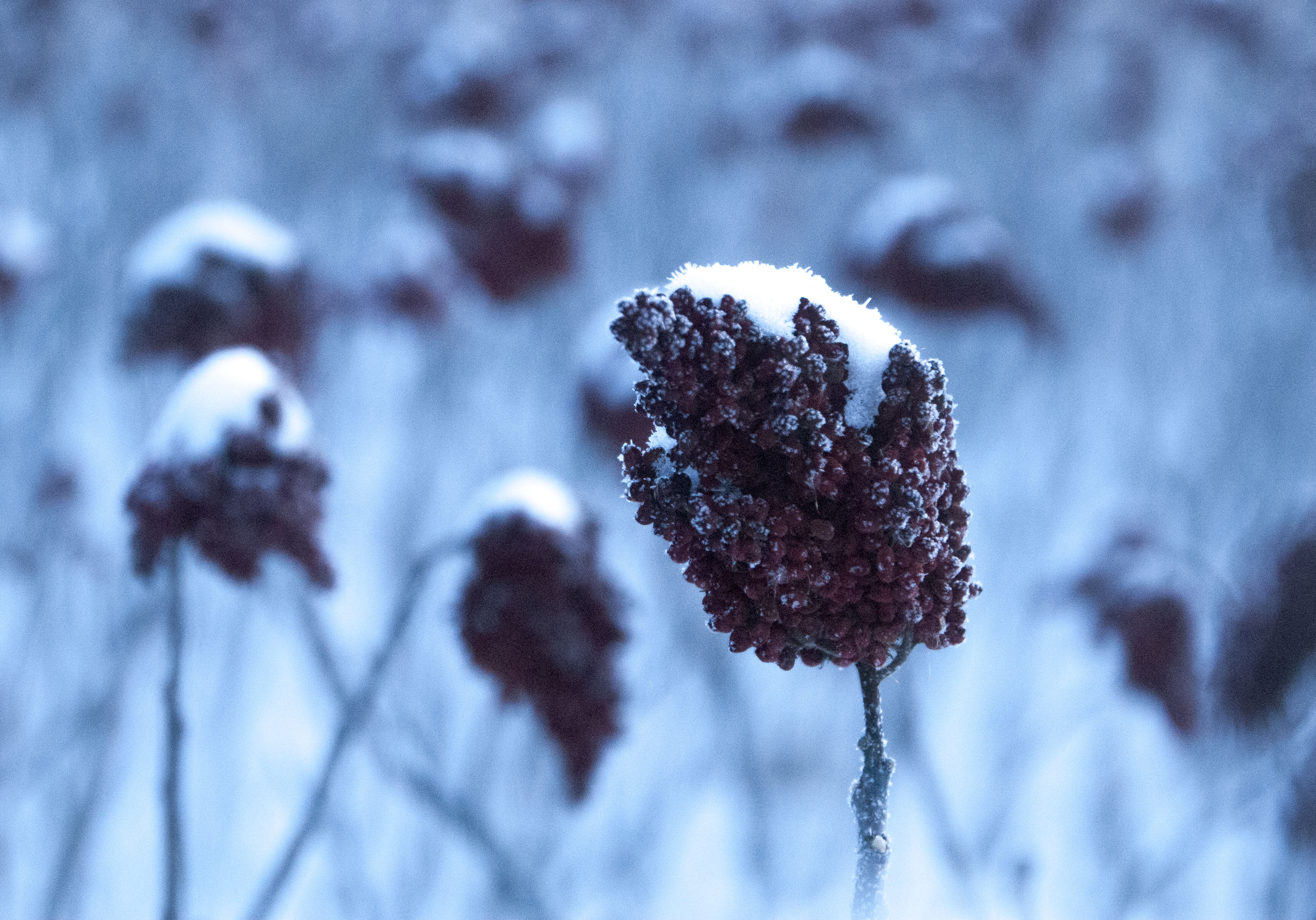
From what I’m told, and from evidence on the ridges around here and at a few of the nearby state parks, sumac is considered an invasive species. At Glacial Lakes and areas of Big Stone State Parks, the hills are rife with the reddish leaves and seed clusters, or drupes among scientists. For we laypeople, the clusters are more commonly called “bobs.”
All that color, from the bright reds and yellows of fall to the purplish bobs, attracts the eye of a photographer, especially this one. Recently at a visit to Glacial Lakes, the sumac in the late afternoon sun was reminiscent of a wild fire ravishing the hills of native grasses. A vivid bright red hugged the brown prairie grasses like a grandmother’s quilt in the low and late afternoon sun. Even around here, growing up the nearby hills along Big Stone Lake, patches of sumac are as common as deer and wild turkey. Sumac is found from the town of Ortonville all along the lower hillsides to Browns Valley, and are particularly prominent in the Bonanza area of Big Stone State Park.
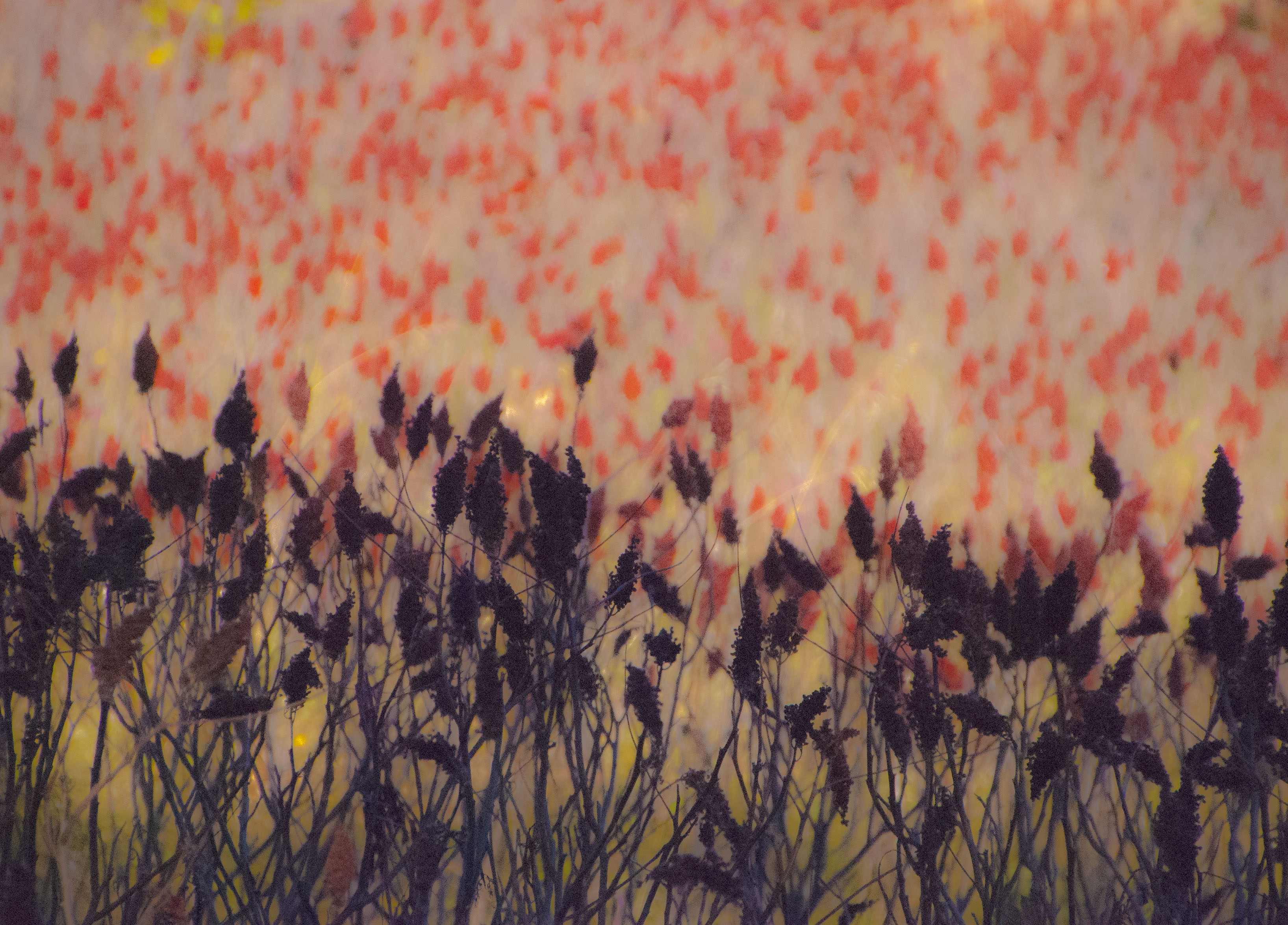
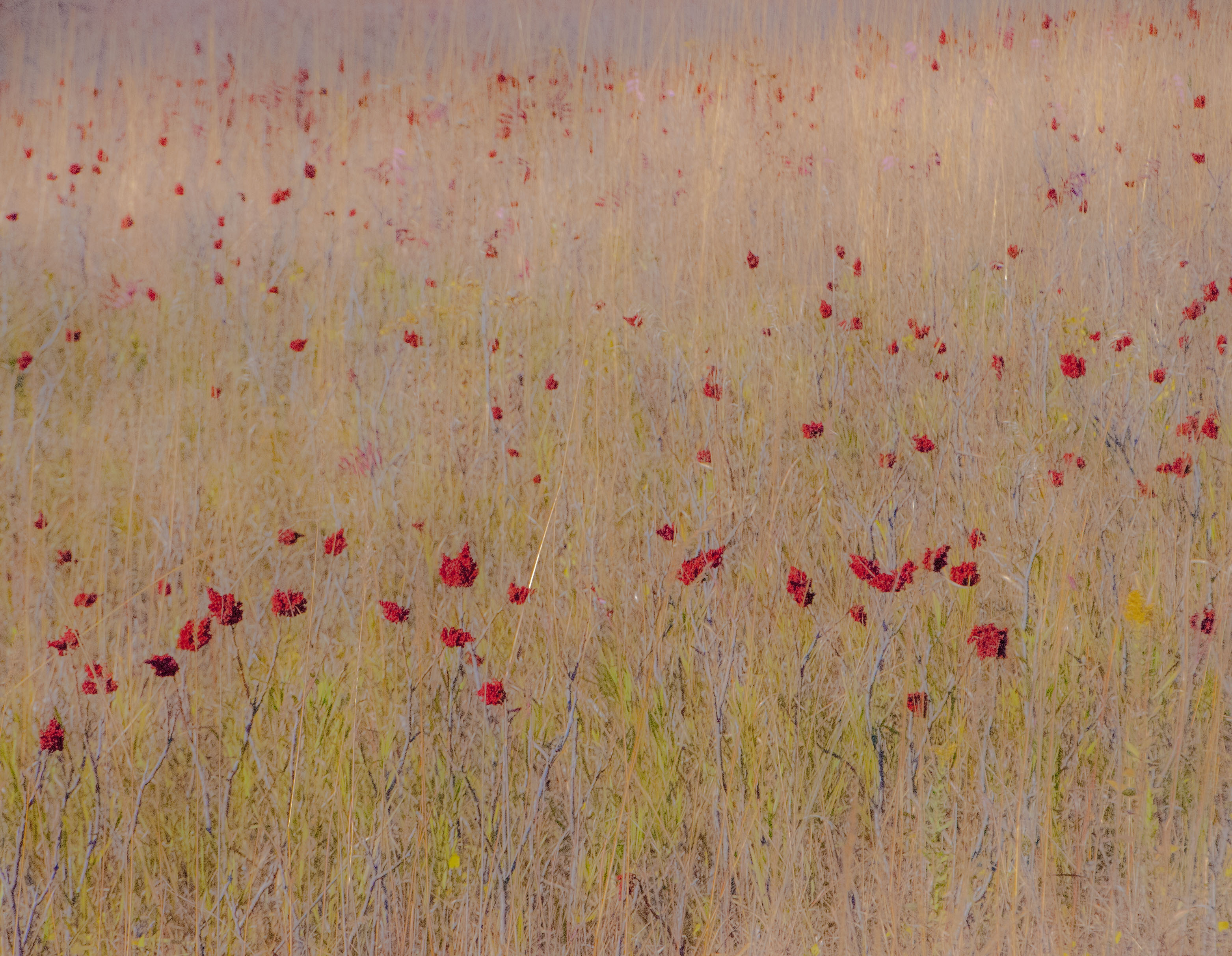
Along the highway spindly stalks rise from the ground, gnarly and poetically. Most common to Minnesota is the staghorn, which is rather appropriate considering the shapes of the trunks. The stalks reach skyward from the shorter outside plants to those quite tall in the midst of a cluster. The tallest can reach as high as 30 feet, although I doubt if I’ve seen them more than 12 feet in height. The huge leaves, spirally arranged and usually pinnately compound, bring a crimson to purple celebration to a prairie autumn, and come winter, the purplish bobs collect snow and hungry, overwintering birds.
In many parts of the country, sumac is sold as an ornamental. In areas of New England the plant is sold as a rival to the beauty of the larger maple species, bringing the same lush color to the autumn scene.
You may blame the birds, in part, for the invasiveness, for their droppings provide an instant fertility for the seeds. Once sprouted, though, sumac becomes entrenched, spreading by runner-roots or rhizomes. If you should wish to witness the richness of rhizome colonies, a visit to Glacial Lakes is the place to go … especially in the autumn.
What I didn’t know is that in areas of the Mideast the bobs are ground into a spice or served in a tea. The spice, which is also sold by Penzy’s and other spice companies, has a tart, lemony taste. When I bought this up with Rebecca, she remembered that as a child in Vermont that they one time collected and ground the seeds. “It’s easier to just find a lemon,” she said, smiling at the memory.
Perhaps she won’t be convinced to try it again here at Listening Stones Farm. “I remember it being hard to find seeds good enough to grind. I remember that there wasn’t a lot of good, solid seeds.”

A cluster of staghorn sumac near us in an earlier, early-morning fog shows off the gnarly, deer-antler like shapes.
All of which makes me want to revisit the writing of Euell Gibbons, who I met not long after he published his book, “Stalking the Wild Asparagus.” It would be interesting to see if Gibbons wrote about sumac, and if so, what his impression might have been.
It’s highly doubtful we’ll get around to collecting some bobs for grinding into a spice. Meanwhile, I’ll continue to stalk the wild sumac with my camera. Perhaps you’ll enjoy what I’ve captured so far.
Being a Bit Windblown
Call it a brief reprieve from the locomotive-like, gush of winds, for a soft breeze rustled the nearby prairie grasses as the “blood” moon rose into the darkened sky. Not far away our local “pack” of coyotes broke into their nightly prairie songs. I couldn’t help but smile. Having a gentle breeze in the relative warmth of the evening, along with the yips and howls of the coyotes, felt immensely meditative.

It’s too bad you can hear the prairie songs, and that I didn’t have a tripod or cooperation from the clouds overhead for the recent “blood” moon.
Oddly, my enjoyment of the prairie songs and the symphony of the wind isn’t shared by many. Yes, people speak of a deep hatred of the wind, and certainly the many letters of the settlers give historical credence to such feelings. Even madness, as it was called back then. As for the coyotes, I often hear such comments as “blood curdling” and “frightening” when we bring up our enjoyment of the coyote songs. “Perhaps you haven’t lost anything to them. No chickens or cats,” someone said the other night. It’s true. We haven’t.
Yet, we are wondering if the mashed grasses along the chicken fence along the orchard was matted down by coyotes. Rebecca believes it is certainly some predator seeking entry into the chicken pen. She discovered the trodden grasses the other afternoon when three of her hens and a rooster were squawking madly while parading along the orchard fence. When she walked around the shed into the orchard to investigate, one by one the chickens turned to sprint with their feathery butts aloft, defying soft down, straight through the two fenced pens and into the coop instead of under their normally protective brier bushes. There was no hesitation.
“Everything loves chicken,” is how she explains the situation.
With our heavily insulated walls and new windows, and with our minds solidly geared toward the recent Meander, much of what happened outside in the prairie, coop and garden, along with the seemingly constant gush of the winds, have gone mostly unheeded.
Ah, the Meander. Our first day back was filled with exhaustion, although by mid-afternoon there was just enough healing to begin putting our house back into a livable order. The next day the two of us carried our large display panels from the house to the shed because of the strong crosswinds. Since, though a sense of normal has since settled in.
While my lunch warmed in the oven on Tuesday, I spent several wind-blown moments in an Adirondack chair on the deck soaking in a bit of sunshine and wind. This was when my neglect of the feathered friends was noticed. No suet. No nuts. No thistle seed for the finches. No sunflower seeds. No colorful flashes of birds flying in for a meal. All the little feeders were swinging like pendulums in the staunch wind.
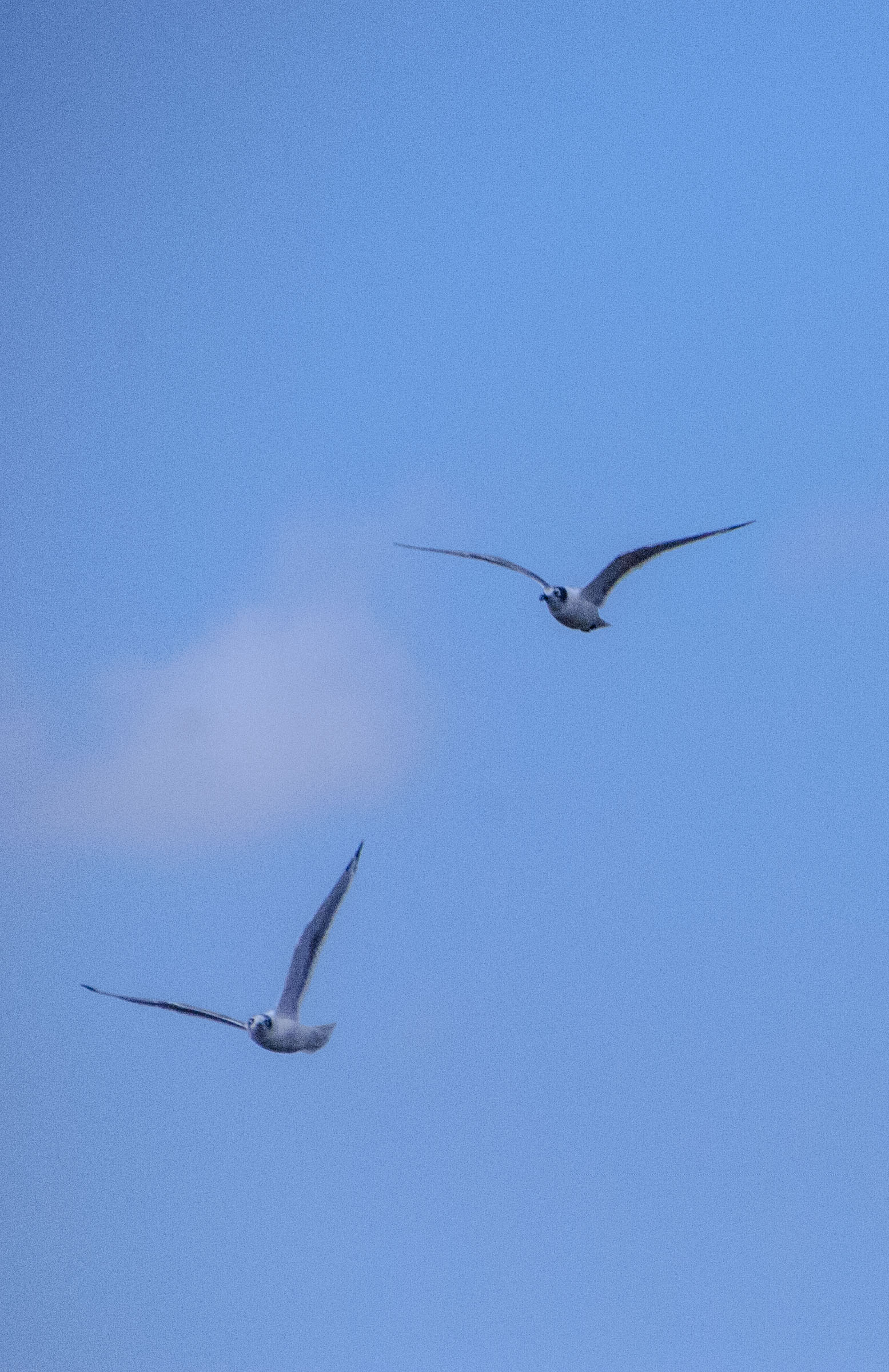
Over the rise, though, ducks and geese have not been daunted, and those squawks of the geese are as normal here as the sounds of the winds. Likewise with the hundreds of gulls gliding over. One afternoon, when winds whipped the treetops and created incredible yet invisible currents high above, dozens upon dozens of gulls glided past, and honestly, you can’t help but believe they were enjoying the ride. Frankly, it was more glide than ride. You could see a bit of wing adjustment up by the wetland, then whoosh, they’d glide by with considerable ease with nary a move.
Beyond the gulls and geese, on Wednesday Rebecca discovered yet another sign of autumn bird life. Seems she was in the chicken pen when a sudden alert was sounded by one of the roosters, immediately inspiring the layers to sprint for cover under those brier bushes. At first Rebecca didn’t know what to make of it, then noticed the shadow easing across the grass. Above her and her chickens, the tell tail white of an eagle showed as it slowly soared, somehow evading the forces of the strong, afternoon wind.
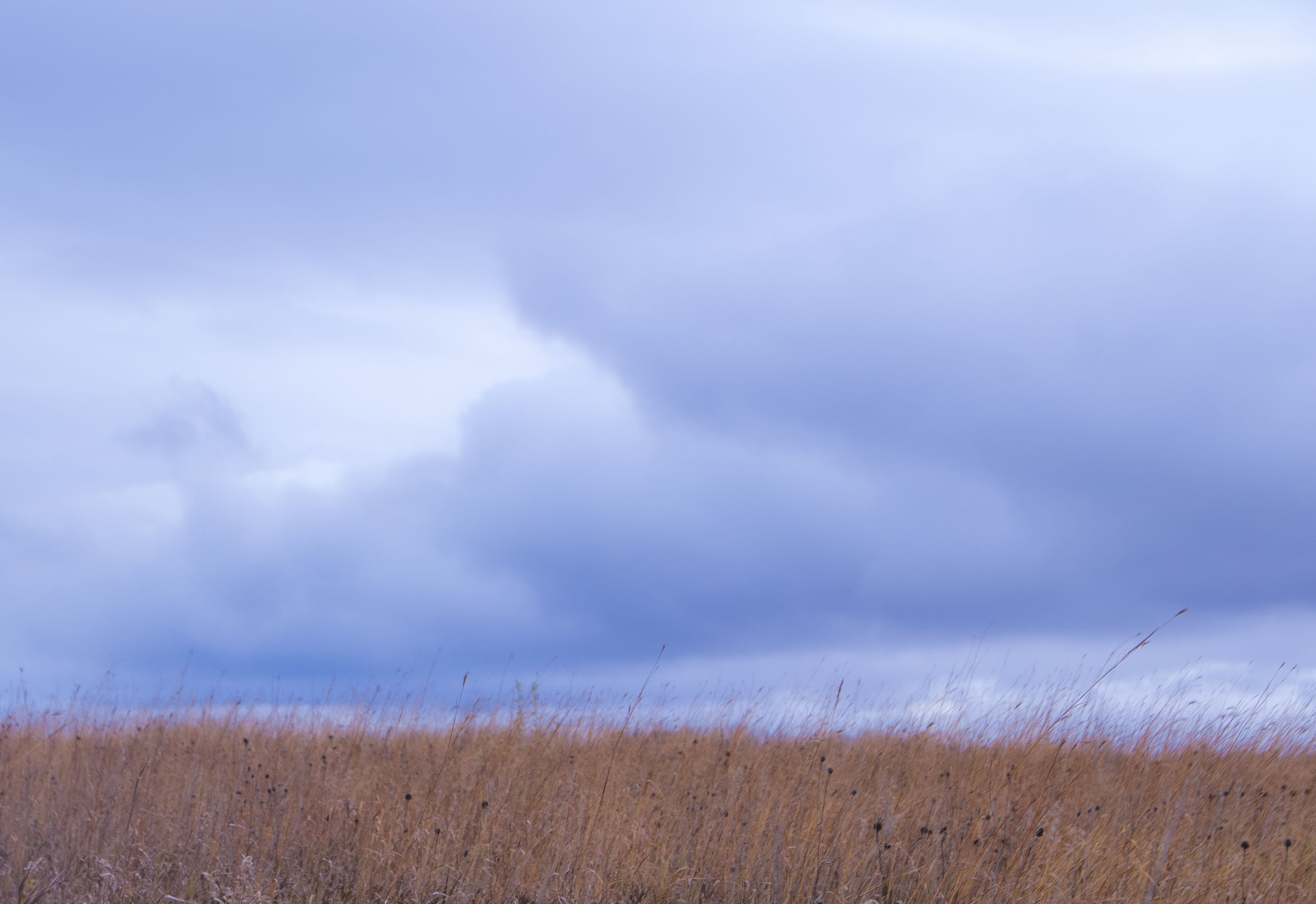
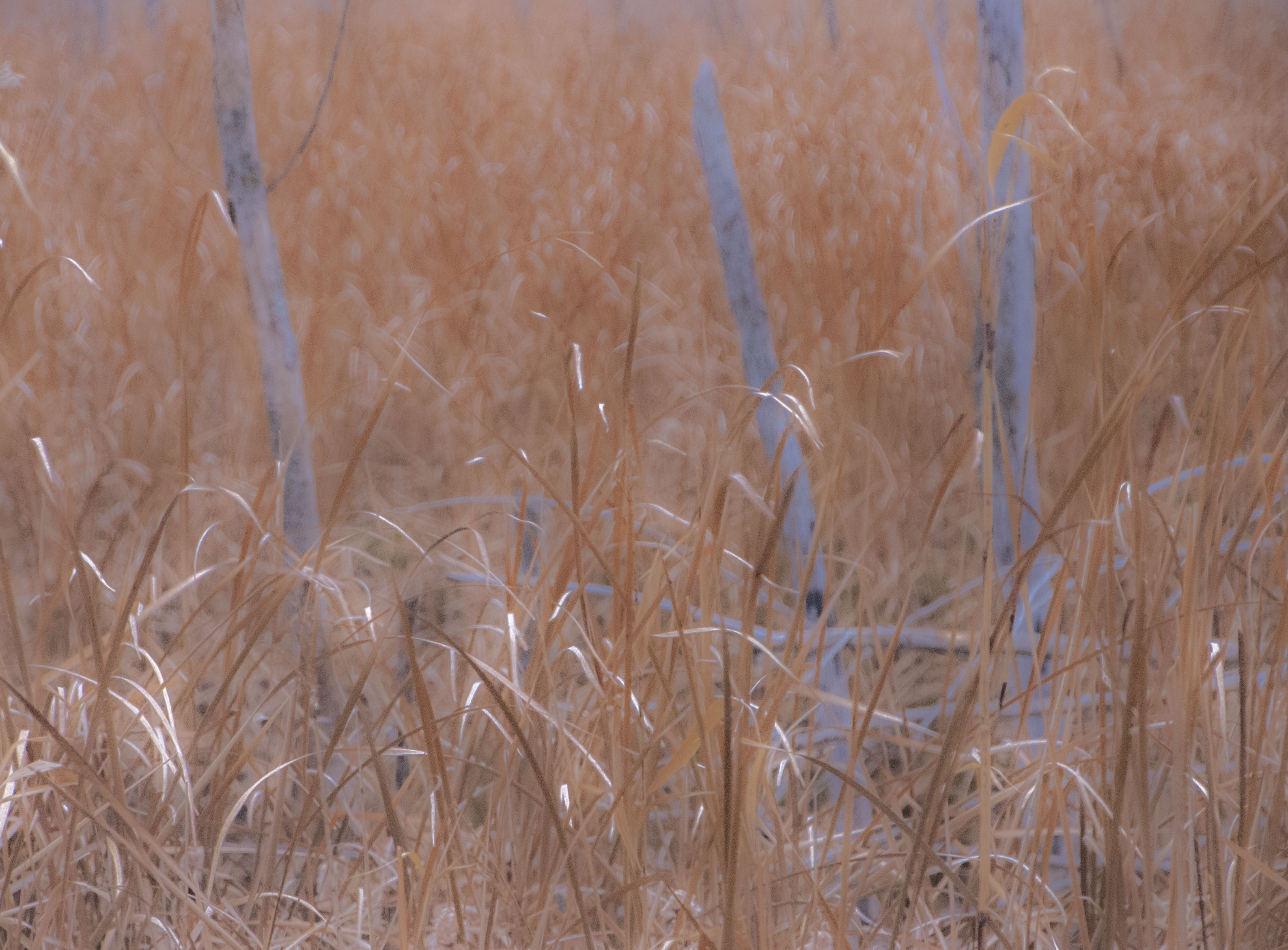
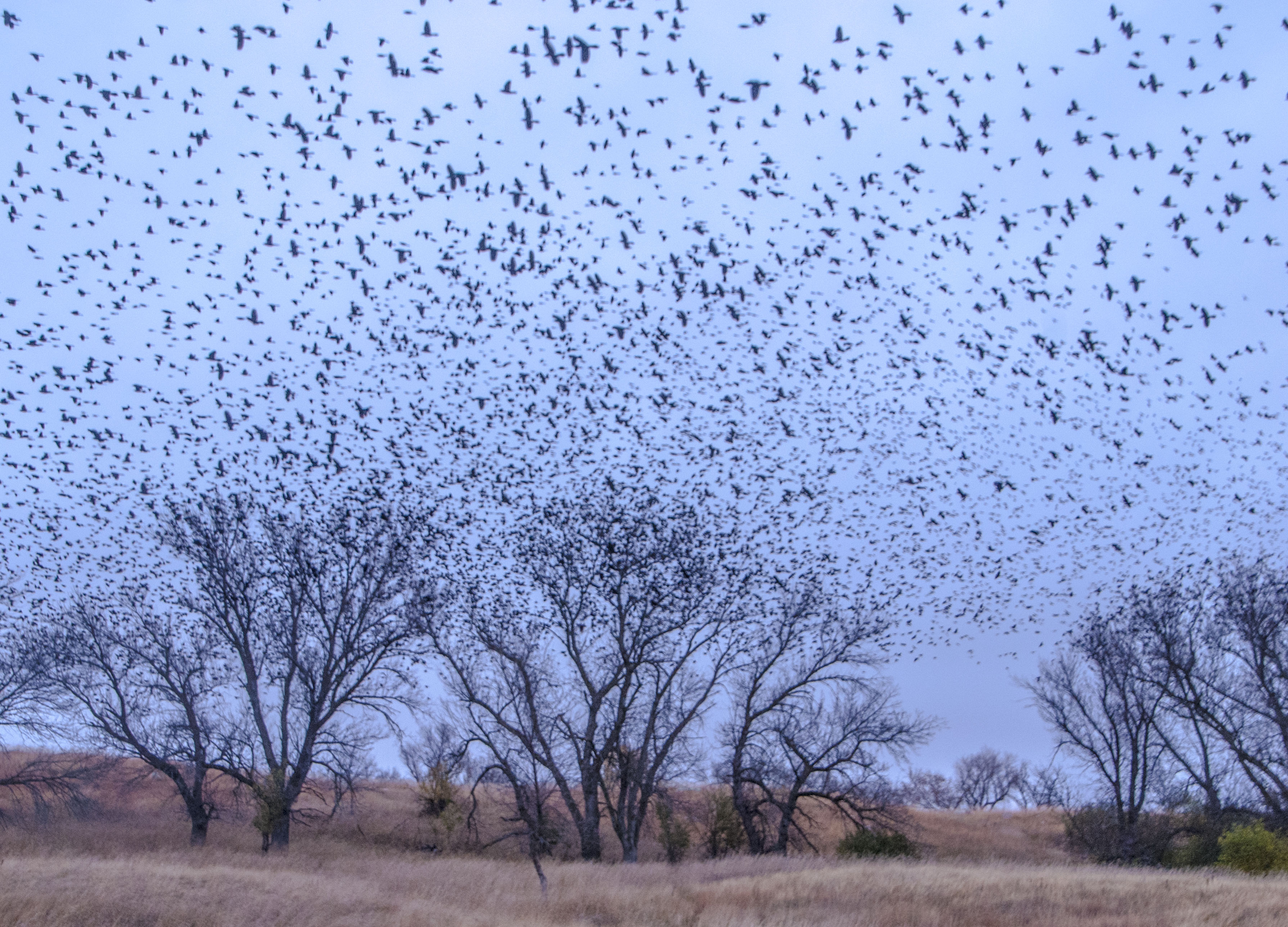
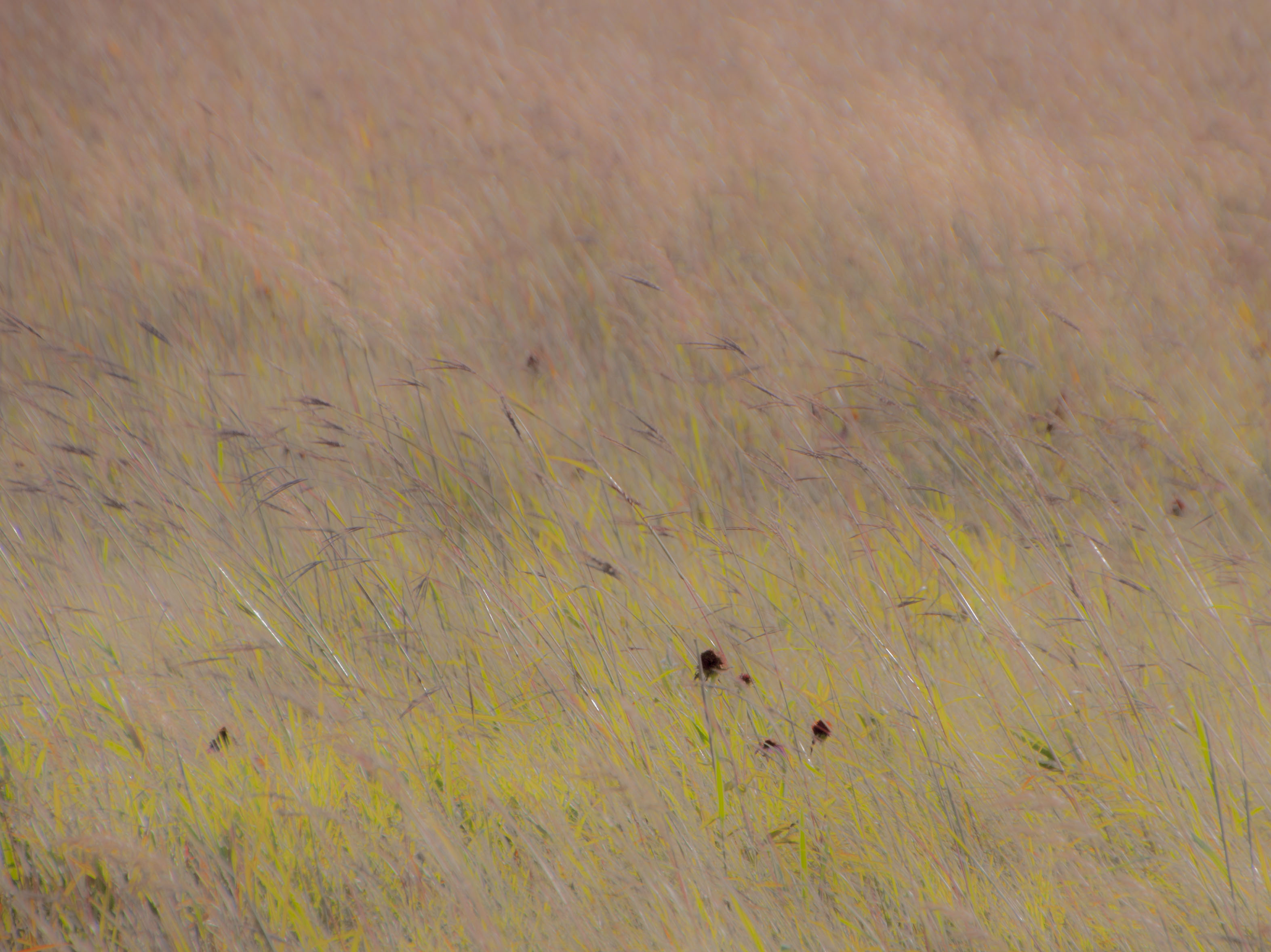
For prairie lovers, this is a blessed time of year. Murmurations of blackbirds, and the flights of the birds are part of it. So is finding yourself in a stand of “dancing” big bluestem. No, it doesn’t have to be the “turkey track” grasses, for most of the prairie grasses are splendid this time of year. Brown, spindly stalks and wispy blades of the grasses are whipped by winds in ways the soaring birds cannot since they’re anchored deeply by their underground forest of roots. Most of the forbs have gone to dry seed heads, and many stand rigid against the same winds that cause neighboring grasses to shimmer and shine. The wind helps spread the seeds that replenish the prairie, all part of the life cycle of the prairie.
Yes, we’ve had our share of wind of late. Big Stone Lake is riled into huge white caps more days than not. When we placed the signs out on the roads early last Friday morning before the Meander, both of us had to hold the signs in place until she was secured them to the rebar. The balloons we hanged lasted less than a minute before being destroyed.
Yet, I thoroughly enjoyed that moment of reprieve, along with the yips and howls of prairie lyrics sang by the coyotes. It is all part of prairie life, and you learn to enjoy all of it. Night and day the big winds have continued, roaring with vengeance. Wind is the thread of prairie fabrics, in the field and sky, and as so, you learn to adjust and accept. You must. As a powerful force of nature, it serves us a bit of evil among the goodness.
One More Tomato
I never want to see another tomato.
By never, of course, I mean not until next July, when I’ll be sneaking down to the garden several times a day to check on ripening progress of my early varieties. But next July is a long, long way off when you’re looking square in the face of a Minnesota winter.
It is my fault for having planted 75 plants of 26 varieties. I’ve culled a few seed packs of types that did not meet my particular standards, so I’m down to twenty-two or twenty-three already. That’d be a start if it wasn’t for my notorious lack of restraint when the seed catalogs come out, and the succulent varietal descriptions cause me to abandon all good sense.
With all the abundance in the tomato patch (and elsewhere in the gardens), we’ve had to get creative, and this year our creativity paid off with a new recipe we’ll be returning to season after season.
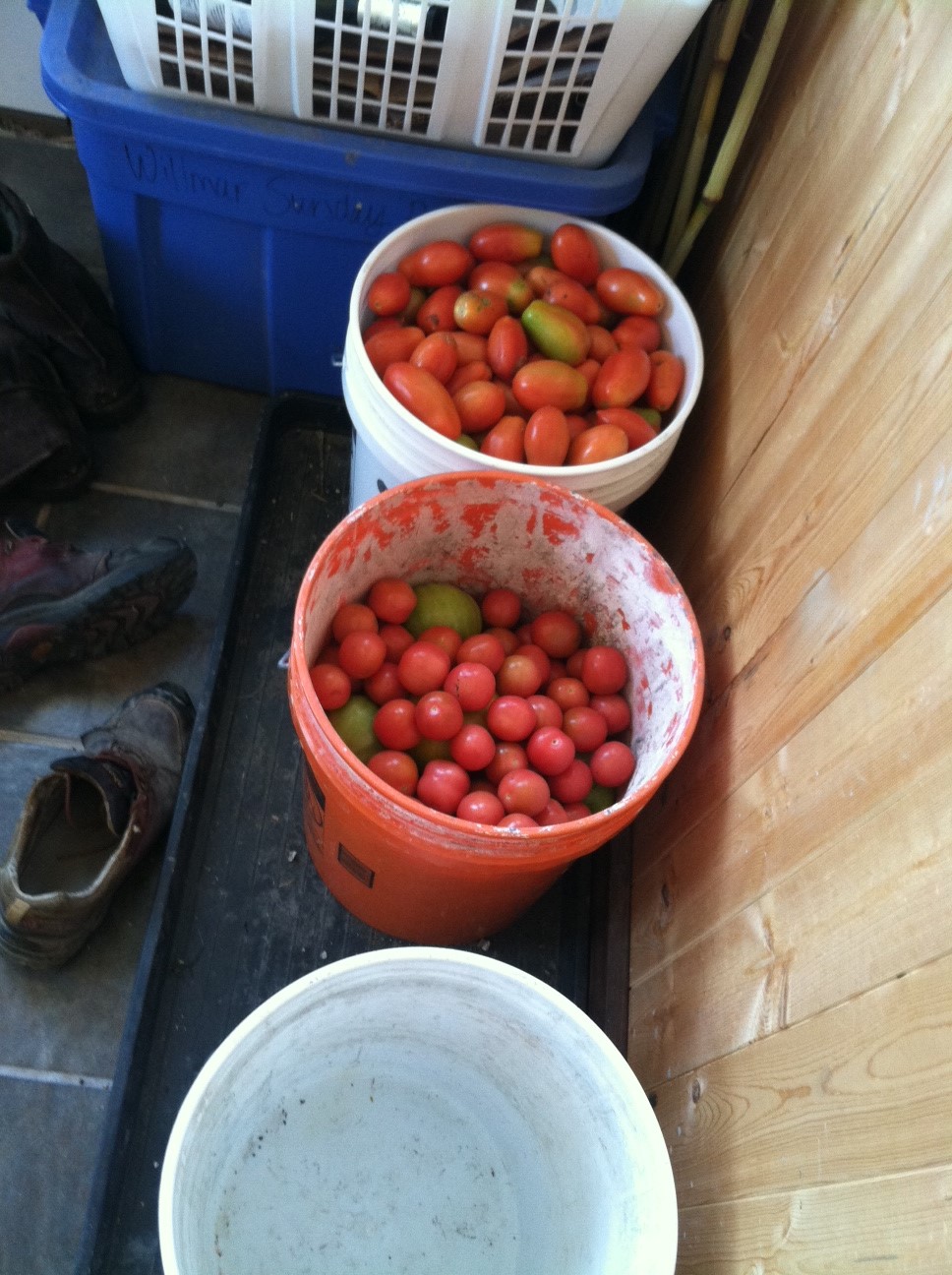
I came home from the Big Stone Lake Farmers Market one Saturday a few weeks ago with fifty or sixty pounds of tomatoes and an equally ridiculous amount of eggplant—some from the market, and some I’d left behind as too ugly to go to town (I know: not a very nice thing to say about a vegetable I raised up from seed). I’d already roasted a few trays of eggplant for the freezer, and I was thinking I’d do the same with these (and then figure out something else with all those !@#$% tomatoes) when I remembered seeing a jar of tomato-based “smoky eggplant pasta sauce” at that upscale kitchen store outside of Waite Park. Hmmm.
John loves smoking meat. Why not try smoking some eggplant? He fired up his contraption, and I prepped the fruits—removing stems and ends and slicing them in half lengthwise, brushing them with just a hint of olive oil to prevent sticking. I pick eggplant when they are still young and tender, so there was no need to peel them.
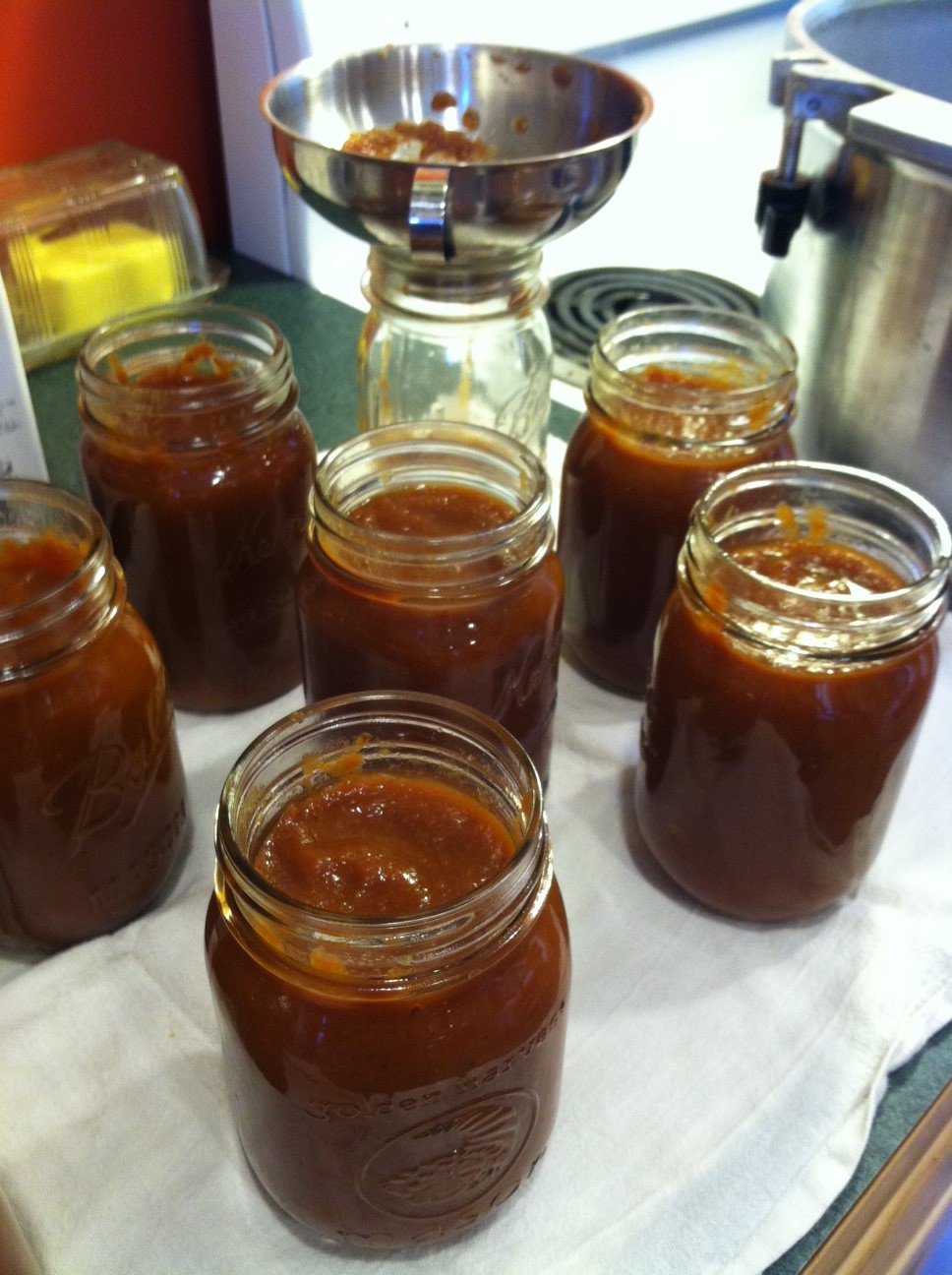
While the eggplant hung out in the smoker, I processed the tomatoes into sauce and started cooking it down. Added a few onions and some garlic, and then the chopped, smoked eggplant when it was ready. Puréed the whole thing together, added some spices, and hurrah! A smooth, smoky, tomato-y deliciousness we couldn’t wait to eat on just about everything.
Here’s the recipe:
6-8 quarts tomato purée (already reduced by half or more)
3-4 cups chopped smoked eggplant
1 cup chopped onion
2-3 cloves crushed garlic
1-2 small hot peppers (seeds and all) minced
Simmer these ingredients together until all the vegetables are very soft. Then purée them all together in a blender or food processor (or put them through a food mill). Put them back on the stove to simmer some more (you want this sauce to end up thick and smooth).
Then add the following:
Bay leaf
¼-1/2 cup sugar (your taste)
1 TB salt
¼ tsp black pepper
1 TB cumin seed
1 tsp oregano leaf
½ tsp ground cinnamon
*optional—add one or two 6oz. cans of tomato paste if the sauce is too smoky and not enough “tomato forward.”
Simmer this (stirring often) until it reaches a lovely, smooth thickness (not paste–but definitely not watery), then taste to correct the seasonings. If it’s a little grainy-looking, you can purée again or use an immersion blender. Voila! You’re done (uh…well, except for processing or freezing).
The eggplant in our first batch sat in the smoker for a few hours, and it almost completely overpowered the sauce, so adding tomato paste worked well to bring the tomato flavor forward a bit. The second batch (where the eggplant was in the smoker for less than an hour) didn’t need the tomato paste. Obviously, the tomato flavor will be more pronounced if you cook your initial purée down more. I reduced the first batch of plain tomato sauce by about half before adding any other ingredients—the second batch was reduced even more—slow-simmering overnight in the roaster.
Once the sauce is done, you can either freeze it or process it in a pressure canner (take the bay leaf out). Please do not use a boiling water bath method for canning this recipe—there are too many low acid ingredients to make BWB method safe. If you don’t have a pressure canner (or are uncomfortable with using the one you have–you know who you are!), then tuck it in the freezer.
I processed pint jars for 30 minutes at 10lbs. pressure (that is, I processed as if it were plain eggplant), leaving ½” headroom in the jars. If you want to can in quarts, give it a bit more headroom (¾-1”) and process for 40 minutes at 10lbs pressure.
If you don’t have a smoker, you could try grilling the eggplant over low heat to get some of that good smoky flavor into the flesh–and into the sauce. Either way, smoky eggplant tomato sauce is something new (and awesome) to add to your “I never want to see another tomato” repertoire!
Readying
For the past several weeks, it seems that we have at all times been in preparation for one event or another–meetings, political gatherings, dinners, and the biggie–the Upper Minnesota River Art Crawl. It’s amazing how many times the house can be cleaned and somehow need cleaning again. Even between days of the arts Meander last weekend the breakfast or supper dishes needed clearing and the table repeatedly re-purposed as our checkout stand; the first floor bathroom transformed from resident showering facility to public restroom.
Yesterday, it was back to work for me while John took part of the morning to rest and recuperate. We’d already re-claimed a living room out of the art gallery it had become, and soon the rest of the display pieces made their way from dining room to back deck en route to the barn. We ate lunch almost normally with the table placed in its usual spot, though still piled in all the places our soup bowls were not were boxes of cards, calendars, and miscellaneous Meander gear.
While lunch was heating, I went out to pick the lower branches of Honey Gold apples. The Haralsons were picked a couple of weeks ago to limit the depredations of the squirrels, who were making steady work of stripping the dwarf tree, then racing across the lawn, apple in teeth, to the safety of a higher-limbed ash. We’d find the half-eaten cores at the base along with the cobs and husks of Roy’s Calais Flint corn they made off with earlier in the season. With the Haralsons gone, they were starting on the much larger Honey Golds: I’d already surprised a few into dropping their unwieldy prizes as they fled, and I tossed the tooth-marked apples to the chickens.
The lower branches picked, I decided against an attempt at the upper branches with a ladder–the wind came up so hard that rolling clouds of dust engulfed the front yard every time a grain truck passed, and a storm window on the sun porch came unmoored and flapped against its frame.
The work day done, I helped John maneuver the canoe trailer into position by the barn and transport a couple of unwieldy display pieces inside for storage. He turned to me and said, “I thought I was just cleaning things up, but I think what we’re really doing is getting ready for winter!”
Funny how a seemingly innocent observation can suddenly change the whole character of the tasks at hand. I went back down to the garden and pulled frost-crisped okra stalks and a few sullen basil plants. The wind died a little, and I set up the ladder to finish picking the Honey Golds–for winter storage this time, and not as much against the squirrels. I set a small pile of damaged fruits by the edge of the grove (I am not entirely opposed to sharing) and brought the rest of the bruised and banged lot to the chicken pen.
I stood at the gate watching the girls happily pecking away, thinking about winter readiness, when another sign of the impending season-change came with a warning squawk from the roosters, causing the hens to run for cover under the currant bushes. Looking up, the silhouette of our winter resident drifted overhead, glinting white on head and tail. A Bald Eagle, who spends summers fishing by the lake, has returned to the highlands after the weekend’s soybean harvest bared the land of cover for his prey.
Meander Countdown
An email from the Granite Falls Arts Council today proclaimed that art is all around us this week. Indeed, it’s the annual Meander: Upper Minnesota River Art Crawl weekend, and for the first time we’re one of the studio stops. The brochure has us listed as Number 1, a designation cited for destination rather than documentation!
Over the past several months this has all been quite new and exciting. First was being accepted as one of the 45 artists to exhibit on the Meander, then came the various meetings where we mingled with many of the artists we’ve known over the years. However humbling, it was nice being considered a peer. Then the brochure arrived and there it was, officially, in brown and black …

These panels were designed to be self-standing and to hopefully give viewers an idea of how a framed print will look on their walls.
Now comes crunch time. Sleep has become a luxury, and many unanticipated trips are being made picking up last minute pieces. Like this morning, when I awoke wide-eyed and staring at the ceiling. Those cards? What can I do about the cards? After a drink of water, I crawled back under the freshly washed sheets we were so happy to lay under last night and tried to sleep once again. Going back to sleep was fruitless.
Yes, we’re in the midst of the “Meander countdown.” Those cards! Reality hit pretty hard Sunday afternoon when I broke down the card packs to fold and place them into their respective categories and realized they were all at least ten to 15 percent darker than the proofs the company had originally mailed. Many were simply not usable, much too dark for putting on the rack. Three long and dark hours after crawling from bed, an early morning phone call was made to the printer, and, yes, they will reprint.
As the countdown slowly creeps toward the Friday opening I find myself falling back on the experiences of all those years in the publishing and ad agency business: Trying to minimize stress while by taking a deep breath and realizing that in the end things will be okay. “Hiccups!” they say.

Just a few of the canvas prints we have placed on the walls here at Listening Stones Farm for the Meander weekend.
Over the past several weeks tools have been worked overtime in cutting mats for the prints; sawing, gluing and sanding the cedar frames; designing and building display panels for the framed prints; hanging the canvas prints; and even constructing a homemade card display unit … which I hope to fill with usable cards. We have configured and reconfigured the layout of the rooms, and hopefully today or tomorrow we’ll start setting things up. Our goal is to confine our “showroom” to our dining and living rooms.
Even beyond the actual prep for the Meander, this has been an interesting personal journey. Ever since the Meander began a decade or so ago I’ve been a huge supporter by doing artist interviews and photographs for my country weekly, and over time I began to dream of being among the select few artists chosen. Thanks to Rebecca’s encouragement, along with our move to Big Stone County where there is some semblance of the native prairie pothole biome, my photography has moved into a new and hopefully a more “artistic” direction. Earlier in the spring I was asked to present at the Minnesota Master Naturalist’s convention where my subject explored the use of natural light in making nature images. My research took me back into a “rediscovery” of the works of Impressionist painter Claude Monet.
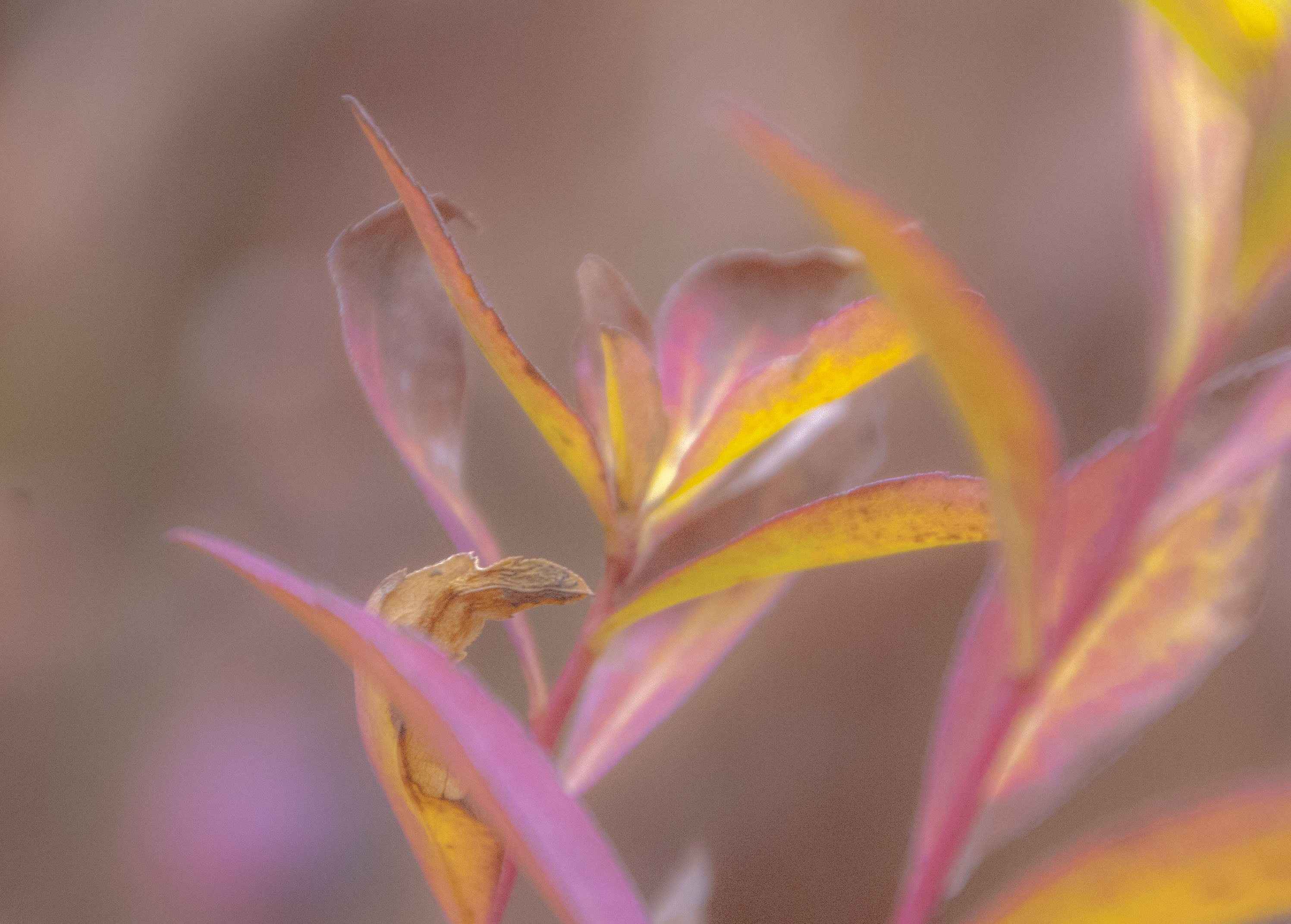
About 20 years ago I did a photo essay entitled, “If Monet Lived in the Prairie,” where I tried to mimic some of the French painter’s more iconic paintings to similar scenes I found in the prairie. Since the presentation my personal prairie work has become more “impressionistic,” if you will. In playing around in Photoshop I’ve discovered a technique to “soften” the images in ways you couldn’t in a darkroom. Other photographers have asked about the technique and have tried it with mixed results. Trying to simply soften an image without using traditional photography techniques is often a folly. These techniques may include, depending on the circumstances and subject matter, the focal length, selective focus, and ISO readings, not to mention the ambient physical aspects of wind, the quality of natural light and the use of the fore- and background color and texture. This is certainly beyond “point and shoot.”
Since using this technique we’ve basically “turned over” my complete portfolio since my last hanging show in January; a technique some photographer and artist friends have suggested carries a personal “signature” or style. How will it play on the walls in the Meander? We’ll see.
Perhaps the saddest part of being on the tour is not being able to visit the other artists along the river valley. We have an incredibly talented, vast and rich artist’s community, and one much larger than the Meander itself since over the years several very talented individuals no longer display on the tour. This continues to be a strong tour even with the departures.
Yes, the feel is different on this side of the Meander. So much work goes into it, including contributing to the marketing displays along the way. Now, we’re just four days away. Gulp-time. Hopefully my printer cartridges will arrive along with the glass being cut for the last two frames, and of course, receiving those freshly printed replacement cards. We’ve yet to test the “Square” for our sales, and we have to set up the two rooms. Oh, and place the directional signs out on the highways. So much to do and so little time.
Come Friday the doors will open and hopefully some fine folks will find their way to Listening Stones Farm. By then we’ll have done all we can do. Rebecca will have some produce and eggs available, and my sister is bringing up several dozen of her great cookies. Me? I’m up on the wall! And the countdown continues!
In Transition
A sense of nervousness has settled in here at Listening Stones Farm. This sense of affairs began shortly after our return from our trip north to Ely for our yearly break from routine. This “settling” has been by a series of degrees — literally. Our overnight weather report for Friday took it over the edge.
As Rebecca said, “Thirty-four is too close for comfort.”
With 75 tomato plants in her lower garden, plus the raised beds and tall green arches of produce she has out there, she is creating strategy while rationalizing her anticipated losses. Perhaps “our losses” would be more accurate, although there is both a sense of ownership and privacy involved in her near acre of produce farming. Those tomatoes are in the heart of the freeze zone since they’re located in perhaps the lowest level of our garden and yard — a location, she informs me, that makes it quite difficult to protect.

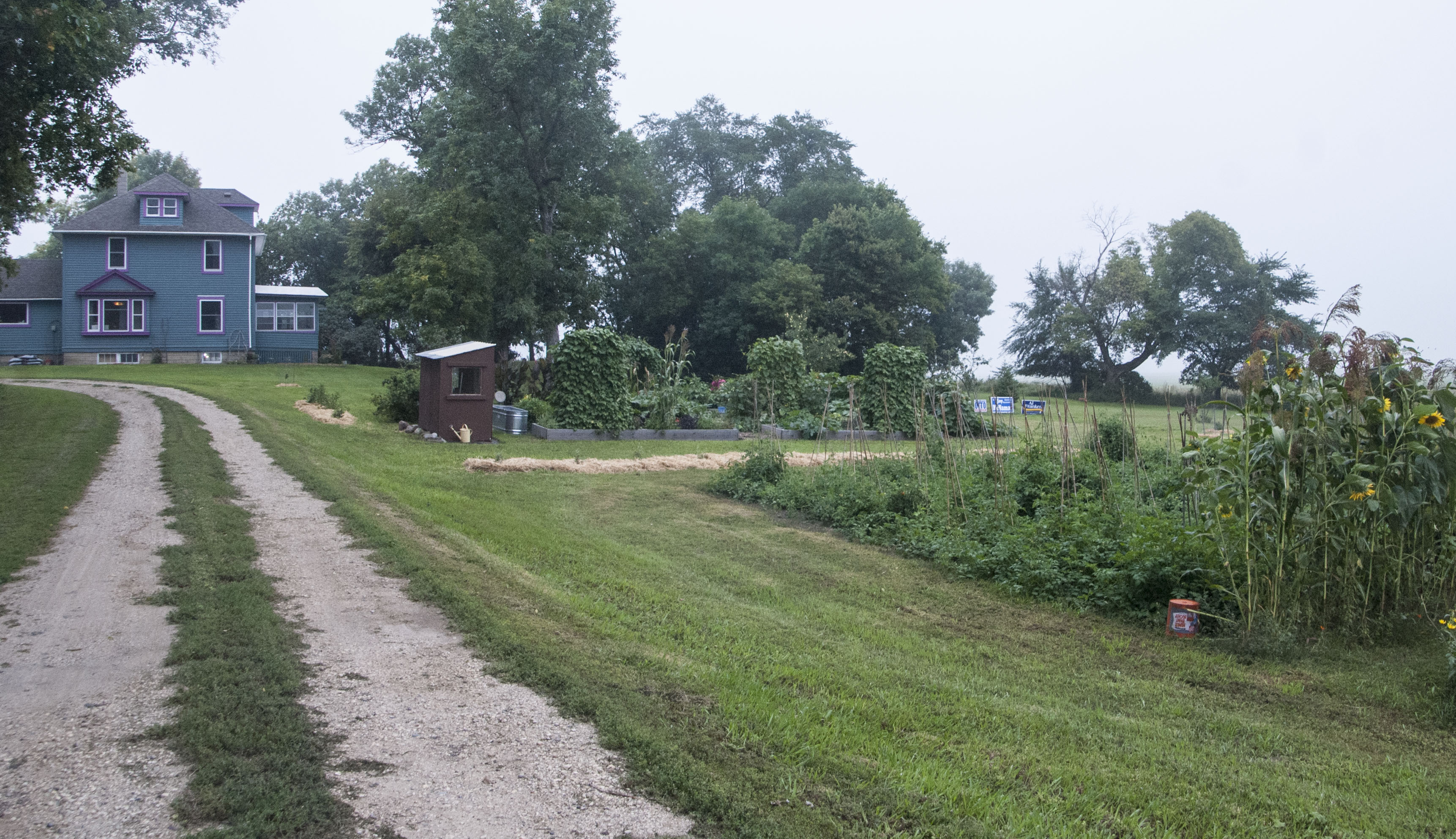
Rebecca’s low-lying tomato garden on the right side of the picture is particularly vulnerable because of its location.
The signs of this transition from summer to fall have been evident since we returned from up north. On Monday morning, our last day of warmth, my labor included working on frames for my Meander photographs. Many trips were made between the house and the workshop. Whenever I entered the workshop I was accosted by any number of swallows, as has been the custom all summer long. Later that afternoon as we shared our daily glass of wine on the deck, Rebecca spoke of her observation, “Well, the swallows are gone.”
“Can’t be. They were all over me all morning.”
“Listen. Look around. Do you see or hear them?” Indeed, while the prairie was still buzzing with dragonflies there wasn’t a single swallow in sight. None on the rooftop awnings of the workshop. None on the clothesline. The air was empty of the acrobatic fliers.
In the distant rise of the prairie we noted the short flights of ducks from one wetland to another. Yes, the ducks are coming through, and the geese are now gathering. Murmurations of blackbirds are beginning to fill the treetops in the grove. At night, as the sun sets and the coolness sets in, coyotes begin their night songs nearby, offering voice to the musical concert provided by the slight wind music from the chimes scattered around the trees in the yard. All of this nature is alluring and alive and you feel blessed to be a part of it.
Earlier this week was the rising of the harvest moon. I ran for my camera and was able to make a fun image of the last of the yellow flowers in the prairie. Yes, our prairie that was bursting with yellow just a few weeks ago, as it has all summer, is now mostly a dull green turning brown. We anticipate with pleasure the brownish beauty of a more mature prairie, which we see in patches around us, where the winds that make music with my chimes provides a dance for the Indian grasses and spindly bluestem. While the wind gives the prairie grasses a freedom to dance, those same grasses give face for the winds. And, yes, the browns are beginning to dominate those prairie patches. Bluestem is now in turkey-track stage, and the other native grasses shimmer in the glow light of autumn.
While there are no survivors of the original prairie pothole biome, my imagination is often taxed in trying to visualize an actual prairie. For years I’ve stared at horizons and tried, trying to replace the sea of corn with bluestem, to visualize those seas of grasses so spoken of; of bluestem so thick it could wear away the toes of the boots of horseback riders seems impossible to imagine. I’ve tried imagining murmurations of blackbirds so thick in coolish September afternoons that they blackened the skies, sometimes completely shielding the sun … if you can believe reports of ancient storytellers, both from the letters of settlers and the passed along stories of the native elders. These are among the images I just can’t seem to pull off. Far easier to picture, though, are the long wingspan of V’s from the geese flying high overhead, often at different strata. These are all pieces of a grand puzzle, though many with the edges worn and the hooking circles of the pieces torn.
The prairie is no more. More than 99 percent of it is gone, and more remnants are plowed as glacial rocks are pried from the soil with heavy construction equipment. The last field of glacial litter between Correll and Appleton was being scraped clean last week, a vivid image that needs no imagination. Nor is the continued mining of the topsoil of the former prairie that took nearly 12,000 years to form and less than 200 years of plowing, from the first settlers through the evolving of industrialized farming, to mine. Poor tillage practices and even greed prevents a protection of the soils from blowing in those eight or so months of bareness, or of trickling away with the seasonal rains as more and more acres of yellowish clay peak through where thick layers of topsoil once laid. Farmers are no different in this mindset than other “miners” of the earth’s resources, all part of a world-wide population reeking with indifference.
Whether we speak of cropland or the reservoirs of fossil remnants we boast as endless beds of fuel, we seem intent in using up all of the earth we can. It is an interesting concept that we can use up the resources of the earth and still survive, and when the time comes, and it will, the silence will be deafening — like our barn the afternoon the swallows left.
That is a decided winter for future times. As we scurry for blankets — how can we cover 75 low-lying tomato plants? — to protect what we can, the approaching autumn will not be ignored. A frost is imminent. We in that transition of autumn toward winter, and with much of the canning and freezing of Rebecca’s garden done, we hang on to what is left as best we can. We’ve had a lovely growing season, and some of our work is unbeatable — our smoked eggplant and tomato sauce is about as perfect a testament to the summer season as you can find. The apples are about ready for harvest and sacks of walnuts are hanging in the shed. We work hard, just as the squirrels around the grove are doing, preserving the last of what we can for the months ahead.
This transition into autumn is interesting, and becomes more so each day. We look toward the rest we know is coming. In some ways it can’t come soon enough. In other ways, we want to put this transition off as long as we possibly can.
Poetic Injustice
Just a few feet away … just past the wireless internet connections and my hot-shot photo printer, and the window, of course … stand tall spheres of pinkish hollyhocks. That they’re there is nothing short of poetic injustice.
Last year I was accused of mowing these very same plants at grass height. In all honesty, my goal was to protect the plant next to them, the delightfully pungent horseradish. Those funny shaped leaves of what I since have learned was that of hollyhock rather than pigweed were left unmowed this spring and summer, and now they’re in full, strident bloom just outside my office window.
Poetic injustice? You see, I have this reputation of being a hollyhock hater. My mowing them down, as I did in my former backyard, only added to the reputation. That these were planted right outside the office window is seemingly just that, a poetic injustice even if this claim of hollyhock hatred is a mite unfair in my humble estimation. There is a story, as you might have guessed.
Buzzing hummingbirds are frequent visitors, a buzz that attracts the ear as much as the swaths of pink in the prairie breezes catch the eye.
It starts with my former neighbor, a well meaning elderly woman who tried fostering her will and hollyhocks on others. This nose-against-the-window woman initially garnered our rapt attention when she, with the help of her long-suffering husband, tore into our asparagus with a spade to plant raspberries in their place. This was on our property, mind you, and without our permission. “I just wondered if you noticed that we dug out those horrible weeds and planted raspberries,” she said to me one sunny Saturday morning.
“I noticed. Those weren’t weeds,” I responded, reining in my anger … quite successfully I must add, “those were our asparagus.”

“There are so many things you can make with raspberries,” came her smiling retort without a hint of either hearing nor remorse.
Raspberries aside, we went to great expense and labor to plant a native prairie garden in our backyard. Our intent was twofold. One to reduce the use of a gas-sucking lawnmower, and two, to bring to life an entire biome of plants her generation had successfully denuded from the prairie. Oh, it became a beautiful garden. At the base were little and giant bluestem, Indian grass and side-oat grama. Inserted throughout were native forbs that included different varieties of coneflowers, wild onion, blazingstar and scores of other native flowers, blended in design for a summer-long show by Sally Finzel, of Morning Sky Nursery near Morris.

For those unfamiliar with prairie gardens, most are at best a three year project to enjoy that first full year of prairie ambiance. Year one is spent in preparation by controlling weeds through either chemical or mechanical means. Mechanical is more touchy, for when you rid the space of one species you disturb and give growth to the latent seeds of another. Year two is in the planting, and we planted expensive plugs we bought from the nursery. With luck, that third year is when the grasses and forbs are mature enough to actually resemble a patch of native prairie. This is when you can finally sit back in a hammock and enjoy the wind-blown grasses and sprinklings of color, along with all the birds and pollinators the patch attracts.
So, what does all of this have to do with hollyhocks? That third year in the lower corner we noticed what appeared to be a rather strange looking plant. Broad, light green three-fingered leaves began poking up through the grasses. It didn’t take long to recognize that these leaves were quite similar … actually, the leaves matched perfectly … to a wide swath of hollyhocks planted on the bank of the adjacent Hawk Creek. Along the backyards of all three households, and was such a source of joy for our meddling neighbor lady.
No matter how much digging I did with a spade, nor “painting” with the horrid Roundup herbicide, there was no ridding my patch of prairie of the hollyhocks where she admittedly dumped the seeds the previous late summer or fall. “Why,” I asked, “would you do that?”
“Hollyhocks are so pretty. They’ll look good and add color to your new garden!” she exclaimed, holding her folded hands over her bossom. It was obvious she didn’t understand, and would stomp off to her house when I went to attack the spindly devils.
It was in the midst of ridding my prairie garden of the hollyhocks when my relationship began with Rebecca, so it’s easy to see why I would have earned this sort of reputation. Hollyhocks were weeds in that prairie setting, and there was just no way of ridding them. In that “ribbing,” though, we have had some fun. Her mother sent us a pack of hollyhock seeds where she wrote in fine penmanship, “No Mow Hollyhocks!” Rebecca has “sneaked” in plantings around the outbuildings here on the farm and quite possibly had a hand in those just outside the office window. She has certainly chided me by noting that mine is the only real view of them. Poetic justice? Hardly!
She is also prone to drop in some historical tidbits such as that in the distant past hollyhocks were planted next to outhouses so visitors could say, “Oh, my! What beautiful hollyhocks you have!” before ambling off toward personal moments of relief. No one would follow along as they might for a garden tour, for “hollyhock” was “universal code” of excusing oneself for a toilet break.
You might say my resolve is eroding just a bit. As many friends and neighbors say when the story of my hollyhock hatred is told, “But, they’re my favorite flower. They’re so beautiful.” One even reminisced about using the big blossoms to make skirts for her play dolls as a little girl on her Iowa farm. I’ll begrudgingly admit they can be pretty … in their place, and that a prairie garden is not that place.
Outside my office window those air swaths of pink frequently catch my eye when the prairie breezes blow, and I can hear the hum of the hummingbirds that come for a poke. Bees, which are somewhat of a rarity around here, buzz around the blossoms. And, a female oriole surprisingly plopped herself onto the hollyhocks one morning this week, and indeed, all three made an appearance over a ten minute stretch. That, in itself, was pretty special, so, yes, my resolve is eroding … despite this poetic injustice!