A Welcoming Home

From the corner of the eye I caught the flash of pure bright brown. Off to the right, across from the garden. It came while awaiting for the bucket of smelly fish fertilizer to fill with water; a mixture we were sloshing into the holes we dug for the new trees and shrubs we were planting in the grove and in strategic spots of our prairie. Yes, said Rebecca, she had seen it, too. Brown Thrashers.

We had a pair in the very southwest corner of the grove last summer. We had concerns that with our cleaning of all the buckthorn and brush from the grove over the late fall and early winter that we had fiddled too much with their habitat. So seeing the vivid brown and those long tails, and for her, hearing their song, was wonderful. Over a thousand variations of the song, according to our field guide.

Now, we await the Orioles. Friends have made reports of arrivals further down the river valley, and someone said just this morning that a pair had arrived at her home along the lake. Maybe we’re next.

Living in the flyway has many rewards, and not just in waving at those traveling through. We also rejoice in those who are returning home. Like the Brown Thrashers and colorful Orioles.

A duck in flight in the wetland.

A duck in flight in the wetland.

A huge exciting moment for us came early Saturday morning while we stood in the kitchen sharing a quiet time over coffee and tea. Up in one of the woodpecker trees was a huge dun-colored blob, which sent me running for the binoculars. Meanwhile a second, more colorful mate appeared. Wood Ducks! Oh, what a close and wonderful view through the binoculars! With close proximity to two wetlands, one of our initial hopes was that we would have Wood Ducks in our grove. As we watched, the pair made a very determined and thorough investigation of trees offering possibilities, and yes, we have several.

First one would hop from one canopy to next, soon followed by the mate. As they would stand in the tree we marveled at their dexterity, of how well they stood with webbed feet. Then they would check out another. This continued for about a half hour. Maybe longer. Rebecca and I were anxious and curious. In my limited real estate searches, I doubt if I’ve ever scoured a potential neighborhood more passionately. Our weekend guests soon joined us at our big, kitchen sink window to watch the pair, although I doubt they shared our excitement.

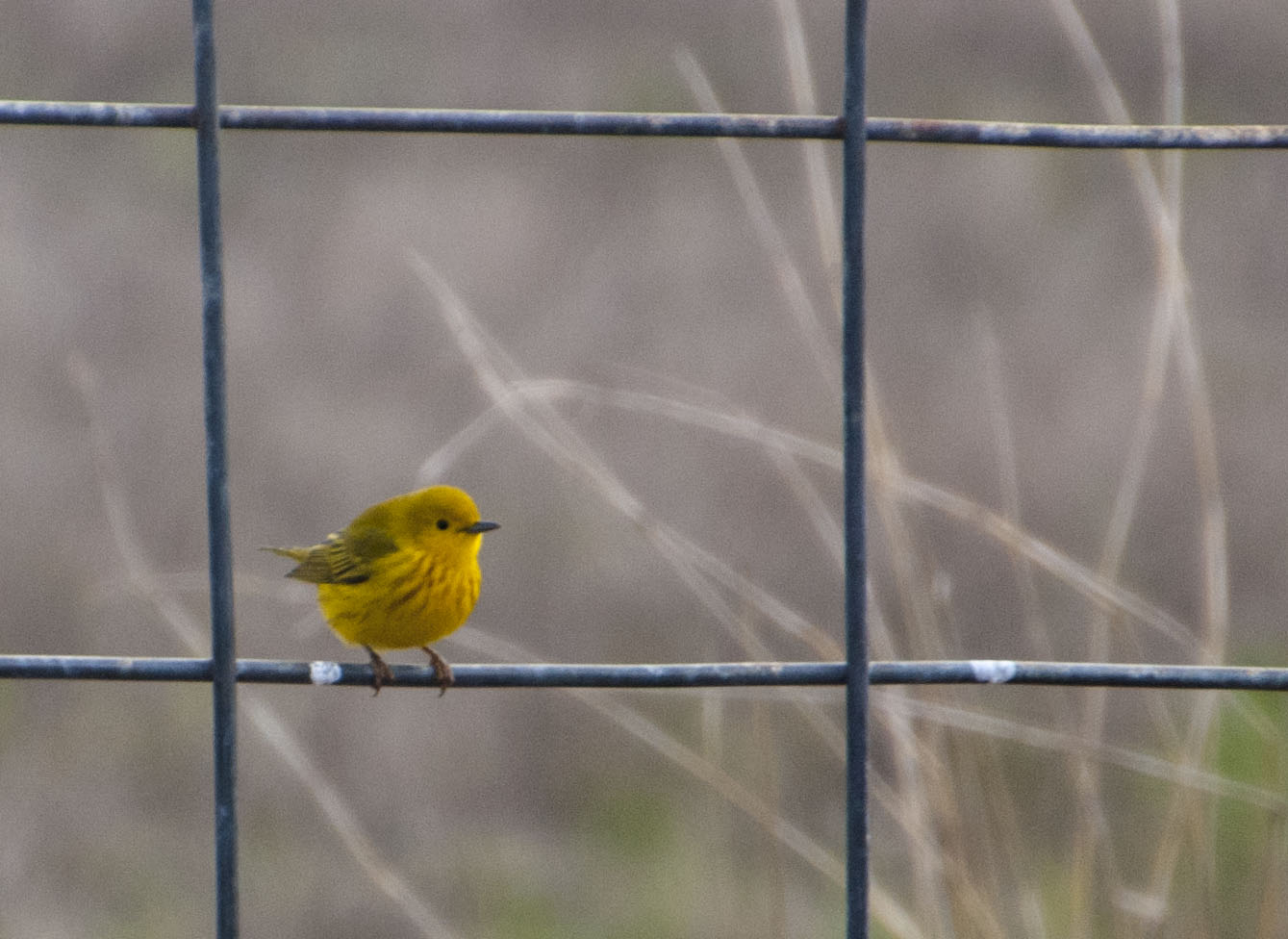
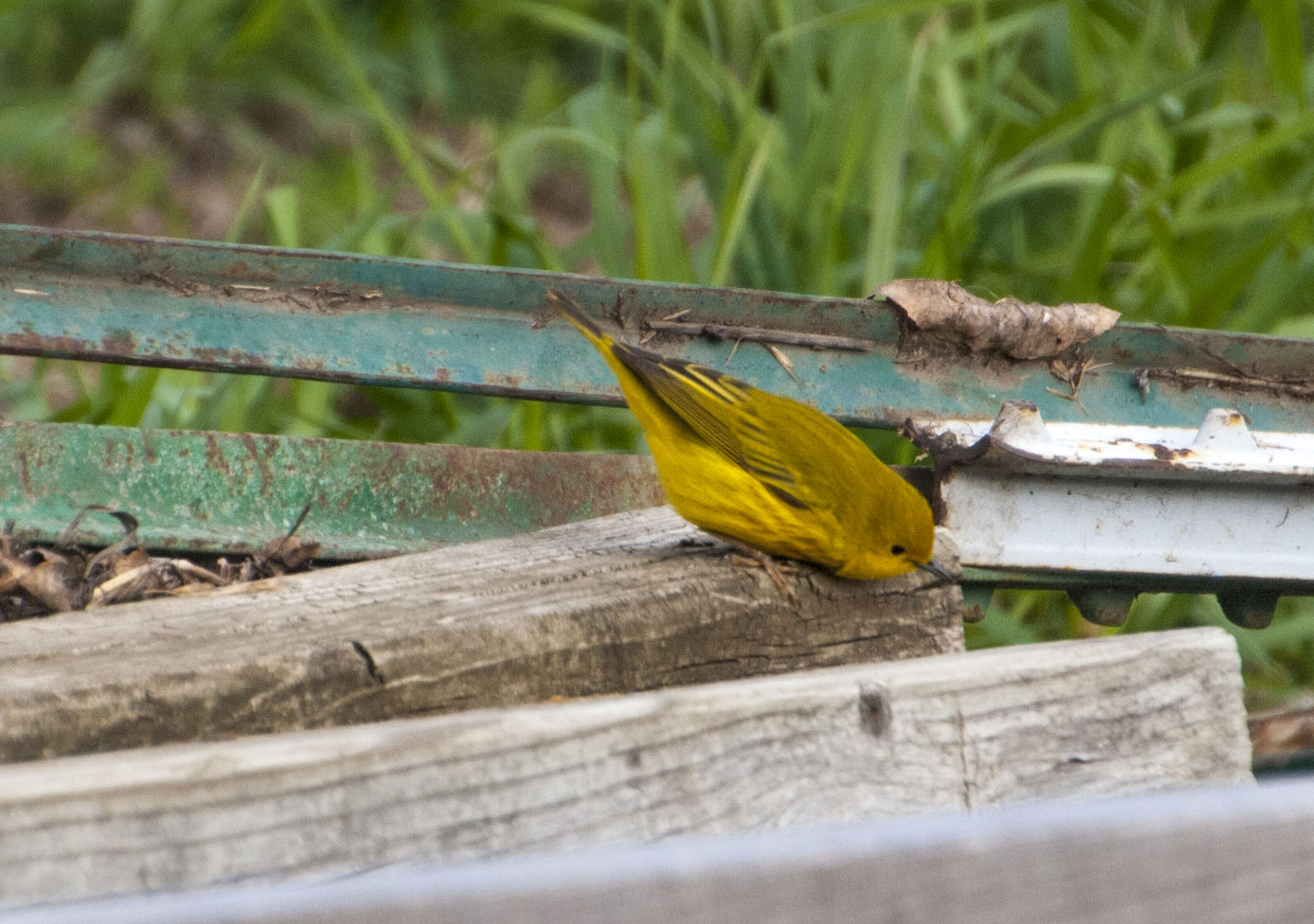
Then, as suddenly as the ducks arrived, they departed. In our search of the grove since it looks as though we won’t be sharing our neighborhood that we now share with Yellow and Golden Winged Warblers, Red Bellied Woodpeckers and any number of other song birds. Apparently we lack enough oak trees and their favored diet of acorns. Fortunately bur oaks were among the trees we planted.

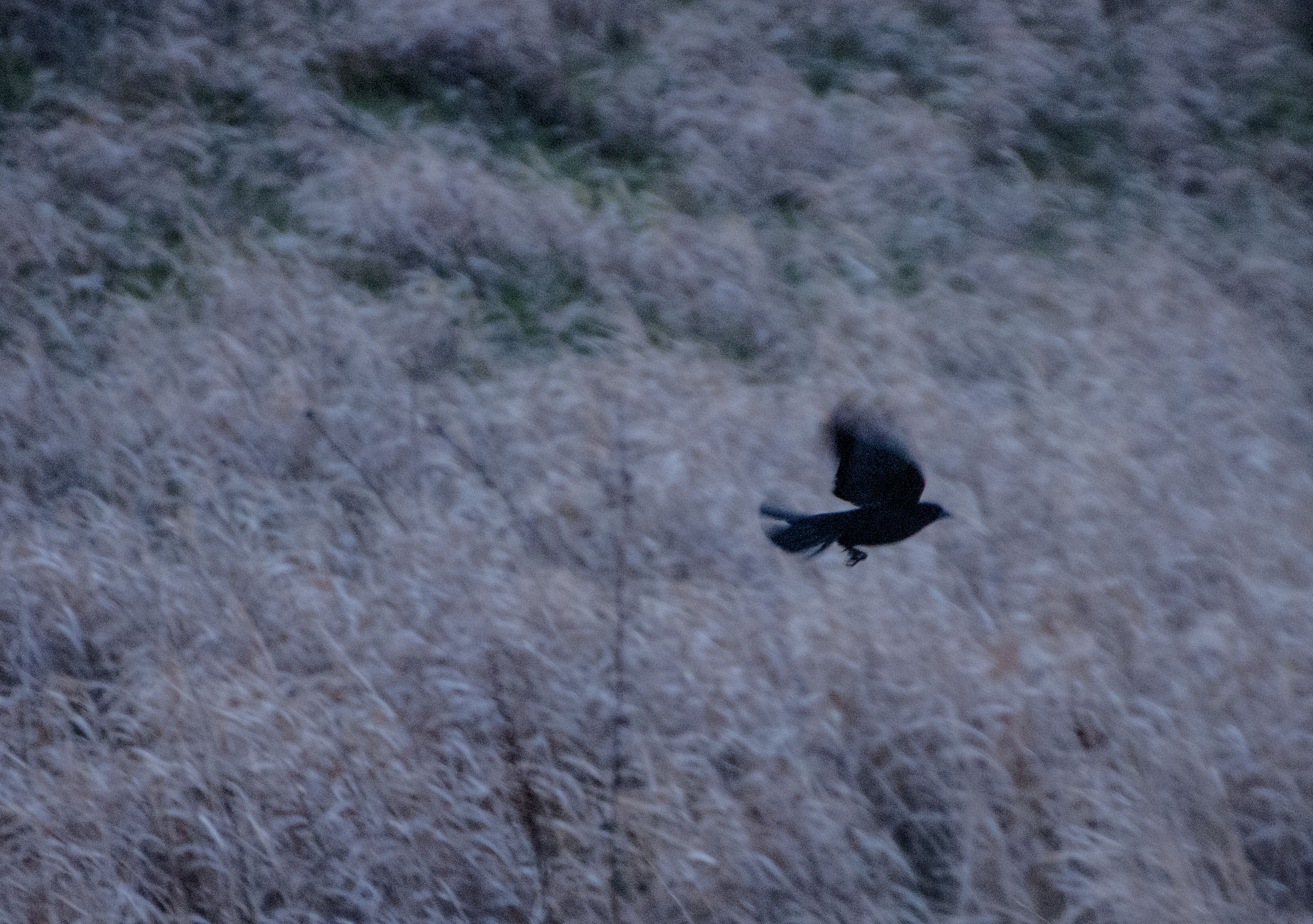
A flushed Red-Winged Blackbird in the Clinton Prairie.

A flushed Red-Winged Blackbird in the Clinton Prairie.

Up in the wetlands we flushed a murder of Yellow Headed Blackbirds that burst from the cattails almost as a feathered bouquet of glorious yellow. Around them the Red-winged males were staunch in defense of their individual territories. Nesting will be happening soon. Same with the paired Canada Geese, who have staked their select corners of wetlands and cozy river bends, and are surely tending nests by now.

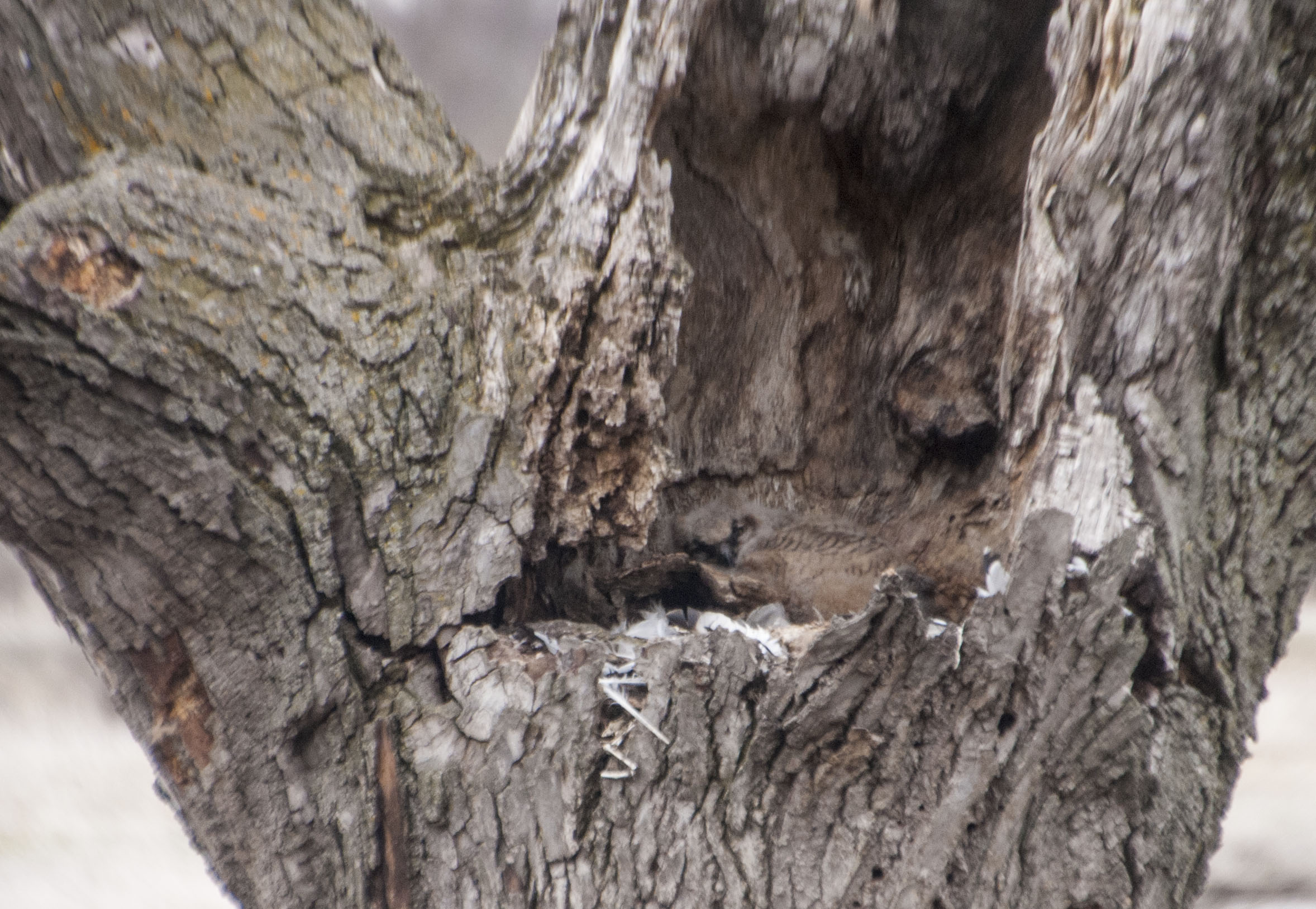
Look closely and you can see the owlet.

Look closely and you can see the owlet.

In the river valley we’ve noted heads bobbing in the nests of Bald Eagles, and was fortunate to have been guided to the nest of a Great Horned Owl. If one looks very closely at my photograph, you can see the well camouflaged owlet nestled inside the nest.

Our sky still has flocks of ducks flying between the wetlands, but the huge vees of geese have moved on up the flyway. Those vees have been replaced by the ballet beauty of flocks of White Pelicans. We often share our first glass of evening wine on our small deck hopeful of witnessing those magical moments of flight when the pelicans become nearly invisible before turning as a group in a contrasting flash of white against a deep blue sky.

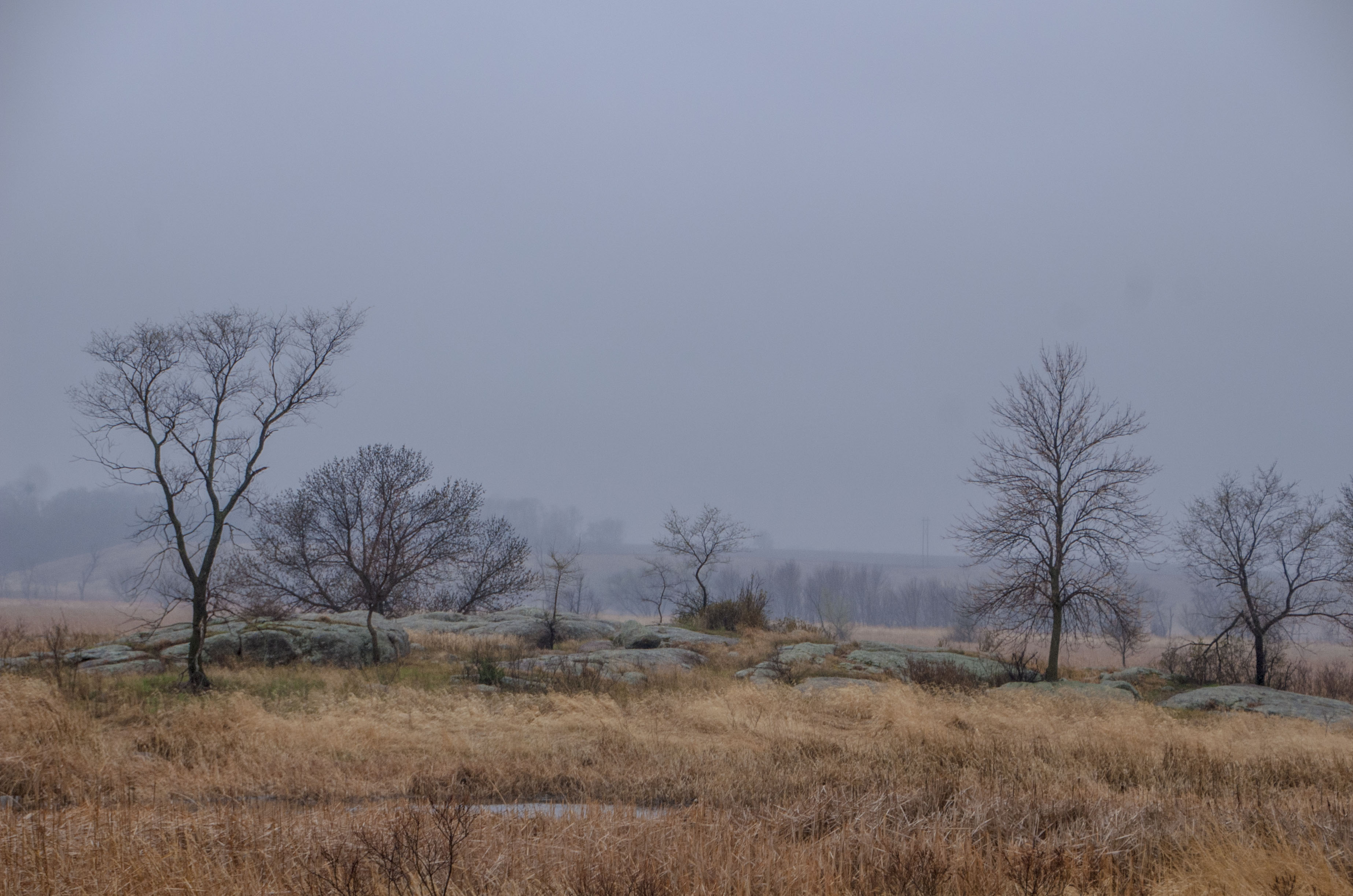
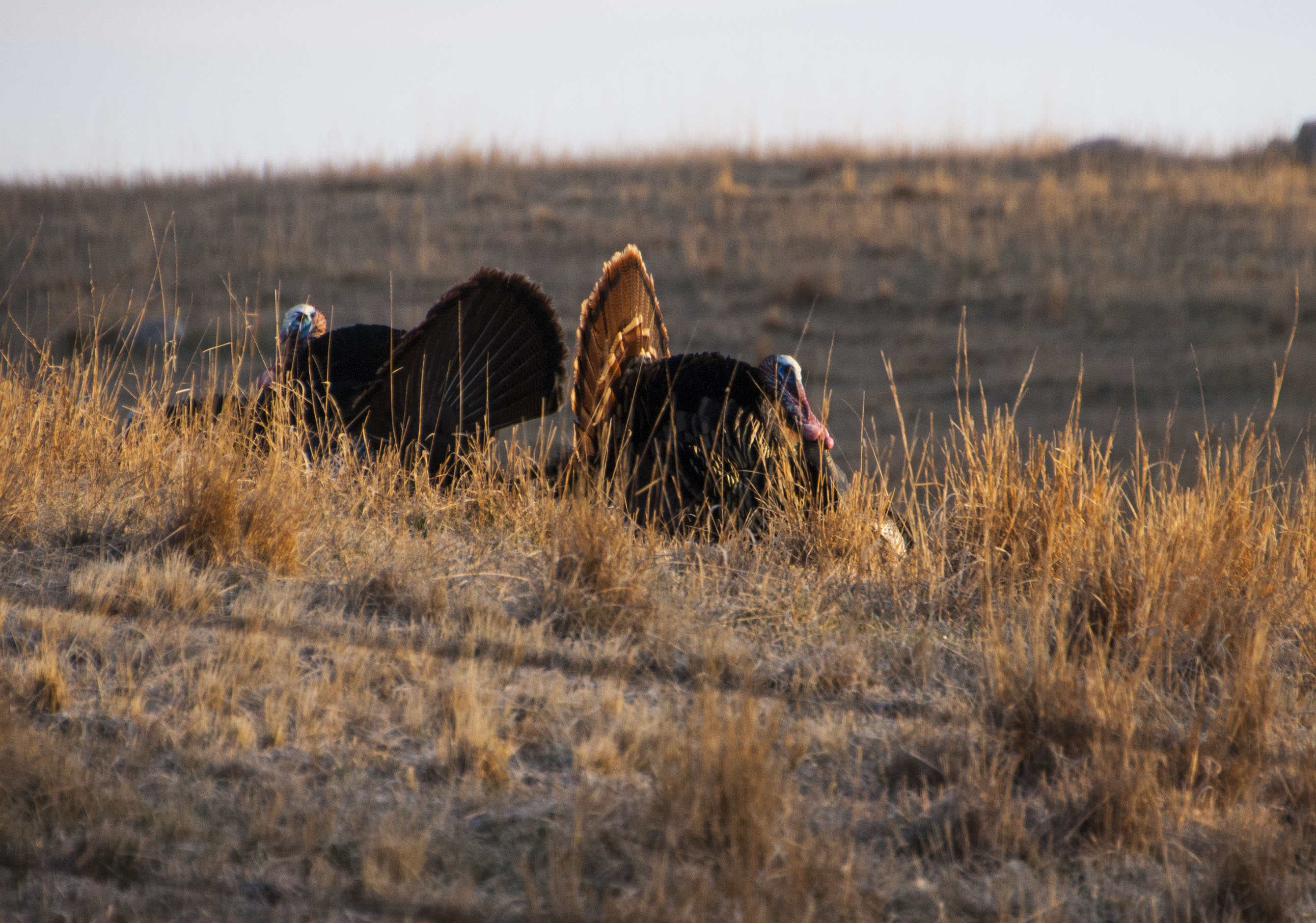
In the nearby prairies we hear the “barks” of Pheasants, and Wild Turkeys are strutting in display. Trying to capture a display has been almost cartoonish. On two different early mornings I passed strutting turkeys in full display just down the road, and both times I was without a camera. On Earth Day morning, though, when a fog hovered over the wetlands and in the river valley, I was finally able to capture an image of two toms just over a ridge as they tried to woo nearby hens.

Two toms in a strut-off on a nearby rise.

Two toms in a strut-off on a nearby rise.

All of which signals that, yes, spring has finally arrived. Even our acrobatic Barn Swallows have returned, which are more of a joy in flight than in how they leave the inside of our barn! We all have faults, which are mostly disregarded when you’re welcoming home members of nature’s family.

Livin’ Easy

Rain driven by a staunch prairie wind battered us as Willie Rosin guided what he calls his “perfect river boat” down the Minnesota from Waterman’s Landing toward spots known though rarely spoken of publicly. We were after our favorite fish, the sweet-fleshed channel catfish, which despite it’s fine taste is also an excellent fighting fish. We didn’t know if they would be out and about in the 45 degree water, although he had broiled up a family dinner from his limit of the day before — which was a perfect warm and sunny, 70 degree day. Our morning outing offered a distinct contrast.

Willie and I were fishing together for the first time since it seemed that every invite we shot at one another last year bounced back, so I was curious of how he went about his business. Several bends down river he eased off the throttle and guided the boat behind a promising deadfall. I smiled. “I see you do it right.”

He backed the boat into the deadfall to attach an anchoring cord. Yep, the Lutheran minister knew his catfishing business on the river. “So,” I asked, “you must have moved from down south?”

Willie laughed an easy laugh. “South Dakota. Actually, I didn’t learn about catfishing until we moved here. Where to find them in the river, and also that you bleed them out before you clean them. Once you do that you have the sweetest and most flavorful and delicate white meat you can find. Just delicious.”

This isn’t news to a southerner who grew up eating catfish (synonymous with channel catfish and not to be confused with distant family members such as flatheads or bullheads), yet to hear this from a child of a tier-state where walleye is considered king was music to the ears. Within moments we each had lines in the water. The wind and rain combined to make it bitterly cold as we hunkered down to await any movement of the line. Moments later my line tightened slightly and I set the hook, and was quickly in battle with a very strong fish.

“That’s what I love about river fishing,” said Willie, reaching for the net. “You never know what’s on the line.”

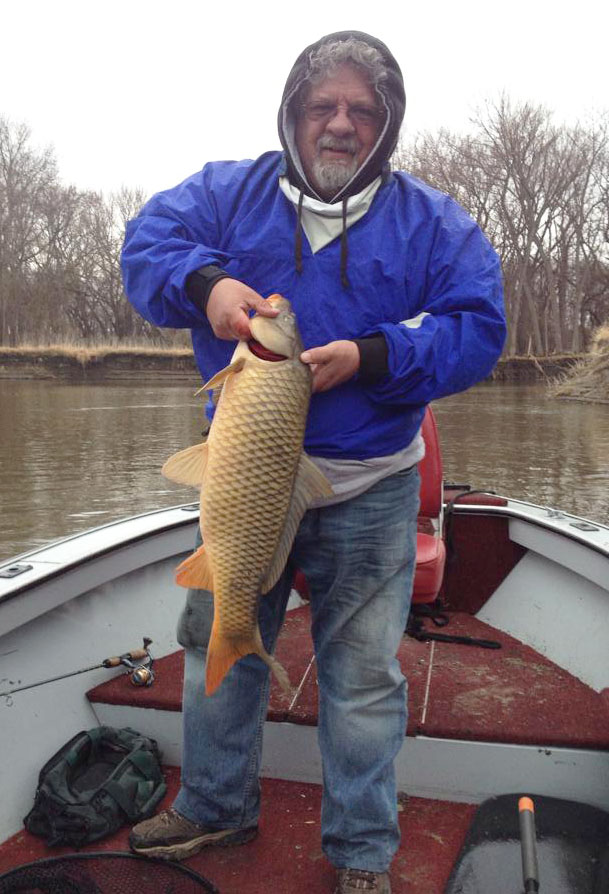
My first river fish of the year was a carp. “A good smoker,” as Willie put it. And, a great battler. It was promptly put into the livewell. Shortly I had another “golden salmon” on the line, which was much heftier than the first. We figured the best smoker was already in the bank so this one was released. Last summer I had caught and smoked one about that size before our trip to the BWCA, which in my mind was just as tasty as expensive, store-bought smoked salmon.

With one of the larger carp that we returned to the water.

With one of the larger carp that we returned to the water.

We chatted about people we know who needlessly kill a “rough” fish like that before returning it to the water. A good fighter, though, should be granted a measure of respect. Years ago I hooked onto an amazing fighter in the tailwater of the Granite Falls dam. It was late afternoon, and some men heading into the Legion across the river for “happy hour” stopped to watch. I didn’t know what was on the line, yet hopeful of a large channel cat or flathead. After a good 10 minutes of playing the fish in the fast water I finally brought it to the net. A large carp, probably in the 12 to 15 pound range. When the men saw it was a carp, I saw them waving it off as a joke, laughing as they entered the darkened bar room. It wasn’t a laughing matter to either the carp or myself, and after I disgorged the hook, I slid it back into the water. Then I sat down for a needed rest. Carp will do that to you.

Just up river at the Wegdahl bridge a few years later I caught about a ten pound carp on a nymph and five weight fly rod. If that doesn’t give you respect for a fish, nothing will. I was fortunate on two counts. My fly rod didn’t break, and I didn’t have a heart attack.

Willie netted a very nice catfish in the three pound range out of the snaggy deadfall, and I hooked another large carp. As we chatted about the similarities of our youths, we hooked a fish or two before eventually gliding downriver to different snags along the way. When we finally bowed to the harsh, cold wind and rain, Willie had a couple of good cats and a smoker carp in the livewell along with two of my five carp. I had also caught a fiddler. He anointed me as the Carp King, a crown I was pleased to wear.

Smoked carp fillets are a treat, for if done correctly they’re really just as tasty smoked as salmon. There are four significant keys to getting that special flavor — bleeding the fish by snipping the gills while they’re still alive, soaking the fillets in a good brine overnight, slow smoking with a sweet wood, and of course, not overcooking it. In my first effort last summer I used a simple brine consisting largely of salt and brown sugar. After an overnight soaking, the fillets were dusted with a Cajun spice before going into the bullet smoker. Although tasty, they were a little too salty for my taste. I thought perhaps the fillets weren’t rinsed thoroughly enough.

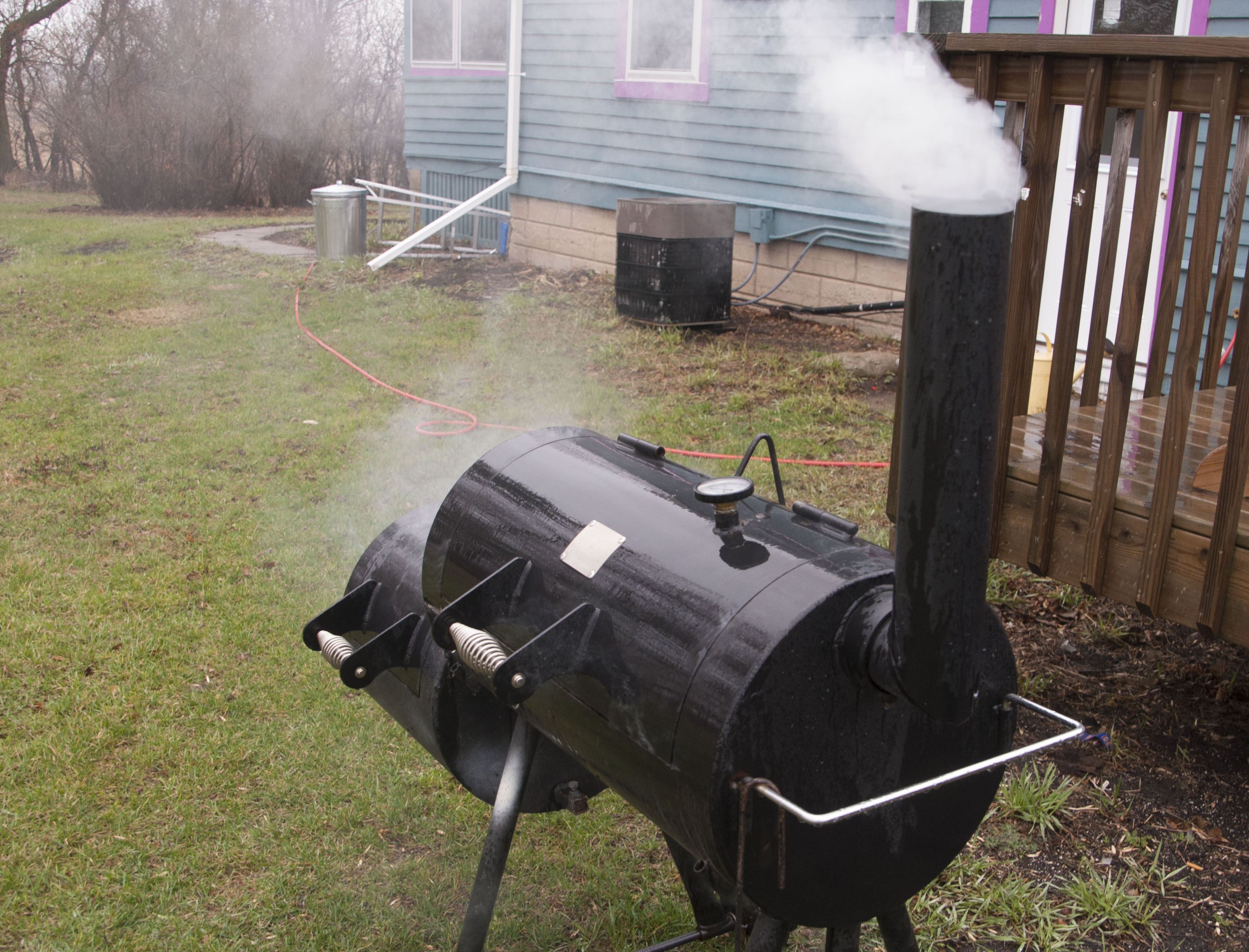
Smoke from the pecan shells escapes through the chimney of our new, secondhand offset smoker.

Smoke from the pecan shells escapes through the chimney of our new, secondhand offset smoker.

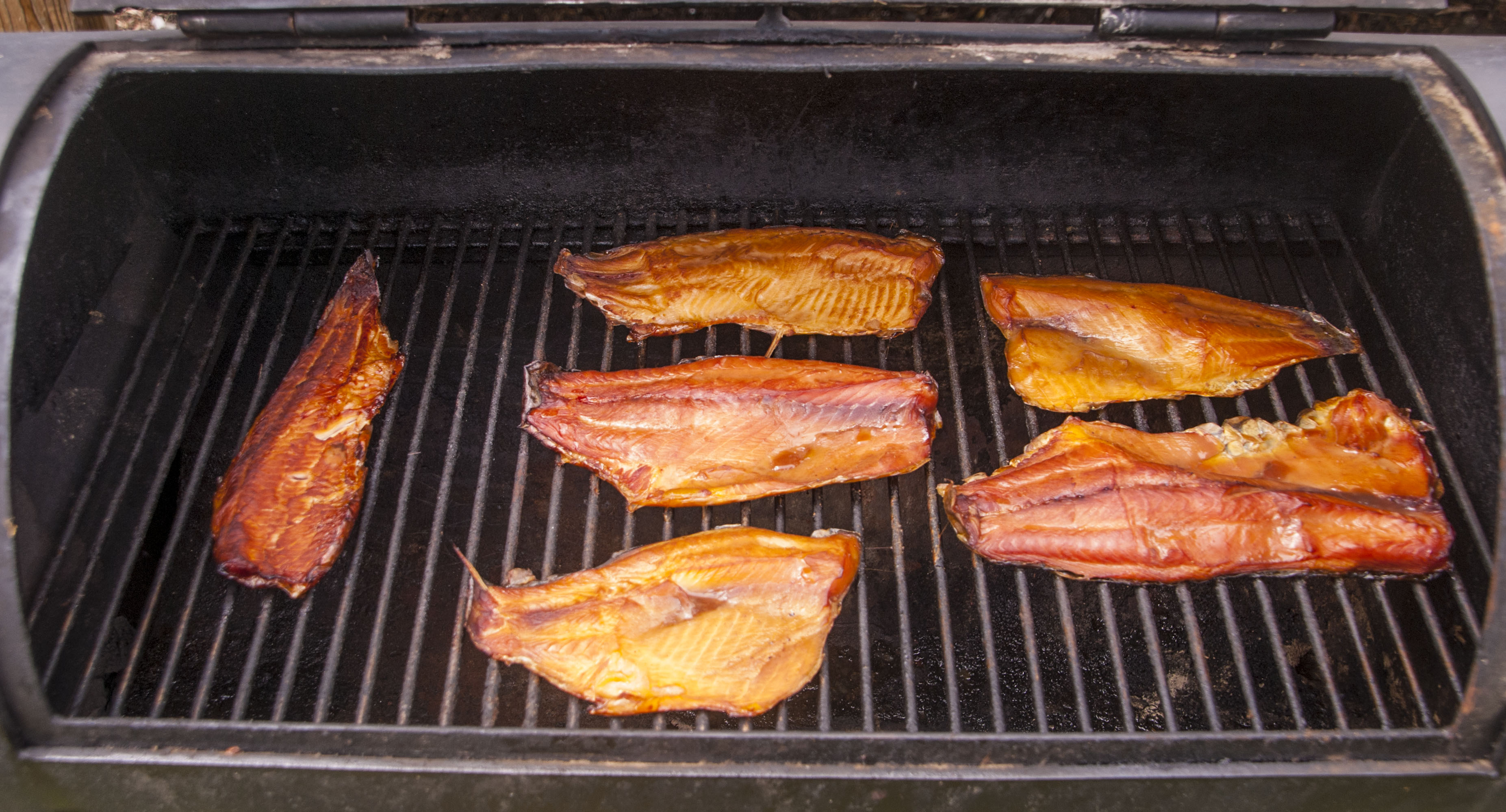
Online I found a recipe that was both more interesting and less salty. Recipes, of course, are like road maps … guides for an eventual adventure. In two quarts of water went a cup each of brown sugar and soy sauce, a half cup of salt, a liberal dose of fresh ground pepper, teaspoons of onion salt, garlic powder and seasoned salt (I used Tony’s Cajun spice), plus a tablespoon or so of Tabasco. The recipe also called for a cup of apple juice, which we didn’t have and I wasn’t driving an extra 20 miles to buy. After an overnight soaking in the brine, I shook off the excess as I placed the fillets onto my new, second-hand offset smoker. Soaked pecan shells were used for the smoke, with the fillets reaching glazed perfection after about two hours at 180 to 200 degrees.

Just about perfect!

Just about perfect!

Between our two “stringers,” six fillets went into the smoker, five of which are now in the freezer. The sixth didn’t last too long when company came Saturday night. Featured as the center piece on a cheese plate, we enjoyed the smoked delicacy with chilled glasses of Hinterland Vineyard’s LaCrescent. Ah, yes, the livin’ was easy for the Carp King!

Magic Moments

In my youth a group called The Drifters rocked our Teen Town with a catchy tune called “This Magic Moment.”  A song of love, of meeting someone special, it was sang with beautiful, old Soul Town harmony.

Several times over the weekend I found myself mentally humming the chorus and music, moments of small special things. Ours was a hard working weekend of planting our recently received bare root shrubs and trees in our new orchard along with some roses along the garden we hope will detour the deer, Luise Hille’s wedding gift spruce and a colorful crab apple in the yard. Both our hard work and breaks offered magical moments.

A bit of history … when we bought our Listening Stones Farm, a classic antique hog barn was nestled in the grove. We debated about restoring it. Close to the barn, though, was a deep pit, which might have been dug to bury the barn before us. No one seems to know, yet that is where the hog barn ended, along with an imploding granary that was in the yard. The excavator set fire to the pile before covering the whole mess with tons of soil. This was where we had dragged and piled the downed buckthorn from our grove we had planned to burn.

That was a problem. That was where Rebecca planned our orchard, so after planting a cherry tree where the yurt was planned, and two pear trees further down the slope, she looked at the pile of buckthorn and said, “We don’t have enough time to burn it, and besides, we’re in a burning advisory. We’ll have to move it.”

Remember the old Pick Up Sticks game where you tried to deftly remove a long toothpick-like stick without disturbing the pile? Buckthorn isn’t toothpicks, with the branches entwined inside and out, over and under, and we three — Rebecca, our son, Martin, and I — worked for a couple of hours pulling, pleading and dragging one tree after another from the pile. In the midst of our work she pleaded with me to take a break. Perhaps she was afraid of working me to death!

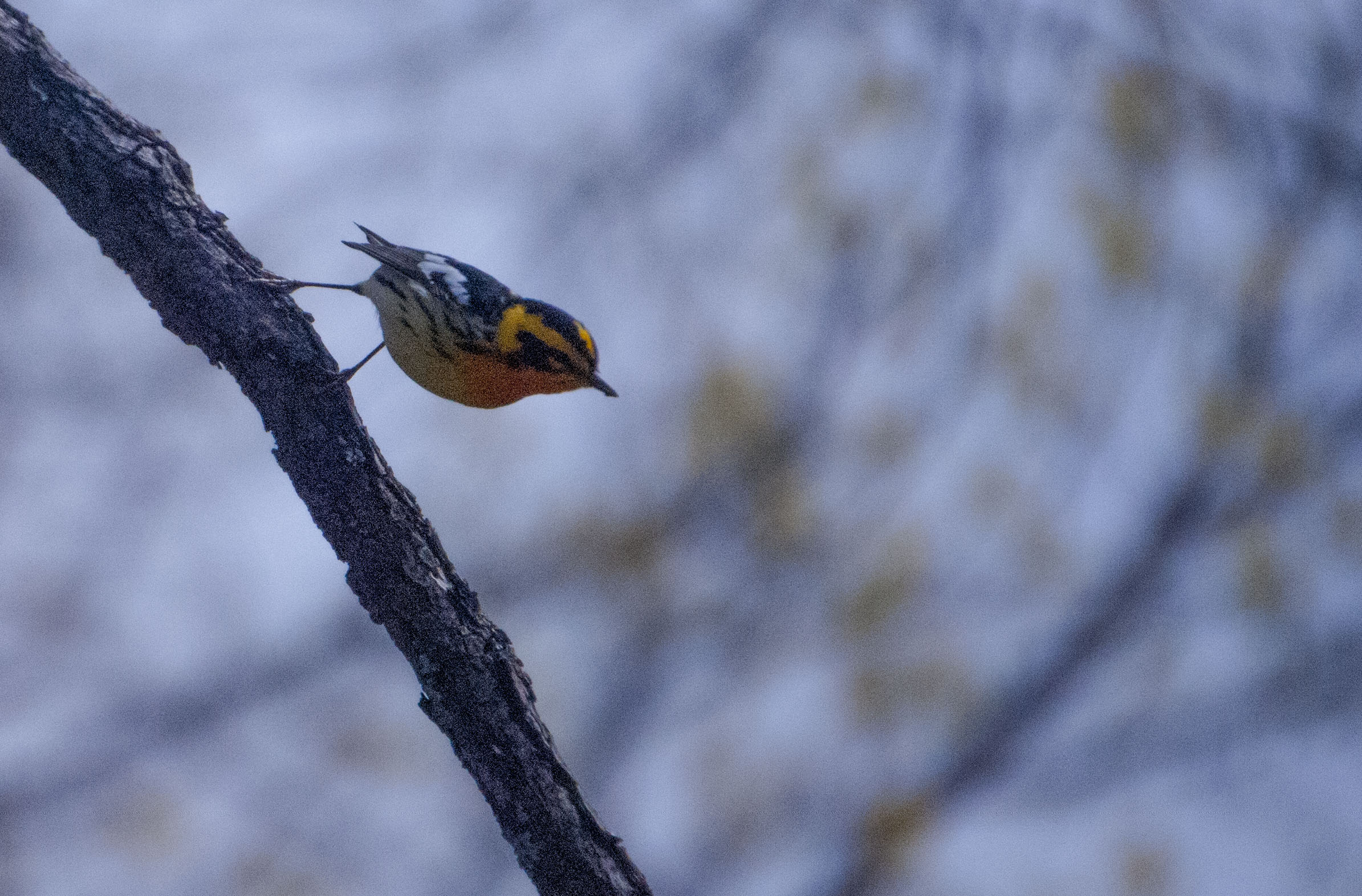
So I headed into the grove for the listening bench, found on our circular path that winds through the remaining trees. After removing my hat, I leaned against the downed box elder that serves as the back rest, and was suddenly joined by a tiny and wholly colorful warbler that began flitting from branch to branch and across the path to the box elder, landing on a spike branch not five feet away. As bird watchers will attest, this is a rare happening.

That was when I first heard the musical strains of “This Magic Moment.”

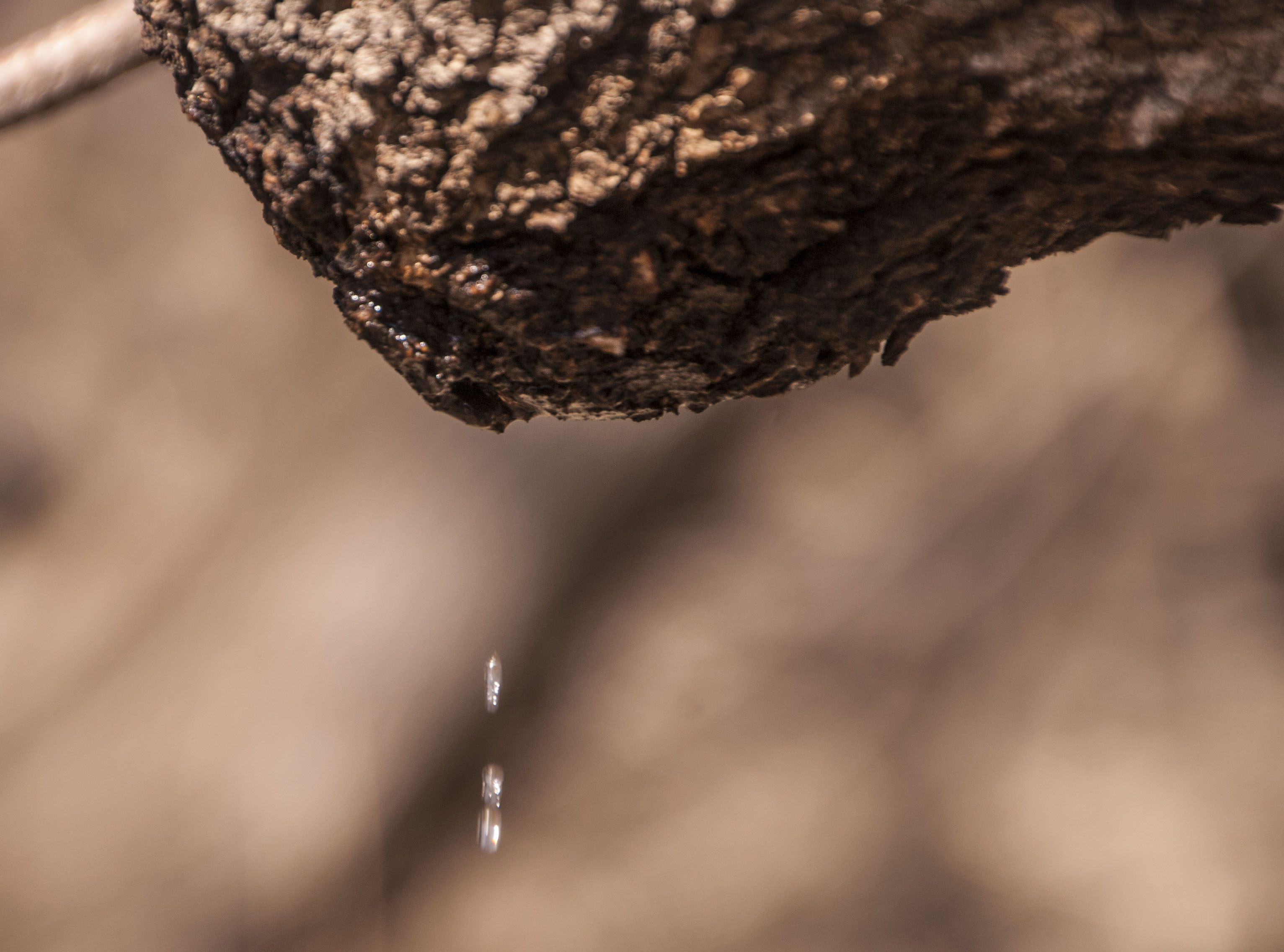
Then came the cooing sounds of nearby mourning doves. Had they been singing all afternoon? Had I not heard them? As the mental music played on, I tried counting them. That’s when I noticed the sap dripping off the box elder. Sunlight slicing through the canopy caused the sap droplets to glisten like pearls.

Like pearls, sap drips from the old and bent box elder.

Like pearls, sap drips from the old and bent box elder.

And so it went, little windows of nature there for the revealing.

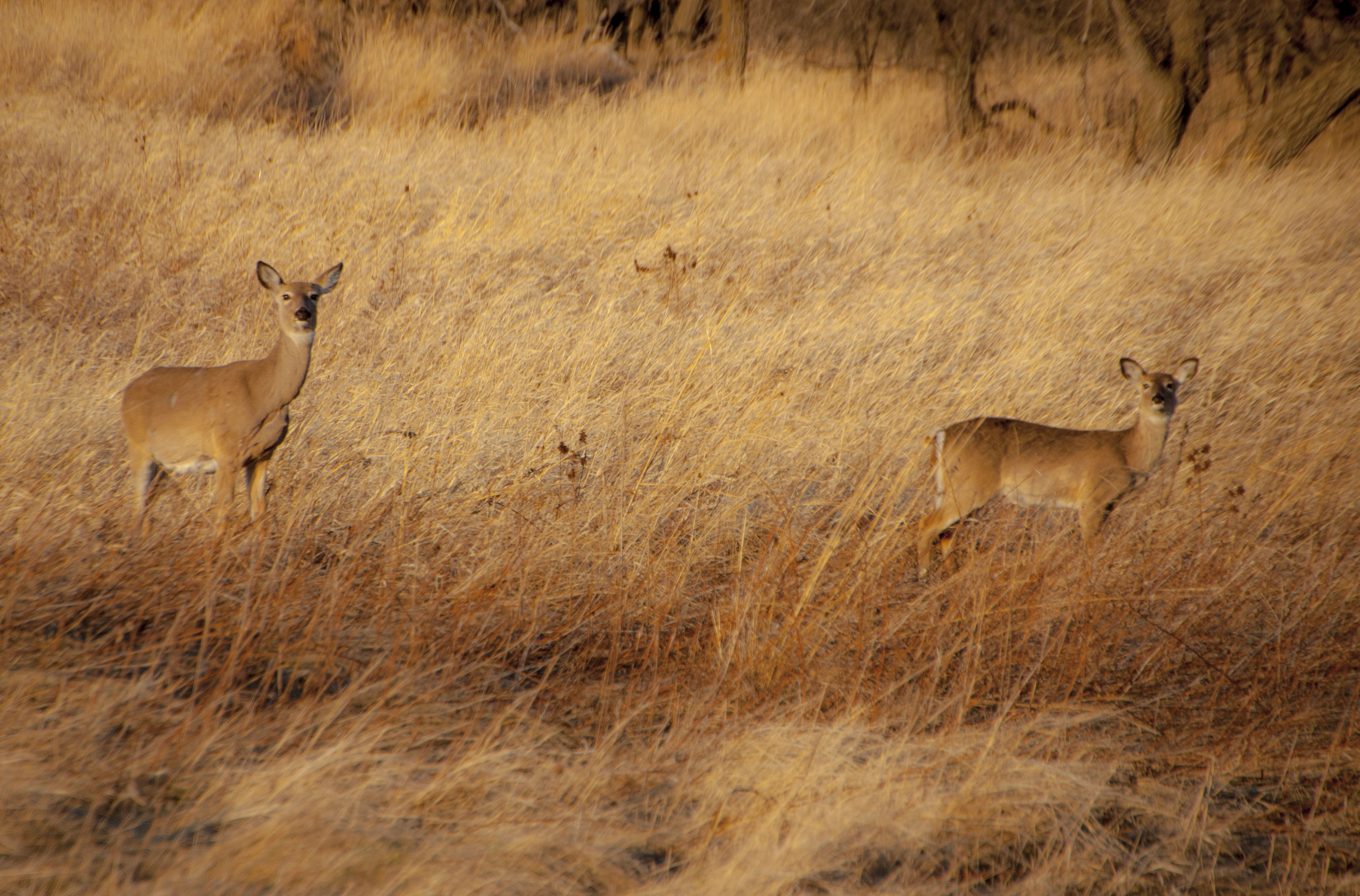
Later, as the sun lowered in the sky, we drove into town for dinner and passed wild turkeys silhouetted in prairie grasses down the road, and deer grazing in many of the meadows. Dusk was settling in when we returned home, yet we watched was three deer crossed the road from our grove. All quite magical.

Whitetails in a nearby meadow.

Whitetails in a nearby meadow.

We were back at it on Sunday, working to complete the plantings in the new orchard. Besides the cherry and pears, in went two plum trees, three apples and a crab apple. We each took a shovel to dig a hole perhaps 24 inches deep, with Rebecca using her special tining spade to loosen the dirt around each hole. She poured about a half bucket of water into the hole as I held the spike. Once the loose dirt had been packed around the tree, mulch was added along with more water. We bent wire cages around each tree to complete the task.

It was perhaps mid-afternoon when we threaded the last deer proof cage through a stake to keep it in place, then made our way to the house for chilled glasses of sun tea. We eased our sweaty backs onto our Adirondack chairs to rest while taking in the cobalt sky above us. We watched as ducks  and geese flew over, and even saw a redwing blackbird on one of the feeders.

“Oh, wow!” said Rebecca suddenly as she looked out over the newly planted orchard and grove to the north. “The pelicans.”

At first I didn’t see them, then suddenly, as one, an entire pod of about 20 pelicans turned with their white contrasting the deep blue of the sky. They were drifting in a one of those invisible columns of draft, alternately becoming almost completely invisible when their “black side” was turned toward us, then exploding in glaring white as they turned. If there was ever a magical moment, this was it, one that was replayed again and again.

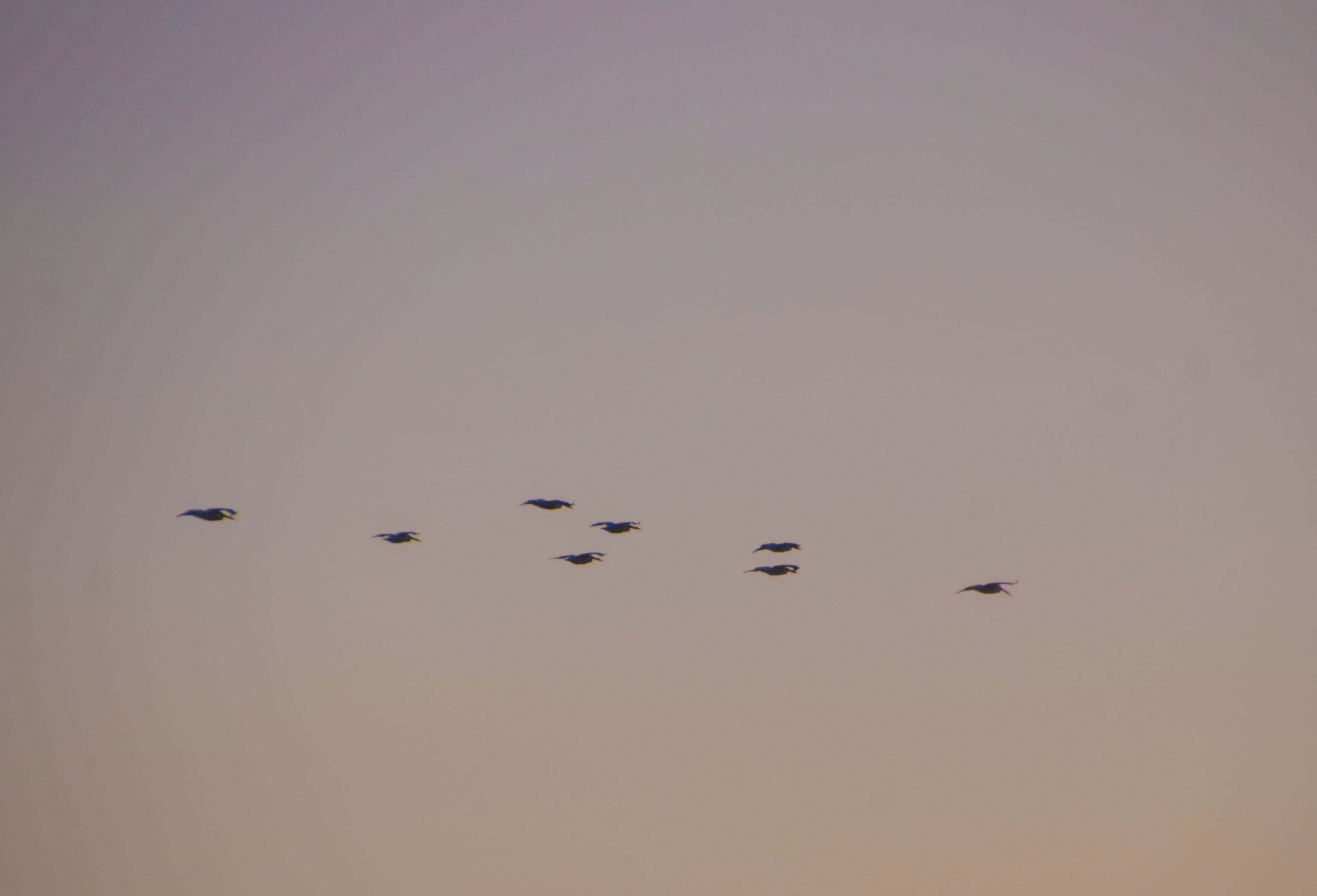
An image of pelicans taken the following day in the setting sun. One day I'll capture the white against the blue.

An image of pelicans taken the following day in the setting sun. One day I’ll capture the white against the blue.

Sometimes I think of all the places where I’ve lived, each with good friends and nearby quiet places. Now, in the autumn of my life, I find our small acreage offering so much solitude and so many special moments. Someone recently suggested that this appreciation comes with my age. Perhaps. Yet, I can also remember growing up on our Missouri farm, and of the hundreds of nights I ventured off alone with my fly rod to one of the ponds, and of how easily I breathed in a love of solitude and nature, of noticing the little things and magical moments. I don’t know if this has to do with age, but I know magic. A sudden visit of a warbler. Silent, glistening pearl drops of sap dropping from a bent and bowed box elder as old as our farm. A real life mobile of suspended pelicans appearing, then disappearing, then magically exploding in a vivid white against a deep blue sky.

I’ve learned that if you can appreciate those little things … those special magic moments … you can more fully appreciate life.

Repainting the Prairie

Aside

Classic prairie artist Malena Handeen has seen enough. Enough of the prairie ditches and field edges filled with silt blown from unkempt and poorly managed tilled fields without cover crops over the long winter. Enough of water trickling through paved rills in those same fields converted long ago from prairie grasses and forbs into industrialized commodity crops with no grass waterways nor buffer strips for protection. Enough poor corn crop production practices, drainage and ditching that is leaving behind a deadened soil and diminishing aquifers and water tables.

Enough so that she has offered to paint “classically styled portraits of the first five farmers to convert a thousand acres out of corn and back to native grasses. Sink some carbon and get a family heirloom. Maybe even let your grandchildren grow old.”

Malena Handeen with one of her paintings during a recent Meander.

Malena Handeen with one of her paintings during a recent Meander.

This is from a child of the prairie, one who has garnered enough of a reputation as a painter to attract art collectors and museums nationwide to her Loose Tooth Cowgirl Studio housed on the organic farm near Milan she shares with her husband, Mike Jacobs, and their children, Hazel and Arlo. Their Easy Bean Farm is one of the original CSAs in our neck of the grasses. Malena is the daughter Audrey Arner and Richard Handeen, who long ago converted their own Moonstone Farms near Montevideo from cultivated crops to a grass-fed beef, vegetable and grape farm, and have been involved in sustainable agriculture circles for years. That’s the pedigree.

A thousand is a lot of acres, so a willing farmer would be one probably considering such a move regardless. Her offer would be a bonus, if you will. The chosen five would have thoughts about the future of not just his or her farm, but a deeper future for all of us. Which, of course, is the intent of Malena’s offer. Her offer gravitated from a conversation that began over wetlands on a social media site when she wrote: “Restore a wetland or your ass is grass.” Many sources claim that more than 98 percent of the prairie and wetlands native to Western Minnesota have been converted to farmland through ditching and draining. Nowadays even more efficient drainage systems are being retrofitted onto formerly drained fields as even more remnants of native prairie grasslands are being stripped of glacial rocks and fitted with tile. All for corn. Bt corn, basically.

“I’m not trying to be clever,” said Malena. “I mean, our ass really is on the line if we just drain off all the water and till everything. Where do they think groundwater COMES from? I’m pissed today. I need to throw stuff.”

So she threw out an offer. She is, after all, an artist, and artists typically seek creative solutions to solve problems.

A nearby wetland at dawn.

A nearby wetland at dawn.

Ah, the wetlands and prairie, a vast ecosystem that is no more. Not many who are alive today can even recall what this prairie pothole biome actually looked like before Euro-American settlement. Too many generations have passed. Seemingly as soon as the settlers started moving into the heart of the biome the draining began, and the Jeffersonian grid system was soon etched with ditching to carry the water away. Those tributary rivers and streams, and main stem of the Minnesota River that Joseph Nicollet spoke of with the clear waters and sparkling rapids would, in time, become silt choked and ribbons of muddy waters all the way to Lake Pepin in the Mississippi River below Redwing.

Oh, but if you were to fly above this “black desert” on a very wet spring you can see the ghosts of the prairie potholes. Every single wetland, and there were often several large ones per section of land, thousands as far as the eye can see, are now laying latent, exposed ever so often by big rains and high spring snow melts. Such an opportunity was afforded me in the spring of 1997 after one of the snowiest winters in recorded history when a neighbor invited me along for a flight over the prairie for photographs. The sight below was astounding as we flew from Montevideo to Raymond. Below us were hundreds of potholes, all now part of a vast and complex agricultural economy. We passed over a huge “lake,” one my pilot friend identified as the former Willow Lake just northeast of Gluek.

“There were two resorts and cabins around that lake at one time,” he said, pointing out the open plane door.

Willow was one of five such lakes identified in Chippewa County. Black Oak Lake, for which the street is named, outside of Montevideo was first mapped by Joseph Nicollet with both its Dakota and English names. “Hutuhu Sapa” had a 40 acre grove of bur oaks, the waters having protected them from prairie fires. The remnant of that grove is where Tom Ryman now lives. Other principle lakes in Chippewa County were Shakopee (County Park #1), Bad Water (Lone Tree), Carlton (south of Hwy 212) and Norborg (Stoneham Twp.). Only Shakopee remains. The rest are long drained and have been farmed over for decades — as has the former prairie all around them … as far as the eye can see on any clear day.

Certainly no one, myself included, would expect complete restoration. That would be impossible logistically and economically as well as ecologically. Is balance possible? Perhaps. Malena Handeen’s enough-is-enough offer, as creative as it is, will offer one small, yet simple incentive toward some sense of balance, a step toward correcting one of the most dramatic and thorough degradations of a natural biome in the entire world in the history of mankind. We’ll see if someone has what it takes to take her up on the offer.

Medicinal Miracle

We’re not necessarily blaming our son, the South Dakotan, for this horrid flu that dropped in on us complete with chest congestion, continuous coughing, and just for the fun of it, some belly button-deep sneezing. Rebecca calls the school he attends, and indeed, most schools, “germ factories.”

Then you have my late father, who suffered from a fate you could call “mechanic’s luck.” In other words, if you hear a ping in your car engine, it would be persistent if not increasingly louder until you steered the clunker into the shop. There the engine would purr like a contented kitten and the mechanic would look at you as if you were crazed.

Welcome to the realm of “germ factories” and “mechanic’s luck” — since the day before I came down with Martin’s flu I had visited with my doctor and felt about as well as a person can feel. Four days later the flu was in full swing, knocking both Rebecca and me completely off our feet most of Friday afternoon and all day Saturday. Sunday was a bit of forced reprieve. A few hours were spent hiding in the grasses of the wetland up the hill, across the gravel road from our prairie, to sneak in a few pictures of migrating geese. While off at the wetland, my smoker was up and going putting a little pecan “blue” on a rack of ribs. On the way back I even stopped for a short spell to help  Rebecca pull cut buckthorn from the grove to place into piles to be burned later on.

Shortly thereafter my party came crashing down. Big time. One of my “sons,” Kevin, has been visiting us from Germany, and almost his whole time here after that first weekend I’ve resided either in bed or on the couch. We mustered up just enough energy for him to take us out for a “last” dinner the night before his departure, after which I came home to rub a menthol-salve on my feet and chest before laying down for the night for a most fitful sleep.

Rebecca has been pushing Echinacea tea into my system … even with a little lemon, honey and a jigger of whiskey included. Neither the plain nor doctored has seemed to offer much of a miracle. Other family members have swore by its magic, although it didn’t seem to help them much more than it has me. Medicinal miracles are hard to come by, perhaps. We’ve heard of these before, haven’t we? Hopefully the other herbs of interest are more effective, more productive of miracles than Echinacea.

Then there is the elderberry syrup. She’s been pushing that as well. At least this is more soothing, and seems to work wonders with her. Calming, yet moments later my coughing and sneezing returns. It was so good while it lasted, all three minutes.

over the wetland

What makes this tough is that while I feel compelled to stay inside to rest, I can’t help but see the skeins of geese flying across our windows, flying toward the two wetlands and farm fields so close by. I still like stepping onto the deck just to hear the constant chatter amongst them — through the wheezing and coughs, that is.

Last weekend my social computer network was full of reports from my birder friends who are visiting all those beautiful stops along the river valley, from Skalbakken County Park up to the National Wildlife Refuge just down the road. Many posted incredible images of the thousands of birds they’re finding along the way, from eagles to swans, from mergansers to ducks, from snow geese to wild Canadians, which only added to my discomfort. I wished to have been out there, too.

Then again, I feel I have some time to make up. After leaving the Mississippi Flyway in 1992 I missed so much of the migrations due to my working schedule and living in the middle of the “black desert” surrounding  Clara City. Living in the little stranded prairie town didn’t offer much in terms of bird migrations, with no comparison whatsoever to the river valleys. A year ago, our first here in Big Stone County, we were involved in a sprint more than a marathon to remodel this old house into our new home. Arrivals on the flyways greeted us each morning as we drove the six miles out here from Rebecca’s house in Clinton. There seemed a tease of an awaiting promise. Next year, came the message. Next year we’ll all be together.

Anticipation of the migrating birds really made the winter seem shorter and tolerable, and now the season is here I feel too sick to be outside with my camera and binoculars. Don’t worry, write my friends, for the migration is just starting. There will be plenty to see once you’re well.

Perhaps the downed internet service since Tuesday was part of the grand plan, to help prevent a deeper discomfort from missing the migration. If so, I’m missing the message. Moments ago we had a conversation concerning my sense of isolation, from the illness to the lack of internet. When your bond to the outside world is not just inconsistent, but non existent, your sense of isolation is heightened considerably. It is how I can keep up with the news of the outside world, of trends and what we in the news business called “spot news,” and of course, staying in tune with folks from Australia to Austria, and from Clinton to Clara City, on the social network sites.

My internet was also my dictionary, my spell check, newspapers, my … well … medicinal mental miracle. Just an example, in a couple of weeks we have a bentwood trellis class through the Milan Village Art School with Jo Pederson, and I had a fleeting thought of looking through some patterns. Oh, yes, we have no internet. No link. No nothing.

In front of me is the machine of my methodology, minus the major tool that makes it really shine. Outside the geese are serenading the flyway, crossing the windows, leaving invisible paths of their web of life. Inside my wheeze-enlightened coughing continues, and I sip Echinacea awaiting any medicinal miracle.

Temperance

Ever notice how the words temperate and temperamental come from the same Latin root? That root is temperare, which relates to moderation.

In Minnesota, we claim to love our temperate climate—and its clear differentiation between the seasons, but in our waxing poetic about the changes once they’ve happened (the intense greens and blues of summer foliage, sky, and water; the rich, ripe colors and scents of autumn; the balmy caress of spring’s warm breezes; the moon on the breast of new-fallen snow, etc.) we sometimes forget until we’re suffering from the effects of the temperamental side of our supposedly ideal seasonality that temperate climates can also suffer from the full-blown temper tantrums of one season not wanting to share the landscape with the next.

Maybe we should temper our disgust with winter’s apparent unwillingness to play nicely with spring: that same root word that gives us temperate climates also gives us both foul and even tempers, as well as Volstead’s act of temperance (a.k.a. Prohibition), a way to harden steel, and tasty little veggies dipped in batter and deep-fried (OK, I’m kidding about that last one).

Out on the farm, the weather isn’t the only thing that’s been temperamental in the past week. Our health, for one thing, has been compromised by a particularly vigorous strain of viral bronchitis that is making the rounds of Western Minnesota and Eastern South Dakota (we suspect it was brought to us from a certain public school in the eastern Dakotas via a very sweet little boy who hasn’t perfected the “cover your cough” rule). He, of course, got over it in a matter of two or three days thanks to mom’s vigorous ministrations, but not before passing it along to both sets of parents.

About six days later, John and I started developing the symptoms. We hosted a couple of friends for dinner Friday, as we were not yet aware we were carriers of this plague, and one of our guests that night notified me in a quite graphic detail this morning that she’s now down with it in all its glory. We’ve self-quarantined since Monday, but I fear for our house guest of two weeks, a former exchange student of John’s who on Monday (just before the most recent winter tantrum) set off on a round-the-Americas trip.

Dear readers, please forgive us, for it appears we may have unwittingly started a pandemic. Kevin seemed healthy as a horse when he left (as evidenced by his vigorous workouts and enormous appetite for eggs, which put off my scheme of making vast quantities of pasta with the excess), but the six-or-seven day incubation period for this illness means our last, best hope is for the less-temperamental climes of Mexico or Cuba to quell any potential outbreak.

In the hen house, the on-again off-again spring has put my girls in a “fowl” mood. Now that they’ve tasted green grass, it peeves them greatly to be confined–if only by their reluctance to set foot in the snow, being that their ramp has remained open during the daylight hours. The Silkies have gone off laying for a week now in protest of my obvious attempt to murder them all in the process of dusting them for mites, though the heavier breeds thankfully tend to ignore the dire warnings of those silly, poofy-headed things that don’t know any better than to “roost” on the floor. The big girls can see very well that the sky isn’t falling, except for when it is—with that damnable white stuff that blankets their favorite scratching ground.

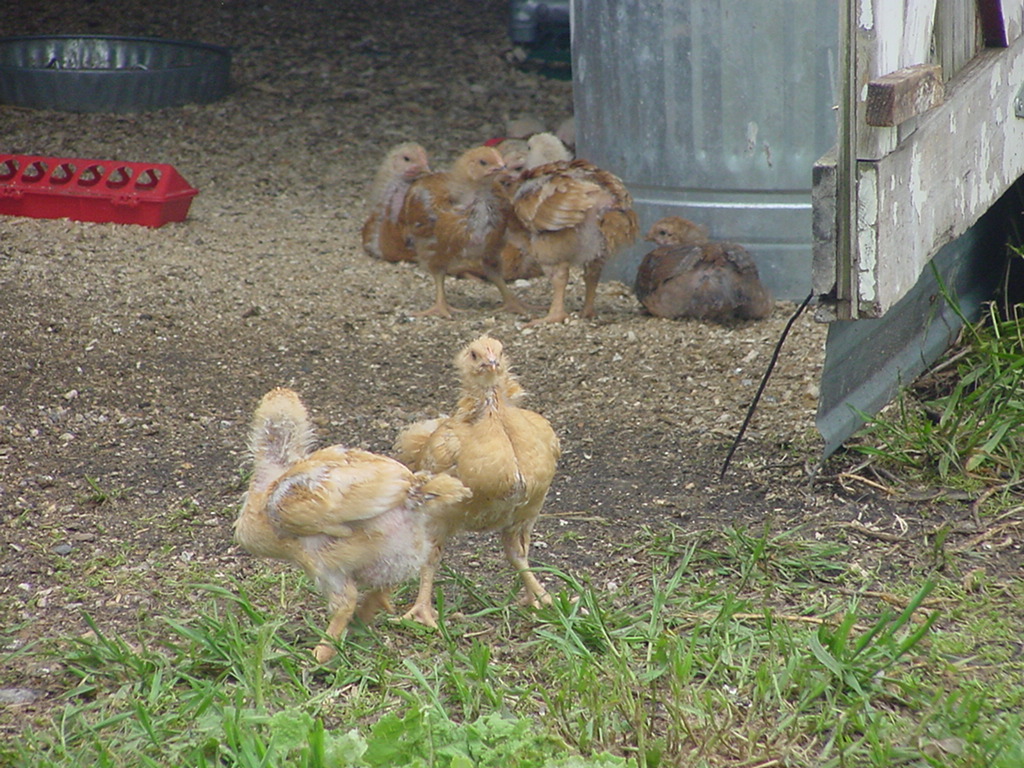
Out on the sun porch, feathers are mostly unruffled among the younger birds except for when my murderous intentions are revealed through the process of—gasp! Cluck!—providing fresh bedding, water, and food every couple of days. Of course, nine of the fifteen birds in the brooder don’t have any feathers yet to ruffle, but their adolescent sisters are teaching the young ones how to adequately express their displeasure once they do.

I’d worried about potential bullying of the chicks by those in their “awkward phase” of feathering out, but if anything it’s the little ones throwing their weight around (figuratively speaking, of course). Not only are the bigger birds outnumbered, but their legs are the perfect length for little ones to squeeze under, and their emerging tail feathers provide a perfect “apron string” to tug on—leading to hysteria in the big sister and hilarity for spectators as the bigger bird runs squawking down the length of the brooder with puffball in tow.

A moment of peace in the brooder.

A moment of peace in the brooder.

I’d feel badly for the older pullets if they weren’t perfectly capable of escaping, as they often do, by fluttering up to the top of the fountain and perching there, peering in the office window as if to say, “Mom! She’s doing it again!” and then getting knocked off by a peer in a poultry version of “King of the Mountain” (or, to pull in the gossipy hen metaphor, “Queen of the Water Cooler”).

By far the biggest inconvenience of this temperamental weather has been the temperamental nature of our internet service the last couple of days. Thanks to Monday night’s snow-sleet-ice storm (with simultaneous blizzard and tornado warnings an hour south of us), we’ve had about two total hours of service since early Tuesday morning. We’ve taken to wearing our cell phones on our persons, so that the sudden buzzing of the updating devices signals us to quick!—run and check e-mail and hopefully fire off a response with the unknowable amount of time we’ve got to do so. Could be five minutes; could be forty-five. Who knows?

As you might imagine, being both self-quarantined due to illness and cut off from communication (and work when we feel well enough to do so) has caused tempers to flare, and random grumblings about being way out on the “howling edge of civilization, isolated from the world.” OK, maybe the quote wasn’t that elegant, but I try to keep this blog rated PG.

The sad fact is that our internet service sucks out in western Big Stone County. Not “sucks” as in how pretty much everybody who has internet service complains about it at some point or other, but “sucks” in both all the normal ways (slow, unreliable) and some uniquely bizarre ways (bills never arriving, no way to know what’s going on when there’s an outage or when we might expect it to be repaired, if—yes, really–ever).

There are only two reasonably-priced options for internet out here in the western part of the county, and they are both managed by individual (male) proprietors who never answer their phones and whose moms (yes, in both cases) are the main point of contact for setting up service or for any problem that arises. If there’s a big problem, mom usually doesn’t answer her phone either. The way you determine if the problem is widespread is if, on the second day, mom’s voicemail box is full and no longer receiving messages.

I can’t help but feel like a jerk in pointing out how crappy the service is because God bless ‘em (as they say in rural Minnesota), these guys are providing a service that no one else is out here. It might take a month and a half to get set up (three weeks wondering if they received your call, and three weeks feeling as though you shouldn’t leave the house in case today is the day they magically appear), but at least you can get some kind of connection that doesn’t cost more per month than filling the propane tank in deep winter. And they’re really nice people when you do finally meet them.

But the fact is, no professional person in their right mind would move to western Big Stone County—even along our lovely lake–with the poor quality of internet service here (detractors fully granted permission to chortle over my admission of insanity). Sure, you can get passable service in the towns—I had decent connections in both Ortonville and Clinton when I lived there—and on the eastern edge there’s the enviable service provide by FedTel Co-op. But in the rest of the county it’s as if we’re still waiting for the latter half of the twentieth century to arrive.

My tales of service strangeness might seem amusingly bucolic to some, but the lack of fast, reliable internet is a major economic catastrophe-in-the-making in our rural areas. There are a lot of goods and services that urban- and suburbanites are willing to give up regular access to in order to get a big ol’ slice of the good life out on the prairie (don’t believe me? Consult your Ben Winchester), but the ability to stay connected to the world (and to the goods and services not available here) is by-and-large NOT one of them. We bemoan the fact that our young people leave and don’t come back—that our towns are dying and our lovely countryside is almost empty of people–the pretty old farmsteads burned, buried, and converted to industrial ag wastelands, but we’ve yet to move forward on a major initiative that could help stem that tide.

While correlation is not causation, the lack of technological infrastructure—specifically high-speed internet–is certainly a factor in our dire economic circumstances and our inability to attract people and entrepreneurs to an otherwise incredibly attractive place. Furthermore, these dire economic circumstances create a climate in which further degradation and destruction of the natural resources that make this place so attractive (including the idiotic decision to annex township land and quarry our county’s namesake rocks in the City of Ortonville) seem like our only options. To quote, once again, one of Ortonville’s illustrious planning and zoning officials, “People who aren’t from here might not understand this, but all we have is our rock.”

Come to think of it, it might be better that we’re cut off from the outside world. We wouldn’t want sales pitches like that to be broadcast too widely.

The clouds are starting to roll back in, and the last weather reports received looked like we might be in for yet another of winter’s temper tantrums. Visibility is dropping, and the feeling of isolation increases, though it’s not entirely unpleasant when the house is warm and the kettle hot. Hundreds of geese roil above the sloughs, and the songbirds are rapidly depleting the feeders we filled yesterday. Despite some discontented clucking in the coop, I decided to close them in for the day, rather than waiting to flounder out there with my stuffy head and drippy nose in the midst of a full-on snowstorm.

It’s almost two in the afternoon on Wednesday, and we haven’t had internet access pop up (according to the last update of my inbox) since 6:45am. Still, we hold out the dim hope of reconnection while we settle in for some reading and the 147th round of tea—a jar of mentholated rub and a box of tissues between us.

Before I get too comfortable out on this lovely, maddening, howling edge of civilization, I’d better slip on something with pockets, so I can feel the buzz of my phone telling me it’s time to talk to the world again.

[Our internet service was finally restored on Saturday.]

Spring Gleanings

I’ll admit it hasn’t been much of a joint blog lately, and I see the “He Said” column is growing long against my less-then-a-handful of posts under “She Said.” So, here’s what I’ve been up to…

photo(3)

Seed starting has commenced, and the onions are up and growing nicely. I’ve got three varieties this year: Long Red Florence for the tasty fresh-eating and kabob onions of summer, as well as my standby Talon F1 yellow storage onion (which I’ve gotten from Territorial Seed for a few years, but now I see High Mowing has it, too). A new yellow storage onion for this year is the open pollinated Dakota Tears, developed by Prairie Road Organic Seed. They are looking really fine.

Blue Solaise leeks are another old favorite–germination is a little thin this year as the seed is getting old. Last year I planted 80 row feet of them, but between flood, drought, and weeds, they only ever managed to get to pencil size–not their usual stout, blue flag-waving grandeur that can last through the winter if the deer don’t get desperate. Started some Mars Celeriac (and with fresh seed, too), but even on a heat mat their germination has been disappointing. We’ll end up with a few for our table, at least.

Yesterday the peppers went in 4-packs on the heat mat–ten varieties with six of them sweet and the rest some shade of smoky. A few new ones this year including Three-Sided From Syria (a last-minute curiosity), Aconcagua (intriguing for years–finally taking the plunge), and a mini belle pepper blend to satisfy my curiosity about that recipe for little peppers stuffed with cabbage and pickled whole. The only new hot one is Martin’s Carrot, which came as a bonus for re-upping my Seed Savers Exchange membership–so why the heck not?

I won’t start tomatoes for a couple of weeks, but the situation is starting to get a little desperate as far as varieties. My December seed inventory lists 13 varieties, which is fairly respectable, but somewhere along the seed-ordering way I’ve ended up with 21 kinds, and then a discussion with a fellow gardener about good little yellow tomatoes landed me on High Mowing’s website adding Yellow Perfection back into my mix–along with two MORE varieties that sort of slipped into my cart unnoticed.

How does that happen? At this rate, I’ll be up the thirty by the time I actually put seeds into medium, and being as I’d like to get them going in the one 20-channel flat I have left…well, I’d better stay away from seed company catalogs and sites for awhile. Though, as any gardener with gardening friends knows, that isn’t always a guarantee. You run into someone, you get to talking tomatoes, and suddenly there’s another packet or two in your purse. Going into hiding might be the only option.

I’m sad to report that we lost a hen last week. She was an Araucana-Jungle Fowl cross, and she’d been listing around for a few days. The others weren’t picking on her, and she was able to get to food and water (and was consuming both), so I didn’t worry too much about it. She wasn’t roosting at night, but she did find comfort with the broody Silkies that hang out on the floor. Still, when I went to shut the coop on Wednesday night, she was keeled over in the run. Bummer.

Despite a few glorious days of temps in the forties and fifties (yeah, we have a lower bar for “glorious” after this winter), the majority of days have been chilly, though bright. I’ve got the whole set-up ready for brooding about a dozen more pullets for the laying flock (and then fifty broilers and a few turkeys and guinea keets after that), but out on the porch it’s hard to keep their pen warm enough except for directly under the heat lamp. I’m getting to the point of setting up an insulated pen-within-the-pen because I want those pullets feathered and ready for the coop before the broiler madness starts.

Meanwhile, we are getting about seven eggs a day from the existing small flock, and the yolks are starting to regain that intense golden color that signifies they’ve been out on grass. Other than giving a few away until there’s enough production to merit selling, my egg utilization strategy combines browbeating family members about consuming their daily ration and ordering in a few pounds of semolina flour to make fresh pasta. Lucky for the family–we have a young man visiting from Germany (a former exchange student of John’s) who is capable of eating an entire day’s production in one sitting (willingly, too–it’s not a force-feeding hostage situation, I swear!).

With the ground bare but still frozen, the only serious outdoor activity I’ve engaged in lately is the endless hauling of buckets-full of trash from the grove. The area nearest the house is getting less junky, but barefoot-ready it’ll never be. Still, aside from the endless piles of rusted-out cans, broken glass, and car parts, there are some cool old intact bottles to be found in the deeper recesses. Making it out as a treasure hunt rather than a years-long chore seems like a better way to attract helpers. C’mon out and join the fun!

Sound and Feathered Fury

Being in the flyway was truthfully neither among the criteria nor motivation for us when we decided to buy this farm situated just up the hill a-ways from Big Stone Lake. As we began carrying the buckets and boxes of discarded lath-work and crumbled plaster to the huge dumpsters we were often stopped by the skeins of geese, by both the sound and the beauty of flight as they moved from fields to frozen wetlands.

Then, on the drive back and forth from Rebecca’s house in Clinton, we watched as continuing populations of different ducks stopped on the way through. Redwing blackbirds soon took up negotiations in the cattails on the sloughs along the roadways, and in the grove, flocks of various songbirds came to rest and roost.

Migrating gulls rise from the ice at the National Wildlife Refuge.

Migrating gulls rise from the ice at the National Wildlife Refuge.

Every day became an adventure. Rebecca saw her first merganser, and my excitement in seeing my first curlew was duly noted.

Now, a year later and with the inside work completed, we await a new migration. Over the winter I purchased a photographic blind as part of that anticipation. Already the vees of geese are flying overhead, and a couple of nights ago we watched as two huge flocks of snow geese flew overhead reflecting the golden hue of the sunset.

Someone mentioned that the redwings, which for me have traditionally been the true sign of spring, were seen just south of here. In two days of travel through the area, though, I’ve not seen a single one although there are cattails along many of the roadways and highways.

For ten years we lived in the heart of the Mississippi flyway along the Little Vermilion River just east of Hastings. The Little Vermilion cut through town, then through the near wilderness backwaters parallel with the Mississippi from Hastings to Redwing, a distance of nearly 30 river miles. This land was swampy and wild, filled with trees and backwater lakes. After more than a decade of living in Colorado, moving into the flyway was thrilling every spring and fall as new species of birds continued to find the feeders just outside our dining room table. Hours were spent watching this bird life just inches away from our plates, and really, we catered to the birds with our landscaping and plantings … as did many of our neighbors.

Small skein of geese in the morning sun.

Small skein of geese in the morning sun.

Here in the Minnesota River flyway, which by most accounts is still part of the Mississippi, we see a much different grouping of birds. We certainly see more ducks, geese, gulls, terns and wading birds, along with the “usual suspects” among the warblers and songbirds, here than on the eastern side of the state. Last spring, by chance, one of us looked into the high canopy of the grove and suddenly realized what we were seeing wasn’t leaves but rather hundreds of birds resting from their flight.

Being outside this time of year is special, and especially for the sounds. Each sighting reminds one of that sense of comfort in greeting an old friend. “Welcome back to the neighborhood,” you want to shout. “You missed one hell of a winter.” Ah, yes, seeing them, one and all, is knowing spring is coming. In his Sand County Almanac, Aldo Leopold wrote, “A March morning is only as drab as he who walks in it without a glance skyward, ear cocked for geese.” I’d suggest the same holds for a March afternoon.

While it’s true the flyway was neither criteria nor motivation, finding an area where the very last less than one percent of the prairie pothole biome has yet to be shadowed by the plow or drained by plastic drainage pipe was certainly in our thoughts when we bought our farm. Just over the ridge to the east, and up the hill and across the road, are two beautiful wetlands, and although this area is definitely part of the sea of summer corn that has replaced big bluestem in the prairie pothole ecology, our county has in my estimation probably the highest number of the original potholes (wetlands, sloughs or whatever noun you choose to use) in Western Minnesota.

It’s these wetlands, my choice of noun, that attracts the geese, ducks, mergansers, gulls, terns, eagles and waders, and the old farm groves, remaining oak savannas and tree-lined edges of Big Stone Lake and a few of the gullies that haven’t been dozed into field configurations, and provides refuge for the song birds. Eliminating these last remaining few pieces of the ecology would likely divert the birds elsewhere.

Redwing blackbird establishing his territory.

Redwing blackbird establishing his territory.

For now the flyway is alive, although we’re well past the days spoken of by old timers my age who remember when the prairie skies were blackened by waves of migrating redwing blackbirds. These are stories that typically begin with, “When I was a kid …” Yet we can look skyward and see the skeins of geese, sometimes several at once, some with hundreds of birds, all making announcements of an awakening spring. It is up to us to keep our ears cocked and eyes skyward as March marches on toward April.

Earlier this week while Rebecca was gone for a meeting I sat with a cat in my lap on the couch in the solarium and watched a mass of birds launch from a treeline across the field from our farm, a mass that turned suddenly to fly directly over the house. Not a sun blotter, but an impressive number. Meanwhile, skeins of geese continued to pass between the lowering sun and my perch on the couch, enough so that I finally sat the cat aside and went for my camera. And I sat for almost an hour waiting as the sun followed a slow path, and finally a quick sink, as no more skeins appeared … although I heard several pass on the east side of the house nearer the wetlands.

Spring migration, when the sky is alive with sound and feathered fury, is my favorite time of year.

The Ship … Has Sailed

Both of us have children. With luck, perhaps, they will live long past my lifetime, and even Rebecca’s. With luck, perhaps their’s will be a comfortable life, economically and environmentally.

Luck, perhaps, is nebulous, for it wasn’t even a week ago she rose from her office chair and went off into one of her classic rants about the state of earth. Though I don’t recall the exact topic, it could have been our continued and shared views on the disrespect being shown to soil in farm fields by neighboring farmers, or of the frac sand mining issues. We discuss many politically sensitive subjects, and many have to do with the environment and both the corporate and non-corporate attacks on our dear Mother Earth.

“The truth of the matter,” she exclaimed, using her familiar hatchet chop gestures, “is that the ship has sailed and it won’t be coming back!”

Translated this would suggest that should our own Congress ever do something, let alone countries like China and India where emission standards are so low that thousands of residents of those nations resort to wearing facial masks, life as we have known it on earth is likely past the point of being saved. True to character, I threw out some lame bit of positive argument that went nowhere.

Our conversation came to mind while listening to a presentation by Mark Seeley, a University of Minnesota climatologist and MPR climate darling, at a Land Stewardship Project gathering in Starbuck. He was nearing the end of a compelling presentation augmented with factual data on how our Minnesota climate has changed so dramatically in the past three decades. Yes, our winters are certainly warmer … even if our past winter was considered an aberration more so than the norm of just a few decades ago.

Climatologist Mark Seeley makes a point in his presentation at the Land Stewardship Project's Starbuck, Minnesota, gathering.

Climatologist Mark Seeley makes a point in his presentation at the Land Stewardship Project’s Starbuck, Minnesota, gathering.

And, yes, our summer dew points are also rising, along with the frequency and fierceness of severe weather events. Humidity is rising, along with coincidental health and pest issues. Droughts and flash flooding are as common nowadays as blackbirds in the bulrushes. In the same years of record high moisture events, we have consequential droughts recorded. An overnight, ten-inch rainfall in Duluth was followed by months of drought. Events are more localized, in that a farmer might have enough rain for a crop while a neighbor just to the south records a drought. Minnesota has recently set records for the number and frequency of tornadoes, and F5’s, once more common much further to the southwestern states, have been recorded both here and in Canada.

Consequently, with such variances in catastrophic weather events, property insurance rates are going ever higher and higher.

Near the end of his presentation, Seeley displayed a set of maps that showed modeled projections of a narrow climatic band that crossed the state through the Twin Cities, a band modelers at the University of Minnesota project will reach the Minnesota-Canadian border by the 2060s.

In other words, the weather and temperature common through the middle of the state would evolve to become more common at the far northern border. This would leave a broad breadth of our state with a climate not unlike mid-Missouri perhaps, although Seeley admitted he couldn’t answer the question in good faith without first talking to the modelers to know what they had projected for that deep band of uncertainty colored brown on his maps. “I need to find an answer to that,” he said. “Next question.”

“Has our ship sailed?” I asked, without referencing our office conversation of about a week earlier. “Can we turn this around and come back to the port of what we know as a normal climate?”

“Not unless we start having conversations, as politicians, as nations, even as neighbors,” Seeley started, and he became increasingly animated as he portrayed the political polarization surrounding climate change along with an apparent dismissing of statistical data proving otherwise. Then he dropped the bomb. “From what we see, and from how climate has changed, and how it is being modeled based on scientific data, even if we put the necessary changes in place today, it is unlikely we could expect to right the changes in earth’s climate even before our grand-children’s, or even their children’s, generations.”

Among the 100 or so in attendance in the cavernous hall, a dropped pin might have crashed like thunder.

With Seeley's "Minnesota Weather Almanac" in front, he keeps a large audience spellbound with his data presentation.

With Seeley’s “Minnesota Weather Almanac” in front, he keeps a large audience spellbound with his data presentation.

In the morning news, little had changed. Up north the EPA had okay-ed a permit for Polymet to continue forth on its efforts for huge, open pit copper mining despite the threats to both ground and surface waters, including the adjacent Boundary Waters Canoe Area. Country ditches, already clogged with snirt from melting snow, are now filling with muddy runoff from farm fields. No changes were forthcoming in frac sand mining, West Virginia’s drinking water supplies, North Dakota’s groundwater issues nor a proposed a mid-continent pipeline for moving oil sands. And, yes, more photographs of Chinese residents wearing protective face masks due to emission pollution. In other words, a status quo on climatic issues and threats worldwide.

Years ago in my previous marriage I expressed concern on learning that we were expecting our first child together, for as a nation we were entering extremely uncertain financial times. Those have evolved to a point where the children born in that generation  are basically unemployable as a result of the economy. Those same children, now young adults, are facing a future that doesn’t bode well in terms of an even greater threat … the health of the very earth we all share. For them, their children, and especially their grandchildren.

Even as a confirmed optimist, I don’t envy their future.

Wind Games

Back at an age when mother-pleasing was something boys seven or eight find easy was perhaps when the concept of wind first entered my consciousness. We were in the midst of one of those sultry 90-90 Missouri summer afternoons without air conditioning with no hint of a comforting breeze.

“Don’t worry,” I told my mother. “I’ll make the wind start.”

We had a young elm, or so it seemed. I scampered up the tight bark, grabbed a long and low hanging limb to pull myself further into the heart of the canopy. Using my arms and legs I started pushing limbs and jumping on the branches with all my might. If I could just get some air moving, I thought, the wind would begin. A passerby might have slowed at the vigorous movement in the center of the tree … until one of the branches holding me aloft snapped and I was sent sliding down into the yard.

“Nice try,” said my mother with a smile once she realized there was no broken bones. “But you can’t start the wind.”

Wind-blown snow creates a halo effect on a prairie wetland.

Wind-blown snow creates a halo effect on a prairie wetland.

This was the beginning of my being haunted by the wind. From the slight, calming breezes that sooth the soul to the extreme of feeling and hearing of the forces of a 300 mph plus trauma of wind that swirled around the circumference of a thunderous storm cell to propel a six-seater cloud seeding plane above the Northeastern Colorado plains. Now, living here in the open prairie, wind is nearly a constant companion. It rumbles, sometimes like low thunder, from all directions, often deep into the night. It may tingle our wind chimes, or produce a wild, Beethoven-ish symphony clanging from the ash and oaks in the yard. Sometimes when you try to take a step into it out on North Meadowbrook, a northwesterly will stand you straight to halt you in mid-step. Wind has moved hundreds of tons of topsoil this winter, yet has delicately written “poems” in soft snow using prairie grasses as cursive “pens.”

Tips of prairie grass leave wind-etched "poems" in the winter snow.

Tips of prairie grass leave wind-etched “poems” in the winter snow.

This haunting caused a friend to recently tease me of how I could happily forgo watching commercial television programming for cultural media awareness in order to follow my passion for making images of prairie grasses in the wind.

“You must realize that watching prairie grasses blowing in the wind isn’t for everyone,” she chided.

Indian Grasses dance in a prairie wind.

Indian Grasses dance in a prairie wind.

Wind is my weakness. There was that late fall evening in the 1970s in an old farmhouse outside of the Newton, IA, home of the teenage boy who’s letter prompted Pope John Paul II to visit Iowa, when I asked the family while I was doing his story if I could spend a few moments alone in an upstairs bedroom just to hear the whistling of the wind. They smiled as I backed into the room and turned off the light to sit on the bed. It had been years since I’d heard that whistle and whine of the wind in the sleeping porch of my parent’s old Missouri farmhouse. It whispered a momentary meditation.

So, yes, I have many wind stories. Last weekend as I sat alone in my canvas ice fishing “clam,” a ferocious wind whipped and snapped the canvas during a Severe Winter Warning with a -45 degree wind chill, bringing  many wind moments to life as I fought off the bone chilling cold. Wind games, if you will, playing with the mind and the numbing elements.

Sportsmen around here have given ample warnings about these Big Stone Lake winds that howl down this 26 mile long corridor of water, and now, ice. “Never get far from shore in your kayak,” they’ve warned in the warmer months. “You never know when the wind will come up, and remember, there isn’t anything out there to slow it down.”

Many tell tales of friends being caught, or of themselves being in instant peril, being stranded miles from a boat launch or pushed against a distant shore, of being capsized and adrift. This time on the ice was as close as I have come to feeling the heed of their warnings.

Despite the side flaps of the canvas panels being buried beneath ample ice chips and snow, the canvas snapped and popped with incredible and forceful energy. I was afraid of standing, fearful of the clam blowing away down the length of the lake. As I watched the undulating sides of canvas I was visited with another wind game, from of all places, the Caribbean somewhere outside of Road Town, BVI. I suddenly visualized being on the deck of the 210 ft. barquentine I was fortunate enough to help sail in the late 1970s. As we maneuvered the big square-rigged sailer into open seas, the huge sails filled with wind, snapping and popping the sailcloth just like it was my ice fishing canvas on Big Stone. Indeed, these were the only sounds as the antique naval training ship listed slightly and cut a magnificent wake in the azure sea.

I could only wish the mental images of the blue Caribbean skies had been more warming, as had the few jumbo perch pulled up through the ice. This would be another day dominated by prairie winds sweeping in from the Saskatchewan Plains, winds that once again lifted loam and snow into the skies up on the prairie and rattled old windows.

Indian Grass and heads of cone flowers moved by prairie winds.

Indian Grass and heads of cone flowers moved by prairie winds.

Through the night gusts rumbled through like a distant freight train, warded off by solidly insulated walls and a bevy of quilts made by the mother of her modern day Don Quixote, a man who has come to realize he can neither start nor end a wind … even he might wish to.