Medicinal Miracle

We’re not necessarily blaming our son, the South Dakotan, for this horrid flu that dropped in on us complete with chest congestion, continuous coughing, and just for the fun of it, some belly button-deep sneezing. Rebecca calls the school he attends, and indeed, most schools, “germ factories.”

Then you have my late father, who suffered from a fate you could call “mechanic’s luck.” In other words, if you hear a ping in your car engine, it would be persistent if not increasingly louder until you steered the clunker into the shop. There the engine would purr like a contented kitten and the mechanic would look at you as if you were crazed.

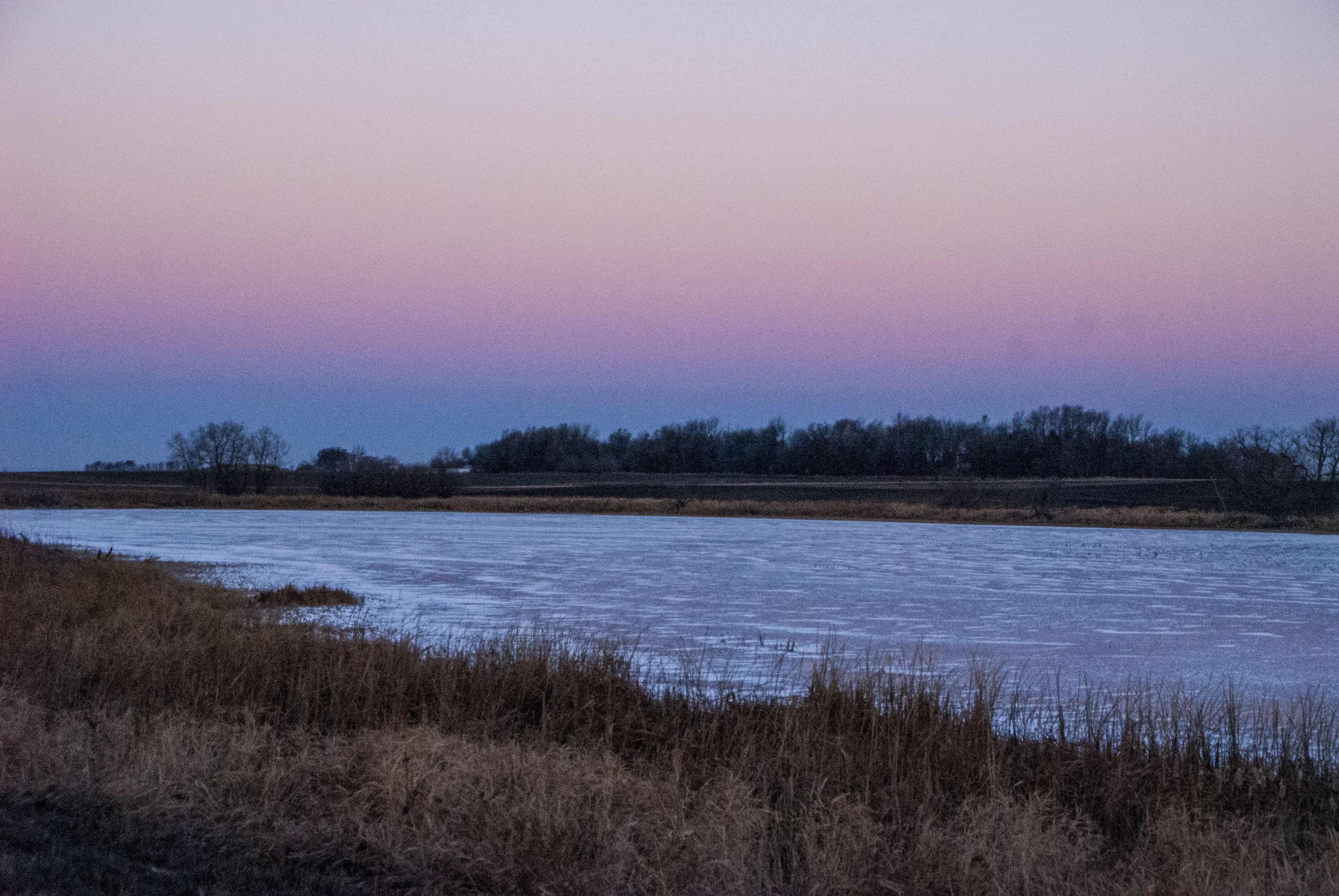
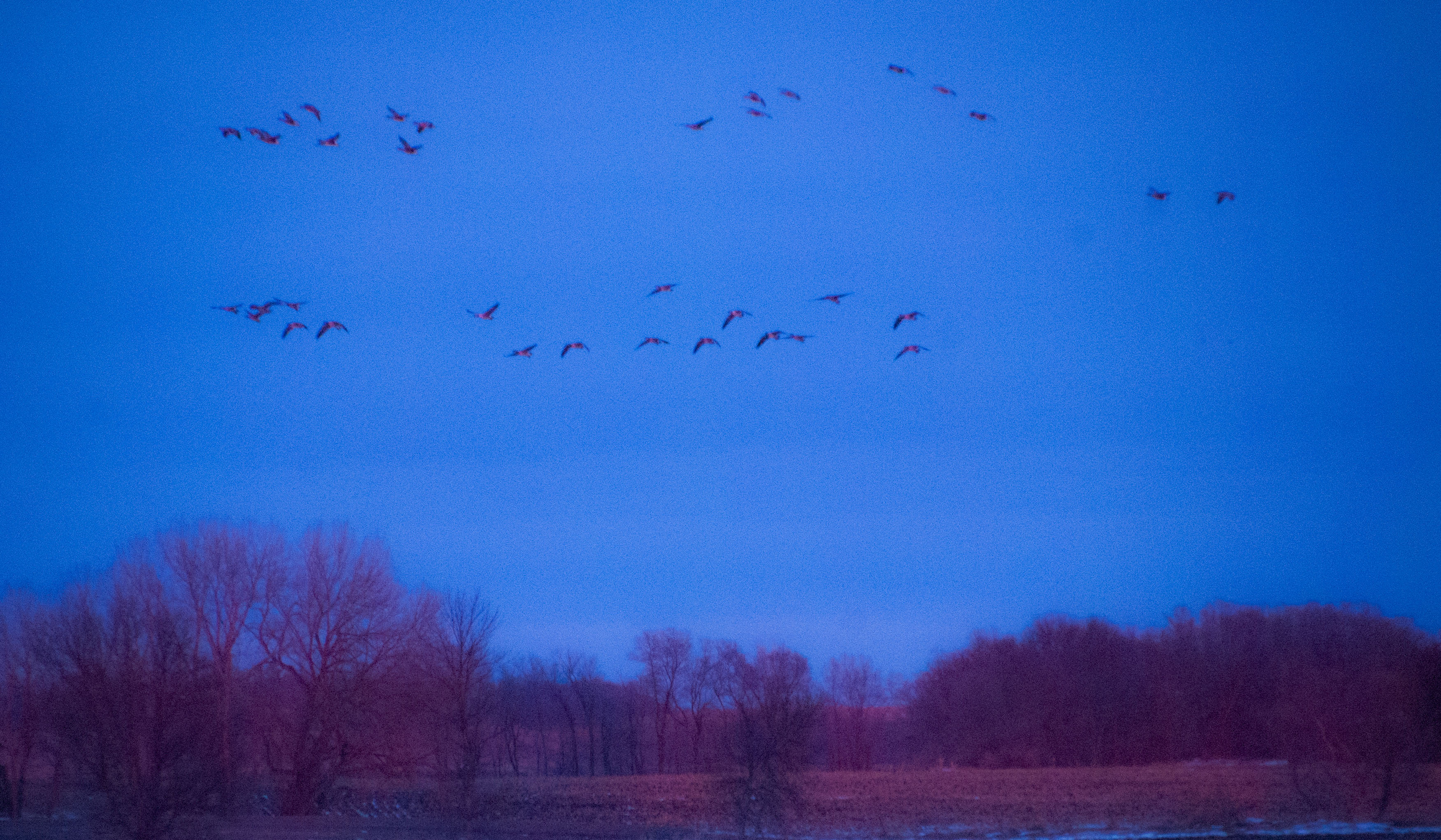
Welcome to the realm of “germ factories” and “mechanic’s luck” — since the day before I came down with Martin’s flu I had visited with my doctor and felt about as well as a person can feel. Four days later the flu was in full swing, knocking both Rebecca and me completely off our feet most of Friday afternoon and all day Saturday. Sunday was a bit of forced reprieve. A few hours were spent hiding in the grasses of the wetland up the hill, across the gravel road from our prairie, to sneak in a few pictures of migrating geese. While off at the wetland, my smoker was up and going putting a little pecan “blue” on a rack of ribs. On the way back I even stopped for a short spell to help  Rebecca pull cut buckthorn from the grove to place into piles to be burned later on.

Shortly thereafter my party came crashing down. Big time. One of my “sons,” Kevin, has been visiting us from Germany, and almost his whole time here after that first weekend I’ve resided either in bed or on the couch. We mustered up just enough energy for him to take us out for a “last” dinner the night before his departure, after which I came home to rub a menthol-salve on my feet and chest before laying down for the night for a most fitful sleep.

Rebecca has been pushing Echinacea tea into my system … even with a little lemon, honey and a jigger of whiskey included. Neither the plain nor doctored has seemed to offer much of a miracle. Other family members have swore by its magic, although it didn’t seem to help them much more than it has me. Medicinal miracles are hard to come by, perhaps. We’ve heard of these before, haven’t we? Hopefully the other herbs of interest are more effective, more productive of miracles than Echinacea.

Then there is the elderberry syrup. She’s been pushing that as well. At least this is more soothing, and seems to work wonders with her. Calming, yet moments later my coughing and sneezing returns. It was so good while it lasted, all three minutes.

over the wetland

What makes this tough is that while I feel compelled to stay inside to rest, I can’t help but see the skeins of geese flying across our windows, flying toward the two wetlands and farm fields so close by. I still like stepping onto the deck just to hear the constant chatter amongst them — through the wheezing and coughs, that is.

Last weekend my social computer network was full of reports from my birder friends who are visiting all those beautiful stops along the river valley, from Skalbakken County Park up to the National Wildlife Refuge just down the road. Many posted incredible images of the thousands of birds they’re finding along the way, from eagles to swans, from mergansers to ducks, from snow geese to wild Canadians, which only added to my discomfort. I wished to have been out there, too.

Then again, I feel I have some time to make up. After leaving the Mississippi Flyway in 1992 I missed so much of the migrations due to my working schedule and living in the middle of the “black desert” surrounding  Clara City. Living in the little stranded prairie town didn’t offer much in terms of bird migrations, with no comparison whatsoever to the river valleys. A year ago, our first here in Big Stone County, we were involved in a sprint more than a marathon to remodel this old house into our new home. Arrivals on the flyways greeted us each morning as we drove the six miles out here from Rebecca’s house in Clinton. There seemed a tease of an awaiting promise. Next year, came the message. Next year we’ll all be together.

Anticipation of the migrating birds really made the winter seem shorter and tolerable, and now the season is here I feel too sick to be outside with my camera and binoculars. Don’t worry, write my friends, for the migration is just starting. There will be plenty to see once you’re well.

Perhaps the downed internet service since Tuesday was part of the grand plan, to help prevent a deeper discomfort from missing the migration. If so, I’m missing the message. Moments ago we had a conversation concerning my sense of isolation, from the illness to the lack of internet. When your bond to the outside world is not just inconsistent, but non existent, your sense of isolation is heightened considerably. It is how I can keep up with the news of the outside world, of trends and what we in the news business called “spot news,” and of course, staying in tune with folks from Australia to Austria, and from Clinton to Clara City, on the social network sites.

My internet was also my dictionary, my spell check, newspapers, my … well … medicinal mental miracle. Just an example, in a couple of weeks we have a bentwood trellis class through the Milan Village Art School with Jo Pederson, and I had a fleeting thought of looking through some patterns. Oh, yes, we have no internet. No link. No nothing.

In front of me is the machine of my methodology, minus the major tool that makes it really shine. Outside the geese are serenading the flyway, crossing the windows, leaving invisible paths of their web of life. Inside my wheeze-enlightened coughing continues, and I sip Echinacea awaiting any medicinal miracle.

Temperance

Ever notice how the words temperate and temperamental come from the same Latin root? That root is temperare, which relates to moderation.

In Minnesota, we claim to love our temperate climate—and its clear differentiation between the seasons, but in our waxing poetic about the changes once they’ve happened (the intense greens and blues of summer foliage, sky, and water; the rich, ripe colors and scents of autumn; the balmy caress of spring’s warm breezes; the moon on the breast of new-fallen snow, etc.) we sometimes forget until we’re suffering from the effects of the temperamental side of our supposedly ideal seasonality that temperate climates can also suffer from the full-blown temper tantrums of one season not wanting to share the landscape with the next.

Maybe we should temper our disgust with winter’s apparent unwillingness to play nicely with spring: that same root word that gives us temperate climates also gives us both foul and even tempers, as well as Volstead’s act of temperance (a.k.a. Prohibition), a way to harden steel, and tasty little veggies dipped in batter and deep-fried (OK, I’m kidding about that last one).

Out on the farm, the weather isn’t the only thing that’s been temperamental in the past week. Our health, for one thing, has been compromised by a particularly vigorous strain of viral bronchitis that is making the rounds of Western Minnesota and Eastern South Dakota (we suspect it was brought to us from a certain public school in the eastern Dakotas via a very sweet little boy who hasn’t perfected the “cover your cough” rule). He, of course, got over it in a matter of two or three days thanks to mom’s vigorous ministrations, but not before passing it along to both sets of parents.

About six days later, John and I started developing the symptoms. We hosted a couple of friends for dinner Friday, as we were not yet aware we were carriers of this plague, and one of our guests that night notified me in a quite graphic detail this morning that she’s now down with it in all its glory. We’ve self-quarantined since Monday, but I fear for our house guest of two weeks, a former exchange student of John’s who on Monday (just before the most recent winter tantrum) set off on a round-the-Americas trip.

Dear readers, please forgive us, for it appears we may have unwittingly started a pandemic. Kevin seemed healthy as a horse when he left (as evidenced by his vigorous workouts and enormous appetite for eggs, which put off my scheme of making vast quantities of pasta with the excess), but the six-or-seven day incubation period for this illness means our last, best hope is for the less-temperamental climes of Mexico or Cuba to quell any potential outbreak.

In the hen house, the on-again off-again spring has put my girls in a “fowl” mood. Now that they’ve tasted green grass, it peeves them greatly to be confined–if only by their reluctance to set foot in the snow, being that their ramp has remained open during the daylight hours. The Silkies have gone off laying for a week now in protest of my obvious attempt to murder them all in the process of dusting them for mites, though the heavier breeds thankfully tend to ignore the dire warnings of those silly, poofy-headed things that don’t know any better than to “roost” on the floor. The big girls can see very well that the sky isn’t falling, except for when it is—with that damnable white stuff that blankets their favorite scratching ground.

Out on the sun porch, feathers are mostly unruffled among the younger birds except for when my murderous intentions are revealed through the process of—gasp! Cluck!—providing fresh bedding, water, and food every couple of days. Of course, nine of the fifteen birds in the brooder don’t have any feathers yet to ruffle, but their adolescent sisters are teaching the young ones how to adequately express their displeasure once they do.

I’d worried about potential bullying of the chicks by those in their “awkward phase” of feathering out, but if anything it’s the little ones throwing their weight around (figuratively speaking, of course). Not only are the bigger birds outnumbered, but their legs are the perfect length for little ones to squeeze under, and their emerging tail feathers provide a perfect “apron string” to tug on—leading to hysteria in the big sister and hilarity for spectators as the bigger bird runs squawking down the length of the brooder with puffball in tow.

A moment of peace in the brooder.

A moment of peace in the brooder.

I’d feel badly for the older pullets if they weren’t perfectly capable of escaping, as they often do, by fluttering up to the top of the fountain and perching there, peering in the office window as if to say, “Mom! She’s doing it again!” and then getting knocked off by a peer in a poultry version of “King of the Mountain” (or, to pull in the gossipy hen metaphor, “Queen of the Water Cooler”).

By far the biggest inconvenience of this temperamental weather has been the temperamental nature of our internet service the last couple of days. Thanks to Monday night’s snow-sleet-ice storm (with simultaneous blizzard and tornado warnings an hour south of us), we’ve had about two total hours of service since early Tuesday morning. We’ve taken to wearing our cell phones on our persons, so that the sudden buzzing of the updating devices signals us to quick!—run and check e-mail and hopefully fire off a response with the unknowable amount of time we’ve got to do so. Could be five minutes; could be forty-five. Who knows?

As you might imagine, being both self-quarantined due to illness and cut off from communication (and work when we feel well enough to do so) has caused tempers to flare, and random grumblings about being way out on the “howling edge of civilization, isolated from the world.” OK, maybe the quote wasn’t that elegant, but I try to keep this blog rated PG.

The sad fact is that our internet service sucks out in western Big Stone County. Not “sucks” as in how pretty much everybody who has internet service complains about it at some point or other, but “sucks” in both all the normal ways (slow, unreliable) and some uniquely bizarre ways (bills never arriving, no way to know what’s going on when there’s an outage or when we might expect it to be repaired, if—yes, really–ever).

There are only two reasonably-priced options for internet out here in the western part of the county, and they are both managed by individual (male) proprietors who never answer their phones and whose moms (yes, in both cases) are the main point of contact for setting up service or for any problem that arises. If there’s a big problem, mom usually doesn’t answer her phone either. The way you determine if the problem is widespread is if, on the second day, mom’s voicemail box is full and no longer receiving messages.

I can’t help but feel like a jerk in pointing out how crappy the service is because God bless ‘em (as they say in rural Minnesota), these guys are providing a service that no one else is out here. It might take a month and a half to get set up (three weeks wondering if they received your call, and three weeks feeling as though you shouldn’t leave the house in case today is the day they magically appear), but at least you can get some kind of connection that doesn’t cost more per month than filling the propane tank in deep winter. And they’re really nice people when you do finally meet them.

But the fact is, no professional person in their right mind would move to western Big Stone County—even along our lovely lake–with the poor quality of internet service here (detractors fully granted permission to chortle over my admission of insanity). Sure, you can get passable service in the towns—I had decent connections in both Ortonville and Clinton when I lived there—and on the eastern edge there’s the enviable service provide by FedTel Co-op. But in the rest of the county it’s as if we’re still waiting for the latter half of the twentieth century to arrive.

My tales of service strangeness might seem amusingly bucolic to some, but the lack of fast, reliable internet is a major economic catastrophe-in-the-making in our rural areas. There are a lot of goods and services that urban- and suburbanites are willing to give up regular access to in order to get a big ol’ slice of the good life out on the prairie (don’t believe me? Consult your Ben Winchester), but the ability to stay connected to the world (and to the goods and services not available here) is by-and-large NOT one of them. We bemoan the fact that our young people leave and don’t come back—that our towns are dying and our lovely countryside is almost empty of people–the pretty old farmsteads burned, buried, and converted to industrial ag wastelands, but we’ve yet to move forward on a major initiative that could help stem that tide.

While correlation is not causation, the lack of technological infrastructure—specifically high-speed internet–is certainly a factor in our dire economic circumstances and our inability to attract people and entrepreneurs to an otherwise incredibly attractive place. Furthermore, these dire economic circumstances create a climate in which further degradation and destruction of the natural resources that make this place so attractive (including the idiotic decision to annex township land and quarry our county’s namesake rocks in the City of Ortonville) seem like our only options. To quote, once again, one of Ortonville’s illustrious planning and zoning officials, “People who aren’t from here might not understand this, but all we have is our rock.”

Come to think of it, it might be better that we’re cut off from the outside world. We wouldn’t want sales pitches like that to be broadcast too widely.

The clouds are starting to roll back in, and the last weather reports received looked like we might be in for yet another of winter’s temper tantrums. Visibility is dropping, and the feeling of isolation increases, though it’s not entirely unpleasant when the house is warm and the kettle hot. Hundreds of geese roil above the sloughs, and the songbirds are rapidly depleting the feeders we filled yesterday. Despite some discontented clucking in the coop, I decided to close them in for the day, rather than waiting to flounder out there with my stuffy head and drippy nose in the midst of a full-on snowstorm.

It’s almost two in the afternoon on Wednesday, and we haven’t had internet access pop up (according to the last update of my inbox) since 6:45am. Still, we hold out the dim hope of reconnection while we settle in for some reading and the 147th round of tea—a jar of mentholated rub and a box of tissues between us.

Before I get too comfortable out on this lovely, maddening, howling edge of civilization, I’d better slip on something with pockets, so I can feel the buzz of my phone telling me it’s time to talk to the world again.

[Our internet service was finally restored on Saturday.]

Spring Gleanings

I’ll admit it hasn’t been much of a joint blog lately, and I see the “He Said” column is growing long against my less-then-a-handful of posts under “She Said.” So, here’s what I’ve been up to…

photo(3)

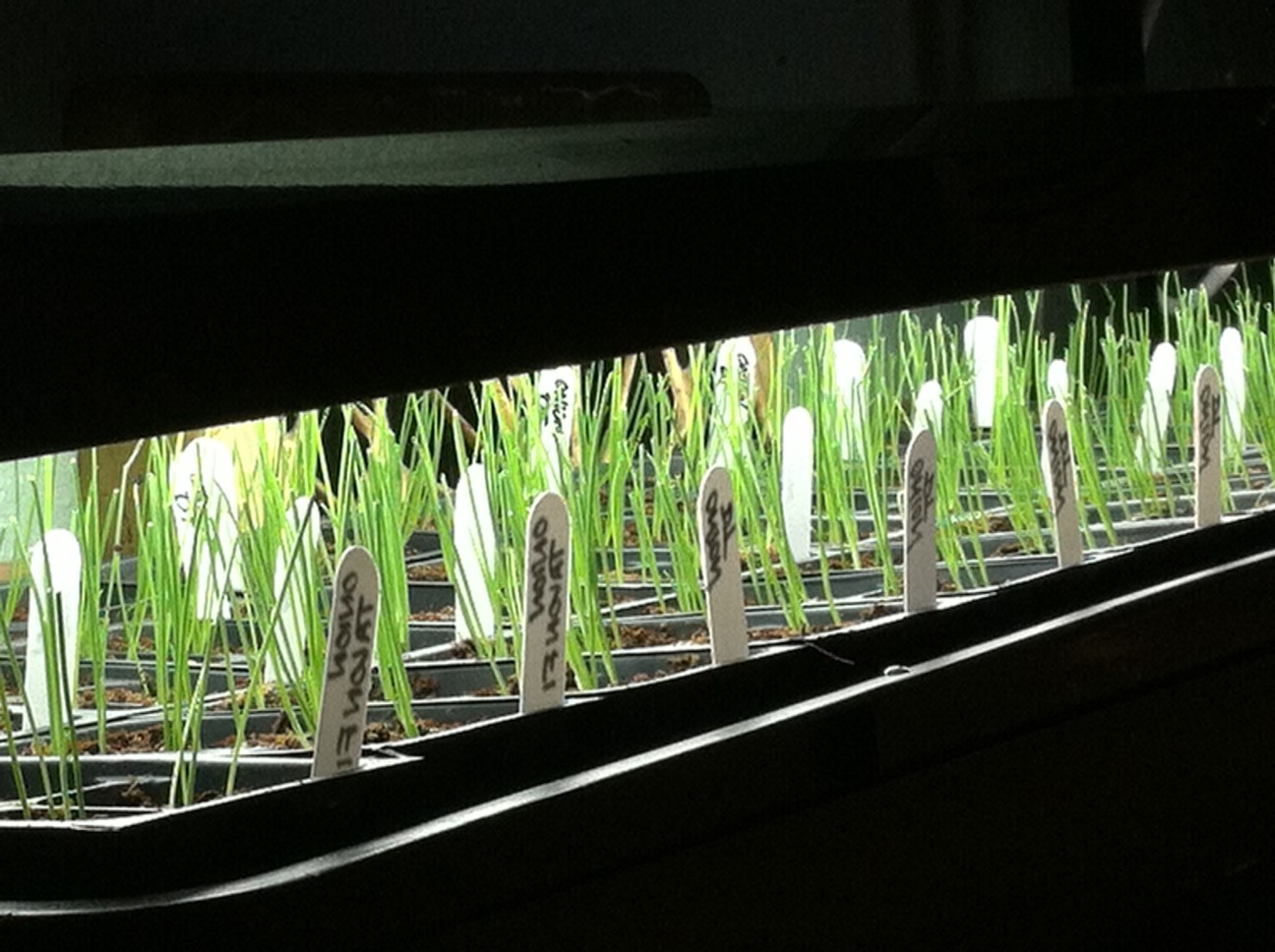
Seed starting has commenced, and the onions are up and growing nicely. I’ve got three varieties this year: Long Red Florence for the tasty fresh-eating and kabob onions of summer, as well as my standby Talon F1 yellow storage onion (which I’ve gotten from Territorial Seed for a few years, but now I see High Mowing has it, too). A new yellow storage onion for this year is the open pollinated Dakota Tears, developed by Prairie Road Organic Seed. They are looking really fine.

Blue Solaise leeks are another old favorite–germination is a little thin this year as the seed is getting old. Last year I planted 80 row feet of them, but between flood, drought, and weeds, they only ever managed to get to pencil size–not their usual stout, blue flag-waving grandeur that can last through the winter if the deer don’t get desperate. Started some Mars Celeriac (and with fresh seed, too), but even on a heat mat their germination has been disappointing. We’ll end up with a few for our table, at least.

Yesterday the peppers went in 4-packs on the heat mat–ten varieties with six of them sweet and the rest some shade of smoky. A few new ones this year including Three-Sided From Syria (a last-minute curiosity), Aconcagua (intriguing for years–finally taking the plunge), and a mini belle pepper blend to satisfy my curiosity about that recipe for little peppers stuffed with cabbage and pickled whole. The only new hot one is Martin’s Carrot, which came as a bonus for re-upping my Seed Savers Exchange membership–so why the heck not?

I won’t start tomatoes for a couple of weeks, but the situation is starting to get a little desperate as far as varieties. My December seed inventory lists 13 varieties, which is fairly respectable, but somewhere along the seed-ordering way I’ve ended up with 21 kinds, and then a discussion with a fellow gardener about good little yellow tomatoes landed me on High Mowing’s website adding Yellow Perfection back into my mix–along with two MORE varieties that sort of slipped into my cart unnoticed.

How does that happen? At this rate, I’ll be up the thirty by the time I actually put seeds into medium, and being as I’d like to get them going in the one 20-channel flat I have left…well, I’d better stay away from seed company catalogs and sites for awhile. Though, as any gardener with gardening friends knows, that isn’t always a guarantee. You run into someone, you get to talking tomatoes, and suddenly there’s another packet or two in your purse. Going into hiding might be the only option.

I’m sad to report that we lost a hen last week. She was an Araucana-Jungle Fowl cross, and she’d been listing around for a few days. The others weren’t picking on her, and she was able to get to food and water (and was consuming both), so I didn’t worry too much about it. She wasn’t roosting at night, but she did find comfort with the broody Silkies that hang out on the floor. Still, when I went to shut the coop on Wednesday night, she was keeled over in the run. Bummer.

Despite a few glorious days of temps in the forties and fifties (yeah, we have a lower bar for “glorious” after this winter), the majority of days have been chilly, though bright. I’ve got the whole set-up ready for brooding about a dozen more pullets for the laying flock (and then fifty broilers and a few turkeys and guinea keets after that), but out on the porch it’s hard to keep their pen warm enough except for directly under the heat lamp. I’m getting to the point of setting up an insulated pen-within-the-pen because I want those pullets feathered and ready for the coop before the broiler madness starts.

Meanwhile, we are getting about seven eggs a day from the existing small flock, and the yolks are starting to regain that intense golden color that signifies they’ve been out on grass. Other than giving a few away until there’s enough production to merit selling, my egg utilization strategy combines browbeating family members about consuming their daily ration and ordering in a few pounds of semolina flour to make fresh pasta. Lucky for the family–we have a young man visiting from Germany (a former exchange student of John’s) who is capable of eating an entire day’s production in one sitting (willingly, too–it’s not a force-feeding hostage situation, I swear!).

With the ground bare but still frozen, the only serious outdoor activity I’ve engaged in lately is the endless hauling of buckets-full of trash from the grove. The area nearest the house is getting less junky, but barefoot-ready it’ll never be. Still, aside from the endless piles of rusted-out cans, broken glass, and car parts, there are some cool old intact bottles to be found in the deeper recesses. Making it out as a treasure hunt rather than a years-long chore seems like a better way to attract helpers. C’mon out and join the fun!

Sound and Feathered Fury

Being in the flyway was truthfully neither among the criteria nor motivation for us when we decided to buy this farm situated just up the hill a-ways from Big Stone Lake. As we began carrying the buckets and boxes of discarded lath-work and crumbled plaster to the huge dumpsters we were often stopped by the skeins of geese, by both the sound and the beauty of flight as they moved from fields to frozen wetlands.

Then, on the drive back and forth from Rebecca’s house in Clinton, we watched as continuing populations of different ducks stopped on the way through. Redwing blackbirds soon took up negotiations in the cattails on the sloughs along the roadways, and in the grove, flocks of various songbirds came to rest and roost.

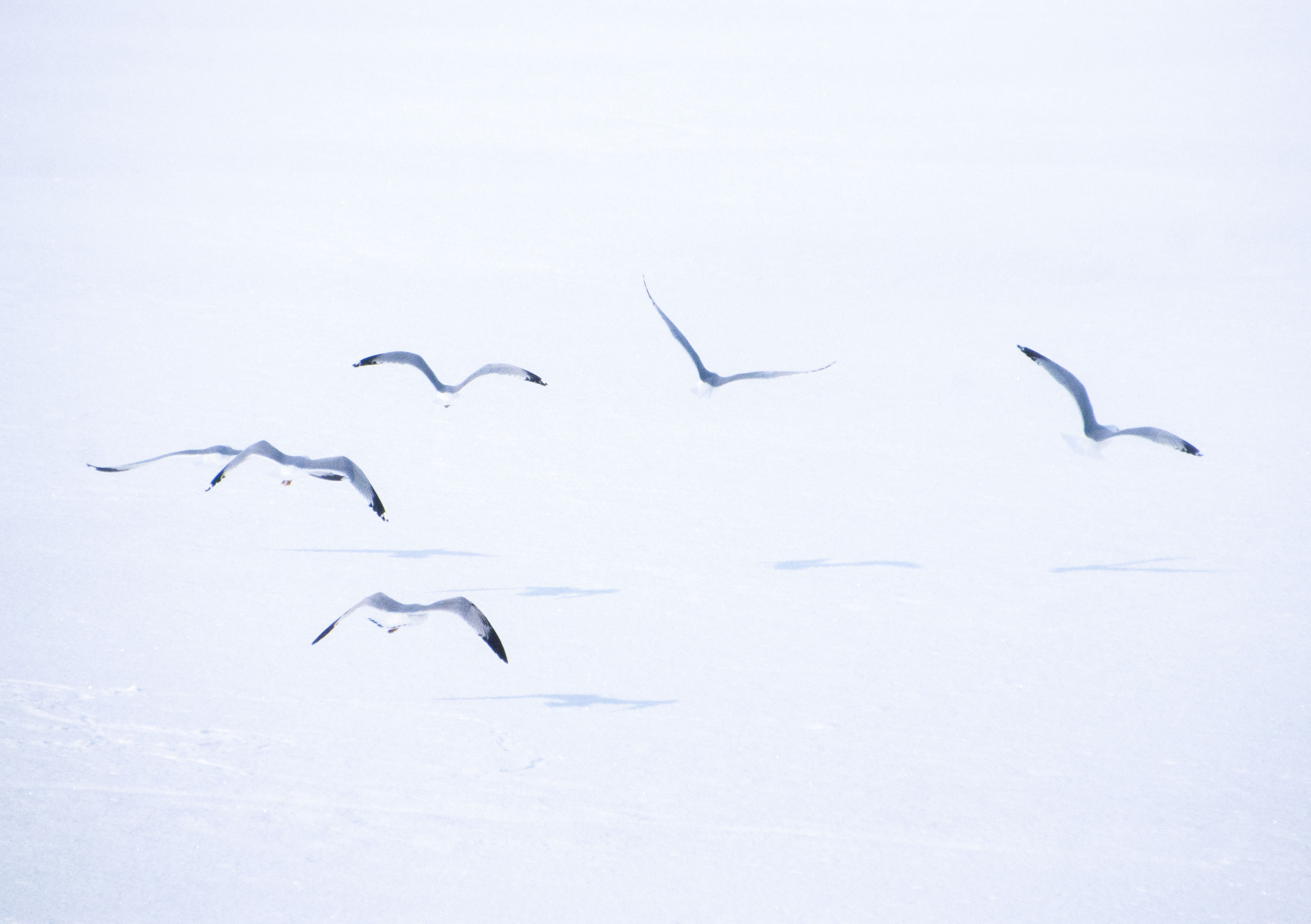
Migrating gulls rise from the ice at the National Wildlife Refuge.

Migrating gulls rise from the ice at the National Wildlife Refuge.

Every day became an adventure. Rebecca saw her first merganser, and my excitement in seeing my first curlew was duly noted.

Now, a year later and with the inside work completed, we await a new migration. Over the winter I purchased a photographic blind as part of that anticipation. Already the vees of geese are flying overhead, and a couple of nights ago we watched as two huge flocks of snow geese flew overhead reflecting the golden hue of the sunset.

Someone mentioned that the redwings, which for me have traditionally been the true sign of spring, were seen just south of here. In two days of travel through the area, though, I’ve not seen a single one although there are cattails along many of the roadways and highways.

For ten years we lived in the heart of the Mississippi flyway along the Little Vermilion River just east of Hastings. The Little Vermilion cut through town, then through the near wilderness backwaters parallel with the Mississippi from Hastings to Redwing, a distance of nearly 30 river miles. This land was swampy and wild, filled with trees and backwater lakes. After more than a decade of living in Colorado, moving into the flyway was thrilling every spring and fall as new species of birds continued to find the feeders just outside our dining room table. Hours were spent watching this bird life just inches away from our plates, and really, we catered to the birds with our landscaping and plantings … as did many of our neighbors.

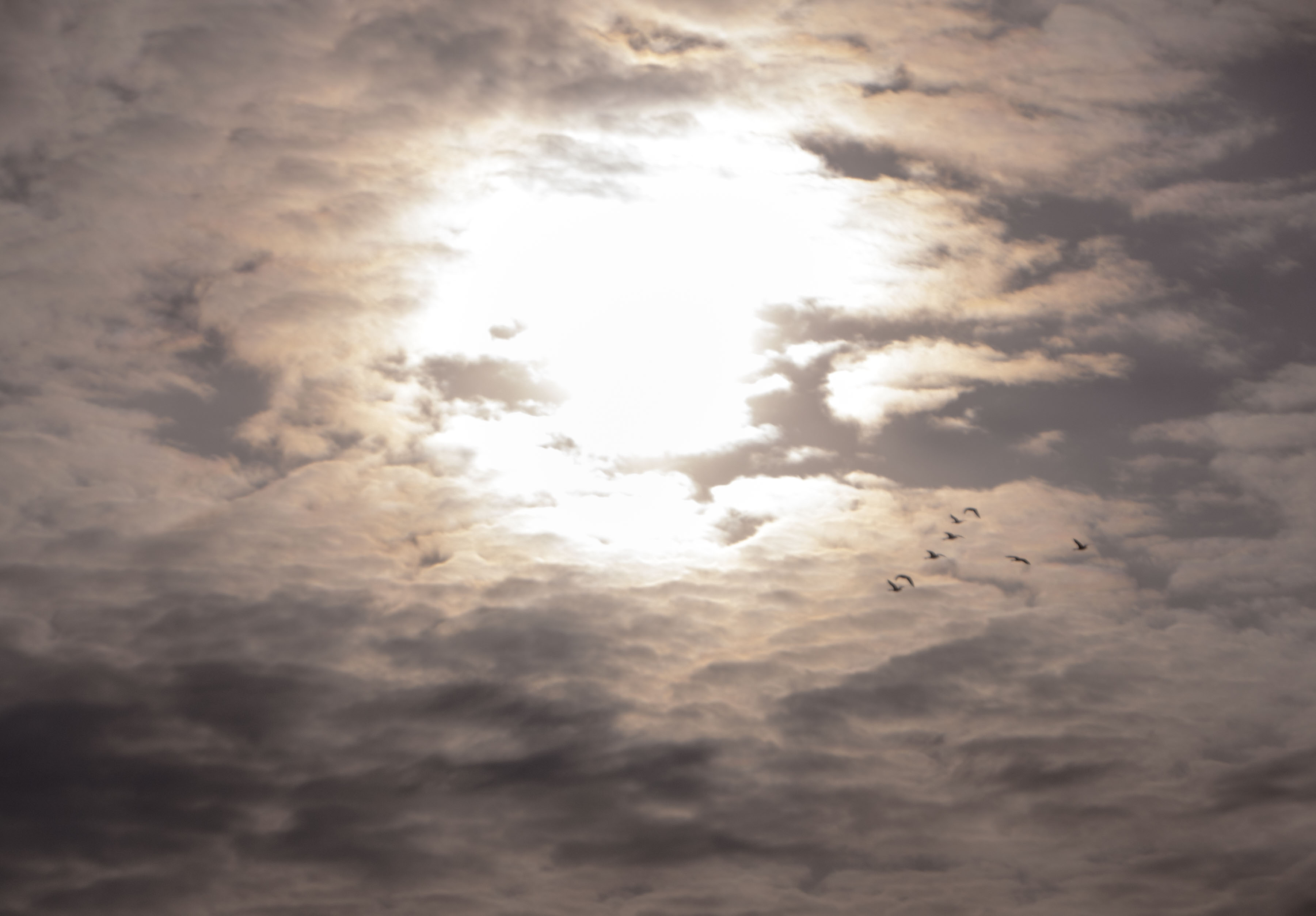
Small skein of geese in the morning sun.

Small skein of geese in the morning sun.

Here in the Minnesota River flyway, which by most accounts is still part of the Mississippi, we see a much different grouping of birds. We certainly see more ducks, geese, gulls, terns and wading birds, along with the “usual suspects” among the warblers and songbirds, here than on the eastern side of the state. Last spring, by chance, one of us looked into the high canopy of the grove and suddenly realized what we were seeing wasn’t leaves but rather hundreds of birds resting from their flight.

Being outside this time of year is special, and especially for the sounds. Each sighting reminds one of that sense of comfort in greeting an old friend. “Welcome back to the neighborhood,” you want to shout. “You missed one hell of a winter.” Ah, yes, seeing them, one and all, is knowing spring is coming. In his Sand County Almanac, Aldo Leopold wrote, “A March morning is only as drab as he who walks in it without a glance skyward, ear cocked for geese.” I’d suggest the same holds for a March afternoon.

While it’s true the flyway was neither criteria nor motivation, finding an area where the very last less than one percent of the prairie pothole biome has yet to be shadowed by the plow or drained by plastic drainage pipe was certainly in our thoughts when we bought our farm. Just over the ridge to the east, and up the hill and across the road, are two beautiful wetlands, and although this area is definitely part of the sea of summer corn that has replaced big bluestem in the prairie pothole ecology, our county has in my estimation probably the highest number of the original potholes (wetlands, sloughs or whatever noun you choose to use) in Western Minnesota.

It’s these wetlands, my choice of noun, that attracts the geese, ducks, mergansers, gulls, terns, eagles and waders, and the old farm groves, remaining oak savannas and tree-lined edges of Big Stone Lake and a few of the gullies that haven’t been dozed into field configurations, and provides refuge for the song birds. Eliminating these last remaining few pieces of the ecology would likely divert the birds elsewhere.

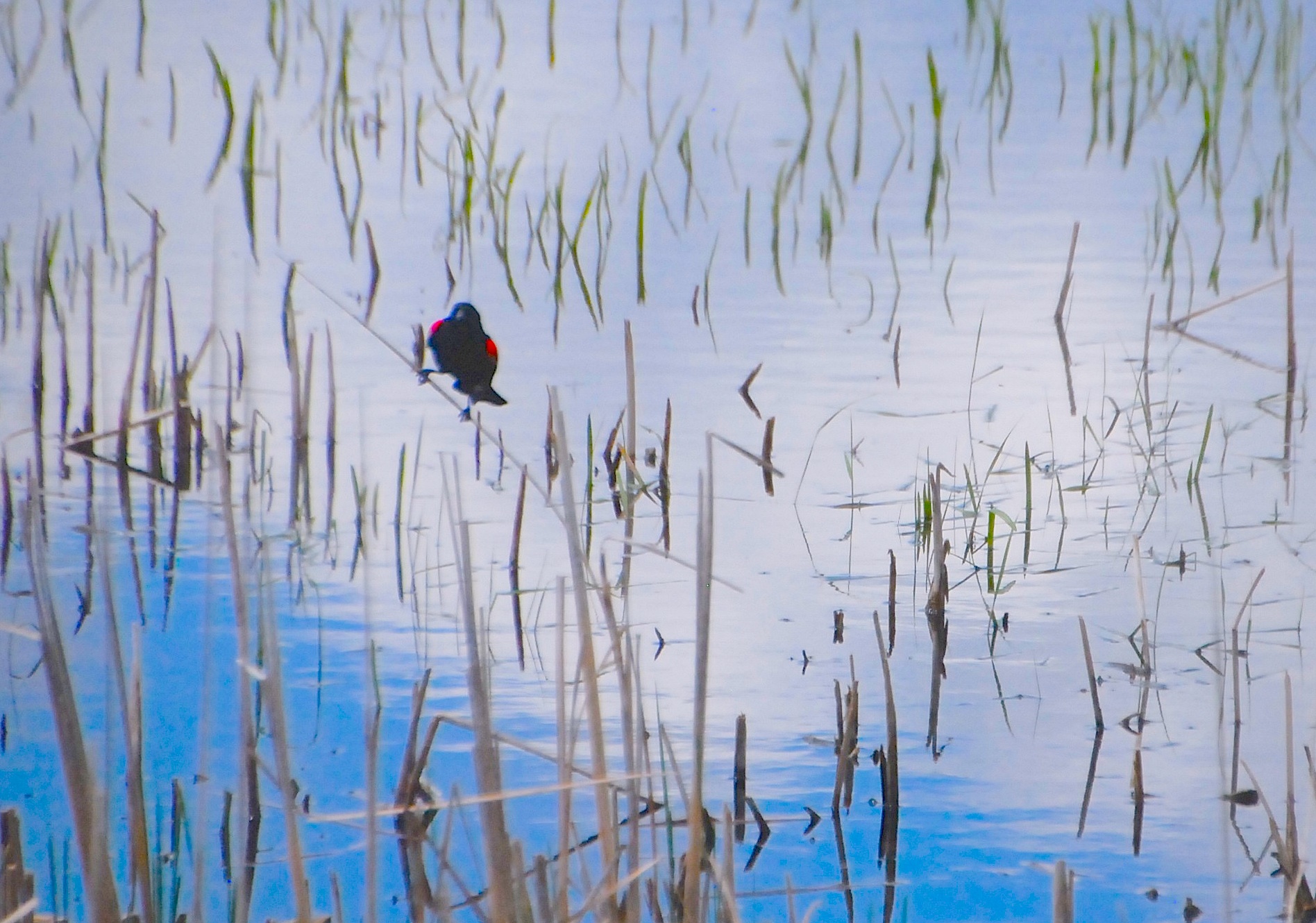
Redwing blackbird establishing his territory.

Redwing blackbird establishing his territory.

For now the flyway is alive, although we’re well past the days spoken of by old timers my age who remember when the prairie skies were blackened by waves of migrating redwing blackbirds. These are stories that typically begin with, “When I was a kid …” Yet we can look skyward and see the skeins of geese, sometimes several at once, some with hundreds of birds, all making announcements of an awakening spring. It is up to us to keep our ears cocked and eyes skyward as March marches on toward April.

Earlier this week while Rebecca was gone for a meeting I sat with a cat in my lap on the couch in the solarium and watched a mass of birds launch from a treeline across the field from our farm, a mass that turned suddenly to fly directly over the house. Not a sun blotter, but an impressive number. Meanwhile, skeins of geese continued to pass between the lowering sun and my perch on the couch, enough so that I finally sat the cat aside and went for my camera. And I sat for almost an hour waiting as the sun followed a slow path, and finally a quick sink, as no more skeins appeared … although I heard several pass on the east side of the house nearer the wetlands.

Spring migration, when the sky is alive with sound and feathered fury, is my favorite time of year.

The Ship … Has Sailed

Both of us have children. With luck, perhaps, they will live long past my lifetime, and even Rebecca’s. With luck, perhaps their’s will be a comfortable life, economically and environmentally.

Luck, perhaps, is nebulous, for it wasn’t even a week ago she rose from her office chair and went off into one of her classic rants about the state of earth. Though I don’t recall the exact topic, it could have been our continued and shared views on the disrespect being shown to soil in farm fields by neighboring farmers, or of the frac sand mining issues. We discuss many politically sensitive subjects, and many have to do with the environment and both the corporate and non-corporate attacks on our dear Mother Earth.

“The truth of the matter,” she exclaimed, using her familiar hatchet chop gestures, “is that the ship has sailed and it won’t be coming back!”

Translated this would suggest that should our own Congress ever do something, let alone countries like China and India where emission standards are so low that thousands of residents of those nations resort to wearing facial masks, life as we have known it on earth is likely past the point of being saved. True to character, I threw out some lame bit of positive argument that went nowhere.

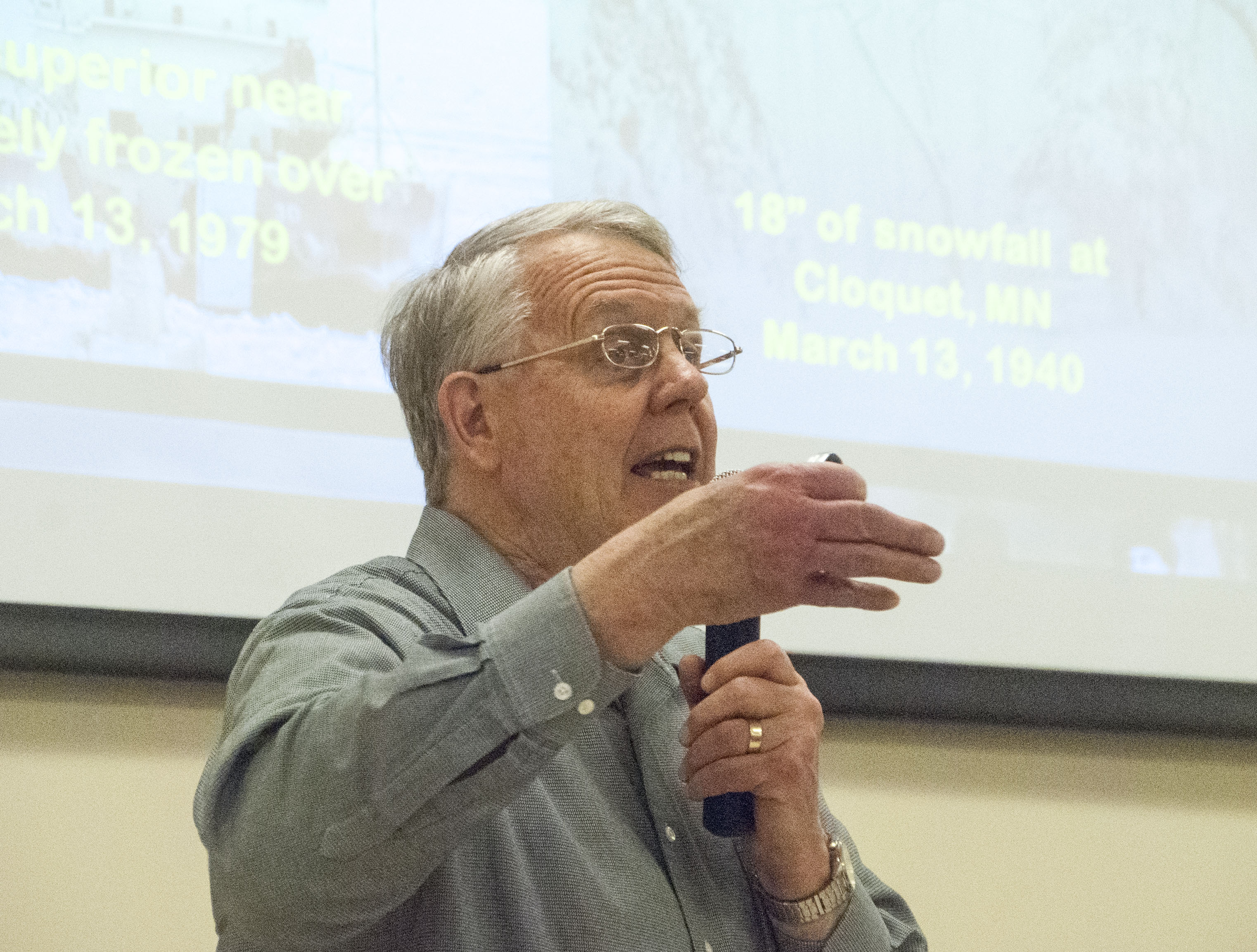
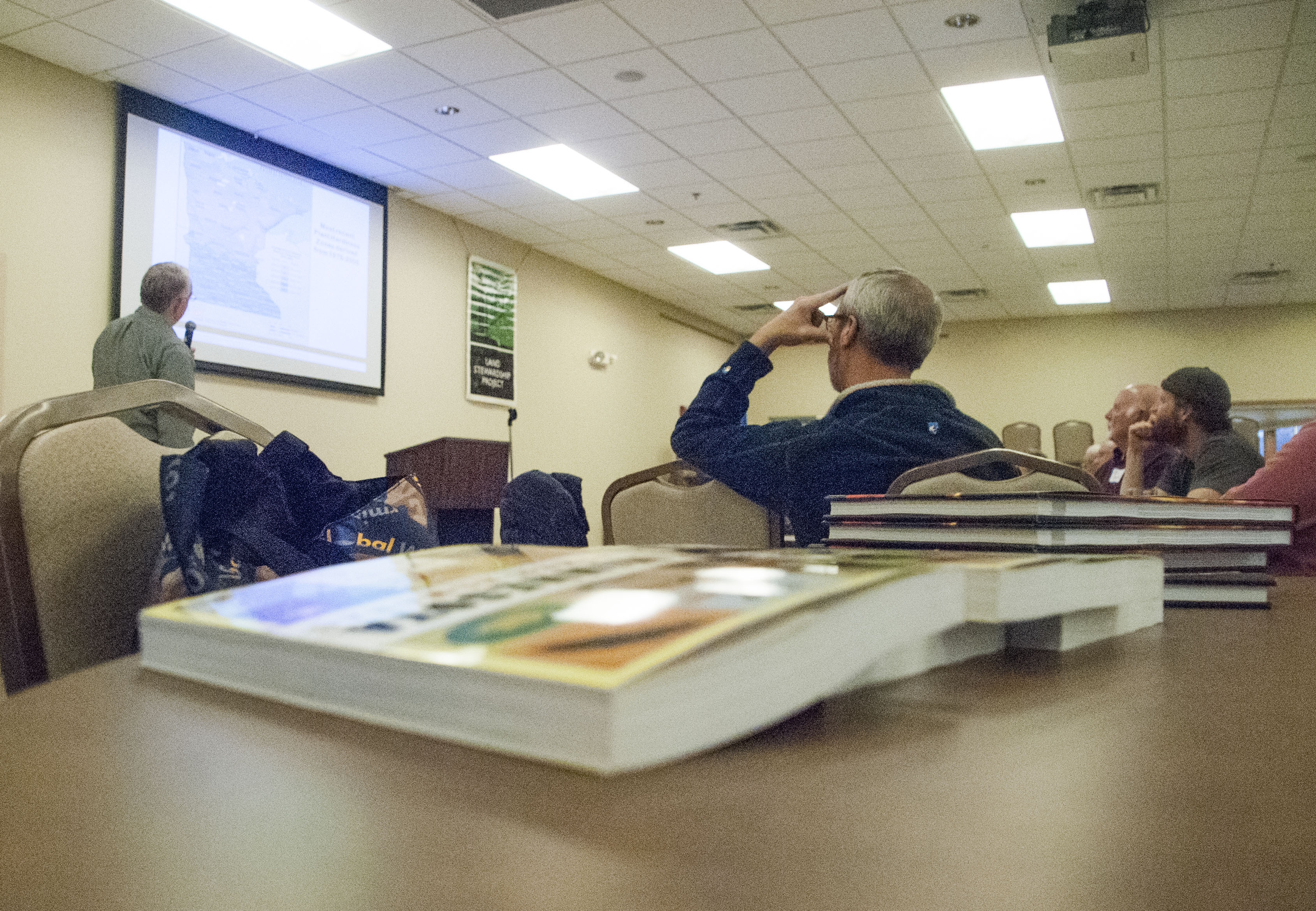
Our conversation came to mind while listening to a presentation by Mark Seeley, a University of Minnesota climatologist and MPR climate darling, at a Land Stewardship Project gathering in Starbuck. He was nearing the end of a compelling presentation augmented with factual data on how our Minnesota climate has changed so dramatically in the past three decades. Yes, our winters are certainly warmer … even if our past winter was considered an aberration more so than the norm of just a few decades ago.

Climatologist Mark Seeley makes a point in his presentation at the Land Stewardship Project's Starbuck, Minnesota, gathering.

Climatologist Mark Seeley makes a point in his presentation at the Land Stewardship Project’s Starbuck, Minnesota, gathering.

And, yes, our summer dew points are also rising, along with the frequency and fierceness of severe weather events. Humidity is rising, along with coincidental health and pest issues. Droughts and flash flooding are as common nowadays as blackbirds in the bulrushes. In the same years of record high moisture events, we have consequential droughts recorded. An overnight, ten-inch rainfall in Duluth was followed by months of drought. Events are more localized, in that a farmer might have enough rain for a crop while a neighbor just to the south records a drought. Minnesota has recently set records for the number and frequency of tornadoes, and F5’s, once more common much further to the southwestern states, have been recorded both here and in Canada.

Consequently, with such variances in catastrophic weather events, property insurance rates are going ever higher and higher.

Near the end of his presentation, Seeley displayed a set of maps that showed modeled projections of a narrow climatic band that crossed the state through the Twin Cities, a band modelers at the University of Minnesota project will reach the Minnesota-Canadian border by the 2060s.

In other words, the weather and temperature common through the middle of the state would evolve to become more common at the far northern border. This would leave a broad breadth of our state with a climate not unlike mid-Missouri perhaps, although Seeley admitted he couldn’t answer the question in good faith without first talking to the modelers to know what they had projected for that deep band of uncertainty colored brown on his maps. “I need to find an answer to that,” he said. “Next question.”

“Has our ship sailed?” I asked, without referencing our office conversation of about a week earlier. “Can we turn this around and come back to the port of what we know as a normal climate?”

“Not unless we start having conversations, as politicians, as nations, even as neighbors,” Seeley started, and he became increasingly animated as he portrayed the political polarization surrounding climate change along with an apparent dismissing of statistical data proving otherwise. Then he dropped the bomb. “From what we see, and from how climate has changed, and how it is being modeled based on scientific data, even if we put the necessary changes in place today, it is unlikely we could expect to right the changes in earth’s climate even before our grand-children’s, or even their children’s, generations.”

Among the 100 or so in attendance in the cavernous hall, a dropped pin might have crashed like thunder.

With Seeley's "Minnesota Weather Almanac" in front, he keeps a large audience spellbound with his data presentation.

With Seeley’s “Minnesota Weather Almanac” in front, he keeps a large audience spellbound with his data presentation.

In the morning news, little had changed. Up north the EPA had okay-ed a permit for Polymet to continue forth on its efforts for huge, open pit copper mining despite the threats to both ground and surface waters, including the adjacent Boundary Waters Canoe Area. Country ditches, already clogged with snirt from melting snow, are now filling with muddy runoff from farm fields. No changes were forthcoming in frac sand mining, West Virginia’s drinking water supplies, North Dakota’s groundwater issues nor a proposed a mid-continent pipeline for moving oil sands. And, yes, more photographs of Chinese residents wearing protective face masks due to emission pollution. In other words, a status quo on climatic issues and threats worldwide.

Years ago in my previous marriage I expressed concern on learning that we were expecting our first child together, for as a nation we were entering extremely uncertain financial times. Those have evolved to a point where the children born in that generation  are basically unemployable as a result of the economy. Those same children, now young adults, are facing a future that doesn’t bode well in terms of an even greater threat … the health of the very earth we all share. For them, their children, and especially their grandchildren.

Even as a confirmed optimist, I don’t envy their future.

Wind Games

Back at an age when mother-pleasing was something boys seven or eight find easy was perhaps when the concept of wind first entered my consciousness. We were in the midst of one of those sultry 90-90 Missouri summer afternoons without air conditioning with no hint of a comforting breeze.

“Don’t worry,” I told my mother. “I’ll make the wind start.”

We had a young elm, or so it seemed. I scampered up the tight bark, grabbed a long and low hanging limb to pull myself further into the heart of the canopy. Using my arms and legs I started pushing limbs and jumping on the branches with all my might. If I could just get some air moving, I thought, the wind would begin. A passerby might have slowed at the vigorous movement in the center of the tree … until one of the branches holding me aloft snapped and I was sent sliding down into the yard.

“Nice try,” said my mother with a smile once she realized there was no broken bones. “But you can’t start the wind.”

Wind-blown snow creates a halo effect on a prairie wetland.

Wind-blown snow creates a halo effect on a prairie wetland.

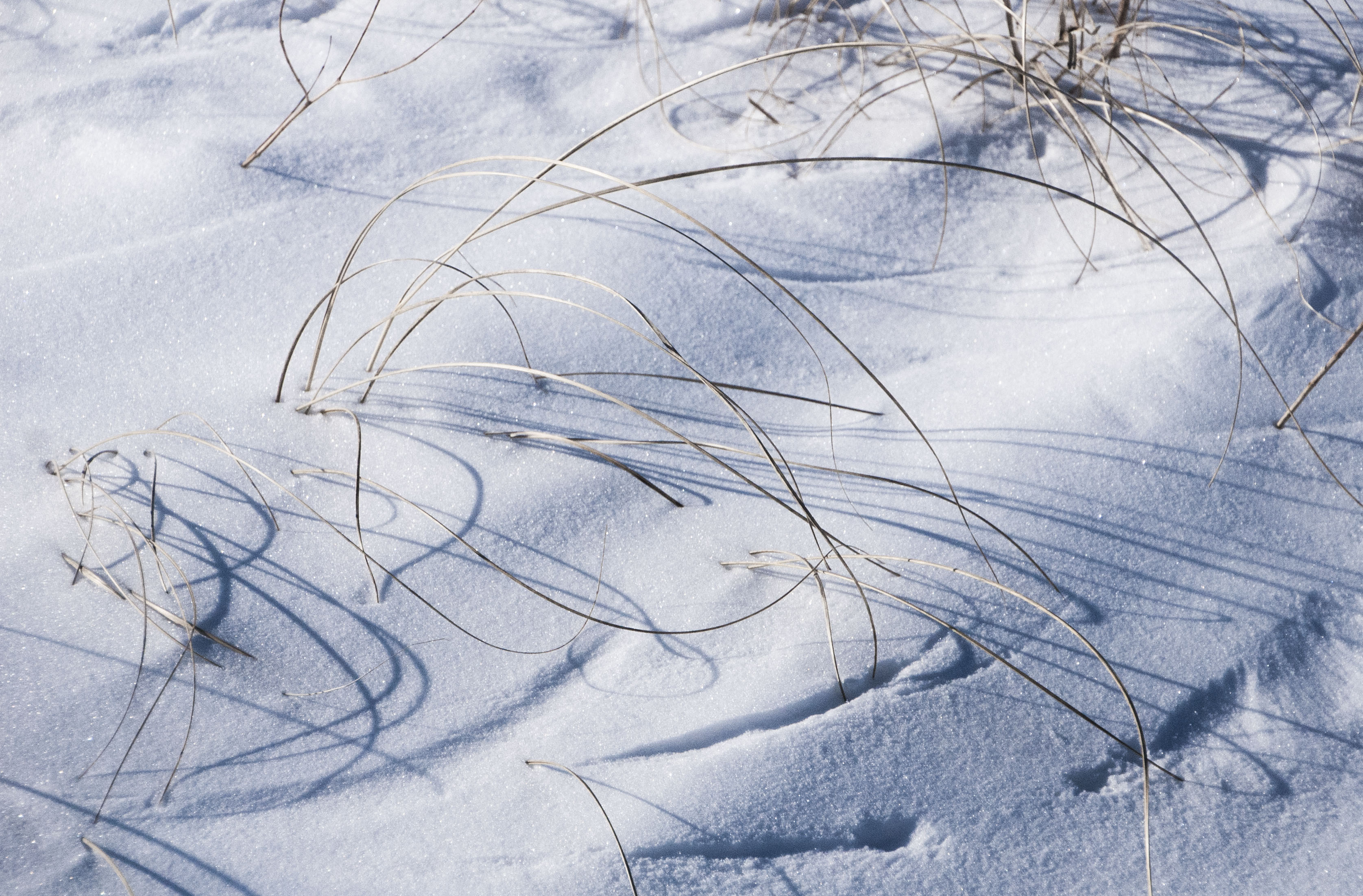
This was the beginning of my being haunted by the wind. From the slight, calming breezes that sooth the soul to the extreme of feeling and hearing of the forces of a 300 mph plus trauma of wind that swirled around the circumference of a thunderous storm cell to propel a six-seater cloud seeding plane above the Northeastern Colorado plains. Now, living here in the open prairie, wind is nearly a constant companion. It rumbles, sometimes like low thunder, from all directions, often deep into the night. It may tingle our wind chimes, or produce a wild, Beethoven-ish symphony clanging from the ash and oaks in the yard. Sometimes when you try to take a step into it out on North Meadowbrook, a northwesterly will stand you straight to halt you in mid-step. Wind has moved hundreds of tons of topsoil this winter, yet has delicately written “poems” in soft snow using prairie grasses as cursive “pens.”

Tips of prairie grass leave wind-etched "poems" in the winter snow.

Tips of prairie grass leave wind-etched “poems” in the winter snow.

This haunting caused a friend to recently tease me of how I could happily forgo watching commercial television programming for cultural media awareness in order to follow my passion for making images of prairie grasses in the wind.

“You must realize that watching prairie grasses blowing in the wind isn’t for everyone,” she chided.

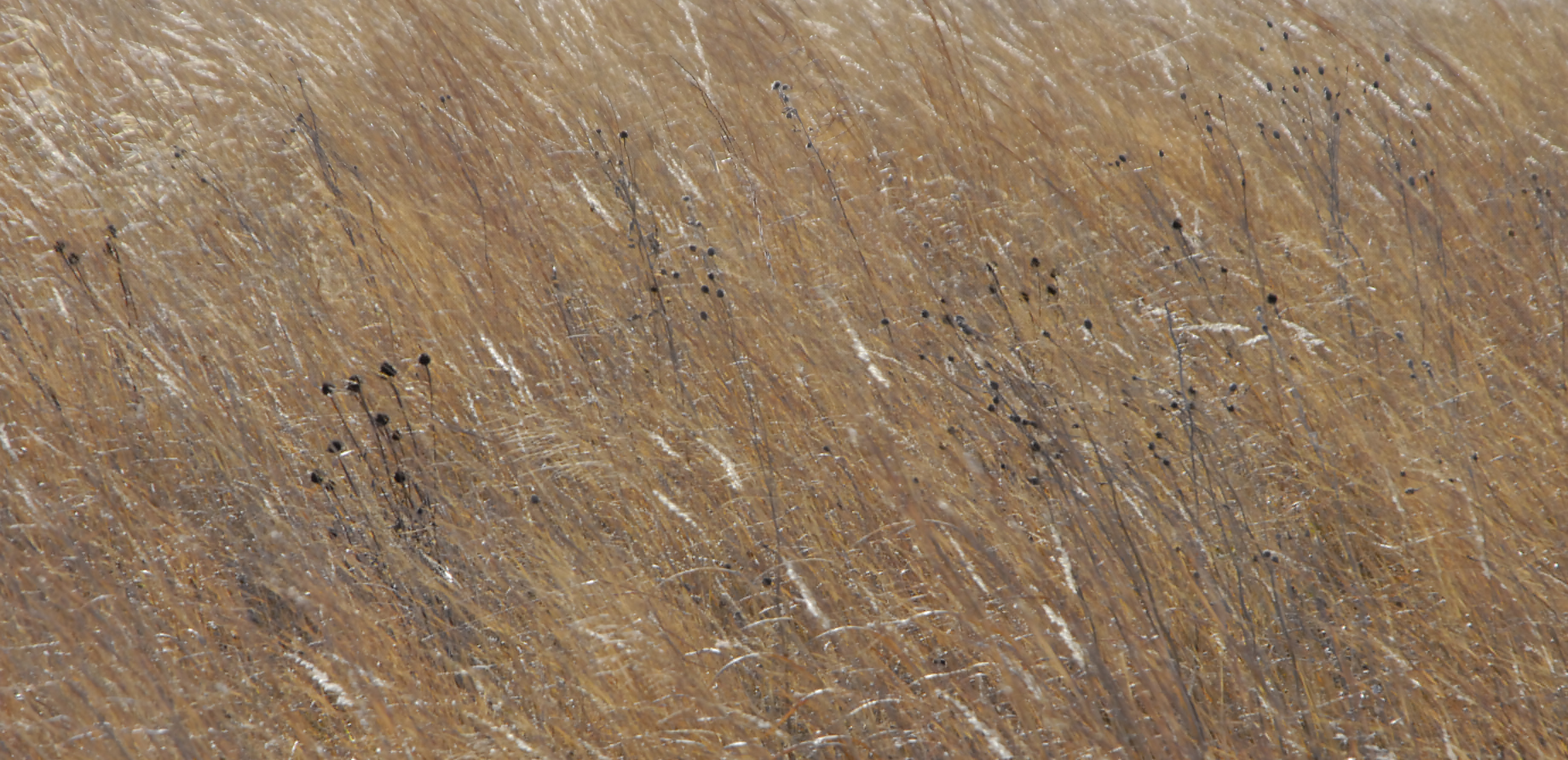
Indian Grasses dance in a prairie wind.

Indian Grasses dance in a prairie wind.

Wind is my weakness. There was that late fall evening in the 1970s in an old farmhouse outside of the Newton, IA, home of the teenage boy who’s letter prompted Pope John Paul II to visit Iowa, when I asked the family while I was doing his story if I could spend a few moments alone in an upstairs bedroom just to hear the whistling of the wind. They smiled as I backed into the room and turned off the light to sit on the bed. It had been years since I’d heard that whistle and whine of the wind in the sleeping porch of my parent’s old Missouri farmhouse. It whispered a momentary meditation.

So, yes, I have many wind stories. Last weekend as I sat alone in my canvas ice fishing “clam,” a ferocious wind whipped and snapped the canvas during a Severe Winter Warning with a -45 degree wind chill, bringing  many wind moments to life as I fought off the bone chilling cold. Wind games, if you will, playing with the mind and the numbing elements.

Sportsmen around here have given ample warnings about these Big Stone Lake winds that howl down this 26 mile long corridor of water, and now, ice. “Never get far from shore in your kayak,” they’ve warned in the warmer months. “You never know when the wind will come up, and remember, there isn’t anything out there to slow it down.”

Many tell tales of friends being caught, or of themselves being in instant peril, being stranded miles from a boat launch or pushed against a distant shore, of being capsized and adrift. This time on the ice was as close as I have come to feeling the heed of their warnings.

Despite the side flaps of the canvas panels being buried beneath ample ice chips and snow, the canvas snapped and popped with incredible and forceful energy. I was afraid of standing, fearful of the clam blowing away down the length of the lake. As I watched the undulating sides of canvas I was visited with another wind game, from of all places, the Caribbean somewhere outside of Road Town, BVI. I suddenly visualized being on the deck of the 210 ft. barquentine I was fortunate enough to help sail in the late 1970s. As we maneuvered the big square-rigged sailer into open seas, the huge sails filled with wind, snapping and popping the sailcloth just like it was my ice fishing canvas on Big Stone. Indeed, these were the only sounds as the antique naval training ship listed slightly and cut a magnificent wake in the azure sea.

I could only wish the mental images of the blue Caribbean skies had been more warming, as had the few jumbo perch pulled up through the ice. This would be another day dominated by prairie winds sweeping in from the Saskatchewan Plains, winds that once again lifted loam and snow into the skies up on the prairie and rattled old windows.

Indian Grass and heads of cone flowers moved by prairie winds.

Indian Grass and heads of cone flowers moved by prairie winds.

Through the night gusts rumbled through like a distant freight train, warded off by solidly insulated walls and a bevy of quilts made by the mother of her modern day Don Quixote, a man who has come to realize he can neither start nor end a wind … even he might wish to.

Grove CSI: Owl Strike

Neither of us have seen the owls, although there might have been a distant sighting of one earlier in the winter. After the winds had ripped the last of the leaves from the trees in the grove we witnessed what seemed to be a silhouette reminiscent of a stately owl on a limb of the huge cottonwood that stands as a sentinel on the far northeast corner of our stand of trees. My binoculars made the darkened dot a little larger, enough so that it might resemble what you envision as a great horned owl. That is as close as we have come to seeing one.

The cottonwood is high enough to give an owl a vantage point view of both our eight acres of prairie and a wetland just over the rise of the hill on the other side of the road.   

We know owls are around us for we can hear them hooting. First one, then another. One closer, the other more distant. Just a quarter mile to the west of our farm is another good sized woodland … good sized in Minnesota prairie terms. Perhaps five acres in all, right along the gravel road. The distant hoot could come from there if the closer one is in our grove. 

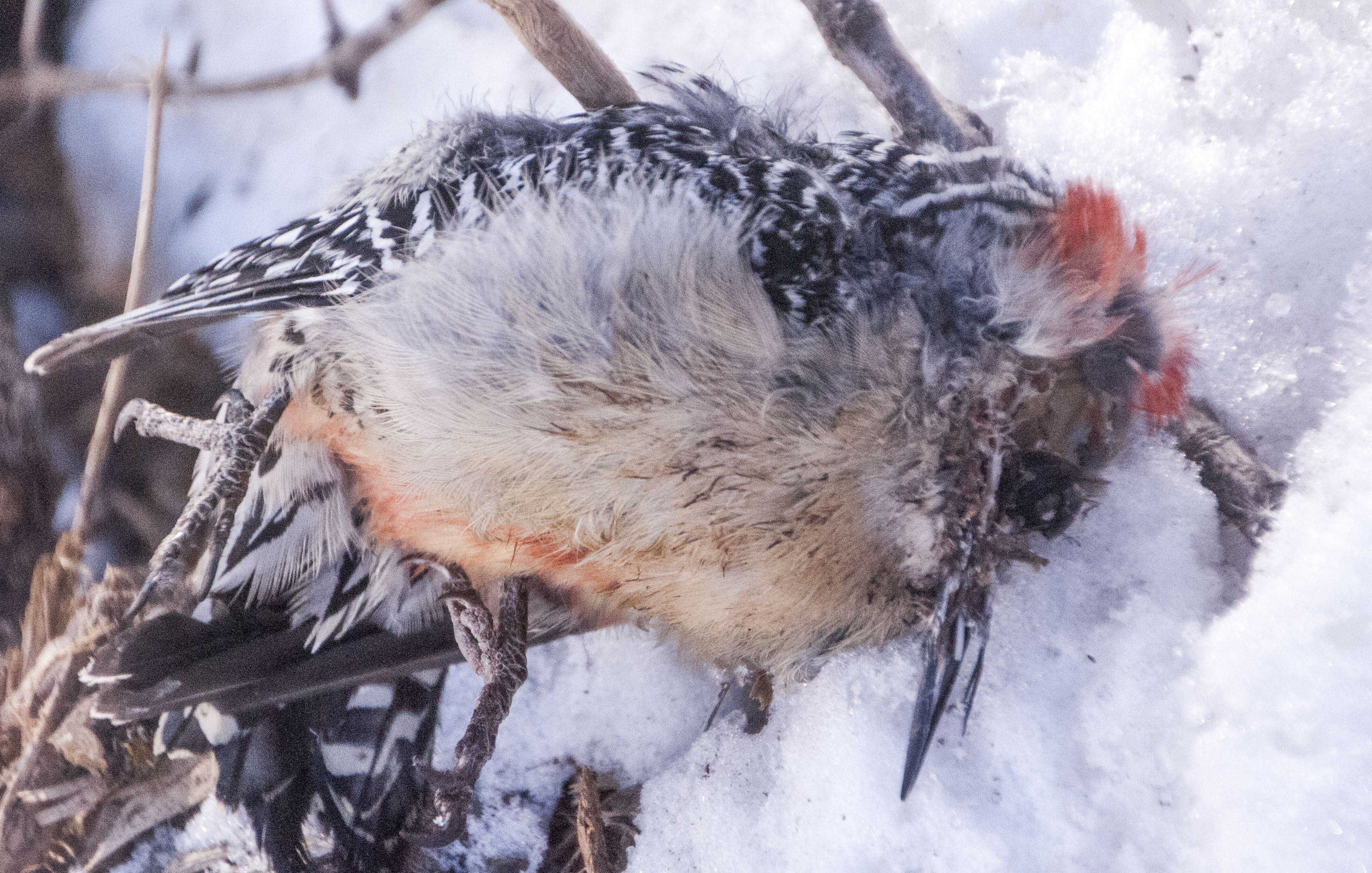
Rather convincing evidence that owls are near greeted me on my return from the mailbox the other evening. Laying beneath the canopy of our recently cleaned grove was the carcass of a red bellied woodpecker with the upper skull eaten away. Perhaps this was the one I’ve been stalking with my camera. A red bellied was one of the first species to find our feeder once we got around to filling it with the ever popular black sunflower seeds.  

In my quest to capture an image of this beautiful bird I’ve set up my blind to no avail, and my luck using a remote shutter release wasn’t much better. This was one camera shy bird, unlike some of the other species coming to the feeder. The smallest woodpecker, the downy, and the larger hairy woodpeckers, have joined the bluejays and nuthatches in my digital cache of photographs, but not the red bellied.

Finding the carcass seemed to answer why the sightings of the red bellied had suddenly become so scarce. We’ve missed that telltale swoop down to the small tree the holds the squirrel-proof feeder, for the red caught your eye especially on those gray or whitish mornings. It would land low on the base of the tree and skitter up the trunk to where it was just a short hop over to the feeder. Once a seed was secured, off it would fly over the solarium porch back to the grove.

Image

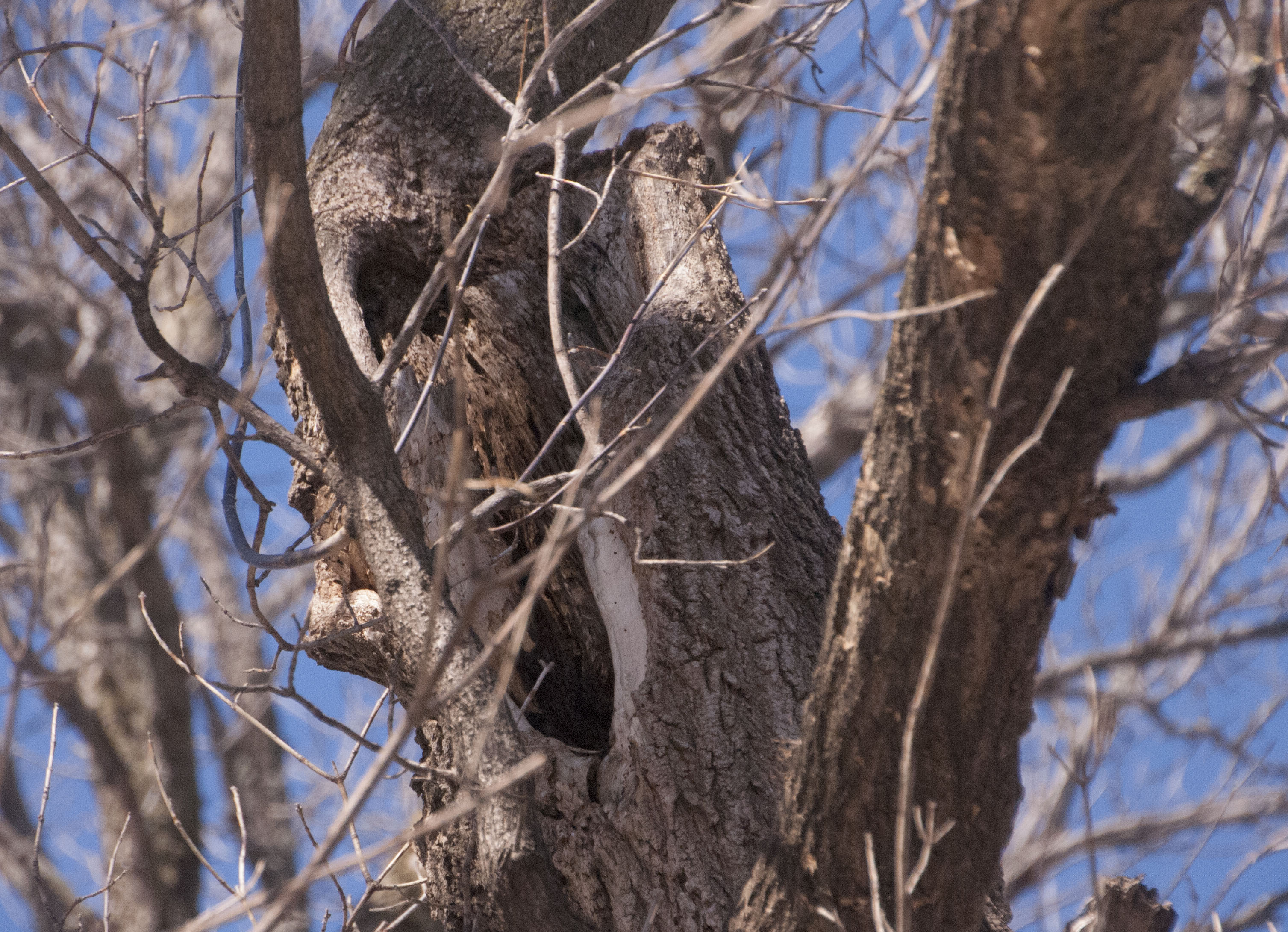
Seeing the red bellied in the grove earlier in the fall keyed our decision to keep a number of what we called our “woodpecker trees” among the ash and other trees too immature for the saw. As we worked around one tree in particular, one with obvious pecked holes in the long dead wood of the trunk, the woodpecker had briefly peeked out at us. We assumed this was where the red bellied was returning with its seed. When the hairys return to the grove with their seeds they alight on our “lightning” tree, crawling up ever higher before breaking open the seed. Not the red bellied, for it typically flew deeper into the grove to its tree. That flash of red wasn’t good for keeping secrets. Not from us, nor apparently from the owl.

When I found the carcass, most of the head and that telltale identifying red stripe on the crown was gone. Eaten away in a meal of nature. 

Image

It was on a canoeing trip years ago on the Chippewa River that made me instantly think the culprit in the demise of the red bellied was an owl. We had just paddled around a bend when we came upon a noisy confrontation. Perched on a staunch limb just below the protective outreach of the canopy was a great horned owl, and scurrying all around it was a murder of crows, diving and cawing, threatening the much larger and dangerous bird of prey with pronounced racket and mayhem.   

“Accusations,” suggested my paddling and fishing friend, Wes Konzin as we slowed the canoe. “I think it all comes down to beheadings.”

Sometimes you can sneak into the inner workings of the natural world in a canoe, or it may materialize beside you while quietly waiting in a deer tree stand. We were completely unheeded as we drifted by, intently watching the confrontation. Surprisingly, the owl suddenly bolted from the tree, hastily beating its wings to escape just over us in that supremely hush of owl flight with the murder close behind, cawing, some deftly diving at its head, to land again inside of an outstretched canopy of a tree just down river. There the murder of crows continued their relentless attack.   

The birds know. So the beheading of the red bellied was a circumstantial CSI moment in the grove perhaps.   

After finding the carcass, calls were made to a couple of naturalists who both confirmed that the red bellied woodpecker had likely met its fate at the beak of an owl, that the eating of the head was indeed a significant clue.

Death is often sad, especially for those who remember a certain specialness. For the shy woodpecker, we’ll miss that flash of red swooping into our little square window to the outside world, its hopping up the narrow trunk of the tree, at how nervously it looked around in a search of danger, the quick stab for a single sunflower seed, then just as quickly, the flash of red disappearing back toward a hideaway in the grove. One of those flights was its last.

All in the realm of nature.

Through Our Windows

Making dinner around here is so much fun. We rarely layer noodles with soups from Campbell’s’, and usually have a glass of wine within reach. One of us will usually stake ourself across the room chatting with whoever has opted to cook. Often we’ll walk around the center island to glance out the big kitchen window to take in what is typically a postcard worthy view. This happened again last night with a startling sunset.

Sunset from the kitchen window.

Sunset from the kitchen window.

“Startled” might be considered a bit extreme, and “surprise” might be closer to an appropriate reaction to when we first entered this kitchen where we spend so much of our quality time. This was my reaction on first looking at two double-hung windows with blurring screens found above the kitchen sink. “If we buy the house,” I said as we began our first look around, “these windows have to go. We must have a big plate glass window in here.”

Rebecca and Steve Bruns talking in the kitchen during the remodeling phase. The double hung windows are behind Steve.

Rebecca and Steve Bruns talking in the kitchen during the remodeling phase. The double hung windows are behind Steve.

Rebecca was no stranger to the house and especially in this kitchen where she recalled having numerous meals with her friends, the previous owners. If she was taken back by my comment, she hid it well.

Roger Albright and Steve Bruns bringing the new kitchen window up to install.

Roger Albright and Steve Bruns bringing the new kitchen window up to install.

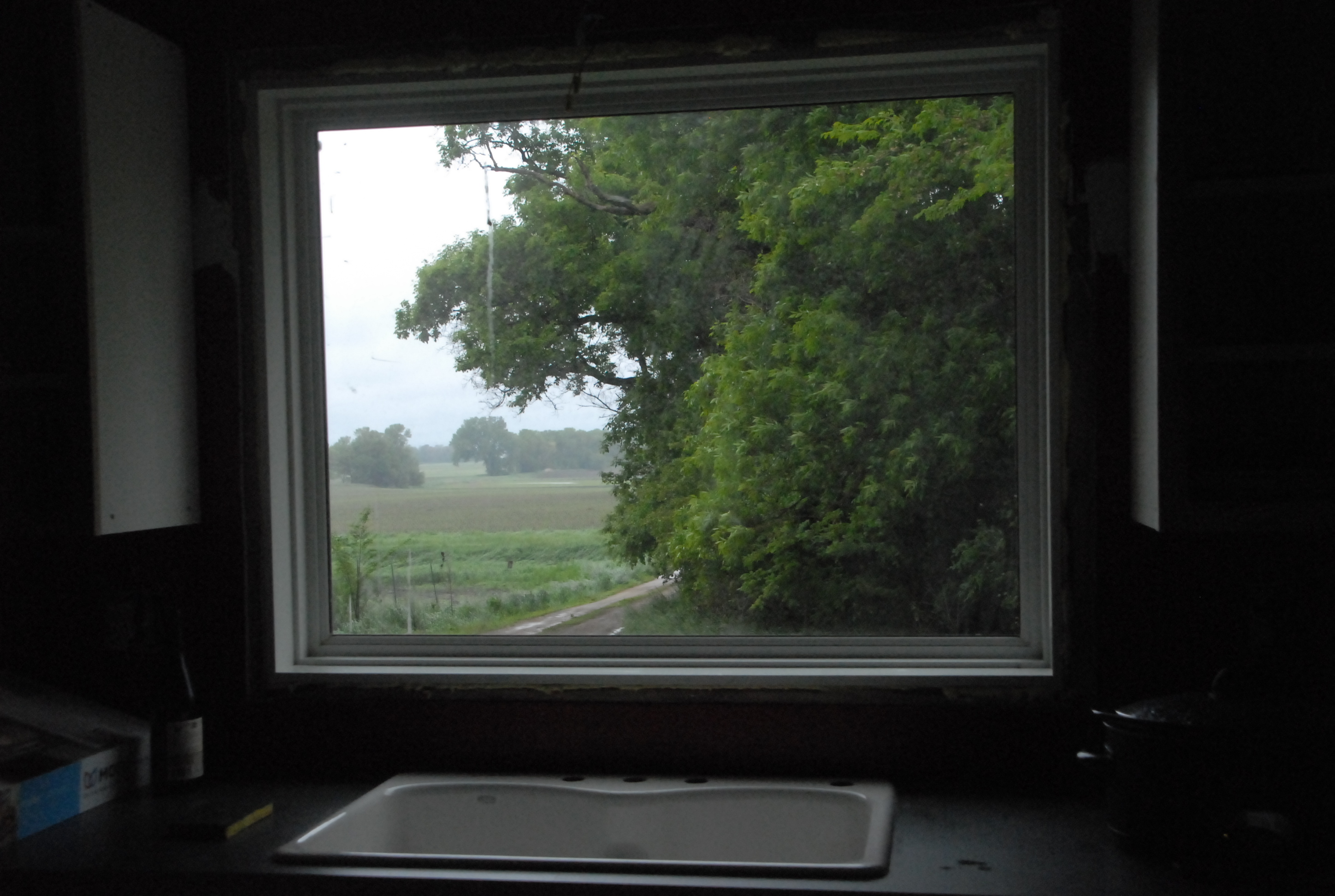
The kitchen window after installation.

The kitchen window after installation.

Windows have long been a fascination. Whether visiting an old farm house like ours, a hospital or motel room, or even a European castle, I always find myself looking through the windows to see what there is to see. You know, “If I were king I’d put a window right here” sort of thing. I’ve never understood blocking a window view with a lamp, or even curtains. This has caused a few arguments and awkward moments through the years, and usually I’ll back down on the curtains.

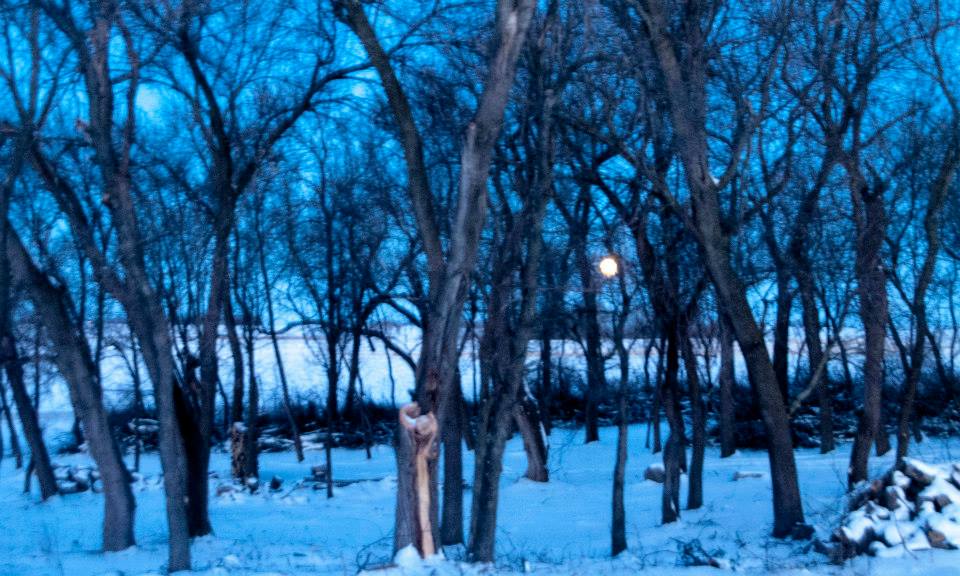
Moon set from kitchen window.

Moon set from kitchen window.

Windows can showcase a larger world much like a picture frame. Through the years I’ve seen some fascinating views through the windows of others. So, in our pending purchase I simply couldn’t consider having all that wood framing and grayish screens blocking such an incredible view of the wooded grove, the nearby prairie or that distant farm site, views that seemingly are varied with each sunrise and setting sun, by cloud patterns, by rain, fog and blizzardy snow. These views never tire.

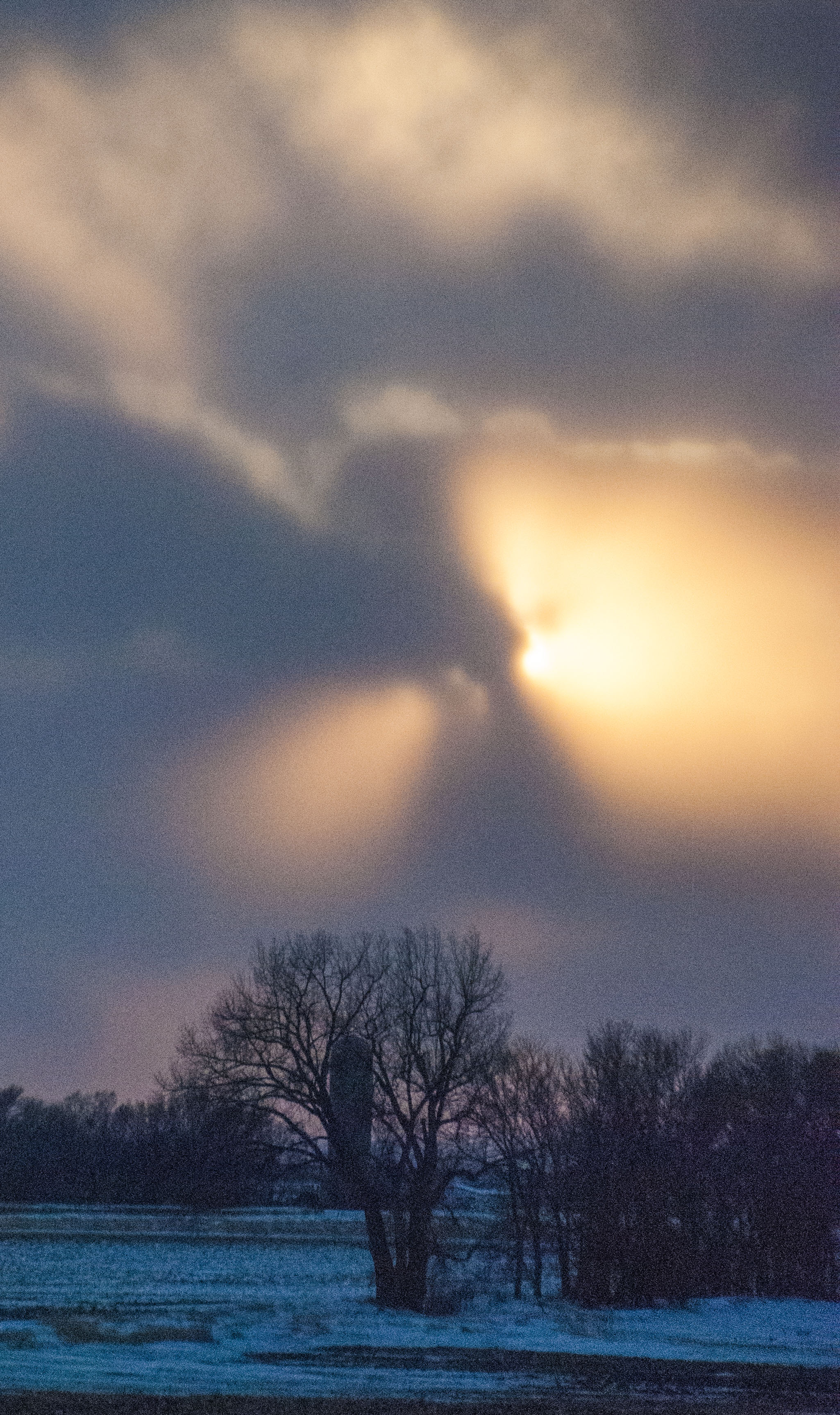
Sun dog from our kitchen window.

Sun dog from our kitchen window.

This kitchen window was one of two major window decisions we would make in remodeling the house. The other was in the upstairs bathroom where there was no window at all in the East wall. We had decided rather early to completely redo that room. Along that wall was a wide vanity. A toilet was placed up against the adjoining inside wall and was in plain view of the door opening to the hallway. There was no shower nor bath. We would eventually do a complete reworking of the room by removing enough of the floor to move the toilet across the room behind the door, to install a smaller vanity and sink where the toilet originally sat, and by adding a spa bath where the old vanity had been. It while I was framing in the tub surround that I thought of adding a window, to bring in more light, and to add a view.

Removing the cut out for the bathroom window.

Removing the cut out for the bathroom window.

Tile would be added across the entire floor and as a shower surround. And in that bare wall we cut a hole to add a modest plate glass window we had hoped would give us a nice view of the prairie and nearby wetland while sitting in the bath. That, we’ve since discovered, won’t happen since neither of us have the height of a NBA basketball player. Our view from the toilet, however, has no equal!

bathroom window

Fortunately this house has many windows and wonderful views from all angles. Our front porch solarium has a surround of windows on three sides, and the large windows from our office and family room offer views from the inside out into the solarium.

My muse for the kitchen began while doing a story on the husband of a former colleague who had a stately old house on the outskirts of Maynard. When they remodeled their kitchen they replaced double hung windows with a large open window above the sink that looked out onto their grove and picturesque pond garden. Their new window transformed a rather tired and forgettable kitchen into an exciting and comfortable room, inviting you into the world beyond. The window added life to a nearly barren room, a place where you could easily imagine planting your elbows on the kitchen counter to stare at an enticing outdoor landscape. It wasn’t hard to imagine having the same effect in our new home.

Sun rise through the bathroom window.

Sun rise through the bathroom window.

As we progressed in our remodeling I found myself anxiously awaiting the removal of the double-hungs. When it finally happened I could barely contain my excitement. It was the same when we finally lifted a ladder to cut through the outside wall for the new bathroom window. I don’t know if my co-workers on the remodeling project were all initially sold on cutting through the wall for that window, but afterwards they were equally as pleased and excited. Especially when we had finished with the tiling that framed the window from the inside.

Those two windows are my favorite places in our new home, framing views worthy of the Louvre every morning and evening. We couldn’t have made better decisions, nor could we be more blessed.

River Truck

Image

(Luise Hille and I pose with my River Truck after kayaking on the Minnesota River. 

I can’t remember the color of my “original” River Truck. It still had some miles left in it when the heater died in the dead of winter. A repair of the heater edged the beater into what insurance adjusters call “totaled.” So I drove onto a used car lot just to see what was around.

You’ll occasionally see a car slowly meandering through a dealership as the driver rubber necks at those rows of discarded dreams. One of those was me. Nothing stood out, yet I parked and ventured inside to talk with the saleslady. This is a huge undertaking since I’ve long suffered a sense of trepidation after a car salesman at a St. Paul nightspot laughed and said people like him love it when people like me walk through the doors.

“We can spot guys like you a mile away,” he laughed, tipping his long-neck bottle against mine in a friendly gesture. “You’re easy. Guys like you we call ‘marks.’”

Unlike at the city lots, my saleslady friend has treated me with respect and fairness.

“You really, really loved that old Explorer, didn’t you?” she said, with honest concern.

Indeed. That kayak/canoe rack on the top looked and fit just right, and it was easy to lower half of the backseat down to lay out a pad and sleeping bag. A portable ice fishing shack fit easily in the back, too. Bluegill flies that drifted from the boxes weren’t blown away in that 60 mph draft. Gosh, I could go on and on about the pluses.

“Did you see that blue one out there?” she asked.

Somehow I’d passed it by.

“Just got it in. Owned by a woman banker down by Sacred Heart. She drove it to work on the bad snow days. Not a lot of miles on it. Want to take a look?”

“Does the heater work?” I asked.

It was only a year younger and had just under 50,000 on the odometer. I hadn’t realized we’d had that much snow. Mine was tickling 200,000. I’d driven all over western Minnesota, and made several trips down to the farm in Missouri. There were all those jaunts to the BWCA, too. She shot me a price. Fortunately what I’d already had transferred from savings for a decent down payment on a newer car or truck more than covered the price. For the first time ever I drove off the lot with a loan-free vehicle. Not just a vehicle, but a new River Truck! All the gauges and dashboard gizmo’s were exactly alike, and I now had a CD player. Plus, one of the mechanics had helped transfer the kayak racks and ice fishing gear.

That was a decade and some 100,000 miles ago. I still carry the kayaks up on the rack and my seasonal gear fits easily in the back. Missing is the radio antenna. The fellow at the car wash I ran it through at least annually showed me how to remove it with a crescent wrench so it wouldn’t catch in flappers, a trick that came in handy one day at an entry point near Ely. I took it off so it wouldn’t break taking the shotgun side kayak off the top, then laid it on the back bumper after it had rolled off the hood onto the ground. Must have happened a second time. That was about four years ago.

The cab doors used to be tighter, and the hatch door on the back won’t shut completely. By now I’ve replaced the shocks, tires and ball joints. The heater still works, and you can even take a snow drift at 50 without it breaking all apart like my delicate new little foreign car.

That’s the car I bought a couple years ago for better fuel economy. The fill ups actually arrive at about the same places. The kicker is that the River Truck holds just over 23 gallons of gas bone dry compared to not quite 11 for the little car. Same difference, but twice the cost for a fill up.

I was relying more and more on my little car until I tried plowing through a snow drift near the farm late last winter and tore off part of the plastic undercarriage near the bumper. My River Truck sputtered, as it does even in the heat of summer, but eventually started, and the little car was parked until the thaw.

This winter I’ve relied more heavily on my River Truck. I should have used it the other evening when I went to shoot pictures of the full moon rising over the prairie. The little car was warm and handy, plus I was just driving a mile or so down the road to an oak savanna. Unfortunately the trees were nowhere near the rising moon, so I quickly sped off down a lesser used road toward a nearby WMA. I saw the drift coming up, and frankly, it didn’t look all that solid. Darkness does that to a fellow, I guess. There wasn’t a whole lot of give to that icy, glazed-over drift. There was, however, a horrible crunching sound when I landed about 30 feet further down the gravel road. My seat belt no doubt saved a concussion. I’ll call the body shop after the melt.

After surveying the damage I realized the truth once again. Like I told Rebecca: “Should have taken the River Truck.”

Utility and a working heater help define a good River Truck. So does having dependable landing gear.

Wind Poems

What though the radiance
which was once so bright
Be now for ever taken from my sight,
Though nothing can bring back the hour
Of splendor in the grass …

Image
My windshield and passenger windows often offer dreamy drive-time visualizations of what a sea grass of prairie might have looked like. They say the big bluestem grew so high and thick that it wore through the toes of a horseman’s boots in a season of riding. Such landscapes, those vast seas of grasses, are no more.

Nor can you photographically capture a horizon of a wide prairie sky with a native prairie stretching toward focal infinity. More common is a foreground of 20 to 40 acre remnant with a mix of Indian grass, side oat gamma, big bluestem and seasonal forbs with a field of row-cropped acres draped across the horizon.

A friend dismisses the entirety by saying, “It is what it is.” Crops and cropland are necessary, yet so is a balance that is missing in this altered ecology that is slowly being eroded away.

I’m new at this prairie watching. Yes, it is big sky and horizon. Most days you can see the very top of a grain elevator in some rural railroad town a dozen miles in the distance. Maybe even a water tower at half that distance. A prairie also offers views that are close and personal. Yet it is a prairie without prairie, a land mass naked of its namesake.

When photographer Brian Peterson was working on his book, “Voices for the Land,” he admitted struggling to find a way to photographically define this vastness. One day he felt he had captured a sense of it not through an image of big sky and horizon, but rather in a photo of a small ant climbing the stalk of a cone flower. Yes, there is sky, along with four other cone flowers in the photograph, yet he focused on a small, intimate detail to define an undefinable landscape. Some claim it is practically impossible to accurately portray the vastness of the prairie, to portray that vastness in contrast to individual insignificance. Perhaps they’re right.

So we look at parts of the whole, at ants on cone flowers, or other symbols.

A prairie is not just defined by the grasses, but also the winds that ruffle and bend them. Ah, the wind. Curators of the area county museums can usually put their fingers on letters from the wives of sod busters describing how the wind became so unbearable, of how someone, perhaps the letter writers themselves, “had lost their mind” from the constant wail of the wind when there was so little to stop it. Especially in the dead of winter, a mind lost while huddled for warmth in sod huts and remote farm houses.

Image

Yes, there is that rumble and roar of blizzards, but there is also a hush when grasses rise through the snow as in defiance of that rumble and roar. My wish has been to get a feel for the prairie when winter it isn’t quiet, when raging winds whip grasses with a vengeance. Then again, to return to portray the hush.

Although we have lived on this dispatched ecosystem for 22 years, this is my first to really concentrate on the prairie in winter. Twice I’ve driven off the farm yard during wind-whipped white outs to two different restored prairie remnants, including a Wildlife Management Area (WMA), to take pictures. In the scheme of seasons, winter is supposedly a quiet time, a rest perhaps, for the prairie. In winter, green isn’t evolving through dead and dormant grasses, nor is there a punctuation of color from blooming forbs in a blanket of green, nor are the acres of golden grasses painted by the fall sun being whipped and bent by autumn winds. So in that sense, winter is the season of rest despite the turmoil of arctic winds.

On one of those forays, with the sun muted by driven snow, the grasses of the Clinton prairie yielded to the winds, yet captured enough snow to create sea-like drifts. Enough snow was being captured that you could see a depth of perhaps a hundred yards … which was impossible on adjacent tilled fields. It was a wild moment in the “rest” — a wail that could cause one to lose their mind with a long exposure, for this blow continued for two to three continuous days. Cold and continuous.

Image

A week or so later, on a late afternoon, the hush of both the prairie and wind had returned. There on a clear and windless day, in the captured depths of snow, in both stem and shadow, were wind poems that spoke of silent secrets.

Image

Perhaps if we listen closely these poems may speak an endless and epic story, one our cultures of settlers, sod busters and industrial farmers have failed to silence. If you look close enough to find wind poems, and take time to listen close enough to hear those silent secrets. Take a moment, however long, and be quiet, however silent, and  simply listen.