Season of the Tomatillo

photo 1(20)It hasn’t been a great year for tomatoes here at the farm. Or should I say, it hasn’t been a great year for me taking care of my tomatoes. I planted them out in a newly-established garden that promptly got choked with weeds (and I didn’t get around to staking them, either), and although the garden was fenced, it was also inside one of the paddocks the chickens frequent.

The chicken-tastrophe that is (was) my main tomato patch

The chicken-tastrophe that is (was) my main tomato patch

Those young pullets know how to fly, and they also know how to take advantage of the woodchuck holes in the fence that keep re-opening in new places after I fix the old ones. Pullets are almost like hogs the way they constantly test the fence. And, having been dumb enough to throw all the rotten tomatoes just over that fence to the waiting chickens, I should not have been surprised that eventually they decided to just help themselves to the bounty.

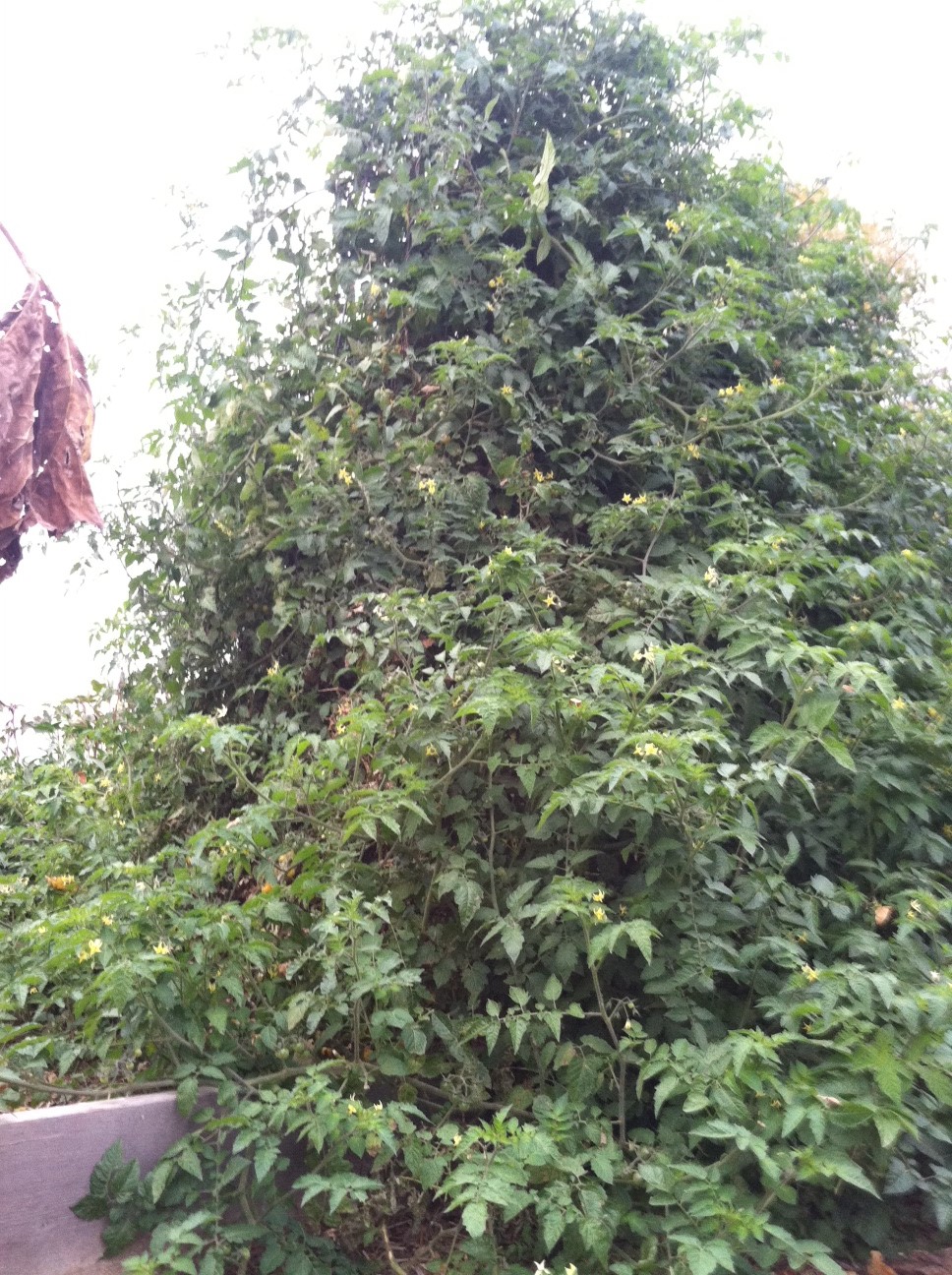
Eight feet tall...and no chickens in sight!

Eight feet tall…and no chickens in sight!

That’s alright—I still harvested plenty enough to do a few roasters full of smoked eggplant-and-tomato sauce, and a bit of salsa, too. And, I have a few choice varieties staked up nicely in the raised bed garden, as well as all the volunteers that made it through the first few rounds of weeding in the lower field garden. We’ve got plenty left for fresh eating, and to be honest, my appetite for canning is waning now that October is well underway. Somehow, I thought living up here in Minnesota might shorten the season, but climate change just keeps on keepin’ on. Soon, I’ll need new excuses not to go on preserving into November. Christmas canning? Oh. My. Lord.

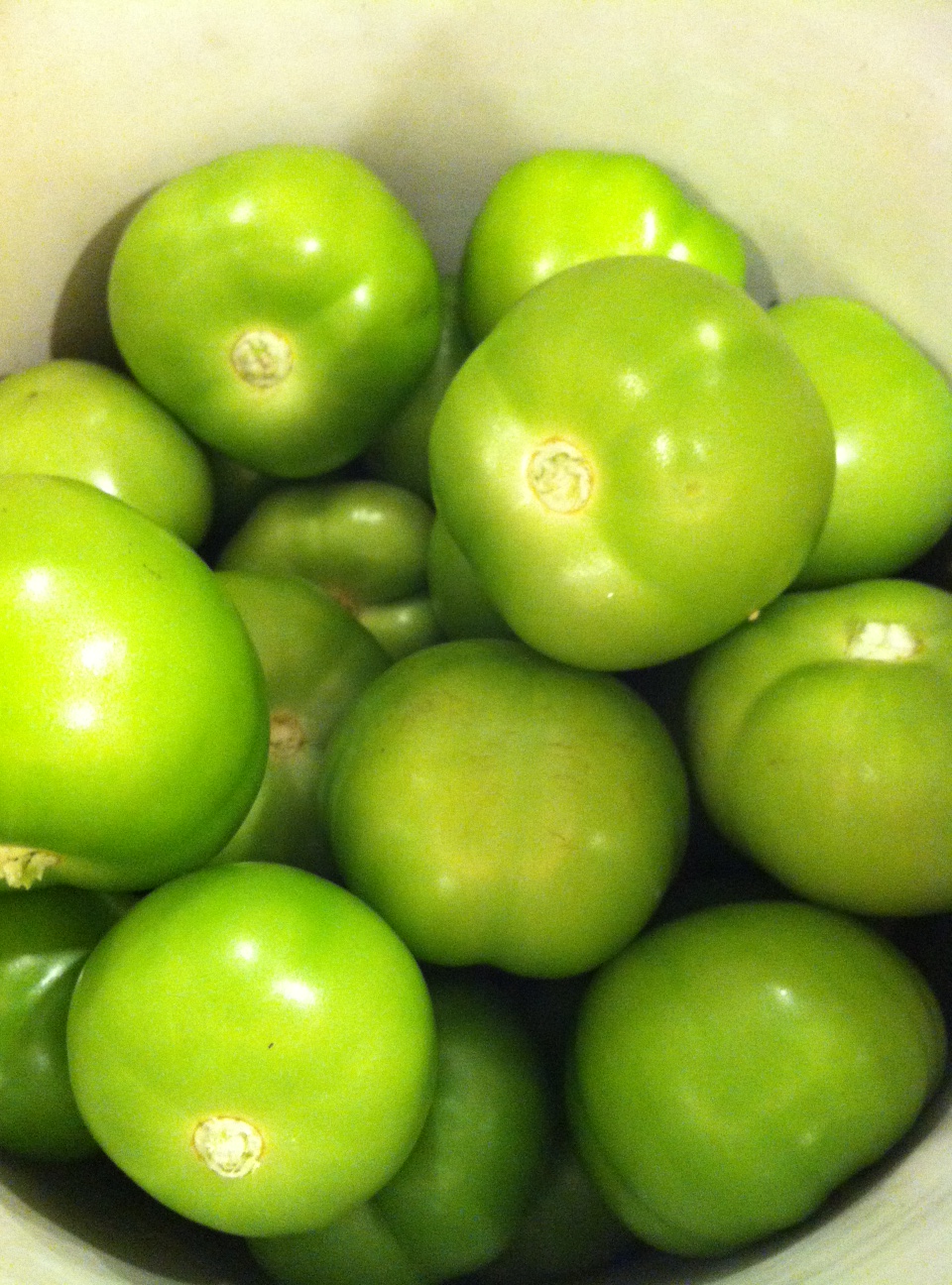
Naked and ready for processing

Naked and ready for processing

But, even though they’re planted in that same garden, the tomatillos have fared much better. Apparently, the chickens aren’t aware of what goodness lies beneath that papery husk, and even though there’s only one row, those big, weedy plants have held their own with the other weeds to provide a real bounty.

The first time I grew tomatillos, I put in three or so plants in a little bed I’d newly broken out in front of a run-down rental house on Cottage Avenue in Vermillion, South Dakota. The house has since been torn down, but when I lived there, the goal of the gardens was part production and part hiding how beat-up the place was. I had morning glories twenty feet up the south side, and sunflowers more than half that height. It was a riot.

The old Cottage Avenue house and garden

The old Cottage Avenue house and garden

The tomatillo bed was right in front, and I remember when the mailman (always kind of annoyed at how the un-latchable storm door would whack him unexpectedly when the wind came up) asked me what the heck they were. At that point, I knew what they were, but I’d never done anything with them. Then came the harvest—these weird little green tomatoes inside a sticky, papery husk with a decidedly citrusy “twang.” But there was a Ball Blue Book recipe for salsa verde, and one night, my friend Matt and I decided to try it out—making a few small amendments as we went, as we’re both prone to do.

The result was seven half pints of a salsa so delicious that we declared it magical and ate it all up much faster than was reasonable. It had been much, much too long since I have grown them again. This was the year, and the variety was a big green one from Baker Creek Heirloom Seeds. They’re huge—some of them bigger than golf balls—and they’re juicy and tangy and I’m in love with them all over again. I’ve re-visited the salsa recipe (thankfully, I’ve still got the notes from my sooty old Blue Book edition that went through the house fire), and I’ve also made a chili verde sauce with tomatatillos, chiles, onions, garlic, and our own chicken stock that gets pressure-canned in quarts and stored for pouring over winter roasts in the crockpot.

The beginnings of a chili verde sauce

The beginnings of a chili verde sauce

Yesterday I pulled from the garden what might be the last fifteen or twenty pounds and did another batch of the chili verde sauce for canning tonight. There are more tomatillos out there, but the nighttime temperatures are dropping, and I’m not going to bet on the last of them sizing up and splitting their husks before the frost hits. And the chickens may develop a taste for them yet. The oven at 450 degrees knocked out the nighttime chill and sent a delicious scent wafting throughout the house.

Our own frozen chicken stock, melting into the pureed roasted vegetables

Our own frozen chicken stock, melting into the pureed roasted vegetables

I won’t claim that this is the last thing I’ll can this season, but it might be. The end is creeping ever closer, and the killing frost can’t be far away now. The projected low tonight is 36 degrees…though it looks like it’ll creep back up into the 40s and 50s the rest of the week.

We might not have as many cases of “red” this year, but the shelves of canned goods are still looking well-stocked in a festive shade of green.

What I Call ‘Layering’

An artist friend from the South expressed his dismay recently when a painting, one that was basically consisted of two halves of color, sold for $46.5 million. This Mark Rothko piece seemed to have a bit of Swedish flair about it since half of the canvas was painted yellow, and the other half blue, reminiscent of the country’s flag.

A medium range focal length ... yet layers of color.

A medium range focal length … exhibiting a layering of color.

Like my friend, himself a painter of Southern Louisiana icons with an interesting style, I likely wouldn’t have shed even 47-cents for a painting that fetched millions. That said, good for the artist and his view of life through artistic expression. Rothko’s work seems to consist of numerous similarly painted canvases often in halves and sometimes in thirds, and always with interesting color combinations. One critic described Rothko’s work as “painted soft, rectangular forms floating on a stained field of color that were heavily influenced by mythology and philosophy.”

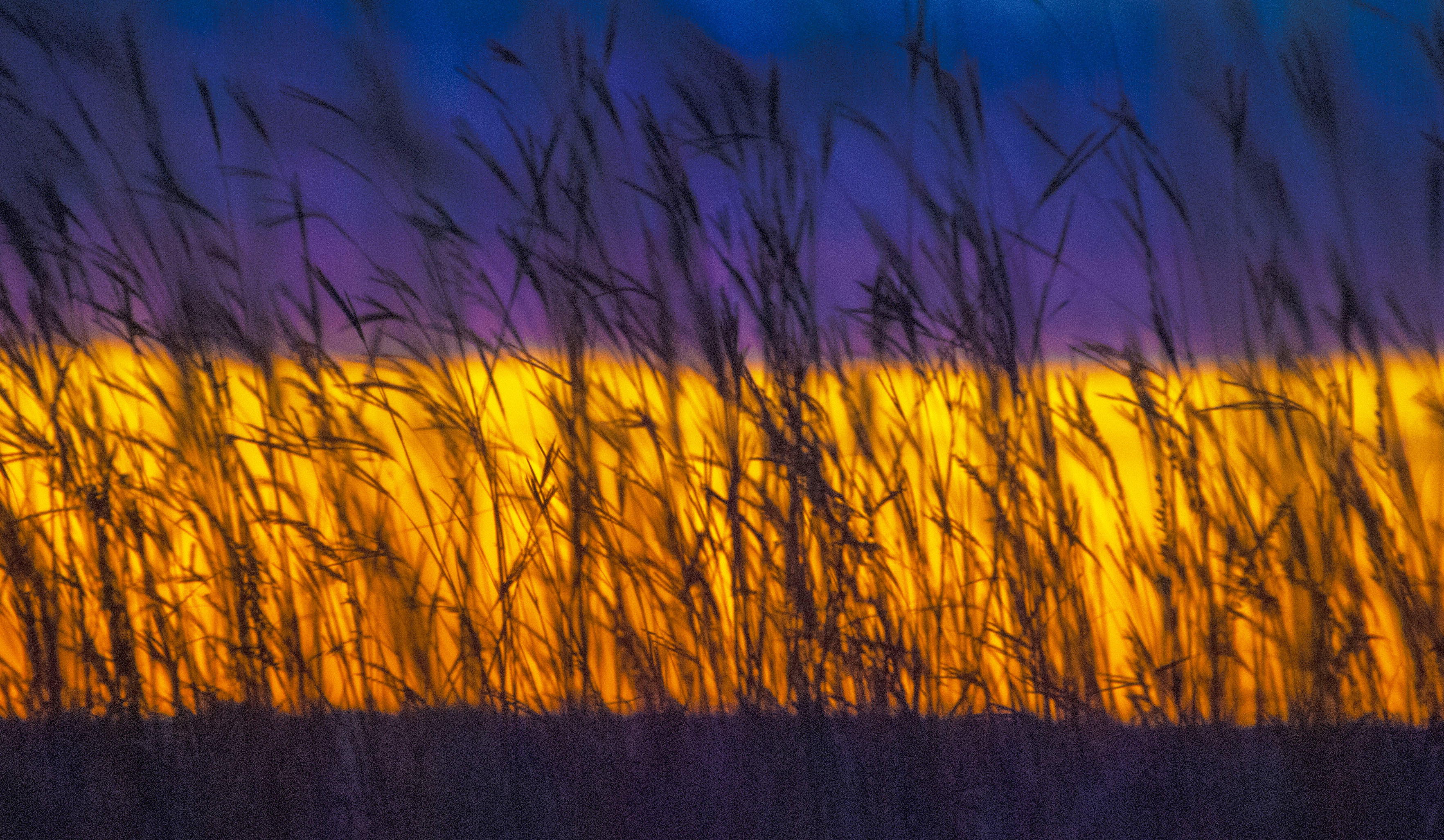
You have the big bluestem, and you have the layers of light, earth and sky. You have prairie.

Big bluestem melds the layers of light, earth and sky. You have a portrayal of prairie.

I’m okay with that, although in all honesty I somehow missed the “mythology and philosophy” while enjoying his “stained field(s) of color …”

His paintings, however, has inspired some thought. These past few weeks, and especially the last several days, have been spent scouring over my many images in preparation for the annual Upper Minnesota River Arts Meander. This gave me a chance to begin looking at my own “layering” of colors playing a key role of image composition … despite of various other details within a given image. Was the color interesting? Did it hold the eye? Was the blanket of color strong enough to carry the composition by itself as does Rothko’s?

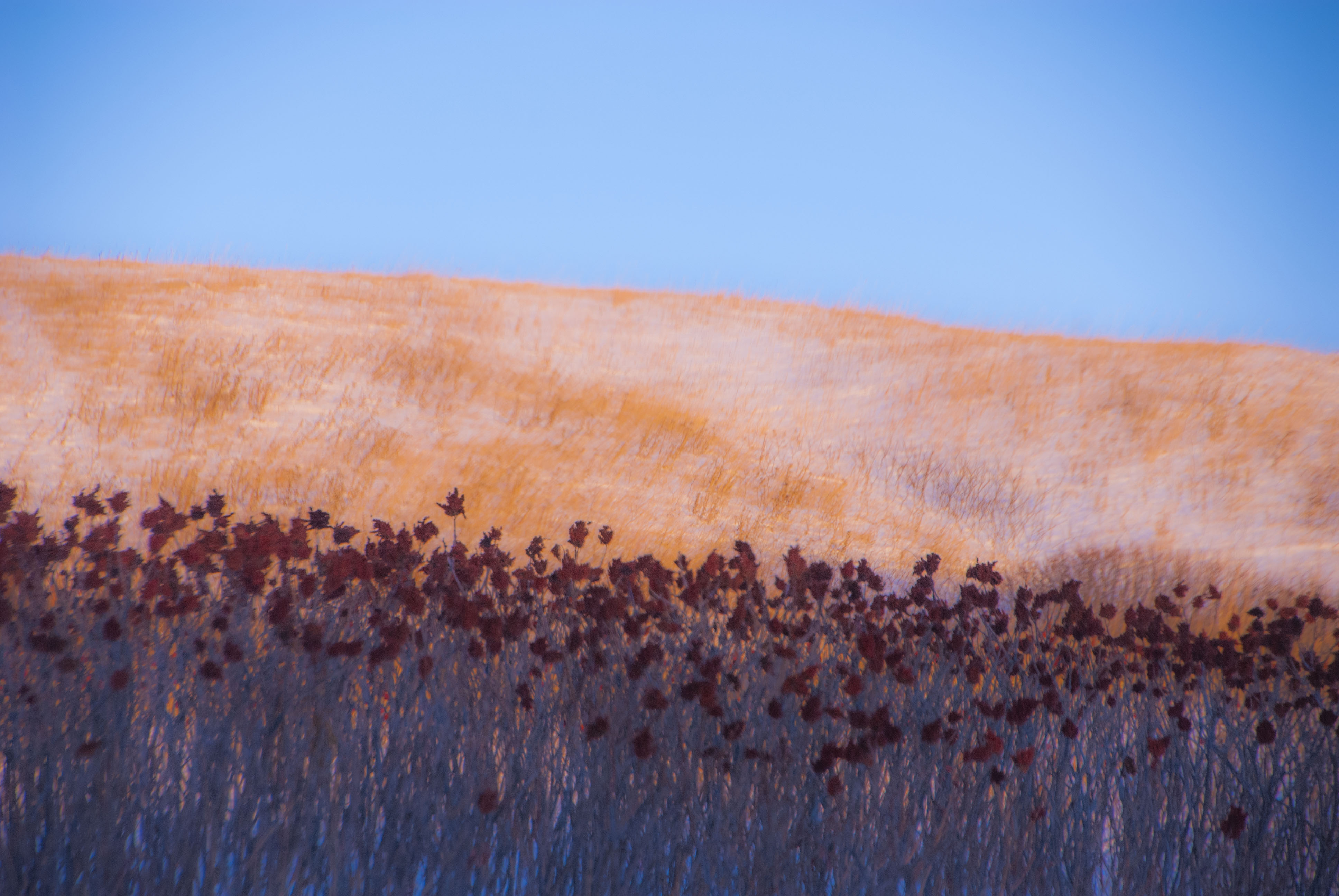
More in line with Rothko's use of color ...

More in line with Rothko’s use of color … yet the bobs of sumac and the prairie grasses add details to the image.

This caveat should be added: in no absolute terms am I placing myself in the same realm as Mark Rothko. Nor do I know how you define “artist,” or when your creations, which in my case is photography, crosses that magic line to become “art.” All of that is yet a mystery. In recent years my work has evolved in a direction that is different than that of my career as a photojournalist … although my current work is in presenting an imagery of the last one percent of what was once a continent-defining prairie. Each trip into a given prairie provides another level of education and imagery, of looking deeper into a disappearing and fragile ecological biome.

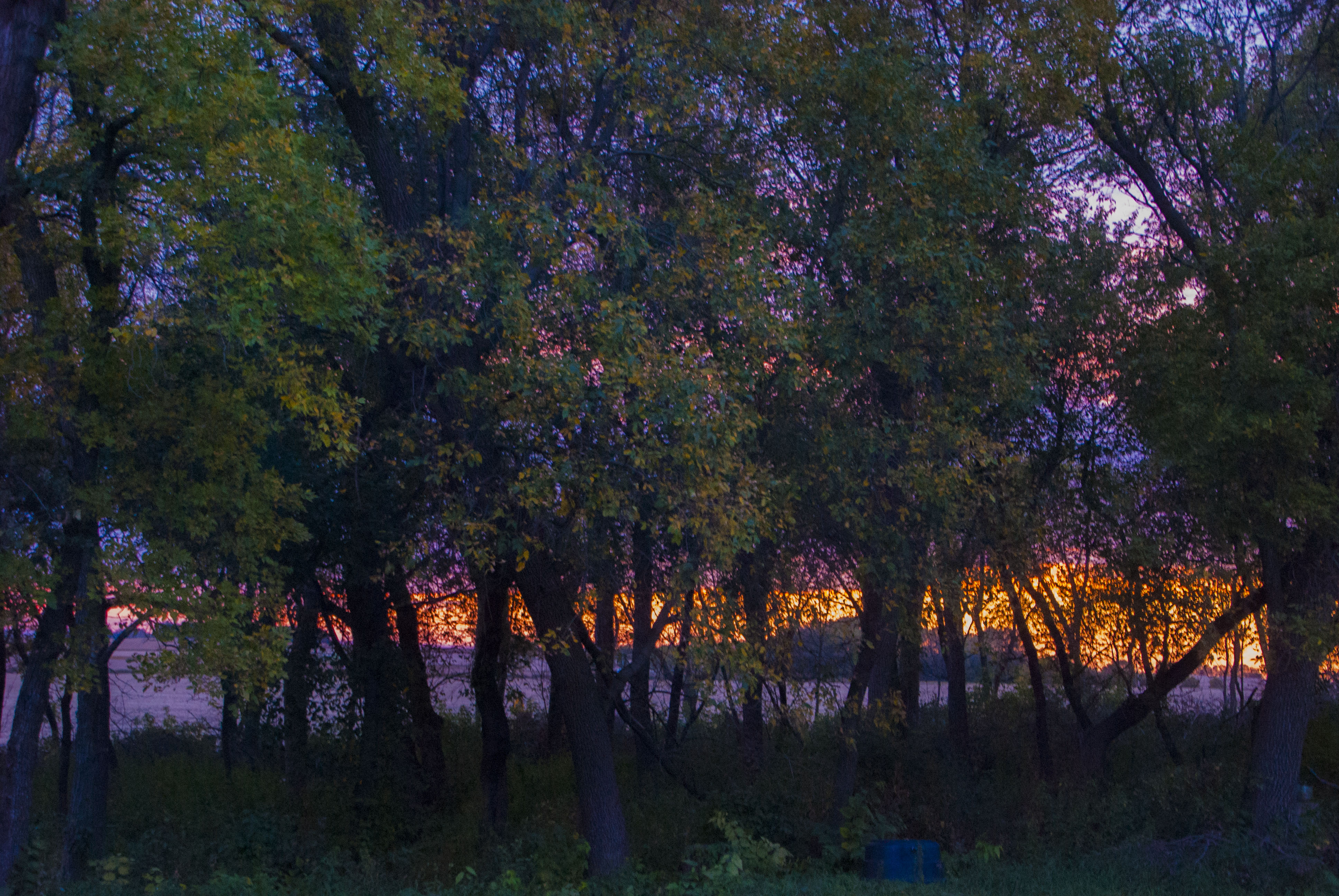
Without the layering of light, just another grove image.

Without the layering of light, just another grove image.

Within that context came “layering” … of seeing color beyond the grasses and forbs, and of how that color — that typically includes the color in the sky — actually defines a part of a prairie landscape.

So many layers of color. The

So many layers of color, the “fifths” become “thirds.”

Layering isn’t a recent term. Occasionally the word slipped into my presentations to photography groups when certain images appeared on the screen. This might have been a subconscious effort to explain the inclusion of the photograph that might have otherwise been passed off as some do Rothko’s painting. If you were to adhere to strict rules of composition, then perhaps some of my images might not be presented for viewing, and even if they were, would they be accepted as good photography or, perhaps even as “modern” art? Yet, capturing these odd layering of colors and light is a technique I find pleasing. And, interesting. Defining, even.

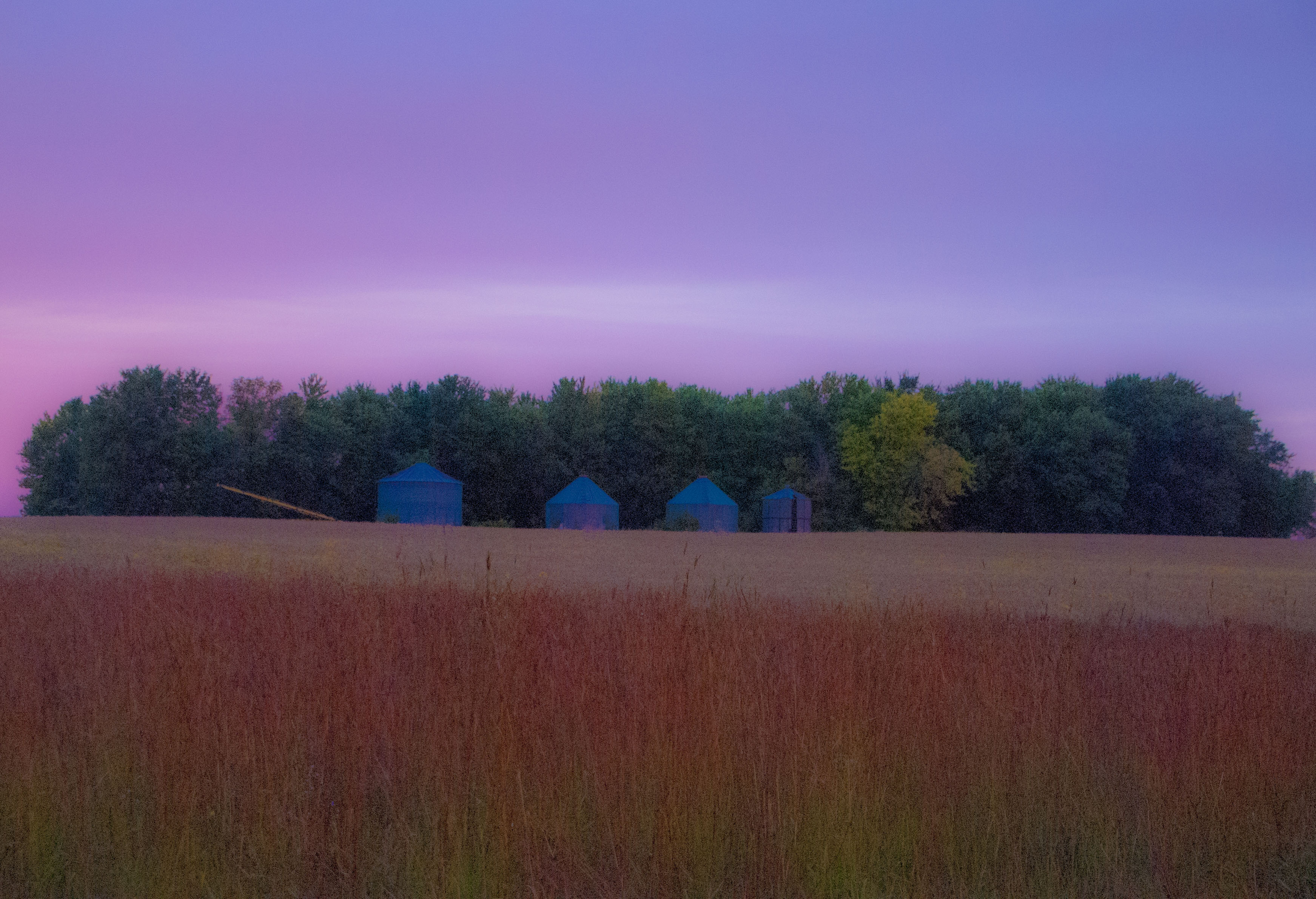
An abandoned farm site adds to the coloration.

An abandoned farm site adds to the levels of coloration.

Imagery as an art form depends on the use of light and color, of how those attributes are used as tools of composition. “Great” may be wholly misunderstood in this context, for I wouldn’t consider any of my images necessarily as such, yet I do find them interesting in regard to the “layering” of the colors and light. More pleasing for me is capturing other elements into the concept of the natural layering of light and colors.

The big bluestem in sunset.

The big bluestem in sunset.

In the end, this is all fun and folly. An internet search gave me a broadened vision of Rothko’s work. While I enjoyed his mix of color combinations, placing any abstract meaning to his work is well beyond my simple mind. However, if offered $46.5 million for one of my photographic images using what I call layering, I’m fairly certain I would take money. My momma may not have reared an artist, but she certainly didn’t raise a no fool!

Our ‘Artist Harvest’

Much to my surprise and appreciation, my work was accepted as part of the 2014 Upper Minnesota River Meander Art Crawl … simply known as “the Meander” in these parts … for the first time. Long a supporter through my writing and photography while running a small town weekly newspaper, I had visited the many area artists on the trail … and one year, when along with my sister, Elizabeth Ann Roeder, we made the effort to visit all 45 of those on the Meander.

Tomorrow is the next edition, as we termed it in the news arena. And, once again, my work is part of it. Ah, the anticipation! Yes, the annual Meander is this weekend and like the other artists on the tour, those mixed feelings of anticipation, fear, wonder and delight join in a strange brew within the soul. Will the tourers like my work? Have I framed the right images? Do I have enough of the smaller items they will want to take home? Will I sell sufficient canvases to really make the effort worthwhile? Will the weather hold?

My banner is up! Too windy today for the balloons!

My banner is up! Too windy today for the balloons!

Last year was my first participation on the artist side, and it was hugely successful both in the numbers of people who came through our house and in the items they purchased. With that first one under the belt, a strange sense of calm comes through. Yet, the questions remain. Like most of the artists, over the course of the year we have added a wider variety of photographic art from my prairie images. The Meander is always a huge gamble for the artists. Like our neighboring farmers who are almost done putting their soybeans in the bins and have started on harvesting their corn, the Meander is our “artist harvest.” This is the weekend we work toward through the year in preparation for the hundreds of visitors we hope will come through our studios.

And, this will be our first attempt at an overall farm effort. Besides my artwork up in the loft, Rebecca’s hard work from over the summer will be offered as well … along with that of Gilda, Ruby and the “Henriettas” — those hard laying hens out in the pen … in both fresh produce and some canned goods. This, like we’ve witnessed with our dear friends further along on the Meander, Richard Handeen and Audrey Arner at Moonstone Farm, will be a whole farm effort! Many of my images were made here on our eight plus acre home prairie, so yes, it will certainly be a “whole farm” effort!

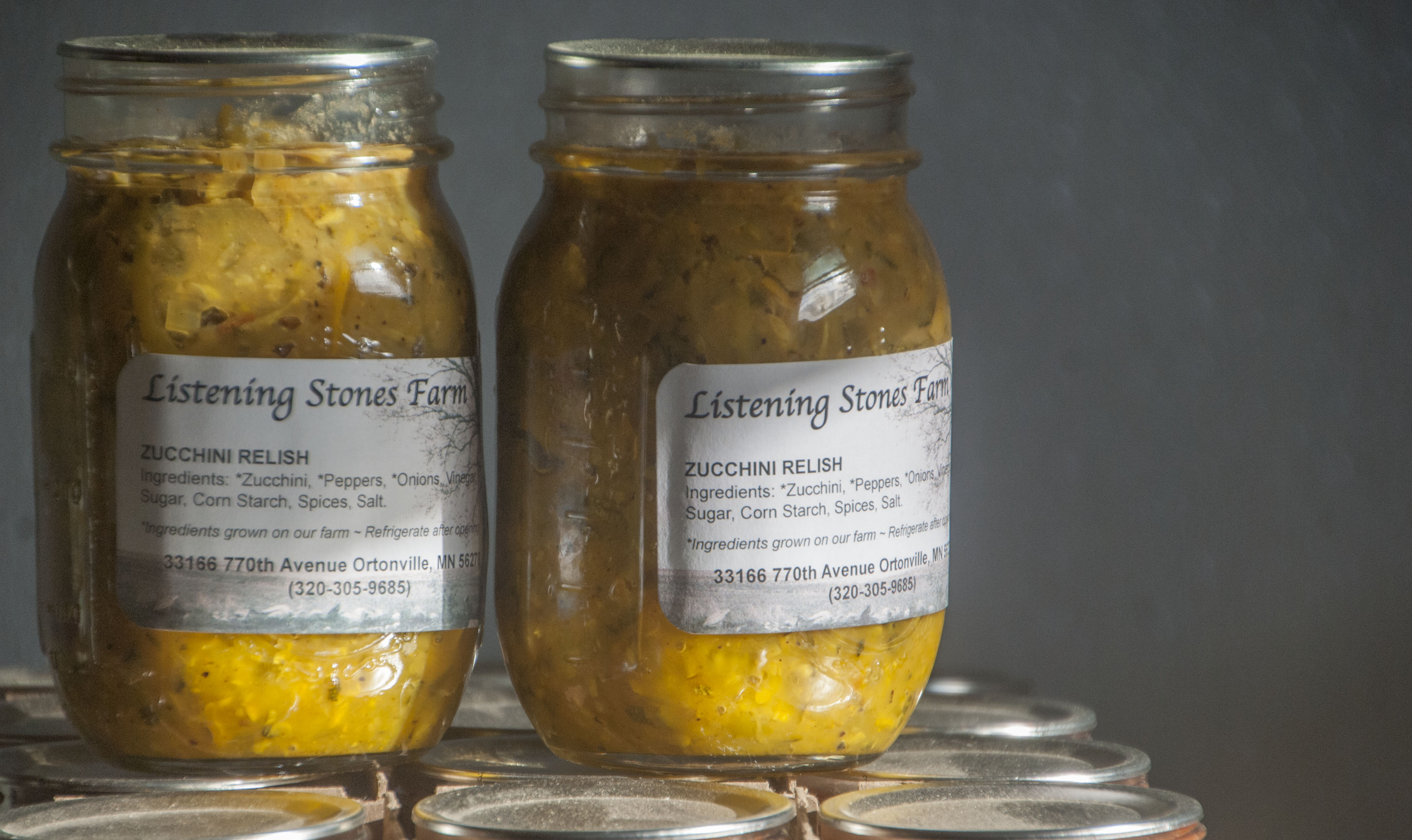
Among her many farm items, Rebecca's relish is knock-out delicious.

Among her many farm items, Rebecca’s relish is knock-out delicious.

Last year we opened our home for my Meander display, basically tying up our kitchen along with our dining and family rooms. Since most of the furniture was stacked in the office, our entire main floor living area was sacrificed for the long weekend. This was just fine until closing time. After the excitement was over and the crowds had left, we realized we had no real place to unwind. That Sunday night we scrambled quickly to put things back in order just to lay back on our couch and recliner to simply relax — despite the arrival of a couple of very late Meanderers!

This year we’ll be welcoming the Meandering crowd into our new studio and summer kitchen. Dale Pederson, himself a Meander artist, came with a crew after we worked together to design our new garage/kitchen/studio where the falling down original granary stood on the farm. That old building was a potential death trap, and I was a happy man when the man with the backhoe came to raze what was left of it after we had removed the usable “barn wood.” Our original plan was to have it up and ready before the Meander last year. It didn’t happen, of course. Three weeks after the Meander, Dale arrived at Listening Stones with his trailer stacked with the keyed components for a timber frame building.

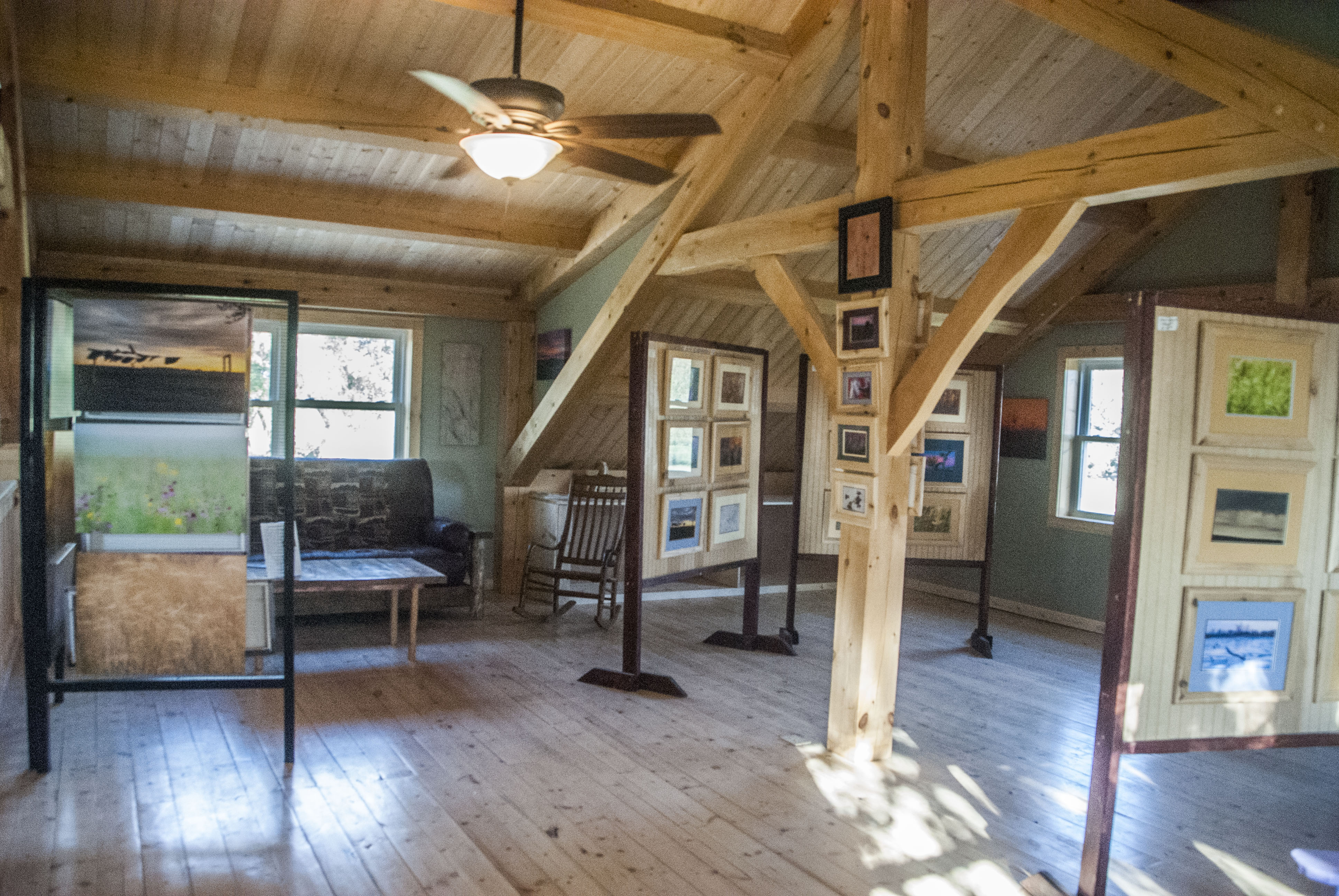
One of the overviews of the studio loft created through the artistry of Dale Pederson.

One of the overviews of the studio loft created through the artistry of Dale Pederson.

I could easily visualize the ground floor where the garage stalls and summer kitchen are now located, but the upstairs loft was a complete mystery. Dale, and Mike Jacobs, both told me how much space and beauty we would have once the building was complete. Honestly, though, I was totally shocked when I began sanding the floor for varnishing. We had collectively created a serene and beautiful space. Since then, little by little, the studio loft has come together. Early in the summer, following the Brookings art show, my wall-mounted display panels were moved up to the studio where my framed prints were hung.

My newer wire panels were then moved up where the canvases are now placed. Since then a work table was built for matting and working on my prints. Then an “island” console was built around one of the foundation beams where I can exhibit my calendars and cards. I also built a bookcase, although it won’t be ready for stacking books before the weekend.

Hanging the work left over from the last Meander was quite helpful, much of it now replaced with new images. At least 80 percent of my  framed prints are new, along with several new canvases. Also on the walls are several smaller framed prints along with eight recessed and floating metal prints I’m experimenting with. This is an idea gleaned from an earlier show by a glass fusion artist this spring.

Having a separate space for the crowd will no doubt make the Meander even more enjoyable for us this year.

Having a separate space for the crowd will no doubt make the Meander even more enjoyable for us this year.

Also new this year will be series of six posters that join my images with poetry written by regional poet Athena Kildegaard, who has published three books of poetry with a fourth scheduled for this winter. We are all extremely excited about working together on this project, and those who have previewed the posters have raved about them.

A visitor to the bird feeder, in front of the display of the new posters created by poet Athena Kildegaard and I.

A visitor to the bird feeder, in front of the display of the new posters created by poet Athena Kildegaard and I.

Yes, this has been fun and creative year in the field, and many of my new images are part of my show at the Meander.

But, this isn’t just my show. A huge part of our “farm plan” is to mesh art with good, organically-produced foods from our Listening Stones Farm. Indeed, this Meander will be our first real shared venture, for which we’re extremely excited. If by any measure I can be considered as artist, rest assured that my efforts pale alongside Rebecca’s. So much goodness, all grown from the heart. We are now on the “eve” of our “artist harvest,”  And we can hardly wait (despite that natural anxiety) for all those folks who will make the effort to venture up to visit our farm during the Meander. Hopefully they will have as much fun as we will!

Winding Down; Winding Up

It’s forty-five degrees this morning on our little patch of the prairie.

Bronze fennel in the broccoli bed

Bronze fennel in the broccoli bed

Long underwear weather, and last evening’s rain coupled with the later morning light gives me not-enough-time to prepare for today’s expected-then-abandoned foray to the farmers market. I can’t even see to clean out my car of the various beverage containers, road food wrappers, gallons of water refills, and cases of canning jars both purchased and scored from a friend’s trunk during a chance meeting at the liquor store yesterday–after she and I had forgotten them on multiple trips to each other’s farms over the course of more than a month.

So many details to remember this time of year. When did we last put salt in the softener? How many days after the last pick-up will it take to get the trash cart back up from the end of the driveway? Who has looked in the mailbox in the past week?

These are all the regular chores of day to day living. But there is also, who can we find to scale the peaks and clean out the gutters? When will the outer door be re-framed so the snow doesn’t blow in? Another load of straw for the chickens’ winter bedding, and the gamble of leaving the ripening squash in the field for another week. The last of the onions need pulling (have needed pulling for a month now) from their vast bed of weeds, which also need pulling—and transporting with their full seed heads out of the growing space. The chickens are in the tomato garden again—the groundhog must have made another hole in the fence that needs repair.

Yes, there are onions under those weeds.

Yes, there are onions under those weeds.

The Meander approaches—that great Upper Minnesota River Valley art crawl that provides a big boost to the income of artists, cafes, grocery and gas providers all over the region. Three days of hosting hundreds of visitors to our farm, the preparation for which takes place over the course of months but really winds up in the last couple of weeks.

This year we have the new timber frame studio space to welcome people—a feeling of relief after last year’s set-up took over the entire lower floor of our home, reducing meals to an awkward few bites over the table/check-out area crammed against the wall to open up the “gallery” of the dining room. Easier just to snack on sister Ann’s cookies all weekend and drink too much coffee. I suppose that’s what we’ll do again this year, though excuses for that behavior won’t be as easy to come by.

At 6:30, light begins rising—enough to silhouette the farmstead trees and outline tassel-tips in the cornfield to the east. Venus still shines in the upper darkness, and a lone bat makes a last pass. No birdsong yet—except that Oskar is crowing in the coop, and Wilson, one of our “surprise” cockerels, is emulating with his adolescent cackle. The lower gardens hold deep shadows—protecting rabbits free to forage now that the cats have come in, eaten their kibble, and dozed off in the piles of unfolded laundry on the couch.

Wilson, our handsome Partridge Rock (surprise!) cockerel

Wilson, our handsome Partridge Rock (surprise!) cockerel

Canning is almost a daily affair now—all the food preservation equipment should probably just live upstairs until the gardens give out. The 18 quart roaster’s on the table in front of me; the food mill and pressure canner in boxes on a chair behind, and the boiling water bath is still on the stove-top after last night’s quadruple batch of salsa verde. The dehydrator hasn’t yet made its yearly appearance, but celery leaf is on the agenda (a two-part process, as the stalks get chopped and frozen), and the shell beans will need finishing after the season’s ample rains.

And then there’s the shelf-stable produce–onions, once pulled, need time on the sun porch table to cure—squash is likely to fill up the rest of the area where we ate when daylight was long enough for working late and supping at sunset. At least the garlic is dug, cleaned, cured, and put away—though bags of heads labeled and sorted for seed are waiting out there for re-planting in the next month.

This slideshow requires JavaScript.


At 7:30 it’s finally light enough to let the chickens out. My toes feel frozen and I’ve resorted to my earflap cap, but they seem immune—even energized by the sudden drop in temperatures. That’s good—the coop is unheated, and it’ll be a lot colder than this come winter, even with their deep layer of straw. I’ll give their house a final cleaning-out (and my compost pile a top-dressing) before we start creating that heat-generating pack of manure and straw that gives them a little extra insulation against the extremes of the dark season. But not this morning—the early half of the day is prime laying time, and I’ve been scolded enough by perturbed hens to know I should just stay out until the sun shifts west. It’s their house; I’m just the cleaning crew.

Gratuitous earflap cap-sunflower selfie

Ridiculous gratuitous earflap cap-sunflower selfie

Since I’m not at the farmers market, and I’m not allowed in the chicken house, the morning will have to shift the other work. Will it be the twenty pounds of wild plums in the studio fridge, waiting to be turned into jam? Should I attempt the celery project? What about harvesting the squash or pulling the onions? A deep cleaning of the cold storage room would be useful progression.

Best to think on it a bit over breakfast, then take out the compost, wash the dishes, put salt in the softener, and finally bring the trash cart up from the road. I’m sure after all that I’ll figure out something useful to do with my time.

Ah, Autumn!

Walking into the kitchen after a road trip to pick up pork at Pastures of Plenty for our local Granary Food Co-op reminded me of another prime reason for loving this time of year. Rebecca’s roaster of tomatoes and other vegetables were simmering down to make her signature Smoked Eggplant Tomato Sauce. So intoxicating! So autumn!

Sumac shines in the early morning sun just down the road, one of the sure signs of autumn..

Sumac shines in the early morning sun just down the road, one of the sure signs of autumn..

Actually, just smoking the eggplant felt autumn-y in itself … although a couple of racks of ribs might have been even more appealing if not satisfying, with that curling scent of bluish apple wood smoke drifting away from the chimney. We are seasonal eaters, with exception of what we don’t can or freeze, so apple wood has become a staple. As have apples, the prime fall fruit along the wooded river hills around here. Cider. Apple sauce. Apple butter. Pork simmering in a curry with tart apple chunks. Ah, the joys of autumn!

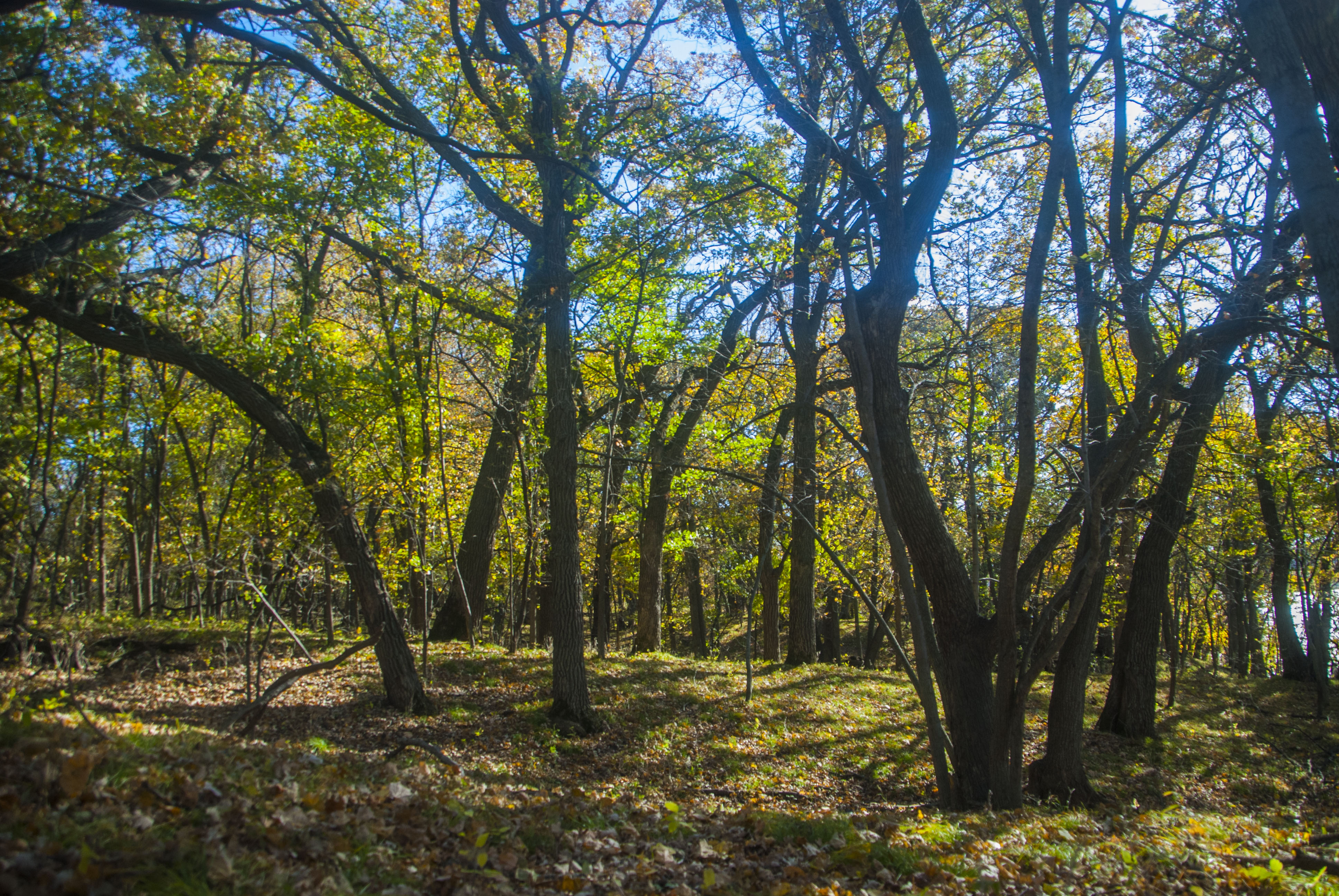
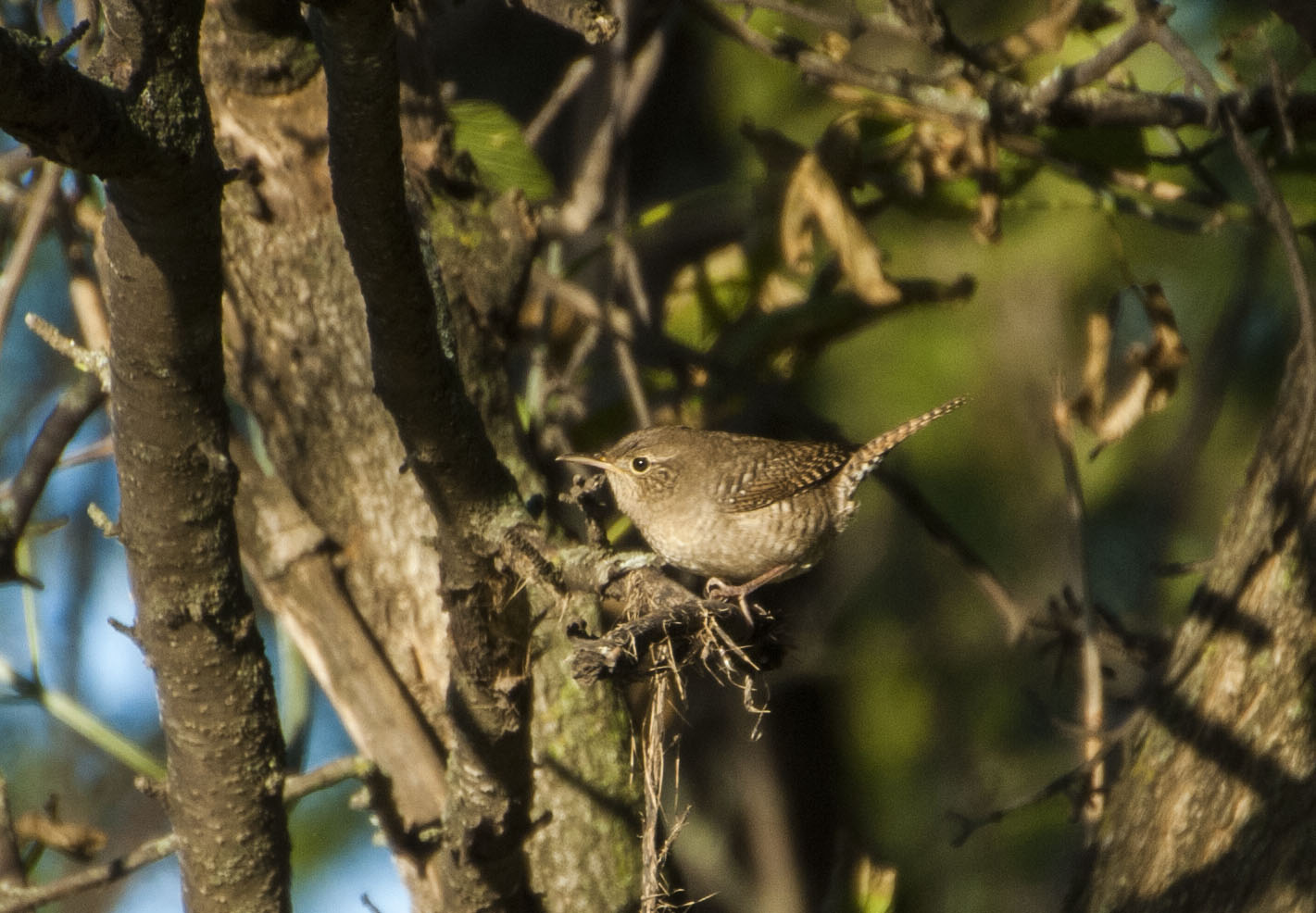
Driving up the Lake Road this afternoon offered numerous signs of the changing of the season. Even in our yard, which isn’t all that close to water, the leaves are losing their chlorophyll, meaning of course, their greenness. We are a few weeks from the peak, yet when I sat on our listening bench in the loop of our grove last Saturday a constant sprinkle of crinkly leaves rained down around me. Although we are hundreds of miles from real woods, there was the smell of a fall even in the grove timber. A crispness. A crinkling, dry feeling. With sunlight filtering down through the canopy. Then, unexpectedly, a wren … small, nervously alert, and beautifully brown, like those dried leaves … flitted onto a nearby branch. Ah, autumn.

The little wren popped up amidst the sprinkling of leaves in the grove.

The little wren popped up amidst the sprinkling of leaves in the grove.

On the prairies around us big bluestem and Indian grass are browning, and those clubbish, naked seed heads of cone flowers defy the prairie winds that give the grasses their freedom of beauty. Golden rod is starkly peeking through the brown. You will likely not find a better time to stroll through a grassy prairie, wading through this dance of autumn as a staunch breeze batters you from the side. I wish I could hear better, to perhaps hear the subtle rustle of the blowing grasses.

Cone flower seed heads stand out from the browning prairie grasses.

Cone flower seed heads stand out from the browning prairie grasses.

Just above the grasses you’ll still see a few dragonflies, although those sweeping, acrobatic swallows have departed. Last year their leaving was much more dramatic. I had been working in my wood shop, which is in the former goat barn of the previous owners, and the swallows had been after me all morning. Buzzing in and out, sometimes swooping within inches of me above the saws and the router in their daring-do. That afternoon the barn was abnormally and noticeably quiet before the sudden realization that the swallows were gone. In a heartbeat, perhaps, the signal had passed among them that it was time to go. To migrate, that great innate passage and mystery science is still trying to unlock.

Golden Rod peeking through the big bluestem on a recent pre-dawn morning.

Golden Rod peeking through the big bluestem on a recent pre-dawn morning.

This fall, though, they flew away without so much as a morning of pronouncement! Just disappeared as abruptly and mysteriously as they so suddenly appeared back on that warm, May afternoon. So, no, the swallows are no more, and the few insects out over the prairie grasses are being seized by those dwindling squadrons of dragonflies.

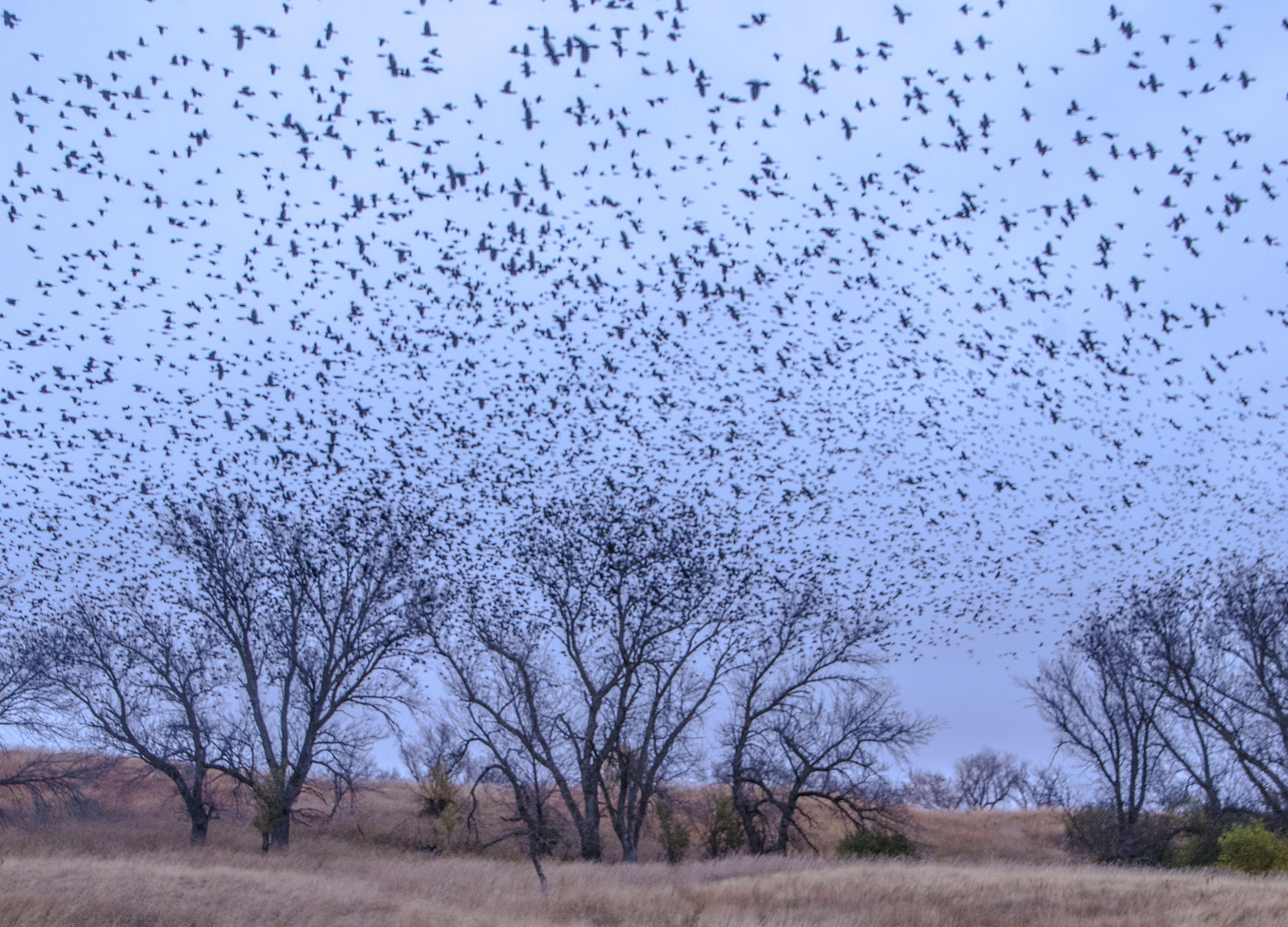
One early morning this week we both stepped onto the deck off our kitchen with our tea and coffee to an almost eerie hum. It was loud enough that we were sort of looking at one another in question when a sudden “swoosh” erupted from the grove as a murmeration of blackbirds rose in unison from the treetops. Hundreds. Perhaps a thousand. You can’t count a murmeration. Last fall I had posted a picture of a nearby rise of the blackbirds from an oak savanna down the road and an old friend wrote, “I’m so glad you now live out here and can see these things.” Of course, she was right. In talking with people my age who grew up before that last great ditching and tiling of the prairie pothole region in the 1960s, back when there were enough prairie potholes of significance, they reminiscence of murmerations so thick of birds that the sky was blocked by a canopy bird blackness. I’m not the only photographer who has recorded a ribbon of murmeration blackness, and certainly not the only one who can wish for experiencing such a moment from the past … one that will likely never be no more, one mankind has erased from the earth forever.

Thousands of blackbirds rise from the trees ... a murmeration.

Thousands of blackbirds rise from the trees … a murmeration.

Although our neighboring farmers with the pothole wetlands planted corn this year, which now block our views of those wetlands, we can still hear the geese as they begin to gather. A month from now along with the dust of harvest the skies will be full of the sounds and skeins of geese as they seek recently harvested fields to gorge their gizzards before the last long flight of the year. Ah, autumn!

Moments ago we took our nightly mugs of wine out on the deck, and witnessed a small murmeration, the skittish flight of a few dragonflies, the distant honking of geese, and still another sign of the approaching autumn … a distinct chill in the air. A fall wind. Autumn was all there for the taking, for the filling of the senses. Now is a time you begin the morning with a sweater, then work off the layers as the sun climbs in the sky. Cool mornings, balmy afternoons. We call this an Indian summer for some reason.

Our windows are open at night allowing the breezes to caress us with coolness. While it is still warm enough not to send chills down your arms and legs, you awake in the morning realizing that at sometime during the night you must have unconsciously reached down to pull up a quilt; that you had snuggled deep into the warmth of the bed and up against one another.

Ah, autumn!

A Long Goodbye

Years ago I walked into the office of my little country weekly one morning after a trip to Boston to find laying across my organized chaos a long black tube. Instant curiosity got the best of me and I quickly unscrewed the cap to find a beautiful antique bamboo fishing rod complete with both tips.

“Where did this come from?” was my question for a co-worker.

“Some guy dropped it off. He said you’d know who it was from.”

So began a long mystery, for there wasn’t a clue. No note. “Some guy” isn’t a vivid description, even in Minnesota where vagueness has evolved into a cultural art form. Whoever the mystery man was he would have to know me well enough to know that I was a fly fisher and had an appreciation for such a work of art. Later in the afternoon, I took the fly rod from the case and rigged it up with a five-weight line and laid out some line. While my practiced, piston-like casting doesn’t lend itself well to bamboo, which performs so well with an easy and rhythmic motion, there was quality in the workmanship. This was a fine rod.

The bamboo ...

The bamboo …

Perhaps it was two years later while cooking hamburgers along the Minnesota River for CURE’s annual River History Weekend with Jerry Tilden, he lifted his spatula from the grill and said, “Say, did you ever find that package I left in your office?”

“Package?”

“Years ago my father-in-law owned a hardware store, and he had hung this old fly rod up over the fishing gear. When the store sold, Dixie and I brought it home and tacked it up in our house. It has been there ever since. When we decided to downsize and move, I brought it over and left it in your office,” he said, smiling.

A gracious and caring man, Jerry Tilden was diagnosed with cancer seven months ago.

A gracious and caring man, Jerry Tilden was diagnosed with cancer seven months ago.

Dixie is the missus, who I have known for years. Through her I met Jerry. As I was reading through his obituary this week I realized how little I knew about him, of all the civic groups and community boards he was not just a part of, but in all was cast in a leadership role. No, I didn’t know that side of Jerry Tilden. The side I knew was of his stepping forth as a constant volunteer. The side I knew was of his kindness and care. I also knew of his work as a Master Gardner, and of his basement dedicated to the propagation of his vast gardens along the Minnesota River in the Montevideo flood plain. To me it was ironic that a man who didn’t need a nursery had such a wide assortment of flowery gardens right next to one of the more notable nurseries in the river valley.

Yes, there were the burgers. We cooked them together for several years for the CURE event on a grill he transported himself from Bill’s Supermarket in Montevideo. Me? I mainly manned the grill. Jerry? He was multi-tasking, cooking burgers one second, then the next making sure the potato salad was in the right place, or running to assist his beautiful Dixie with some task. That was the Jerry Tilden I knew.

Then there was that Sunday morning when I received a frantic call from a nearby Chamber of Commerce woman who asked if we could quickly put together a canoe trip on the river, that there were three Hollywood actors in town who had expressed interest in doing a paddle. A call was put through to Dixie, who said the canoe trailers were set up and ready, to just come by for the key. Phone arrangements were then made and my “river truck” was aimed toward Montevideo. Dixie met me at the door with one of her beautiful and encompassing hugs, and handed me the keys. When I got to the garage under their Main Street office, there was a flat tire on the trailer.

“Dixie,” I said over the cell phone, “where can I get a flat tire fixed in Monte on a Sunday morning?”

She didn’t know, but said Jerry was on the way down to help. He drove up before I could ring off. Using a jack from my river truck, we easily removed the tire. “Let’s put it in the car,” he said. “I’ll see what I can do.”

“Should I come along?”

“Just stay here with the kids,” he said, because my two exchange students were along for the adventure. Meeting Hollywood actors obviously offered more excitement than homework. “I’ll be back as soon as I can.”

Pai, Hanna and the actors pose with Nicole Zemple ... a trip made possible with Jerry Tilden's switch job!

Pai, Hanna and the actors pose with Nicole Zemple … a trip made possible with Jerry Tilden’s switch job!

Indeed, it didn’t take him long. We positioned the tire and secured the lug nuts and let down the jack. That’s when I noticed the color of the wheel. It didn’t match the trailer, and it was obviously a different tire than we had taken off moments before. “The service station have a spare?” I asked.

Jerry Tilden smiled. “Nah, I just took it off my trailer. I’ll get the flat fixed tomorrow.”

That was the Jerry Tilden I knew. That’s the Jerry Tilden I’ll miss, the man I wish I had known better.