Departures …
Reply
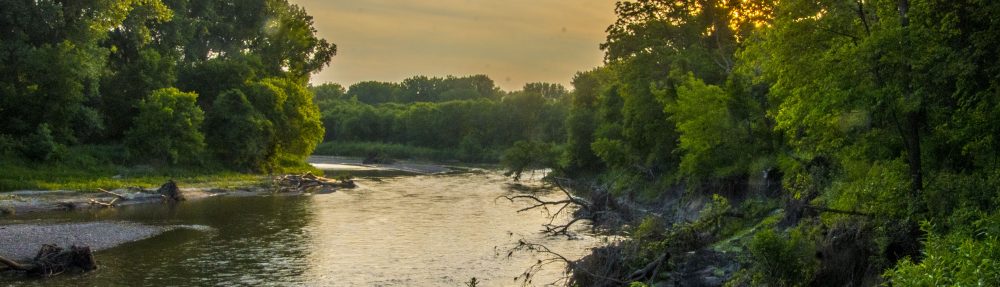
A good naturalist would have noted the time, date, temperature … all the pertinent circumstances and details. I’m not a good naturalist. I can’t even remember the exact month let alone the day the barn swallows departed.
I remember us sitting on the deck on that sunny and warm morning near noon, hearing the ever present screeching “CHEEPs” from the gutters above us, and from the nearby clothesline and roof peaks of the studio and wood shop. Above the bluestem of our adjacent prairie the swallows flew in their delightful dips and dives, before suddenly making an awesome aerial pirouette. Feathered jets, mouths agape, collecting ever present mosquitoes and gnats! It is suggested swallows may be among the fastest flying birds with estimates of 64 mph. And, they’re noisy.
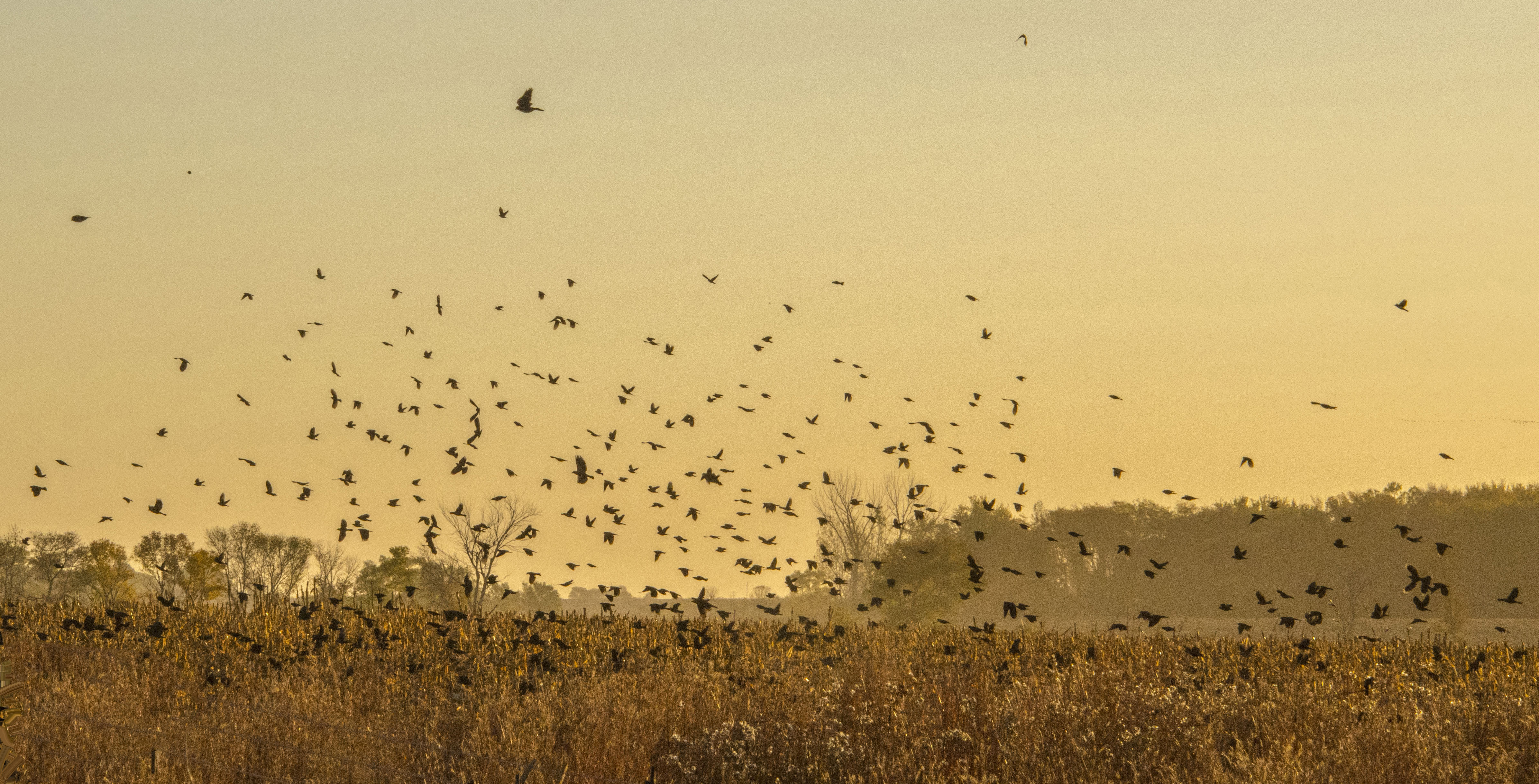
We were talking, my friend and I, having a sandwich, when we looked at one another sort of startled, for it was suddenly deathly quiet. Total silence save for the rustle of leaves in the breeze. Our piece of the prairie was completely naked of sound. Not one swallow sat on the gutters, eaves or clotheslines. The prairie was devoid of the swooping jet-like birds. We were left with an unexpected silence, an even louder silence than when a harsh prairie wind, one that whips branches of even the sturdiest burr oaks, suddenly dies. Just like that even those birds that had left the nest mere weeks before were somewhere off on a flight of more than 5,000 miles to places I’ve never been.
Ah, the mysterious nature of migrations. Especially those sudden departures. Even ornithologists with emeritus status, who’ve studied bird behavior throughout their lifetimes, agree.
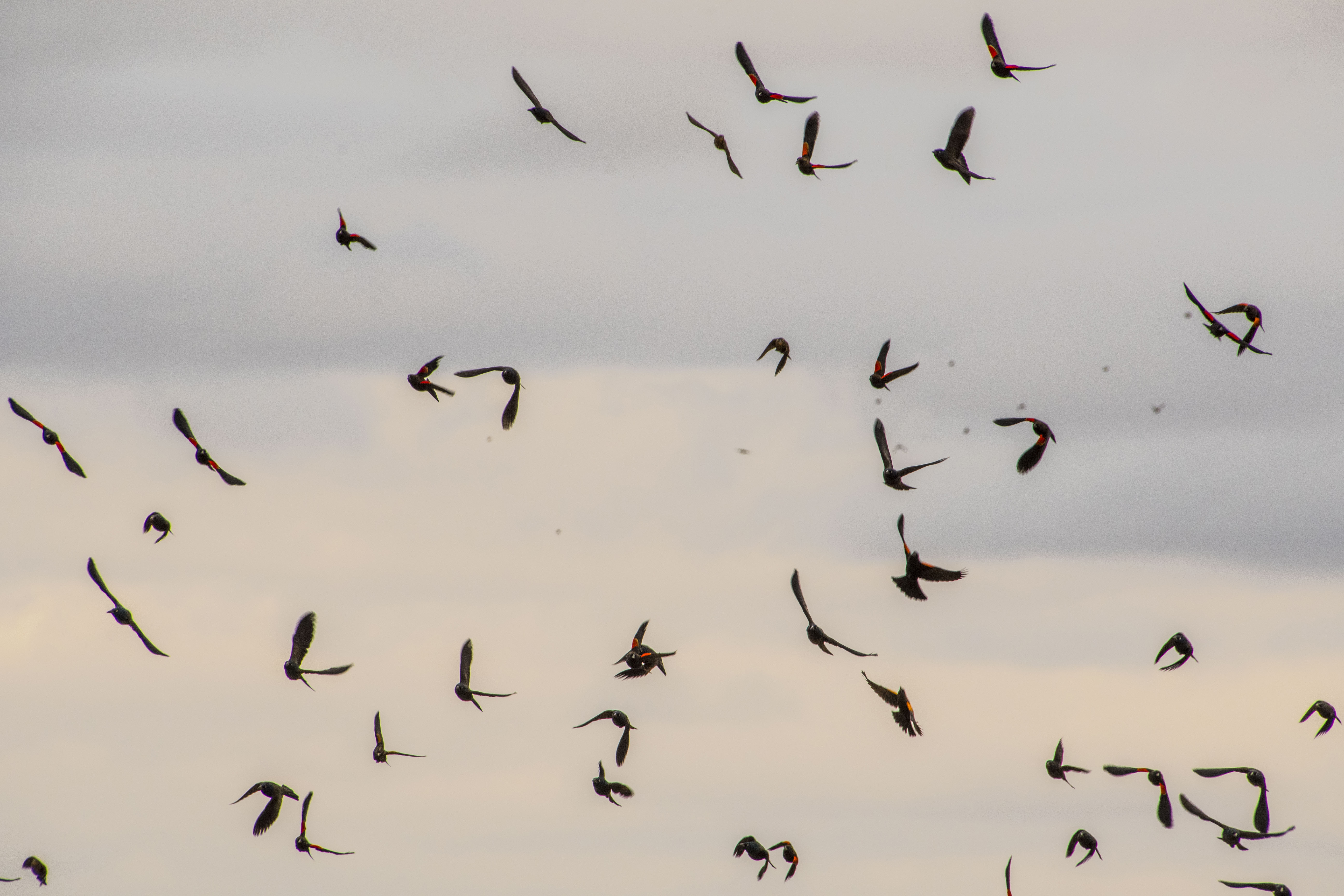
Collectively we seem to rejoice the spring migrations here in the western edge of the Mississippi Flyway. Around our part of the prairie we have hundred of thousands of snow and blue geese populating wetlands for a few days of feeding and rest come spring. A few years ago huge populations stopped just north of here, and last year we spent the first days of the pandemic lock down about 15 miles due east where a huge flock of both (along with some swans) took over a basic farm section in ghost-like seasonal wetlands. In years past we’ve been seduced by the historic gathering of sandhill cranes along the banks of the North Platte in central Nebraska, and we once caught what seemed like a million redwing blackbird murmuration above a bend of the Yellow Medicine River late one spring afternoon.
And, there is the pure joy of seeing the first huge pod of white pelicans suddenly in contrast to deep blue skies each spring. Shore birds wade wetland edges, while warblers and other songbirds dash from branch to branch even in our small grove. We delight when the seemingly same two pair of wood ducks come each spring in search of nesting trees in our grove. Each sighting regardless of the species delightfully fulfills the satisfaction of welcoming another spring to our collective souls!
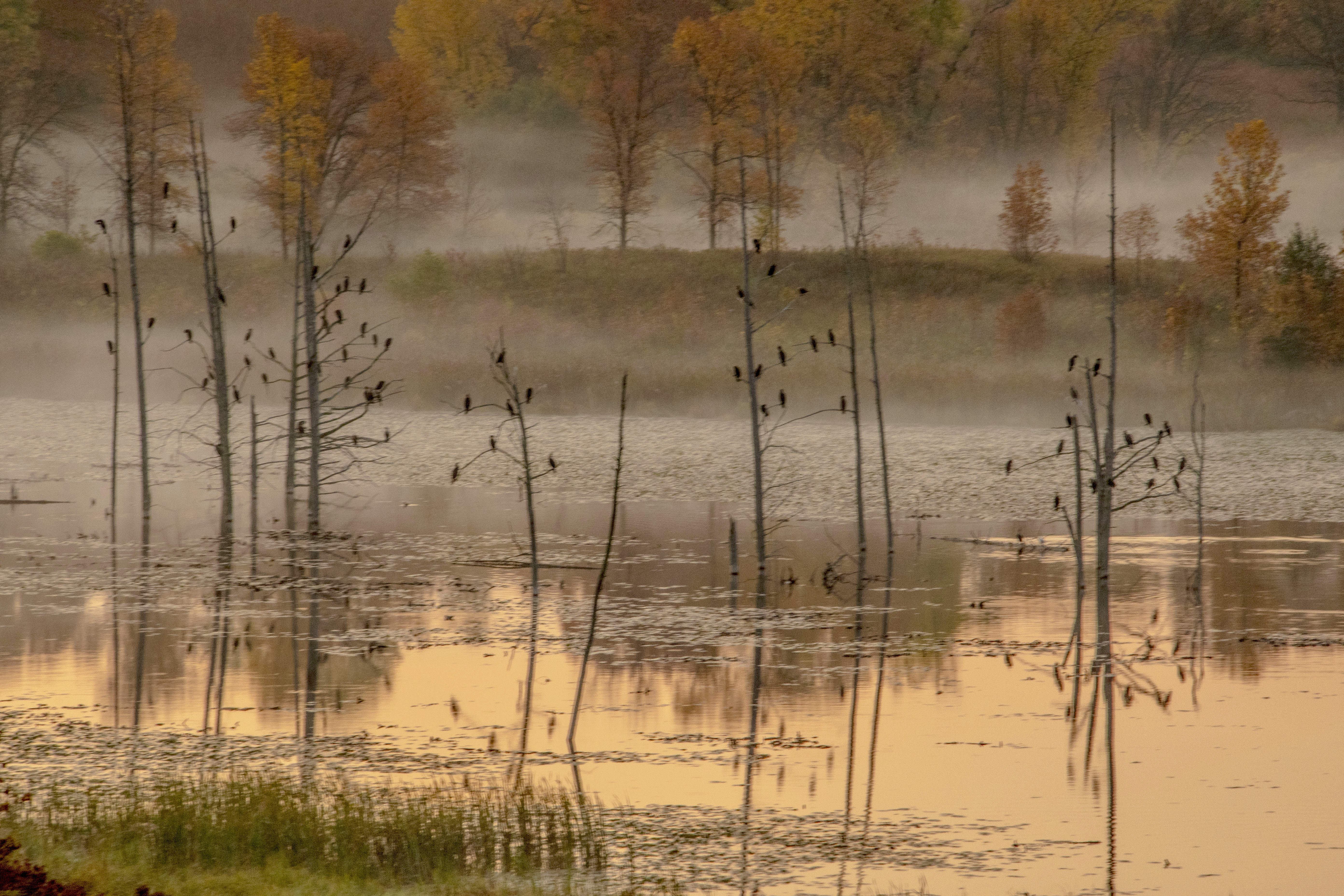
Fall migrations? While we haven’t joined the serious bird watchers with high powered binoculars at the top of the Empire State Building in downtown Manhattan to catch the flecks of jet streaming warblers overhead, we have ventured to Hawk’s Ridge on the outskirts of Duluth to wonder as migrating raptors catch the currents above Lake Superior on a frosty October morning. Those are just a couple of instances of pilgrimages for the autumn migrations that seems less eventful. Mostly it’s here one moment, gone the next with little if any fanfare. Many of the redwings you see in huge murmurations in the spring seem to simply disappear from the wetlands as did the swallows from our Listening Stones Farm. Yet, for the past few days a growing murmuration of redwings have gathered here in our grove. Stragglers? Newbie’s from this summer’s hatch? Ah, the mystery!
Recent trips through the nearby Big Stone National Wildlife Refuge indicates that several species are gathering. We witnessed growing murmurations as we crossed North Dakota a few weeks ago. Soon on a warm, fall afternoon, gulls will glide over our prairie home in poetic symmetry, either as a flock or singular as if on a string, one after another. Over on Big Stone Lake you may catch hundreds of resting coots through the bright yellow autumn colored leaves of dogwood, and the skeins of geese are larger in numbers and ever more present.
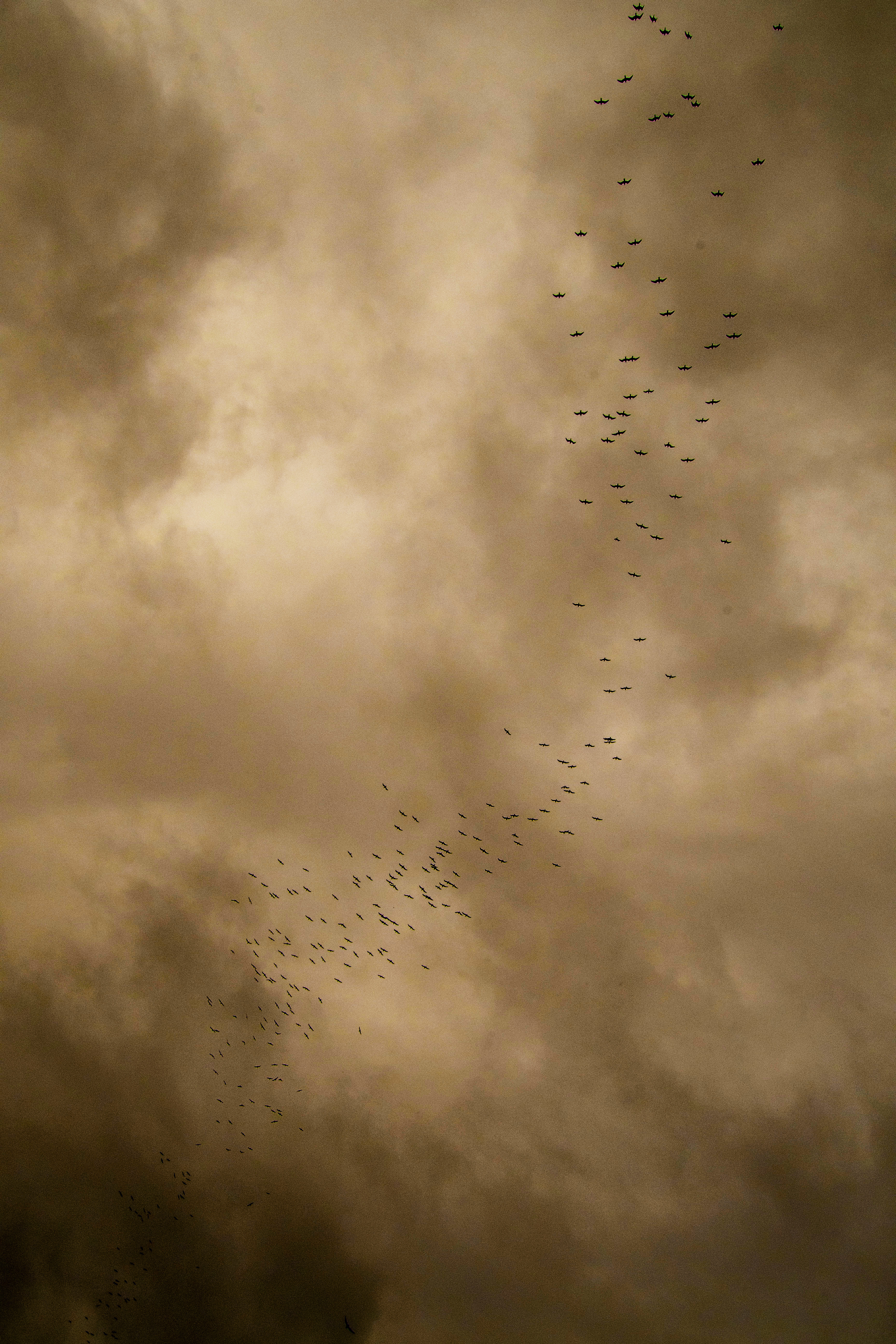
What we see here, though, is somewhat meaningless in the overall scheme of migrations, and after years of experience and knowledge of radar use what we see may be as interesting as it is inconclusive. “Studying the movements of one species, let alone the hundreds, is a fundamental challenge,” writes Kyle Horton of the Cornell Lab of Ornithology in an article published in Science Magazine. “Because the drivers of avian migration are so complex, we need a system that captures that complexity.”
Successful migration requires coordination of a variety of physiological, behavioral and ecological systems. “Birds must navigate accurately using multiple cues, time their journeys precisely, deal with winds that may blow them off course, find food in transient and unfamiliar environments, and often re-engineer their bodies to store energy and save weight,” added Benjamin Van Doren, a Cornell co-author of the article with Horton.
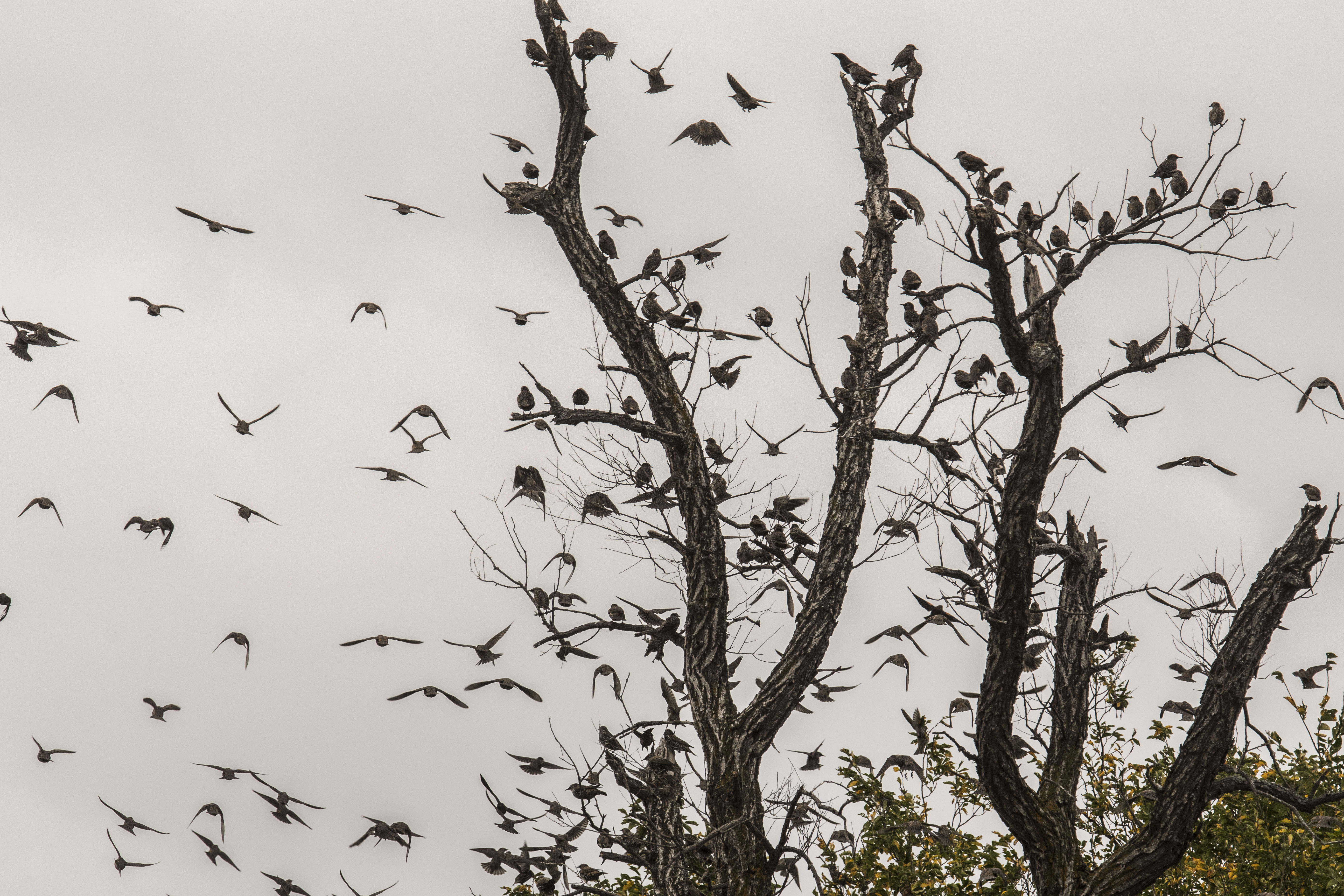
The two say environmental drivers, such as temperature, atmospheric pressure and precipitation play important roles in determining when large groups of birds take flight. With so many intermingling factors, the ecology of avian migration is exceedingly complicated — in short, it’s hard to know exactly when birds of a feather will flock together. Then, suddenly disappear. Ah, the mystery!
Each year billions of birds navigate the skies on biannual migrations, traveling great distances at tremendous heights, some thousands of feet in a night’s darkness, back and forth between breeding and wintering sites that sometimes lay a continent apart. Like ancient humans crossing vast seas, some birds plot their courses using the stars. Others follow the ebb and flow of Earth’s electromagnetic field — using it not just as a compass, but as a kind of visual heads-up display to identify their position on the globe.
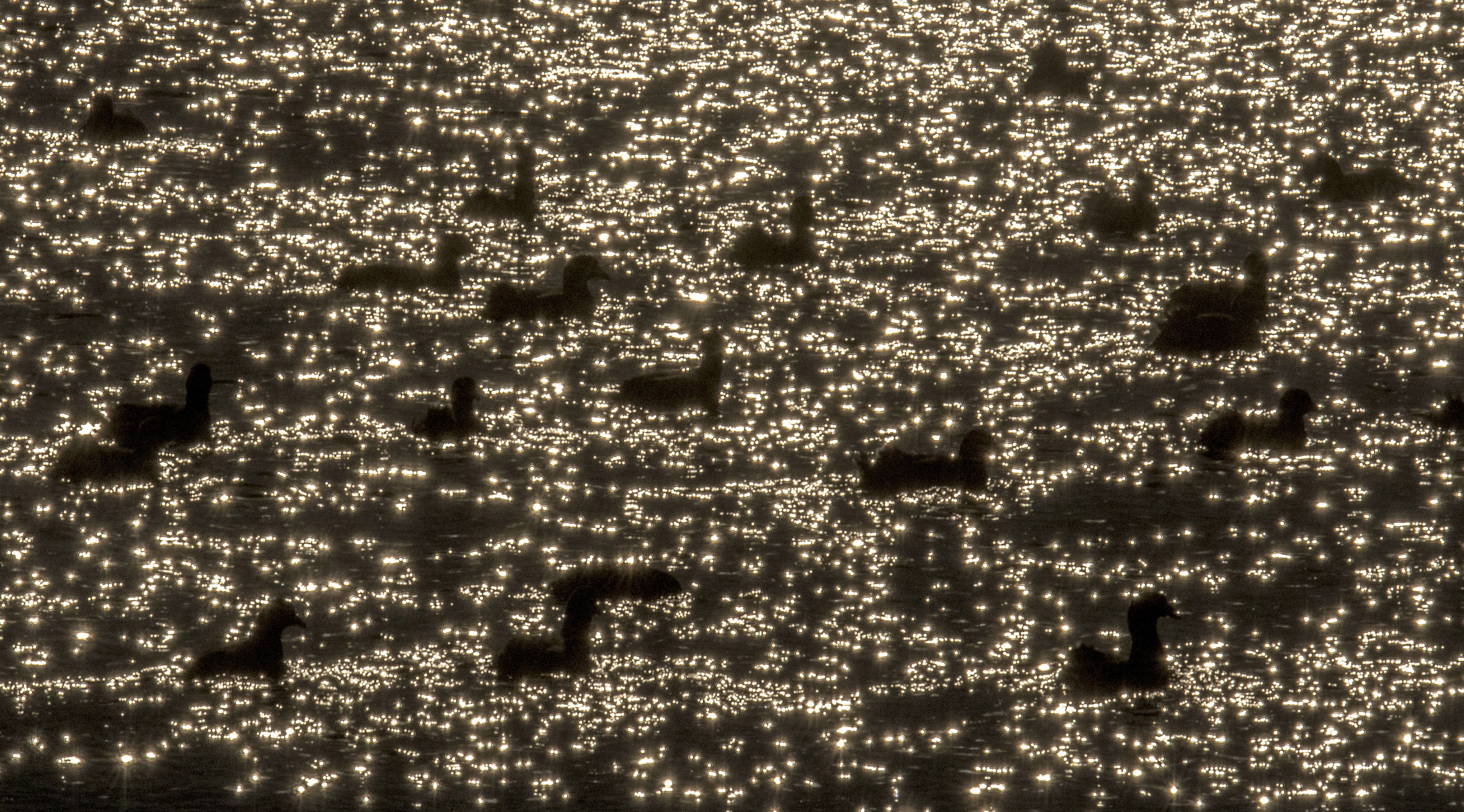
Ah, the mysteries!
Here on the ground, on our small space of prairie-land, we catch only the hints, those moments of rest and rejuvenation. For the past week our grove has harbored those hundreds of redwings in an ever moving feast taken from an adjacent harvested cornfield. We sat on the deck earlier this week, Mary with her coffee and me with my tea, watching groupings from a few to dozens skitter from the treetop perches to the field, and back again. Ever restless! That afternoon, they were nowhere to be seen. The following morning, the murmur was as loud as the geese gathering in the wetland just over the rise. Then … they were gone.
On a drive through the nearby Big Stone National Wildlife Refuge, on the huge reservoir of damed water, thousands of coots bobbed in wind-blown waves. Warblers darted through the mullein and sumac. Will any be here this morning? Tomorrow? Will there be a sudden explosion of wings lifting all from the water, in seeming chaos, blocking the moon or sun, as some force beckons them into the air? Like the redwings here?

Beyond the mysteries I find a certain sadness about autumn migrations … a feeling so opposite that of the promise of summer felt during spring migrations when the arrival of snow geese are as welcomed as pasque flowers on a prairie hill. Now, though, it’s not unlike watching the taillights of your lover’s car disappearing down the road, a feeling that was so vividly realistic on the afternoon the swallows left so abruptly that they left behind such a startling silence. Or, of waking this morning to discover the grove was completely empty of the murmuration.
Helplessness is a feeling I so thoroughly dislike, yet one that is seemingly ever present. As I drive through the countryside I see signs around me posted in yards and along the highway promoting a president who has done so little to bring our diverse population together during racial protests, turmoil and a health pandemic that has killed more than 200,000. So much “political popcorn” that I’m reminded of the 1975 publication of Alvin Toffler’s “EcoSpasm,” which, in part, described the economic situation in Germany in the 1930s that gave rise to Hitler’s dictatorship.
More recently we have watched from afar to witness how Hungary’s Prime Minister Viktor Orbán can now rule by decree for an indefinite period of time. That such an erosion of democracy could happen openly in the heart of Europe has caused an uproar, with many questioning what, if anything, the European Union can do to stop one of its own from undermining the very values that underpin the bloc, according to the Atlantic. My son, Aaron, who lived for years in Budapest said, “The scary part is that Orbán’s rise was all done legally, by their constitution. And, it could happen in the States …”
Our president has offered unveiled hints of achieving just that, and so much is in place for it to happen: gerrymandered polling districts, closures of polling sites in areas heavily populated by people of color, voter suppression tactics particularly in Republican states, and most recently an attack on mail-in balloting and the U.S. Postal Service. There are more creative tactics almost daily, plus a Senate that apparently loves sitting on their respective hands!
To escape this current onslaught of chaos and helplessness I find I must head to spots in the timber and prairie where there is a semblance of peacefullness and order; places that offer a convenient and medatative calmness. One such place is Maplewood State Park. Ah, Maplewood!
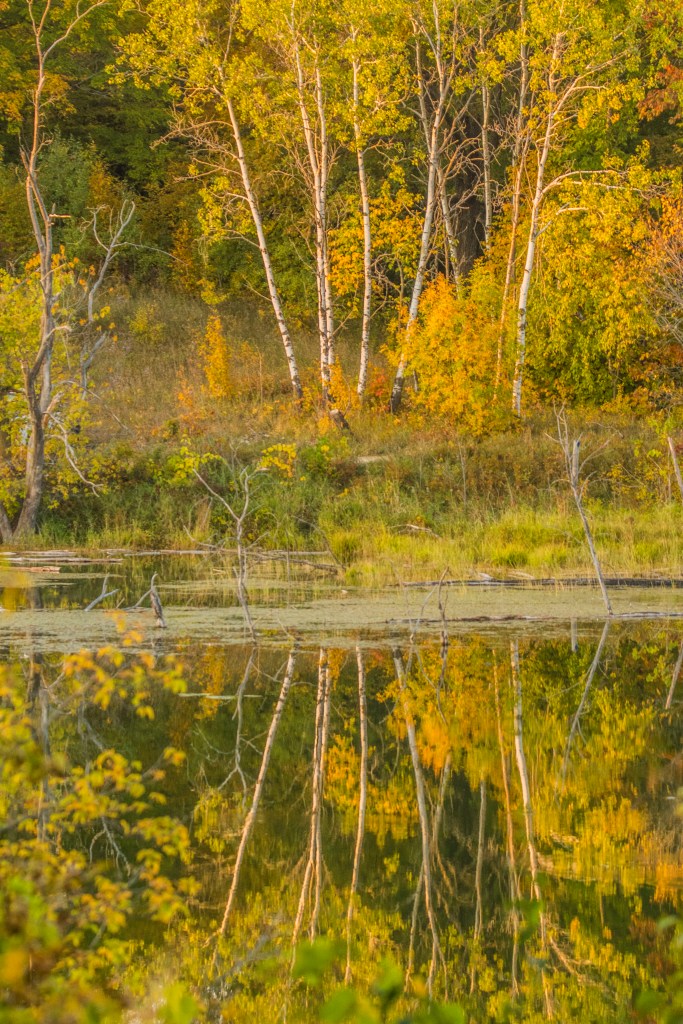
“For the first time in my life, and maybe for the first time since the Civil War, the fate of constitutional democracy in the United States is on the line, and it’s on the line because the president has put it there,” said William Galston, chair of the Brookings Institution’s Governance Studies Program. “It is a clear and present danger.”
Ah, Maplewood!
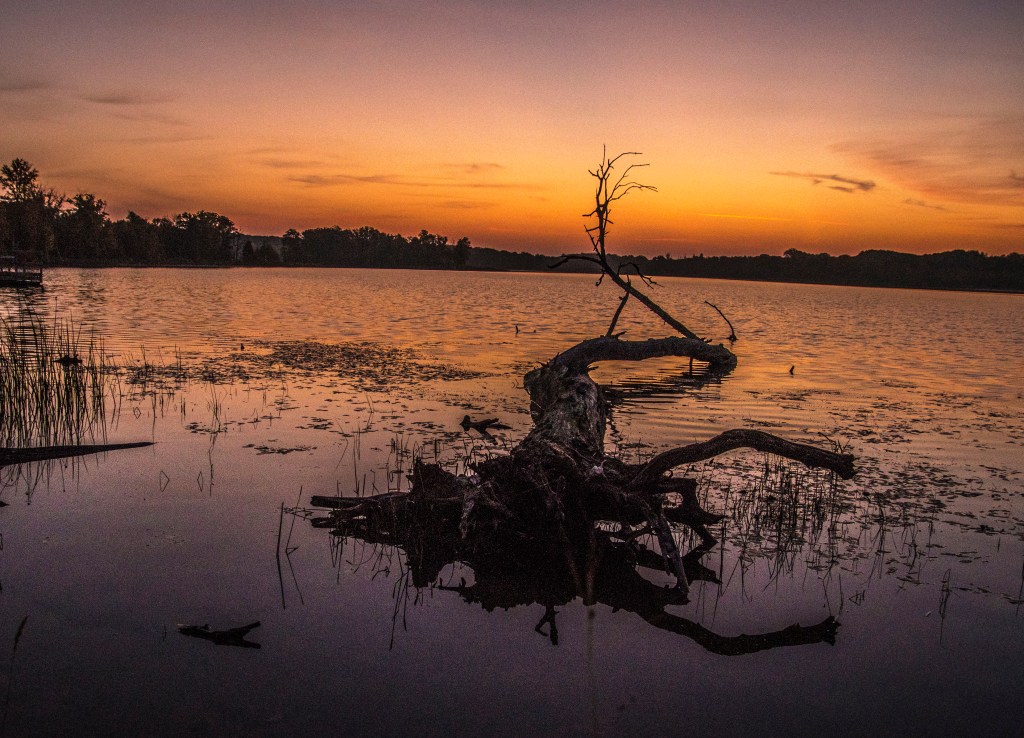
“This is unprecedented for us — the scope and scale of the size of these wildfires and the impact they are having on people around the state,” said Dale Kunce, who heads the American Red Cross Cascades Region in Oregon.
Ah, Maplewood!

Justice Ruth Bader Ginsburg, who championed women’s rights — first as a trailblazing civil rights attorney who methodically chipped away at discriminatory practices, then as the second woman to serve on the Supreme Court, and finally as an unlikely pop culture icon — has died at her home in the nation’s capital.
Ah, Maplewood!

The Postal Service, long an afterthought in the political process, has been drawn into the fray after its new leader, Postmaster General Louis DeJoy, implemented a series of cost-cutting measures that delayed deliveries nationwide. The changes have sparked a flurry of legal challenges and caused concerns over the agency’s ability to handle the anticipated crush of election mail this year, although DeJoy has said it will be the Postal Service’s top priority.
Ah, Maplewood!
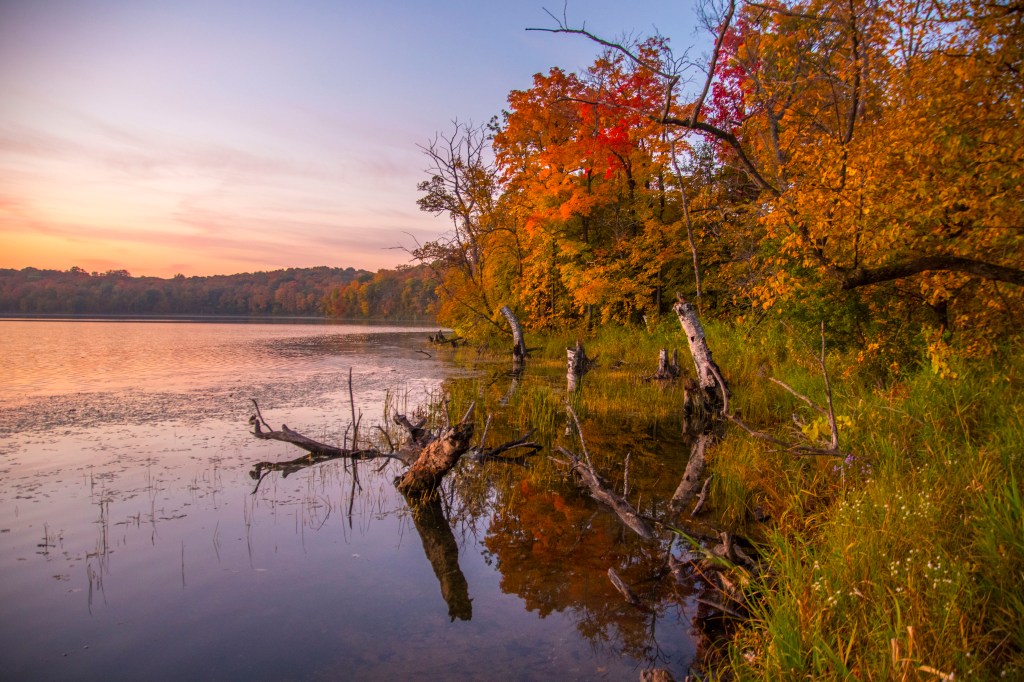
The U.S. death toll from the coronavirus topped 200,000 Tuesday, by far the highest in the world, hitting the once-unimaginable threshold six weeks before an election that is certain to be a referendum in part on President Donald Trump’s handling of the crisis.
Ah, Maplewood!
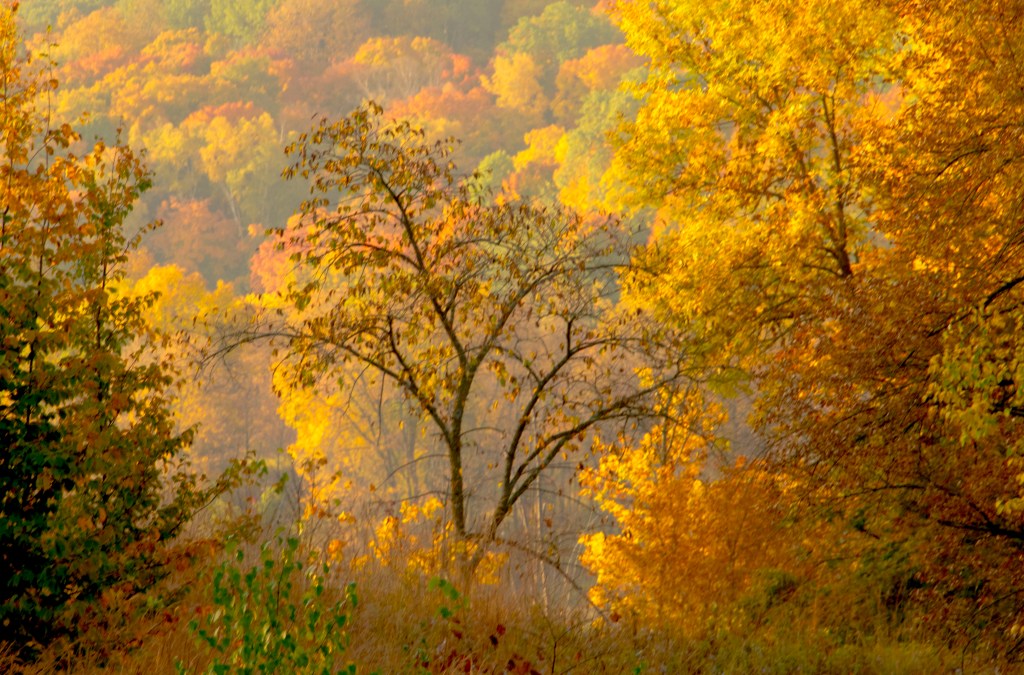
America’s worsening climate change problem is as polarized as its politics. Some parts of the country have been burning this month while others were underwater in extreme weather disasters. The already parched West is getting drier and suffering deadly wildfires because of it, while the much wetter East keeps getting drenched in mega-rainfall events, some hurricane-related and others not. Climate change is magnifying both extremes.
Ah, Maplewood!

With Siberia seeing its highest temperature on record this year and enormous chunks of ice caps in Greenland and Canada sliding into the sea, countries are acutely aware there’s no vaccine for global warming. “We are already seeing a version of environmental Armageddon,” Fiji’s Prime Minister Frank Bainimarama said, citing wildfires in the western U.S. and noting that the Greenland ice chunk was larger than a number of island nations. This was meant to be the year “we took back our planet,” he said. Instead, the corona-virus has diverted resources and attention from what could have been the marquee issue at this U.N. gathering. Meanwhile, the U.N. global climate summit has been postponed to late 2021.
Ah, Maplewood!
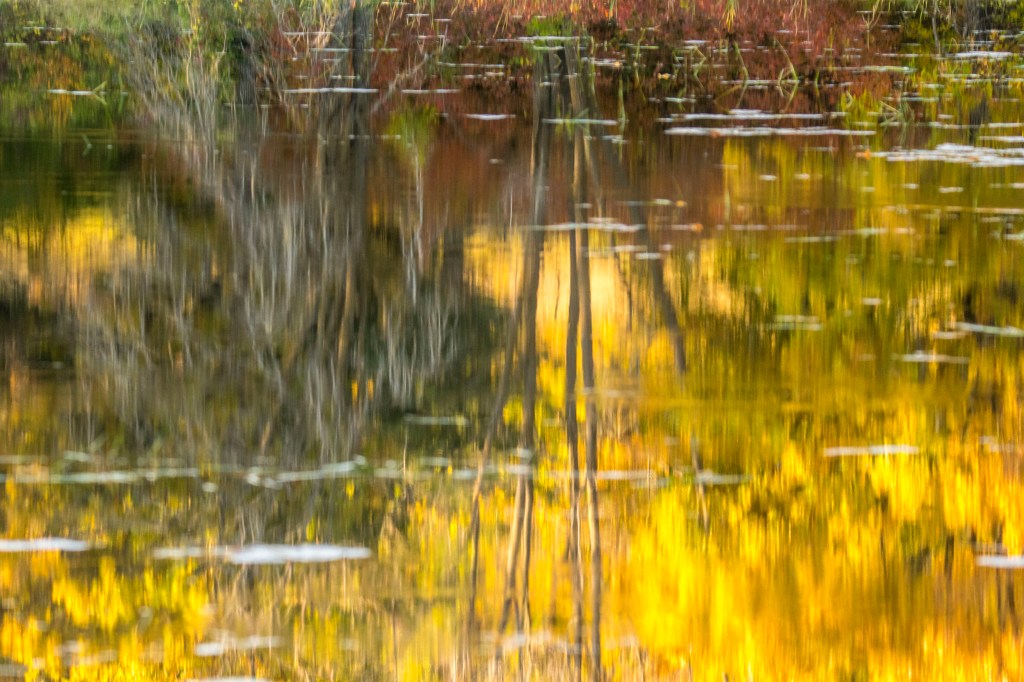
Revelations that President Donald Trump is personally liable for more than $400 million in debt are casting a shadow over his presidency that ethics experts say raises national security concerns he could be manipulated to sway U.S. policy by organizations or individuals he’s indebted to. New scrutiny of Trump, who claims great success as a private businessman, comes after the New York Times reported that tax records show he is personally carrying a staggering amount of debt — including more than $300 million in loans that will come due in the next four years. “Americans should be concerned about the president’s debt because it’s a national security risk for our country,” said Donald Sherman, deputy director of the nonprofit government watchdog group Citizens for Responsibility and Ethics in Washington (CREW). “This is information that the president has aggressively and repeatedly tried to keep away from the public.”
Ah, Maplewood!

Given that Trump’s eldest son has a documented track record of trying to corrupt our elections and subvert the national interest on his father’s behalf, it’s not surprising that Donald Trump Jr. is now actively trying to supply that rationale by calling for an “army” of volunteers to join a campaign’s Election Day security team.
Ah, Maplewood!
The president of the United States has declined to commit to a peaceful transfer of power if he loses the 2020 election — ratcheting up previous rhetoric baselessly casting doubt on the legitimacy of what polls suggest is a likely defeat.

Ah, Maplewood, where breezes riffle leaves in the silence of timbered wood far distant from the printed page and muted radio; where autumn leaves are colorful and bright, and skies seem clear and often blue. All of which is reflected in the numerous lakes and potholes hidden in the wooded hills; hills with surprises tucked in the timber, and waters with swans adding a sense of poetic grace to the overall peacefulness. How great thou art!
Not knowing what to expect, from the time we left Listening Stones until we reached our first camping spot at a state park near Madera, ND, our camper rode like a poorly built hay wagon, whipping across the rear view mirror like the shawl of an energetic belly dancer. Jack Griffin said later over the campfire at Madera that he had never driven his camper in such heavy winds. Radio reports estimated the wind was blowing crosswise at 40 mph, with gusts up to 50 mph. And this was my first day.
“If you can drive through that,” he said, “you can drive it through anything.”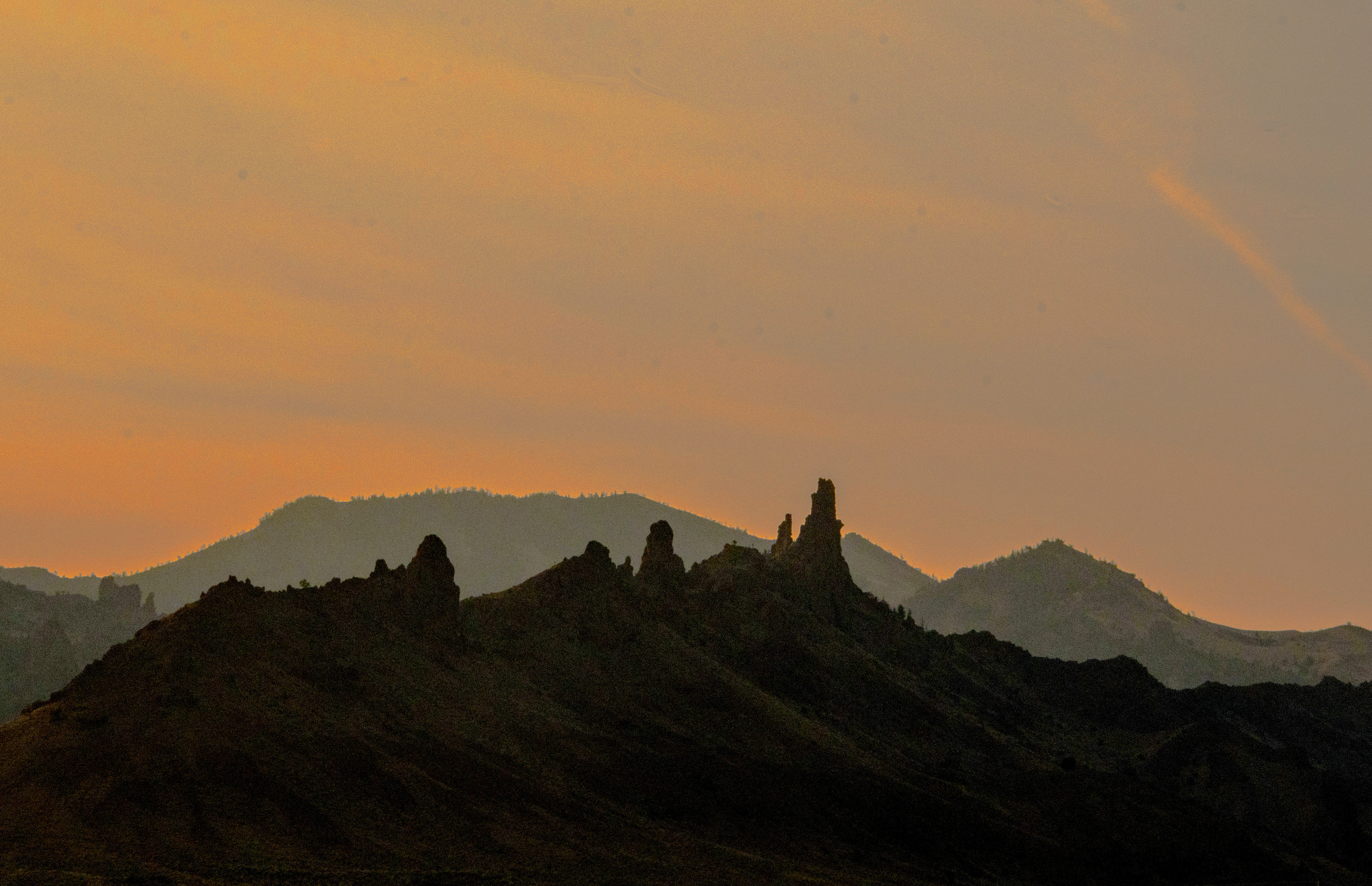
Up until this trip I’ve been a tent camper, then Mary spent much of the Covid lock down researching campers, and we liked the layout of this one so much that I traded 20 acres of Missouri timberland to buy.
There were lovely moments despite the tension. Over the many miles of North Dakota plains we saw several murmurations, and each brought a lovely smile to Mary’s face. Murmurations are a theme in her paintings, and these were just as poetic. None were excessively huge, yet large enough that the “bird clouds” were impressive. Murmurations seem to play out more poetic than chaotic, and each offered a moment of wonder and delight, a pause from our wind-whipped stress and tension.
********
Shortly after passing Billings in our search for Cooney Reservoir State Park we encountered our first snow of the coming winter. It was Monday, September 7. It wasn’t so much a blizzard as a snowfall, and the Pilot and R Pod bounced heavily on the washboard gravel. Then we crossed a hill and saw our first mule deer, with their huge ears held high like tall, elongated antennas. The park was interesting, although we dined inside that chilly night with Trish’s delicious chicken drumsticks and rice. Our camper was cozy, and for the second night I was pleased not having to pitch a tent considering the elements.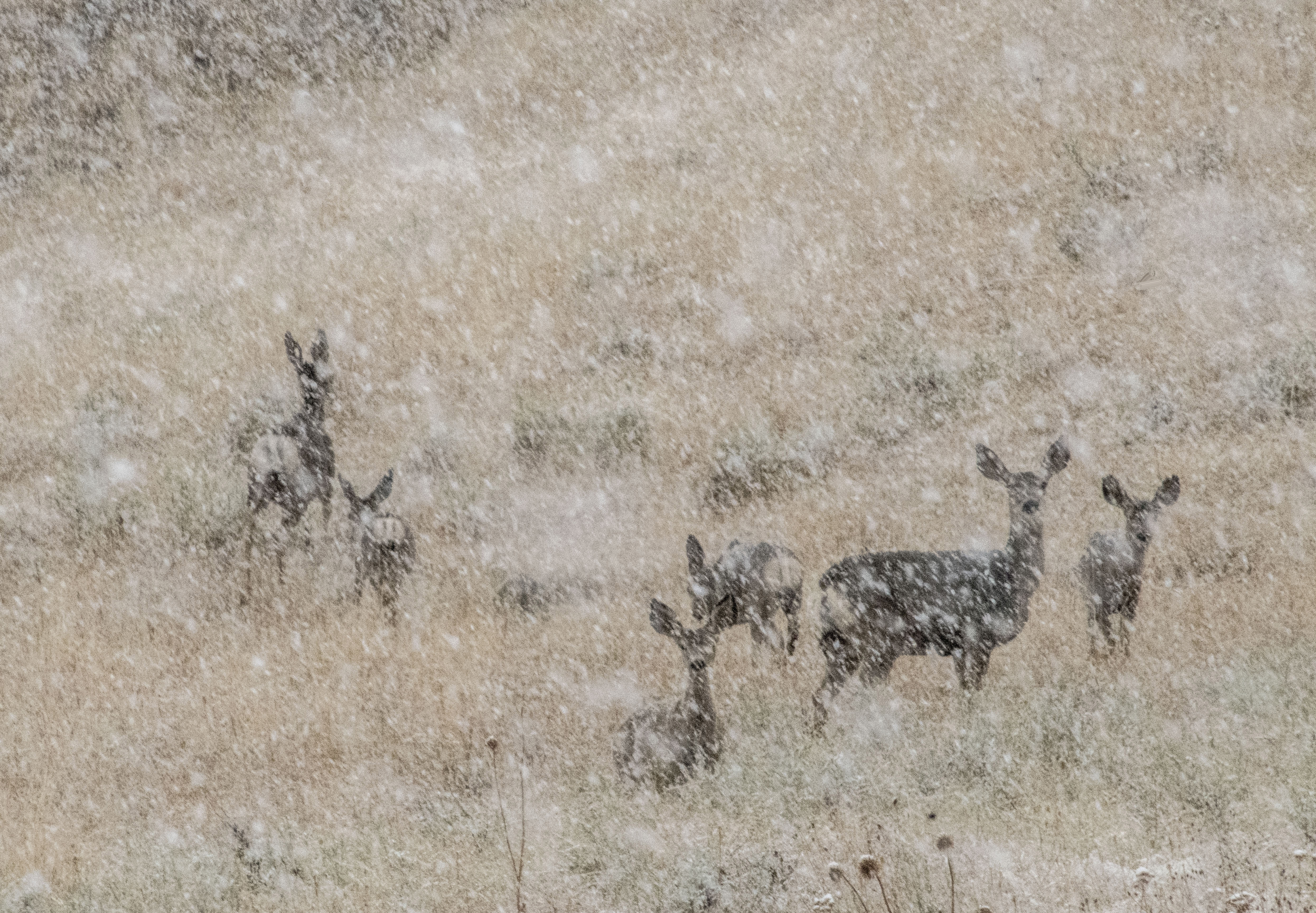
The following morning the reservoir was alive with migrations. On a dead tree were perched dozens of blackbirds, and in the long, damed reservoir, hundreds of geese trailed through the deep center of water. Geese was an educated guess since they were too distant to catch a good identification even with binoculars. There was a singular loon, and a pod of white pelicans, too.
Later, as we drove away we drove past the reservoir dam and below, deep in the valley, was the remains of the beautiful, winding river … a small tributary to the Yellowstone, perhaps. It meandered through a picturesque valley of ranches, peacefully green and poetic, a visual postcard of early morning beauty. It offered a view that rendered the reservoir obscene. Sadly so.
*******
It turns out the first day of wind wasn’t our bigger problem. When we arrived at Placid Lake State Park, our Montana destination, we discovered that our “slide” wouldn’t slide, We were surrounded by the other six couples with either family ties on Mary’s side, or those who had been in college together at the University of Minnesota-Morris. All hands came to help us try to solve the slide issue. At this point I wasn’t overly impressed with the camper that also had door latch issues, a non-charging battery and a few loose screws. And, I couldn’t find the “D3” or towing gear, so we were averaging about 8 mpg from Minnesota to Western Montana. Yet, we were able to sleep comfortably and make our meals. If only we didn’t have such cramped quarters!
*******
Jack Griffin, Joe Jost and I decided to ply the nearby rivers with fly rods. Jack was using the Powell 5wt I inherited from my late uncle, George Cowan. George and my aunt Helen, known by her friends as Satch, were both instrumental in the Manhattan Project, and lived into their 90s. They had been instrumental in building the Santa Fe Opera House, and were world travelers. Then George, by then a widower, apparently died after losing his balance going down the steps into his wine cellar. My cousin, Nancy Burke, grabbed the rod for me because of my passion for fly fishing.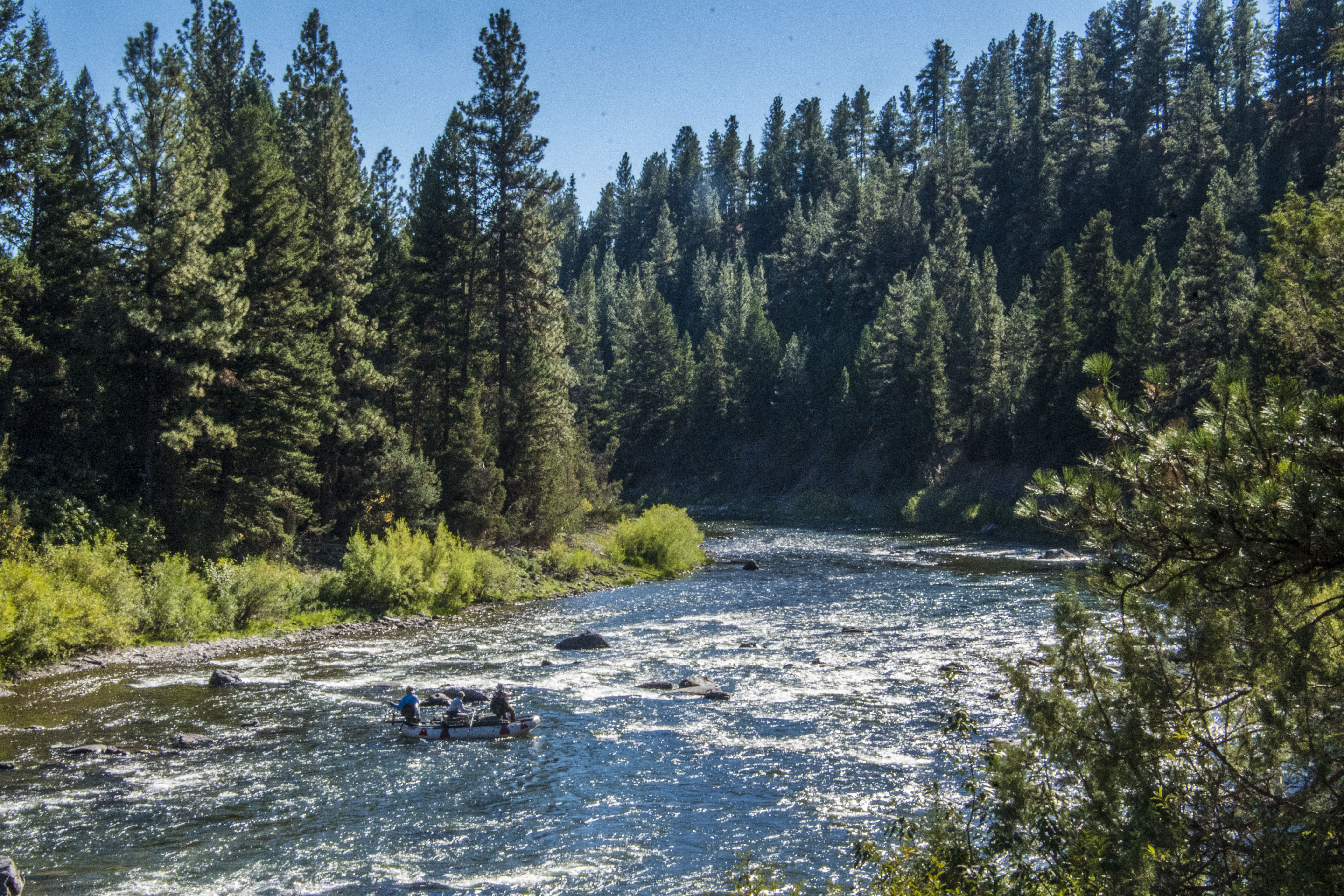
Joe was using a St. Croix I had built, also a 5 wt. This left me with the 3 wt I had also wrapped. Incredibly the river we were closest to was the Blackfoot, one of the iconic Montana trout rivers. The Blackfoot was the river used as the backdrop in the movie “The River Runs Through It.” When I posted on social media, my former exchange student and fly fishing fanatic, Erlend Langbach, seemed to shed tears back home in Norway, and posted this message: “I am haunted by the waters.” Norman Maclean would have been proud!
As we traversed Montana into Idaho later in the week we would cross the Yellowstone and the Madison, and several places we scooted over the Missouri. The Blackfoot yielded two small rainbows, meaning I’ve caught trout in three states and still three countries … Norway (thanks to Erlend), New Zealand and the U.S.
*******
I was hesitant to say anything, for it appeared from my seat in the back of Jack’s Volkswagen that we had passed a painted but weathered stump. There seemed to be more peeking through the Montana woodlands so my eyes weren’t playing tricks. Jack broke our momentary silence by asking if I had seen the painted stumps.
“Larch trees,” he said. “A cousin of our tamarack trees. They were cut near the turn of the last century and people have painted them to commemorate their past.”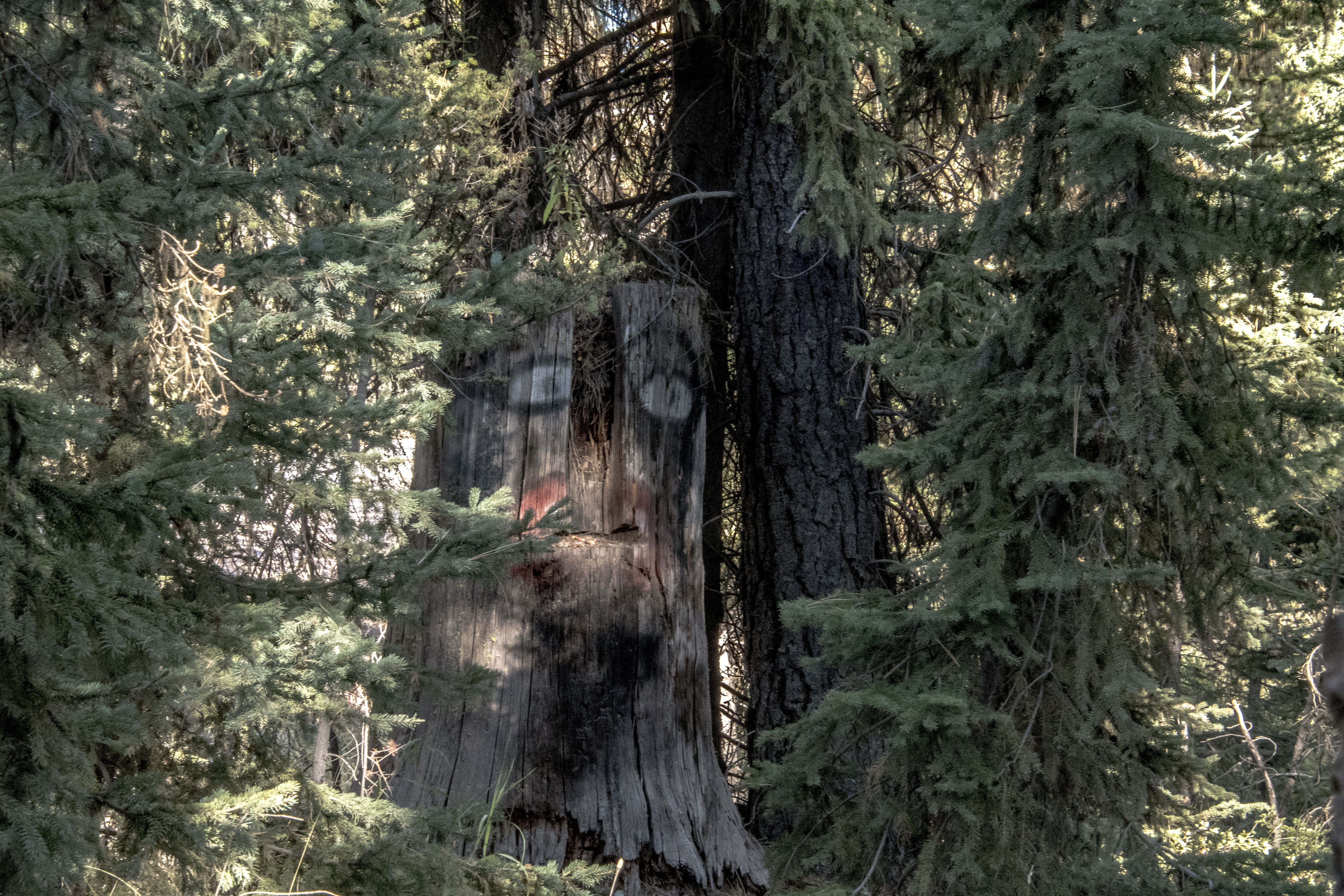
Joe Jost, sitting shotgun, added.” Sap from the trees settled near the base, so when they tried to float them down the river the ends would sink. They wouldn’t float. They would cut a notch in the base about three feet up and insert a ‘spring board’ where the sawyers would stand to saw through the tree, some of which were six feet across. It might take them 10 to 15 minutes to saw through.”
Now those stumps, standing for more than 100 years, are painted as spirits of the forests, poking through the pines.
*******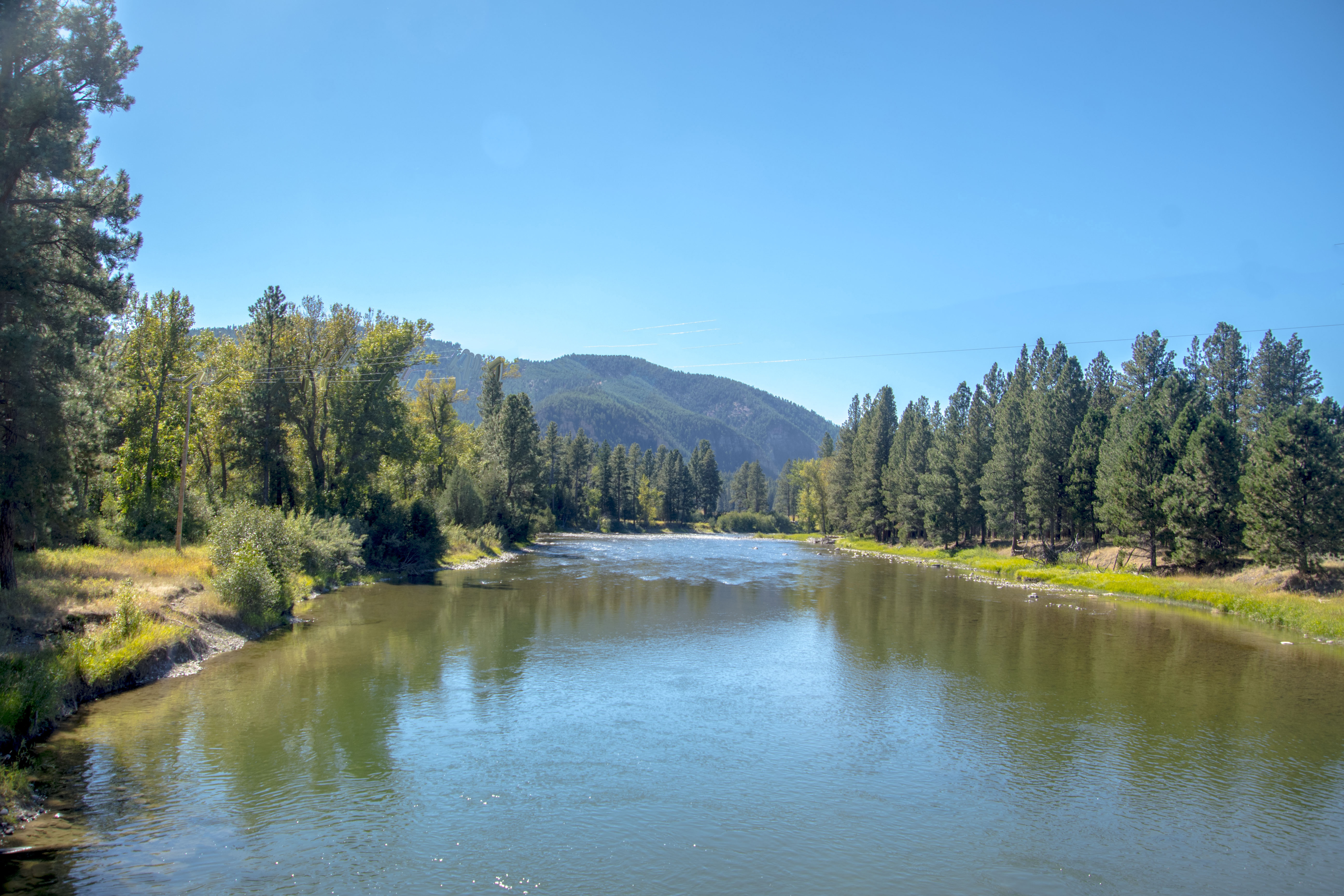
The fellow at the fly shop gave us a elongated map showing the access points along the Blackfoot, and suggested we use hopper flies. He circled in pencil the accesses where we could walk along the bank since none of us had waders. Our first stop, noted by two mail boxes, one white and the other black, was the Scotty Brown Bridge. I would fish until my ankle pain proved to be too painful from the uneven terrain, and I climbed back up the bank to rest. I spent the next hour or so just sitting and looking at the scenery, listening to the sounds of the river below. Purer meditation likely doesn’t exist. For the first time in what seemed like years I felt a perfect peace, sitting there at the Scotty Brown Bridge.
*******
Our Friday was almost pure purgatory, a state of consciousness between the unknowns of heaven and hell. Mary was experiencing uneasiness because we were “freelancing” a possible destination which I described as “somewhere along the Snake River beside the Tetons” as well as both the elation and sadness of selling her home of more than 30 years back in Minnesota. My hopes was to meet old friends from Idaho at West Yellowstone for lunch on Saturday. We were nearly there and feeling tired of driving when I pulled into a private campground just short of West Yellowstone. The woman ahead of me got the last camper spot, and the proprietor suggested a quicker route to the Tetons was found by taking a highway about ten miles back up the road. Which we did … but not before passing Earthquake Lake with white weathered trees standing in sparkling blue waters for seemingly miles on end.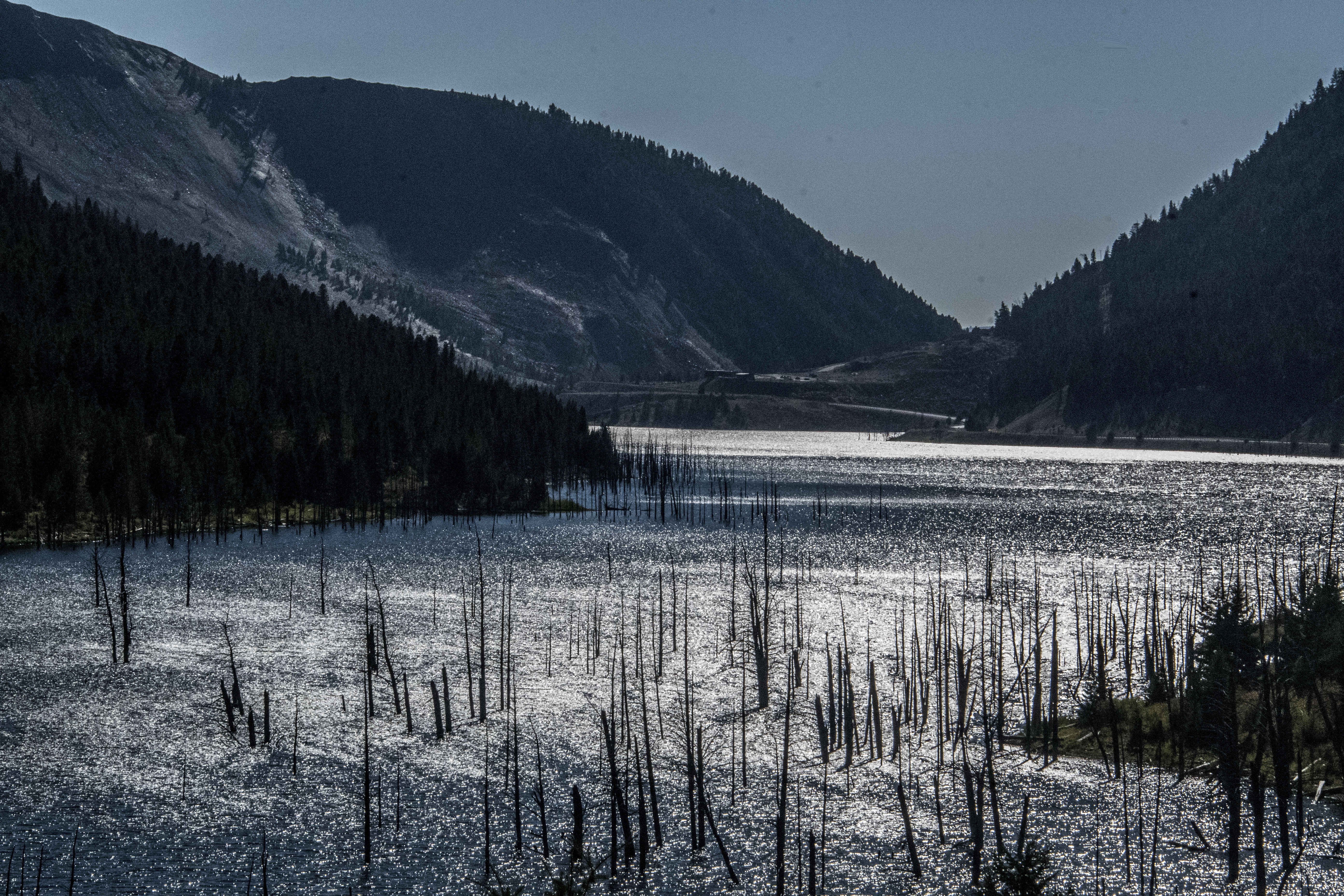
“Ninety minutes, top,” he had said. A conversation I would play mentally for what felt like endless hours because 90 minutes later Google Maps indicated we were still ninety minutes from Jackson. Mary found a possible campsite at a state park some 20 miles off the highway, so we turned and started up a beautiful two lane paved road with the back of the Teton range to our right. We passed huge sweeping fields of grain being harvested, and valleys blessed with beautiful quaking Aspen … all before learning that the state park didn’t allow camping. We had at best spotty cell phone service, and seemingly finding any campground was impossible. Eventually we passed, did a quick turnaround, and pulled into a US Forest Service campground several miles down the highway. There were no sites available, the camp host told us, but we could make camp in an overflow meadow at the end of the road.
There we discovered we had no battery power, and there was no electrical hookup. We shared the meadow with two tent campers, a parked and humming semi tractor and us with our battered camper. Both of us had hopes our day would end up heavenly, which would have played well with the metaphor. Our pillows were securely planted in purgatory!
*******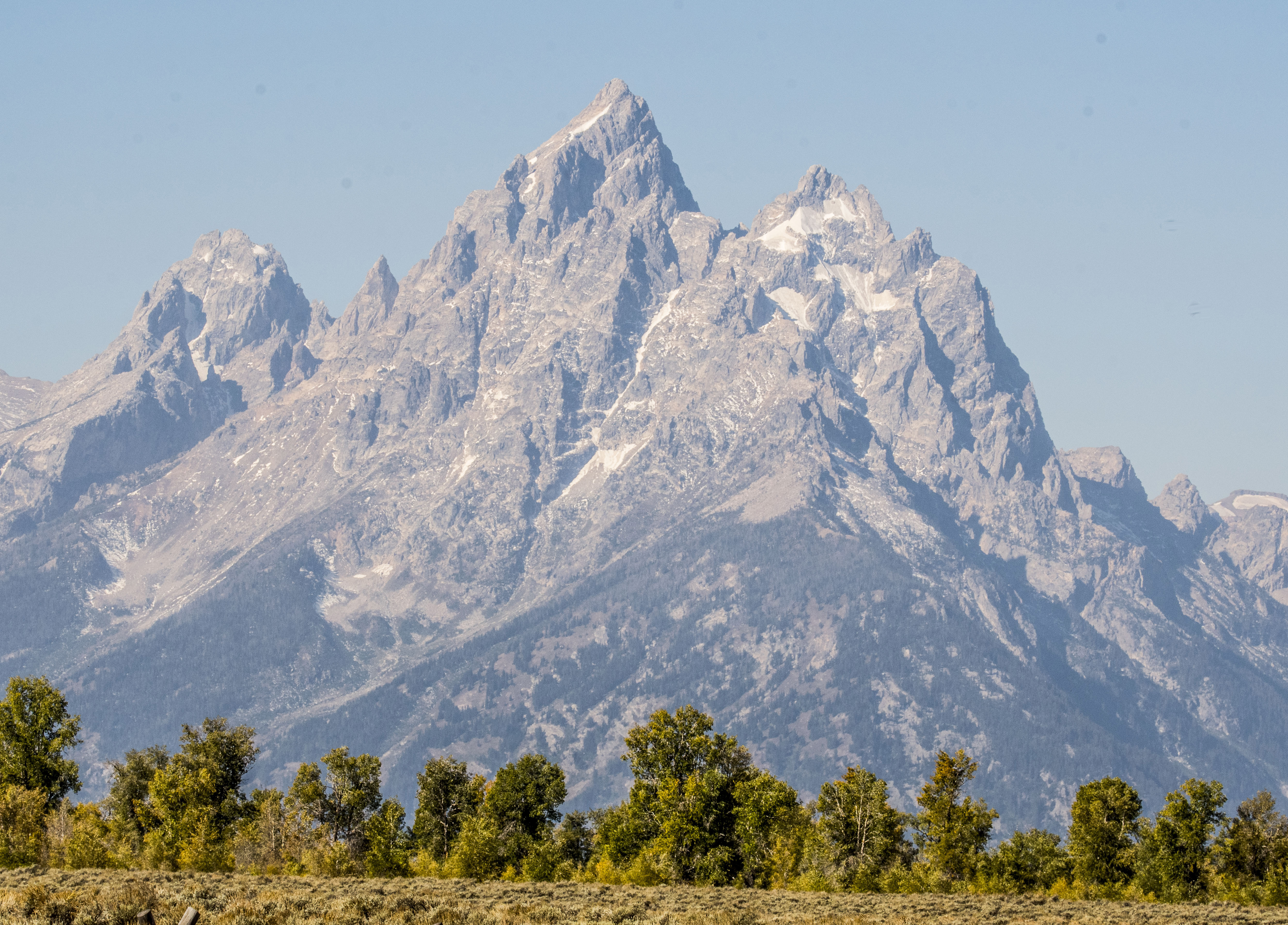
Ah, the Tetons! As much as meeting up with the Morris crew in Montana, and the unexpected thrill of fishing the Blackfoot, my personal intent was seeing the Tetons once again. We were turned away from the National Park byway, and had to return to Jackson and take the commercial highway. I wasn’t pleased, for the byway offered tremendous photographic opportunities. One of those images that would haunt me was late in the afternoon when the range would be in an evening blue and possibly reflected in the quiet waters of the Snake River.
Neither of us wished for another day of purgatory, so we remained positive and continued up the highway. We stopped for some bison, and for several views along the way. Then I saw the first “picnic pullout” and was intrigued. Picnicking isn’t something we do much of anymore as a society. When I was a child picnics were a big deal. Mom would prepare at least a day ahead of time, and our picnics usually included cold, fried chicken, crunchy vegetables and either cookies or one of her incredible pies. What happened? Fast food chains? Not enough free time? No “picnic pullouts?” Mom always brought a picnic blanket and placed the food in the middle of the blanket, and we sat on the edge making sure our feet were nowhere near touching the picnic blanket.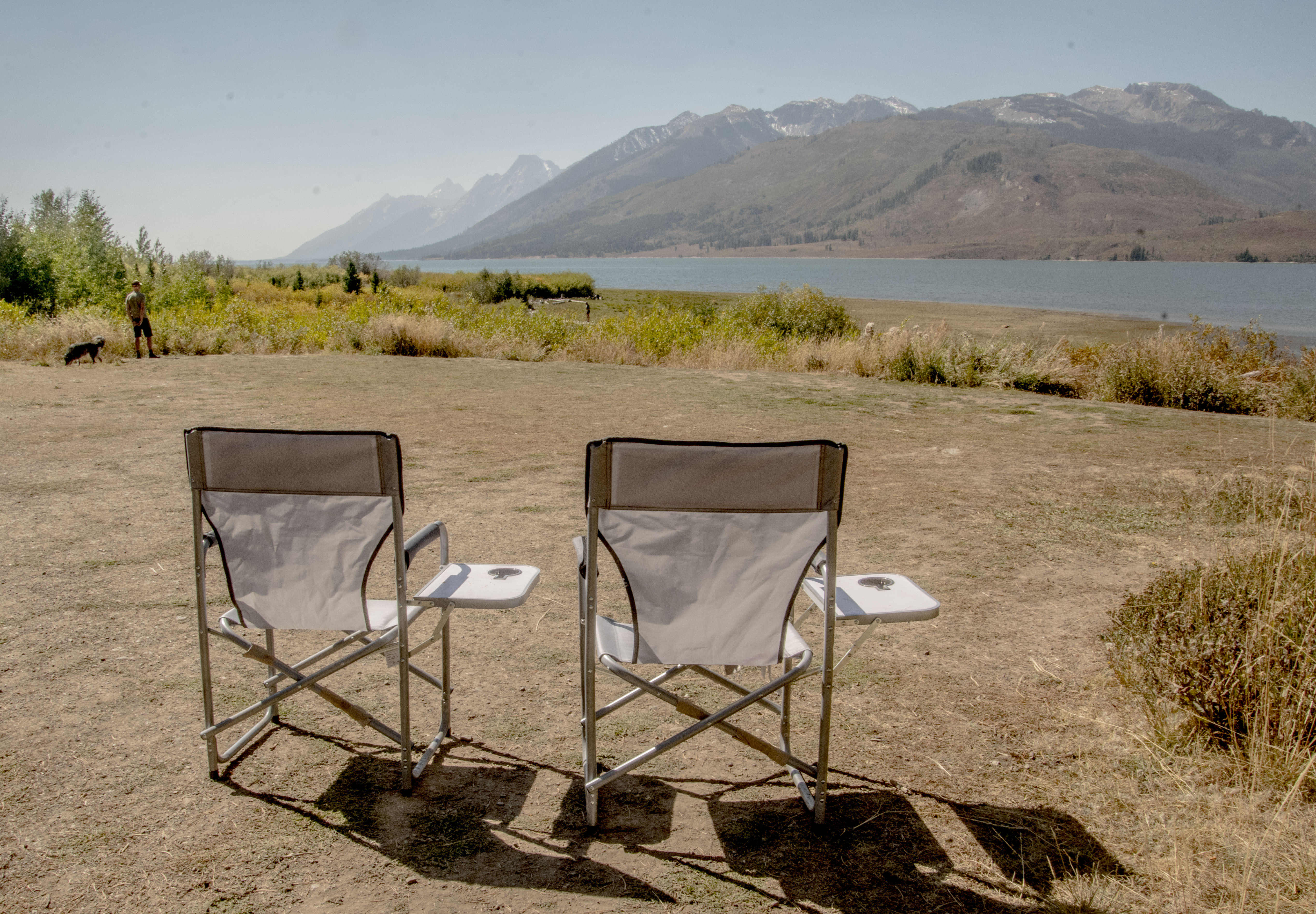
Far up the valley, and perhaps only a few miles from leaving the Tetons and entering Yellowstone, we pulled into perhaps the last of the picnic pullouts. While Mary gathered the edibles I sat out our camping chairs, and we took our sweet time with our first picnic with the view of the northern most peak of the Tetons reflected in the lake. Mom would have appreciated the moment … the taking of a break, the view, and most of all, the sense of peace that was pure Zen like.
*******
Gaining a day offers both pleasure and regret. While I didn’t get my late afternoon picture of the Tetons, there was the goodness of being through Yellowstone and on the way home. Our stop: Wapiti, Wyoming, just short of Cody. Mary found a nice cabin in lieu of camping, for the lodge had no more camping sites available. We would rest in harmony within a log cabin, with the only downfall a yellow jacket sting on the lip. Who knew those bastards liked Cabernet?
We had a great overview of a bend of the Shoshone River, yet as equally fascinating was a ridge across the way that appeared to have three distinct geological eras showing. I wished to have Carrie Jennings at our side to translate, as she does so well.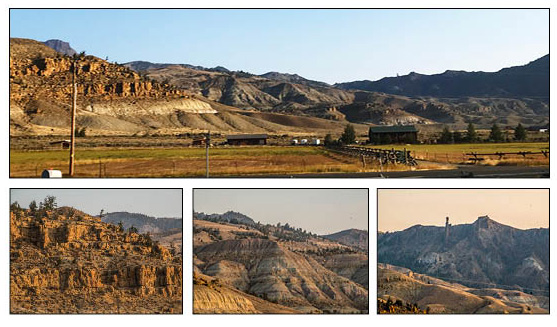
Years ago I read the interesting John Mcphee book, “Rising from the Plains,” where he traveled throughout Wyoming with geologist David Love and reported the dialog they shared along the way. Before we left Wapiti I was able to make some interesting images of the nearby mountain scapes, although I kept returning to the distant ridge and the three different “landforms.
After an overwrought breakfast that included a deep pile of scrambled eggs, two sausage patties along with two biscuits smothered in a rich sausage gravy, I kept stalling in hopes of photographing all three of those landforms with ample sunlight. Below us the Shoshone bubbled over fields of rounded river stones. My only downfall was the swollen, droopy lip, although the knowledge that I could eat without food falling from my mouth was welcomed. Then the sun came out!
*******
Our drive home was to be about 12 hours from Wapiti, not including the time zone change. Yes, we were a day ahead of where we might have been had we found an open spot in the Tetons. But we were basically limping home with a hurting camping trailer and a weariness that comes with too many long days on the highways. After an overnight in an Aberdeen motel noted for Covid cleanups, we were still two to three hours from the farm. Although we had seen hints of autumn in North Dakota, Montana and along the Snake in Wyoming, we were still taken back a bit. If those murmurations in North Dakota, and the birds congregating in trees and resting in the reservoir of the Montana state park hadn’t been fair warning, the ravines in the Coteau told us all we needed to know … the seasons were changing.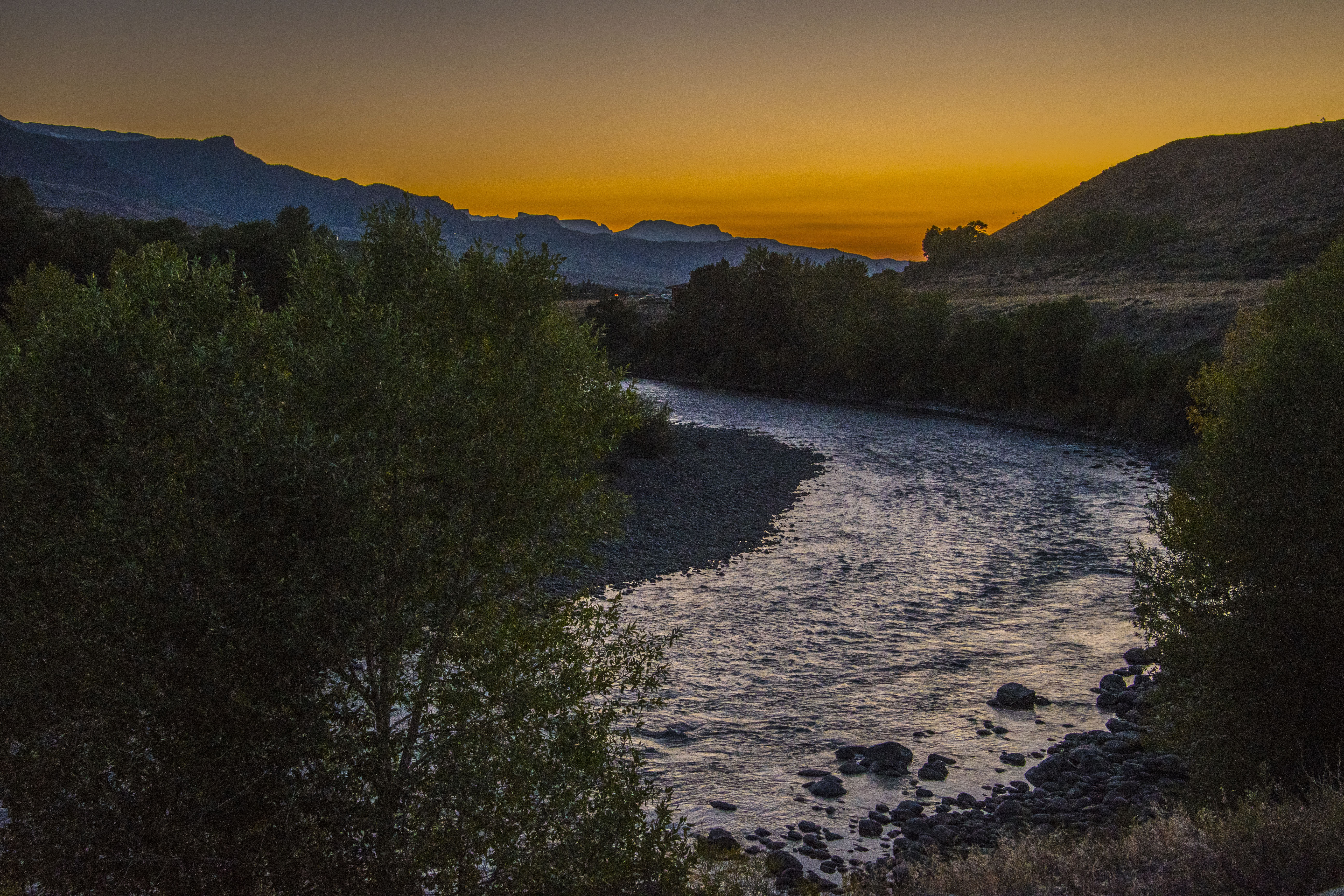
Not far from the town limits of Summit we started passing the ravines of the Coteau where autumn was in full swing. Leaves were turning, which added to the hundreds of geese and duck we had seen in the wetlands and lakes along the highway near Webster. It was fair warning that fall was encroaching, and that those wonderful times afield might be coming to an end. We hold hopes of having a repaired camper by October, for we have a dream of camping in Maplewood State Park before the real snows come.
In the stairwell heading up into my home gallery are numerous printouts of memes related to the creation and necessity of art. Often visitors will ease up the stairs rather slowly while reading first one side and then the other. These were meant as some form of inspiration for me and perhaps for others. These are, in a way, walls of will, something needed in these times of uncertainty.
One example: “If you feel like you don’t fit in, in this world, it’s because you are here to help create a new one.”
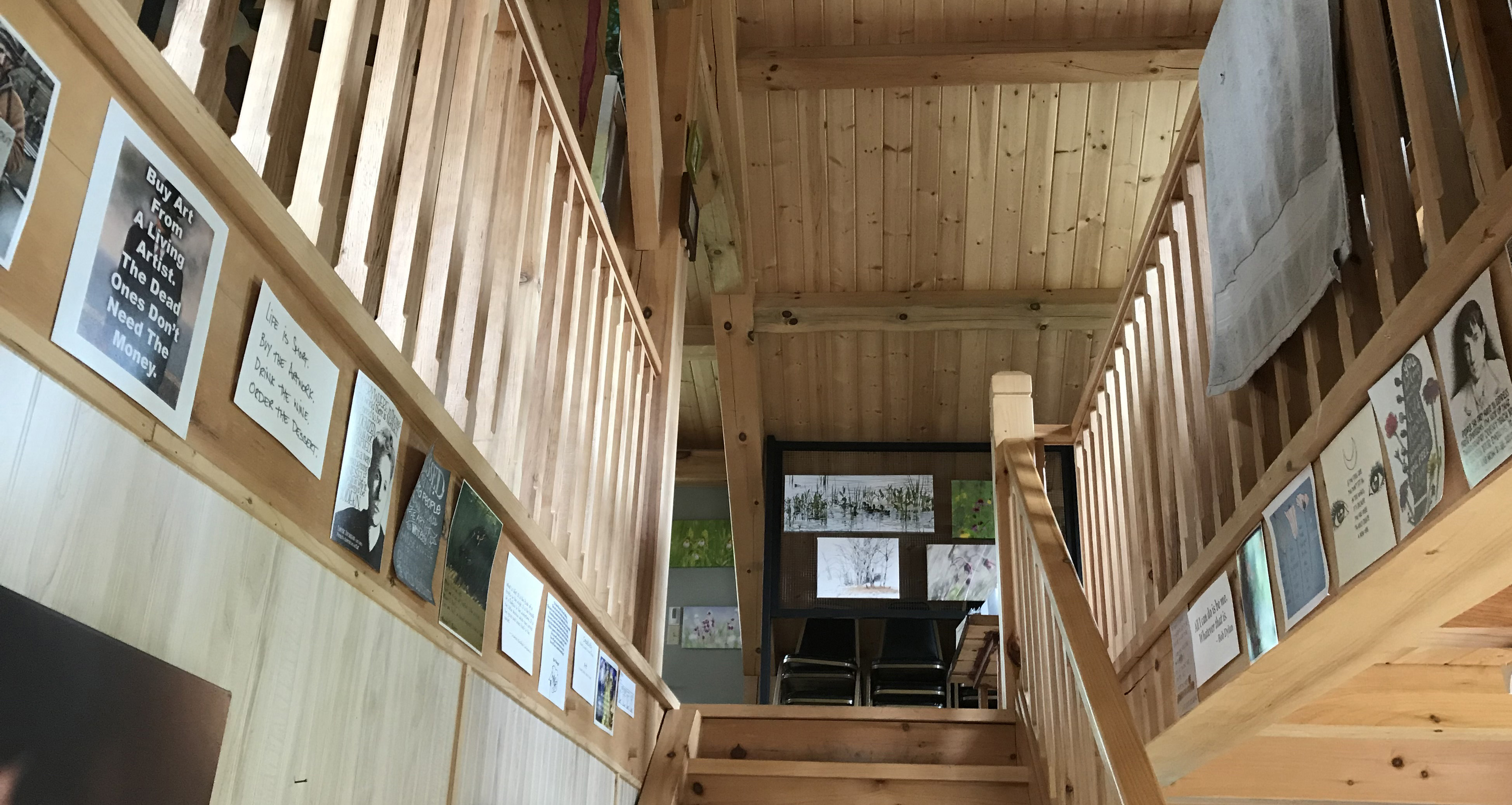
My “walls of will” in the “surround” of the stairwell heading up into my studio/gallery.
Another: “Blessed are the weird people … the poets & misfits, the artists, the writers and music makers, the dreamers & and the outsiders, for they force us to see the world differently.”
There are quotes from Dylan, the Beatles and Kurt Vonnegut, among others. There are even a couple of Charles Schultz Peanuts’ cartoons.
Some days one or another of the printouts will garner my attention as I climb up the stairs, or am on the way down, and I sometimes wonder why? Why a particular one out of all the others?
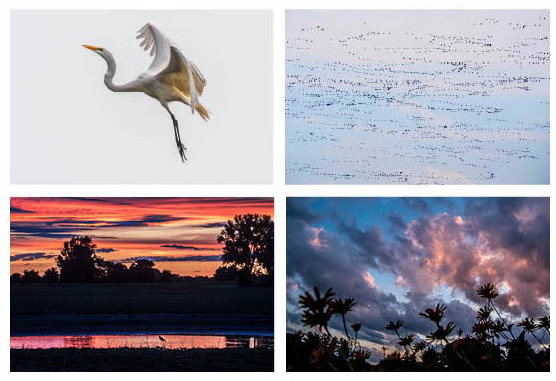
Four of the images taken during the pandemic lockdown, varying from singular to communal in nature.
Not long ago a friend asked how my work was going through the political turmoil and pandemic. I was lost for an answer. Some days I’ve struggle with desire to create. Sometimes I wonder if I should even bother. Then I go afield and a sense of peace seems to gain ground on torrid thoughts. As much as I enjoy those private moments, like many in the arts I long to have my works seen. I was actually fortunate enough to have an exhibit at the Marshall Area Fine Arts Center in late May and June that will apparently be the extent of the exhibits and shows for the year thanks to the pandemic. All the others were canceled, including the Upper Minnesota River Arts Meander that is typically a capstone event for those of us in the upper river valley.
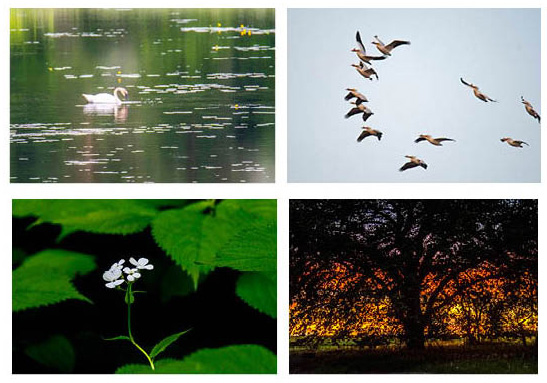
A second set … with different aspects of nature meaning different things …
So this comes to mind: Is the point of creating art for myself or for others via the various galleries and art shows? Truthfully I do want my work to be seen and hopefully appreciated. I wish it to be meaningful, to hopefully inspire someone about the intricacies of that last one percent of the prairie, of the necessity of a natural environment. I want them to see this visual voice of an ecosystem of the past, one basically destroyed to make room for commodity farming. Yet, there is the selfishness of seeking a sense of peacefulness that comes when I’m become lost in the creative process.
Which brings me to another taped meme on the stairwell, this one by Louis Bourgeois: “Everywhere in the modern world there is neglect, the need to be recognized, which is not satisfied. Art is a way of recognizing oneself.”
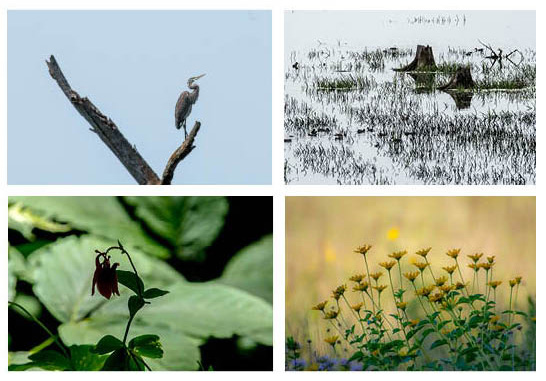
… of where prairie grasses speak of resilience; where birds soar and fly with independent freedom; where native flowers and butterflies pull you in with often solitary beauty; and where trees stand strong and defiant, breaking only under only the harshest of winds.
Which caused me to look over my own work, for I have chosen to escape to not only the prairie but also the “big woods” and bogs these past several months of isolation … places distant from political turmoil, vicious out front and perpetrated racism along with the fears of the coronavirus pandemic. Places where social distancing is a respectful part of nature itself. Places where the prairie grasses speak of resilience; where birds soar and fly with independent freedom; where native flowers and butterflies pull you in with often solitary beauty; and where trees stand strong and defiant, breaking only under only the harshest of winds.
Looking through my files over the past few months I see a vacillation between minimalist simplicity and broader “communities” of gaiety; a “yin/yang” of inner peace and beauty along with an individualistic desire of being surrounded by communal color and life: the seeking of any hint of lightness against that sometimes unbearable heaviness of being. The trees, birds, butterflies and prairie grasses; those beacons of light in the murkiness of life.
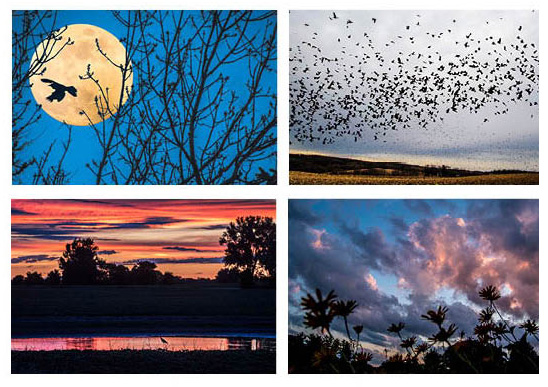
Going afield helps finding any hint of lightness against that sometimes unbearable heaviness of being.
On the stairwell this from Anais Nin stopped me for whatever reason: “And the day came when the risk to remain in a tight bud was more painful than the risk it took to blossom.”
via Fair Warnings
You can’t say we didn’t have fair warning. For nearly all of it, from paddling from Skalbakken County Park right down to the catch of a nine pound walleye. Blame Kalahar. That would be Tom Kalahar, the fellow assigned to Renville County 30 some years ago as a conservationist and who vowed to spend no more than 12 months before searching for a job in a locale more closely attuned to his native Ottertail County.
Ottertail had more than 1,000 fishable lakes and one of the best smallmouth fishing rivers in a state known for great smallies. Renville County? None of the above. Yet, there he was in the heart of Big Ag working for the SWCD (Soil and Water Conservation District). “Then I discovered the Minnesota River,” says the avid hunter and fisherman in one of his many entertaining stories. “And we’re still here.”
Kalahar and I have shared guiding duties on this stretch of the Minnesota over several years, from a Hollywood director to avid fishermen to clean water advocates, with a few kids and nuns in mix as well. I’m the cook, he’s the entertainer. Nothing has changed on that aspect. What has changed is the river itself.
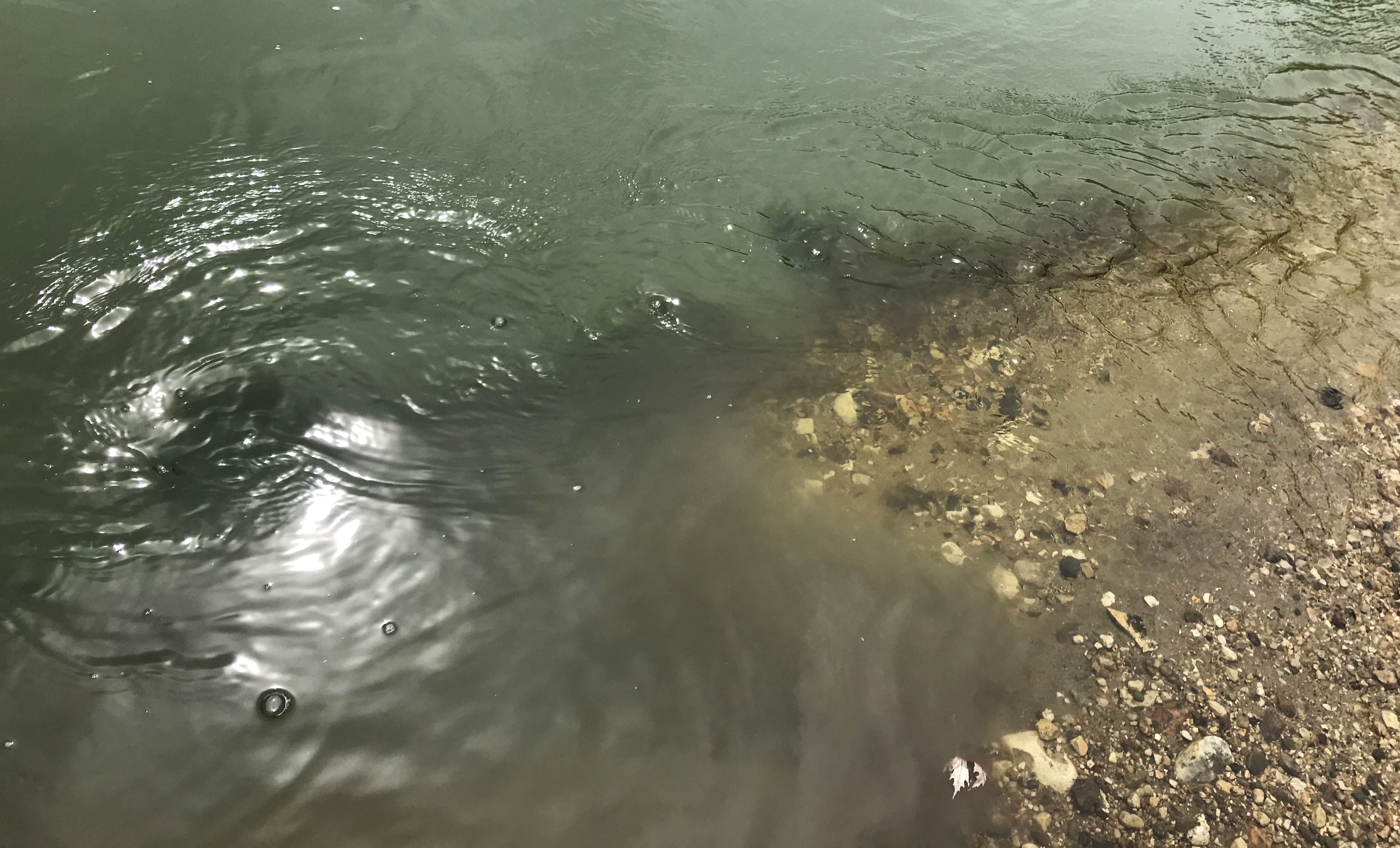
A visual “snapshot” of the ills of the resource at a time without a decided runoff. At the lower right you can see clear water entering the river, accompanied by swirls of black soil.
On my first canoe trip from Skalbakken through Patterson Rapids to Vicksburg County Park in 1993 began in the actual current flush against the northern most bank above the Skalbakken picnic shelter. Due to the flushing of waters off the upper prairie via Hawk Creek, the put-in point is now a placid backwater. Thick, deep siltation has shifted the river current some 200 meters south of the former channel. Downriver many of the tributary creeks are no longer shallow, rocky creeks, but rather now so choked full of siltation that if you didn’t know of the previous location you would paddle by without a second glance.
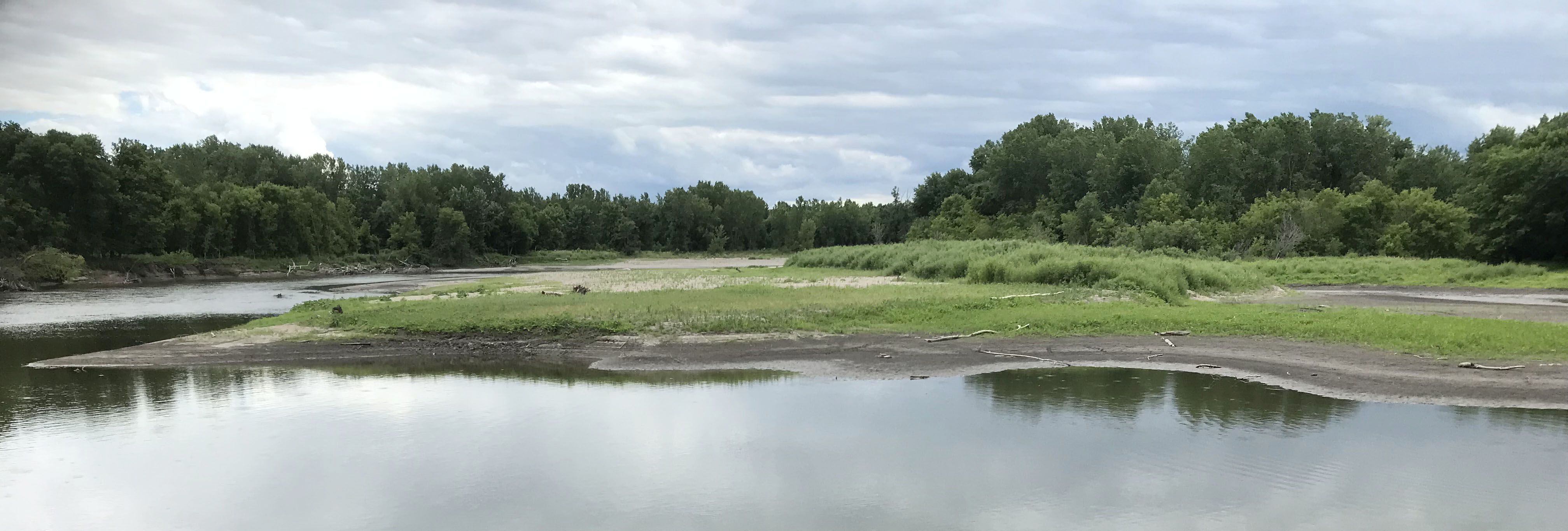
Since 1993 siltation from the effects of drainage on the Hawk Creek Watershed has changed the channel at Skalbakken from the extreme right in the photograph to the extreme left. This is a visual reality of the ills of siltation.
What has remained basically unchanged, and what Kalahar found so attractive so many years ago, is that this river is thoroughly an under appreciated resource. In all ways, by “big ag” farmers and by sports people alike. You can paddle the length of it and maybe see one or two other fishers, and those most often sit shaded upon the bank in a lawn chair. The river is too shallow for most boats nowadays. Some may use a small jet boat engine, while Kalahar’s partner, Ben Hillesheim, uses a long tiller made for shallow waters on his jon boat.
The other unchanged melody is that the fishing remains fantastic. On our “fair warning” trip a few weeks ago I was able to reel in a nearly nine pound, 28 inch walleye, a twin basically to Kalahar’s catch later on this trip. His just downriver and around the bend from my catch. My fishing partner, Tom Cherveny, an outdoor writer for the West Central Tribune, and I both brought in channel catfish weighing close to three pounds along with a few others of smaller size on both trips.
As Kalahar says, “Most times you’ll have the river to yourself. And, it’s great fishing! Caught my first sturgeon here. Smallmouth. Walleye. Catfish. And tonight we’re going after the big girls!”
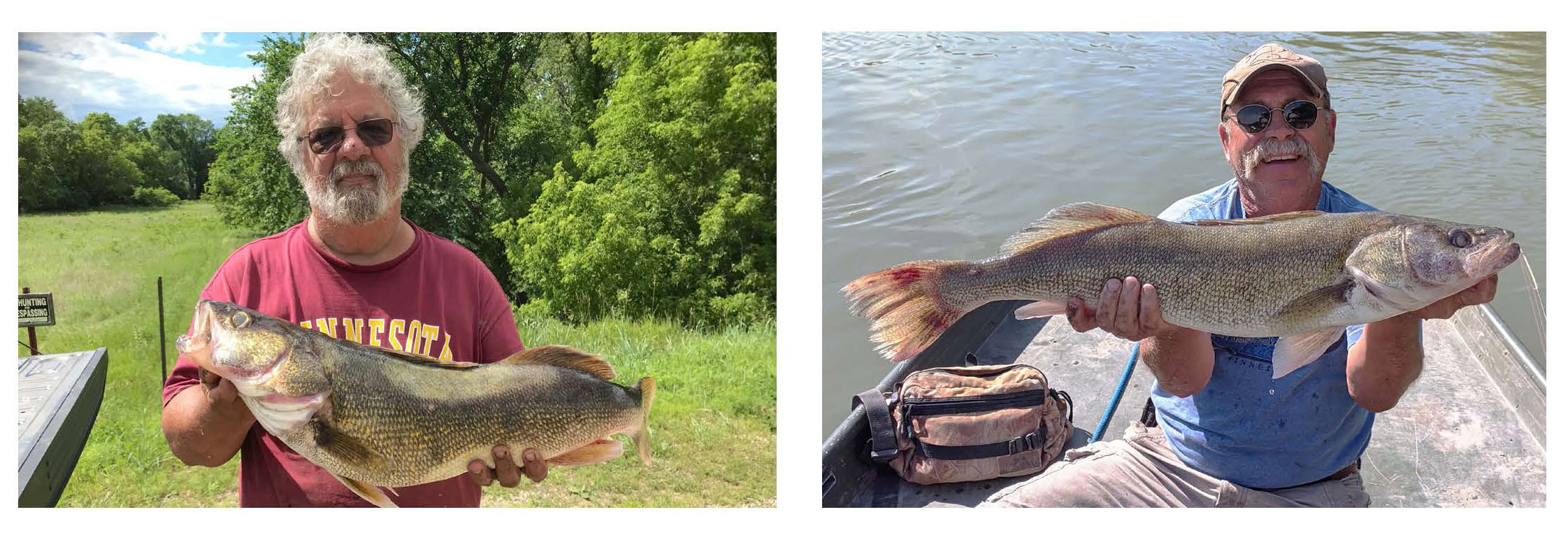
Our “twin” walleyes were caught just a river’s bend apart from one another, mine on the left and Tom Kalahar’s on the right. Both were 28 inches and weighed nine pounds.
The “big girls” are flathead catfish, some nearing 60 pounds according to DNR tagging efforts over the years. Near noon six of us in three canoes launched from Skalbakken and headed downriver, leisurely paddling, stopping behind random deadfall to drop a weighted worm, and taking in sights that included eagles, pelicans, a couple of forlorn-sounding Canada geese and a host of immature great blue herons. Herons so young they didn’t realize they should be wary enough to lead us downriver.
Kalahar and Hillesheim brought the serious stuff up from Vicksburg in a motorized jon boat to the sandbar where we would gather for our overnight camp, and a spot to rest before going into our serious afternoon fishing mode. We needed enough fish for the tacos I would cook for the riverine feast. Enough were caught even without Kalahar’s huge walleye, for very morsel was devoured before we settled in for the big show, one led by Kalahar’s nephew, Max Dzubay. The big river rods were fitted with cord-like lines and triangle weights heavy enough to keep the bullheads used for bait in place across from a deep river hole littered with tangling deadfall. At night the flatheads roam, cruising above the washed away loam.
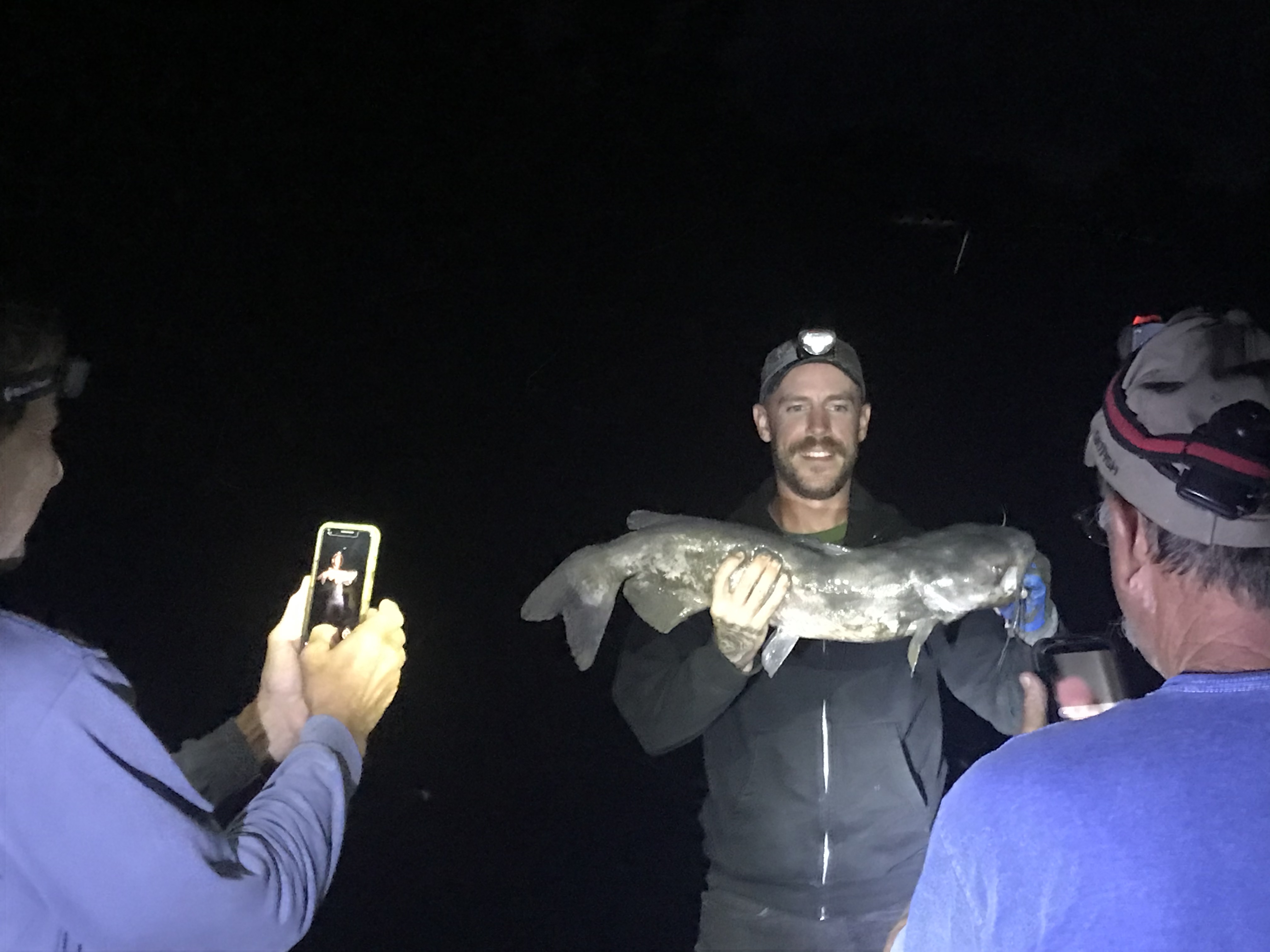
Pictures were taken of Max’s huge channel catfish, the second one of that size caught after dark off our sandbar. Marv Boerboom caught the first one.
As the evening crept in over the river we men of advanced age were once again awestruck by the appearance of stars, and satellites were pointed to cruising across the darkened heavens. In the midst of our celestial wonder, Alexandria’s Marv Boerboom’s rod was the first to take a big bend, and Kalahar’s shouts of joy may have been heard on the Sacred Heart bridge a few miles downriver. Though not one of the “big girls,” it was an impressive and hefty channel cat in the 10-pound range. A few hours later a second 10 pound channel was pulled in by nephew Max.
In the olden days, beer would have brought on a sluggish sleep. On this night, at our age, not so much. A thunderstorm with crackling lightning filled the skies to the north of us, and cell phones were pulled for the weather aps. Comforted by technological radar “balloons” indicating a miss by several miles allowed us to settle in for a lightning show that lit the river bend with distant, split second flashes of electrified light. We had the Milky Way off to the south, the lightning show to the north and east of us.
Around midnight we three writers … Cherveny, Scott Tedrick, of the local weeklies, and your’s truly … headed to our respective tents. We’ve social distanced like this long before the coronavirus pandemic. Along the river’s edge the serious fishers would man their rods and weave their man stories of hunting exploits and fishing wiles through the long night until dawn, all while anxiously awaiting attacks from the “big girls.”
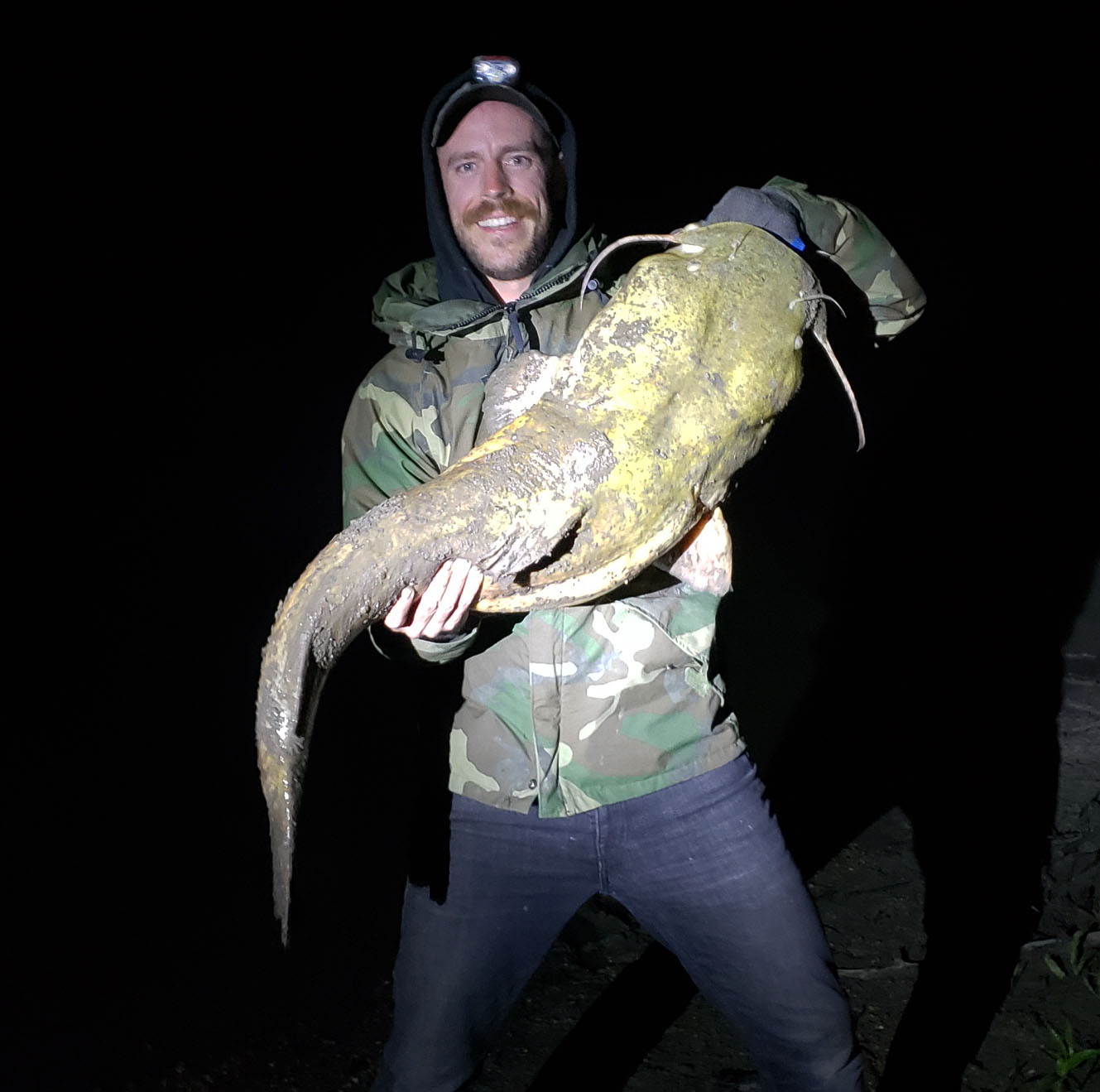
The “big girl” flathead catfish that we estimated at 35 pounds! Max Dzubay reeled in this beauty at around 4 a.m. when some of us were asleep in our tents. The shouts of celebration awoke us all!
Not long after midnight some ATVs appeared in the woods behind our gravel bar. Their loud roar along with what we might have recalled as beer-encouraged shouts of joy came without refrain. We were briefly surrounded by a different sort of storm, and from my tent the wavering lights bouncing through the bank of trees offered hints of both trepidation and wonder. Then, as suddenly as they appeared, the riders headed off back toward the county highway.
In a few months I’ll turn 77, and while I take smug pride in tent camping on a riverbank at my age, there was little comfort to be found on the sandy pile of rocks. There were intermittent dreams so I know there were moments of sleep, but when Max hooked his 35 pound “big girl” the shouts of celebration from the rivermen would have awoken Morana. No one was more thrilled than Kalahar. His nephew tagging the huge flathead was the capstone of our collective night on the river. For all of us. Even the sleepy ones.
Later Max would admit to suddenly having to reel like lightning to keep up with the flathead that made an interesting run straight toward him. “Truthfully,” he said, “it wasn’t much of a fight.” His work as an IT specialist has apparently helped him develop intense focusing skills, for his eyes were constantly focused on the rods … his and those of the other fishermen … for most of our time fishing on the sandbar. In the afternoon, through the taco dinner and even as dawn brought a seasonal fog to the river’s surface early the next morning. His rewards were just. A 10 pound channel cat and the 35 pound flathead, two fish for the lifetimes for most of us.
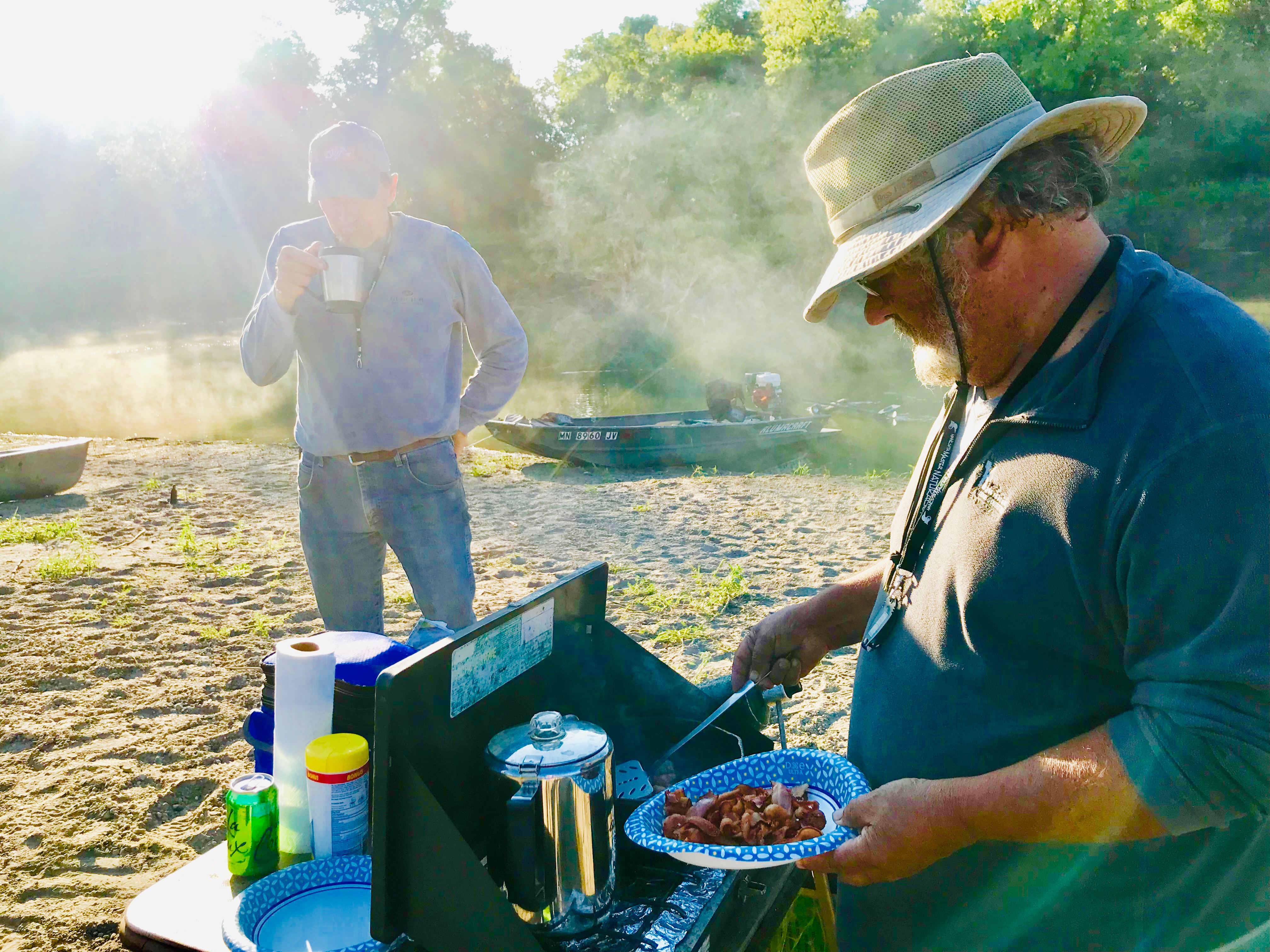
The fish tacos must have hit the “spot” for there wasn’t a single morsel left!
All the big fish were released, just for the record.
Our “fair warning” on the beauties of this overnight camping trip was just a few weeks ago when Kalahar led us down this same stretch of the river on a Saturday afternoon. He hoped this would be a grand overnighter for us all for over the past several years our plans for such an overnighter have been on hold due to the high waters that are turning this river into a “far northern Platte” … shallow and increasingly widened, with banks being eaten away by raging currents caused by flushed waters upstream.
All of us on the overnighter have experienced many canoe trips down this stretch for nearly 30 years, and we’ve caught uncountable numbers of fish while witnessing a river change right before our eyes. By now those changes should be expected, yet there was really no accurate fair warning of the degree of how much change would happen despite former Governor Arne Carlson’s 1992 edict calling for a change of cultural practices on the ills of this precious river resource.
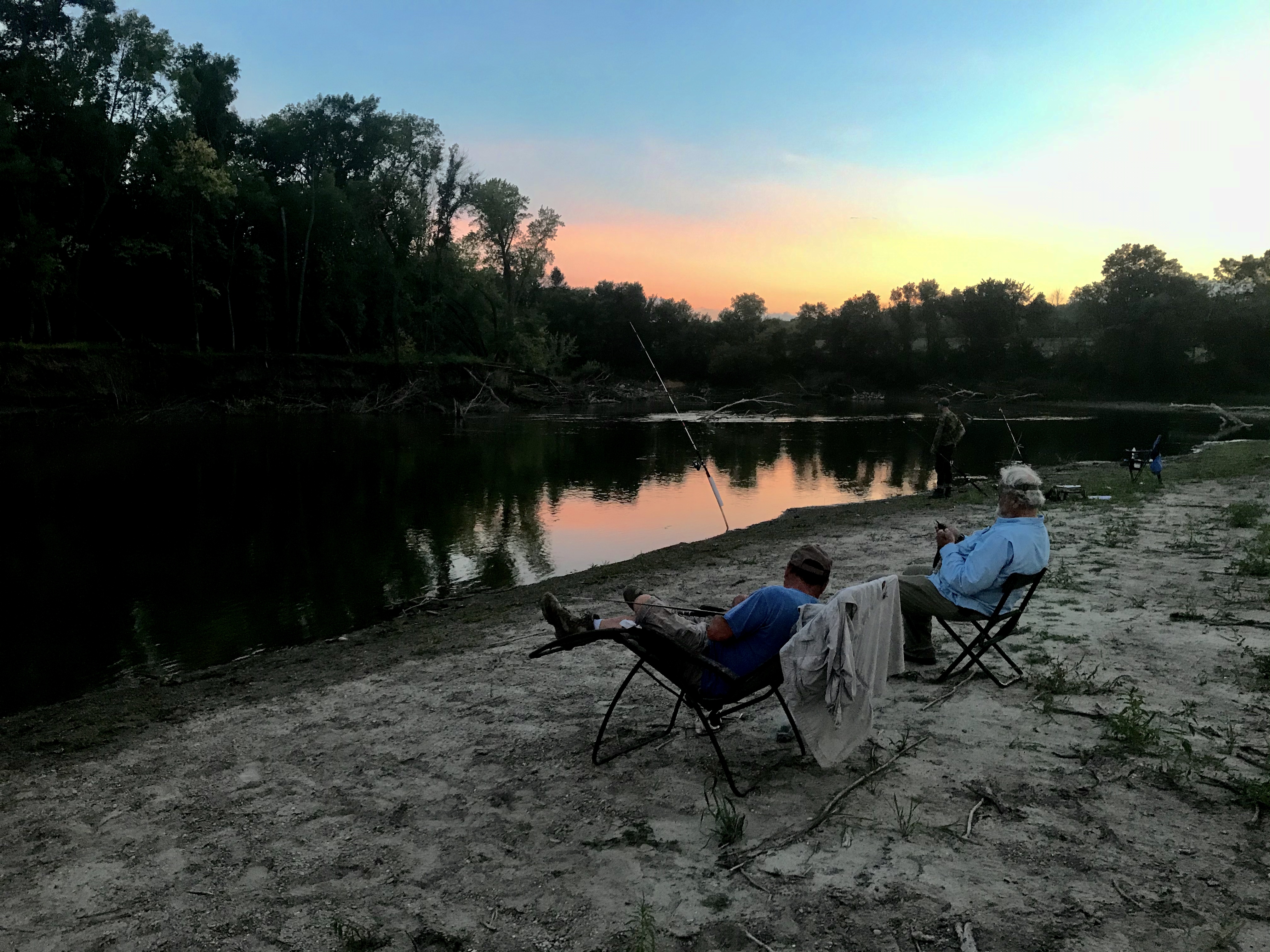
Tom Kalahar and Greg Larson enjoy a quiet moment as the sun sets over the gravel bar on our overnight trip on the Minnesota River. It would be an eventful night of fishing, along with a lightning show and a distant visit from a group of ATV’ers.
What hasn’t changed is that most of those up on the plateau of the prairie don’t seem to care, for the Minnesota River has seemingly never been seen so much as a resource as a conduit for excess water. This hasn’t changed for several generations, and likely never will. And that is a “fair warning” in a strictest definition of the phrase.

