Then JAGs Came Calling

T’was a moment when my memory of JAGs surged forth, and it seemed as if his voice was right there in my ear. James A. Geladis was our Managing Editor at the Dubuque Telegraph-Herald back when I started working at my second daily newspaper in the late 1960s. He had this way of looking down his nose at you, his eyes peering over his half-lens reading glasses in what we in the newsroom called “the stare” as he offered a kindly bit of advice. 

Although you might be subject of a stare from time to time, you never wanted to have JAGs offer the same suggestion a second time. In his defense, JAGs was a fine man and just the type of ME a beginning journalist relished. Creativity was essential, and every once in a while you would see him standing at his big window facing the newsroom before he wiggled a finger in your direction. That meant being summoned, and that perhaps he had an idea. 

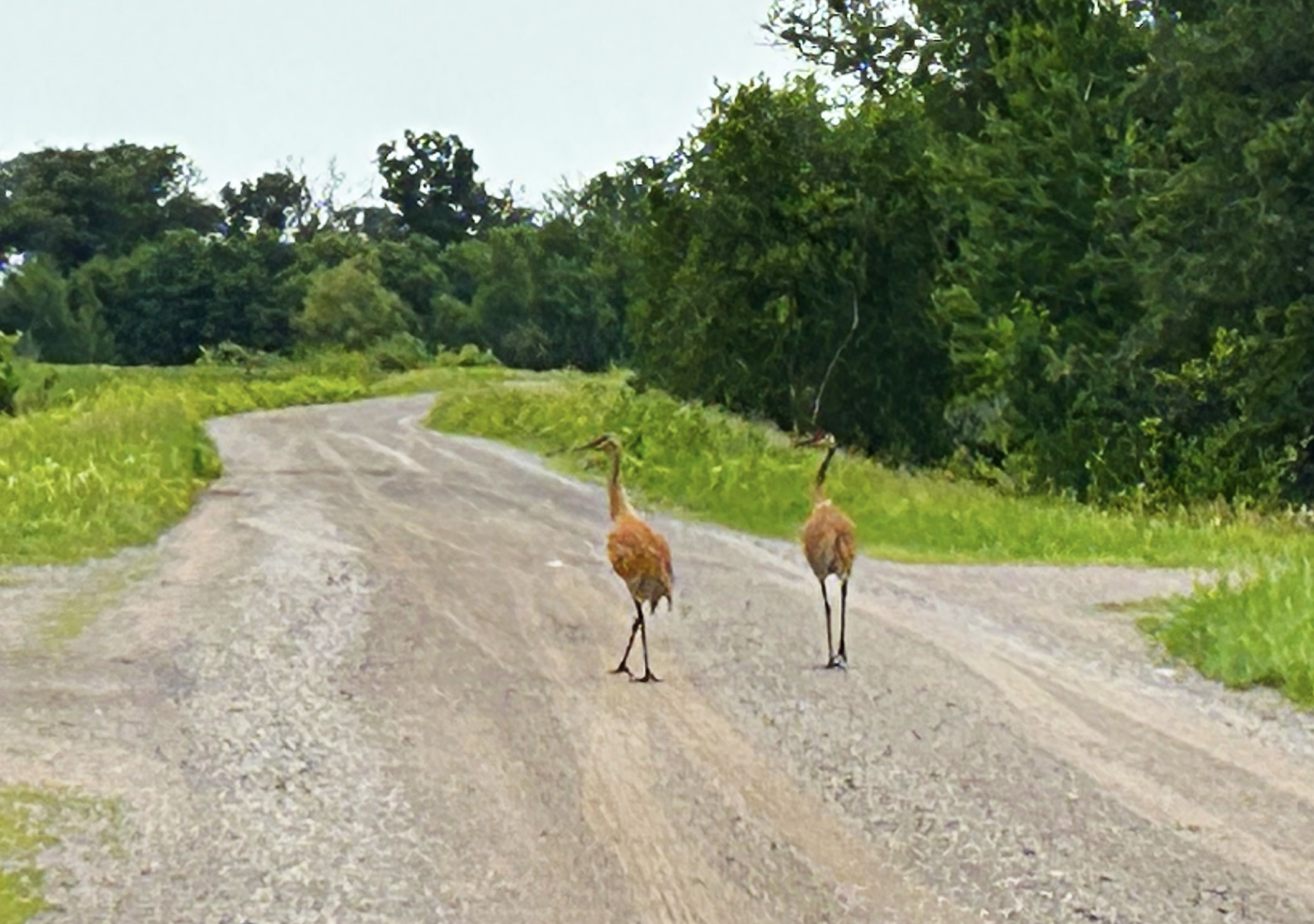
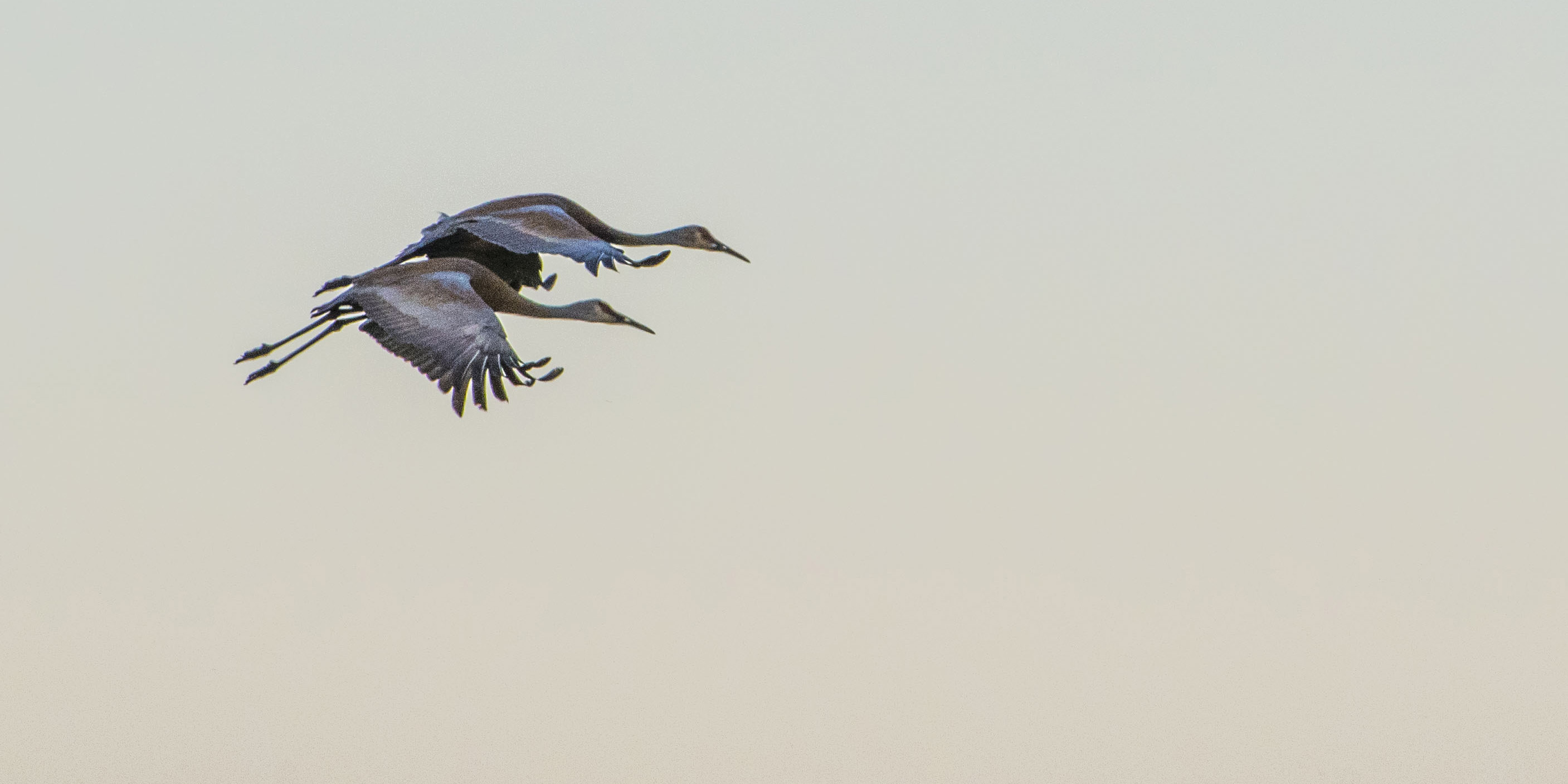
Moments after my battery died, two tall and gangly sandhill cranes emerged from the grasses to amble down the road in front of us.

Over my two years I got more than a few summons. “What do you think of us starting a youth’s page?” he asked. Calls were made to area high school art and English teachers and a full newspaper page featuring young contributors was created. Or, “We have a lot of very lively elderly people in town, and in the hills and valleys around here,” he said another time. Shortly thereafter I was writing a column we called Lively Elders. Fun stuff. Now I’d be considered a candidate! Although I didn’t get many “stares,” I certainly remember the first one.

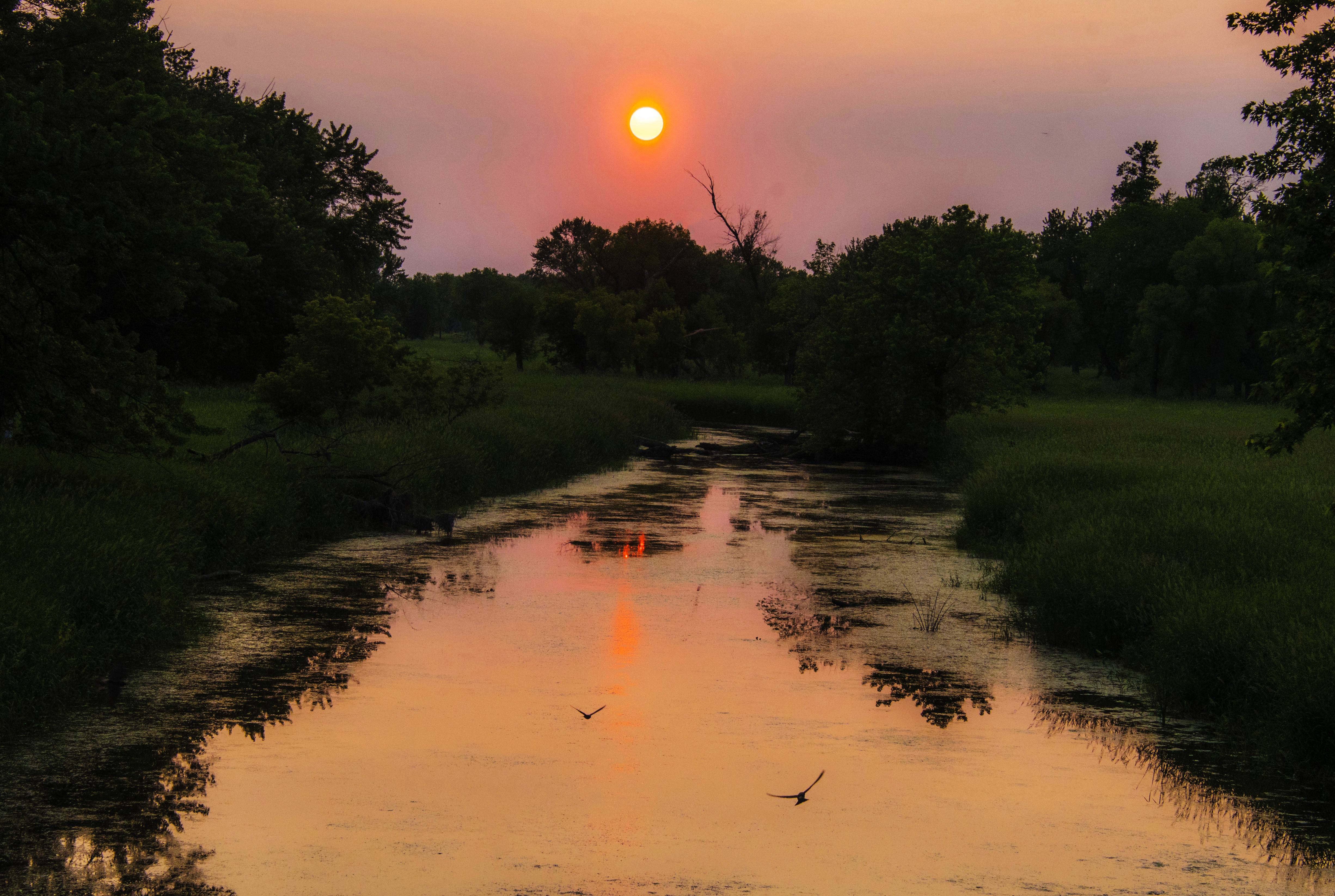
En route to a fire out in the distant hills of the Driftless northwest of town right around sunset, I crested one of the hills coming up from a valley, which was common in the Driftless, when I passed by a farmer on a tractor silhouetted by a huge red sun ball. I nearly stopped before remembering the assignment and hurried on toward the fire. Yet, I couldn’t get that silhouette out of my mind, and some 50 years later I can still visually see it. Missed images are sometimes like that.

A pair of sandhill cranes and their youngster forage through the Refuge.

By the time I arrived at the scene the fire was already doused, so I did some interviews of fire chiefs and grabbed a few images and headed back to Dubuque in the dark. After developing the film and making the prints, I wrote a short story that would basically be a cutline. The next afternoon I made a mistake of recounting the passing of the farmer and the red ball sunset. JAGs lowered his chin, looked over those half-frame glasses and said, “Never ever pass up a picture!” 

I’ve used his advice ever since, and have had a decent history of giving my photo editors some nice feature images over the years, and twice came in second in the annual regional “clip art” contests of the NPPA while working at the Denver Post. 

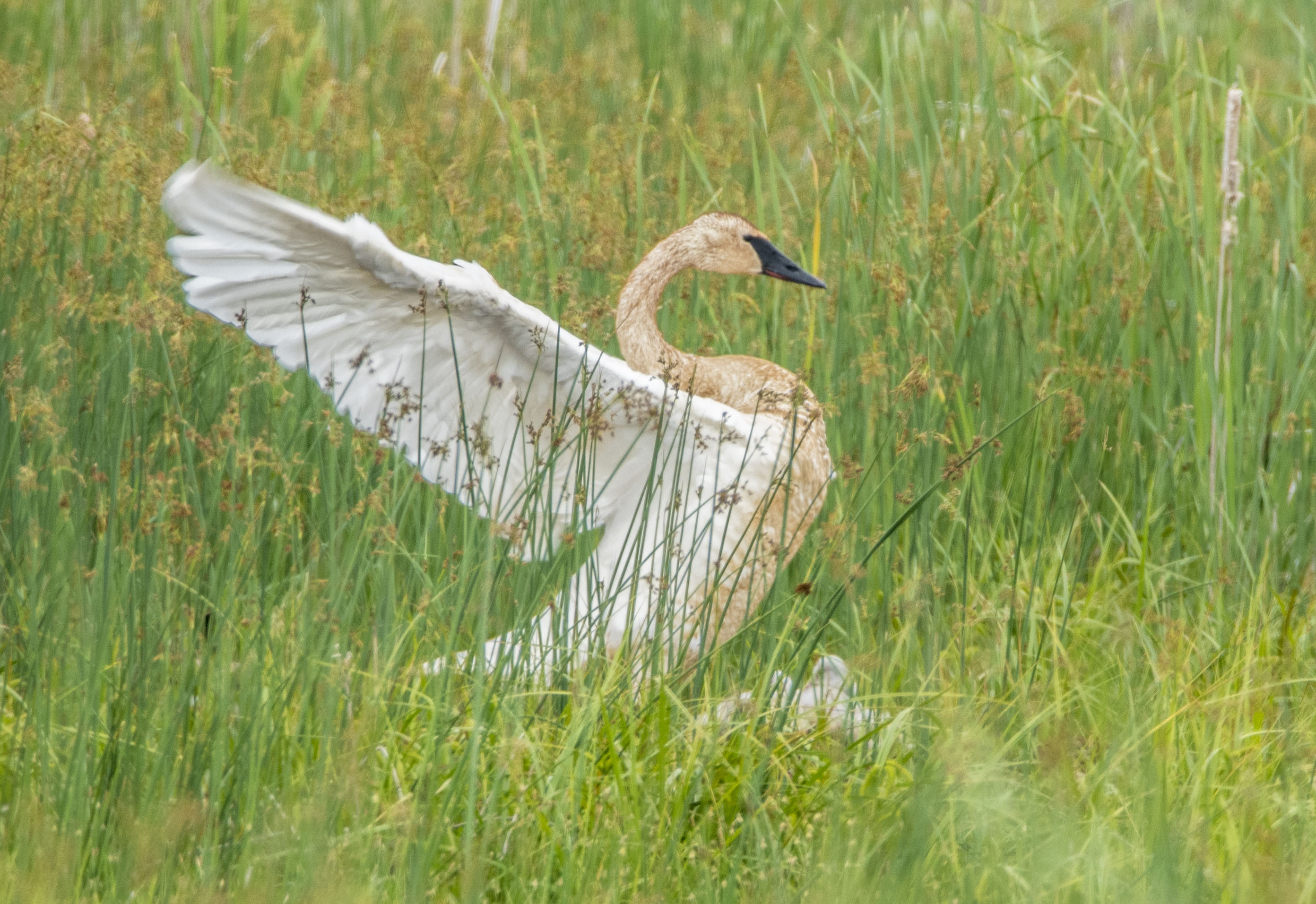
Besides the sandhill cranes, picturesque swans offer many photographic opportunities.

Now in the present; we were at the Sherburne National Wildlife Refuge Monday morning where I had just finished capturing an image of a pair of swan pens (the technical name for a female swan) and their cygnets easing through the cattails when my camera battery suddenly expired. My camera was dead. No problem, for I’ve always carried a charged spare in my camera bag. Except this time. I felt inside all the compartments and even turned the bag upside down to give it a good shake. Yes, I had faithfully charged the batteries but somehow failed to place them into the bag! And good ol’ JAGs came calling!

We were only about halfway through the Refuge motor trail when I realized I was done for the day. Then, as I dejectedly started the car, a pair of sandhill cranes suddenly popped out of the grass not 15 feet away to waddle down the graveled loop road in front of us like a pair of tall, gangly drunken chickens. They would not yield the right-of-way, and waddled on for about 60 meters before eventually veering off the road and into the grasses. I was being dissed by sandhill cranes! 

Despite JAG and his imagined nagging and stare, I did what any sane fellow would do in the 2020s … picking up my cell phone and trying to make do. It was a sad “make do” by the way, for I didn’t opt for one of those incredible cell phones destined to make cameras obsolete. 

We pulled into the Refuge the evening before where this “blue hour” image was captured. What a beautiful evening to be wandering through the Refuge!

To make matters even more dire, we continued to pass picturesque swans, a pair of bald eagles high in a deadwood moored tree in the swamp (that was reflected in perfectly stilled waters) and even more sandhill cranes on a rise just around a distant bend. Not only did we have a beautiful hue in the stilled waters, Sherburne is known for having both ample swans and sandhill cranes, and both were why we had rented a nearby motel room the night before. 

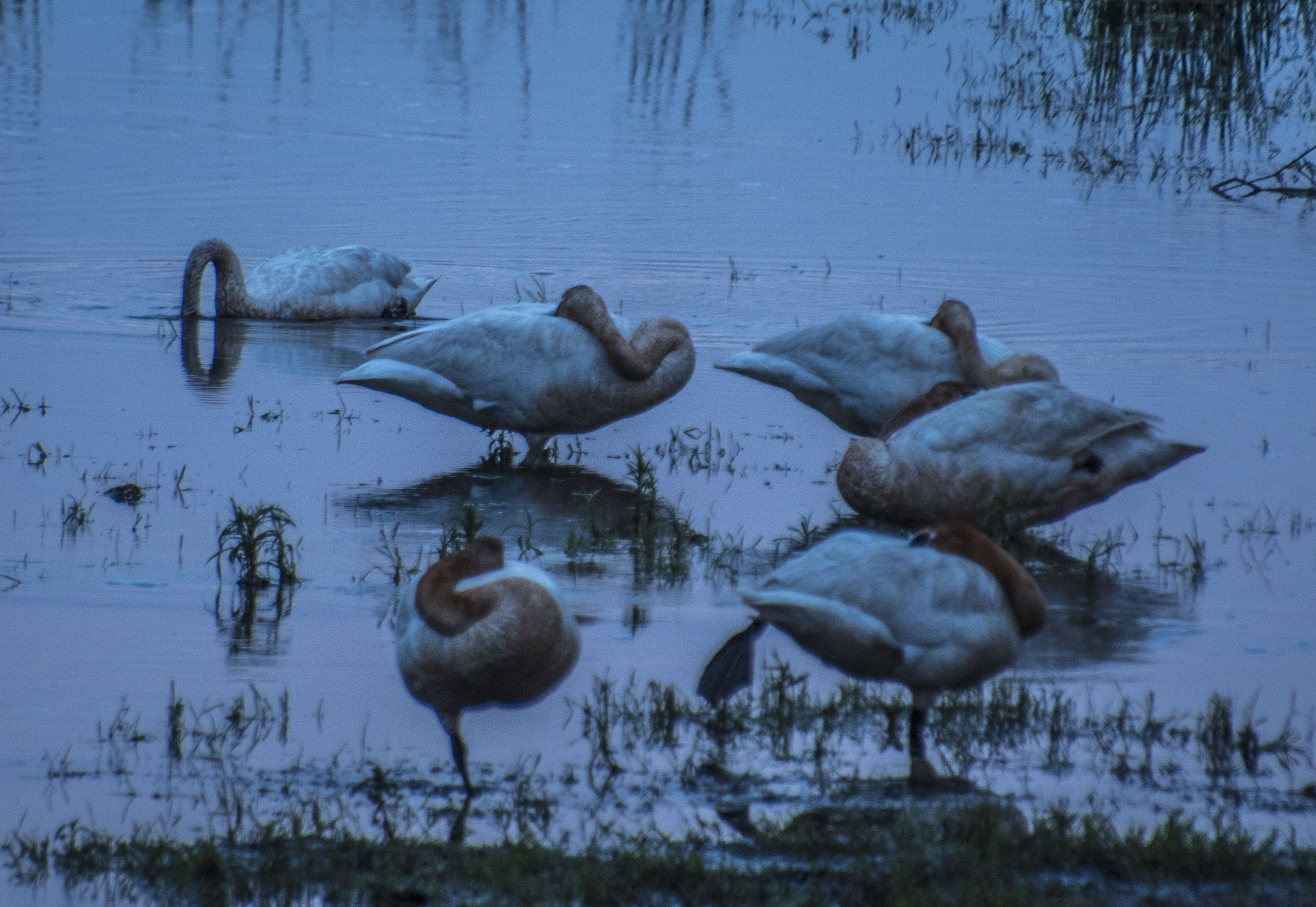
Indeed, my sunset images from the night before were cool, and so were all the flowers we captured in bloom. A couple of songbirds were caught, too, including a warbler. Our photo foray up to that point had been excellent, even as the sun was setting the night before. We even had a blue light image of a pod of sleeping yearling swans! And, if there was time, we had designs to venture further north to see if we could capture some yellow and showey ladyslippers. 

All of which was for naught. 

A pod of yearling swans asleep in the “blue hour” after the sunset.

Once home I found my two fully charged batteries on the desk of my studio office Guess where they are now? One is in the camera, one is the bag, and my third is on the charger! 

And JAGs had thankfully eased back into his office chair with his half smile, fully confident that this would never happen again. While it was darned good to hear from the old editor after all these years, and to note that his advice was spot on, my mind was cluttered just a bit with all those missed images back at Sherburne. I can only hope I won’t be as haunted of the misses as I’ve been through the years of missing that red ball sunset! 

Calls of the Wild

As soon as the distinctive call echoed across the wood-rimmed rolling hills, I rolled to my side and glanced toward the sky my camera ready. So familiar, so beautiful. Vivid, yet hidden. A mystery, yet none at all. They were there. Somewhere. A few years back I was sitting a mere few feet from where I was prone when the same sounds broke over the prairie and I was fortunate to capture one of my favorite images of sandhill cranes in flight, one that so portrayed their Pliocene existence. They seemed so prehistoric in flight.

Would I be so fortunate once again?

We had ventured here to the Lake Johannas Esker to once again mingle with the prairie smoke wildflowers that flourish on this rise come May. Years ago Morris naturalist Dave Jungst introduced me to the esker at a time when the white pussytoes and reddish-pink prairie smoke comprised a sparkling carpet of alternate colors on the rounded prairie rise below the husky shoulders of the prominent esker, and since I’ve made point to revisit annually. While once again impressive, there has not been a view quite so compassing as found on that first May visit so many years ago.

Yes, I’m a prairie smoke addict, and these blooms always captivates me.

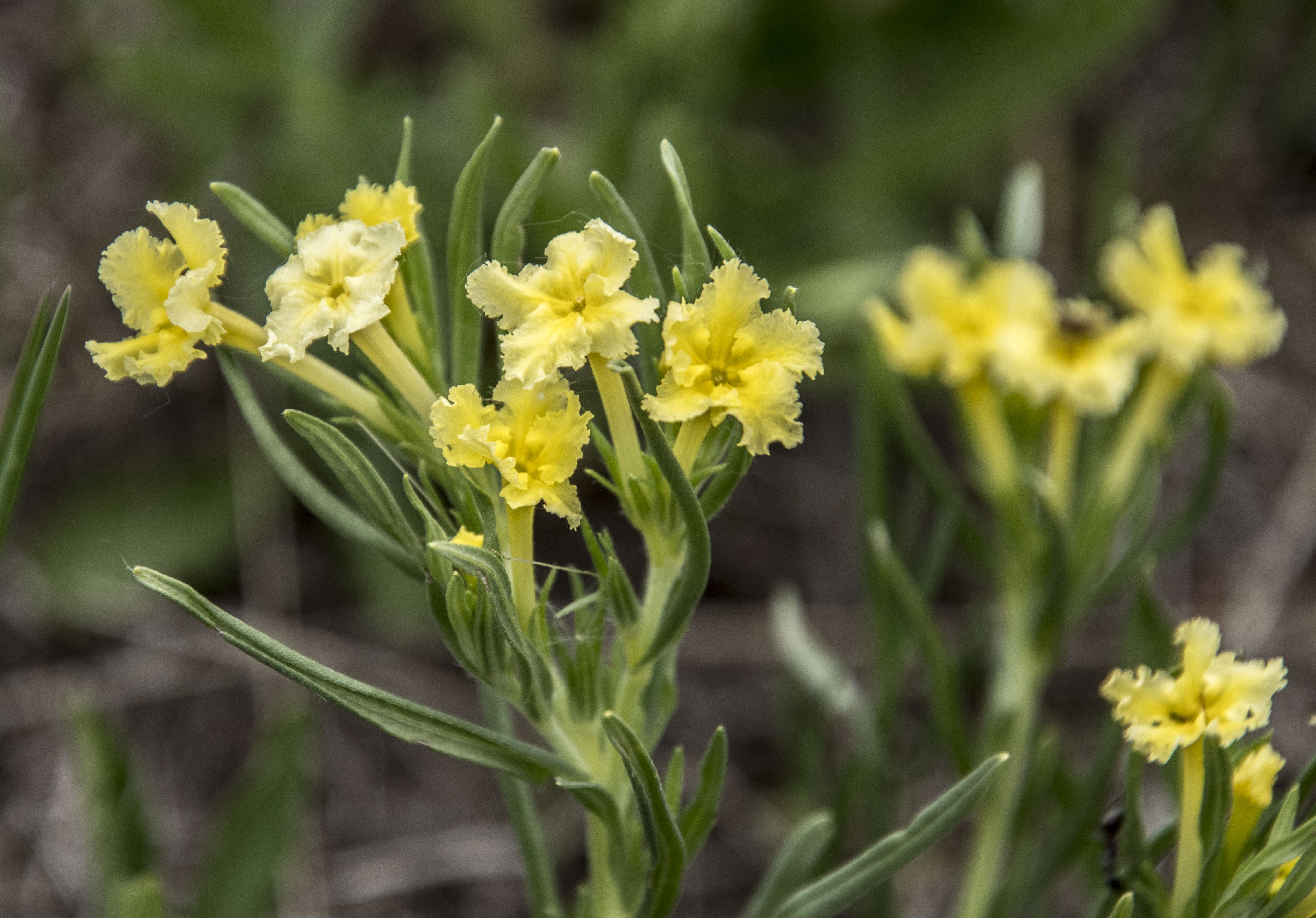
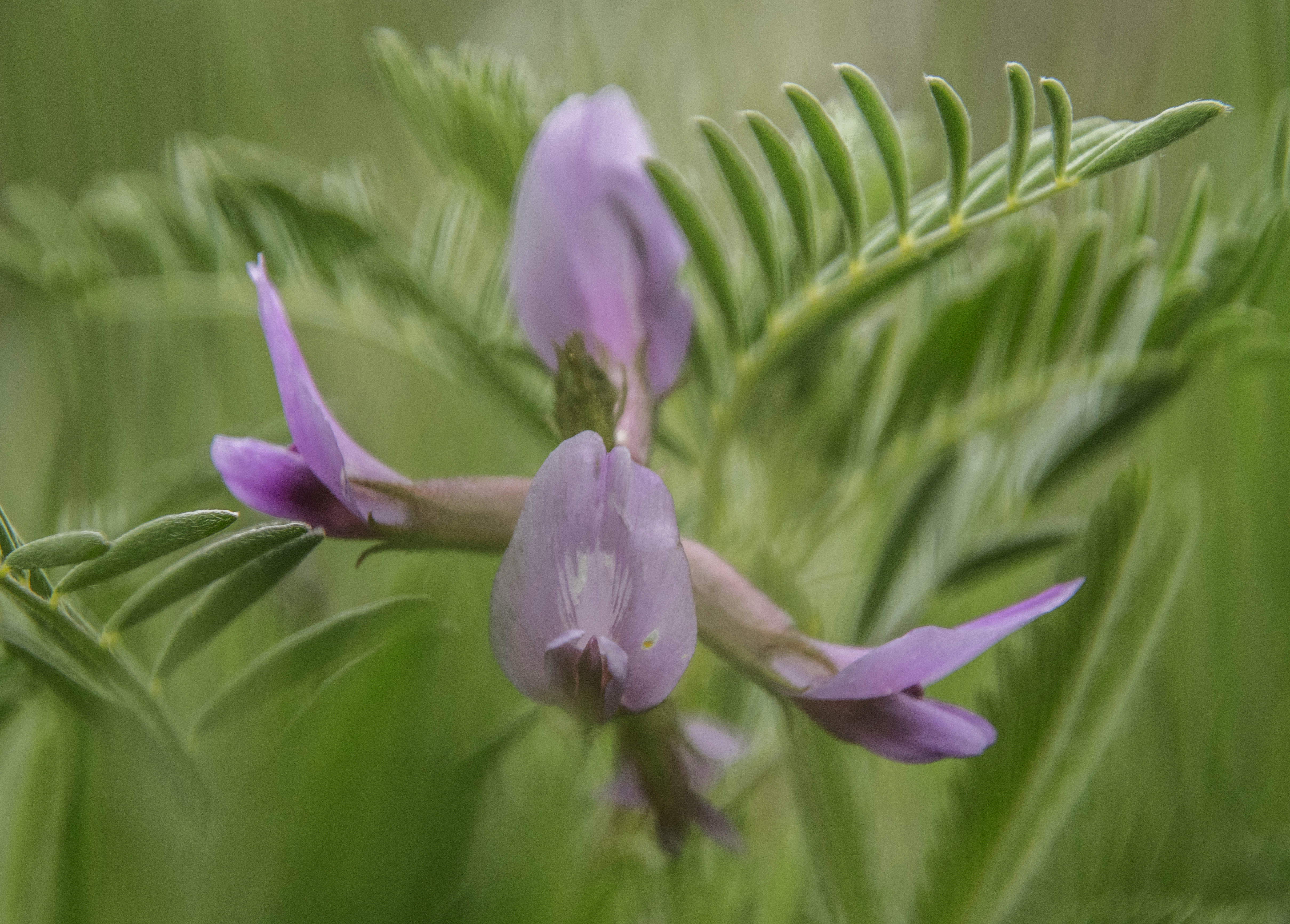
Yet we were once again surrounded by beautiful spring prairie flowers. Those glorious yellow blossoms of fringed puccoon poked a welcomed greeting from the dried sage and dormant grasses, along with brilliant chickweed that seemed so white that it beaconed from the prairie. A whiteness smiling with glee. Tucked away was the purplish ground plum, blossoms not unlike the explosion of a sky high fireworks that peeked through the grasses. All of that plus the prairie smoke offered us a mounded prairie of brilliant color. How could one not be impressed?

Distant to the north of us stood the tall esker, an abandoned glacial stream bed now cloaked by sodded grasses and brush. A snake-like ridge offering a staunch backbone to the lower prairie, rising high in the distance. Here a few years ago as I sat in rest and reflection on the esker itself, a wild turkey popped up from behind a sage bush not five feet away before attempting to secretly sly away. Our brief glances seemed as much a surprise to the turkey as it did to me.

As we ambled up the rise the first patch of prairie smoke appeared, tendrils yielding to the wind. Closer to the esker we came upon a carpet of smoke, a quilt of blossoms in all stages of maturity. Laying low with my lens focusing through the offerings, it could have been mistaken for a forest of reddishness, with the smoky tendrils reaching out from the star-like blooms, many pointing downward while others defied gravity. All stages of the plant’s life cycle seemed evident.

There is little that is more interesting to me than laying on my stomach and focusing a long telephoto through that foot high jungle of pinkish beauty in search for interesting imagery. It was there where years ago I heard the calls from the Pliocene, Aldo Leopold’s “trumpet in the orchestra of evolution.” Hearing the sandhills brought on a whole new level of energy and excitement, a complete jumble of creative focus. From that point forward I would continually peek from the smoky forest to glance over my shoulder in anticipation of a possible flight. Sandhill cranes will do that to me.

Aiming my large telephoto through the “forest” offers a wide gallery of imagery.

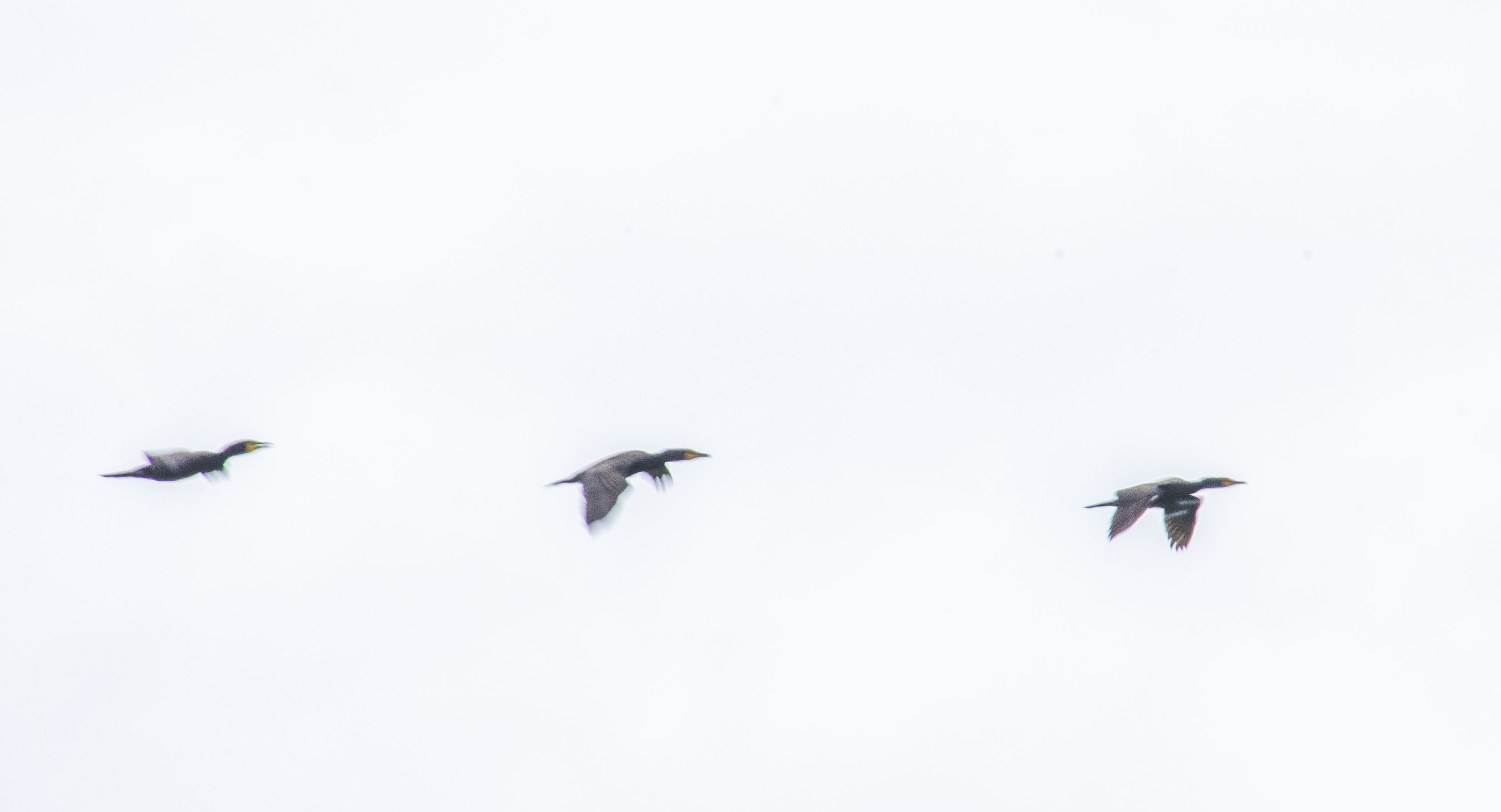
Eventually we would have a brief flyover … of cormorants rather than cranes. They were noticed thanks to my hopeful glances for the sandhills, and I rolled to focus as quickly as possible. Were they from the nearby rookery? Just north of the esker, and beyond the adjacent Ordway Prairie, itself a feature of the Nature Conservancy, cormorants have commandeered a tree studded small island in Lake Johanna as a rookery. From the apex of the esker you can make out the collections of stick nests in the canopies of the denuded trees. With their hooked bills, which is quite a bonus for their fishing capabilities, cormorants look much more prehistoric to me than cranes. If one can make an argument about birds being evolutionary cousins of dinosaurs, cormorants could serve as photographic proof. Their rapid flyover hardly diminished such an argument!

Yes, my eyes were open for the sandhill cranes I heard calling before the cormorants did a flyover.

Still, we had come for the prairie smoke, and despite the welcomed interruptions, I would again be consumed with my intent of gazing through the grasses and the smoke searching for interesting angles and individual flowers. A search that never tires. Prairie smoke is one of my “seasons” of an emerging Spring. They are why I come to the esker much in the same vein as I make a drive to central Nebraska for the annual sandhill crane migration, or drive around Big Stone County’s numerous surviving potholes seeking huge drop-in flocks of snow geese. This is one of my rites of spring, and one I’ll continue until I’m unable.

My image of the sandhill crane flyover in 2019 at the esker.

No, the esker has never let me down. This 800-acre floral paradise is nestled some two miles east of the Ordway Prairie and is dominated by the serpentine rocky esker that rises some 70 feet above the prairie where I laid. Well hidden within the surrounding tree-lined hills between Brooten and Sunburg, it is also close to the Little Jo WMA and the Moe Woods. Driving to the esker acreage takes you through a tree-lined, graveled paradise of a road that includes a few hidden potholes and possible swan sightings.

Yet, once you’re at the esker you’ll find an expansive natural floral “garden” that will likely captivate your imagination. Such were among my thoughts as I lay prone with my long lens, focusing through the incredible color while listening and hopefully awaiting more calls and even a flyover from the evolutionary past. I can’t imagine spending a Sunday afternoon in a more delightful environment.

A Break in the Silence

Her “wuk … wuk” cries of alarm and the flutter of feathers as she crossed the lawn to one of our islands of trees would have been equal an overhead flight of a jet airliner only a few days earlier. Despite their secretive nature, an aroused pileated woodpecker has a way with sudden alarm.

This unexpected visit on our suet feeder brought an end to my concern I’d felt earlier after  my two mile walk on our gravel road late last week when barely a sound was heard beyond the crunch of my footsteps on the gravel and crusted snow. Were we this alone here in the vast horizontal grandeur? Were the sounds of the skeins of geese flying overhead days before nowhere to be seen nor heard? Where was the sudden burst of flight from the flock of snow buntings that have captured the edge of the graveled roadside? Even the cattle at a farm to the north were not lowing to break the silence of a cold, stilled winter morning. Walking in such silence was strange and unsettling. 

My walk seemed a prelude to the polar vortex now settled in over the entire continent. By this past weekend it was considered unsafe at any age to be outside and especially on a two-mile walk. Perhaps the countryside was even more silent in those days since. Nothing much was moving, not even a mouse. Joe Pye would have noticed.

This week we were pleasantly surprised by a pileated woodpecker that came to wrap itself around the suet feeder on our deck.

The sudden and unexpected flight of the pileated was certainly an exception, and a wonderful surprise a day or two later. It began after I had decided to brew up a pot of split pea soup for dinner, which necessitated a walk out to the studio/garage to our freezer for a hunk of pork hock. When I stepped through the door a batch of birds lifted from beneath the feeder tree. A junco or two, sparrows, a red bellied woodpecker and a pair of nuthatches. All lifting with as much fashion and form as a well tuned choir collectively standing to sing. 

Above the flutter of the choir, though, was the escape of the lone pileated woodpecker, huge and black, it’s beautiful red head bobbing as it squawked and beat its wings in its telltale undulating bouncy flight away from the feeder tree to fly across the lawn. There is no mistaking a pileated woodpecker.

After our first sighting, it flew to one of our tree islands where this image was made.

This prompted the gathering of my camera with the long lens to hoist from the studio along with that hunk of pork. I excitedly told Roberta of the pileated, and we began doing surveillance at the various eastern windows near the feeder while I pulled together the soup. About a half hour later she came rushing into the kitchen with a stage whisper, “It’s here! On the deck feeder!”

Sure enough, and I grabbed the camera with the 600 mm lens. Our octagon window in the bathroom was an excellent “blind” and several images were made before it decided to dip and dive off to the beautiful aged-old elm tree hugging the east side of my studio. There it bounced up and down the trunk, stopping briefly to look around before facing the bark where it seemed to note something of interest.

My first thought was, “Oh, no! Not my elm!” You don’t have to walk too far into the oak savanna at Bonanza to see the damage a pileated can do to a tree. I’ve often considered setting up a blind adjacent to the trail to capture an images at that tree, and the major drawback is there hardly seemed to be any fresh chips being added to the pile.  

Our bathroom window is an excellent “blind,” a mere few feet from the feeder.

All of which brought back a memory from so long ago. While working as a stateside photojournalist with the Denver Post, I had just covered an environmental conference in Crested Butte where one of the presenters was Nina Leopold, daughter of one of my guiding “lights”, Aldo Leopold, author of “A Sand County Almanac.” His writing helped guide me back toward nature and wild things. Nina had a flight back to Milwaukee and I was driving home to Denver, and she had accepted my invitation for a ride to the airport.

Among the topics discussed in that long, wintery drive was pileated woodpeckers, along with my desire to finally see one. Though they were rare in the early 1970s, perhaps they’re more so even now. Nina painted some beautiful mental images for me, perhaps from her years of visiting her father’s sand country farm that is now a historical site near the foundation she helped form. 

Several years later after we had moved to Minnesota for an editorial position with Webb Publishing, I would finally see one along the Mississippi backwaters near where we had moved. Sightings have been nearly non-existent since, and have always been a noted moment in the years that followed.

Initially I thought, “Oh, no! Not my elm!” after it grasp the bark of the tree next to my studio.

Other than a brief glimpse while driving down the Lake Road, or at an artist’s home along the lake, I actually spied one in our grove one morning a few years ago through the kitchen window while brewing a cup of tea. A worker once said he had spotted one along the edge of the grove although his comment was met with disbelief. Yet, with our acreage of old trees we might have some prime pileated territory. If so, why have our sightings been so rare?

Perhaps they have already settled in since pleated are noted for their covert shyness. Our feeder bird is quite attentive, flying at the slightest sound. We’ve seen it numerous times since, either on a nearby tree or on the deck feeder where it will grasp and circle itself around the little cage of suet to peck away. Hopefully this is an omen, for according to legend pileated woodpeckers are said to be bearers of good fortune and luck, two wonderful attributes a person can always use.

A Backstory of Momentary Prairie Luck

Here is what I remember from that late afternoon in August a few years back. We were heading toward one of those moments I believe seems most common in the prairie for I don’t recall experiencing what Sophia, the grown daughter of friends in the Cities who had ventured out to the prairie to work on an organic farm, called a   “rainbow sky.” This is that fleeting post-sundown moment when the prairie horizon gathers in a magical grandeur of pastel colors, graduating from orange to pinkish to violet to blue and eventually into a heavenly darkness. Such a poetic term for a fleeting moment.

A rainbow sky won’t happen every evening, and it seems no two are exactly alike. I’m not alone by being drawn to them when they occur, and on this particular afternoon, one among hundreds of such afternoons, nature called me to a wonderful patch of big bluestem to capture the rapidly maturing “turkey foot” seed heads silhouetted against such pleasing pastel colors.

While big bluestem grows abundantly in my home prairie here at Listening Stones Farm, another great patch can be found about a mile or so from here at the hilly Steen Wildlife Management Area  …  if those who oversee it haven’t taken mower and baler to the grasses. The prairie at Big Stone Lake State Park, at the lower end of our gravel road, also beckons, as it did on this particular afternoon. 

Here is the 2024 State Park windshield sticker made from a prairie saunter a few years ago in Big Stone Lake State Park.

My simple goal was to somehow capture one or several of those turkey foot seed heads silhouetted against Sophia’s rainbow sky. Not knowing what nature might offer, I was ambling through the grasses with a smaller zoom lens, one that offers unlimited and minute degrees of focal length options ranging from 28mm to 300 mm. This is rather common practice for me, for as a photojournalist I’m typically looking and reacting rather than planning and orchestrating an image. My goal was to simply find pleasing compositions that work well with the light and the ambient color being offered, featuring this iconic prairie grass. 

Surely there were numerous raw images made, although I remember selecting but two for my permanent files: One was a ghostly multi-dimensional image of numerous seed heads; and a second of a lone dragonfly perched on a strand of big bluestem. Prints were made, matted and framed for the annual Upper Minnesota River Arts Meander. That ghostly image has been made into canvases to grace a few walls. 

Life went merrily along after those few moments on a prairie photographic foray. Years, in fact. Then came an interesting email last summer involving Big Stone Lake State Park Manager, Terri Denisen, and Veronica Jaralambides, a marketing consultant with the Minnesota Parks and Trails. Apparently Parks and Trails was planning to feature the local, Big Stone Lake State Park, on its 2024 State Park windshield sticker. Locally, Terri knew I had numerous images taken at both the Meadowbrook and Bonanza portions of the park. With the park so close I’m in either one section or the other numerous times a week throughout the year. For years.

This “ghostly” image of bluestem “turkey track” seedheads was made moments after the dragonfly image, both blessed by a pastel “rainbow sky.”

The initial request was for an image that blended the beautiful and haunting oak savannas and the mature prairie of the Bonanza area, so a handful of those images were chosen and sent via email to Veronica. Then, having second thoughts, I sent another grouping that included a handful of more individually focused nature subjects including my two bluestem images. Almost immediately Veronica emailed me back to say she absolutely loved the image of the dragonfly, and that she wished to take it to her committee. She would get back to me. A week or so later came the word, that the dragonfly would grace the sticker. There was one major request … I had to be sworn to secrecy. 

So for six months I had to “bite my tongue” all while remembering my thoughts through the years of other nature artists who had a trout, pheasant or waterfowl image chosen for fishing and hunting stamps. Then, finally, late last year the 2024 sticker was introduced, and yes, they hadn’t changed their mind. The dragonfly on the bluestem against the rainbow sky was no longer a secret. 

Parks and Trails had these beautiful cups commissioned featuring the image.

Since the secret was out I’ve been blessed with wonderful press. My long time friend, canoeing and fishing buddy, Tom Cherveny, did the initial honors for the West Central Tribune and Forum Publications, then a call came from WCCO-TV for what turned out to be a fabulous multi-minute piece on an afternoon news program called The Four that used several of my images along with an interview. Other interviews followed and stories published. 

Among the questions asked, of course, was when and what circumstances were involved with capturing the image. What could I say? When your sauntering through a big bluestem prairie and you just happen to see a lone dragonfly silhouetted against a rainbow sky, you simply react by quickly focusing, framing and capturing the image. Not a whole lot of excitement there other than a pleased smile in the moment after checking to see if all those intricate connections worked in the image; nothing like the story of the murderous bear in the Colorado mountains that ended up with an artist’s rendition for a cover and several of my images being published in Outdoor Life Magazine back in the 1970s. Who am I to argue or complain? I’ve had a wonderful journalist career that has been mutated a bit since I’ve been granted entry into the magical world of prairie art.  

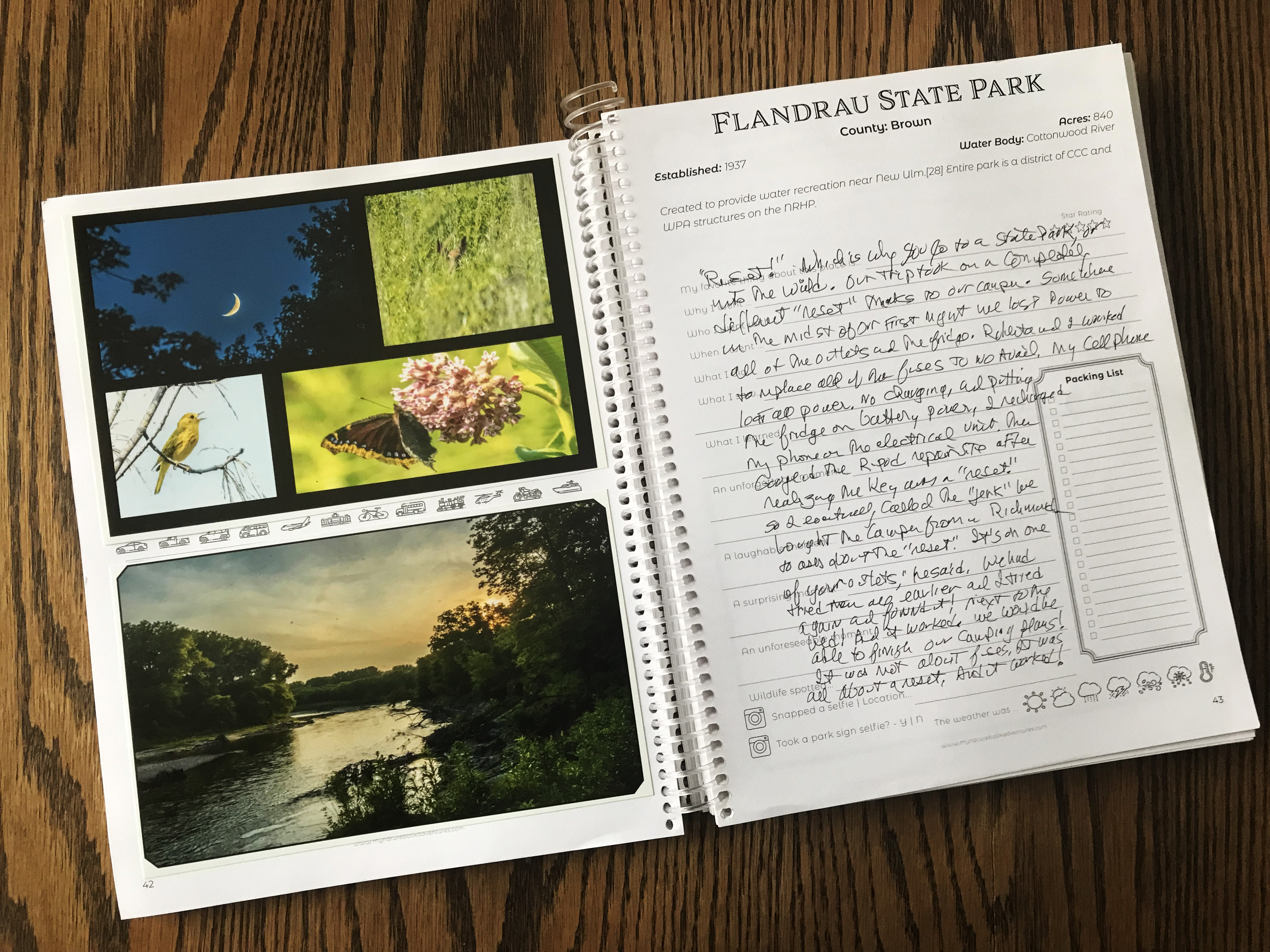
My personal quest is to complete this photographic journal of the 66 state parks in Minnesota, and so far 39 have been added to the journal.

I suppose making up some glorified murderous bear-like story might have been more entertaining and exciting, although I’ve never known of anyone being stalked, chased down and battered to death by dragonfly wings. I was simply doing what a photojournalistic nature photographer would do. I went for an ambient light foray with a camera, captured an image and was simply fortunate enough know the right Park Manager. Adding to that was being so fortunate that my image resonated with Veronica at Parks and Trails. 

This luck came two years after Parks and Trails shocked me by choosing three of my photographs in their annual photographic contest, two of which made their annual calendar.

Minnesota’s beautiful State Parks are quite important to me, and I’m now continuing my work on completing a photographic journal of each of the 66 parks along with my volunteering as a Minnesota Master Naturalist. To date I’ve visited 39 parks, although a few visits were before the photo-journaling began. So the adventures continue, this time with the knowledge that all those vehicles we’ll now pass in the State Parks will have displayed on the passenger-side corner of their windshields a dragon fly silhouetted on a stem of big bluestem in Sophia’s rainbow sky. I couldn’t be more pleased.

A Foggy Count

A quick peak through the window after rising before dawn Saturday morning offered a view of what prairie people call a “short world.” Fog shrouded the farm. In a half hour the plan was to meet up with (John) Palmer at the Big Stone Lake State Park office where we would cover our pie-shaped assignment for the annual Audubon Christmas Bird Count (CBC). It could have been worse. Just a year ago the CBC, which would have been my first, was pretty much canceled due to a heavy overnight snow with drifts halfway up my garage doors. 

After a tasty mug of my smoky Lapsang Souchong tea, my binoculars were fetched and I headed to the car. My camera and 600 mm lens were already packed. Five minutes later I pulled in behind Palmer’s car and we were off on what we both believed would be a slow morning of identifying and counting various bird species. Would the chilly fog cause birds to hide deep in the prairie grasses and trees? Would we actually be able to see well enough to even count and identify whatever birds we might see or hear? Truthfully, we were heading off with more concern than confidence.

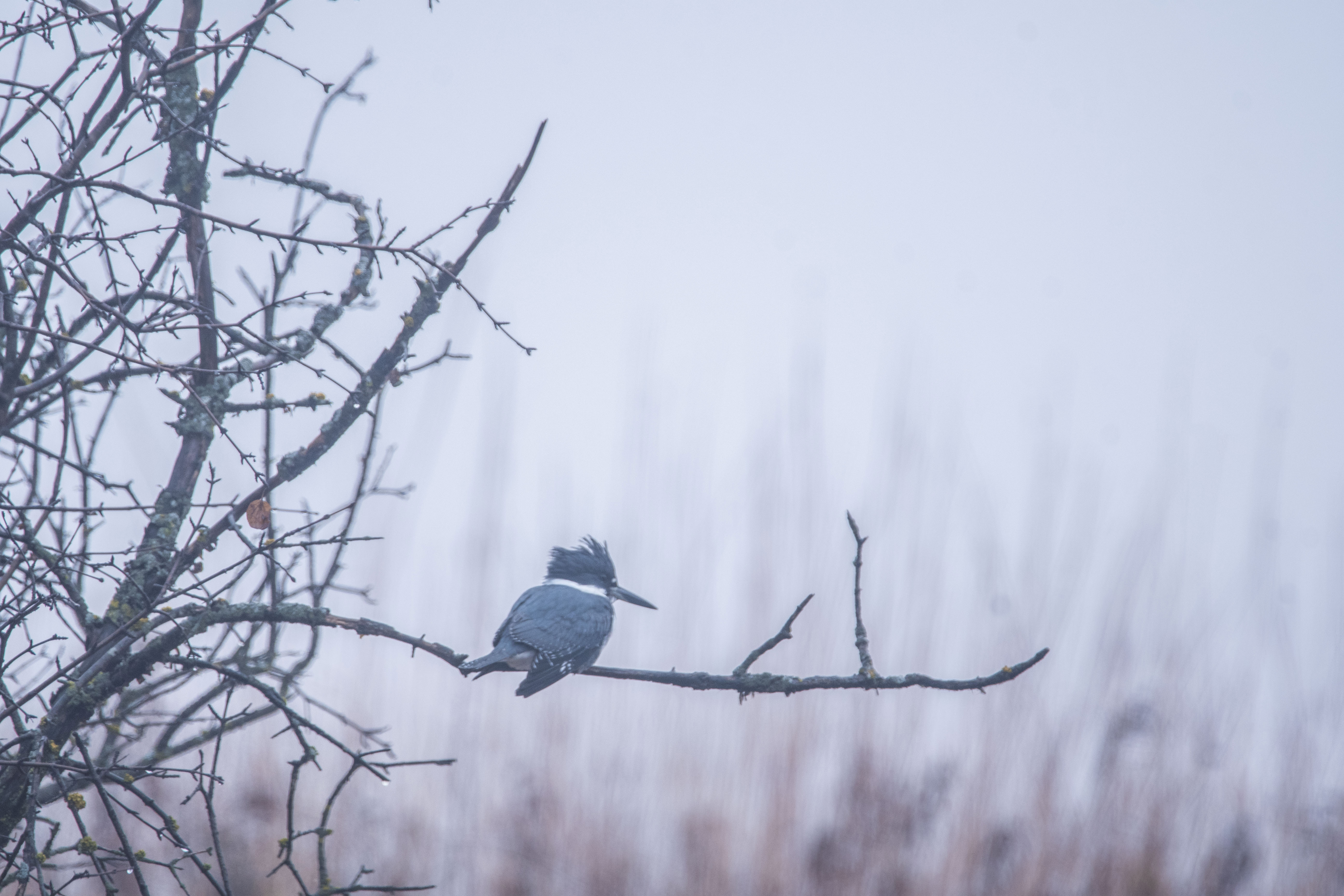
Our lone Belted Kingfisher perched above a patch of open water in the Meadowbrook area of Big Stone Lake State Park.

Palmer is new to the area having just completed his first summer as assistant manager at the state park. Many of the roads we were to cover were unknown to him, and some would be new even to me if we canvassed accurately. We were responsible for an area between Big Stone Lake and U.S. 75, and from the Clinton road down to and including the city limits of Ortonville. We would have five hours to complete our task before the volunteers, under the direction of Jason Frank and Brandon Semel, biologist with the Big Stone National Wildlife Refuge, would meet at Lingonberries for the summary.

Each piece of the circular pie was fairly well defined. Joining us on the hunt for an elusive Bobwhite Quail (the inside joke, for the group I would later learn) and other species of note would be Douglas Pierzina, Brandon Semel, Curt and Sara Vacek, Allison Parker, Gena Leksche, Jason Frank along with me and Palmer. Bill Frank and Meg Scholberg were on feeder watches.

Palmer and I skirted the very top of our pie first, taking what we would later learn wouldn’t be frowned upon as a quick spin down the paved county road in search of a flock of shoulder-hugging Horned Larks or Snow Buntings. Typically both are prevalent along the country roads about now, and birds I had seen recently, yet there wasn’t a one to be found. In Clinton, Lake Eli was frozen over and the Swans that were here a few weeks ago had migrated. We saw no Crows or even Sparrows in our drive through town.

We took the first left once we sped past Clinton’s infamous Zero Street into the countryside to turn onto a marvelous gravel road I had driven past hundreds of times and never driven. It was a treasure with numerous wetlands on either side along with a few Wildlife Management Areas (WMA) that seemed inviting. Some with enough woods for Wild Turkeys and all with ample prairie grasses for Pheasants. While Palmer could hear some activity, we didn’t see anything until we spotted an owl on a power pole after leaving our last WMA on the road. Our first bird! Palmer, in a better position than me, spotted “horns” through his binoculars so we counted it as a Great Horned Owl. It was a brief sightings for once the Owl spied us looking, it flew off for a distant hazy clump of trees. But, it was a bird! Our first of the count!

Although this image of Starlings was made a day before the official count, we caught up with the same flock Saturday morning.

We traversed the upper end of our pie going from one gravel road to the next, slowing along tree lined fence rows. We could have stopped at Listening Stones Farm and upped the count significantly thanks to our bird feeders. This wasn’t a contest about who could count the most birds. Rather, it was to catch an accurate, one day glimpse of the overall species of our circled countryside along with the approximate numbers of each. By and by we followed the ravine back to the state park and passed a flock of Starlings along the road that I had photographed the day before. We then counted a solitary Belted Kingfisher in a splice of open water next to the big lake. 

“What’s it doing here at this time of year?” Neither of us had an answer. A later check indicated that most do migrate to warmer climates, although a few birds will stay if they have a source of open water. 

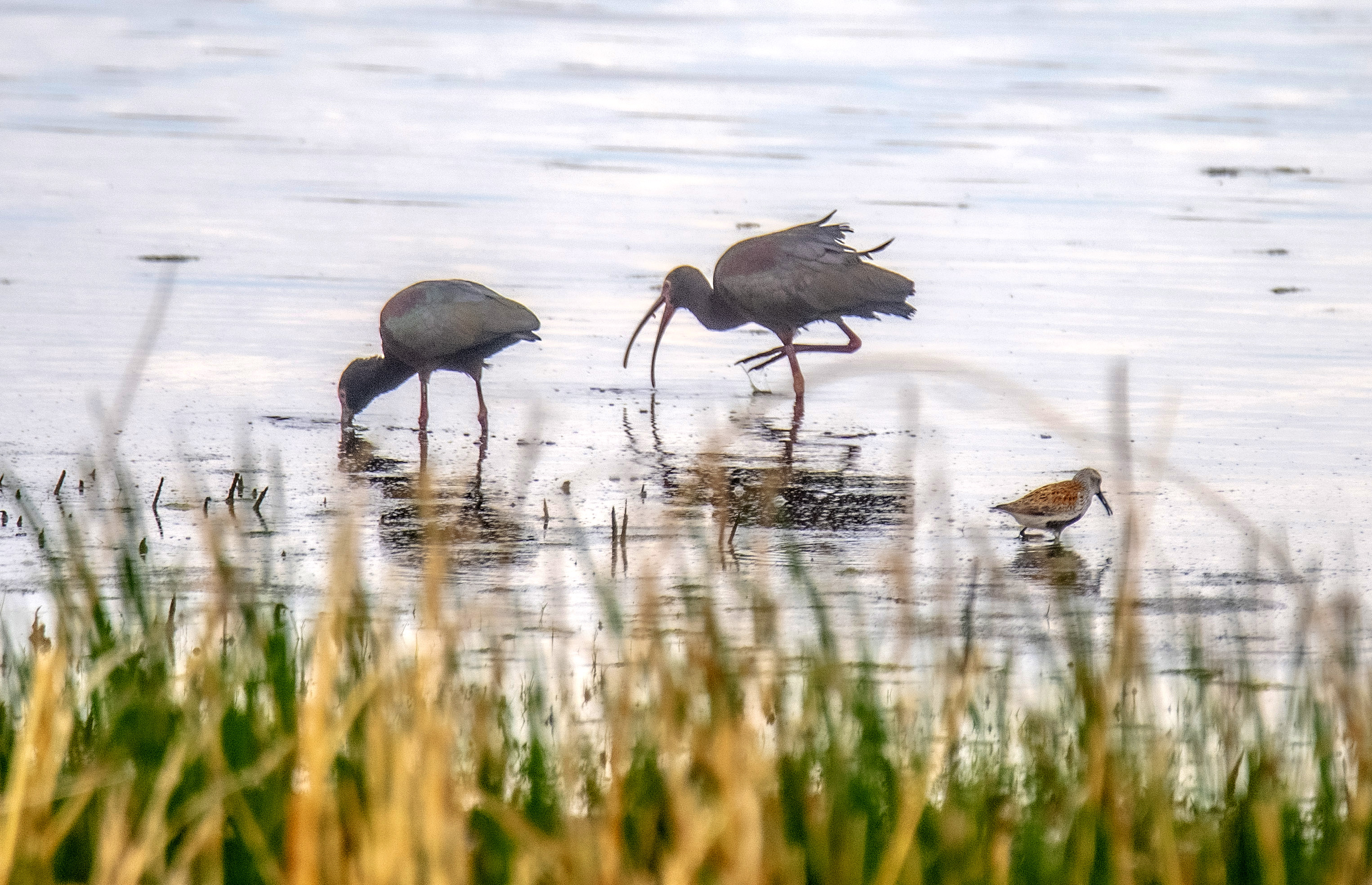
We drove down several lake access roads en route to Ortonville, often slowing with the windows down, sometimes turning off and getting outside of the car to look and listen, pulling binoculars to peer into the grayness in search of whatever sound might come, or to simply slowly glide along a treeline in hopes of seeing signs of bird life. We backtracked from the golf course to some WMAs north of town, then back down the eastern flank of the links. I pointed out wetlands where last spring we counted numerous White-faced Ibis, which Palmer had never seen. We then canvased the town parks, ravines and shoreline. The wetlands along the dike road. Parts of the Minnesota and Wetstone Rivers and their backwaters. I feel we were rather thorough despite the handicap of the fog.

This lone tree just above the Steen WMA was a common site thanks to the fog.

We were picking off one or two of the few species we could find, with the highest numbers being the flock of Starlings and a larger grouping of Juncos in the recently “freed” tree canopy on the ridge above the Lake Road. Among our finds were a few Pheasants, a lone Mallard and Canada Goose, and on the drive back toward Lingonberries from a gas fill up, a Pileated Woodpecker. Palmer and I were rather excited about the Owl, Pileated Woodpecker and especially the Kingfisher. 

When we gathered for the count the overall results were rather surprising for me with 49 total species counted, according to Semel’s tally, with a compilation of 13,000 total birds. “The fog wasn’t ideal,” he said. “I don’t think any of our sightings were particularly unusual, yet it was fun.” Jokes were made about the Quail no one was able to mark on their lists.

A satellite image of our official Ortonville, 15-mile circle. Palmer and I had the purple pie-shaped acre north and west of Ortonville.

Although this was my first CBC, this was an Audubon effort to promote conservation by counting rather than hunting birds, and was initiated in 1900 by Frank Chapman and 26 other conservationists. Some counts have been running every year since then and now happens in over 20 countries in the western hemisphere. Official 15 mile radius circles are pinpointed, with our’s centered around Ortonville. Our circle included parts of South Dakota as well as the Big Stone National Wildlife Refuge and Big Stone Lake State Park. 

After a quick lunch and friendly greetings, Palmer and I headed back to the state park as the fog slowly and finally eased into gloomy daylight. As we motored up the Lake Road, a few Crows and various other birds would sometimes swoop across the highway and we wondered where they had been during our official count. And, where were the three groupings of Wild Turkeys with staked territories we thought we would surely pass along both the ravines and the Lake Road? And, those numerous skeins of Canada Geese we’ve watched fly overhead for weeks? Nuthatches are quite common and we didn’t count a single one, nor did we happen upon commonly seen Downy or Hairy Woodpeckers. Palmer and I wholeheartedly blamed it all on the fog. Oh, and like the others involved in the count, the ever elusive Bobwhite Quail exited our circled “stage” laughing once again!