Art of Ice (and Wind)
Reply
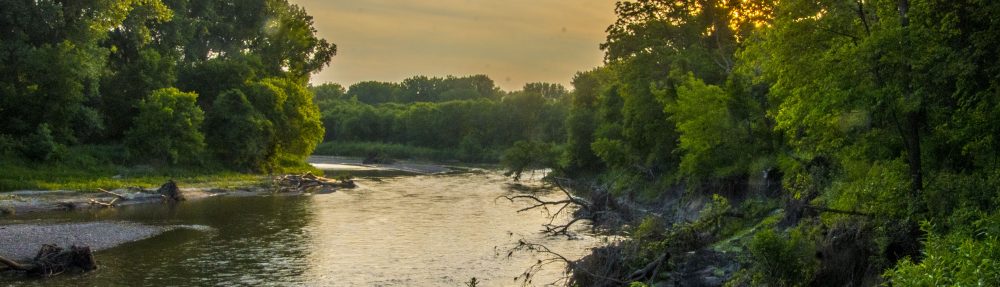
Lately I’ve been wondering if Laura Ingalls Wilder’s Pa and pioneers like him took a moment to appreciate the hidden and intricate beauty of the prairie before the cold and grayish drudgery of winter set in. Did they appreciate the grasses and wild flowers in summer, the murmurations of blackbirds so thick in the spring and fall they blackened the sky, or an Orchard Oriels pulling dabs of fluff from cattails abundantly common in the wetlands on a dewy June morning for their nests? Or, the artful beauty created by wind and ice come the beginning of winter.
Perhaps their focus was solely on surviving the thick hordes of summer mosquitoes and the need of warmth and basic survival above all else once the days became short and the temperatures way below freezing.

I was thinking of the Pa’s of the olden days recently when I caught the ethereal beauty now on display thanks to the art of ice; of how wind helps create such beauty in these last one percent of the surviving prairie potholes, or wetlands. Students of the prairie know full well that 99 percent of the wetlands are no more, ditched and tiled from existence, plowed over as part of a commodity crop coup by Pa’s generational descendants. Winter offers a special moment to catch this exhibit of nature’s natural beauty in the “canvases” of those remaining wetlands.
Experience tells me this natural art will eventually dissolve into drudgery, that all this beautiful magic, this “winter wonderland,” will soon fade into a chilly boredom of snowy sameness. Those powerful arms of burr oaks highlighted with fresh snow will blend into a jigsaw of darkened clustery shapes, those beautifully well hidden prairie poems written by the wind and penned by the tips of bent bluestem will be erased into a blur of colorless whiteness, and the wetlands will thicken into “hard water” sheets 18 to 24 inches thick.
Now is when this magical art is near us, yet after years of observations you’ll find that no two years, let alone even two days, are ever alike. This is an ever-changing exhibition in form and in light, in design and color. What is here today will likely be erased or “painted” over by the whims of nature’s brush. All we can do is observe and appreciate, day by day.
So let’s traipse along the edge of a wetland to scout along the reeds and cattails as the wind caresses the last of the algid waters to create small ice villages, exotic trapezoidal pyramids, or what might appear to be a flotilla of sailing ships set a sea in ancient times. Say the Swedish Navy in the 1500s. It’s just fine to allow your imagination to soar. Mine does.
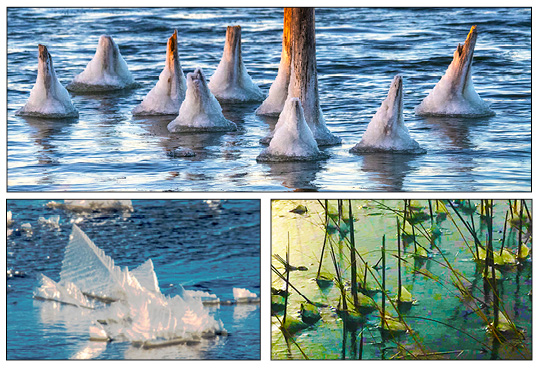
Winds may create ice “knuckles” at the base of cattails that rise above a blueish liquidness of a yet to be frozen wetland, perhaps reflecting the ambient colors of either a sunrise or sunset, or that richness of late afternoon light. These icy toes may be misshapen, uniquely designed by wind direction and speed. A few years ago on a nearby wetland the wind shaped ice around waterborne stumps in a way they looked like Hershey’s candy kisses. Nearly the same color as the foil wrappings, though with stems dark and tall.
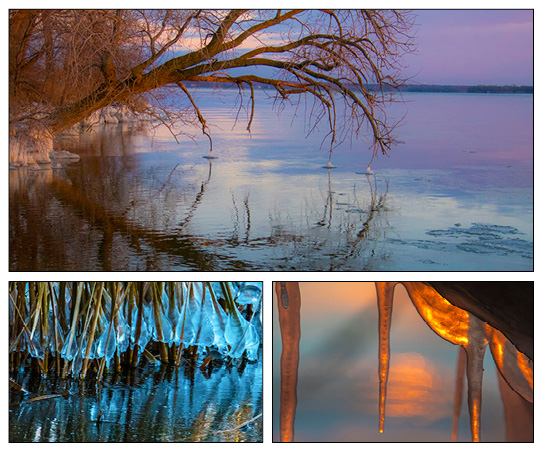
Similarly, there was an afternoon at another wetland when the tips of a willows were blown in such perfect wind circles they formed “teapots” nearly as perfect as if they were from clay molded by a master potter. As the wind continued to blow the pots skimmed the surface in concise circles, growing ever larger, millimeter by millimeter. The next day? Gone.

I once observed an early winter sunset along the edge of a wetland where intimate “sculptures” formed by wind and water captured the waning and colorful late afternoon light to offer magical ice and wind art that graced the prairie waters in a place far distanced from the hallowed halls of the Louvre. Pick your own art museum if you wish.
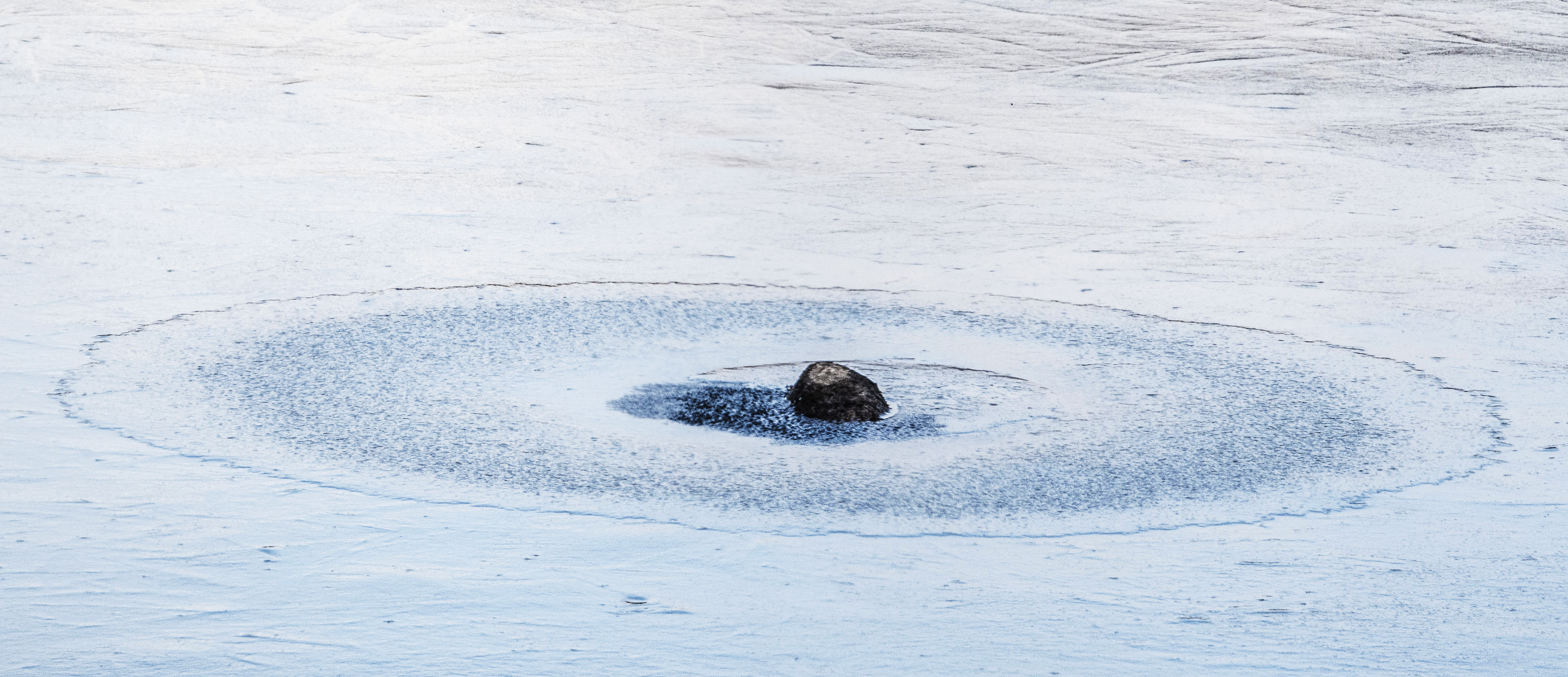
Recently an interesting geometrical design was left behind in a wetland surrounding an elevated glacial rock. So unembellished, yet so reminiscent of paintings found in a modern art gallery. Subtle in a natural minimalist design, awaiting the viewing of a prairie passerby.
In late afternoon drives during moments of “Monet light” these freeze/thaw cycles leave behind acres of art subjectively designed the whims of wind, designs abandoned and frozen in cursive detail in brief moments of time, colored by ambient light of a lowering sun, yet so fickle and vulnerable come the sunlight of another day.
Now, as we ease into a new winter … which for some, including myself, seems a might too early … this artistic display is now open for viewing. As an observer of nature, and in particular the prairie nature and wetlands around me, I’m finding this interesting and ever-changing beauty so fascinating.
I don’t know if Pa and the settlers like him, nor those in the Native nations before them, appreciated a similar beauty, for I’m sure that it was there as it is here now, and in those times this artful beauty would have been so much more prevalent with the thousands of wetlands surrounding them. I’m also painfully aware of what a special eye one might need when facing tragedy and survival in turbulent times just as we are as a species now trying to survive a deadly pandemic. I’ve no doubt that some did, that they stopped ever briefly to marvel at the nature around them.

Perhaps these observations are absolutely necessary in our time now, where even a moment spent near unmasked humanity could prove fatal. Maybe this is the escape I needed in this frightening world, places I can hide away ever briefly, to view and perhaps even photograph this ever-changing art of ice and wind found in what remains of the relatively few and rare surviving prairie potholes.
The wait begins. Perhaps bringing an end to these past few weeks of uneven sleep, unexplainable anger, the short temper and issues with focusing, and above all, the “doom scrolling.”
Yes, I’m guilty, for the doom scrolling is nearly as hypnotic as it is fruitless, and above all it’s overwhelmingly hard on the soul. Doom scrolling is fervent on the social media sites I frequent. Admittedly there are so many positives for the site that I am hesitant to leave. Just last week for my birthday I received nearly 300 greetings from friends from a dozen countries, and it’s the heart of the marketing efforts for my art. Yet I seemingly spend long moments of time, though not hours as some do, scrolling through the feeds that are full of doom and dread.
Television isn’t much of an escape, and never was for me. Political ads are mostly awful. My avid morning newspaper reading finds me skipping over some stories for I know our president will be quoted. Driving to town isn’t much of an escape for I see neighbors I feel I should trust flying Trump flags, and when I see one next to an American flag my blood pressure spikes.
So how do you escape? Henrietta Couillard, a therapist at The Family Partnership in Minneapolis, says, “Going to a calm place in your mind can help to ground you in more positive thinking.”

This what I’m needing, and what I seek. During our cold and windy days of the forthcoming winter here on the prairie I have found escape going through old image files when we’re not on a photo foray. Sometimes I will stop on an image to re-crop it, or work with the contrast. To somehow make it different. More appealing than the last time around. Doing so has helped me relive past trips afield. Then I would move on. Something revised, perhaps saved, wondering if any of it would ever see light beyond. For now, though, it is both an escape and a hope.
Both escape and hope were present when we went to a friend’s art opening over the weekend. Beautiful plein air watercolors from her travels around the world. Everyone was masked making it difficult for me to engage in conversations, for over these past seven or eight months I’ve learned that lip reading is a significant tool for my understanding conversations. Often I would be away from the small clustered conversations, engaging instead in Joan Eisenreich’s paintings. Seeing those colors, so bright, so hopeful.
Then it returns. This dread and doom, this gloomy existence. I was raised in a democracy. Yet over the past several years we’ve watched as what was at once an honorable conservative party create innumerable ways of suppressing voters of their democratic voices. Political pundits suggest that a fair and democratic polling process would end their reign at the White House and in the Senate. That is apparently their fear. And it doesn’t stop. Less than a week from our election day a federal court overturned an agreement reached during the summer between both parties. Two of the three justices ruled that ballots received after 8 p.m. on the election day wouldn’t be counted even if postmarked on November 3. Understand that in their fear they’ve also packed the courts, including the U.S. Supreme Court.

The day prior to the art opening news came of several pickup trucks surrounding a Biden/Harris campaign bus between San Antonio and Austin, which according to numerous reports attempted to push it off the road. Their fearful efforts were applauded by the president. He also blessed efforts in other areas of the country where road blocks to balloting sites were blocked by his supporters. Voters standing in line have been pepper sprayed and harassed. Armed terrorists have been recruited by the president’s son and others to patrol what they call “rough areas.” Do you need a translation? Placing armed white guys outside polling sites in non-white areas. Intimidation. Arming to create fear. We’ve become a Third World country.
Let’s be blunt: this political party is so thoroughly convinced that victory is near impossible without these various voter harassment and suppression efforts. In retrospect I think of post-WWI Germany and the rise of Hitler, of Cuba with Castro, and more recently of Sarajevo, a multicultural city where residents seemingly lived in such peaceful harmony it was paraded as near Utopian when the Olympics were held there. Then came the rise of a Serbian takeover that turned neighbors against neighbors, friends against friends, and family against family. Sound familiar? Is this happening here, with us, in what until four years ago was a beacon of democracy worldwide before our current president, his party and his cultish followers have turned into an international joke, and a fearful one at that.
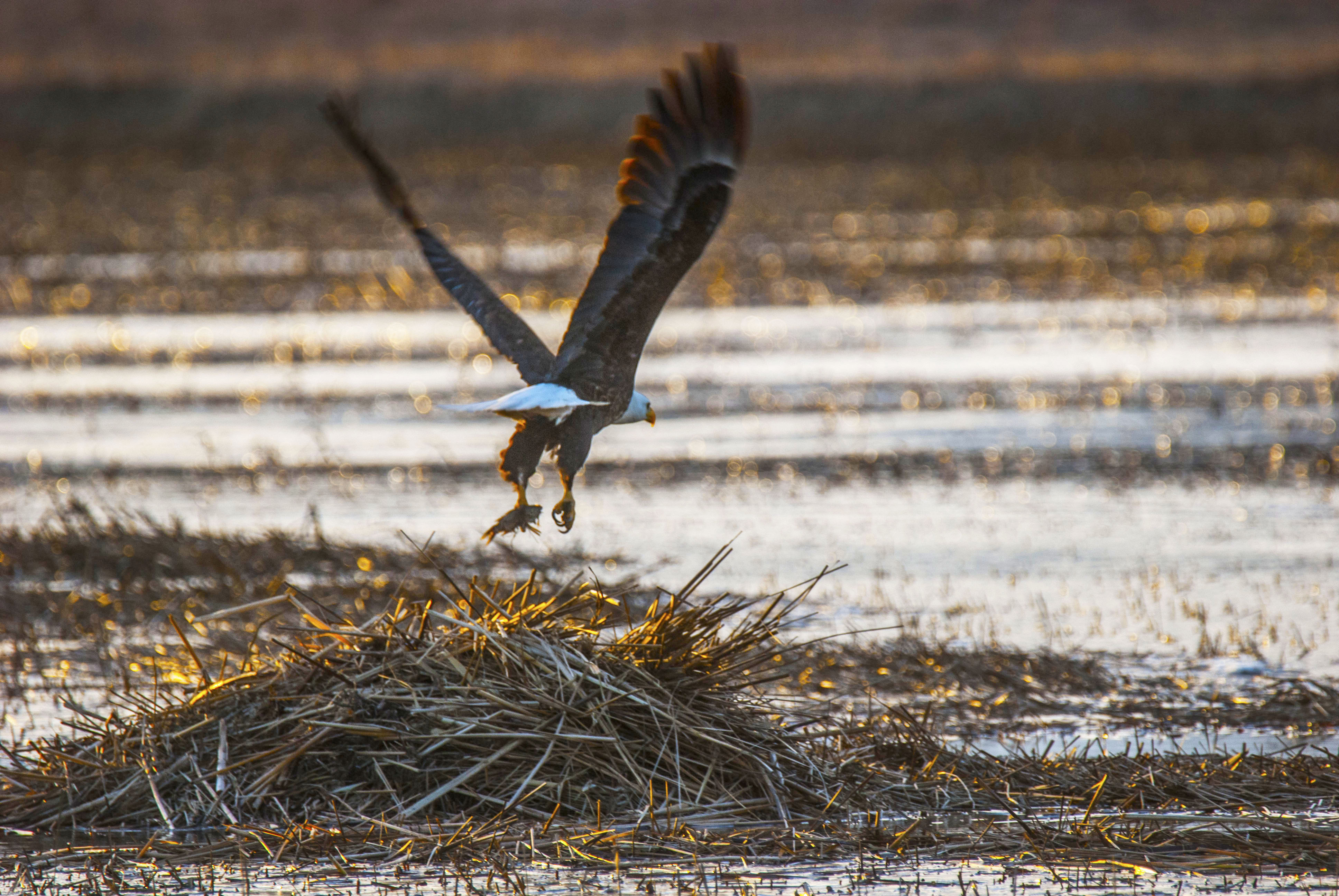
Thankfully I have friends who are more positive and hopeful than me. Over the weekend Sara Wolbert was helping her partner track down a deer he had shot when they came across a dead eagle … our national symbol of strength and she offered a possible metaphor: “Even in times of uncertainty, there are opportunities to find strength. I’ve heard that some apex predators transition when the world needs their help.”
Seeing hope within a deceased eagle, which by the way is en route to a Native nation.
So, the wait begins. I’m nervous as are most of the people I know including my friend, Allison Maraillet. She, a child of the prairie, married a Frenchman and lived in France for years before they recently moved to be near their daughter in Quebec. This weekend she shared this quote from Napolean: “Je ne peux vivre sans champagne, en cas de victoire, je le mérite; en cas de défaite, j’en ai besoin.”
Translated: “I can’t live without champagne, in case of victory, I deserve it; in case of defeat, I need it.” So we wait with the tremendous hope that we’ll deserve it!
While we couldn’t determine if the road was paved, or even if it was an official one, we followed the single snow packed lane along the edge of the marshy, 22,000 acre Sand Lake National Wildlife Refuge in a slow and deliberate search for a Whooping Crane sighting. This was before we met the wobbling, jogging skunk that provided an unexpected flair and perhaps a metaphor for our latest Whooping Crane pilgrimage. This all began thanks to a report of a pair of the rare and beautiful birds being spotted at the Refuge last Saturday afternoon.
Just past a farm house adjacent to our winding and rather desolate road, a pickup was threading its way toward us from the opposite direction. “This ought to be interesting,” said Mary, since the road was barely wide enough for one car. We edged as close to the marsh as safely possible to wait. As the truck drew alongside the driver’s window lowered. It was the Refuge manager, a friendly and helpful fellow.

“Oh, yes,” he said when we told him of our venture. “A pair was spotted yesterday afternoon down by the Wilke’s farm, just past one-seventeen. Best to head back to 10, then take the county road south that goes past the park entrance. Probably the way you came.”
Our hopes were buoyed significantly since we had threaded past an interesting ecosystem and saw several bird species along the way. Then, just around the corner and up the road we met the skunk in the middle of the road. On our narrow, snowpacked road. One car width wide with deep snow and icy marshland on either side. That’s how it is with Whooping Crane fever. There are adventures you simple don’t expect and can’t anticipate.

Yet, these birds are so rare, so majestic and beautiful that when there is even a remote possibility of seeing one we seemingly cannot help ourselves. Whooping Cranes are among Mary’s birding passions, right up there with poetic murmurations! I discovered her passion a few years ago when we stopped across from a distant stalk field alongside the North Platte River near Wood River, NE, during the annual spring Sandhill Crane migration. Amidst the hundreds of Sandhills landing and leaving the flat, stalky field was a “blob” of white observers with much higher binocular resolution than ours claimed was a Whooping Crane. She could hardly keep her eyes off the blob, and her excitement was contagious.
About 18 months later, as we were making plans for what has become our annual southern mid-winter road trip, Mary discovered a Whooping Crane launch out of the Aransas National Wildlife Refuge near Rockport, TX. On the launch we were actually quite close and personal with a pair of Whoopers on a remote island on the edge of the brackish Refuge. The boat captain claimed to be both shocked and amazed we could actually be so close, and told us how blessed we were for such a unique experience. Indeed, more fuel for the fever!

Then came a report of the sighting last Saturday just a little more than two hours to the west! Since the Sand Lake NWR office was closed due to the pandemic, we couldn’t verify the sighting beforehand. According to the updated reports on the Refuge website the previous Tuesday, though, five Whooping Cranes had been spotted. A strong possibility existed … if they hadn’t already flown. A report posted two days later listed no Whooping Cranes although “approximately 50,000 ducks were observed on the Refuge yesterday, consisting mostly of Northern Shovelers, Green-winged Teal, and Mallards”, along with several thousand White Fronted Geese.
Our debate of “shoulds” and “should we nots” continued until early Sunday morning due to the weather. We awoke to a misty, gloomy grayish morning more attuned to prevailing coastal climates. Our mist, though, was intermittently snowy and icy, decidedly different than a warn trade wind coastal mist. Ominous weather is a deterrent at our age. “Should we drive through this?” we asked ourselves. Around mid-morning we’d decided and quickly sliced ham for sandwiches, collected our binoculars, camera gear and off we went. The fever had won us over.
Digital mapping offered three distinct routes, and we gambled on taking the highway straight out of Sisseton along the northern South Dakota border. Just past Browns Valley the gloomy mist began giving way to a more open sky, and west of Sisseton a yawning patch of blue sky opened to the northwest. Somewhere between there and Houghton the sun broke through. Beautifully. It was now up to the Whooping Cranes. And the ranger had given us hope.
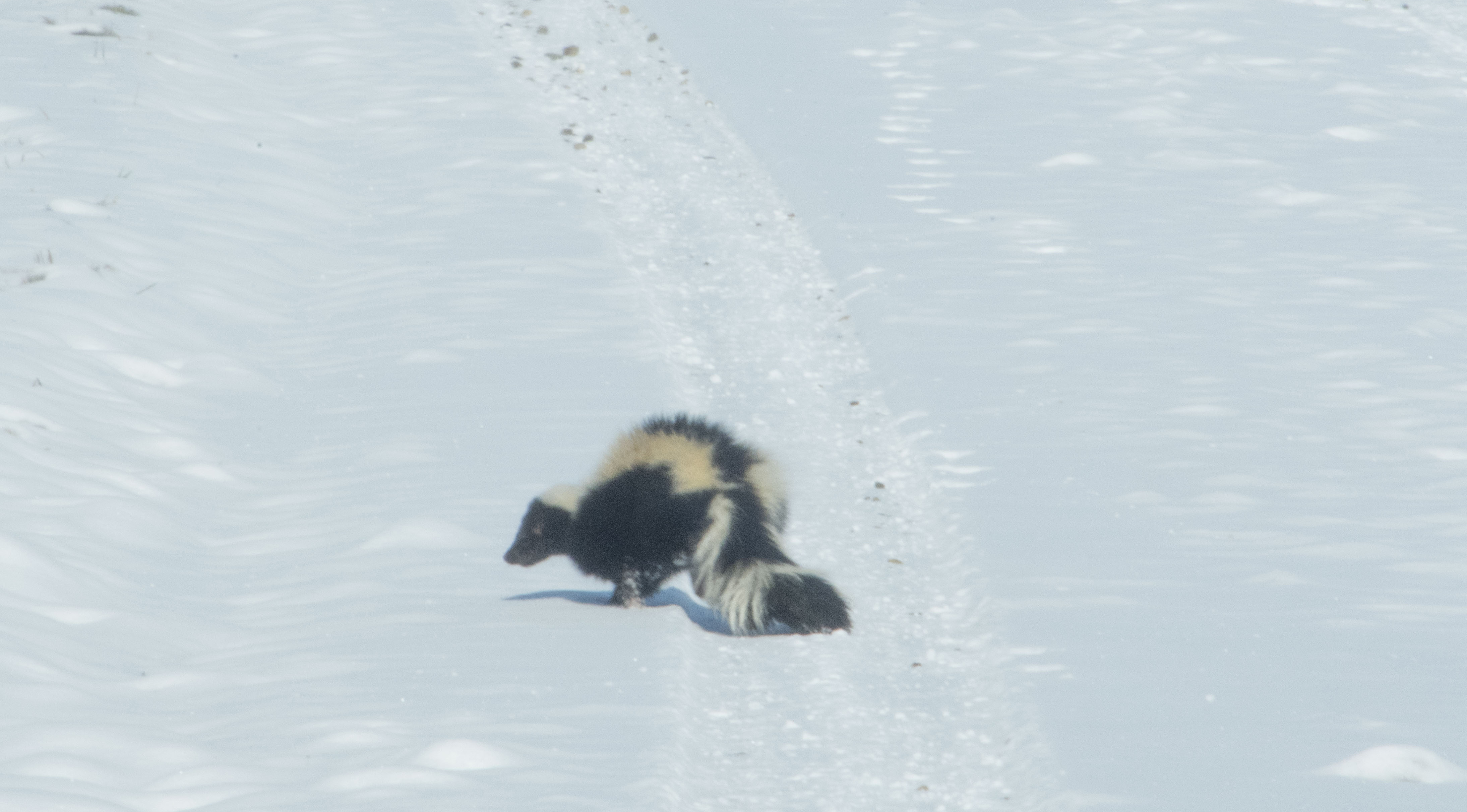
Then we met up with the skunk, which turned to “jog” ahead of us up a tread track in the snowy road. He wouldn’t budge, hugging the road while stopping occasionally to turn and look at us, before lumbering off again. Slowly for us, though likely heart thumping for the striped, Mephitidae mammal. We were a couple miles south of 10 and wondered if we would have to follow the stinky beast all the way to Houghton. About a half mile (and a half hour) later it cut across to the other track, and we eventually found a spot wide barely enough to quickly squeeze by … without being sprayed. Which we did. Successfully! Then we were off to Highway 10 and the Wilkes’ farm, which was noted with a huge yard sign.
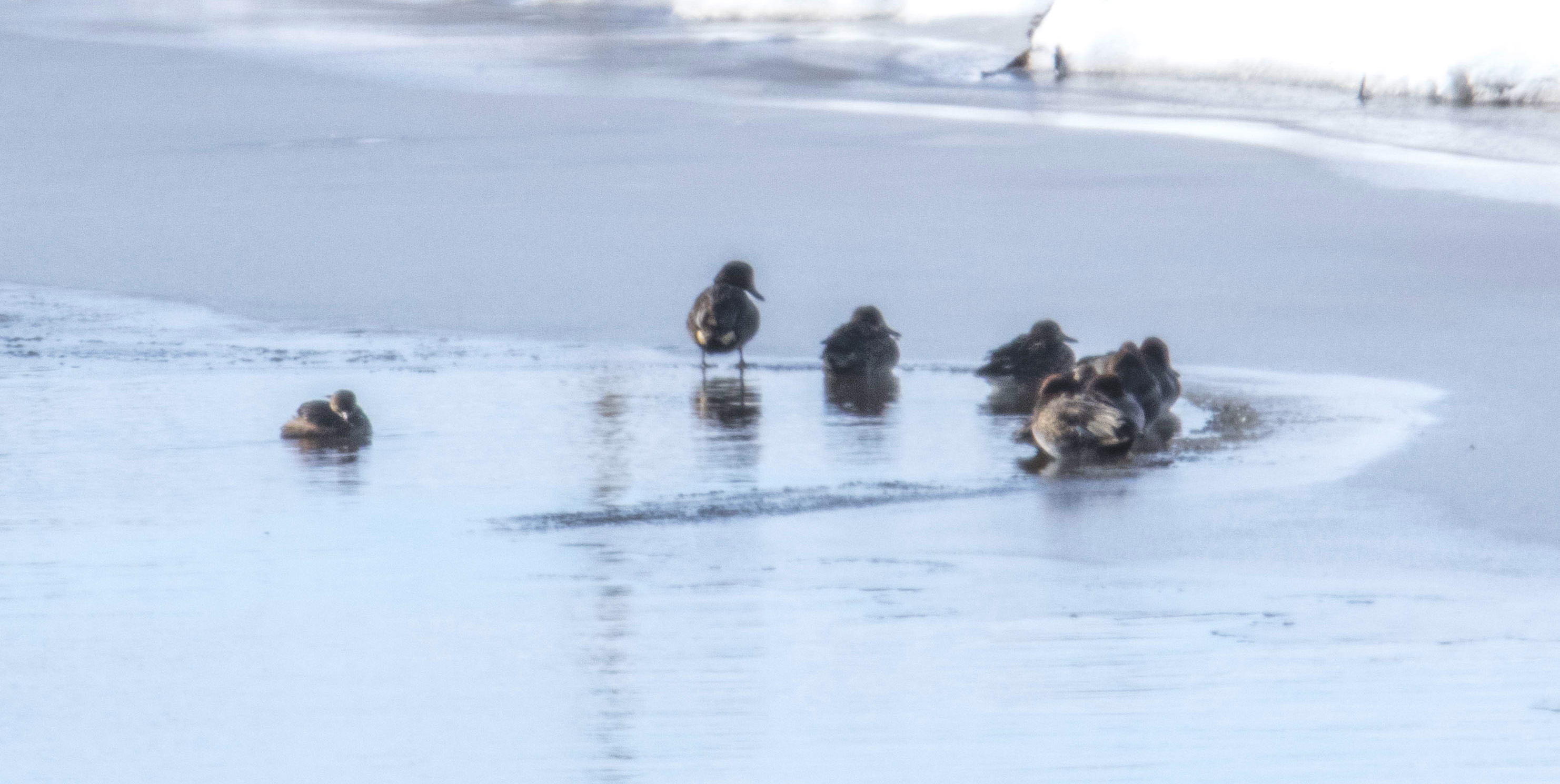
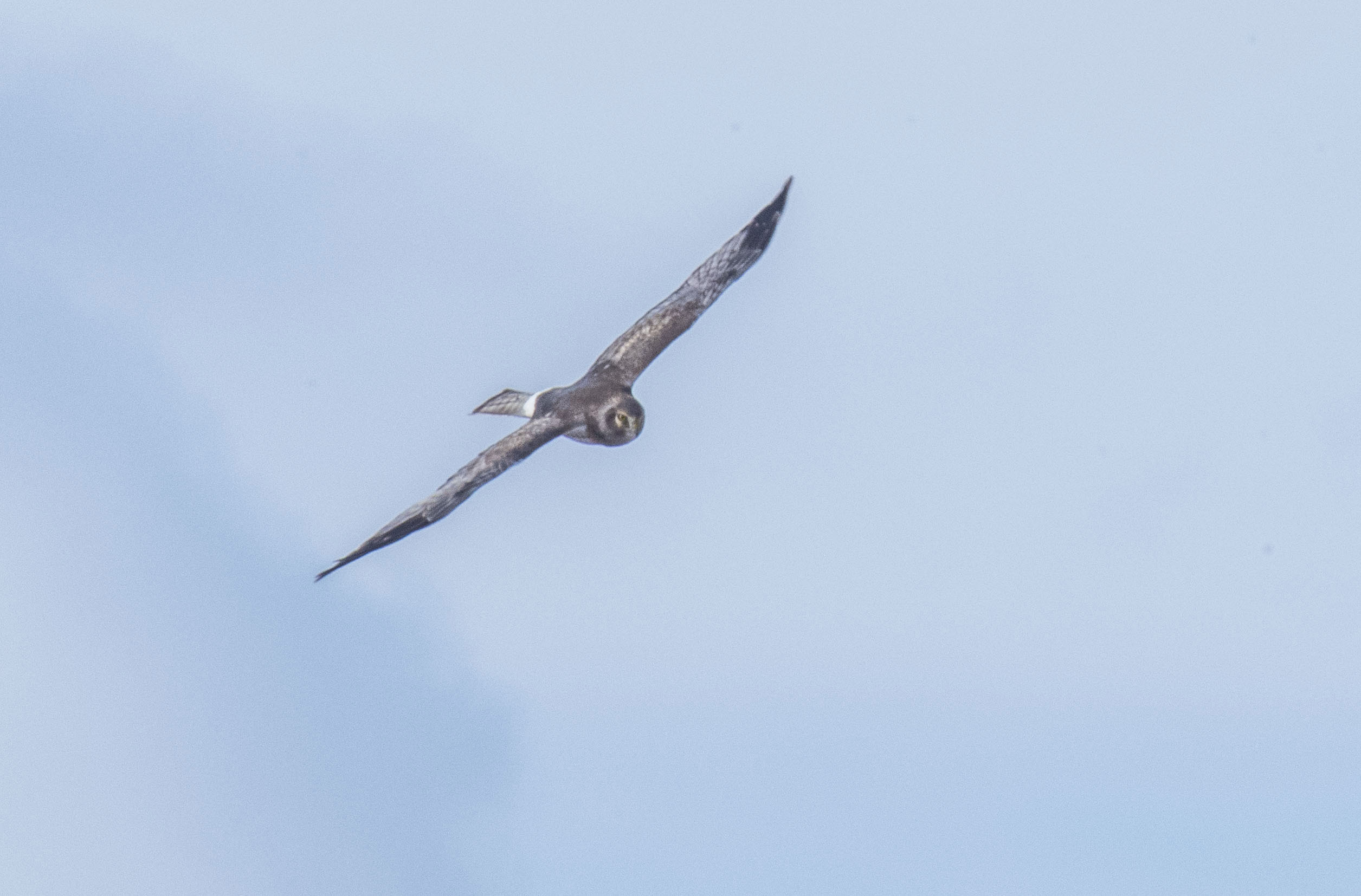
Doggedly we searched, on both sides of the highway, and I even gave a thought of heading up the Wilke’s driveway … which Mary forbade. We saw numerous though not thousands of ducks, a handful of Bald Eagles, a swooping Falcon and even a couple of Wilson’s Snipes that dipped and swooped too quickly for my aging focusing abilities. Though no Whooping Cranes. We took our picnic lunch while gazing through the windshield at the interesting marshy meadows before giving it another try, driving slowly up the county road past the Wilke’s driveway to 117. We took that road cutting across the Refuge and over a bridge and caught another Eagle sighting before turning around and heading back out the road.
We took a different route home, past Webster and Waubay … both noted for their immense migrations of Snow Geese come spring. Such is life with Whooper fever. We escaped our “four walls” along with what appeared to be a long, gray and gloomy day. One that would have passed ever so slowly with the NFL and political ads (infinitum). The blue skies and sunshine were indeed awakening, yet soothing for the soul. Adding to that, sometimes it comes down to a hopeful sighting, a delightful windshield picnic and following a wobbling skunk down a snowy, one path gravel road.
Each morning I do my worldly, neighborly and constitutional deed … that’s when I pull the string the neighbors/renters have on the chicken coop door to pull open the latch that frees maybe 30 chickens of various and dubious layer breeds, two turkeys and little “Woody.”
Most of the old hens quickly gather around food leftovers thrown over the tall fence, which for some seem the highlight of the day. Sometimes the turkeys join in, especially if I had made jalapeño poppers the night before. For some odd reason the two turkeys, now nearly fully dressed for Thanksgiving, love the inner jalapeño stems with all the clustered seeds. They lift the stem high in its entirety with their beaks before seemingly swallowing the whole thing in one quick gulp. It almost makes one wish for a gizzard!
Those younger chickens? Those reared this summer and are now just beginning to lay eggs, each so small you nearly need two to fill a slice of toast, rush helter-skelter past the older hens munching on those food scraps, across the huge horse pen toward the distant fir trees, wings flapping, squawk squawking and legs pumping as if there is no tomorrow. It’s as if they can’t believe they’ve been freed from their overnight imprisonment!

Woody? Well, Woody does the same thing, right along with them. He runs on his webbed feet with wings flapping and squawking weirdly differently than his perceived sisters. Woody, you see, is a male wood duck and is thoroughly convinced he’s a chicken. Imprinting perhaps created the issue, a process described by experts.
Not a one of us knows exactly how Woody became lost before becoming part of the flock. Every spring for the past several years two wood duck pairs appear suddenly in the grove next to the chicken coop and pen to seek out nesting trees. It’s a laborious real estate affair taking much time, consideration and duck conversation before a decision is made and the eggs laid. So this is likely the beginning of Woody’s story.
He just didn’t drop from the sky, or the heavens if you wish, but from a nesting tree somewhere in the grove. Perhaps he was left behind as either the drake or hen herded and hustled the newly jumped from the nesting tree to the nearest wetland just over the hill from the grove. Woody either became lost or couldn’t follow directions. Hannah, the teenage daughter of the renters, found the lone duckling that was all down and hopelessly lost hunched in the grass and burdock, and placed it among the chicks in the brooder for safe keeping. There was a question of his eventual survival.
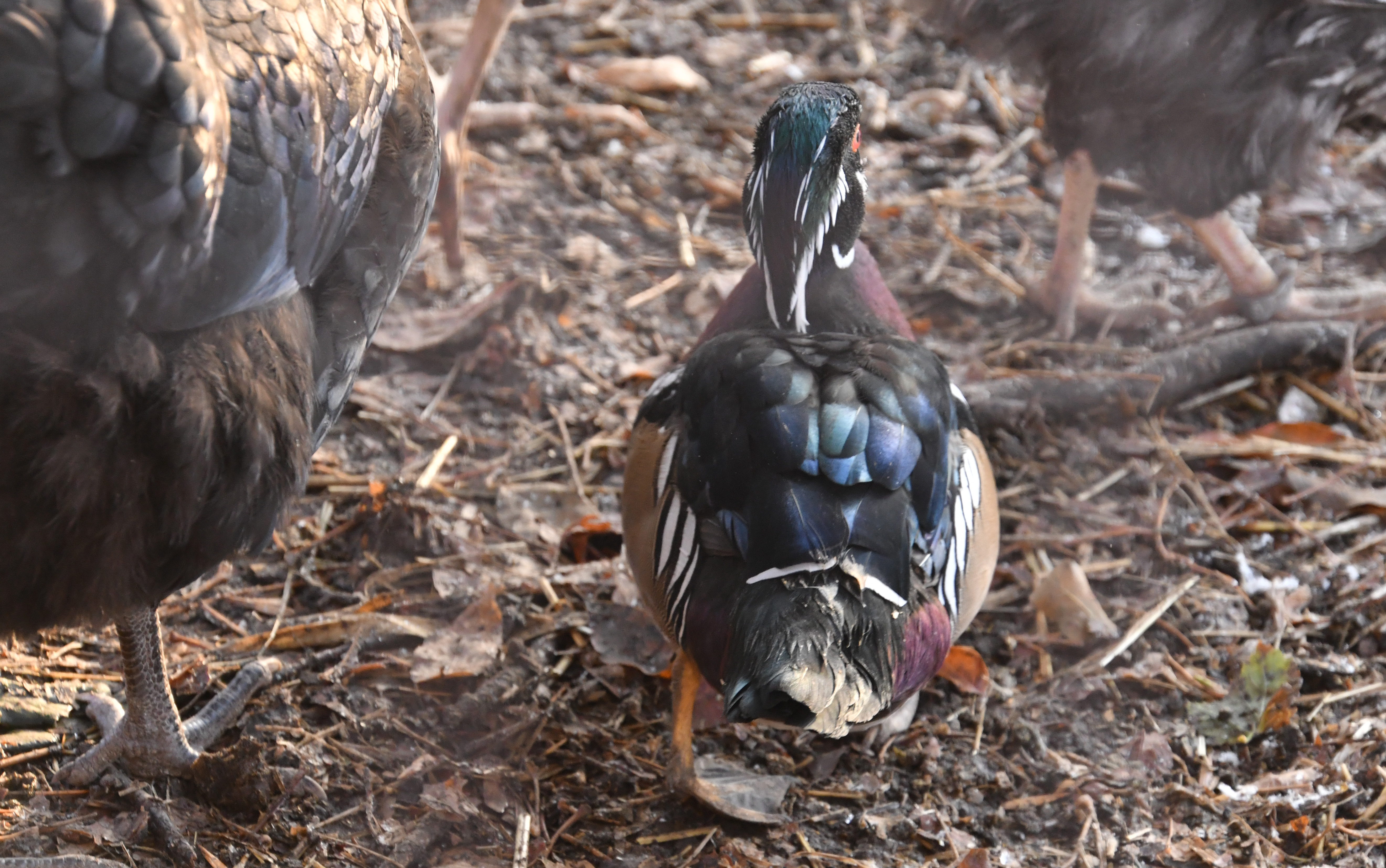
The thought was that as soon as dear Woody matured and bolted out some real feathers that he would fly away to join his likenesses in one of the wetlands, Big Stone Lake or the damed waters in the Big Stone National Wildlife Refuge several miles due south of Listening Stones. As his mates, those little chicks the renters eyed for future egg production, grew bit by bit and were moved into ever larger confines until they were large enough to fend for themselves with the big hen flock, so was Woody. During all this time he was quite covert in making public appearances, of showing himself to those strange human elements that seemed to lurk at times just outside those various brooding pens.
Then the time arrived for the big merging of the flocks. At first, Woody held close to the hen house. While the old hens and the turkeys rumbled past the gate to bigger pasture and the daily food drop, the recently feathered hung close to the enclosed pen. Gradually, though, their fear abated and they followed the old hens outside, and once past the gate, they would flap and bustle in a dead run past the munching, squawking old hens and the four horses toward the back of the pen.
At first, Woody would walk along the interior chicken-wire fence trying to figure out how his many sisters and companions had discovered such freedom. Then, one day, magically, he actually followed them through the gate. Like them, he would then run full speed with wings flapping toward the nonchalant horses. “Woody,” said Hannah, “isn’t the sharpest chicken in the pen.” Well?
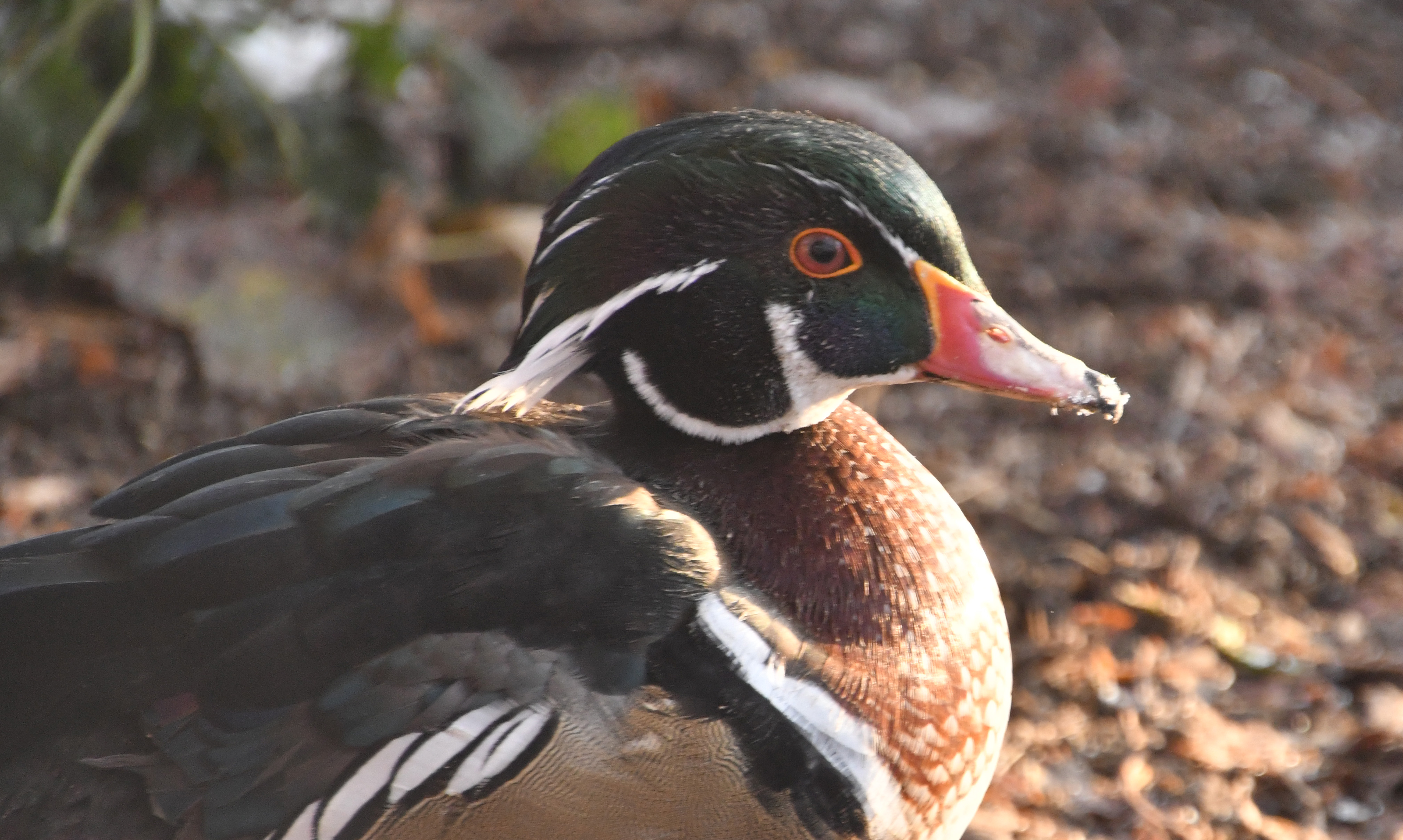
One of those mornings, a few weeks ago, something strange happened. While running and flapping Woody actually went aloft. He didn’t fly far. Not even to one of the two large wetlands just over the rises. He rose just over the fence and landed somewhere outside, then waddled over to the enclosure where he quacked and pranced in panic for a few hours until Hannah arrived to care for her horses and to put the chickens in for the night. She captured the little Woody and reluctantly put him back with his “sisters.” Where he has stayed contentedly ever since.
The entire endeavor was to safely get him to a point of maturity that he would, well, fly the coop. We see how that worked for the wholly misguided and imprinted Wood Duck. This entire endeavor hasn’t exactly gone by plan.
Woody, it seems, wholeheartedly believes he’s a chicken. Even if he doesn’t sound like a chicken, walk like a chicken, or even fly like a chicken. His one accidental flight apparently simply wasn’t enough to convince him differently. For some reason the “imprinting” has stuck. Perhaps this comes down to a simple solution … placing a mirror in the coop.
Glacial geologist Carrie Jennings stood at the overlook of the expansive and hilly Ordway Prairie to give us a brief lesson on our momentary view. “This is what Sibley State Park would look like without trees,” she said. Prairie, not forest; grass not oaks. Two different landscapes on the same glacial moraine, both now protected.
This came to mind this weekend in crow-flight miles to the west where another portion of this ancient glacial ridge was recently converted from prairie to croplands no one needs, followed by the construction of huge, towering grain bins and an access tower visible in all directions for all to see. Runoff from the marginal and vulnerable soils may threaten three lakes — Linka, Scandi and Gilchrist.
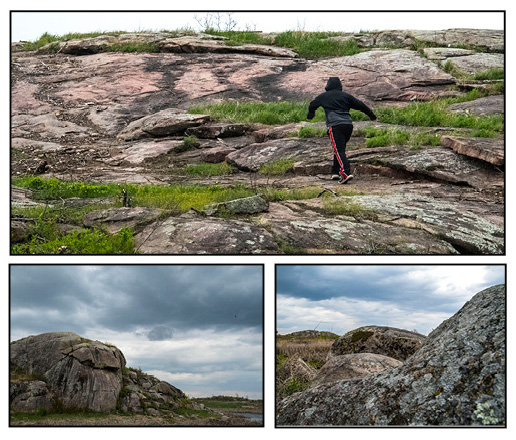
Then there was the hapless Ortonville, MN, councilman, who during discussions over a controversial gravel pit being protested years ago on a meadow blessed with outcrops just below the headwaters of the Minnesota River, said, “All we have are our rocks.”
Bear with me, for there is a connection. Yes, the Ordway and Sibley State Park are presumably safe from corporate and mankind encroachment for future generations to study and admire, yet the unique outcrops washed clean from the earth’s bedrock at the headwaters by the Glacial River Warren 12,000 years ago will likely never be turned into an “environmental memory pod” … otherwise known as a state park. Or, if you prefer, an “island of past landscapes.” Pods or islands where we may escape solastalgia — that feeling people have when home landscapes become unrecognizable through environmental change.
That was a term coined by Glenn Albrecht, honorary associate at the School of Geosciences of Murdoch University, which he says describes a “homesickness you have when you’re still at home.”
Many Minnesotans have historically escaped such feelings due to the foresight of those forefathers who invested in protecting these various islands of past landscapes, from prairies to woodlands, from bogs to trout stream valleys in the Driftless. Did they go far enough? Were particular pods of past landscapes missed or ignored? I’d suggest the outcrops as one possibility and the prairie potholes as another, both created by the last major glacier.
While I love the two pieces of Big Stone Lake State Park, divided between “Meadowbrook” and “Bonanza,” sadly those shouldered outcrops rising from the earth just below the headwaters will likely one day be little more than piles of rocky rubble from various future mining operations. Those rocks! A friend known locally as Babboo, who offers vivid descriptions on this area’s unique natural history, once gave an impromptu tour of the headwater outcrops and pointed out bison rubs so polished and smooth the granite glistened in the sun. This wasn’t unlike the gneiss and granite sample boulders polished by man-made tools at a natural history park outside of Rosendal, Norway. The difference was that one was the result of eons of rubbing by an iconic prairie animal now both rare and selectively domesticated versus that of a power tool.

Hence, there is no shrine here as at Itasca State Park for the headwaters of the Mississippi, although the outcrops are decidedly more bold and equally as interesting. How sad. Even sadder is that there is no island of past landscapes for the prairie potholes that are now 99 percent extinct due to drainage and ditching and commodity cropping. The closest you can find to true prairie is perhaps Blue Mounds and Glacial Lakes State Parks. It would be difficult, if not impossible, to preserve something that no longer exists. Solastalgia? Maybe, but then there is likely no one alive who remembers or can describe a prairie pothole vista. Can you miss something you’ve never had a chance to know? Or, see?
One needs to look no further than to the entrance of Blue Mounds State Park to realize it’s indeed an island surrounded by commodity cropping. Glacial Lakes has huge and magnificent native burr oak savannas, yet the beautiful prairie near the horse camp is part of the same moraine as Sibley and that prairie which was recently converted to commodity cropping. None of these portray the flat former prairie pothole region that existed past the ridge of the moraine — pockets of water that are partially visible after an early melt over frozen ground come spring. A flight overhead will reveal a half dozen or more potholes (wetlands or sloughs) per quarter section of cropped farmland as far as you can see.
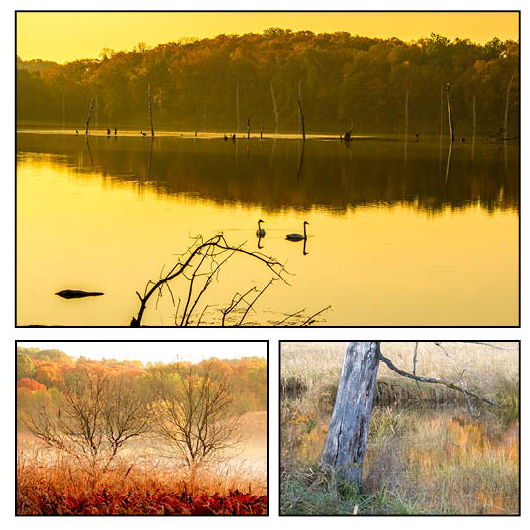
Many of the other landscapes have been set aside as islands of past landscapes throughout Minnesota. Sixty-seven state parks in all. Each offers a glimpse of a biome worth noting. For example, the bog at Bemidji Lake State Park offers us an opportunity to see extremely rare bog plants. The bog might have survived modern mankind, although the rest of the park’s landscape may have long been converted into lakeside cottages and a hilly, tree-lined suburbia … much like what is visible just outside of the park.
A recent drive through Camden and Maplewood State Parks offers other examples of landscapes preserved for future generations as well as reminders now of what was. Though both are “carved up” with roads and campgrounds, as are most state parks, Camden is surrounded by six-figure homes on the edge of the bluff overlooking the Redwood River. Yet that valley within the park is preserved and protected.
At Maplewood, which is surrounded by lakes crowded with cabins and small resort towns, it doesn’t take much of an imagination to see the same for those beautiful, deciduous wooded hills that are such a delight come autumn. Maplewood even has a motorless lake with a single, pack-in camping site that is ripe for largemouth bass and bluegill fishing. Again, a motorless lake!

Granted, nothing is perfect, and applause is awarded those who created and still create these beautiful shrines and protection for these past landscapes. These treasures should be as appreciated for what they are. Some have argued that Wildlife Management Areas (WMA’s) have served to preserve the prairie … though they are typically quite small, are basically restored rather than being native prairie and lack the potholes as well as the natural diversity common to virgin prairie. Besides, two of those WMAs near our farm are cut for hay each summer, downgrading their importance as wildlife havens.
Albrecht talks about the importance of a positive “sense of place” in people’s lives, and of the significance of what the geographer Yi-Fu Tuan called ‘topophilia’, or “the love of place and landscape.” In these two instances his topophilia went missing.

Some will argue that Big Stone National Wildlife Refuge has saved the outcrops within its boundaries, which is true, and much of the junk vegetation has been cut and removed from the rocks to make the granite and gneiss mounds appear more natural. It’s still a shame those outcrops closest to the headwaters aren’t protected, although while still possible is highly unlikely. Setting aside the prairie pothole biome as a possible “island of past landscapes” would be impossible for its natural state is long extinct. This unique landscape and ecosystem unfortunately never reached a point of the “homesickness you have when you are still at home” – a landscape missed and thoroughly ignored.

