Category Archives: Uncategorized
Camaraderie
On the hill above the lake thoughts of Finland came to mind. Wooded, with lush colors of autumn. A fine mix of birch and yellow. That cold, deep and clear water just down the rise and within walking distance. Smoke waffling from a rustic shack with scents of burning wood heating a sauna. Jack Griffin began stoking the fire mid-morning and when he announced to our group as the sun lowered from our hillside sight that the sauna was ready, the first of seven of us old guys stood and pulled off his clothes.
Word hadn’t filtered down to me about the sauna, so I was initially prepared to sit it out. Then he stripped, and shortly I joined the others to trudge buck naked toward Jack’s wood fired sauna shack through a chilly shade. Inside was a mellow, warm heat; heat that would warm both the body and inner soul. All of which made me think of camaraderie, of how truly trusted friends group together.
After towels were shed in the entry room, we wedged in as we best could to allow the heat to envelop our respective bodies and for the sweat beads to break out. Sometimes I’m like that in a sauna, watching and waiting for the sweat beads. Of where they might first appear. Across the chest, or perhaps the forehead. Then eventually the sheen of sweat will clam against the arms, back and legs. All the comfort of that …
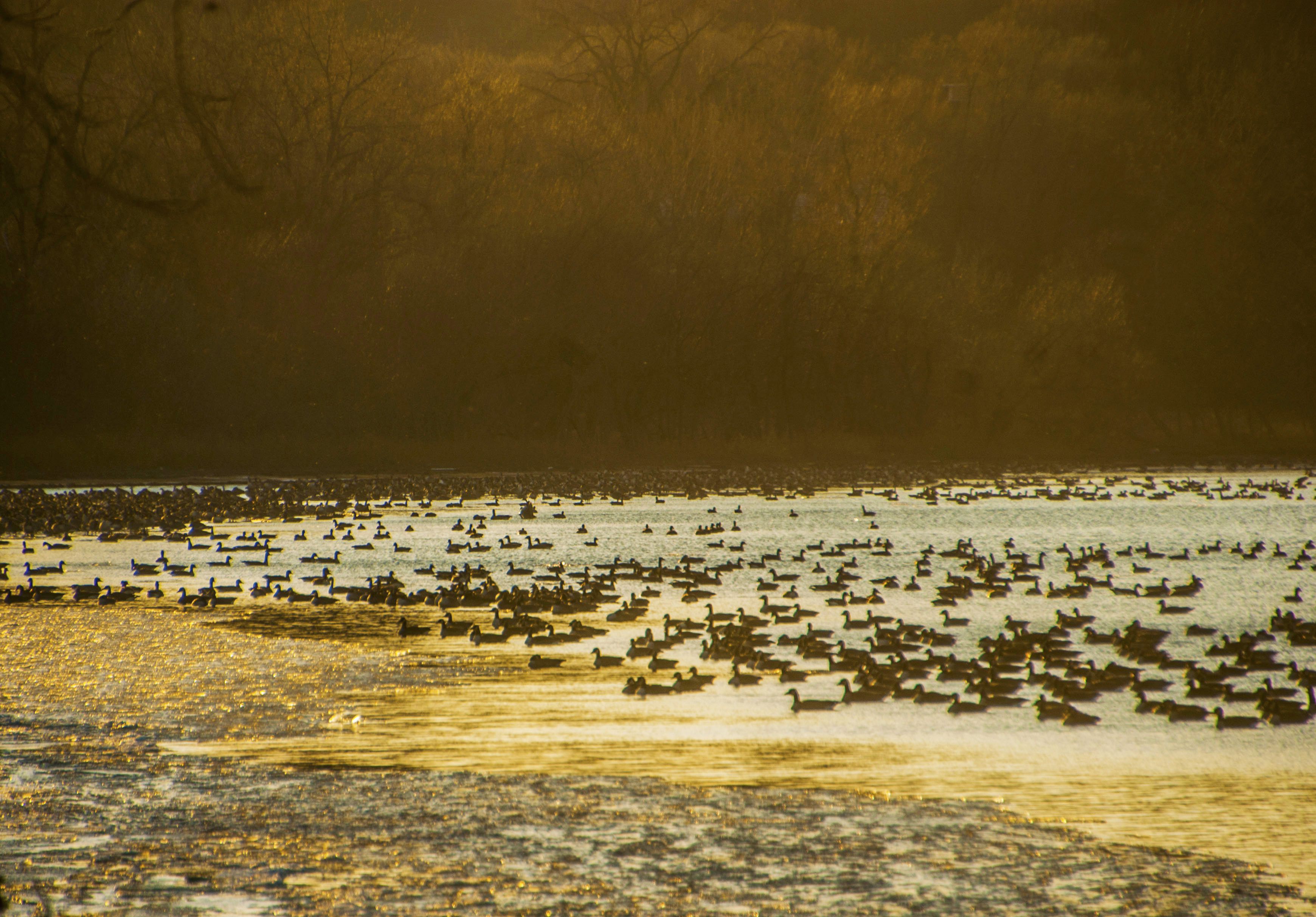
Such times make me wish for a sauna here at Listening Stones Farm, and now would be a fine time as we begin facing the approaching winter, now when the trees have shed much of their leaves and the weather has begun to worsen. Now would be a fine time for the birds of varying species are flocking together, sometimes easing through the skies, perching in the trees in the grove, collecting in nearby Big Stone Lake or the Big Stone NWR, or filling their tiny bellies in the nearby stalk fields before leaving en mass for their warmer wintering haunts.

Camaraderie. In mankind and among our feathered friends, where trust and friendship are bonded uniquely.
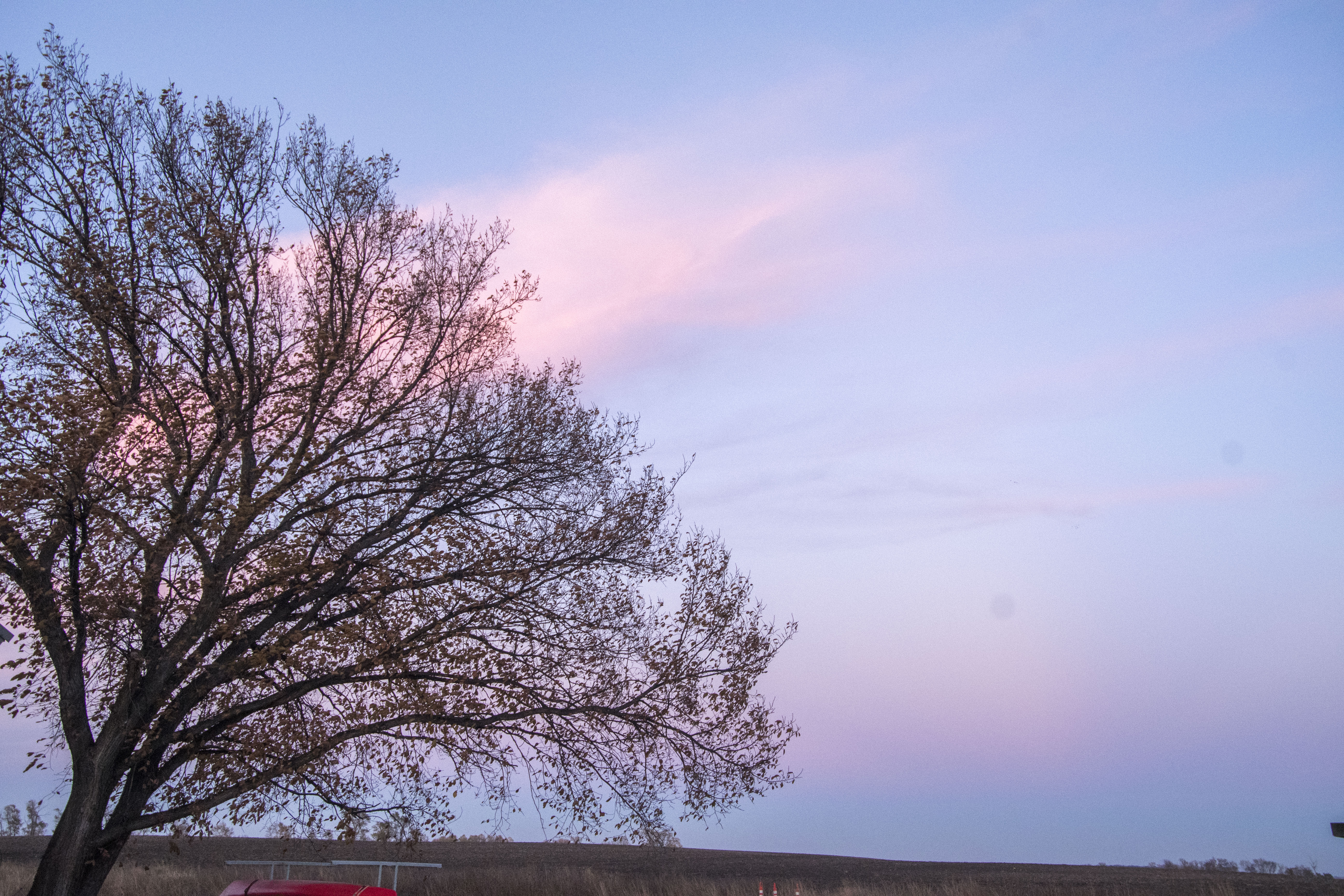
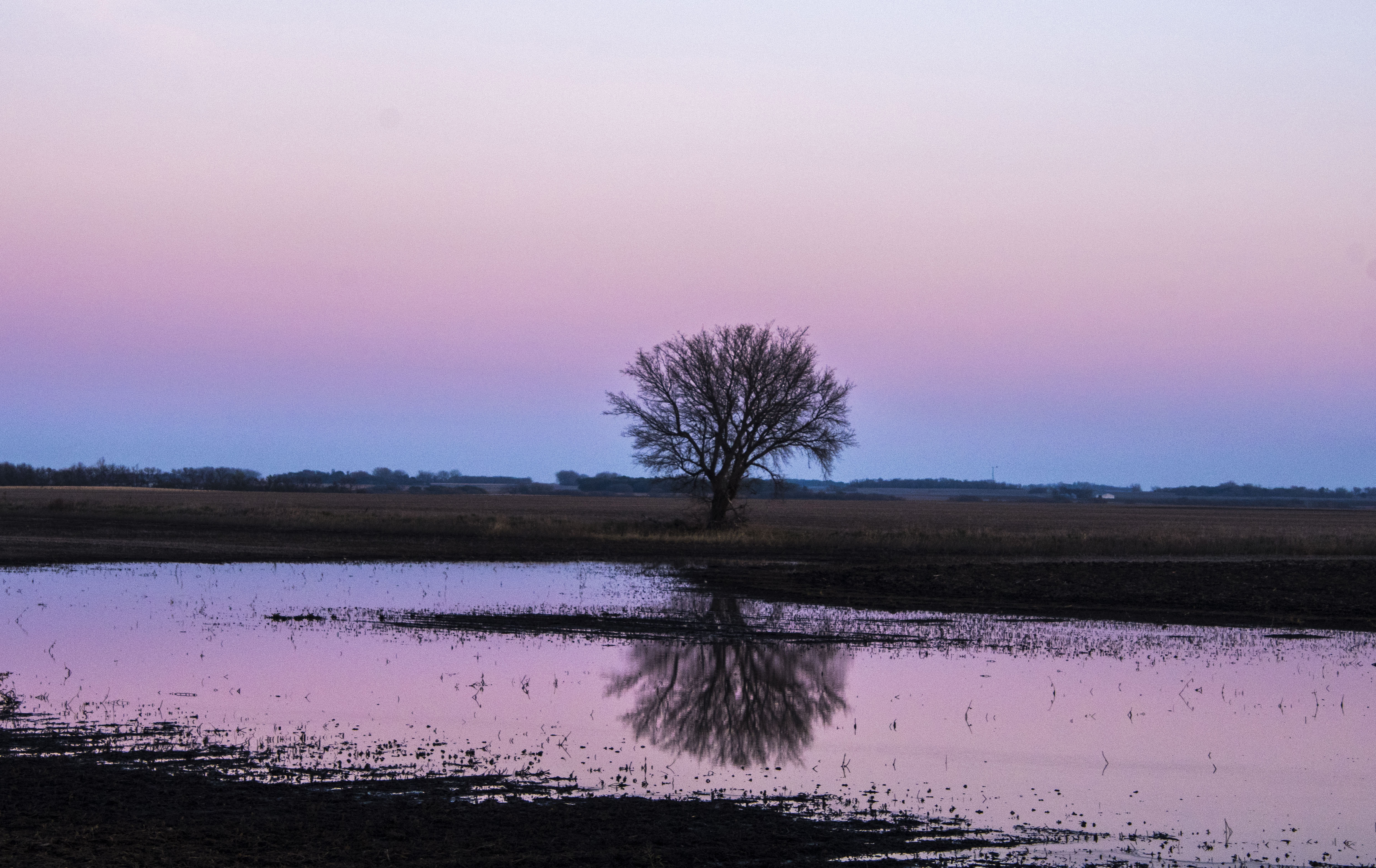
I can imagine stepping out of a steaming sauna and looking up to see a flock of geese lift from the wetland just over the rise, or to catch Forester Terns, white against a blue sky, migrating past so poetically … seemingly singular, yet with patience you’ll notice their migration is simply not as clustered as other species. Recently as I was finishing cooking dinner, a long clustered string of terns crossed the sky en mass silhouetted against a magical, colorful pastel sunset. I initially cringed, for what a nice image it would have made had my camera not been in the studio with the card inside the reader, and with me standing at my huge kitchen window grasping a spatula.
About an hour before, just down the hill, a huge black bird murmuration cruised across my windshield, stretching from the treetop savanna across the deep ravine to a recently harvested cornfield a quarter miles distant. Yes, I did stop and try to capture an image, yet these mass demonstrations of avian camaraderie are mercurial. There is no sense to make of it, and no choreography. Yet, murmurations are witnessed in pocket spots across the prairie, and yes, even here in my own grove as swarms of birds will lift off a cluster of trees to cross to another section of the grove or to the trees in the south lawn, only to momentarily take flight and head back, or to gather in the adjacent stalk fields.

Some claim them to be Redwing Blackbirds, although most have long since departed. Yet, evidence exists that there are stragglers. Many of them. A first migration perhaps? Like with loons and some other species; that the summer-hatched birds stick around to mature and strengthen their wings before following their long departed parents from the nest to warmer locales thousands of miles away? Murmurations move with poetic beauty, in mass waves that seem to defy logic and safety. But, is there a better visualization of trust? Of camaraderie?
It’s all there, and we’re witness to it.
There’s more. More avian camaraderie. Just down the road apiece on many evenings around dusk you may witness a grouping of Wild Turkeys take roost high in bare-limbed trees. As the evening gives way to darkness the turkeys, one by one, will glide off the rim of the prairie across the highway to brake in mid air to lightly grasp brittle branches of the long dead twin trees in the midst of the fen. I’m amazed at how birds of such bulk and bullish flight can land so delicately, yet they do it, one after another. It is here, high in twin trees, on such brittle branches, where they know they will find safety. Camaraderie?

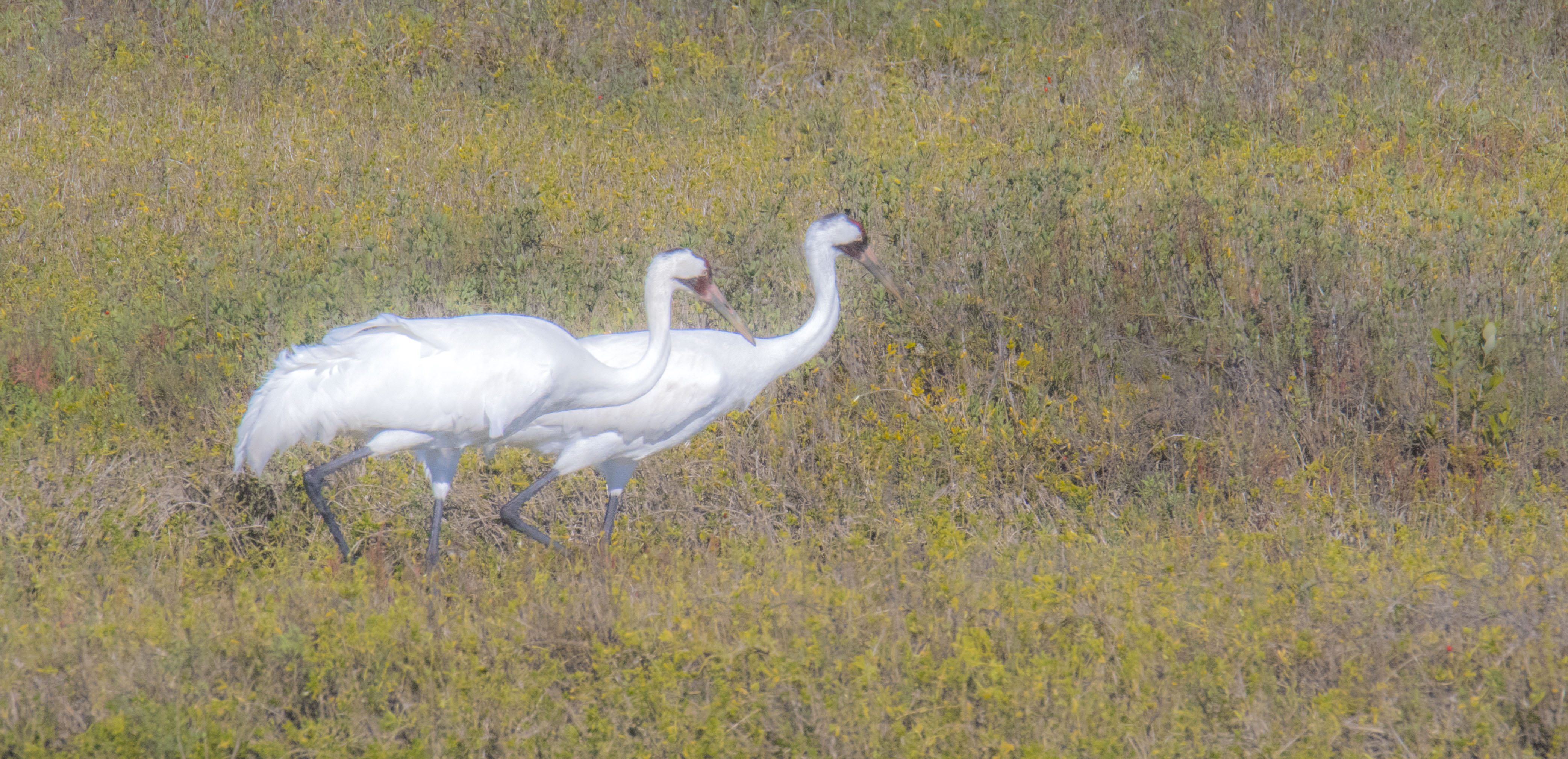
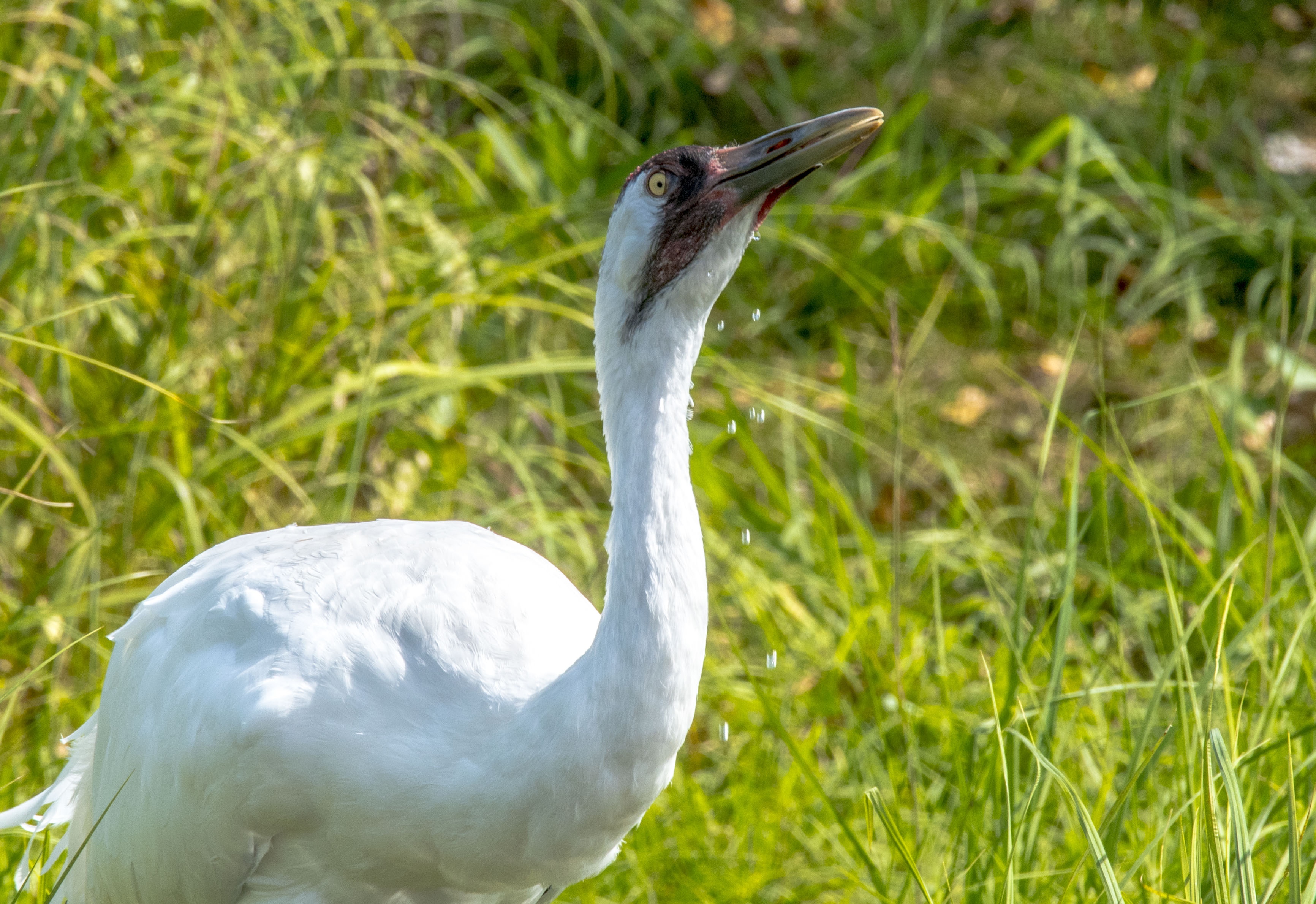
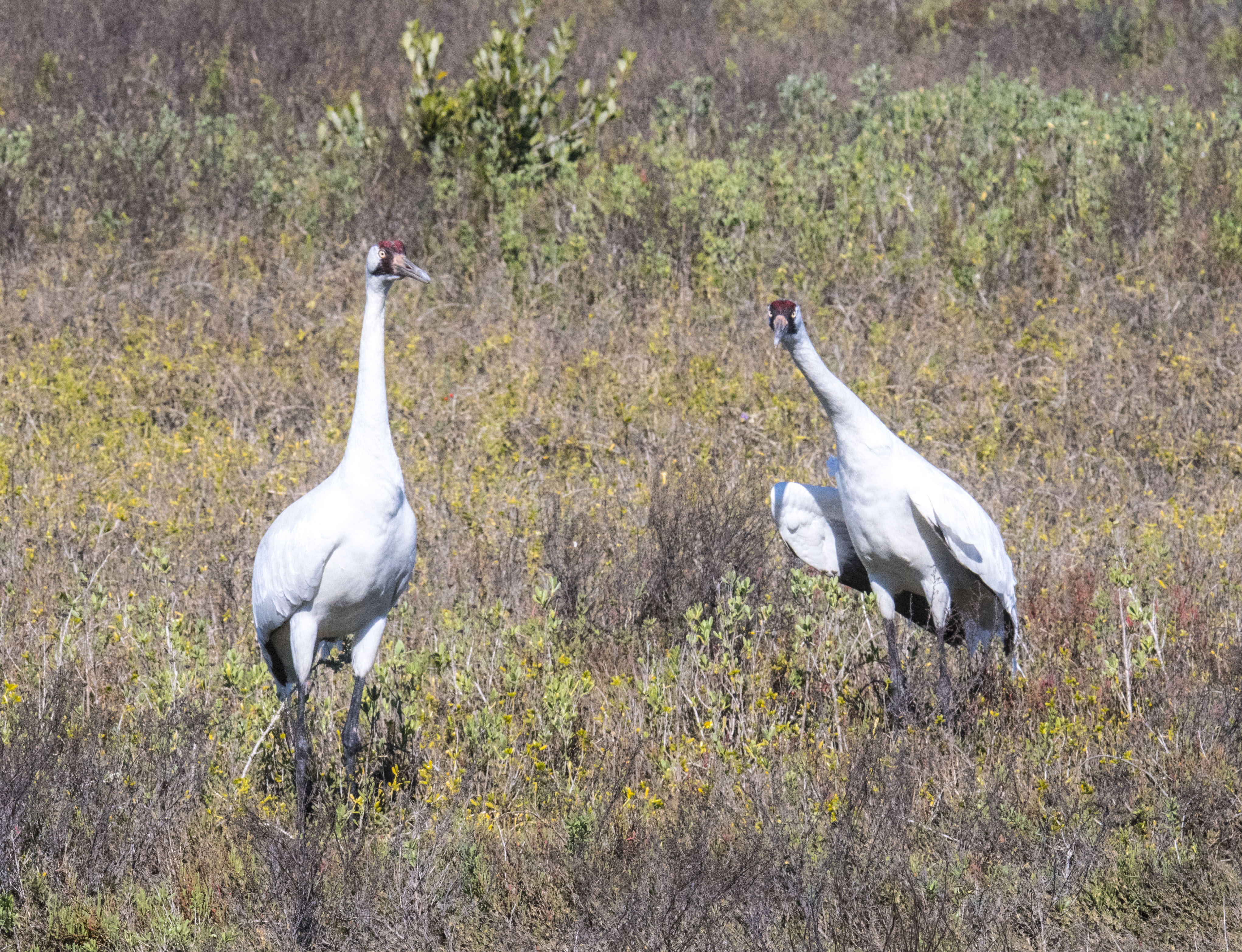
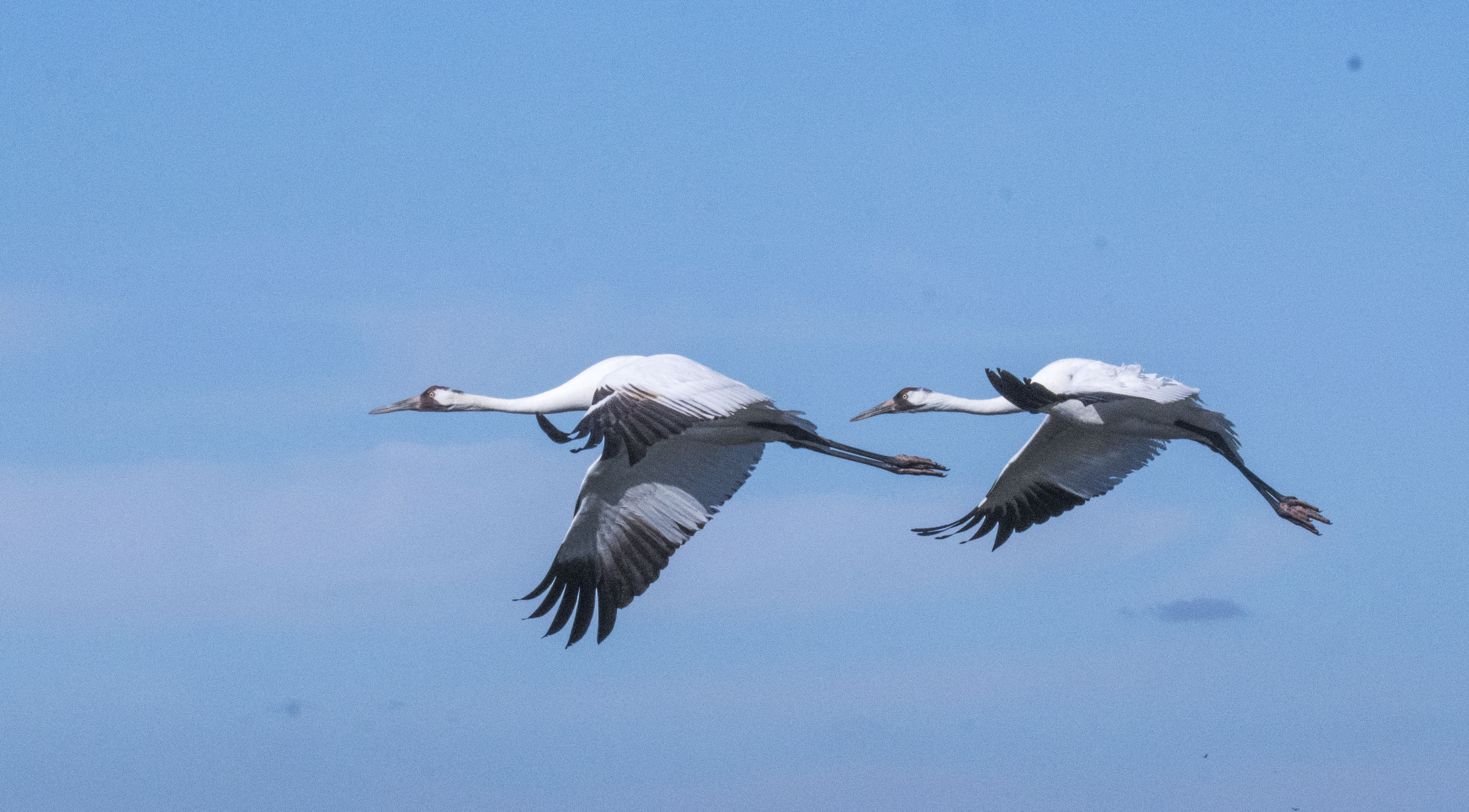
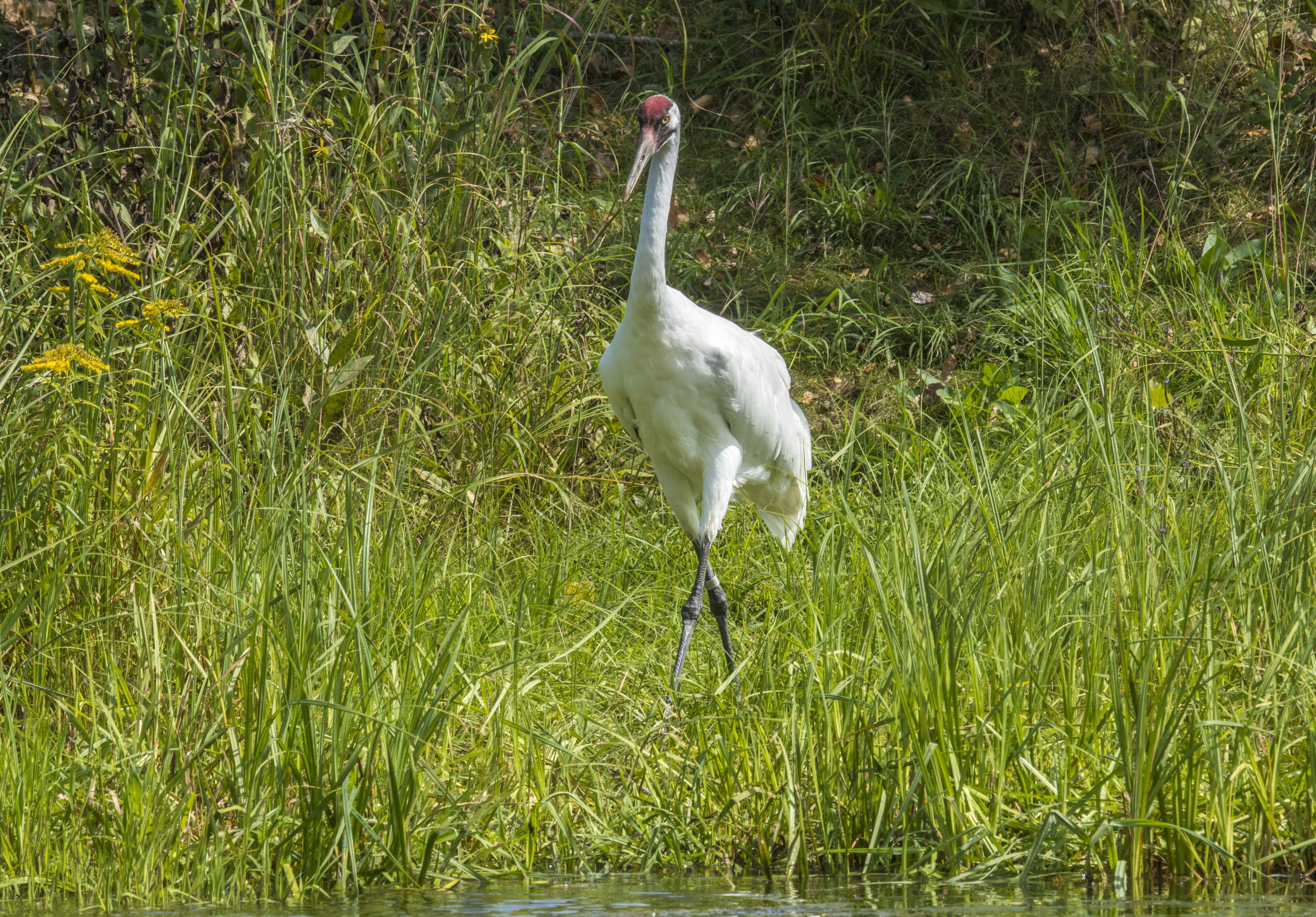
While they are rare sightings around here, rumors have it that huge clusters of Sandhill Cranes are taking refuge on their autumn migrations east of here in Minnesota and over in Wisconsin. For days I debated on whether to chase them once again but procrastination won again. Much like the spring migration, the cranes will munch dropped grain in adjacent fields before seeking a safer place from predators in the evening. Camaraderie. Safety in numbers. Cranes demonstrate this sense of togetherness all across the globe, and in each of their 15 different species.
I’ve not mentioned the Coots gathering on the nearby lake, or the cormorants clustering on trees and stumps sticking from the Refuge waters. The sparrows. All clustered in camaraderie togetherness, watching out for one another seeking safety in numbers.

Then I think of us old guys back in the sauna on that late October evening. One of the guys had passed out in the intense heat, and the rest of us gathered around to move him from the intense heat and into the cooler dressing room. As some of us covered his legs with towels and tended to him, someone raced inside to fetch a pitcher of water and glass as he slowly regained consciousness and his wits. He eventually recovered enough to gingerly follow a few of the more hearty guys down the rise to the lake where immersion into the cold water revived him enough that he was stable enough to climb back up the hill completely on his own. His wife said he was fine the next day, so all was well.

Camaraderie a part of nature, I suspect, and gives so many species including our own an ability to survive in the harshness of our respective lives, giving us a sense trust, sharing and caring. A safety in numbers? I don’t know if I know the answers, although I may acknowledge this: That there is a certain beauty about camaraderie, and when you’re a part of it there is a warmness not unlike that of a fine, wood fired sauna. I find comfort in that.
Forestal Meditation
Forestal Meditation
Stealth seems rather impossible in a burr oak forest no matter how gingerly you may step. Moving as covertly as possible and hearing the first acorn pop caused me to jump as if a firecracker had exploded next to my foot. A split second later, just a few steps further on, that same pop caused a deer to burst through the sumac thicket to dash off into the woods offering me a salutation of hind hooves and white flag of a tail.
This was the second time within a week I had been surprised by spooked deer and once again I couldn’t raise my camera quickly enough to capture an image. Still, I wasn’t there for the deer. I had come for some moments of peace. An inner peace that might soothe the soul.
As naturalist John Muir wrote, “And into the forest I go, to lose my mind and find my soul.”
So, yes, it was quite quiet, and since I’ve been dealing with some unhappy circumstances I wasn’t expecting, this called for some quiet time in nature. Alone. Enveloped in a different kind of quiet. Quiet so silent the rustle of leaves in a prairie breeze, or the burble of a spring creek meandering through a hilly ravine, might be audible. When squawks of singular gulls traversing the lake shore might seem like screams in a horror film. Crunching acorns with an audible pop to frighten a deer hadn’t entered my thoughts.

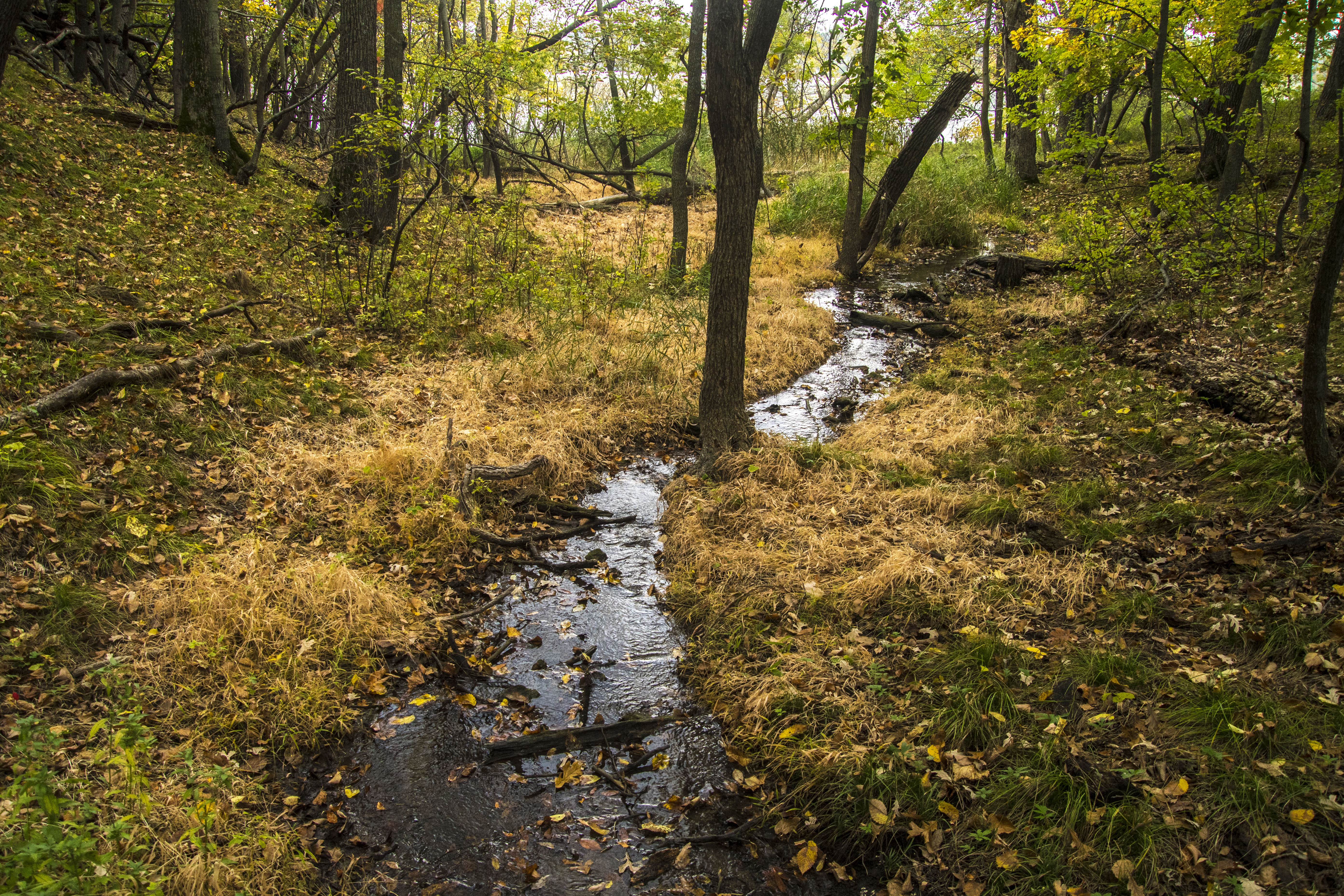
Finding a quiet refuge was why I sought such a place nearby complete with a couple of conveniently placed picnic tables within a few meters of the waters edge of Big Stone Lake called the Bonanza Scientific and Natural Area. Bonanza includes 80 acres of native oak savanna and glacial till prairie habitat, 50 acres of which includes an oak and basswood forest, and even spring-fed ephemeral trickling streams that meander through rills and ravines. This time of year the timber is graced with bright red sumac pods and leaves that offer colorful twin accents along with the bright yellow basswood poking through the stately limbs of burr oak.
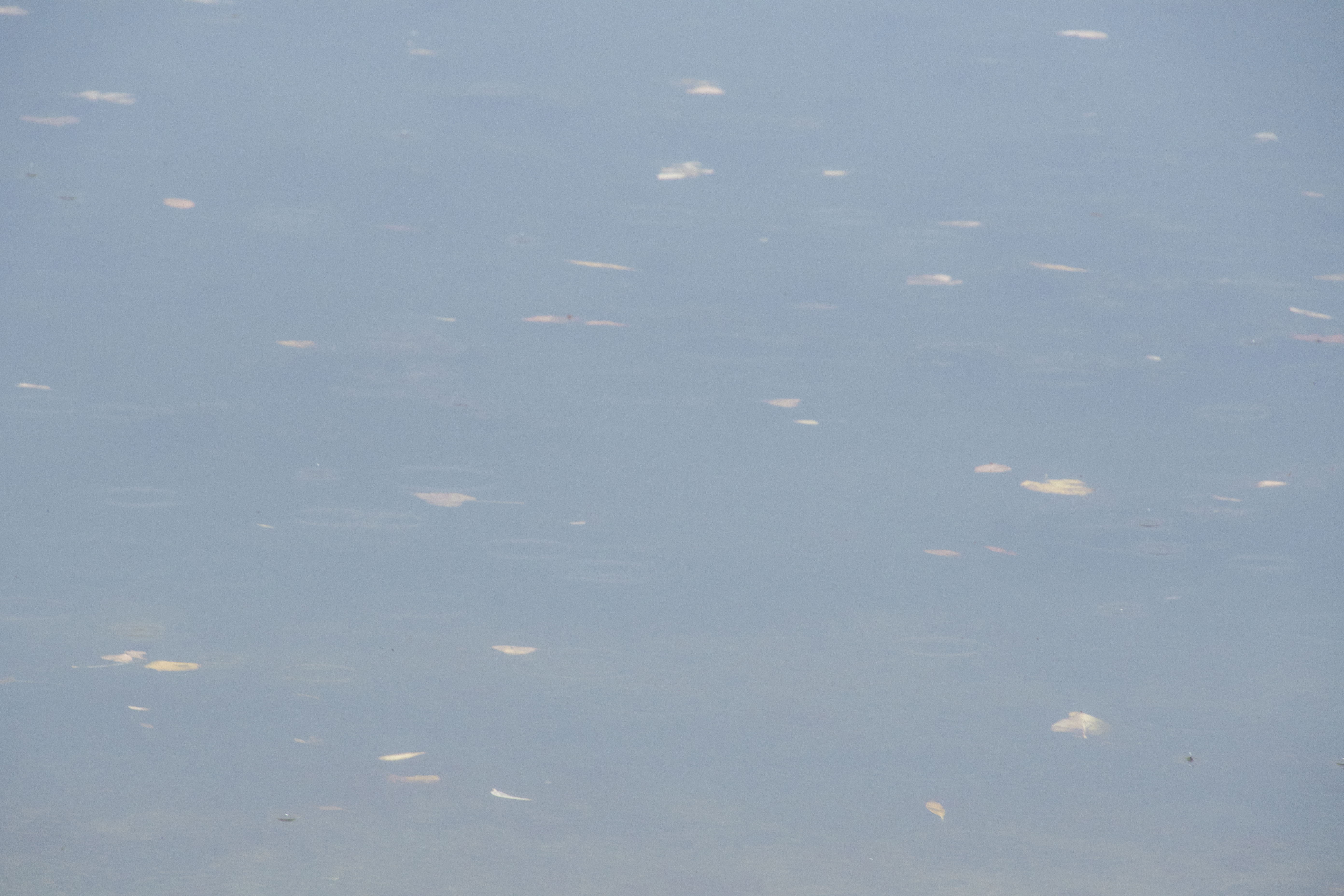
Once seated on the picnic table my vision first settled on the lake itself. Some 26 miles long, it seems somewhat uncommon when the wind isn’t whipping waves that makes canoeing and kayaking perhaps life threatening. On this afternoon the lake was nearly mirror like. In the hour or so I sat there one boat … one … actually chugged up the lake, sputtering so insistently I wondered about the driver and common sense. In seemingly a fraction of a moment a wind can erupt and turn this aqua mirror into a roiling whitecap madness. On this day, though, the body was calm, littered with whitened leaves of autumn floating upon the grayish reflection of cloudy gray sky.

Sometimes you will meet people. Most times you won’t. Sometimes you’ll encounter a piliated woodpecker. Most times you won’t. Sometimes you’ll encounter whitetail deer. Most times you won’t. While I sat a friendly couple from St. Peter happened by, aided by walking poles that seemed out of place without cross country skis and a snowy path. After a brief conversation the couple wandered on toward the Bonanza Education Center and the loop path just beyond it. Once they were gone, I edged off the table to saunter in the opposite direction into the acorn strewn path, popping acorns and seemingly frightening fauna with every step.
Often times I’ll venture off the path to sit against a burr oak. If you sit in the woods long enough, meaning long enough for the creatures of the woodland to no longer consider the invader a necessary evil, the woods will gradually come alive. Or so it seems. Squirrels will begin bouncing on the limbs or scurrying down the bark of a tree, and warblers and other woods-loving birds will slowly allow themselves to be seen. Nervously flitting from limb to limb with eyes constantly searching for imminent danger. Sitting with your back against an oak in the hilly Bonanza timber communing with an awakening woods is what those who teach courses in meditation strive for, and what their students seek.

This time my meditation was included in the saunter over the wooded hills toward a spring fed meandering creek. There is something about that combination … sauntering and meditation, especially if you use the word “with” instead of “and.” I began noticing the intricacies of the landscape, of the woods. Of how the heavenly high leaves of a cottonwood shimmered in a slight, treetop breeze. Of leaf patterns, especially in the sumac, contrasting with the natural herringbone clusters of the staghorn stems. Heavy, timber-defining limbs of oaks stretching outward, sometimes even angling toward the ground nearby. Of leaves floating on the lake surface, itself a muted reflection of the cloudy sky. All things that brought my camera to the eye, though little of artistic greatness. None of which will ever likely be a print, yet provide a collective of meditative imagery.
As I ease along the path … past the sumac, dogwood and oaks, within this tall sanctuary of peacefulness … alongside a presently calm and peaceful lake, I can only hope to capture this essence internally, to hold onto to this peace that calms my soul. I realize the impossibility of holding onto something so rare and dear; that the maddening reality of life will interfere, and that I’ll likely do and say things I will later wish I hadn’t. For in that moment the only interference to my inner peace was the popping of those acorns underfoot.

Stealth is nearly impossible in a burr oak forest.
Pipestone Dustings
Pipestone Dustings
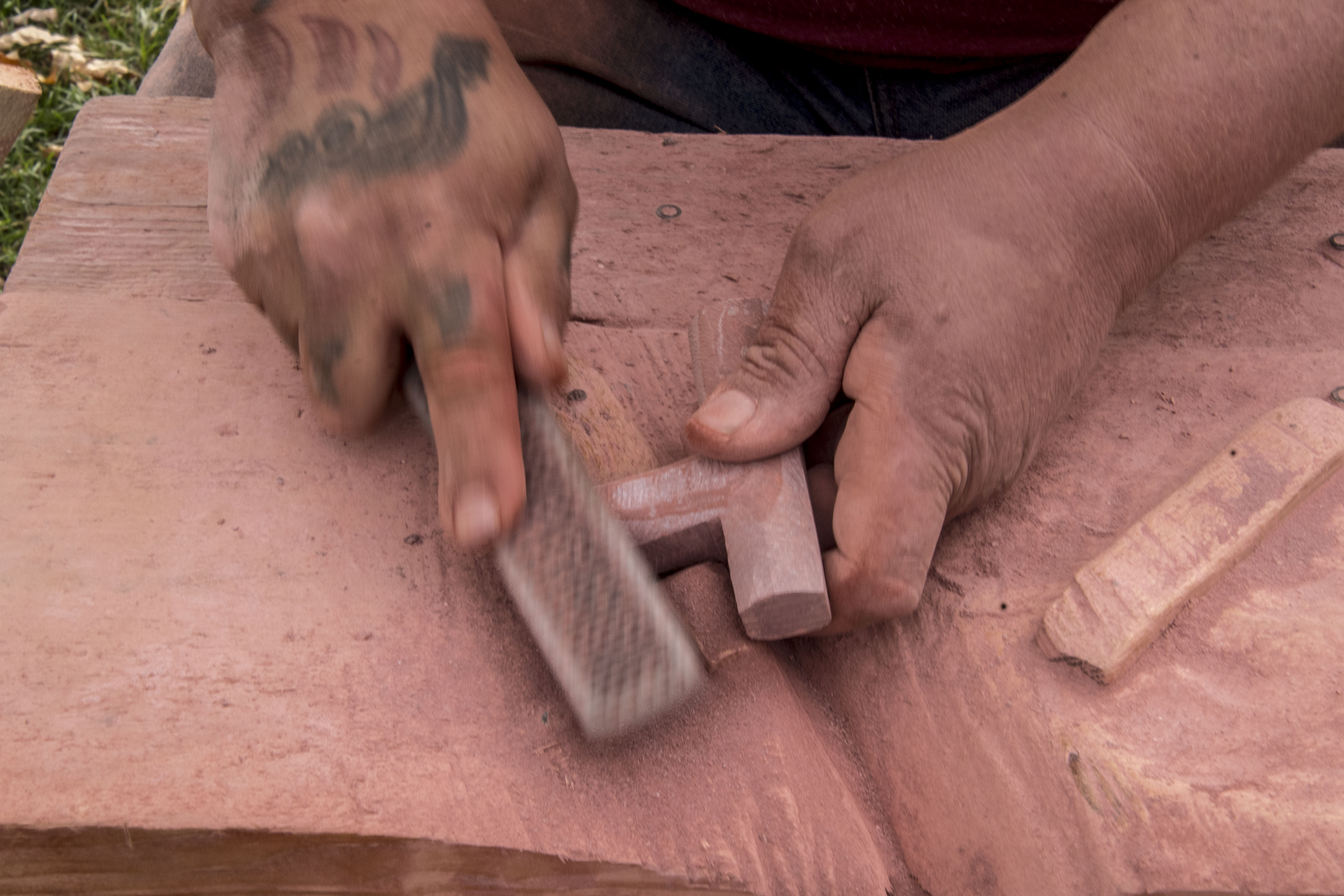
Though it was a warm afternoon, Travis Erickson preferred to straddle his dusty work bench “saddle” and use his sharpened rasp on the reddish pipestone he was perhaps “releasing” one of his eagle effigy pipes for which he is known, some of which are on permanent display at the Smithsonian Institute in Washington, D.C. “It was too muggy inside,” he said of the demonstration pods located inside the Cultural Visitor’s Center at the Pipestone National Monument.
Indeed, it was a fine autumn afternoon outside with a comfortable breeze sweeping across the prairie from the southwest, tickling leaves of burr oak and the few remaining reddish sumac surrounding the trail alongside Pipestone Creek. When a visitor mentioned she couldn’t remember when a small branch off the main creek along the “circle tour” toward the visitor’s center was totally dry, he looked up from his work for a moment and nodded.

“None of the quarries have water in them,” said Erickson, a fourth generation pipemaker of the Sisseton-Wahpeton Nation and whose great grandfather, Moses Crow, settled here around 1927 to continue a tradition that began among various tribes for thousands of years before him. “That is rare. Global warming, we suspect.”
That is perhaps as much a threat to this Native art as the fact that Erickson is among four remaining pipemakers on site, and that apparently his is the last generation with expressed interest. “Most of us are getting up in age, and going down into those quarries and chiseling off slabs, then trying to lift them out in this heat …” He left the rest of his thought trickle off in the breeze.
The quarries are basically oblong, 20-feet deep holes in the ground, hand dug into the prairie to extract the heavy slabs of pipestone that are then cut, shaped intricately by rasp, and eventually bored into effigy pipes or shaped into other traditional items. All works of unique and traditional Native arts, some of which are sold in nearby Native non-profit shops. The “soft” layers of pipestone tilt to the east, and go deep underground, a metamorphic mudstone sandwiched between Sioux quartzite layers. To reach the delicate pipestone, the quartzite must be removed, and all the quarrying is done by hand. Also known as catlinite, the metamorphosed mudstone is typically brownish-red in color — the color of dust covering Erickson’s bench, jeans and hands.

Age and the effects of global warming on this ancient art was an unexpected turn of an otherwise near perfect afternoon. My tour guide and dear friend, Erica Volkir, executive director of Pipestone Area Chamber of Commerce and who served with me on the board of the Southwest Minnesota Arts Council (SMAC), had a free afternoon, and was a generous and well versed hostess. We opted for the “circle tour” over the quarry route, for she said we would pass a couple of quarries on the loop. Living near Ortonville, my eye was geared toward those broad and deep granite quarries we have rather than the relatively small, oblong “holes in the ground.” Indeed, at the one point she pointed out Erickson’s quarry, and I tried to imagine both the lifting out of the heavy slabs of pipestone from the deep holes as well as lugging it over the natural hurdles of granite boulders, tree roots and branches.
Global Warming or not!
The Pipestone National Monument has been on my radar for many years, a target hastened a few years ago while visiting both the Jeffers Petroglyphs and Blue Mounds State Park — all part of the same geological formation scoured free by the last glacier and located “below” the huge glacial moraine known as Buffalo Ridge. The monument has numerous erratics, some of which perhaps were deposited by the glacier from the Ortonville area, stones Volkir said were not indigenous to this geology.

Among the various interesting noteworthy items to grasp on the loop was a notation by cartographer and explorer Joseph Nicollet signed on June 29, 1838, and embedded on a stone face that read: “Toward 1:30 we finally arrive in the valley of the famous red stone which is sought after by all the tribes of the north and northwest for making pipes. When not prevented by war, they came to this place on a yearly pilgrimage to quarry it.”
The same Joseph Nicollet who originally mapped the Minnesota River basin.
Indeed, this is considered a sacred site, as noted on a display plaque written by an elder inside the center that read, “It is sacred because it is the only place you can find the stone. When the creator puts something like that in a specific place, you know there is something sacred about that place and all the animals and plants on it.”

And, yes, the monument feels sacred, magical, and the path meandering through the outcrops and along the creek through an untouched primitive prairie gives you the same sense. Besides the Nicollet inscription chiseled into a slab stone, there is a beautiful waterfall that is as iconic to the site as are the effigy pipes Erickson and others release from the stones. In the midst of our walking tour we scared up three whitetail deer that bounded through the sumac, and watched as a Blue Heron waded in the placid part of Pipestone creek. Sacred fauna?
This was a path of quartzite stairs that wound through the site, up to the prairie and back down to the meandering creek where waters, having once crescendoed over the falls now burbled through a rocky maze with a near hypnotic rhythm. There are oddities along the route, such as a viewing of a natural “oracle” through a wooden peephole and a “leaping” rock, where legend has it that young men hopeful of marriage were expected to leap to a flat-topped pinnacle without disappearing down a deep and steep divide! Volkir knew the route, the legends and the history; all of which made the nearly mile-long saunter quite special.

Back near the “epicenter” of the sacred site, Erickson sat alone beneath a shade tree releasing something perhaps unseen even by him, who a few years back was the first Native awarded SMAC’s prestigious Prairie Star Award. We had first met at that presentation. Yet seeing him here, under the tree, scraping a rasp over the red pipestone releasing something sacred from hard yet pliable stone, was indeed a beautiful moment. Not far from here, and perhaps also a sacred site, is one of the last existing sites for the rare White Fringed Prairie Orchid … at Blue Mounds State Park. The plant currently is on an “endangered species” list, and reportedly exists in only two purely virgin prairie sites in the entire state of Minnesota, and is perhaps a potential victim of global warming.
As I watch Erickson, and remember his personal quarry up on the loop, and hear his trepidation about trying to extract and hoist a new slab of this unique metamorphic reddish rock in the continued and deepening heat and humidity, I wonder if I’m watching a wholly different extinction — that of an ancient and traditional art dating thousands of years and now held in aging hands dusted in layers of reddish dust.
Aldo’s Farm
Early on Claude Monet introduced me to the variances and uses of ambient light. Then Aldo Leopold taught me about earth ethics and the beauty of writing in ways your words might come alive and hopefully create a visual image for your reader. Though both are obviously long passed, a touch of their souls exist with Monet’s Giverny Garden in France and Aldo Leopold’s Sand County cabin near Baraboo, Wisconsin. For a few weeks, at least, there was a possibility of visiting both “shrines” within a month’s time.
Then Covid concerns wiped out our planned trip to France, prompting a friend from France to say, “Giverny isn’t going anywhere. You can come visit another time.” Perhaps, although at my age “another time” is a precarious promise!
Making it to Leopold’s sand country nestled within the heavily wooded Baraboo Hills, one of the most ancient rock outcrops in North America, remained doable. An old friend, Micheal Muir, of Dubuque, was up for a trip to the sand farm, one we’ve discussed doing for a few years, so once again the worn pages of Leopold’s iconic Sand County Almanac was pulled from my little library. Like with Muir, who reconnected with me some 50 years after I left Dubuque, this reading was a rekindling of an old friendship. I’ve long wished to visit Leopold’s hideaway, to see his old cabin which is perhaps 20 minutes from the hideously touristy Wisconsin Dells — a place as different from his quiet Sand County farm along the Wisconsin river as his land ethic is from today’s corporate agriculture.

My suspicions are that Leopold would be as shocked to see what has happened with both the Dells and the transformation into corporate farming since his death in 1948, mere months after the publication of his essays in the Sand County Almanac. Both perhaps serve as metaphors of a distant time. It was here the University of Wisconsin professor escaped from campus and humanity from nearby Madison to commune with nature and pen many of his essays.
Although his stake in environmental consciousness may have weaned over time, many of us still honor and respect his contributions. Indeed, we saw “GRN FIRE” license plate on a parked Audi, referencing a documentary on Leopold and his land ethics. A few weeks ago I mentioned the trip to friends by explaining that Leopold was considered the “father” of the environmental movement only to have a someone argue that Rachel Carson was the main influence of the movement with her “Silent Spring.” Perhaps, yet Leopold was reportedly a major influence in both Carson’s life and work. Neither should be forgotten nor disrespected.

A narrow paved road eases through the woods and infrequent fields of native prairie en route to the Leopold Foundation. Two sandhill cranes frolicking in a field served as a prelude not far from his sand farm, which Michael and I noted would have been a proud moment for Leopold. “My own farm was selected for its lack of goodness and its lack of highway, in fact my whole neighborhood lies in the backwash of the River Progress,” is how Leopold described this entry into his small world. The Foundation itself is a grouping of several cedar-sided buildings weathering perfectly in symmetry with the adjacent woods and prairie. Indeed, some trees are being harvested to make room to extend a native prairie, a spokeswoman at the Foundation told us.
After walking the grounds and checking out a small museum, we ventured over to the farm site although we were too late to get a place on one of the two afternoon tours. Seconds after we parked, a young mother backed in next to our car with her elementary aged daughter. She was providing a lesson, she said, explaining that her daughter was attending the Aldo Leopold Elementary School in Green Bay. We two old guys followed behind as best we could and soon lost sight of them as we neared the shack. Micheal told of once coming here and finding the windows and the door propped open. Leopold’s great grandson and his family was using the cabin and invited him inside, a privilege granted us a bit later by one of the tour guides.

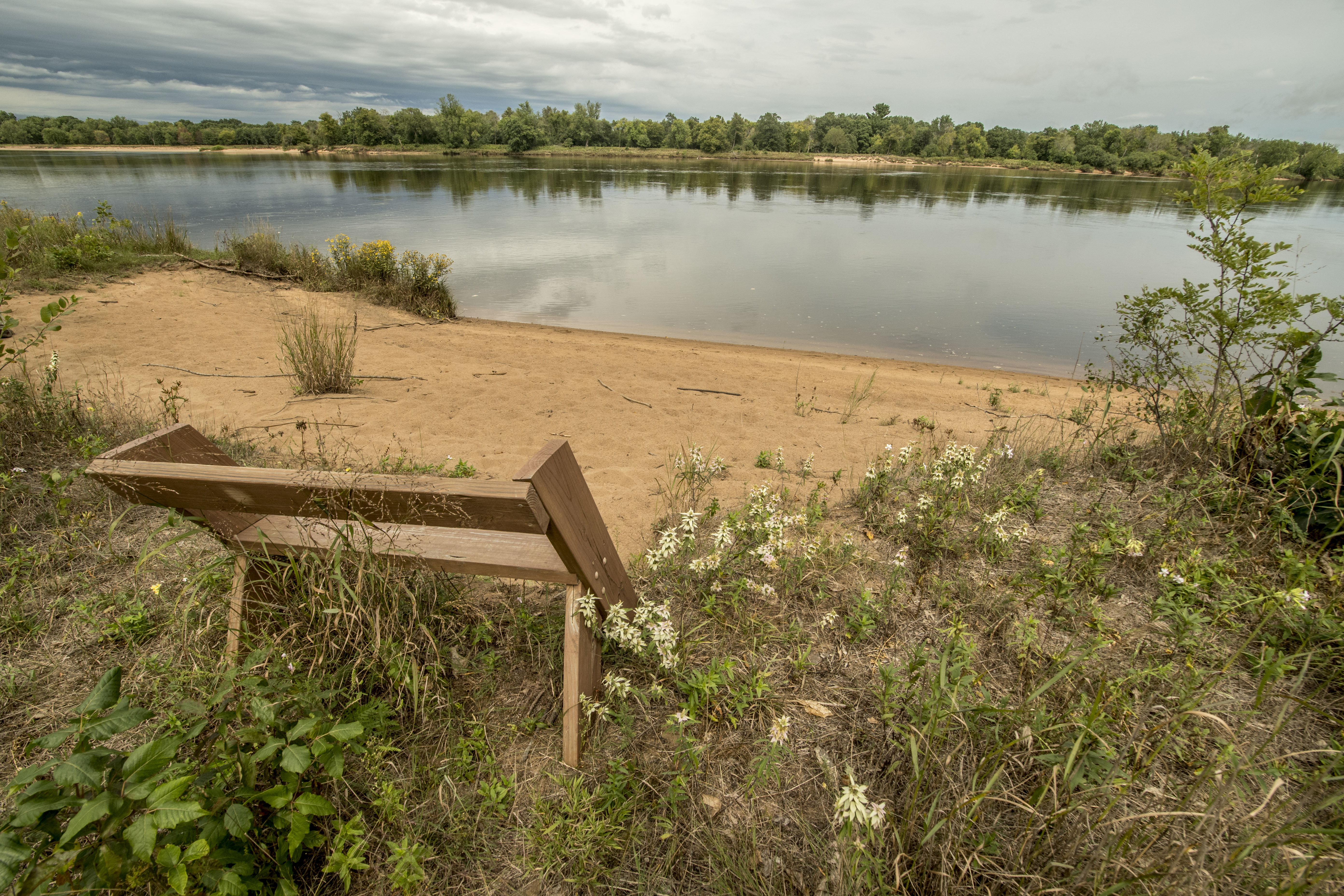
An apple tree stood alone in a clearing, and paths led off in different directions. Some into the woods, some toward the Wisconsin River. You could almost envision Leopold’s footprints in the sand, especially on the path that broke through a clearing of the woods and led to a wide bend of the river. In the fall visitors crowd into a blind just downriver on this same bank on the Leopold farm to witness congregating flocks of sandhill cranes on their migration south. The sand was deep and taxing to walk through, much like sand untouched by ocean tides, then we broke through to find a seating bench on the bank of the bend. We sat there for nearly an hour alternating between conversation and meditation, mesmerized by the slow flow of the river while being sheriffed by several cedar waxwings.
Eventually we returned to the shack where one of the tours had settled in, and thankfully we were granted entry. Two feathers and a grouping of turtle shells on a makeshift shelf centered the one free wall across from four rudimentary bunk beds, a suet stained stone fireplace, a small wood stove and basic, unostentatious kitchen area. Kerosene lanterns and ironware cookery were still in place, along with a couple of his hunting guns. Nestled between the only door and two windows was his writing table. It appeared as if nothing much has changed in the nearly 80 years since his passing. It seemed Leopold could simply still settle in and feel right at home.

Throughout the farm were sitting places, some with weathered and even falling apart wooden benches. We overheard one of the tourists ask a guide if a bench nestled next to the cabin was used by Leopold’s. The guide smiled and said, “No, for it is highly unlikely such a bench could weather 80 winters … 80 years. But it’s a good thought.”
I found it hard not to remember some of his passages and philosophical thoughts while looking around the cabin, or stopping at various points on the different trails. While I have accumulated at least three copies of Sand County Almanac, my favorite is illustrated with the drawings of Charles W. Schwartz, who in my youth was an artist with the Missouri Conservation Commission. I was fortunate to have met Schwartz a few times while I was in college, and his son, Bruce, lived a few doors down from my first dormitory room at the University of Missouri.
As for Leopold, when I worked for the Denver Post I covered a conference in Crested Butte and gave Nina, Leopold’s daughter, a ride to the Denver airport. On our drive through the mountain passes, parks and valleys, she admonished me for driving too fast for the birds to lift safely in flight from the highway. “Yes,” I said, “but you have a flight to catch.”

Nina reached over to pat my arm and said, “There will be other planes to catch!” A father’s daughter.
As Micheal and I stood outside his cabin for a moment before heading out I thought of Leopold’s worry: “Someday my marsh, dyked and pumped, will lie forgotten under the wheat, just as today and yesterday will be forgotten under the years.”
Thankfully that has not happened.
Highway into the Apocalypse
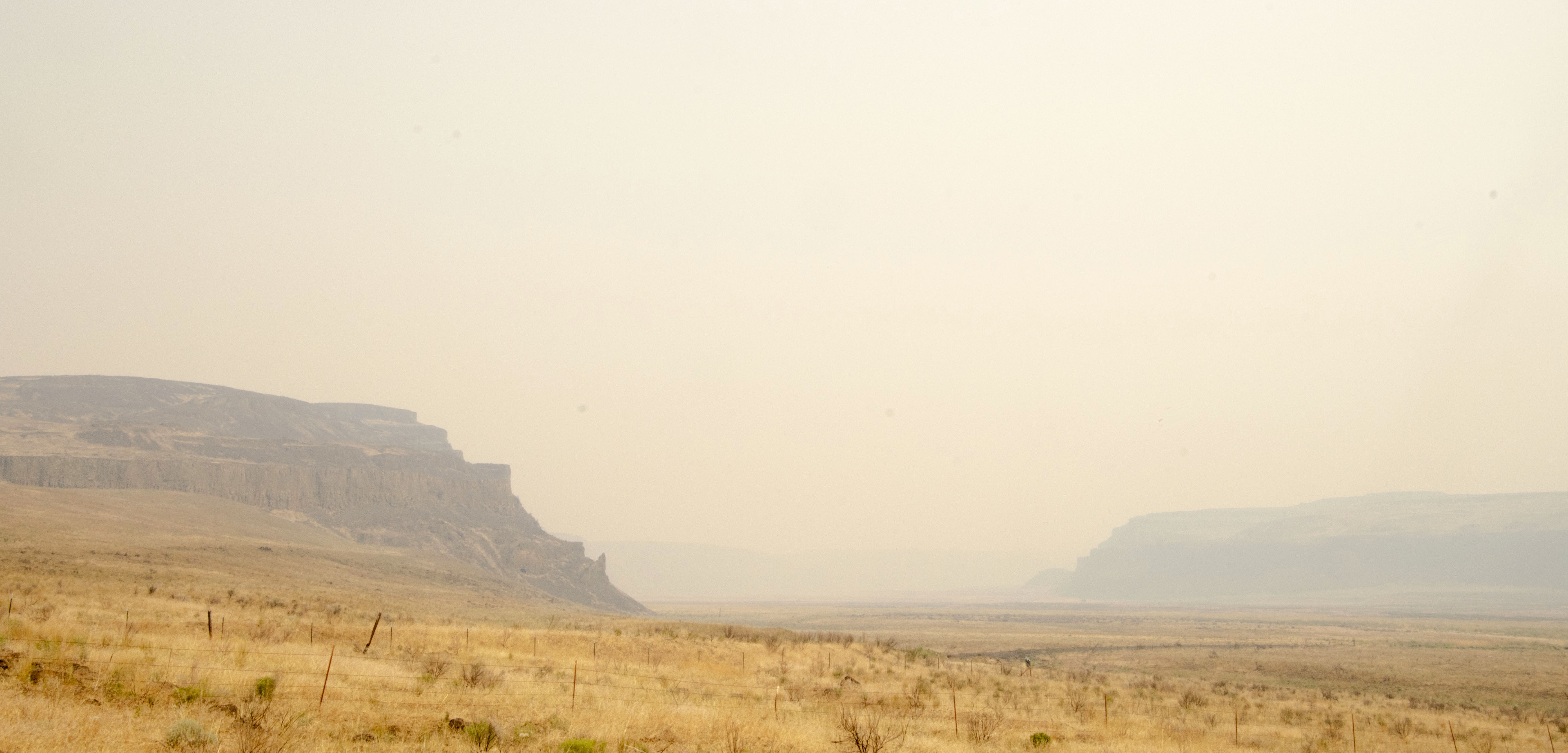
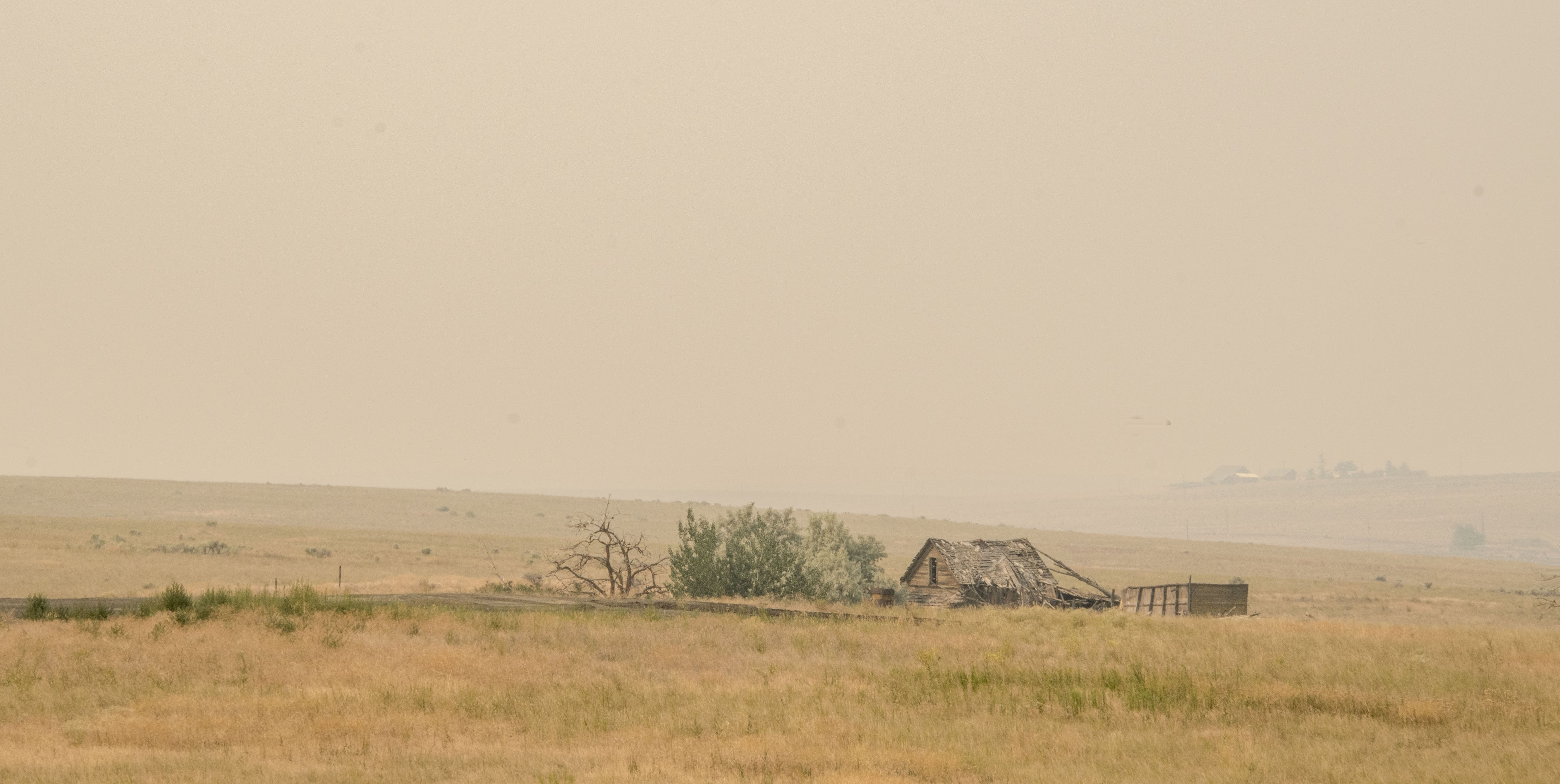
When we turned from 172 onto the intercontinental Northern Tier US Hwy 2 from Washington’s Lake Chelan, our view to the east was a plain of nubby sage and a highway cresting toward a smoke-filled horizon. The distant mountains were hidden in the haze. In a field across the remote junction stood a crumbling, long-weathered cabin continuing it’s descent into basalt enriched earth.
Were we about to turn onto a highway into the Apocalypse? Was the deteriorating cabin a metaphor of the future? This tunnel of bluish-gray smoke made us seem like we were hurtling toward a fiery end, and a New York Times illustration posted on a social media site highlighted the wild fires of the West as if this corner of the country was an arm of an 11-year-old with measles.
Two weeks earlier we had left on our trip from Minnesota driving toward the smoke-filled horizon from the other direction; this, after weeks of distressing beautiful sunsets featuring a reddish globe of a sun in the western sky. Smokesets? Through much of our 2,000 miles to the Oregon coast we continued to face into the smoke. There seemed to be no relief. Then we hit Spokane and amazingly, gorgeous blue skies gave us some nice clean air to breathe. It felt like a miracle, like a long, slow rain after weeks of being parched by intense heat. As it turns out, the areas near the coast were the only clear skies we would see … even now that we’re home.

Two summers ago we were here visiting friends who have a home on a mountainside plateau above Lake Chelan and the smoke from the wild fires was as thick as a Minnesota winter fog. We were pleasantly surprised when we arrived this year to find smoke-free skies. That all changed by late Friday afternoon, and by Saturday the smoke was nearly as thick as it was two years ago, likely from the fires in Northern Washington where the well-traveled but temporarily closed Highway 20 meandered through tall mountainous forests aplenty. On a fishing expedition for cutthroat trout Saturday morning the smoke hovered mere feet above the surface of Lake Chelan.
We would not escape the apocalyptic looking skies on the rest of our drive across the country as smoke blanketed us through the plains of Eastern Washington through the Idaho Panhandle. Sometimes you wonder if this will ever end, and I was reminded of my trepidation about this trip while viewing one more reddish global sunset on the eve of our departure. Were we placing ourselves in danger, not just from being caught in a wild fire, but about our ability to breathe healthy air? Should we cancel this trip we’ve planned for nearly a year?

These fires are resulting from a nearly nationwide drought blamed on global climate change. In Lauren E. Oakes’ book, “In Search of the Canary Tree,” she explored the broad scope of deaths of yellow cedar trees within the old growth forests of the Alaskan coast. Global warming had significantly reduced the amount of snowfall, which would blanket and protect the delicate root systems of the yellow cedars. She also concluded from her research that humans, even those most affected by the die-off of the trees, are more willing to adapt than to change.
Apparently the loss of the yellow cedars was no more of an “ah, ha” moment to encourage human-wide change than these smoke-choked skies. As a race, we’re adapting rather than seeking serious habitual change. And, I am humbly aware of my own contribution by driving on a multi-state vacation!

Traveling home we stopped at Beavertail State Park in Montana. In what two weeks before had been a picturesque hay meadow was now a fire camp with countless two-man tents, a tented mess hall, a tented and air conditioned infirmary and ample space for helicopter landings. There would be no escaping the heat for the fire fighters with temperatures still hovering around 96 degrees as the sun, settling into another red ball sunset, slowly slid behind the nearby mountains.
And, there would be no escaping for us, either. All across the 2,000 mile trip home, temperatures would be reaching into the mid-80s by mid-morning, and by noon, into the 90s. There was no avoiding the drought, the heat, or the smoke. We are still facing nearly a half-summer of a nationwide drought and wildfires from the Pacific coast eastward even into Canada. Yet, it seems we are, as a species, still awaiting some magical “ah, ha” moment that will spark actual change rather than adaptation; for us, and for the good of the planet. Driving into the apocalypse does tend to make you wonder.
Only a Prairie
Once again I was overcome by a gut-wrenched sadness when walking through my Listening Stones Farm prairie the other night, for I couldn’t help thinking what might have been, of what was lost and will likely never be regained. Here’s the back story:
Back in 2017 we did a prairie burn. Our local fire department was hired to do the honors, which came with what seemed like an exuberant boast when one of the fireman excitedly exclaimed, “This is great! No more pancake flipping!” Firemen apparently love playing with fire more than flipping flapjacks. Unfortunately I seriously doubt if enough native prairie exists around these parts to burn on three to four year cycles to offset their traditional fundraising efforts. Yet, what happened after the burn was simply incredible. The flush!
Like some magical enchantment the burn was followed by a beautiful rejuvenation of the forbs and grasses, one of unmatched beauty in our prairie. A “tired” prairie had come back to a full-fledged life. Magnificent colors throughout, and particularly in the yellows. From one end of these 14 acres to the other the color and depth was unbelievable. The yellow was then followed by a beautiful purple, a purple that unfortunately came with a price. An unwanted attention, for these were the blossoms of a fearful “weed” commonly called “thistles.”

With the turning of the calendar page to July all of that came into jeopardy. Apparently a complaint was filed concerning the thistles with the county weed inspector by a local farmer who spreads poisons on the field abutting our prairie by tractor or plane each season (although I’ve never filed a complaint about his reckoning with pollinators). Coincidently a farmer with an agreement from the neighboring commodity farmer arrived to mow and bale the right-of-way roadside shoulder grasses for hay and was coming through with his mower.
Earlier in the week we had traveled down to the Big Stone National Wildlife Refuge where they had brought in a mower that had simply topped off the blossoms of the offending thistles while leaving the prairie grasses and forbs tall and intact. Removing the heads prevents the thistles from going to seed, and eventually eliminates them from the prairie. What a wonderful idea, and one which was approved by the county weed inspector. So I stopped to chat with the man with the mower and explained what I needed done.
“What I need,” I told him, “is simply to top off the thistles. I do not want my prairie grassed mowed. I need the mower high enough just to top off the thistle blossoms. Can you do that?”

“Shouldn’t be a problem,” he said while removing his hat to wipe his sweaty brow with his shirt sleeve.
“Remember, the mower blade must be high enough that only the tops of the thistles are cut. Nothing more. That’s gotta be the deal.”
In our bartering agreement he was free to mow and bale the grasses on the roadside shoulders alongside my prairie.
On the afternoon he showed up with his mower I again went through the exact same instructions, and he said he completely understood both my reasoning and needs. He headed into the prairie as I left to head downriver for a meeting in Montevideo. When I returned home a few hours later he was down to his last two acres, and my heart nearly stopped. My entire prairie was leveled as if it was a hay field. From the upper prairie down through all but the last couple of acres left on the lower. All of the flowering forbs were clipped and layered in with the grasses, all flat against the ground.
“Our agreement was that you were just topping off the thistles?” I yelled at him after running down his tractor.
“This is as high as my mower would go?”
“Why in the hell didn’t you recognize that and stop?”

He shrugged as if nothing was amiss. It was just grass. Prairie grass, translated to say it meant absolutely nothing to him. Another neighbor suspected his intent was to eventually bale it for hay. What other use of prairie grasses is there? When he pulled out with his mower that was the last I’ve seen or heard from him. He didn’t even return to rake and bale the roadside brome he had leveled.
My prairie has never recovered. That prominent yellow has not been seen since, although there was hope that after our burn last spring during the pandemic that there might be a bounce back. There wasn’t, and I was reminded of that while walking through with my camera the other night. Present were ample purple and white prairie clover. Bee balm was scattered throughout, too. A handful of yellow daisies. Literally, in all 14 acres. This was not our colorful prairie of the past.

There couldn’t have been any miscommunication. My intent was made clear twice before he put the mower into the prairie. Yes, I agree that I should move along and get over it, yet it was about this time in 2017 when the inquiry about topping off the thistles was made. A gloomy anniversary, at best. All with the experience and knowledge that in no two years will a native prairie ever look alike.
My interconnected paths through the upper and lower prairie are frequently taken with a camera in hand, and on this night as the evening settled in I ventured out once more and the memory of that fiasco hit home once more. This time with more force than normal. To date I’ve never sued anyone, and this incident was as close as I’ve ever come. Yet the reality is that I wouldn’t have won. Not in this commodity-rich cropping landscape, and not against a fancy attorney whose primary argument would be, “It was only a prairie.”
Tag
Have you ever played tag with a Yellow Warbler? On an otherwise lazy afternoon the small bird tagged me by flitting into the young cottonwood next to our camper, jumping from branch to branch as if the smooth bark was coated in Tabasco. I say “he” because of his striking, bright yellow color. Colorful and bright colors in birds seems more common to the male of a given species than of a female. So I reached for my camera. Game on!
He had the advantage of the thick layers of leaves to flit and hop through, to hide with but a momentary peek over or through the foliage. Just when I thought I had him spotted and raised the camera lens to focus, he’d be off toward another hideaway. Then, just as quickly came a flash of yellow and he’d be off to another tree or to snuggle down to hide in the grasses blanketing the prairie of the Upper Sioux Agency State Park. Our little game would last off and on for parts of three days. For there comes a time when you realize there are fish to be caught or hillsides to explore.
Our simple goal was to practice trailer camper camping before a forthcoming two-week trip to Oregon and Washington, and to conveniently meet a branch of my Missouri family who had briefly interrupted their summer “Auntie Tour” to check out the Laura Engels Wilder haunts for their curious nine year old daughter, Lucy, who is an avid reader like most of our family tribe. Her great grandmother, and my aunt, created a bit of a reputation in her elderly years by purchasing book collections from decommissioned small town libraries. Her spacious garage contained rows of tables holding the books that she offered to any family member with an interest.

Fortunately there were other distractions beyond the shy warbler. A pair of Chipping Sparrows captured my interest off and on, as did a frequent visit of a noisy Dickcissel that loved to grasp onto the highest naked perch of a barren shrub to rare back and sing as loudly as possible. It wasn’t beyond the imagination to suspect of some karma-influenced inheritance from some famous operatic soprano. There was simply no holding back of the Dickcissel. There never is.
Then, out of nowhere, came a warbler-sized mostly black bird with reddish stripes. I can now add an American Redstart to my birder’s list. Redstarts seem to have some kinship to the Yellow Warbler for it too loved to flit from branch to branch, and was just as adept at finding hideaways. Over the course of our second afternoon of tag I was able to make several brief sightings, and my quickest focusing was simply not quick enough. Neither of my two images were in focus.
Just as I was beginning to relax Mary alerted me to a new flash of yellow. Ah, yes. Goldfinches were also in the neighborhood! How could one forget? Within the blink of an eye and the leafy tree foliage it was difficult to distinguish which was which, then the male and female finches burst from the canopy and did one of those rolling tangled flights that only small birds seem able to maneuver; flights that make you wish for a nice movie camera so you could hopefully do a slo-mo later on to catch the actual acrobatics!

Then came another flash. Whatever it was … Goldfinch or Yellow Warbler … was difficult to see. Perhaps a couple of leaves would wiggle out of the thousands that rose from a low hanging branch upwards to the top of the tree some forty feet above us. All with thick, leafy curtains that would give comfort to the shyest introvert.
Yes, it was the warbler. And, no. Not a chance of being open long enough for a focus. A former colleague who eventually became a professor of photojournalism at a Denver-area university even sent a text message: “Auto focus!” When I offered a smite of protest he quickly answered, “Yeah, well I, too, only do manual focus.” Just for a kick, though, I tried it, with the focus bouncing around so much due to a prairie breeze tossing around the leaves that dizziness set in.
So it was back to manual and the fate of aged reflexes. Years ago on a bluff overlooking a lake ravine near Annandale I played tag with a Blackburnian Warbler, my first ever sighting. That time I had a bit of an advantage, for I was younger with quicker reflexes, it was the middle of May and the leaves were in the budding stage. Though he was another nervous warbler I was able to capture numerous images before he tired of the game and disappeared into the distance.

Fortunately I’ve a somewhat recent habit of awakening quite early in the morning. Usually around 5:30 at the latest, and since we’re past the Summer Solstice this is just before sunrise. By the time I settled in with a cup of morning tea I’d had some fun working to capture a dawn fog hugging the prairie around a tipi next to our camper, so I had my camera handy when the minuscule yellow flash of bird suddenly appeared on a branch above my chair. Perhaps I can thank the fate of time for I was able to get in focus and grab a couple of photographs before he slipped through the leaves to head into the adjacent prairie grasses and shrubs.
The sort of evened the score. I was only behind something like 40 to 2 over the two days and heading into the third, yet it was just enough to up my game. Within moments he hopped up onto a prairie shrub, first turning this way, then that before hopping around to face the opposite direction, then flash … he disappeared into the grass. Suddenly he was back up on a nearby plant stem. My focus was just on when he decided to go airborne. And, I got my image! All the while he was chattering warbler language, which I actually translated to say, “It was the dew, Dingbat!”