My Gnarly Old Friend

A few weeks ago a dear friend commented on an old maple tree I had photographed by wondering, “Oh, the things that old tree has seen …” 

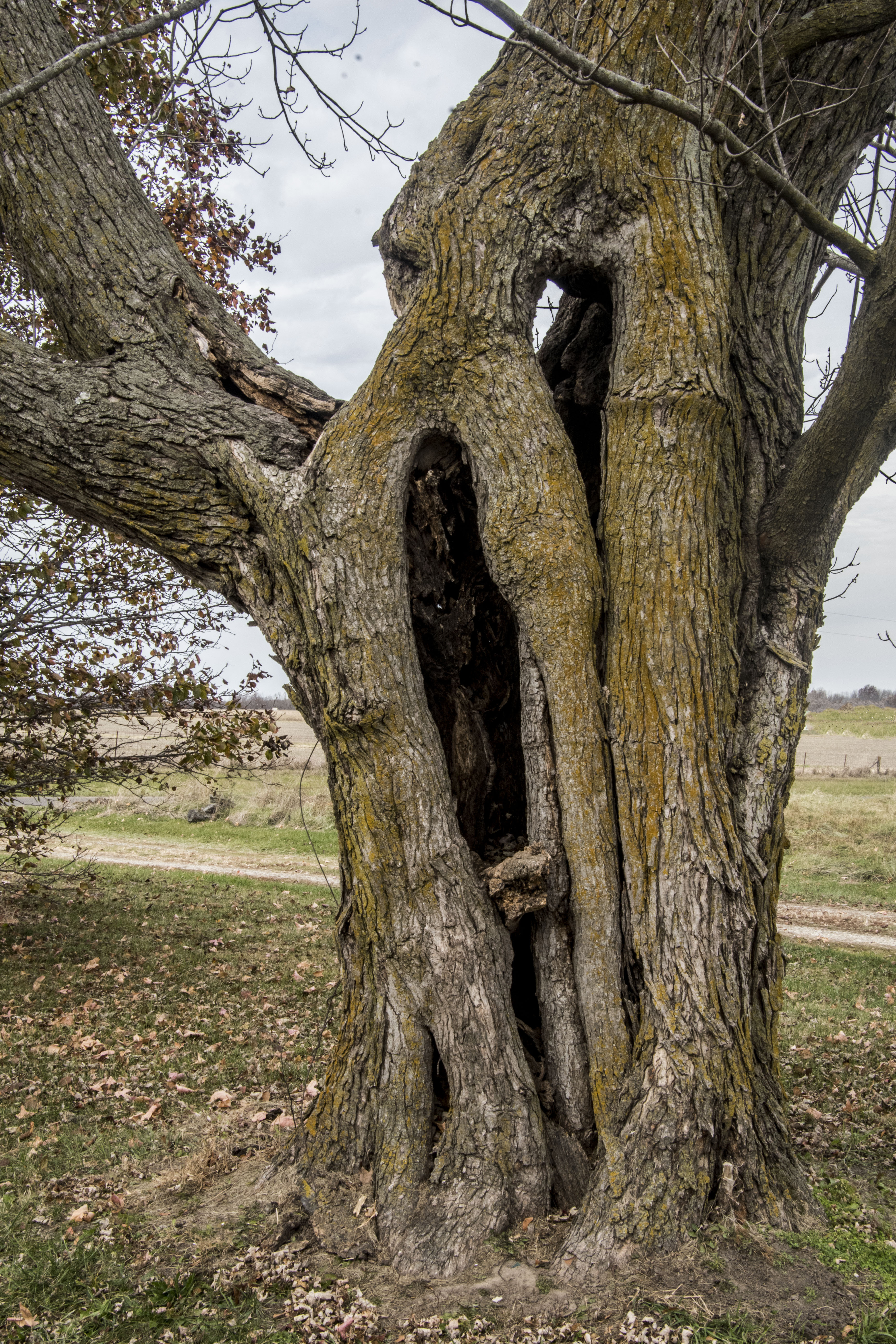
This is indeed an old tree, gnarly, weathered and minus a core that had long since rotted away, and perhaps dates itself to most of our family’s time on the Missouri farm. Both the tree and the farm are now safely existing into their third century. The old maple was fully mature when I was a child. Off one staunch limb my father had fashioned a rope swing. I was ten when we moved to what had been my grandparents’ home, so our move up the road was in 1953. Sixty-nine years ago. My guess is that the tree was planted by my grandfather, Mark White, and that it is now perhaps 150 years old. Maybe older. Its age will forever remain a mystery.

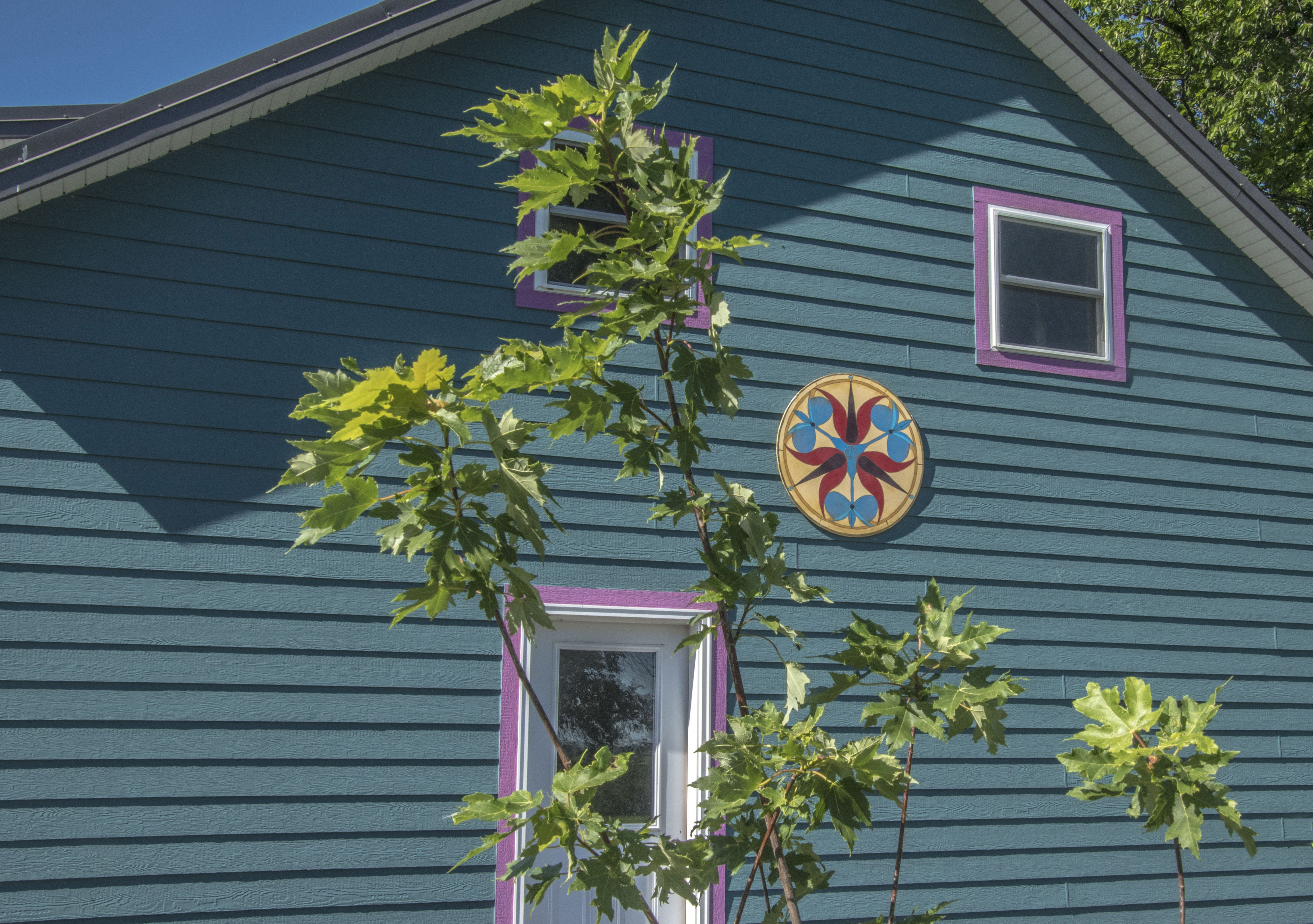
In my yard here on Listening Stones Farm I now glance at a maple I planted this spring, now bent a bit by winds that have since followed its planting. The trunk is maybe as round as my thumb, and I doubt if I’ll live to see it large enough for a manly hug let alone matured with a leafy shadow to shade the adjacent concrete patio that was poured and stamped last fall. The old maple at the Missouri farm was well beyond the hugging stage even when I was a child. Maybe two or three adults could clasp hands and cover the circumference.

Perhaps over 150 years of age, the old maple keeps chugging along in life and is now safely living into its third century.

With its inner core … that heartwood … rotted away it’s highly doubtful that anyone will ever know how old the old maple might be. It’s has been that for most of my lifetime. Maybe even longer. With a full canopy of fully alive branches and shimmering, summer leaves, the life-sustaining cambiam layer is charging ahead with ever more food, moisture and energy necessary for the old maple to continue its journey through life.

I love old trees and feel pain when I see one come down because of someone’s inconvenience. On the river road below Sacred Heart two picturesque and staunch cottonwoods were taken down last fall because they were “inconvenient.” They had stood more than 100 feet tall with wide and beautiful limbs and branches. Their stumps were as wide as a 600 gallon circular steel livestock watering tank before fire and an excavator came to rid dear earth of any clue of their prior existence. Like the old maple, their cambiam layers were still churning nutrients up to the very tops of the cottonwoods from the root system. They were beautiful trees. Landmarks, really; trees you were familiar with much like an old friend you met when ambling along on a curvy country river road. 

Other beautiful cottonwoods have met a similar fate. One was the “Milan tree” a mile south of the village that proclaims itself as the Goose Hunting Capital of the World. Among the activists fighting the eventual removal was one who threatened to chain herself to the tree to keep it from being taken down. MnDOT did the honors despite the threats and protests, although I’d suggest that her threats, efforts and words were simply blowing in the wind. My guess is that the farmer whose cropland was shaded from the afternoon sun no doubt petitioned to be rid of what he and other of his brothern claim are “dirty trees” — trees with limbs and other debris that come crashing down from the canopy onto their precious patch of Mother Earth. 

In November without the leaves the old maple looks old and weather-beaten.

Another instance was perhaps a stately ash tree on the last bend of US 75 going into Canby, a lone tree sentinel, an iconic landmark, staunch and proud, standing on a point along the highway. It’s gone. So many are gone, old trees … trees many years older than their land keepers. In these times when trees are severely needed in our grasp of planet health from the effects of global warming, few seem to care. Chainsaws are employed as much as heavy construction machines — front-end loaders and bulldozers hone in to remove any evidence and memory of those shadowy carbon eaters.

So, yes, I love old trees, and our old maple that remains in the “courtyard” of our family farm, itself awarded Century Farm status many years ago. Nowadays the cavity of the old maple yawns openly toward early morning sunrises and was once home to a huge beehive. As children we would lay our forearm against the bark opposite the hive to effectively hide our eyes as we counted our way to 100 in games of hide-n-sneak. Years ago two cherry trees were just to the west of the old maple. They’re long gone. Age caught up to them and they were eventually removed, by then woody skeletons of their former promise of tart pies. Still the old maple kept chugging on.

Like my friend suggested, the old maple has witnessed much through the years including five long stretches of family generations and counting. From my grandfather’s youth and marriage, to the birth and maturity of my father, to my generation of brothers and a sister, to modern times when my nephew and his wife began farming the land, and now their children, the oldest who this fall will be a junior in high school. So, yes, the tree has survived for many years and generations of my family. 

My little maple, planted this spring.

Each of those generations have parked either horse teams or tractors in that shade. As a teenager I changed the oil on tractors under its shaded canopy. After a big dinner my mother had laid out for a haying crew back in the day, and before we headed back to the oven-ish hayloft or field, we would amble outside to lay in the tree’s shade. With no air conditioning, all of us appreciated the shade especially on those hot and humid summer afternoons. Those “90 90 days” when the temperature and humidity met too close to the century marks. We especially loved the shade when the leaves above were shimmering with a cooling breeze.

Recently I sat in a comfortable patio chair on the porch of the farmhouse my parents moved us into back in ‘53, where I looked out across the lawn and adjacent fields. My nephew’s soybeans were breaking through the browned cover crop across the highway. The old elm with the “upside down dancer” limbs had long ago died and removed years ago. My brother and nephew have landscaped around the porch with new shrubs and flowering plants where in my youth there were bushes and a lone conifer tree. The redbud’s at the front of the lawn were removed and replaced with magnolias in difference to my nephew’s wife who grew up in the deep south. Climate change, he said, might make this possible.

Two beautiful old cottonwoods down the road stood for years after they were long dead and finally were grounded by a stanch prairie wind. Their fate was different than the old maple.

My father’s prized white board fences have long been dismantled as were all of the out buildings from his style of farming … the cattle pens, his old fashioned scale, granaries where my brothers and I chanced our hearing with the hammer mill grain grinders, and his tall white landmark barn. Gone, too, is the pole barn machine shed he built over my mother’s last great garden. A huge, modern machine shed was built this past spring for my nephew’s machinery.

All that remains from my childhood besides the old farm house where I sat was that old maple. The ageless maple is now more of an old friend and family member than a mere tree. My friend, the old maple, has weathered significantly in its aging, and those large poetic gaps gracefully reveals its inner soul. Leaves still flutter in the wind, shimmering as if a “latent” haying crew … ol’ Ed Troeger, the Norton boys, maybe an Amish lad or two awaiting their bearded stage … laid in momentary rest on the grassy carpet beneath.

My old friend, the maple, will outlast me, and maybe with luck, even my middle-aged nephew. Who’s to say it won’t? If there is a given to be gained from our family’s farm place is that you can never count out that old maple. Not back then. Not now. And perhaps, not ever.

Dreams of a Roadside Dreamer

Something interesting happened in the midst of my tunnel vision of non-stop driving. That “vision” had become  somewhat narrowed thanks to driving some 560 miles from Minnesota through the East River landscape of South Dakota and most of western Iowa before cutting cross state to Des Moines, where we cut south toward my home country of Missouri. For whatever reason my eyes were suddenly caught by the colors along the highway road banks ­– colors that covered much of an artist’s smeared palette.

At the first narrow field approach we pulled over for a closer look. As distant as I could see on either side and direction of the highway I was met with an impressive array of wildflowers. Daisies. A coneflower or two. Some yellow, others pink. Orange tiger lillies and tall stalks of mullein, the latter of which was said to be dipped in beeswax and turned into nighttime torches by the Biblical Romans. There were way too many blossoms to count, with a wide variation of colors. Blues. Yellows. Oranges. Reds. A few whites adding to the mix.

All of which took me back to a much earlier time, back when I had finished an assigned story for the National Woolgrowers Association on a San Angelo, TX, sheepman, which led to an unexpected set of pictures and an interview with a neighboring rancher who specialized in javelina guiding and hunting in his dense mesquite brush. I was then off across the state to Nacogdoches for an assigned story for a corporate account. I don’t recall the highway(s), although I do remember the flowers. On both sides of the four lane highway and within the median strip. Curated in beds, neat and tidy, especially in the median. More kemp, much more blue, and totally unlike the wild and “organic” Iowa roadside prairie nestled within the steep banks.

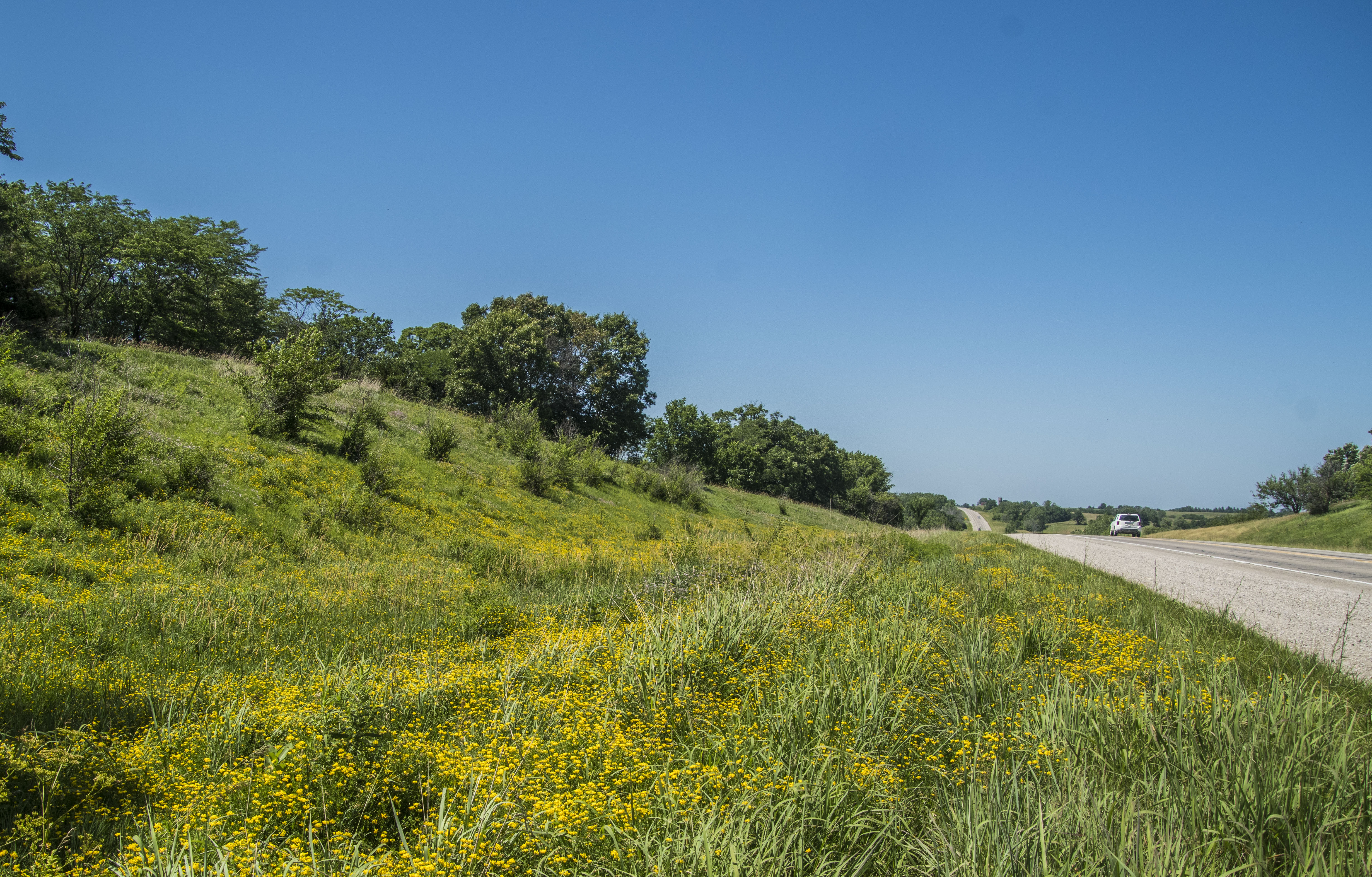
Typical of the native plantings found along the highways and byways of Iowa, a cost-savings program started in the 1970s as a step toward highway beautification.

Much like my moment in Iowa, in what should have been a boring trip across Texas became one that was both unforgettable and enchanting. Completely mood altering. Later when I mentioned this beauty to the farm wife outside of Nacogdoches, she said, “Oh, that’s Lady Bird’s doing. Her highway beautification project.”

Lady Bird was the wife of former President Lyndon B. Johnson, and was a champion for conservation efforts including the beautifications of the highways, particularly in their home state. Some 57 years ago Johnson, with the urgings of his wife, pushed through a law known as the Highway Beautification Act. It was an effort to limit billboards and other forms of outdoor advertising, as well as junkyards and other unsightly roadside messes along America’s interstate highways. Yes, flowers were intended. It was a move that has since spread beyond the interstates as evidenced by the number of junk yards sporting tall, oblique fencing to hide the hideous, and highways like those in Iowa.

Lady Bird’s reasoning was that such legislation would make the nation a better place not only to look at but to live. “The subject of beautification is like a tangled skein of wool,” she reportedly wrote in her diary. “All the threads are interwoven — recreation and pollution and mental health and the crime rate and rapid transit and highway beautification and the war on poverty and parks … everything leads to something else.”

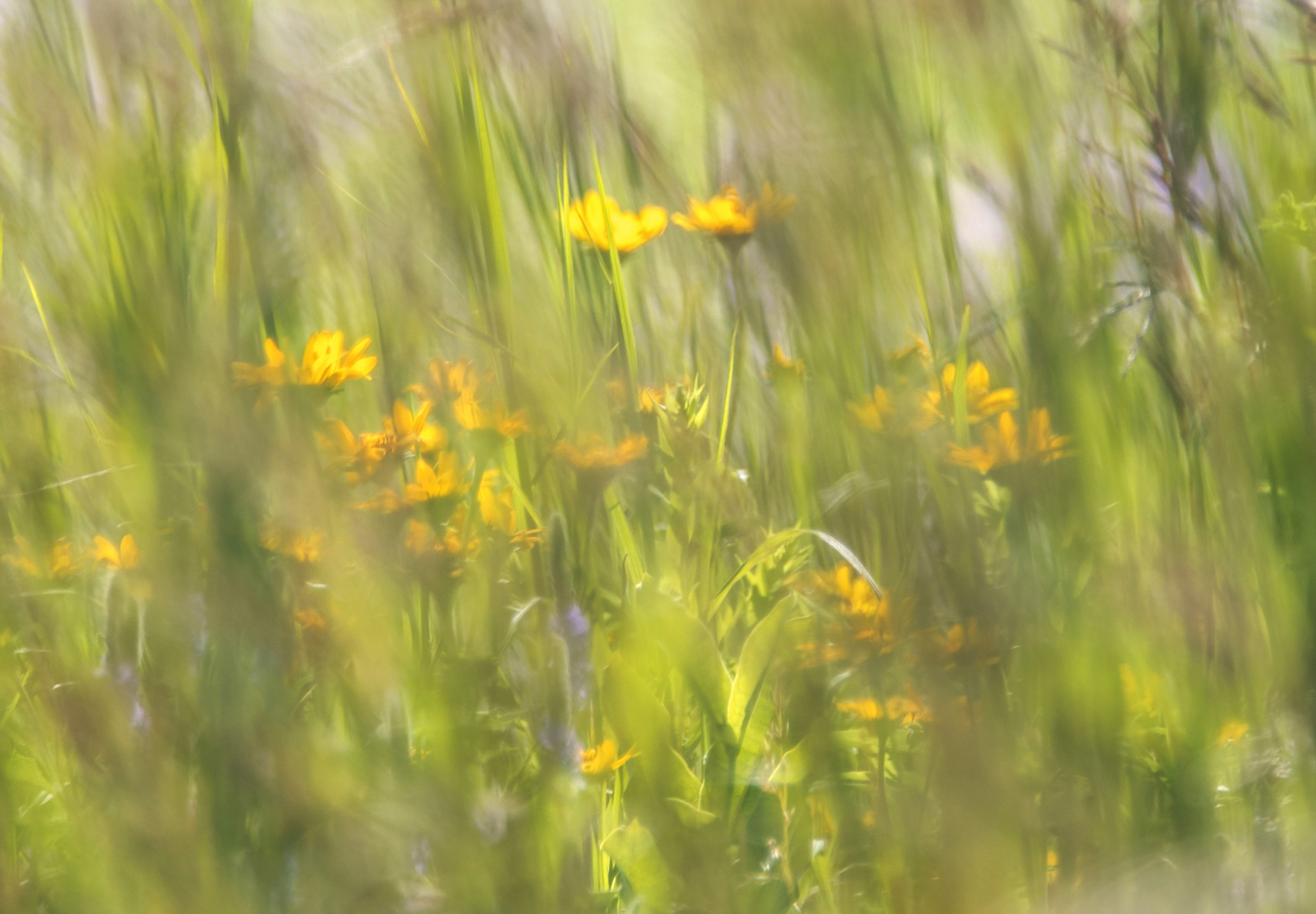
Yellows were prominent along the highway, although nearly all the basic colors were evident.

Welcome to Iowa, and to a part of the state secluded from the hum and haw of the interstates that crisscross further northwest in Des Moines. Highway 63, between Ottumwa and Bloomfield, with uphill passing lanes and wildflowers paving the way, was just a small sample of statewide policy. In all, more than 50,000 acres of federal, state, county and city roadways that have been planted in a native ecosystem across the state since the 1970s. Later, on the way home I paid much more attention to the shoulders of the interstates, and yes, wildflowers, shrubs and picturesque trees greeted the travelers. 

To help in the beautification effort the state’s Department of Transportation published a beautiful, four-color, 134 page booklet called the “Iowa’s Living Roadway … Ecological Transportation.” The booklet provides tips on creating workable roadside habitat for beauty, birds and bees. Besides the tips on planting, the guide has specific sections on native wildflowers, shrubs and trees and is perhaps the “bible” for Iowa’s Integrated Roadside Vegetation Management (IRVM).

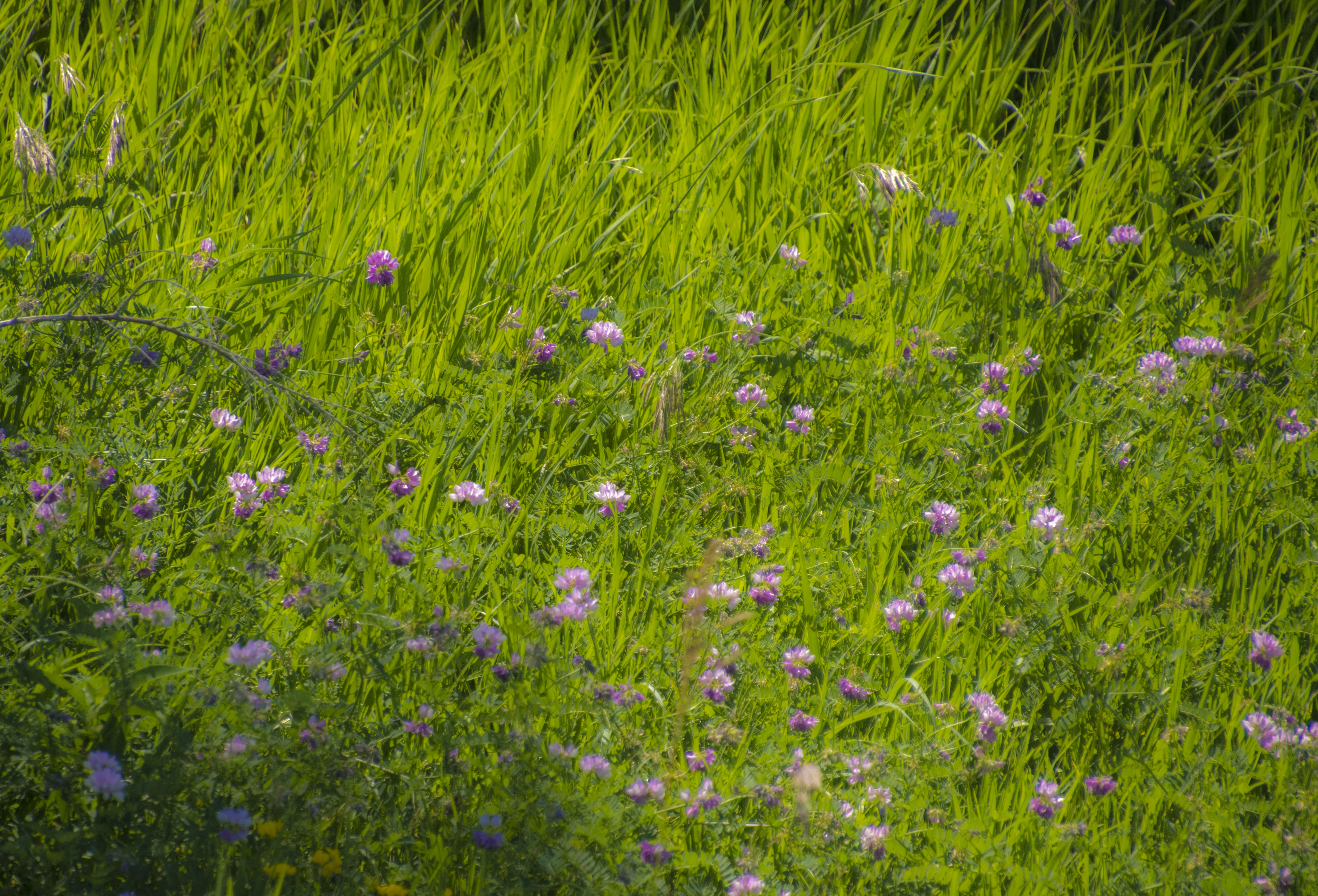
Oh, yes, there were blues and purples …

According to their website, the goal of IRVM is to provide an alternative to conventional roadside management practices, which were common before IRVM was adopted. These conventional practices, including the extensive use of mowing and herbicides, were often too costly to implement on a regular basis, were frequently ineffective, and contributed to an increased potential for surface water contamination.

“Having native plantings not only controls some of the erosion that is happening, but also having those deep root systems to be able to not only hold the soil in place, but not require as intensive herbicide application as would normally happen with a warm season grass planting that takes a different type of maintenance — a little more intensely mowed, and in some cases fertilizers too,” said Rebecca Kauten, who helped manage the program back in the early stages.

After the experience in Iowa I began noticing the shoulders of the highways and roadways on our recent trip to hang with family over the Fourth of July weekend. Much of Missouri roadways seemed to have followed suit, particularly on the state and federal highways. Not so true in Minnesota. I can name a few areas where wildflowers flourish on a couple of state highways — a small section of unmowable sections of both Highway 7 near the Watson Sag, and portions of Highway 34 between Detroit Lakes and Park Rapids. A few county roads have proven too risky for mowers and maintenance in places along the Minnesota River Valley, although the burly try. 

And on a hilltop, an entire halo of orange tiger lillies!

Near the Sag is a marshy stretch that boasts the rare white lady’s slippers, among other perhaps unique if not rare prairie plants, and in spots along 34 too boggy to maintain numerous wildflowers survive gleefully, including the state’s iconic showy lady’s slipper. While it seems the federal interstates host native plantings within much of Minnesota’s borders, it’s perhaps an archaic policy for the state and county highway systems that seems content if not intent to continue with the mow and spray cycles. Perhaps a change is warranted, especially now when pollinators are threatened, when deeply rooted perennials can aid in the fight against global warming and when our tax dollars could be put to much better use.

Although my trip was long and arduous at times, being surrounded for at least part of the journey with an ever changing bouquet of native flora was an unexpected joy. Even if I added to my highway hours by pulling off into a couple of field accesses to grab my camera. In the end I guess I’m a dreamer, and my dream is of walking down my little county graveled road seeing an “Iowa-scape” full of prairie grasses and seasonal native flowers, lush and colorful, scented and humming with bees, and perhaps even dancing with the prairie winds. 

Missing the Party

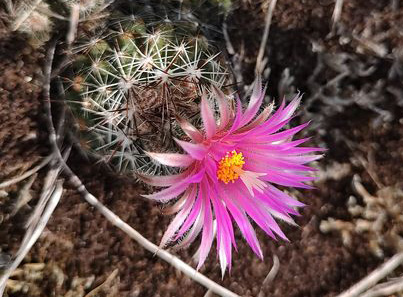
Oops, I was late to the party … and didn’t realize it until a week or so later. Here’s my story: Long time friend, Terri Dinesen, the DNR Park Manager for Upper Sioux Agency, Lac qui Parle and Big Stone Lake State Parks, posted a picture of a beautiful bloom of the rare ball cactus in the nearby outcrops. The blossom was expressively pink, billowing out in an expression of vivid color so common among cacti species, with a set of yellow stamens rising from the center with a small pinkish “hand” seemingly reaching out in greeting.

Finding any cacti blooming in the wild is a rare treat, and back in my “writing with willful whims” stage of my career for various magazines in the 1970s, a report came from various friends of a very rare cacti bloom across the Arizona desert around and north of Tuscon. It was termed a once in a lifetime event, so after calling my then girlfriend, I packed enough clothes for us both, picked her up at the rehabilitation center where she worked and off we went on overnight drive from Denver to reach the bloom the following morning. Yes, the desert was alive with color, and incredibly, that was my last cacti blooming party, and so far a “once in a lifetime” event. So having ball cacti in bloom right in the neighborhood was exciting and enticing.

Since I was near the secretive location awaiting cross-nation paddler, Madison Eklund, I stopped to see if I could find the little bloomers. Terri had given me a hint of the location, and about all I can say is that the cacti were in Big Stone NWR. Not much of a secret, for several websites and guide books will tell you as much. Then you must find them.

Thanks to DNR park manager, Terri Dinesen, here is a bloom I missed finding of the ball cactus.

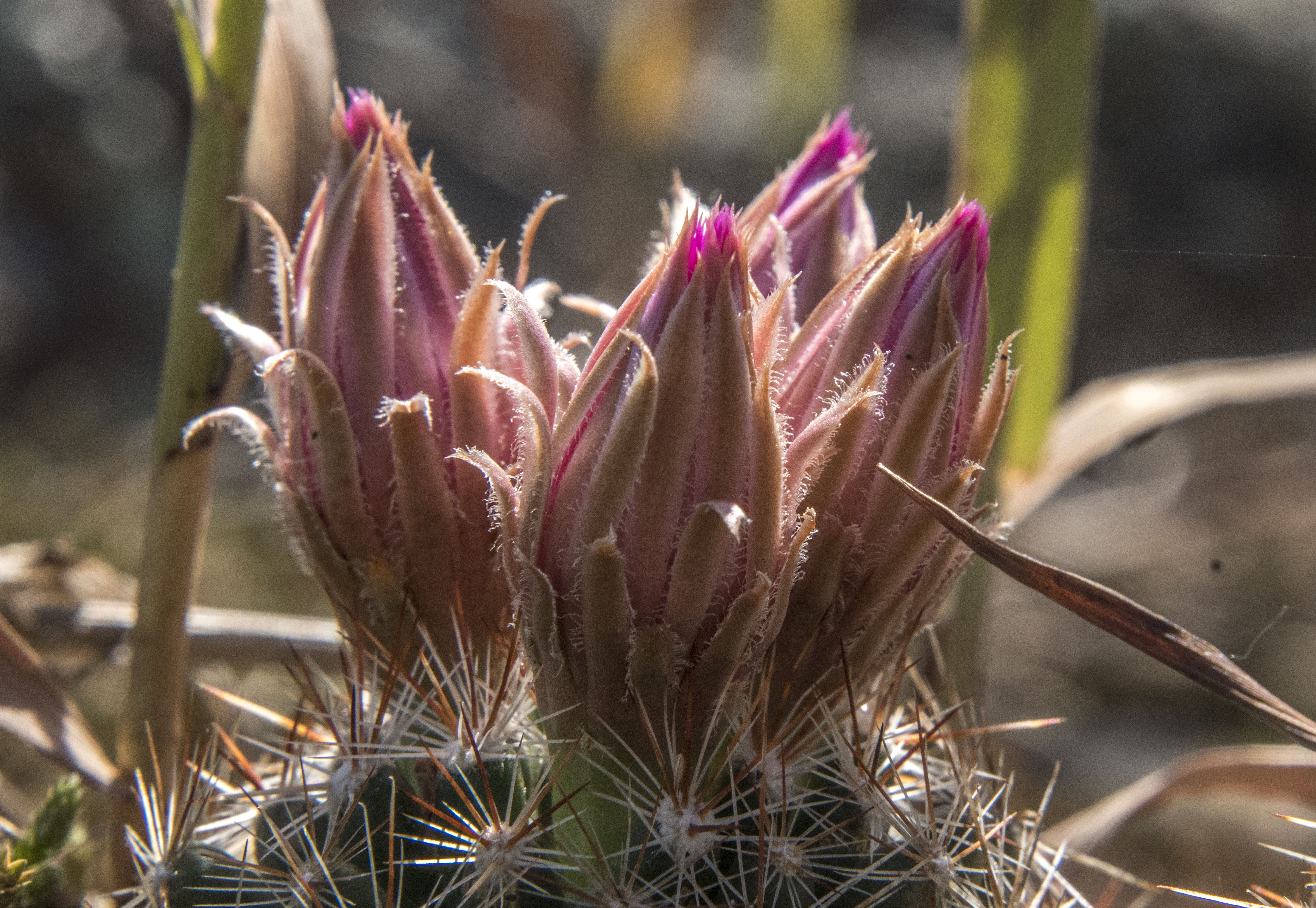
Barely as large as the clinched fist of a child, the extremely rare and fragile ball cactus (Escobaria vivipara) hangs on precariously within a small, two-county range that is growing progressively smaller. Experts claim the small cactus resides only in the exposed bedrock along the Minnesota River in Big Stone and Lac qui Parle Counties, and there aren’t so many outcrops remaining either. Rock mining is a major threat as are cactus hunters and prairie fires. Who can speak of the goats that the Refuge has been employing to eradicate unwanted invasive species such as buckthorn.

This rare and endangered species is one of only three native Minnesota cacti, with plains prickly pear (Opuntia macrorhiza) and brittle prickly pear (Opuntia fragilis) being the others. Only a few inches in height, the brittle prickly pear seemingly surrounds the ball as miniature fortresses rimming the Refuge outcrops in goodly numbers. I’ve seen them on outcrops as far south as Vicksburg County Park in Renville County. Compared to the ball, the brittle prickly pear seems to be relatively thriving.

Records show that the ball was discovered in Minnesota in 1898 by Lycurgus Moyer, and the species was described as being rather abundant at favorable sites in the Minnesota River Valley within the two counties. Less than 80 years later the ball cactus was listed as “threatened”, and by 1996 the species was placed in the state’s “endangered” status.  By then the only known surviving plants were in small remnants of the original population close to thin-soiled prairies being converted to agricultural use, or on outcrops being mined for gravel. Some were harvested with well intended but illegal collecting. 

Rising from the ball cactus plant are bulbs where the process of seeds within the fruit are germinating into actual young developing cactus plants that will be released when the bulb breaks open next spring. That unseen magic of nature is happening now on the shelves, a process hidden from the naked and curious eye,

The remaining plants are now scattered infrequently among granite outcrops within a small, two to three mile area, and only a portion of the entire population lives within protected NWR public lands. The vast majority of the remaining population exists on adjacent private lands now apparently in the hands of a huge gravel quarrying company. The original plans for the mine would have destroyed more than an estimated 3,500 ball cactus along with another 14,000 specimens of another eight rare plants of this unique and fragile ecosystem existing only in cracks of the bedrock found on the site. Thankfully the DNR threw at least a temporary wrench into the works by not allowing a permit due to the amount of destruction of rare plants at the site, establishing a rare plant protection area to save the most threatened and diverse plant habitat on the property. 

That said, this is a rare and rather mysterious ecosystem seemingly found only on the cracks and edges of the bedrock exposed 10,000 years ago by the Glacial River Warren, itself created with a break in the ice dam of the upper continent ice sheet of Lake Agassiz — bedrock exposed from the headwaters of the now Minnesota River in Ortonville downriver through to New Ulm. 

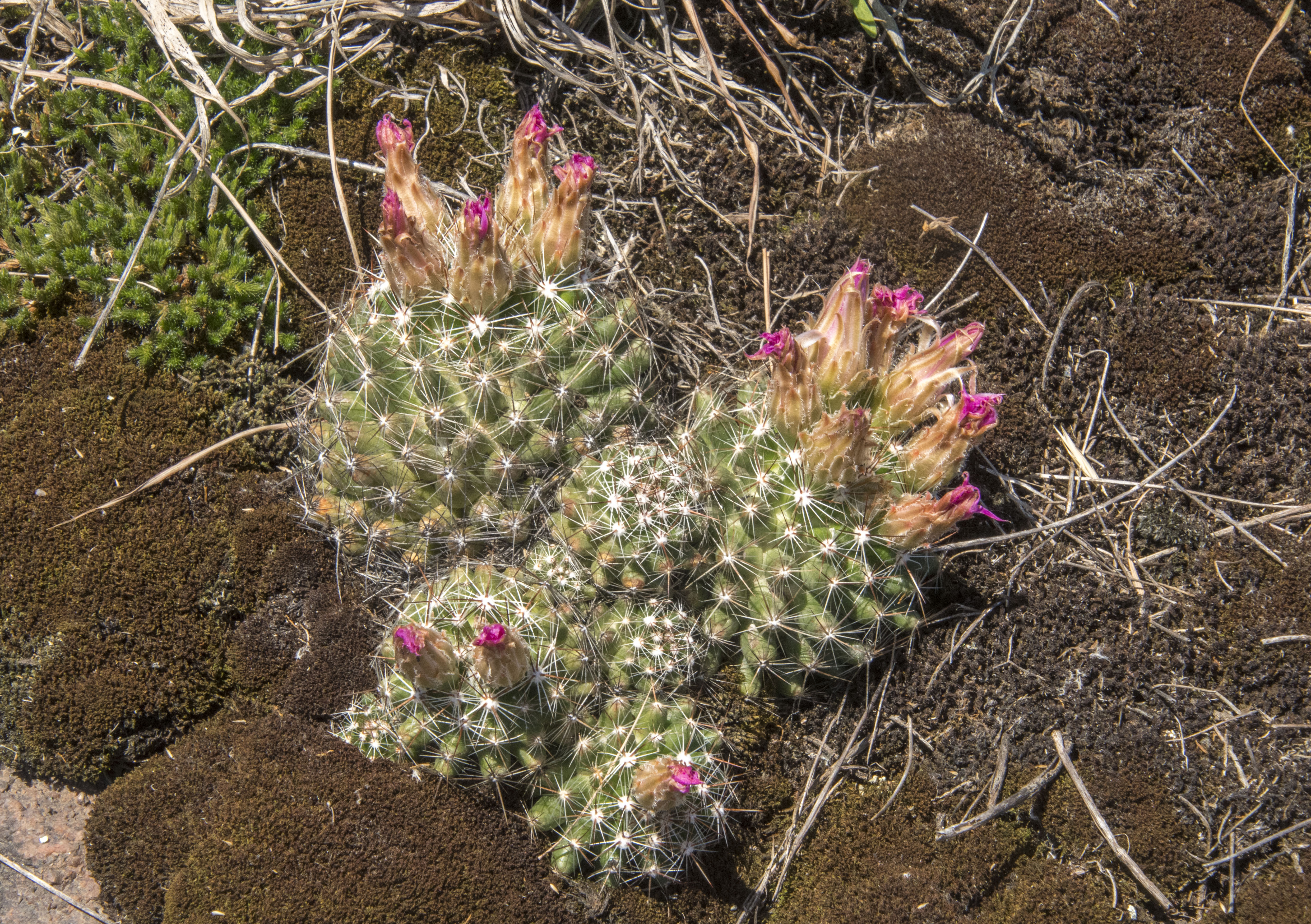
A rather typical clump of ball cactus found on one of flatter shelves in the Refuge.

Those small clumps of ball cactus appear on the flatter outcrops, structures often described as “shelves” rather than the massive exposed mound of gneiss or granite. Rarely will you find a singular ball, and like morels in the leafy woods, once you’ve found one your eyes will begin finding scattered clumps nearby. 

Presently, though, those very brilliant red or purplish flowers I was seeking have now matured into fleshy fruit stems that are secured tightly and point upwards from the roundish plant. We’re now closing in on the scientific “species” part of its official Latin name, “vivipara.” This describes the process of those seeds within the fruit germinating into actual young developing cactus plants that will be released when the bulb breaks open next spring. That unseen magic of nature is happening now on the shelves, a process hidden from the naked and curious eye.

Feel free to color me inexperienced or ignorant, or both, for I kept thinking those mysterious bulbs were the actual flowers just waiting to magically blossom out in all their splendor. For several days I drove down, sneaking through the grasses to “hide” my paths with hopes of catching and portraying the balls in bloom. Over those seven to ten days nothing changed. No blooms, no change. Just those tight, red-streaked elongated brownish bulbs poking skyward on many of the balls. 

In the frustration of my research on the “life cycle” of the small cactus going nowhere, I sent Terri Dinesen an email with an attachment of two of the ball clumps complete with the red-streaked, brownish bulbs.

“You were too late,” she responded. “Those have already bloomed.”

Whoops! I had missed the party, although as a rebound of personal forgiveness I took solace in realizing that at least the trips to the Refuge weren’t as far as Tuscon! 

Not One of Those People …

Madison Eklund doesn’t want to be one of those people. People like many of us, and she set out several weeks ago in her 17-foot kayak heading for an Arctic bay to prove that she isn’t.

On Monday she finished the “uphill” near fourth of the Eric Sevareid and Walter C. Port “Canoeing with the Cree” trip taken in the 1930s, starting at the mouth of the Minnesota River near Fort Snelling. It concludes some 1,700 miles later after paddling through the rapids-rich Hayes River into Hudson Bay at York Factory. If river lore and pieced together history is proven true, Eklund will be the third woman and apparently the first of either gender to complete a solo trip through the numerous rivers, lakes and the oft dangerous Lake Winnipeg to the bay. And, perhaps, the first kayaker.

On two of her last four days on this lower stretch she paddled her sea-worthy kayak 20 plus miles in white capped waves and high temperatures to conclude the Minnesota River portion of her voyage. That stretch included nearly 300 against-the-current miles from the start to the Churchill Dam at the foot of Lac qui Parle Lake. Up next is crossing the Continental Divide at Browns Valley, MN, to push off into Lake Traverse en route toward the Red River of the North and Lake Winnipeg before jutting off into the two river descent to York Factory.

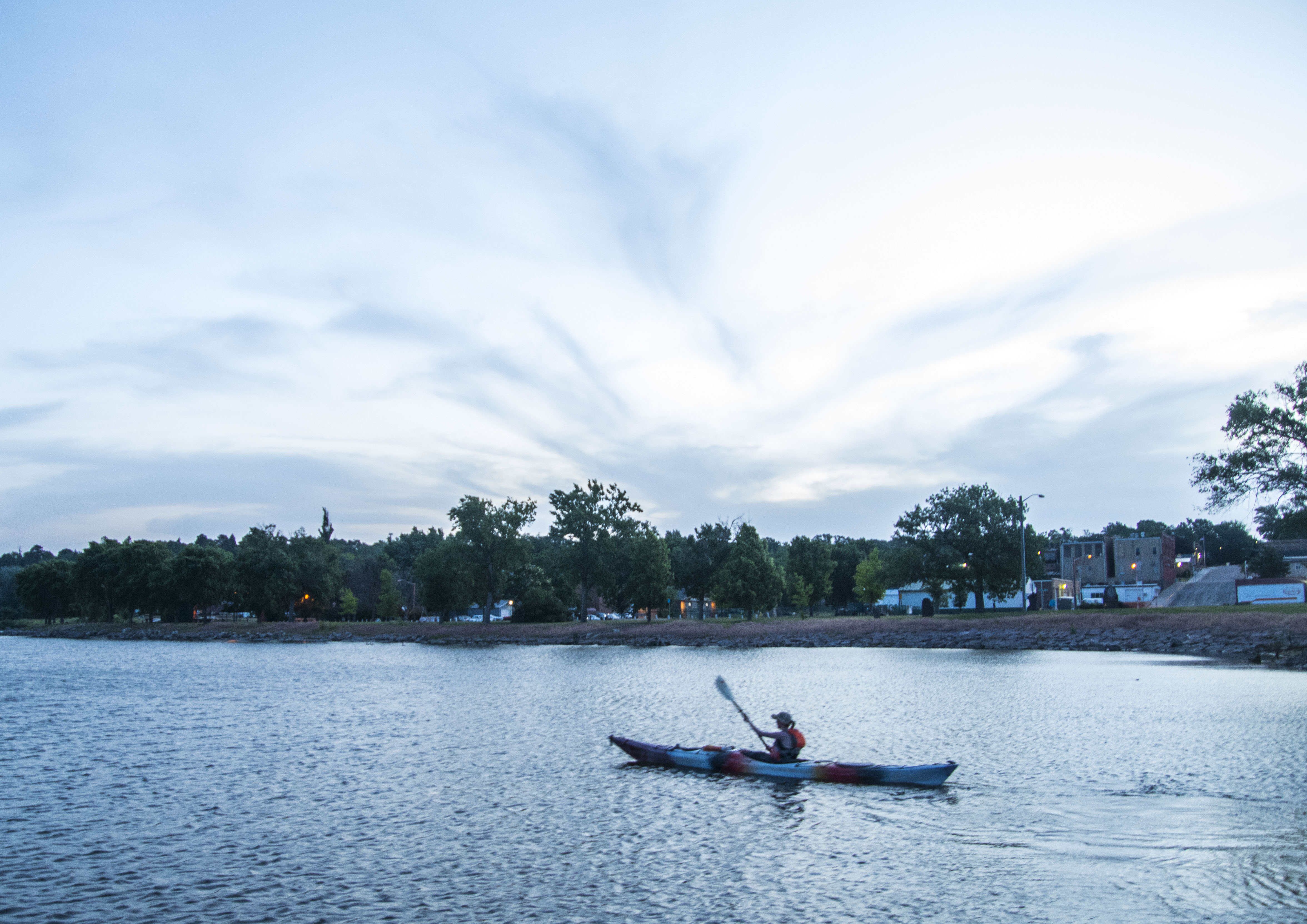
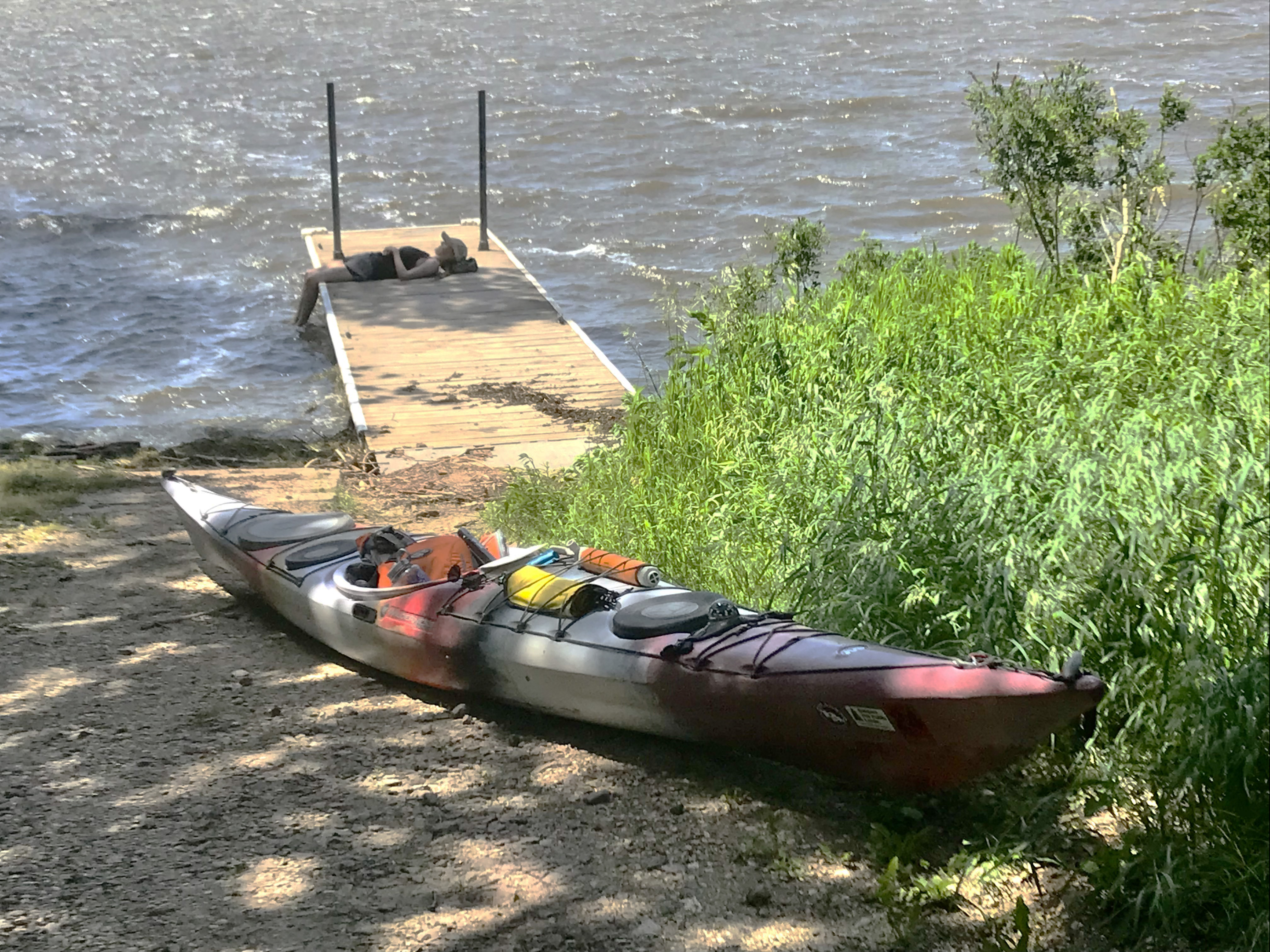
Madison Eklund begins her 26 mile paddle up Big Stone Lake early Sunday morning in calm waters, and ended up several hours later paddling through rolling white caps to reach her access point.

Oh, and about “those people” … people like many of us … and her quest of a journey? “It seems I’m always running into people who say they wish they had done this or that in their life, and now have regrets they never followed through. Maybe it was a marriage or their job. Time. Whatever, and now they regret that time has passed them by; that now it’s perhaps too late. I didn’t want to be like that. Sure, I could be sitting in an office or working a job somewhere, but why? This is my goal and I plan on being done and in the Hudson Bay by mid-to late August,” she said.

For years she had an eye open for embarking on such a trip, yet didn’t know where or when. She was considering several options. Then one evening while talking to coworkers in Grand Forks, ND, where she now lives with her husband, Ryan, an Air Force pilot stationed there, it was mentioned that two women had paddled from Minneapolis to the Hudson Bay a few years before.

That trip was 11 years ago now, and the paddlers were Natalie Warren and Ann Raiho, a trip that Warren documented in her book, “Hudson Bay Bound.” After a Google search Eklund connected with Warren, and through the connection learned about Servareid’s book. Then she read that Warren was doing a reading in the Twin Cities and drove down to connect with her. They’re still connected, and Eklund has sent texts to Warren on occasion during the trip to ask questions.

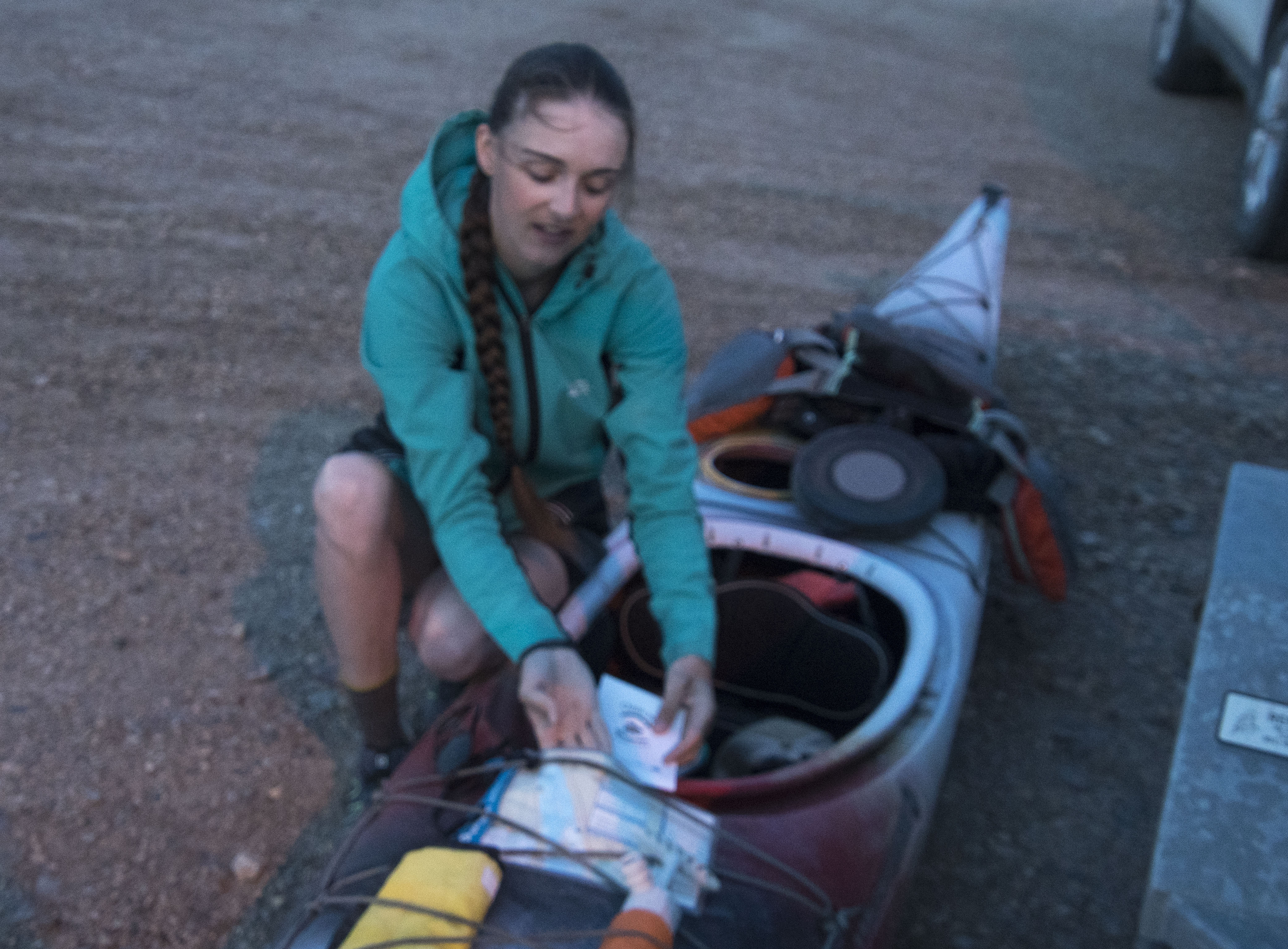
She packs economically, storing her gear in waterproof bags in the compartments, behind her seat and between her legs.

“It was through my connections with Natalie that I decided this was the trip I wanted to make,” she said. “Since I started, she continues to be a great help.”

Eklund claims she’s been a paddler most of her life while growing up in rural Eastern upstate New York near the Vermont border. A kayak paddler. “So when people ask why I’m using a kayak instead of a canoe, it’s because this is what I’m comfortable paddling,” she said. She somehow packs her supplies in waterproof bags that she stores in the portals, behind her seat and between her legs. She is an economical packer. 

Yes, she has a deadline of sorts, for Ryan is scheduled to be re-deployed in late August to Edwards Air Force base located in the western edge of the Mojave Desert just east of Los Angeles. This places her in a race against time since she lost two full weeks due to flooding and dangerous debris as well as her paddling against the heavy flood-stage currents of the Minnesota until she entered the “chain of lakes” along the Minnesota-South Dakota border.  

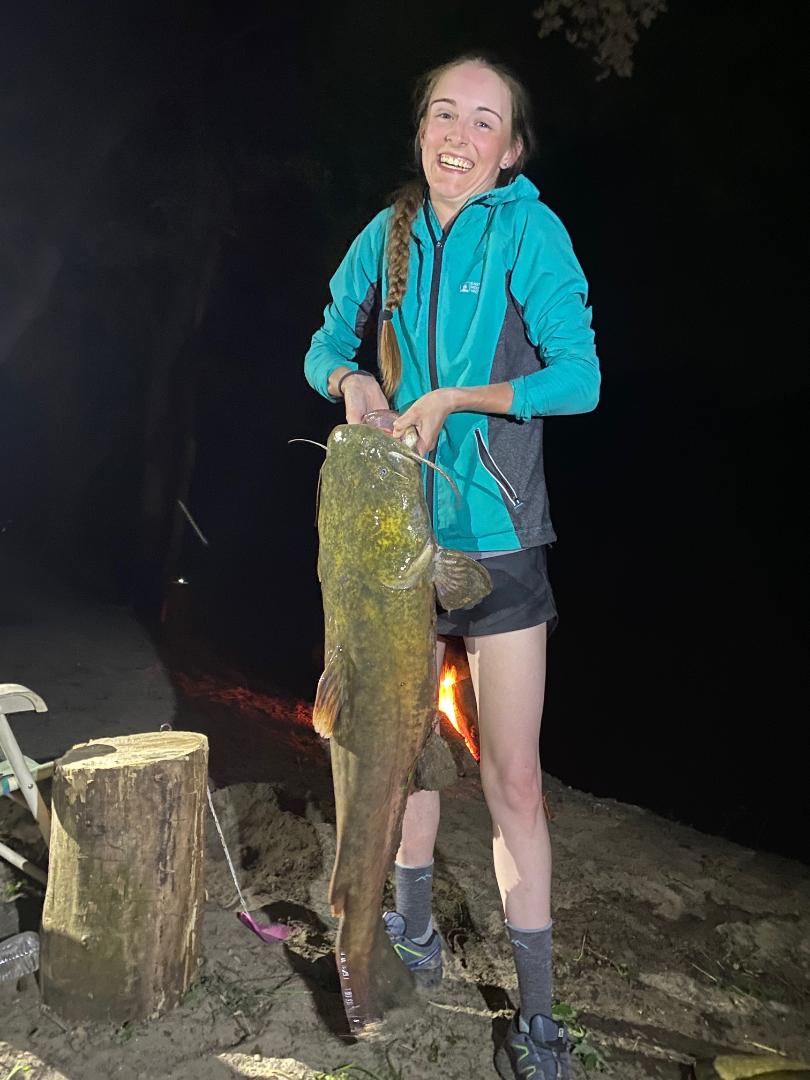
Madison with her flathead catfish, one she caught after being “inducted” into a catfish clan near Vicksburg County Park in Renville County.

Like some who have paddled the route before her, she has found a friendly community along this first fourth of her paddle. Folks she calls “river angels.” One was a family who adopted her for two weeks during the excessive high waters, the mother of whom shared the same dietary allergy as Eklund so there were no food issues. There was also a group of five fishermen who inducted her into the “clan” complete with a heavy river rod and a hook baited with a bullhead that led to her catching a 20 pound flathead catfish. So, yes, she has stories and nice remembrances of many she has met along the way.

It was actually through an old “river rat” community that led her to Listening Stones Farm last Saturday. I drove down with my canoe trailer to meet her at the foot of the Big Stone National Wildlife Refuge, then ferried her to her Big Stone Lake put-ins and take-outs starting around 4:30 a.m. on Sunday, and an hour later on Monday … all part of a strategy to beat the heat and high wind warnings later in the mornings. It’s been a wonderful experience for me, for I also have a connection with Natalie Warren. Warren has stayed here at the farm in the past, and once even loaned me the paddle that was branded at York Factory at the conclusion of her trip with Raiho. Eklund plans on taking a wooden paddle for the very same reason.

Perhaps the most challenging aspects are behind her, although there remains some worrisome concerns. Among those numerous challenges are meeting up with her food supply along the way in quite remote outposts along with several paddling perils. Lake Winnipeg, for example, is as long as the Minnesota River and is much more temperamental than Big Stone Lake since it faces into the prevailing winds. Numerous rapids await on her final leg on the Hayes River. “I’ll need to often make split second decisions on whether to try to run it, line through it or portage,” she said. 

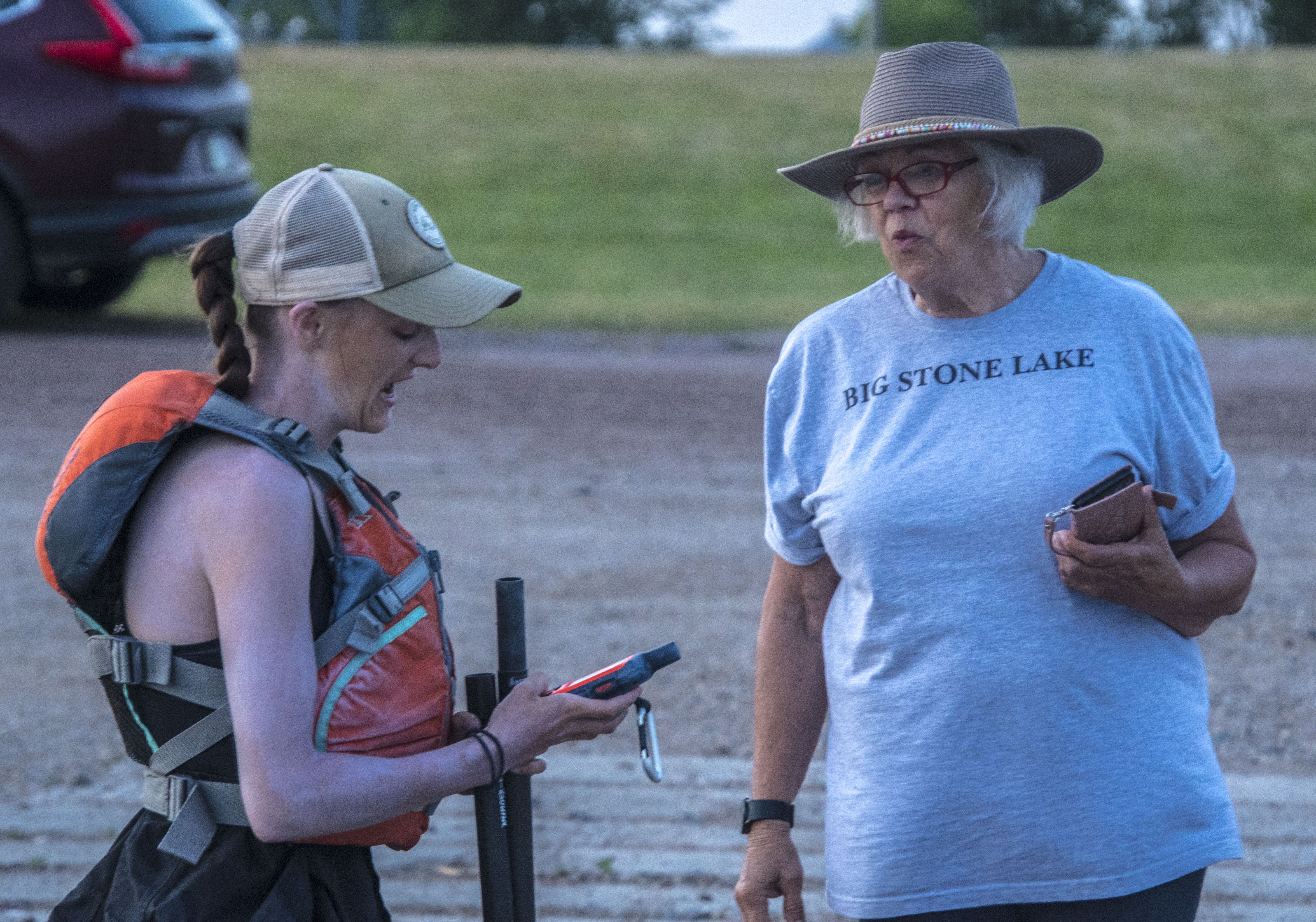
She chats with Big Stone Lake historian Judy Beckman at the foot of Big Stone Lake.

This doesn’t include polar bears that she might possibly meet once she begins the descent toward the Hudson Bay. She isn’t “carrying” either. “Where would I put a gun on a kayak?” she asked of the obvious. She added that her parents and others have concerns about her traveling alone as a woman, although she believes some of those worries have lessened the further she has traveled along with the experiences she’s faced so far. “I’ve met some good people along the way,” she said.

Much of her trip of a lifetime lies in front of her, and she says, “I’m so happy to have this lower portion of my trip behind me, and Big Stone Lake was the last of it. It wasn’t bad at all except for the heat. I grew up lake paddling, and after fighting the flooding and fast currents on the Minnesota, the lakes were relatively easy for me” even while facing white-capped waves on her first day on Big Stone Lake. “I’m ready for getting on the other side of the Continental Divide and having the currents in my favor.”

Taking “five” after her 20 miles of padding up Big Stone Lake on Sunday morning in 100 degree heat and white cap conditions.

Then there’s this … that move to the Mojave. “I’m a North Country girl used to blizzards and snow,” she said. “I mean, I grew up in upstate New York! And, I’ll be going from the cool Hudson Bay to the desert basically overnight.” That seemed to faze her even more that the nearly 1,200 miles remaining on her paddle to the Arctic. 

As Eklund paddles ever onward she’s proving, if she hasn’t done so already, she isn’t “one of those people.” “I’m living my dream,” is how she put it.  Nope, she’s not one of those people! 

Sunrise, Sunset … So Swiftly Flow the Days

I’ve never hugged my neighbor, the farmer. Perhaps I should reconsider now I’ve realized that my 78th summer will have an Eastern horizon, one open to both colorful dawns and a rising sun. He has planted soy rather than ethanol, meaning my horizon won’t be hidden behind 12 to 14 ft. tall corn plants for the rest of summer and fall through harvest. What a fine and unexpected blessing.

Perhaps my greatest joy in living here at Listening Stones Farm is having views of a horizon for both the sunrises and sunsets. I love both, and love how they bookend a fine day. Although I’m generally not a fan of musicals, the hallmark song, “Sunrise, Sunset” from Fiddler on the Roof, has resonated with me simply because of the choruses:

Sunrise, sunset

Sunrise, sunset

Swiftly flow the days

Seedlings turn overnight to sunflowers

Blossoming even as we gaze

Sweet, isn’t it? Granted, I view more sunrises come fall through spring than I do in the summer although it’s nice being able to see the line of trees on the flip side of this quarter section even on the “Midsummer Solstice.” To be clear, I do see the sunrises in summer … not just as many of them. Often times I’ll note the ambient colors of a new dawn and walk into the prairie or take off with my camera for a tree, prairie or wetland I’ve somehow placed in my mental “database” to feature in what I hope is a stunning image. Remember, I hold only a camera. Same holds true of the sunsets. Colors that are never predictable, displayed on clouds rarely duplicated, painted on early morning and late evening landscapes and nature. So swiftly flow the days!

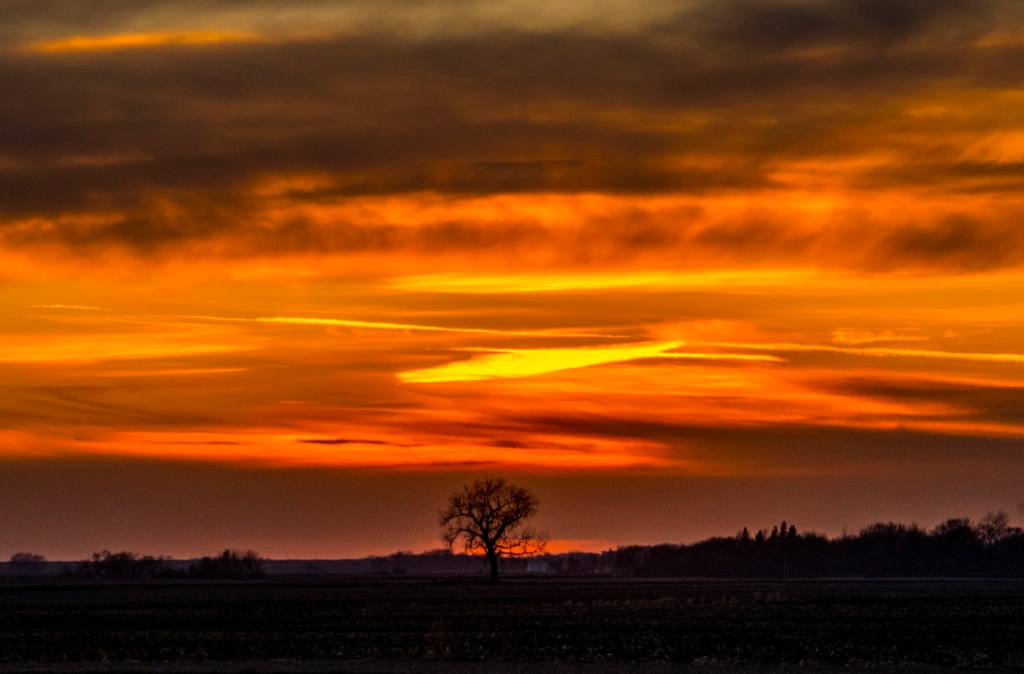
A sunrise toward the east from my prairie … while below, a sunset toward the west …

Those fine moments of special color and light reminds me of what a fortunate place to live, this last bastion of our glacial blessings, for there remains remnants of the mostly depreciated prairie pothole biome. Some are large, shallow lakes, of which we are blessed with numerous ones to the east across U.S. 75. Less than 100 years ago the potholes, or wetlands (some call them “sloughs” although that word is too close in both pronunciation and image to “slum” for me) numbered in the millions, beginning at the Glacial Ridge down to the loess bluffs region of NW Iowa. Now there are but a few thousand, and in some of the prairie pothole counties there might be but one or two scattered across an entire “black desert”, tucked away from sight and promised cropping land. 

Those wetlands make for beautiful mirrored images of the rising and setting sun, and in many instances are blessed with willows and other trees that may add interest and dimension to an image. Yet, just sauntering through my prairie or an oak savanna, all part of a rather unique and mostly obliterated geological offering to mankind that provides other elements to photograph. Birds, forbs, deer and damselflies all come to mind, all part of such a wonderful blessing. 

A tipster allerted me to a nearby wetland where a swan family had settled, making for a nice sunrise image.

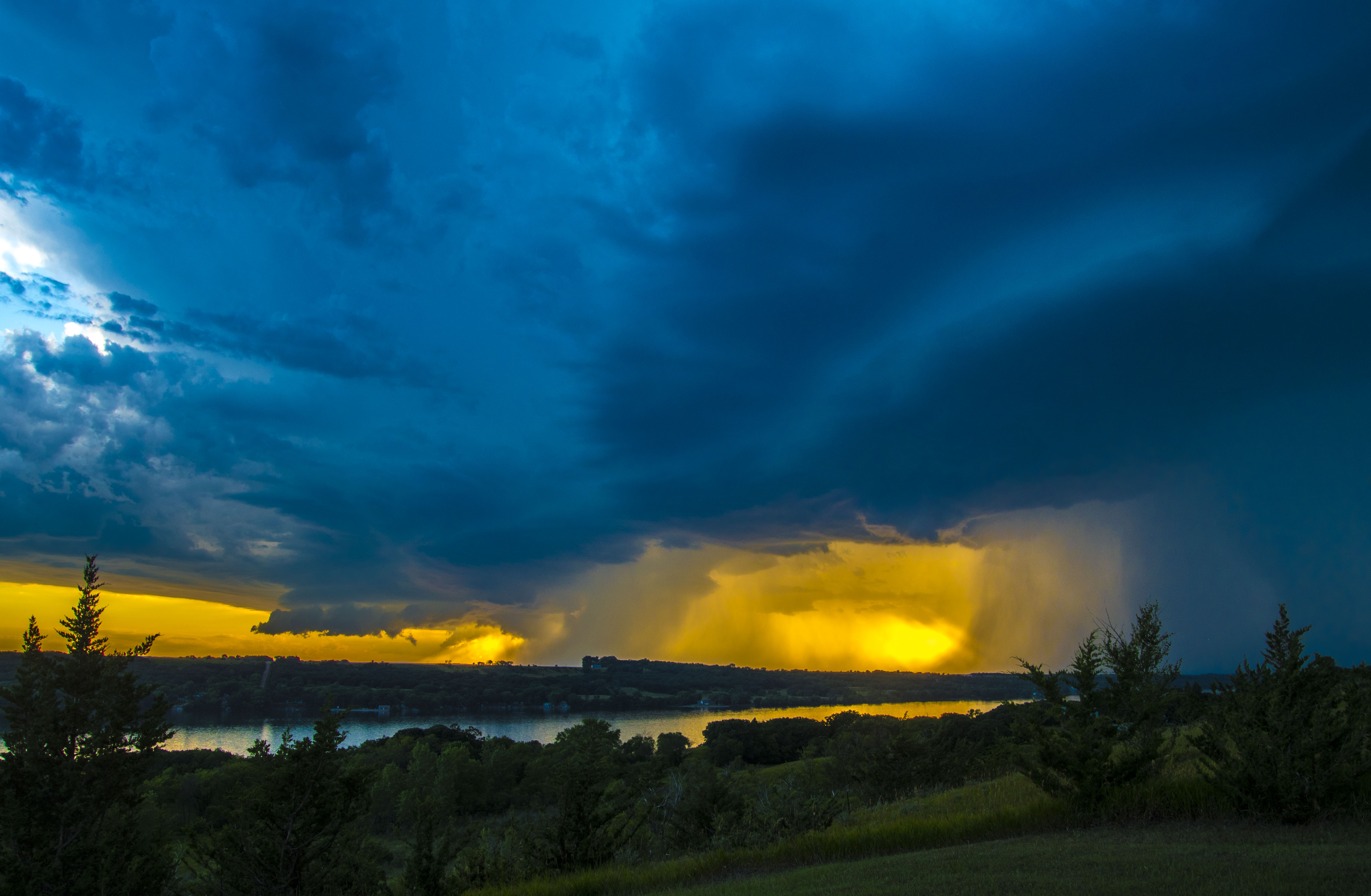
A few evenings ago I again headed to the Big Stone National Wildlife Refuge, this time in search of the blooming of the rare ball cacti hidden and embedded in the roughened and craggy gneiss outcrops. There was just enough of the “Monet light” remaining to provide some drama to the few images of rare forbs I captured, and yet it was early enough to be blessed with the ambient backdrop of colors so often painting the clouds. Blooming even as we gaze!

While I couldn’t find the blossoms on the cacti, there were some blooms on plants common to this very rare and barely surviving ecosystem left behind by time — an ecosystem indigenous to an eon long passed and mostly unseen. Then, on the way home as the sun was setting, a beautiful purple painted the sky behind a pair of roosting wild turkeys, then several moments later, a vivid orange graced the sky behind a trio of trees on a ridge above Big Stone Lake, a ridge created by the Glacial River Warren when the ice floe dam of the humongous Lake Agassiz broke free just a few miles north in at what is now the small town of Browns Valley ­— the geological event responsible for the near desert-like ecosystem tucked within the outcrops.

And, on the drive home a bonus sunrise image of a foggy Stony Creek.

This was just a week after I rose at 5 a.m. to follow a tip of a swan family with a newly hatched brood of cygnets in a nearby wetland. I arrived just as the sun rose to capture them in a beautiful orange-ish glow spread across stilled waters. Then, as a bonus on the way home, I found a fog rising above a beautiful bend of Stony Creek just east of Ortonville. Although neither was of my home horizon, this was special nonetheless. Admittedly, sometimes these home horizons are invitations to promises beyond. 

Ah, but my home horizon! Hundreds of sunrise images have come from within my prairie in all seasons, and in multitudes of colors and light, and each time I believe what I’ve captured can never be topped. Until the next sunrise. The same may be said of sunsets, from capturing them alive with curtains of smoke from western wildfires to those clear and cheerfully painted by our rapidly escaping star … our sun. One season following another!

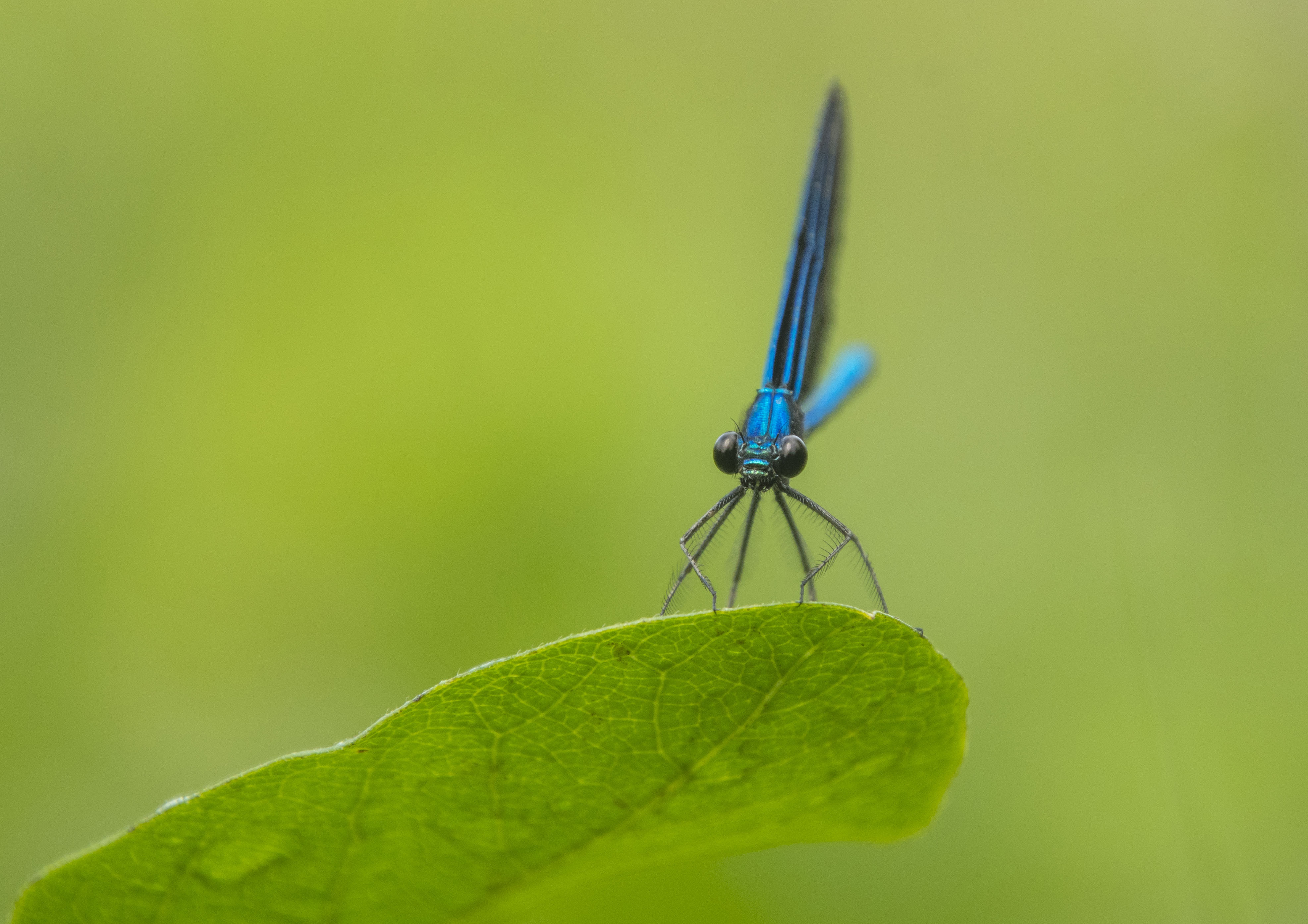
A sunset image of a dragonfly in a bluestem prairie …

Many of us have heard the arguments of those living in coastal Florida boasting of the most picturesque sunrises on their eastern shore versus those who claim there are no better sunsets anywhere than those crossing the Gulf on the western shore. I’ve witnessed both and can lay claim that neither can touch either the sunrises or sunsets here on the prairie, and from my horizons, in opposite directions, allow these nearly daily magical palettes of unequaled color to appear. Time after time, one season following another.

So sing it, brothers and sisters! Sing it loud and clear:

Sunrise, sunset

Sunrise, sunset

Swiftly fly the years

One season following another

Laiden with happiness and tears

Hope … For Jenson’s Small ‘Island’ of Art

A Mourning Dove swept past me moments after I had eased into a weathered wicker chair on the small garden patio of rosemaler Karen Jenson’s iconic home in the small artist community of Milan,MN, mere blocks from the Milan Village Arts School (MVAS) where she held classes in the past. The dove landed to perch momentarily on a simple wrought iron guard rail, the work of Gene Sandau, the late blacksmith artist from nearby Madison, posing proudly if not symbolically.

Was the dove symbolically an omen for an era gone by? Perhaps an era even erased from current existence? Hope springs eternal for something many of us are holding onto as vividly and strongly as the dove’s talons grasped Sandau’s wrought iron.

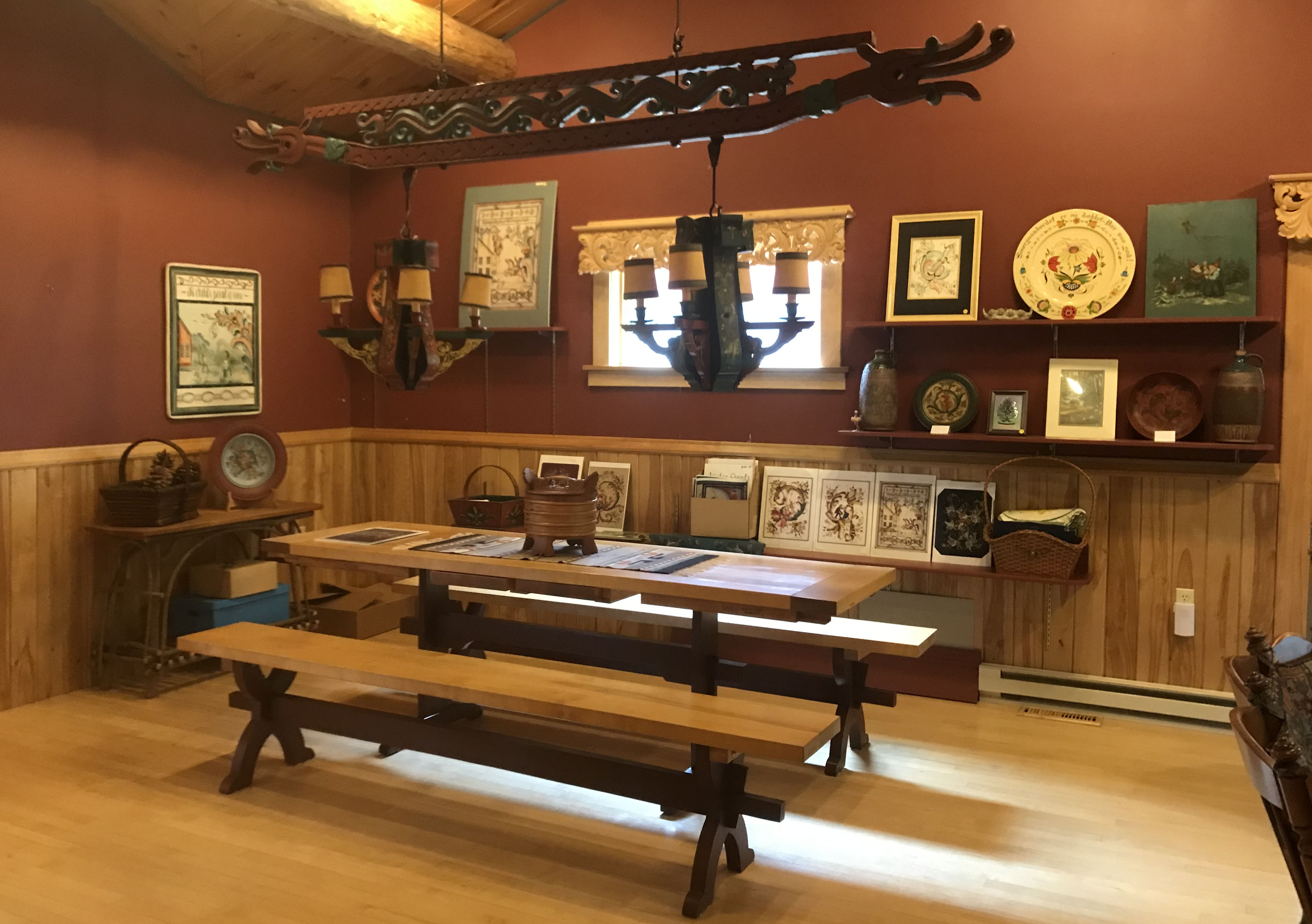
I speak of her home, for Jenson is now a resident of a senior care facility in nearby Appleton. Her house has remained empty with exception of AirBnB out-of-town renters who’ve come for MVAS arts classes. Her house is in itself a work of art by an artist known even in the old countries for her freestyle rosemaling. Indeed, she was considered one of the best internationally, and artists traveled to this small prairie town for years to study with Jenson. 

Jenson’s “great room” is representative of her home of “old world art” in the small arts village of Milan.

Her garden, which surrounds the house with nooks and crannies just as it is within the exterior walls, is an island into itself. From the two patios, front and back, and from windows inside her house, the nearby streets are beautifully obscured from view. How could anyone not describe her house and corner lots as anything other than an island? An island of old world art?

A few years ago when her family decided for the move to the Appleton facility, a fund was started with hopes of saving her home as a living legacy to her influential life as a artist and teacher, which would be donated to MVAS to also house guests … as it did until Covid. “My hope is that someone will buy my home and donate it to the school,” she said, “that it will remain as it is. I didn’t want to sell, and I wish I could still live there. I loved my home.”

The house was recently listed and a “standard” open house was held this past weekend. A “lookalou” couple came in ahead of my friend, Wanda Berry, and I. Like us, they were audibly amazed by the art that seemed to evolve from every direction, from each of the numerous nooks and crannies, in all the rooms and an unexpected balcony, all emphasizing Jenson’s Norwegian rosemaling and Swedish dalmalning.

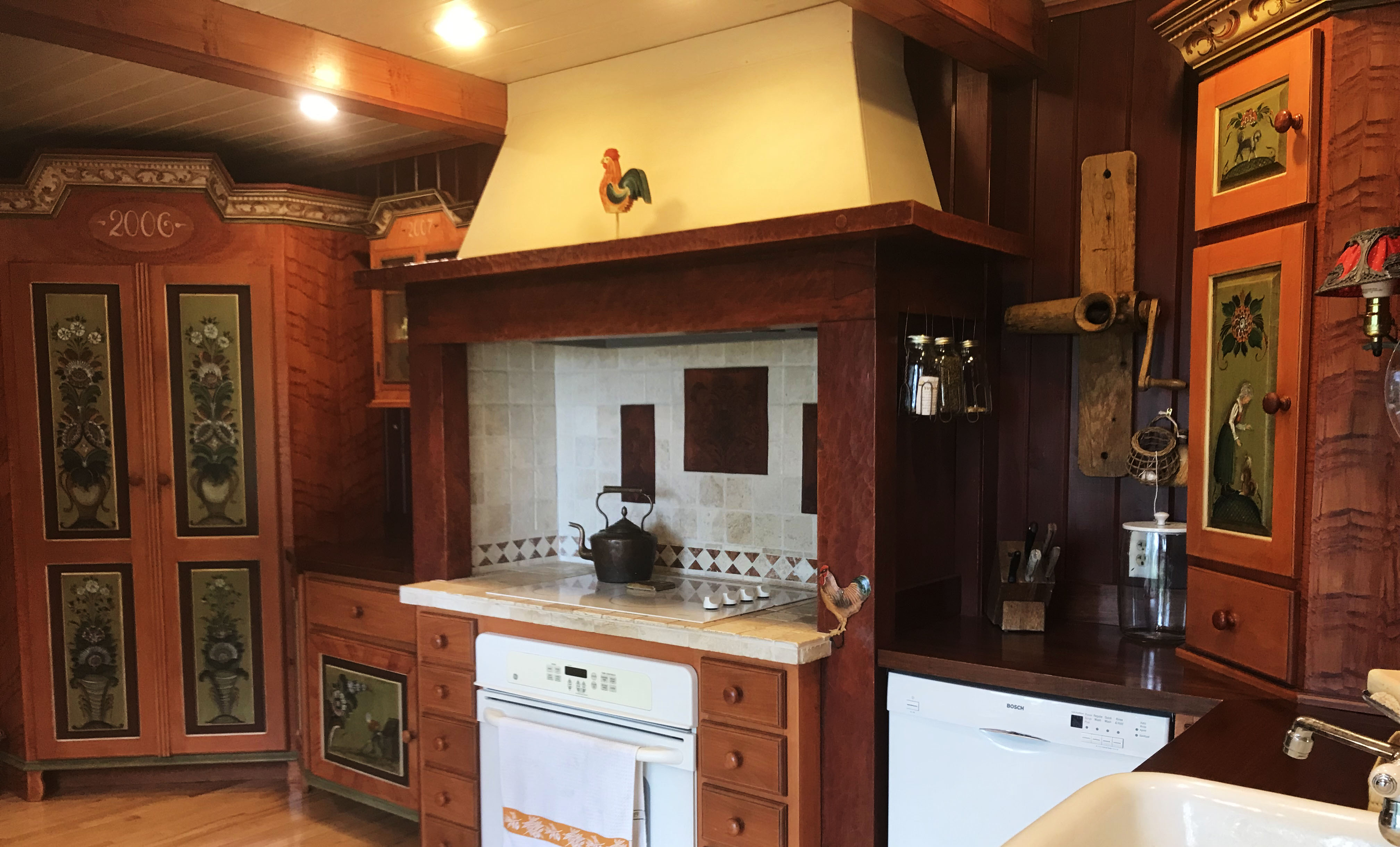
Her kitchen with the decorative cabinets is a treasure.

This wasn’t my first viewing of the ornate interior that was the work of Jenson’s painting and the carpentry skills of twin brothers, Aaron and Arvid Swenson of rural Flom, who constructed the beds and other decorative pieces. That initial viewing was years ago prior to the now annual Upper Minnesota River Arts Meander when friends Harland and Robbie Kasa, of rural Cannon Falls, came for a visit. We gave them a tour of the studios of area artists Dale and Jo Pederson of Wegdahl and Gene and Lucy Tokheim of Dawson before driving to Milan for a visit of the Arts School.

Harland, too, was an artist who recreated from scratch horse drawn buggies and ornate carriages, and got into a conversation with Jenson at the school. Interestingly, Harland had a client who was interested in having a rosemaled seat on his buggy, which Harland had explained to Jenson along with his frustration in finding someone to do the painting. “I do a little rosemaling,” she quipped before inviting us for the short walk to her house to show us her work. She was kind enough to show us all of her home but her bedroom. Her house back 20 some years ago was a wonder of awe. For those of us so fortunate, an awe that hasn’t changed.

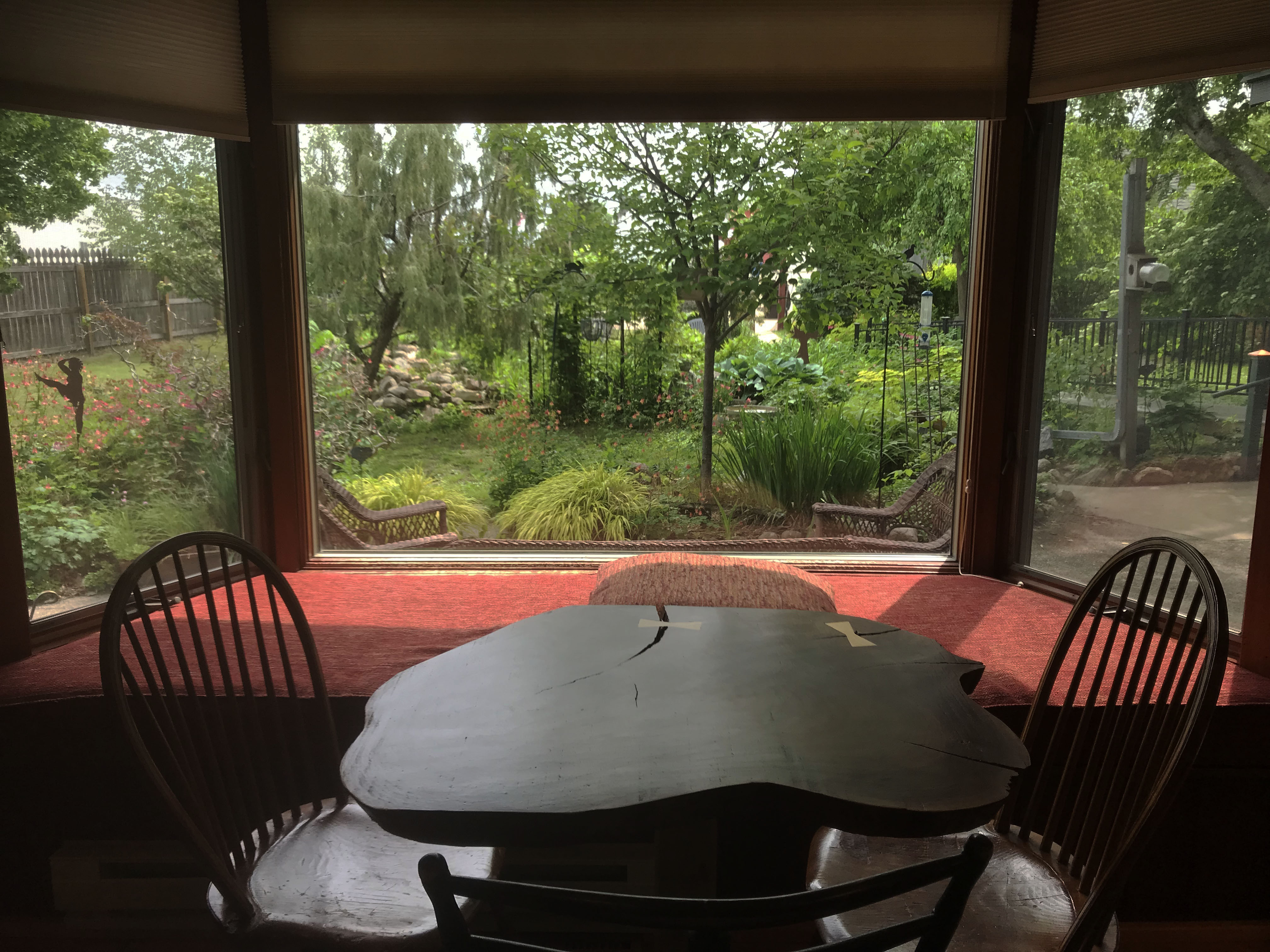
A view of the ornate garden that obscures the adjacent streets gives one a glimpse of Jenson’s early morning cup of reflective coffee.

I knew Jenson only by sight at that point, and a few years later our booths were next to one another at an international cultural event in Willmar. Thus began our conversations and friendship, one that has continued to this day. She was working on a plate during the event and when we were packing up she was fine with selling it to me … which is now here on my wall at Listening Stones Farm. Since she has visited the farm a few times, and always smiles when she sees the plate.

And, yes, there is another connection between us, for it turns out that her grandfather and his brothers built this house I live in here on the farm, as well as others in the nearby area … all “Gustafson-built houses.” She grew up as a child at the foot of this road, near Big Stone Lake, and for a short while placed a small prebuilt log cabin on the top of a hill on land she still owned. “My family farm,” she called it. We were quite excited to have her as a new neighbor and envisioned sitting with a glass of wine to possibly view sunsets featuring a small oak savanna on the ridge across from the little cabin. Unfortunately her poor health kept her from enjoying her hideaway, and it was eventually sold and moved after she entered the Appleton facility.

Which brings us back to her beautiful “island” home in the midst of Milan. The house is listed for just short of  $200,000, and was initially part of an agreement set up by Jenson with ties to MVAS to hopefully raise enough funds to purchase the house and lot and donate it to the school. Contributing to that effort was area community organizer Patrick Moore, a 40-year friend of Jenson’s, who said that over the years about $70,000 had been raised. It wasn’t enough.

Her seating area in the “great room” offers a nice view of her west side garden.

Some family members had apparently, much to Jenson’s disappointment, run out of patience with the fundraising effort and as Jenson put it this weekend, “wanted to bring an end to it, to just get it sold.”

“Unfortunately,” said Moore, “negotiations broke down, and we couldn’t meet the family’s price, so now we are hoping that a friendly buyer can step forward.”

Hope is eternal, for Jenson, Moore and others … myself, included. Her home … yes, it is a home more so than a house … is a regional treasure, at least, and in itself a work of sweat, labor and art. Jenson’s sweat, labor and art. Although the fundraising efforts, which basically began after Pioneer PBS Emmy Award-winning staff did a Postcards segment on Jenson and her Milan home, have fallen short, many of us are still hoping for a just conclusion. Perhaps a wealthy buyer with a benevolent spirit might still purchase the home and lot, then donate it to MVAS while keeping the art home as is. As internationally respected rosemaler Karen Jenson has left it, a legacy to her life and career as an artist.

A wreath of greeting and farewell still hangs as one leaves Jenson’s former home.

Sitting in the stilled, ornate garden, hidden from the street, it was easy to find a moment of meditation among the bleeding hearts, allium and other plants in her beautiful gardened yard, with a warbler and sparrows cheerfully singing and with a dove momentarily perched on the wrought iron. You could close your eyes and vividly recall the painstakingly painted freehand rosemaling decorated the walls, doors of cabinets and rooms, of the twins’ wood crafted adormants and beds, along with intricate acanthus carvings.

When I opened my eyes, the dove had flown. Was it a symbolic omen? One suggesting hope is on the way, or one of a less fortunate conclusion? Many of us hold hope that Karen Jenson’s legacy, of her art and her importance to this small Norwegian village in the heart of the prairie, will be forever retained.

Zen … Before the Storms

My little foam bug, one tied on a #12 hook complete with a couple of sets of rubber legs, landed in the shallow water. After a couple of strips a swirl happened and I raised the rod tip. What followed as one of those epic showdowns between a bull bluegill and man on a three-weight fly rod. I was in heaven!

My dear friend, Jack Griffin, rose from the captain’s chair with interest. Our bout over the little floater fly was a tough one, bending the rod in an arc that brings joy to the heart, and in such moments, hope the rod will remain intact. So far I’ve been fortunate, and would be again as the stout fish the southerners call brim made circles that would impress a dedicated barrel racer. “Wow, that’s a nice one,” said Jack as the fish drove for deeper water.

Finally the bruiser gave in to allow me to skim it across the surface and lift it into the boat. “That’s a mighty fine fish,” he said, and I couldn’t have agreed more.

“It’s too big to keep,” I said. “I’ll have to release it.”

This small topwater fly, half the size of a penny, worked magic with the bluegills!

Jack wanted a picture, so we posed, the bluegill and I, and then the beauty was released to the lake. This battle was start of a fantastic two days of fly fishing for perhaps my favorite fish. Saturday with Jack, and again on Sunday morning at Annie Battle in Glendalough State Park with old friends, Tom and Cindy Cherveny. Both times the “fish were on.” 

If I were asked what activity brings me the most enjoyment, joy and relaxation this might top the list. I don’t need to go back too far in the past to second that emotion. My son, Jake, and I had gone to Missouri last Thanksgiving, and the weather was favorable for some late fall fly fishing. All the ponds on our family farm were ice free and I had caught numerous bass and  few crappies but no bluegill. A few miles east of our farm lives a retired banker on rolling, timber-blessed acreage that is home to about a five acre pond and home to some incredible bluegill. Years ago he gave me “perpetual permission” to fish the pond, so I drove over, pushed the line through the guides of my three-weight, tied on a “softie” and laid out a cast. 

This wasn’t a very good angle, for the bluegill was larger than it looks … and that isn’t a fisherman’s tale!

Moments later my soul was restored in blissful joy as the first bluegill hit the fly. Those circular patterns of brawn seem to do that to me. Before an hour was up I had enough “keepers” and sat down next to my rod on the bank. If Zen is indeed a state of calm rapture, I had achieved it. This feeling occurred more than once over this Memorial Day weekend, and not just from fishing. Friendships count, too. And a saunter through a native prairie was a fine dessert. The fishing, though, was supreme. Jack and I would do well on his home lake Saturday afternoon, rimming around one corner of the lake in his pontoon. It was easy fishing, and his dog, Julie, loved those moments as much as Jack and I did. Maybe even more.

Sunday morning I hoisted my kayak onto the car and headed to Glendalough. Initially camping was planned, although getting ready for an arts show on Thursday poxed that idea. At Annie Battle, a southeasterly wind was already laying heavy waves across the surface, a prelude to the incoming storms that would batter us for the remainder of the holiday. Thinking the leeward edge of the forest across the lake near Minnesota’s only state park canoe-in campground where they were camped would be protected, I pushed off and was careful to keep the nose of the kayak into the waves. I was surprised at how well my muscle memory kicked in, and within a short time I made it across to calmer water. 

The burr oaks weren’t fully leafed, their hefty limbs still bared to the sky.

Moments after I got into the lee they paddled up in greeting with Tom lifting a healthy stringer of their catch. As we chatted I rigged up, using the same rod and fly. I let out some line and laid the fly into the shallows, and within three strips my first bluegill charged into battle. 

This is heritage lake managed for bluegill with a five-fish limit, and no motors or electronics are allowed. This is Tom’s country, for it’s beautiful and quiet, a portion of land nestled in the transition zone between prairie and hardwood forest. The park was named by a long ago owner of the land, E. E. Murphy, then owner of the Minneapolis Tribune, for an Irish word meaning a glen between two lakes … one of which is Annie Battle. 

The “spent” seedlings of the Pasqueflowers blanketed the upper prairie.

After catching and releasing dozens of bluegill and a handful of bass, the predicted storm announced itself with a sudden crack of thunder. I gave the four fish on my stringer to Tom, then took off for the landing on the distant shore trying to beat the storm.

Once I got the kayak settled into the car top carrier, I stopped per chance at the Prairie Hill Interpretive Trail near the park entrance for a sandwich, then grabbed my old Nikon and headed in through a woody ravine with a promised prairie at the apex. A few weeks earlier I had photographed an incredible display of spring Pasqueflowers on a southern exposure of this same prairie and was hopeful of finding more wildflowers. Finding a Prairie Smoke would have made my spring-to-summer wildflower voyage nearly complete. And thus far, the weather was cooperating. The storm was mostly just wind and threatening clouds.

Though leafing had certainly started, the burr oaks were coming late to provide me with a few more opportunities to continue my “limb” works. I saw my second ever scarlet tanager moments into the saunter, and once in the upper prairie portion of the trail, I spied a few Prairie Smoke hiding among a meadow seemingly full of spent Pasqueflower seed heads — nearly as pretty as the blossoms themselves. It was a day … a weekend, really … that offered perhaps more than I rightfully deserved.

And, yes, there was Prairie Smoke hiding in the prairie grasses!

Views from the top of the prairie were magnificent, and I settled onto a handy bench for a little meditation. Had my camera battery not died I might not have had reason to leave. As I headed back down the mile long trail toward the car a day old fawn suddenly stood awkwardly in the middle of the trail. On legs so spindly that it was wobbling to stand, it seemed to wonder if I was man or wolf, friend or foe, and I was kicking myself for not having my spare battery along. Eventually it stepped off to the side, still in newborn wonder as I scooted past toward the car.

Nice size bluegill on an ultralight fly rod. Time spent with good friends sharing a fellowship with nature. Chance encounters with beautiful wildflowers, a scarlet tanager and a newly welcomed whitetail deer to the world. I believe there is a Zen to be found within the natural world, and for a couple of days it was presented ever so lovingly. It was a beautiful peace before the storms rolled through on Monday … 

Forest Bathing

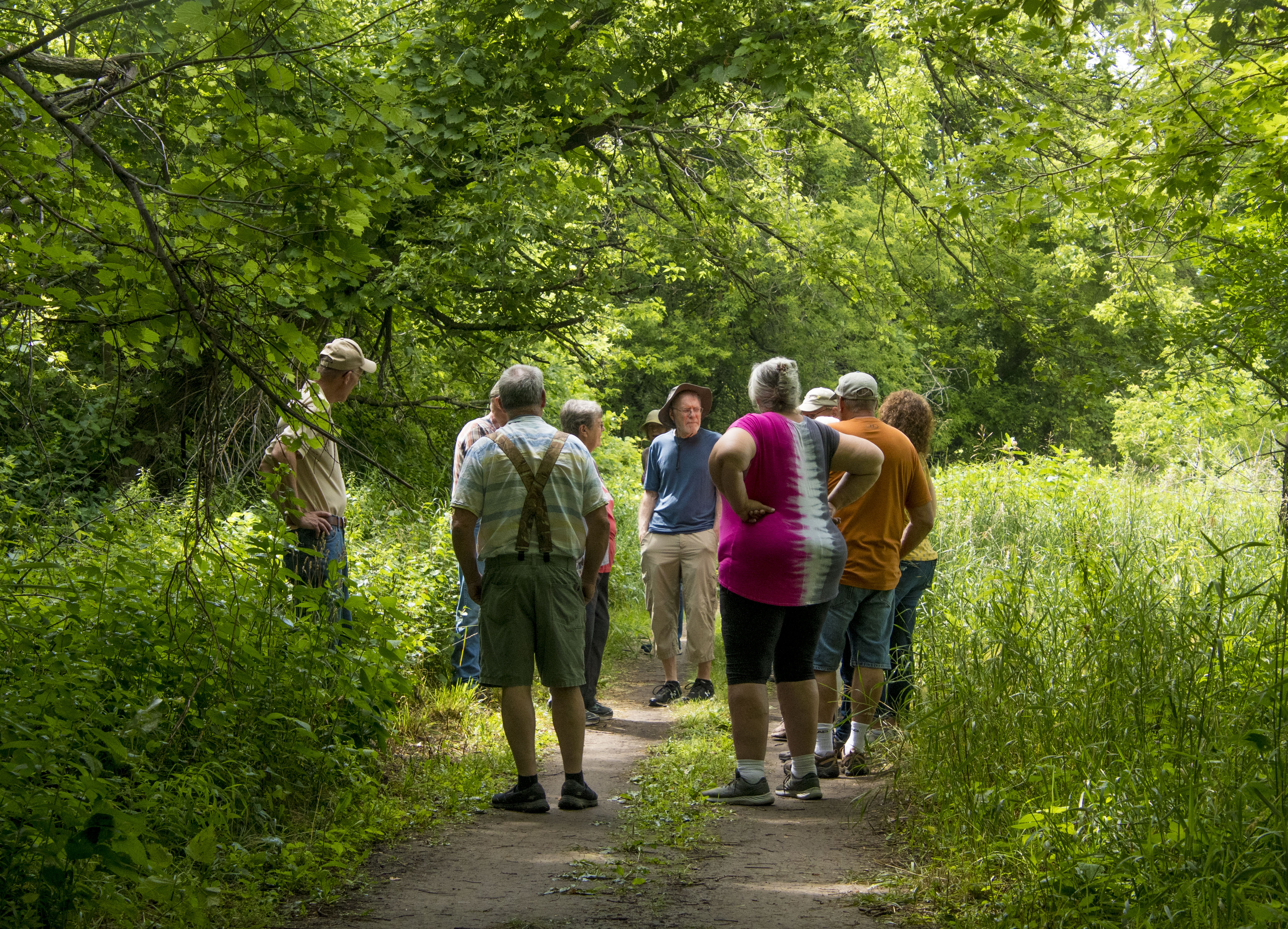
A standing joke among us “forest bathers” this past weekend was to “not forget your fig leaf!” This form of ecotherapy translated as “forest bathing” was one of the multiple-offered courses at the Minnesota Master Naturalist’s Gathering Partners conference on Prairie Island. One of the two leaders, Kristen Mastel, had lived in Japan where she handled her cultural stress by venturing into an eco-antidote practice called “shinrin-yoko,” translated to mean “taking in the forest atmosphere.” Or, as it’s now known in the U.S., forest bathing.

Rather than fig leaves, we students were advised to wear sturdy but comfortable walking shoes and to be prepared for unpleasant weather along with a bit of a hike. Our leaders used the term “slow walking” at the beginning, although this was later amended to “sauntering” after being told that naturalist John Muir used “sauntering” for the same gait. 

“I don’t like either the word or the thing,” wrote Muir of hiking. “People ought to saunter in the mountains — not ‘hike!’ Do you know the origin of that word saunter? It’s a beautiful word. Away back in the Middle Ages people used to go on pilgrimages to the Holy Land, and when people in the villages through which they passed asked where they were going they would reply, ‘A la sainte terre’, ‘To the Holy Land.’ And so they became known as sainte-terre-ers or saunterers. Now these mountains are our Holy Land, and we ought to saunter through them reverently, not ‘hike’ through them.”

Our saunter near the Mississippi River town of Redwing certainly had towering bluffs, though no mountains. We were on a portion of the Cannon River Trail that meandered through an aged deciduous forest and seemed perfect for sauntering. We didn’t know quite what to expect in the course, although after a few stops I began to realize that our pace was rather similar to the numerous nature “saunters” my artist friend, Lee Kanten, and I have done on numerous occasions: Sauntering through the woods, and somewhat similar to Muir’s ideal saunter, the rugged outcrops at the headwaters of the Minnesota River in the Big Stone National Wildlife Refuge. Age, perhaps, had more to do with our decision to saunter than a meditative mindset.

Like many meditative practices, certain disciplines awaited us, and sound can interfere. How would we handle the nearby highway noise with semis barreling through, or even the St. Paul to Chicago freighters rolling on the rails. Neither proved insurmountable.

Initially we gathered at the head of the trail and took a few minutes to engage in a deep breathing exercise quite similar to yoga breathing. With heads bowed and eyes closed, we drew in a deep breath, held it for a long moment before releasing. This came rather easily. That nearby traffic noise became rather muted the longer we practiced our meditative breathing. “In Japan,” said Mastel a bit later as she explained the discipline of forest bathing, “we sat on a mat to meditate. Shinrin-yoko, which is roughly translated into forest bathing, helped me handle the stress of being in a different culture along with a language barrier.”

As we sauntered along we would stop to practice a different discipline, or sense, along the way, concentrating on each until the next stop. Interestingly, “seeing” was the last of the disciplines, meaning I was forced to use senses rarely used in the saunters that Lee and I have done through the years. Photojournalists and artists are somewhat adept at seeing, and as we sauntered through the picturesque trail, composition and lighting emerged all around. Yet I kept my camera zippered inside my backpack … until a couple of the other students eased their cell phones from their pockets, one to photograph a wild flower, and the other a well hidden lichen. 

At one of our stops we were encouraged to smell. I admitted to the group that this was rarely one of my practices, yet when I forced myself to pay attention, the sense of smell came alive. First there was a rich muskiness, interrupted several steps later by a sweetness of a tree in bloom. There were other scents I couldn’t identify although there was an awareness. 

My weakest was that of hearing, for not only have I suffered a hearing impairment since I was a teenager, and have only recently found hearing aids that actually work well, I’m not used to “listening” when afield. Again, forcing myself to concentrate on the different sounds of the forest such as having the birds high in the canopy come to life. A rustle of leaves in the slight breeze. Then the sound of running water in an adjacent stream on private land close to our trail. On our walks in the Bonanza Education Center, spring-fed rivulets in the deep ravines do come to life and we make it a point to reach such a stream on the lakeside trail just to hear the sound of running water. And, yes, for meditative purposes.

My pivoting in different directions attempting to find a singing bird might have been counter-productive to the exercise although I wasn’t alone in doing so. Momentarily I recalled the audio rapture over the years … of the “jungle-like” sounds in the “blue hour” before darkness at the Sabine National Wildlife Refuge in western Louisiana; the volumness of the sandhill cranes through the night in a blind on the North Platte River in central Nebraska; and of sea lions on a remote island near Juneau, Alaska. Those sounds were so dominate that hearing aids were unnecessary, and perhaps loud enough to rupture any thought of quiet meditation. On the Cannon River Trail, though, Mastel and her partner, Leah Masonick, had awakened another sense.

When the time came for awakening the sense of sight there was a feeling of comfort, for permission was now granted. One of the other Master Naturalists on the saunter shared thoughts of walking through various and ever changing compositions of nature all around us, and there was comfort in this sharing of likeness. 

Masonick said forest bathing encourages you to slow down, to cultivate a sense of presence and deepen your connection with nature … that it is done intentionally with a hope of engaging all the senses to stimulate creativity and to inspire wonder and awe. At the end we shared a comforting herbal tea and spoke of our individual awarenesses and awakenings.

I found myself in a zone, making it difficult to switch gears heading into my afternoon activity … about a four mile hike through a nearby Scientific and Natural Area (SNA) on the lip of the Driftless Area. I was ambling along (sauntering?) in a peaceful daze among others who were seemingly in a rush of aim and discovery. Meanwhile I was stuck in my “sight” mode, mainly, while listening for birds I couldn’t find and bending to smell native flowers along the path of whacked buckthorn stubble and in the narrow prairie hillsides. My eyes were drawn to the beautiful sturdy limbs of burr oak and the contrast of stark white birch against a greening, leafing out forest covering the deep ravines between the hilltops. And wildflowers a man of the prairie rarely encounters.

Here I was using old, under-used senses with renewed vigor, and I couldn’t have been more blessed. Interestingly, the fig leaf was unnecessary.