Tracks in the Snow
Reply

While on my traipse through the new snow on the upper prairie loop this morning, Mr. Roggenbuck came to mind. Fleetingly so, for in the fresh snow were the loping tracks of a coyote. It may have been the one Joe Pye chased from the farmstead just as we were headed to bed last night, although the tracks didn’t appear to have been made in a flight of fright.
Rebecca enjoys having the new snow, for the winter brown was weighing on us. Besides the freshness, a new snow can also give you a glimpse of what goes on in the blackness of night. Coyote tracks, for one. Rabbit tracks, for another. There were the telltale tracks of a single rabbit in a short portion of the trail that suddenly veered off toward the orchard. In the orchard the tracks told a different story. Here were the tracks of an obviously nervous rabbit, circling here and there, heading off toward piled buckthorn then back between the apple and pear trees. If these were the tracks of a single rabbit, it was one with a nervous and fearful heartbeat in a flight of fright.
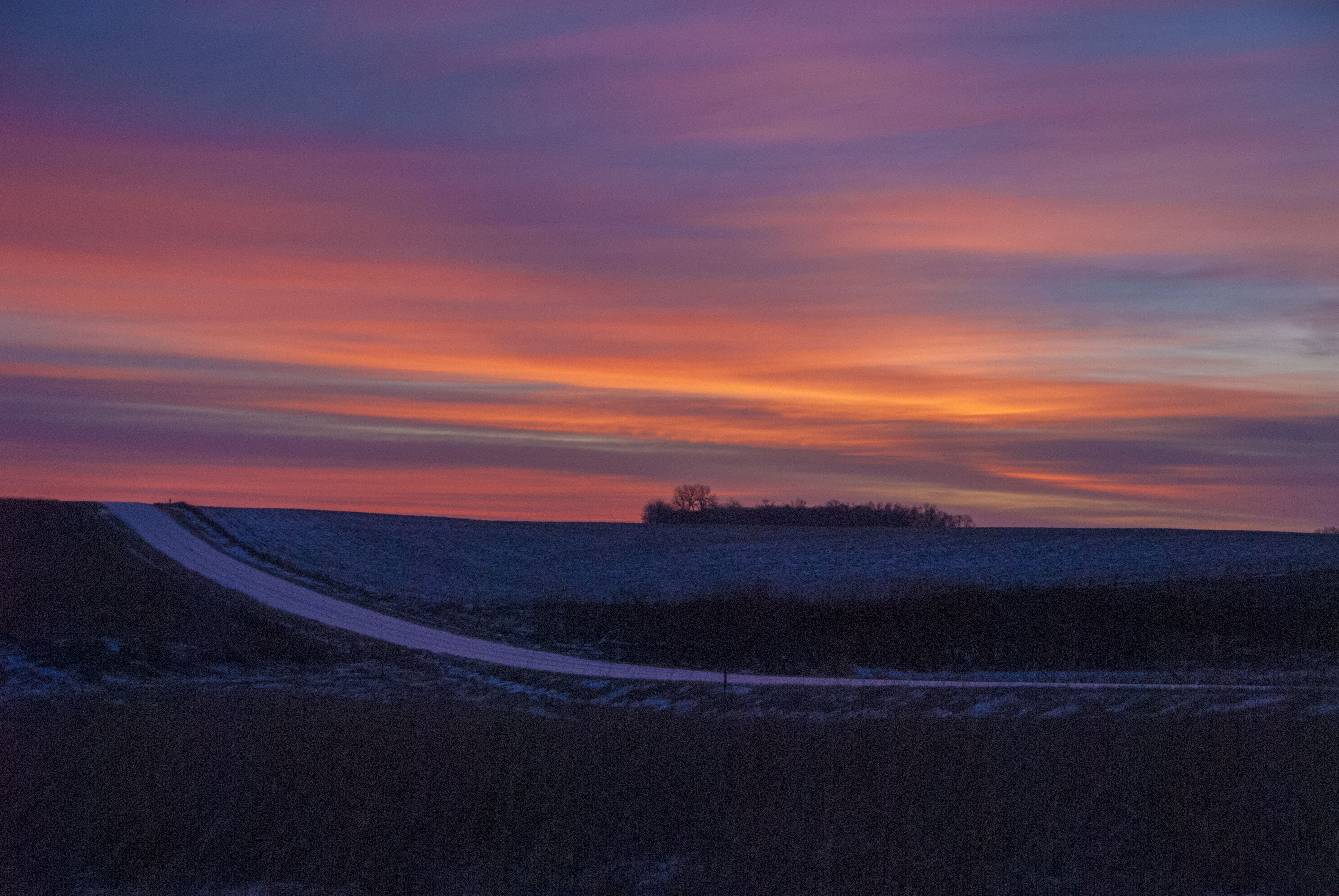
The minimum maintenance road where the Verse bottomed out.
Right through the midst of the haphazard circles were, once again, the loping tracks of the coyote. A single thread that cut right across the topographical map of fear. This was like many good mysteries, though written in fresh snow. In our walk around the edges of the orchard and through the winding trail of the grove, the dogs and I found no evidence of a severe ending. Nor were there tufts of bloody fur along the upper prairie loop. If Joe Pye, who has quite a nose for prairie grass clues, missed it, the ever studious and ponderous Vega was on task to back up the investigation. Good cops, both!
Which brings me back to Mr. Roggenbuck, our local collision and glass entrepreneur. En route to the upper loop we passed a spot where I had laid in the browned prairie two nights before to take a photograph of the full moon rising into the prairie sky. It was one I made safely, which I’m sure will disappoint Mr. Roggenbuck … who never misses an opportunity to suggest that he has my car on a waiting list for this coming summer. There is precedent.
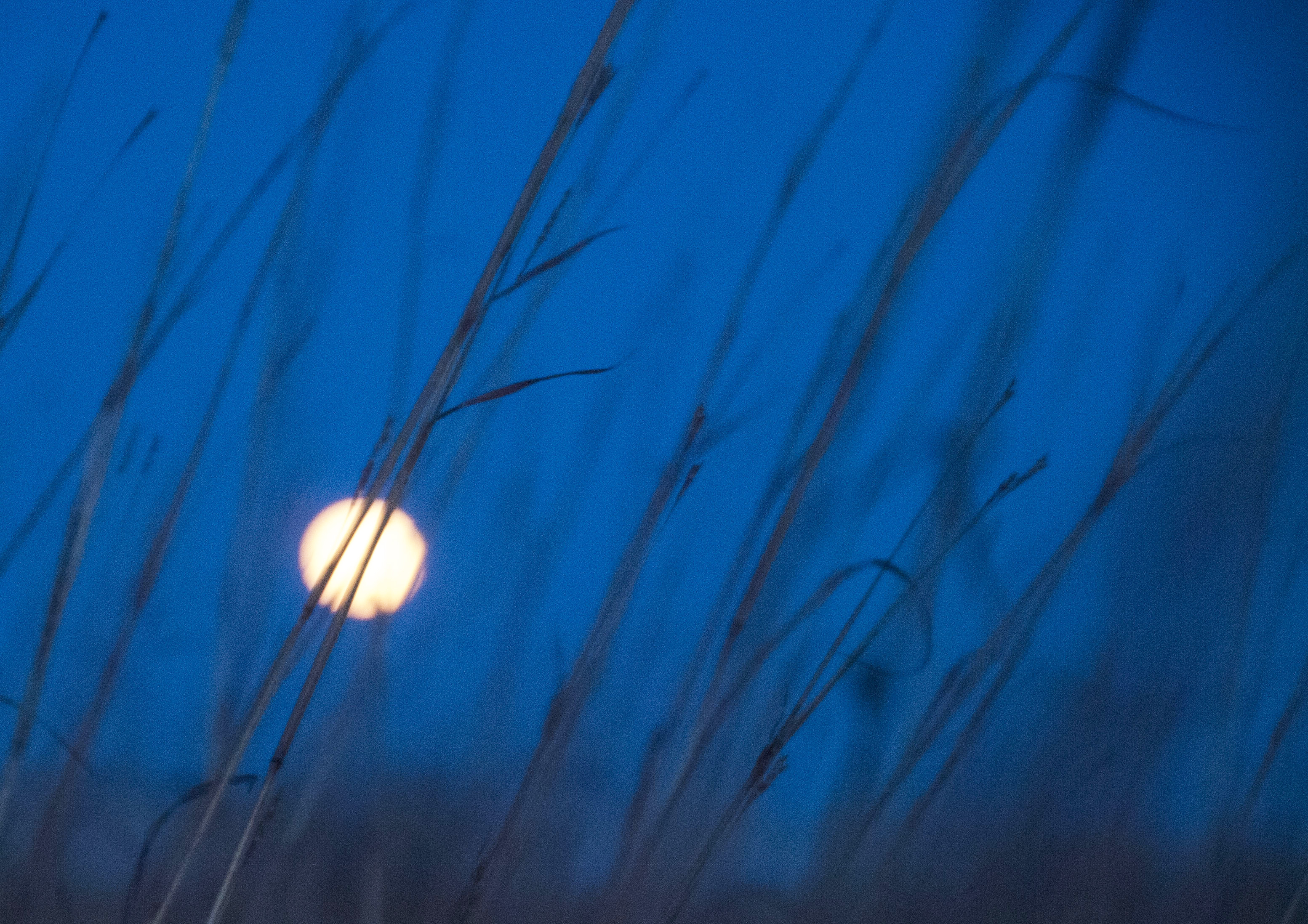
Moon is peaking through the bluestem in this photo from a year ago.
Two years ago the front on my little plastic, Japanese car was destroyed by a deer. My fault was perhaps one of fate. Ten seconds either side of that exact moment when the doe decided to turn course and head back onto the highway right in front of the car coming from the opposite direction was all that was necessary. That car broadsided the deer, which careened across the country road right into the “grill” of my car. That summer I met Mr. Roggenbuck, a fine man with a stellar reputation and keen sense of humor, for the first time.
Then there was last winter, which on the night of January’s full moon, the little car met a different fate. Since Mr. Roggenbuck had every little part back in place, and even had the headlights focused properly, the Versa was running like a charm. When the moon eased up over the eastern horizon I took note, grabbed the keys and sped quickly to the end of our gravel road where off to the east sits a concise, hillside oak savanna. Ever since we moved here that savanna, which bespeaks the past of the prairie pothole biome, has caught my eye. Here was an opportunity to make a really nice photo, since the savanna is far enough away that my telephoto lens could possibly pull the moon up into one of those iconic coastal images.
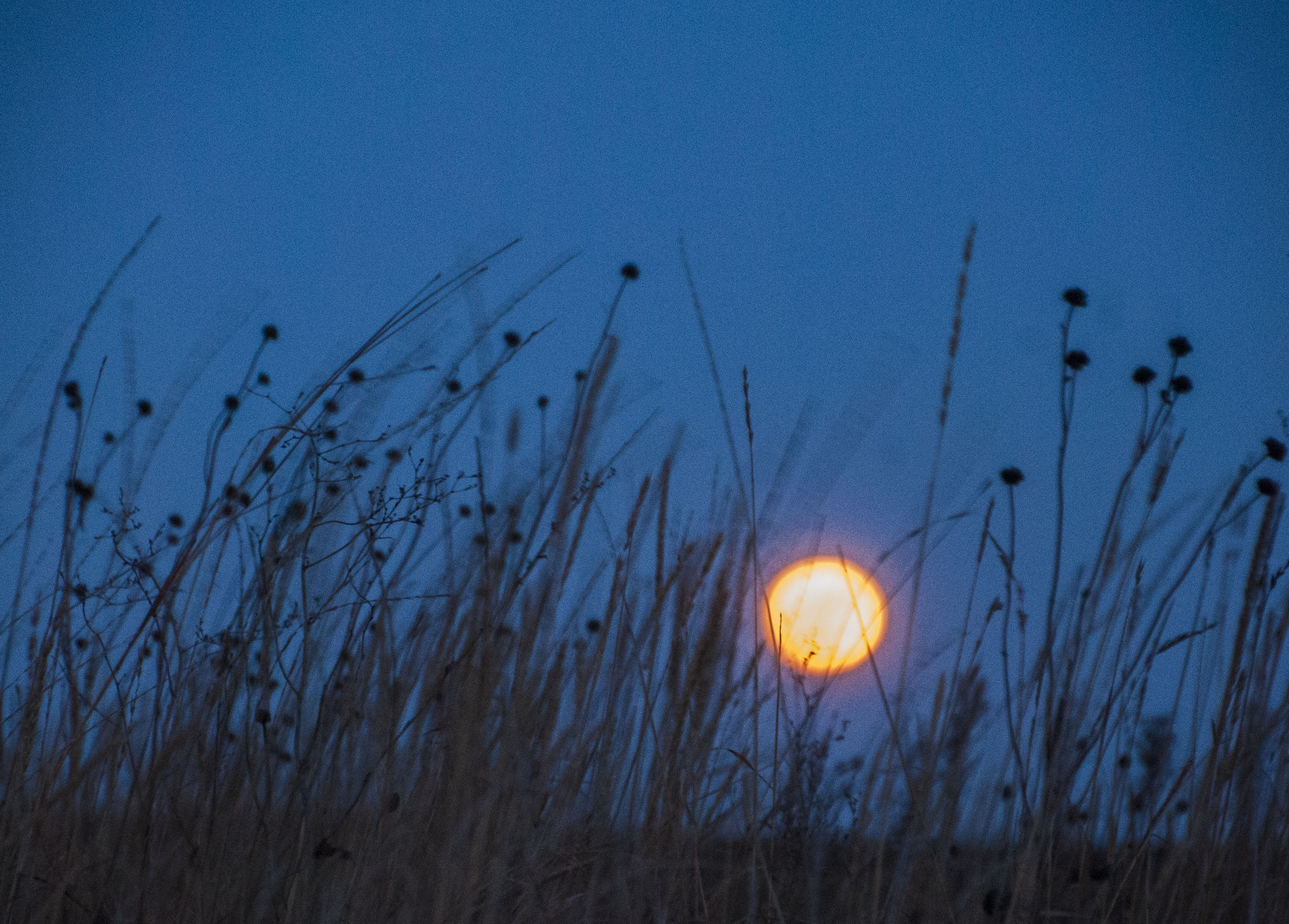
Though lacking the drama of the full moon image of a year ago, this one was much less expensive!
One must move quickly with a rising moon, not unlike a coyote in search of a meal in the prairie. It took perhaps 90 seconds to get down the road to the savanna … however, it was not to be. The moon was nowhere to be seen. The rise was much too far to the left. Disappointed, I started back toward the house where Rebecca was in the midst of preparing a great dinner, and one I was hesitant to leave despite her assurances that she would save some for me. At the end of the section a sudden thought came about a WMA with a wonderfully rich growth of big bluestem.

Another image from the Steen WMA, with bluestem in the sunrise.
Again, a rising moon moves fast, so when I turned I hit the gas. Steen’s WMA was a mile and a half distant, and the snow-covered road, complete with icy ruts, jostled the little car. It wasn’t long before I passed the one mile intersection. A third of a mile distant is an abandoned farm, with the grove still standing. Edging across the low-maintenance gravel road was an impressive finger drift, a peninsula of snow. Having lived here long enough to know that if I didn’t hit the drift with enough speed and muscle I would be stuck, I pushed down on the accelerator and hit the drift. The drift was solid ice and the Versa went airborne. That the car landed without rolling was both impressive and incredibly lucky, yet it crashed with such force that the entire front end was crushed. Pieces of plastic flew past the windshield as I pulled the car to a stop. Fortunately the right headlight was still headed in the right direction and the wheels appeared to aligned, so after taking a deep breath I drove on up the hill to the WMA and took a half dozen pictures.
This past summer Mr. Roggenbuck had his second chance with the car, and after I told him the story of what happened, he said, “We’ll fix ‘er up for you, and we’ll hold a spot open for you for next summer.” Since then we’ve run into one another at least a half dozen times, and he never fails to mention that he has saved me a spot.
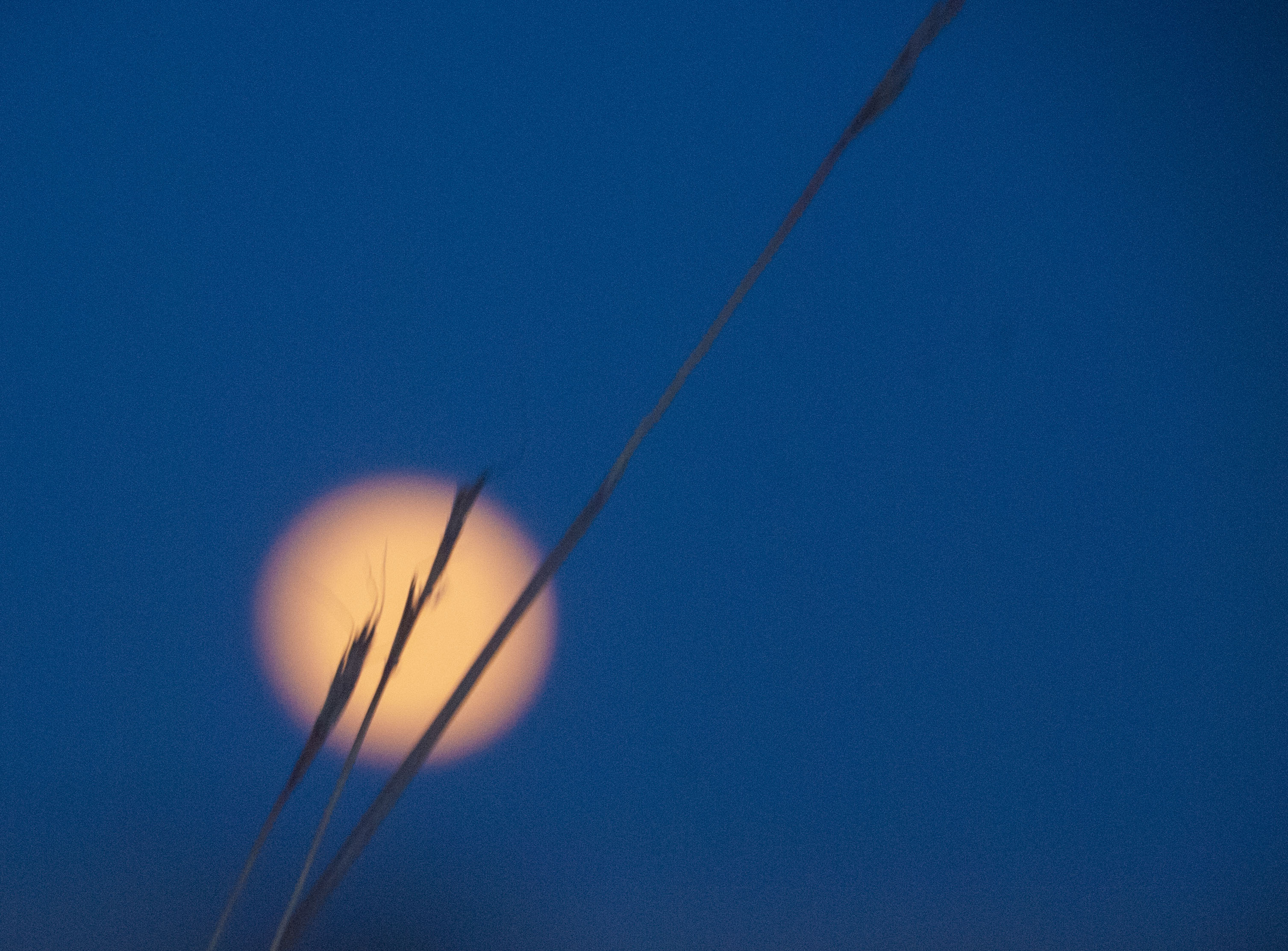
So getting an image in our home prairie of the rising moon was cause for a quiet and pleasing celebration … until this morning. Before I took the dogs for the walk I once again headed to Steen’s WMA to take in that luminous light of pre-dawn, and the prairie wind was creating a new drift across the one-lane country road at the exact spot. Experience is a great teacher. That drift was approached slowly and delicately, and the Versa remains in one piece.
Between the track mysteries left in the snow, this was also a sense of satisfaction as the dogs and I circled the upper loop.
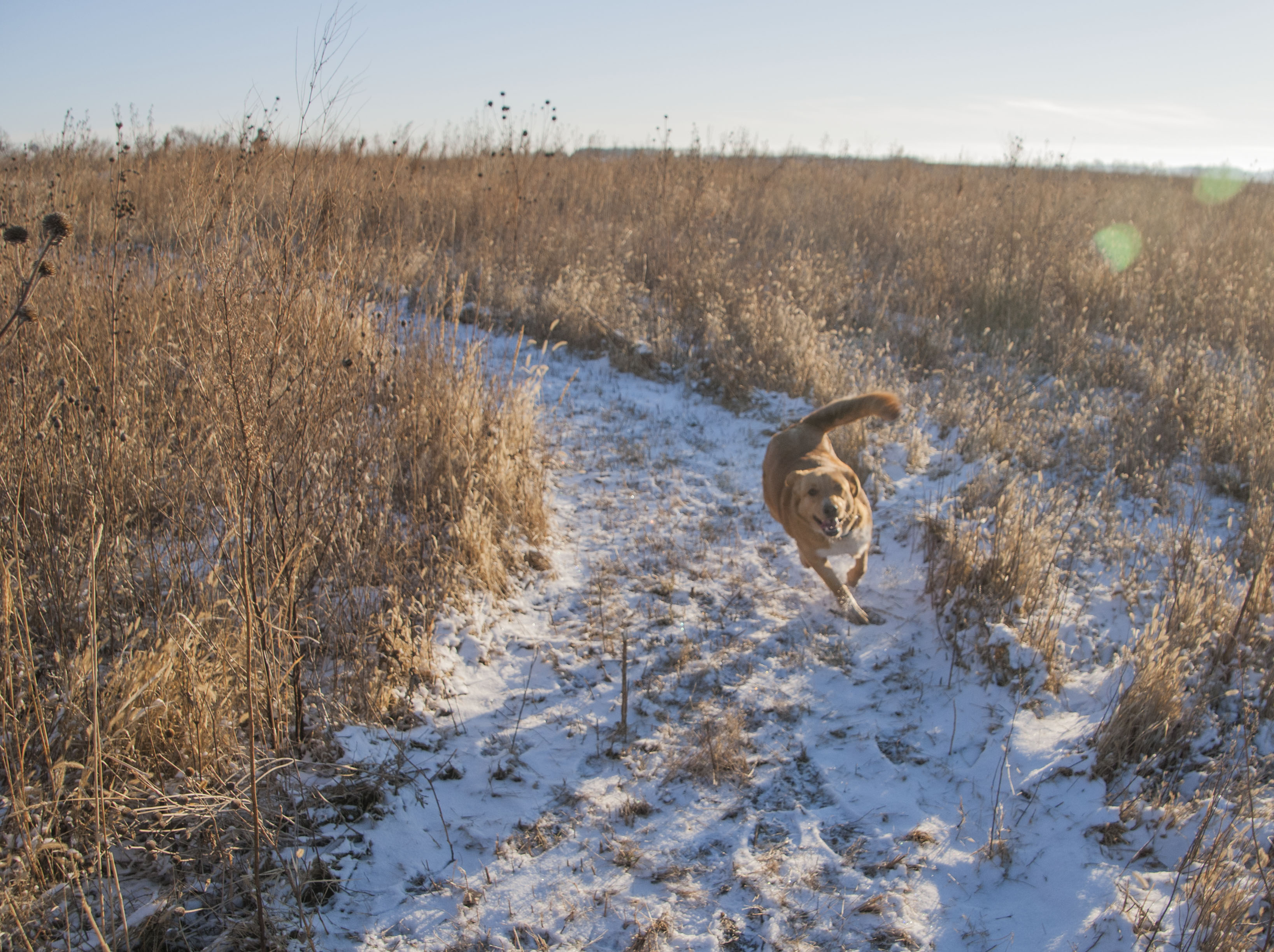
Joe Pye loves to run the paths through the prairie.
In an earlier writing I told of how on the eve of our first snow of the winter, Rebecca worked feverishly and successfully to remove the tillage attachment and to install the mower on her “new” garden tractor. As darkness approached, she headed into our eight-plus acres of prairie to mow a meandering path through the grasses and forbs. More than once since she has jokingly been accused of mowing the path in a state of inebriation.
What a beautiful path, though. It loops and connects, meanders and traverses, and even intersects with the farm site in a few strategic places.
That winding path has now become a focal point thanks to adopting our new mutt, Joe Pye. Twice each day since, we’ve taken Joe Pye and Vega, our resident “hound,” on exercise laps on Rebecca’s prairie loops. We have our “upper” prairie on the northern portion of the farm, which begins at the foot of the orchard and winds around above the grove; or the “lower” prairie, which is mostly below the farm yard and main garden. Naturally, she connected the loops between the upper and lower prairies.
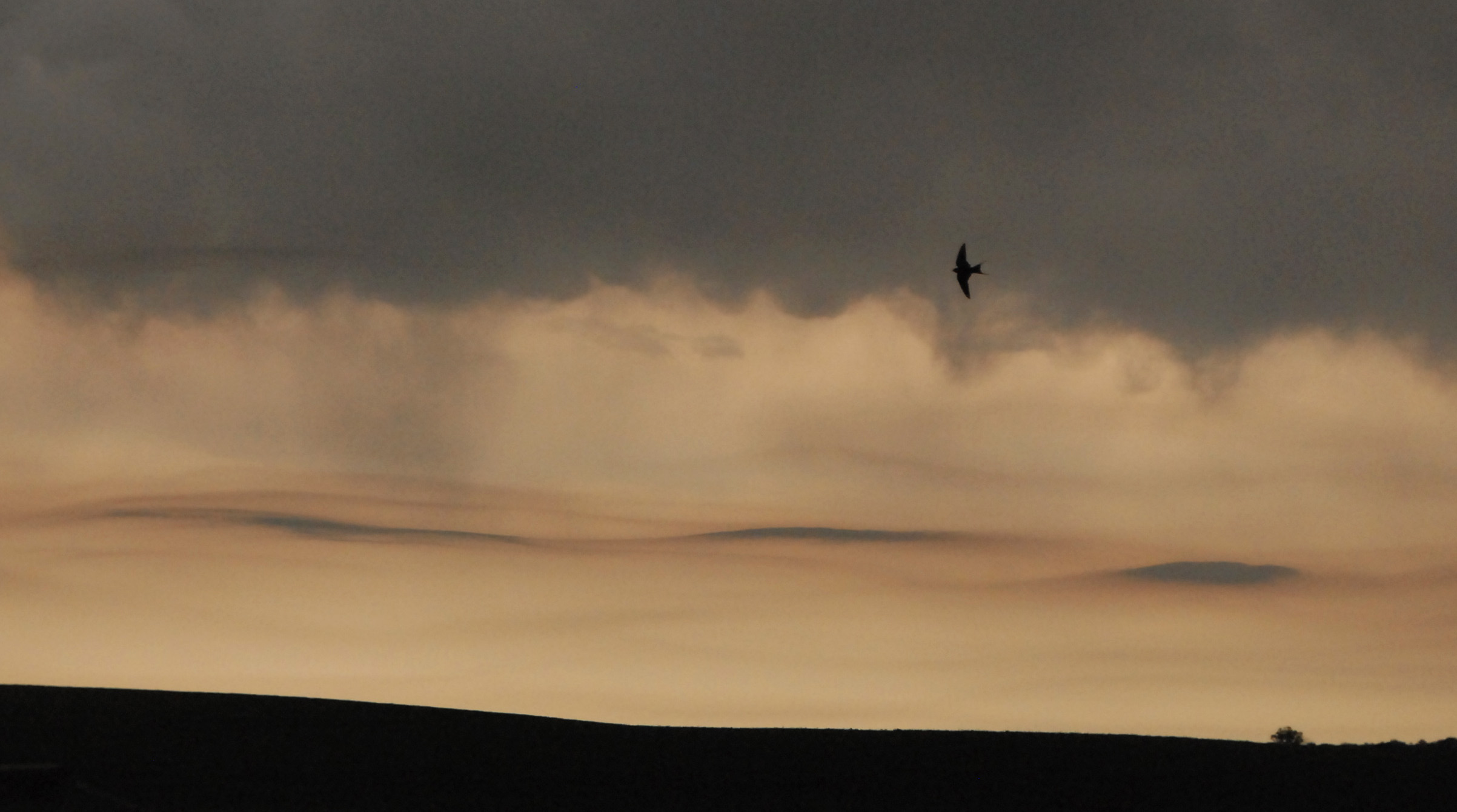
Watching the swallows above the prairie was a treat all summer long.
The loop paths are giving us both a good excuse for exercise and fresh air, not to speak of giving the dogs a good airing out. It was on one of those walks that Rebecca asked, “How do you think our prairie will look next year?”
“I haven’t a clue,” I answered. My response came from experience and from a comment made by dear friend and prairie addict, Kylene Olson, executive director of the Chippewa River Watershed Project, and who is also a Master Naturalist and winner of CURE’s Riverkeeper Award. Years ago, during the first full bloom of my backyard prairie garden in Clara City, I invited Kylene over to help me identify a few plants and to give an overview of the effort. As we walked the perimeter of the prairie garden, she said, “You realize that no two years are ever alike. You have a lot of blues and purples now, but next year it might be dominated by yellows or with grasses. You never know from year to year.”

Enhanced by the early morning sun, the color of yellow dominated.
In the three years of the garden, she was right. No two years were ever alike. Since then I’ve noticed same is true of the various native prairie patches around the area. “Amy’s Prairie” near Montevideo was a collage of flower colors this past summer, while a year ago it was weak on cone flowers. Two years ago the Clinton Prairie was a carpet of Prairie Smoke late in the spring, while this past spring one had to search diligently to find a single cluster. The WMA located a mile and a half east of our farm had a great season for Big Bluestem in August, seemingly three times what was visible the summer before last.
It was on our first summer here that our prairie was planted. Most of what we saw through the first summer was a domination of pigweed and lamb’s quarter, certainly not desired species … yet they are the first transition species in an ecological plant succession. We were told by the SWCD and Pheasants Forever, who worked together on the planting, not to worry, that the prairie was coming along quite well despite the pigweed jungle. “No two years are alike,” said the SWCD man. There it was again.

More than once we spied deer in the prairie.
This past summer, in our second year, the prairie was dominated by yellows and very few grasses. Every blooming flower, and there were seemingly millions, was a bright yellow. At first it was delightful since it wasn’t pigweed. By August the entire prairie was a carpet of yellow, one you couldn’t miss coming up over the hill at the end of the section. While I hesitate to suggest that we grew tired of yellow, we went on several high-stepping missions through the dense foliage, and prior to the cutting of the paths, in search of anything suggesting a different color. We did find a sprinkling of Purple Prairie Clover and a few Bee Balm plants. In fact, Rebecca believes we’ll have a healthy Bee Balm crop on the upper prairie next summer because when she went up there last fall to transplant some she started from seed, she suddenly spotted them everywhere!
That anticipation of change is one of the beauties of having a prairie. Another is seeing the prairie come to life. Many hours were spent watching the acrobatic flights of swallows over the prairie surface all summer capturing insects drawn to the plants. Come autumn, murmerations of starlings and various blackbirds came to feed among the seed heads of the coreopsis, prairie sunflowers and coneflowers. We have surprised deer, including the flushing of a fawn in early summer that bounded down into the lower prairie flashing its telltale white flag of distress. Butterflies made their appearances, too, and we were so thrilled with seeing monarchs that Rebecca made a concerted effort to spread more milkweed seeds into the grasses.

Side Oat Grama is emerging, and is seen here with a couple of Native Purple Clover.
Nightly we hear coyotes, and although we suspect they’re somewhere in the prairie, we have not seen tracks even after a snow. Those nightly yips and howls take over the late afternoon “barks” of pheasants. Last winter we had a resident rooster who seemed to strut from the prairie into one of our lilac “islands” every late afternoon. On one of our recent walks with the dogs we saw pheasant tracks in the snow in the upper prairie. No birds, though. A day or two later we finally flushed a hen in the lower prairie. We were thrilled, and perhaps even a bit smug in our self-congratulations when considering all the barren crop fields that surround us.

One of the few Bee Balm in our prairie last summer.
Yet, it is through the adoption of Joe Pye and Rebecca’s loops that we are becoming ever more familiar and intimate with our home prairie. We had a beautiful summer, as noted, and seeing it twice every day this winter as we move from the Solstice toward the Equinox will no doubt provide various observations of change. We’ll see if those Prairie Smoke plantings were successful as we move into the next greening season, or if Bee Balm will actually “explode” on the upper prairie. Maybe all the sprinkling of seeds “caught” in our pant cuffs after we returned from other native prairies will take root, along with the milkweeds.
What will our prairie look like come summer? Who knows? Yet, that is the beauty of our home being surrounded by a patch of prairie, even if it is restored rather than native. I like this idea of “we’ll see.”
What was a day-long “ugly” Winter Solstice, with a thick gray hugging our Minnesota prairie like a heavy quilt in a dark room that you can’t seem to kick off your feet, ended with bright blue and vivid lights of red. Of all my escapades over the years to capture an image on this the shortest day of the year, none have ended quite so colorfully.
Dawn foretold the color of the day; we had no sunrise. Before noon I took the dogs for a walk through our prairie and grove seeking inspiration. Yet, for most of the day I kept my eye on the windows, hoping for a glimmer to break through. Gray makes such a search, on a day when light is celebrated, rather gloomy. Since I pride myself on having a positive attitude, I wouldn’t allow the grayness to pull me down.

Last year on the Solstice, these gulls rose from the ice at the Big Stone National Wildlife Refuge.
Late this afternoon, with the camera in tote, it was off to the Big Stone National Wildlife Refuge with just a fringe of pinkish color along the horizon. Unfortunately, once again the gates to the Refuge were padlocked so the outcrops, possible deer sightings, and the acres of native prairie were off limits. Things were not looking good, not like the past several years when my search for a Winter Solstice picture has been rewarded. Few were as bountiful than last winter when I pulled up onto the dam that creates the Refuge on the Minnesota River. Just as I pulled up, a group of terns lifted from the ice. I quickly lifted the camera and was fortunate to capture a single image, and one of my favorite photographs of the year.
Over the years the Winter Solstice has yielded some fine images. Years ago I captured the lowering sun over my neighbor’s farm. Unlike my tern image, which was blessed with just enough sun to show the shadows on the ice, the farm image was decidedly “Solstice” with the height of the sun angled low over the southern prairie sky.

An iconic image of a Winter Solstice on the northern prairie.
Another year, just before dawn, I was able to make an image of another neighbor’s sheep pen along the highway in a blessed blue hue as I was leaving for an out of town meeting.
Then there was the deadline picture on a very cold and sunny day, just minutes before I had to send files of the weekly up to the printer. Not only was there a huge hole available on the front page, but it was also the day of the Winter Solstice. In the southern sky were the rainbow colors of a sundog. As I hurried up the street, suddenly a group of pigeons exploded off the local elevator right into the hues. Up until the tern image, this was certainly my favorite Solstice image for many reasons, and the image played well for a tall, three column vertical on the front page. Welcome to the digital age!

Needed a Solstice picture for my country weekly, these pigeons flew from the local grain elevator into the arc of a sun dog.
Oh, there are so many times like these when I think of Jim Brandenburg, the Luverne/Ely photographer who went onto fame with the National Geographic Magazine, and who has published two beautiful books based on a personal challenge he offered himself to make one image a day for 90 straight says. Some of his images, which he dated along with the time, were made early in the morning, although enough were late enough in the day where you imagined he was getting a little antsy. While I rarely place that kind of pressure on myself, today I was beginning to wonder if I was going to have enough light, let alone an interesting light, to capture anything besides that grayish gloom. Remember, the Solstice is about light and promise, both of which were the basis of celebration of the Solstice for thousands of years.
With the refuge locked, I turned toward a wetland with jagged stumps jutting from the surface. Whenever I pass the wetland I slow and gaze at the possibilities. The wetland was just up the hill from the valley and offered a last chance considering the approaching dusk. Enough of a melt had occurred to give an interesting reflection of a brighter sky skimming across the surface of the ice. After parking the car, I walked down and worked on the composition on one of the more interesting stumps. Indeed, a sense of accomplishment settled in as I climbed back into the car to return home. At a nearby field approach I made a U-turn and started back down the highway when I noticed a more interesting angle and quickly pulled the car over to the shoulder, making sure I put on the hazard lights.

Dawn broke on a Winter Solstice on a neighbor’s sheep pen.
A car passed on my side, and four sped past from the opposite direction as I aimed the lens at the ice and jutting stumps. It was then I noticed the bright blue and vivid red lights bouncing off the rear view mirror … that of a state trooper who had pulled up behind me. As he walked up I sat and wondered just what I might have done wrong, and joked as he came to the back of the driver’s side door. “Sir, I really wasn’t speeding!”
“Well just what are you doing?” he asked.
“Taking a Solstice picture of those stumps in the wetland across the road.”
He turned toward the slough and then looked back at me with a somewhat incredulous expression. “You’re doing what?”
Once again I explained.
“Well, you should probably park up the road and walk back here to take your pictures. It’s just not safe to be parking half off the road and on the fog strip,” he said, again looking across at the wetland. “Just be safe,” he said as he turned to leave.
“Happy Solstice!” I shouted.

Finally, just before dusk, a nice pinkish light broke over the prairie. My 2014 Winter Solstice image.
He stopped, looking surprised at the salutation, perhaps his first and only such greeting of the day. “Yeah, well a Happy Solstice to you, too.”
I wonder if Brandenburg has a story like mine.
(Writer’s Note: Portions of this blog were based on media reports from the St. Paul Pioneer Press, the Minneapolis Star Tribune, the Marshall Independent and the New York Times.)
This past Saturday some 300 folks assembled in Marshall, MN, for the Pheasant Summit, where Minnesota’s DNR Commissioner suggested that the ring-necked pheasant is the “canary” of the prairie. “[Pheasants] represents the health of the landscape,” he said.
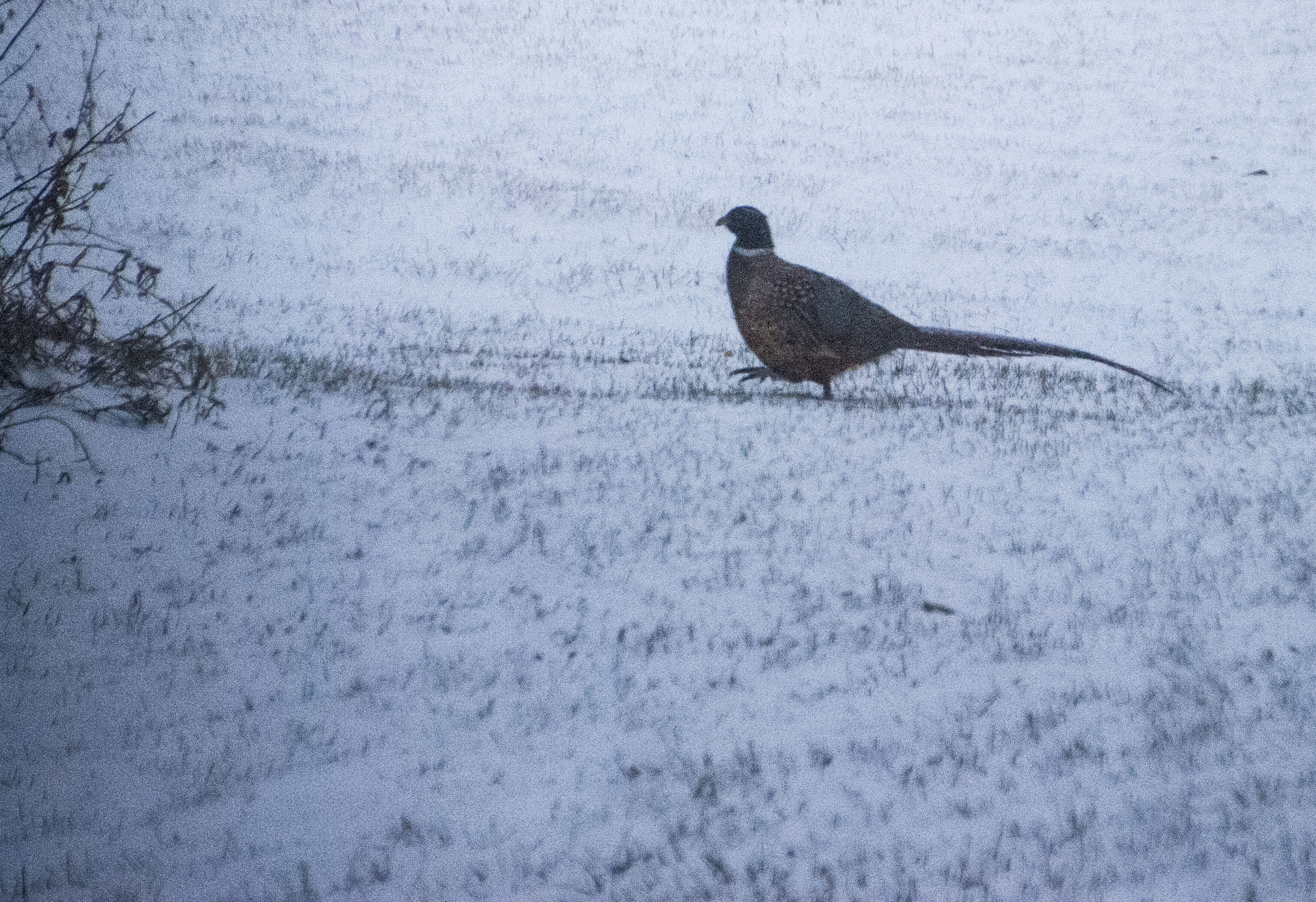
Our very own “canary of the prairie” strutting across our prairie.
Wise choice, since there is barely enough grasslands left to support the lives of original “canary of the prairie” — the prairie chicken. Translated, grasslands equate habitat, and habitat was the key buzzword for the day long conference.
While it is fine to point to the pheasant as a symbol, the overall situation may be more dire than a sportive and beautiful bird. Rest assured, there is a relation between pheasants and that beautiful black glacial till we call soil. Pheasants, black soil swirls in the snow banks, and corn and other crops planted right to the edges of drainage ditches, are all related, for that soil is a precious, if not appreciated, commodity that the lives of future generations will rely on for its food supply. Just as it was important that the pollinator crisis seemed to be the focus of the winter meetings a year ago, perhaps our vast blackened landscape will garner some attention this time around. If it takes bird hunters and their beloved pheasants to do so, then bully for them. Bully for all of us, and our children’s children, too.

A “rock jockey” digs out glacial rocks in a grassland that, if like adjacent fields, will be converted to row crops.
Soil mixing with snow, know as “snirt,” should be as much of a “canary” to the hunters and farmers as is the decline of the pheasant. Consider the lack of buffer strips and other grassy habitat, for example. Grasses protect the soil, as does holding off tillage until the spring or the planting of cover crops. In our many trips through the “black desert” of the former prairie pothole biome this fall and winter, we’ve seen two (2) small fields planted to cover crops despite the number of meetings that addressed the issue last winter. Two.
Certainly there are strategies available for holding precious soils in place. The least expensive for farmers is to simply forgo fall tillage, since corn stalks are anchored in the soil. Stalks also capture moisture, and for pheasants there would be more protection and spilled grain on the surface to provide a food source to survive winters. However, until the innovators, followed by the early adopters, give this idea a shot, it’s a practice that will go nowhere. Other strategies might include fall planted cover crops and even the enforcement of buffer strip statutes. In other words, ground cover. Grasses. Strategies that will help preserve the soil and enhance life for pheasants, and people as well.
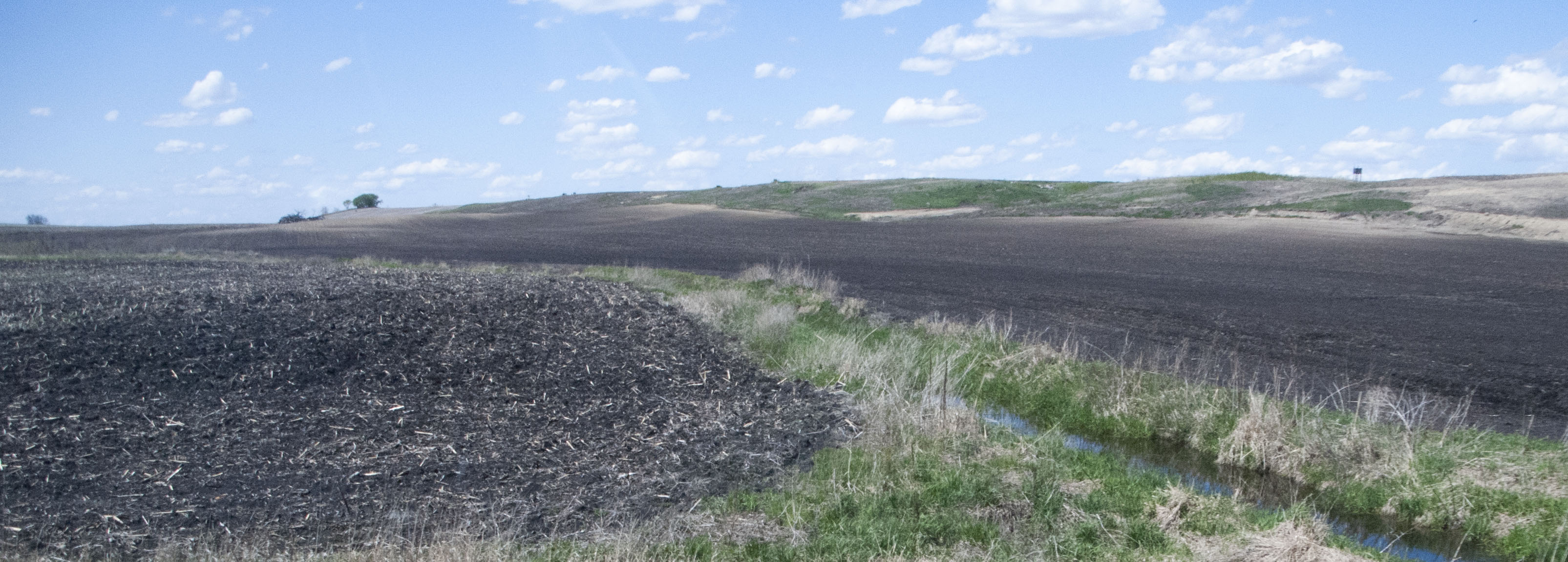
An example of “no buffer” farming.
So, you may ask, how did it come to this? For the past 60-some years industralized farming practices have brought continued ditching and tiling, and an end to basic crop rotation practices, grass waterways and buffer strips. Of the 18 million acres of native prairie the Minnesota landscape once had, about one percent remains today, with habitat loss primarily attributed to farming and development. With last year’s $7 corn, Conservation Reserve Program (CRP) acres in the state dwindled from 9 million to 3 million acres. In short, what took natural history 12,000 years to accomplish since the last glacier has basically been destroyed in less than 200 years by mankind.
That said, there appears to be neither much concern nor urgency from the agricultural community, including the major farm organizations, nor in legislative circles as it applies to overall soil conservation issues. This past election cycle saw the passage of a “right to farm” amendment to the Missouri statutes that basically erodes any oversight efforts by government and private citizens from industrialized CAFOs and crop farming, including the use and misuse of agricultural pesticides. Nor did concern reach the Halls of Congress with its recent passage of the emergency budget bill where pro-industrialized big-ag legislation was “hidden”-within which states that the government (meaning the EPA) cannot require farmers to report “greenhouse gas emissions from manure management systems.” Nor can it require ranchers to obtain greenhouse gas permits for “methane emissions” produced by bovine flatulence or belching. The Environmental Protection Agency says on its website that “globally, the agriculture sector is the primary source” of methane emissions.
According to the news report, the spending bill requires the EPA to withdraw a new rule defining how the Clean Water Act applies to certain agricultural conservation practices. It also prevents the Army Corps of Engineers from regulating farm ponds and irrigation ditches under the Clean Water Act. Said Rep Mike Simpson (R-ID), “This is a major victory for farmers and ranchers, who consistently tell many of us that they are concerned about the potential of the EPA and the Army Corps of Engineers’ overreach into their operations.” While this involves CAFOs and the EPA, grassland proponents had best not relax their guard.

Crops planted right to the lips of drainage ditches are not legal and rarely enforced, prompting the Ag Commissioner to suggest repealing the law.
Which brings us back to the Pheasant Summit in Marshall this past weekend as a case-in-point, where state’s largest farming organization, the pro-ag Farm Bureau, came away from the conference reportedly pleased there was no “blame game” involved. That should not come as a surprise. According to news reports, Doug Busselman, director of public policy, serving as Minnesota Farm Bureau’s lobbyist, said, “Most of the discussion here has been about how much habitat has been lost as opposed to focusing on how much habitat we have and how we can make the most of what we’ve got. I think those are some of the concerns that we’ve come here with. I think we’d benefit by recognizing where good is happening and building on that versus always looking at things lost.”
Read between the lines — status quo seems to get the nod from the Farm Bureau.

Rather than grass waterways, tillage equipment is run through fields to enhance a quicker drainage. Too shallow to qualify as an “official” ditch, these ditches won’t qualify for buffer regulations.
Said Doug Peterson, president of the rival Minnesota Farmers Union, “We’re the resource owners. It’s time to stop pointing fingers. If we agree we need a state initiative for habitat for pheasants, wildlife, birds, pollinators and clean water, then it’s time for a policy that allows farmers to be part of the solution.’’ But, he added, landowners can’t be expected to give up income to implement conservation.
Then there was this from Minnesota Ag Commissioner Dave Fredrickson, who suggested in an interview to the St. Paul Pioneer Press that enforcement of existing buffer strip regulations — which requires vegetative strips along drainage ditches, streams and rivers of between 17.5 ft. to 50 ft. — is nearly impossible, and if local government entities aren’t doing the enforcement then perhaps the regulations should be repealed … that it isn’t up to the state to step in with enforcement.
None of which seems very positive for that ring-necked canary of the prairie.
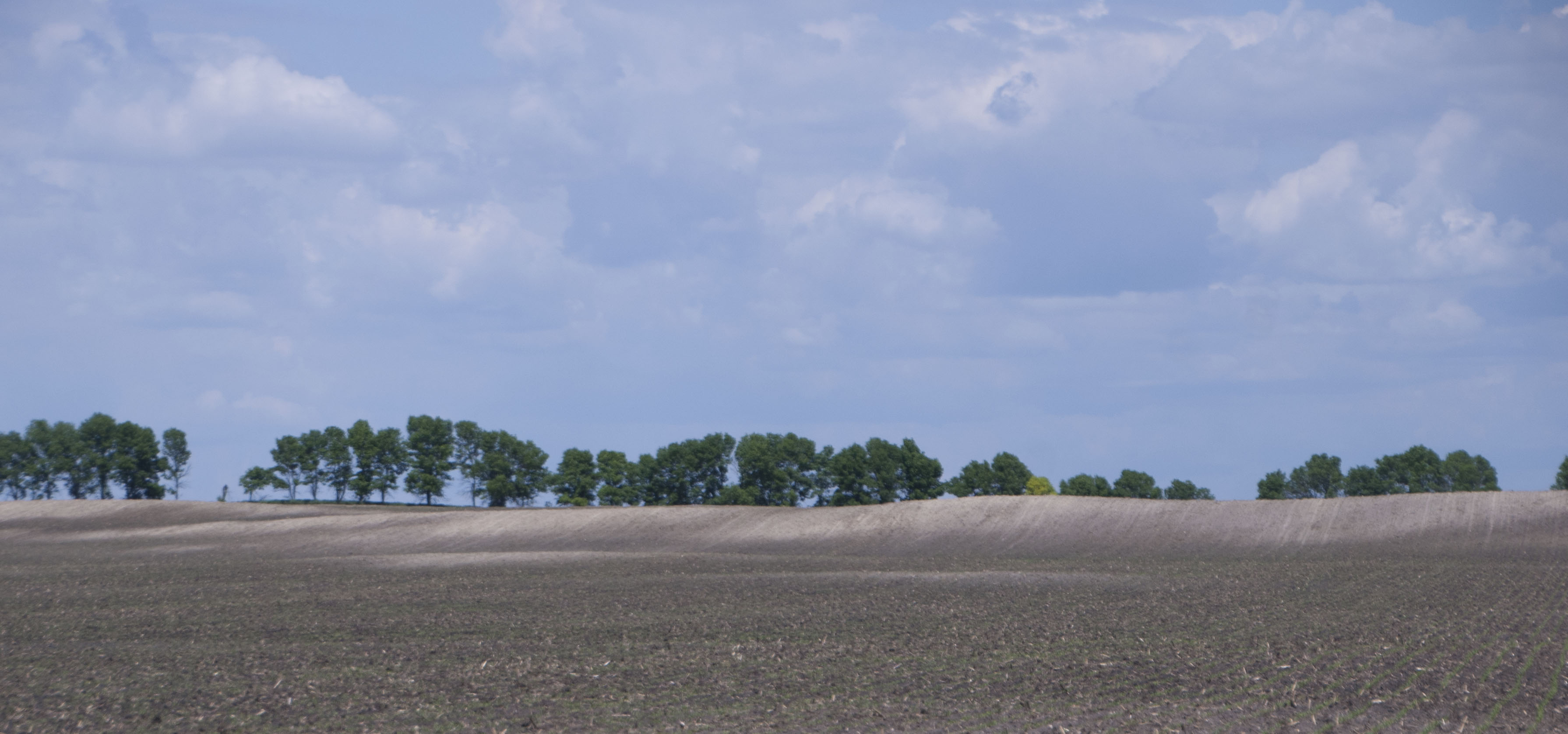
If one looks around the farmed prairie, seeing “blow outs” are common and seem to grow proportionately larger each growing season.
Here is what one of the attendees, an unnamed public servant and hunter, said following the meeting: “I’m profoundly sad that our state and country can not rise above the greed and lies to fix this very dangerous situation. We are running out of time before we have an ecological and biological collapse. Agriculture has been the demise of other civilizations and it will be ours, too, if we don’t wise up. Uncontrolled drainage policies, irresponsible pesticide use, total reliance and over application of commercial fertilizer, are just a few of the obvious races to the bottom. What scares me most is the absolute total control the agricultural ‘Mafia’ has on nearly all our politicians and agencies. We are being warned of the pending collapse but we are way too greedy and stupid to heed the warning.”
Enforcing existing laws, including buffers, roadsides and easements, actually topped the list among attendees at the conference, followed by efforts to increase bonding funds for Wildlife Management Area acquisition and target funding to specific high-quality habitat area through state, local and federal cost-share programs. Fourth on the list was to increase state and local funding, followed by the creation of competitive compensations for long-term/perpetual conservation practices.

Roadside snirt has already been seen throughout the prairie this winter … and it’s still December.
One would think, though, that dirt — that common denominator between feeding a “nation” or “world,” depending on who is providing the hyperbole for the “original conservationists” out on the land — would matter most to those who are invested in farming it. Those are the folks who are denuding the grassy protections and whose soils are filling the road ditches with “snirt.”
See? No blame, no gain, apparently. And, thanks to an ignorant public and nicely financed lobbiest-pushed legislation, no accountability.
Then, there is this, from David R. Montgomery’s “Dirt – The Eroision of Civilization” — “The estimated rate of world soil erosion now exceeds new soil production by as much as 23 billion tons per year, an annual loss of not quite one percent of the world’s agricultural soil inventory. At this pace, the world would literally run out of topsoil in little more than a century. It’s like a bank account from which one spends and spends, but never deposits.”
Which brings us back to the pheasant … our canary in the mining of the land.
Ever since those initial spindly cedar strips were glued and stapled to the form of my first canoe project in the 1980s, wooden canoes and kayaks have haunted me. Small wonder that a rugged and weathered craft, with cracks of time cutting through the shoulder of wood like a running river slices a native prairie, stopped me in my tracks. June Lynne, executive director of the Chippewa County Historical Society, smiled. “She’s a beauty, isn’t she?”
Indeed, and as my canoe building buddy, Norman Andresen, used to remind me, “Every canoe has a story.”
Resting atop a makeshift standard in the main office of the Historic Chippewa Village in Montevideo, the ancient dugout awaits a more glorious future. While the story of the fire-hollowed cottonwood trunk will never be known, June, bless her huge historic heart, obliged me with what is known. “For years this was sort of an inside joke here at the village,” she began, acknowledging that it has been in storage at the Village since 1985. A small plaque beside it had read: “This Canoe was Owned by Ole Torgerson. He Built It From A Cottonwood Tree.”

Over parts of three centuries, the unearthed dugout canoe will find its place in history.
That led to many inside jokes centering around both the age and significance of the find. Now, however, the jokes and laughter have been silenced. This is what is known: Torgerson discovered the canoe either in or alongside the Chippewa River on his farm around 1867, which appears to be at or near the current location of the Easy Bean CSA Farm on Highway 40. He initially stored the dugout in a shed on the farm where it remained until 1878 when another rush of high water cut through the valley that spring to leave behind a new oxbow lake. Torgerson then moved the canoe to a new shed he built on his farm across the river, where it remained for four more decades after his death in 1918.
His nephew, Lyle Torgeson (the “r” was apparently dropped from the family name in subsequent years), found the old canoe at the abandoned farmstead of his uncle and moved it to a new shed on his farm where it remained for another 25 years. When Lyle died, the historical society purchased the canoe for a pittance at a farm auction. “We moved it here to this site and have had it in storage ever since,” said Lynne.
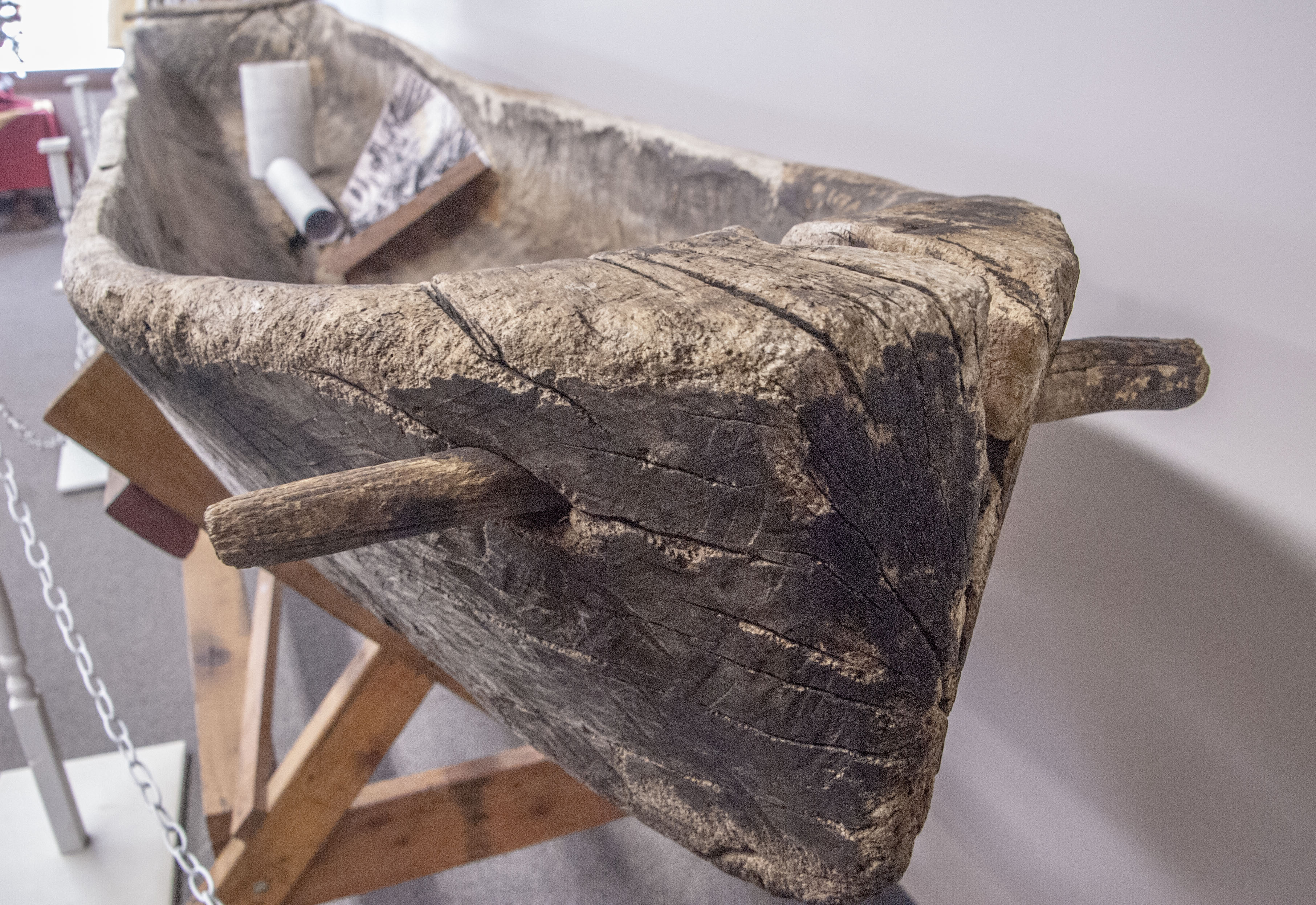
Speculation has it that Ole placed the “dowel” through the bow of the canoe.
Not unlike Ole Torgerson, many “river rats” hit the gravel bars searching for rare items such as bison bones, Indian artifacts and perhaps even a dugout canoe — another was located a few miles away just below the Churchill Dam on the Minnesota River in 1982 — after high waters scourge the river bottom and gravel bars. And, as a paleontologist or an archaeologist will tell you, such artifacts date to this side of the last glaciation of Minnesota. “Of course, Minnesota had dinosaurs,” a University of Minnesota geologist told me years ago on a canoe trip. “Their bones, along with all evidence of the ancient seas, were all crushed to smitherines by the weight of the glaciers.” While 12,000 years may not mean much in geological time, it still allows for some interesting finds thanks to the help of raging flood waters along the original bed of first, the Glacial River Warren, and later, the Minnesota River.
So, was Ole a crafty fellow who hollowed out the huge cottonwood? This is where Maritime Heritage Minnesota came in with a Clean Water Legacy Grant to study seven of the eight dugouts found in the state. In 2013 a minuscule hole was drilled in the hull to extract a 100 mg sample that was then sent to Florida for a radiocarbon dating study. The results shocked Lynne and her board … and brought Ole’s old dugout out of permanent storage and into the main hall, for the study estimated the date of the ancient canoe being burnt and honed with stone tools into a river-worthy vessel between1436 and 1522.
“Ole didn’t do it,” she said.
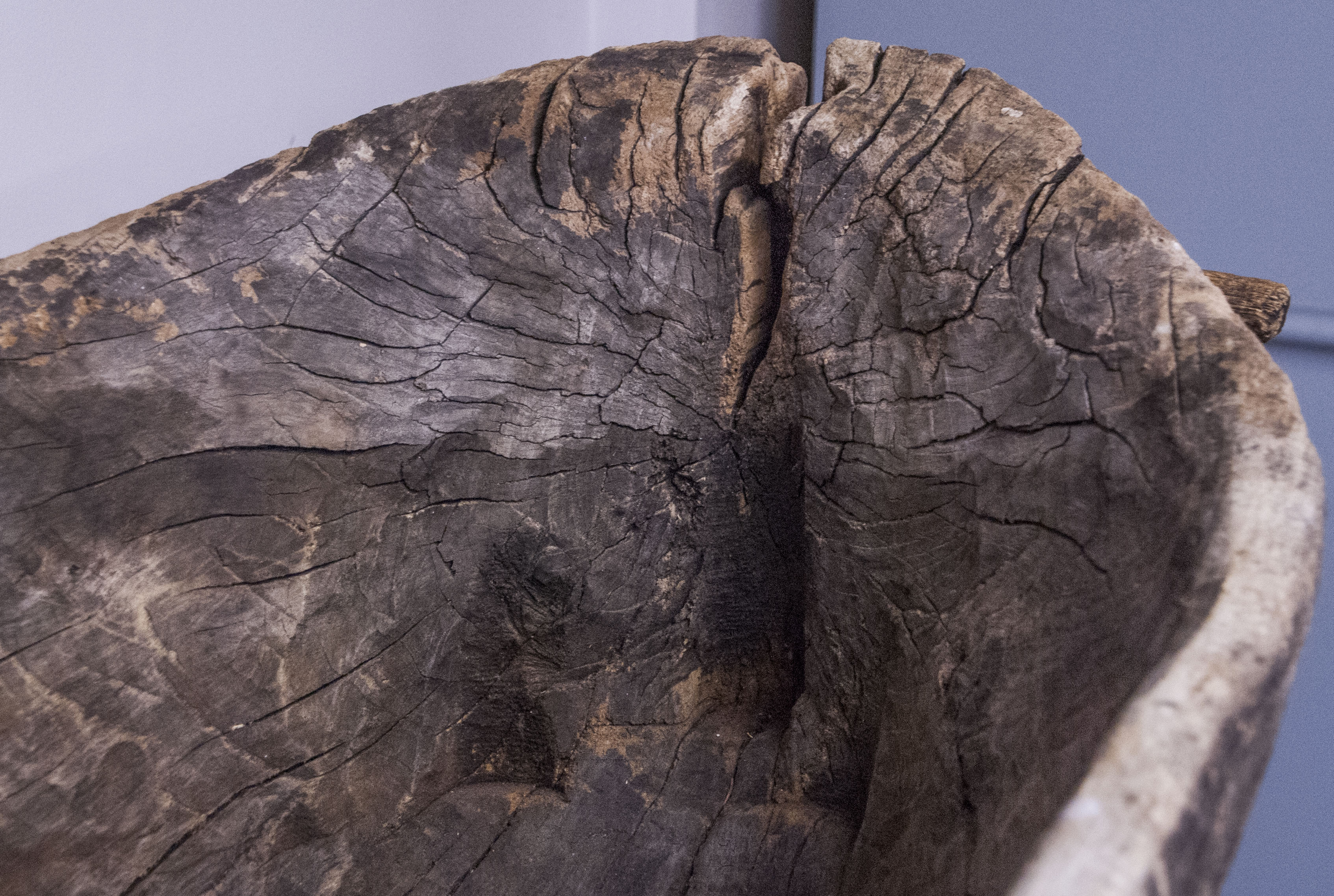
Weathering cracks in the bow of the cottonwood dugout tell the tale of time.
While members of a primitive culture (officially called the Late Prehistoric Period) along what we know as the Chippewa River painstakingly hollowed out and carefully burnt the innards of a cottonwood tree trunk to craft the canoe, German emperor Sigismund was signing a peace pact with Hussieten, peasants were uprising in Transylvania and Albrecht II von Hapsburg became king of Bohemia.
All of which happened several generations before that second dugout canoe (two of the entire eight that have been unearthed in the state are both stored at Chippewa Village) was similarly built. It dated back to 1626-1679. That both were unearthed literally within miles and over a finger of a prairie ridge from one another is also interesting. Unfortunately the “newer” dugout wasn’t as well preserved having been pulled from the sands and water more than a century later than when Ole found his.
“Initially, we were concerned about how bringing it inside would damage the wood, even though it had been through all those freeze and thaw cycles over the years,” said Lynne. “We’ve been very careful.”

June Lynne holds a drawing of the mural regional artist Malena Handeen will paint as part of the dugout canoe display.
Soon, too, regional artist Malena Handeen, who with her husband, Mike Jacobs, owns the land close to where Ole Torgerson found the dugout, has created a riverine mural she has been commissioned to paint on a bare wall inside the Village office. Lynne said a permanent and more stately display stand will hold the dugout in front of Handeen’s mural. “It should look really nice, and we think it will also look authentic to the time,” Lynne said.

Regional artist, Malena Handeen, is to paint the mural depicting the probably riverine scene for the display.
She then smiled. “You know, every one of these little county museums have something unique and special about them.” She looked at the ancient dugout Ole unearthed that somehow luckily survived not just being buried in the sands of time, but even perhaps a possible dozing and burning of an old farmstead to make way for modern farming. “Maybe this is ours.”
 Listening Stones Farm