Unknown's avatar

About John G. White

Somewhat retired after a long award-winning career in newspapers (Wisconsin State Journal, Dubuque Telegraph-Herald, Denver Post and a country weekly, the Clara City Herald). Free lance photographer and writer with credits in more than 70 magazines. Editor with various Webb Publishing magazines in St. Paul, and a five year stint as editorial director at Miller Meester Advertising.

Linking us to the Heavens

A full moon has risen here over the prairie reflecting flecks of snow swirling in a brittle breeze. Depths of our long winter. Now in the middle of February with spring feeling so ever distant, word comes that one of the highest number of Sandhill Cranes have already arrived along the North Platte in central Nebraska. This high number of Sandhills are more typical in the first or second week of March, according to an ornithologist with the Crane Trust.

Maybe time is now measured for this present grip of winter. Bless the cranes!

If swans form creative art on still waters, cranes link us to the heavens. Such promise gives me hope while bringing back a wonderful memory from this past summer when a dear old friend, Michael Muir, and I followed a visit to the Aldo Leopold digs near Baraboo, WI, by pulling into nearby parking lot of the International Crane Foundation (ICF).

Known for his reputation around Dubuque for his sarcasm, which may have been chiseled and honed back in the late 1960s when he was hanging with a small group of us fledgling journalists at the Telegraph-Herald, he blurted, “Realize, of course, that this is a ‘crane zoo.” At that precise moment my eyes were focused on a crane sculpture so I didn’t catch the twinkle in his eyes that typically accompanies such a comment.

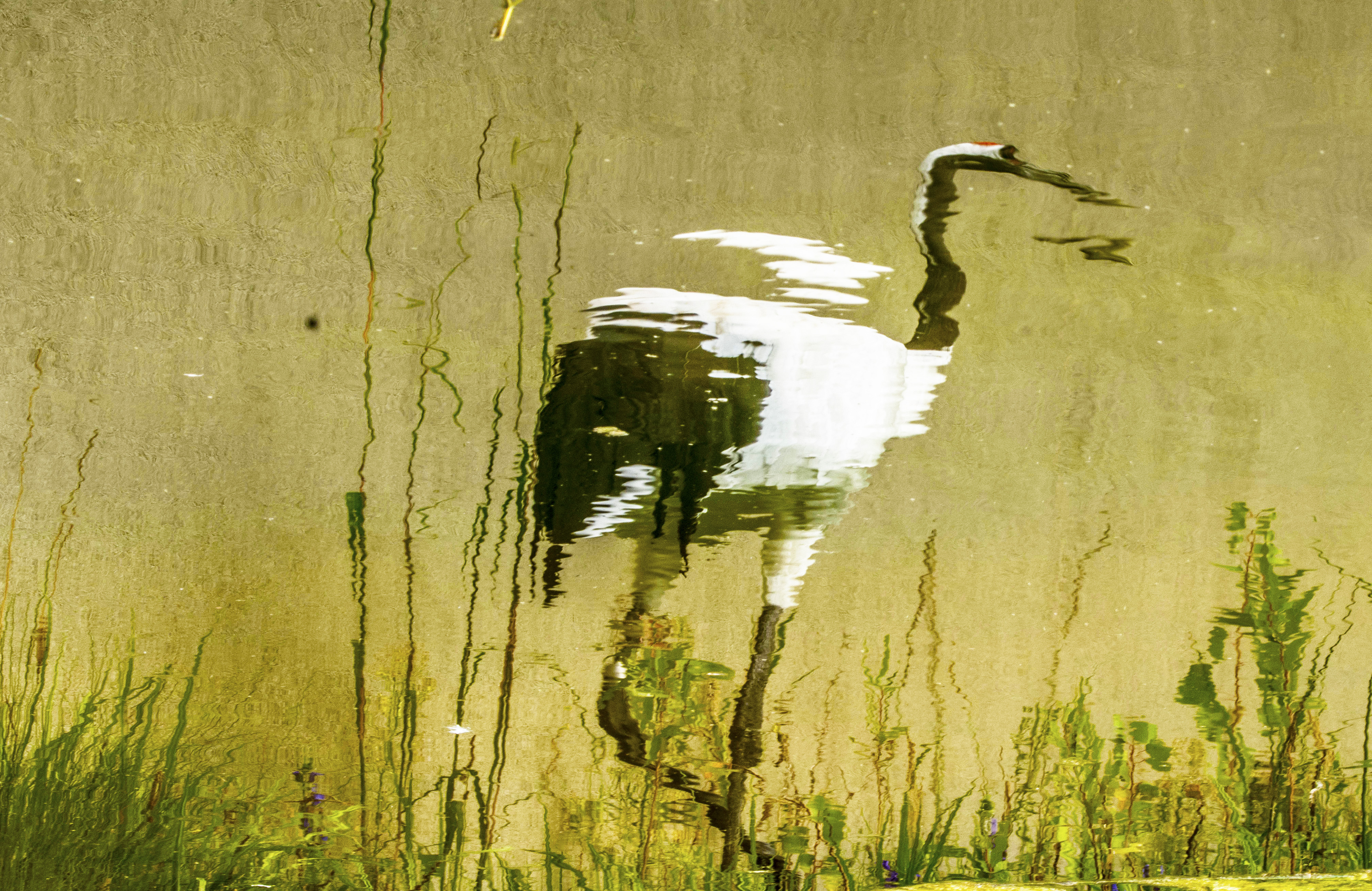
Red-crowned Cranes (in reflection) breed in large wetlands in temperate East Asia. In the winter, the mainland population divides into two or three wintering subpopulations, wintering along rivers and in coastal and freshwater marshes in Japan, China and the Korean Peninsula. There are two main breeding populations: a migratory population on the East Asia mainland (northeastern China and Russia), and a resident population on the island of Hokkaido in northern Japan.

Michael wasn’t too far off, all sarcasm aside. This wouldn’t hold the same magic found in the midst of a migration, nor was this the intention. Enclosed in spacious pens are all 15 worldwide species of cranes, each pen perhaps an acre or more in size with each containing a wading pond. His “zoo” comment referenced overhead netting stretched over each pen to keep the birds enclosed for the wealth of research being conducted on the various species, some of which are bordering on extinction. The ICF is, after all, a research facility that has operated here since 1973, and education is a huge part of that effort. Eggs are collected and moved to a separate facility that was off limits to visitors. Work here is ongoing and perhaps may lead to keeping some of the more vulnerable cranes from extinction. 
Each species was paired, and none seemed too concerned about much of anything, squawking and meandering through their respective pens. Seating areas at each of the individual sites held both educational panels and maps of where one would find them in the wild. Each map indicated both their wintering sites and summer breeding regions along with their migration routes. 

Of the 15 species, all but four are considered vulnerable, endangered or critically endangered. One would think our very own Whooping Crane heads the list of the critically endangered, yet it’s the Siberian Crane that claims this dubious honor. The Whooping Cranes aren’t far behind, however. Among those that aren’t on the list are the Sandhill Cranes, and there are even hunting seasons in some states for them. Or as Michael quipped, “What’s that about?” Without sarcasm.

Blue Cranes of Africa … both the Xhosa and Zulu tribes in Africa revere the Blue Crane. Zulu royalty were the only tribe members traditionally allowed to wear Blue Crane feathers, while only Xhosa warriors were permitted to wear Blue Crane feathers into battle.

In the words of the ICF, “Reverence alone, unfortunately, has not been enough to sustain the world’s crane populations in the wake of mankind’s rapacious lust for land and resources. Squeezed into ever-shrinking habitat reserves, nearly half of the fifteen species of cranes are presently threatened or endangered, qualifying the family Gruiidae as one of the most pressured groups of birds on earth. The ICF has pursued a multidimensional program of scientific research, captive propagation, education, and preservation of crane habitats worldwide. In these efforts they (the cranes) have made great strides.”

Although my first sighting of Sandhill Cranes was in the San Luis Valley of Colorado in the mid-1970s (where I also saw my first Whooping Crane), heading to central Nebraska and the Upper Platte River may become an annual pilgrimage for me. Yet, what caught my attention at the ICF was both in the number of worldwide species as well as the unique differences between them. While the ICF exists for education and research, for me their site offered an unexpected and captive experience for my photography. 

Gray Crowned Crane … is a primitive species of crowned cranes dating back in the fossil record to the Eocene Epoch (56 to 33.9 million years ago). At least 11 species of crowned cranes once existed in Europe and North America. However, because crowned cranes are not cold hardy it is believed they died out in these areas as the Earth cooled and only survived in warmer Africa.

In my pursuit I no doubt bored my dear friend, although he was patient and kind. I found myself mesmerized by the different plumage of the crane species, birds I will likely never see in their natural habitat. Especially those that migrate between the Far East and the wilds of Siberia along with those from the African Plain. 

I found myself standing and focusing on each of the pairs, some longer than others. Our two native species bookended the loop, beginning with the Sandhill Crane next to the visitor’s center. At the very end were the Whooping Cranes, and their enclosure came without the overhead netting. In between were the 13 other species along with trails that also led off into a 65 acre prairie that housed the distant main research facility.

We were the first to enter the facility that morning. Those in the gift shop and the “rangers” who mingled with the guests were all knowledgeable and helpful, answering questions they’ve no doubt heard so many times. For example, this is one was answered at least a half dozen times that morning: “Perhaps the easiest way to tell cranes from herons and egrets is that cranes fly with a straight neck whereas herons and egrets do not. Their flight is with curved necks.”

Eurasian Craneslike the Sandhills, one of the least vulnerable. The breeding range of the Eurasian Crane extends from northern and western Europe across Eurasia to northern Mongolia, northern China and eastern Siberia. The winter range includes portions of France and the Iberian Peninsula, regions along the Tyrrhenian and Mediterranean seas, north and east Africa, the Middle East, India and southern and eastern China.

Michael and I spent perhaps our longest time observing the Whooping Cranes, who were joined by a nervous number of flighty Cedar Waxwings. When we entered the vast seating area facing the Whooping Crane pen the pair was lounging in the shaded grass. Eventually one rose and meandered around the bank above a small pond, then threaded its way through the knee-high grass to the edge of the water to drink. We had entered this particular compound close to noon, so the heat and humidity had increased significantly since our arrival three hours earlier. Soon the second crane stood and ambled down to join the other one. It was felt as if we were infringing on their privacy. That feeling seems rather imminent around Whooping Cranes, birds earning a reverence akin to worship. Yes, worship, for some cultures, particularly in Asian countries, places cranes in such status.

Cranes are particularly prominent in the art and mythology that dates back to the earliest Asian civilizations. The Chinese consider a crane as the prince of all feathered creatures giving it a legendary status, embodying longevity and peace. Cranes are believed to be mythical creatures with lives lasting for thousands of years. The Japanese are particularly fond of cranes, and their paper-folding origami is a traditional art form. To them cranes are often referred to as “birds of happiness” …  their wide-spread wings believed to provide protection. Mothers will recite this traditional prayer in concern for their children:

“O flock of heavenly cranes … cover my child with your wings.”

Whooping Crane … Two distinct migratory populations summer in northwestern Canada and central Wisconsin and winter along the Gulf Coast of Texas and the southeastern United States, respectively. Small, non-migratory populations live in central Florida and coastal Louisiana. Endangered with slightly more than 800 remaining alive.

The day before Michael and I visited the ICF we had paid homage to the late naturalist Aldo Leopold, whose farm and cabin are nestled nearby along a bend of the Wisconsin River. Leopold was as enamored by cranes as were his Asian brothern far across the seas. Mentions of the Sandhills can be found throughout his writings, and he gives particular homage in his essay, “Marshland Elegy.”

“Our ability to perceive quality in nature begins, as in art, with the pretty. It expands through successive stages of the beautiful to values as yet uncaptured by language. The quality of cranes lies, I think, in this higher gamut, as yet beyond the reach of words,” he wrote. 

The ICF was a special place, and graced me with some special images. Now, as the snow swirls in the gleam of this full February moon, I think of the North Platte; of peering through opened windows of a chilly plywood blind listening to the thousands of Sandhills seeking protection in the shallow waters and sandbar isles up and down the river. Of watching their unique beauty in easing from the skies to the protective waters; and again, hearing them rise from the darkened river in hopes some will remain until the sun provides enough light to witness and photograph yet another magical moment … when the heavenly cranes may once again cover my soul with their widened wings.

Sandhill Cranes coming for a landing on the North Platte River in Central Nebraska.

And now, thanks to ICF’s “crane zoo,” to fully realize the magic and beauty of similar migrations extending across many lands and waters.

An Escape to an Ice Floe Ballet

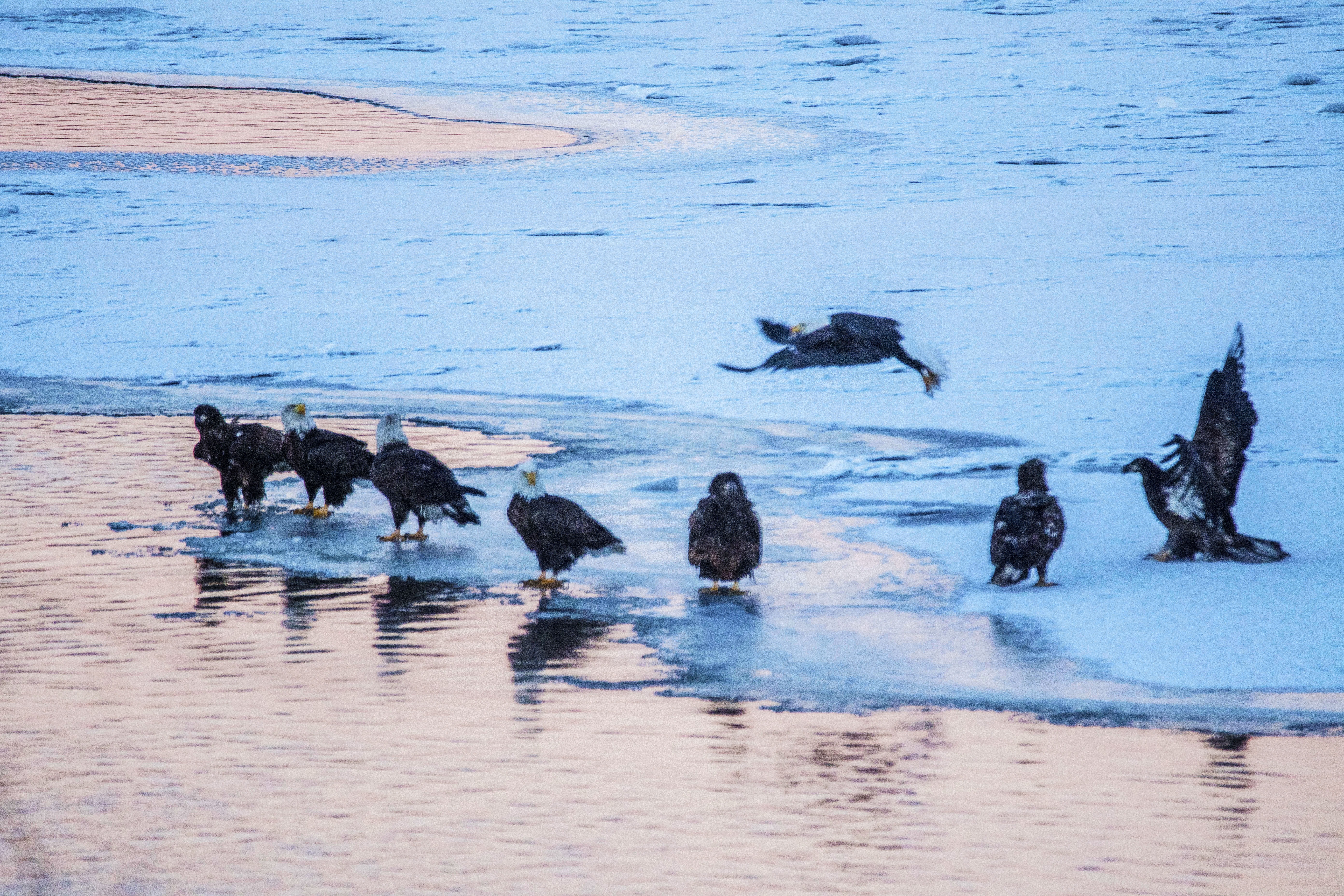
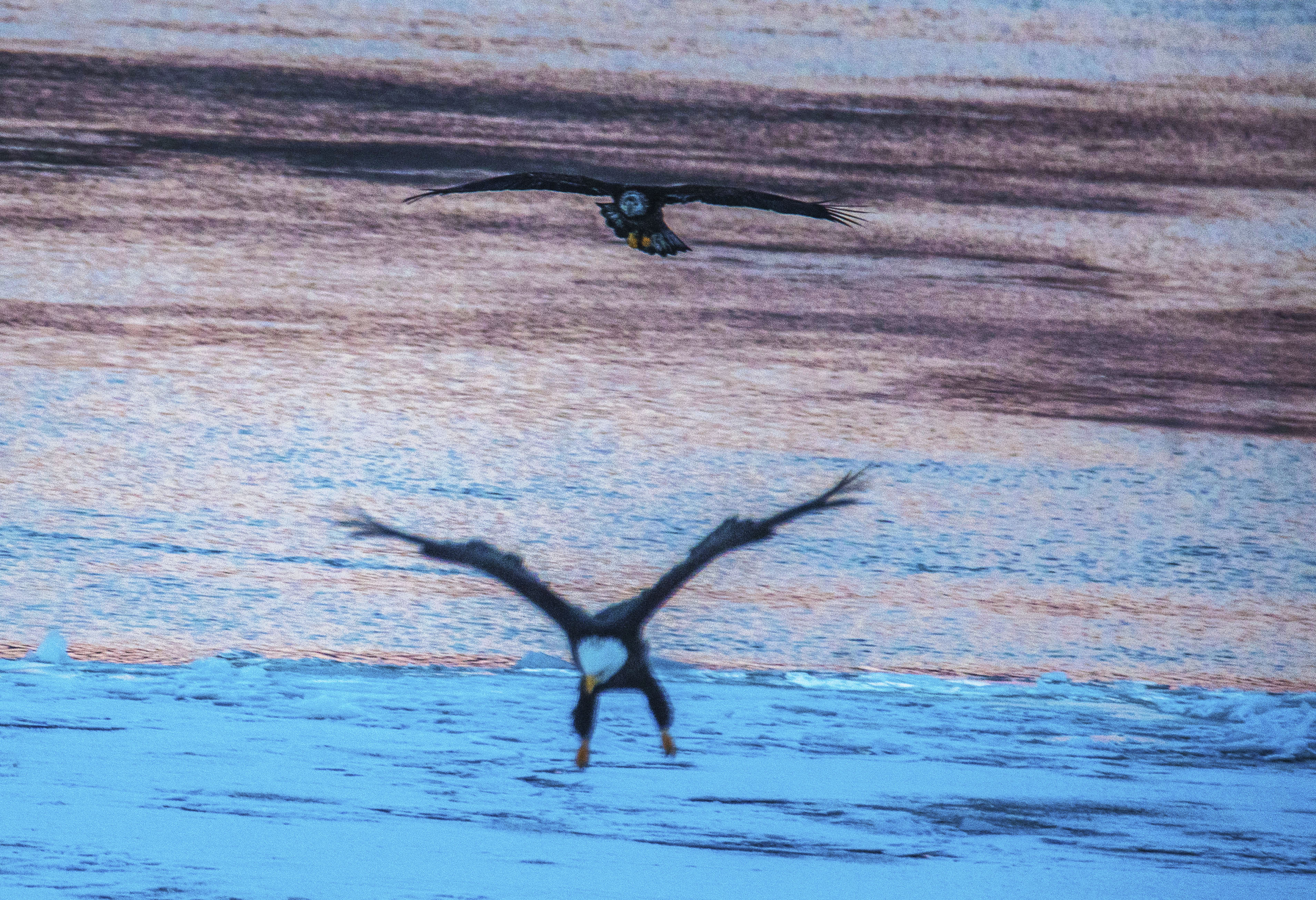
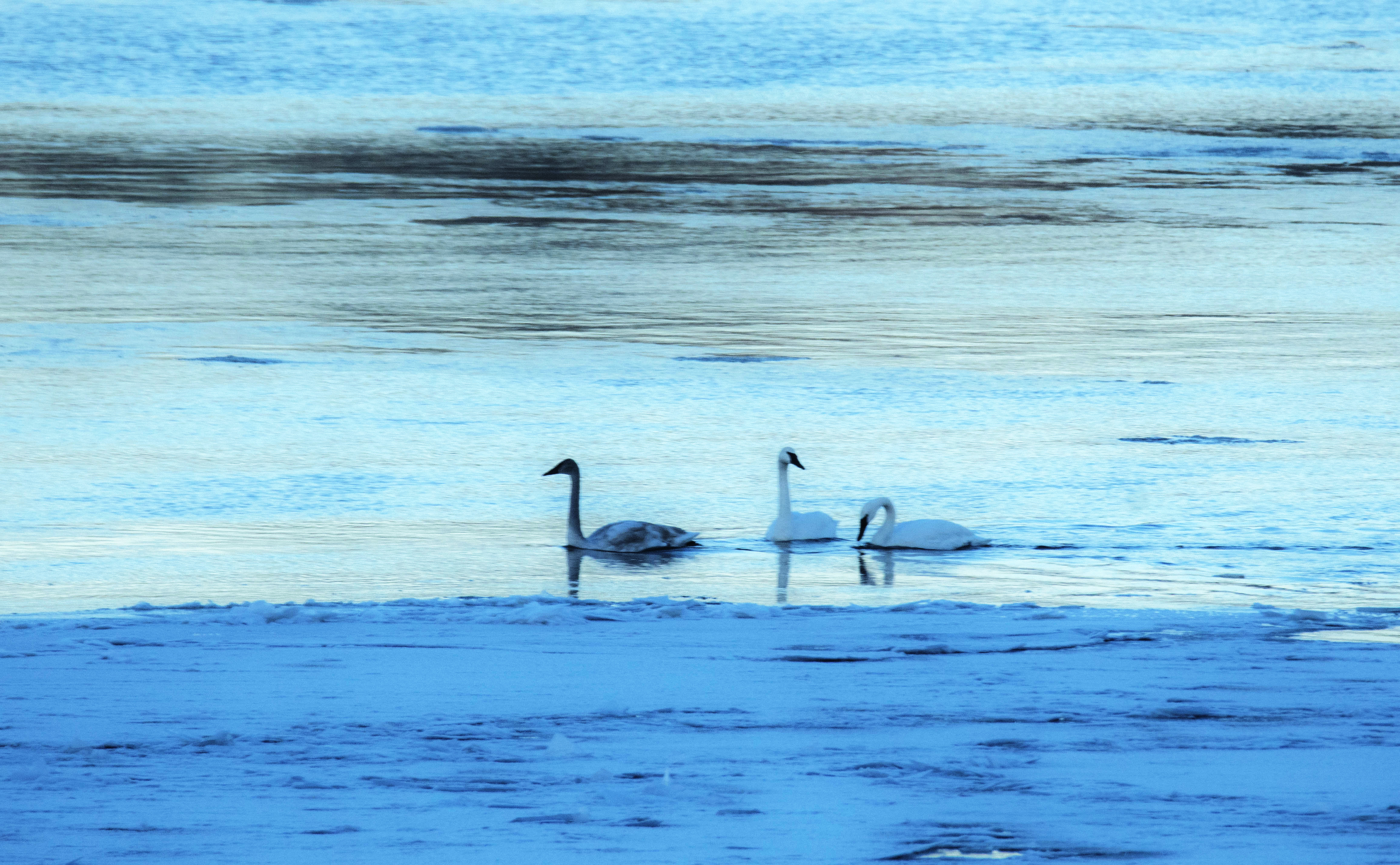
Across the near water where the eagles soared singularly or perched in packs on ice floes, a blueness, a cyan yielding to violet, blanketed the river in either direction as evening grew ever closer. Yet, above the Mississippi River, the sky would have made sweet fruit happy with glows of amber and orange. Somewhere back over the Read’s Landing bluff the sun was nearing a distant horizon. At that moment, though, our ambient light at the foot of Lake Peppin was fit for gods. 

Ignoring the dozens of eagles were numerous swans, especially in the distance near a wooded island across from Wabasha. Dozens, and certainly more than 100.

If the eagles were from the “hood,” the swans offered contrast by creating a sweet ballet, long necks often in symmetry, always poised with grace. Thoughts of Tchaikovsky? The contrast couldn’t be more bold between the raptors and floaters, though each were equally captivating.

These birds and colors were to be celebrated only briefly, for nightfall would come ever so swiftly. Our planet spin never slows though we’re often unaware and even immune in both deep darkness and blinding light. Sometime watch a shadow as it moves either side of mid-day, for shadows move with the same swiftness as a setting or rising sun. One mid-morning I was captivated while watching shadows move across the crevices and archways of the St. Paul Cathedral from a hotel window. Ever moving, constantly changing.

Other than Read’s Landing my month of January was unlike planet movement due to some health issues … which actually began after that near perfect afternoon while visiting fellow journalist friend, Anne Queenen. Her second floor apartment windows offered a perfect photography “blind” just a roadway and a set of railway tracks from the western bank of the Mississippi. Freighters and Amtrak’s Empire Builder between St. Paul and Chicago ply the tracks, and the roadway is a frontage road off Bob Dylan’s Highway 61 … again revisited.

After Christmas I had fought a cold/flu with sneezes that rattled the soul, although swabs of the nostrils indicated no Covid. Now, several tests later, I’m still negative, although the health issues have me cornered here on the prairie. Blessed with a catheter since my trip to Anne’s, my home here on the prairie is where I’ve been, my camera and my writing unattended. My isolation has felt rather extreme for an extrovert like me. I had thought the autumn and approaching winter was slow. One keeps learning.

All of this isolation has brought, strangely enough, a sudden and growing pressure … a sudden sense of seeking escape; to explode and explore. Ah, the three “e’s.” Escape. Explode. Explore. 

Isolation from the flu/cold was what I was feeling a few weeks ago when someone posted a picture on social media of swans in flight from Read’s Landing. By then I was healthy and fit, and felt a strong urge and acted on it by sending Anne a message after a thought, a bit of recall. When we had last communicated in the autumn she was living somewhere south of Redwing along the Mississippi River. I couldn’t recall where exactly, so I sent her an email. She responded almost immediately. “I actually live in Read’s Landing,” she wrote back, “and yes, you are most welcome to stay here with Bode and me.” 

Bode is a lovely though incredibly shy dog of blended breeds and kept a close eye on Anne’s guest as he moved from window to window looking for new images of the eagles and swans. Which the visitor did until nightfall.

After darkness settled in over the river, Fred Harding, Anne’s close friend, joined us for a wonderful dinner. All this beauty and fellowship were mere moments before my more serious health issues revealed themselves after a totally sleepless night. That would come later, though.

Thankfully Anne was happy to see me. Although we have corresponded infrequently over the past several years, it has been some time since we’ve seen one another in person. Over the years we have jointly though independently reported on many of the same issues: A rock quarry proposed on the original outcrops “released” by the Glacial River Warren at the headwaters of the Minnesota River; issues of soil erosion and water quality; and most recently, on cover crops. She was actually working on a cover crop story when I arrived.

While I walked from window to window focusing on the beautiful eagles and swans, she talked about possible places we could go for even better and closer views. On the other side of Lake City I had passed Fondulac State Park, and I promised myself I would stop on the way home. Another time, perhaps, and Anne has promised some beautiful trails. While being treated by nurses at the hospital in Wabasha, one had talked about pull out spots near Alma, WI, down the road from where she lived. The list kept growing … and Anne promised on my next visit we’ll take it all in. Whenever I’m ready to “explode” from my isolation. To escape and explore!

Now, nearly a month later my issues remain and I’m yet blessed with a catheter. I’ve been reading. And reading, and more reading. So many friends have reached out since learning of my condition, and have added much light to the darkness I’ve been feeling. Then, ever so slowly, the pressure pokes through along with those urges of the three “e’s.” Pressure or hope?

All fall I’ve looked longingly at my small camper trailer. I haven’t used it since my former fiancee and I returned from a trip to Washington state back in July. I simply couldn’t convince myself to hook it up and take off somewhere. Not even to a nearby state park. For two years now I’ve wanted to escape and explore Bosque del Apache National Wildlife Refuge in New Mexico. And there is always a winterish escape to New Orleans, or more specifically, the Cajun Triangle across the Atchafalaya Basin. I have so many wonderful memories through the years from the Triangle, and if there is a place in the South that feels close to home, this would be the place. Now my eye is meandering toward returning to central Nebraska and the Sandhill Crane migration. Or, to the Loess Bluff National Wildlife Refuge in Northwest Missouri. And, an invitation is open to revisit Read’s Landing to fulfill those promises of a special friend.

No, I’m not out my funk quite yet, although as we ease past what is hopefully the worst of winter my mind has begun to wander once again. Hope. There are taxes to do, and hopefully there will be some answers to my health situation. A large part of my hope is that this overbearing isolation is merely temporary and moves with the speed of our revolving planet, and that I will soon feel the welcoming bumps of the byways. That I can explode from this isolation. Escape, and then explore whatever awaits. Whatever may be.

Winds of Winter

Seven days into the new year and I stare at a long blank white page in my journal. My water colorist friends would likely call this a blank canvas. I sit at a small, oblong table in a room few have seemingly wanted or felt comfortable in although it once housed a well respected political blogger roommate and then the woman I was hoping to marry before she took foot. Here, though, she crafted dozens of masks to help others face the Covid pandemic and some warming and colorful quilts along with some beautiful water color paintings. 

So there is a bit of semblance.

For now it is a “study.” Perhaps if I’m fortunate, I won’t have use of the room for long. For the time being, though, I’m claiming it as a place to think and write since winter has made my studio office so cold the space heaters can’t even keep my fingers from feeling numb.

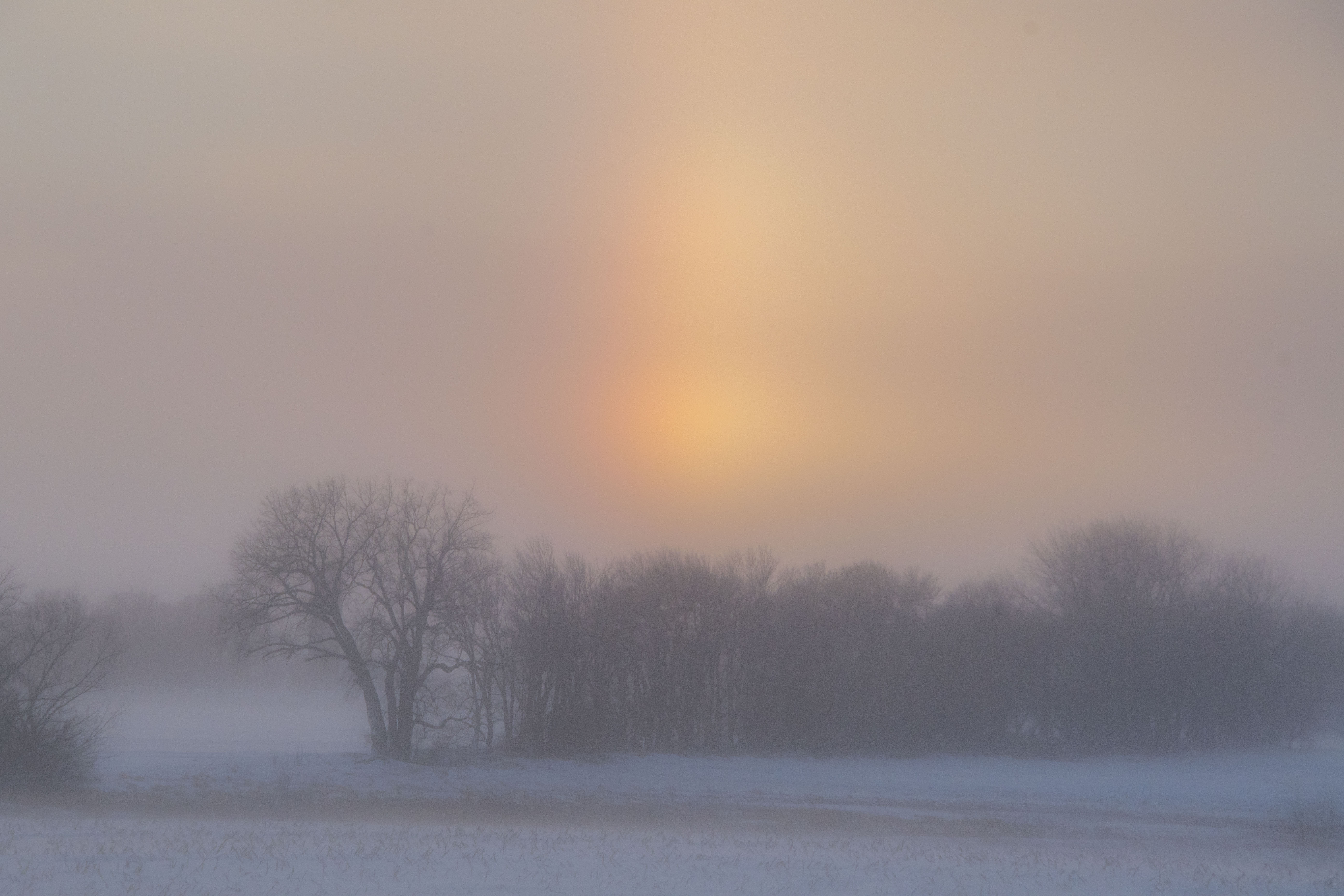
As the afternoon waned, the rainbow-ish arc of the parhelion colored the sky above the haze of blowing snow.

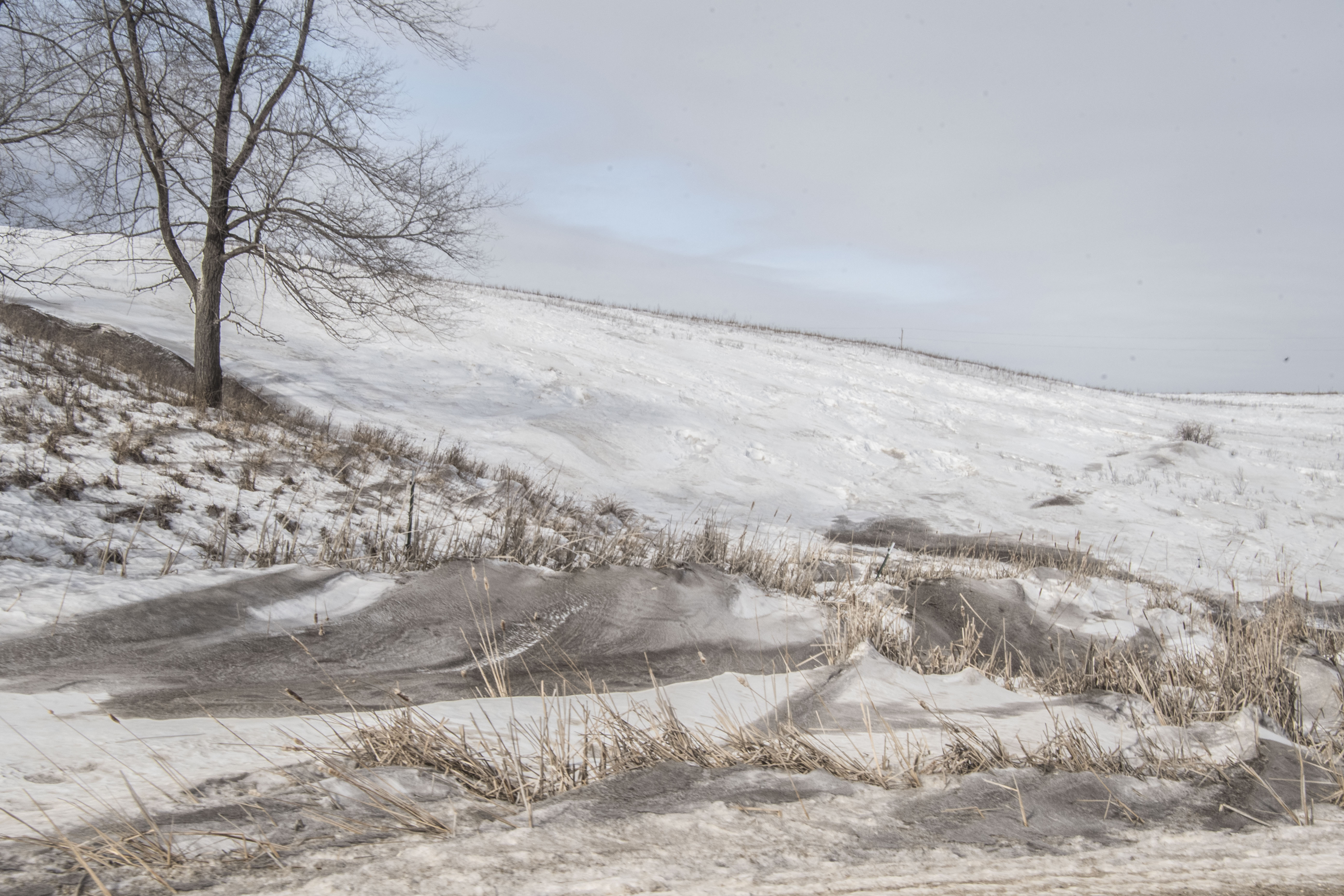
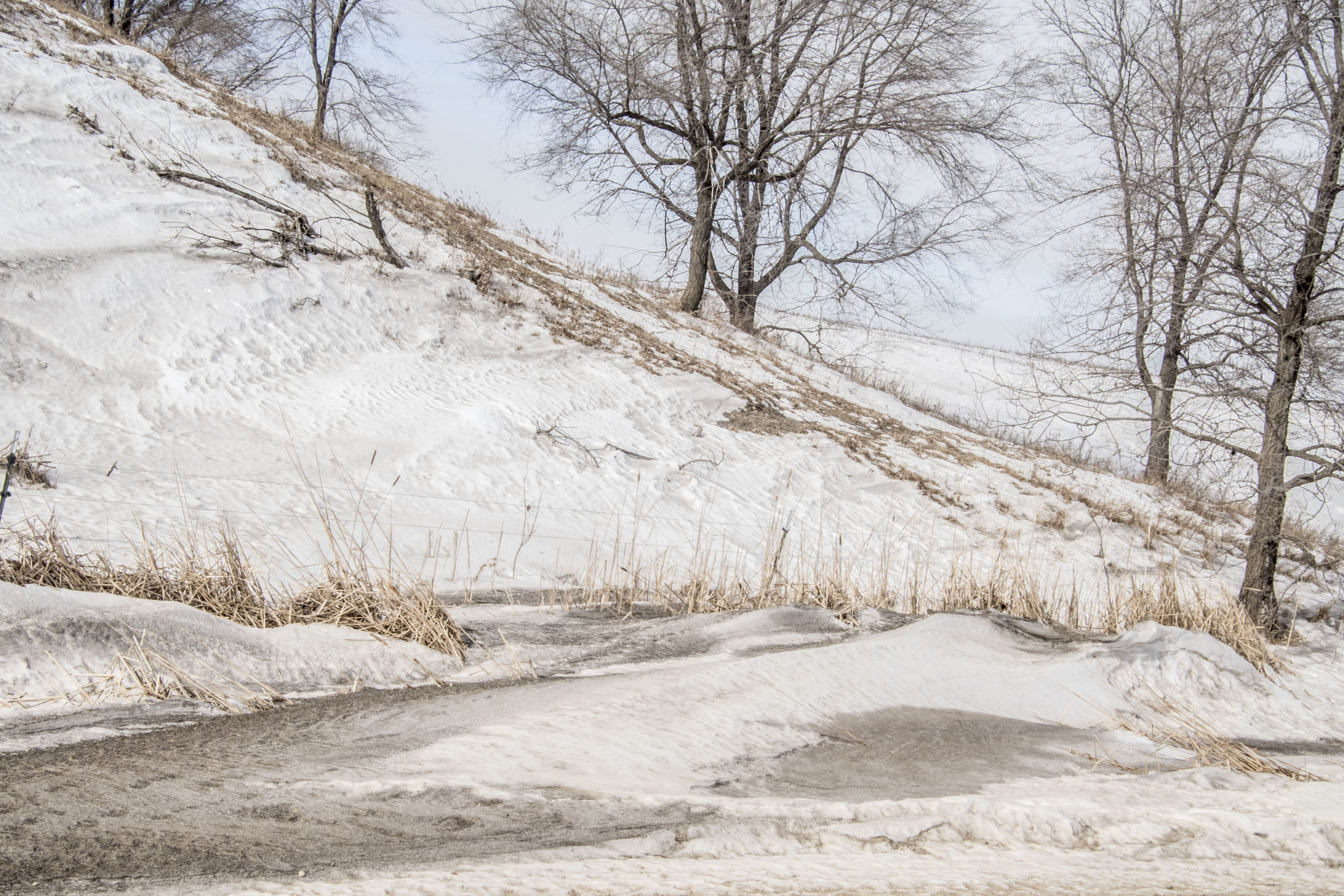
This is a nice perch overlooking the south meadow of my prairie where the stately Big Bluestem and the poetic Sideoat Gamma, along with numerous other forbs and grasses, have knelt in huddled defeat to both the winterish prairie winds and the choke of snow. The smashed and bashed prairie grasses make a heavenly retreat for a rabbit I spied earlier this morning, though they lack offering good hiding for the pheasants. Unless the colorful birds have burrowed into the depths. The spindly stout stems of thistle and milkweed will eventually yield as well.

Barely visible through the whitened snow blown haze are the rainbow-ish outer arcs of an icy halo commonly called a Sun Dog, or parhelion. Seeing one typically reminds me of a photographer friend who had flown in from the Netherlands, who as we drove across the frozen prairie on a day not unlike this one, though minus the wind blown haze, became mesmerized by a Sun Dog. I pulled over and she climbed out of the warm car into the frigid air to take photographs. Indeed, she still has a print on her apartment refrigerator outside of Amsterdam. She wasn’t out long, and later claimed to have never been so cold.

I was thinking the same these past few days with temperatures in the negative teens in the “heat” of the day, before lumbering deeper into the minuses … the twenty and thirty below temperatures come nightfall. As I look through the window at the haze over the prairie and across the tilled fields more distant, though warm I still since a shiver. The horses in the small paddock on the other side of the house crowd together as they munch their hay.

A moment in mid-afternoon shows the level of the ground blizzard in my grove.

Tonight my musical artist friends are gathering in town for a burger before heading over to Lee Kanten’s studio to sing and play. Moments ago I offered my regrets. My near mishap earlier in the week has made me extra cautious. I was on the way home from Willmar about 90 minutes east of here, where I had gone to drop off my son’s stuffed animal sleeping buddy and the Christmas gifts he had left behind. According to warnings from the National Weather Service, a blizzard warning had been issued and was expected to hit after dark. Snow along with high winds.

Although I had left early in the afternoon, I figured if I made it home before dark (around five-ish) my trip would be uneventful.There was ample time. Then a long tar sand train with too many cars to count caught me on the outskirts of Willmar. My car was basically trapped between two others as we sat there for a long and grueling 20 minutes. I was looking more at the gray sky than the train itself, which was moving as an old man walks before it stopped to block the crossing. Cars behind me began shifting, and eventually I was able to back up and turn around to head east toward another possible exit. 

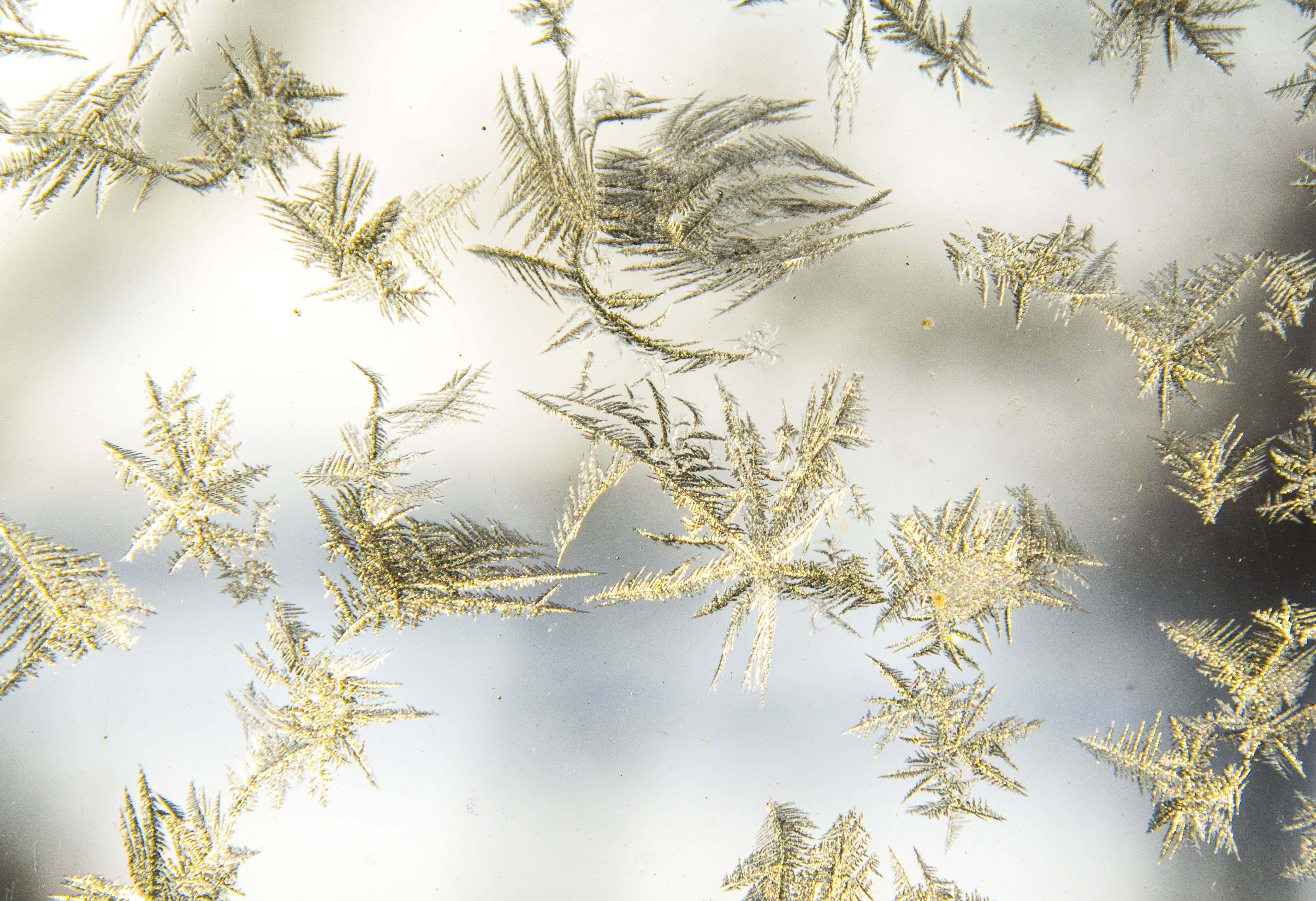
Ice crystals formed on the window of my solarium door …

About 40 minutes later as I was going through the small prairie town of Appleton when another freighter coming through brought the arms down across the tracks before lumbering through, Another 15 minutes or so was lost as darkness settled in. The highway between Appleton and Ortonville, though clear, varied between decent visibility and clouded vision from the winds of a ground blizzard. By the time I reached the gravel road leading to Listening Stones Farm the visibility was next to zero, and I veered my car off the road into a ditch. 

I was fortunate to reach my renters, the Thorsons, on my cell phone, and they soon arrived in their large pickup to pull me out before escorting me the rest of the way home … more than two miles away. Modern technology and a kind and compassionate family had made perhaps a life saving rescue. So, yes, I’m now being extremely cautious.

A Sun Dog image at the Big Stone NWR back in 2018 shows the icy circle.

Much like the stately Bluestem, I now kneel cowardly to these winds of winter. Instead of braving the elements I’ll cuddle on the couch with Joe Pye with a book in front of a fire listening to the wind roar with a potentially deadly gusto. As the “blue hour” eases in I can barely see the line of trees across the road. Wind blown snow once again creates a haze now more bluish than white. Temperatures are once again forecast in the minus twenties.

And, I’ll be laying on the couch with a book with the fireplace ablaze. Safe and warm, just a wall away from the winds of winter.

In Closing

Mine wasn’t an easy year. Especially the last few months. A second of year of forced Covid complications. Having what I considered a strong and beautiful engagement unexpectedly end. Not being able to fly for a gathering of sons in Norway due to costs and Covid.

Yet, there were many moments to cherish. A fine and safe trip to the West Coast with friends, to visit friends and see some incredible sights and to Nebraska for the annual Crane migration. A few trips to state parks on camping adventures. Meeting up with long “lost” friend Michael Muir in Wisconsin in August to tour the Aldo Leopold cabin and farm, as well as the International Crane Foundation. Some great musical moments including my first Willie Nelson concert.

There was also the art. Exhibits of the Haunted by Waters at Java River, and placements in the juried Horizontal Grandeur exhibit. Then the unexpected invitation to display canvases at Stones Throw Restaurant in Morris. Once again we were able to have the summer Big Stone Lake Arts Crawl in June, and the Meander the first weekend of October.

As much fun as the exhibits and shows can be, just being in the field gathering images is almost a daily joy. Before my fiancee left at the end of August we spent many evenings driving around the prairie or at her lake cabin on field trips. Those were wonderful moments I’ll always cherish.

So in accordance to tradition left over from my newspaper days where we photojournalists were asked to select our favorite image of the year, I’ve done the same again this past week with the liberty of being the sole soul of Listening Stones Farm art gallery. It is a time of both reflection and review. For my exercise I began with over 80 images out of hundreds before whittling it down to these … 12 with a bonus of two for special circumstances:

From our trip to Nebraska for the Sandhill Crane migration as hundreds of the birds descend upon the prairie …

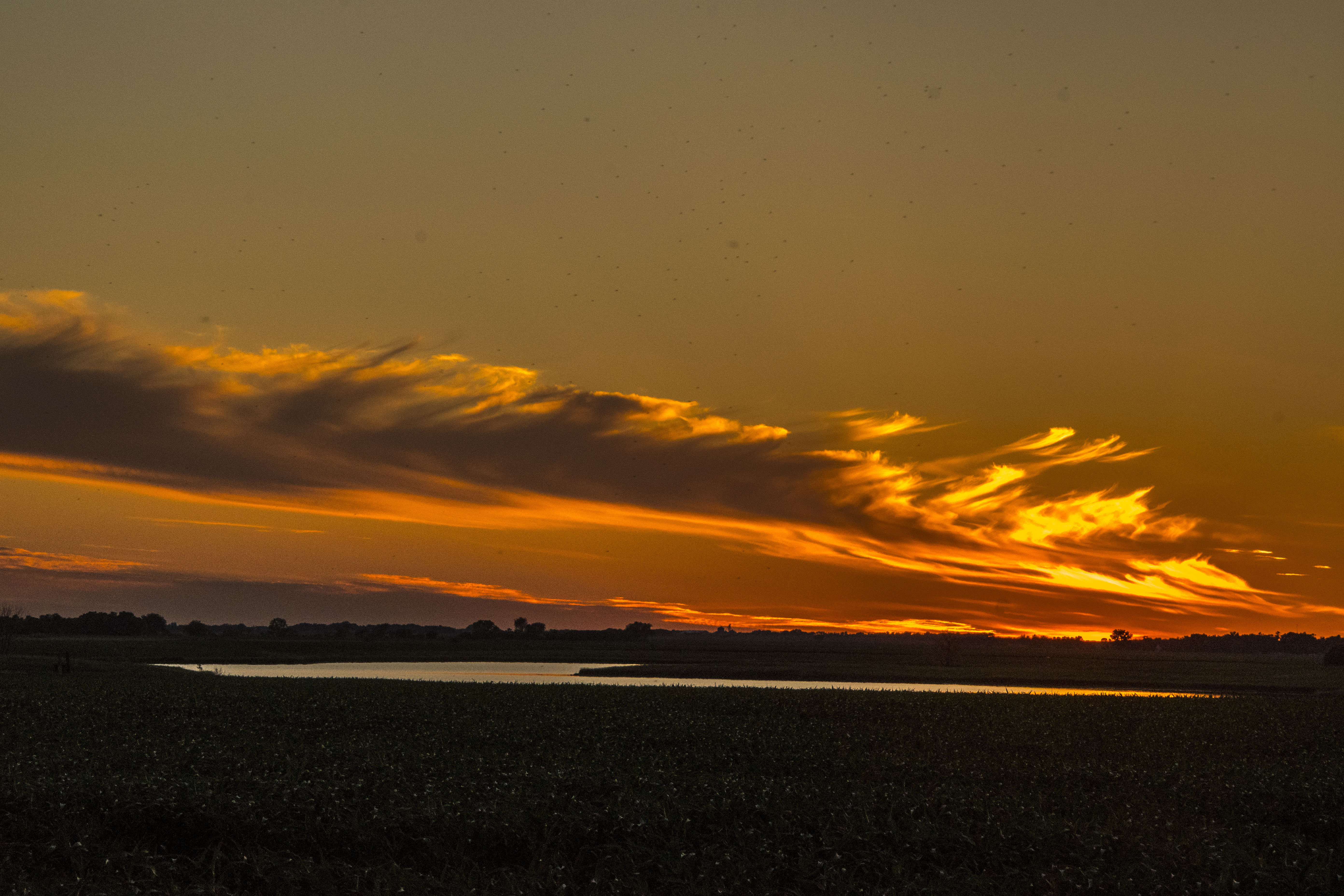
This was from the Summer Solstice of a nearby wetland and intriguing clouds …
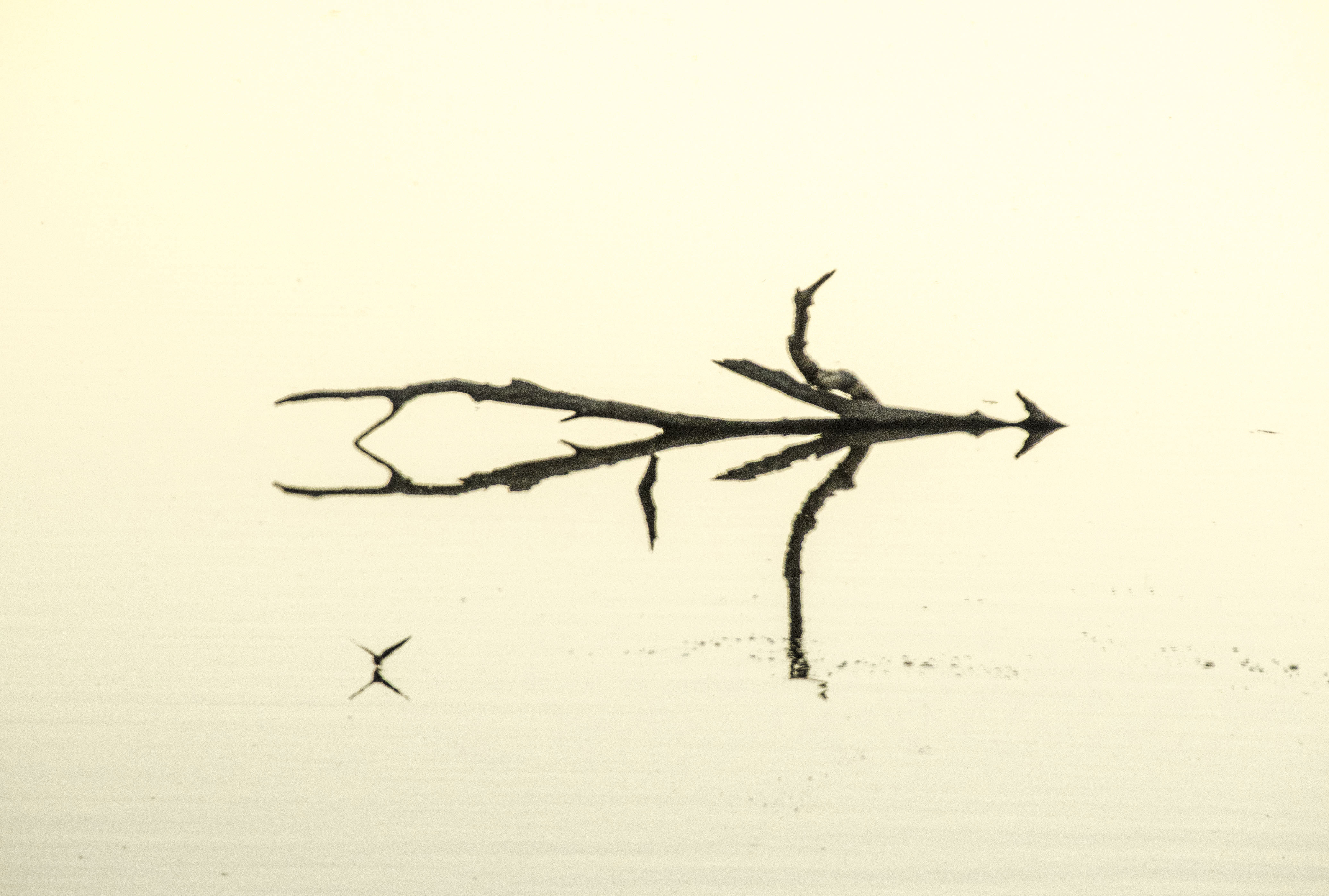
I stopped for because of the light and simplicity of a deadfall in the Minnesota River, only to have a swallow dip down for a gulp of water …
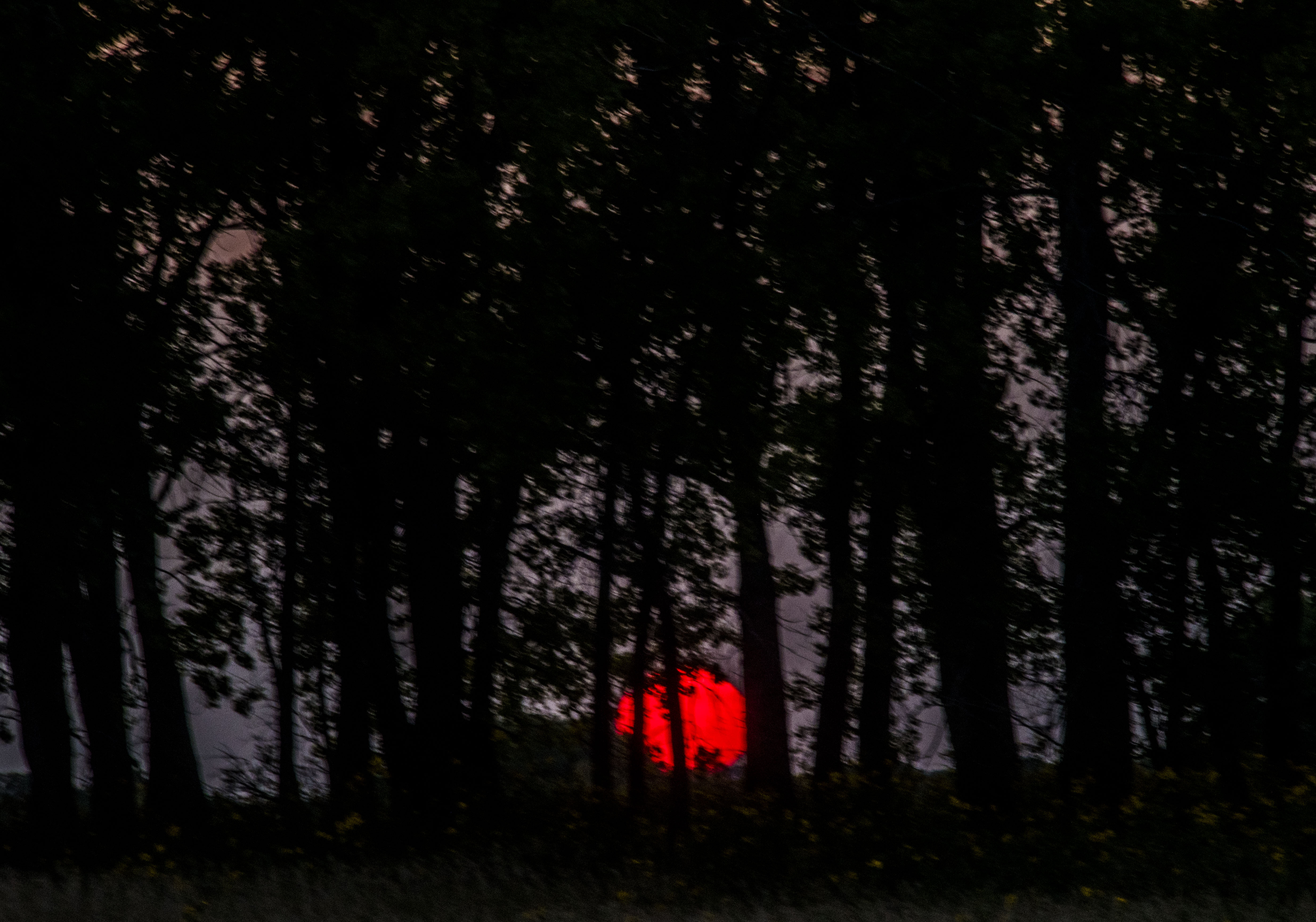
A fitting sunset a few days after the end of our engagement …
A reflection image from the International Crane Foundation, and now part of my Haunted with Waters exhibit …
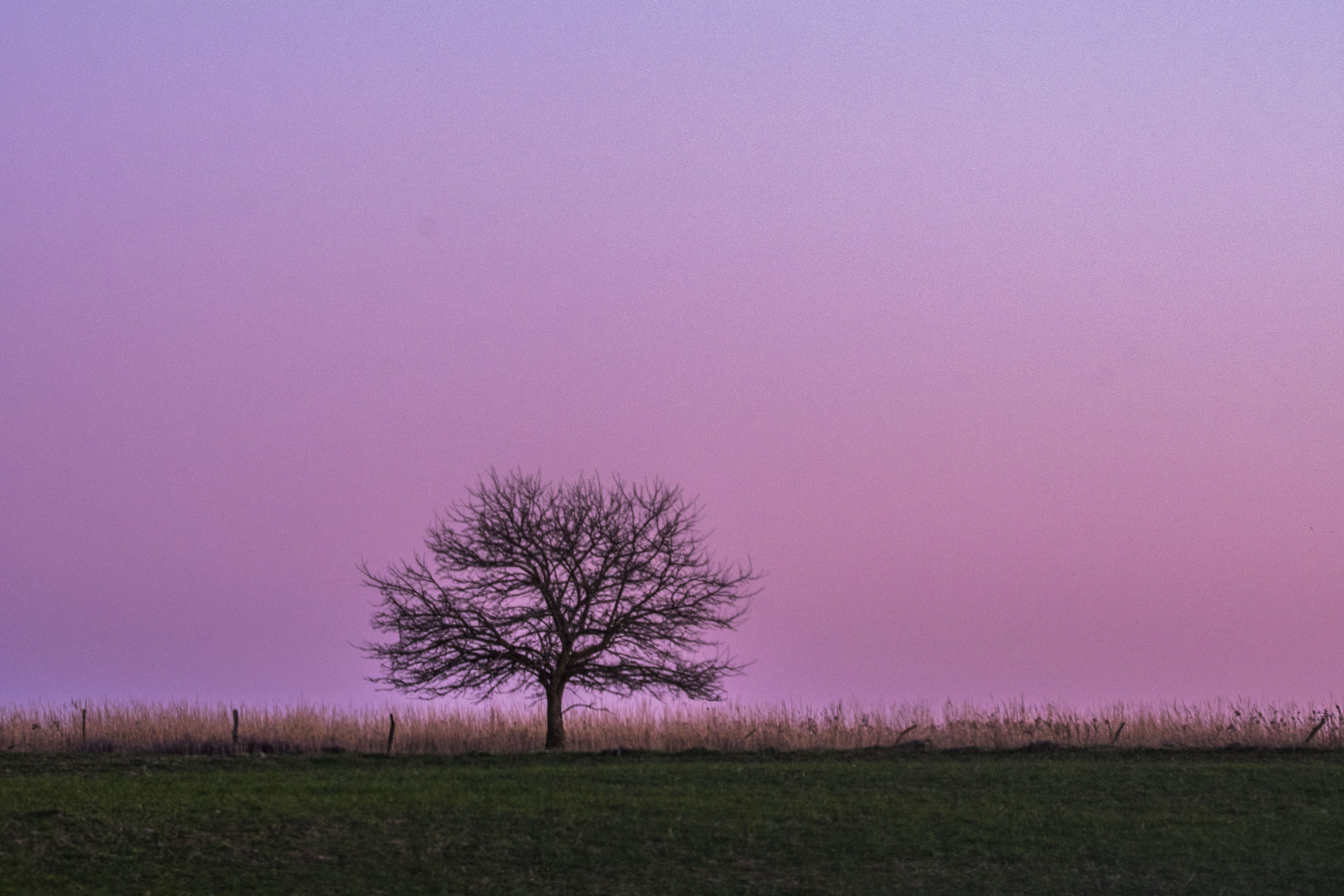
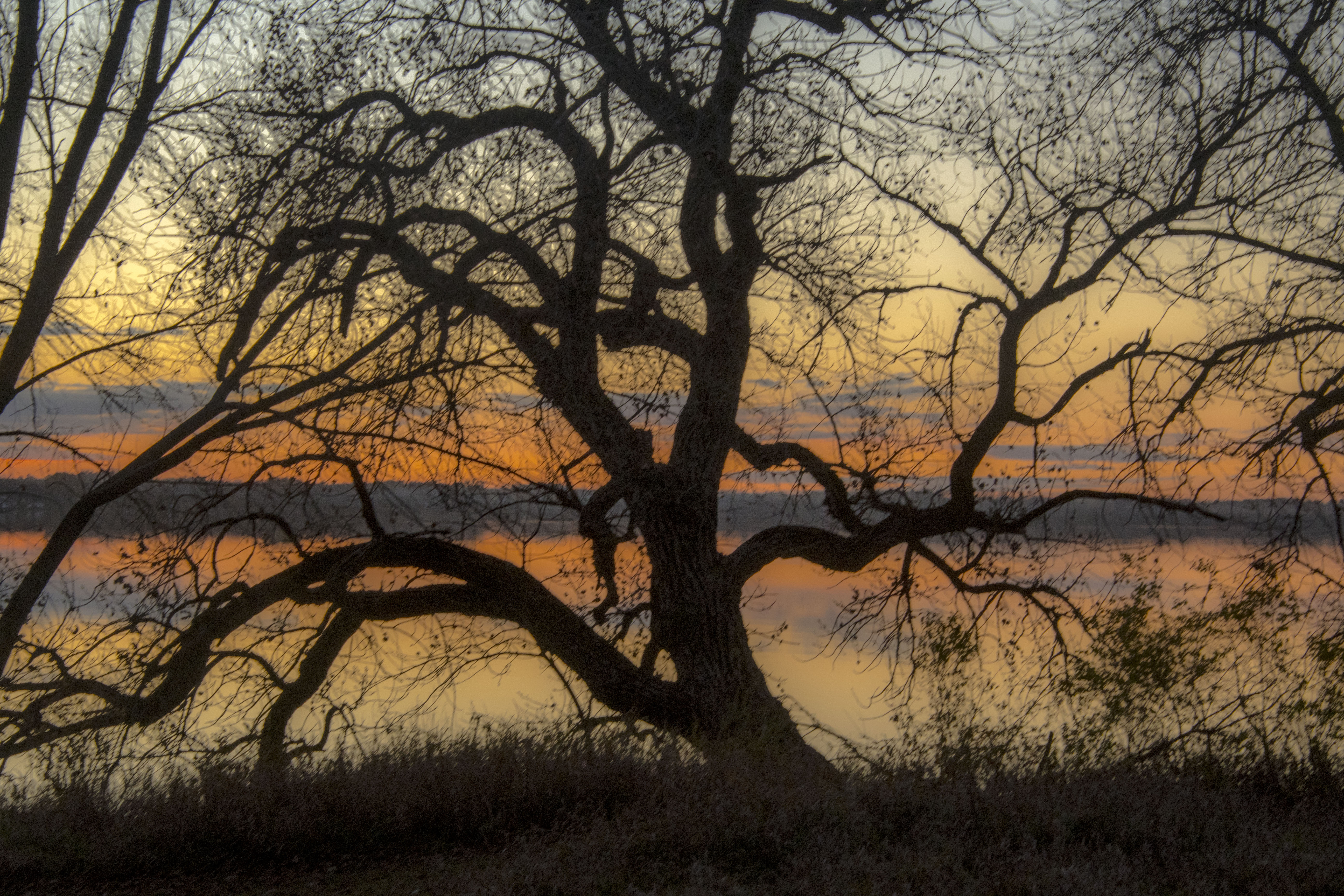
A lone tree at dusk on our family’s farm in Missouri in the fence line of a switchgrass prairie …
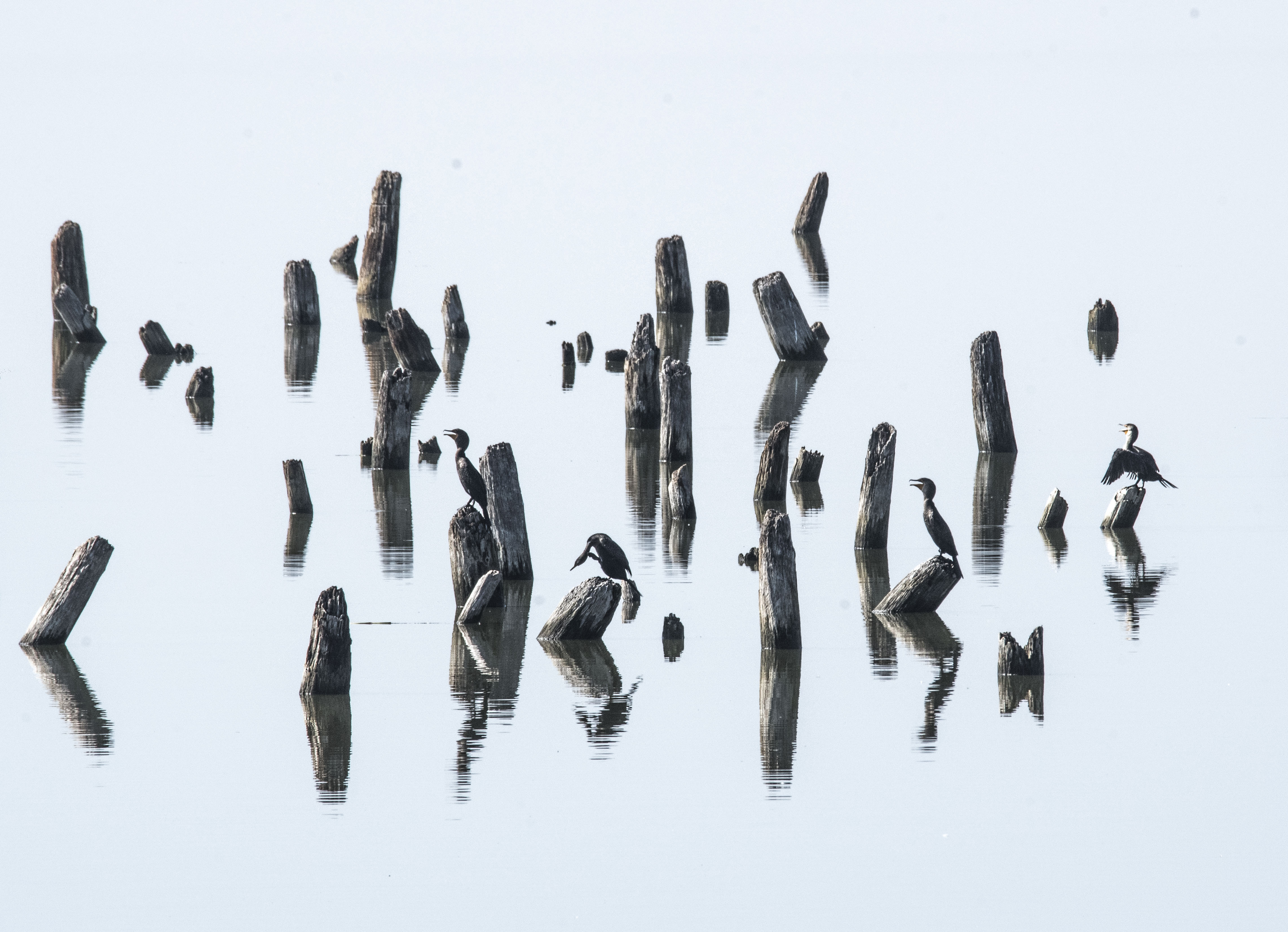
Cormorants at rest on the stump pilings at the Big Stone National Wildlife Refuge …
An afterglow through a shapely tree at Big Stone Lake State Park …
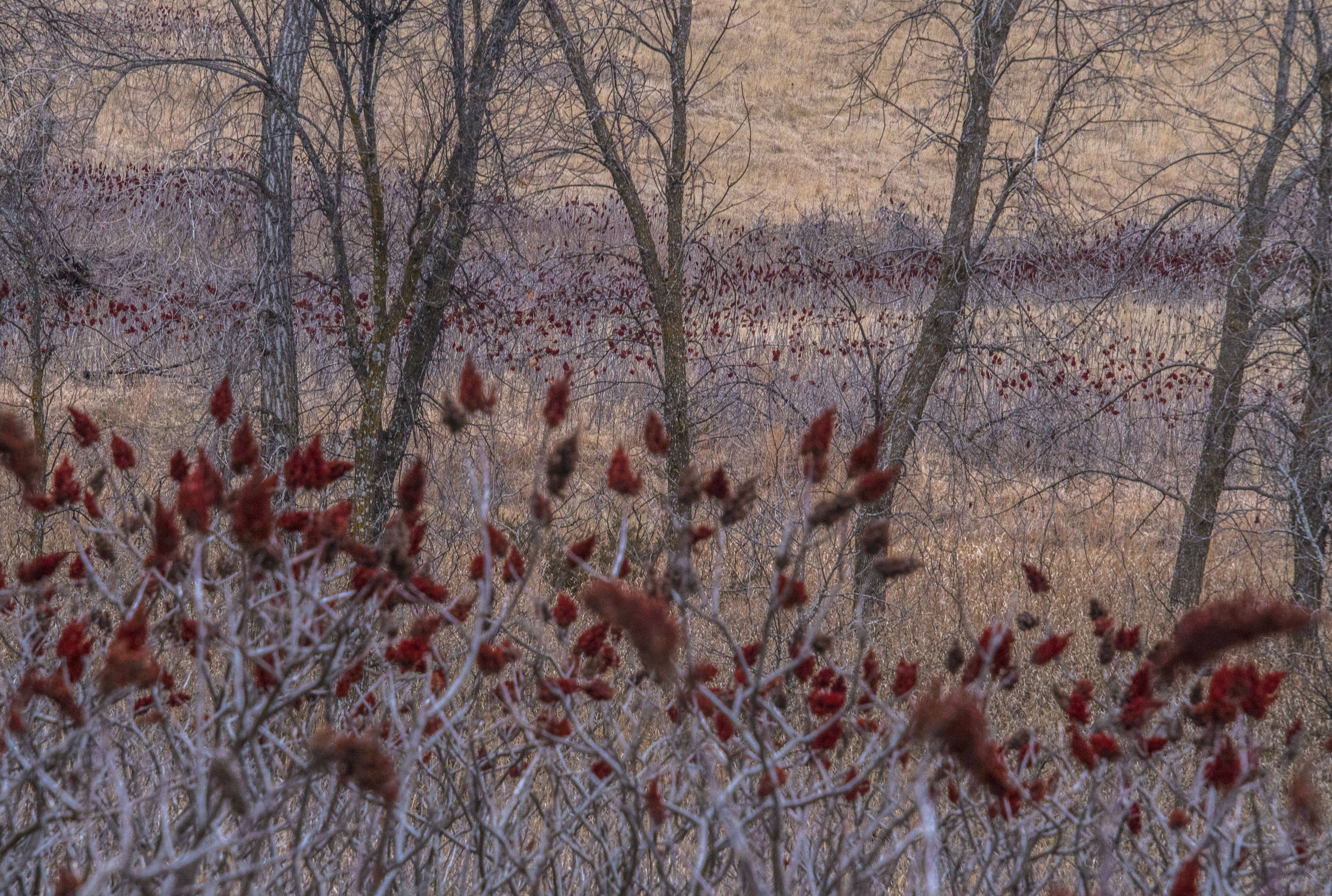
Sumac texture in a layerinig landscape …
Sunset over the split rock on the Odessa prairie …
No, it wasn’t the Winter Solstice but close enough … the moon a day or so before highlights a crescent of wintery leaves in my backyard …
Taken on one of the most difficult days of my life, and symbolic portrayal of a bond of a shared relationship …

And, my bonus images …

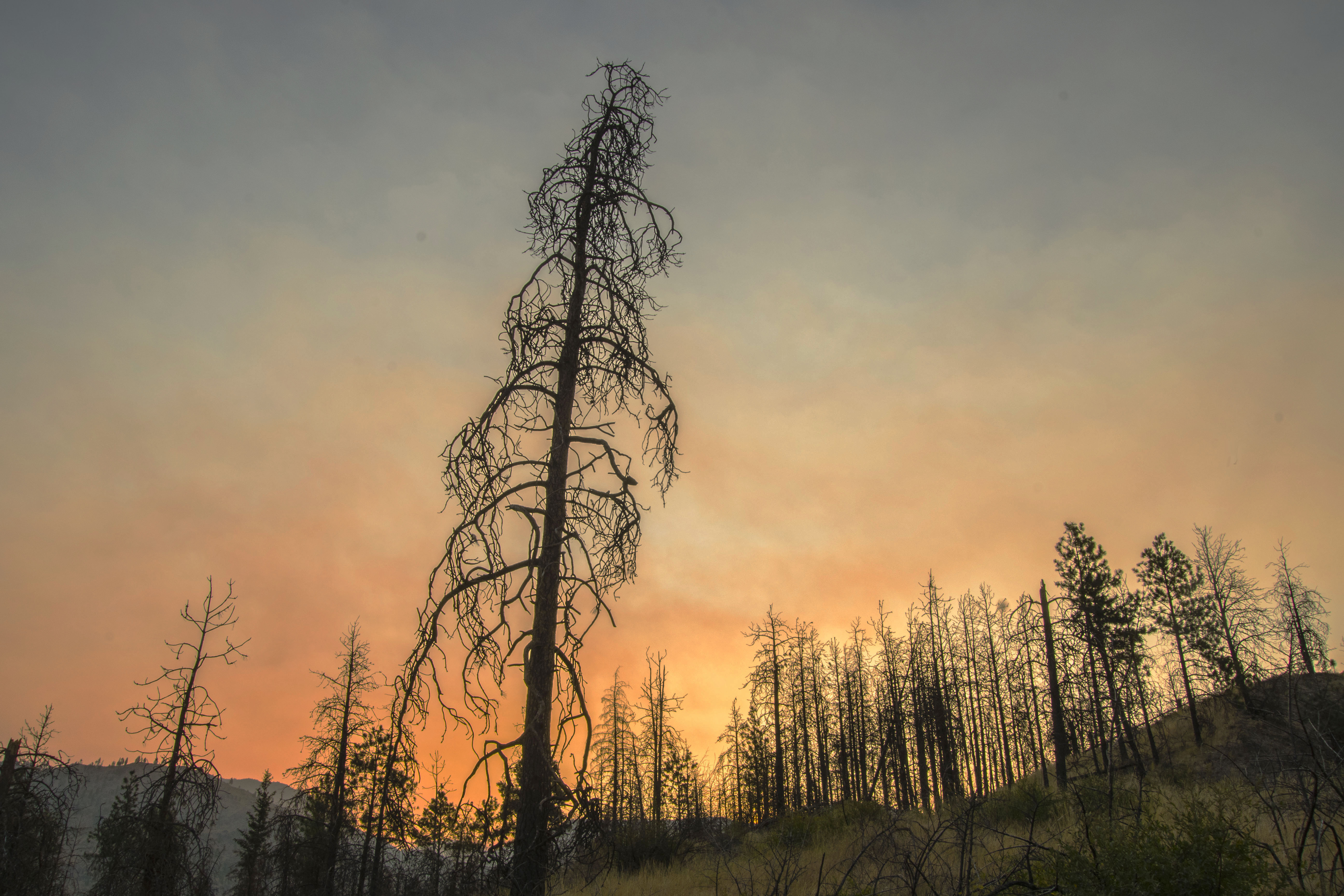
Dawn on a hill on 25 Mile Creek above Lake Chelan where a wildfire came through two years ago, and less than a week later another wildfire on the creek destroyed the house where we gathered as a group …
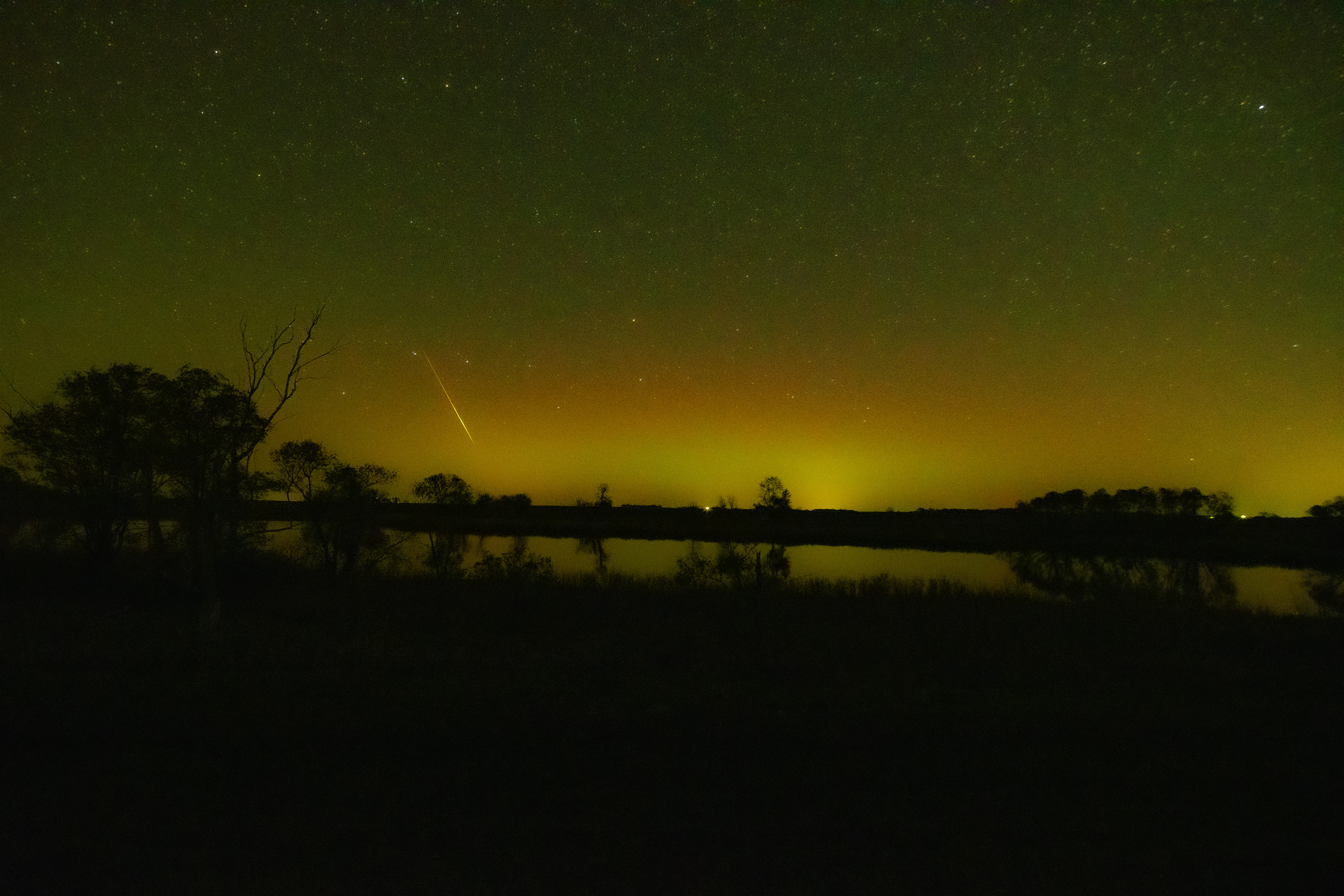
Not often are we blessed with Northern Lights, and I had camera issues earlier in my quest when the lights were dancing. This was the first image once I had reconfigured my settings and focus, when a falling star blazed through.

Thank you, and have a great New Year, one of peace and goodwill!

An Unexpected Quest

While seeing my first Whooping Crane was eventful, it didn’t come close to such date stamps as the Kennedy Assassination or 9/11. So, no, the exact time, date and even the year escapes me. It was while visiting friends in Colorado’s San Luis Valley, Greg and Suzanne Gosar. Suzanne and I were having sandwiches in the add-on greenhouse of their remote farmhouse a step or two down from their kitchen when Greg burst through the door and excitedly said, “Get your camera! There are sandhills in the barley stubble!”

A bit of local geography … the San Luis Valley is a high, flatland in the south-central part of the state and nestled between the Sangre de Cristo Mountain Range on both the south and east sides and the La Garita and Conejos-Brazos mountain range on the north and west. The Sand Dunes National Monument hugs the base of the Sangre de Cristos. The valley is approximately 125 miles long and over 65 miles wide, and Greg’s organic grain farm is smack dab in the middle of the valley as a tip of an imaginary triangle between Monte Vista and Alamosa. You reached the homestead via gravel roads from either the east or west, crossing cattle guards and easing through gates. The Sandhill Cranes were making a springtime stop in one of his fields in the southwestern corner of his farm.

“We can sneak up on them by going up the dry gulch,” he said as we drove toward the gulch in his pickup. “We can’t talk. Hand signals only for they’re easily spooked. When we get close we can edge up against the bank of the gulch and peak through the trees.”

From the boat launch into the Aransas National Wildlife Refuge …

Greg’s plan worked wonderfully, and we had no problems finding the birds as the noise was nearly deafening. The gulch was of soft sand and stealthy quiet. Trees lined either side creating a tunneled path separating fields on either side. He held up his hand for us to stop, and we eased toward the west bank to peer through the dense foliage. Directly in front of us were countless, magnificent grayish birds with the reddish heads. Many were hopping around in their unique mating dance. Then something caught my eye that was different. Something tall and white right in the midst of all the hundreds of sandhills. Yes, my very first Whooping Crane! Although these were my first sandhills, seeing an actual Whooping Crane was an amazing experience back then when the count was somewhere below 100 in the entire world. The whoopers were on the verge of extinction.

Since that special moment in the mid-1970s I’ve been on a quest for cranes ever since, and especially Whooping Cranes. A few years ago my friend, Mary Gafkjen, and I ventured to Nebraska for the annual Sandhill Crane migration, and in the afternoon before we were to meet at the Nebraska Crane Trust outside of Wood River we stopped along a highway along with dozens of others to watch the birds come and go from a stubble field about a quarter mile distant. My friend zeroed in on a white “blob” in the midst of the sandhills, and through our binoculars and from the buzz among the others alongside the road, the consensus was that it was indeed a Whooping Crane. She was glued to the spot and kept her binoculars zeroed in on the whiteness. I understood completely although my strongest zoom lens was inadequate for the challenge.

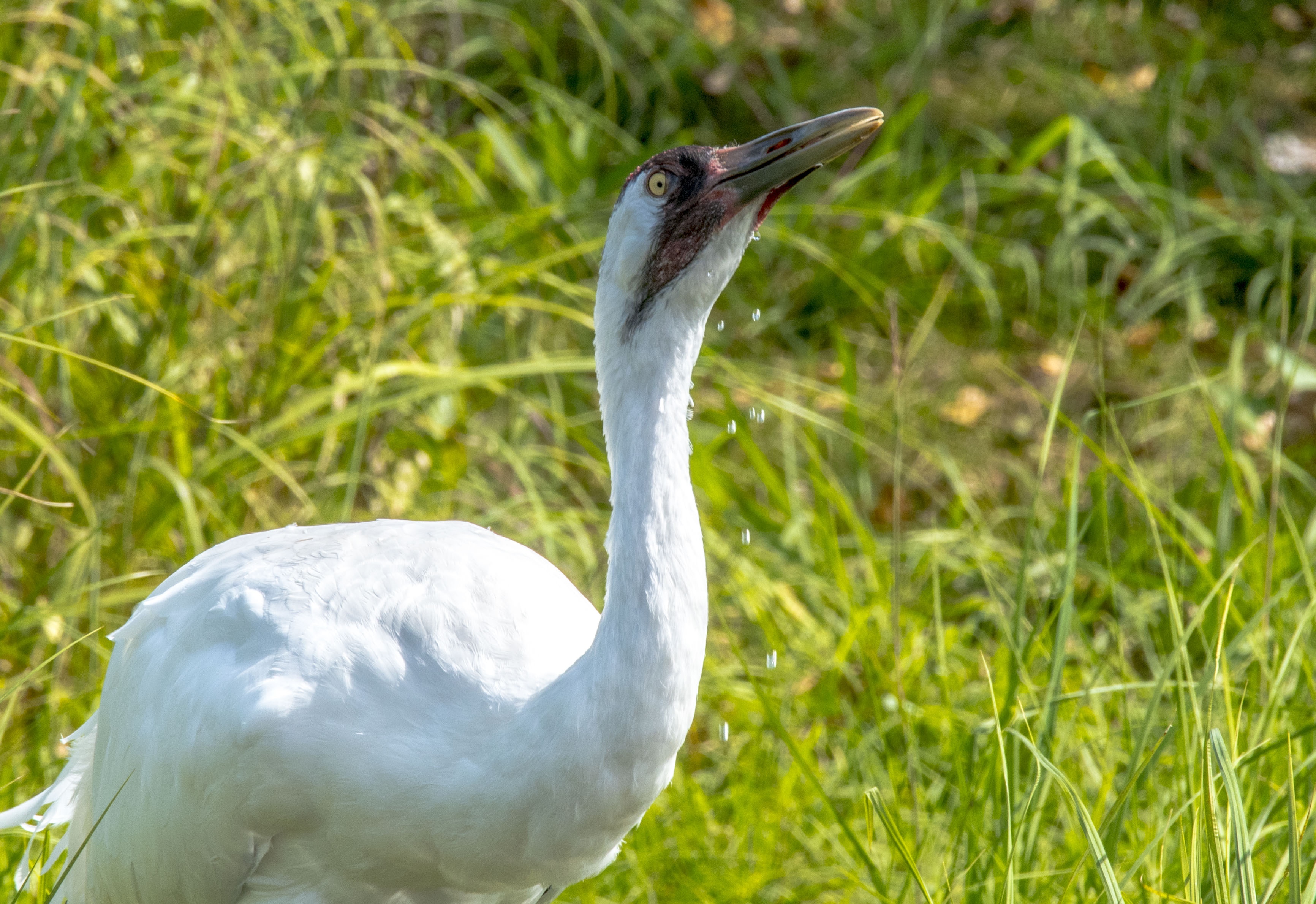
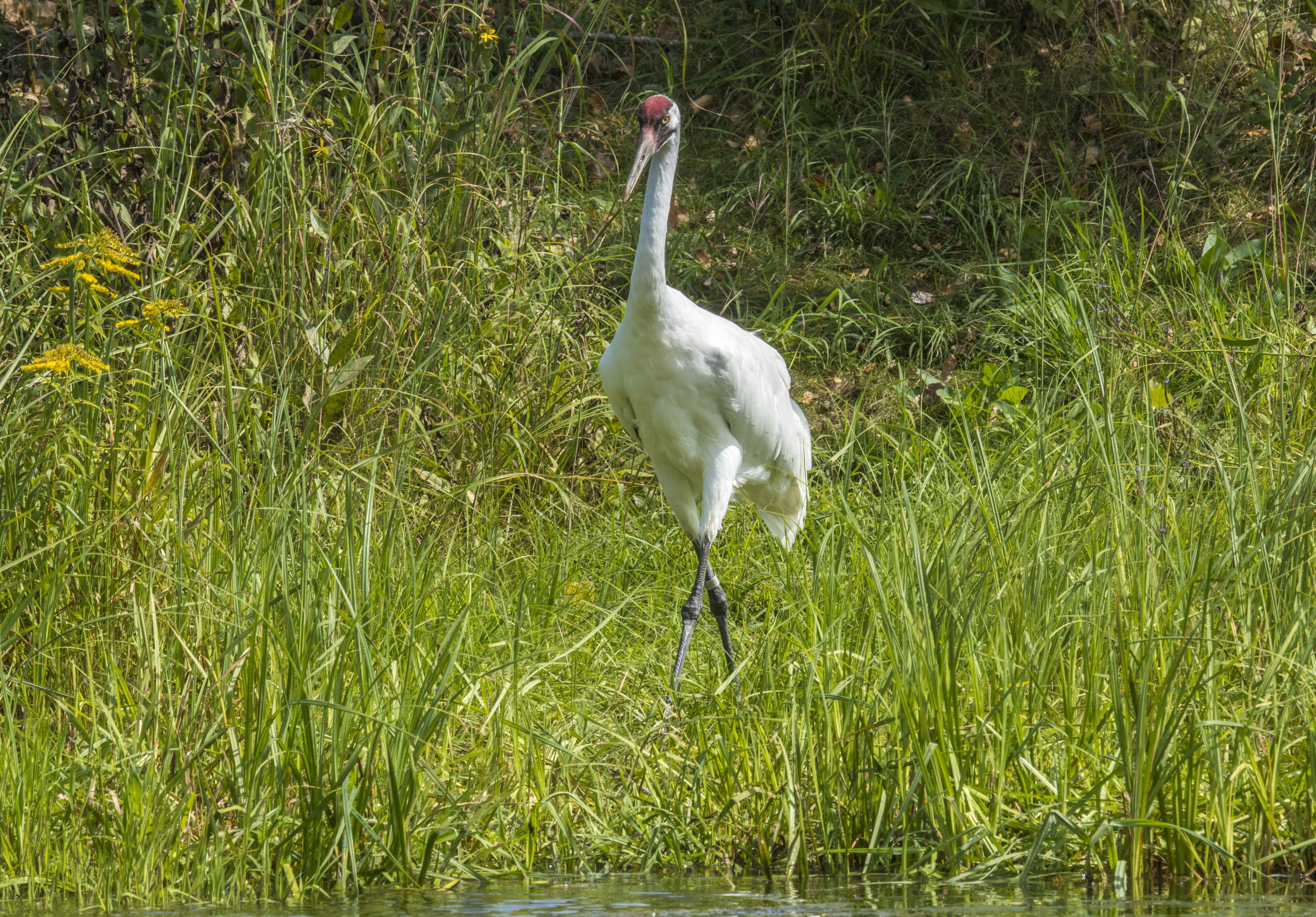
Close enough to catch water droplets dripping from its beak, at the International Crane Center.

That started a Whooping Crane “tour” that would take us to Rockport, TX, and a boat tour of the Aransas National Wildlife Refuge, then to the Sand Lake National Wildlife Refuge in South Dakota where rumors said three whoopers were in a stopover. Most recently was a visit to the International Crane Center in Baraboo, WI. We missed them at Sand Lake despite directions given by a friendly Refuge ranger. 

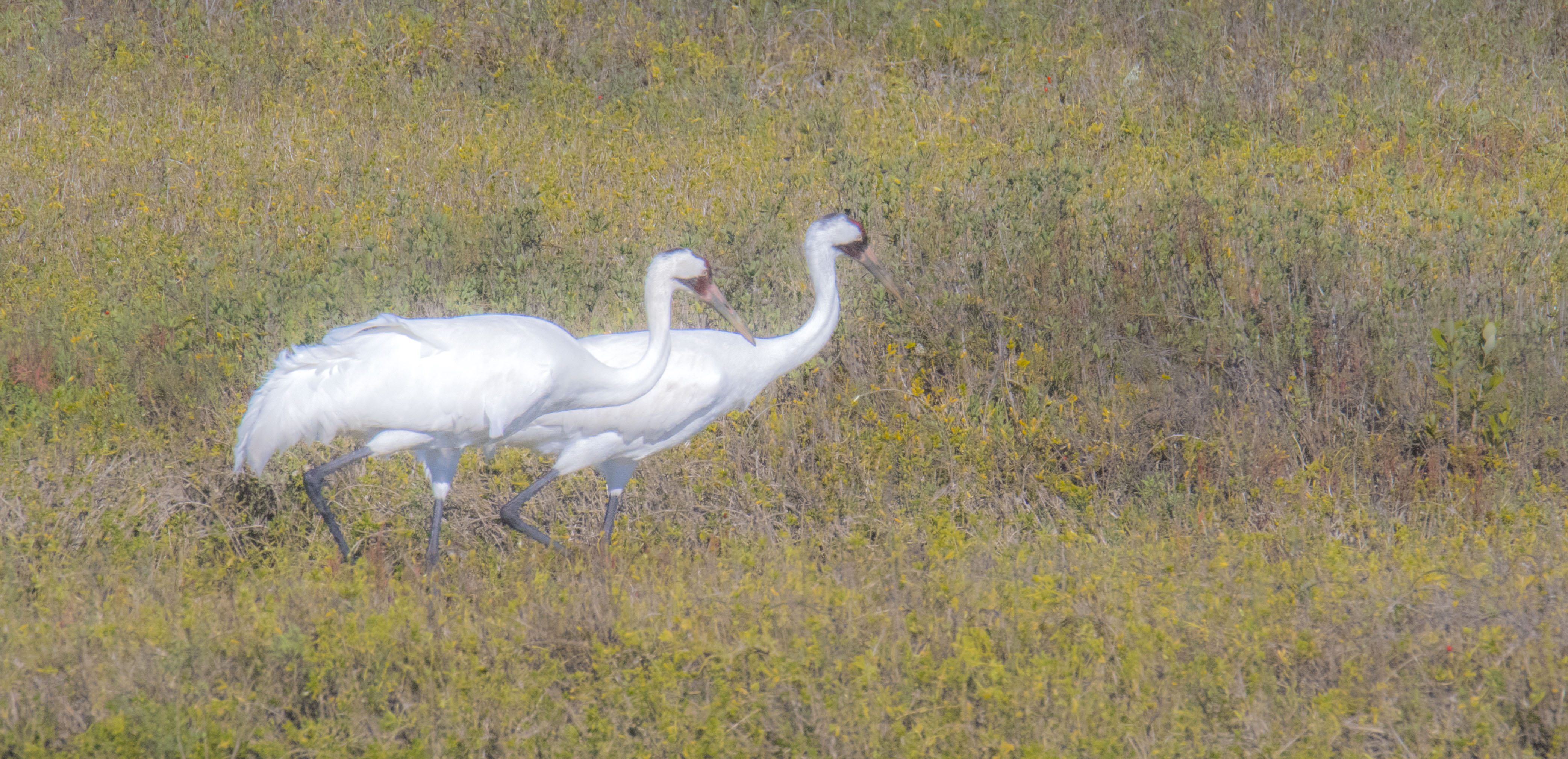
At Aransas, though, we boated into a completely different experience. After leaving port and motoring through the brackish bays, where we saw everything from Roseate Spoonbills to Oystercatchers, and almost every wading bird in a guide book, we reached the remote islands. Off in the distance, perhaps a few hundred meters away, we could see the white from a pair of Whooping Cranes. While this created a buzz among us on the launch, the best was yet to come. Further along the way a pair was traipsing through the marsh grasses just a few hundred feet away. The boat captain pushed the bow into the bank and cut the engine. Even he was surprised. “We never get this close,” he said, in amazement.

It seemed they had suddenly sensed us on the boat, and started communicating, and I eased the the focal length just in time …

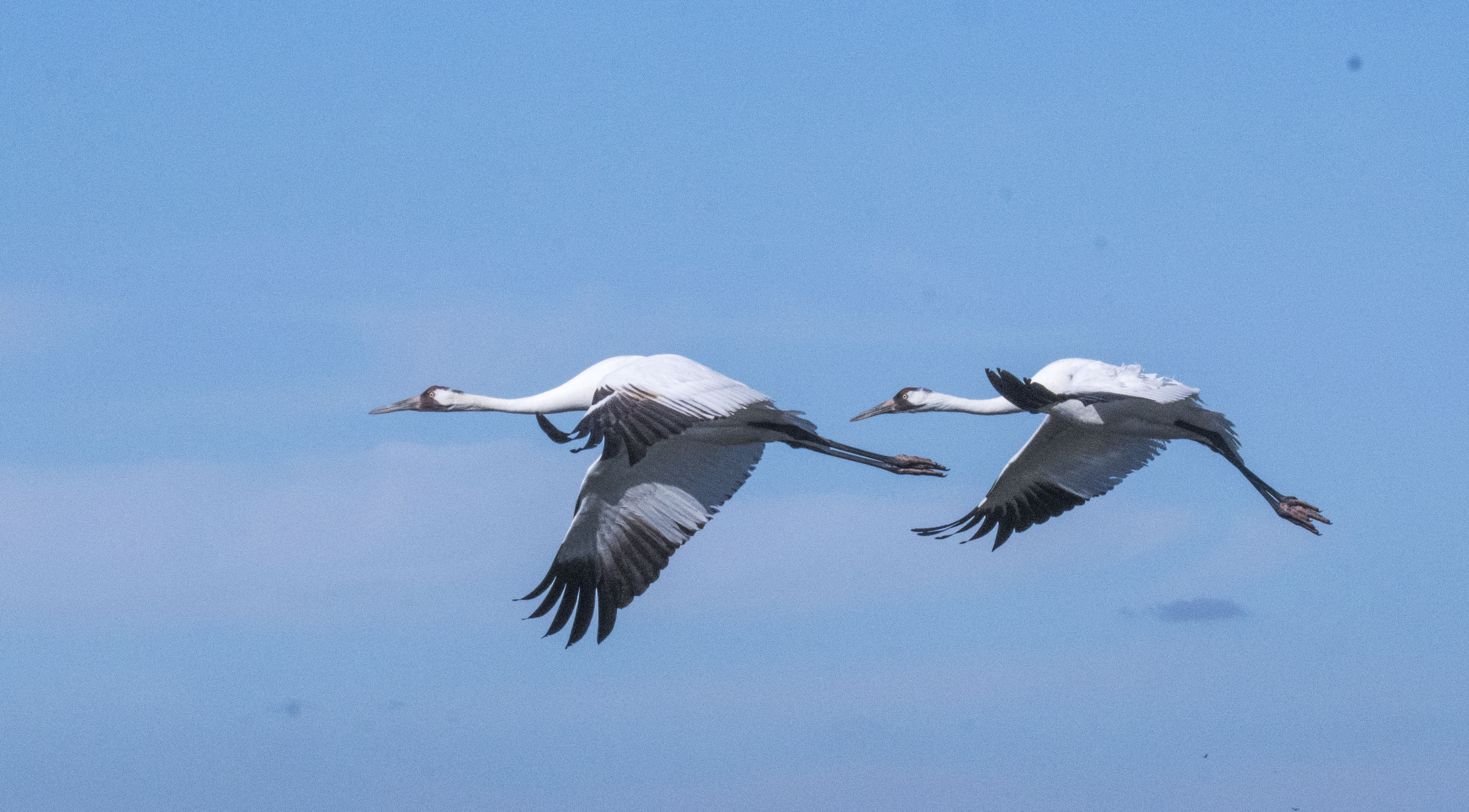
And they continued to walk closer toward the island shore, from one pothole to the next. He moved the boat further along to keep pace with the pair, and again pushed in to anchor the boat against the bank. The birds seemed oblivious to us, although I’m positive they weren’t. I was working the camera with a 150-600 zoom bringing my eye so close I could almost feel them breathe. Suddenly the whoopers stopped and appeared to be communicating. Using this as a clue I eased back the focal length of the zoom, and then, as if on cue, they lifted into the air to circle in front of us before flying away. 

We were all in complete awe, including the birder captain. Meanwhile I was glancing through my images and was beyond pleased. We would recall the trip numerous times over the years since, especially during the long months of the pandemic. We even considered heading back with the camper for a month of escape from the winter and the isolation from Covid, a trip that never happened.

And, off they go!

Then this summer while on vacation with an old friend from Dubuque, Michael Muir, we were in Baraboo to primarily pay homage to Aldo Leopold, and decided to visit the International Crane Foundation, which Michael jokingly referred to as a “crane zoo.” A single pair of all 15 international species of cranes are kept there, each in a spacious pen with overhead netting. Their eggs are gathered and transported to a nearby research facility where they’re incubated and hatched, all part of an ongoing in depth research program.

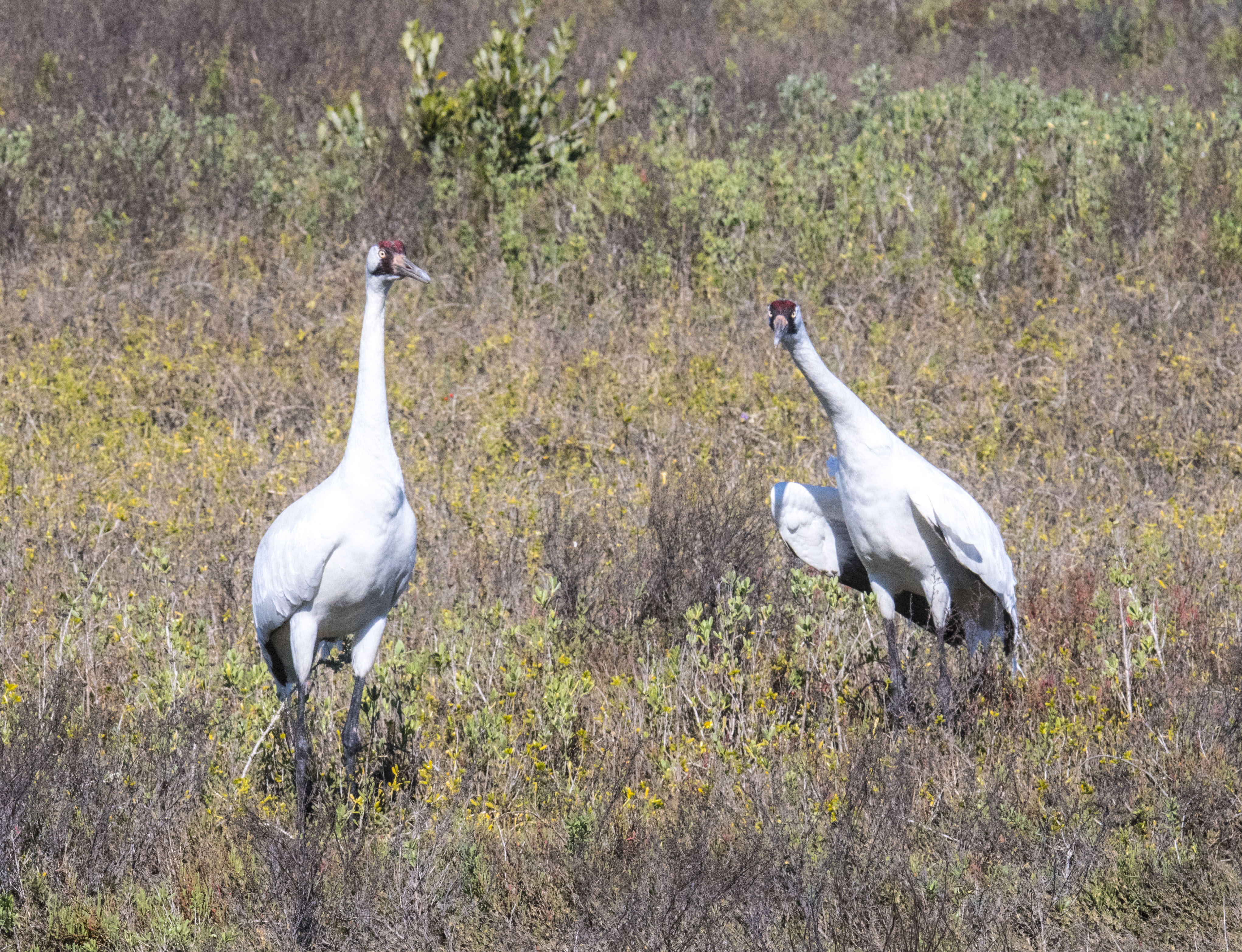
The loop begins with Sandhill Cranes, and leads you along various shaded and comfortable seating areas where maps of each species’ wintering and summering areas exist around the globe along with other pertinent information that included their migration routes. At the very end of the loop was the pair of Whooping Cranes and my day was made. I was able to get a couple of interesting images, so it all worked out beautifully.

It’s hard to know where my next sighting may be, yet all the moments before have been magical, even spiritual ..

So my intermittent chase continues, although I have no clue where my next Whooping Crane adventure may be or lead. I have doubts that I will ever be so close as we were either in Texas or Wisconsin, and am so ever grateful to have been so fortunate. This quest that began nearly 50 years ago on an organic grain farm in the middle of Colorado’s San Luis Valley on the farm of a long ago friend and remains ever so magical. Perhaps even spiritual.

Since Greg’s and my jaunt through his sandy, woodlined gulch the Whooping Crane numbers have increased significantly, although as they told us in Texas that morning on the launch, “One badly placed hurricane could end it all.” The boat captain along with the 15 or so of us aboard silently watched in awe as the pair went airborne to circle around in front of us and fly off into the distance. “A bad hurricane coming through here could mean extinction, so consider yourselves lucky, for this was a special moment we’ve just shared.”

Indeed. 

Rainbow Skies

For years the colors have been calming, a twilight easing up from the prairie horizon as a soft azure before gradually melding into a mauvish violet before blending further into various palettes of pastels. I can’t recall seeing such sky views before moving to the prairie in 1992, although perhaps in my more youthful adulthood I was simply not paying attention.

This array comes shortly after sunset, once the sun has eased below the horizon to the west and before true darkness settles in. It is a fleeting display sometimes lasting several minutes, sometimes longer. 

When I began paying attention to what was left of the former prairie grasslands, and often on jaunts into the restored acreages with a camera in hand for prairie portraits that hopefully featured ambient colors set before me by the clouds and sunset colors, the light around me would dim much like it might before a concert or play might begin. 

Then, like back-lit stage lights, the soft colors would come, azure softly easing into mauve, all in a comfortable array of pastels. Sometimes there would be “players” there, sometimes not. Perhaps the turkey-foot stems of bluestem, or maybe a dragonfly. A dancing coneflower. Maybe a lightly traveled road easing through. Oh, but the colors.

Sometimes there would be “players” there … a coneflower, or maybe a lightly traveled country road …

Not long ago a sweet friend named Sophia, a waif of a woman now in her 20s and who has seemingly returned from the Cities to the prairie to work on organic farms, described this heavenly display as a “rainbow” sky. I don’t know how or where Sophia came up with such a beautiful and apt description, although I know of none better nor more descriptive. Seemingly it is a moniker that may have escaped the best of the prairie poets, although admittedly I’m ashamed to think of how many I may have missed.

Sophia is a quiet, studious young woman who observes life around her with grace and with eyes … oh those eyes speaking of wisdom beyond her years … wide open. If she had been alive in the era of Aldo Leopold he might have had reason to have written one of his more memorable quotes with her in mind: “To those devoid of imagination a blank place on the map is a useless waste; to others, the most valuable part.” 

That would be Sophia. An essayist with a knack for descriptive phrasing, Leopold would most likely have enjoyed sharing such observations with Sophia seated on the bench of his small farm along the Wisconsin River. I can imagine that, for my imagination knows few bounds. There are few blank places.

After the sunset, the rainbow sky eases in like back-lit stage lights before the play begins …

Since moving to the prairie I’ve been fortunate to have had sky views, and in reality why would one not want such vistas. It’s easy to look at this half-football shape of Terra Earth so common to us who live in the lands of these widened skies … Holm’s Horizontal Grandeur …  and not think of the heavenly blue with the white schooner clouds floating by easily above. Our afternoons are commonly graced with such offerings. Yet there is more … so much more. I love the “Monet” light of the early mornings and late afternoons, the latter of which sets the stage for the often stunning sunsets with a surround of ambient light and cloud formations that commonly defies definition. Then …

Some of us sometimes smirk and even snicker when we discuss those sunset fanatics living on the coast of Florida who glamour over their late afternoon displays settling over the Gulf. In some towns second story decks and widow walks are constructed to hopefully offer prime views of the sun lowering into darkened waters of a horizoned sea. “Most of those sunsets I’ve seen there,” says a close friend, “are simple reddish sun balls sinking into the sea. Nothing like what we have here. Rarely this vibrant, and our sunsets are rarely dull.”

A chance reflection in a “ghost” of a prairie pothole …

Here we simply walk outside and take in an offered godly presentation. Some of us even jaunt into the grasses and around the lakes and potholes in search of subjects to photograph or paint attempting to capture such light. Shades of Monet. My home prairie here at Listening Stones Farm has granted me many wonderful images through the years. Many are from the sunsets, those featured events which hardly offer the calmness of the rainbow skies that follow to ease us toward complete darkness.

And, yes, rainbow skies have also provided me with some wonderful blessings through the years beyond the calmness of the inner soul. For some, perhaps myself included, “twilight” is a “my light,” and the peace graced upon us by the rainbow skies is just so precious. It’s not unlike a sigh given after a good day … made just before a reading lamp is extinguished for the night.

Camaraderie

On the hill above the lake thoughts of Finland came to mind. Wooded, with lush colors of autumn. A fine mix of birch and yellow. That cold, deep and clear water just down the rise and within walking distance. Smoke waffling from a rustic shack with scents of burning wood heating a sauna. Jack Griffin began stoking the fire mid-morning and when he announced to our group as the sun lowered from our hillside sight that the sauna was ready, the first of seven of us old guys stood and pulled off his clothes. 

Word hadn’t filtered down to me about the sauna, so I was initially prepared to sit it out. Then he stripped, and shortly I joined the others to trudge buck naked toward Jack’s wood fired sauna shack through a chilly shade. Inside was a mellow, warm heat; heat that would warm both the body and inner soul. All of which made me think of camaraderie, of how truly trusted friends group together. 

After towels were shed in the entry room, we wedged in as we best could to allow the heat to envelop our respective bodies and for the sweat beads to break out. Sometimes I’m like that in a sauna, watching and waiting for the sweat beads. Of where they might first appear. Across the chest, or perhaps the forehead. Then eventually the sheen of sweat will clam against the arms, back and legs. All the comfort of that … 

Such times make me wish for a sauna here at Listening Stones Farm, and now would be a fine time as we begin facing the approaching winter, now when the trees have shed much of their leaves and the weather has begun to worsen. Now would be a fine time for the birds of varying species are flocking together, sometimes easing through the skies, perching in the trees in the grove, collecting in nearby Big Stone Lake or the Big Stone NWR, or filling their tiny bellies in the nearby stalk fields before leaving en mass for their warmer wintering haunts.

Murmurations have given me a sense of the meaning of camaraderie in nature …

Camaraderie. In mankind and among our feathered friends, where trust and friendship are bonded uniquely.

I can imagine stepping out of a steaming sauna and looking up to see a flock of geese lift from the wetland just over the rise, or to catch Forester Terns, white against a blue sky, migrating past so poetically … seemingly singular, yet with patience you’ll notice their migration is simply not as clustered as other species. Recently as I was finishing cooking dinner, a long clustered string of terns crossed the sky en mass silhouetted against a magical, colorful pastel sunset. I initially cringed, for what a nice image it would have made had my camera not been in the studio with the card inside the reader, and with me standing at my huge kitchen window grasping a spatula.

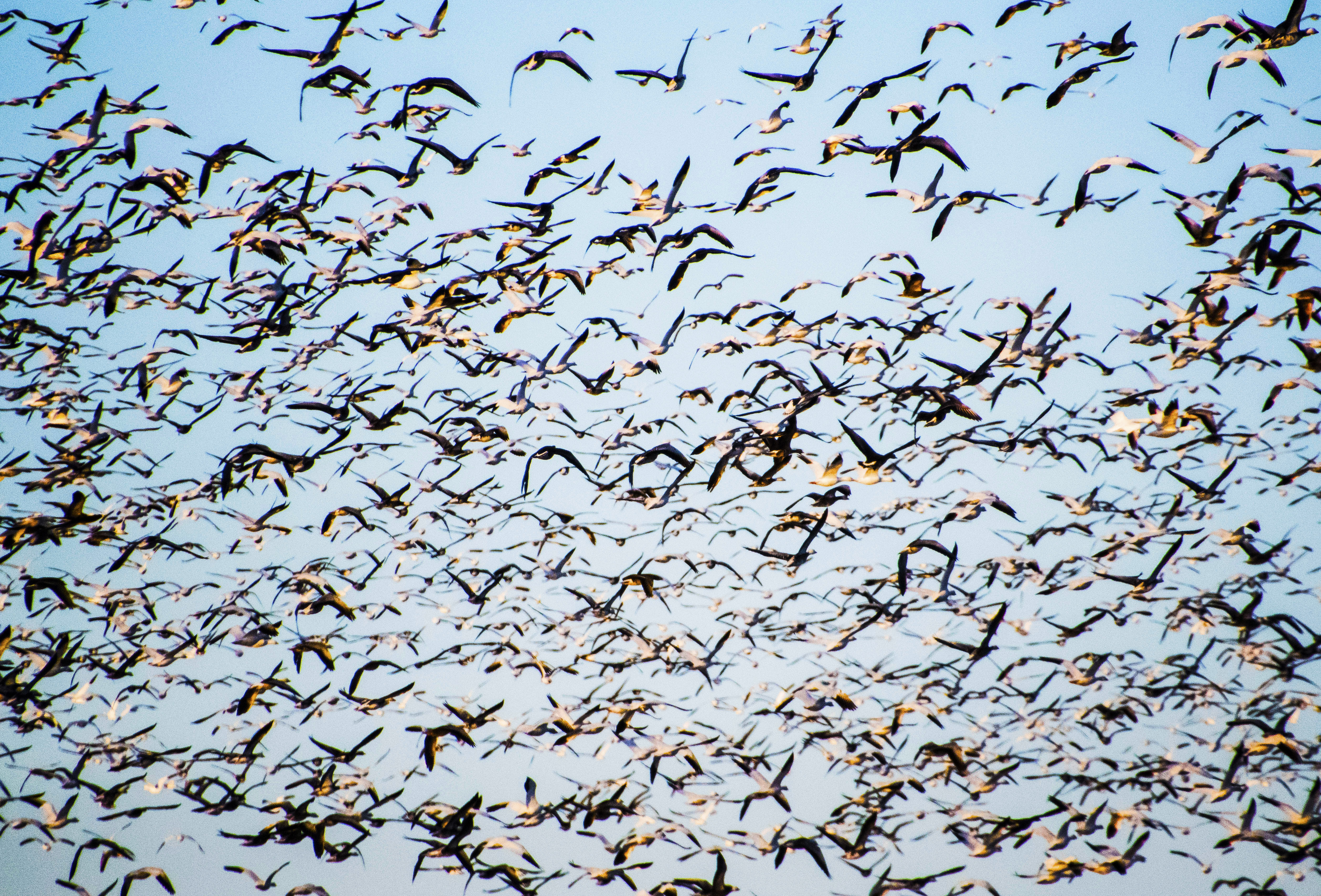
About an hour before, just down the hill, a huge black bird murmuration cruised across my windshield, stretching from the treetop savanna across the deep ravine to a recently harvested cornfield a quarter miles distant. Yes, I did stop and try to capture an image, yet these mass demonstrations of avian camaraderie are mercurial. There is no sense to make of it, and no choreography. Yet, murmurations are witnessed in pocket spots across the prairie, and yes, even here in my own grove as swarms of birds will lift off a cluster of trees to cross to another section of the grove or to the trees in the south lawn, only to momentarily take flight and head back, or to gather in the adjacent stalk fields. 

Migrating coots on Big Stone Lake captured through autumn foliage ...

Some claim them to be Redwing Blackbirds, although most have long since departed. Yet, evidence exists that there are stragglers. Many of them. A first migration perhaps? Like with loons and some other species; that the summer-hatched birds stick around to mature and strengthen their wings before following their long departed parents from the nest to warmer locales thousands of miles away? Murmurations move with poetic beauty, in mass waves that seem to defy logic and safety. But, is there a better visualization of trust? Of camaraderie?

It’s all there, and we’re witness to it. 

There’s more. More avian camaraderie. Just down the road apiece on many evenings around dusk you may witness a grouping of Wild Turkeys take roost high in bare-limbed trees. As the evening gives way to darkness the turkeys, one by one, will glide off the rim of the prairie across the highway to brake in mid air to lightly grasp brittle branches of the long dead twin trees in the midst of the fen. I’m amazed at how birds of such bulk and bullish flight can land so delicately, yet they do it, one after another. It is here, high in twin trees, on such brittle branches, where they know they will find safety. Camaraderie?

Wild Turkeys take refuge in dead trees in a nearby fen …

While they are rare sightings around here, rumors have it that huge clusters of Sandhill Cranes are taking refuge on their autumn migrations east of here in Minnesota and over in Wisconsin. For days I debated on whether to chase them once again but procrastination won again. Much like the spring migration, the cranes will munch dropped grain in adjacent fields before seeking a safer place from predators in the evening. Camaraderie. Safety in numbers. Cranes demonstrate this sense of togetherness all across the globe, and in each of their 15 different species.

I’ve not mentioned the Coots gathering on the nearby lake, or the cormorants clustering on trees and stumps sticking from the Refuge waters. The sparrows. All clustered in camaraderie togetherness, watching out for one another seeking safety in numbers.

Cormorants on a migration rest on a nearby wetland …

Then I think of us old guys back in the sauna on that late October evening. One of the guys had passed out in the intense heat, and the rest of us gathered around to move him from the intense heat and into the cooler dressing room. As some of us covered his legs with towels and tended to him, someone raced inside to fetch a pitcher of water and glass as he slowly regained consciousness and his wits. He eventually recovered enough to gingerly follow a few of the more hearty guys down the rise to the lake where immersion into the cold water revived him enough that he was stable enough to climb back up the hill completely on his own. His wife said he was fine the next day, so all was well.

Hundreds of Canada Geese resting in the shallows of Big Stone Lake …

Camaraderie a part of nature, I suspect, and gives so many species including our own an ability to survive in the harshness of our respective lives, giving us a sense trust, sharing and caring. A safety in numbers? I don’t know if I know the answers, although I may acknowledge this: That there is a certain beauty about camaraderie, and when you’re a part of it there is a warmness not unlike that of a fine, wood fired sauna. I find comfort in that.