A Year of Auroras, Birds and Wetlands

One of the traditions I so thoroughly enjoyed in my long ago newspaper years came near the end of December when we were asked to sort through and submit our favorite image, or images, of the year just before New Year’s Day. This gave layout editors fodder for a traditionally slow news week between Christmas and January 1.

For us this was a chance to review the stories and our photographs. For me, that review was crucial to my growth as a photojournalist. Did the imagery seem to hold up to previous years, or was there a lag? Was there a sense of growth? Had my “eye” for composition, working with natural lighting, choosing an appropriate focal length worked with the news event or photographic moment?

My concern nowadays is if my “eye” has held true since my retirement as I’ve moved to more closely document our last one percent of the glacially-blessed native prairie and wetland ecosystem that has been systematically and throughly destroyed by mankind since the 1860s. This destruction and my care for recording the remnants photographically has been stated repeatedly in my artist’s statements that have accompanied my exhibits and art shows.

Since moving more into a creative arts community this tradition of reviewing my past year of imagery to choose 12 of my favorite images has continued over the past 11 years. My choice and intent is not to choose just one but a dozen, initially to pick one for each month. It didn’t take long to realize that better images were being left out, and since this is my choice on what to show, that concept died a quick death.

While the annual review is fun, the intent remains the same — seeking a measure of growth, of how my “eye” might have evolved over time. So, here we go, along with a few comments for each of the images are my dozen for 2025. If you wish for a closer look simply “click” on the picture to enlarge it. Meanwhile, thanks for your kind comments and support of my work through this and for all these years.
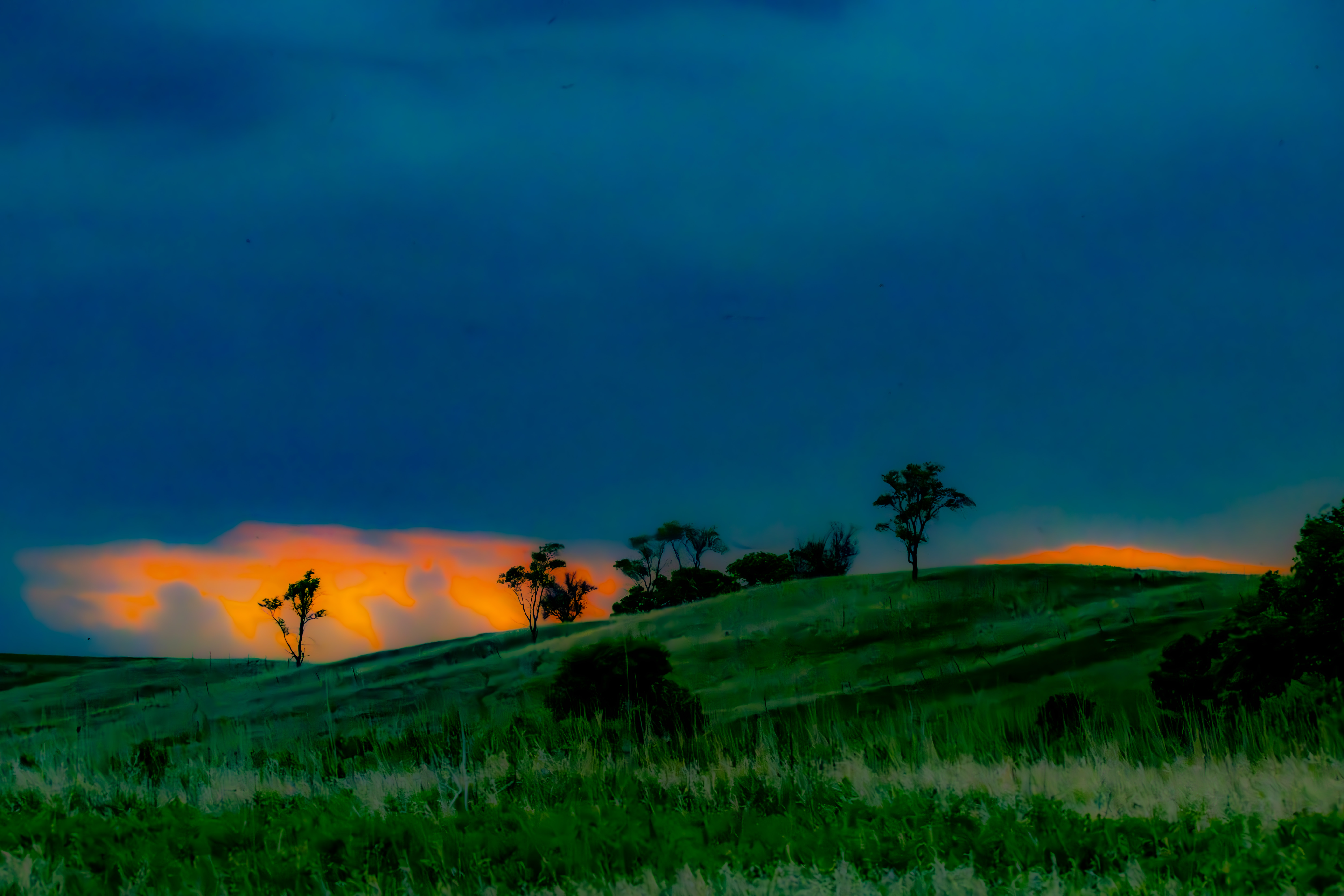
Just outside of Big Stone Lake State Park this piece of the glacial moraine that separates the River Warren river bed, now Big Stone Lake, and a huge, miles long ravine that is home to Meadowbrook Creek. This interesting afterglow was one of those “you had to be there” moments giving the native prairie the appearance of a staged play.

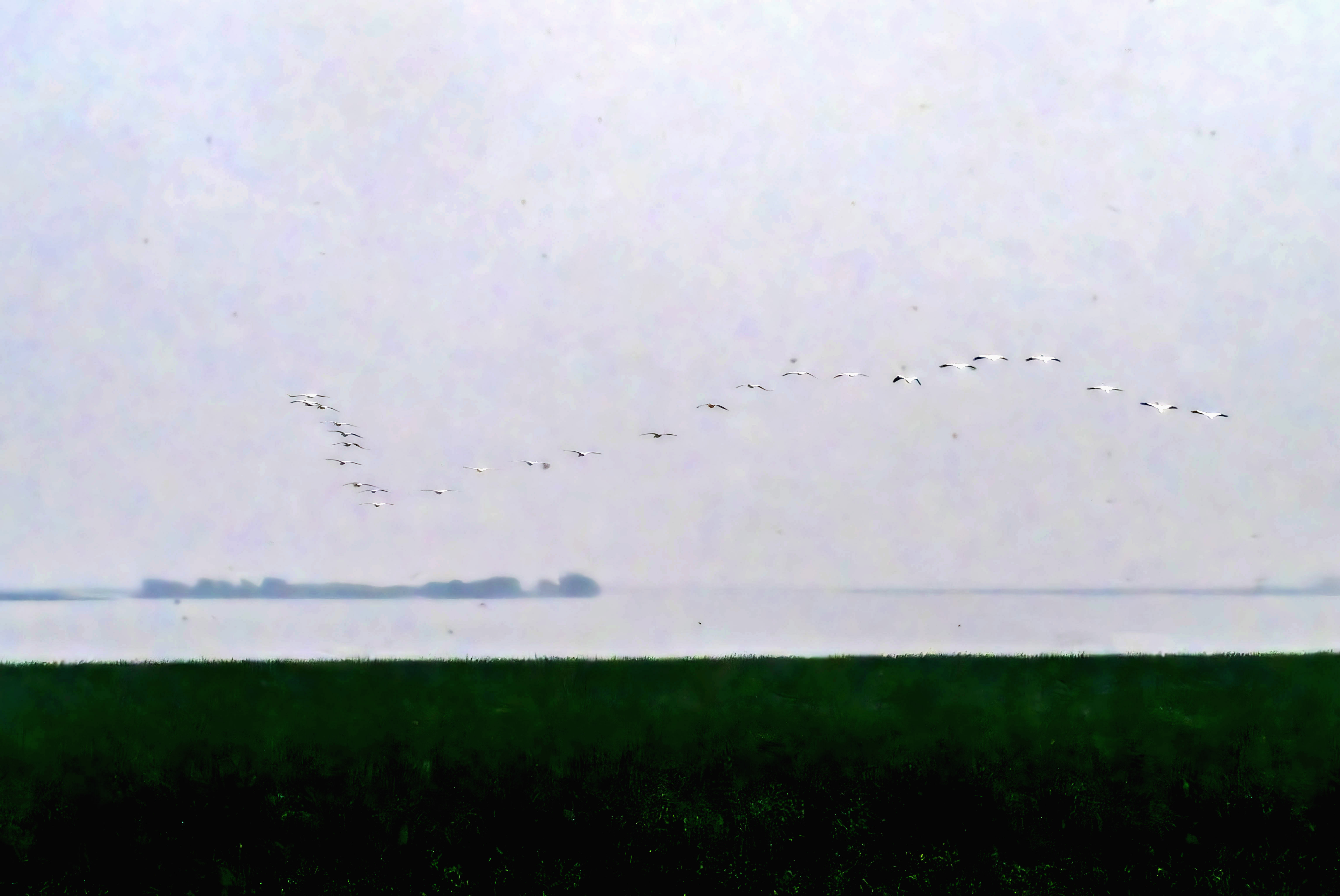
Moments before this was captured, I was pulling out of the fisherman’s lower parking lot below the Marsh Lake Dam when a pod of pelicans flew over. There was no chance for a picture, and I left the area disappointed. At the “T” at the end of the dam road, I took a left hopeful of getting closer to my road home and ended up at Curt Vacek’s machine shed. A dead end. As I headed back another pod flew over. Both times dozens of pelicans seemed to be heading toward their island refuge. Hopeful, I sped back to the dam, backed onto the dike and just as I rolled down my window and grabbed my camera, this pod flew over exhibiting grace and aerial choreography. Pelican flights often seem to offer such grace to our prairie skies. That the birds stood out against the subtle grayness of a cloudy sky makes the picture. One of my favorites from over the years.
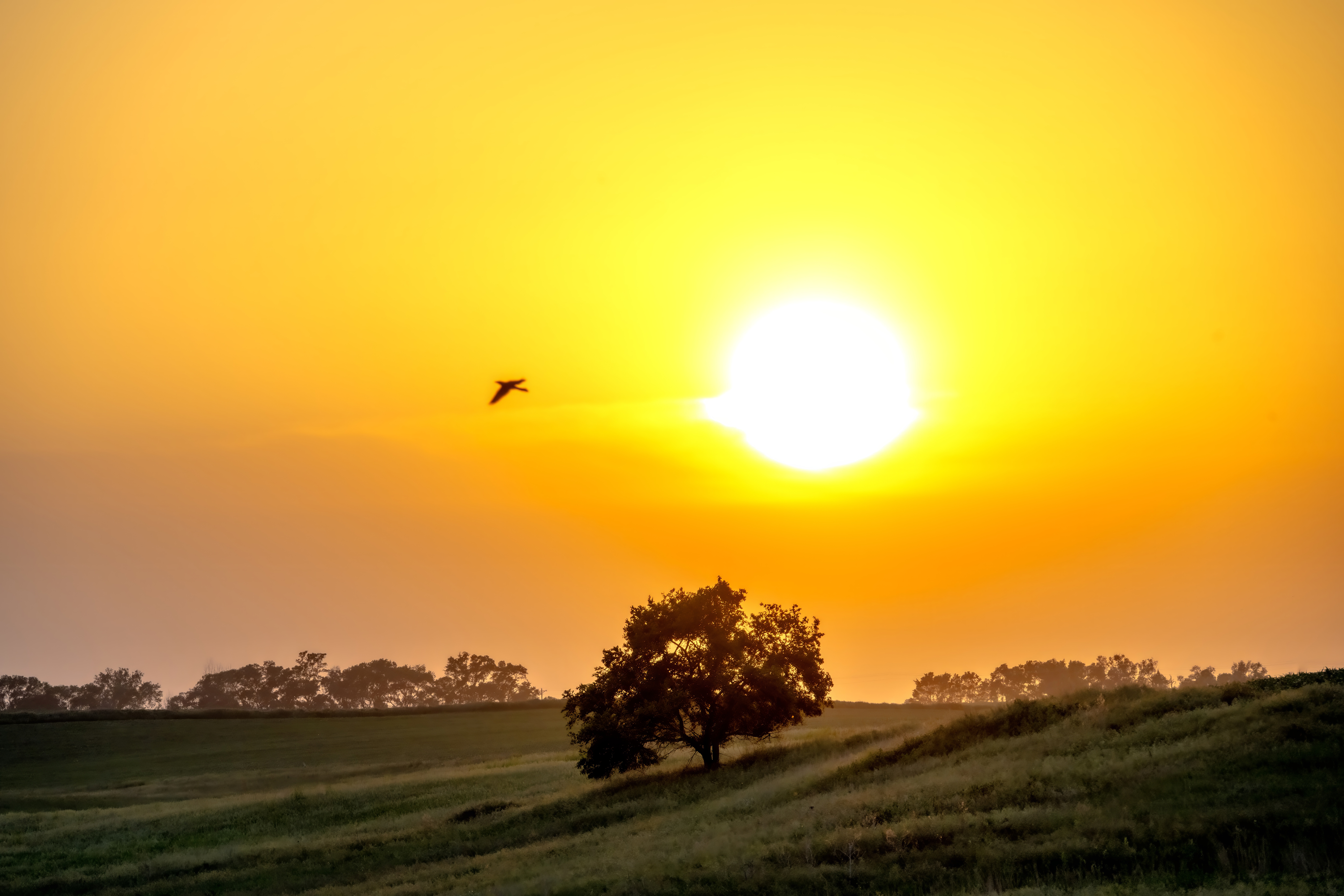
Ever since moving here I’ve had an eye on this lone tree on the bank of a long drained prairie pothole lake that before being ditched and drained stretched for miles and over what is now many commodity grain fields. From the bottom of the old lake bed the tree looked to be in line with the sun of the Summer Solstice, and once again I was blessed by nature when a lone bird flew into the sunset.
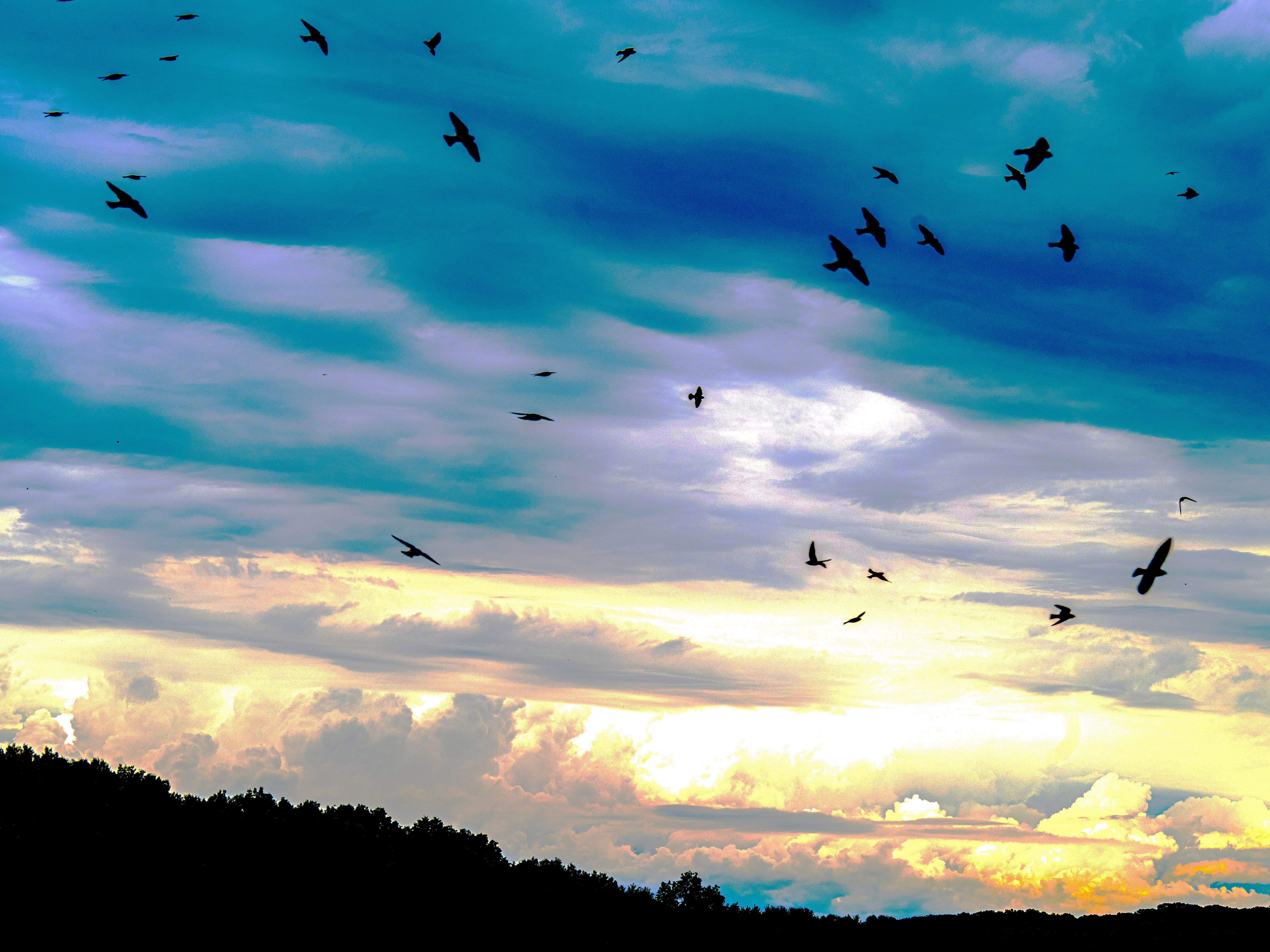
Between my boyhood hometown of Macon, MO, and neighboring Atlanta, the Missouri Department of Conservation damed a channel of the Chariton River to create a multi-mile lake and eventual state park. After driving through the park we exited through the far north gate and turned toward the major highway when we crossed a high bridge at the last “finger” at the head of the lake. This wasn’t my initial view, yet the swallows flying from beneath the bridge and silhouetted against a distant brewing storm caught my eye back in mid-July, and again in review.
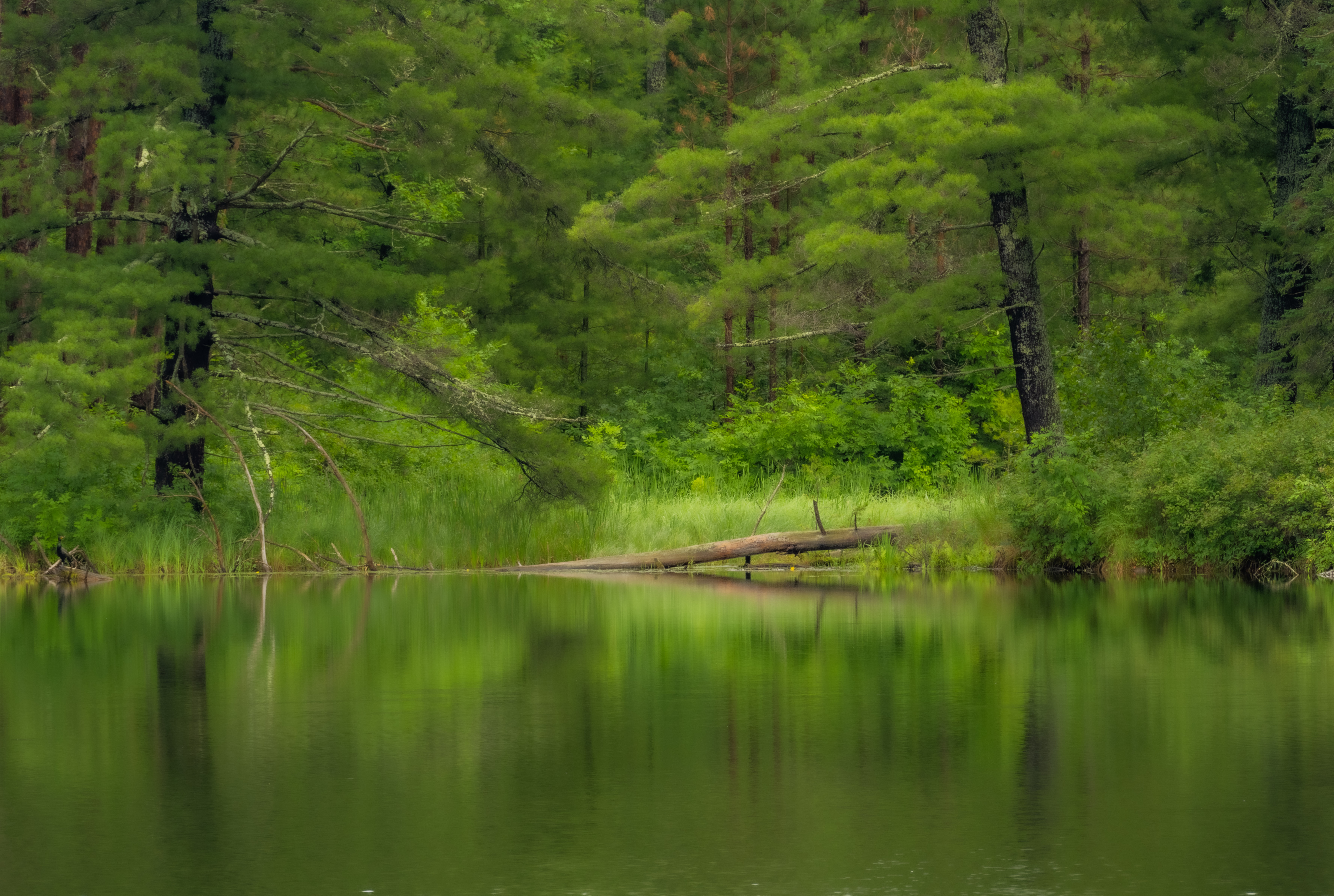
Although we had a cabin on Lake One on the lip of the BWCA, we did more exploring around the area because my favorite woman lacked comfort in a canoe, and in those adventures we stopped at Bear Head Lake State Park, which after years of being in and around Ely I had never noticed. We took a hike on a wooded trail that ended up at Norberg Lake. The calm waters of this small lake surrounded by age-old timber offered an incredibly soothing moment, especially in our distanced escape from the political chaos of the summer. This scene was a reflection of my calmness and comfort.

Just a few miles from home a lone pelican and the ambient afterglow reflected in a wetland. More of what I call poetic photography. Often I leave home just before sunset to drive around the area wetlands, and unlike most of the counties around us, it is estimated that 15 percent of the original wetlands still exist in Big Stone County compared to less than a percent elsewhere in Western Minnesota and Northwest Iowa. And it seems that every year I’ll come across a lone pelican in a prairie water wetland. This was my moment in 2025, a moment of peaceful bliss.

In my exhibit this image carries a simple title: “The Leaf.” Yes, this singular leaf caught my eye within the midst of the “forest” in the high Minnesota River backwaters of mid-summer at the Big Stone National Wildlife Refuge. I love the angular tree and its reflection, yet the “individualism” of the stark leaf is what caught my eye. I guess I’ve always been sort of a “loner,” like “The Leaf,” feeling a bit out of step with the society that seems to surround me.
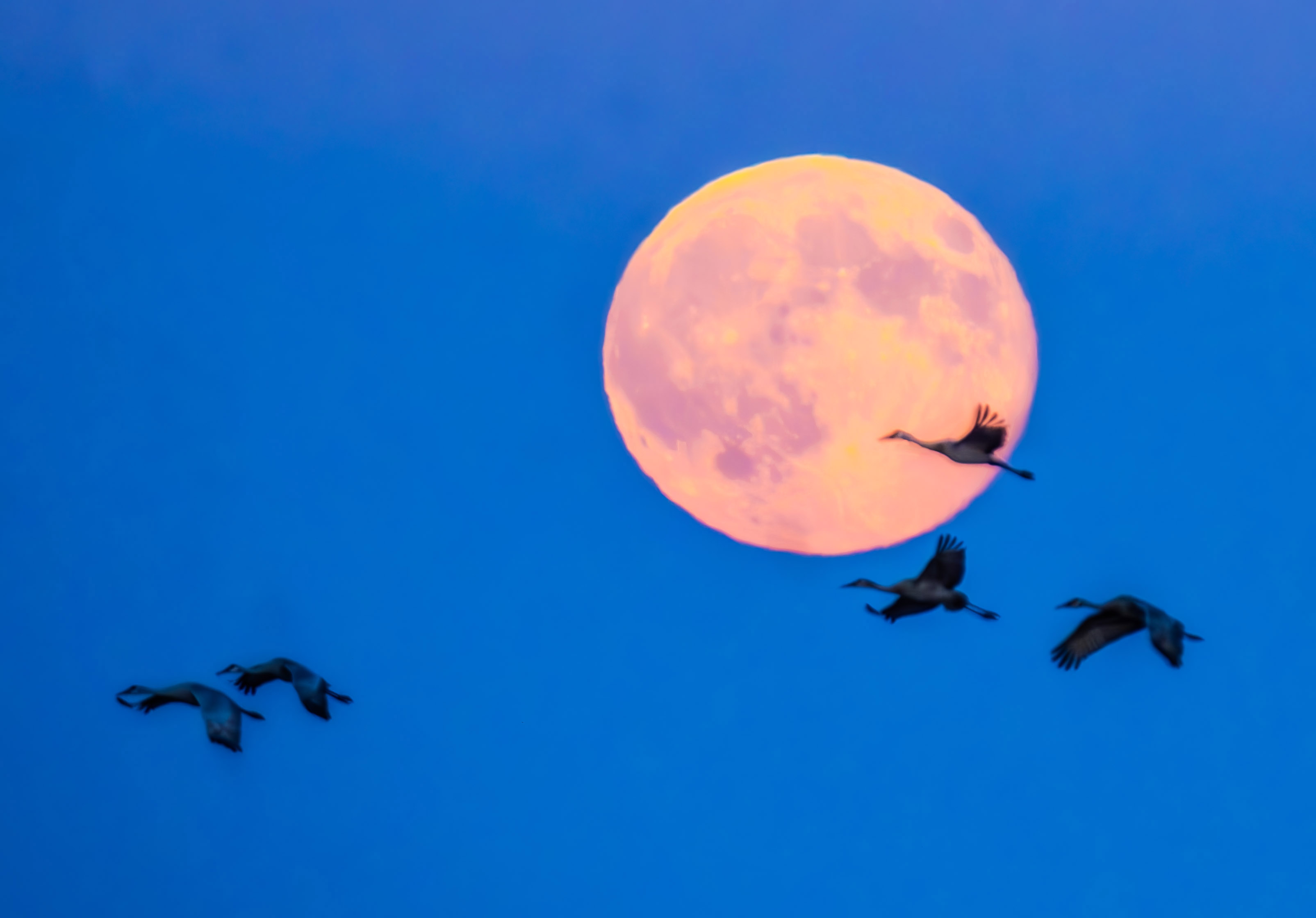
November, and the “super” moon at Crex Meadows just across the Wisconsin border with Minnesota. Sandhill Cranes are my favorite bird and this image is one I’ve visualized for several years. An unfulfilled dream, if you will. With the promise of a full moon along with prayers we would have a cloudless sky, we drove nearly five hours across the state to Crex and got a motel room. We then found a vista that might offer a gigantic full moon rising along the horizon, along with hope that the cranes returning from the nearby stalk fields would offer a blessing. This was among several images of cranes flying through that incredible moon, and this was my favorite of the bunch. Once again nature provided a special blessing!
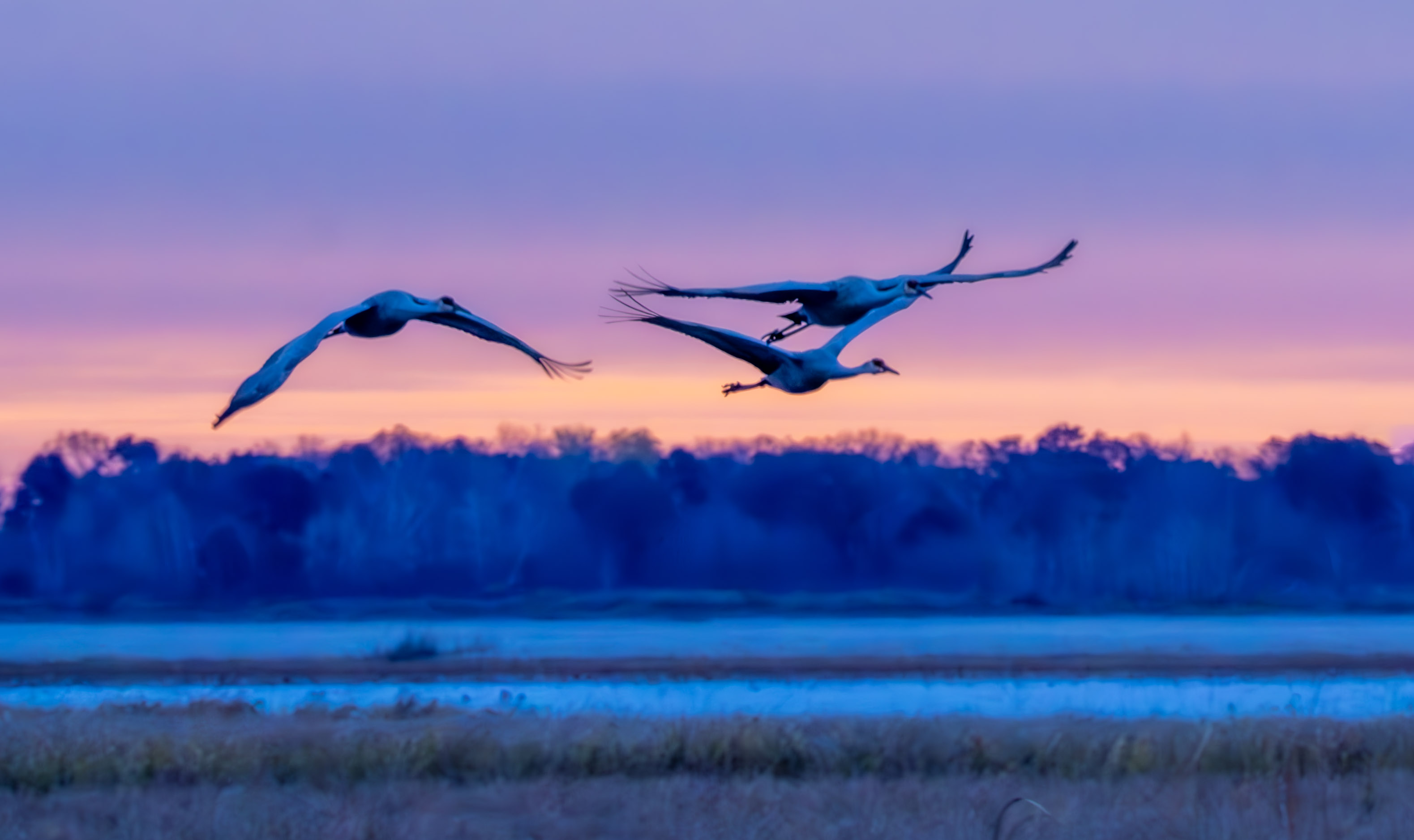
Then, the following morning in the “nautical” twilight … again, Sandhill Cranes. Have I said I love them? Even after a half dozen trips to Central Nebraska each March, along with various outings to both Crex Meadows and the nearby Sherburne NWR between St. Cloud and the Twin Cities, I can’t seem to get enough “crane time.” My first viewing of Sandhills was on a organic farm near Monte Vista, CO, when my now late friend, Greg Gosar, whose farm I helped feature in a Money Magazine story, came running into the house to ask if I wanted to sneak up on a feeding flock of cranes in his wheat field. We sauntered as quietly as possible up a sandy draw before leaning against the bank to see the birds. A highlight was a lone Whooping Crane back when their number was in the low 70s, along with what Aldo Leopold called the “trumpets in the orchestra of evolution.” This was in the late 1970s, and I’ve “chased” those beautiful songs and flights ever since.
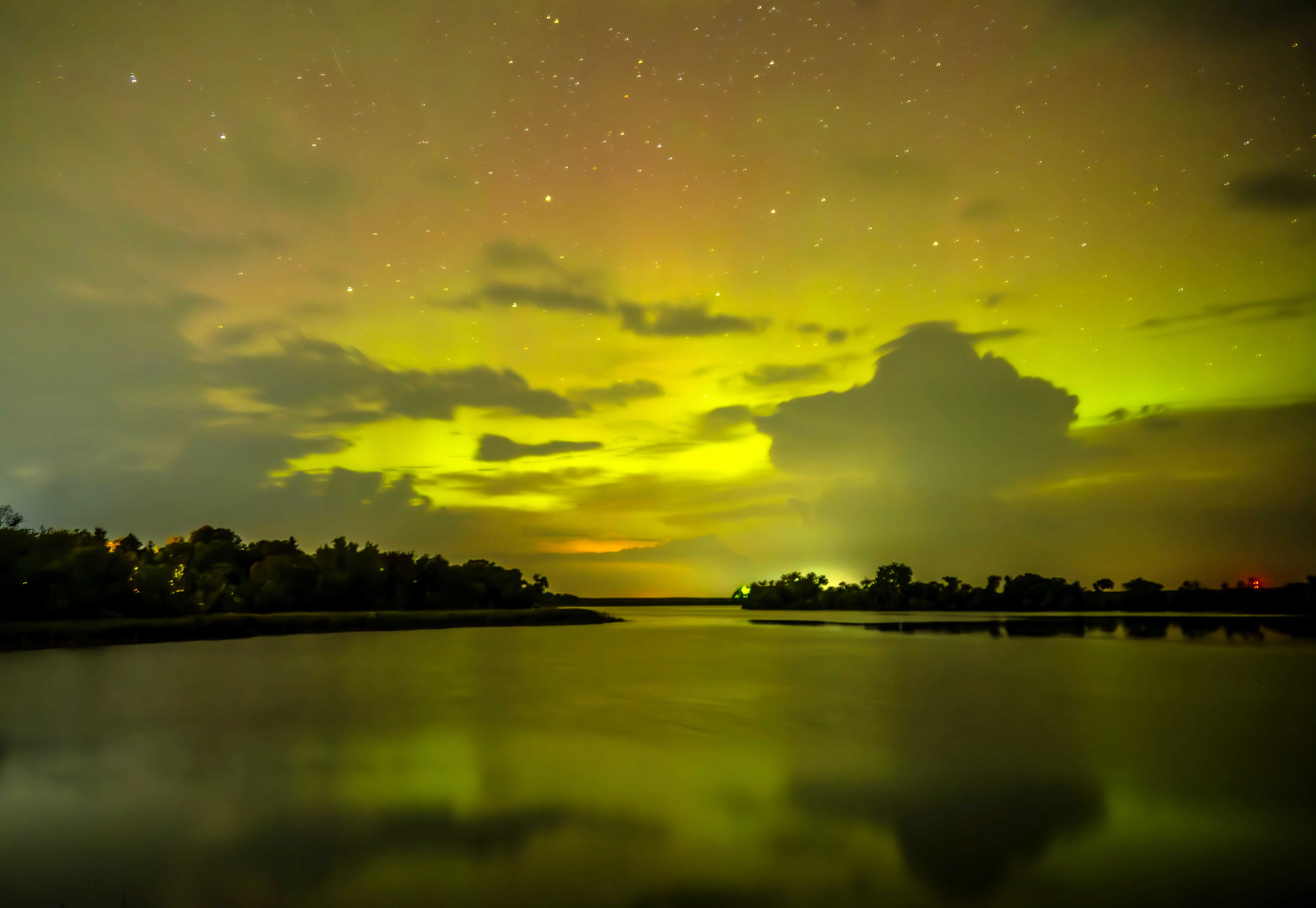
Northern Lights, the auroras of the heavens …. a Cinderella-like moment for the normally muddy Eli Lake in nearby Clinton. I love this view of this disregarded lake on the edge of town along US 75 and a county road. Certainly I’ve witnessed more spectacular Aurora displays, yet what attracts me to this image is both the natural composition along with the reflection highlighting the colors even as “subdued” as they appear. Despite the shallow waters, seldom seen as blue, the Aurora awakened the waters from its normally placid blandness — an Aurora that provides a glimpse of normally unrealized beauty.

While we’re on Northern Lights, this was captured with my cell phone when the settings on my camera got messed up. This was a spectacular display in all directions, and taken over a prairie wetland at the lip of our prairie looking toward the Northwest. While the October 10th display was considered the highlight of the year’s displays among us Aurora geeks, this display might have been an equal, offering both vivid colors and that hum from the heavens … something you don’t always hear, with colors you seldom see this far south.

Another moment from a nearby wetland, a Great White Egret lifting from a vista featuring a setting sun. Once again when I look through my couple thousand images of wetlands, I feel such a sense of loss. Besides the benefits of recharging the underground aquifers and cleansing agricultural chemicals from the runoff, they benefit wildlife and provide incredible beauty to the prairie for many of us. The 99 percent of destruction of the wetlands is such an incredible loss, and a loss that keeps me in constant search for poetic imagery. And in this instance, I was once again blessed by Mother Nature.
A Search for Meaning on the Solstice

She just didn’t seem to understand my angst. I was stumbling back to bed at 6:10 a.m. thoroughly angry that my cell phone alarm didn’t sound, and it was much too late to take a 90 minute drive for the break of the Solstice sun over a small pothole lake south of Willmar. We had passed the lake on a trip home from getting my son’s zither tuned when I noticed the dozens of muskrat “huts” jutting from the cattail-rich shallows.

From the expected direction of a Solstice sun, it appeared this was a scene that would make a nice image for my annual photographic depiction of light on this, the shortest day or longest night or start of winter or the coming of light, whatever one someone decides is the true meaning of their personal Solstice. How would this one work out? Finding hope within one of the darkest times of my life because of this disastrous political and humanitarian situation created by the vile human we have in the Oval Office, along with his enablers in Congress and the Supreme Court, and their deployment of masked “storm troopers” to illegally grab immigrants of color from their hopes, dreams and our neighborhoods. 

So, yes, I had a need to find some semblance of hope, of finding some way of adding light to my inner soul.

Being more “spiritual” than “religious,” and having been basically introduced to the celebration of light by dear friends, Audrey Arner and Richard Handeen, who once again recently hosted a bonfire celebration on their Moonstone Farm northwest of Montevideo, I began to take the Winter Solstice to heart many years ago. Their influence gave me a reason to take the Solstice seriously and to depict it with hopefully meaningful imagery. 

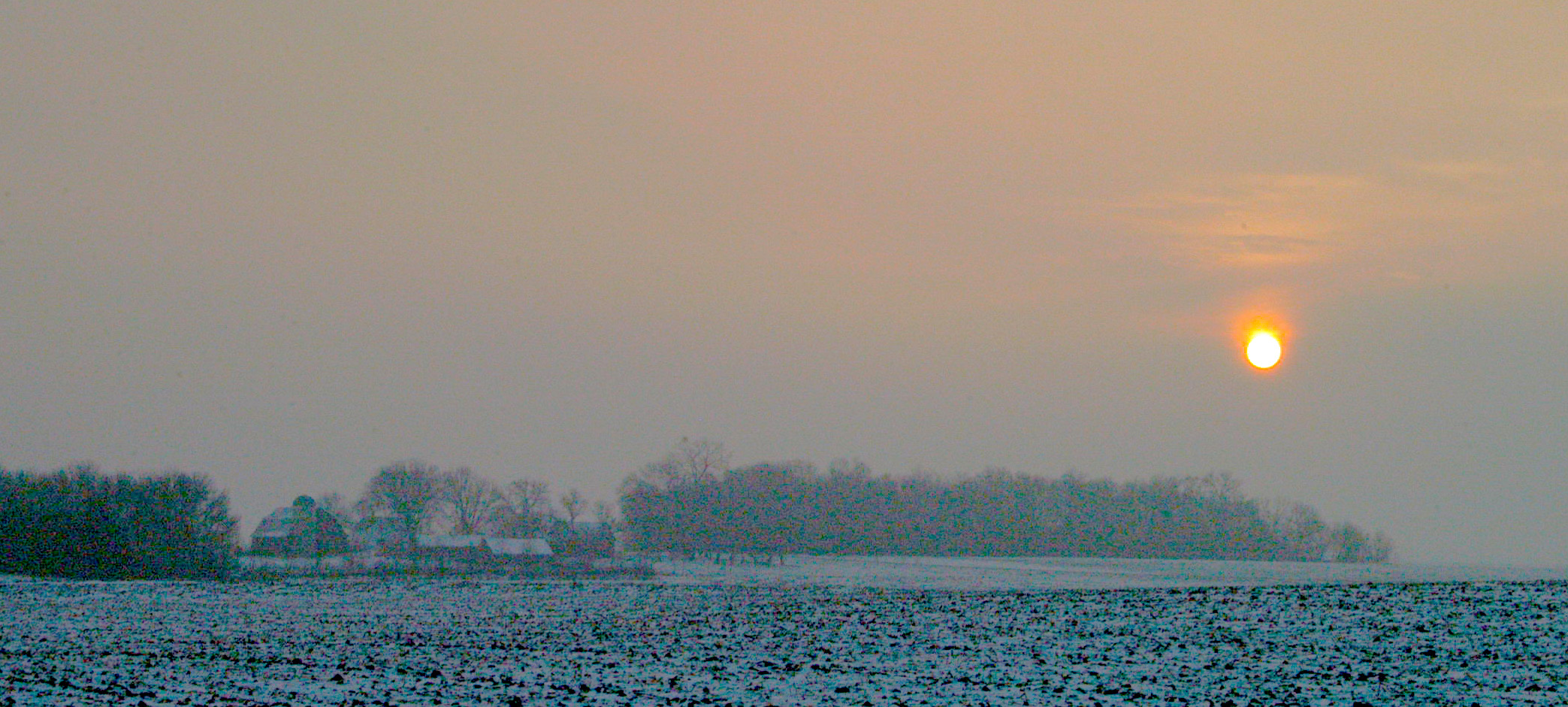
My first attempt of an annual Solstice image, taken in 2009, a sun peaking after days of squalid weather. It seemed to offer hope during our long winter.

Capturing the significance of the Solstice began back when I was running a small country weekly newspaper and was in need of a front page picture on a rather weak week of news. Looking out the huge back window of our prairie-facing sun room, which housed our music and personal library, the lowered sun was breaking through the muted frigid and dismal haze of a miserable and chilly day. This seemed a perfect portrayal of our need to welcome and celebrate warmth and light. The year was 2009, meaning I was a bit late joining the bandwagon.

Though I’m probably no more of a pagan nut than any of my friends in our small universe, finding a Winter Solstice image seemed just as important to me as hanging a wreath for the annual celebrations of the Christian’s Christmas. Roman Emperor Constantine the Great, supposedly the first emperor to convert to Christianity, is credited for moving the celebration of the birth of Christ to December 25 in 336 AD to more closely align the celebration with the pagan Winter Solstice festivals like Saturnalia and Sol Invictus. This decision effectively and permanently moved the Jesus’ Annunciation up by some nine months according to biblical records. 

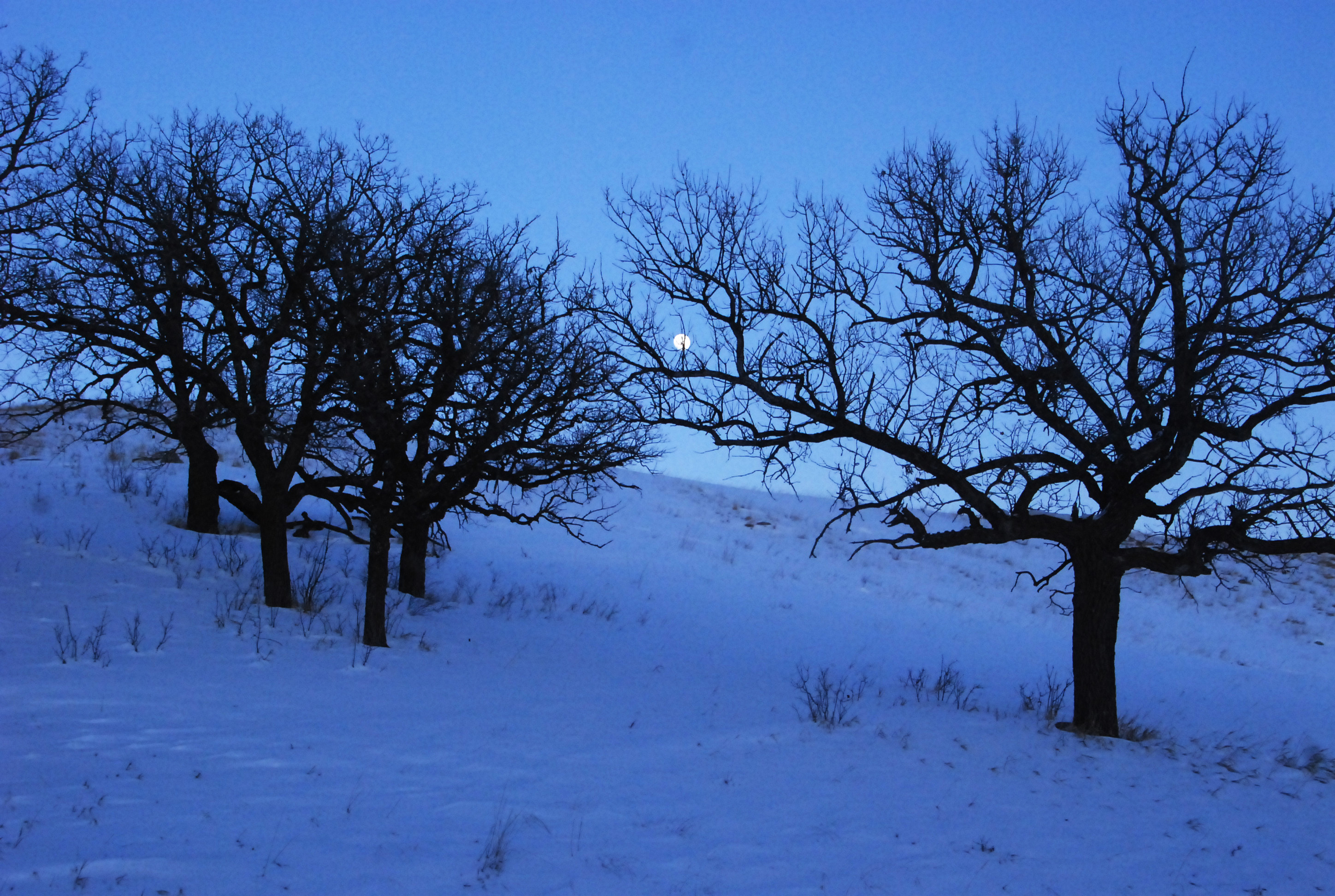
“Sol” reflected on a moon offered hope in the blueness of time, after the death of my wife.

My creating an image on the celebration of light on the Solstice has continued ever since. Over the years there have been some anxious moments, for my initial intent was to in some way feature our dear Sol on the Solstice. That hasn’t always happened thanks to the increasing presence of cloudy skies, so it became more significant to feature light and hope more so than the actual sun. In the year of my retirement, which came with the passing of my wife, my image was made in the nearby Bonanza portion of Big Stone Lake State Park and featured the moon peeking through the hefty branches of a sturdy oak. The darkness of night more closely matched my feelings at the time, yet the light of the distant moon signified hope while the strong sturdy limbs of the surrounding oaks offered a sense of strength. 

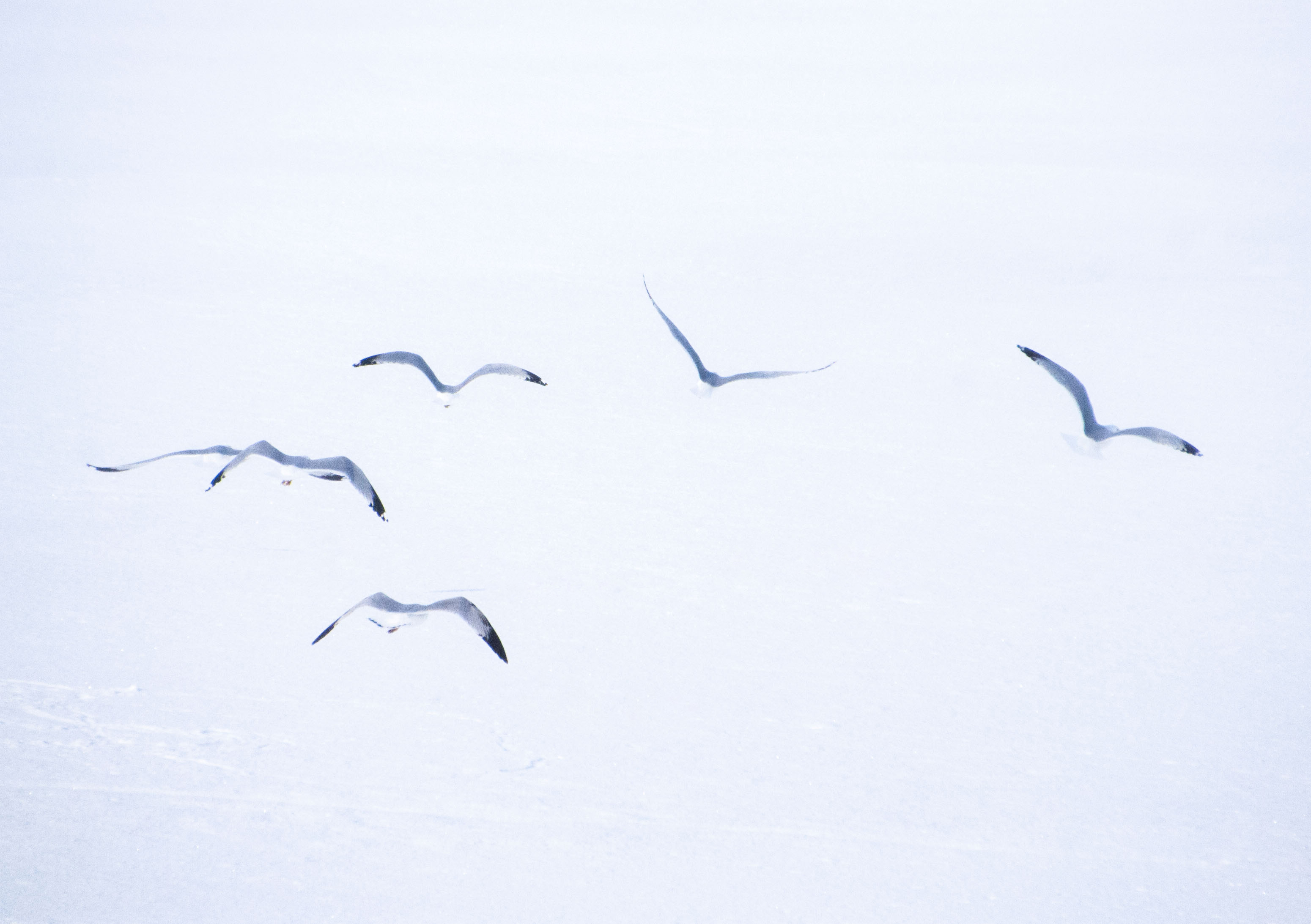
On the following year, my first since remarrying and actually moving to Listening Stones, it was a grouping of late season gulls over the East Pool of the Big Stone Wildlife Refuge that seemed to portray a new sense of freedom and joy of life. The following three Winter Solstice years were met with days of absolutely cloud cover, and only late afternoon sorries into the prairie did I find anything close to a celebration of light. Light, more so than Sol itself. One was a muted “sunset” over a wetland of long dead stumps of an old woodland, trees reflected in waters surrounding an ice floe, and the last of the only “light” of the day as a break in the clouds offered an orangish afterglow peeking through a crack of a huge glacial erratic. Hidden meanings? Or simply a acknowledgement of light?

A year later, hope found in the freedom of flight.

Every year seems to offer visuals that are completely different. Last year it was finding a pair of crossing animal tracks in the crusted snow where I’d taken the earlier photograph of the gulls. The woman questioning my angst, Roberta, and I were firmly involved in our new and budding relationship, our paths crossing in togetherness after nearly 40 years of friendship.

None of my previous Solstice images were planned … until this winter. Until my alarm failed. Life is mysterious, yet my momentary disappointment was real. She claimed I was a grouse during the day, although I disagreed. Then I followed my second “planned” option in the late afternoon lowering of the sun at a stretch of the Minnesota River near the headwaters where currents had created an interesting bed of jagged ice. 

My initial idea was to capture the tinges of colorful ambient light of an afterglow on the roughened edges of the ice tips. When I arrived, though, there was an immediate realization that the river coursed sharply toward the northwest while the setting sun was a good 55 degrees due southwest. A high bank rimmed the river. The lowering sunlight wasn’t close to touching the ice, and wouldn’t.

This year, an emerging light in the darkness of the times.

After taking some mundane landscape pictures, including one of silhouetted birds roosting in a distant tree, I sauntered down the shoulder of the highway to get closer to the river, to study the ice and the light. It was then that a faint glow of yellowish light beckoned from the troughs of the floe, and my thoughts returned to our dire political situation. Sometimes there is a reasoning behind the significance of an image, of a photograph, and I saw the light signifying an emergence of resistance in the depths of the blueish ice. ICE. Yes, capitalized, of our shedding light on Trump’s storm troopers enforcing his MAGA racist policies. There, in the depths of the icy Minnesota River, near the headwaters, on a cold winter afternoon, was my symbolic Winter Solstice image.

Two shots were made before I turned to carefully make my way back over the rough terrain and through the grasping grasses to the pickup, and I’m reasonably sure any residual anger was long gone and replaced by a smile of comfort and acknowledgement. Those cattail rich muskrat huts in the shallows of a wetland might have made a decent, visually nice Solstice image, yet there are reasons, often unrealized, why things don’t work out as planned. This image of emerging light amidst the jagged ice floe more symbolically captured our moment in time. At least for me, which is why trying to capture a symbolic image on this, on the day of the celebration of light, is so personally necessary.

The Gracefulness of Being

Perhaps it was the title: “How to Age Gracefully.” I was hopeful that this was a question more so than a statement for I’m not getting any younger, and now in my 80s, a time when many of my peers have sequestered themselves into a recliner or couch, I sense a need to keep charging forth creatively with an intense fear that my slowing down is the first step toward the grave. Following, perhaps, a lengthy time of acute boredom!

For the past few weeks hours have been spent in my wood shop and studio preparing items for the area Christmas Markets, and then an old friend, Dale Pederson, arrived with a pickup full of pre-cut timbers to install a planned canopy over our studio door to keep snow and ice away from the entrance. We were both fighting the calendar and weather.

In trying to balance all of that, by bedtime for three straight nights my mind and body was a wreck. There was nothing graceful about it, or me, and yes, on one of my ventures into the wood shop to rip a board on our last afternoon a misstep sent me sprawling across the concrete floor. Grace? Hardly. Fortunately my head missed a standing concrete block that was off to one side. Does that count as an old man’s fall? 

Grace is what I sometimes find in nature …

A few days later at the library while returning a great nonfiction book called “Sea of Grass,” an in depth portrayal of the complete destruction of American’s vast prairie between the Smokies and Rockies by Dave Hage and Jo Marcotty, this new book … “How to Age Gracefully” … seemed to jump off the shelf and into my waiting hands. 

Like Hage and Marcotty, the author, Barbara Hoffbeck Scoglic, was also a former reporter for the Star Tribune. My wonder was if my quest for grace was irrational, if not impossible; is there an emerging path for my unstoppable aging? Scoglic’s was an interesting read, though basically she wrote a day by day journal of her moving into an assisted living senior center. Now in a wheelchair, and being completely unreliable on her feet, Scoglic recounted various conversations and personal memories along with a morning ritual of coming off the elevator to see who might have survived for another night.

Perhaps I missed the “graceful” piece. No, her’s was not a “how to” effort. So my venture continues as I wander down a different path. 

Grace … a moment of tenderness of a burly bison cow with her newborn calf …

While I was working with Dale, and on various pieces for the Christmas Markets, an old conversation from years ago kept cropping up. It was on a cold, windy and snowy day “way back when” that I unloaded my collection of items from my van into one of Montevideo’s Chippewa Village historical buildings to discover my display partner was a 91-year-old man, a flat-plane wood carver and painter of Norwegian trolls, gnomes and Ole and Lena farm characters. After our introductions and getting set up, I asked the elderly artist about his work  and what kept him going.

“At my age,” he said with a wry smile, “what else would I do?”

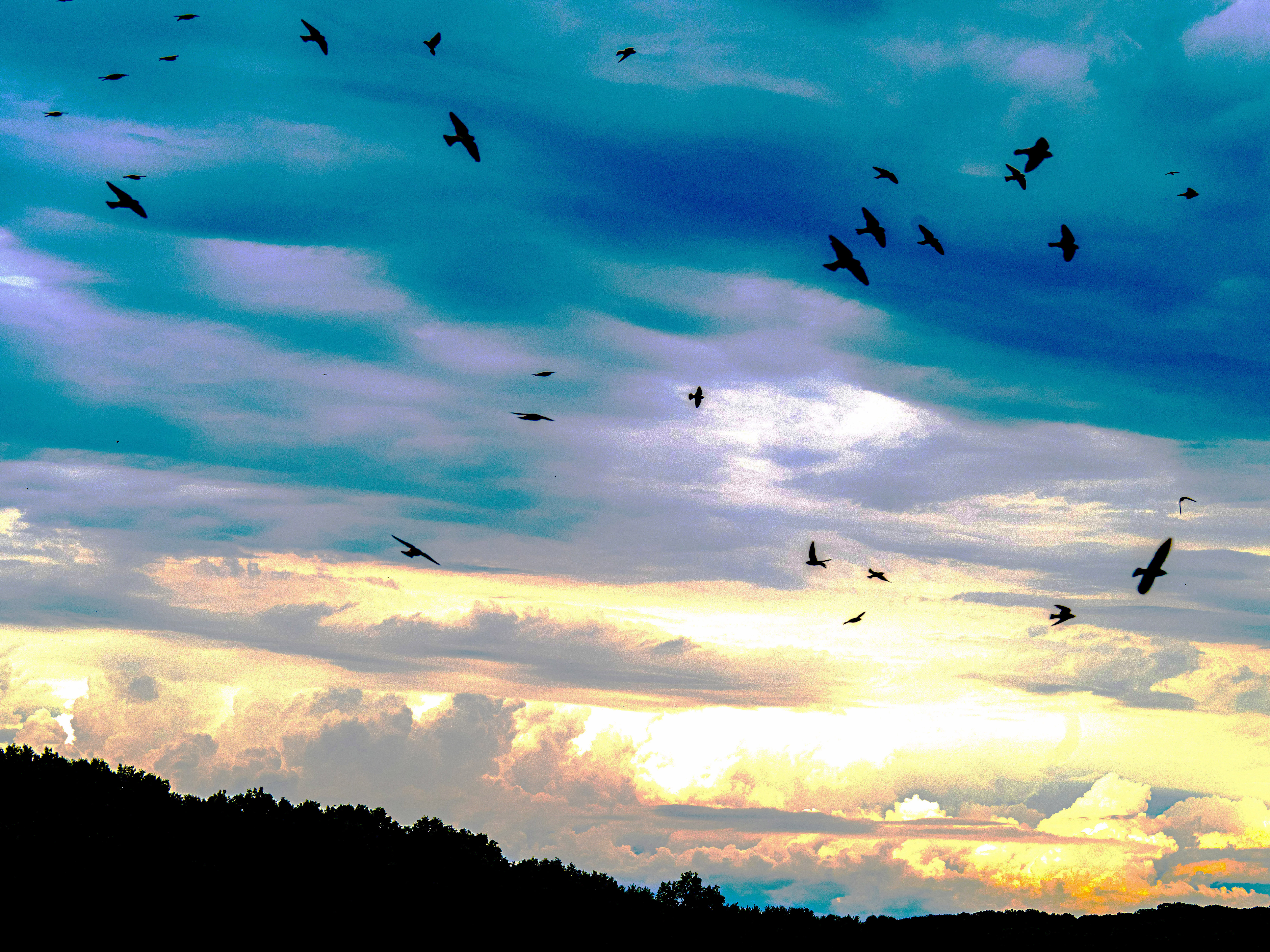
Grace … when unexpected swallows appear to give ambience to an image …

Often I think of him, and have told that story to other artists who confide that they’re thinking of retiring, of giving up. Nowadays I sometimes wonder about myself. It’s not so much about aging gracefully, whatever that means, rather than wondering what else would I do? The walls and panels in my studio are full of canvases, and I make numerous smaller items featuring my photographic work. Over these past few weeks I’ve poured through a few thousand images created over the past 15 or so years, from when I retired from the country weekly to begin my efforts of portraying the last one percent of an ancient and nearly completely destroyed original prairie pothole biome. 

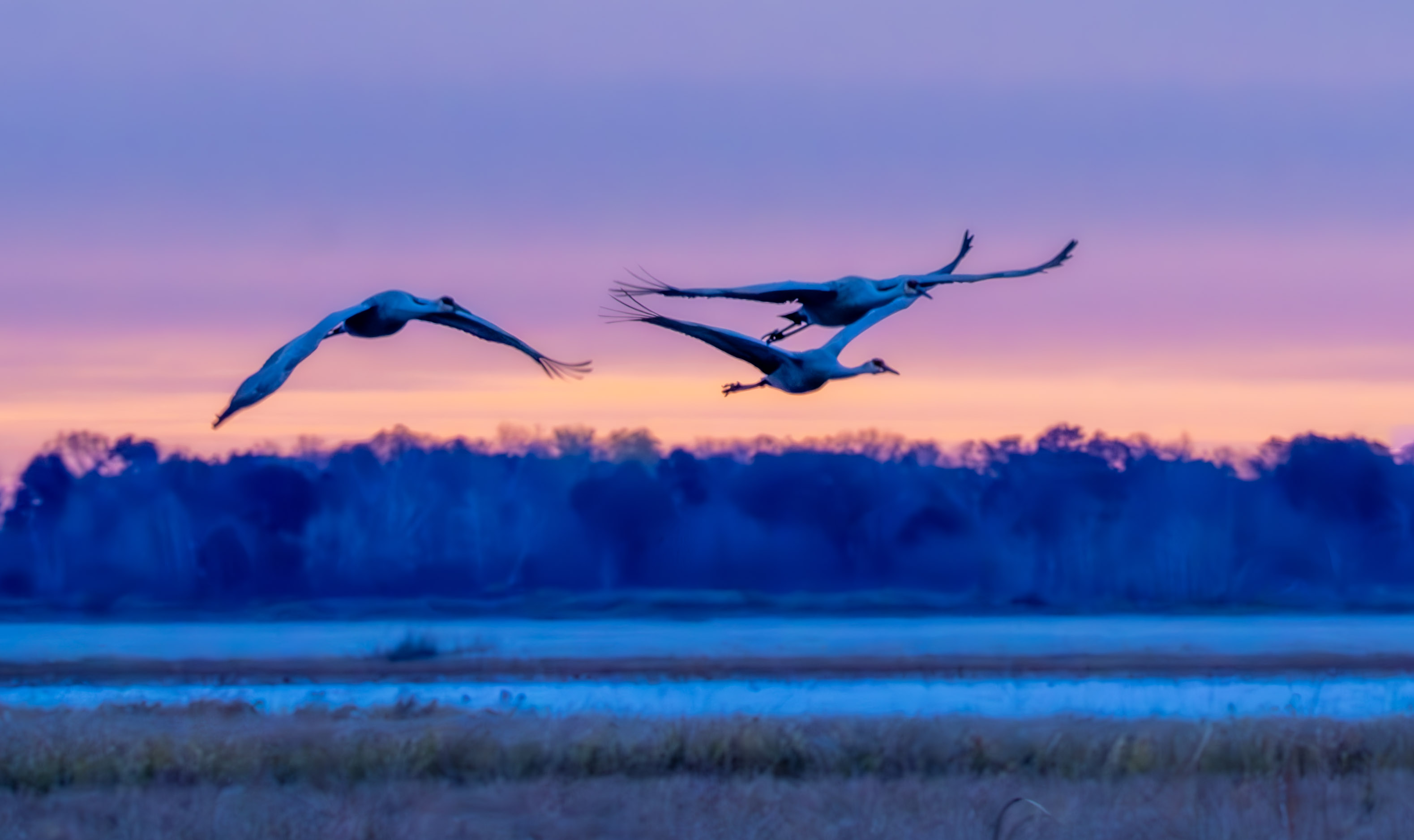
In so doing I sometimes find a choice image previously overlooked, or marvel at something long ago printed onto canvas and sold, and still hopefully hanging on someone’s wall. I also have thoughts of why continue? Do I need more images? Yet, quitting seems so unreasonable since I still throughly enjoy working with the magic of natural light, composition, ambient colors and those quirky surprises your find in nature. Those valued moments of internal celebrations when all those artistic elements come together … like when a trio of Sandhill Cranes flew over me recently at Crex Meadows in the ambient softened colors of a prairie sunrise. Yes, a portrait of grace. Color. Movement. Poetry. Nature. Perhaps finding grace in the imagery is more than can be expected. Then there’s this: What else would I do?

Grace … when poetry of nature blesses you with a memorable moment …

I still find magic in the prairie, in the skies, the timberlands, the BWCA, the mountains and in those sweeping landscapes all around. I find joy in the wild beings, in an unexpected flush of birds over a prairie meadow, or a poetic surprise of birds suddenly appearing in an otherwise mundane landscape; the immense poetry of trees, of their hefty, spreading limbs, of how a single tree within a forest can portray such stark individualism, of how the symmetry of autumn leaves can bring a smile; plus the wonder of the beyond, be it a breathtaking full moon coursing light across water or a sea of prairie grass, or offering a special moment to silhouette a crane or heron, or the fluid aerial ballet of an Aurora Borealis offering graceful waves of heavenly beauty; or even that of my dog, Joe Pye, ambling through our tall grass prairie at Roberta’s side sniffing at mysteries I’ll shall never know, of his pure excitement of simply being alive and free.

Yes, alive and free, of an ability to create and hopefully capture beauty that so long ago was basically erased from our collective consciousness. Hopefully in my aging I’ll continue to embrace those joys of capturing natural poetry more so than in my seeking some sense of personal grace. My fear is if I don’t note that discovery of natural poetry with my art that I will no longer find joy or the magic in life. Without that magic and joy, what would be the point? What else would I do?