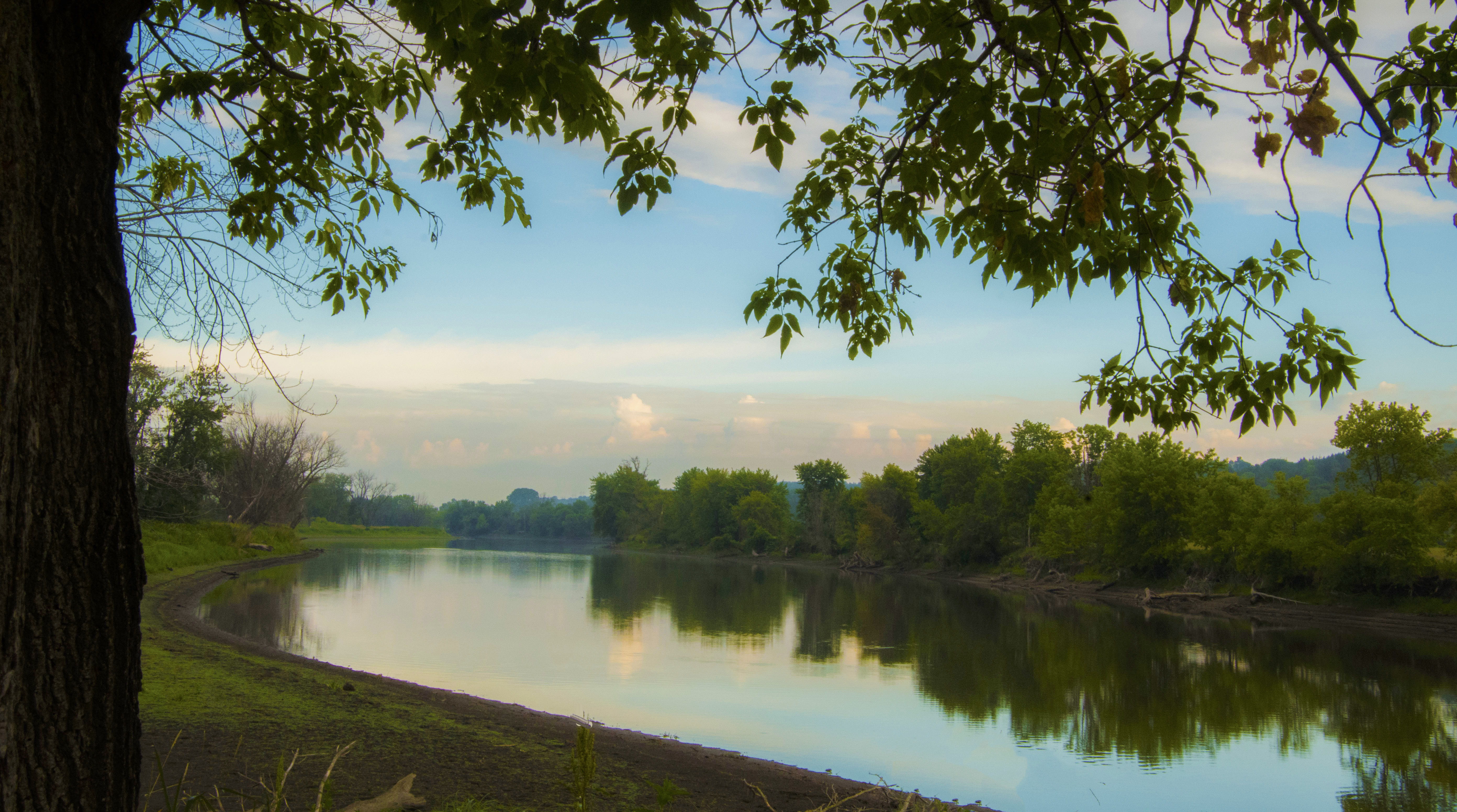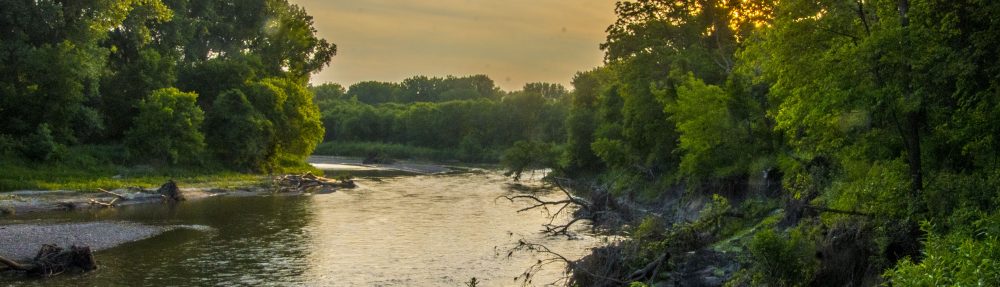
Along the River

Initially I didn’t realize I needed a river. We were simply on a lazy afternoon drive with only one commitment. Yet, there seemed to be a calling, one apparently buried deeply in subconsciousness.

Yet, here we were. For thirty some years my “home river” was the Minnesota, from the headwaters at the foot of Big Stone Lake down to Mankato where it takes a serious bend to head northeasterly toward its confluence with what becomes the Mighty Mississippi. Hundreds of gneiss outcrops line the shores of the upper river, and eagles often man the riverine forestial  corridor. It’s a river that if one was blind to the murky waters it might suggest resemblance to the BWCA.

With a little time to kill before meeting up with an old friend in Granite Falls on Saturday, my car somehow ventured toward some of my old river haunts downriver, specifically to nearby Kinney’s Landing.

There would be no tag with this heron, who flew across the river away from us.

It was auspicious start for the picturesque access where we had launched our canoes so many times over so many of those years was both empty and appeared in disregard. Part of that is undoubtedly due to a summer of high water that prevented meeting up with my old fishing buddies for a bit of walleye and catfish angling. Floating the currents over many of those years to ease behind a dead fall to drop a baited hook has continued even though I have moved from the “upper” portion of the river to the headwaters an hour or so north by auto. Many overnight gravel bar camping trips happened along these waters with huge driftwood bonfires, lines on salt water rods set for all night flathead fishing while I typically did the honors of frying freshly caught catfish served with wine kept chilled in a cooler. Hey, we knew how to live.

Yes, I miss those times.

On this day the arched “church” of a tree way canopy overshadowed ample parking spaces I remembered being full so many times, and the landing itself was mired in a thick cake of mud. An old photo of the access captured on a foggy morning years ago graces my wall, a portrayal both charming and welcoming, a place where you might sit for awhile to take in the surroundings, to sniff the air and listen for feathery songs from the leafy canopy. On an otherwise warm autumn afternoon that would have been prime, such poetry was absent. 
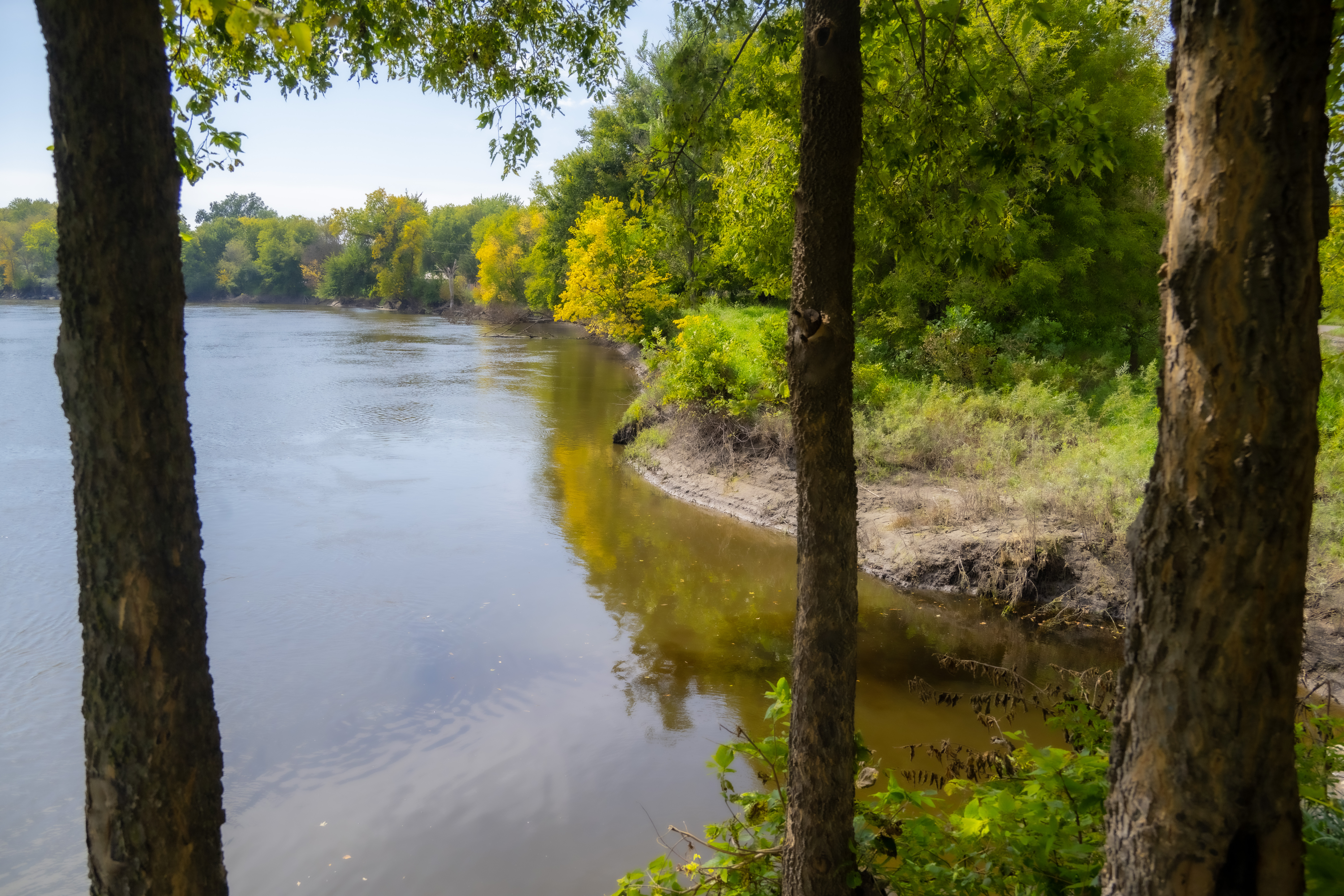
Leaves are just beginning to turn …

After several minutes we left to take a riverine gravel that hugs the “west” bank where we played tag with a Great Blue Heron, that quickly grew tired of us and angled across the river. The heron would basically be the only bird life we would encounter until we were near the headwaters hours later, where distant swallows livened a beautiful sunset. Yet, this was a familiar stretch, a length of river my writer and fishing buddy, Tom Cherveny, and I launched to paddle upstream to the Minnesota Falls Dam, which has since been removed. 

Before the dam removal the river spread almost lake-like to create numerous islands between downtown Granite and the dam. Just below the dam we caught stringers of nice catfish. When we paddled up to the dam from Kinney’s we would ease our way back, dropping lines along the deeper holes on the east bank and below a couple of river islands. Our heron had landed just downriver of the bigger of the two tree-blessed, rocky islands.

Now, at my age, standing on the bank and gazing at the murky waters, many fond memories of those trips came to mind. Moments that brought a smile, and a calmness that has seemed to be missing of late.

We caught the sunset at a bridge just west of Odessa.

Eventually, though, we headed toward Granite where a hydro dam still exists at the apex of this small, old artistic river town. Surprisingly there were no pelicans. Roberta, my dear partner, has expressed wonder about the sudden absence of the birds especially here in our home prairie. “I think we’re going to have a bad winter,” she’ll say. Perhaps, for on some of the prairie wetlands swans that typically have a couple of signets seemed to have hatched a half dozen or more this summer.

And, it seems as if one day our robust skies populated by two oriel species, brown thrashers, a brave catbird, Red Breasted Grosbeaks, umpteen swallows and even starlings became suddenly and eerily quiet. And, empty. Now? Sparrows and a few gold finches, slowly molting into their winter colors, fight squirrels for feeder space.

As we gazed at the rush of waters below the Granite dam she asked, “Are we following the river all the way home?” Well, yes, for you pretty much do, although you’ll cross the Chippewa, the Sag and the Pomme de Terre en route. We live here in a vast river valley, one created by the Glacial River Warren in whose abandoned bed now flows the minuscule Minnesota — by glacial standards. 

Hours later, when we reached the vast expanse of the Refuge, though, we were actually back to the banks of our namesake flowage. By then the sun had lowered in the western sky, and we had ample clouds to create some beautiful ambient post sunset color. What a blessing to behold, from the river view on the edge of Odessa and into the Refuge itself, where we found reflected colorful skies in windless waters. Being along the river was actually an unexpected blessing, although one that was thoroughly needed. At least subconsciously.

A fitting conclusion to a beautiful “river day!”

You see, I fear our times, of our loss of compassion and caring for others. It seems increasingly difficult to know the feelings of old friends who are revealing personal thoughts so different than you believed we collectively shared. So on an afternoon of what I later realized was an internal discord, I came to realize just how much I needed a river. My river. A river so mistreated with siltation and chemical runoff, yet one that has followed the same channel since the breakthrough of Lake Agassiz some 10,000 years ago, waters that just keeps ambling along, sandpapering sad thoughts and sending the chaff off along in the down river currents. 

Then there was a heron, perched in the shallows, a dark crown over its grayish blueness, and there was a flow that sometimes in less flooded times offers ripples through shallows for a sense of calmness. And now on an autumn afternoon the wooded riverine banks are taking on a magical transformation of color, and on this, an evening with troublesome anxieties, when the skies came alive with such an amazing palate of color … these are times when little feels better than the comfort of being along the river.
Hope Within Mourning

This wasn’t an intentional gathering of us “brothers from different mothers,” although we were together to honor the passing of a special woman we considered as one of the “mothers” of our shared advocacy and love of a muddy and polluted Minnesota River. We stood in the commons area of the church, some in our jeans and worn, aged shirts probably scanned an hour beforehand to see if they were stain free. 

Several moments into our mutual greetings and acknowledgments of our few fishing stories, Audrey Arner, another long time clean river advocate, walked up to suggest,  “Guys, this is like old home week.” Indeed, we were a familiar bunch, had been for years. All around us were so many others who have been part of the advocacy.

Among them was Butch Halterman, a long time “river rat” who was well respected as a Montevideo senior high science teacher for his unrelenting knowledge, spirit and resolve; a man who for several years escorted groups of high schoolers in canoes from the headwaters all the way to its confluence with the Mississippi. 

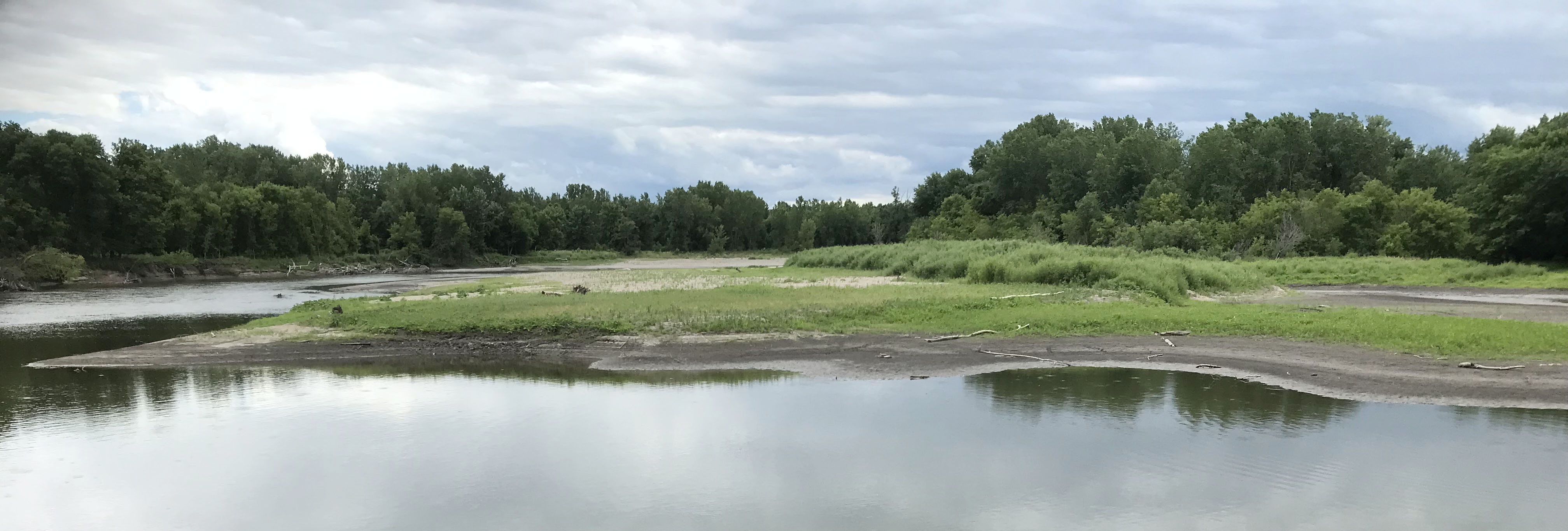
An overview of the siltation from both Hawk Creek and Yellow Medicine rivers that have choked off the original channel to the right, leaving a deep siltation between that and the new channel to the left.

There was Ron Hanson, who has written a few tough songs he must be persuaded to play, who lives alone in the nearby prairie where he grows some impressive long-thorned cactus plants. A narrow but simple path snakes through the rooms and narrow hallway past the seemingly hundreds of evil looking cacti, and a dire warning that this isn’t a place to bend over emerging from a bath.

Up from New Ulm was Scott Sparlin, who was instrumental in organizing a clean river group called the Coalition for a Clean Minnesota River. Butch, Ron and I had at one point served on the board of a sister river cleanup non-profit called Clean Up the Minnesota River (CURE). Noticeably absent on this day of mourning was its long time CURE leader back in the day, Patrick Moore, who recently had moved to Montana with his wife to be close to the families of their two daughters and grandchildren. 

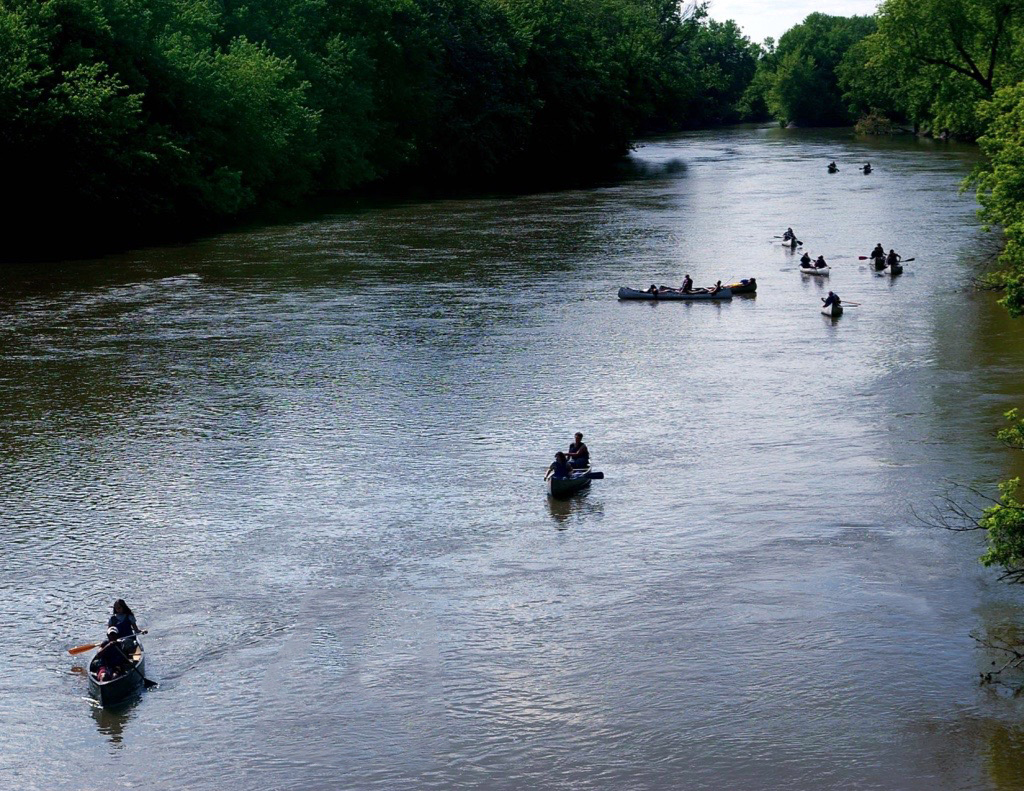
Back in the “old days” when dozens of canoes and kayaks were on the prairie rivers in May.

Our church gathering was to honor the late Shirley Werhspann, wife of Del. Collectively they were as responsible and as active with the Minnesota River cleanup efforts as the rest of us. Moore actually credited Del as the muse for creating CURE, initially under the auspices of the Land Stewardship Project. All this organizing came in conjunction with a ten-point action agenda to save a threatened river offered by then Gov. Arne Carlson. It was a heady and strong effort for more than 20 years.

“I no longer feel apart of the river,” Butch admitted, although he still has a cabin of sorts and a landing just downriver from Preen’s Landing. Yes, he still fishes both in the open currents and on the ice. “Used to be a brotherhood, a family of us, and we were all on the river. No more.” 

Nowadays, not so much. Perhaps age is part of it, moves another. So has the politics and change in the direction of CURE. “It’s now electric cars,” he laments. “Not so much about the river.” 

An evening of catfishing on a bend of the Minnesota River.

Indeed, not much has improved since all this started back in the early 1990s. Indeed, the river seems to face even greater threats. At Skalbakken County Park, for one example, standing in the picnic shelter back then would have seen the river channel ripe against the tree-lined north bank to the far right of the shelter. Heavy boulder riprap was peppered along the bank beneath the shelter to protect the park from being washed away by the incoming flow. Thanks to some extremely wet years, patterned tiling and an insistence on flushing spring melt from fields of commodity crops, the channel is now to the far left as siltation several feet deep has closed off the original channel. Between the former and present channels, this thick “island” of silt now has emerging willows and prairie weeds sprouting. Further down river the increase of flow has sliced a new channel through the riverine prairie, speeding waters past many of the former serpentine bends to create shallow oxbows.  

So much change, so rapidly, that Heraclitus’ statement, “No man ever steps in the same river twice, for it’s not the same river, and he’s not the same man” rings both too close and truthful. Yes, the river has changed and so have we, as we, individually, enter the last one percent of humanity. In a few words, “We’ve grown old.”

“River rat” buddy, Tom Kalahar, fishing on a Minnesota River sandbar.

There we stood, the group of us along with some other grayed river advocates, awaiting an official mourning of a woman known as an “animal whisperer” and forceful advocate of a cleaner river and environment. Our little group had met numerous times in her kitchen talking river politics over her delicious home baked cookies, of how to better our efforts and how to remain strong while surrounded by a seemingly uncaring and unbending agricultural community. At one point she worked on Congressman David Minge’s statewide staff working as a local organizer and scheduler. Shirley was as strong politically as she was so kind hearted to us, and to her horses and other pets. For years she and Del ran a boarding kennel that was highly praised thanks to her tender and loving care.

Minge, it should be noted, helped craft perhaps the strongest soil conservation program along with Iowa Senator, Tom Harkin, called the Conservation Reserve Enhancement Program that placed nearly a million acres of vulnerable farm land into perpetual retirement. He was also on the original CURE board of directors.

A closeup image of clean water from a protected tributary as it enters the muddy Minnesota River.

In time we ambled in for her last rites, taking seats, singing hymns and offering prayers. Later, in the church basement over a lunch of a tatter-tot hotdish, our conversations continued. Among them came the offerings of new promise, of a river wide conference scheduled in Mankato, where the muddy and polluted river takes a severe turn northeast toward the confluence with the Mississippi. Like in the past, the “old” Butch, Audrey and Richard Handeen were all encouraging us to once again to join together with Scott and the downriver folks to inspire change and better conservation efforts — some 35 or so years since the first such efforts.

While the effort is hopeful, is there still enough fight and resolve to make a difference? Perhaps Scott Sparlin has a new youthful grouping than we found in the church that morning. In the old days, when we were young, those resolves weren’t even a consideration. We simply made up our minds and took to the river, in canoes, in meetings, gatherings at various county parks, and group paddles on not just the “mother river” but also the five tributaries. We fought with protests and in the courts, and we took our battle to St. Paul. We worked with other down river groups all the way to Lake Pepin on the Mississippi.

An evening moment on a quiet bend of the Minnesota River.

Back home on the rivers, my late wife, Sharon Yedo White, one of our exchange students (Luise “Lucy” Hille of Germany) and I all earned our “Prairie Paddlers” patch then granted by CURE — a colorful cloth patch signifying that we had successfully paddled all six of the upper prairie rivers.

Those were the days. On a single weekend in May we would gather in dozens of canoes and kayaks to paddle the rivers, then in September we would close the paddling season with a relaxed fall trip just as the leaves would be coloring, which they seem to do earlier close to the river, when the air would be a bit crisp with the approaching waters reflecting a blueness and sense of clarity we all hoped would someday be normal. Back when the river was a part of each of us. Now, perhaps, a new hope will emerge.

On Thursday, June 12, the 17th Annual  Minnesota River Congress will meet at the Kato Ballroom in Mankato starting at 6 p.m. Sparlin continues the batttle as the facilitator of the event, which besides two strong panels will feature Joseph Barisonzi, Minnesota state vice president of the Izaak Walton League, as a speaker. His topic: “The River Can’t Wait.” Barisonzi also is curator of the chapter’s Kouba Gallery in Bloomington, MN, where my current exhibit, “Haunted by Waters” is now on display — a fitting coincidence.