In Closing
Reply
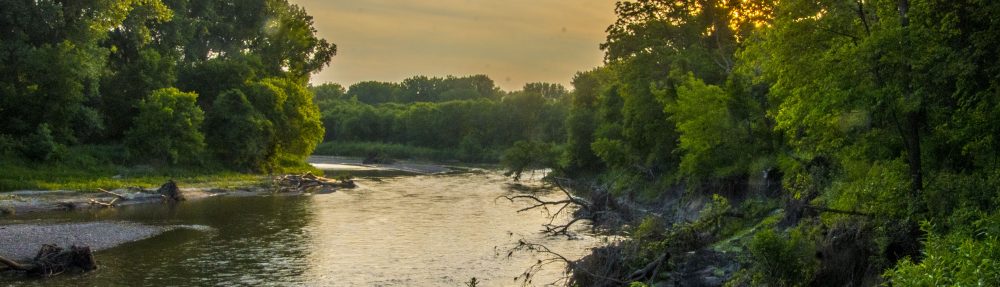
Mine wasn’t an easy year. Especially the last few months. A second of year of forced Covid complications. Having what I considered a strong and beautiful engagement unexpectedly end. Not being able to fly for a gathering of sons in Norway due to costs and Covid.
Yet, there were many moments to cherish. A fine and safe trip to the West Coast with friends, to visit friends and see some incredible sights and to Nebraska for the annual Crane migration. A few trips to state parks on camping adventures. Meeting up with long “lost” friend Michael Muir in Wisconsin in August to tour the Aldo Leopold cabin and farm, as well as the International Crane Foundation. Some great musical moments including my first Willie Nelson concert.
There was also the art. Exhibits of the Haunted by Waters at Java River, and placements in the juried Horizontal Grandeur exhibit. Then the unexpected invitation to display canvases at Stones Throw Restaurant in Morris. Once again we were able to have the summer Big Stone Lake Arts Crawl in June, and the Meander the first weekend of October.
As much fun as the exhibits and shows can be, just being in the field gathering images is almost a daily joy. Before my fiancee left at the end of August we spent many evenings driving around the prairie or at her lake cabin on field trips. Those were wonderful moments I’ll always cherish.
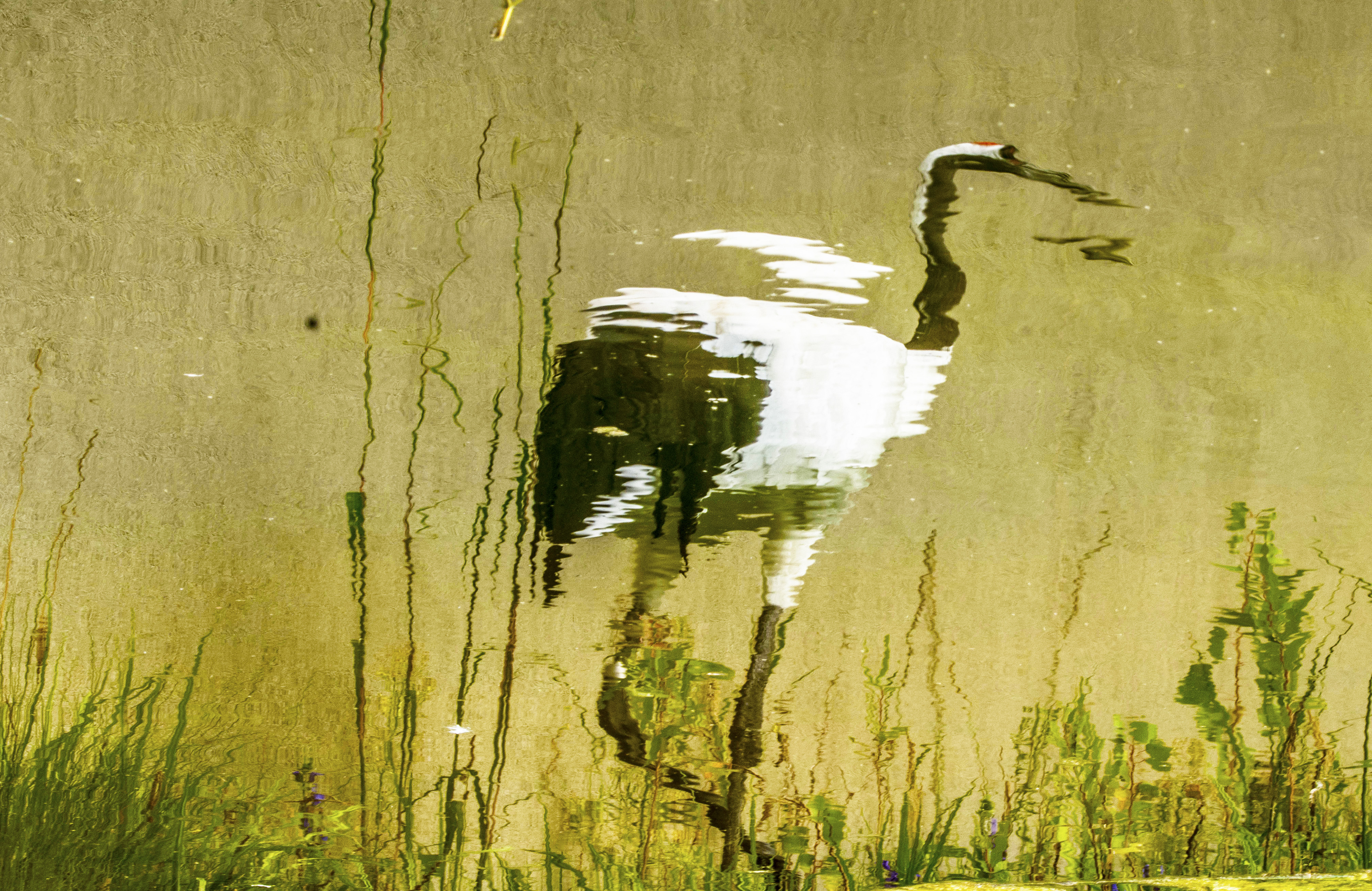
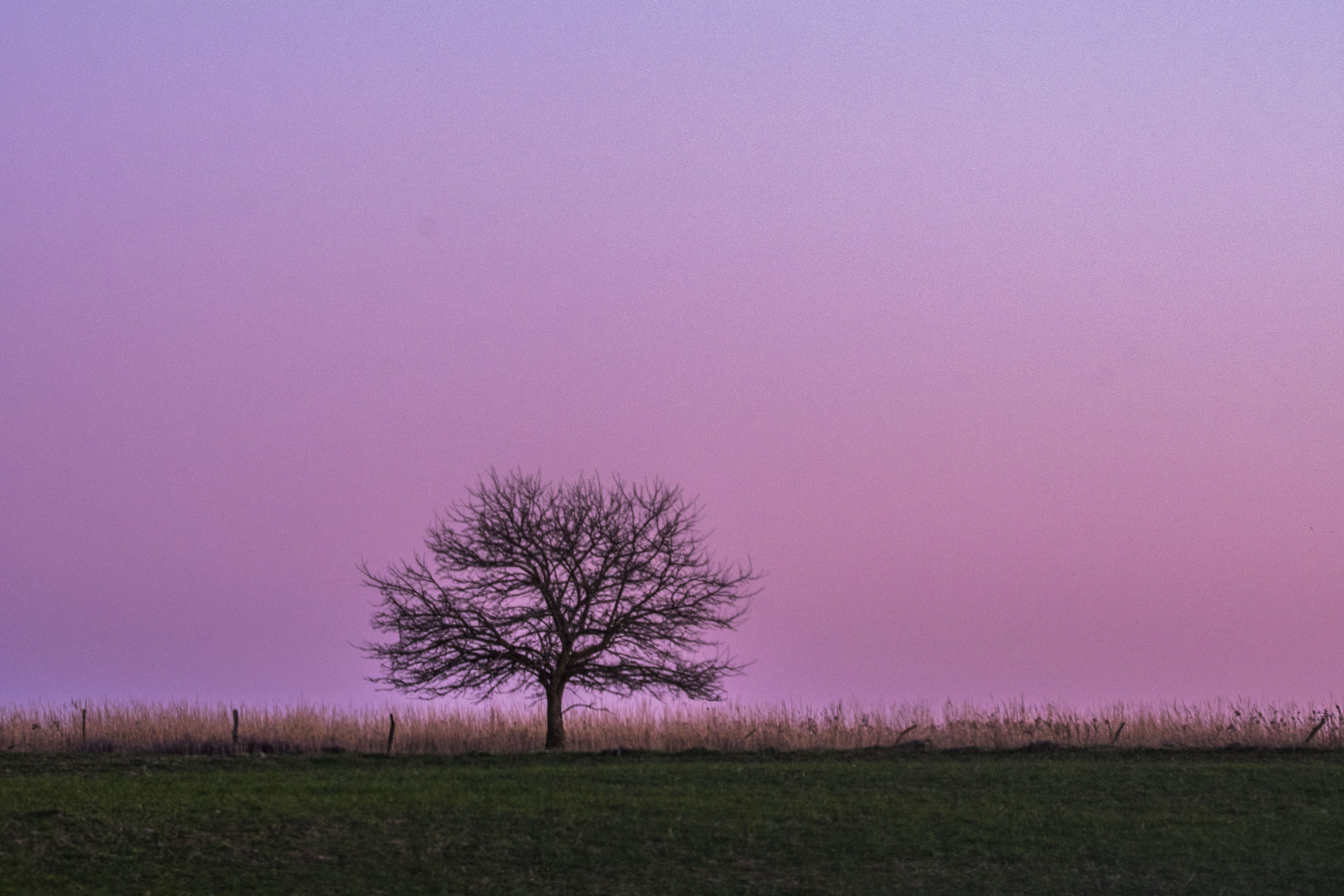
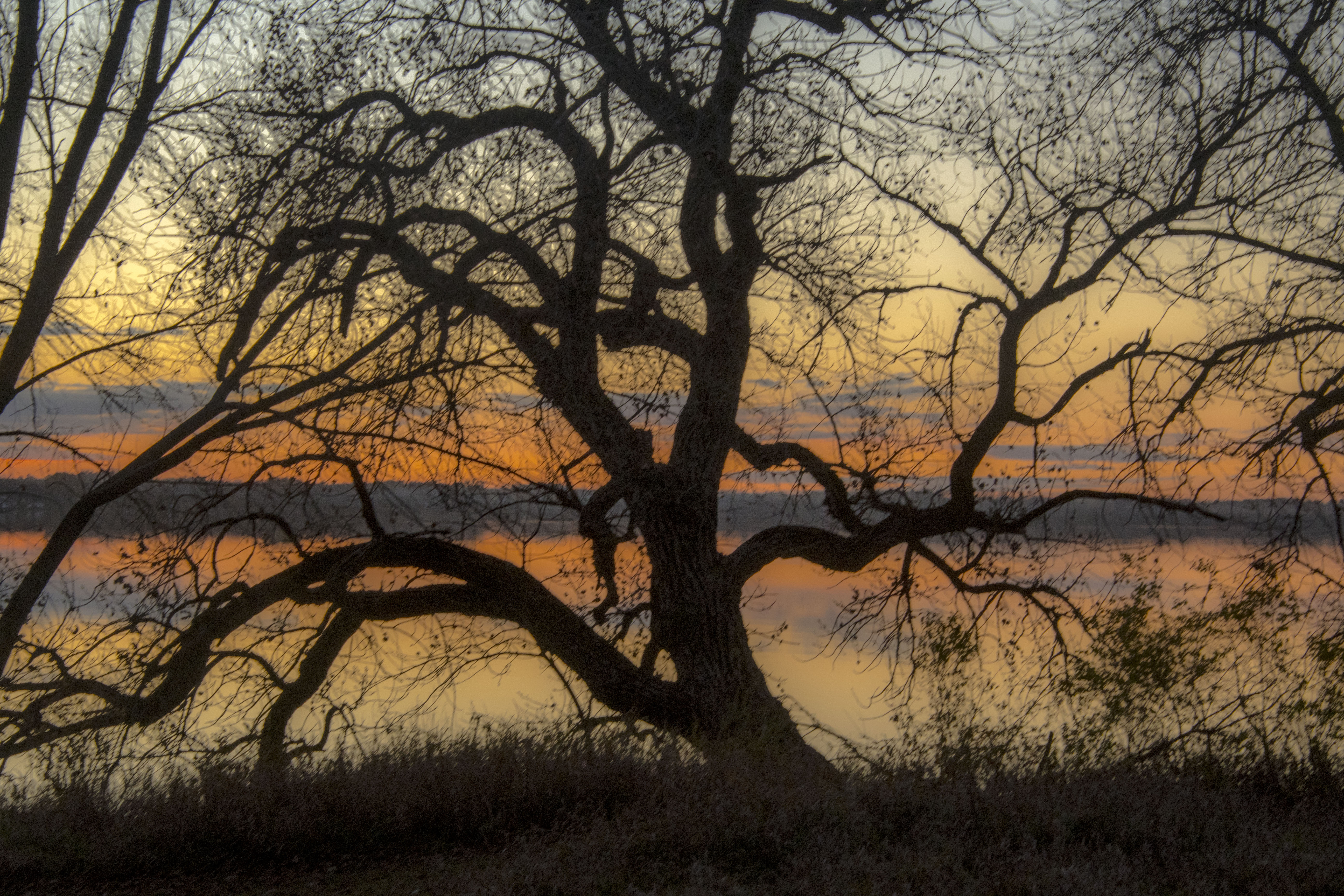
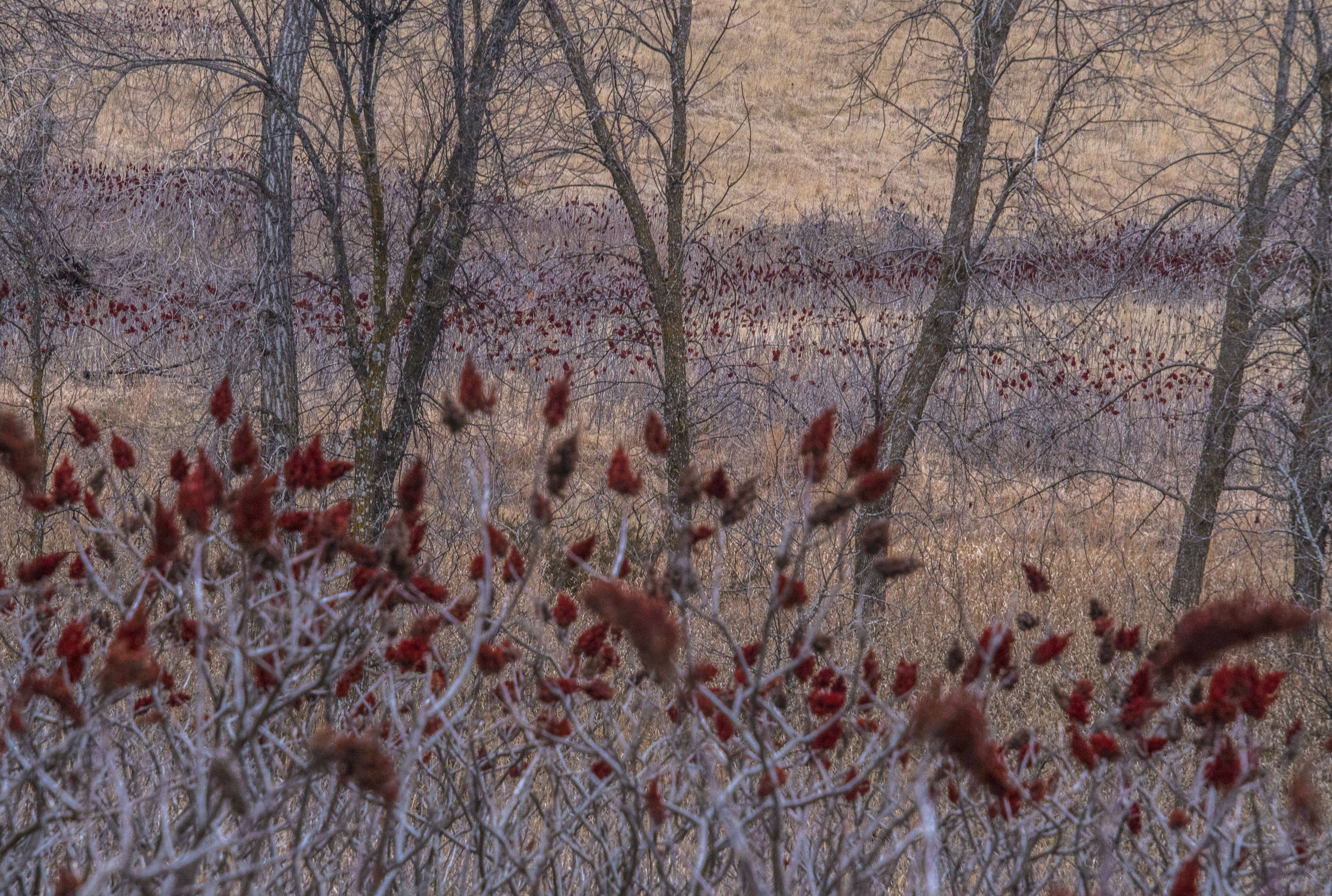
So in accordance to tradition left over from my newspaper days where we photojournalists were asked to select our favorite image of the year, I’ve done the same again this past week with the liberty of being the sole soul of Listening Stones Farm art gallery. It is a time of both reflection and review. For my exercise I began with over 80 images out of hundreds before whittling it down to these … 12 with a bonus of two for special circumstances:

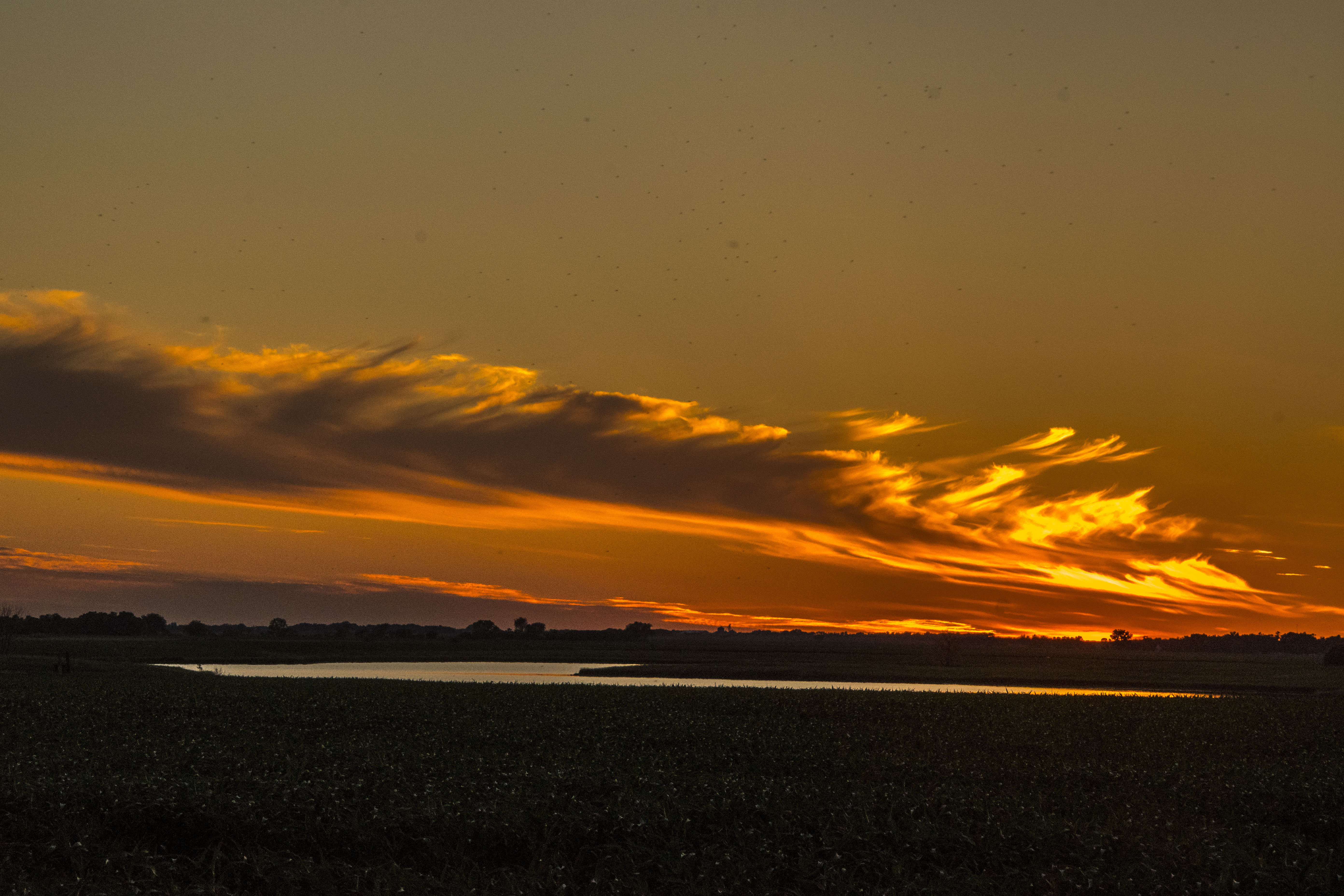
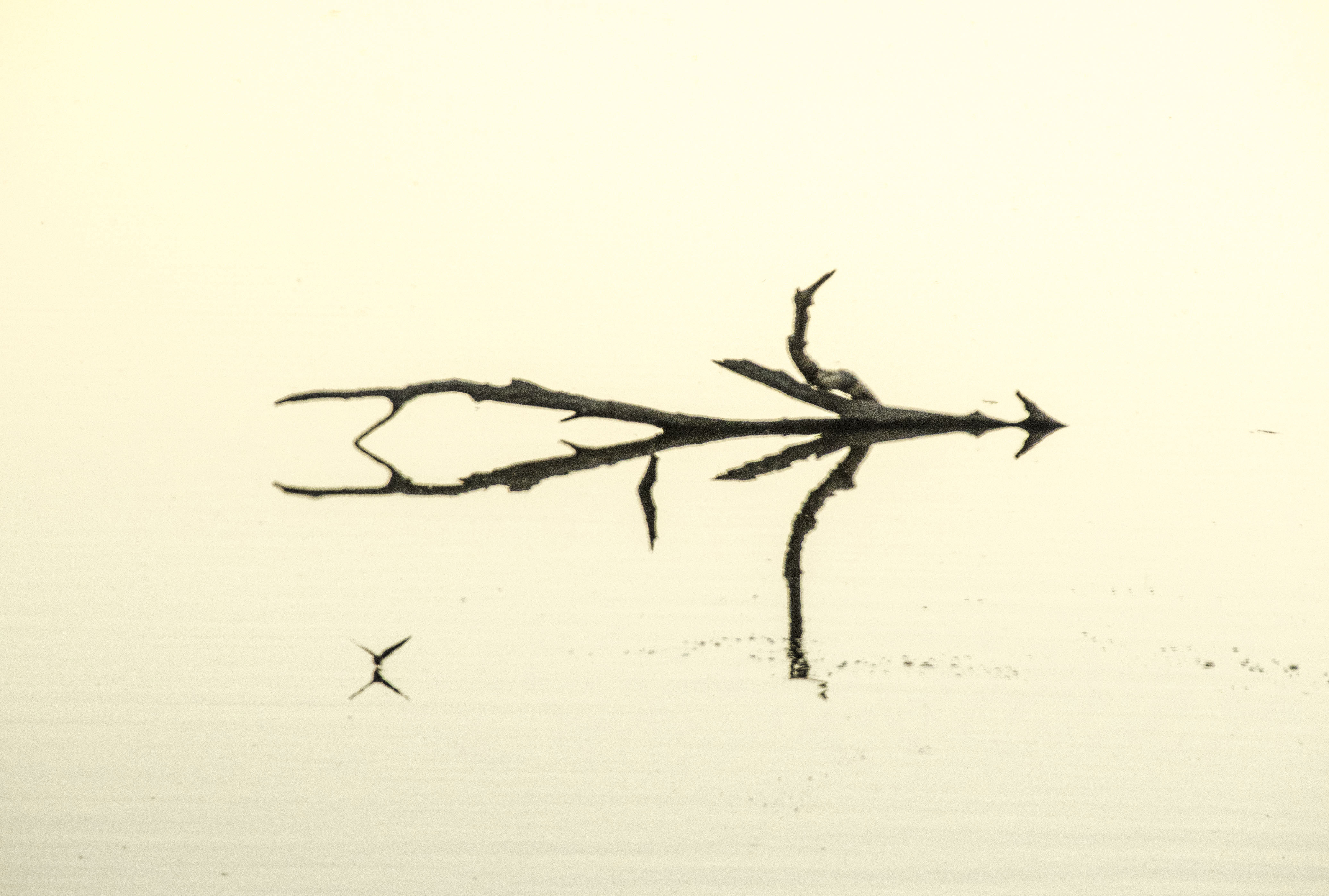
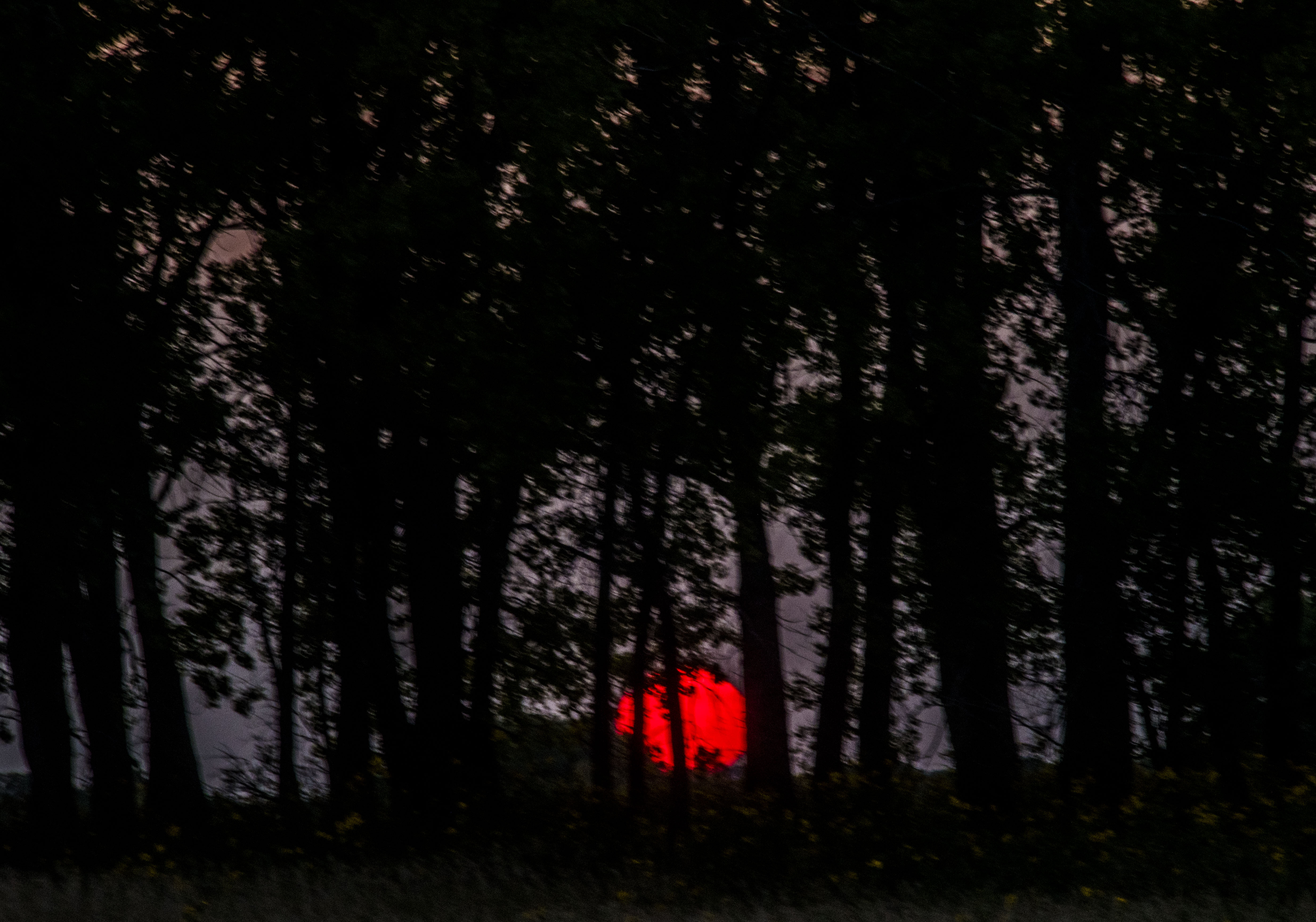



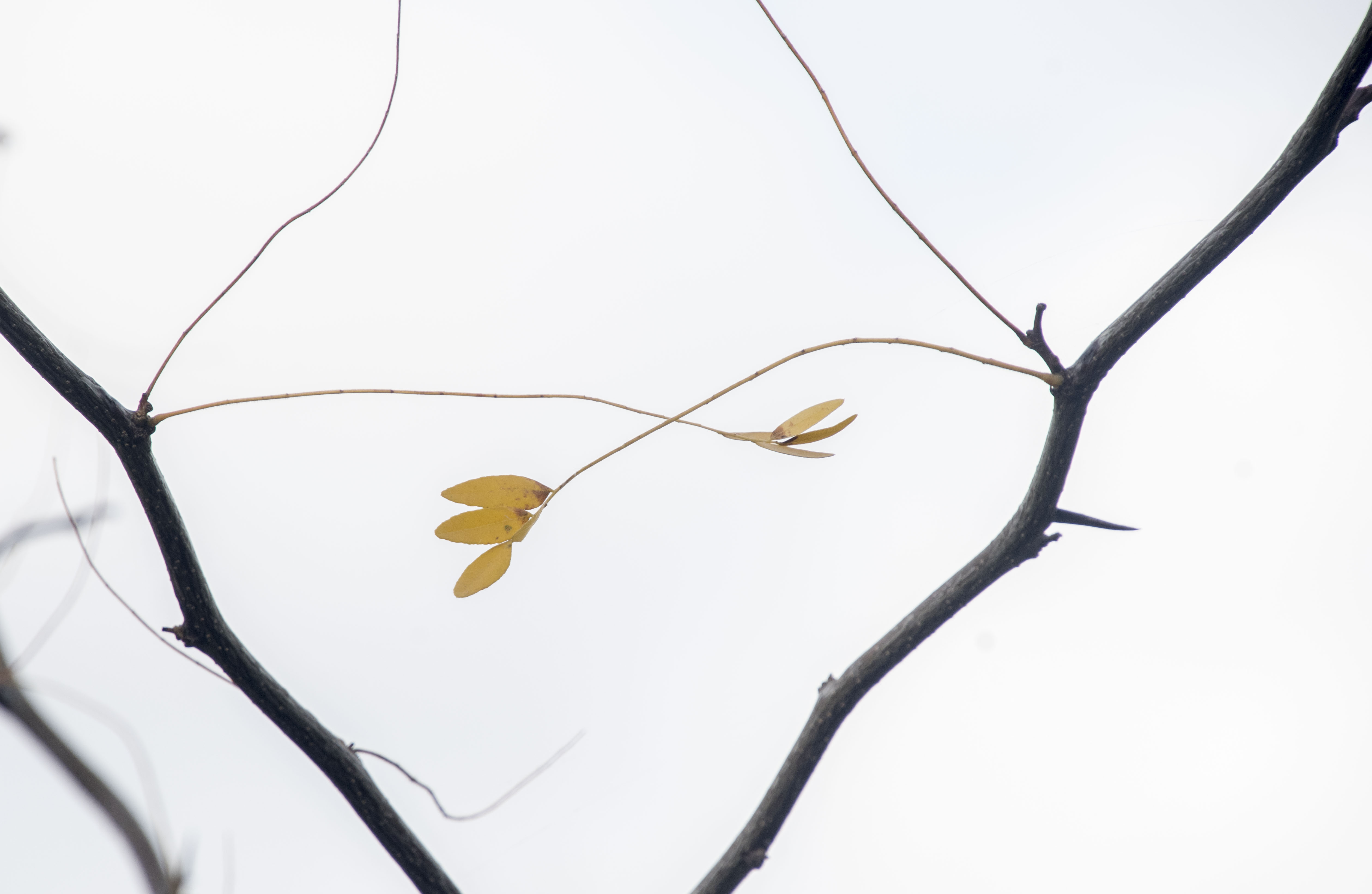
And, my bonus images …
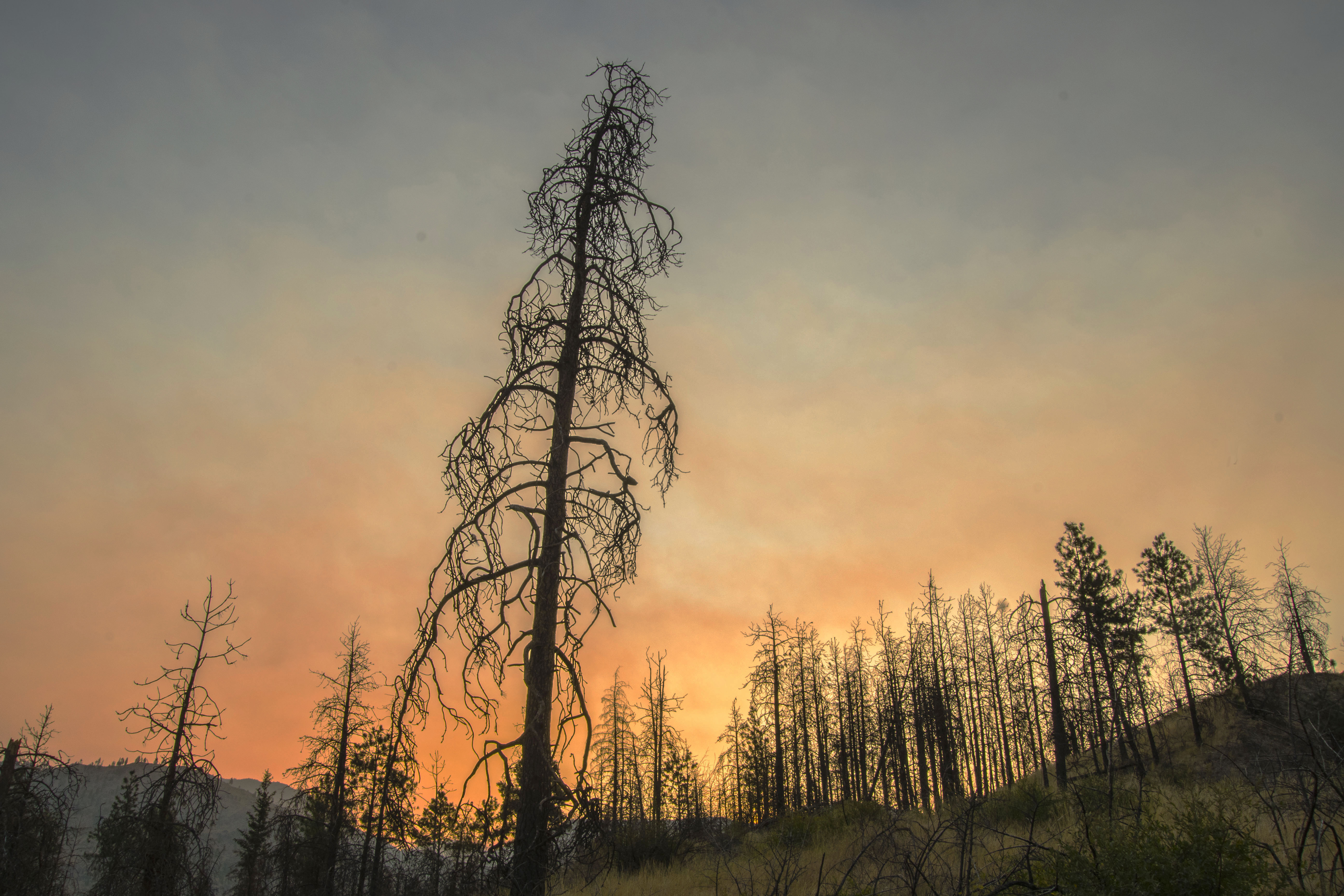
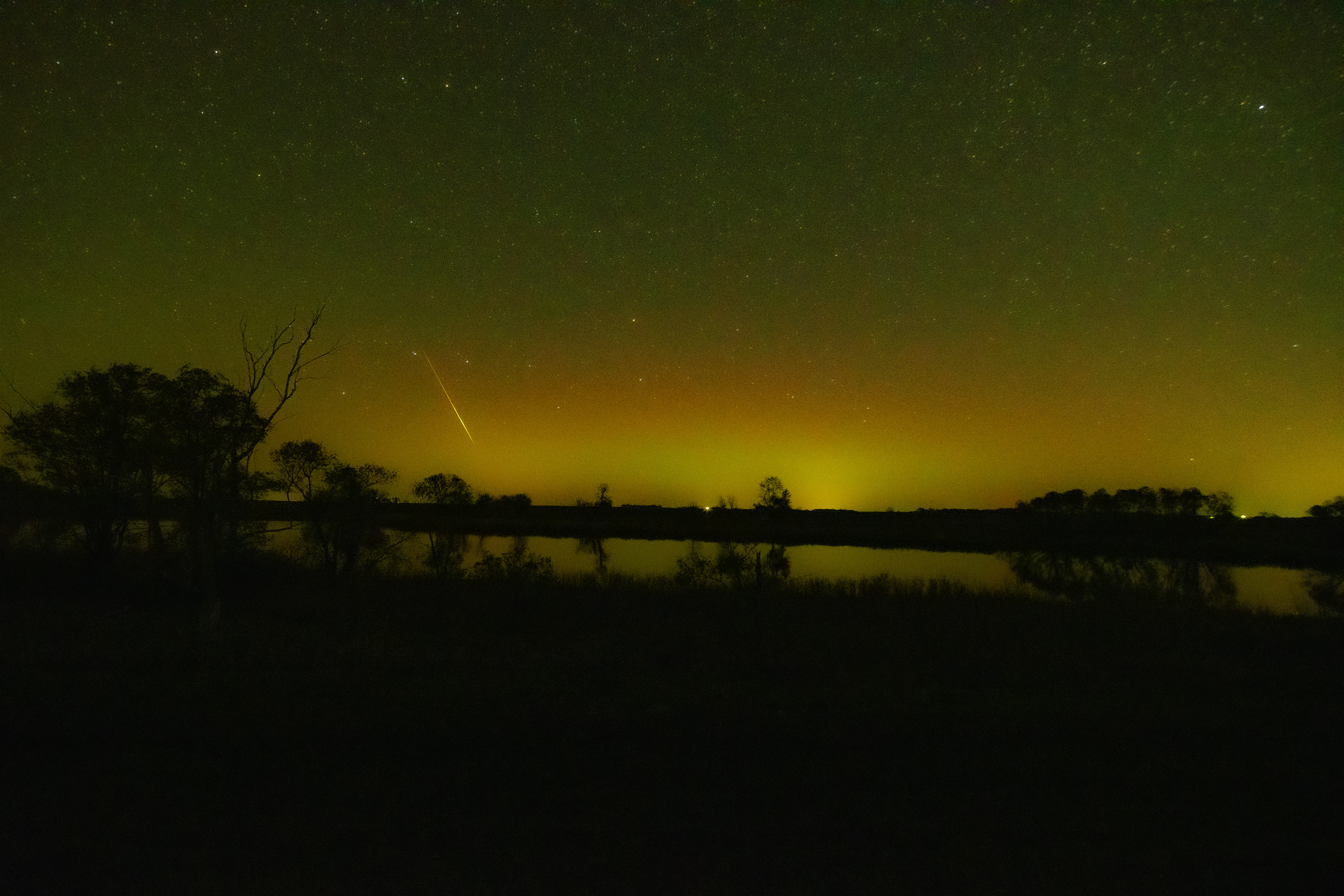
Thank you, and have a great New Year, one of peace and goodwill!
While seeing my first Whooping Crane was eventful, it didn’t come close to such date stamps as the Kennedy Assassination or 9/11. So, no, the exact time, date and even the year escapes me. It was while visiting friends in Colorado’s San Luis Valley, Greg and Suzanne Gosar. Suzanne and I were having sandwiches in the add-on greenhouse of their remote farmhouse a step or two down from their kitchen when Greg burst through the door and excitedly said, “Get your camera! There are sandhills in the barley stubble!”
A bit of local geography … the San Luis Valley is a high, flatland in the south-central part of the state and nestled between the Sangre de Cristo Mountain Range on both the south and east sides and the La Garita and Conejos-Brazos mountain range on the north and west. The Sand Dunes National Monument hugs the base of the Sangre de Cristos. The valley is approximately 125 miles long and over 65 miles wide, and Greg’s organic grain farm is smack dab in the middle of the valley as a tip of an imaginary triangle between Monte Vista and Alamosa. You reached the homestead via gravel roads from either the east or west, crossing cattle guards and easing through gates. The Sandhill Cranes were making a springtime stop in one of his fields in the southwestern corner of his farm.
“We can sneak up on them by going up the dry gulch,” he said as we drove toward the gulch in his pickup. “We can’t talk. Hand signals only for they’re easily spooked. When we get close we can edge up against the bank of the gulch and peak through the trees.”
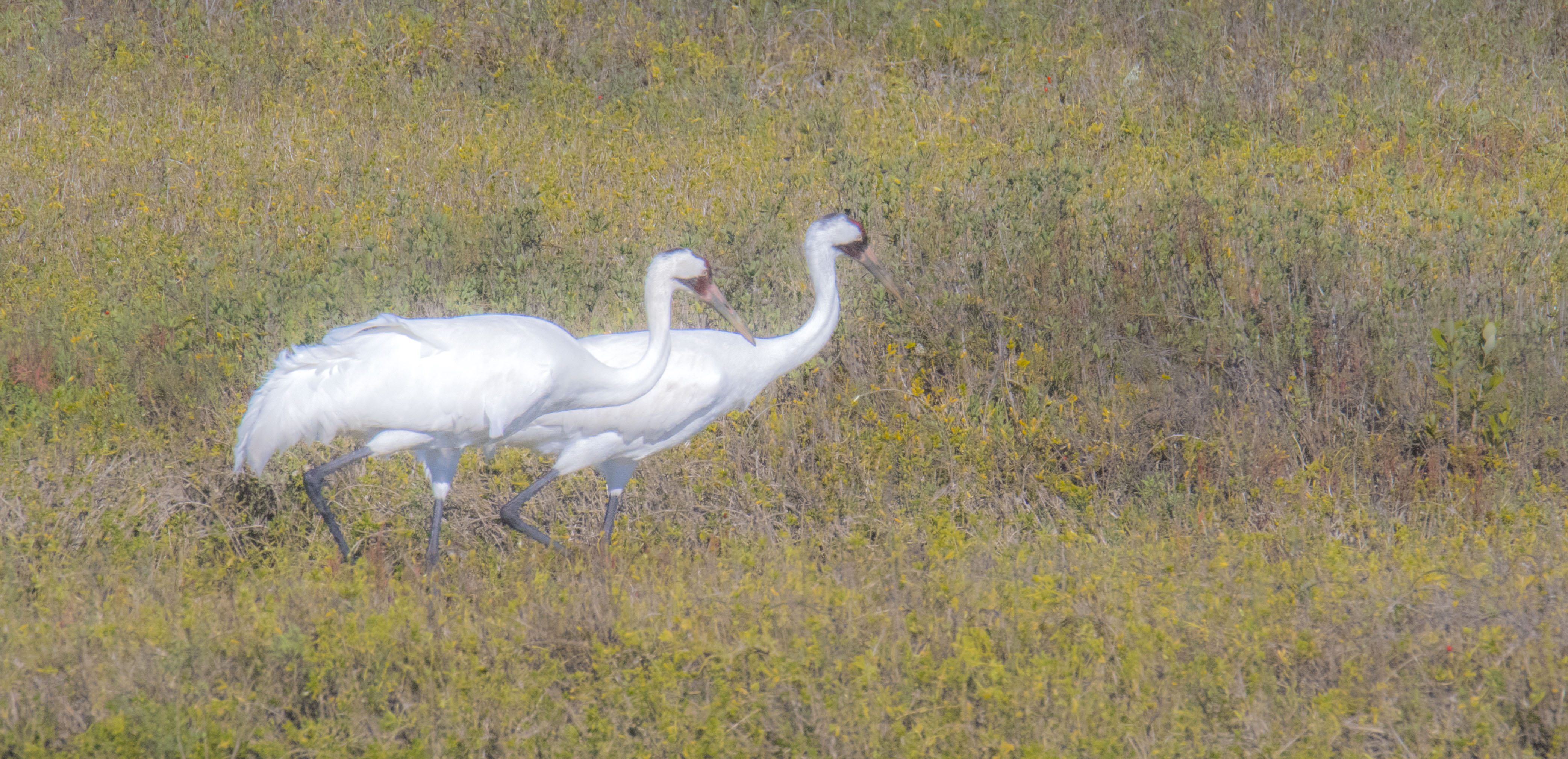
Greg’s plan worked wonderfully, and we had no problems finding the birds as the noise was nearly deafening. The gulch was of soft sand and stealthy quiet. Trees lined either side creating a tunneled path separating fields on either side. He held up his hand for us to stop, and we eased toward the west bank to peer through the dense foliage. Directly in front of us were countless, magnificent grayish birds with the reddish heads. Many were hopping around in their unique mating dance. Then something caught my eye that was different. Something tall and white right in the midst of all the hundreds of sandhills. Yes, my very first Whooping Crane! Although these were my first sandhills, seeing an actual Whooping Crane was an amazing experience back then when the count was somewhere below 100 in the entire world. The whoopers were on the verge of extinction.
Since that special moment in the mid-1970s I’ve been on a quest for cranes ever since, and especially Whooping Cranes. A few years ago my friend, Mary Gafkjen, and I ventured to Nebraska for the annual Sandhill Crane migration, and in the afternoon before we were to meet at the Nebraska Crane Trust outside of Wood River we stopped along a highway along with dozens of others to watch the birds come and go from a stubble field about a quarter mile distant. My friend zeroed in on a white “blob” in the midst of the sandhills, and through our binoculars and from the buzz among the others alongside the road, the consensus was that it was indeed a Whooping Crane. She was glued to the spot and kept her binoculars zeroed in on the whiteness. I understood completely although my strongest zoom lens was inadequate for the challenge.
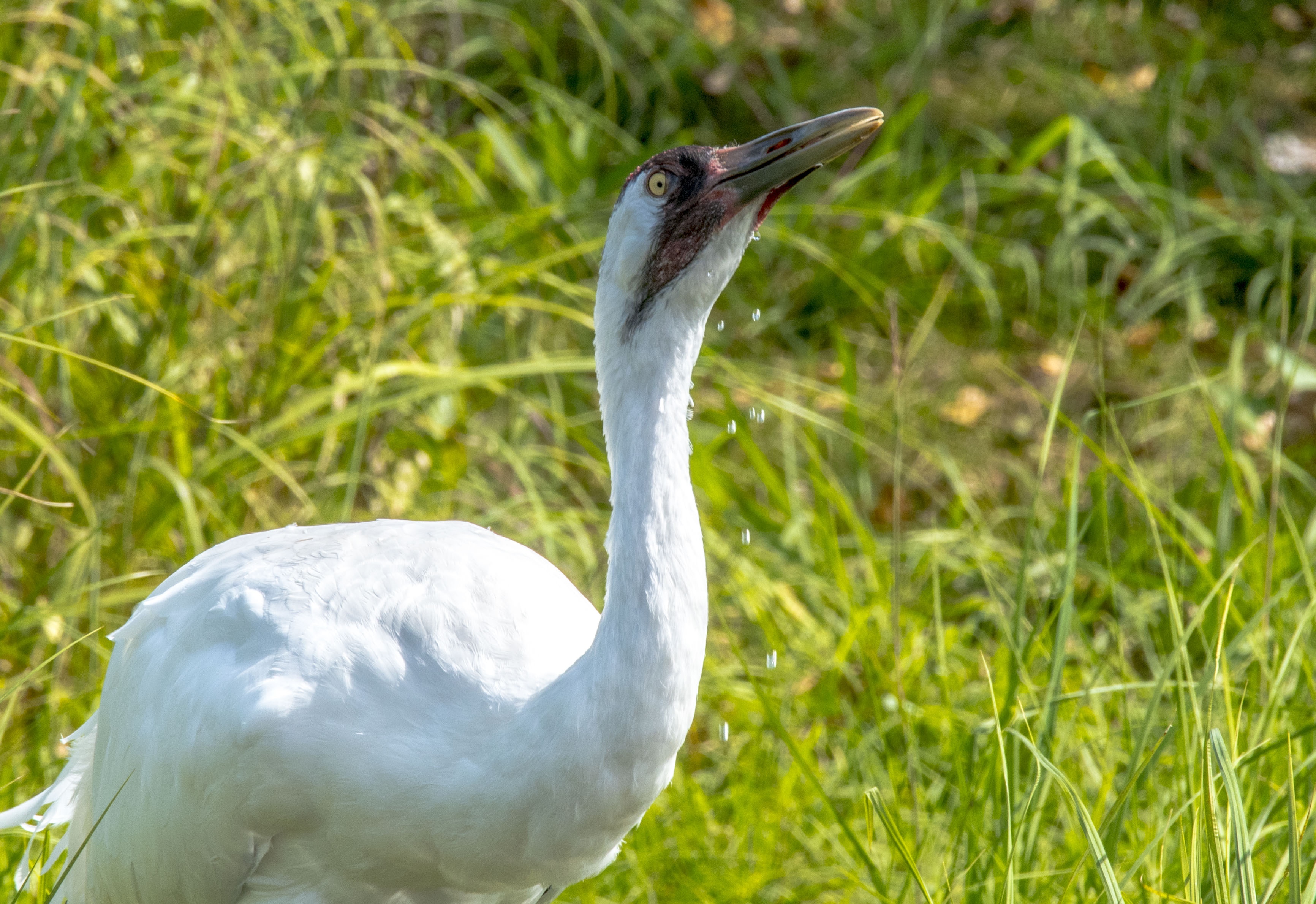
That started a Whooping Crane “tour” that would take us to Rockport, TX, and a boat tour of the Aransas National Wildlife Refuge, then to the Sand Lake National Wildlife Refuge in South Dakota where rumors said three whoopers were in a stopover. Most recently was a visit to the International Crane Center in Baraboo, WI. We missed them at Sand Lake despite directions given by a friendly Refuge ranger.
At Aransas, though, we boated into a completely different experience. After leaving port and motoring through the brackish bays, where we saw everything from Roseate Spoonbills to Oystercatchers, and almost every wading bird in a guide book, we reached the remote islands. Off in the distance, perhaps a few hundred meters away, we could see the white from a pair of Whooping Cranes. While this created a buzz among us on the launch, the best was yet to come. Further along the way a pair was traipsing through the marsh grasses just a few hundred feet away. The boat captain pushed the bow into the bank and cut the engine. Even he was surprised. “We never get this close,” he said, in amazement.
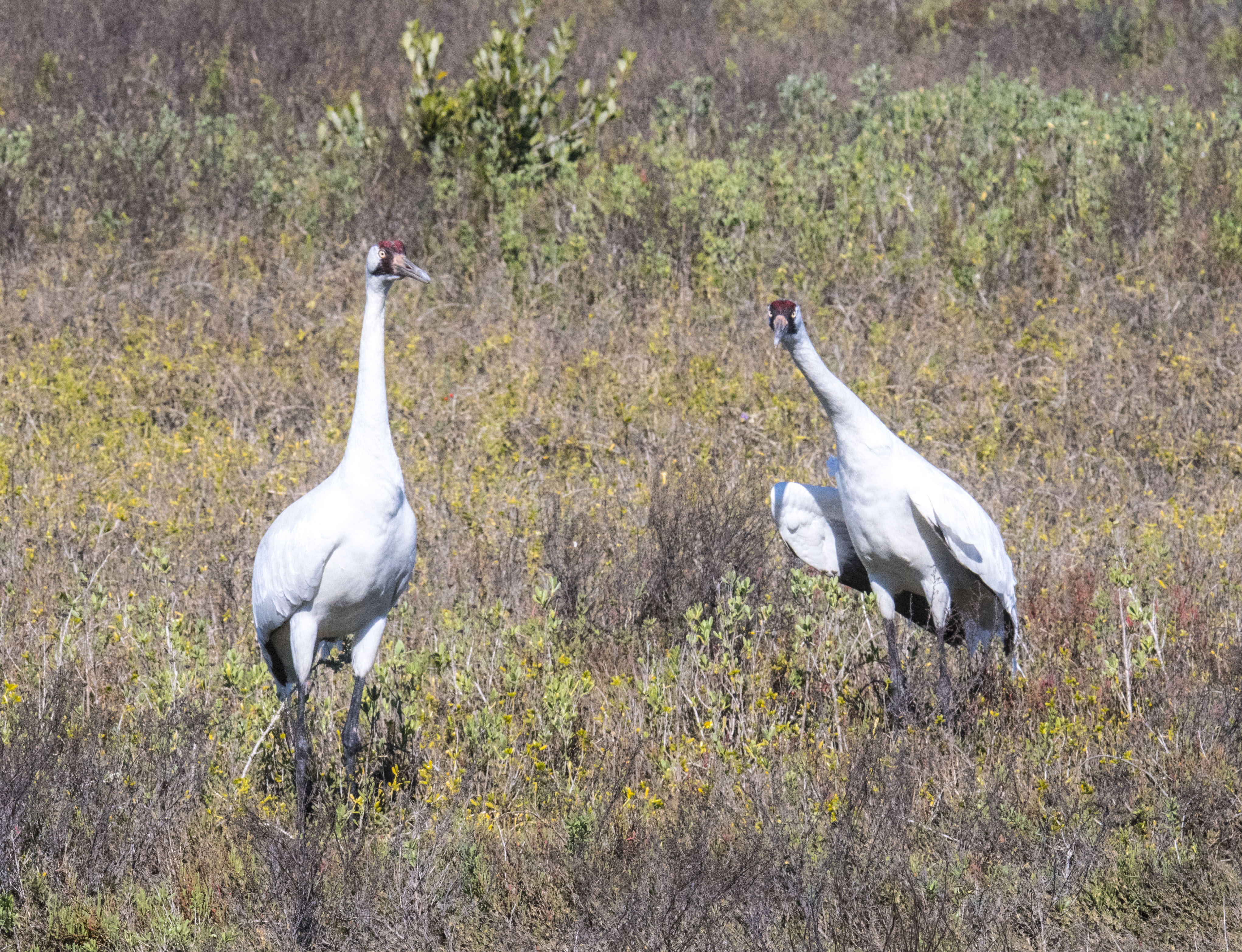
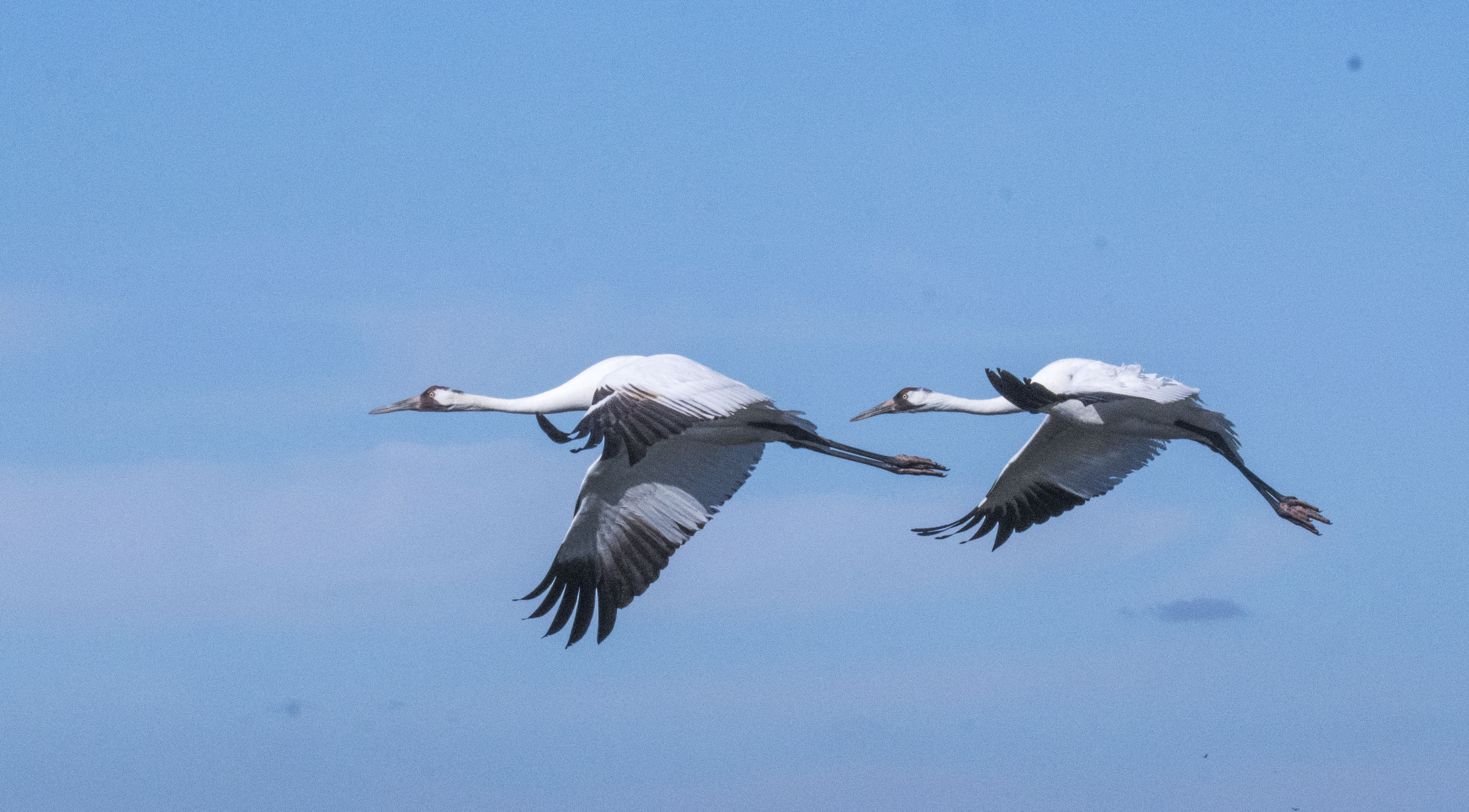
And they continued to walk closer toward the island shore, from one pothole to the next. He moved the boat further along to keep pace with the pair, and again pushed in to anchor the boat against the bank. The birds seemed oblivious to us, although I’m positive they weren’t. I was working the camera with a 150-600 zoom bringing my eye so close I could almost feel them breathe. Suddenly the whoopers stopped and appeared to be communicating. Using this as a clue I eased back the focal length of the zoom, and then, as if on cue, they lifted into the air to circle in front of us before flying away.
We were all in complete awe, including the birder captain. Meanwhile I was glancing through my images and was beyond pleased. We would recall the trip numerous times over the years since, especially during the long months of the pandemic. We even considered heading back with the camper for a month of escape from the winter and the isolation from Covid, a trip that never happened.
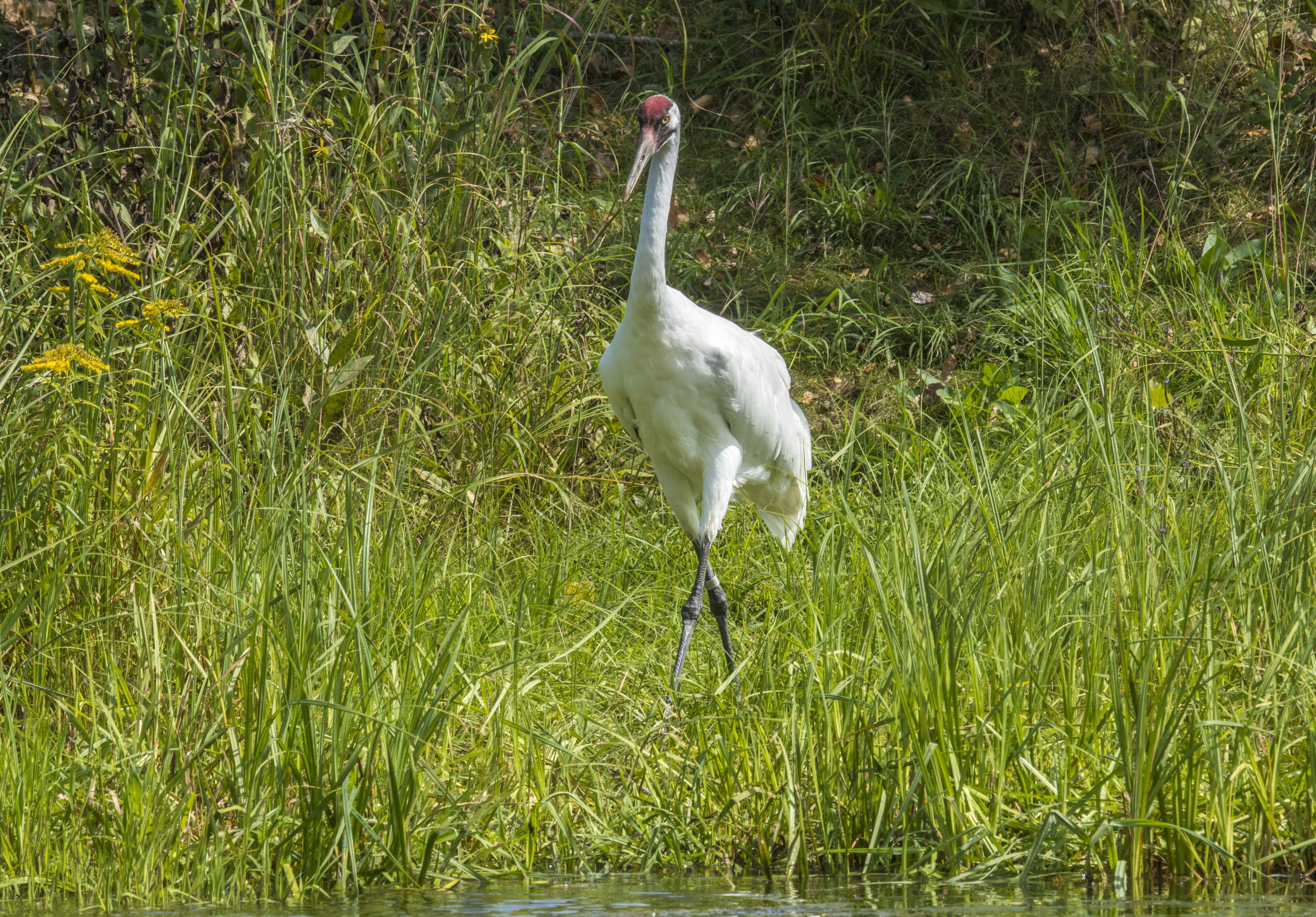
Then this summer while on vacation with an old friend from Dubuque, Michael Muir, we were in Baraboo to primarily pay homage to Aldo Leopold, and decided to visit the International Crane Foundation, which Michael jokingly referred to as a “crane zoo.” A single pair of all 15 international species of cranes are kept there, each in a spacious pen with overhead netting. Their eggs are gathered and transported to a nearby research facility where they’re incubated and hatched, all part of an ongoing in depth research program.
The loop begins with Sandhill Cranes, and leads you along various shaded and comfortable seating areas where maps of each species’ wintering and summering areas exist around the globe along with other pertinent information that included their migration routes. At the very end of the loop was the pair of Whooping Cranes and my day was made. I was able to get a couple of interesting images, so it all worked out beautifully.
So my intermittent chase continues, although I have no clue where my next Whooping Crane adventure may be or lead. I have doubts that I will ever be so close as we were either in Texas or Wisconsin, and am so ever grateful to have been so fortunate. This quest that began nearly 50 years ago on an organic grain farm in the middle of Colorado’s San Luis Valley on the farm of a long ago friend and remains ever so magical. Perhaps even spiritual.
Since Greg’s and my jaunt through his sandy, woodlined gulch the Whooping Crane numbers have increased significantly, although as they told us in Texas that morning on the launch, “One badly placed hurricane could end it all.” The boat captain along with the 15 or so of us aboard silently watched in awe as the pair went airborne to circle around in front of us and fly off into the distance. “A bad hurricane coming through here could mean extinction, so consider yourselves lucky, for this was a special moment we’ve just shared.”
Indeed.
For years the colors have been calming, a twilight easing up from the prairie horizon as a soft azure before gradually melding into a mauvish violet before blending further into various palettes of pastels. I can’t recall seeing such sky views before moving to the prairie in 1992, although perhaps in my more youthful adulthood I was simply not paying attention.
This array comes shortly after sunset, once the sun has eased below the horizon to the west and before true darkness settles in. It is a fleeting display sometimes lasting several minutes, sometimes longer.
When I began paying attention to what was left of the former prairie grasslands, and often on jaunts into the restored acreages with a camera in hand for prairie portraits that hopefully featured ambient colors set before me by the clouds and sunset colors, the light around me would dim much like it might before a concert or play might begin.
Then, like back-lit stage lights, the soft colors would come, azure softly easing into mauve, all in a comfortable array of pastels. Sometimes there would be “players” there, sometimes not. Perhaps the turkey-foot stems of bluestem, or maybe a dragonfly. A dancing coneflower. Maybe a lightly traveled road easing through. Oh, but the colors.

Not long ago a sweet friend named Sophia, a waif of a woman now in her 20s and who has seemingly returned from the Cities to the prairie to work on organic farms, described this heavenly display as a “rainbow” sky. I don’t know how or where Sophia came up with such a beautiful and apt description, although I know of none better nor more descriptive. Seemingly it is a moniker that may have escaped the best of the prairie poets, although admittedly I’m ashamed to think of how many I may have missed.
Sophia is a quiet, studious young woman who observes life around her with grace and with eyes … oh those eyes speaking of wisdom beyond her years … wide open. If she had been alive in the era of Aldo Leopold he might have had reason to have written one of his more memorable quotes with her in mind: “To those devoid of imagination a blank place on the map is a useless waste; to others, the most valuable part.”
That would be Sophia. An essayist with a knack for descriptive phrasing, Leopold would most likely have enjoyed sharing such observations with Sophia seated on the bench of his small farm along the Wisconsin River. I can imagine that, for my imagination knows few bounds. There are few blank places.
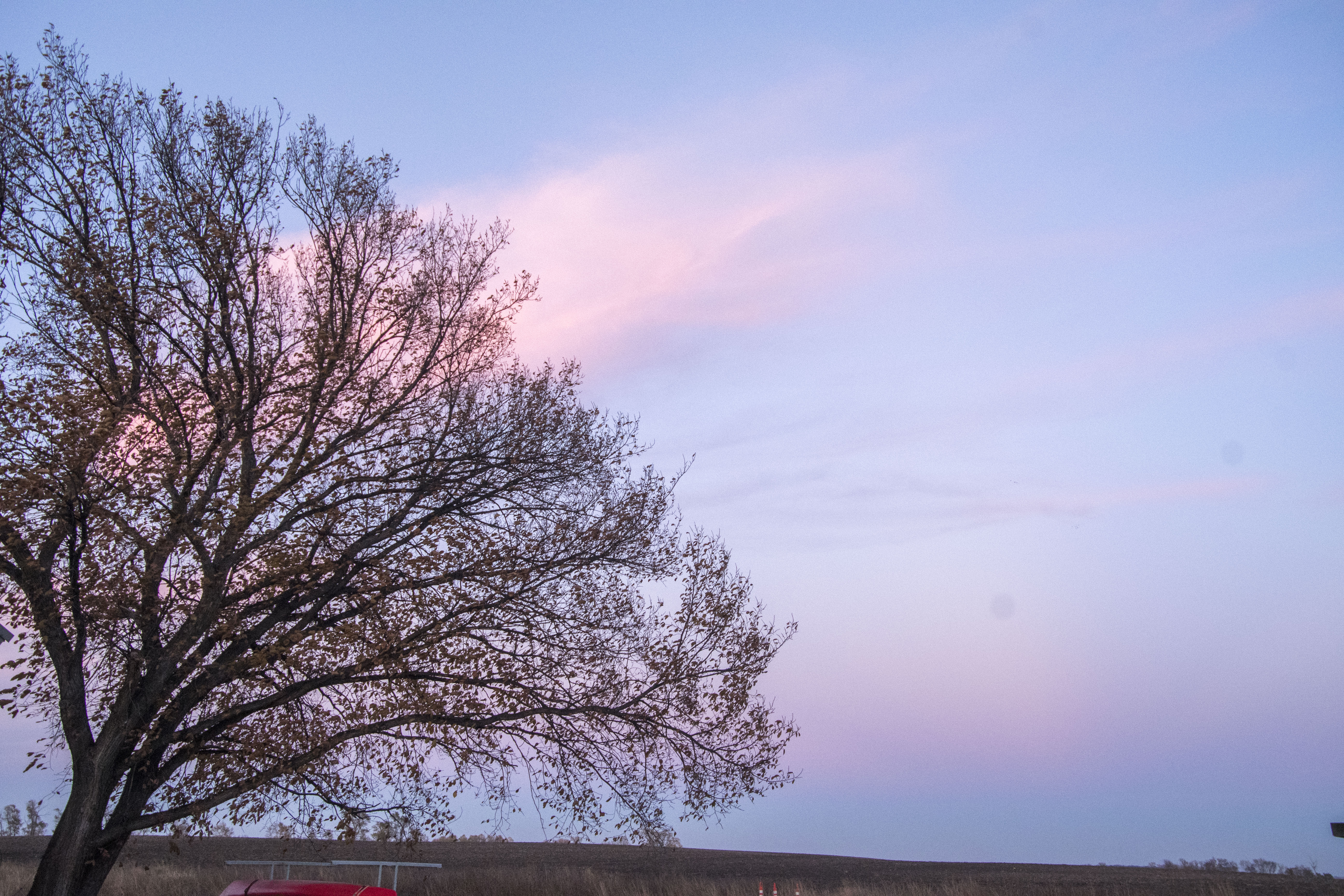
Since moving to the prairie I’ve been fortunate to have had sky views, and in reality why would one not want such vistas. It’s easy to look at this half-football shape of Terra Earth so common to us who live in the lands of these widened skies … Holm’s Horizontal Grandeur … and not think of the heavenly blue with the white schooner clouds floating by easily above. Our afternoons are commonly graced with such offerings. Yet there is more … so much more. I love the “Monet” light of the early mornings and late afternoons, the latter of which sets the stage for the often stunning sunsets with a surround of ambient light and cloud formations that commonly defies definition. Then …
Some of us sometimes smirk and even snicker when we discuss those sunset fanatics living on the coast of Florida who glamour over their late afternoon displays settling over the Gulf. In some towns second story decks and widow walks are constructed to hopefully offer prime views of the sun lowering into darkened waters of a horizoned sea. “Most of those sunsets I’ve seen there,” says a close friend, “are simple reddish sun balls sinking into the sea. Nothing like what we have here. Rarely this vibrant, and our sunsets are rarely dull.”
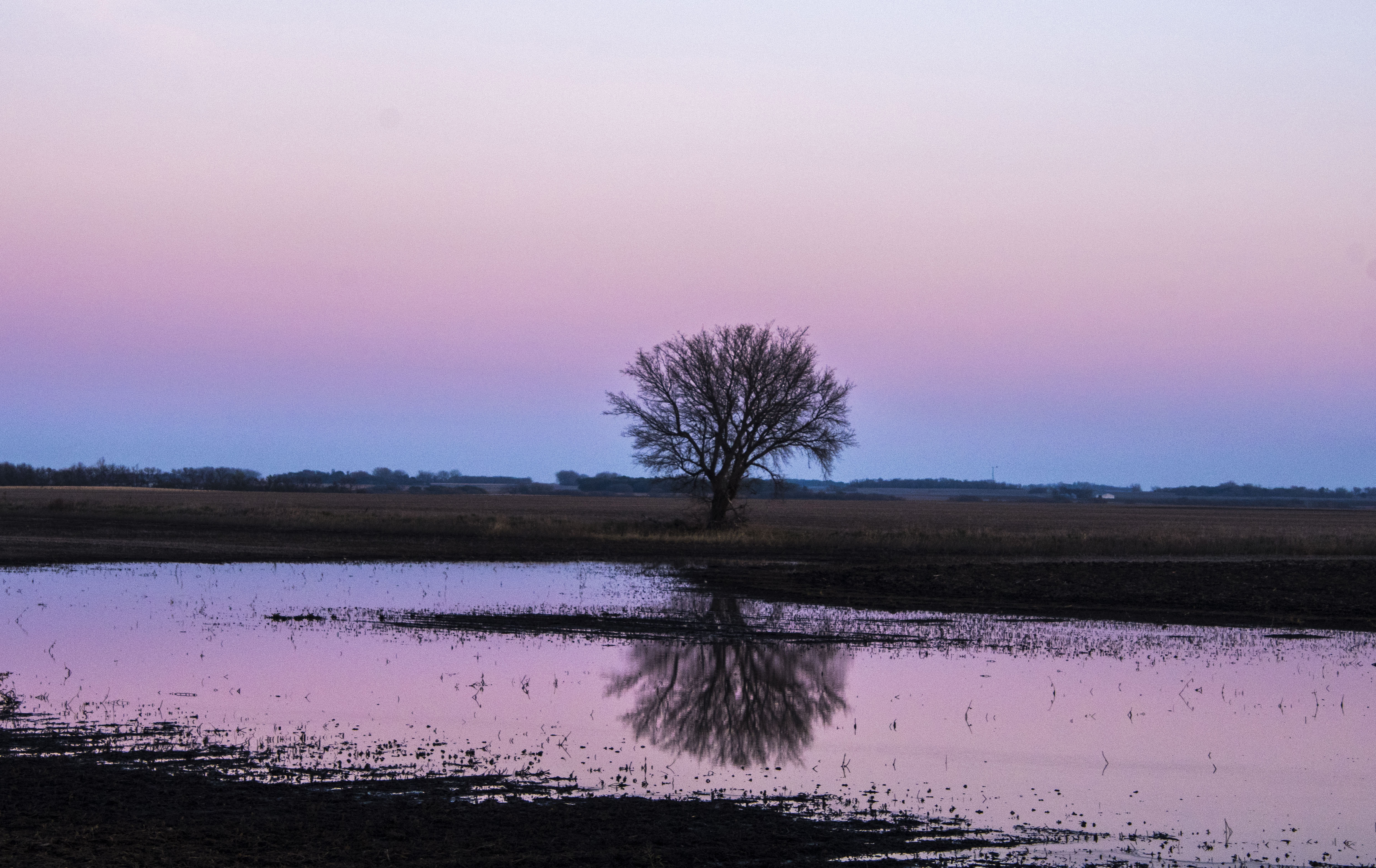
Here we simply walk outside and take in an offered godly presentation. Some of us even jaunt into the grasses and around the lakes and potholes in search of subjects to photograph or paint attempting to capture such light. Shades of Monet. My home prairie here at Listening Stones Farm has granted me many wonderful images through the years. Many are from the sunsets, those featured events which hardly offer the calmness of the rainbow skies that follow to ease us toward complete darkness.
And, yes, rainbow skies have also provided me with some wonderful blessings through the years beyond the calmness of the inner soul. For some, perhaps myself included, “twilight” is a “my light,” and the peace graced upon us by the rainbow skies is just so precious. It’s not unlike a sigh given after a good day … made just before a reading lamp is extinguished for the night.
On the hill above the lake thoughts of Finland came to mind. Wooded, with lush colors of autumn. A fine mix of birch and yellow. That cold, deep and clear water just down the rise and within walking distance. Smoke waffling from a rustic shack with scents of burning wood heating a sauna. Jack Griffin began stoking the fire mid-morning and when he announced to our group as the sun lowered from our hillside sight that the sauna was ready, the first of seven of us old guys stood and pulled off his clothes.
Word hadn’t filtered down to me about the sauna, so I was initially prepared to sit it out. Then he stripped, and shortly I joined the others to trudge buck naked toward Jack’s wood fired sauna shack through a chilly shade. Inside was a mellow, warm heat; heat that would warm both the body and inner soul. All of which made me think of camaraderie, of how truly trusted friends group together.
After towels were shed in the entry room, we wedged in as we best could to allow the heat to envelop our respective bodies and for the sweat beads to break out. Sometimes I’m like that in a sauna, watching and waiting for the sweat beads. Of where they might first appear. Across the chest, or perhaps the forehead. Then eventually the sheen of sweat will clam against the arms, back and legs. All the comfort of that …
Such times make me wish for a sauna here at Listening Stones Farm, and now would be a fine time as we begin facing the approaching winter, now when the trees have shed much of their leaves and the weather has begun to worsen. Now would be a fine time for the birds of varying species are flocking together, sometimes easing through the skies, perching in the trees in the grove, collecting in nearby Big Stone Lake or the Big Stone NWR, or filling their tiny bellies in the nearby stalk fields before leaving en mass for their warmer wintering haunts.

Camaraderie. In mankind and among our feathered friends, where trust and friendship are bonded uniquely.
I can imagine stepping out of a steaming sauna and looking up to see a flock of geese lift from the wetland just over the rise, or to catch Forester Terns, white against a blue sky, migrating past so poetically … seemingly singular, yet with patience you’ll notice their migration is simply not as clustered as other species. Recently as I was finishing cooking dinner, a long clustered string of terns crossed the sky en mass silhouetted against a magical, colorful pastel sunset. I initially cringed, for what a nice image it would have made had my camera not been in the studio with the card inside the reader, and with me standing at my huge kitchen window grasping a spatula.
About an hour before, just down the hill, a huge black bird murmuration cruised across my windshield, stretching from the treetop savanna across the deep ravine to a recently harvested cornfield a quarter miles distant. Yes, I did stop and try to capture an image, yet these mass demonstrations of avian camaraderie are mercurial. There is no sense to make of it, and no choreography. Yet, murmurations are witnessed in pocket spots across the prairie, and yes, even here in my own grove as swarms of birds will lift off a cluster of trees to cross to another section of the grove or to the trees in the south lawn, only to momentarily take flight and head back, or to gather in the adjacent stalk fields.

Some claim them to be Redwing Blackbirds, although most have long since departed. Yet, evidence exists that there are stragglers. Many of them. A first migration perhaps? Like with loons and some other species; that the summer-hatched birds stick around to mature and strengthen their wings before following their long departed parents from the nest to warmer locales thousands of miles away? Murmurations move with poetic beauty, in mass waves that seem to defy logic and safety. But, is there a better visualization of trust? Of camaraderie?
It’s all there, and we’re witness to it.
There’s more. More avian camaraderie. Just down the road apiece on many evenings around dusk you may witness a grouping of Wild Turkeys take roost high in bare-limbed trees. As the evening gives way to darkness the turkeys, one by one, will glide off the rim of the prairie across the highway to brake in mid air to lightly grasp brittle branches of the long dead twin trees in the midst of the fen. I’m amazed at how birds of such bulk and bullish flight can land so delicately, yet they do it, one after another. It is here, high in twin trees, on such brittle branches, where they know they will find safety. Camaraderie?

While they are rare sightings around here, rumors have it that huge clusters of Sandhill Cranes are taking refuge on their autumn migrations east of here in Minnesota and over in Wisconsin. For days I debated on whether to chase them once again but procrastination won again. Much like the spring migration, the cranes will munch dropped grain in adjacent fields before seeking a safer place from predators in the evening. Camaraderie. Safety in numbers. Cranes demonstrate this sense of togetherness all across the globe, and in each of their 15 different species.
I’ve not mentioned the Coots gathering on the nearby lake, or the cormorants clustering on trees and stumps sticking from the Refuge waters. The sparrows. All clustered in camaraderie togetherness, watching out for one another seeking safety in numbers.

Then I think of us old guys back in the sauna on that late October evening. One of the guys had passed out in the intense heat, and the rest of us gathered around to move him from the intense heat and into the cooler dressing room. As some of us covered his legs with towels and tended to him, someone raced inside to fetch a pitcher of water and glass as he slowly regained consciousness and his wits. He eventually recovered enough to gingerly follow a few of the more hearty guys down the rise to the lake where immersion into the cold water revived him enough that he was stable enough to climb back up the hill completely on his own. His wife said he was fine the next day, so all was well.
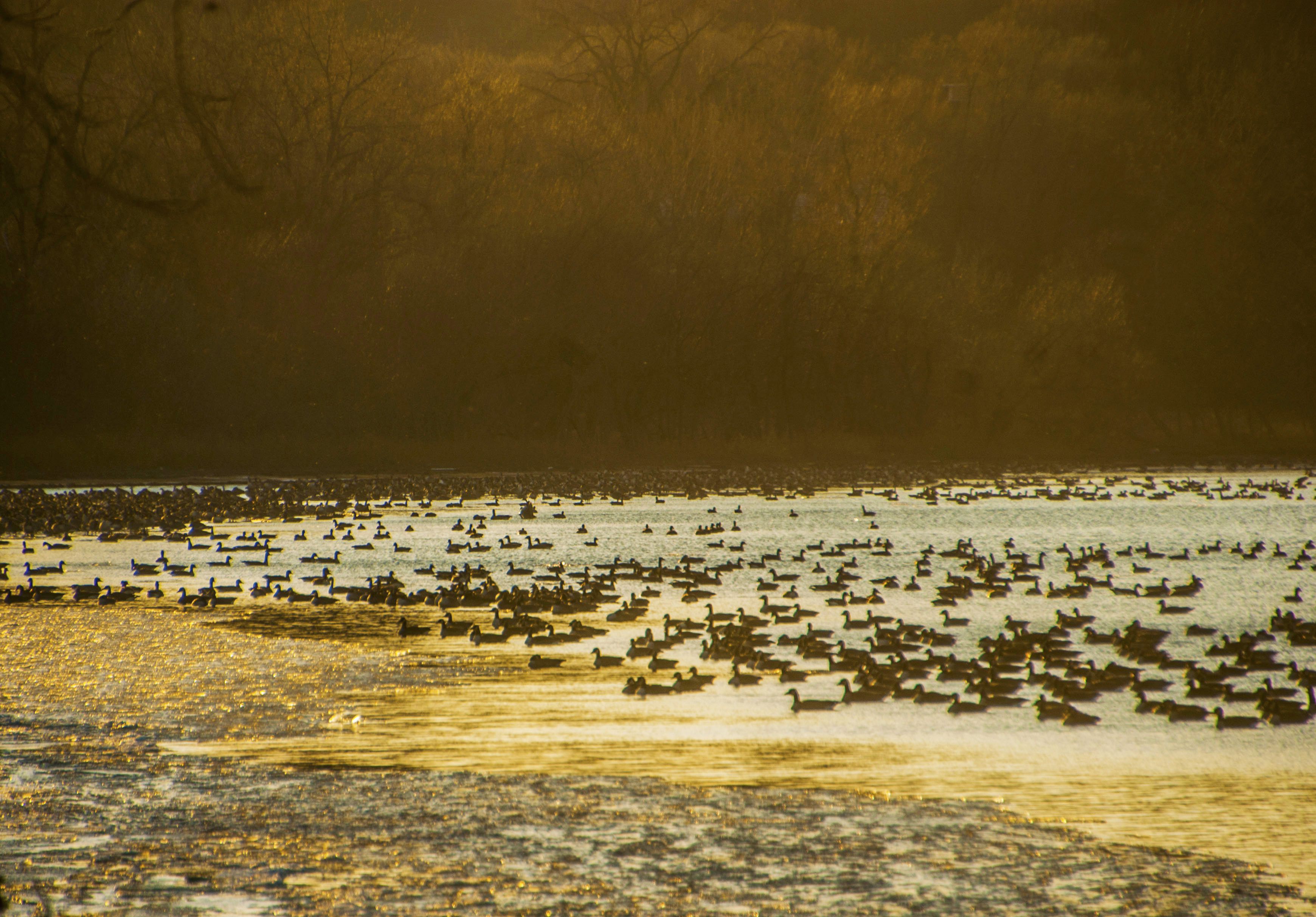
Camaraderie a part of nature, I suspect, and gives so many species including our own an ability to survive in the harshness of our respective lives, giving us a sense trust, sharing and caring. A safety in numbers? I don’t know if I know the answers, although I may acknowledge this: That there is a certain beauty about camaraderie, and when you’re a part of it there is a warmness not unlike that of a fine, wood fired sauna. I find comfort in that.
Stealth seems rather impossible in a burr oak forest no matter how gingerly you may step. Moving as covertly as possible and hearing the first acorn pop caused me to jump as if a firecracker had exploded next to my foot. A split second later, just a few steps further on, that same pop caused a deer to burst through the sumac thicket to dash off into the woods offering me a salutation of hind hooves and white flag of a tail.
This was the second time within a week I had been surprised by spooked deer and once again I couldn’t raise my camera quickly enough to capture an image. Still, I wasn’t there for the deer. I had come for some moments of peace. An inner peace that might soothe the soul.
As naturalist John Muir wrote, “And into the forest I go, to lose my mind and find my soul.”
So, yes, it was quite quiet, and since I’ve been dealing with some unhappy circumstances I wasn’t expecting, this called for some quiet time in nature. Alone. Enveloped in a different kind of quiet. Quiet so silent the rustle of leaves in a prairie breeze, or the burble of a spring creek meandering through a hilly ravine, might be audible. When squawks of singular gulls traversing the lake shore might seem like screams in a horror film. Crunching acorns with an audible pop to frighten a deer hadn’t entered my thoughts.

Finding a quiet refuge was why I sought such a place nearby complete with a couple of conveniently placed picnic tables within a few meters of the waters edge of Big Stone Lake called the Bonanza Scientific and Natural Area. Bonanza includes 80 acres of native oak savanna and glacial till prairie habitat, 50 acres of which includes an oak and basswood forest, and even spring-fed ephemeral trickling streams that meander through rills and ravines. This time of year the timber is graced with bright red sumac pods and leaves that offer colorful twin accents along with the bright yellow basswood poking through the stately limbs of burr oak.
Once seated on the picnic table my vision first settled on the lake itself. Some 26 miles long, it seems somewhat uncommon when the wind isn’t whipping waves that makes canoeing and kayaking perhaps life threatening. On this afternoon the lake was nearly mirror like. In the hour or so I sat there one boat … one … actually chugged up the lake, sputtering so insistently I wondered about the driver and common sense. In seemingly a fraction of a moment a wind can erupt and turn this aqua mirror into a roiling whitecap madness. On this day, though, the body was calm, littered with whitened leaves of autumn floating upon the grayish reflection of cloudy gray sky.
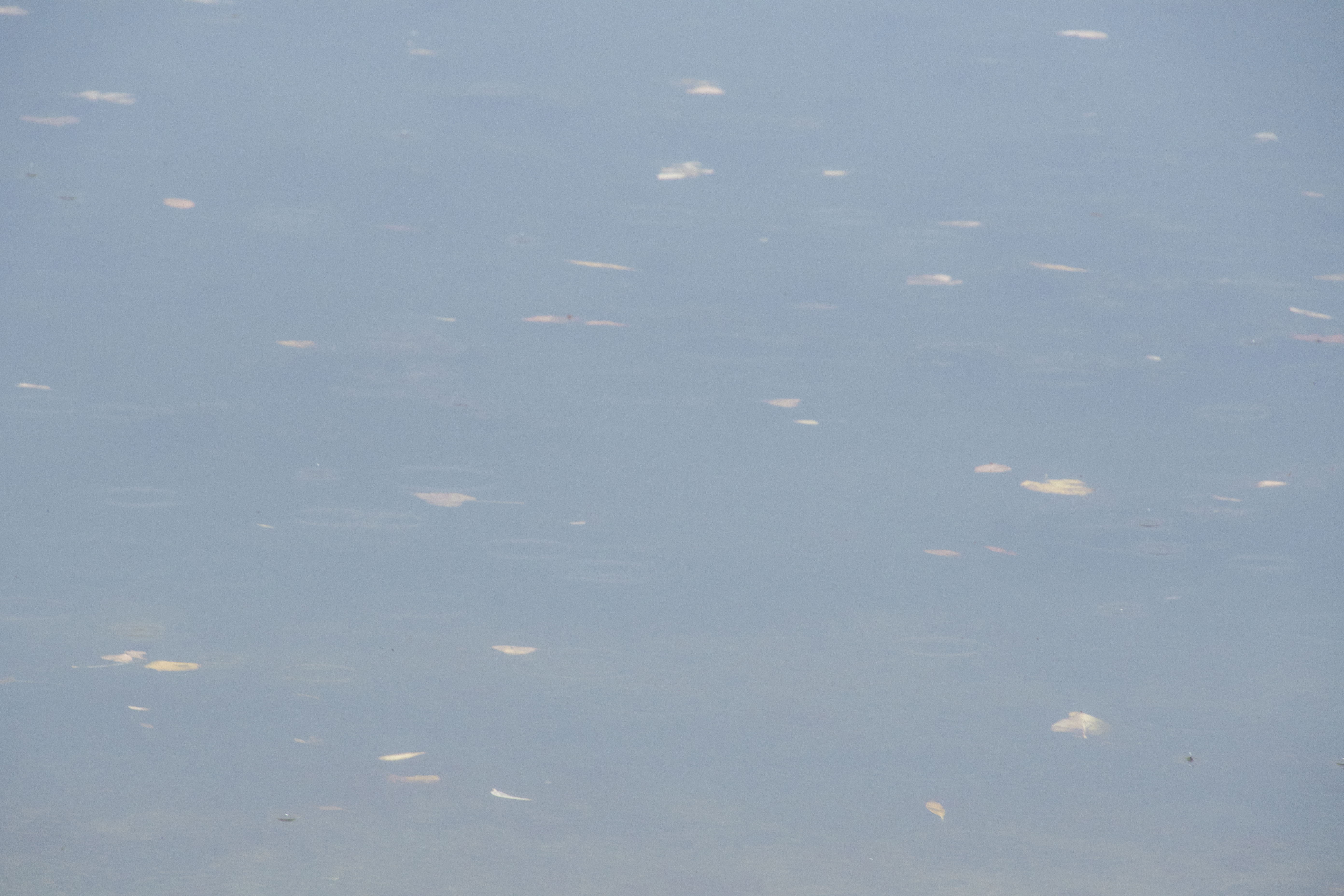
Sometimes you will meet people. Most times you won’t. Sometimes you’ll encounter a piliated woodpecker. Most times you won’t. Sometimes you’ll encounter whitetail deer. Most times you won’t. While I sat a friendly couple from St. Peter happened by, aided by walking poles that seemed out of place without cross country skis and a snowy path. After a brief conversation the couple wandered on toward the Bonanza Education Center and the loop path just beyond it. Once they were gone, I edged off the table to saunter in the opposite direction into the acorn strewn path, popping acorns and seemingly frightening fauna with every step.
Often times I’ll venture off the path to sit against a burr oak. If you sit in the woods long enough, meaning long enough for the creatures of the woodland to no longer consider the invader a necessary evil, the woods will gradually come alive. Or so it seems. Squirrels will begin bouncing on the limbs or scurrying down the bark of a tree, and warblers and other woods-loving birds will slowly allow themselves to be seen. Nervously flitting from limb to limb with eyes constantly searching for imminent danger. Sitting with your back against an oak in the hilly Bonanza timber communing with an awakening woods is what those who teach courses in meditation strive for, and what their students seek.

This time my meditation was included in the saunter over the wooded hills toward a spring fed meandering creek. There is something about that combination … sauntering and meditation, especially if you use the word “with” instead of “and.” I began noticing the intricacies of the landscape, of the woods. Of how the heavenly high leaves of a cottonwood shimmered in a slight, treetop breeze. Of leaf patterns, especially in the sumac, contrasting with the natural herringbone clusters of the staghorn stems. Heavy, timber-defining limbs of oaks stretching outward, sometimes even angling toward the ground nearby. Of leaves floating on the lake surface, itself a muted reflection of the cloudy sky. All things that brought my camera to the eye, though little of artistic greatness. None of which will ever likely be a print, yet provide a collective of meditative imagery.
As I ease along the path … past the sumac, dogwood and oaks, within this tall sanctuary of peacefulness … alongside a presently calm and peaceful lake, I can only hope to capture this essence internally, to hold onto to this peace that calms my soul. I realize the impossibility of holding onto something so rare and dear; that the maddening reality of life will interfere, and that I’ll likely do and say things I will later wish I hadn’t. For in that moment the only interference to my inner peace was the popping of those acorns underfoot.
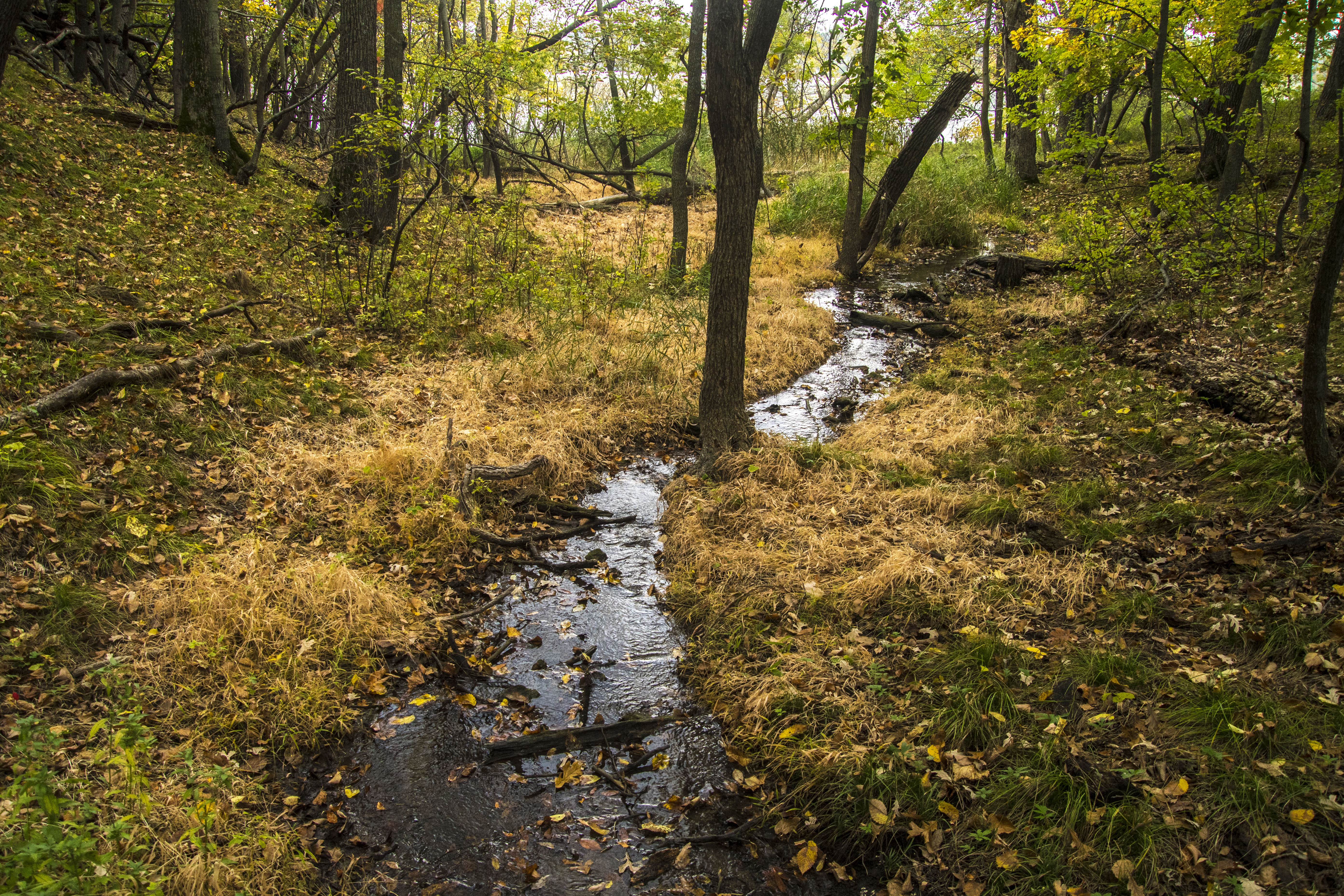
Stealth is nearly impossible in a burr oak forest.
Though it was a warm afternoon, Travis Erickson preferred to straddle his dusty work bench “saddle” and use his sharpened rasp on the reddish pipestone he was perhaps “releasing” one of his eagle effigy pipes for which he is known, some of which are on permanent display at the Smithsonian Institute in Washington, D.C. “It was too muggy inside,” he said of the demonstration pods located inside the Cultural Visitor’s Center at the Pipestone National Monument.
Indeed, it was a fine autumn afternoon outside with a comfortable breeze sweeping across the prairie from the southwest, tickling leaves of burr oak and the few remaining reddish sumac surrounding the trail alongside Pipestone Creek. When a visitor mentioned she couldn’t remember when a small branch off the main creek along the “circle tour” toward the visitor’s center was totally dry, he looked up from his work for a moment and nodded.

“None of the quarries have water in them,” said Erickson, a fourth generation pipemaker of the Sisseton-Wahpeton Nation and whose great grandfather, Moses Crow, settled here around 1927 to continue a tradition that began among various tribes for thousands of years before him. “That is rare. Global warming, we suspect.”
That is perhaps as much a threat to this Native art as the fact that Erickson is among four remaining pipemakers on site, and that apparently his is the last generation with expressed interest. “Most of us are getting up in age, and going down into those quarries and chiseling off slabs, then trying to lift them out in this heat …” He left the rest of his thought trickle off in the breeze.
The quarries are basically oblong, 20-feet deep holes in the ground, hand dug into the prairie to extract the heavy slabs of pipestone that are then cut, shaped intricately by rasp, and eventually bored into effigy pipes or shaped into other traditional items. All works of unique and traditional Native arts, some of which are sold in nearby Native non-profit shops. The “soft” layers of pipestone tilt to the east, and go deep underground, a metamorphic mudstone sandwiched between Sioux quartzite layers. To reach the delicate pipestone, the quartzite must be removed, and all the quarrying is done by hand. Also known as catlinite, the metamorphosed mudstone is typically brownish-red in color — the color of dust covering Erickson’s bench, jeans and hands.

Age and the effects of global warming on this ancient art was an unexpected turn of an otherwise near perfect afternoon. My tour guide and dear friend, Erica Volkir, executive director of Pipestone Area Chamber of Commerce and who served with me on the board of the Southwest Minnesota Arts Council (SMAC), had a free afternoon, and was a generous and well versed hostess. We opted for the “circle tour” over the quarry route, for she said we would pass a couple of quarries on the loop. Living near Ortonville, my eye was geared toward those broad and deep granite quarries we have rather than the relatively small, oblong “holes in the ground.” Indeed, at the one point she pointed out Erickson’s quarry, and I tried to imagine both the lifting out of the heavy slabs of pipestone from the deep holes as well as lugging it over the natural hurdles of granite boulders, tree roots and branches.
Global Warming or not!
The Pipestone National Monument has been on my radar for many years, a target hastened a few years ago while visiting both the Jeffers Petroglyphs and Blue Mounds State Park — all part of the same geological formation scoured free by the last glacier and located “below” the huge glacial moraine known as Buffalo Ridge. The monument has numerous erratics, some of which perhaps were deposited by the glacier from the Ortonville area, stones Volkir said were not indigenous to this geology.
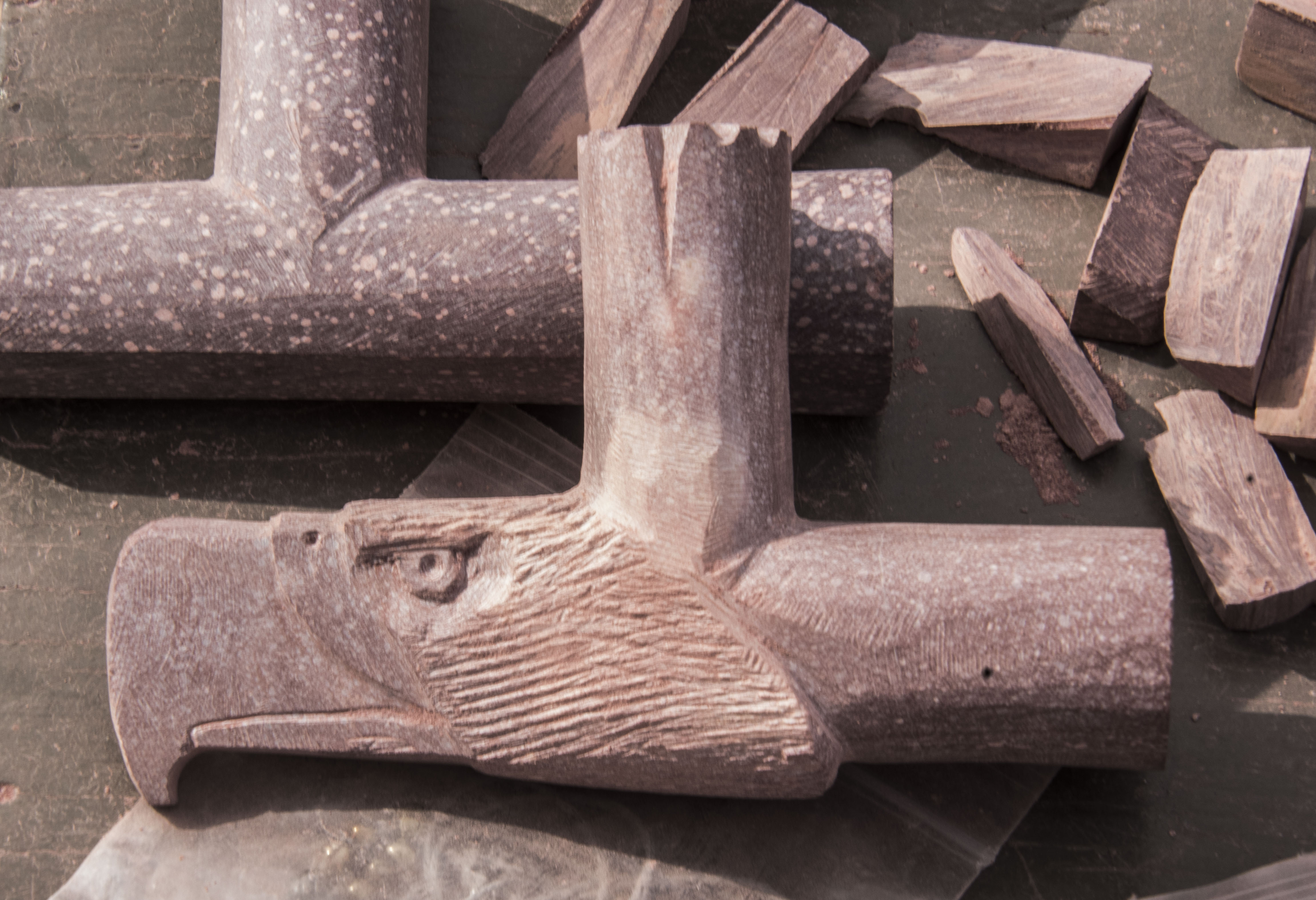
Among the various interesting noteworthy items to grasp on the loop was a notation by cartographer and explorer Joseph Nicollet signed on June 29, 1838, and embedded on a stone face that read: “Toward 1:30 we finally arrive in the valley of the famous red stone which is sought after by all the tribes of the north and northwest for making pipes. When not prevented by war, they came to this place on a yearly pilgrimage to quarry it.”
The same Joseph Nicollet who originally mapped the Minnesota River basin.
Indeed, this is considered a sacred site, as noted on a display plaque written by an elder inside the center that read, “It is sacred because it is the only place you can find the stone. When the creator puts something like that in a specific place, you know there is something sacred about that place and all the animals and plants on it.”

And, yes, the monument feels sacred, magical, and the path meandering through the outcrops and along the creek through an untouched primitive prairie gives you the same sense. Besides the Nicollet inscription chiseled into a slab stone, there is a beautiful waterfall that is as iconic to the site as are the effigy pipes Erickson and others release from the stones. In the midst of our walking tour we scared up three whitetail deer that bounded through the sumac, and watched as a Blue Heron waded in the placid part of Pipestone creek. Sacred fauna?
This was a path of quartzite stairs that wound through the site, up to the prairie and back down to the meandering creek where waters, having once crescendoed over the falls now burbled through a rocky maze with a near hypnotic rhythm. There are oddities along the route, such as a viewing of a natural “oracle” through a wooden peephole and a “leaping” rock, where legend has it that young men hopeful of marriage were expected to leap to a flat-topped pinnacle without disappearing down a deep and steep divide! Volkir knew the route, the legends and the history; all of which made the nearly mile-long saunter quite special.
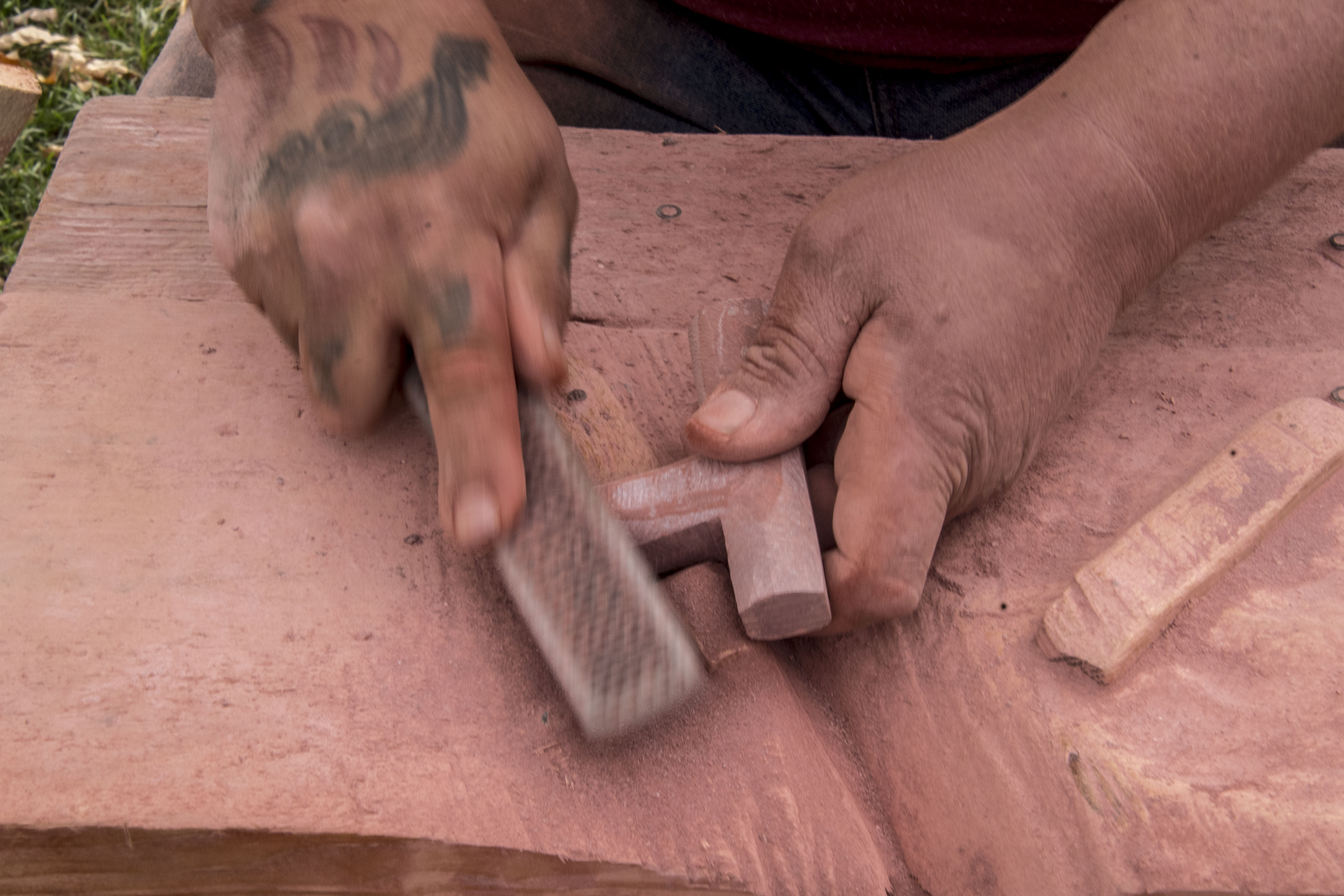
Back near the “epicenter” of the sacred site, Erickson sat alone beneath a shade tree releasing something perhaps unseen even by him, who a few years back was the first Native awarded SMAC’s prestigious Prairie Star Award. We had first met at that presentation. Yet seeing him here, under the tree, scraping a rasp over the red pipestone releasing something sacred from hard yet pliable stone, was indeed a beautiful moment. Not far from here, and perhaps also a sacred site, is one of the last existing sites for the rare White Fringed Prairie Orchid … at Blue Mounds State Park. The plant currently is on an “endangered species” list, and reportedly exists in only two purely virgin prairie sites in the entire state of Minnesota, and is perhaps a potential victim of global warming.
As I watch Erickson, and remember his personal quarry up on the loop, and hear his trepidation about trying to extract and hoist a new slab of this unique metamorphic reddish rock in the continued and deepening heat and humidity, I wonder if I’m watching a wholly different extinction — that of an ancient and traditional art dating thousands of years and now held in aging hands dusted in layers of reddish dust.
 Listening Stones Farm