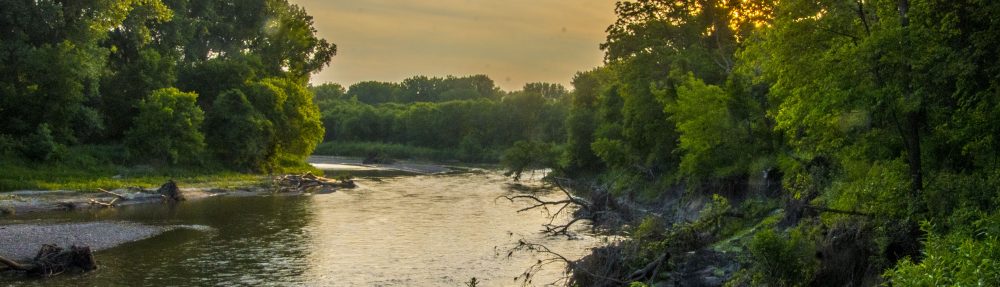
Along the River

Initially I didn’t realize I needed a river. We were simply on a lazy afternoon drive with only one commitment. Yet, there seemed to be a calling, one apparently buried deeply in subconsciousness.

Yet, here we were. For thirty some years my “home river” was the Minnesota, from the headwaters at the foot of Big Stone Lake down to Mankato where it takes a serious bend to head northeasterly toward its confluence with what becomes the Mighty Mississippi. Hundreds of gneiss outcrops line the shores of the upper river, and eagles often man the riverine forestial  corridor. It’s a river that if one was blind to the murky waters it might suggest resemblance to the BWCA.

With a little time to kill before meeting up with an old friend in Granite Falls on Saturday, my car somehow ventured toward some of my old river haunts downriver, specifically to nearby Kinney’s Landing.

There would be no tag with this heron, who flew across the river away from us.

It was auspicious start for the picturesque access where we had launched our canoes so many times over so many of those years was both empty and appeared in disregard. Part of that is undoubtedly due to a summer of high water that prevented meeting up with my old fishing buddies for a bit of walleye and catfish angling. Floating the currents over many of those years to ease behind a dead fall to drop a baited hook has continued even though I have moved from the “upper” portion of the river to the headwaters an hour or so north by auto. Many overnight gravel bar camping trips happened along these waters with huge driftwood bonfires, lines on salt water rods set for all night flathead fishing while I typically did the honors of frying freshly caught catfish served with wine kept chilled in a cooler. Hey, we knew how to live.

Yes, I miss those times.

On this day the arched “church” of a tree way canopy overshadowed ample parking spaces I remembered being full so many times, and the landing itself was mired in a thick cake of mud. An old photo of the access captured on a foggy morning years ago graces my wall, a portrayal both charming and welcoming, a place where you might sit for awhile to take in the surroundings, to sniff the air and listen for feathery songs from the leafy canopy. On an otherwise warm autumn afternoon that would have been prime, such poetry was absent. 
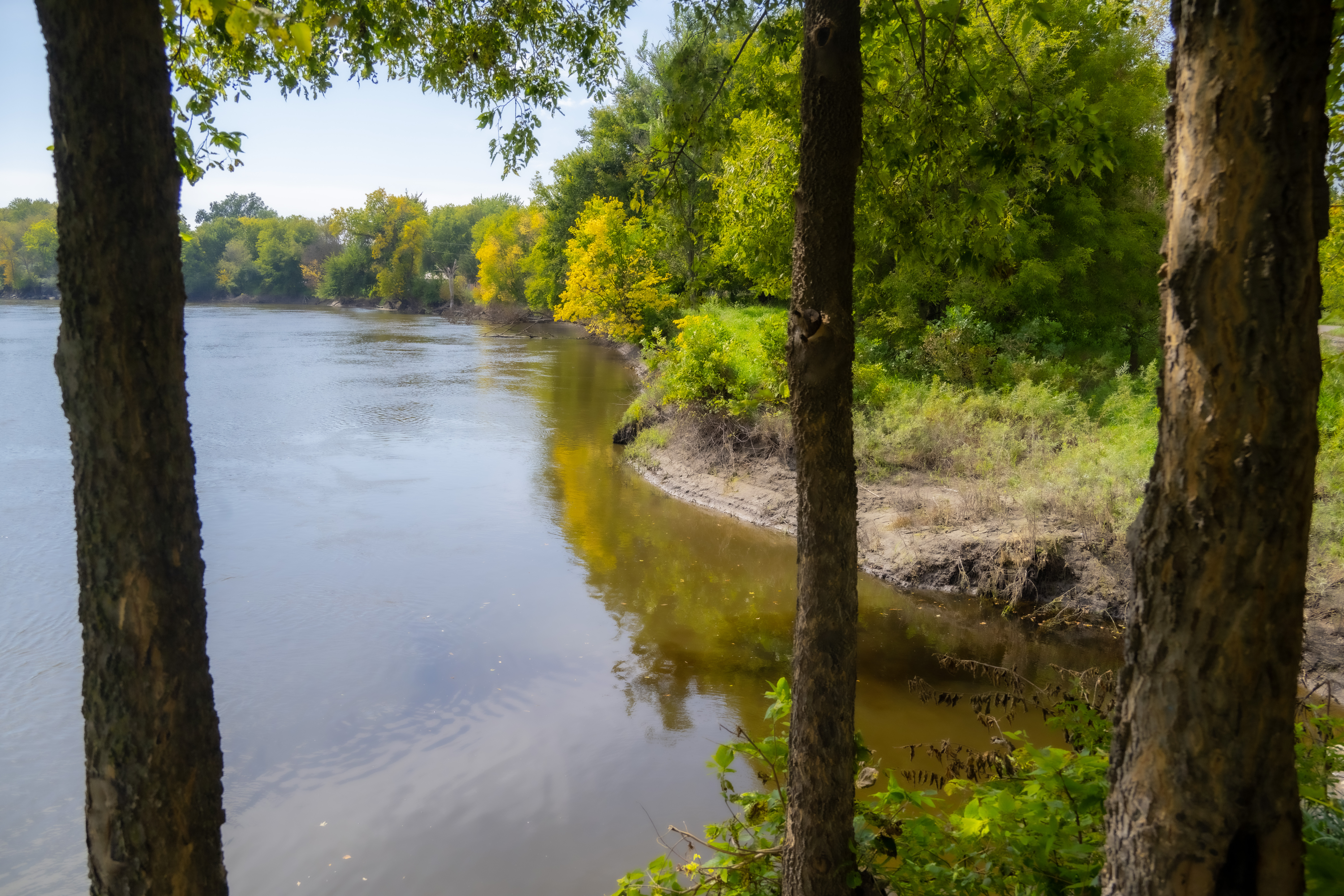
Leaves are just beginning to turn …

After several minutes we left to take a riverine gravel that hugs the “west” bank where we played tag with a Great Blue Heron, that quickly grew tired of us and angled across the river. The heron would basically be the only bird life we would encounter until we were near the headwaters hours later, where distant swallows livened a beautiful sunset. Yet, this was a familiar stretch, a length of river my writer and fishing buddy, Tom Cherveny, and I launched to paddle upstream to the Minnesota Falls Dam, which has since been removed. 

Before the dam removal the river spread almost lake-like to create numerous islands between downtown Granite and the dam. Just below the dam we caught stringers of nice catfish. When we paddled up to the dam from Kinney’s we would ease our way back, dropping lines along the deeper holes on the east bank and below a couple of river islands. Our heron had landed just downriver of the bigger of the two tree-blessed, rocky islands.

Now, at my age, standing on the bank and gazing at the murky waters, many fond memories of those trips came to mind. Moments that brought a smile, and a calmness that has seemed to be missing of late.

We caught the sunset at a bridge just west of Odessa.

Eventually, though, we headed toward Granite where a hydro dam still exists at the apex of this small, old artistic river town. Surprisingly there were no pelicans. Roberta, my dear partner, has expressed wonder about the sudden absence of the birds especially here in our home prairie. “I think we’re going to have a bad winter,” she’ll say. Perhaps, for on some of the prairie wetlands swans that typically have a couple of signets seemed to have hatched a half dozen or more this summer.

And, it seems as if one day our robust skies populated by two oriel species, brown thrashers, a brave catbird, Red Breasted Grosbeaks, umpteen swallows and even starlings became suddenly and eerily quiet. And, empty. Now? Sparrows and a few gold finches, slowly molting into their winter colors, fight squirrels for feeder space.

As we gazed at the rush of waters below the Granite dam she asked, “Are we following the river all the way home?” Well, yes, for you pretty much do, although you’ll cross the Chippewa, the Sag and the Pomme de Terre en route. We live here in a vast river valley, one created by the Glacial River Warren in whose abandoned bed now flows the minuscule Minnesota — by glacial standards. 

Hours later, when we reached the vast expanse of the Refuge, though, we were actually back to the banks of our namesake flowage. By then the sun had lowered in the western sky, and we had ample clouds to create some beautiful ambient post sunset color. What a blessing to behold, from the river view on the edge of Odessa and into the Refuge itself, where we found reflected colorful skies in windless waters. Being along the river was actually an unexpected blessing, although one that was thoroughly needed. At least subconsciously.

A fitting conclusion to a beautiful “river day!”

You see, I fear our times, of our loss of compassion and caring for others. It seems increasingly difficult to know the feelings of old friends who are revealing personal thoughts so different than you believed we collectively shared. So on an afternoon of what I later realized was an internal discord, I came to realize just how much I needed a river. My river. A river so mistreated with siltation and chemical runoff, yet one that has followed the same channel since the breakthrough of Lake Agassiz some 10,000 years ago, waters that just keeps ambling along, sandpapering sad thoughts and sending the chaff off along in the down river currents. 

Then there was a heron, perched in the shallows, a dark crown over its grayish blueness, and there was a flow that sometimes in less flooded times offers ripples through shallows for a sense of calmness. And now on an autumn afternoon the wooded riverine banks are taking on a magical transformation of color, and on this, an evening with troublesome anxieties, when the skies came alive with such an amazing palate of color … these are times when little feels better than the comfort of being along the river.
Doug Pederson’s Legacy of Wood and Art

As a sawmill guy, wood artist Doug Pederson perhaps felt a tinge of financial joy whenever he saw me saunter through the door of his “Doug Cave” studio on the hill above Montevideo. He and other sawmill guys, and even the floor help at those box store lumberyard joints like Menards, might have sighed in relief. I’m the fellow who painstakingly looks through an entire stack of lumber before happily walking out with a board or plank that no one else would ever consider buying, character boards with odd knots and groovy grain, nicks and knocks and varying natural colors.

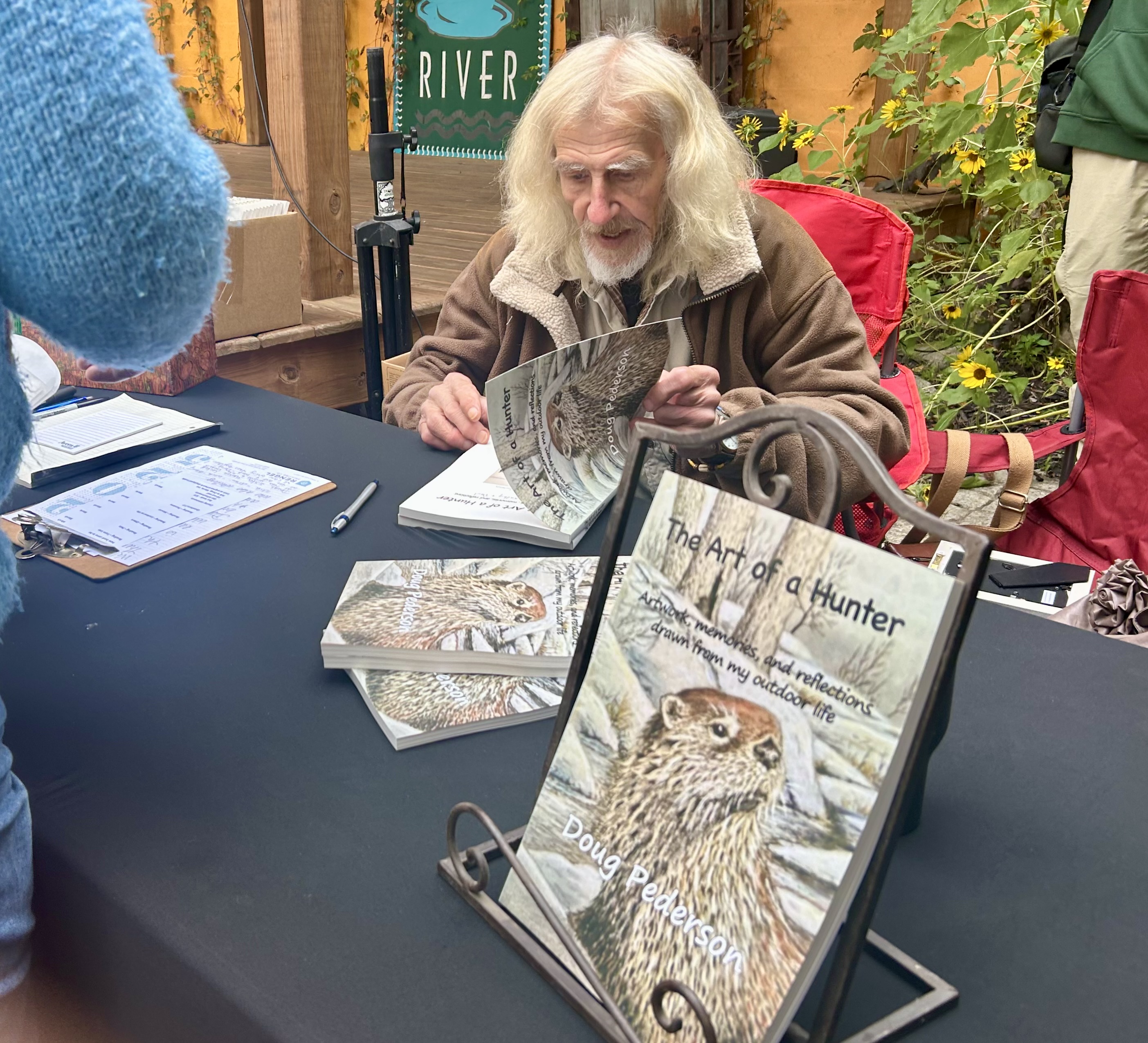
Pederson, who spent his Saturday morning signing copies of his newly published book of wildlife art and written thoughts in the courtyard of Java River, sold me a couple of “orphan” boards, and made at least another one into an incredible painting.

The back story: Several years ago an “ill-advised” couple talked me into building them a dining room table, so I called Don Schuck, a sawmill guy and wood artist up by Paynesville, to ask what he might have available. “Depends on what you want,” he said before suggesting he had some very nice maple that might work. 

With a free day my friend and I drove up and she thoroughly loved the grain and feel of the maple so that was a go. Don, though, had another board set aside knowing I was coming. He’s just that way. Besides having an incredible grain and color, it was also a wood that showed signs of chaffing. “Five bucks, and there isn’t another one like it you’ll find anywhere,” he said with the wiry, and perhaps, knowing smile.

Seated beside a copy of his new book, artist Doug Pederson signs a copy for a friend.

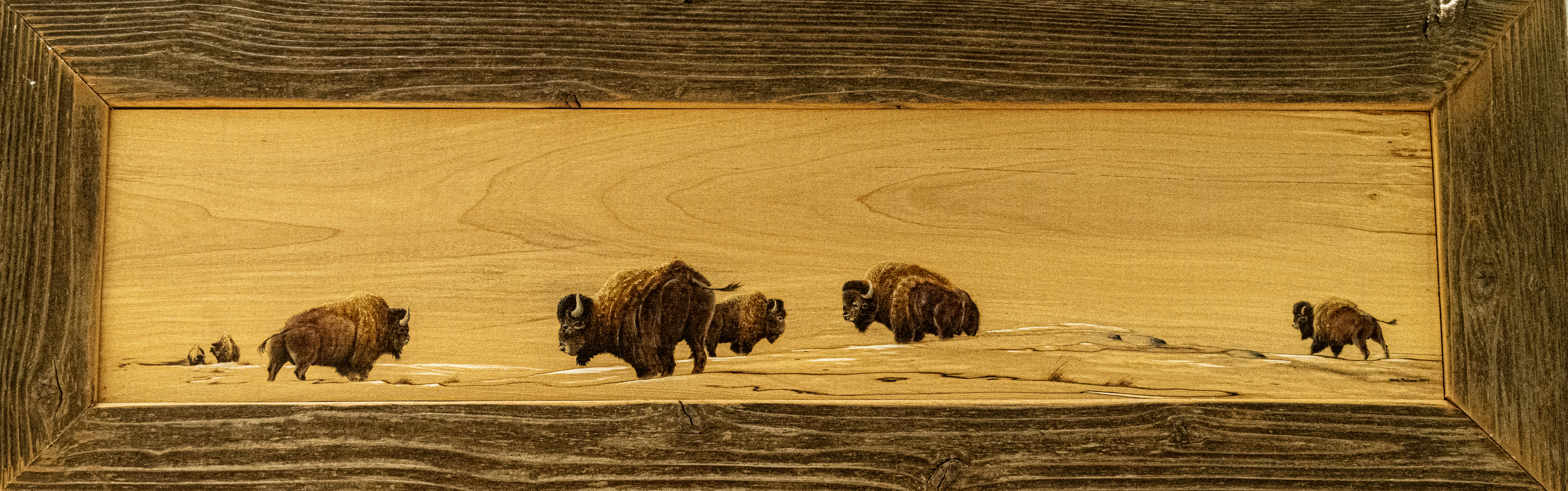
While starting to turn the maple this way and that … a key board with a dark wave resembling a flying crane would become the centerpiece … my orphan board was set aside. While intriguing, it seemed a bit short for doing much with it. One day coming in from the studio I passed this incredible board art painted by Pederson a few years before, a painting of bison where he blended the grain of the wood for the basis of a prairie mound. This is a fine example of his wood art and realistic wildlife paintings. This was a purchase either prior to or during an earlier Upper Minnesota River Arts Meander, an event he participated in from the beginning. 

After passing the bison painting the orphan was quickly placed in the pickup and we were off to Pederson’s studio where I waltzed in and handed the six-foot plank over to him. “I don’t care what you paint, Doug. And there is no deadline. Stick it someplace and see what comes to mind.”

And, I forgot about it. Literally.

Months later, perhaps years later, he called. Said he had finished a painting. That if I didn’t like it he’d come up with something different. After arriving at his studio he presented me with the orphan framed with an incredible scene of common and hooded mergansers frolicking in a rocky rapids, using the grain as waves, all framed by a branched and weathered river sprout fighting against the midstream current. A minnow is in the beak of one of the mergansers. Besides being so realistic and amazingly artistic, it was a Doug Pederson through and through. How could you not be impressed with his artistry, his magic with a brush and his keen respect of the wood grain there as a natural feature within the art?

Years ago I purchased this painting of bison where he used the natural wood grain to accent a prairie mound. His use of grain is a beautiful feature of his paintings.

Oh, there was also the time upon leaving his studio on a chance visit that he had chunks of scrap slabs in a battered cardboard box by the outside door. I picked one that possessed a lot of character, a thick piece of weathered walnut. Paid him a couple of bucks before handing it back with the same request. “Here, Doug. Paint me something.” A couple of months later he called. On the darkened slab of walnut he had painted pair of otters peaking around a debit in the wood he used as a stream-side stump. He had sliced the slab in two, using part for a base to anchor the half with the painting. A cool shimmering of bark with a perfectly placed knot surrounding the base pulled the whole piece together. Pure magic! Amazing artistry!

All of this along with a couple of spalted maple vases with wildlife portrayals came to mind as I pulled into the only parking space available within two and a half blocks on either side of the street for his signing of his newly published book, “The Art of a Hunter.” This was a book signing I couldn’t miss, not after all these years of visiting Doug in his studio, of hanging his paintings, and not after learning earlier this spring when his son, Brook, after he called for me to pick up some walnut lumber he had milled, told me that his father had some serious health issues. Too many years of unmasked breathing of fine wood dust and a horrible smoking habit.

Using mergansers and a wood sprout in the current, all in connection with the natural grain, turned this “orphan” board into a beautiful pies of art.

Despite a very chilly early September morning, the courtyard outside of Java River was standing room only. All the courtyard tables were filled with folks crowding along the side. Out on the sidewalk beyond the wrought iron fence they stood about two deep. Doug’s wife, Marie, who manned the shelves of the local library for years, and his sister, Marcia Neely, took turns reading excerpts as Doug patiently signed book after book as the line of patient friends and fans of his art continued to wade up to his table. He knew us all.

His book is a fine collection of his years of painting the prairie nature he so loves, and his many thoughts of man’s dealing with the creatures of nature, those hunted and those he lovingly observed over a lifetime as a prairie naturalist and artist. Just inside the cover are these words: “I have a hard time using the word nature as if it’s separate from humans. We are one and the same but we humans seem a little lost.”

Marie and Marcia talked about the processes this semi-reclusive artist and woodsman went through, collecting and creating the paintings included in the book before his sister told of how her now elderly and struggling brother suddenly became quite energized once he began writing the text. Perhaps it was a life enhancing experience. With help of a grant from the Southwest Minnesota Arts Council (SMAC), he and his family began curating the art and putting the text together in what became a 116 page collection. 

A walnut slab found in a cardboard box by his studio door was converted into a nice piece, with a pair of otters peeking around a flaw he used as a stump in the painting.

“Some of my best experiences happened while sitting in the woods or on the water with a camera,” he wrote. “I called it ‘catch and release’ hunting.” Something I have been doing for years, and like my long time friend, my outdoorsy-ness is more observing nowadays with my camera rather than actually paddling and fly fishing.

Times move along and there is no longer a “Doug Cave” on the hill just outside of Montevideo. Brook remodeled his and his father’s old wood shop studio a year or so ago to convert it into an Airbnb. For years Brook continued to work the family’s tree trimming business where much of the wood he and his father used for their respective art was cultivated. As times moved along, Brook no longer maintains the old family business. And his father? He just published a book on his life as a naturalist and artist, a fine reflection of his legacy of wood and art.

If interested, copies are $25 apiece and can be purchased at either Java River or by contacting Doug at scrimdp50@gmail.com/.