Guardians

Just before stepping up onto the ledge of a flat outcrop she appeared suddenly from the grasses, nearly flat against the rough and gnarled granite, her beak wide with eyes speaking of the wild. She appeared to hiss at me, although in reality it was more of an anguished squawk. 

Her message was clear, both eloquent and forceful enough to convince us to skirt around the granite outcrop away from her perhaps quite well camouflaged chicks. She was quite adept in her role as a guardian of her small brood.

Yes, her squawk appeared as a hiss by this guardian nighthawk at the Big Stone NWR.

While nighthawks fly with uncommon grace, and dive from great heights with blinding speed, on the ground their short legs and horizontal stance makes them almost immobile. The Cornell Lab of Ornithology notes that nighthawks won’t make a nest and their young are so well camouflaged that they’re nearly impossible to find, and even the adults seem to vanish as soon as they land.

Not this one, for she was a guardian with a goal of protecting her young, and if the experts at Cornell and Audubon are correct, we might not have seen her chicks even if we’d stepped onto the outcrop. In all honestly, this was the first nighthawk I’ve ever seen on the ground. 

Near the nighthawk, an adult eagle rests outside of the next that holds a nearly full grown eaglet.

Researchers have noted that with the overwhelming takeover of grassy lands for commodity crops that much of the former territory of the nighthawks has been destroyed. Nowadays they use areas like the outcrops at Big Stone National Wildlife Refuge (NWR) as nesting sites. So she was an unexpected and welcomed bonus.

We had come to the outcrops in hopes of photographing blooms of the second of two cacti located in the Refuge … brittle prickly pear. Earlier we were incredibly fortunate to capture the blooms of the extremely rare ball cactus, and now the blooms of the brittle. Thankfully they were blooming on the adjacent flat outcrops so we were able to photograph several clumps of the beautiful pale yellowish flowers without disturbing the protective nighthawk.

One of the three osprey chicks kept rising in the nest at Tamerac NWR.

This female nighthawk wasn’t the only guardian of newly welcomed hatched birds of the early summer. Due to our wandering through three different NRW’s in the past week we’ve noticed many different species doing the same, from raptors like bald eagles and ospreys to swans and ducks, pheasants and even sandhill cranes. What a joy to observe such protective care and parenting in nature. And now is a perfect time to be out and about to observe and capture images of all the different species in parenthood.

Not far from the nighthawk, for example, is a huge eagles nest, and the bulky “baby’ seems nearly as large as its nearby, perched parent. We caught both on the nest tree. We also were fortunate to capture an osprey on her nest at Tamarac NWR a couple of days later with three young ones she was protecting in the nest. Thankfully one continued to poke his head above the contour of the edge of the stick-heavy nest. 

An adult sandhill crane is mimicked by its colt in the Sherburne NWR prairie.

While I haven’t had much luck in catching a brood of pheasants, for they’re quite good at sneaking into the roadside grasses before I can focus, watching the swans with their cygnets both at Tamarac and Sherburne NWR, along with some in a nearby wetland, has been a rewarding experience. Unlike the nighthawks, swans, like the sandhill cranes, have made a resurgence in numbers and are no longer consider rare. Same with bald eagles. 

At Sherburne we witnessed sandhill colts in lockstep with their parents, easing through the prairie grasses near the wetlands pecking for edibles. We weren’t considered a threat, it seemed, as they leisurely meandered along. Two parents and the colt.

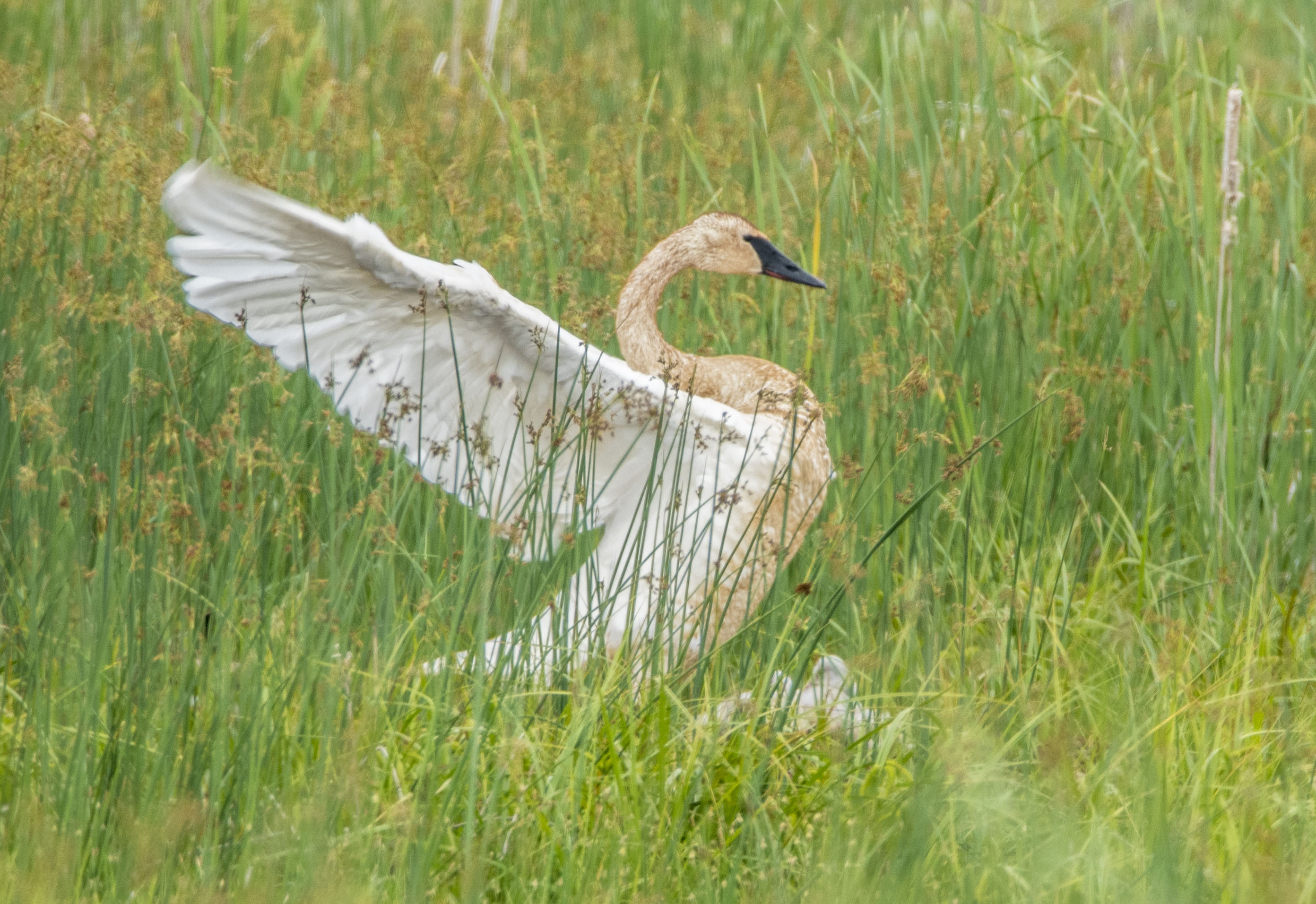
Despite their artistic beauty, guardian swans always seem to keep an eye out for the photographer.

Twice we’ve been stopped on the road by mallard hens as their tiny ducklings waddled slowly behind them across the gravel toward a nearby wetland. And twice I’ve captured wood duck hens with their brood cruising though the shallows of wetlands. So peaceful. So beautiful

Oh, and the swans! There isn’t a way to overlook or ignore the artistic beauty of swans, and when they’re with their cygnets the beauty is in the protective parenting more so  than the arts. Both at Sherburne and Tamarac, male and female couples hung close to their growing brood, easing through the waters with apparent ease, or resting quietly among the cattails and reeds.

Easing through the marshy plants is a female wood duck and her ducklings.

Yes, this has been a wonderful start to the summer watching the recently hatched birds of various species as they move from cracked shells through their quick learning path. Most of these avian guardians are common to us. But the nighthawk? What a wonderful surprise and photographic capture. In a world of devastation due to wars and climate change, watching nature evolve in peace and parental care has been an incredible and welcomed diversion; that the world of nature marches ever onward despite the ills of humanity.
Then JAGs Came Calling

T’was a moment when my memory of JAGs surged forth, and it seemed as if his voice was right there in my ear. James A. Geladis was our Managing Editor at the Dubuque Telegraph-Herald back when I started working at my second daily newspaper in the late 1960s. He had this way of looking down his nose at you, his eyes peering over his half-lens reading glasses in what we in the newsroom called “the stare” as he offered a kindly bit of advice. 

Although you might be subject of a stare from time to time, you never wanted to have JAGs offer the same suggestion a second time. In his defense, JAGs was a fine man and just the type of ME a beginning journalist relished. Creativity was essential, and every once in a while you would see him standing at his big window facing the newsroom before he wiggled a finger in your direction. That meant being summoned, and that perhaps he had an idea. 

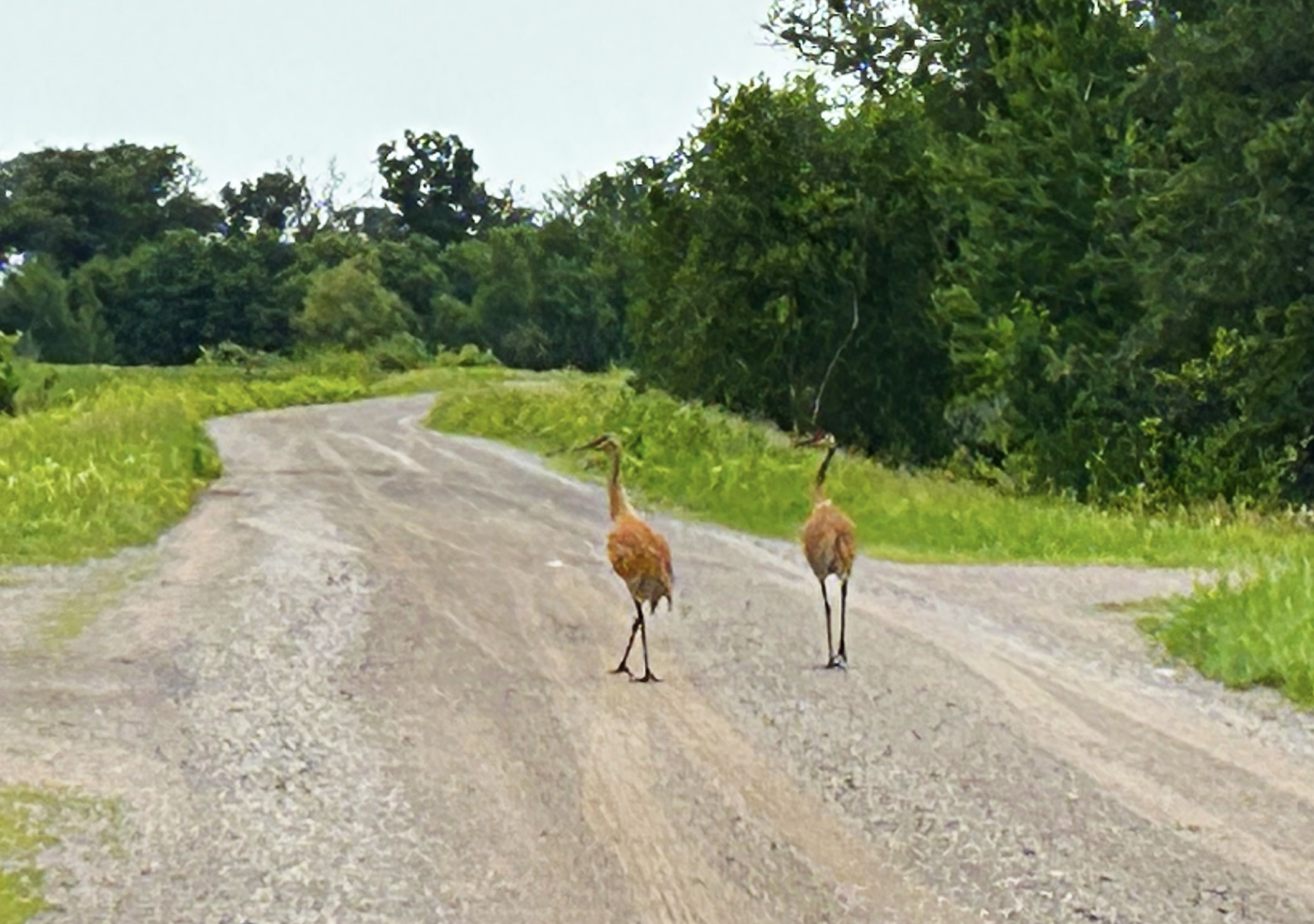
Moments after my battery died, two tall and gangly sandhill cranes emerged from the grasses to amble down the road in front of us.

Over my two years I got more than a few summons. “What do you think of us starting a youth’s page?” he asked. Calls were made to area high school art and English teachers and a full newspaper page featuring young contributors was created. Or, “We have a lot of very lively elderly people in town, and in the hills and valleys around here,” he said another time. Shortly thereafter I was writing a column we called Lively Elders. Fun stuff. Now I’d be considered a candidate! Although I didn’t get many “stares,” I certainly remember the first one.

En route to a fire out in the distant hills of the Driftless northwest of town right around sunset, I crested one of the hills coming up from a valley, which was common in the Driftless, when I passed by a farmer on a tractor silhouetted by a huge red sun ball. I nearly stopped before remembering the assignment and hurried on toward the fire. Yet, I couldn’t get that silhouette out of my mind, and some 50 years later I can still visually see it. Missed images are sometimes like that.

A pair of sandhill cranes and their youngster forage through the Refuge.

By the time I arrived at the scene the fire was already doused, so I did some interviews of fire chiefs and grabbed a few images and headed back to Dubuque in the dark. After developing the film and making the prints, I wrote a short story that would basically be a cutline. The next afternoon I made a mistake of recounting the passing of the farmer and the red ball sunset. JAGs lowered his chin, looked over those half-frame glasses and said, “Never ever pass up a picture!” 

I’ve used his advice ever since, and have had a decent history of giving my photo editors some nice feature images over the years, and twice came in second in the annual regional “clip art” contests of the NPPA while working at the Denver Post. 

Besides the sandhill cranes, picturesque swans offer many photographic opportunities.

Now in the present; we were at the Sherburne National Wildlife Refuge Monday morning where I had just finished capturing an image of a pair of swan pens (the technical name for a female swan) and their cygnets easing through the cattails when my camera battery suddenly expired. My camera was dead. No problem, for I’ve always carried a charged spare in my camera bag. Except this time. I felt inside all the compartments and even turned the bag upside down to give it a good shake. Yes, I had faithfully charged the batteries but somehow failed to place them into the bag! And good ol’ JAGs came calling!

We were only about halfway through the Refuge motor trail when I realized I was done for the day. Then, as I dejectedly started the car, a pair of sandhill cranes suddenly popped out of the grass not 15 feet away to waddle down the graveled loop road in front of us like a pair of tall, gangly drunken chickens. They would not yield the right-of-way, and waddled on for about 60 meters before eventually veering off the road and into the grasses. I was being dissed by sandhill cranes! 

Despite JAG and his imagined nagging and stare, I did what any sane fellow would do in the 2020s … picking up my cell phone and trying to make do. It was a sad “make do” by the way, for I didn’t opt for one of those incredible cell phones destined to make cameras obsolete. 

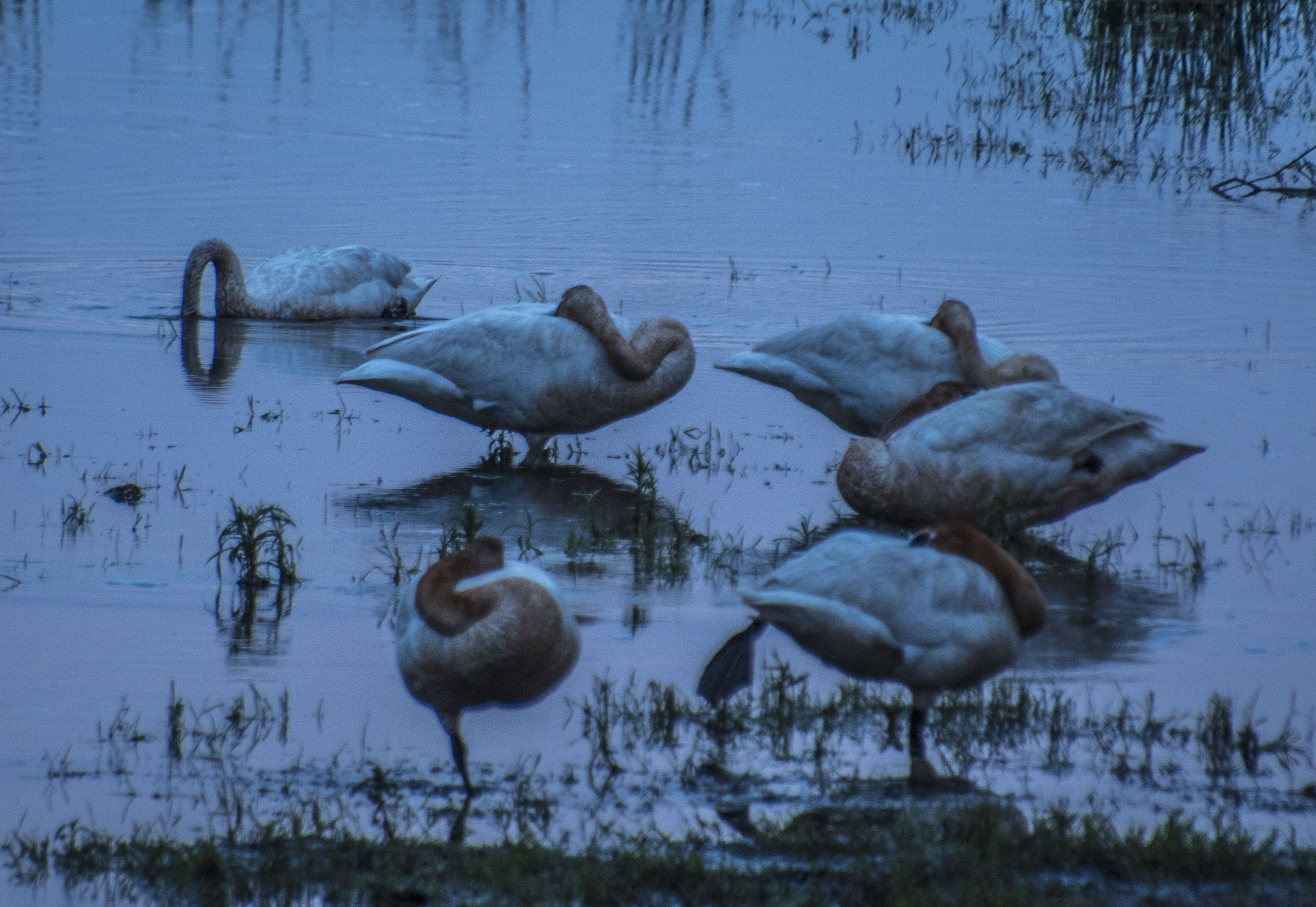
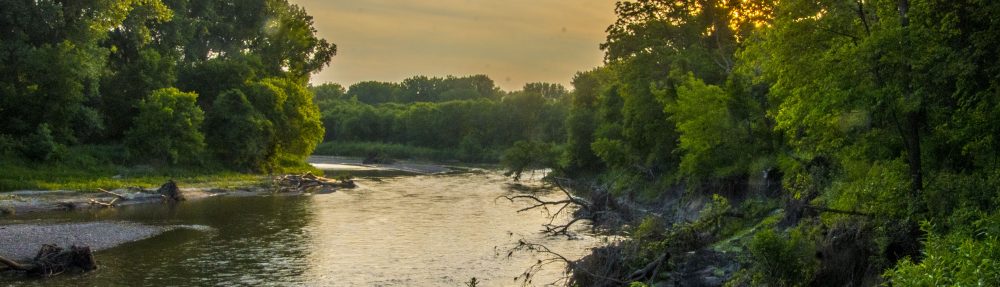
We pulled into the Refuge the evening before where this “blue hour” image was captured. What a beautiful evening to be wandering through the Refuge!

To make matters even more dire, we continued to pass picturesque swans, a pair of bald eagles high in a deadwood moored tree in the swamp (that was reflected in perfectly stilled waters) and even more sandhill cranes on a rise just around a distant bend. Not only did we have a beautiful hue in the stilled waters, Sherburne is known for having both ample swans and sandhill cranes, and both were why we had rented a nearby motel room the night before. 

Indeed, my sunset images from the night before were cool, and so were all the flowers we captured in bloom. A couple of songbirds were caught, too, including a warbler. Our photo foray up to that point had been excellent, even as the sun was setting the night before. We even had a blue light image of a pod of sleeping yearling swans! And, if there was time, we had designs to venture further north to see if we could capture some yellow and showey ladyslippers. 

All of which was for naught. 

A pod of yearling swans asleep in the “blue hour” after the sunset.

Once home I found my two fully charged batteries on the desk of my studio office Guess where they are now? One is in the camera, one is the bag, and my third is on the charger! 

And JAGs had thankfully eased back into his office chair with his half smile, fully confident that this would never happen again. While it was darned good to hear from the old editor after all these years, and to note that his advice was spot on, my mind was cluttered just a bit with all those missed images back at Sherburne. I can only hope I won’t be as haunted of the misses as I’ve been through the years of missing that red ball sunset! 

Balls on the Outcrops

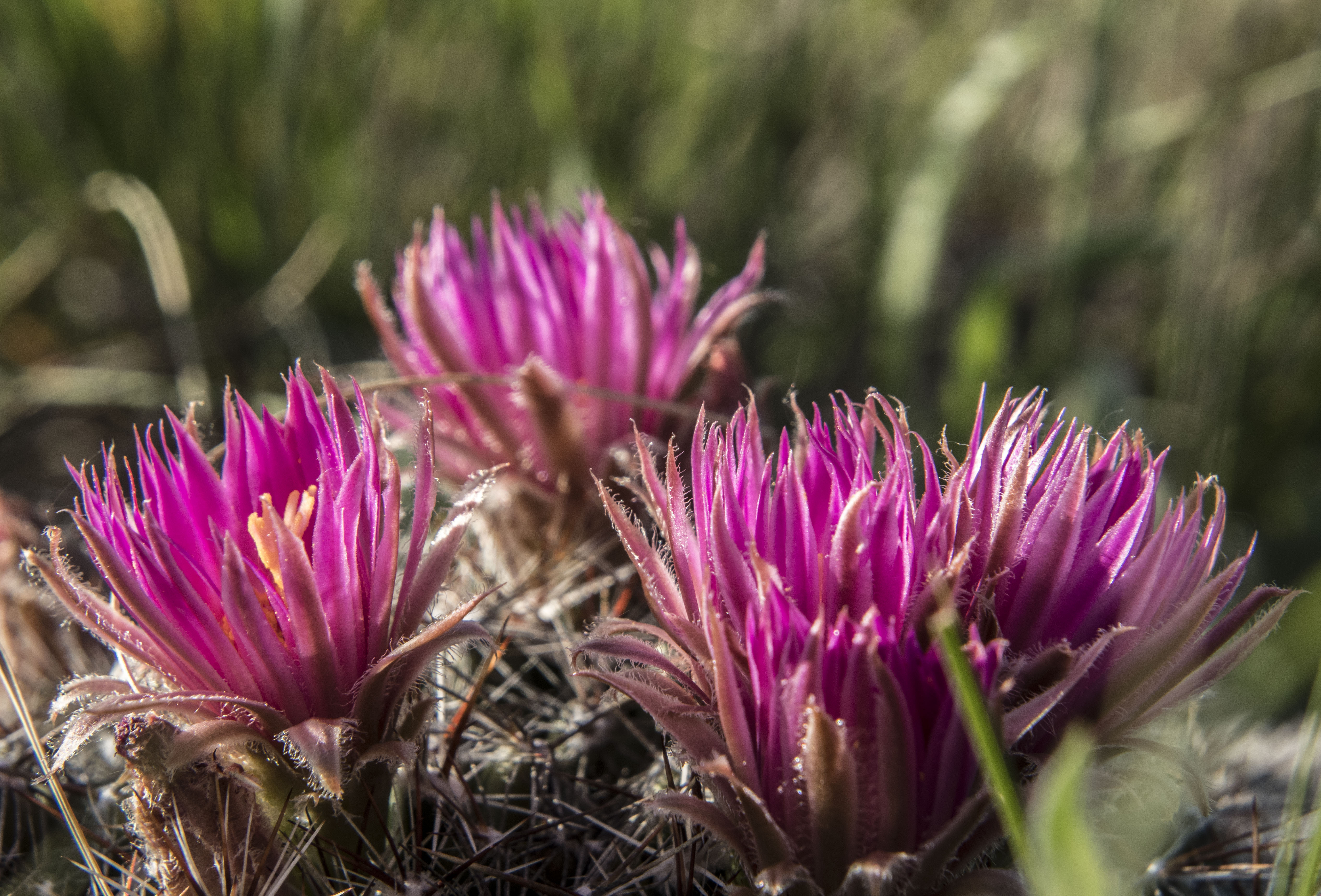
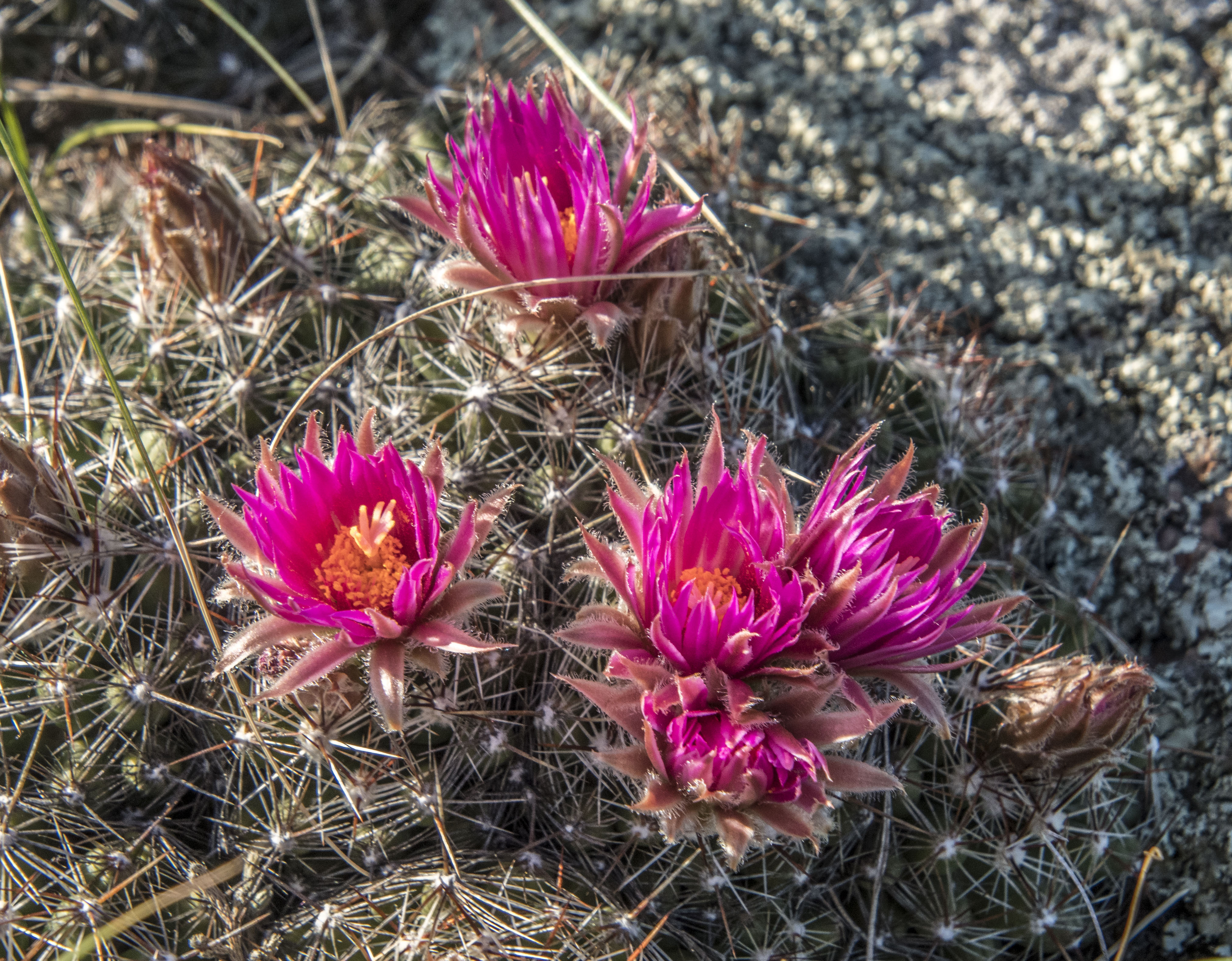
Ball cactus (Escobaria vivipara) are not only extremely rare, they’re also apparently rather shy in showing off their magnificent stark red and yellow blossoms. Catching them in their full glory has been a personal quest come June for several years, so imagine both my surprise and delight the other day when we climbed onto one of the granite outcrop flats at Big Stone National Wildlife Refuge and found not one, but literally dozens in full bloom.

After several moments of looking for different angles and light possibilities, my eye caught a minute bright red spot on a neighboring granite flat about 20 meters away that was perhaps surrounded by some of the other rare plants of this ancient biome to grasp my interest. How fortune seemed to have blessed me in this particular moment, for it was there I found an almost perfect image of the blooms. 

This trio of ball cactus blooms caught my eye from a distant outcrop.

We are actually quite blessed to have such a wonderful and beautiful resource near us, from the outcrops to increasingly rare birds like bob-o-links and nighthawks, and to all the water-friendly species who find this patch of ancient prairie, stocked with bedrock outcrops, such a haven. Almost every trip around the circular drive yields nice imagery for me to photograph, and I seem to be drawn here several times a week and usually come home with what in the old film days would be three or four rolls of film. Finding the balls in bloom, though, just about tops the list.

About the size of half a tennis ball, with long protective spikes, the small cacti seem to cluster in packs in a unique ecosystem that has somehow survived several thousands of years since the dam broke on glacial Lake Agassiz to form the glacial River Warren, which scoured the valley and exposed some of the oldest rock in the world bringing along a small collection of quite rare plants. Those with knowledge say that the ball cacti are found only in a small two to three mile area, and only in the crevices and kinks of the original granite bedrock exposed by the ancient river.

Small clusters were found across the flats of the outcrops to add incredible beauty to the hard granite outcrops.

Although small, the cacti might be huge for the security of these sacred and holistic outcrops between the Refuge and the town of Ortonville, for their vulnerability may be the only hope remaining to prevent the gravel mining company that purchased this area from creating a new, deep gravel pit mining operation that will basically destroy a rare and beautiful relic of glacial history. It was while writing stories on what was known as the Strata Conflict about a dozen years ago that a local historian, Babou Don Felton, pointed out my first viewing of a small cluster of ball cactus on a hike across the acreage. At the time I doubt that any of us realized just how powerful that rare little cacti might be.

Nor did I realize back then the beauty of their blooms, and wouldn’t until a few years ago when State Park Manager Terri Dinesen published her photograph of one of the blooms from the refuge on a social media site. Since then I’ve been hooked, so much so that when Madison Eklund, the first kayaker and first solo woman to paddle the Canoeing with the Cree trip to the Hudson Bay, was resting here for a few days, we made trips in hopes of seeing the blossoms. We were “skunked.”

Since several dozen trips have been made to the Refuge in search of the blooms, a quest that started a few days after Terri made her post. Yet, I had northing. After several attempts, sometimes making three trips in a day to the Refuge hoping for the just the right circumstances of light and heat or whatever, I sent her samples of my images in frustration to which she suggested I might have been too late. That the blooms were already gone.

According to the Center for Plant Conservation, ball cactus (one of three native cacti in Minnesota) was probably found more frequently and on a broader basis on drier, thinly vegetated prairie habitat, but it was eventually reduced to only undisturbed granite surfaces like found just south of Ortonville and into the refuge. 

According to its website, “Granite and quartzite outcrops in Minnesota are home to ephemeral pool habitats – shallow depressions where water can pool for a few weeks each year. These accumulate biotic matter and host several plants rare to the state, including Bacopa rotundifolia and Heteranthera limosa (both state Threatened). With only one ball cactus population left in Minnesota, it is hard to generalize about its preferred local habitat, but it appears to favor moss shields that occupy some of the same kinds of shallow depressions that form ephemeral pools. The plants also hug cracks in the granite and may even anchor an accumulation of duff and moss material around them as prairie winds blow over the rocks.”

A few days after catching the height of the bloom, the party ended. It was delightful while it lasted!

The Center applied for and received a grant to collect seeds from a nearby quarry site and since has received germination rates to over 70%. “As a result, we will eventually be planting roughly 2000 cacti seedlings across the three recipient sites over a several year period,” read the report.

So there may be hope for a future for this rare species. 

For me, finding the balls in their full glory was a dream come true. Interestingly, a day or so ago we stopped back and wandered onto the flat to find that the outcrop nearly reminded me of what my apartments looked like a day or so after a party, when the balloons have withered and the festivity’s merely a memory. Those blooms were now but a memory, and had clasped tightly together to appear much like they had in the images I’d sent to Terri Dinesen a few years ago. Yet, we were there for the fun, the glory and the beauty. How can one be disappointed?

Adding a Hint of Freedom

Two more plants awaited my efforts to clear a space and cut through the tangle of a grassy  jungle when I had this wonder — do plants have a sense of freedom upon being pulled from a plastic flat and being placed into the soothing wide world of life sustaining soil?

Prior to that thought most of my focus was on figuring out how to space the select native prairie plants, how to plant them for height and color, then to do the honors for giving them the freedom of what hopefully will be a long and blooming life!

This, of course, is our hope with three new pollinator plots, plus an acre of a prairie grasses and forbs to be planted in the former horse pasture and orchard!

This has been an interesting and adventurous year for us here at Listening Stones. A few weeks ago I felt a calling to purchase six trees and plant all but one in the “south lawn.” Years ago I stopped mowing that space despite the beauty. That was the same year I also stopped mowing the planned “orchard” since deer had pretty much killed the young trees. Besides spending nearly a half day of mowing in areas where there was little use, there was a fear of what effect all that mowing had on global climate change. 

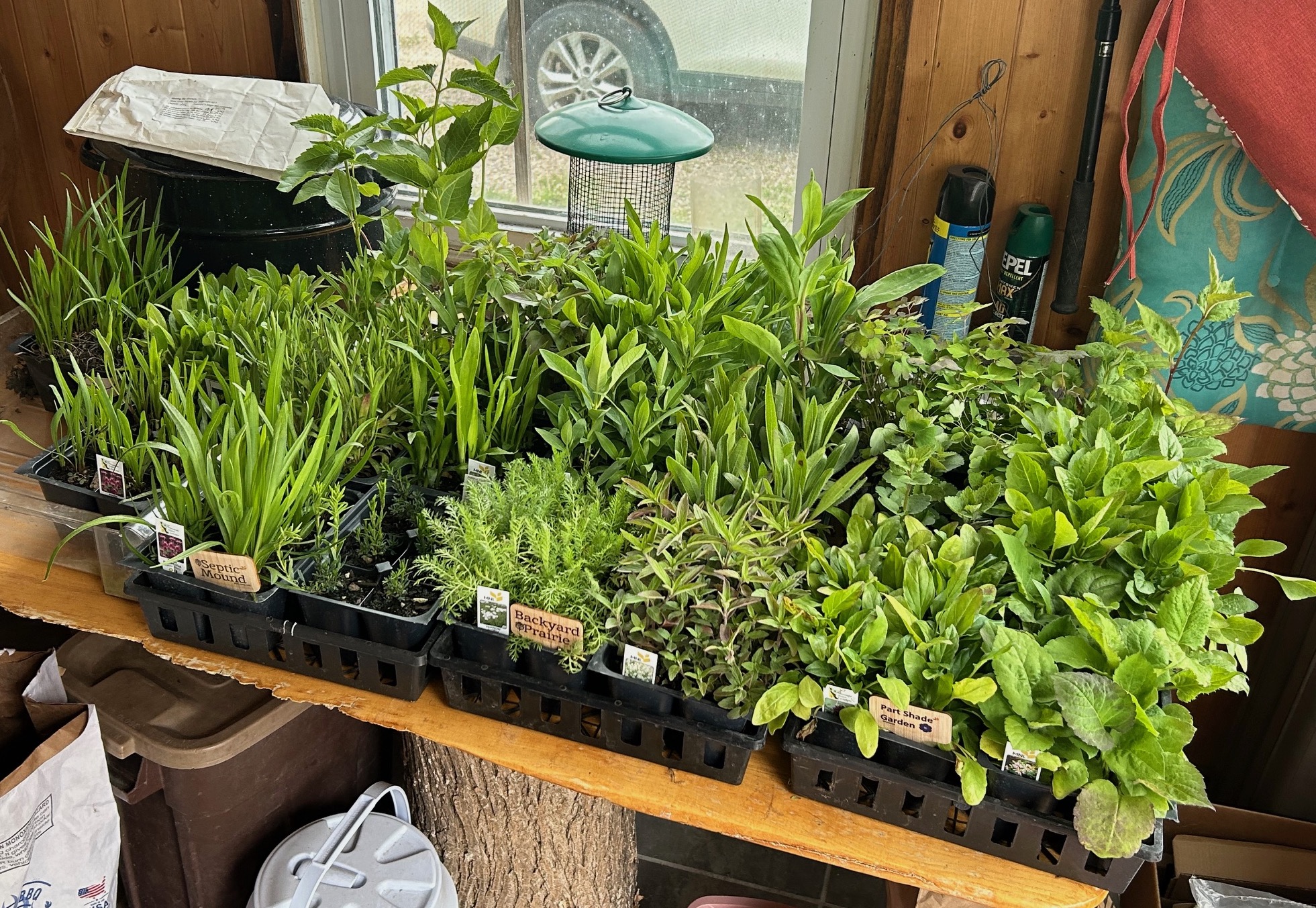
About this time another friend, Rhyan Schicker with the neighboring county SWCD had a prairie plant offering for three different pollinator groups … full sun, partial shade and septic mound. We took one of each, and in total it came to 190 plants. Three flats of 54 plants, plus three, nine-plant “gifted” flats of of our choosing.

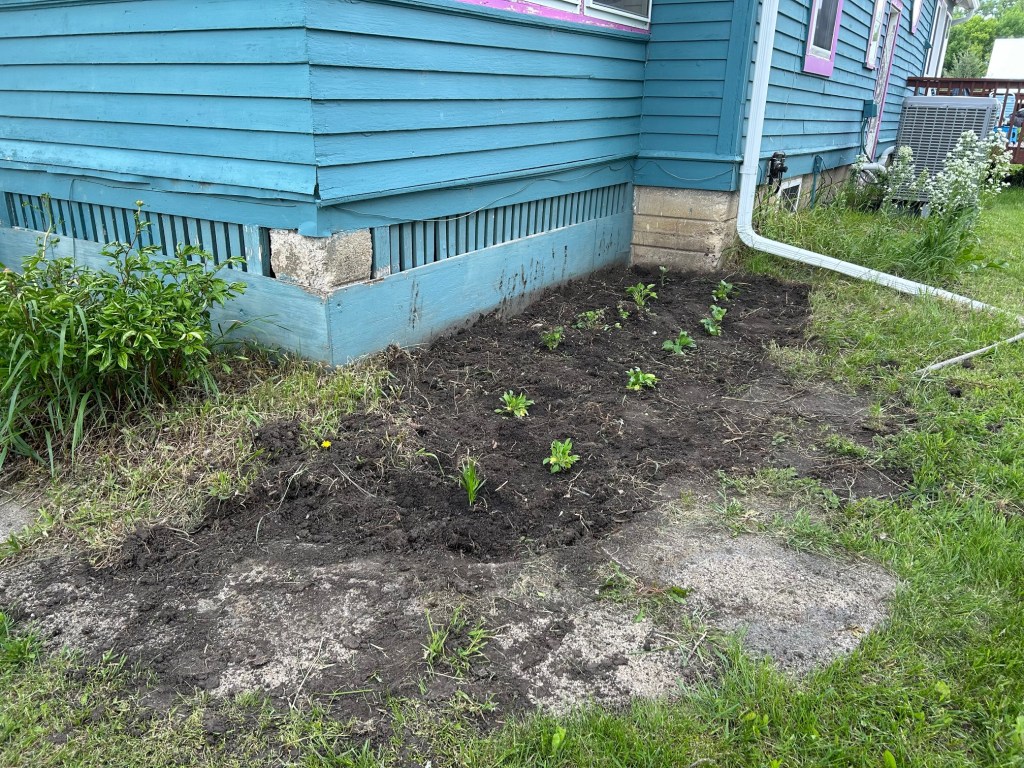
Where it all started! An overwhelming portrait of hope and, yes, hard work!

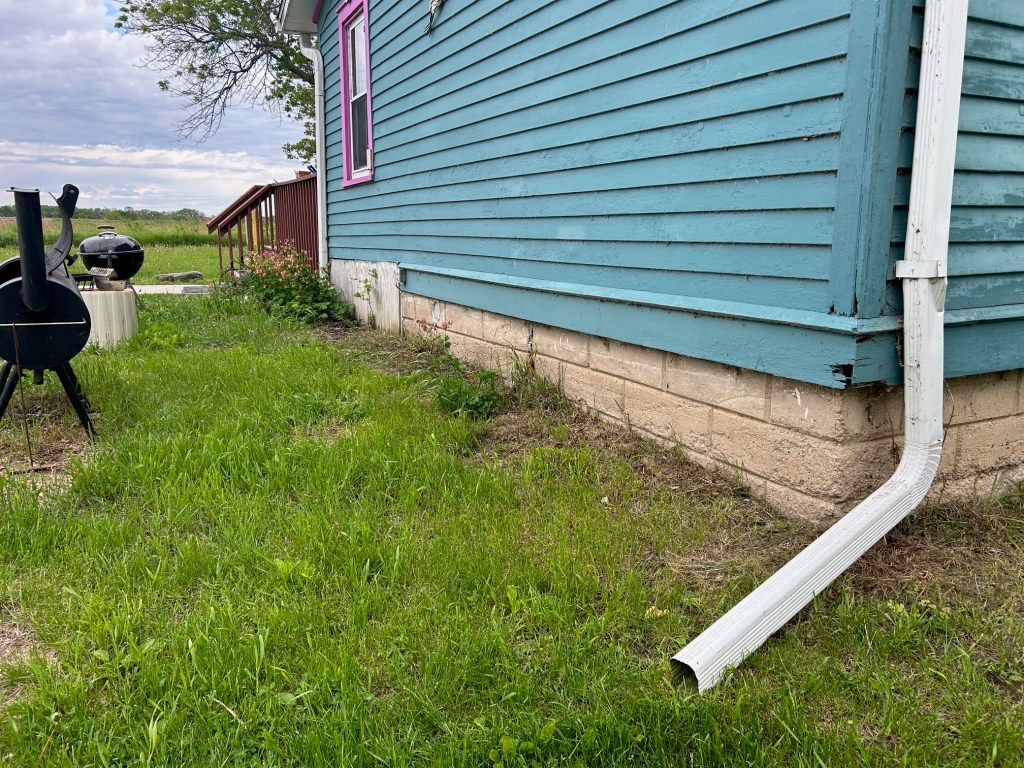
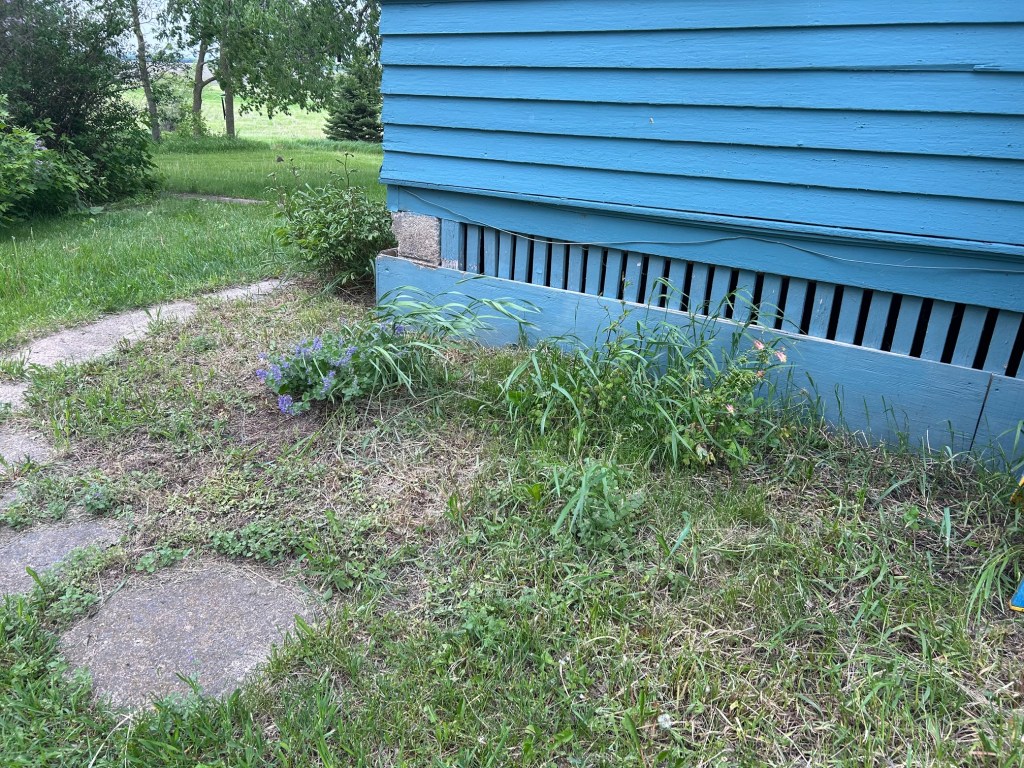
On our pick up day in nearby Madison, we drove down to retrieve the flats with what suddenly became an “oh, gosh, what now?” moment. We brought them home and placed them on the table of the mudroom as we gathered our thoughts. I would start with the partial shade thanks to having several volunteer red columbines hugging the side the house. Originally my goal was to plant an area above a rock terrace garden facing the road. Those columbines, though, offered quite an argument, so I grabbed a shovel and started digging out the grass and weeds while keeping the original columbines.

While it was hard work clearing the space, the planting came easy. The whole process took most of the day on a Saturday. That left 108 more plants in the two flats, plus the three “gifts” still to plant. We marked out a space between the studio and house we would plant the full sun plants, an area with heavy lawn, and I couldn’t see my surviving digging away to the bare ground. 

A call was placed to a good friend, Wanda Berry, who is renowned for her horticultural skills around town. On her visit she offered a plan: “Why don’t you cover the grass with cardboard, cut holes to dig in the plants, then cover the whole thing with a heavy mulch,” she suggested. “It’d be much easier than clearing away all that grass with a shovel.”

Placing the mower at its lowest level, I went over the area to clear away as much of the grass depth as possible. Fortunately I had ample cardboard thanks to the shipment of my canvasses from my canvas printer in Minneapolis. Don’t ask why they were saved in the first place, and if I hadn’t had a wild hair about cleaning my studio about six months ago I could have completed both of the two remaining plots. 

Then the work began — laying down the cardboard, tacking it into place with lawn “staples,” cutting the holes, digging a deep enough hole, and finally, placing in the root plug and replacing the dirt snuggly around the plug. It was still hard work with lots of knee time and getting up and down — a lot of exercise for a guy my age.

It took much of two days to finish the full sun tray along with the extra 27 plants in the “gift” sets. That left the septic mound, which left me puzzled for nearly a week. My original thought was to somehow space the plants far enough apart to cover the entire mound. Frankly, there just didn’t seem to be enough plants and by then I was out of cardboard. Fortunately the plants were looking really strong and healthy thanks to the care Roberta was giving them.

By now I had used up all of the mulch we had bought and was in need for a supply of cardboard, which was gifted by another friend, Greg Lockwood. After a trip to the nursery to buy more mulch, I stopped by Greg’s store for the cardboard, came home and started on the mound. Like with any endeavor involving boring detailed work, you soon develop some sort of system or rhythm. I started cutting three or four holes through the cardboard before using a triangular garden spade to cut through the grassy duff before digging the hole. Then  would finally stand to retrieve the plant plugs. Less wear and tear on the body, and went much faster!

What I had started on late Monday afternoon was completed before a noon rain on Tuesday. Up close the site seemed huge, although from a distance it was easy to see just how much of the mound would be left to plant. We would need at least five more 54-plant trays to completely cover the entire mound, which I hope to do in the future.

As I laid the last couple of plants in their holes I had that thought of how the plants might feel, and I listened closely for any sighs of relief. It was difficult to hear them with all the bird chatter around me. Mourning doves, chickadees, sparrows, a yellow warbler and even our resident pheasants were having at it, filling the prairie skies with hopeful chatter. Joe Pye was laying nearby, and Roberta had returned from town with a box of lawn staples we needed to hold the last piece of cardboard in place. Peace on the planet!

It’s said it takes a community, and I’ve had a great one. Rhyan, Wanda, Greg, Roberta and even Sally Finzel from her native prairie Morning Sky Nursery had a hand in this pollinator work. Just after we finished, farmer friend Travis Sandburg showed up with his disc to prepare the former horse pasture and orchard for a pollinator pasture!

In the end, though, it’s hard to say who is happier … Roberta and I, or those rather soft-spoken plants of the prairie. Now it’s up to them, and eventually the pollinators we hope they attract. It’s all part of our little effort in keeping a planet healthy.