The Balm of Dawn

Initially I was rather discouraged, and perhaps “rather” isn’t quite strong enough to convey my feelings. You see, I had visualized an image for a week or so after we discovered that the beautiful meadow of cone flowers in the Big Stone National Wildlife Refuge had bloomed, long enough ago that many blossoms were already showing their age. Crinkled petals, some showing brownness on the edges of the delightful pink. In short, there wasn’t much time left to capture my idea.

My intentions were rather simple, for I’ve envisioned a simple softness of fog with the defusing warmth of a rising sun providing a bit of hazy backlight to this expansive meadow of pink. Summer fog, which happens frequently in the lowlands of the prairie, isn’t uncommon over the wetlands and prairie around dawn much like it does in the Boundary Waters, rivers and lakes. This meadow is just up the rise from the broad waters of the West Pool, which is a flooded basin managed for protection of waterfowl and other aquatic avians.

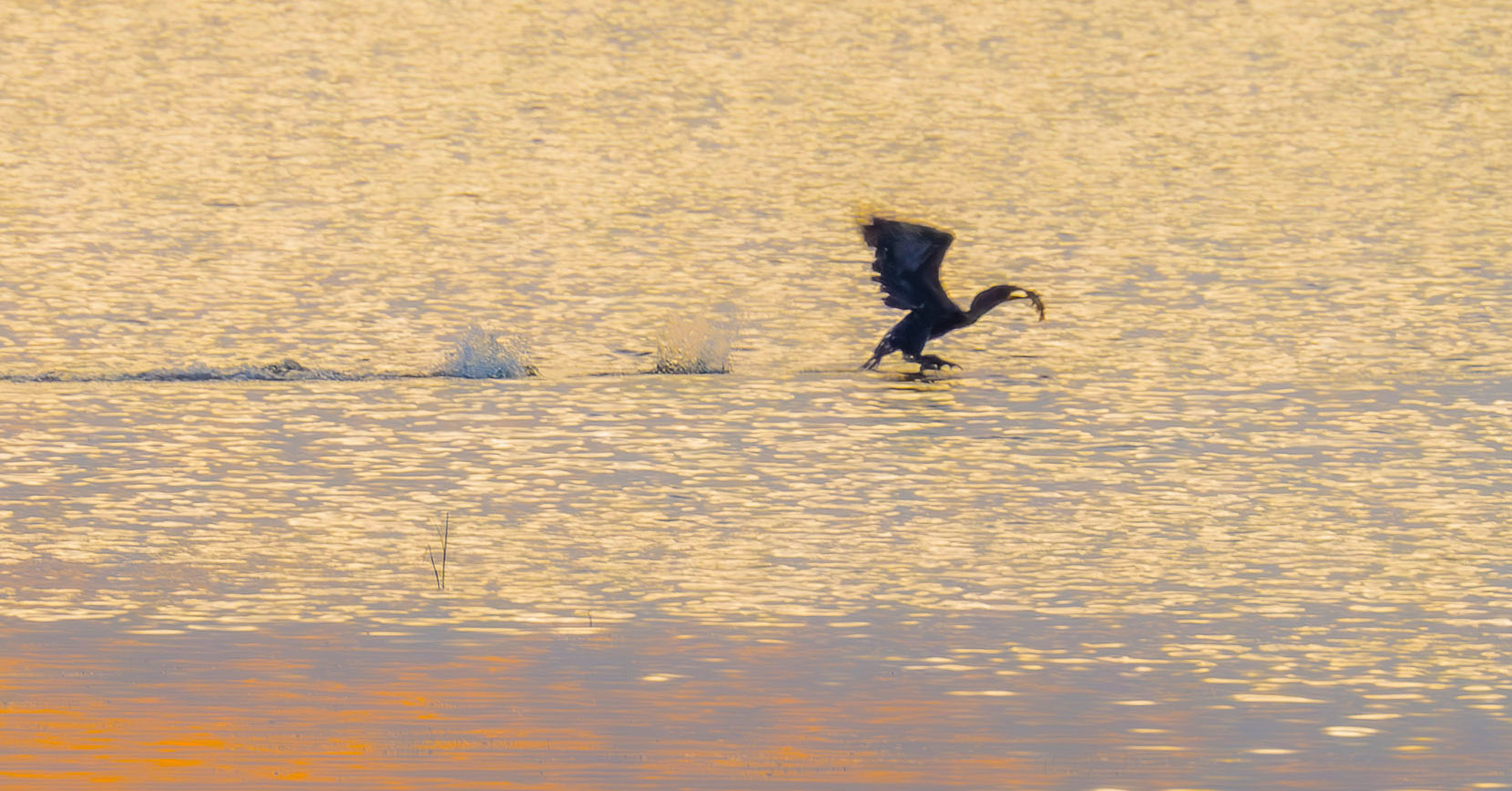
A Cormorant skips across the waters of the West Pool with a dawn breakfast in its beak.

Then, there’s this: It has been awhile since I’ve ventured out for pictures before dawn, somehow losing the habit of being up to greet what the late naturalist and photographer Edwin Way Teale called “nature’s finest balm.” Yes, dawn. Perhaps it’s an “age thing.” 

My dream of a foggy image is somewhat different since I’ve photographed these cone flowers religiously since moving to Listening Stones Farm a dozen years ago. After a scorching day the thought of a rising fog had me up and into the pickup about a half hour before sunrise. My intensions and excitement took an immediate hit because a dense cloud bank was covering the eastern sky. Since I was already up and headed to the Refuge, why turn back? 

Despite my disappointment I still eased from the truck with my trusty Nikon and wandered through the grasses and flowers making a few half-hearted images. Hardly anything worth remembering. My files are loaded with cone flowers from this meadow, including a really nice senior picture of the daughter of friends. Which wasn’t the point. My visualization was the point.

I could spend hours watching Black Terns ply the waters.

Perhaps Teale’s entire quote is worth noting: “For the mind disturbed, the still beauty of dawn is nature’s finest balm.” Taking this to heart would be my new challenge. 

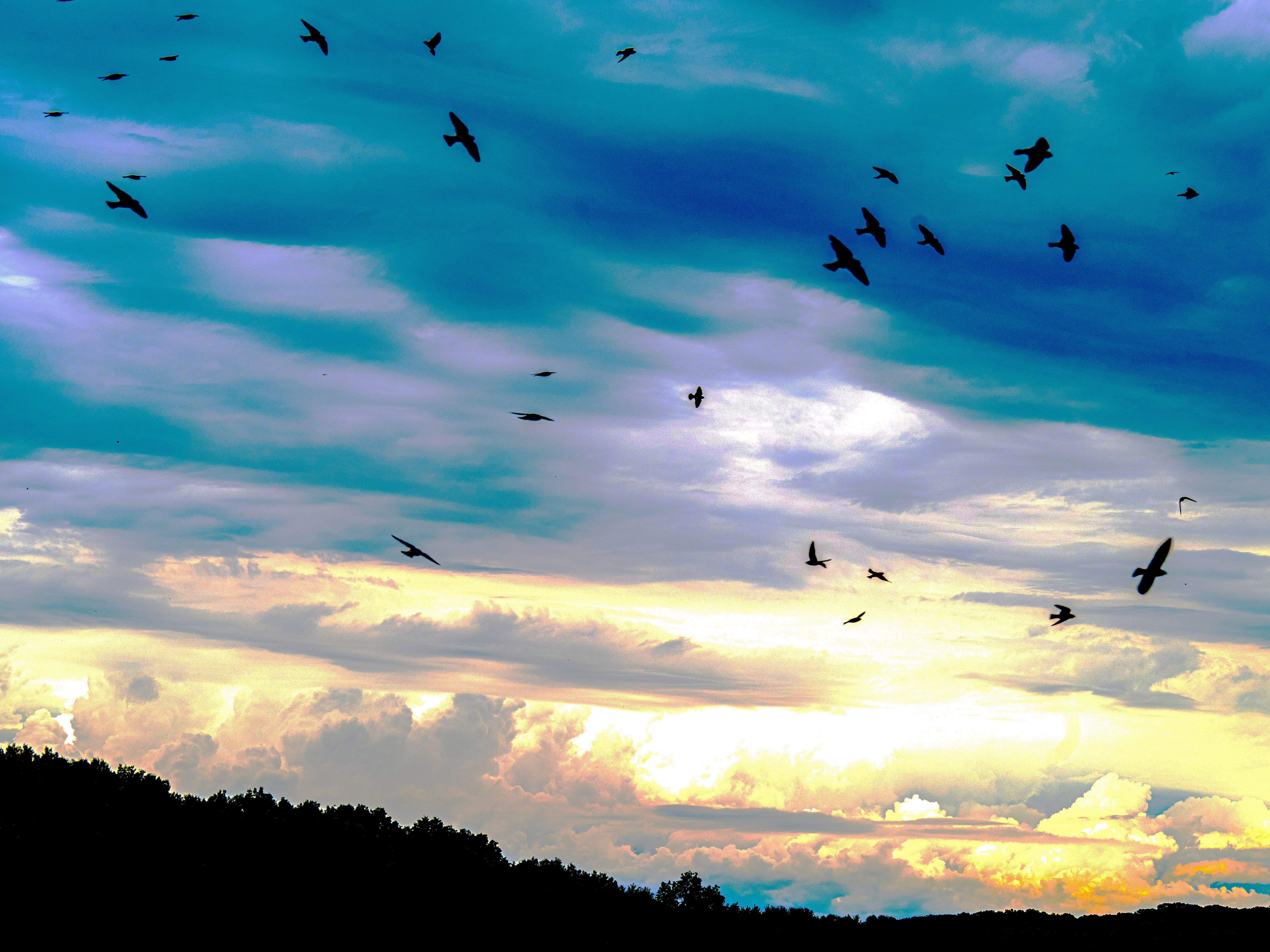
After a deep breath, birds of various species were seen skimming across the still waters of the West Pool while above me Cormorants were scurrying by to their secret potholes, prehistorically shaped fishers silhouetted against the colorful, cloudy canvas of sky. Solitary Great Blue Herons made curved-neck flights across the muted skies. The skies were alive! It was then I remembered catching the gaping mouth and awkward warnings from a female Night Hawk on a distant outcrop. This didn’t have to only be about cone flowers and fog.

At the far bend of the motor trail I caught a Cormorant bounce-splashing across the surface with a small fish firmly captured in its beak. Kingbirds and a Bobolink moved across the grassy prairie trying to hide from the cameraman. Ring-billed Gulls and Black Terns provided nearly an hour of entertainment at the bend of the motor trail, playing in a nice reflected, colorful light. Terns were attempting their athletic poetry of dipping their bills into the waters as they sped across the surface. This alone can capture my attention for time on end.

Flights of White Pelicans are usually delightful to observe.

Of course, being in the refuge meant White Pelicans were around, although far fewer in numbers than the cormorants. The two fishing pals make an interesting contrast in almost all ways … color, shape and beauty of flight. They seems to ply the same spaces in search of nourishment with the Cormorants diving out of sight and the pelicans often teaming up to corner their prey. It was here at the bend of the motor trail where both frequent. Last autumn I caught hundreds of pelicans in military-like formations crossing the West Pool in murderous mayhem. Squadrons of them, numbering several across, all easing eastward across the waters. The next day there wasn’t a pelican in sight. Apparently I’d stumbled upon a last feast before migration.

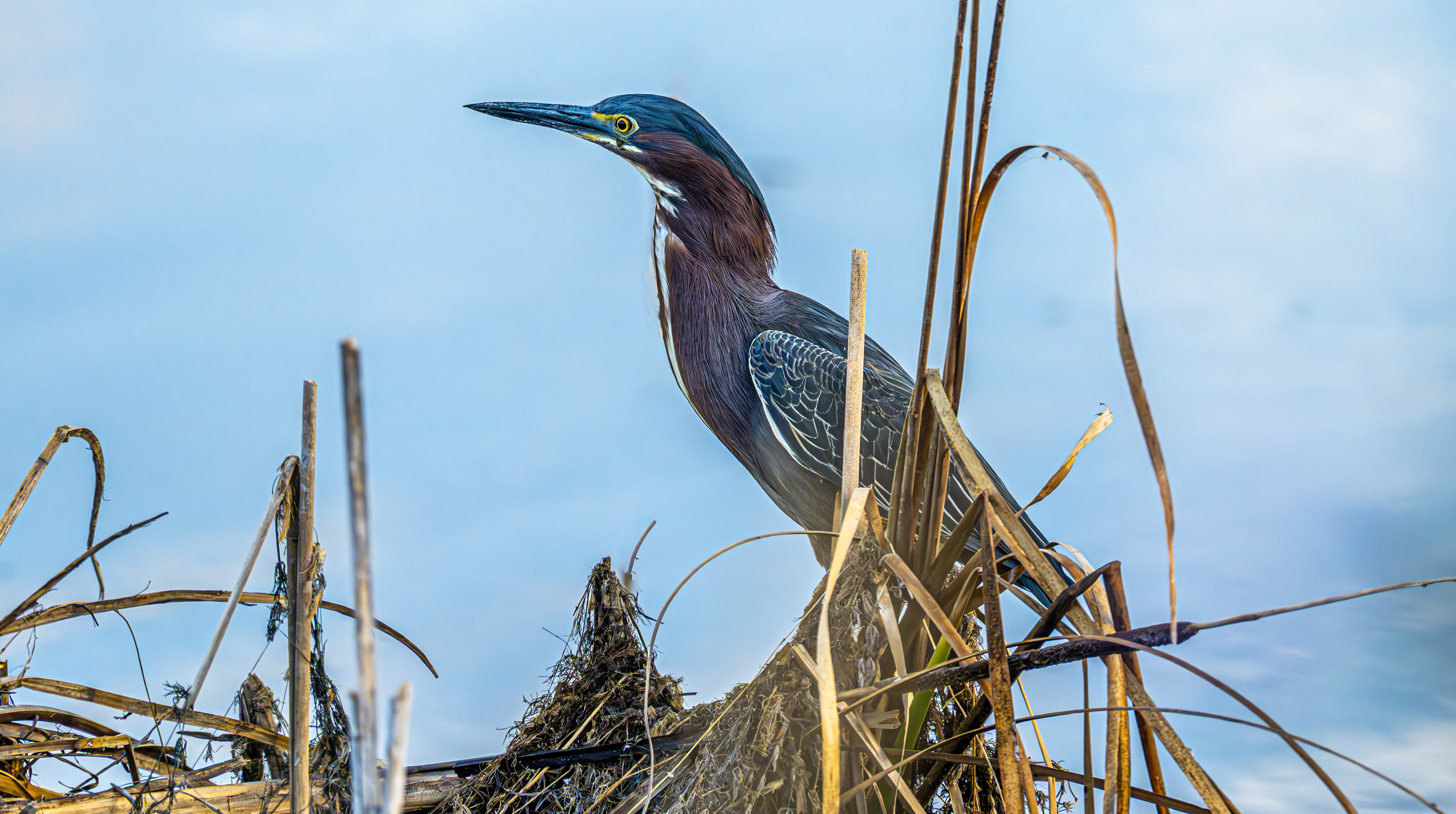
Eventually it was time to move along so I drove around the last big bend toward the riverside parking lot hopeful of catching perhaps a wood duck. This portion of the Refuge is along the debris choked Minnesota River. I would find a single Pied-Billed Grebe in a limb reflection and a Green Heron that posed beautifully for me. All that remained was that protective Night Hawk.

It’s always a joy to see a Green Heron, and usually they’re more skitterish.

This was certainly a delicate mission for you don’t want to unnecessarily rile up nature, and particularly such a rare bird. We had initially spied her over the weekend when we had stopped at a flat outcrop to show a former exchange student ball cacti and were confronted by the “hissing” female. While Night Hawks are graceful and incredibly stunning in flight, hovering high in the sky before diving at nearly breakneck speeds, on land their extremely weak legs make it a challenge to move. 

She was still there and immediately flopped across the granite to defend her well hidden nest. Hastily I made about a half dozen images while standing several feet away where I hoped not to be considered a serious threat. Although I tried to be quick and unobtrusive, I had no desire to cause her unnecessary strife and tension. 

The increasingly rare Night Hawk, awkward on land, defends her nest near the outcrop.

Thanks to the various birds, including the awkward Night Hawk, my dawn foray was delightful and successful. Teale’s “balm” had worked wonders. And since my dear mother once gifted me with his “Journey Into Summer” as a teenager, here’s one last Teale passage that perhaps summed up my feelings: “Our minds, as well as our bodies, have need of the out-of-doors. Our spirits, too, need simple things, elemental things, the sun and the wind and the rain, moonlight and starlight, sunrise and mist and mossy forest trails, the perfumes of dawn and the smell of fresh-turned earth and the ancient music of wind among the trees.” 

Amen!

Grasping Joy

Can someone find joy in the South Dakota mudflats? It was Dutch theologian Henri J.M. Nouwen who suggested that joy doesn’t simply happen, rather that is it is something we must choose. Or, find. This thought surfaced recently and caused me to think of what in nature could give me joy. Nature is where I typically turn when that spark of joy is necessary for soothing the soul. 

This thought happened to occur in the midst of a conversation about American Avocets I was having with our head librarian, Jason Frank, who is a dedicated birder and naturalist when he’s away from the stacks. We were chatting about my inability to find one of my favorite shorebirds when he suggested the mudflats around Sand Lake NWR about two hours west in NE South Dakota. With an empty afternoon ahead of us, we headed west.

First came the Avocets, which we found in a flooded field depression not far from Houghton just a few miles from the Sand Lake Refuge. That pair would be the first of a beautiful handful of shorebirds that would occupy our afternoon, and yes, all contributed to blissful joy.

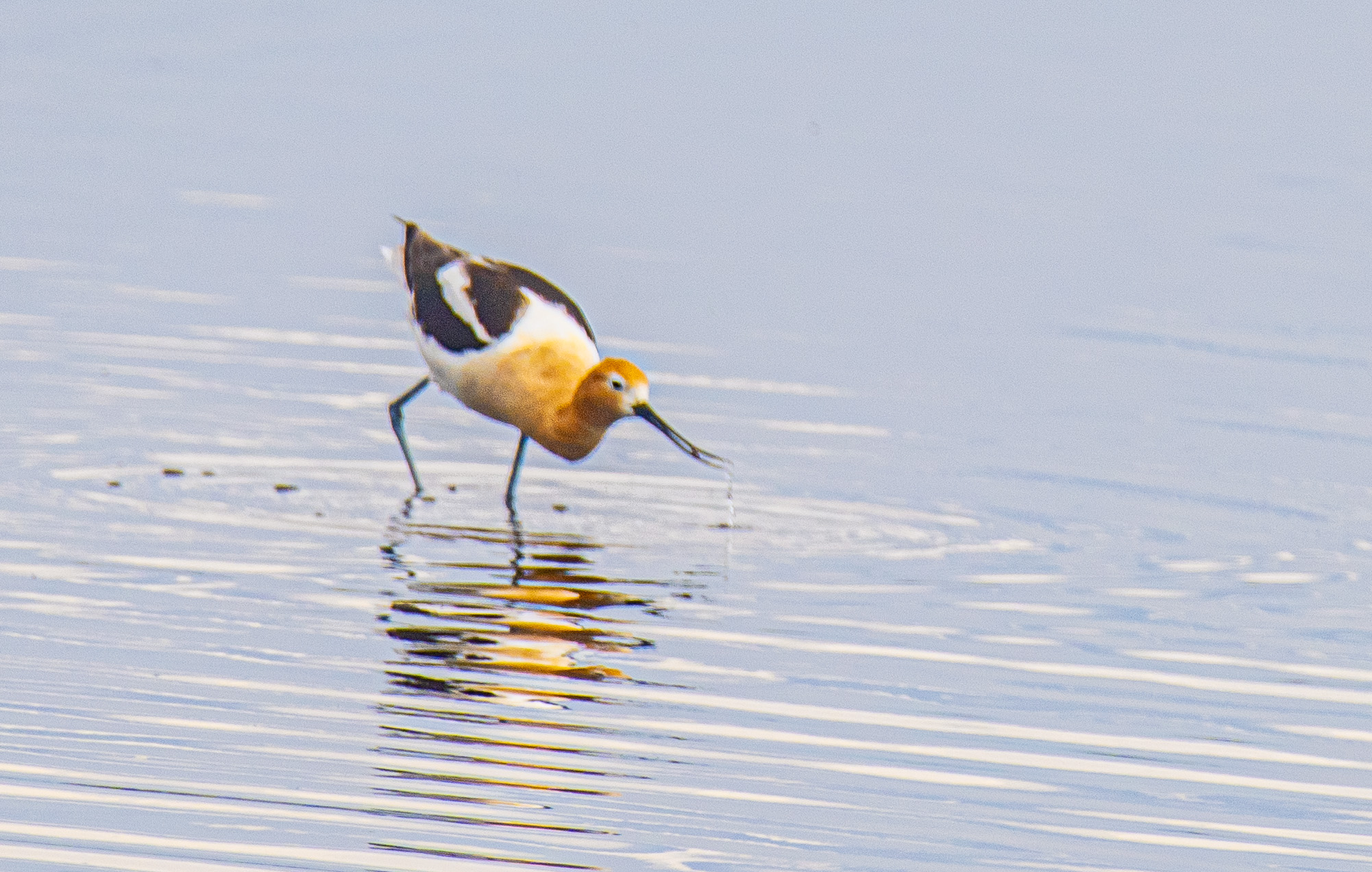
Ah, an American Avocet — our target in the search for joy!

Yet, it was the Avocets that drew us across the prairielands. I’d been missing them. Literally. Earlier this spring there was a brief gathering at the Big Stone NWR where Frank had spotted and photographed a flock he found wading alongside the river. Knowing my love, he had alerted me the following afternoon with his photographs and pinpointed where they were wading. I rushed to the Refuge only to find a locked gate and smoke rising from the thousands of acres of prairie grassland. A spring burn was underway, and continued for the next day or two … just enough time for the flock to fly elsewhere.

Refuge biologist Brandon Semel noted a week or so later that we are actually on the very eastern edge of their natural territories. This was after I had spent a few trips searching the area wetlands where I’d photographed them last summer. Which led me to this more recent conversation with Frank. Like, “Where can I find Avocets?”

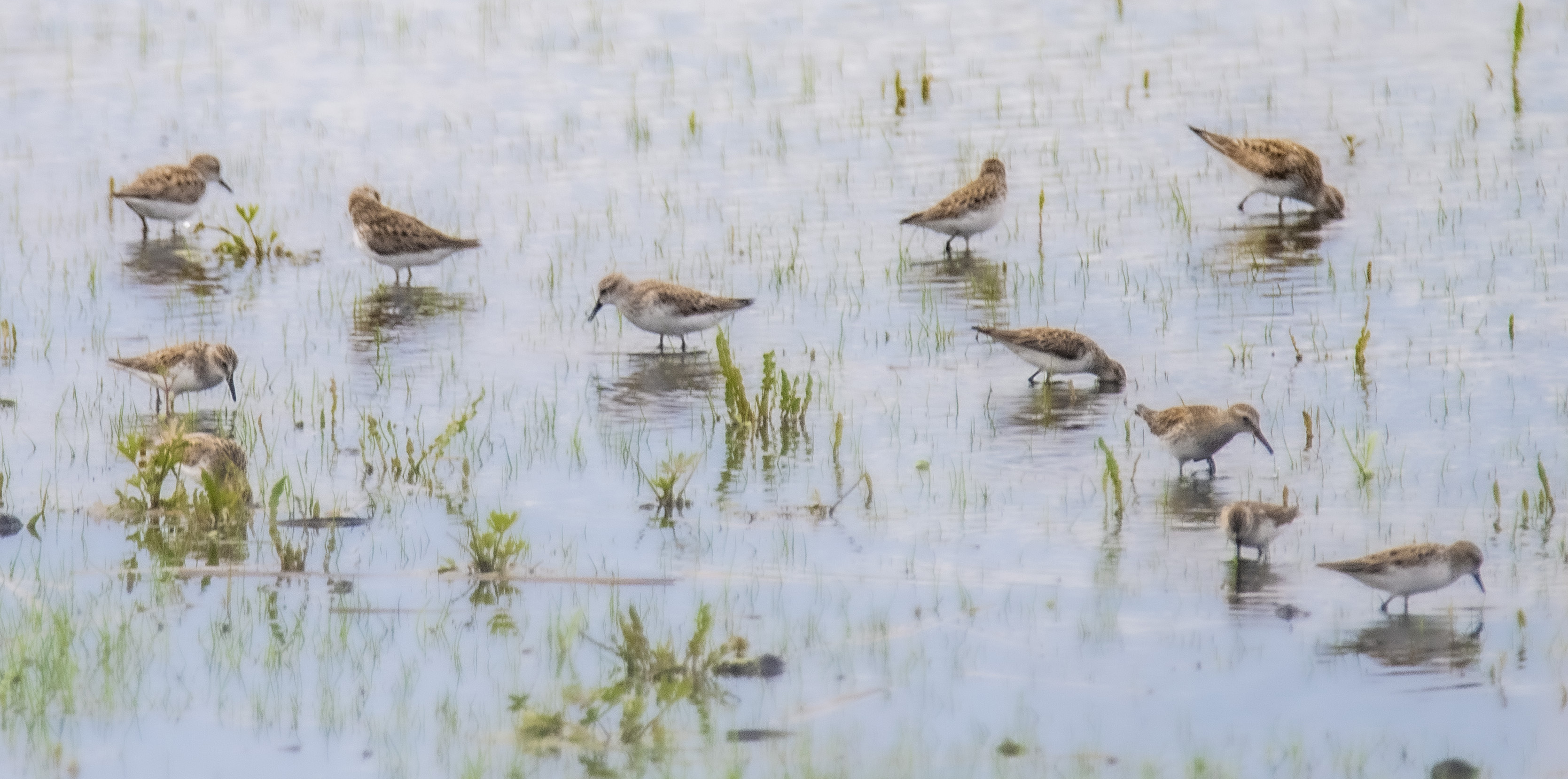
Nearly all the flats had sandpipers.

My attraction to these beautiful waders is a strange love story. Back when I was in a forgettable career stretch with a Minneapolis-based ad agency, I found a piece of cottonwood at the studio of a wood artist friend, procured a few wood carving tools and went to work whittling away both wood and ad agency aggravation — whittling away the late night hours when I should have been sleeping. It was during this hobby moment I came upon photographs of this brown-headed beauty of a shorebird with the thin, upcurved bill. My carving was of a rather non-nondescript assemblage of a shorebird and nowhere close to an Avocet. One slip of the knife would have quickly made their narrowest of bills another shaving.

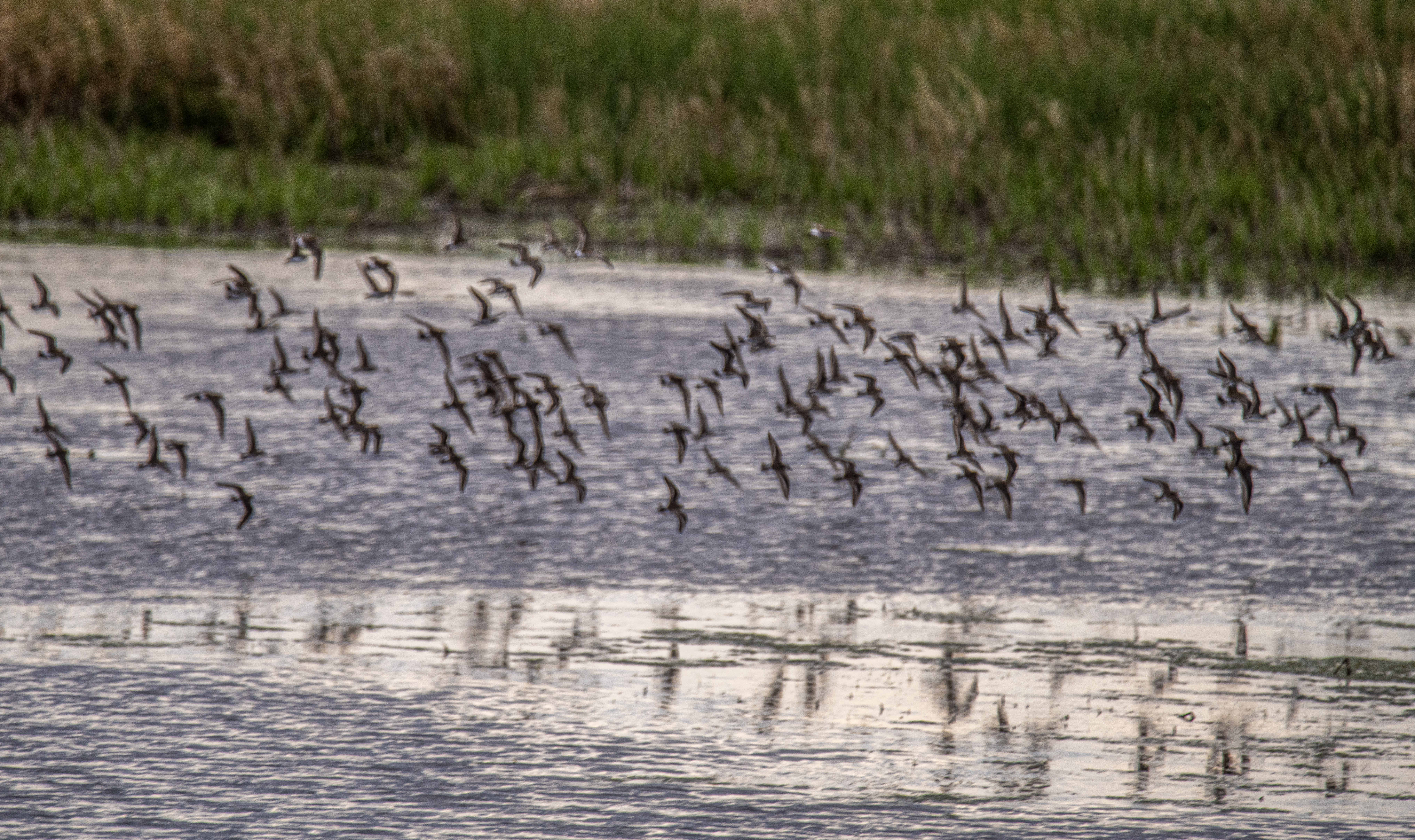
The sandpipers continued to fly first one way, then back.

It wasn’t until a couple of years ago while on the annual Salt Lake Birder’s Tour that I saw my first real life Avocet, thanks to Lac qui Parle SWCD manager Rhyan Schicker. Just before the annual kickoff breakfast she told me there were several wading in a flooded farm field just east of Marietta, home of the annual birding mecca. I rushed out and there they were, even more beautiful in person than in the guide books and magazines. I returned over the next few days for more photographs. Then, the next couple of summers they hovered around here, particularly near some mudflats up by Barry, MN. Not this year, though. We’ve had no rain so the lowlands are bone dry.

Frank suggested the Sand Lake possibility. Over the years this interesting refuge has yielded some nice images, although many hours of stalking the “teapot” flying Woodcocks went sorely unfulfilled. Although our little afternoon foray started with a bit of disappointment when we discovered a formerly quite active Blue Heron rookery abandoned. Finding the Avocets turned the tide. Fortunately no highway patrol came upon us, and that the motorists who whizzed by were so understanding and kind. We had parked as close to the road ditch as possible with my lens sticking out the window, yet half the car was still in the road.

Finding this Black-necked Stilt was an unexpected joy!

Our luck and joy would continue. As we came upon the eastern edge of the Sand Lake Refuge we found different flocks of Sandpipers, each being skitterish and prone for quick flights and returns. Then we happened upon a solitary Black-necked Stilt. Far more common to the American Southwest, the guidebook offers only a pencil thin width of territory this far east. We were in it. Joy!

Between the Stilt and the Sandpipers we were enjoying all the offerings as we crept along the shallow waters. When Sandpipers can wade without the water touching their bellies, they’re wading in quite shallow waters. With the taller birds like the Stilt and Avocets it’s difficult to judge the depths. So we merrily wiled away the afternoon before we happened upon pair of White-faced Ibis further down the road. 

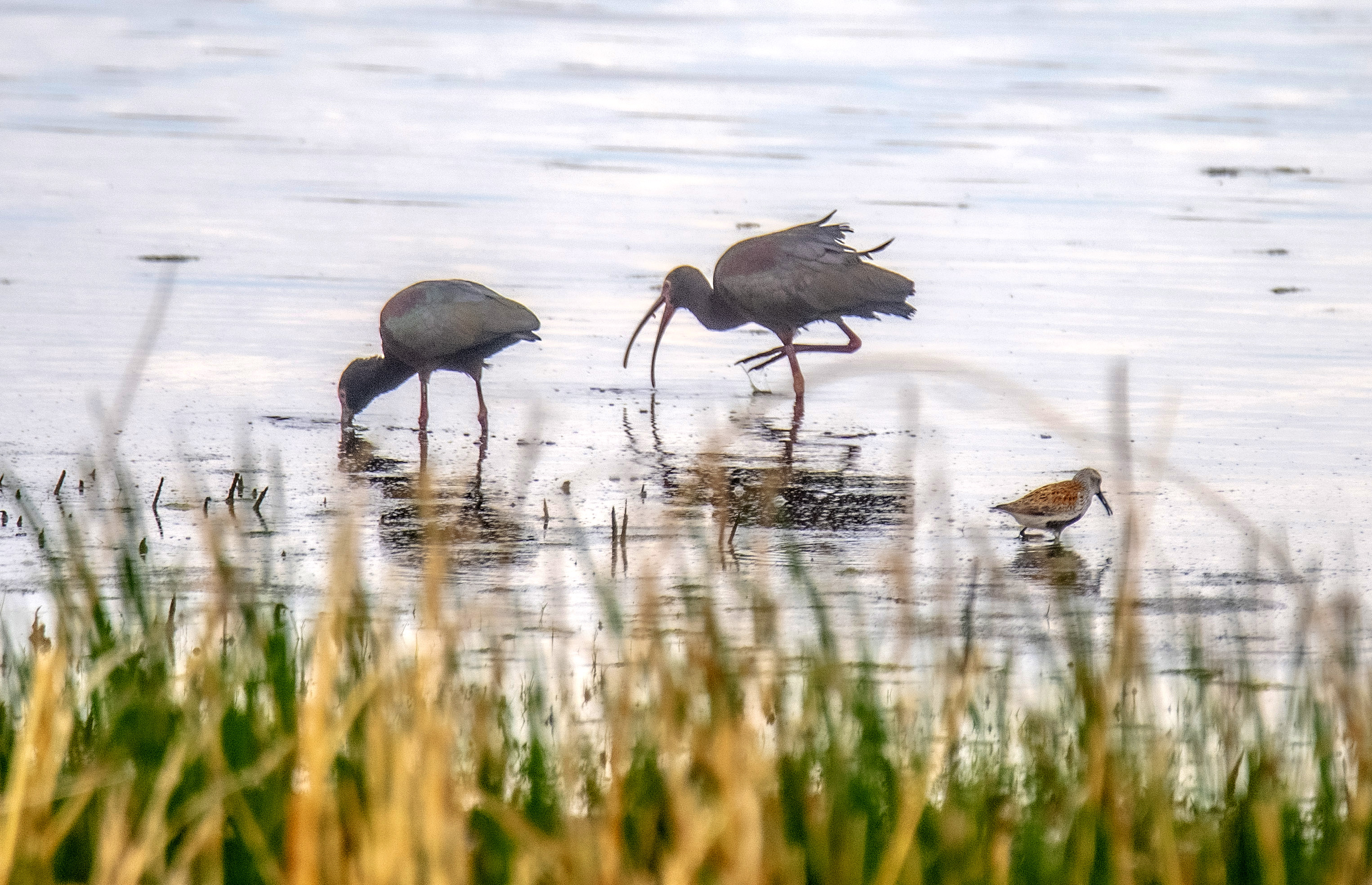
As a final capture were the White-Faced Ibis, sharing a mudflat with a sandpiper.

With our past years of wet spring weather the Ibis seemed fairly comfortable around our area of Minnesota. On that Salt Lake tour a few years ago numerous Ibis were seen at several sites, their bills, unlike the Avocets curved  downward. They flew in mini-V formations from one standing water site to another. This  year? Not a single sighting until we happened upon them in the Dakota mudflats, where they meandered thoroughly unconcerned with the odd guy with the long bazooka of a lens sticking through the car window. Nor was the solitary Sandpiper keeping them company.

Perhaps it would have made wonderful sense to stick around until sunset. However we decided to move on toward home and leave the birds behind in their shallow mudflats. We had been greeted by an Avocet prelude and given benediction by the Ibis, which might mean very little to many. For us sitting in our car on this roadside nave, there was a thorough sense of joy within the high skies of this prairieland “cathedral.” As Nouwen had suggested in his writing, we had chosen our sense of joy and had gone to find it.

A Break in the Silence

Her “wuk … wuk” cries of alarm and the flutter of feathers as she crossed the lawn to one of our islands of trees would have been equal an overhead flight of a jet airliner only a few days earlier. Despite their secretive nature, an aroused pileated woodpecker has a way with sudden alarm.

This unexpected visit on our suet feeder brought an end to my concern I’d felt earlier after  my two mile walk on our gravel road late last week when barely a sound was heard beyond the crunch of my footsteps on the gravel and crusted snow. Were we this alone here in the vast horizontal grandeur? Were the sounds of the skeins of geese flying overhead days before nowhere to be seen nor heard? Where was the sudden burst of flight from the flock of snow buntings that have captured the edge of the graveled roadside? Even the cattle at a farm to the north were not lowing to break the silence of a cold, stilled winter morning. Walking in such silence was strange and unsettling. 

My walk seemed a prelude to the polar vortex now settled in over the entire continent. By this past weekend it was considered unsafe at any age to be outside and especially on a two-mile walk. Perhaps the countryside was even more silent in those days since. Nothing much was moving, not even a mouse. Joe Pye would have noticed.

This week we were pleasantly surprised by a pileated woodpecker that came to wrap itself around the suet feeder on our deck.

The sudden and unexpected flight of the pileated was certainly an exception, and a wonderful surprise a day or two later. It began after I had decided to brew up a pot of split pea soup for dinner, which necessitated a walk out to the studio/garage to our freezer for a hunk of pork hock. When I stepped through the door a batch of birds lifted from beneath the feeder tree. A junco or two, sparrows, a red bellied woodpecker and a pair of nuthatches. All lifting with as much fashion and form as a well tuned choir collectively standing to sing. 

Above the flutter of the choir, though, was the escape of the lone pileated woodpecker, huge and black, it’s beautiful red head bobbing as it squawked and beat its wings in its telltale undulating bouncy flight away from the feeder tree to fly across the lawn. There is no mistaking a pileated woodpecker.

After our first sighting, it flew to one of our tree islands where this image was made.

This prompted the gathering of my camera with the long lens to hoist from the studio along with that hunk of pork. I excitedly told Roberta of the pileated, and we began doing surveillance at the various eastern windows near the feeder while I pulled together the soup. About a half hour later she came rushing into the kitchen with a stage whisper, “It’s here! On the deck feeder!”

Sure enough, and I grabbed the camera with the 600 mm lens. Our octagon window in the bathroom was an excellent “blind” and several images were made before it decided to dip and dive off to the beautiful aged-old elm tree hugging the east side of my studio. There it bounced up and down the trunk, stopping briefly to look around before facing the bark where it seemed to note something of interest.

My first thought was, “Oh, no! Not my elm!” You don’t have to walk too far into the oak savanna at Bonanza to see the damage a pileated can do to a tree. I’ve often considered setting up a blind adjacent to the trail to capture an images at that tree, and the major drawback is there hardly seemed to be any fresh chips being added to the pile.  

Our bathroom window is an excellent “blind,” a mere few feet from the feeder.

All of which brought back a memory from so long ago. While working as a stateside photojournalist with the Denver Post, I had just covered an environmental conference in Crested Butte where one of the presenters was Nina Leopold, daughter of one of my guiding “lights”, Aldo Leopold, author of “A Sand County Almanac.” His writing helped guide me back toward nature and wild things. Nina had a flight back to Milwaukee and I was driving home to Denver, and she had accepted my invitation for a ride to the airport.

Among the topics discussed in that long, wintery drive was pileated woodpeckers, along with my desire to finally see one. Though they were rare in the early 1970s, perhaps they’re more so even now. Nina painted some beautiful mental images for me, perhaps from her years of visiting her father’s sand country farm that is now a historical site near the foundation she helped form. 

Several years later after we had moved to Minnesota for an editorial position with Webb Publishing, I would finally see one along the Mississippi backwaters near where we had moved. Sightings have been nearly non-existent since, and have always been a noted moment in the years that followed.

Initially I thought, “Oh, no! Not my elm!” after it grasp the bark of the tree next to my studio.

Other than a brief glimpse while driving down the Lake Road, or at an artist’s home along the lake, I actually spied one in our grove one morning a few years ago through the kitchen window while brewing a cup of tea. A worker once said he had spotted one along the edge of the grove although his comment was met with disbelief. Yet, with our acreage of old trees we might have some prime pileated territory. If so, why have our sightings been so rare?

Perhaps they have already settled in since pleated are noted for their covert shyness. Our feeder bird is quite attentive, flying at the slightest sound. We’ve seen it numerous times since, either on a nearby tree or on the deck feeder where it will grasp and circle itself around the little cage of suet to peck away. Hopefully this is an omen, for according to legend pileated woodpeckers are said to be bearers of good fortune and luck, two wonderful attributes a person can always use.

A Foggy Count

A quick peak through the window after rising before dawn Saturday morning offered a view of what prairie people call a “short world.” Fog shrouded the farm. In a half hour the plan was to meet up with (John) Palmer at the Big Stone Lake State Park office where we would cover our pie-shaped assignment for the annual Audubon Christmas Bird Count (CBC). It could have been worse. Just a year ago the CBC, which would have been my first, was pretty much canceled due to a heavy overnight snow with drifts halfway up my garage doors. 

After a tasty mug of my smoky Lapsang Souchong tea, my binoculars were fetched and I headed to the car. My camera and 600 mm lens were already packed. Five minutes later I pulled in behind Palmer’s car and we were off on what we both believed would be a slow morning of identifying and counting various bird species. Would the chilly fog cause birds to hide deep in the prairie grasses and trees? Would we actually be able to see well enough to even count and identify whatever birds we might see or hear? Truthfully, we were heading off with more concern than confidence.

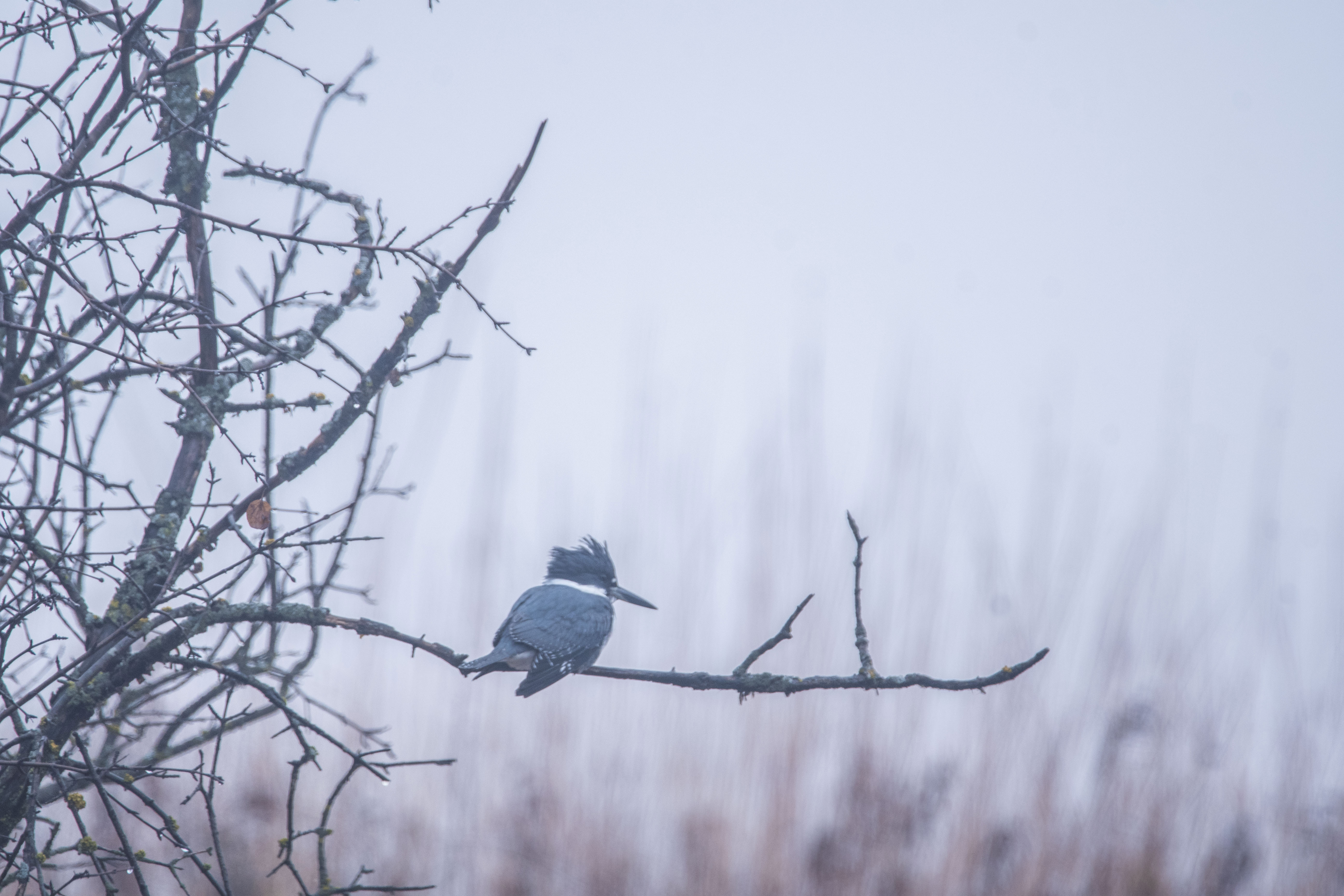
Our lone Belted Kingfisher perched above a patch of open water in the Meadowbrook area of Big Stone Lake State Park.

Palmer is new to the area having just completed his first summer as assistant manager at the state park. Many of the roads we were to cover were unknown to him, and some would be new even to me if we canvassed accurately. We were responsible for an area between Big Stone Lake and U.S. 75, and from the Clinton road down to and including the city limits of Ortonville. We would have five hours to complete our task before the volunteers, under the direction of Jason Frank and Brandon Semel, biologist with the Big Stone National Wildlife Refuge, would meet at Lingonberries for the summary.

Each piece of the circular pie was fairly well defined. Joining us on the hunt for an elusive Bobwhite Quail (the inside joke, for the group I would later learn) and other species of note would be Douglas Pierzina, Brandon Semel, Curt and Sara Vacek, Allison Parker, Gena Leksche, Jason Frank along with me and Palmer. Bill Frank and Meg Scholberg were on feeder watches.

Palmer and I skirted the very top of our pie first, taking what we would later learn wouldn’t be frowned upon as a quick spin down the paved county road in search of a flock of shoulder-hugging Horned Larks or Snow Buntings. Typically both are prevalent along the country roads about now, and birds I had seen recently, yet there wasn’t a one to be found. In Clinton, Lake Eli was frozen over and the Swans that were here a few weeks ago had migrated. We saw no Crows or even Sparrows in our drive through town.

We took the first left once we sped past Clinton’s infamous Zero Street into the countryside to turn onto a marvelous gravel road I had driven past hundreds of times and never driven. It was a treasure with numerous wetlands on either side along with a few Wildlife Management Areas (WMA) that seemed inviting. Some with enough woods for Wild Turkeys and all with ample prairie grasses for Pheasants. While Palmer could hear some activity, we didn’t see anything until we spotted an owl on a power pole after leaving our last WMA on the road. Our first bird! Palmer, in a better position than me, spotted “horns” through his binoculars so we counted it as a Great Horned Owl. It was a brief sightings for once the Owl spied us looking, it flew off for a distant hazy clump of trees. But, it was a bird! Our first of the count!

Although this image of Starlings was made a day before the official count, we caught up with the same flock Saturday morning.

We traversed the upper end of our pie going from one gravel road to the next, slowing along tree lined fence rows. We could have stopped at Listening Stones Farm and upped the count significantly thanks to our bird feeders. This wasn’t a contest about who could count the most birds. Rather, it was to catch an accurate, one day glimpse of the overall species of our circled countryside along with the approximate numbers of each. By and by we followed the ravine back to the state park and passed a flock of Starlings along the road that I had photographed the day before. We then counted a solitary Belted Kingfisher in a splice of open water next to the big lake. 

“What’s it doing here at this time of year?” Neither of us had an answer. A later check indicated that most do migrate to warmer climates, although a few birds will stay if they have a source of open water. 

We drove down several lake access roads en route to Ortonville, often slowing with the windows down, sometimes turning off and getting outside of the car to look and listen, pulling binoculars to peer into the grayness in search of whatever sound might come, or to simply slowly glide along a treeline in hopes of seeing signs of bird life. We backtracked from the golf course to some WMAs north of town, then back down the eastern flank of the links. I pointed out wetlands where last spring we counted numerous White-faced Ibis, which Palmer had never seen. We then canvased the town parks, ravines and shoreline. The wetlands along the dike road. Parts of the Minnesota and Wetstone Rivers and their backwaters. I feel we were rather thorough despite the handicap of the fog.

This lone tree just above the Steen WMA was a common site thanks to the fog.

We were picking off one or two of the few species we could find, with the highest numbers being the flock of Starlings and a larger grouping of Juncos in the recently “freed” tree canopy on the ridge above the Lake Road. Among our finds were a few Pheasants, a lone Mallard and Canada Goose, and on the drive back toward Lingonberries from a gas fill up, a Pileated Woodpecker. Palmer and I were rather excited about the Owl, Pileated Woodpecker and especially the Kingfisher. 

When we gathered for the count the overall results were rather surprising for me with 49 total species counted, according to Semel’s tally, with a compilation of 13,000 total birds. “The fog wasn’t ideal,” he said. “I don’t think any of our sightings were particularly unusual, yet it was fun.” Jokes were made about the Quail no one was able to mark on their lists.

A satellite image of our official Ortonville, 15-mile circle. Palmer and I had the purple pie-shaped acre north and west of Ortonville.

Although this was my first CBC, this was an Audubon effort to promote conservation by counting rather than hunting birds, and was initiated in 1900 by Frank Chapman and 26 other conservationists. Some counts have been running every year since then and now happens in over 20 countries in the western hemisphere. Official 15 mile radius circles are pinpointed, with our’s centered around Ortonville. Our circle included parts of South Dakota as well as the Big Stone National Wildlife Refuge and Big Stone Lake State Park. 

After a quick lunch and friendly greetings, Palmer and I headed back to the state park as the fog slowly and finally eased into gloomy daylight. As we motored up the Lake Road, a few Crows and various other birds would sometimes swoop across the highway and we wondered where they had been during our official count. And, where were the three groupings of Wild Turkeys with staked territories we thought we would surely pass along both the ravines and the Lake Road? And, those numerous skeins of Canada Geese we’ve watched fly overhead for weeks? Nuthatches are quite common and we didn’t count a single one, nor did we happen upon commonly seen Downy or Hairy Woodpeckers. Palmer and I wholeheartedly blamed it all on the fog. Oh, and like the others involved in the count, the ever elusive Bobwhite Quail exited our circled “stage” laughing once again!