Unknown's avatar

About John G. White

Somewhat retired after a long award-winning career in newspapers (Wisconsin State Journal, Dubuque Telegraph-Herald, Denver Post and a country weekly, the Clara City Herald). Free lance photographer and writer with credits in more than 70 magazines. Editor with various Webb Publishing magazines in St. Paul, and a five year stint as editorial director at Miller Meester Advertising.

Trips in the Refuge

Yes, there are taxes to do. I could be bent over the jig building a spin fishing rod I had promised a friend for an upcoming fund raiser. Instead I’m looking out over the prairie where winds are pushing snows to a near whiteout and thinking of birds. In this wind-blown snow black shapes clamor for sunflower seeds or their turn at the pork fat, and none seem worse for wear in this intermittent blizzard.
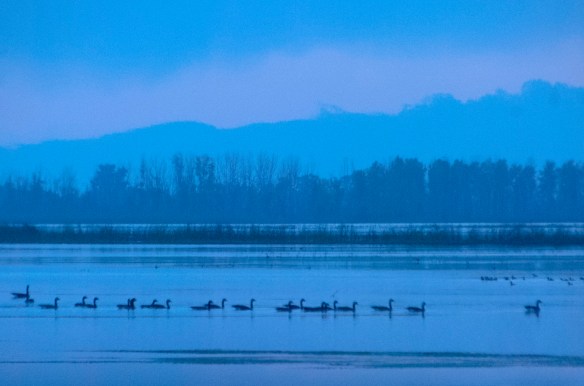
refugemorning8

Wild birds are a long time passion of mine, even if I’ve not been adept at keeping a running Audubon log of those I’ve seen over the years. Yet, until old age takes a grasp of my memory, I can still remember specific first sightings. My first curlew up in a wetland near Clinton three springs ago, slowly striding the edge of the water with its long, turned-down beak. Or the scarlet tanager at a park along the Concord River west of Boston. Perhaps my first cedar waxwings in the tree branches outside of an upstairs window of Java River Coffee House before a board meeting of an environmental group; of being surprised at how small they were. There was the excitement, too, of the brilliance my first red-breasted grosbeak perched on a branch, and unfortunately just passing through. I could go on. Maybe I’ve made my point.
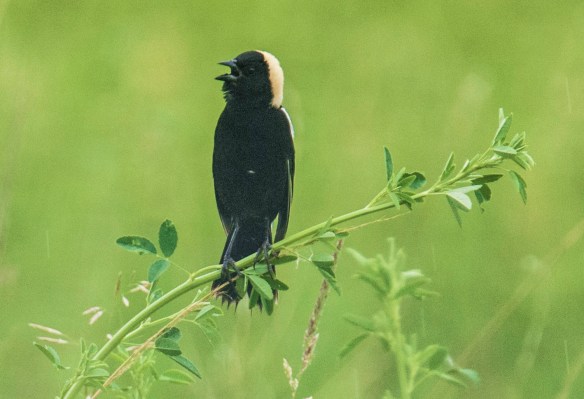
6.16.refuge5a7.22.15 refuge20a7.27.15 fog34a

For the second time in my life my home is along a recognized flyway. The first was at our home across the highway from the Little Vermillion River east of Hastings. An area called Prairie Island, this land mass stretches from lower-town Hastings between the Little Vermillion and the Mississippi down to Redwing, and it’s a backwater, wooded paradise. A bird feeder just outside our dining room allowed us to sit for hours at the table watching the comings and goings of a vast number of bird species. Many new sightings along with obvious renewals of song birds I had seemingly forgotten on my 12 year Midwestern hiatus while living in Denver.

Those backwaters were tremendous gathering spots for waders like the egrets and herons. Seemingly every year a “Louisiana” heron hung around two large backwater “ponds” we visited across from the house. High spring waters left behind fish trapped in the pools.
refugemorning13

After Hastings we settled into a small prairie town about two hours southeast of here where I ran a country weekly, an area lacking of much avian variety beyond red finches and house sparrows.

Then my now ex-wife and I bought this small prairie farm just up the hill from Big Stone Lake, on a “branch” of the Mississippi flyway, and once again there is an abundance of bird life. More varieties and numbers of geese than I could have ever imagined, and thanks to the last remnants of the pothole prairie, murmurations of red wing blackbirds, starlings and other “black” birds that are as frequent as they are mesmerizing each spring and fall. Terns drift in the wind currents on summer afternoons, and we’re serenaded by songs from the wetlands over the hill each spring. Swallows dart around over the prairie all summer, and gold finches mingle with grosbeaks, jays, brown thrashers and the many woodpecker species, and pheasants “bark” from the native prairie surrounding our house.

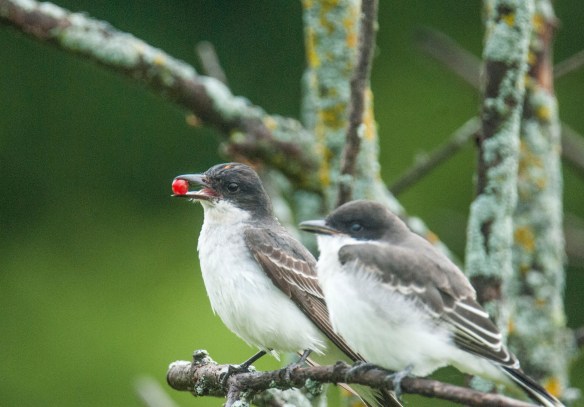
7.22.15 refuge22a7.22.15 refuge257.14.15 wetland1a5.15.15 woodie3

One of the real treasures, and interestingly one that isn’t mentioned much to either newcomer or tourist, is the motor trail winding through the nearby Big Stone National Wildlife Refuge. What a birder’s paradise, and one that seems to offer a constantly changing population of winged characters depending on the season. Damming of the Minnesota River has created a swampy shallow stopover for hundreds of thousands of geese, swans, species of ducks, shore birds and waders in the spring and fall, and acres of prairie grasses create food and nesting homes for bobolinks, meadowlarks and other prairie grass loving birds that have been forced out of our lives (and their’s) by modern agricultural practices. Oh, there is also ample woody terrain for kingbirds, orchard orioles, warblers and others.

6.14.16 refuge25

Beyond the driving loop, owls, eagles and huge hawks perch and glide through the exterior of the nearly 12,000 acres of the Refuge. To break it down, nearly 1,700 acres of the refuge is in prairie grasses and other native plants. Some 4,250 acres of water are there for the birds thanks to the Highway 75 Minnesota River dam. Perhaps one of the most beautiful aspects of the park are the natural outcrops … nearly 100 acres in all of granite mounds bared by the Glacial River Warren, washed out of the prairie earth by the aftermath of the breaking of the huge ice dam of the glacial Lake Agassiz. While naturalists are attracted to the rare and native ball cactus and the other narrow window of native plants specific to this rare and interesting ecology, the outcrops attract nighthawks and other birds.

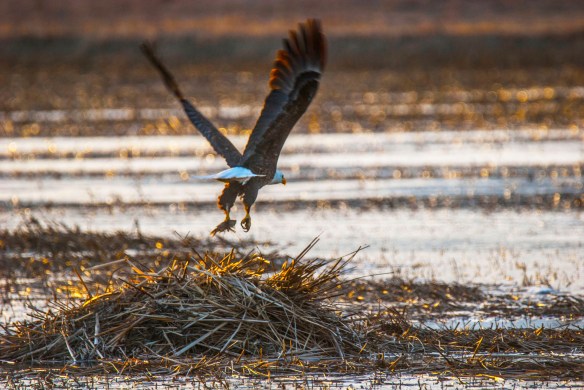
A drive on the loop most times of the year will provide nature lovers and birders ample sightings, and it seems no two drives ever offer a diet of the same winged species. No one should be shocked at the chance surprises, such as a bald eagle crashing into the water before departing with a fish secured in its talons, or the sudden appearance and flight of the quite rare “upside down” bobolink. American avocets drop in temporarily, as do the yellow legs. I could go on and on.
3.8.17 refuge12

So the blizzard offers a partial white out, and the taxes and rod awaits. I can smell the pork chops and sauerkraut simmering in the crock pot, and despite it all I almost pine for a quick trip through the Refuge just to see what is there to see. My feeder, though, offers a warm refuge for the likes of this old guy, so most likely I’ll simply stay put.

Prayers for the Prairie

Ah, yes, the wind. Gales. Gusts. Lulls. Then, more of the same. All we’re missing is the popping of the sails. Rather, on this remote Minnesota farm, chimes dance beneath anchoring limbs, adding tingling percussion to the seemingly constant low roar.

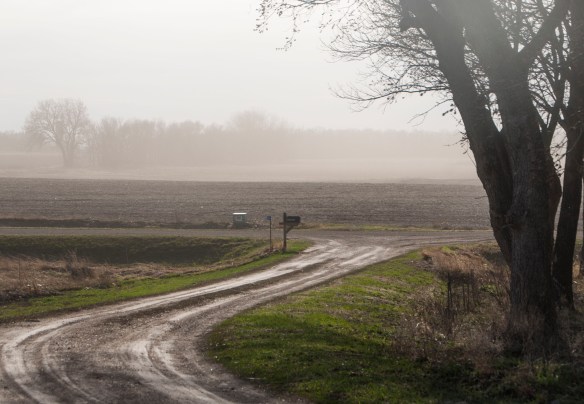
This is the prairie, after all, where grasses once grew. And the winds continue to blow. In the near distance nowadays, a softness of color hangs along the low horizon just above farm fields. Especially in areas where the grasses are long gone and the fields were tilled bare months ago. Some fields were worked last July and August following wheat harvest, meaning they will have been exposed to the prairie winds for 10 or 11 months before a new crop emerges enough to protect what is left of the soil. Most of the ground was worked after corn, soybean and sugar beat harvests in November. And that softness along the horizon? Dirt, aloft in the winds, misplaced, adrift and gone. Forever.
3.6.17 wind2
At a showing of my “Art of Erosion” images at the traveling Smithsonian “Water Ways” exhibit last summer, a man asked why he doesn’t see dirt along the ditch banks beyond the winter months. “It’s there,” I explained. “It’s the snow that provides contrast, making it easier to see.”

That contrast is an integral part of a showing of the “Art of Erosion” now displayed on the brick walls of Java River Coffee House in Montevideo, which will hang through March. An artist’s reception is scheduled for this Friday, March 10, with the wonderful women’s musical group, Homemade Jam, providing entertainment. We’re calling the event “Prayers for the Prairie.” This will be the first public display of the “Art of Erosion,” which has made the rounds at many sustainable and organic farming conferences, plus the Smithsonian exhibit at the Prairie Woods Environmental Learning Center, over the past three years. Common comments fall into the “beautiful but sickening” genre.
java deal
Choosing to hang the 19 canvases and call-out boards came about with much thought and discussion, especially considering the political climates in both St. Paul and Washington, D.C., where a political party seems intent on loosening regulations without much concern for the health of the planet. Consider this a protest display, if you wish, for it is certainly meant as a statement. The “Art of Erosion” was made possible by a manifestation of failed farm policy and a neglect by individual farmers of healthy soil stewardship practices. The images were made on a Sunday, January morning after returning from a trip to Marshall the previous day and seeing the miles upon miles of “snirt” — a colloquialism describing the combination of snow and dirt — along the entire trip. All were made in an area of Lac qui Parle, Chippewa, Swift and Big Stone Counties, and beyond minimal cropping, were not enhanced in any way with computerized post production software.

Interestingly, this idea came on top of a longer drive home from Missouri the previous Thanksgiving when we witnessed snirt along the highways from Missouri through Iowa and into the former prairie region of Minnesota. Hundreds of million tons of dirt, all blown away. Online research showed that Land Grant universities in much of the Midwest, and even into Canada, were concerned enough to post instructions on how to protect our valuable croplands from being misplaced by the winds. Simplest and least expensive was simply holding off tillage until spring. Indeed, that is evident along our roadsides, where ditches along stalk fields remain quite clean.
4.12.15 brownout2
Thankfully there has been a lot of conferences and efforts since to convince farmers to plant cover crops, explaining multiple benefits such as a softening of the hard pan, better moisture retention and the addition of crop nutrition elements. All on top of preserving a key component of life … our soil.

Numerous soil experts such as Rick Cruise, professor at Iowa State University and the director of the Iowa Water Center, points that besides cover crops, no-till, terraces, grassed waterways and any number of practices can contribute to saving soil in row-cropping enterprises. He emphasizes that some landscapes are sustainable only under an agronomic system that includes perennial crops – trees, prairie and pasture.

snirt50
David Montgomery, author of “Dirt—The Erosion of Civilizations”, points out that the earth’s “last frontier” of farmable lands are now being cultivated, and once that thin layer of life sustaining food production is eroded away, then what? Erosion has brought an end to man-made civilizations throughout history. Will snirt be end of ours? Does anyone care? Aren’t farmers and others aware of what is being allowed to happen to this soil?

After a recent Water Quality Conference, a Minnesota State Representative who has since introduced legislation to eliminate a soil saving buffer strip initiative, was quoted as saying that farmers in his district were “great stewards of the land.” A quick trip down Minnesota Hwy. 28, which was the likeliest route for his way home from the gathering in Morris, showed miles upon miles of blown dirt in the ditches and road banks, and several places where windbreaks had been dozed from the ground, eliminating even more protection for this “last frontier” of farmable soil.

Which led to a friend to ask, “What? I wonder which route he took on his drive back home?”

Spring in the Potholes

Spring in the western prairie region of Minnesota comes alive in some special venues, though none more lively and boisterous than in the wetlands.

Ah, but what a term. Some who grew up here look askance at you when you say, “wetlands.” More common to them is the term, “slough.” Technically they’re the “potholes” of what ecologists call the “prairie pothole” biome. These are the remains of the last glacialization some 12,000 years ago, and if you happen to see one, or if you are more fortunate than most by living near one, you are near a rare moment of earth time.
flight3
Here is why: since John Deere’s plows came to the prairie with the encroachment of European settlers, 99 percent of the potholes have been drained to make way for what we call commodity crops. Corn and soybeans, mainly, but also sugar beets, potatoes, edible beans and sweet corn. A “prairie” is a really a misnomer since all but one percent of these former grasslands that stretched from mid-Canada into Texas remain, sectioned off into mile-wide squares. In the early to mid-1900s, there were typically four quarter-section farms. No more.

Before the plow and eventual underground tile drainage and ditching, there were thousands upon thousands of potholes dotting the former prairie. Several in each quarter section. Ghosts of those wetlands typically appear each spring when the frozen subsoils prevent the spiderwebs of drainage tiles to move off the surface waters. In time, perhaps, the ghosts will return, for as a dear friend and naturalist, Tom Kalahar, preaches, “Nature always wins!” We can only hope, though none of will likely see this in our life times.
2-20-17-raindrops22
After living in the industrialized “black desert” of farming for the first twenty-some years of my prairie life, moving into Minnesota’s “Bump” has been a revelation. For all around our Listening Stones Farm are many natural potholes. A large one can be seen from the upstairs rooms of this old farmhouse just over the rise to the east, and a smaller one is up and across the road from our upper prairie. Thanks to a recent hint we have discovered a jewel box of potholes just north of the “Clinton Road” just three miles from the mailbox. Big Stone County is perhaps the closest county in all of the former Minnesota prairie pothole region of resembling the original, post glacial landscape. Indeed, many federal and state sponsored restored native plantings surround some of the wetlands, allowing you to almost visualize how the natives saw the land pre-plowed back in the 1800s.
2-26-17-wanda3
Best of all, living nature seems to agree. For those of us fortunate enough to reside here, spring is truly a special season. A recent trip north toward Barry found about 20 bald eagles resting on the ice of a frozen pothole. A month after moving here I saw my first Curlew on a nearby wetland. We’ve already seen several pairs of geese on the smaller wetlands, presumably scouting for nesting possibilities. Within a few weeks male Redwing Blackbirds will arrive to stake out territories on cattails now frozen along the edges.
redwing2
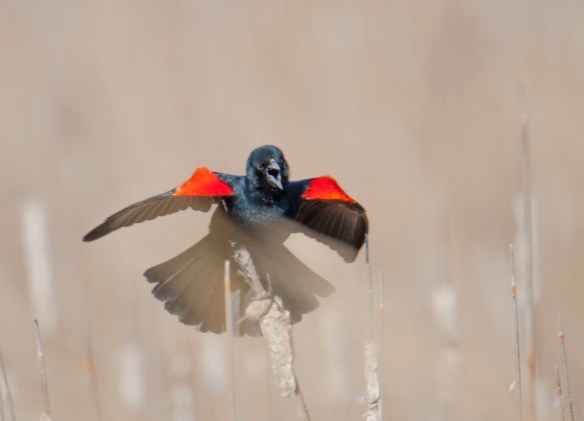
Back in my country weekly days I was often amused by phone calls from readers excitedly describing their first viewing of spring Robins. Sorry, folks, I’d suggest, but the true sign of spring already happened two months ago in a nearby slough when the Redwings appeared as suddenly as they had disappeared last July, their feet securing balance on a browned and bouncing stalk of wind-blown cattail, nervously alert while staking territory.

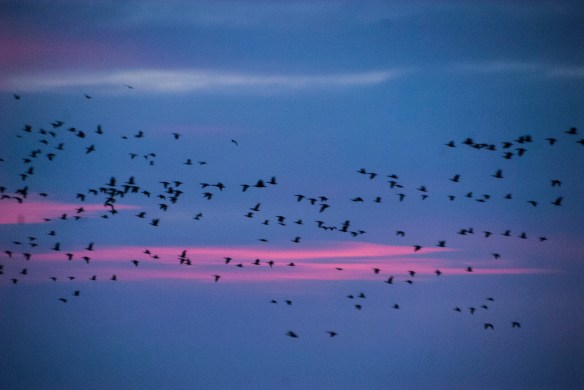
Just being outside right now gives witness to skein upon skein of Canadian and Snow Geese flying over, announcing their flights in seemingly joyful chorus. And friends sitting around a late afternoon bonfire will look skyward following the sound, searching for “vees,” faces fixed in smiles. Early mornings as the sun rises, you can hear geese either over the hill or feeding in one of the unplowed corn fields nearby. As the potholes thaw, more and more will alight in rest and the sounds will dominate spring air. Literally thousands of geese at a time will hole up in the wetland to the east. It is a sight and sound I’ve thoroughly welcomed in my life and anticipate with glee.
3-27-15-wetland2
Spring in the potholes is just as alive and vibrant as any I’ve found while canoeing the nearby prairie rivers. Be they Swans, geese and the many species of ducks, when the potholes come alive, spring has finally arrived.

Foggy Walk in the Woods

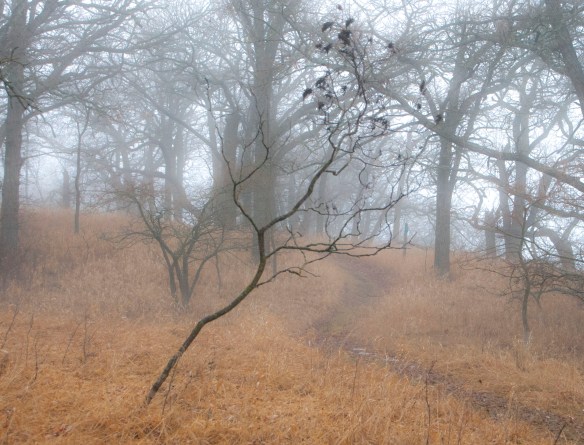
It was a quiet woods. An earthen path thawed just enough on a February afternoon for a near silent hike.

Waves of fog eased in off the adjacent Big Stone Lake, precipitation rising from an uncharacteristic deep winter thaw. Dampness was prevalent all around. Rain had fallen most of the morning, and now in the afternoon, an occasional drip gravitated from limbs and branches overhead.
2-20-17-raindrops9
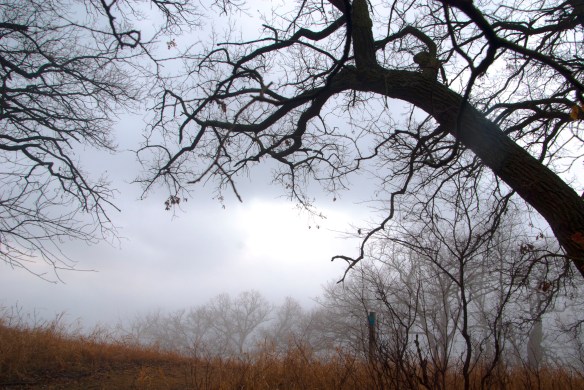
This shrouding by fog gave the oaken savanna a sense of mystery. At times the path through the wood was visible for a few hundred yards. Sometimes, much, much less. About as far as I could heave a stone.

You would hope for a sighting of a whitetail deer, and they’re here. Hoof prints sunk fresh in the newly thawed mud in the pathway. Mature prints of a winter herd. Where their trails crossed the cleared path for humans, the muddy evidence seemed fresh and raw. Used. Yet, there was no sightings.

Indeed, for most of the walk there was an eerie silence. Initially the caws of a couple of distant crows were heard. But before walking down the hill past the picnic tables where my friend, Lee Kanten, and I had sat about this time a year ago when I was in the start of healing from an unexpected end to a marriage. On that February afternoon, at about the same time of day, we had taken the sun-warmed path from the opposite end of the park. Deeper into the woods on this February afternoon, the silence enveloped you as did the fog.
2-20-17-raindrops10
About halfway along the route through this oaken savanna of Bonanza is a brook, one that seemingly never freezes. It is fed by a series of springs further up the deep ravine. The brook was my goal, and announced itself long before I came over the last ridge before entering the ravine. Yes, the wood was this quiet. And the announcement was not unlike when you can hear the lapping waves of an ocean shore. A sweet sound, of ripples cascading over small rocky steps and fallen timbers, relentlessly heading for the lake.
2-20-17-raindrops14
Perhaps I’m not alone in coming to a stop here. A small raft-like bridge crosses the brook, one that is weathered and is host to a small carpet of lichen. When it isn’t so wet I like sitting on the edge of the bridge, my feet dangling just above the moving waters, just to listen to the lyrical babbling of the brook. I fully expected the recent thaw to have brought a higher rush of water down through the ravine, a torrent, perhaps, and was somewhat surprised to find what a friend calls “the usual.”
2-20-17-raindrops16
Sometimes in the midst of a winter day, if the snow isn’t too deep, I like coming here just to see and hear the moving water of the brook, and perhaps this was my underlying and unspoken reasonings on this afternoon. To get here you must traverse a bit of hilly country and wind your way through a vast bed of buckhorn sumac. On this day most of the bobs had been tended to by the deer and birds, though you could still see a reddish brightness of those bulbous seed heads peeking through the foggy grayness. A welcomed sighting of color fighting through this dense grayness.
2-20-17-raindrops19
Whether one can fully feel sated of the sounds of the brook, there is a sense of comfort that all of this will be here another time, and the walk back to the car brought new sightings along the timbered path. New photographic poetry, if you will. A foggy woods is much different for the senses than a clear woods, and you find yourself stopping now and then for the beauty of a deep breath. Yoga moments in the woods of nature.
2-20-17-raindrops21
Then you reach the car, and lay the camera in the seat before leaning against the chassis for a last appreciative moment. Just then a prairie wind arose, and within a breath of a moment the fog blew away and the woods cleared … along with the mysteries of an afternoon in a foggy wood.

A Promise for a New Year

10.11.15 headwater11

A need to search for peace, within myself and with others ….

A day into the new year and thankfully I’m facing far less drama and heartbreak from this time a year ago.

This past year was long and hard, yet one that ended well in a relationship filled with what I now feel is a trusting love. Admittedly,  I felt the same confidence a year ago. Feelings that weren’t shared.

So it seemed a good gesture to host a dinner party with some of those most responsible for my healing from the unexpected beginning of 2016. Unfortunately there wasn’t enough room for all who helped, and some of those incredibly important people were away for the holidays.

Our little gathering here on Listening Stones Farm included one of two conversations of awakenings from the past two nights of New Year’s gatherings I hope will stick with me. Both were telling and relevant for me as we head into what appears to be a turbulent future for our nation when considering these past several weeks of prelude with our forthcoming new president.

While his name is unimportant, the first conversationalist seemed to be the kind of man who I’m guessing voted for our incoming president. Angry and white. Spiteful. Mistrusting. Opinionated. Seemingly prejudiced. And, quite outspoken. In my four years of living here we had not crossed paths, and considering his take on life, this isn’t surprising.

Tall and imposing, the man interrupted a woman friend several times in a kitchen conversation to express opposing views. He was assured and loud, and his being unwilling to hear of a view different of his own angered me most. He possessed a sudden summary with a declarative response to whatever was said. He was angry with the world he saw. He found blame with Obama, with unseen immigrants, and disputed the claim that the cost for welfare recipients was small in comparison to other federal budget items.

“There’s way more than they claim!” he spat. “Money wasted on people who don’t want to work. Immigrants. Wasted taxes!”

This, however, isn’t about him so much as it being about me and my unspoken response to his boorishness. Yes, I was angered, and not just for myself. The woman he was unwilling to hear is highly educated and works to help communities and individuals with business advice and grant money. Her attempted responses were measured, and came after she heard him out.

My anger toward his attitudes and outspoken responses basically ruined an otherwise fun gathering of friends and neighbors, around a buffet of excellent foods. My seething anger was apparently obvious to others.

Then on New Year’s Day a different group of folks gathered here on the farm for a similar gathering. We didn’t have the incredible array of home-smoked meats of the previous party, but we had an ample layout of good food. After we ate I mentioned how much I appreciated us being respectful of one another around the dinner table, and referenced the moment from the night before.

“I actually enjoy being in those situations,” replied a friend, who as a union negotiator has talked many times about he must listen to all sides while attempting to create consensus. “I love going up to the coffee shop  and sitting down with the old timers and asking them questions. ‘So tell me, what is it that convinced you to vote the way you did?’ And so forth. Then I listen and ask more questions. You don’t have to ask many questions before we realize we’re not that much different from one another, that we share many thoughts. It’s dialog and conversation.”

Suddenly I realized that my response of sudden and seething anger from the night before had been wrong and misguided. Indeed, on this morning after our dinner I was in a conversation with the woman who was being bullied, in my opinion, at the first party. She said: “I find that compassion helps me with those who hurt. I feel we are in the situation we are in because we could not listen with compassion to some who were suffering. And we may not even see the suffering. In fact, we usually don’t.”

As we move into a new year, with so many at odds with one another, I find myself needing to instead ask more questions and to listen to those answers compassionately. For being angry and walking away from one another is what perhaps brought us to such a divide in the first place.

12-30-16-daybreaka

“Daybreak” adequately illustrates my awakening; of opening myself to listening with compassion rather reacting with a quiet, seething anger.

Save

Save

Save

Blue

For days now I’ve been thinking of what to write about the color blue.

My wish was to wax eloquently about blue as Paul Gruchow wrote of the color green.

I cannot, so I’ll simply allow these few images to speak for me:

DSC_0110

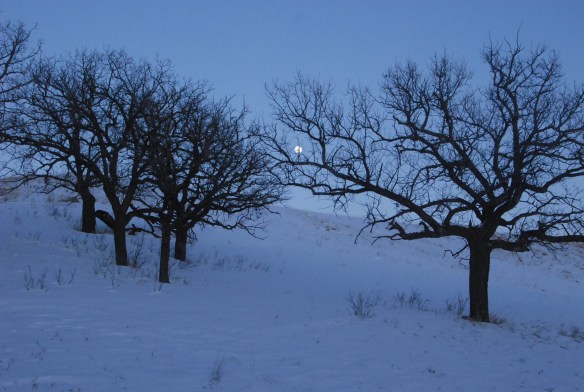
My first image on a moon lit night in Bonanza.

deer 2

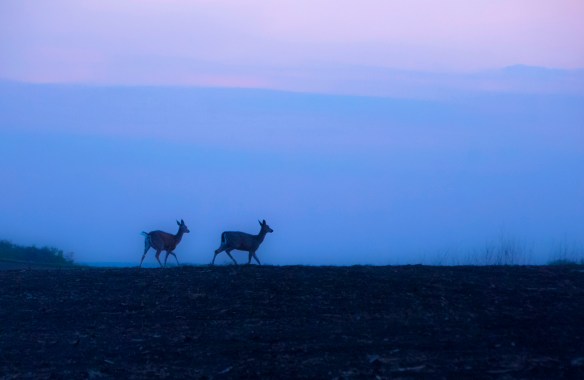
Deer in prairie dusk.

Universe

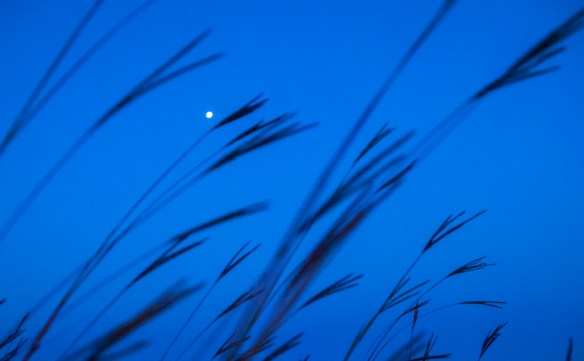
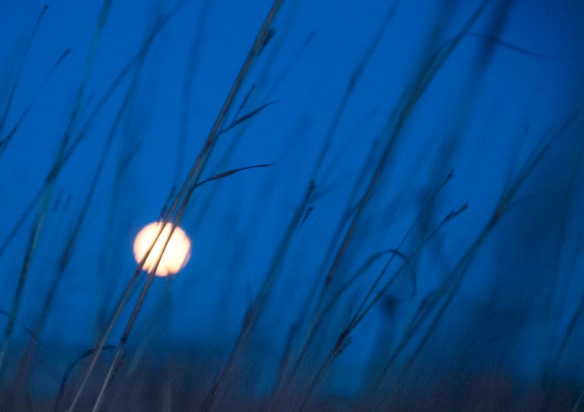
Universe … Big Bluestem and a full moon.

refugemorning9

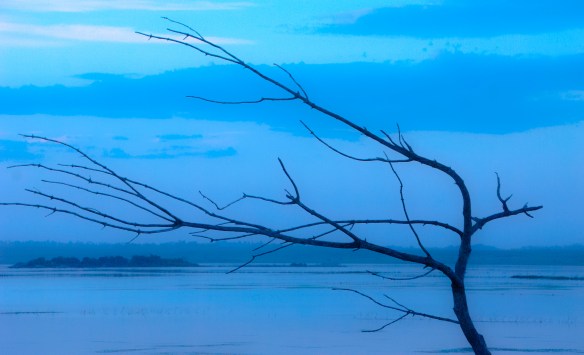
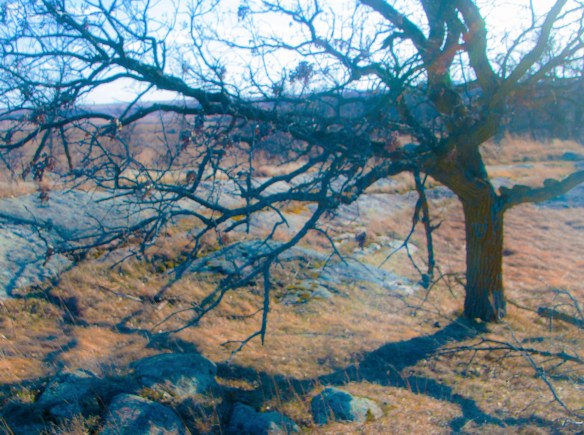
A small, stark tree with the flooded Minnesota River serving as a backdrop.

moon image4

One of the first images taken at a WMA just down the road.

refugemorning7

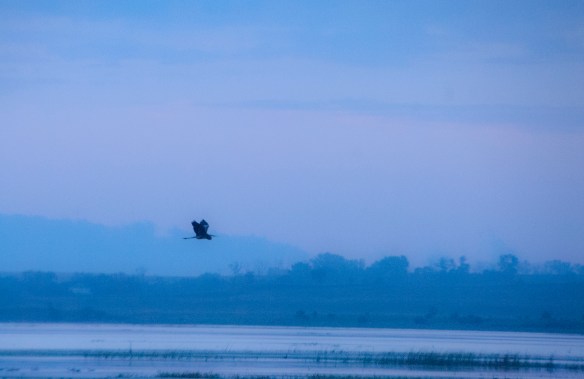
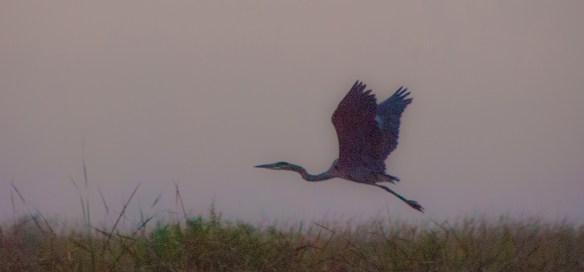
A Great Blue Heron on a foggy, dawn morning at Big Stone National Wildlife Refuge.

3.30.16 deer2d

Two deer rush away at a nearby prairie.

Bends in the Path of a River

Leaves were breaking from the budding bank-side maples as our group meandered down a stretch of the Pomme de Terre River north of Appleton. And, yes, the river meandered from one bend to another as wild rivers do. As my lead canoe came around one of those bends two White Tail Deer raised their heads from the morning drink, as shocked at seeing us as we were delighted to see them. At once, in a heartbeat, they pivoted, clamored up the bank and bounded away into the woods toward safety.

Well, sort of, for at the very next bend of the river we came upon the two a second time as they lept into the fast, runoff waters to escape our intrusion once again. One made it safely across the current to the opposite bank. Not the second one, for it was plastered by the current against the upturned roots of a deadfall. Having had canoes pinned like this, the pressure is never ending, intense and strong. The frightened deer struggled mightily, and as we neared we discussed what we might do, if anything, to help the deer that was in obvious trouble. The closer we came the more the deer thrashed and kicked its legs, struggling for any leverage in the water that covered all but its head. When we were not 20 feet away and had begun to maneuver the canoe to in some way help, it had generated enough inertia to edge itself off the root mass of the deadfall and make it across the river.

3.13.16 bigstone2

Past the oak at Bonanza, the ice on Big Stone Lake is honeycombed.

The imagery of that moment several years ago came back to me while on a recent walk with my friend, Lee Kanten, in the Big Stone National Wildlife Refuge when we stopped on a high outcrop overlooking a bend of the Minnesota River. Such bends of a river come to me often as life-like metaphors, and one I’m relying on now as I, like the deer pinned on the deadfall, attempt to get back on firmer ground after an unexpected divorce.

Lee has been the “guys in the canoe” in that metaphor.

Something else I thought about as we sat basking in the warm sunshine on that late afternoon was how fortunate I am to have a manfriend who can talk intelligently about life and relationships. We men are not noted for having such deep discussions of the heart, although I might argue against the cliche. Perhaps this isn’t as uncommon as reputed. Since moving to the prairie a couple of decades ago I have been fortunate to have had a handful of male friends who have been forthright and understanding about relationships. Mostly canoe talk, if you will, and yet, those conversations often lacked the depth of my conversations with Lee.

3.13.16 bigstone3

My friend, Lee Kanten, who is equally as good at consoling one on the loss of love and the hopefulness of a happy future.

Sometime last fall we made plans to take lunch at a barbecue joint in Milbank, and yes, there is one and it has delicious brisket and ribs smoked the right way. We sat at a picnic table outside in the sunshine and brisk breeze and easily moved past formalities. Lee, to my knowledge, isn’t a fisherman, nor does he pay much attention to sports. He’s an artist, film maker and musician who wandered onto the farm during a Meander two years ago at the start of his retirement. Over time we connected, and that was thoroughly evident as we gnawed on the rib bones. Time has erased the exact content of our conversation that afternoon, although I recall returning home and telling my former wife how nice it was “having a male friend up here I can talk to about real stuff.”

She agreed and encouraged the friendship. And now, because of her decision to end our marriage a few months later, that friendship with Lee has taken on deeper meaning and importance. On the day following her announcement to me Lee drove out to the farm to spend a long afternoon as I worked through my initial tears, fears and heartbreak. That they were departing the next day for several weeks on the road was especially tough except for cell phones and the calls back and forth as he and his wife, Jeanie, called to check on my state of mind, and were kind enough to hear me through too many times to count.

3.20.16 walk2a

Finding solace in nature is part of the beauty of where we live.

A few weeks ago Lee called to suggest we take a walk. Someplace in the woods. In nature. We took Joe Pye and headed over to the Bonanza Area of Big Stone State Park. Lee asked good questions and was an excellent listener, and as we walked we talked of relationships, that of his son’s recent breakup, that of a cousin’s issues, and of mine. At the end of a long walk through the wooded hills and ravines we came out at a picnic area and sat for awhile. “This was where we came when my son broke down about his situation,” he said, looking around at familiar surroundings.

On that warm day Big Stone Lake was honeycombed with black ice. In a few days the winds and warmth would begin the sinking of the surface ice and the upper lake would become free. Ah, freedom. The start of a new season. Of new life. As if he were a metaphor himself, Joe Pye took the opportunity to chew through the restraining strap as we talked. So much symbolism in so little time.

The following Sunday we went to the Refuge and to a trail I hadn’t noticed in all the times I’ve been there. “We used to come here all the time when I was a kid. This was our playground,” Lee explained as we headed up the thin semblance of a walking path that looped through the scrub brush and cattails to within a few feet of the original channel of the Minnesota River. We then climbed up onto a series of gneiss outcrops that overlooked an upriver stretch of the river. While you couldn’t see where the stream came from nor the exit, we were above a delightful and peaceful bend of the river. And here we sat to talk once again.

3.20.16 walk4

From the bend in the river from atop the outcrop.

As men friends, one consoling the other on the loss of love and of the hope for a more peaceful time ahead. Of looking at life as a series of bends of a river, never quite knowing what is around the next curve … not the challenge nor the possible beauty … just that the current continues to push you along, and you paddle as well as you can, and as much as needed, taking it one paddle stroke at a time.

Something a good friend both recognizes and reminds.