Travis Sandberg surprised me. I had entered his farm office for an interview for a We Are Water panel scheduled for display in March and quickly realized his office was also a studio for his taxidermy work. Although some of his acreage surrounds Listening Stones, his being a taxidermist was surprising.
Skulls with antlers littered the floor before becoming European mounts, all cleaned by mealworms so perfectly they glistened while awaiting a mounting on wooden plaques, already stained and polished, along with a wall lined with several traditional mounts in various stages of completion. In a later tour of his “man cave” inside his rural farmhouse, his own collection of artistic mounts was displayed along with antelope, pheasant and a fine walleye.
Yes, I knew he was a man who farms in a way that protects both his valuable soil and all of our water resources, which was the reason for my visit. But this? And, Travis is as diligent with his art of taxidermy as he is with his precious top soil.
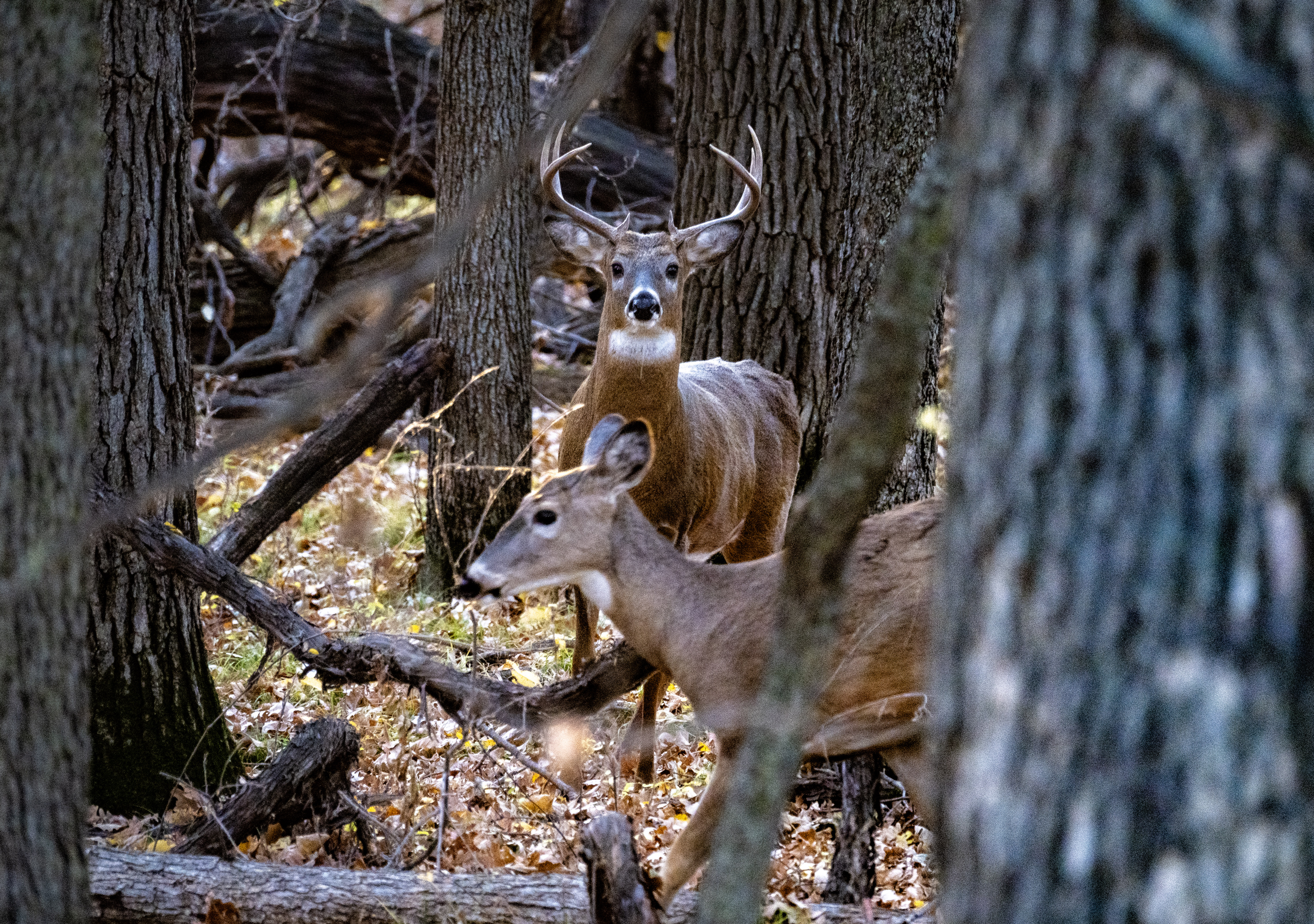
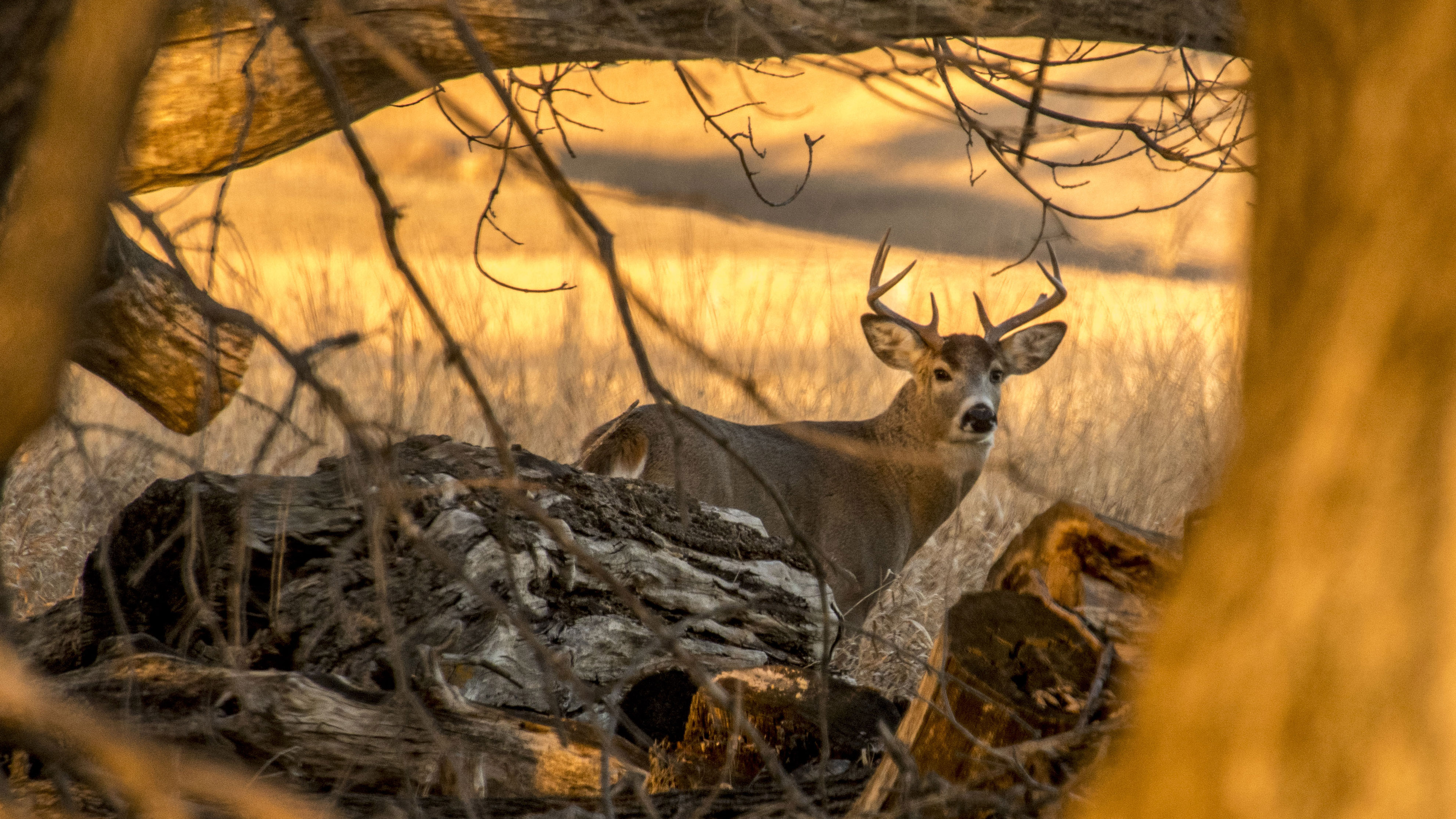
On the other hand I can also say that, yes, I once again got my antlered buck this past autumn. And, no, Travis won’t be mounting my buck for it still lives as far as I know. My buck was shot with my trusty Nikon rather than with a bow or gun, captured within the confines of Big Stone Lake State Park. This is where I go after the Upper Minnesota River Arts Meander and around the hunting season in search of my annual buck. I’ll also readily admit that I do not adhere to the two-week gun hunting season nor the longer, September to December, open season for archery.
This past year I was pleasantly surprised and relieved to even find a photographable buck, and a nice one at that, since there was a special permit granted for area farmers along the Lake Road to kill up to 10 whitetail deer they found munching on their commodity crops of corn and soybeans. Apparently it was a successful program for the deer population along the highway seems significantly reduced.
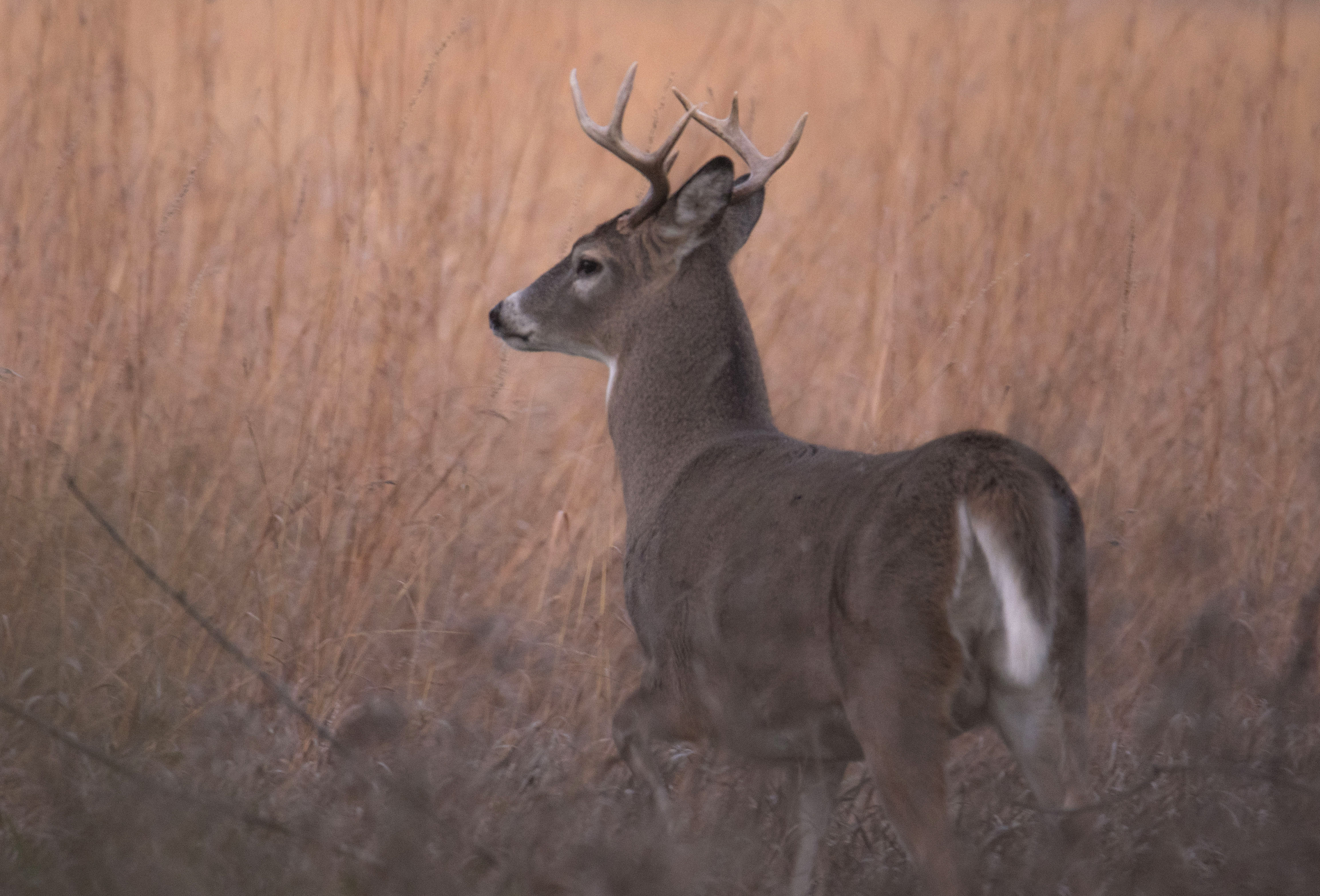
While that is rather sad, perhaps there is a silver lining for in past years in the depth of winter many area deer appeared to be stressed food wise. Shrunken flanks, and their munching on shrubs right next to the traffic without regard for the danger and in spite of their shy nature. Over population of the deer herd can also lead to such diseases as chronic wasting disease (CWD) and “blue tongue,” officially known as epizootic hemorrhagic disease. This viral disease can spread quickly through a herd. Symptoms include mouth ulcers and a bluish tongue.
Fortunately my antlered bucks have all appeared to be healthy, surrounded by a robust herd of does. They seemed to move freely on the park land and along the hills and ravines that drain into Big Stone Lake within the Bonanza portion of the park. Admittedly, there have been some beautiful racks on some of my bucks that were certainly worthy of Sandberg’s trophy’s art.
Way back in my youth I remember when a photograph appeared in our local Macon Chronicle Herald of the Missouri Conservation Department releasing a buck and three does from a horse trailer into a nearby woodland. The foursome had been captured in the Ozarks before being released into our wooded hillsides. Later, the same would happen with wild turkeys, and now both are so prominent that Outdoor Life and Sports Afield magazines have since placed Macon County within the top ten hunting counties in the nation for both species. That wasn’t my youth.
However, I was briefly a hunter. Years after the release I had a nice hickory recurve bow and arrows with Fred Bear razor-headed arrows and deemed myself rather proficient at archery, Thanks to my adventures with fly fishing in the area around our family farm, I had a rather decent knowledge of the nearby woody wilds. I knew of a stump surrounded by waist-high brush, and figured this would be a great hideout. People were not hiding in trees back then. I sat with my bow, arrow notched, on the stump to await the big kill. I envisioned the rack. A mount like I’d seen in the Herter’s catalogs and now on Sandberg’s walls. In fact, a mount like my friend Sandberg could create. After a few hours of fidgeting I gave up, hopped into the pickup and drove home with the realization that perhaps I wasn’t made for long hours of patient and tedious sitting. Today I might be more patient and in tune with nature. That was my last hunt, however, probably back in 1958 or so.

In my moving between states through my career years I hadn’t given either hunting or deer much thought. I do recall during my one disasterous month as an editor of Country Magazine viewing an excellent portfolio sent to the magazine by a Kentucky photographer with the most beautiful deer images I had ever seen. Leaping fences. Facing off, antler to antler. Picturesque portrayals in the hilly woodlands like back home. His images were definitely in the wild, and much different from what I had remembered by the legendary Leonard Lerue in the 1960s on whitetail deer.
Then I moved here to Big Stone County to plant a prairie and begin a second career as a prairie photographic artist and learned I was surrounded by incredible numbers of deer. I recalled the Kentuckian’s portfolio, and have since spent hours chasing the whitetails. Does and fawns. Winter, spring, winter and fall. And I began my autumn ritual of searching for a nice buck with a beautiful rack of antlers.
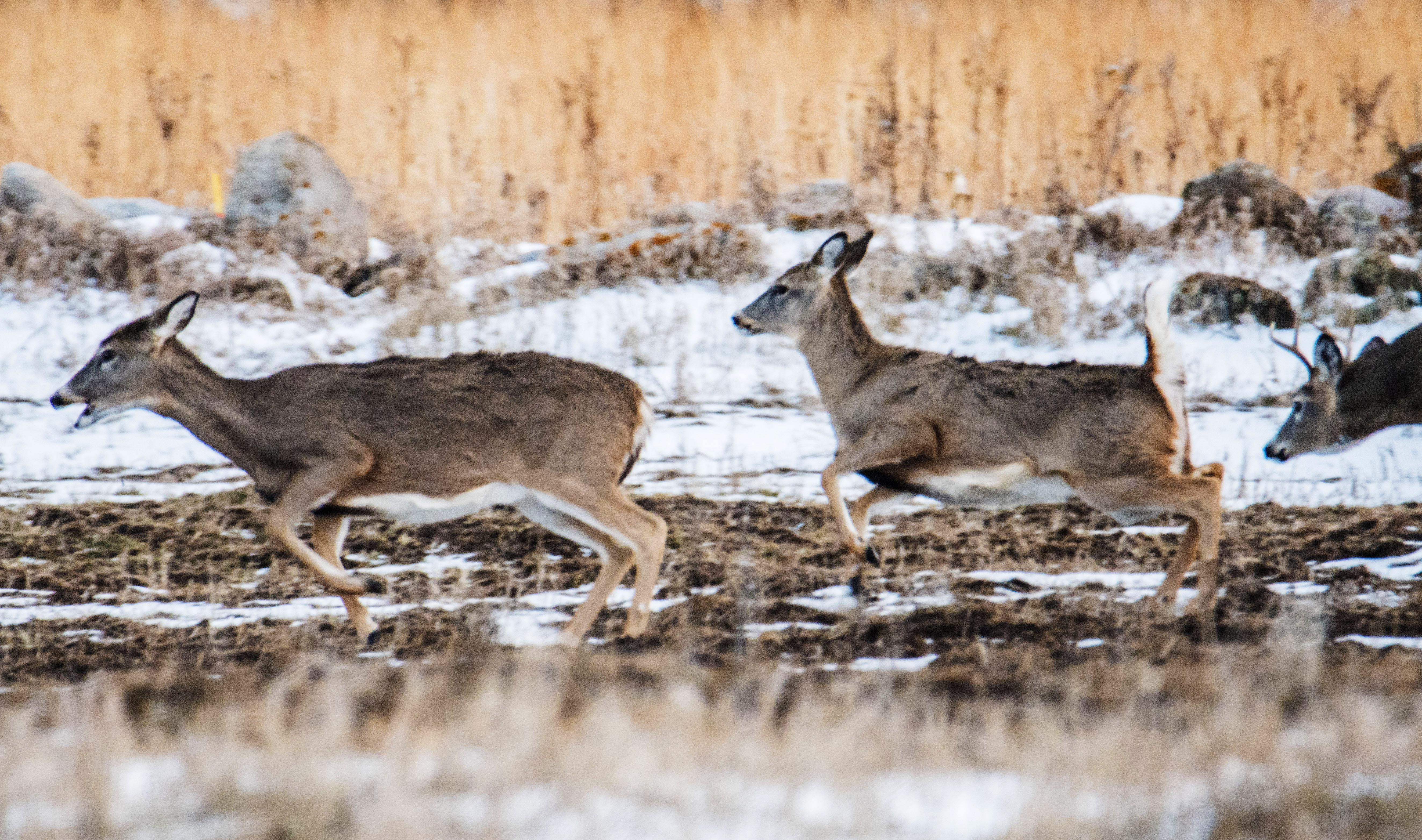
To date I’ve been rather fortunate. And the deer have been somewhat cooperative. My one wall “trophy” was discovered on a canoe trip along the Minnesota river years ago, the weathered skull of a nice buck that we believed had found a very secluded place to die after being fatally wounded. It hangs here in my office where I could probably hoist a collection of my big buck images. I’ll have to think about that.







 Listening Stones Farm