Homage for the Blues

A few weeks ago my poet friend, Athena Kildagaard, excitedly told me one of her poems, “Translation,” was going to be published in an anthology on Great Blue Herons called “Broad Wings, Long Legs … A Rookery of Heron Poems.” Within moments an order was placed through the publisher, North Star Press of St. Cloud, and what a fine collection it has turned out to be, for I’ve long loved these beautiful birds.

Even the cover is artfully donel, And if you’re one of those who read the jacket statements, check this comment by Chuck Dayton, an environmental attorney and activist: “Herons are magical. They draw you into their world without moving …” 

So true. I’m just as guilty of that spiritual seduction as Chuck, the dozens of poets featured in the fascinating anthology along with countless avian and nature lovers.
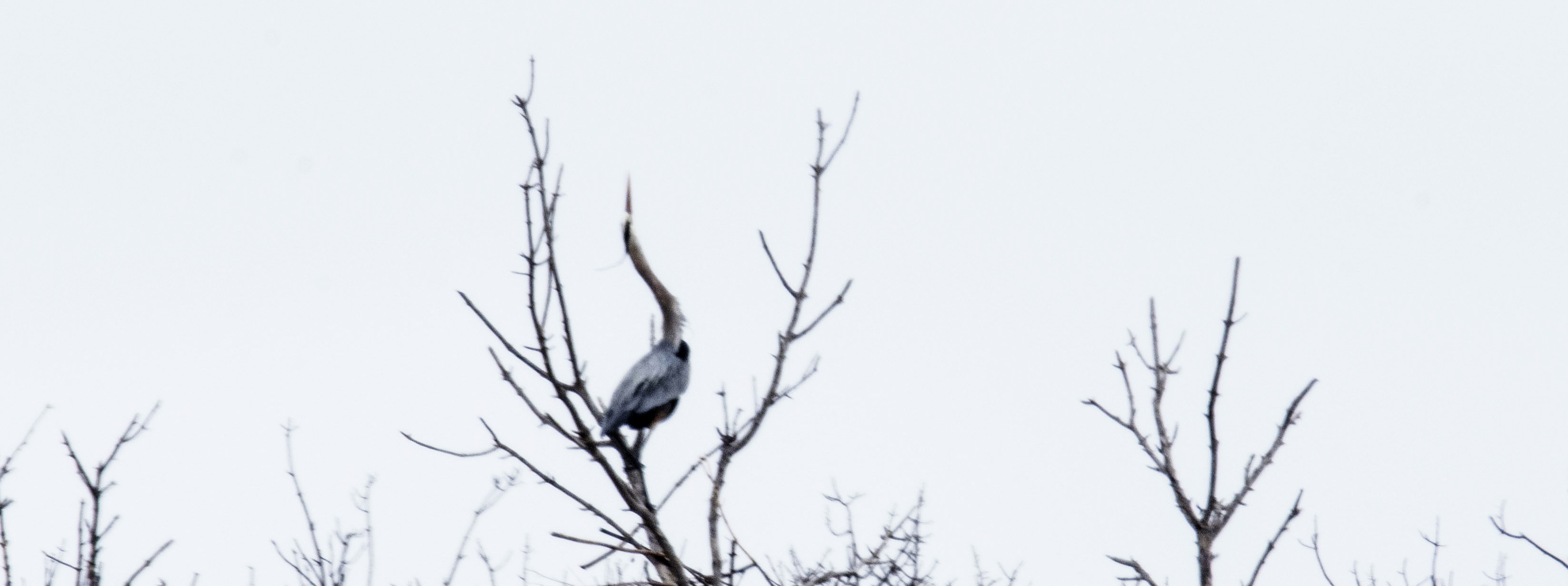
Being drawn into their world with moving.

Poets and herons share a lot of same … a strived beauty in form, a sense of seemingly meditative isolation, sudden flights of escape from perceived angst. This can come across in watching a heron at rest in old, worn trees, or quietly stalking an unseen prey, posing quietly in a small prairie stream, and yes, especially in the beauty of flight as they lift away from even the stealthiest canoe, easing lazily in flight downriver past leafy dogwood and cottonwood much as a poet edges from a crowd for solitude and a pad.

Eventually when you hear the beauty of their crafted words, carefully chosen, words stalked much like lone heron eyeing an unsuspecting frog, then finally, with the power of their chosen and spoken words, Athena and her brethren of poets stand poised to provide a mesmerizing reading of their artistic endeavors. 
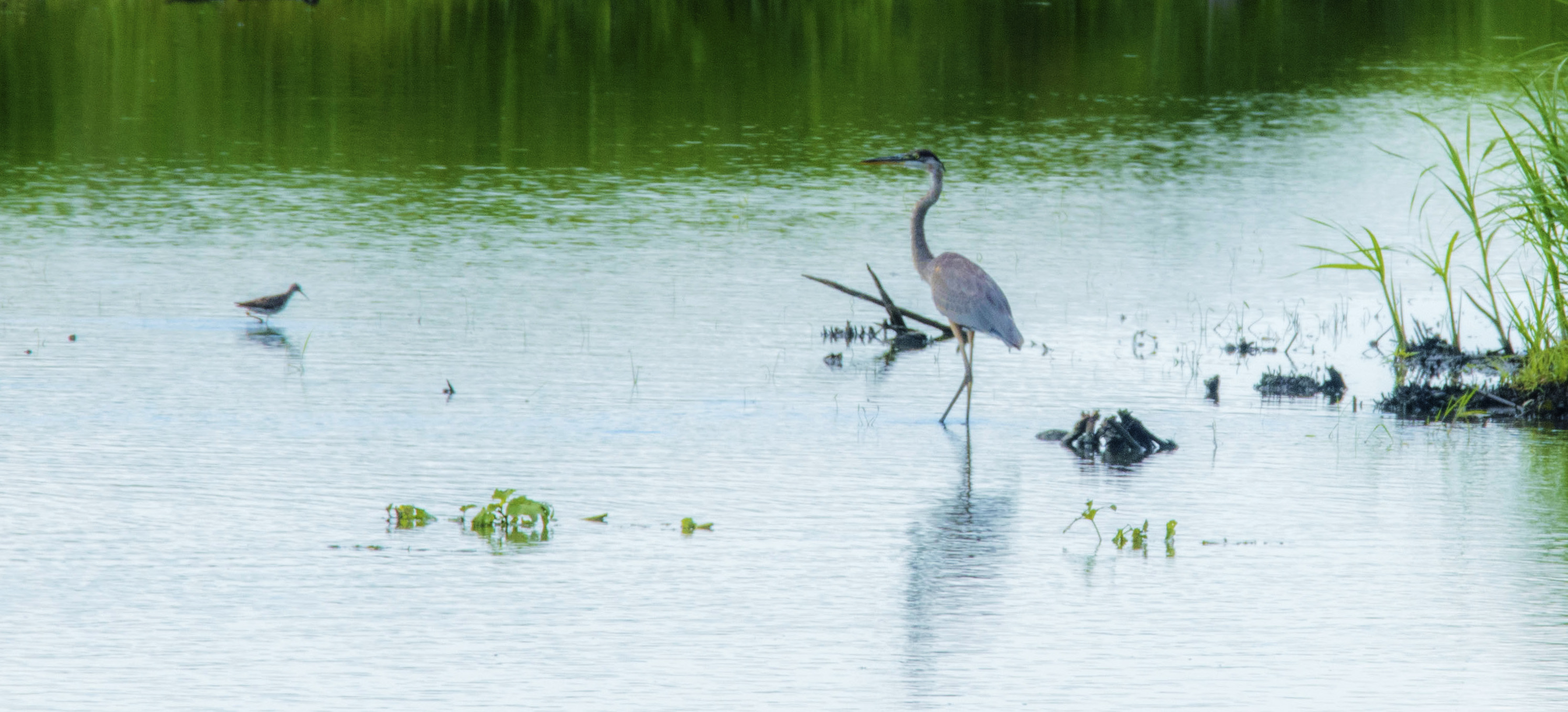
It’s all poetry, both in form or in word, in feathered flight or presented word. What a wonderful marriage of nature and language.
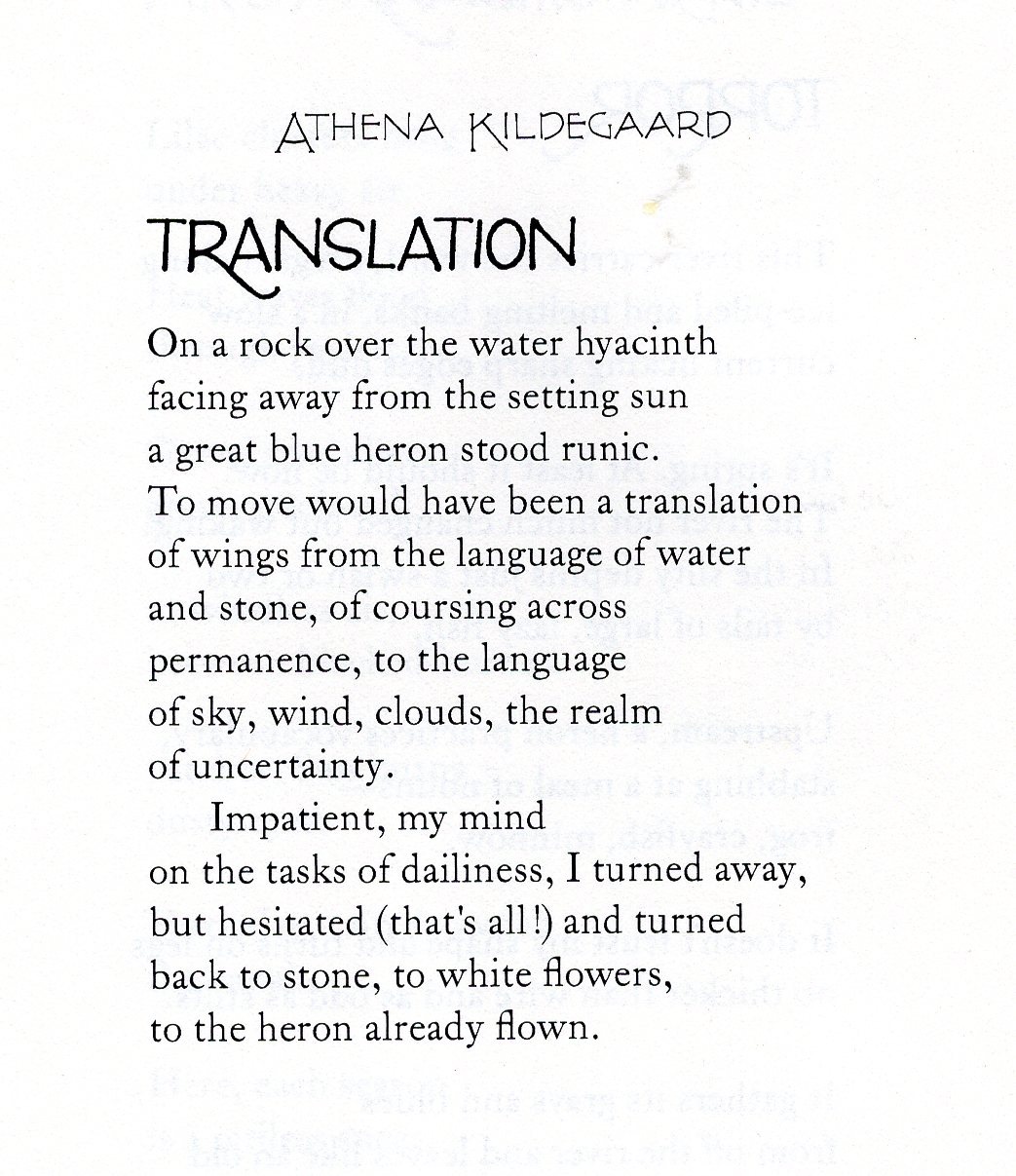
Athena’s poem, Translation, that led to grabbing the anthology.

Yes, this collection of poetry pays tribute to one of nature’s more splendid birds, the Great Blue Heron. Our family has kept a keen eye on these lonesome avian artists for many years. Sighting her first heron of the year meant that my late wife, Sharon Yedo White, had at last witnessed the closure of winter; that spring was soon upon us; that nearby waters were finally free of ice and the prairie meadows would once again bloom. Yes, for her herons were the artfully flying harbingers of a changing season, necks bent in flight with legs stretched behind straight as an arrow, a slow blur of powder blue, gray and white, all crowned with a short hooded cape of blackness.

Sharon loved these curve-necked fliers as much as I love my Sandhill Cranes, and perhaps for many of the same reasons. Grace. Perfect form and beauty, in waterside pose or in flight. along with an independent will. While I’d suggest that herons are much more solitary than cranes, collectively their individual beauty gives both species a select space in our appreciation of avian artistry.
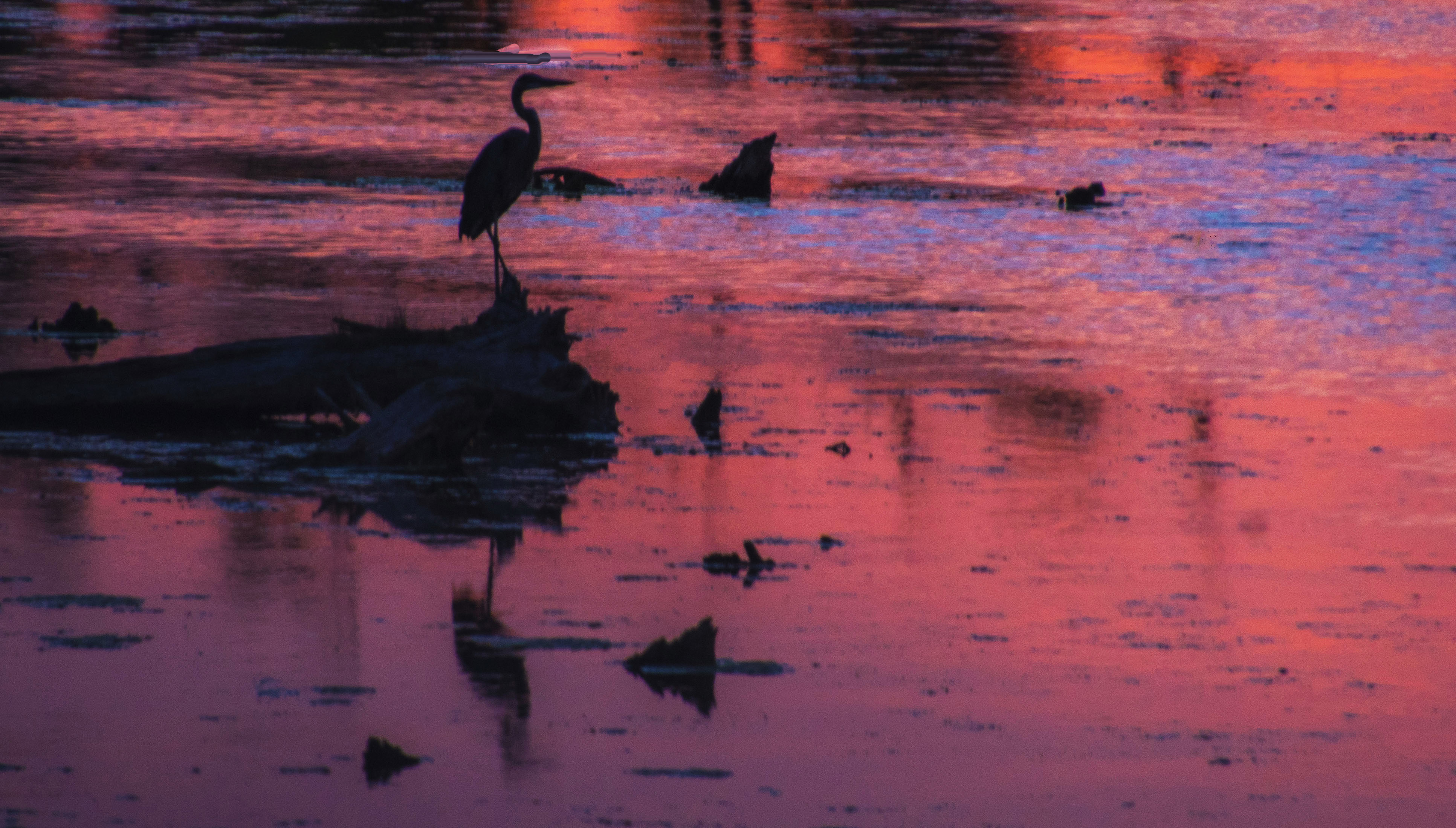
We didn’t see many Great Blue Herons in my youth, although our move to Minnesota brought us closer to herons than ever before. Our first two homes were along, first, the St. Croix and then later, the Little Verillion River near Hastings. I soon discovered the beauty of fly fishing from canoes, and early mornings in a canoe flipping flies for bluegill or bass in the reedy shallows sometimes allowed me to sneak up on stalking, solitary herons. Once in Camp Lake in central Minnesota, a heron eyed me cautiously while strutting on a wooden dock as I quietly stroked my paddle. I expected flight at any moment, yet it defiantly held ground. 
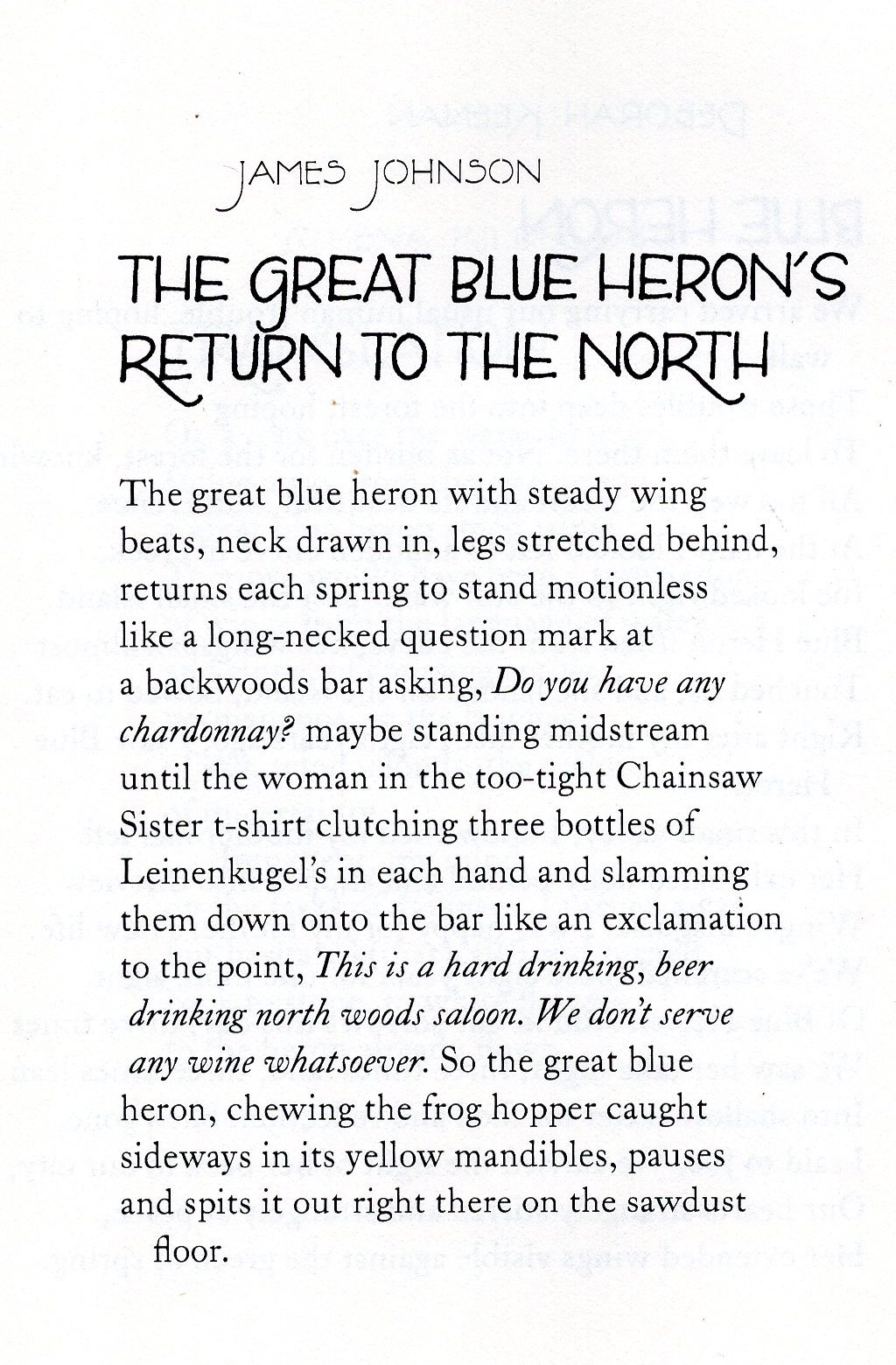
Poetry doesn’t always have to be so serious.

Canoeing the rivers means you can rarely keep up with skittish herons as they keep a respectful distance between themselves and the paddlers. Yet, one late August or early September morning our fishing party of a handful of canoes that had pushed off from Skalbakken County Park below Sacred Heart passed several nearly full grown youngsters perched along the riverine bank. Back then there was live rookery tucked close to a nearby river bend, so we suspected these were the nearly grown from the spring hatch. Perhaps fear or even survival had yet to enter their collective mindset. Who knows, yet it was an unexpected and welcomed surprise.
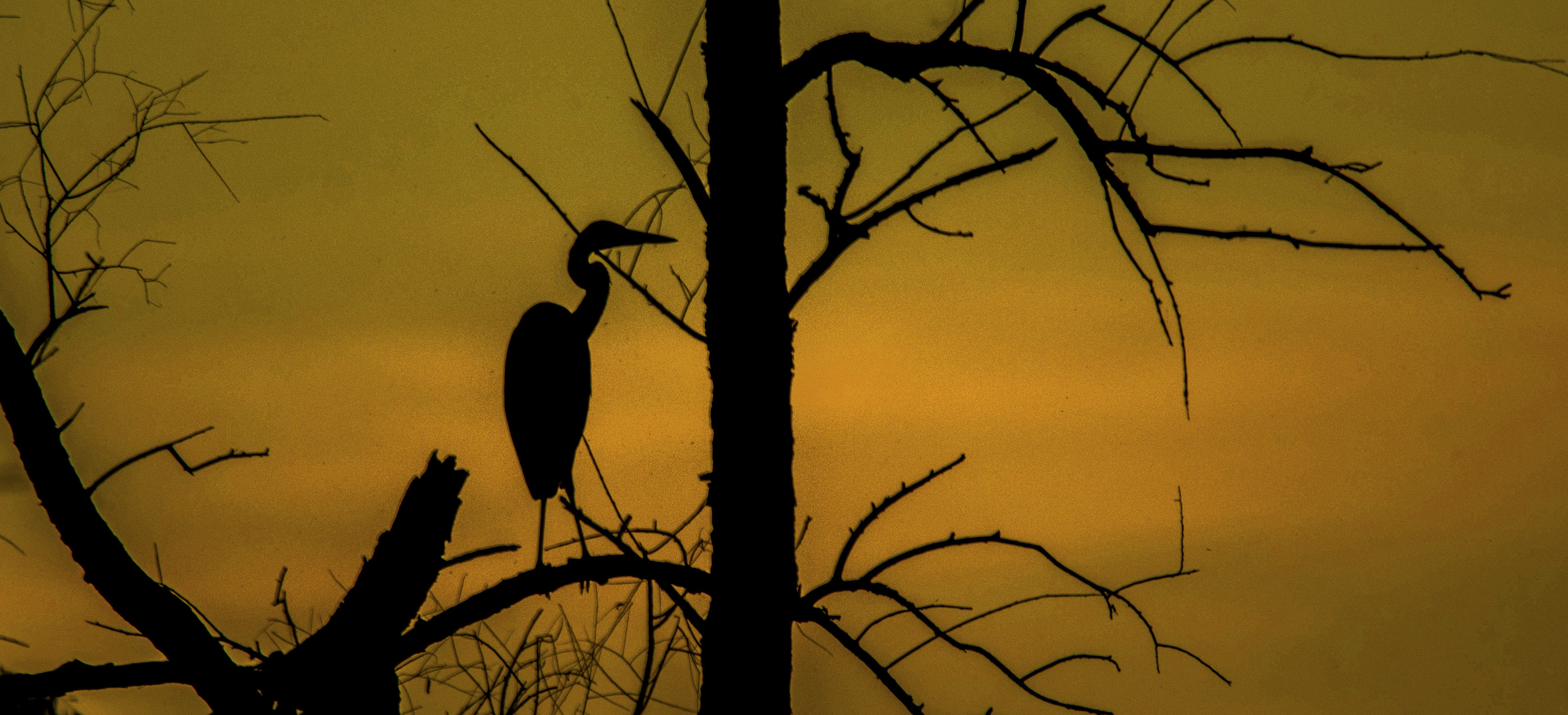
Their grace and beauty has always attracted my photographic eye. My sister still displays a Christmas gift of one of my first images of a Great Blue, one I photographed in a wetland just west of Willmar one evening on the way home from fishing. That one morning fishing on Camp i would have loved to have had a camera although by then I had learned that cameras and canoes are not necessarily good companions, Yet, I can hardly pass up an opportunity of capturing new and different images. I’m seduced by the magic, drawn into their solitary stealth, captured by those pleasing plumes of color and awed by such graceful flight. 

One of the poems, written by James Silas Rogers, called “On the Cannon River” … which we canoed dozens of times … hit so close to home:

“… Our quiet, passing canoe

untethers their blue-gray forms.

They lift

and in solemn, slow strokes

row the air, move downstream.

Without wanting,

we chase a Great Blue for miles,

in pursuit of solitude.”

Our Marvelous Maples

Heading into our short Fourth of July vacation a year ago, I spent quite some time studying a way to portray a gnarled and rugged looking old maple tree on the farm where I was raised. Despite its age the old maple keeps hanging on, for it was an old tree when I was a kid some 70 years ago.

For a brief period of that time one of the limbs held a rope swing. On hot, humid summer afternoons, hay crews would wander across the lawn to lay in the shade after one of my mother’s incredible meals … fried chicken or braised roast beef, mashed potatoes with thick, rich gravies, and typically one of her delicious fruit pies. Long before air conditioning, this was as cool as we would be from the dews of dawn toward the setting of the evening sun.

While from the distance it appears to be rather healthy, for the limbs are still flush with leaves, a closer look gives evidence of how the years have created deep scars, a hollowed and rotted out trunk, all of which has given the old tree reverence and character. For all practical purposes the tree is ageless, for there is no possible way to determine its actual age.

This old beauty probably dated back to my grandfather’s youth, and the big limb that held our tire swing still reaches outwards. Here’s where we rested in its shade as tired haying crews after one of my mother’s incredible midday meals.

Here’s the skinny on trees, be they old and aged like our marvelous maples, or young sapling searching for space in the heavens. Only the outside layers of a tree are “living.” An incredibly small lifeline begins with the cambium layer located just inside the bark, which producers new wood and layers of bark. Adjacent to the cambium is another near microscopic layer called the phloem, which has the task of transporting the sugars created through photosynthesis from the crown to the roots.

Those layers, combined as less than the width of the tiniest sewing needle, is the lifelines for that old tree and two other very old maples on our adjacent farm place.

Those two less than a quarter miles away at the the old farm house where my nephew’s family now resides, perhaps dates back to the 1860s. That’s when the farm came into the family originally, and It’s where we lived until I was 10. It was there this past Fourth of July that I began nosing around looking at these equally old maples. Between his remodeled old house, incredible landscaping and a strikingly nice machine shed was our first “swing tree.” Yes, another aged maple with amazing character. It stands like the other maple, with grace and beauty, with stoic stubbornness fighting the fate of time.

In my first ten years as a farm boy in Northeast Missouri, this was our shading maple. The sandbox was under one side, and a swing hanged from one of the stately limbs. Now aged and gnarly, this maple truly stands bold and beautiful.

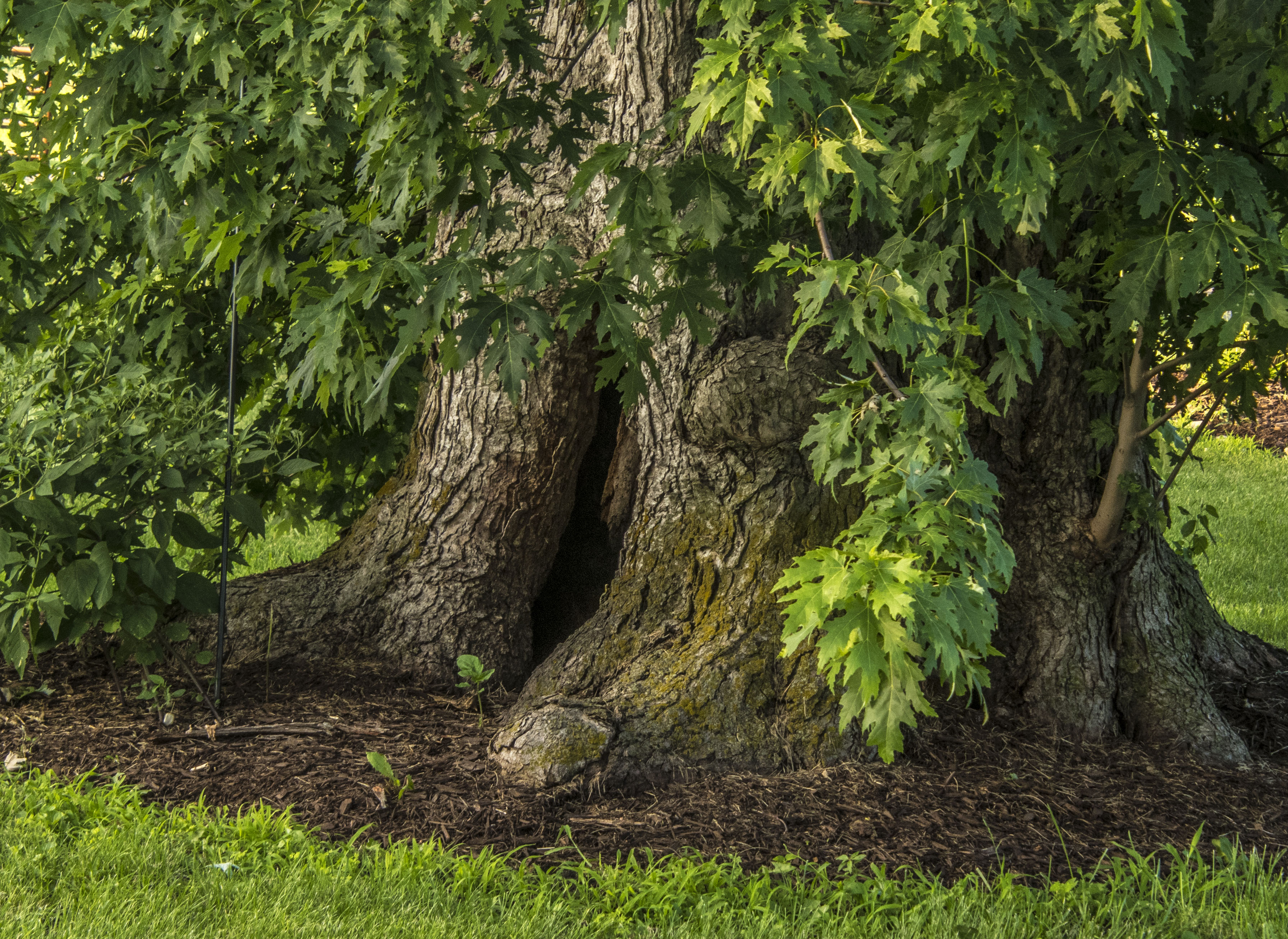
A third old maple stands between the two. Never a swing nor shade tree, because until my nephew removed a fence to add more yard for his family of six, that tree was just that … nestled tightly against the fence. Storms and time haven’t been so kind to this third tree, for many of the stately limbs have broken away. What I found as neat, though, was that the roots at the base seem to have formed dinosaur “toes” over the years.

Yes, I’ve been accused of having a vivid imagination. So be it. That old beast of a maple needs to have some sort of striking feature since it has spent its life sequestered with a neighboring elm that I climbed one extremely hot and humid afternoon to jump up and down on a supple branch within the canopy with such energy that my alarmed mother came running from the house with absolute worry of what her young son was doing.

This was in the late 1940s, back in the polio scare, which caused her to be on pins and needles about her children’s health anyway. And, may I once again add, long before air conditioning. “I knew how hot and uncomfortable you were, Mom, so I’m’ trying to start a breeze!”

Whatever you wish to term the weathered old bark, all three of the old maples speak of character.

With the patience that made her such a great teacher and mother, she explained that despite my efforts it was highly unlikely that I alone could create a calming breeze regardless of how hard I tried or even how necessary it seemed. 

That elm, like the dinosaur-toed neighbor, that tired old maple, still lives. Both show their age.

All three of the old maples are identified as sugar maples, although my guess is that capturing the sap for syrup might be impossible. Even if it was possible, i would hesitate simply because I would be more interested in seeing them continue to live a long and breezy life.

If you suggested that maples are among my favorite tree species you would be correct, for we grew up swinging and having dreams of building tree houses on those stout and staunch limbs. That they’re still alive is both heartening and reassuring; that despite age there is still a good life and beauty. Yes, those three trees were old when I was a child, and I’m now 80. My guess is that one if not all are twice that age, for I’ve never not known them as being small and supple. I would venture to guess they were planted before my father was a boy, and perhaps when his father was one. 

Though this third old maple on our farm was bordered by a fence through most of its life, I love how the tree seems to hang tough with “dinosaur toes.”

Making the long drive from Listening Stones to my childhood home is a long eight to nine hour drive, yet there is little that makes me feel more at home nor welcomed than seeing those old maples. Old friends that they are. The two have shaded men and machine through the ages of that farm, and would today if modern machinery would fit beneath the limbs. Looking at the trees it doesn’t take much imagination to wonder if the trunks will eventually split completely apart, or that one of the usual ice storms coming to northeast Missouri winters will destroy the limbs or even the trees themselves.

Yet, they keep hanging on, those marvelous maples, using that microscopic thread of life to bring forth a new year of large pointy leaves and beauty beyond shade. Weakened, yet strong. Old, yet bold. Gnarled, yet stately. Like old friends, they’re our maples and we share a joy of living a long and wonderful life. And as I bring this to a close, I’ll extend special kudos to my nephew for leaving them be despite their imperfections.