Skyscapes

Sometimes I wonder why I’ve never left what author and essayist Bill Holm called the “horizontal grandeur.” Our move some 32 years ago to the prairie served two purposes … getting out from the depths of debt caused by briefly owning houses both on the riverine banks of the Mississippi and from where we had moved in Denver, and in continuing a career that had seemed to dead-end after an unhappy stint at an advertising agency. 

To Holm, the prairie was about function more so than form, a place that “requires time and patience to comprehend.” And, a staunch home country if there ever was one.

He had an eagerness to compare this horizontal horizon with both encompassing trees and mountains. “Prairies, like mountains,” he wrote, “stagger the imagination not in detail but size.” He complained about being surprised by storms he couldn’t see coming in a forest, for trees were synonymous with jail bars, and mountains were high rather than offering something wide — a horizontal grandeur. 
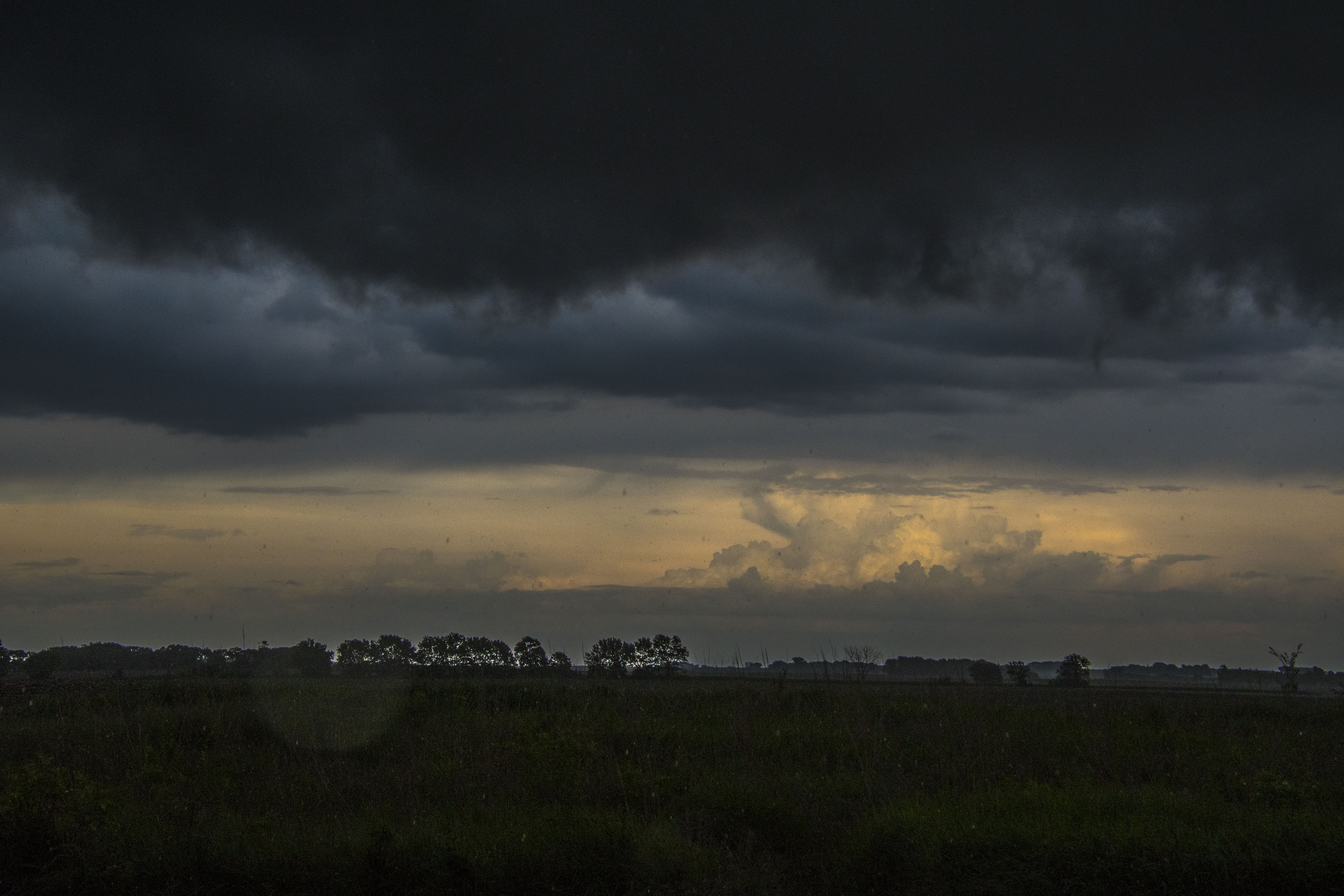
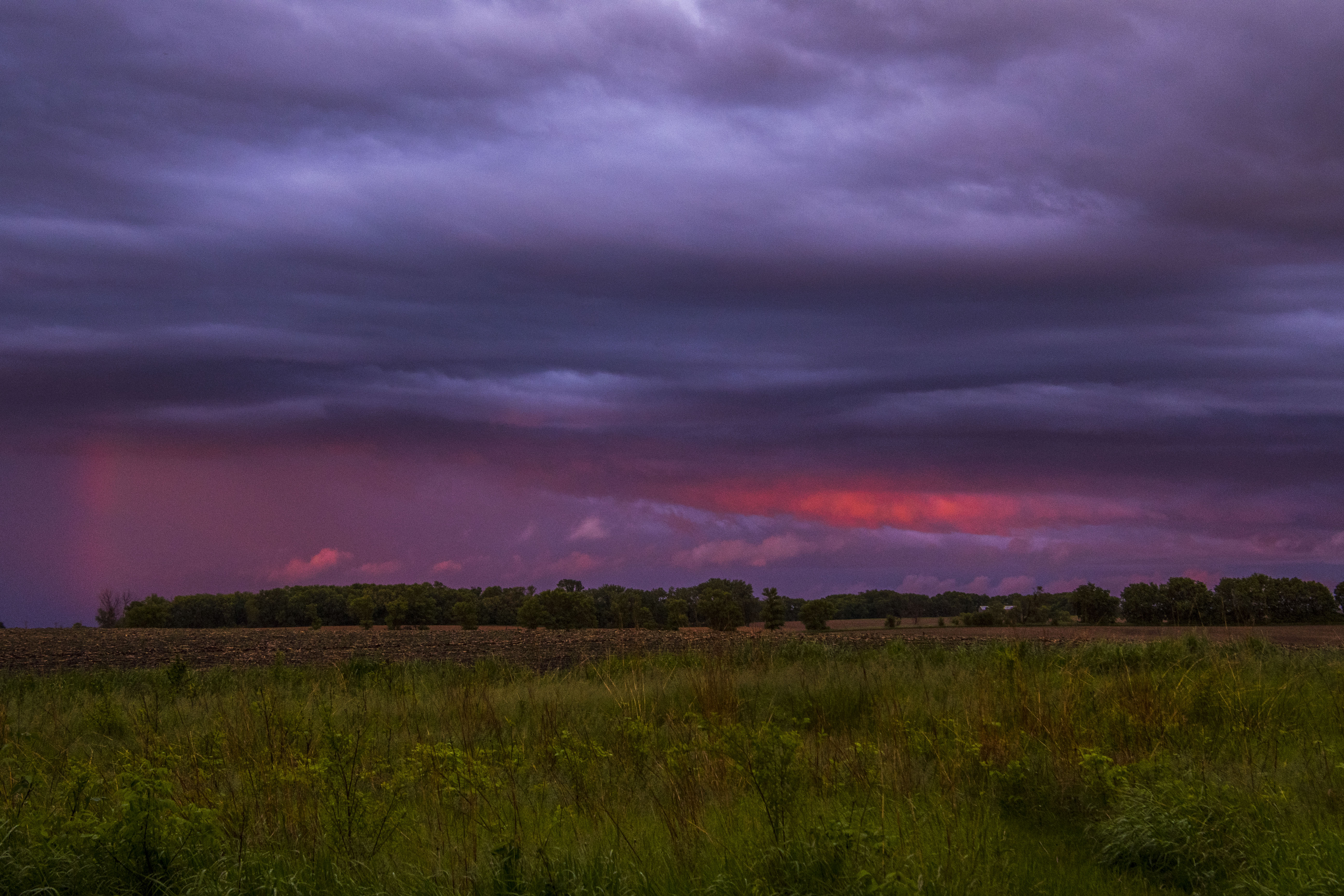
Looking up from planting, here is the storm above the prairie in early afternoon.

Holm wasn’t alone in his thoughts. A writer named Don Young wrote of the prairie, “A single Monarch butterfly dances around the prairie, searching for an elusive bit of pollen; the silent gliding of a Cooper’s Hawk searching for anything that moves; prairie grass roots searching deeper and deeper for moisture; and me, searching for solitude, inspiration and a photo opt or two.” Sounds familiar.

Technically we’re speaking of land form, for actual prairies, those seas of grasslands, are no more. Nor are there many potholes. Commodity agriculture took care of both decades ago. Then this happened a few days ago while working to plant at least a part of our lawn to pollinator-friendly native forbs, an effort interrupted not by Hal Borland’s “homeless winds” that seem forever on the move, but by rain. A fast and furious downpour. When I looked up from the perch of my knees I noticed the sky, and later, while chasing the ever changing skyscape, I realized a bit of what Holm had written about concerning time and patience: a prairie sky as a palette of color, form and mysterious intrigue.
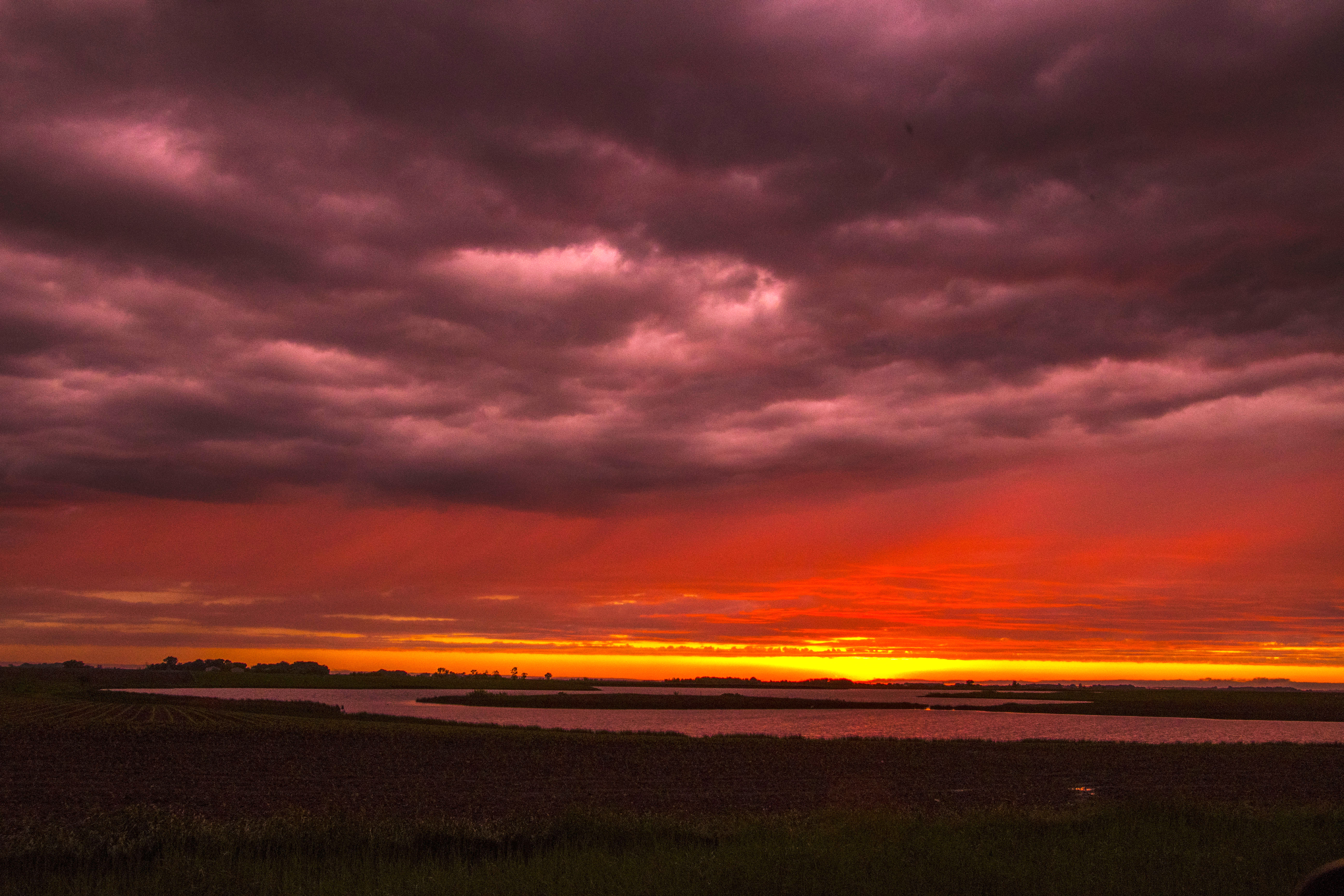
Nearly the same view at sunset, with the ambient colors to the east.

After rising quickly from the planting, I rushed into my studio for my camera. Sandwiched between the rueful blackness of both an overhead storm cloud and the darkened color of our restored prairie, a cumulative white bank of distant clouds fluttered within basically four different levels of threatening storm clouds, all offered as an interesting visual sandwich offering both drama and color.

And it would only become ever more interesting hours later as evening approached. Within a half hour of nightfall that palette offered several different painted skyscapes, and I couldn’t stop attempting to capture them. I suddenly realized what Holm had suggested, and that through time and patience, it was this horizontal skyscape that has allowed me to settle in, to find “home” within an landform and ecosystem so unlike any I had lived in previously. 
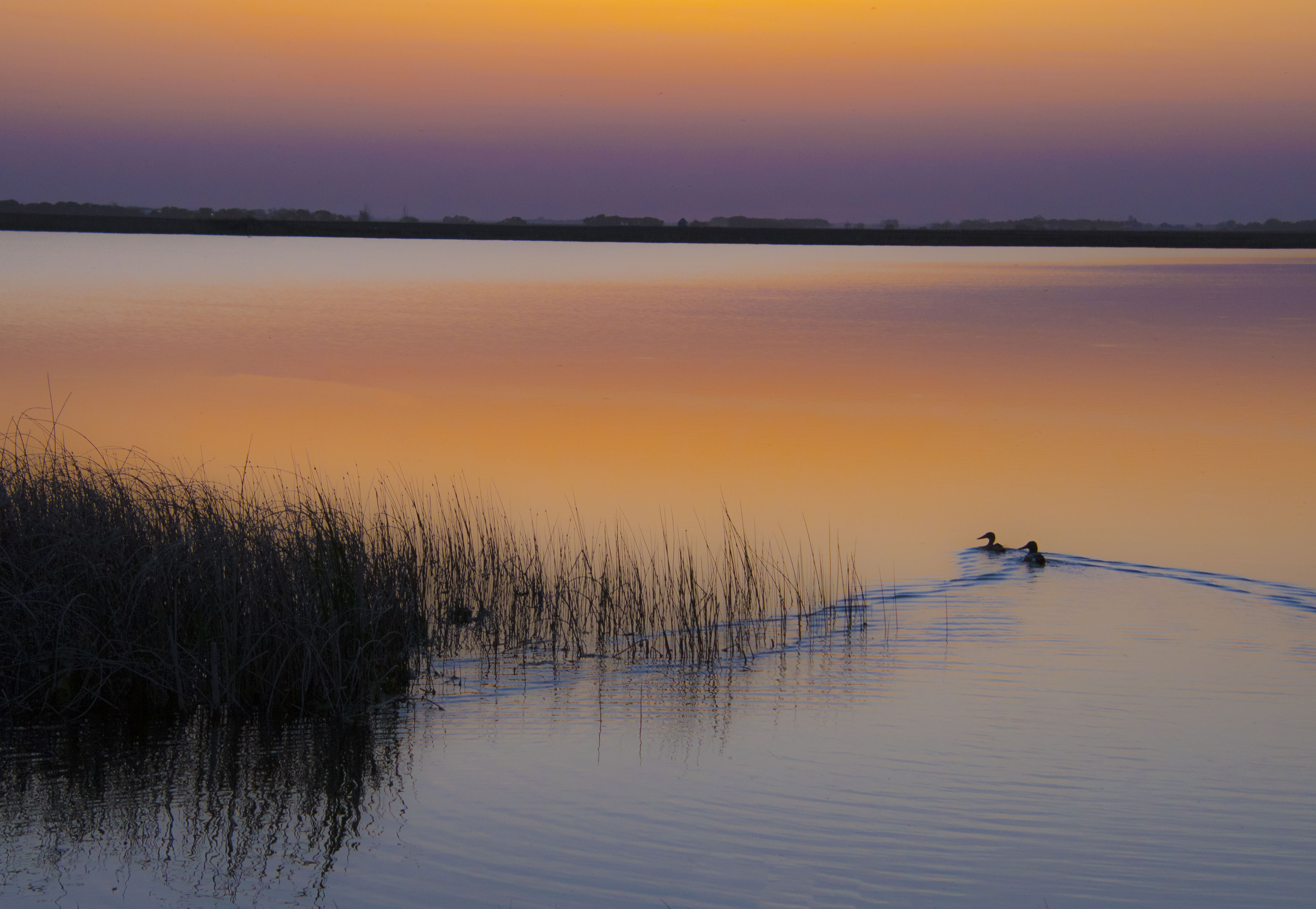
The aftermath of the sunset over a nearby wetland. Still the same afternoon.

Yes, I grew up in the wooded hillsides of northeast Missouri, and spent years living along the Mississippi and even in the hills of the Driftless. More than a dozen years were spent in the Rockies of the west, years when I wrote and photographed happenings throughout the mountain communities for the Denver Post, and later traveled from Colorado to the Pacific Coast as a magazine freelance journalist.

When we left our rural home south of the Twin Cities to move to a small town where I would become a “country editor”, our goal was to give it two years at most. Yet, we raised our sons in the small town, then my wife died, and through it all I’m still here in what remains of the original Prairie Pothole Biome. In some ways I feel the influence of Monet, who featured ever changing palettes of color and intrigue in his paintings be they of haystacks, lily-padded ponds or quaint city streets. It was through my love and study of his work that I learned the beauty not of a sunset itself, but rather of the surrounding ambient colors, the drama and intrigue offered by these prairie skyscapes.

Almost as captivating as the afternoon image, again facing to the east.

Nowadays I wish I could once again visit with Holm. Our first of three conversations came after his speech and ragtime piano performance at Prairie Edge Casino not long after his publication of his horizontal grandeur essay. We had teased one another over our respective loves of prairie and woodlands. Now, as this land or skyscape has evolved to grow on me, I could offer a more aware perspective in the conversation, and perhaps we might have had more of a basis for friendship than simply a friendly bantering. Of which we never evolved.

Regrets aside, no longer is there a quest for moving or living elsewhere. Besides that ever loving and changing palette of a skyscape, I’ve come to thoroughly appreciate the solitude and rhythms of seasonal change, of the surrounding nature that has over time developed into various seasonal expectations thanks to both the interesting feathered drop-ins from the flyway to the poking up of overlooked prairie forbs through prairie grasses. 

A final image, all in an afternoon and evening of the same day, all interesting skyscapes!

Someone recently asked if there was a “fall back” position or plan considering my age along with possible prospects of a decline in health, and I simply couldn’t think of one. I guess this horizontal grandeur and an ever interesting skyscape makes this close to being home, and an interesting one as one can possibly find. We’re not being ravaged by affects of global climate conditions as we might be further south, and going back to the mountains might now be limiting age-wise. 

And, as my dear friend, the artist and musician Lee Kanten has suggested, you simply cannot find a better place for observing both sunrises and sunsets. Come dawn or dusk. Ah, yes, those beautiful ambient colors where the likes of Monet could settle in next door and happily place a blank canvas on his easel; where he, Holm, the Kantens and ourselves could sit around sensing the smoke from the grill over mugs of wine as the skyscapes surrounding us become painted with another intriguing image.

Calls of the Wild

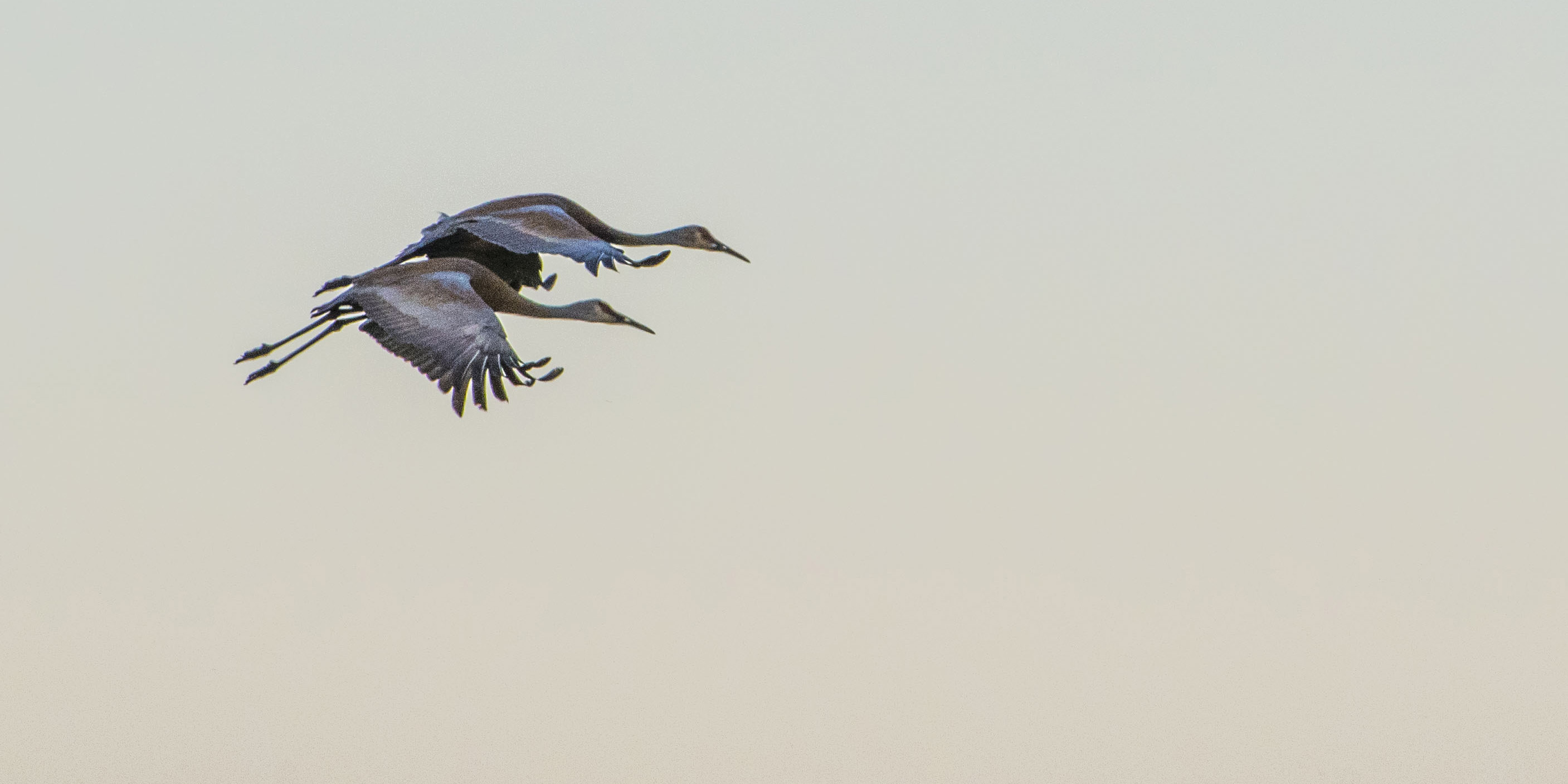
As soon as the distinctive call echoed across the wood-rimmed rolling hills, I rolled to my side and glanced toward the sky my camera ready. So familiar, so beautiful. Vivid, yet hidden. A mystery, yet none at all. They were there. Somewhere. A few years back I was sitting a mere few feet from where I was prone when the same sounds broke over the prairie and I was fortunate to capture one of my favorite images of sandhill cranes in flight, one that so portrayed their Pliocene existence. They seemed so prehistoric in flight.

Would I be so fortunate once again?

We had ventured here to the Lake Johannas Esker to once again mingle with the prairie smoke wildflowers that flourish on this rise come May. Years ago Morris naturalist Dave Jungst introduced me to the esker at a time when the white pussytoes and reddish-pink prairie smoke comprised a sparkling carpet of alternate colors on the rounded prairie rise below the husky shoulders of the prominent esker, and since I’ve made point to revisit annually. While once again impressive, there has not been a view quite so compassing as found on that first May visit so many years ago.

Yes, I’m a prairie smoke addict, and these blooms always captivates me.

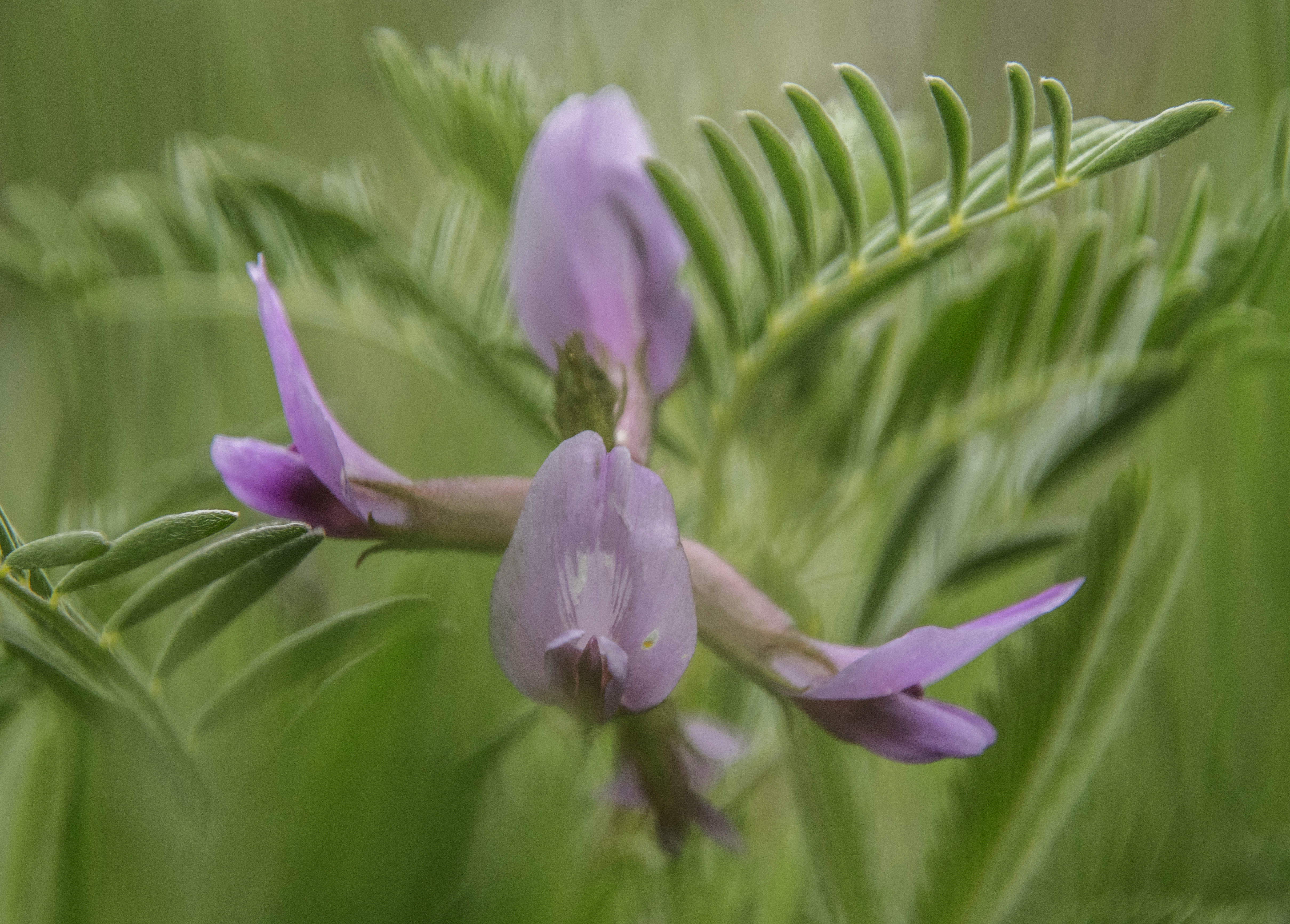
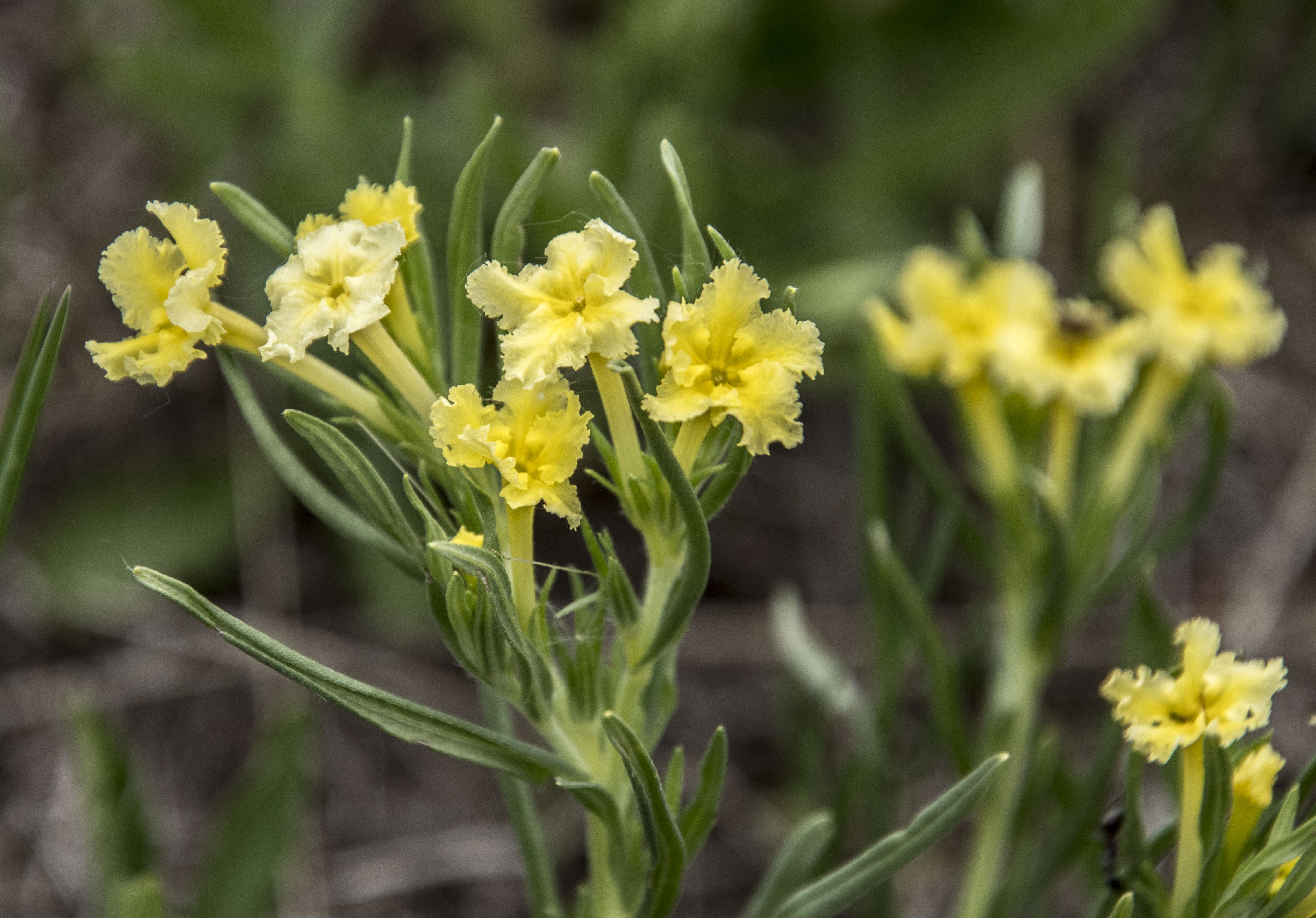
Yet we were once again surrounded by beautiful spring prairie flowers. Those glorious yellow blossoms of fringed puccoon poked a welcomed greeting from the dried sage and dormant grasses, along with brilliant chickweed that seemed so white that it beaconed from the prairie. A whiteness smiling with glee. Tucked away was the purplish ground plum, blossoms not unlike the explosion of a sky high fireworks that peeked through the grasses. All of that plus the prairie smoke offered us a mounded prairie of brilliant color. How could one not be impressed?

Distant to the north of us stood the tall esker, an abandoned glacial stream bed now cloaked by sodded grasses and brush. A snake-like ridge offering a staunch backbone to the lower prairie, rising high in the distance. Here a few years ago as I sat in rest and reflection on the esker itself, a wild turkey popped up from behind a sage bush not five feet away before attempting to secretly sly away. Our brief glances seemed as much a surprise to the turkey as it did to me.

As we ambled up the rise the first patch of prairie smoke appeared, tendrils yielding to the wind. Closer to the esker we came upon a carpet of smoke, a quilt of blossoms in all stages of maturity. Laying low with my lens focusing through the offerings, it could have been mistaken for a forest of reddishness, with the smoky tendrils reaching out from the star-like blooms, many pointing downward while others defied gravity. All stages of the plant’s life cycle seemed evident.

There is little that is more interesting to me than laying on my stomach and focusing a long telephoto through that foot high jungle of pinkish beauty in search for interesting imagery. It was there where years ago I heard the calls from the Pliocene, Aldo Leopold’s “trumpet in the orchestra of evolution.” Hearing the sandhills brought on a whole new level of energy and excitement, a complete jumble of creative focus. From that point forward I would continually peek from the smoky forest to glance over my shoulder in anticipation of a possible flight. Sandhill cranes will do that to me.

Aiming my large telephoto through the “forest” offers a wide gallery of imagery.

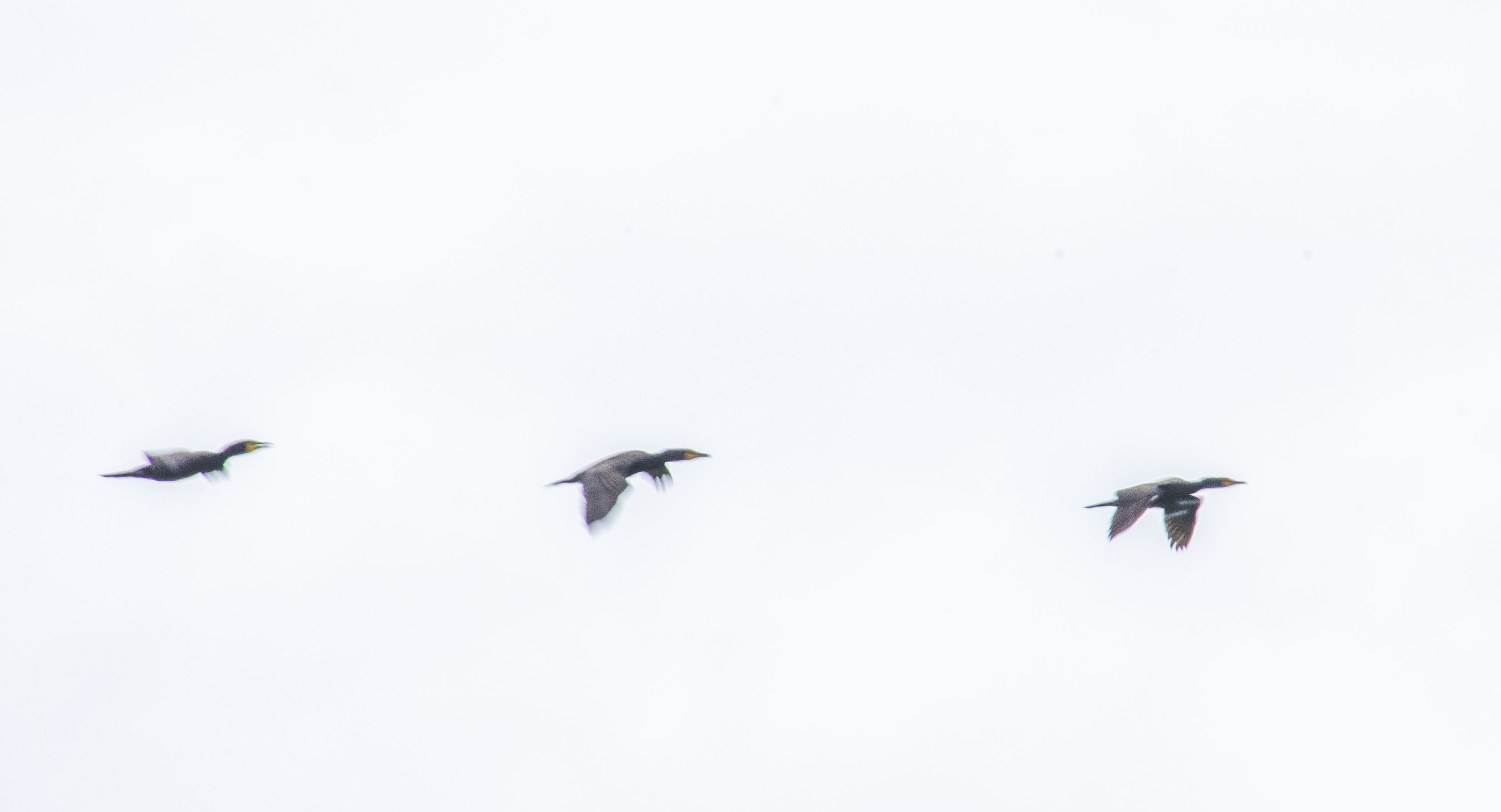
Eventually we would have a brief flyover … of cormorants rather than cranes. They were noticed thanks to my hopeful glances for the sandhills, and I rolled to focus as quickly as possible. Were they from the nearby rookery? Just north of the esker, and beyond the adjacent Ordway Prairie, itself a feature of the Nature Conservancy, cormorants have commandeered a tree studded small island in Lake Johanna as a rookery. From the apex of the esker you can make out the collections of stick nests in the canopies of the denuded trees. With their hooked bills, which is quite a bonus for their fishing capabilities, cormorants look much more prehistoric to me than cranes. If one can make an argument about birds being evolutionary cousins of dinosaurs, cormorants could serve as photographic proof. Their rapid flyover hardly diminished such an argument!

Yes, my eyes were open for the sandhill cranes I heard calling before the cormorants did a flyover.

Still, we had come for the prairie smoke, and despite the welcomed interruptions, I would again be consumed with my intent of gazing through the grasses and the smoke searching for interesting angles and individual flowers. A search that never tires. Prairie smoke is one of my “seasons” of an emerging Spring. They are why I come to the esker much in the same vein as I make a drive to central Nebraska for the annual sandhill crane migration, or drive around Big Stone County’s numerous surviving potholes seeking huge drop-in flocks of snow geese. This is one of my rites of spring, and one I’ll continue until I’m unable.

My image of the sandhill crane flyover in 2019 at the esker.

No, the esker has never let me down. This 800-acre floral paradise is nestled some two miles east of the Ordway Prairie and is dominated by the serpentine rocky esker that rises some 70 feet above the prairie where I laid. Well hidden within the surrounding tree-lined hills between Brooten and Sunburg, it is also close to the Little Jo WMA and the Moe Woods. Driving to the esker acreage takes you through a tree-lined, graveled paradise of a road that includes a few hidden potholes and possible swan sightings.

Yet, once you’re at the esker you’ll find an expansive natural floral “garden” that will likely captivate your imagination. Such were among my thoughts as I lay prone with my long lens, focusing through the incredible color while listening and hopefully awaiting more calls and even a flyover from the evolutionary past. I can’t imagine spending a Sunday afternoon in a more delightful environment.

A Man of Many Seasons

Few will mistake me for a phenologist for I fail to track calendar time by the gathering of my oddly celebrated seasons … those numerous seasons consisting mainly of bird arrivals and the breaking blossoms of spring flowers. Each of these countless seasons offer mostly smiles of recognition and joy. One might compare each as a meeting up with old friends at some obscure cocktail party, with each offering a welcoming sigh of recognition. 

Perhaps I fall short in my tasks of phenology in that I fail to chart my observations from day to day, let alone year to year like an avid and true naturalist and phenologist, although I do try to capture as many of the arrivals as possible with my camera. Years ago there was an elderly naturalist named Ed Stone who lived south of Renville on the rise above Vicksburg County Park near the Minnesota River. Ed charted his finds on a day to day basis, keeping immense records of precipitation, temperatures, the breaking of daylight and the setting of the sun right along with his astute observations of nature along his bluffy hillside. If you asked when the skinks were first sighted on the flat outcrops just beyond his quiet home, he’d flip through his recording books to tell you. Such seasons were clearly evident in his detailed collection of works. Ed Stone was a true phenologist and someone I truly admired.

Moments ago, in the rain, a Yellow Warbler was captured outside my studio window, the last of the colorful seasonal birds common to Listening Stones.

Then, there is me. By now many my notable seasons have already occurred, seasons that began back in early March with the skeins of snow and Canada geese along with the murmurations of Redwing blackbirds and starlings. This was about the time Pasque Flowers poked through the dry grasses on a hill above the Big Stone National Wildlife Refuge, typically our first bloomer of the year. 

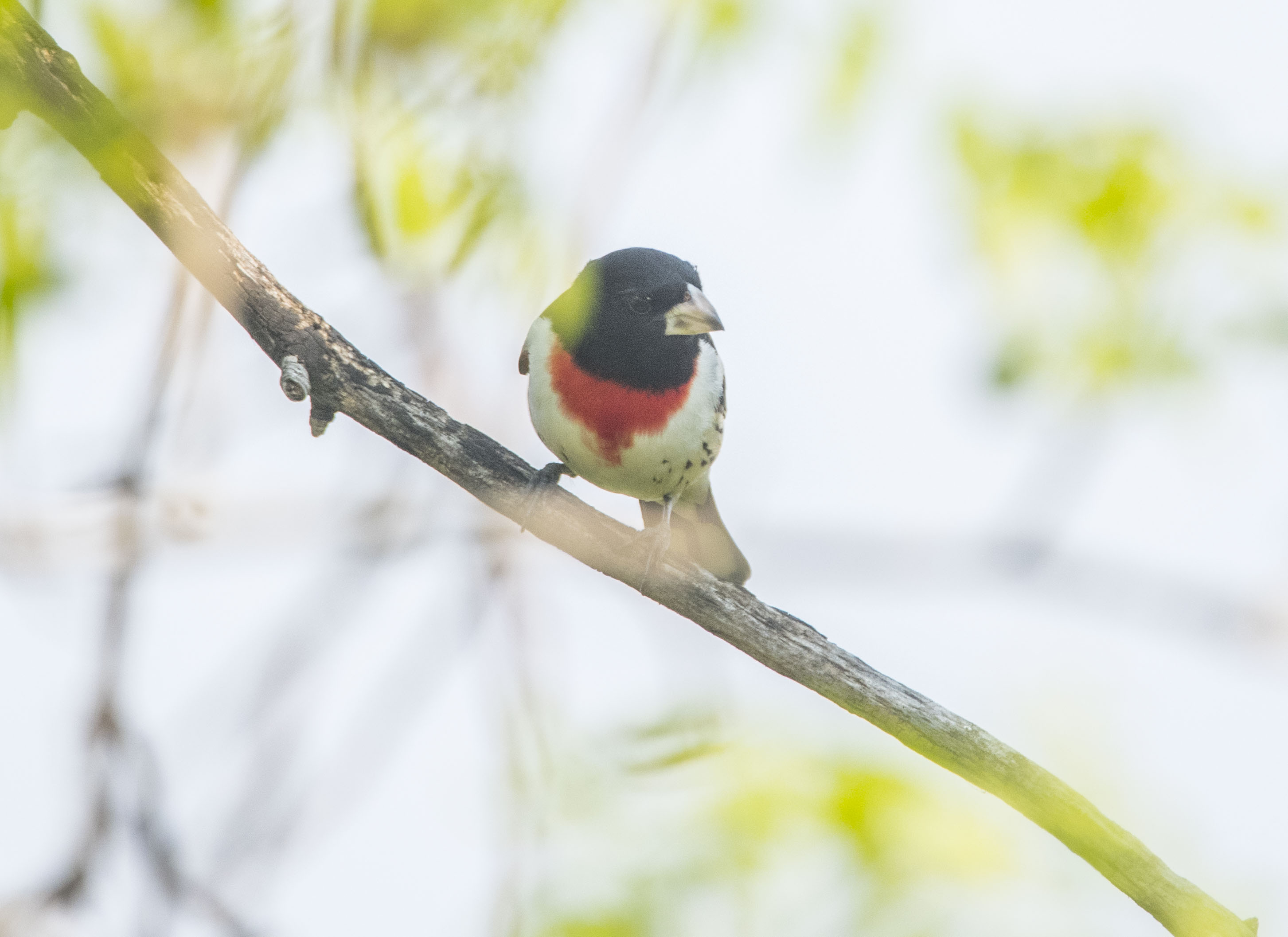
As an amateur in the art of observation it seems that the waterfowl migrations were a bit early this spring, especially when compared to a year ago, and my neighboring birders felt as though the same might have happened with the waders, those wonderfully sleek and graceful shore birds. My spring seasons are never complete until the oriels, Gold Finches and Rose Breasted Grosbeaks champion our feeders. These past few days, though, have not been unlike an anxious child awaiting Christmas. Now they’ve all returned, and moments ago, actually, my Yellow Warbler was spotted. All now accounted for; all adding vivid color to our little farm!

It seems that I must always head to central Nebraska in March for the Sandhill Crane Migration.

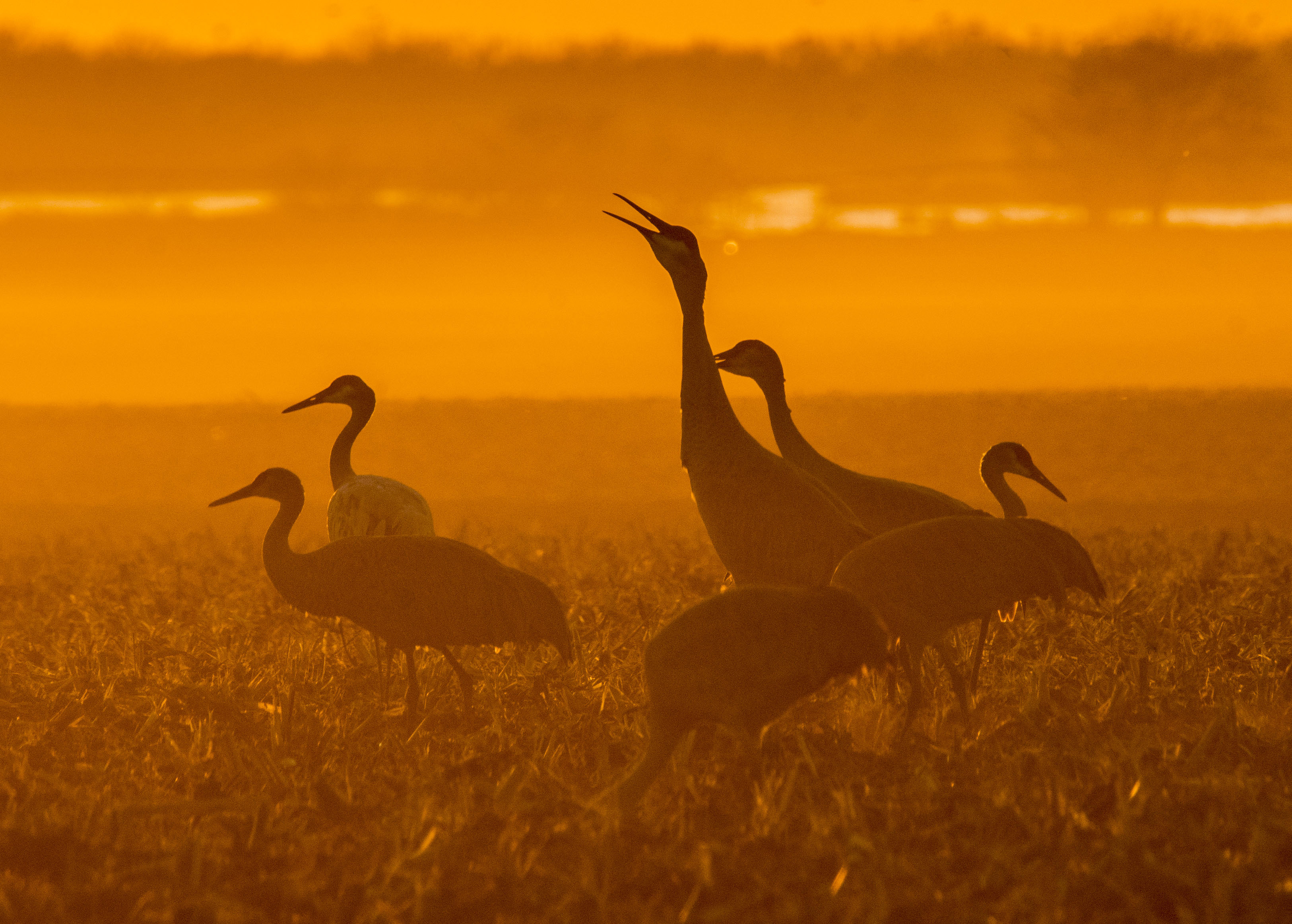
It can’t already be two months since we motored off to central Nebraska for the annual Sandhill Crane migration, an event that leaves you in awe for their migrations are of the ages; migrations that began long before mankind appeared in these prairielands, if the crane hype is accurate. On this visit we opted for an early morning blind viewing along with perhaps 40 or so crane chasers. The night before, then through the heart and eve of the day after exiting the blind, we were basically road tripping between the area around Rowe Audubon Center near Kearney and the Crane Trust headquarters below Grand Island. This was my fourth such pilgrimage for the migration and perhaps my most productive image wise. 

We ended our time on a corner below Crane Trust with cranes feeding in untilled stalk fields on either side of the gravel roads. Above them, up in the skies, hundreds of thousands of cranes, in wave after wave, from all directions, were flying towards the Platte River to settle in as the sun eased below the horizon in the western sky. All around us rapturous melodies from times perhaps more historic than mankind itself drifted from the heavens. 

We celebrated on our first sightings of Red Breasted Grosbeaks, and oriels! Have I mentioned Goldfinches? All add color and beauty to our lives!

Back here at home, spider-webbed skeins of snow geese and the seemingly more organized skeins of Canada Geese plied the skies around the same time. Murmurations of redwings and starlings filled the groves, our own included. A farmer friend alerted us to a grouping of migrating Bald Eagles on a WMA adjacent to his farm. Weeks later came the waders, or the more commonly labeled shorebirds. Yellow Legs and American Avocets were coursing through the shallow depressions in the area grain fields. Our prairielands were coming alive, season upon season, species after species. What a glorious time!

One species that was so common a year ago, the White-Faced Ibis, must have ventured for a different route this year. Last spring they were frolicking in those same flooded depressions in the area fields as their kin. We’ve yet to see one. One of my birder buddies spoke of a lake being drained about two hours southeast of here where reports of a couple thousand shorebirds were busy feeding in the shallow waters. About the same time, though, I was in the midst of preparing for an exhibit and simply ran out of time. He now believes most of the shore birds have now passed through.

An early morning bonus at Glendalough, and look at that beard!

By April’s Earth Day we tried for an image I’ve thought about dozens of time. My aim was to capture a sunrise at Glendalough State Park where in past years hundreds of blooming pasque flowers blanketed a hilltop near the entrance. A park ranger suggested in a message that the tiny beauties should be peaking around the Earth Day Monday, so we set the alarm for 3 a.m. and headed out the next morning for the park. We made it in ample time but was faced with an unexpected heavy and cold-to-the-bone wind, along with a hill with but a handful of pasques poking through the grasses. Tall trees fronted my sight line toward the rising sun. Things happen like that in nature photography.

Yet, all wasn’t lost. Our day was saved when we drove deeper into Glendalough and ventured onto the loop toward the picnic grounds where we spotted three wild turkeys, including an amorous old tom. The sun had just risen, splashing a fantastic yellow hue to the morning. The light was nearly perfect. And, in front of us was the old tom, in his full mating display, strutting about with the longest and bushiest beard I can remember seeing. Perhaps the old guy had never ventured outside of the park boundaries. What a lovely moment! And, yes, capturing a tom in mating display is among the seasons I love to capture.

We watch faithfully for various waterfowl, too, from geese to the many species of ducks!

Another species. Another season. So it goes, on and on. And, even better, more await. Soon we’ll be seeing Prairie Smoke and White Ladyslippers, both common to the prairie. Dozens of woodland species are already making their wondrous debuts, all adding to this glorious mix of personal seasons. 

A few years ago a fellow nature photographer wondered about just how many images of prairie grasses or flowers she would ever need, and I guess the same might be said about any one of my numerous seasons. Is there a limit? Can there be a new light, or perhaps a color enhancement, that seems new and different? There is all of that, yet it perhaps comes down to a simple truth, that of welcoming those old familiar friends from nature back into your life.