The Evening Linka Exploded

Last week a dear old friend, Mardy Wilson, wrote me from Fort Collins, CO, to say her son-in-law, Neil Kaufman’s first novel, “Upriver Journey”, was published, and asked if I would read and review his book. A few days later it arrived from Amazon, and being between books, Kaufman’s novel was opened to words of new and interesting adventures.

It was hardly surprising that his story was about both his home country along with his love of fly fishing. His tale of two Wall Street investment bankers being sent to Colorado and Wyoming for a week long wilderness and mental retreat was both intriguing and well written. His descriptions of fighting trout in various locations and waters was excellent, for Kaufman put a fly rod squarely into your hands from the cork grip to the pulsating feverish action at the end of the line. Few writers have taken one so deep into the backing.

Then, on page 399, two of his characters, wilderness guide Amanda and protagonist Michael, as they were discovering their mutual interests, found themselves on tubes on a small Wyoming lake when an incredible and magical moment in time occurred, and as his descriptive words unfolded so did a remembrance of a similar experience. It was an evening when Lake Linka exploded, of art mirroring life.
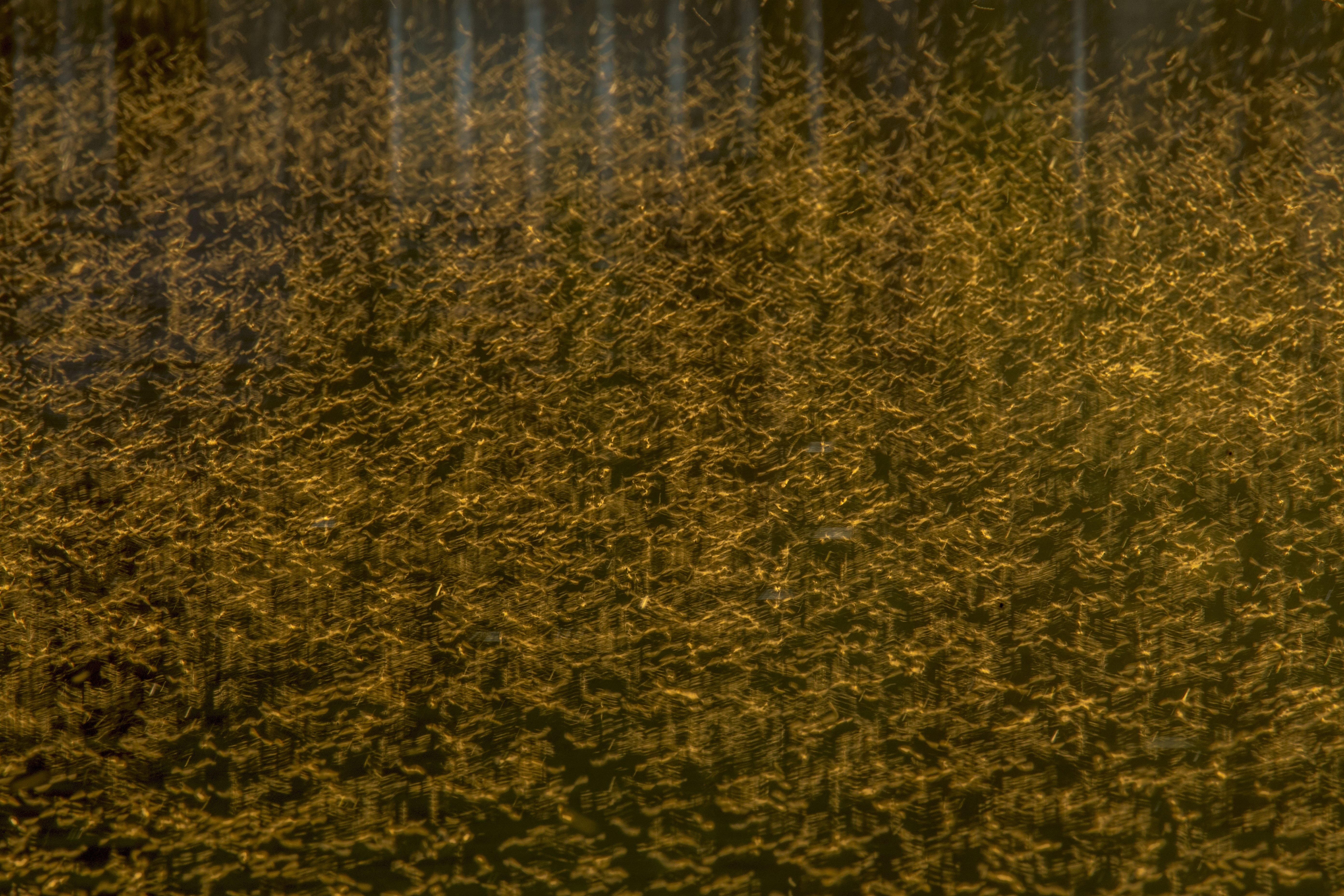
This was well into the frenzied hatch on a May evening on Lake Linka, south of Glenwood on the edge of the Glacial Shield.

But first, here are the excerpts from Neil’s book that brought that memory to mind:

“Whips of moisture create visible currents in the air as they move between Amanda and me. Looking skyward, I see the sun’s orb bleeding through the fog like a cloaked spotlight. Refracted light illuminates the moisture, adding a shimmering quality to our surroundings.

“A set of concentric rings appears a few feet to my left and another directly in front of me, then two more the right. They seem too small to be fish. Perhaps we’re at the dew point as moisture is condensing into minute droplets falling to the water’s surface. I turn my cheeks to the sky, anticipating little flecks of rain that do not come.

“Another half dozen sets of small concentric rings disturb the otherwise still surface before the refracted sunlight catches on a tiny glistening fleck rising straight above the water. Two more appear. Suddenly, dozens of them dot the surface and the still water surrenders into little waves crisscrossing one another. Dozens become hundreds as the water boils with activity … with neither splash of water nor flutter of wing, thousands of tiny translucent mayflies ascend the surface of the lake … ”

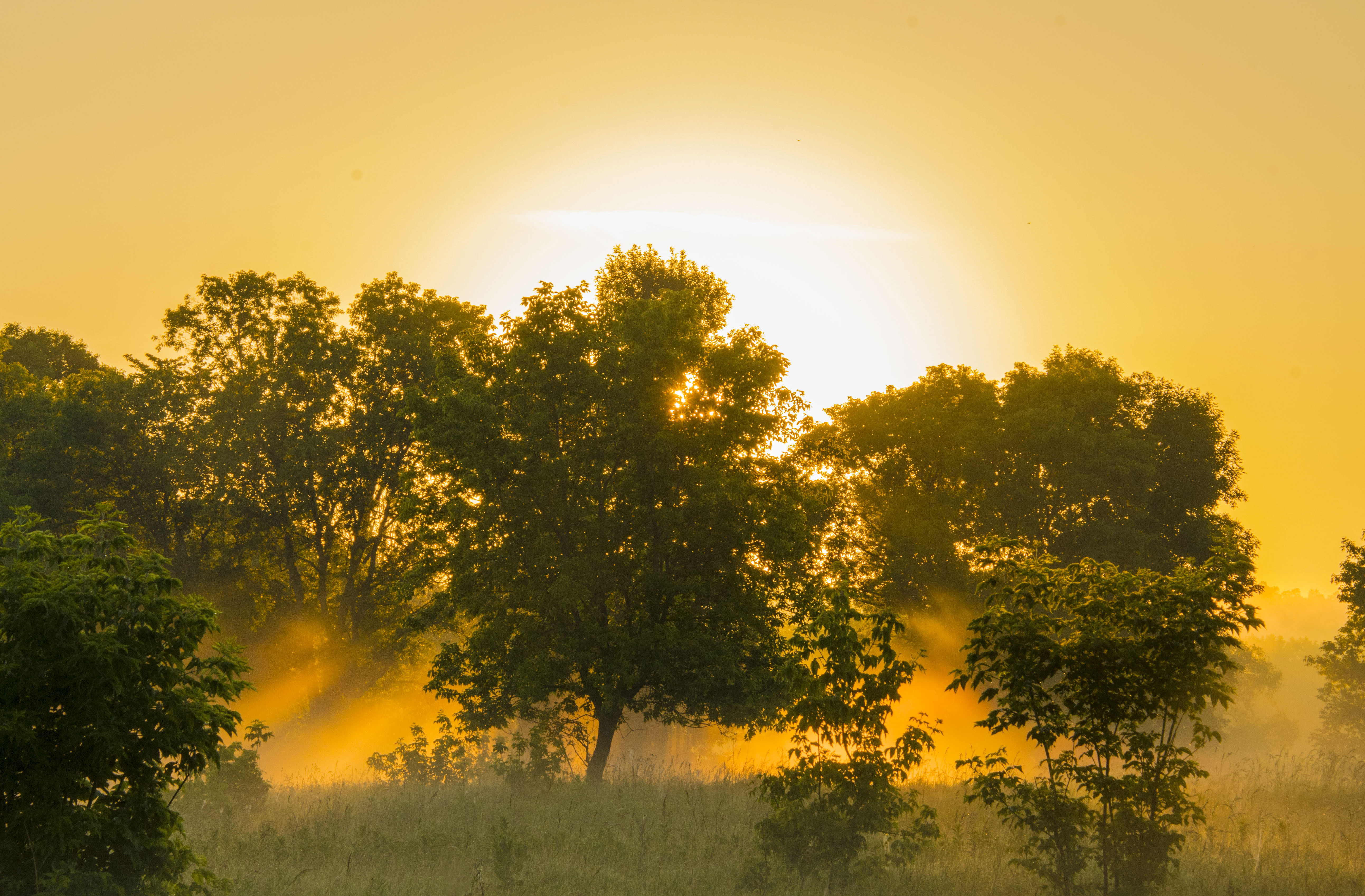
This was my first image after grabbing my camera.

His was a description of a wilderness morning while mine came late on a May afternoon on a Glacial Shield lake a few years before; on an warm summer evening much like when we met while visiting my former Denver Post colleague, Mardy. Neil and Mardy’s daughter, Erin, came to visit with us along with my son, Aaron, and his wife, Michelle, from Norway. I remember Mardy and I both so pleased our children seemed to meld so easily in friendship and conversation much as we had nearly 50 years before. Indeed, Neil and I would talk about fly fishing and the nearby rivers. And, now, nearly two years later, his book has arrived.

Indeed, the time of day on Mardy’s patio corresponded with that late May evening back in 2021 when Linka exploded in much the same way as Neil explains that magical, unexpected moment in his novel.  It was late enough on Linka that the sun was perfectly positioned as dusk neared. Linka is a shallow lake, especially along the outward southern bow, and is within the first reaches of the Shield. 
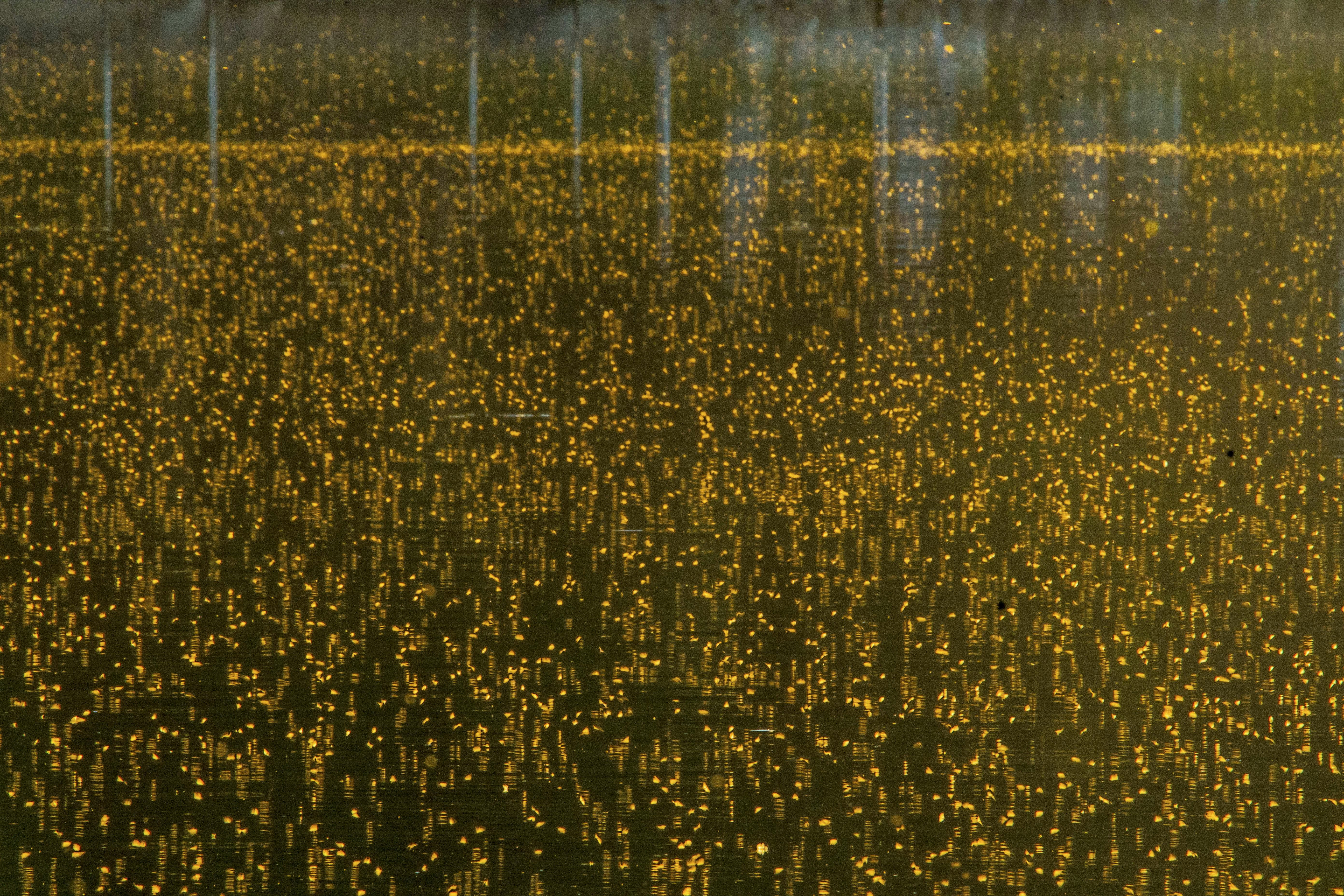
Acres across the surface seemed illuminated during the hatch.

Across from the cabin where I was staying, and almost directly in front of the Griffin Farm toward the west of what is now in Nature Conservative-ship, the hatch began slowly with dozens of tiny pops of light glittering in the approaching dimness of dusk. On the surface, and rising a few feet above the blackened waters came the sparkling pops of light, first with a few, then a few more. It was astonishing to watch, and I quickly rushed into the cabin for the camera as more of the pops came, all highlighted and sparkling in the last remnants of the setting sun.

Dozens became hundreds, and hundreds became thousands all across the western surface of the shallow lake. Oh to have had my kayak in the midst of the mayfly hatch like the fictional Michael and Amanda, yet simply watching it occur was an awesome experience. Sparkles of light illuminated the surface, rising a few feet in the air, covering acres of the water. It was as Lake Linka was exploding with life, and it was. Moments later, almost as suddenly as it began, the hatch ebbed, much as Neil had described in his novel. Then it was over. 

The concentric ring is perhaps an indication that fish in Linka were feasting on the emerging mayflies.

Watching the mayfly hatch the night Linka exploded still makes me wonder if there was an incredible feeding frenzy as Neil writes about in his novel. Trout are rather selective eaters so to fish effectively you must “match the hatch,” which differs somewhat from warm water fly fishing where fly action is often manipulated with the rod or line. Was that hatch that came and ended so quickly beyond the consciousness of most of the Linka fish? Ah, the mysteries of nature. How would one know?

Unlike Neil Kaufman’s Amanda and Michael, my life of love on Linka ended abruptly a few months after the hatch and I’ve not returned. I’ll never know if that moment was truly unique, or if it was one of those being there at the right time moments. Does it happen on other Minnesota lakes? I’ve fished and canoed waters from the Iowa border to the Boundary Waters for years without observing a similar hatch, so I’m ever so thankful for that wonderful memory of the one magical moment of the evening when Linka “exploded.” 
A Delicate Farewell

A portion of my heart was broken last year when news broke that one of my favorite state parks, my one time “home” state park … Upper Sioux Agency … was about to be closed. Immediately plans were made to make one last visit before the actual closing, which occured this past weekend. Somehow a mistake was made on my end for I thought it was in mid-March rather than February. While I will miss the park, there are now no misgivings about the future of that land for it is being returned to the Dakota tribe. For many good reasons.

This, though, doesn’t dismiss what many of my friends felt was long-kept secret in St. Paul, and a decision that was seemingly made minus local input.

Politics aside, I will miss this stretch of public park alongside the Yellow Medicine River, the teepees in a campground along with some beautiful wooded campsites next to the river, as well as the high, tree-lined hill beside the “pull out” on the upper end of the park that stretched along the Minnesota River. I cannot count the number of times fellow writer, Tom Cherveny, and I used that pull out to conclude canoe and fishing trips down the Minnesota. Oh, and of all those catfish and walleye caught in the upriver bends and at the confluence of the two rivers, that triangular strip of earthen prairie sod that came to an ever-narrower point with each spring melt.

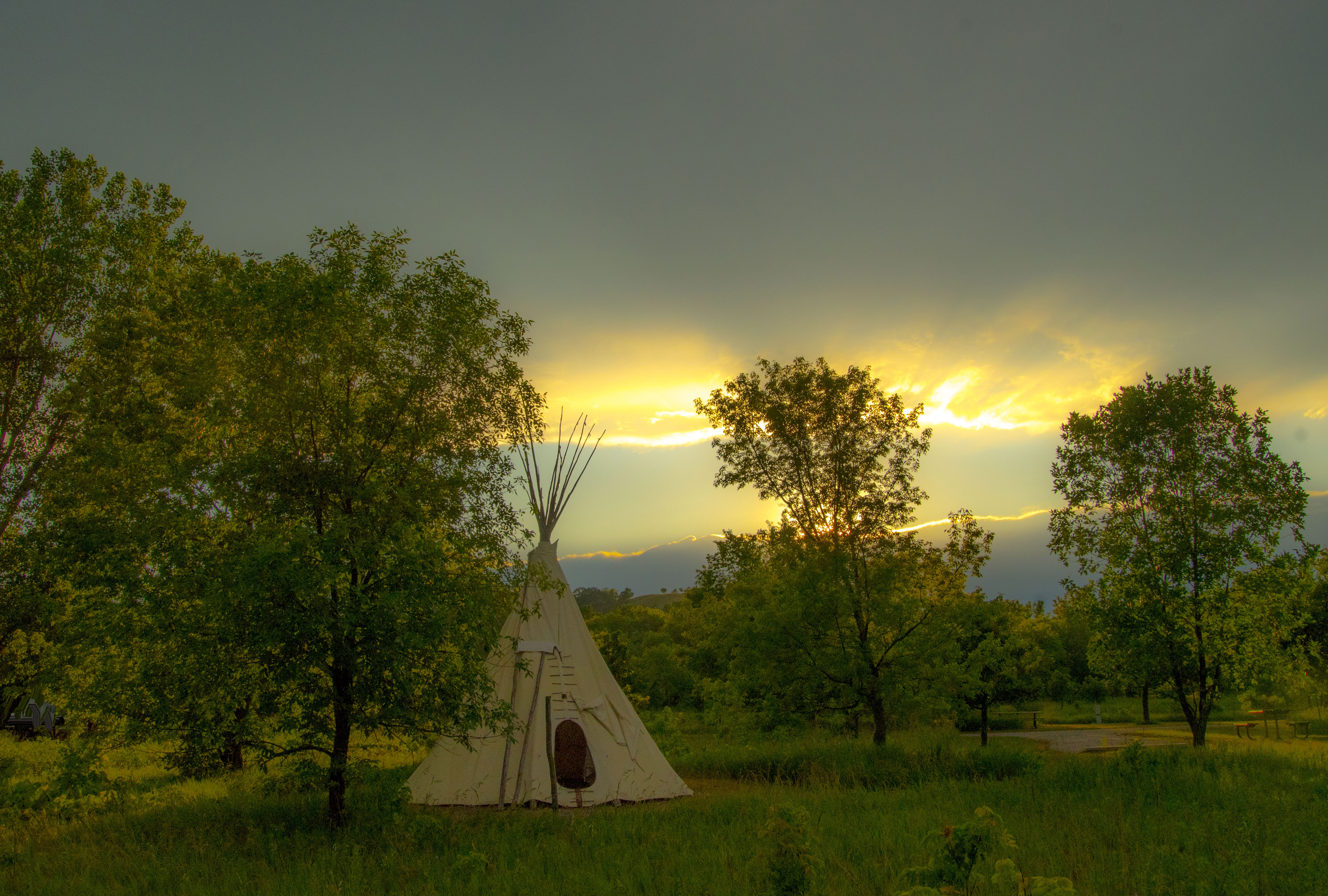
One of the two park teepees that attracted campers, an image I made for a friend in Granite Falls.

My first time at the park was to cover what some 30 years ago was the annual opening area-wide high school cross country meet on a late August afternoon, held on the hilltop where the old agency building stood fast. Little did I know of the historical significance of that building and the park at the time, nor did I learn of the angst of the local Natives until years later when a carload burst through the admission gate during a park event held with an intention to recognize that history. “We ain’t paying to come onto our own land!” came the anguished cry. 

That cry served to awaken me to a realization that as we move into the seventh generation since the War of 1862 between the Dakota and the immigrant white settlers, some of which occurred right there on that very hill overlooking the joined river valleys, some nerves were still raw. Yes, this land retained ghosts of a deeply troubled past. 

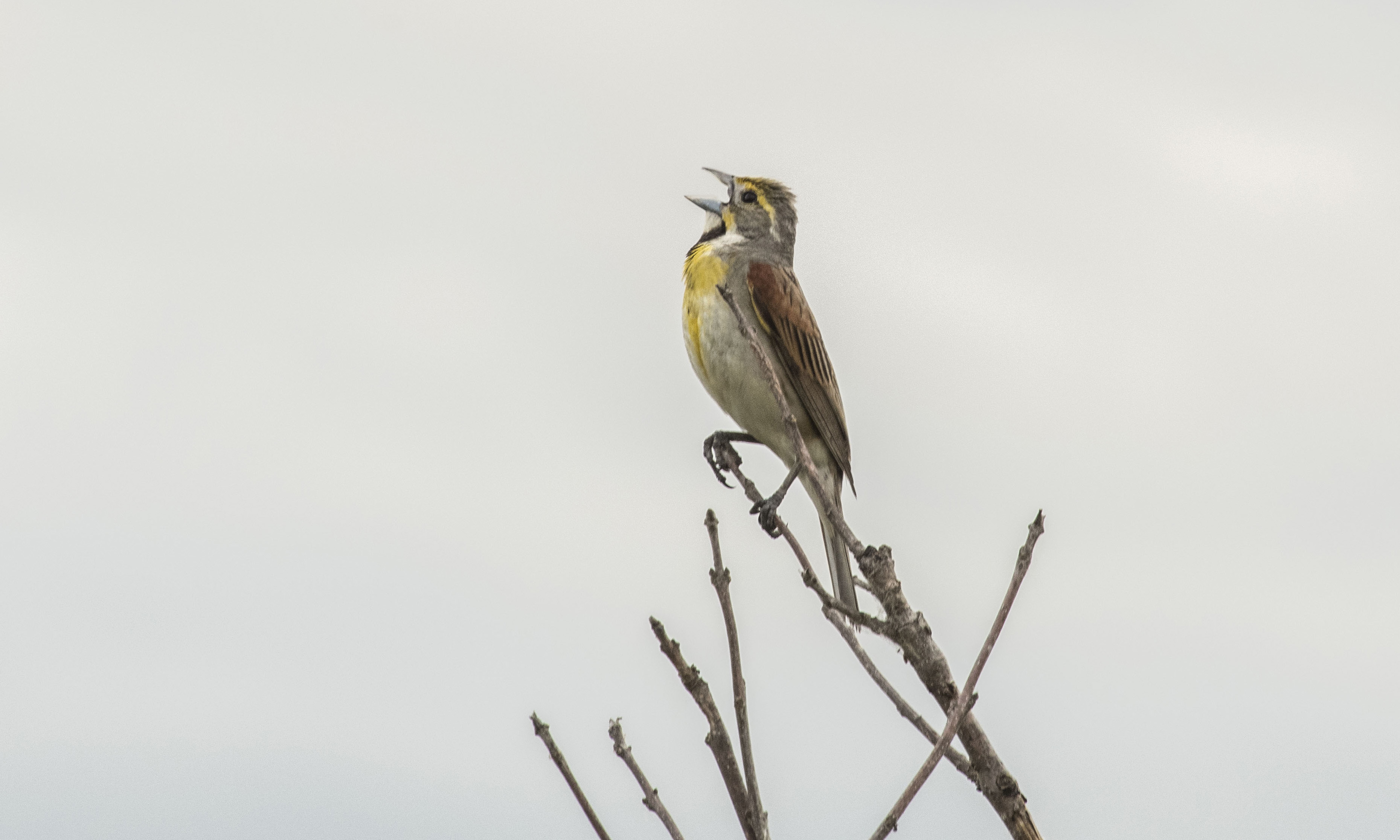
Not long after that introduction via the cross country meets our family began visiting the park perhaps a half-hour distant from our small town to camp, canoe and enjoy the incredible mix of nature, all accompanied by that grand and rarely quiet singer, the Dickcissel. No matter how many times a trip was made from the campground to the confluence, and mostly by foot with either a fly rod or camera, the loud songster was perched on the adjacent farmer’s barbed wire, fencepost or treetop, chest protruded and head arched back, blaring an operatic prairie song from deep within it’s inches-deep, feathered soul! 

Seemingly an “operatic” Dickcissel always accompanied us down a dirt road to the confluence of the Yellow Medicine and Minnesota River.

Over the years we took carloads of foreign exchange students to camp there, for they were usually quite excited to spend a night or two camping in an iconic teepee. They would generally pair off for long walks, often climbing the hill to the park office at the top, or meandering along that dirt road to the confluence beneath the songs of the Dickcissel. One morning I cooked a breakfast for the group that included a package of peppered bacon, and when Jordan, the first or second grader daughter of dear friends, came through at the front of the line she piled the entire stack of bacon onto her plate. She’s been known as the “bacon thief” in the 20 plus years since!

On one deeply dark moonless night artist Joe Hauger set up his sky-scopes and did his best to point out those invisible (to me) constellations high in the night sky. In the end I could connect the dots but simply couldn’t see the inwardly connective tissue, those mythical shields, robes and arrows. I suppose in a few years it won’t make any difference, although just once … once in my 80 plus years of life … I’d love to identify, see or simply acknowledge Orion or Scorpus, or any damned thing beyond the Big Dipper!

On another day another artist, Ashley Hanson, with the help of a cast of local river rats, created a “river play” that could only be viewed by canoeing along various stopping points of the Minnesota that concluded a final two acts at Upper Sioux. Somehow she convinced an at-the-time fellow country newspaper editor, Scott Tedrick, to star in the play dressed to the “nines” in a beautiful blue prairie dress! 

For most of an afternoon I played “photo tag” with this Yellow Warbler, and this was my only full image of the shy singer!

Yet it was the quiet times with my late wife, Sharon, and our sons, Jacob and Aaron, that I most remember, of walking down that dirt road with our fishing poles to the confluence, then coming back near dark often with a stringer of fish that I would fillet with the headlights of our car; of how we would sit quietly in camping chairs watching fireflies buzz in the dry prairie grasses, sipping cold beer or wine. Once on a very cold and sunny winter day we brought the boys down to enjoy the sled hill at the entrance when one trip of trudging back up that hill dragging both the sleds and a boy each was considered a one and done. Have canoe trips been mentioned?

It was here we witnessed our first of many Wacipis, powwows hosted by the Native Dakota in the horse campground on the other side of the park, complete with hot frybread, beautiful drum songs and jingle dresses. It was our introductions to the Native culture and wasn’t taken lightly. Ever.

As a photographer, the light in the park was always divine.

My last visit came long after Sharon’s untimely death when I came with a new woman friend with our newly purchased camper. We were to meet some of my Missouri family in the midst of their “Laura Ingalls Wilder” trip through the Minnesota and South Dakota prairie with my hopes that they would join us at Upper Sioux. Their’s was a different agenda, although we did meet for dinner in nearby Olivia. We two had ample time to explore the park in our wait, although this was years after a rain-dampened landslide had permanently closed the state highway between the lower campground and the hilltop headquarters. My hope then was to once again visit the canoe takeout but we found the long winding road down the hill chained off. Yet, the prairie was alive, and I would spend most of an uneventful afternoon playing photo “tag” with a yellow warbler. 

Yes, I again went fishing, and we were once again serenaded with an operatic prairie song by a feathered diva, yes, an ever present Dickcissel, and actually saw one of the few Meadowlarks in all my many years here in the “prairie region” of Western Minnesota. And, the Minnesota was sparkling in the late afternoon “Monet light” with beauty and poetic color, and I viewed that upriver bend unknowingly for the last time. The beauty preceded a deep sigh or two one has when meeting an old friend. Then, on our last day, much of an approaching evening was spent trying to create a good image of one of the teepees for a friend who lived in nearby Granite Falls. 

The various views of the bends of the Minnesota were often spectacular.

For many years … numbering close to 20 overall before moving upriver to Listening Stones Farm … the Minnesota River bottom was my home away from home, and Upper Sioux Agency State Park was my anchor. This is where I would come after crossing through the uncountable farm fields on mostly gravel roads to where the waters of confluenced rivers roamed, where old, soulful trees lined the banks and adjacent hillsides, where one could find nature’s beauty and sense the soulful depths of a riverine landscape. 

Now the old state park has been rightly reclaimed by Dakota for all those reasons and more, and it is time the rest of us moved along. I’ve heard the plan is to finally demolish the old Agency Building, a bastion to centuries-old ills of racism and genocide, and to close the former park to those outside of the Tribe. According to news sources, the Department of Natural Resources have discussed plans for a new state park within the area. Although there might one day be a replacement park, perhaps the word “replace” is the wrong word. In, these, my farewell thoughts, I must say thanks for many cherished memories.

Beautiful, Yet so Ugly

Once again the wind is blowing. Gale force? Perhaps not, since that would be in a range between 34 knots (39 mph) to 47 knots (54 mph). At least not consistently. Yet the sound and feel is such that it is surely lifting soil and blowing dirt, and thanks to the recent thaw, not much of this continual erosion will be visible since snow provides a convenient contrast. Rest assured, though, that dirt is shifting and that some of it will blow into the adjacent road ditch and perhaps even the distant ditch across the road.

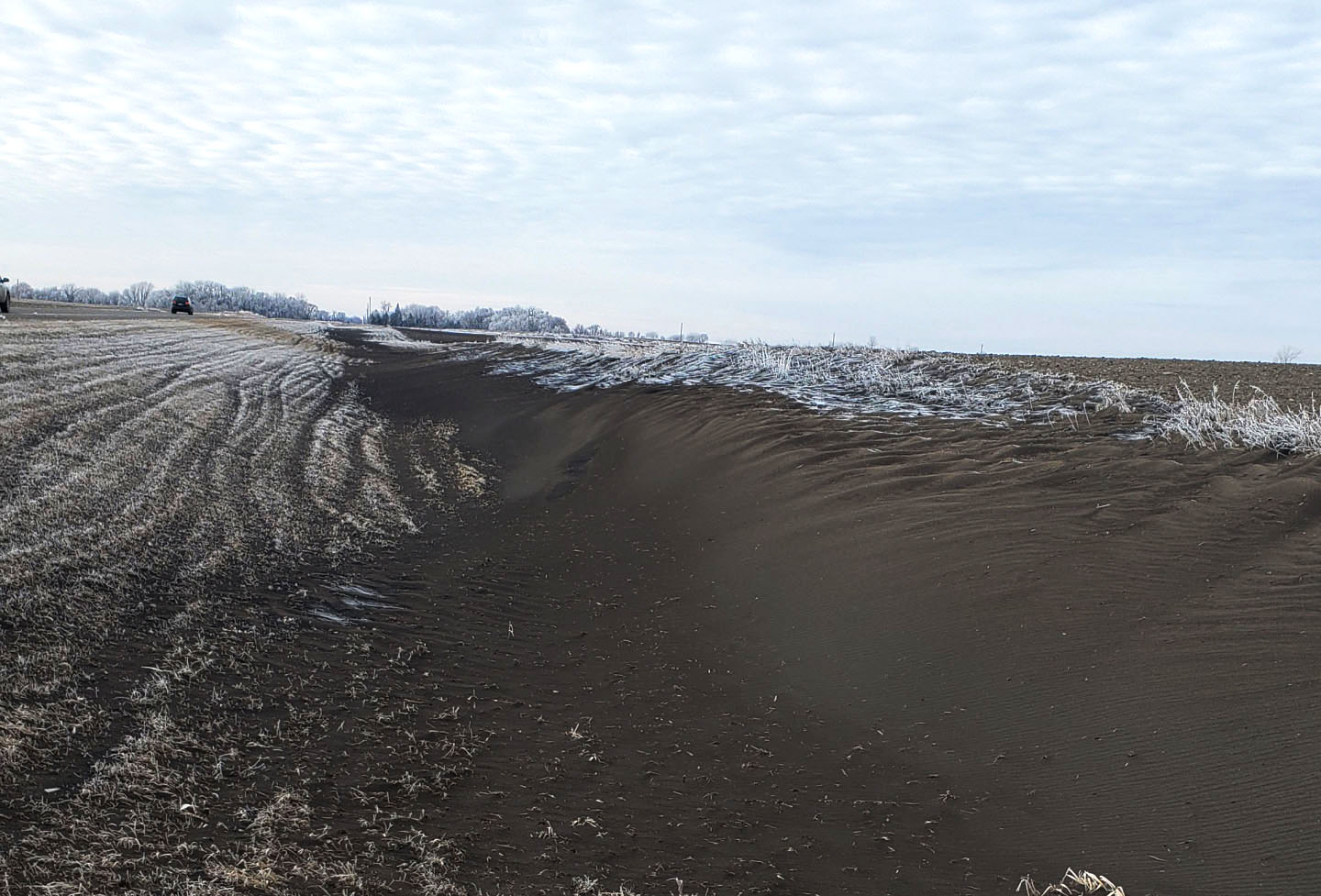
There are ample examples all across the western prairie region.

Down the road apiece, just past our little eight acre prairie, we have evidence of displaced dirt. Between the field and the edge of the road blown dirt covers what little snow that has yet to melt. Driving through the “black desert” — basically within the Hawk Creek Watershed in Chippewa and Renville Counties — dirt covered ditches on either side are a common sight on both highways 7 and 40. 

A rather symbolic portrayal of past and present … the downed wire of a former pasture and the weathered skull stand against a possible demise of modern agriculture, the loss of valuable topsoil to wind erosion.

Unfortunately wind-blown dirt erosion is far from centralized since friends traveling beyond our state borders  have witnessed “snirt” … a word that combines “sn” of snow with the “irt” of dirt … in Iowa, Nebraska and Kansas. Recently some have taken to calling the eroded dirt “snoil” that combine snow with soil. Whatever the moniker, it is a tragic loss for now and especially for future generations who may be dependent on whatever soil is left to grow food.

One of my long time friends, Kurt Lawton, former editor of Soybean Digest magazine, suggests that every farmer and land owner should be required to read “Dirt: The Erosion of Civilizations” by David R. Montgomery. It’s a telling and fascinating book of non-fiction that describes the many “civilizations” that have been ruined and lost because of the erosion of dirt dating back before the birth of Christ. He also points out and warns that we are now farming (growing food, and yes, ethanol) in the “last frontier” of tillable soils, and adds quite pointedly that we’re still “treating our soils like dirt.”

“Monks” of an erosion, quipped a friend seeing this image.

It was after reading Mongomery’s book in 2014 that I began to collect roadside images of wind blown eroded dirt on snow that led to creating my Art of Erosion exhibit, which has now been in numerous exhibitions around the states of Minnesota and Wisconsin, from the annual MOSES (Midwest Organic and Sustainable Education Service that is now called Marbleseed) gathering in La Crosse, WI, to being included in the Water Works traveling exhibition from the Smithsonian. Add a few gallery walls and conferences to the list. A commonly heard comment in those varied exhibitions is, “ … this is so beautiful yet so ugly.”

Initially my images were centered around erosion in Big Stone, Lac qui Parle, Chippewa and Renville Counties of SW Minnesota. Since, more images have been added from Stevens, Swift and Yellow Medicine Counties. Some of my earlier images have been pulled from the original 24 as newer and perhaps more compelling ones have been gathered. There is seemingly no end to the addition of more imagery. A few year ago it I included a white farm cat clustered with dirt along with dirt-crusted, in-town Christmas decorations and stairways. Last year I framed a multi-image collection from dirt blown from a single field at graduated distances ranging from 100 to 400 meters, along with a second image where “waves” of dirt had cascaded down a hillside from a fall-tilled field from just over the rim. Little imagination was needed to view it as waves of an ocean beach. 

A common sight along too many rural roads …

More images have been added already this winter and it’s only February, with nearly four months to go before seedlings are high enough to provide modest protection. A handful of these images were captured on a recent trip to my credit union in Dawson. Sadly, these poor farming practices continue, and perhaps even sadder is that apparently those farming the soils where I can count on gathering images every winter rarely do much about it. Are they blind to it? Overlooking or ignoring the damage being caused? As if soil is an unlimited resource?

Viewers of the Art of Erosion have asked about changes in the farm program that might mitigate the issues, or question why such tillage practices are continually being used. They worry, as do I and others, including Montgomery, about feeding future generations if the erosion continues. They ask about cover crops, which can be challenging to plant when considering both a compressed harvesting season and a shortened possible growing season for the cover. However, more and more farmers have noticed and are working to find creative solutions to keeping their soils in place including turning to crops like kernza, a commercially available and economically viable perennial grain crop that is a suitable ingredient for bread, cereals, beer, whiskey, and even ice cream. 

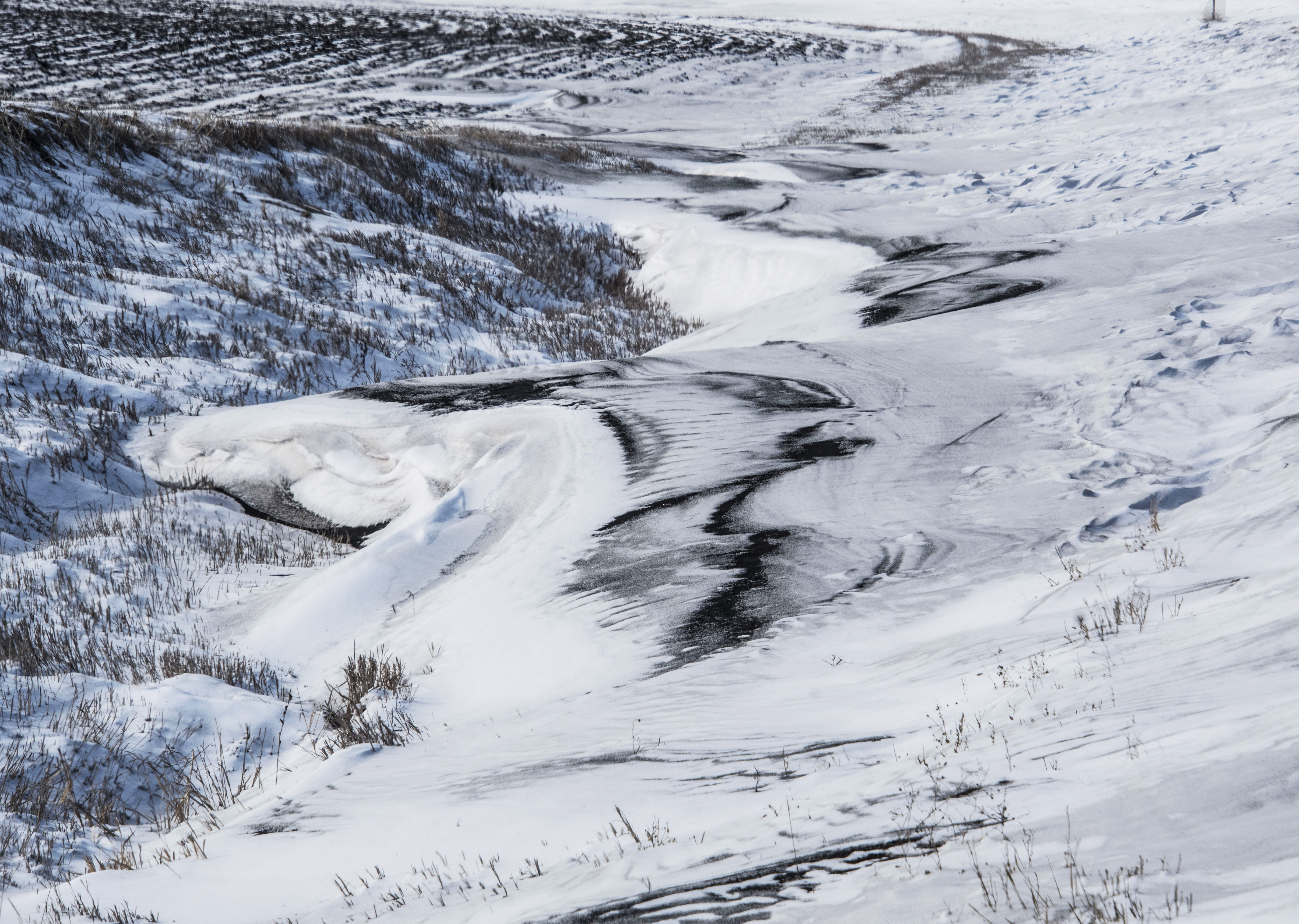
Snow provide a convenient contrast, though the erosion continues from nine to six months depending on the previous crop.

Perennials are a favorite of Jim VanDerPol, author of “Conversations with the Land,” who bemoans both the loss of perennials overall and the grazing of farm animals that would better protect our soils. His family farm, now being transitioned to his grandson, is a green isle in the midst of the aforementioned Black Desert. Poor animal prices, however, won’t convince so many who are dependent on the USDA farm program to switch their 24 row planters and combines for a patch of grass and a herd of cattle.

Perhaps the most inexpensive means is to simply leave the residue from the previous harvest standing. Untilled. Farmers, though, seem to balk at this by arguing that come planting season new issues might arise including a late winter or a very wet spring. Yet, what about the soil? “The soil is being eroded 100 times faster than it’s forming. And that kind of situation can burn right through the soil profile,” says UMass Amherst geoscientist Isaac Larsen. Those who have studied the erosion seem to unanimously conclude that this is unsustainable.

I seem to be captivated by the dirt swirls and other impressionist creations by the wind.

There is a cost involved. Jodi DeJong-Hughes, University of Minnesota Extension regional education specialist, sampled the top inch of snirt in ditches along Minnesota Highway 40, yes, the same one mentioned above, that through laboratory analysis and math revealed that this field lost $51.30 in nitrogen, $7.80 worth of phosphorus and $23.50 in potassium per inch of ditch acre. In other words, $82 plus change per ditch acre. These figures do not even include the most valuable soil components of topsoil (clay particles) that blow away before heavier particles settle into the nearby ditch. How do you assign a value to valuable soil organic matter, microbes and minerals that lie in a ditch? Yes, it’s dirt. It is also money. Anna Cates, a University of Minnesota soil scientist, says: “Every farmer who changes (tillage practices) references erosion as a motivator.” 

Snirt, or snoil, is a perplexing and costly issue that likely remains in the hands of individual farmers to recognize and rectify. It seems unlikely that an abrupt change will come from the USDA. Some Farmers have changed practices, yet it seems a majority have either ignored looking at their ditch banks or even considered the costs of erosion both in terms of crop inputs and actual loss of soil. I would hope it isn’t due to a complete lack of care, for this is it; this is our last remaining farmable topsoil on planet earth. 

A Lucky Seven

It began with a blissful and brilliant feathered ember in the desert landscape. Contrary to what one might think, this was not a glamorous show girl on the famous Vegas Strip but rather a rare desert bird we found at the Henderson Bird Viewing Preserve on the outskirts of the city.

Days later we would visit Red Rock Canyon National Park where a more mundane appearing avian wonder would appear in my lens. In between there was lots of magic and wonder, and “seven” would be the magic number!

Let’s start with that “ember”, which the naturalist at the Preserve took a quick look at the image presented in the Nikon viewer and said, “Yep, that’s a Vermillion Flycatcher.” 

The “ember” … a Vermillion Flycatcher was the first of the seven new birds seen on our recent trip to Las Vegas.

When I first saw the brilliantly bright red flash among the brown winter-ish leaves of a tree against the deep blue sky, my first thought was that I’d seen a Scarlet Tanager. Here? In the desert? Yet, the feathering seemed too rough and the body too compact for a Tanager. Actually the Vermillion Flycatcher is considered rare for that area of the desert according to the Field Guide to Birds of North America published by the National Wildlife Federation. Apparently it is much more common further south in Mexico than north of the border, and especially as far north as Las Vegas.

It would be one of seven new birds I’d add to my Audubon list from our week-long visit to Vegas. The naturalist at the Henderson also identified my second one as an American Pipit. Although most of what we viewed at the Preserve were waterfowl, capturing two new birds on our first excursion was rather special. Perhaps our being there mid-day meant the shy waders had left for quieter waters, and the smaller songbirds were clustered within the foliage. There was ample plant growth surrounding the nine pools of water within the compound.

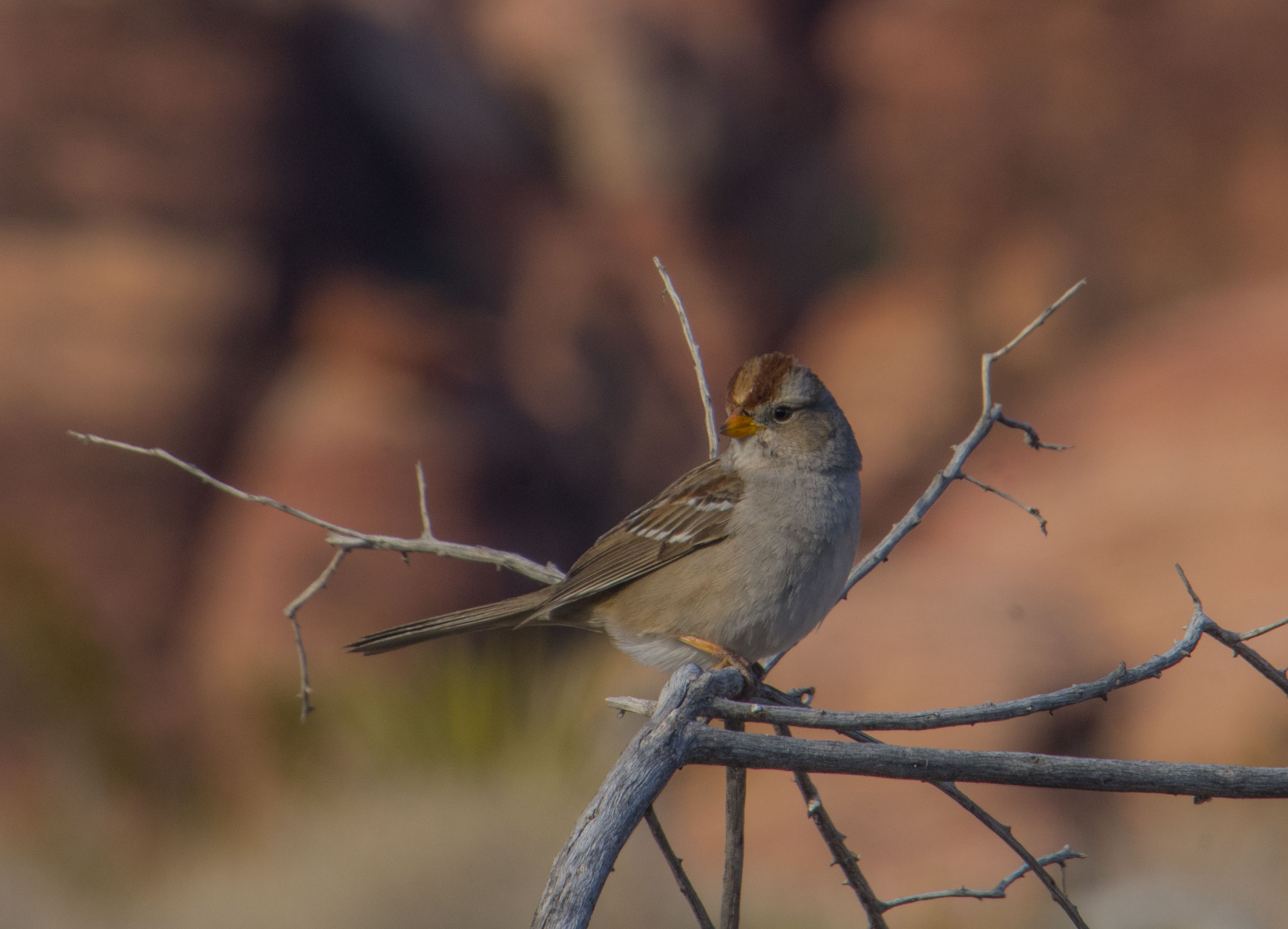
This Rufous-Crowned Sparrow would be my seventh new bird for the list!

Toward the end of our stay, on a drive through Red Rock Canyon, I was able to photograph the seventh, some ground-and-brush hugging Rufous-Crowned Sparrows. The idenity came once we returned home and compared my photos with the birding guidebook. 

The other four? As guests of Roberta’s brother, Craig Schultz, and his partner, Anita Murrell, we saw and photographed Dark-eyed Juncos, Red Breasted Nuthatches and Eurasian-Collared Doves, and briefly saw a Great-Tailed Grackle on their patio where Anita is the chief seed distributer. The first three would fly in almost as soon as she dribbled the grain onto the concrete, and the grackle made a brief landing on an overhead patio beam before immediately pivoting and flying away.

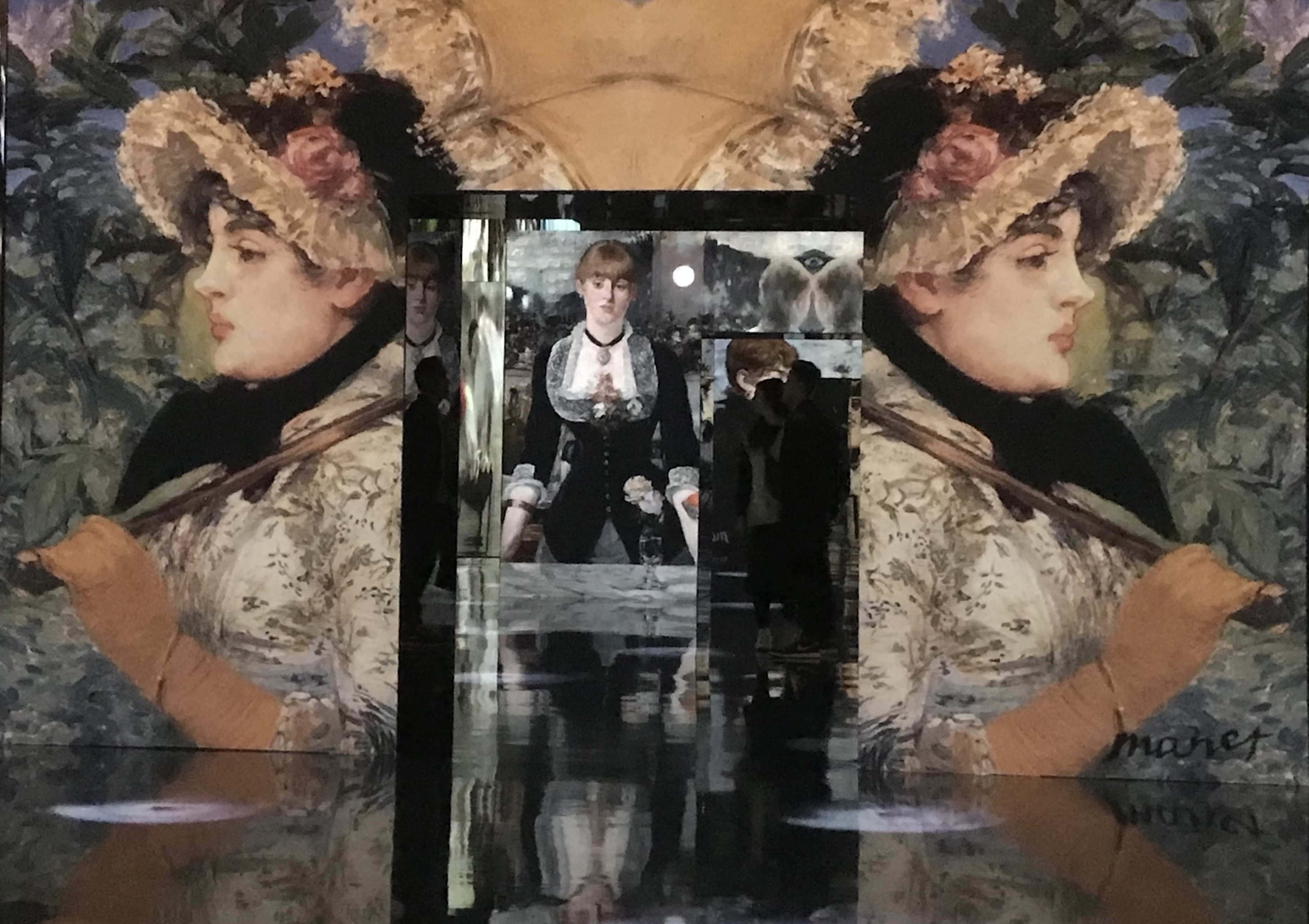
Besides the birds, we did take in some “entertainment” including a fascinating AI show at the Arte Museum, as well as “Mystére” by Cirque du Soleil.

Some of you might be chortling about now about this old man recounting a trip to Vegas is explaining his excitement of viewing seven new birds. Rest assured there were many special and magical moments although none at the tables or machines. Take “Mystére” by Cirque du Soleil, which more than matched their “O” that we saw several years ago. Cirque du Soleil has so much magic going on that it’s difficult to embrace it all, and the artistically athletic beauty just kept on coming from seemingly all directions. Literally. 

We also spent a long morning viewing an AI enhanced art show at the Arte Museum, and I especially loved the rooms called “Forest”, “Waterfall Infinite” and “Garden Light of the Master Pieces”, the latter of which mixed art from the Orient along with some works of the Impressionist artists. What a wonderful way to lose yourself in wonder and music, and yes, the magic of which for me is an unexplainable technology. Honestly, I find technology brutally boring for the most part, yet this AI creativity was nothing short of amazing.

A gnarly, weathered and burnt desert log leading an eye toward the red rock formations.

This was my fourth or fifth trip to Vegas and the first that wasn’t business oriented. This was simply a visit, and not a single dime was dropped into the gambling devises. We had a couple of lunches and dinners out, and a dinner show complete with fine musicians and singers who were friends of Craig and Anita. So it wasn’t completely devoid of entertainment. All that and I still came home with seven new birds for my Audubon list! 

Of all of our stops of interest, though, visiting the Red Rock Canyon National Conservation Area was on visual par with the Arte Museum. Just a bit west of the city, the park is located in the Mojave Desert where towering geological features include red sandstone peaks within the Keystone Thrust Fault, all rising high from the desert floor. A fine 13-mile scenic drive through the park offers pullouts and special viewing areas along with a wonderfully wide shoulder where you can pull over for photography or to simply breathe in the surrounding beauty. Computing the size of the featured geology is almost inexplicable until you notice a human climbing one of the reddish walls, being a mere miniature “stick creature” pressed against a huge slab of mountainous stone. That adds an incredible perspective.

Thanks to the late afternoon light, the redness of the rocks were brilliant.

Besides the contrast in color and the size of the formations, a spiritual sense seemed to resonate within, tugging at the soul like having your toes pulled from below in a deep pool. Native Petroglyphs can be found among the rocks, and had we arrived earlier in the day we could have taken the paths to view them. The lateness was all on me, for I convinced Craig and Anita to go in the late afternoon for my preferred photographic light. And once again, the late afternoon light didn’t disappoint.

At one of the pullouts I noticed a split tree trunk that had appeared to have suffered from an earlier fire. Blackened and mysterious, I visualized using it for contrast and composition in framing the bulbous rock formations. While traipsing through the mesquite, desert marigolds and other plants to the Y-shaped log, a group of the Rufous-Crowned Sparrows played a bit of hide and seek, hiding within the branches and foliage. It was enough to test one’s patience, yet a few images were caught of the teasing avians. They would become the seventh and final new bird in my count. And, I got my visualized image of the log.

The “parting shot” from the plane as we flew home gave a wholly different perspective of how such a huge and dominate landform seemed so small in the overview landscape of the surrounding desert.

On our flight home I was hopeful that our plane would head west from airport as it appeared most of the planes we had seen over the past week had done, and if so, that I might capture a sky-high overview of Red Rock Canyon. Fortunately I was blessed, for we had a beautiful overview that added a wholly different perspective of how such a huge and dominate landform seemed so small in the overview landscape of the surrounding desert.

They say that there is something quite special in rolling a lucky seven in Vegas, so coming home with my own “lucky seven” was heavenly. So much fun, magic and beauty, all in one week! As late newsman Whoopy Warrings used to write in closing each of his short paragraph “locals” for our country weekly, “ … and a great time was had by all.”