Back in my daily newspaper days we were asked at the end of the year to choose a favorite image we had made over the past year. Each of us would weigh the circumstances and possible challenges surrounding each of the images as we made our choices. This was especially true if you took the assignment to heart, and most of us did. Nowadays I’m under no such restrictions, and for the fifth year in a row I’ve been determined to choose my favorite 12 … a dozen among the several hundred images stored in my files from my year in the natural world.
It began by brainstorming, if you will. My initial collection featured some 84 different images which may be cause for laughter among my photojournalistic comrades. Whatever!
Although none made the final cut, there were images from five different Northern Light displays although I had slept through at least two displays and was clouded out on a couple of others. Accumulative, there were at least nine different Northern Lights displays through the year including two each in April, November and now December.
Which is part of the fun of the exercise. Interestingly, my accumulation of deer images for the year was down significantly. No such issues with birds. Among the many images were birds I hadn’t photographed before, including a Western Meadowlark, White-faced Ibises, Indigo Buntings, Starlings, American Avocets, Catbirds and Bluebirds, to name a few. It seemed that every trip to a different state park would garner images of Catbirds, Yellow and Yellow Rumped Warblers. There were photographs from numerous trips to capture Sandhill Cranes throughout the year, most notably a special photographic expedition at Crane Trust in Central Nebraska for the annual spring migration with nature photographer, Cheryl Oppermann. We also made two trips to the Sherburne National Wildlife Refuge for both Cranes and Swans.
Wildflowers came through once again as I seem to follow their numerous flora seasons beginning with Pasque Flowers in March. We didn’t make a bog trip this past year, though, although autumn tree and sumac opportunities were both numerous and thoroughly appreciated.
And, you can’t live within the Horizontal Grandeur without capturing big sky images, especially those that capture the ambient light created by both sunrises and sunsets. Monet would be a happy prairie painter!
Several camping trips were made to different Minnesota State Parks along with a two week trip to Iceland and Norway, where every day seemed to offer an array of different waterfalls.
It was a blessed year, and a lot of “tough” decisions were made here on a snowy, gloomy wintry afternoon. My last 30 images were incredibly difficult to pare but I eventually made it down to 24. The last 16 took a long stretch of time. So many choices! A reflective image at Lac qui Parle State Park was very hard to eliminate, along with a nice broadside flight of a Bald Eagle. Some of the images fell into my “photographic poetry” realm, meaning that the feel and texture offered an “impressionistic” mood thanks to the beauty of nature.
So, here you go (my 12 along with bonus images from Norway and Nebraska. All the rest were made in the prairies and woodlands within a day’s drive from Listening Stones Farm!):
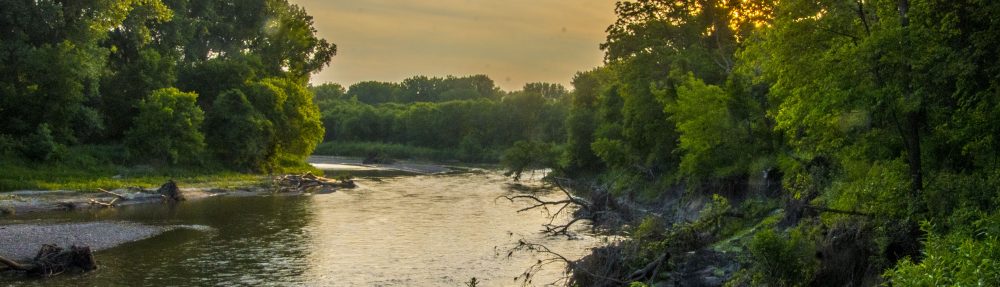
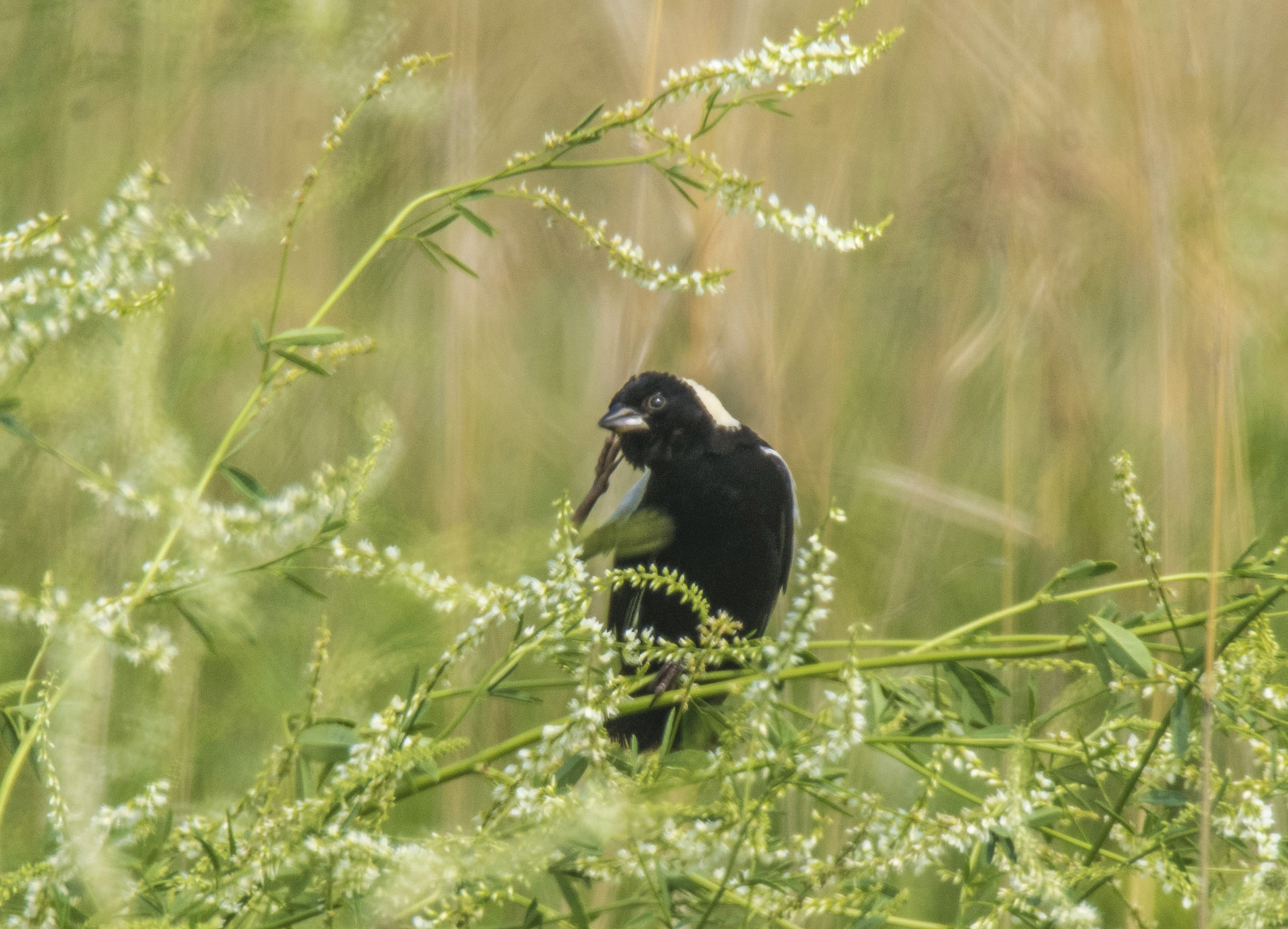
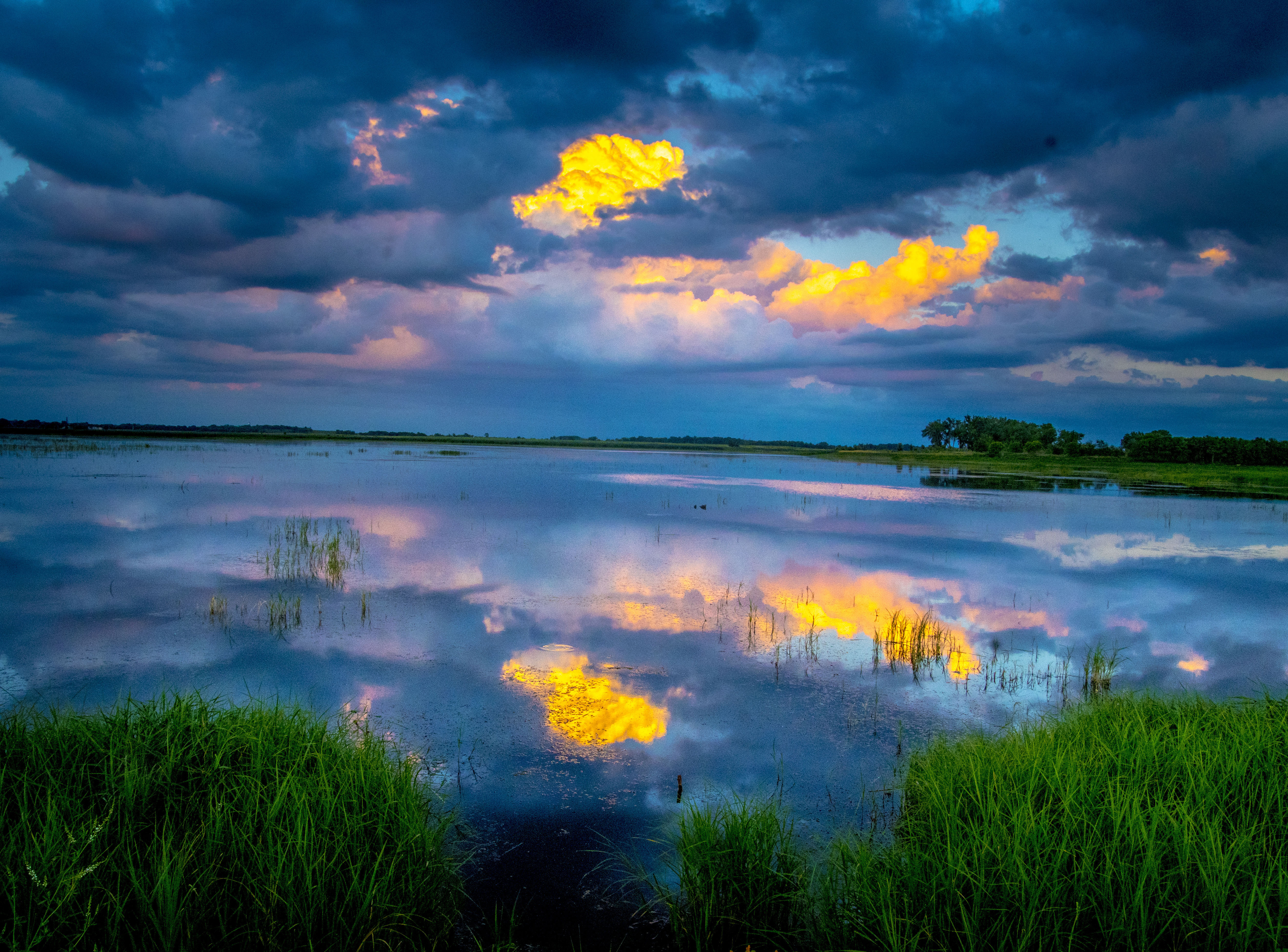
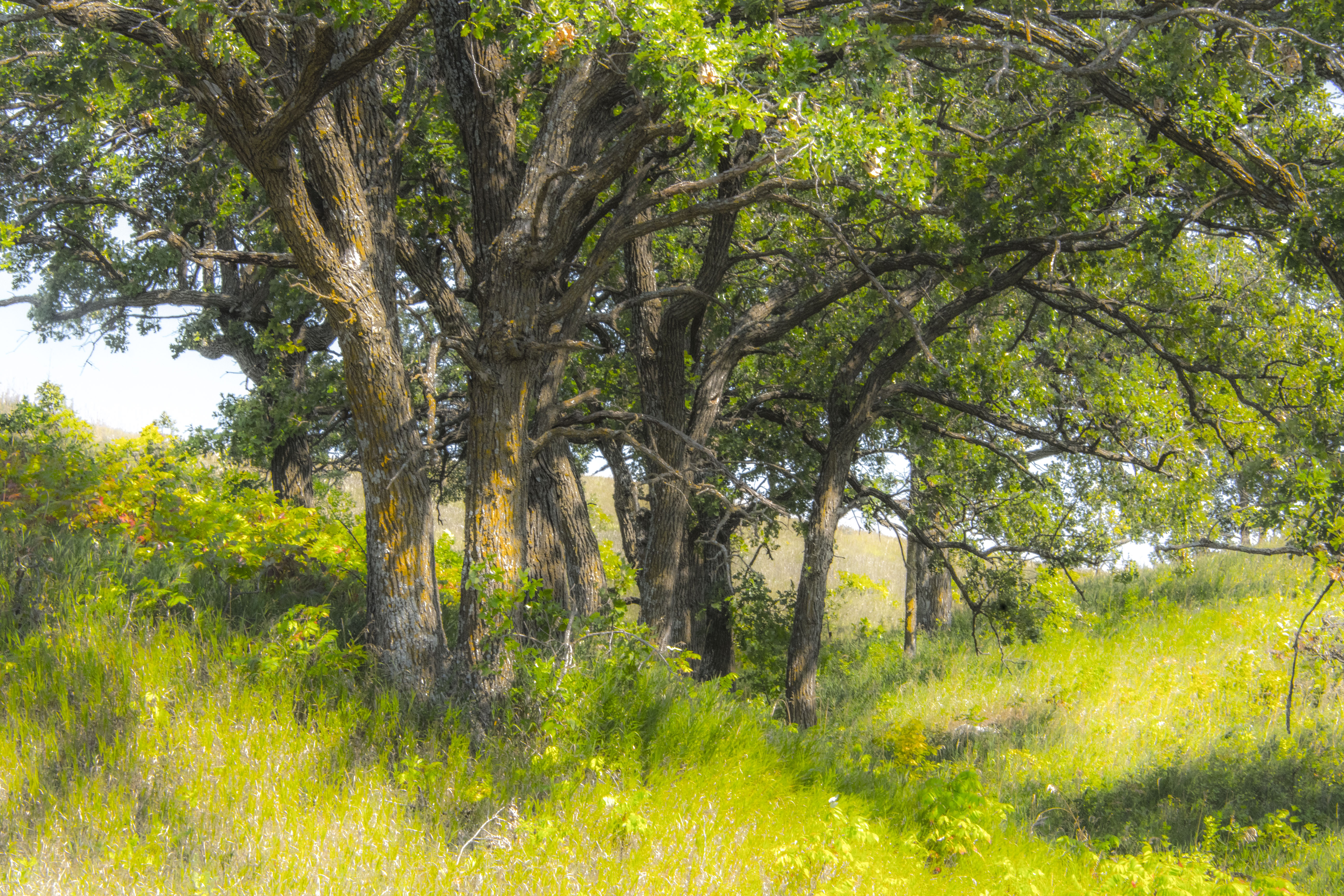
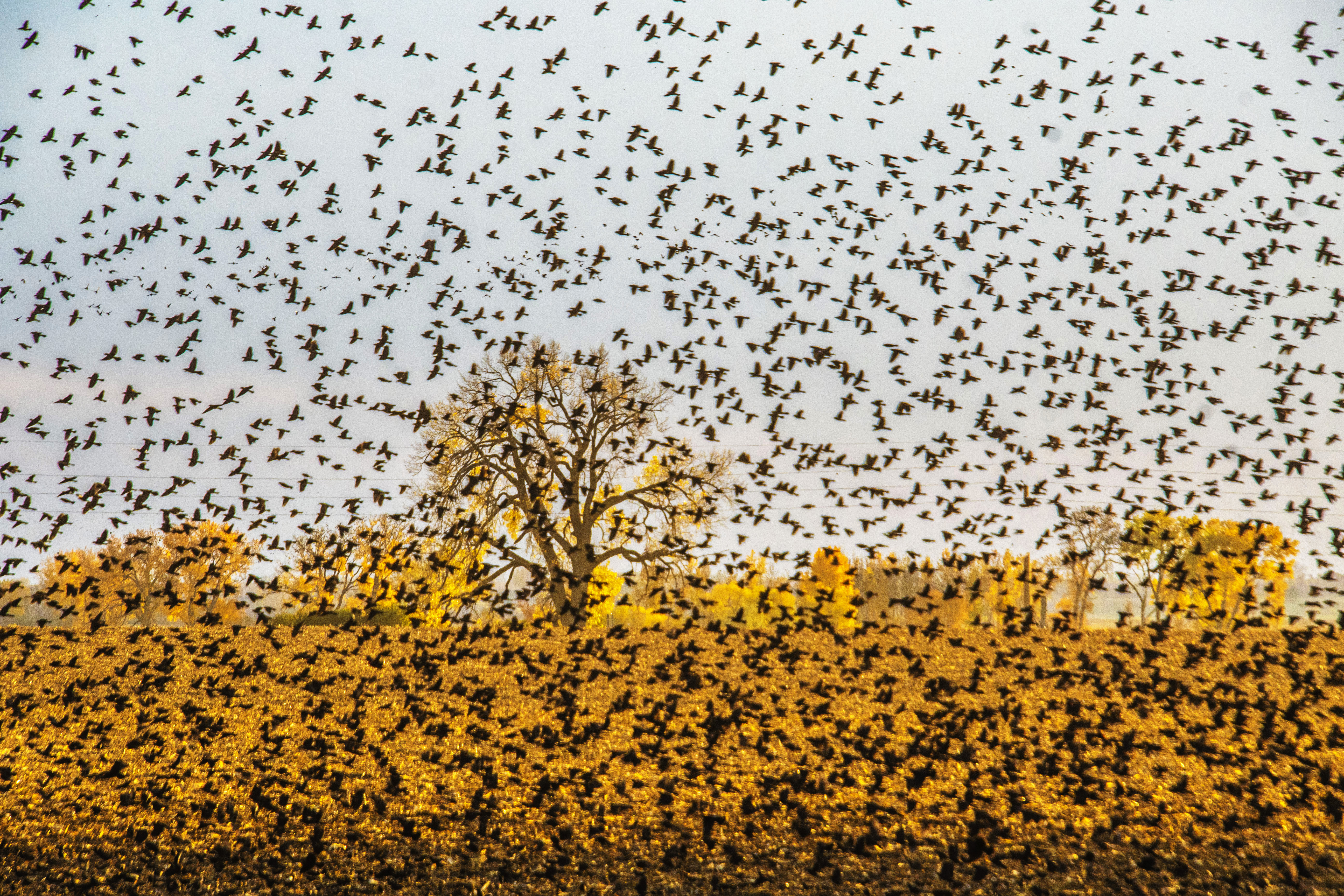
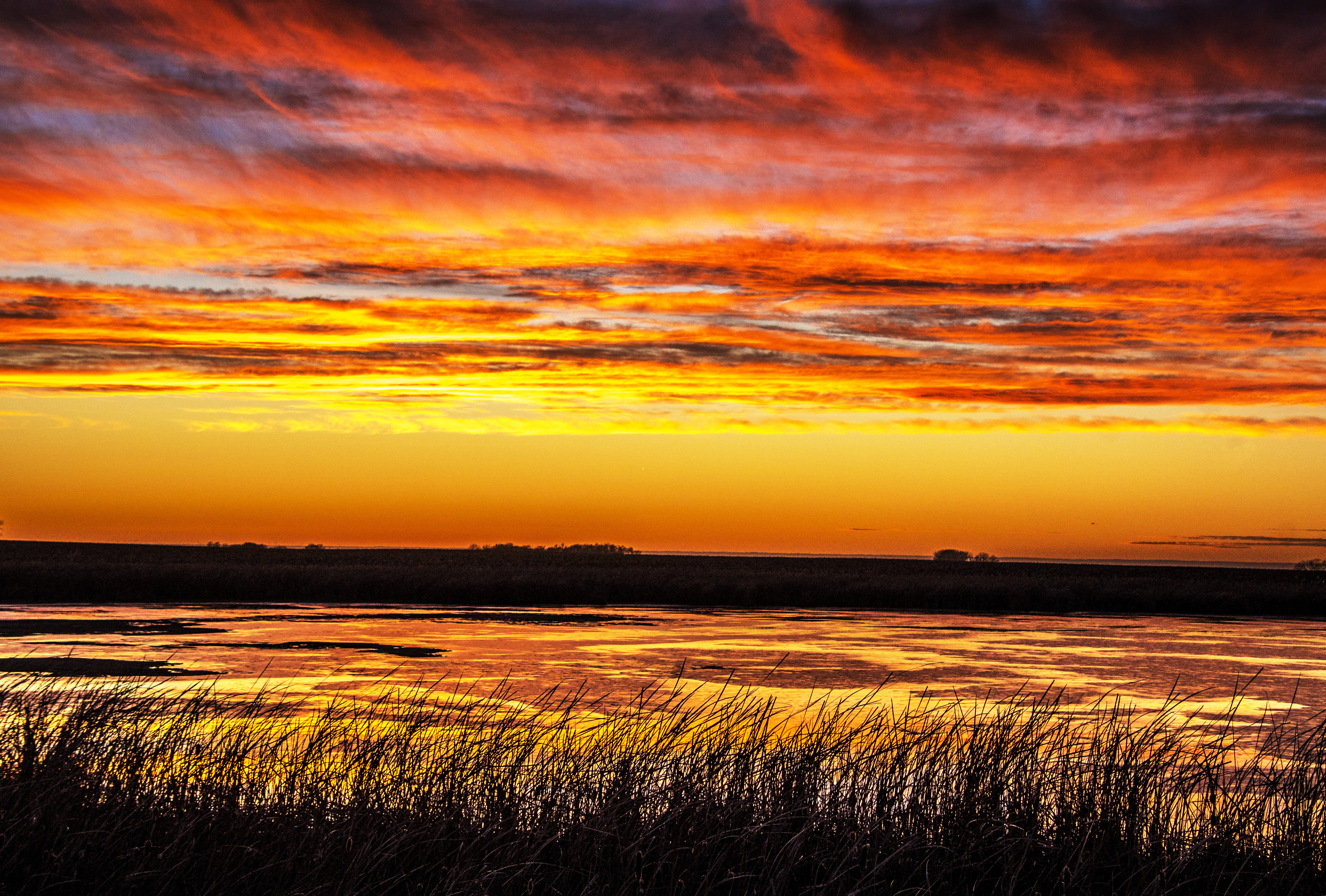
An early summer sunset over the Minnesota River at the Big Stone National Wildlife Refuge, made special by a couple of swallows gleaning the surface waters for insects.A “poetic” image of cascading waters made at Whitewater State Park in SE Minnesota.My first Bluebird image, another gift from Whitewater State Park! Coneflowers and Big Bluestem dance in the prairie winds at Lac qui Parle State Park.A rare Bob-O-Link preens itself in the Refuge prairie. While we’re in the Refuge, an ambient Monet-like sunset was reflected in the West Pool.Photographic “poetry” of a Staghorn Sumac in the Bonanza area of Big Stone Lake State Park.During a Douglas Wood writer’s conference at Osprey Woods ELC, I was in search of sturdy “old wood’ as I dealt with a bit of soul-shaking vulnerability, and this trio surely helped by offering an image of strength with an array of artistic color.Another “poem” … both strength and softness were portrayed in an oak savanna in the Bonanza area of Big Stone Lake State Park.Among my favorite images of a Redwing Blackbird murmuration, made outside of Appleton.Over my years of living in the Western Minnesota Prairie I’ve heard oldtimers talk of having the skies blackened by a Redwing Migration, and now I’ve experienced one.Even small, shallow prairie wetlands can come alive in the ambient light of a December sunset! Oh, Claude, where were you?
And now, for my bonus images:
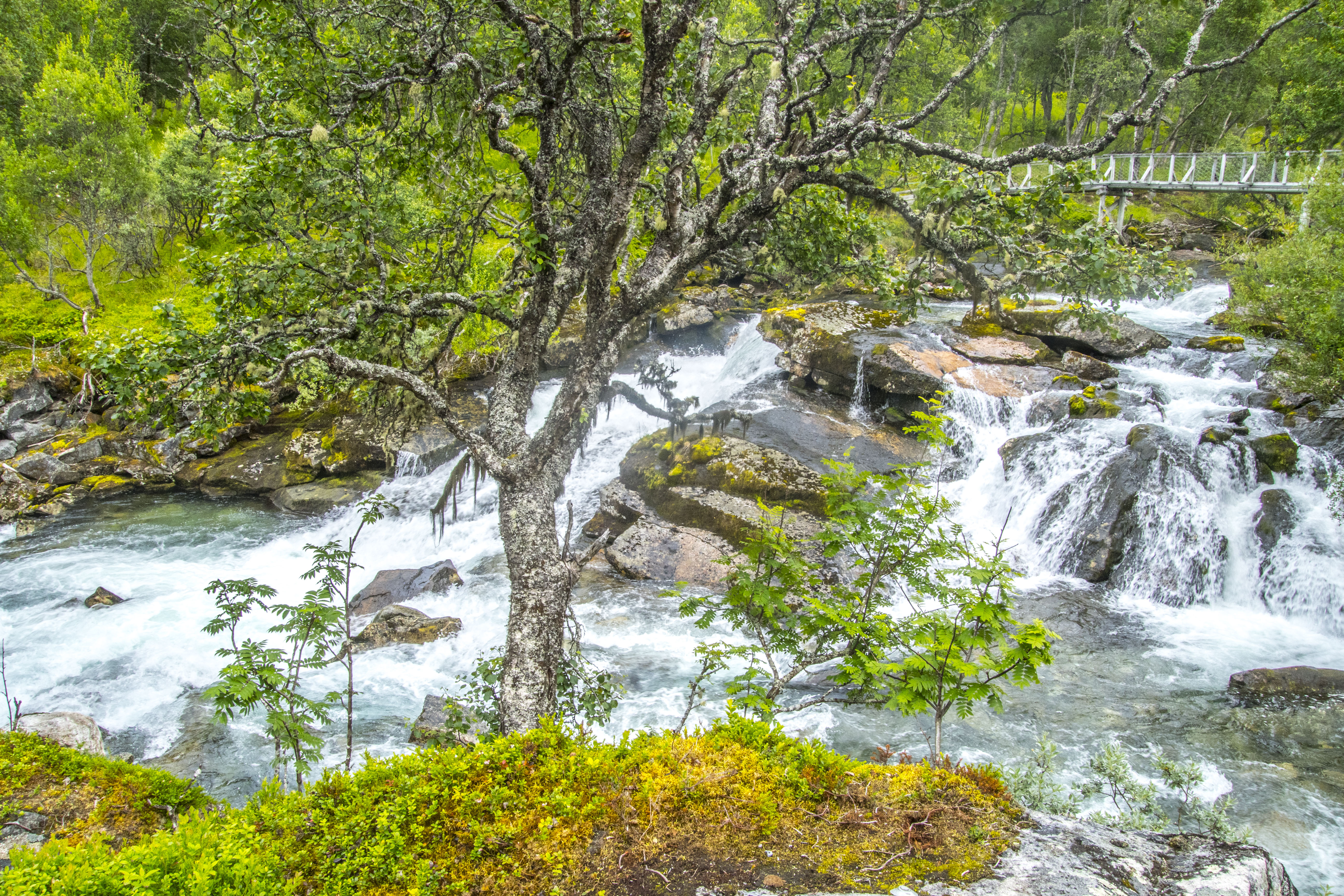
Thanks to a three day drive in western Norway by my son, Aaron Troye-White, this was perhaps a most cherished moment … a waterfall cascading through a high mountain meadow above the fjords of his adopted country! Made in the “blue hour” after sunset, Sandhill Cranes prepare to land in the North Platte River at a Crane Trust river site. Due to the low light, the blurs are other cranes nearing the landing site. Although one might find reasons to dismiss this image, it’s perhaps my favorite of the year, and certainly my favorite of all the images I’ve made in three different trips to the spring Sandhill migration in central Nebraska!` Why? Because of the interesting and perhaps unique challenge of fading light, the natural blueness of the moment, actually capturing the birds in their landing positions, and, again, simply the pure photographic “poetry” of the moment … all elements of photographic impressionism.
A quick peak through the window after rising before dawn Saturday morning offered a view of what prairie people call a “short world.” Fog shrouded the farm. In a half hour the plan was to meet up with (John) Palmer at the Big Stone Lake State Park office where we would cover our pie-shaped assignment for the annual Audubon Christmas Bird Count (CBC). It could have been worse. Just a year ago the CBC, which would have been my first, was pretty much canceled due to a heavy overnight snow with drifts halfway up my garage doors.
After a tasty mug of my smoky Lapsang Souchong tea, my binoculars were fetched and I headed to the car. My camera and 600 mm lens were already packed. Five minutes later I pulled in behind Palmer’s car and we were off on what we both believed would be a slow morning of identifying and counting various bird species. Would the chilly fog cause birds to hide deep in the prairie grasses and trees? Would we actually be able to see well enough to even count and identify whatever birds we might see or hear? Truthfully, we were heading off with more concern than confidence.
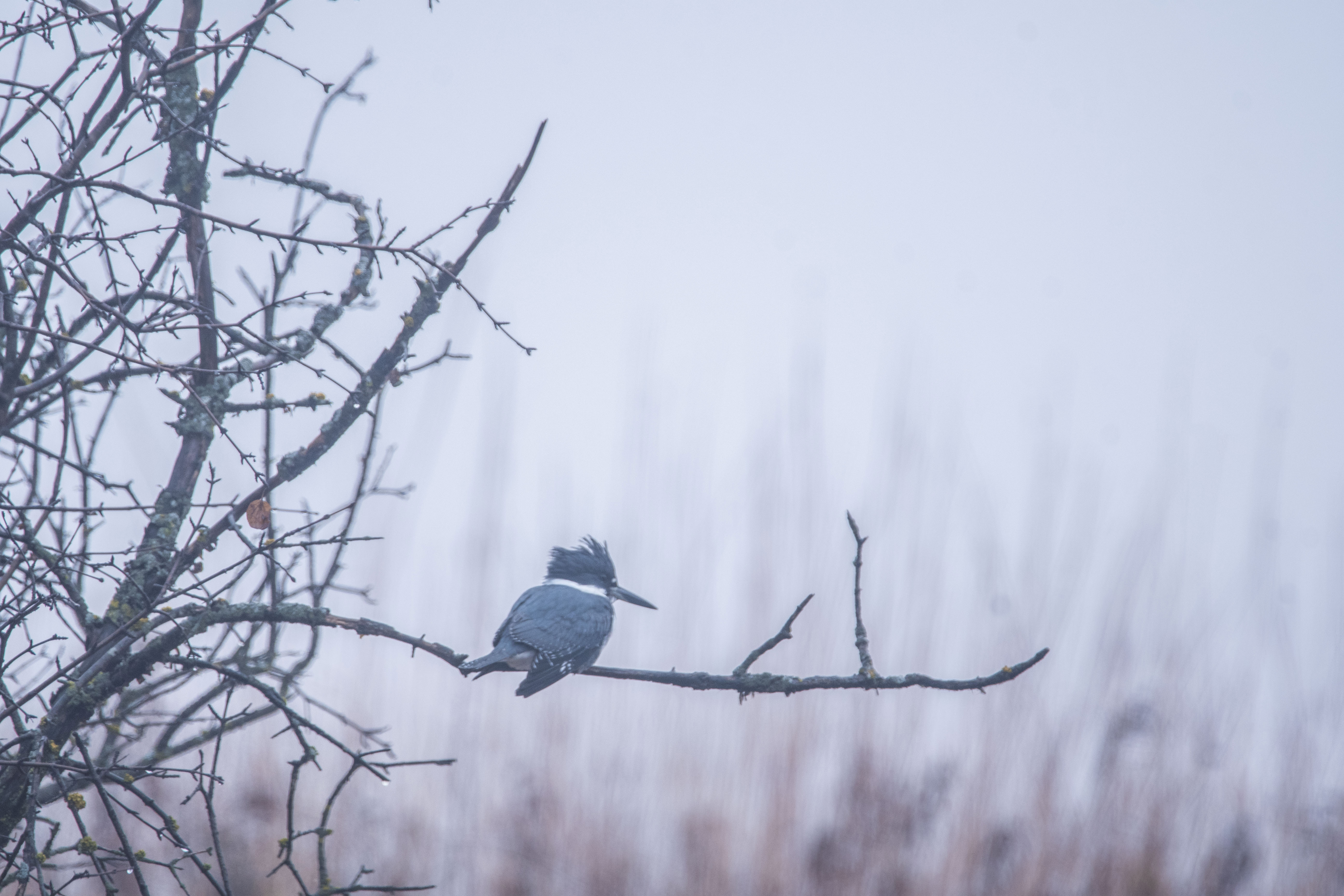
Our lone Belted Kingfisher perched above a patch of open water in the Meadowbrook area of Big Stone Lake State Park.
Palmer is new to the area having just completed his first summer as assistant manager at the state park. Many of the roads we were to cover were unknown to him, and some would be new even to me if we canvassed accurately. We were responsible for an area between Big Stone Lake and U.S. 75, and from the Clinton road down to and including the city limits of Ortonville. We would have five hours to complete our task before the volunteers, under the direction of Jason Frank and Brandon Semel, biologist with the Big Stone National Wildlife Refuge, would meet at Lingonberries for the summary.
Each piece of the circular pie was fairly well defined. Joining us on the hunt for an elusive Bobwhite Quail (the inside joke, for the group I would later learn) and other species of note would be Douglas Pierzina, Brandon Semel, Curt and Sara Vacek, Allison Parker, Gena Leksche, Jason Frank along with me and Palmer. Bill Frank and Meg Scholberg were on feeder watches.
Palmer and I skirted the very top of our pie first, taking what we would later learn wouldn’t be frowned upon as a quick spin down the paved county road in search of a flock of shoulder-hugging Horned Larks or Snow Buntings. Typically both are prevalent along the country roads about now, and birds I had seen recently, yet there wasn’t a one to be found. In Clinton, Lake Eli was frozen over and the Swans that were here a few weeks ago had migrated. We saw no Crows or even Sparrows in our drive through town.
We took the first left once we sped past Clinton’s infamous Zero Street into the countryside to turn onto a marvelous gravel road I had driven past hundreds of times and never driven. It was a treasure with numerous wetlands on either side along with a few Wildlife Management Areas (WMA) that seemed inviting. Some with enough woods for Wild Turkeys and all with ample prairie grasses for Pheasants. While Palmer could hear some activity, we didn’t see anything until we spotted an owl on a power pole after leaving our last WMA on the road. Our first bird! Palmer, in a better position than me, spotted “horns” through his binoculars so we counted it as a Great Horned Owl. It was a brief sightings for once the Owl spied us looking, it flew off for a distant hazy clump of trees. But, it was a bird! Our first of the count!
Although this image of Starlings was made a day before the official count, we caught up with the same flock Saturday morning.
We traversed the upper end of our pie going from one gravel road to the next, slowing along tree lined fence rows. We could have stopped at Listening Stones Farm and upped the count significantly thanks to our bird feeders. This wasn’t a contest about who could count the most birds. Rather, it was to catch an accurate, one day glimpse of the overall species of our circled countryside along with the approximate numbers of each. By and by we followed the ravine back to the state park and passed a flock of Starlings along the road that I had photographed the day before. We then counted a solitary Belted Kingfisher in a splice of open water next to the big lake.
“What’s it doing here at this time of year?” Neither of us had an answer. A later check indicated that most do migrate to warmer climates, although a few birds will stay if they have a source of open water.
We drove down several lake access roads en route to Ortonville, often slowing with the windows down, sometimes turning off and getting outside of the car to look and listen, pulling binoculars to peer into the grayness in search of whatever sound might come, or to simply slowly glide along a treeline in hopes of seeing signs of bird life. We backtracked from the golf course to some WMAs north of town, then back down the eastern flank of the links. I pointed out wetlands where last spring we counted numerous White-faced Ibis, which Palmer had never seen. We then canvased the town parks, ravines and shoreline. The wetlands along the dike road. Parts of the Minnesota and Wetstone Rivers and their backwaters. I feel we were rather thorough despite the handicap of the fog.
This lone tree just above the Steen WMA was a common site thanks to the fog.
We were picking off one or two of the few species we could find, with the highest numbers being the flock of Starlings and a larger grouping of Juncos in the recently “freed” tree canopy on the ridge above the Lake Road. Among our finds were a few Pheasants, a lone Mallard and Canada Goose, and on the drive back toward Lingonberries from a gas fill up, a Pileated Woodpecker. Palmer and I were rather excited about the Owl, Pileated Woodpecker and especially the Kingfisher.
When we gathered for the count the overall results were rather surprising for me with 49 total species counted, according to Semel’s tally, with a compilation of 13,000 total birds. “The fog wasn’t ideal,” he said. “I don’t think any of our sightings were particularly unusual, yet it was fun.” Jokes were made about the Quail no one was able to mark on their lists.
A satellite image of our official Ortonville, 15-mile circle. Palmer and I had the purple pie-shaped acre north and west of Ortonville.
Although this was my first CBC, this was an Audubon effort to promote conservation by counting rather than hunting birds, and was initiated in 1900 by Frank Chapman and 26 other conservationists. Some counts have been running every year since then and now happens in over 20 countries in the western hemisphere. Official 15 mile radius circles are pinpointed, with our’s centered around Ortonville. Our circle included parts of South Dakota as well as the Big Stone National Wildlife Refuge and Big Stone Lake State Park.
After a quick lunch and friendly greetings, Palmer and I headed back to the state park as the fog slowly and finally eased into gloomy daylight. As we motored up the Lake Road, a few Crows and various other birds would sometimes swoop across the highway and we wondered where they had been during our official count. And, where were the three groupings of Wild Turkeys with staked territories we thought we would surely pass along both the ravines and the Lake Road? And, those numerous skeins of Canada Geese we’ve watched fly overhead for weeks? Nuthatches are quite common and we didn’t count a single one, nor did we happen upon commonly seen Downy or Hairy Woodpeckers. Palmer and I wholeheartedly blamed it all on the fog. Oh, and like the others involved in the count, the ever elusive Bobwhite Quail exited our circled “stage” laughing once again!
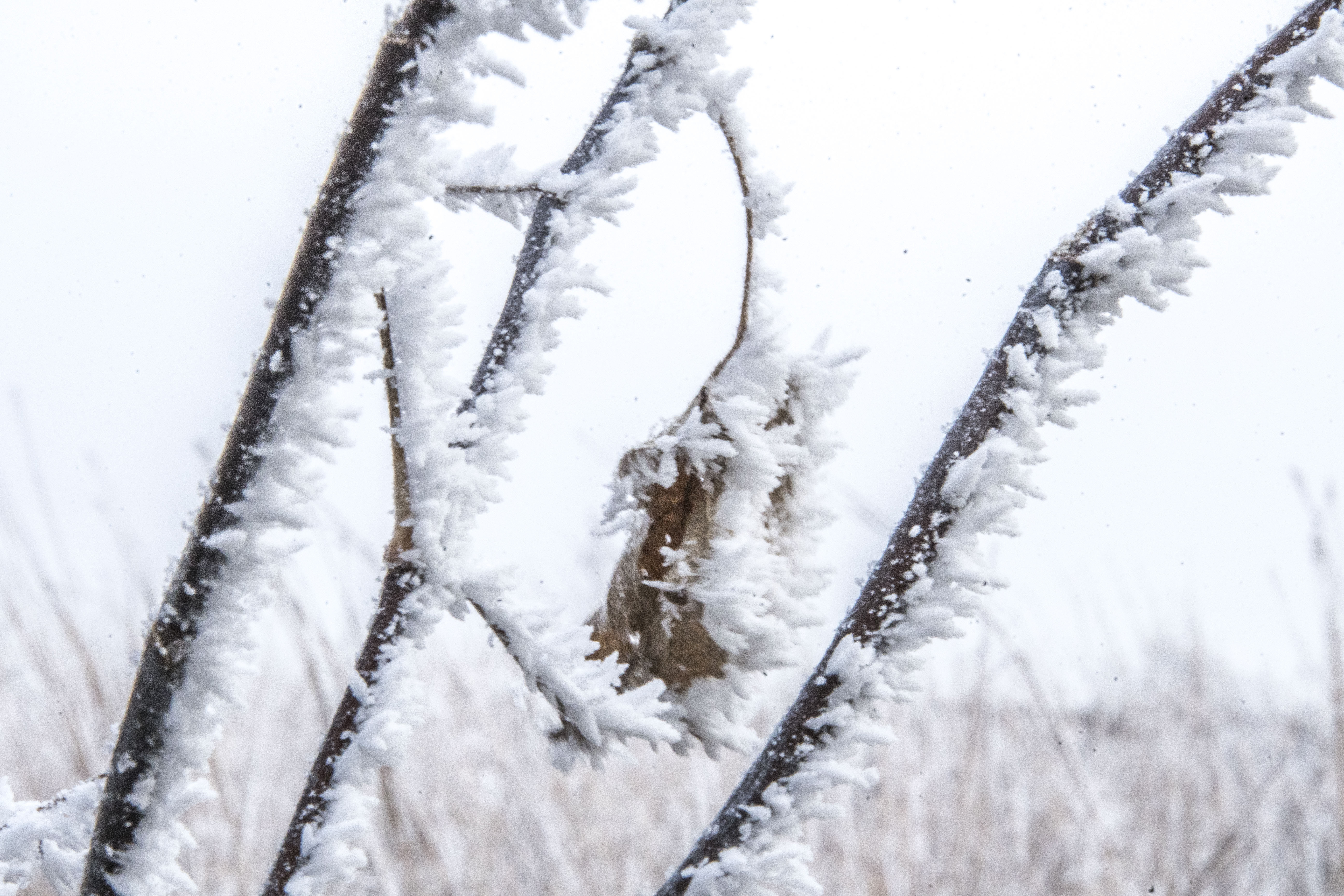
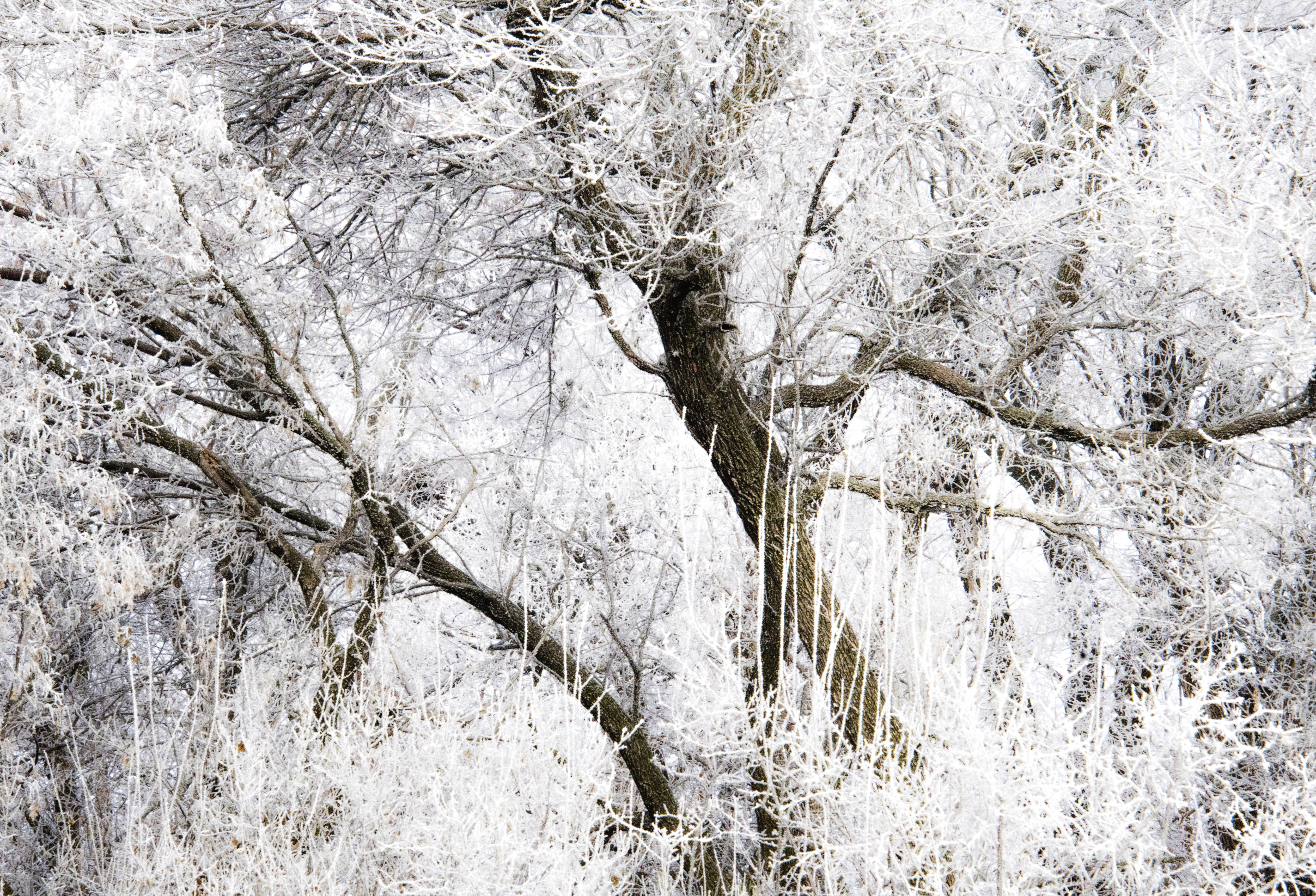
We awoke to a visual treasure replete with magical wonder and science, of myth and beauty, that came for a brief visit. Too brief, if I must say so myself. Please excuse my personal thoughts of labeling this winer wonderland of near perfect whiteness as a “feather frost” while most label it as a hoarfrost. Some equate this crystalline and near immaculate beauty of an early morning visit with that of Northern Lights. Who am I to argue, for both are magical and fleeting moments of wonder and joy.
Certainly all this magic is backed by science, so perhaps we should get that out of the way. Technically these frosty conditions are created when water vapor condenses on solid surfaces that are below freezing, such as our bluestem prairie, stems of dormant faded flowers, stark tree branches of winter, and, well, nearly all solid surfaces. Science call this process a sublimation, created when warm moisture in the air starts condensing around frozen nuclei — a prairie or woodland, for instance. Once this process begins, the moisture in the air goes directly from a gas to a solid. In this case, when ice crystals form on various frozen features. All of which is dependent on calm air for these formations of complex, lacy deposits.
Our “vapor” here in the prairie is usually caused by fog coming in, as portrayed by poet Carl Sandburg, on “little cat feet.” Obviously we are nowhere close to Sandburg’s harbor and cityscape where his haunched fog silently and briefly settled before moving on, but the same phenomenon happens here in the prairie, too. His tribute to the beauty of fog might have happened before Sandburg settled to the woods of Vermont, although surely he experienced hoarfrosts outside of Burlington. This time the fog snuck in around here during the early morning hours, although it may happen at other times of the day. Such conditions are more typical on clear and cold winter nights.
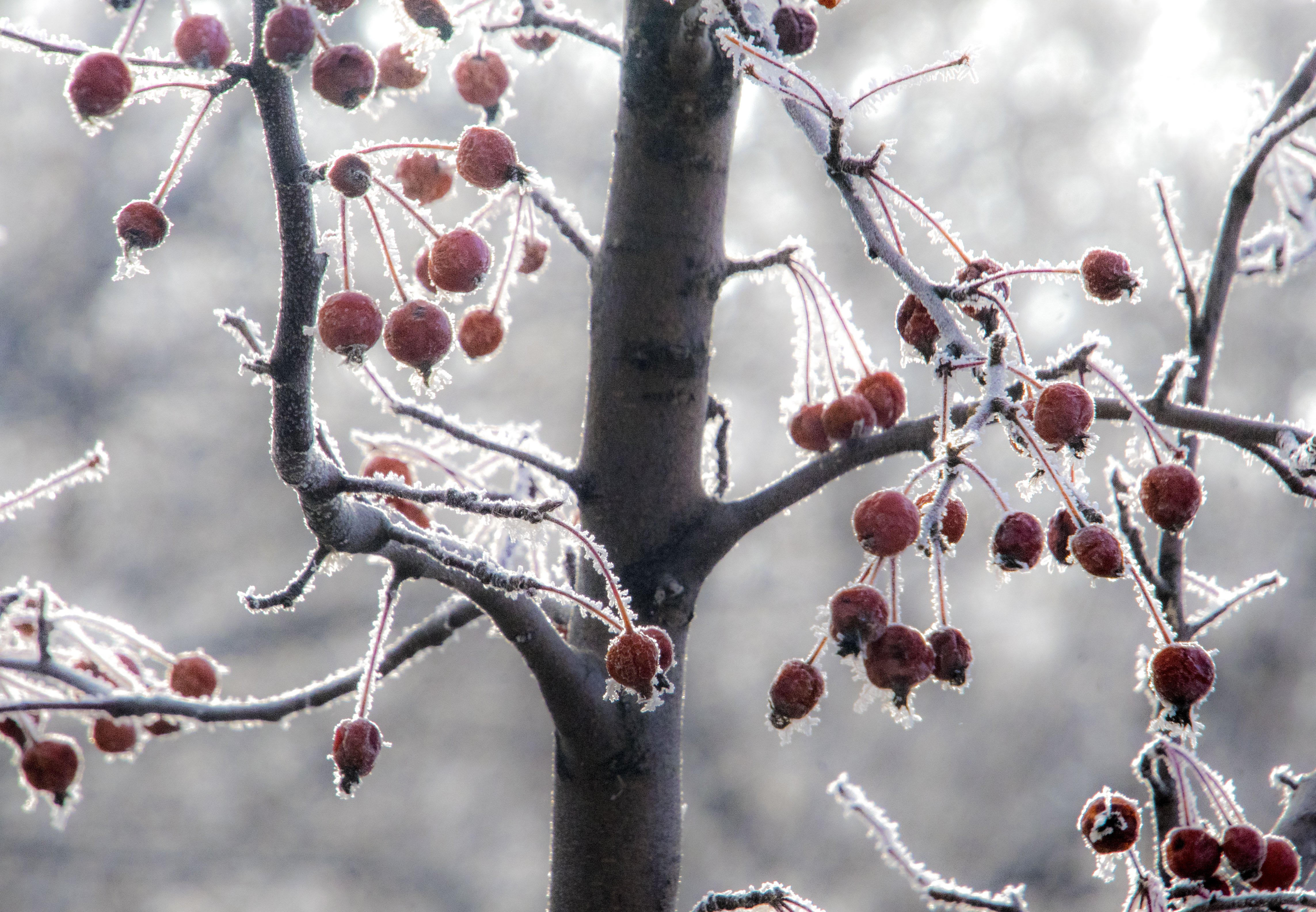
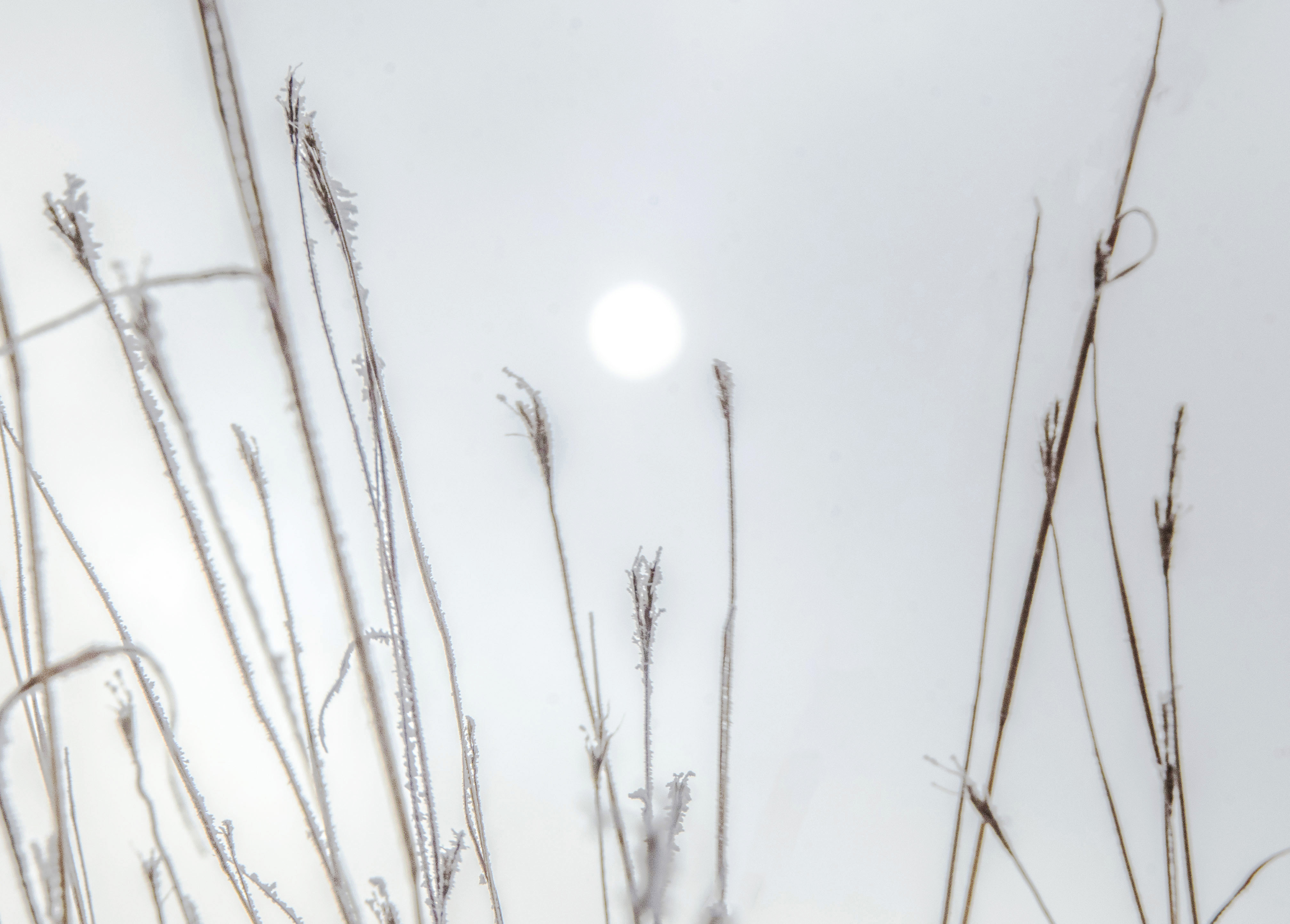
Our wonderland of perfectly white frost feathers was so heavy the stems of big bluestem were weighted over to nearly kiss to the ground. Our trees glistened even with the sun being hidden by the dense blanket of fog. Popping through the glistening frosty whiteness were clumps of reddish crabapples to dapple hints of color to an otherwise frosted landscape. We were surrounded by an awe-inspired winter wonderland.
One might wonder if such beauty has a mythical history. Certainly, for since we were children we’ve heard of Jack Frost. Beyond the science and artistic beauty, feathery hoarfrosts are thick with legend. The term itself is from old English that suggests the feathery ice crystals offer an appearance of “oldness”, of long strands of white hair and beards of elderly geezers.
There is some thought that the legend of Jack Frost originated from Viking folklore, that his modern name is an Anglicized rendition of Jokul Frosti, or “Icicle Frost,” son of the Nordic wind god Kari. Jokul was a nymph-like creature who painted beautiful frosty patterns on windows during the night and was a personification of the chill that arrived with winter and nipped the noses of children with his icy bite.
Scandinavian mythology paints a picture of a frost giant that brought not only bitter cold but the black doom of winter that symbolized the end of the world. In northern Russia and Finland, an almighty deity known as “Frostman” commanded the weather, and was given sacrifices by reindeer herders to persuade him to lessen the severity of blizzards. The villagers would leave bowls of porridge for the Frostman to ensure their crops weren’t touched by the damaging frost. Elsewhere in Japanese folklore, Frostman was a malicious character, the brother of Mistman, who were both keepers of the frost and dew.
Jack Frost is well known but barely understood in modern culture. Most people envisage the elfish creature that decorates the night with beautiful silver patterns that melt with the sunrise, and in old England “Jack” was a name or term given to jokers. Over time, he has shed the fearsome demeanor that came with the frost giants of Norse mythology. Something as beautiful as sweeping hoarfrost or delicate ice crystals surely couldn’t have been summoned by a menacing omen of everlasting winter.
Much like Northern Lights, hoarfrosts are typically fleeting. A brief breeze will cause the frost to flake and scatter like falling snow. In the sunlight this takes on a wholly different beauty as those airborne “diamonds and pearls” Hannah Flagg Gould described in her poem, “The Frost” in the 1800s come to life. It’s all very magical, even those rare “wonderland” moments that somehow escape to last most of a day. However long one might last, they are still magical in their innocent beauty.
While I don’t recall having feathery frosts as a child growing up in Northeast Missouri, I’m sure we had them. We surely have them here in Minnesota, and they rarely shrink from wonderland status. One January day during one of the most snowy winters since moving to Minnesota some 40 years ago, I drove through the hill and valleys around here taking images of snow and frost, capturing pheasants and wild turkeys deep within the elements. A gray mist of fog hung around, and the few fences that remain and the abandoned groves of past dreams were all coated with the feathery finery. Shawls of splendidness. What a lovely and unexpected day.
Usually, though, hoarfrosts have become special memories by mid-morning. It was again this week. Yet I find it fun to wander about with a camera just like I do come nightfall and a chance to record the solar waves of an Aurora Borealis. Perhaps it’s just me for I just love the mysteries of our natural world, of the peacefulness nature offers in the face of so much worldly man-caused greed and turmoil. Sometimes you just need an unexpected flight of Canada Geese to fly overhead on a cold, rainy winter afternoon, a stunning display of Northern Lights, or to awake on a morning to a vista painted in feathery whiteness.
A lone leaf, a last leaf of a summer past, broke free from its tree in an oak savanna choked with a jungle of strong and darkened naked limbs. Halloween trees, as called by my partner, Roberta. Rather than drifting downward, gravity seemed to be drawn from the heavens. The leaf twirled ever higher, a flight not unlike a butterfly, somehow missing the nearby limbs, drifting both higher and laterally. Freely. As the drift crossed a plain created by the forest of oaken limbs, the leaf rose one last time before drifting slowly toward an anonymity of a leaf-strewn forest carpet.
A forestall moment on a late, November afternoon as light softened toward a sleepy haze — a haziness emerging to ever slowly capture the otherwise starkness of the savanna. This was a rare afternoon with barely a breeze in a month that had come in so cold and blustery, blowing, as Aldo Leopold observed in his rather poetic observations, as a wind that describes November. “The stalks hum, the loose husks whisk skyward in half-playing swirls, and the wind hurries on … a tree tries to argue, bare limbs waving, but there is no detaining the wind.”
Leopold’s wind came early in our November, a somewhat schizophrenic month with afternoons of soul-warming, glorious sunlight mixed with dreary days of gray gloominess. Then the wind. Emily Dickinson wrote that “November always seems to me the Norway of the year.” Dickinson, a introverted loner who rarely left her room, let alone her house outside of Boston, penned the phrase in a letter to her friend, Elizabeth Holland, with this description of November: “The noons are more laconic and the sunsets sterner, and Gibraltar lights make the village foreign.”
Early in November a staunch and chilly wind caused waves at the foot of Big Stone Lake that reflected the ambient colors of the sunset.
Yes, November can be a laconic time following those glorious days of October’s warmth of vivid colors that are suddenly long gone, perhaps signified by a lone wayward leaf joining a dulled leafy carpet. There were days, too, when the trees fought to argue. Days when there was no detaining the wind. Yet, there was color even on the darkest of those days, and enough light to warm the soul just when it seemed the dour gloom of grayness would smother over you like a blanket. Who am I to complain?
We made a few forays into nature, as is our custom, including a delightful sunny afternoon drive through Sherburne National Wildlife Refuge, where we found two large pockets of sandhill cranes and enough swans to make magical moments seem like a living poem. Such moments feed the soul. November moments, a splinter of time between the colors of autumn and the blessing of light we celebrate come the Solstice.
Swans lifting from Eli Lake outside of Clinton in the dawn on a new month.
Yes, November serves as a transition, a prelude to winter that seems equivalent of a spring March as seasons seem to wrestle one another before autumn recedes on one hand, and winter relinquishes on the other. And we are simply on the sideline, observers of a grand plan of which we have little say.
On those rare years when the joy of October is crushed by a sudden unseasonable snow, the lack of transition seems to hit like a heavyweight’s punch to the gut. Gut punches aside, the transitions ease forever onward. Our grasp for the warmth and color in November is not unlike our wish for warmth and color come March following a long cold and snowy winter. In my mind these are the reasons for these annual transitions, a slow sliding into winter on one hand, and a quick exit from winter come spring on the other.
Reeds reflected in the lake waters on an early November morning.
I’m somewhat surprised by the strength of color and light here in the western reaches of Minnesota, although after all these years I perhaps shouldn’t be. Both seem to argue against those otherwise drab and somewhat dreary days by offering a poetic charm to the prairie. An unexpected warmth has mostly kept the waters from freezing, reflecting color and light like prized jewelry or a queenly shawl. Finding such joys helps make this somewhat “foreign” ecosystem seem like home.
Home? On these days of November? This prairie wasn’t part of my grand scheme. I barely realized it existed in my youth, or even as I aged into the “autumn” of my life. Using this as a metaphor, one might suggest I’m entering into the November of my life. In my “September” years we moved to what we learned was the “black desert” of prairie to run a small country weekly. Our initial plan was to give it a few years, yet some 20 years later we were settled in. We had discovered a vibrant artist community that seemed to dwarf the flatness and lack of trees we were so used to while living along the Little Vermillion and Mississippi Rivers at our former home. Through our new found friendships we discovered the prairie rivers, the riverine environments along with an appreciation of what the late essayist Bill Holm referred to as the “horizontal grandeur.”
A moment of photographic poetry as a lone swan eases across a prairie wetland.
We would plant a native flora garden in our backyard, and I began photographing the blossoms. Yes, it was planted on a cold November day, a planting session that was averted by a bone chilling rain mixed with snow. Years later, after my wife died, I remarried and settled here in this last semblance of the prairie pothole biome in the “Minnesota Bump.” We bought this little patch of land and named it Listening Stones Farm both in honor of its glacial history and our love of Sigrid Olson’s writing. We converted the tillable land to prairie grasses and flora and made paths through both the prairie and woodland for both observation and photography.
Then the deeper discoveries began; of small pockets of both native and restored prairies along with the few remaining wetlands. With that came the observations of color and light, especially the nuances of ambient light that often paints this horizontal grandeur with pastels that would have made Monet jealous. Before long a place I had no idea even existed either in my youth and early adulthood had become home.
Solar flairs tower above Big Stone Lake State Park, visible through the deep November clouds.
It is said to appreciate the prairie you must look beyond and within the grasses to discover the inner beauty along with the appreciation of color and light; in the noticing of the magical moments such as a last leaf drifting aimlessly through an oak savanna. November sometimes forces you to see beyond those waving grasses, to be encouraged by both color and light and to develop an appreciation of the natural world around you, in bringing joy to the soul. I’d call that being blessed.









 Listening Stones Farm