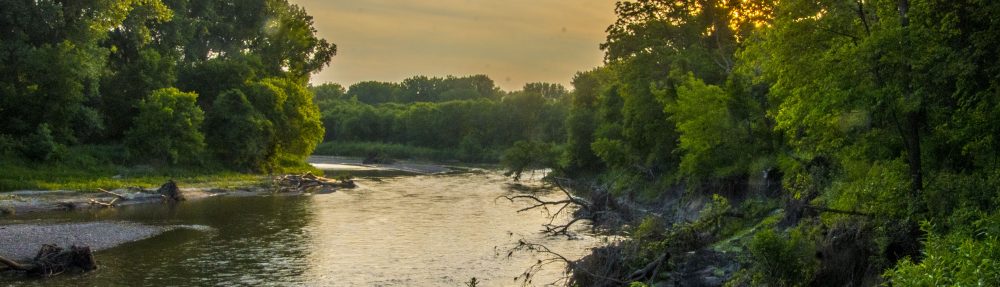
Where are you, Irving Berlin, now we so desperately need those blue skies you penned and pined over so many years ago, those “blue skies from now on” lyrics sung by a variety of singers from Jackie Wilson to Willie Nelson. Here we are in the second week of June and our skies are mostly smoke stained and I feel hard-pressed to recall a day when we had actual blue skies. So smoky gray, and we cannot see past a mile across the prairie.
Last week many events were shut down from New York City and along the East Coast because of dense smoke. Smoke so thick you couldn’t see halfway up a skyscraper. Down in DC, the top half of the Washington Monument was invisible. Here in Western Minnesota our skies are gray to hazy blue from dawn to dusk. Acidity scented smoke gives you a raw throat.
Just for the record, we are now in an air quality alert that will exist through three more days. This is nothing new. If there is anything positive we do have some interesting sunrises and sunsets. Yet, you cough and your throat is raw, and you cannot escape the smell of smoke. There are the pictures, though. Yes, there are the photographs. Some even stunningly beautiful.

Meanwhile fires in Canada and the Western United States continue to scorch the timbers and prairies, heightened by a drought that seems to have spread continent wide. A new wildfire broke out on the Gunflint Trail in the BWCA this week, so it’s even closer to home.
Western reservoirs are drying up as Arizona, California and Nevada fight over water allotments. Those fantastic fountains in Las Vegas must recycle used waters, and the rich are restricted from filling their pools from Phoenix to Fresno. Worldwide desertification is running rampant, and the UN suggests that more than 24 billion tons of fertile soil disappears every year. All caused by man made causes … global climate change. Today two-thirds of the earth is undergoing a process of desertification described as an area equivalent to the entire arable land of India. All will be lost by 2050 if changes are imminent.
Our plastic choked oceans are warming so quickly scientists have warned that commercial fishing will be a thing of the past by mid-century. Thanks to farm country runoff, the hypoxia zone in the Gulf of Mexico continues to grow, meaning there is basically no sustainable life in affected waters. The lifeless zone is now larger than the land mass of Rhode Island and Delaware combined.
While we’re in a severe drought, we aren’t in a desertification strait here in Minnesota, although our grasses appear as if it was August and the cracks in the soil average about an inch in width. Brown has replaced green nearly throughout. Browned and crunchy. Perhaps having our largest city and the nation’s capitol shrouded in smoke will convince the naysayers and the depth of the Republican Party to believe that global climate change is both real and worsening. Many are the experts who concede that we’ve passed the tipping point. A planet on alert.
Our leaders on either political party at our nation’s capitol are no better at legislating change and corrective actions than those in China and India. For every young Greta there are seemingly hundreds of greedy capitalists pushing for expansions of the uses of fossil fuels, deep-gorge mining, managing highway traffic, spewing chemicals and letting their best soils blow or wash away, and so on. The UN warned earlier this week that half of the expected carbon budget has been eliminated in less than three years. Adding to the misery is that we have an incoming El Nino that will give us an extra kick of heat this summer and into the coming year.
While we’re had six major mass extinctions, the first was identified some 66 million years ago when a six mile wide asteroid crashed into what is now Mexico’s Yucatán Peninsula to create a mile-high tsunami wave that wiped out three-fourths of the earth’s plant and animal life, including all but the flying dinosaurs. Our birds. Scientists now conclude we’re well into our seventh and this one is far less dramatic. This one is being caused by you and me, and billions of common folks just like us. We are all contributing to global warming, and to be honest, not many of us are doing much to abate the issue. And we’re not getting much help from government and industry.

Oh, I’m certainly more conscious about making a 20 miles impromptu trip to town for a jar of mayo or whatever. If possible my meetings are streamed online to my computer here in the office. Years ago at a Master Naturalist’s Gathering Partners presentation on global warming we were told that making these sorts of decisions, while seeming mundane and perhaps even silly considering the overall impact of global climate change, yet each such decision still has an impact. Taking a bus or light rail to work. Streaming meetings or work on the computer. Taking a cloth bag to the supermarket.
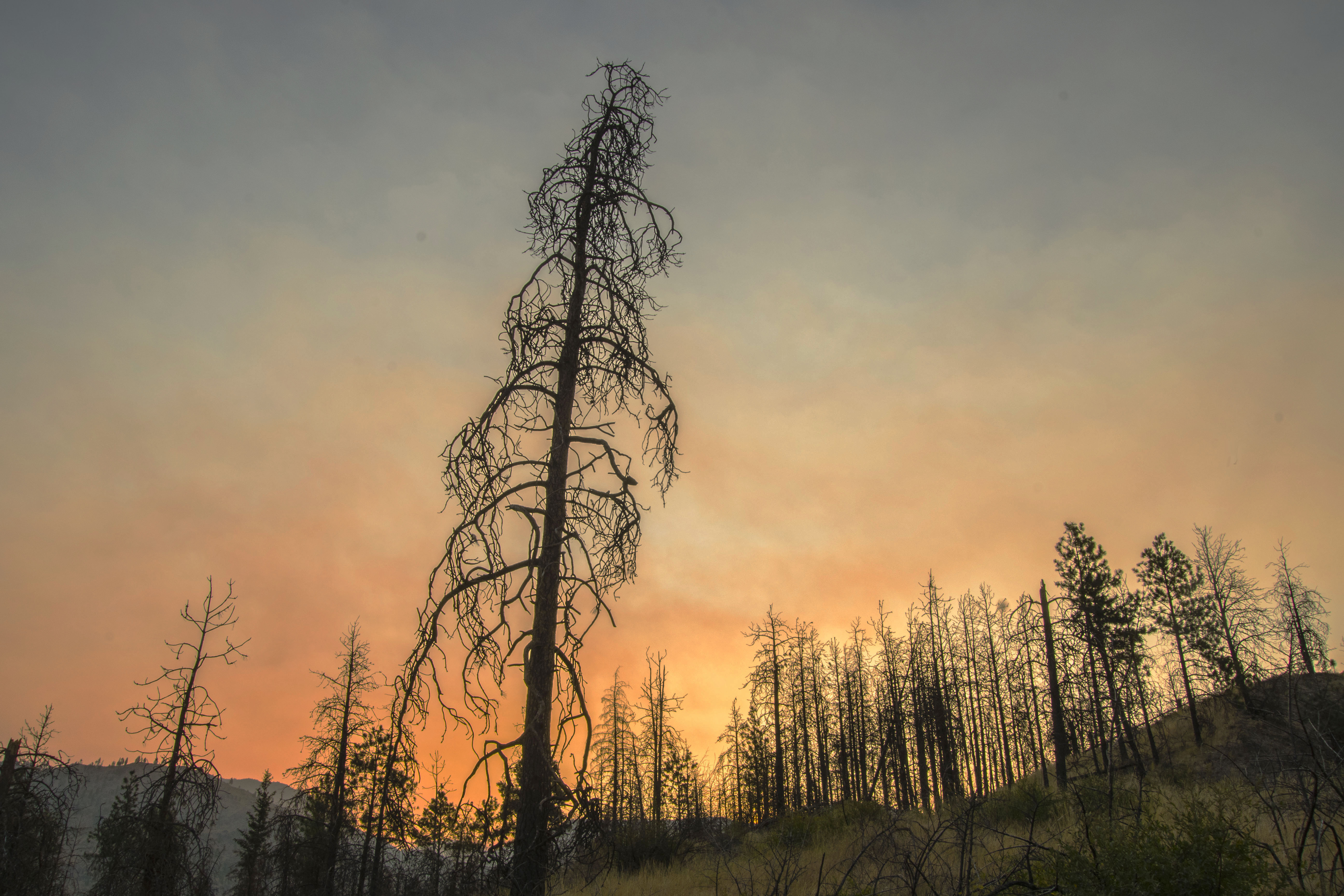
Then there are the pictures. My first smoke hazed image I can recall was one I call “August” for it was made here in my home prairie in August 2015. Since I’ve become conditioned that come August we’ll have those forlorn ghostly sunsets and a smoky fog come morning. I’ve photographed ashened forests out west, and barely missed a couple of wildfires in the state of Washington. Yes, there are the pictures.
Will there come a time in the future, if and when someone happens upon one of these images, to remark, “Wow! Look at how light the sky looks. What a beautiful gray.”
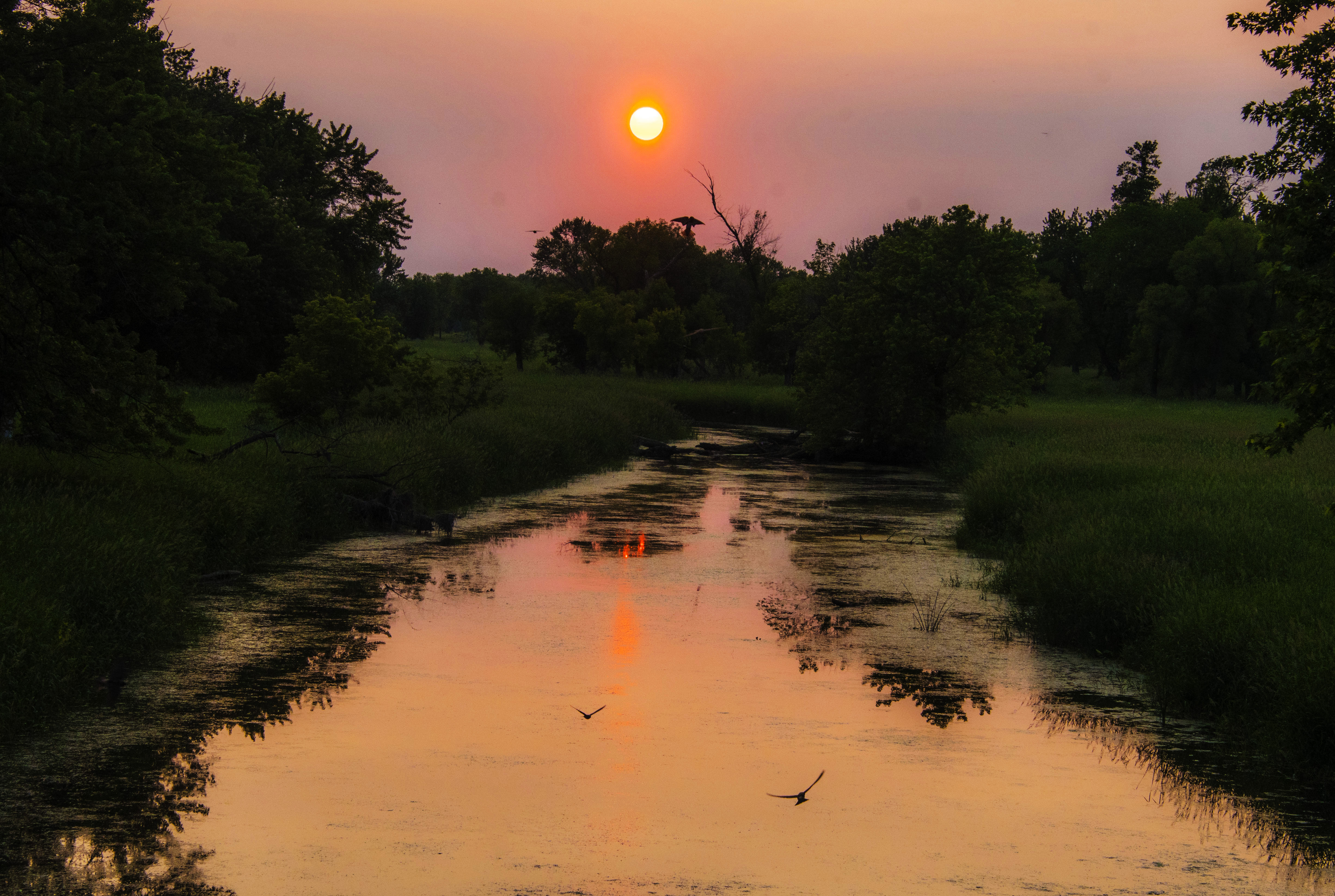
“Oh, and you can actually see the sun,” adds a friend. “I think that’s a sun. So red and just barely breaking through the grayness.”
No “blue skies from now on” except in perhaps an old MP3 recording by Willie. Were the images from New York City and Washington, D.C. skies of the future? A future for a planet on fire?
So goes some of my thinking nowadays. It’s difficult to stay positive, not with two sons now in their 40s. I think a lot about their future, and I become incredibly concerned when I see a baby in its young mother’s arms. What kind of life will that child face in ten years? Twenty? Will he or she reach my age before the turn of the century on a planet than now seems on fire, now as global warming refugees are more and more commonplace? What about its mother? So young and hopeful …
A week or so ago we were at Itasca State Park making images in a muted light thanks to smoke stained skies. Back then the smoke was less dense than it is now, and the scent of acidic smoke was certainly less than it is now. This week my images were made around here, all with that red-ball sun peeking through dense grayness. Some of the images were striking and beautiful. A pretty poison, someone once said. So I keep making pictures … those of reddish suns and smoke stained skies.
 Listening Stones Farm