My songwriter friend, Charlie Roth, penned a beauty about this time a year ago that he called “I Don’t Want to Live in an Angry World,” a song with such a catchy chorus that even on the night he introduced it to a live audience most were singing along with his simple but catchy and timely chorus by the end. A room of harmony that maybe even surprised Charlie. The song was about politics and how he thought it was time to do away with the anger on either side of the divide and become friends again.
I found myself mentally humming his chorus as I looked up at the angry heavens the other day, of a planet that is in dire need of human hope and help. After all, we’re the ones causing this climatic turmoil. Our skies are alive with that disgusted anger. It seems the planet is not just angry but pissed, and she is letting us know from the plains of Africa to the mountains of Canada, from the deep South to the Pacific islands. We are living in an angry, climactic world.
Although we have so far escaped the dreaded tornado activity being experienced in the South, and obviously the horrendous hurricanes and typhoons of the heat-bearing oceanic regions, our skies have been burdened with layers of smoke from the uncountable fires from the Yukon to LA, and although our stormy weather has been somewhat wet and traumatic, we’ve been lucky so far.
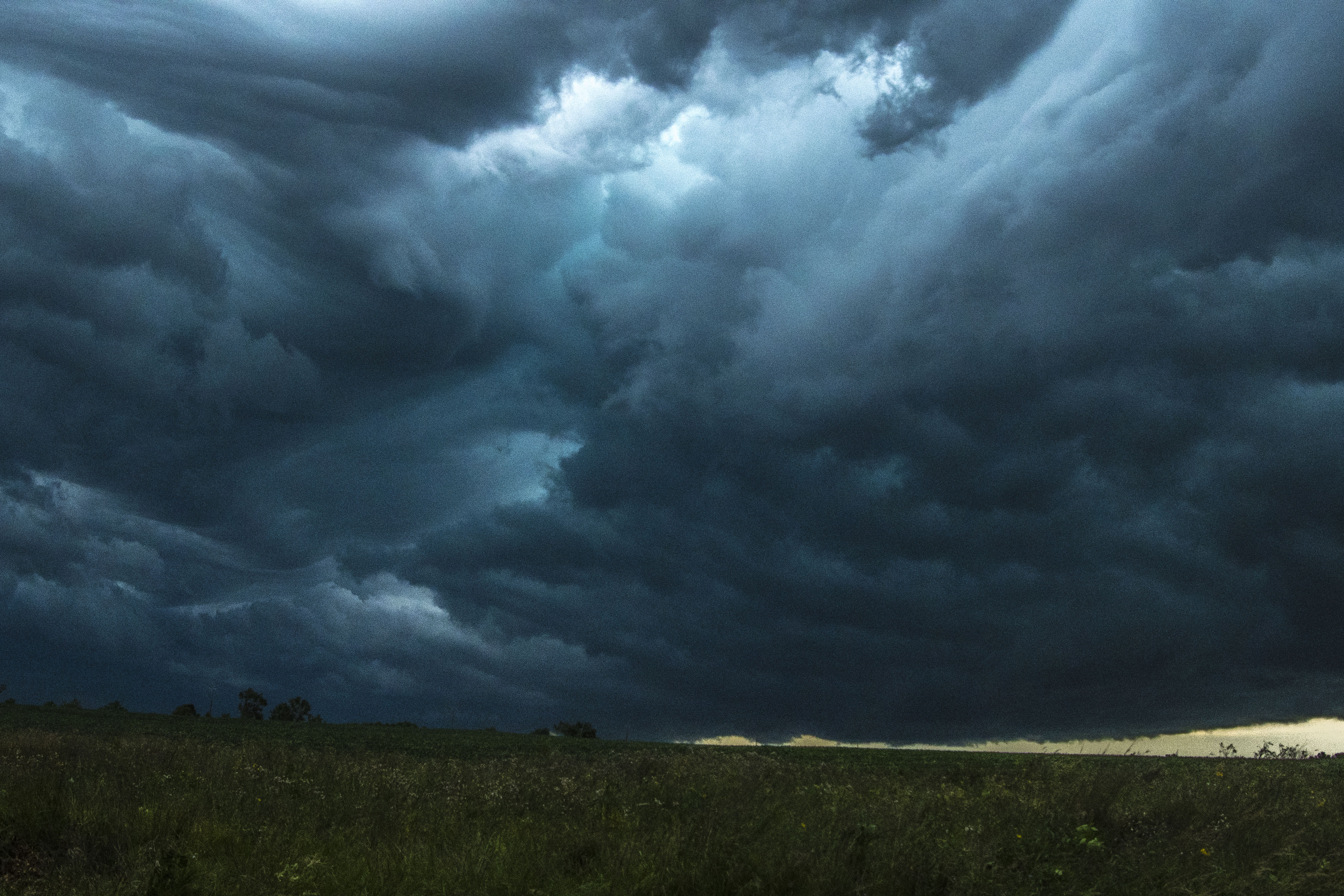
Still, that anger is there, above us, and the heavens aren’t shy about showing that rage. This week we’ve suddenly been bombarded with dense dark clouds bearing lightning and deep, bass thunder that has shaken our very foundations. Huge rain storms have ravaged nearby communities, and baseball sized hail pounded the crops and homes less than ten miles north of here. Nearby Granite Falls had about five inches of rain in an hour or so last Sunday. Many of our saturated farm fields have standing water in the rows of their commodity crops, and the wetlands are full. Nearby the rivers were just nearing bank-side when these latest storms cruised through.

Let’s pick a single day, say July 31, a day that began here in the western Minnesota prairie with some clinging early morning heat accompanied with crushing humidity. Normally I’ll laugh at my significant other for what she terms as scorching days of heat and humidity. Having grown up with it, and having worked in the hay fields and haylofts during those formative years, most of our summer days have been in the mid to high 80s with mild humidity — in fact, before Wednesday I spent the afternoons kneeling in the garden pulling weeds to make way for a cover crop. Yes, there was a lot of sweat pouring but there was also a nice breeze both afternoons.
Wednesday, though, was different. A humid haze hung like a dense curtain on the fringes of the horizon. Sweat came with minimal activity, like walking from the deck to the studio. Then, around 10 a.m. I stepped out of the studio to notice a huge, deep black cloud hovering just above the woodland and northern prairie. Within moments we were enveloped in darkness, as lightning and rumbling thunder rolled in along with the first rain. It was a hasty affair, lasting mere minutes as the prairie winds quickly moved it right along toward the east. Nearly an iinch fell and you could sense the pressure relaxing.
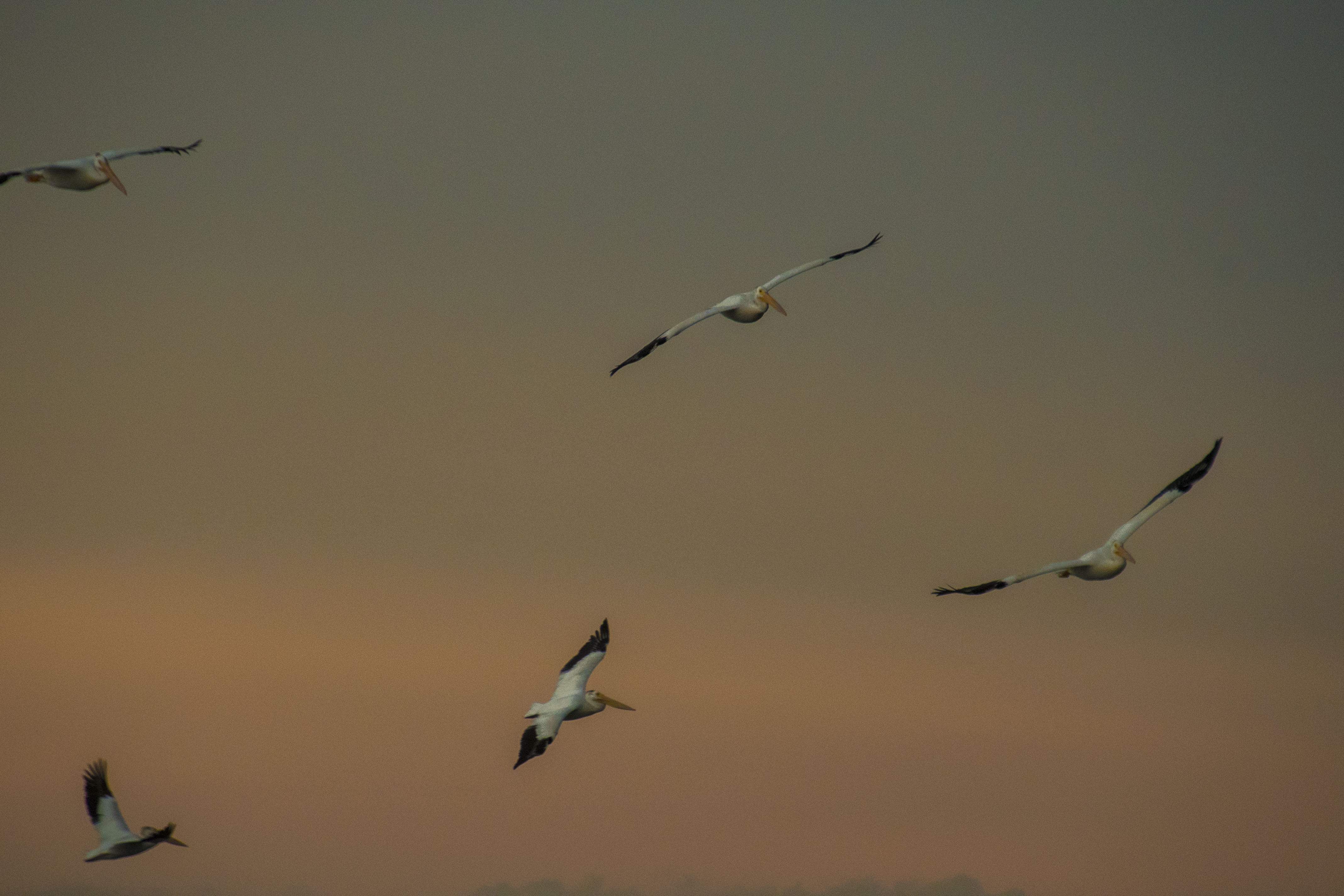
Having a photograph to make in town, I left the farm via the Lake Road, got my photograph and started back home. As I was passing the supermarket along First Avenue I noticed a pod of pelicans just above the lake, and was able to grab a couple of nice images as they turned mid-air to ease to a landing on Big Stone Lake. A moment of peace in the turbulent skies.
This early storm was merely a prelude to what occurred overhead by mid-afternoon. I actually shouted to Roberta to come and look at the overwhelming ominous cloud capturing the sky above us. Our only lightness was a thin strip of a collar between the blanketing cloud and the horizon. This dense, rollicking cloud seemed to blacken the entire prairie.
Lightning lit deep within the rollicking layers. Lightning seems to be a prelude for all of the stormy events regardless of country or continent. It’s said that lightning is actually a neutralization between our dominate poles, equalizing the natural pressure of the atmosphere. Between the clouds and the lightning, it was both frightening and awesome to behold. But, was there any equalizing going on?

This theory was verbalized by a speaker at a Gathering Partners’ annual gathering of the Minnesota Master Naturalists a few years ago. He noted that without thunderstorms and lightning, the earth’s atmosphere electrical balance would likely disappear within minutes, adding that the science community isn’t really sure what would happen on earth if this balance wasn’t maintained. As it is, somewhere on earth this neutralization though lightning is ongoing, 24/7, 365 days a year. On this day it was our turn, happening right above and around us.
Yet, another hypothetical and unanswered question that concerns scientists with the warming of the planet is what happens if the currents in the warming oceans were to suddenly stop. We are entering a time on perhaps the only livable planet in the universe where we have many unanswered questions about our future as a species, and perhaps our neglect is what is feeding these angry skies.

On our travels on this eventful day we followed the continuing storms with my camera, concluding in the nearby Bonanza section of Big Stone Lake State Park as the evening sunset painted nimbus clouds in an array of puffy beauty, like little cotton balls adorned with foundation makeup of a movie beauty. These clouds provided a momentary sense of artistic flair compared to the giant cumulonimbus clouds that we experienced mid-afternoon, the one that completely blanketed the prairie as far as we could see, clouds rolling and rising, churning with a grasp of what I read as anger. Pent up, deep-in-the-gut retching anger in the skies.
I couldn’t help but think of that chorus in Charlie’s song while looking at those deeply dark and churning clouds. As tired as I am of living in a politically angry world, being surrounded by a world reeking of ever worsening patterns and events within a global climate change that threatens all of humanity worldwide, there are those who choose to ignore the threat or dismiss it as some sort of a “liberal ploy” This causes an internal rage within me, a rage that seems awakened by the turbulent skies above us. I don’t want to live in such an angry world. I really don’t.
 Listening Stones Farm