Two more plants awaited my efforts to clear a space and cut through the tangle of a grassy jungle when I had this wonder — do plants have a sense of freedom upon being pulled from a plastic flat and being placed into the soothing wide world of life sustaining soil?
Prior to that thought most of my focus was on figuring out how to space the select native prairie plants, how to plant them for height and color, then to do the honors for giving them the freedom of what hopefully will be a long and blooming life!
This has been an interesting and adventurous year for us here at Listening Stones. A few weeks ago I felt a calling to purchase six trees and plant all but one in the “south lawn.” Years ago I stopped mowing that space despite the beauty. That was the same year I also stopped mowing the planned “orchard” since deer had pretty much killed the young trees. Besides spending nearly a half day of mowing in areas where there was little use, there was a fear of what effect all that mowing had on global climate change.
About this time another friend, Rhyan Schicker with the neighboring county SWCD had a prairie plant offering for three different pollinator groups … full sun, partial shade and septic mound. We took one of each, and in total it came to 190 plants. Three flats of 54 plants, plus three, nine-plant “gifted” flats of of our choosing.
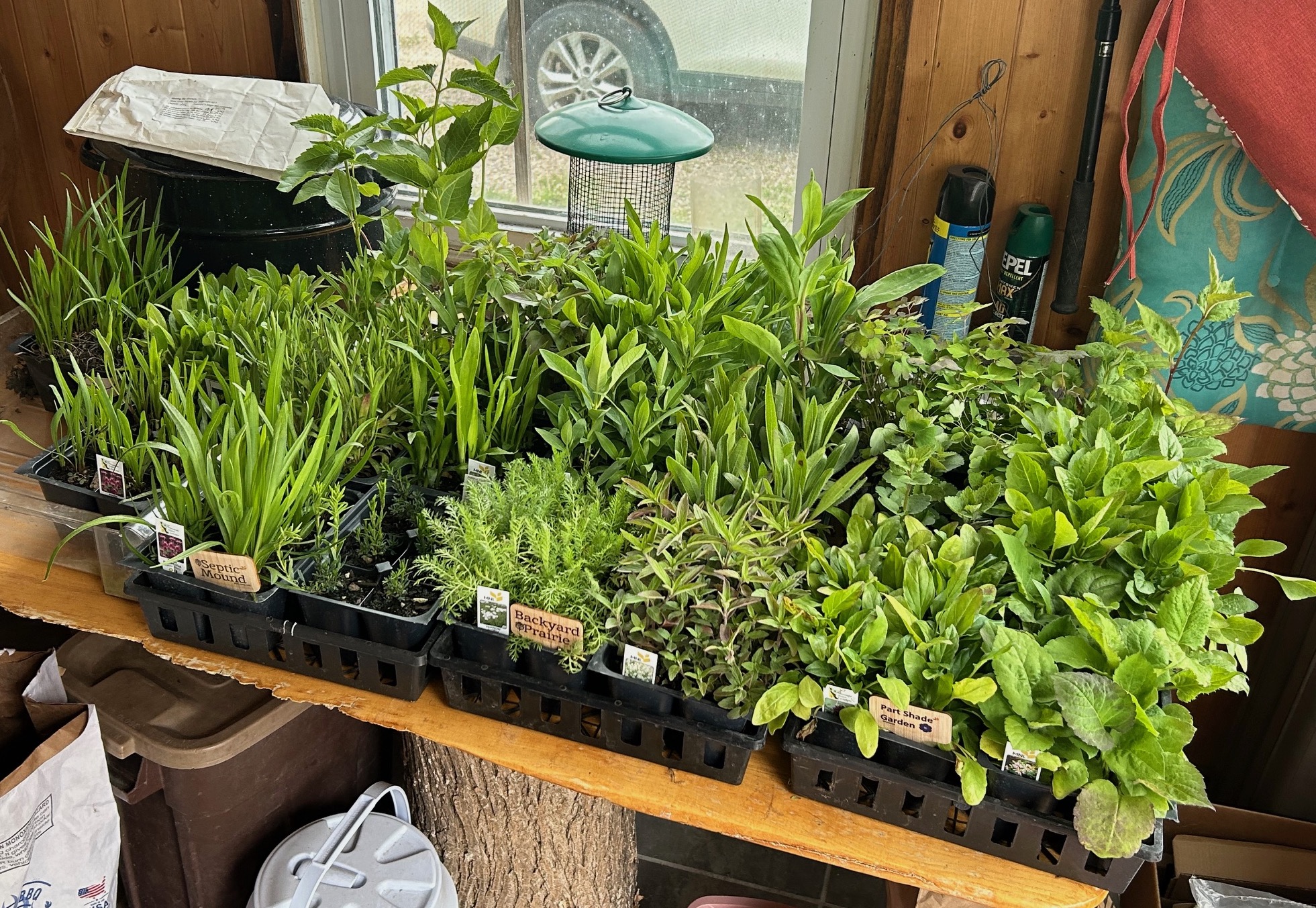
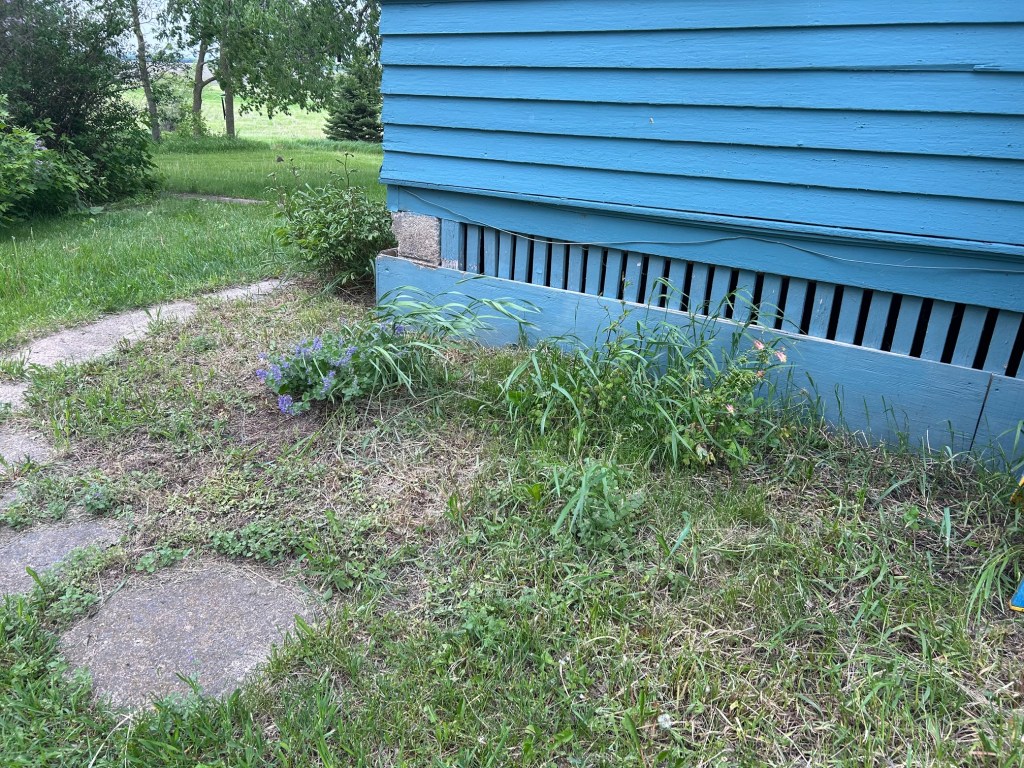
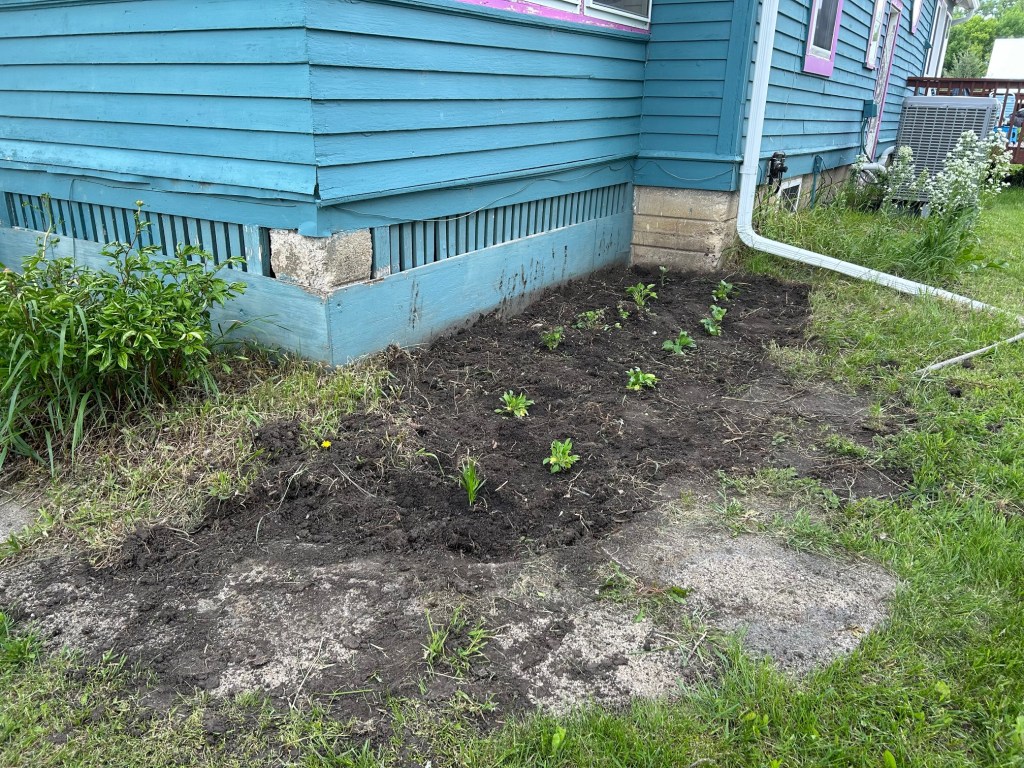
On our pick up day in nearby Madison, we drove down to retrieve the flats with what suddenly became an “oh, gosh, what now?” moment. We brought them home and placed them on the table of the mudroom as we gathered our thoughts. I would start with the partial shade thanks to having several volunteer red columbines hugging the side the house. Originally my goal was to plant an area above a rock terrace garden facing the road. Those columbines, though, offered quite an argument, so I grabbed a shovel and started digging out the grass and weeds while keeping the original columbines.
While it was hard work clearing the space, the planting came easy. The whole process took most of the day on a Saturday. That left 108 more plants in the two flats, plus the three “gifts” still to plant. We marked out a space between the studio and house we would plant the full sun plants, an area with heavy lawn, and I couldn’t see my surviving digging away to the bare ground.
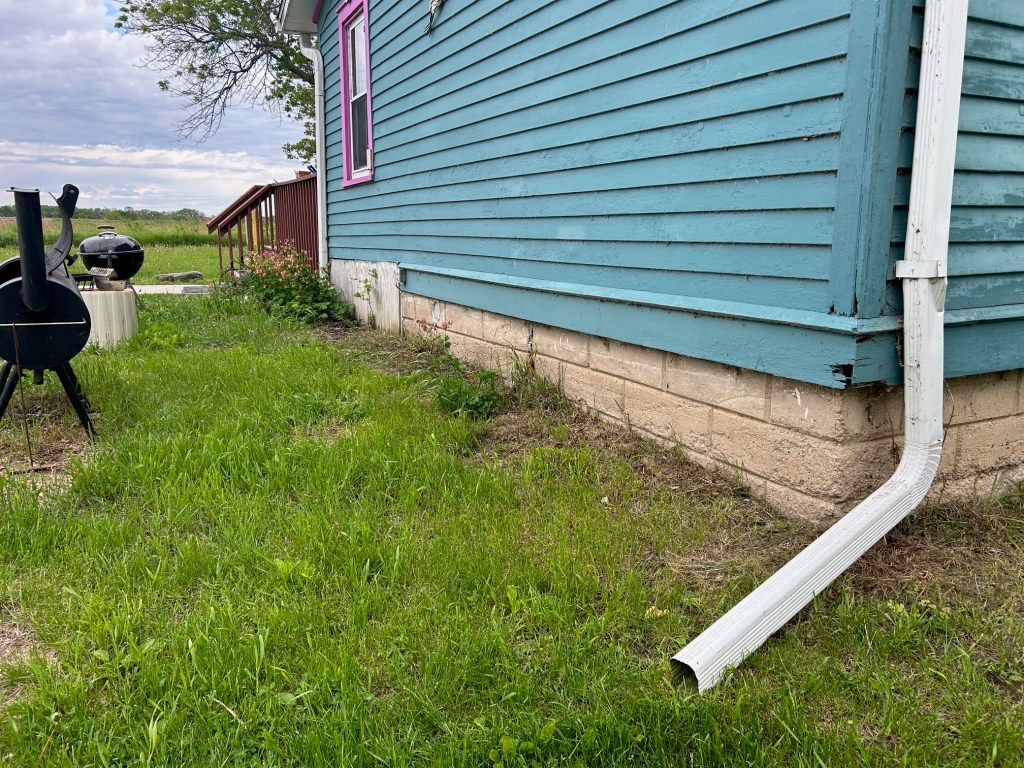

A call was placed to a good friend, Wanda Berry, who is renowned for her horticultural skills around town. On her visit she offered a plan: “Why don’t you cover the grass with cardboard, cut holes to dig in the plants, then cover the whole thing with a heavy mulch,” she suggested. “It’d be much easier than clearing away all that grass with a shovel.”
Placing the mower at its lowest level, I went over the area to clear away as much of the grass depth as possible. Fortunately I had ample cardboard thanks to the shipment of my canvasses from my canvas printer in Minneapolis. Don’t ask why they were saved in the first place, and if I hadn’t had a wild hair about cleaning my studio about six months ago I could have completed both of the two remaining plots.
Then the work began — laying down the cardboard, tacking it into place with lawn “staples,” cutting the holes, digging a deep enough hole, and finally, placing in the root plug and replacing the dirt snuggly around the plug. It was still hard work with lots of knee time and getting up and down — a lot of exercise for a guy my age.
It took much of two days to finish the full sun tray along with the extra 27 plants in the “gift” sets. That left the septic mound, which left me puzzled for nearly a week. My original thought was to somehow space the plants far enough apart to cover the entire mound. Frankly, there just didn’t seem to be enough plants and by then I was out of cardboard. Fortunately the plants were looking really strong and healthy thanks to the care Roberta was giving them.


By now I had used up all of the mulch we had bought and was in need for a supply of cardboard, which was gifted by another friend, Greg Lockwood. After a trip to the nursery to buy more mulch, I stopped by Greg’s store for the cardboard, came home and started on the mound. Like with any endeavor involving boring detailed work, you soon develop some sort of system or rhythm. I started cutting three or four holes through the cardboard before using a triangular garden spade to cut through the grassy duff before digging the hole. Then would finally stand to retrieve the plant plugs. Less wear and tear on the body, and went much faster!
What I had started on late Monday afternoon was completed before a noon rain on Tuesday. Up close the site seemed huge, although from a distance it was easy to see just how much of the mound would be left to plant. We would need at least five more 54-plant trays to completely cover the entire mound, which I hope to do in the future.


As I laid the last couple of plants in their holes I had that thought of how the plants might feel, and I listened closely for any sighs of relief. It was difficult to hear them with all the bird chatter around me. Mourning doves, chickadees, sparrows, a yellow warbler and even our resident pheasants were having at it, filling the prairie skies with hopeful chatter. Joe Pye was laying nearby, and Roberta had returned from town with a box of lawn staples we needed to hold the last piece of cardboard in place. Peace on the planet!
It’s said it takes a community, and I’ve had a great one. Rhyan, Wanda, Greg, Roberta and even Sally Finzel from her native prairie Morning Sky Nursery had a hand in this pollinator work. Just after we finished, farmer friend Travis Sandburg showed up with his disc to prepare the former horse pasture and orchard for a pollinator pasture!
In the end, though, it’s hard to say who is happier … Roberta and I, or those rather soft-spoken plants of the prairie. Now it’s up to them, and eventually the pollinators we hope they attract. It’s all part of our little effort in keeping a planet healthy.
 Listening Stones Farm