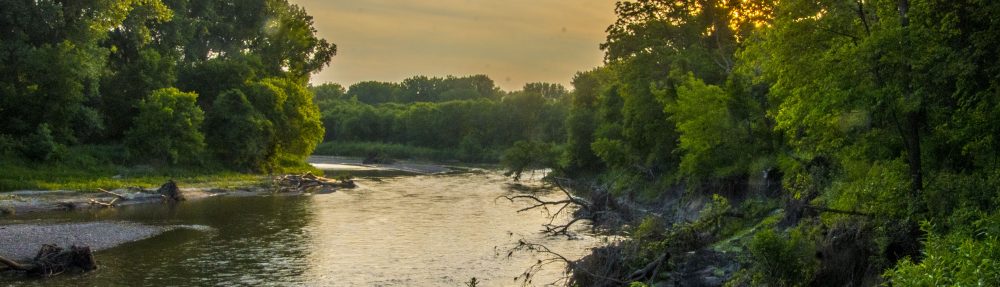
As soon as the distinctive call echoed across the wood-rimmed rolling hills, I rolled to my side and glanced toward the sky my camera ready. So familiar, so beautiful. Vivid, yet hidden. A mystery, yet none at all. They were there. Somewhere. A few years back I was sitting a mere few feet from where I was prone when the same sounds broke over the prairie and I was fortunate to capture one of my favorite images of sandhill cranes in flight, one that so portrayed their Pliocene existence. They seemed so prehistoric in flight.
Would I be so fortunate once again?
We had ventured here to the Lake Johannas Esker to once again mingle with the prairie smoke wildflowers that flourish on this rise come May. Years ago Morris naturalist Dave Jungst introduced me to the esker at a time when the white pussytoes and reddish-pink prairie smoke comprised a sparkling carpet of alternate colors on the rounded prairie rise below the husky shoulders of the prominent esker, and since I’ve made point to revisit annually. While once again impressive, there has not been a view quite so compassing as found on that first May visit so many years ago.

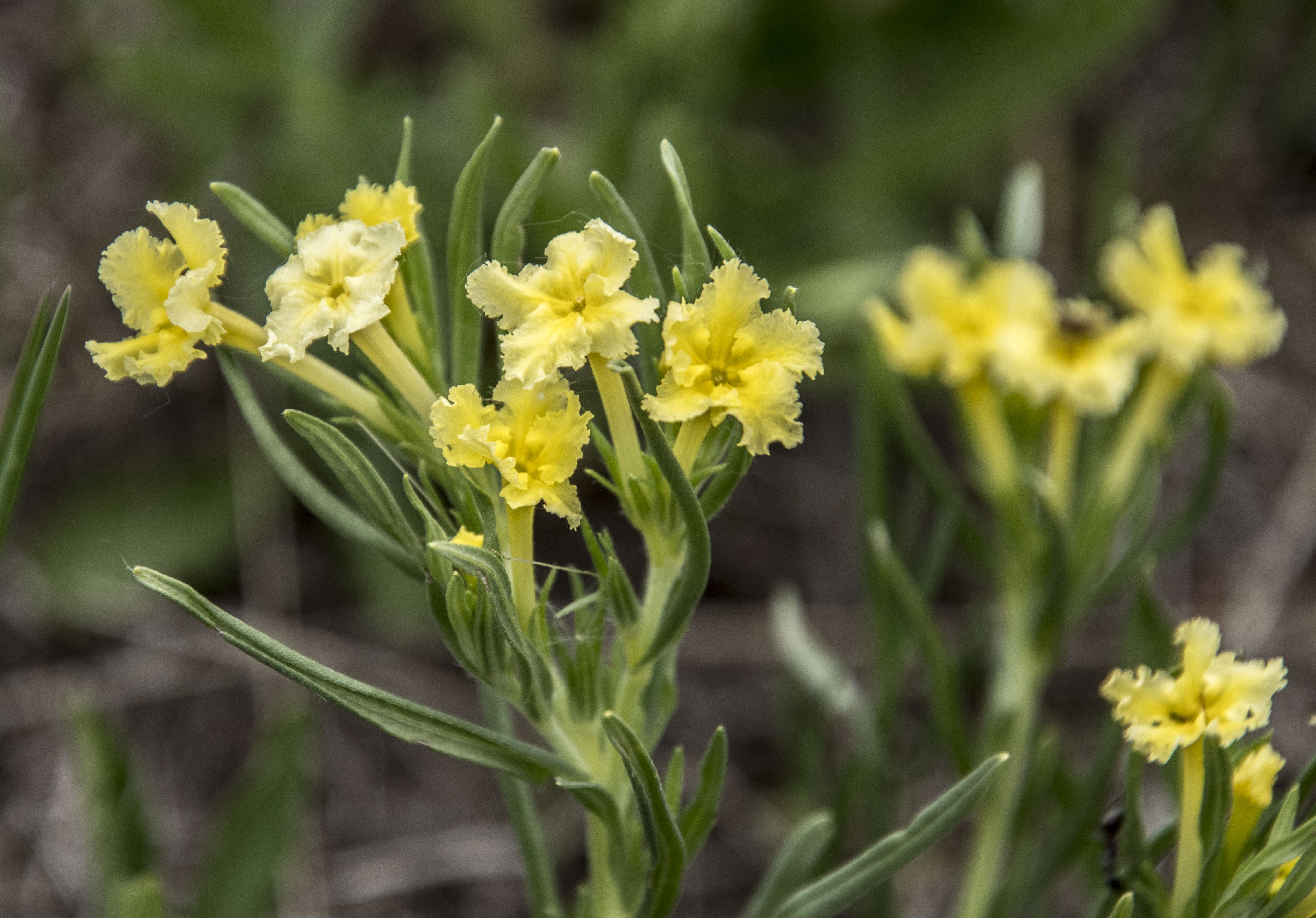
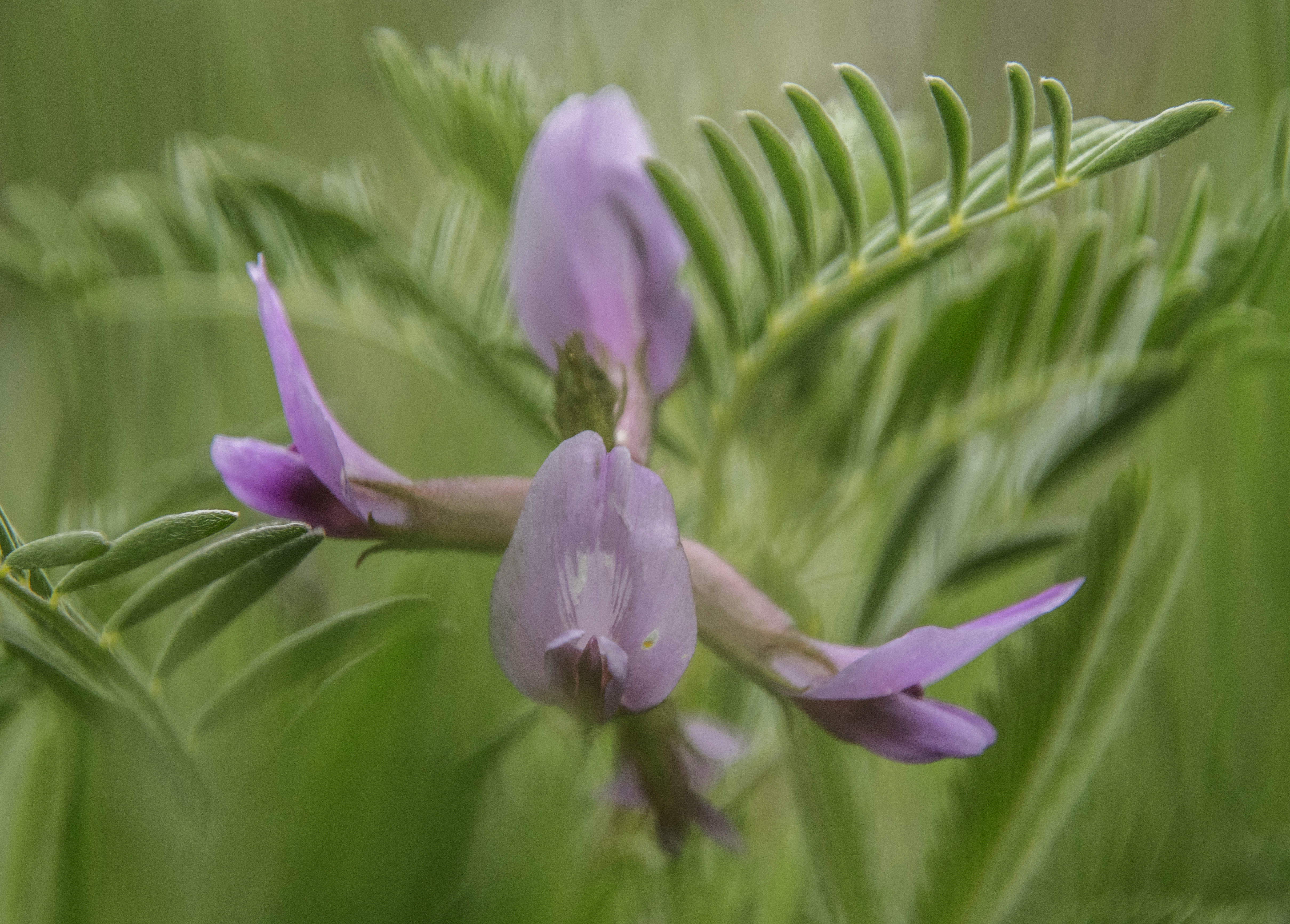
Yet we were once again surrounded by beautiful spring prairie flowers. Those glorious yellow blossoms of fringed puccoon poked a welcomed greeting from the dried sage and dormant grasses, along with brilliant chickweed that seemed so white that it beaconed from the prairie. A whiteness smiling with glee. Tucked away was the purplish ground plum, blossoms not unlike the explosion of a sky high fireworks that peeked through the grasses. All of that plus the prairie smoke offered us a mounded prairie of brilliant color. How could one not be impressed?
Distant to the north of us stood the tall esker, an abandoned glacial stream bed now cloaked by sodded grasses and brush. A snake-like ridge offering a staunch backbone to the lower prairie, rising high in the distance. Here a few years ago as I sat in rest and reflection on the esker itself, a wild turkey popped up from behind a sage bush not five feet away before attempting to secretly sly away. Our brief glances seemed as much a surprise to the turkey as it did to me.


As we ambled up the rise the first patch of prairie smoke appeared, tendrils yielding to the wind. Closer to the esker we came upon a carpet of smoke, a quilt of blossoms in all stages of maturity. Laying low with my lens focusing through the offerings, it could have been mistaken for a forest of reddishness, with the smoky tendrils reaching out from the star-like blooms, many pointing downward while others defied gravity. All stages of the plant’s life cycle seemed evident.
There is little that is more interesting to me than laying on my stomach and focusing a long telephoto through that foot high jungle of pinkish beauty in search for interesting imagery. It was there where years ago I heard the calls from the Pliocene, Aldo Leopold’s “trumpet in the orchestra of evolution.” Hearing the sandhills brought on a whole new level of energy and excitement, a complete jumble of creative focus. From that point forward I would continually peek from the smoky forest to glance over my shoulder in anticipation of a possible flight. Sandhill cranes will do that to me.

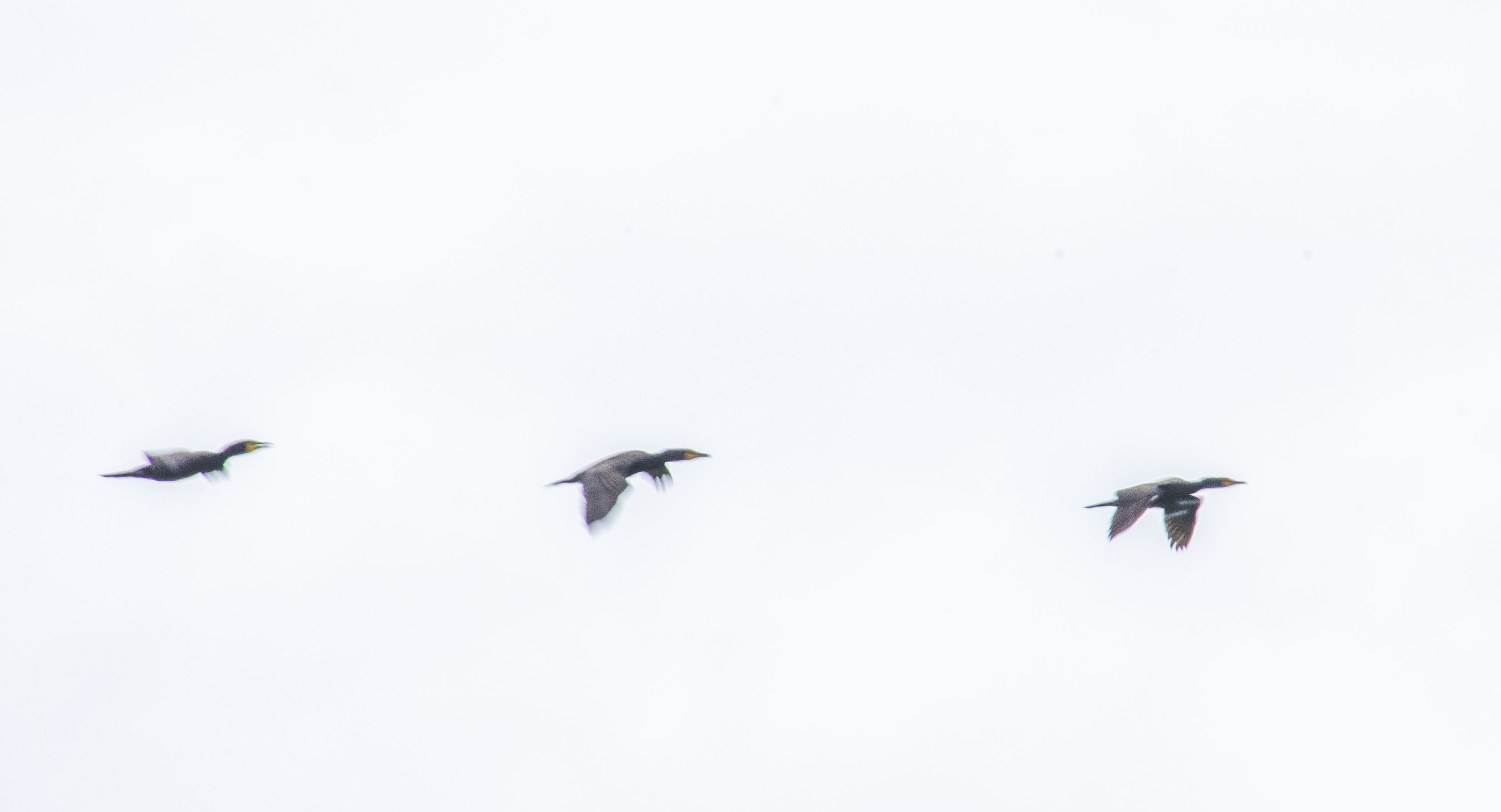
Eventually we would have a brief flyover … of cormorants rather than cranes. They were noticed thanks to my hopeful glances for the sandhills, and I rolled to focus as quickly as possible. Were they from the nearby rookery? Just north of the esker, and beyond the adjacent Ordway Prairie, itself a feature of the Nature Conservancy, cormorants have commandeered a tree studded small island in Lake Johanna as a rookery. From the apex of the esker you can make out the collections of stick nests in the canopies of the denuded trees. With their hooked bills, which is quite a bonus for their fishing capabilities, cormorants look much more prehistoric to me than cranes. If one can make an argument about birds being evolutionary cousins of dinosaurs, cormorants could serve as photographic proof. Their rapid flyover hardly diminished such an argument!
Still, we had come for the prairie smoke, and despite the welcomed interruptions, I would again be consumed with my intent of gazing through the grasses and the smoke searching for interesting angles and individual flowers. A search that never tires. Prairie smoke is one of my “seasons” of an emerging Spring. They are why I come to the esker much in the same vein as I make a drive to central Nebraska for the annual sandhill crane migration, or drive around Big Stone County’s numerous surviving potholes seeking huge drop-in flocks of snow geese. This is one of my rites of spring, and one I’ll continue until I’m unable.

No, the esker has never let me down. This 800-acre floral paradise is nestled some two miles east of the Ordway Prairie and is dominated by the serpentine rocky esker that rises some 70 feet above the prairie where I laid. Well hidden within the surrounding tree-lined hills between Brooten and Sunburg, it is also close to the Little Jo WMA and the Moe Woods. Driving to the esker acreage takes you through a tree-lined, graveled paradise of a road that includes a few hidden potholes and possible swan sightings.
Yet, once you’re at the esker you’ll find an expansive natural floral “garden” that will likely captivate your imagination. Such were among my thoughts as I lay prone with my long lens, focusing through the incredible color while listening and hopefully awaiting more calls and even a flyover from the evolutionary past. I can’t imagine spending a Sunday afternoon in a more delightful environment.
 Listening Stones Farm
Here is right person with the right knowledge living in the right area, informing and usually showing us what we need to know. Thank you.
Sent from my iPhone