
We awoke to a visual treasure replete with magical wonder and science, of myth and beauty, that came for a brief visit. Too brief, if I must say so myself. Please excuse my personal thoughts of labeling this winer wonderland of near perfect whiteness as a “feather frost” while most label it as a hoarfrost. Some equate this crystalline and near immaculate beauty of an early morning visit with that of Northern Lights. Who am I to argue, for both are magical and fleeting moments of wonder and joy.
Certainly all this magic is backed by science, so perhaps we should get that out of the way. Technically these frosty conditions are created when water vapor condenses on solid surfaces that are below freezing, such as our bluestem prairie, stems of dormant faded flowers, stark tree branches of winter, and, well, nearly all solid surfaces. Science call this process a sublimation, created when warm moisture in the air starts condensing around frozen nuclei — a prairie or woodland, for instance. Once this process begins, the moisture in the air goes directly from a gas to a solid. In this case, when ice crystals form on various frozen features. All of which is dependent on calm air for these formations of complex, lacy deposits.
Our “vapor” here in the prairie is usually caused by fog coming in, as portrayed by poet Carl Sandburg, on “little cat feet.” Obviously we are nowhere close to Sandburg’s harbor and cityscape where his haunched fog silently and briefly settled before moving on, but the same phenomenon happens here in the prairie, too. His tribute to the beauty of fog might have happened before Sandburg settled to the woods of Vermont, although surely he experienced hoarfrosts outside of Burlington. This time the fog snuck in around here during the early morning hours, although it may happen at other times of the day. Such conditions are more typical on clear and cold winter nights.
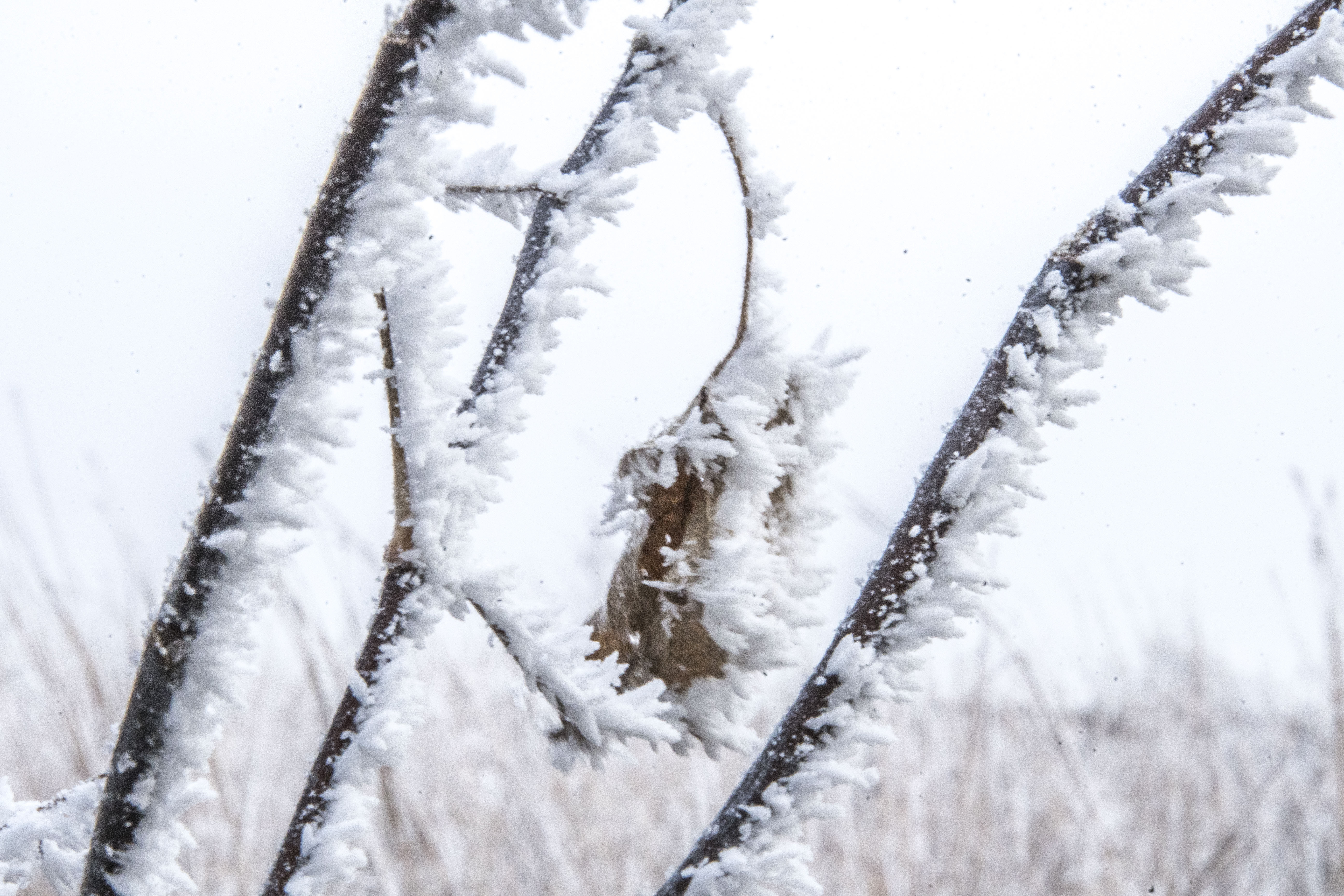
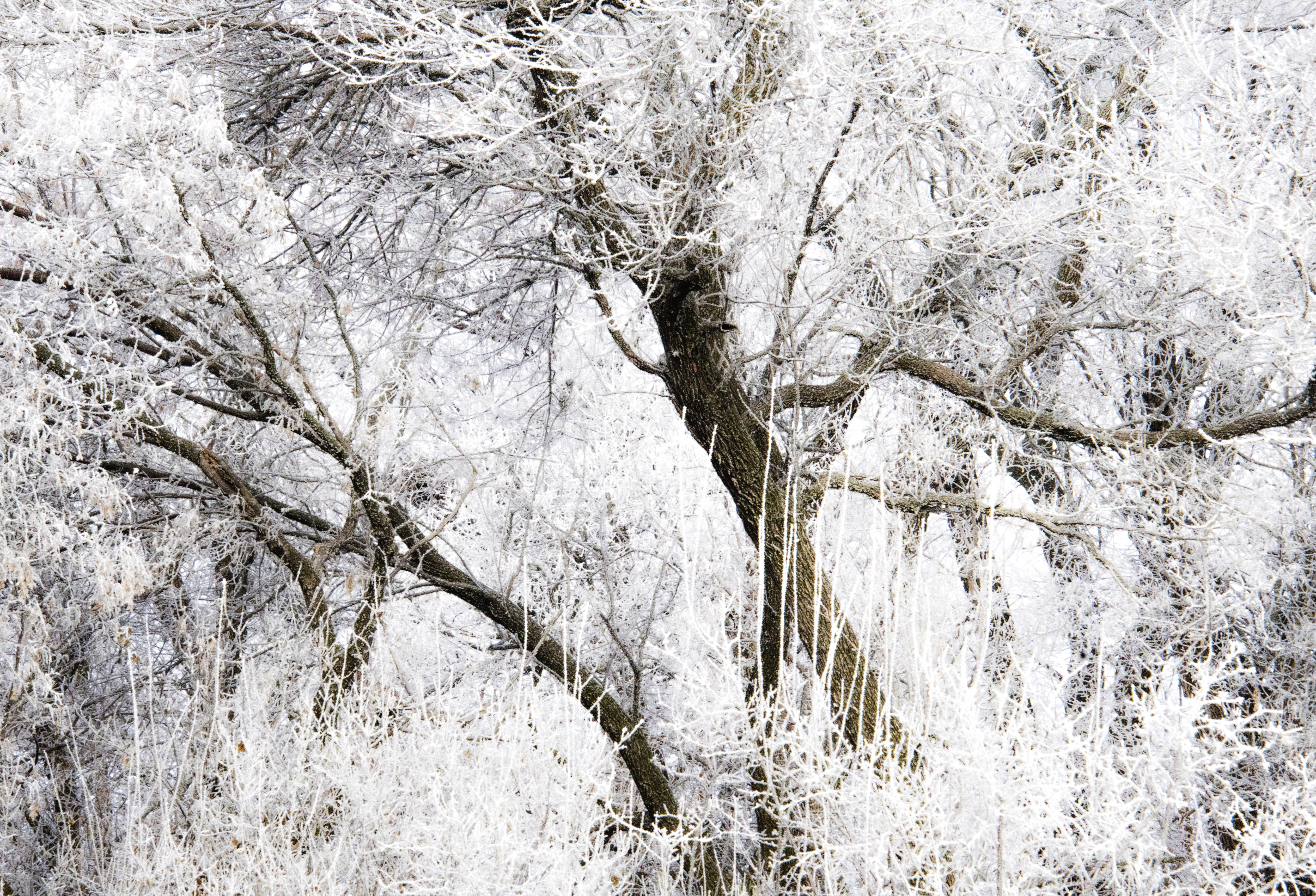
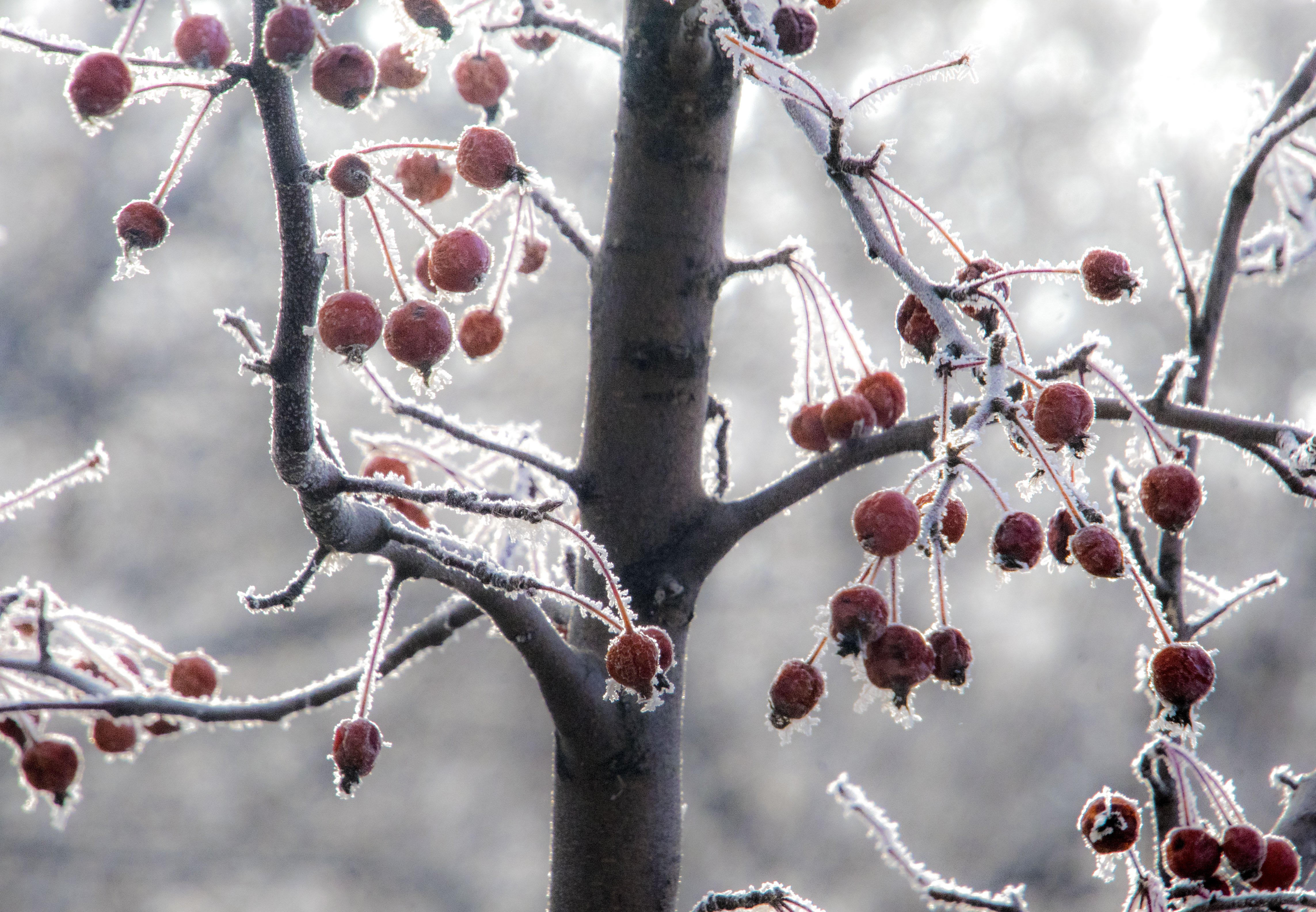
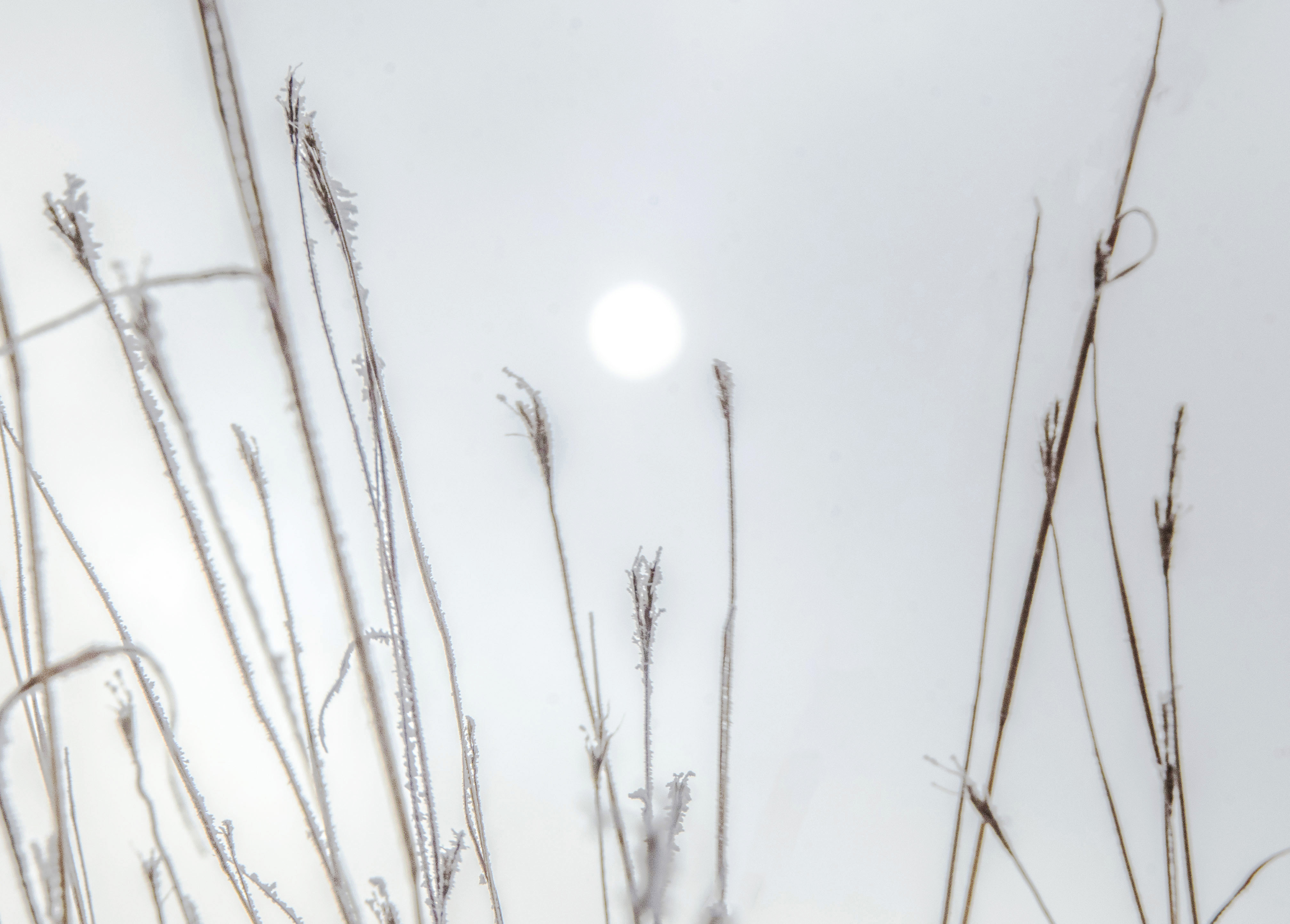
Our wonderland of perfectly white frost feathers was so heavy the stems of big bluestem were weighted over to nearly kiss to the ground. Our trees glistened even with the sun being hidden by the dense blanket of fog. Popping through the glistening frosty whiteness were clumps of reddish crabapples to dapple hints of color to an otherwise frosted landscape. We were surrounded by an awe-inspired winter wonderland.
One might wonder if such beauty has a mythical history. Certainly, for since we were children we’ve heard of Jack Frost. Beyond the science and artistic beauty, feathery hoarfrosts are thick with legend. The term itself is from old English that suggests the feathery ice crystals offer an appearance of “oldness”, of long strands of white hair and beards of elderly geezers.
There is some thought that the legend of Jack Frost originated from Viking folklore, that his modern name is an Anglicized rendition of Jokul Frosti, or “Icicle Frost,” son of the Nordic wind god Kari. Jokul was a nymph-like creature who painted beautiful frosty patterns on windows during the night and was a personification of the chill that arrived with winter and nipped the noses of children with his icy bite.
Scandinavian mythology paints a picture of a frost giant that brought not only bitter cold but the black doom of winter that symbolized the end of the world. In northern Russia and Finland, an almighty deity known as “Frostman” commanded the weather, and was given sacrifices by reindeer herders to persuade him to lessen the severity of blizzards. The villagers would leave bowls of porridge for the Frostman to ensure their crops weren’t touched by the damaging frost. Elsewhere in Japanese folklore, Frostman was a malicious character, the brother of Mistman, who were both keepers of the frost and dew.
Jack Frost is well known but barely understood in modern culture. Most people envisage the elfish creature that decorates the night with beautiful silver patterns that melt with the sunrise, and in old England “Jack” was a name or term given to jokers. Over time, he has shed the fearsome demeanor that came with the frost giants of Norse mythology. Something as beautiful as sweeping hoarfrost or delicate ice crystals surely couldn’t have been summoned by a menacing omen of everlasting winter.
Much like Northern Lights, hoarfrosts are typically fleeting. A brief breeze will cause the frost to flake and scatter like falling snow. In the sunlight this takes on a wholly different beauty as those airborne “diamonds and pearls” Hannah Flagg Gould described in her poem, “The Frost” in the 1800s come to life. It’s all very magical, even those rare “wonderland” moments that somehow escape to last most of a day. However long one might last, they are still magical in their innocent beauty.
While I don’t recall having feathery frosts as a child growing up in Northeast Missouri, I’m sure we had them. We surely have them here in Minnesota, and they rarely shrink from wonderland status. One January day during one of the most snowy winters since moving to Minnesota some 40 years ago, I drove through the hill and valleys around here taking images of snow and frost, capturing pheasants and wild turkeys deep within the elements. A gray mist of fog hung around, and the few fences that remain and the abandoned groves of past dreams were all coated with the feathery finery. Shawls of splendidness. What a lovely and unexpected day.
Usually, though, hoarfrosts have become special memories by mid-morning. It was again this week. Yet I find it fun to wander about with a camera just like I do come nightfall and a chance to record the solar waves of an Aurora Borealis. Perhaps it’s just me for I just love the mysteries of our natural world, of the peacefulness nature offers in the face of so much worldly man-caused greed and turmoil. Sometimes you just need an unexpected flight of Canada Geese to fly overhead on a cold, rainy winter afternoon, a stunning display of Northern Lights, or to awake on a morning to a vista painted in feathery whiteness.
 Listening Stones Farm