A lone leaf, a last leaf of a summer past, broke free from its tree in an oak savanna choked with a jungle of strong and darkened naked limbs. Halloween trees, as called by my partner, Roberta. Rather than drifting downward, gravity seemed to be drawn from the heavens. The leaf twirled ever higher, a flight not unlike a butterfly, somehow missing the nearby limbs, drifting both higher and laterally. Freely. As the drift crossed a plain created by the forest of oaken limbs, the leaf rose one last time before drifting slowly toward an anonymity of a leaf-strewn forest carpet.
A forestall moment on a late, November afternoon as light softened toward a sleepy haze — a haziness emerging to ever slowly capture the otherwise starkness of the savanna. This was a rare afternoon with barely a breeze in a month that had come in so cold and blustery, blowing, as Aldo Leopold observed in his rather poetic observations, as a wind that describes November. “The stalks hum, the loose husks whisk skyward in half-playing swirls, and the wind hurries on … a tree tries to argue, bare limbs waving, but there is no detaining the wind.”
Leopold’s wind came early in our November, a somewhat schizophrenic month with afternoons of soul-warming, glorious sunlight mixed with dreary days of gray gloominess. Then the wind. Emily Dickinson wrote that “November always seems to me the Norway of the year.” Dickinson, a introverted loner who rarely left her room, let alone her house outside of Boston, penned the phrase in a letter to her friend, Elizabeth Holland, with this description of November: “The noons are more laconic and the sunsets sterner, and Gibraltar lights make the village foreign.”

Yes, November can be a laconic time following those glorious days of October’s warmth of vivid colors that are suddenly long gone, perhaps signified by a lone wayward leaf joining a dulled leafy carpet. There were days, too, when the trees fought to argue. Days when there was no detaining the wind. Yet, there was color even on the darkest of those days, and enough light to warm the soul just when it seemed the dour gloom of grayness would smother over you like a blanket. Who am I to complain?
We made a few forays into nature, as is our custom, including a delightful sunny afternoon drive through Sherburne National Wildlife Refuge, where we found two large pockets of sandhill cranes and enough swans to make magical moments seem like a living poem. Such moments feed the soul. November moments, a splinter of time between the colors of autumn and the blessing of light we celebrate come the Solstice.

Yes, November serves as a transition, a prelude to winter that seems equivalent of a spring March as seasons seem to wrestle one another before autumn recedes on one hand, and winter relinquishes on the other. And we are simply on the sideline, observers of a grand plan of which we have little say.
On those rare years when the joy of October is crushed by a sudden unseasonable snow, the lack of transition seems to hit like a heavyweight’s punch to the gut. Gut punches aside, the transitions ease forever onward. Our grasp for the warmth and color in November is not unlike our wish for warmth and color come March following a long cold and snowy winter. In my mind these are the reasons for these annual transitions, a slow sliding into winter on one hand, and a quick exit from winter come spring on the other.

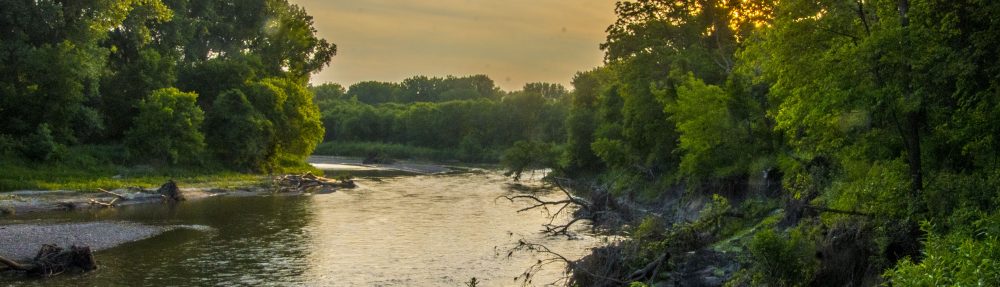
I’m somewhat surprised by the strength of color and light here in the western reaches of Minnesota, although after all these years I perhaps shouldn’t be. Both seem to argue against those otherwise drab and somewhat dreary days by offering a poetic charm to the prairie. An unexpected warmth has mostly kept the waters from freezing, reflecting color and light like prized jewelry or a queenly shawl. Finding such joys helps make this somewhat “foreign” ecosystem seem like home.
Home? On these days of November? This prairie wasn’t part of my grand scheme. I barely realized it existed in my youth, or even as I aged into the “autumn” of my life. Using this as a metaphor, one might suggest I’m entering into the November of my life. In my “September” years we moved to what we learned was the “black desert” of prairie to run a small country weekly. Our initial plan was to give it a few years, yet some 20 years later we were settled in. We had discovered a vibrant artist community that seemed to dwarf the flatness and lack of trees we were so used to while living along the Little Vermillion and Mississippi Rivers at our former home. Through our new found friendships we discovered the prairie rivers, the riverine environments along with an appreciation of what the late essayist Bill Holm referred to as the “horizontal grandeur.”

We would plant a native flora garden in our backyard, and I began photographing the blossoms. Yes, it was planted on a cold November day, a planting session that was averted by a bone chilling rain mixed with snow. Years later, after my wife died, I remarried and settled here in this last semblance of the prairie pothole biome in the “Minnesota Bump.” We bought this little patch of land and named it Listening Stones Farm both in honor of its glacial history and our love of Sigrid Olson’s writing. We converted the tillable land to prairie grasses and flora and made paths through both the prairie and woodland for both observation and photography.
Then the deeper discoveries began; of small pockets of both native and restored prairies along with the few remaining wetlands. With that came the observations of color and light, especially the nuances of ambient light that often paints this horizontal grandeur with pastels that would have made Monet jealous. Before long a place I had no idea even existed either in my youth and early adulthood had become home.

It is said to appreciate the prairie you must look beyond and within the grasses to discover the inner beauty along with the appreciation of color and light; in the noticing of the magical moments such as a last leaf drifting aimlessly through an oak savanna. November sometimes forces you to see beyond those waving grasses, to be encouraged by both color and light and to develop an appreciation of the natural world around you, in bringing joy to the soul. I’d call that being blessed.
 Listening Stones Farm
A paint brush in both lens and pen. Truly soul-gripping portrait of a place well-loved and deeply known.