Jakob Becvar came to visit with what he called his “safari eyes.” Those eyes sure came in handy on a saunter we made on the lakeside trail at Bonanza Education Center earlier this month. Seems we had unwittingly entered the sacred territory of a pair of house wrens, and they fearlessly and adamantly let us know of their displeasure.
You couldn’t help by hear their loud “tseett” protests, yet as much as I scanned the broken down and browned leaves of tree death, I simply couldn’t find them until Jakob pointed them out. “You need to sharpen your safari eyes,” he said.
Now, for a minor disclosure of my abilities to see; it isn’t rare to be sauntering along with a friend with my stopping every several feet to focus on something no one else has observed be it a leaf draped over a twig or the poetic bend of a cone flower reaching for the sky. Over the years I’ve taught several classes on recognizing composition within the offerings of nature, beginning at the Denver Free University back in the 1970s to Minnesota Master Naturalists’ annual Gathering Partners in recent years. I’m no slouch of observation.

Be it his age, of my being considered by Jakob an “old man” which he started harping about when we hosted him as an exchange student about a dozen years ago, or my lack of “safari eyesight,” those wrens were quite good at visual deception. Seems the recent college graduate back in his home country of Austria, and just a few days from his first post-graduate professional position, was taken on a couple of photographic safaris in Africa which Jakob claimed taught him the nuances of how to see in nature.
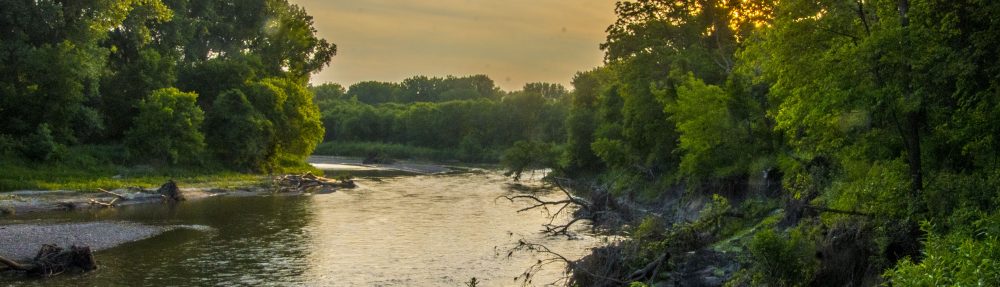
Please allow me to set the scene: This walking trail was until a few years ago the gem of hiking trails in our section of Minnesota. Meandering along the eastern shore of Big Stone Lake, the trail eased along the hillsides through a beautiful oak savanna and meadows of invasive staghorn sumac. Those oak limbs, of what my partner Roberta calls “Halloween trees”, were staunch, bold and strong. Some will argue that oaks are among the toughest and sturdiest of trees, and these along the trail were all native burr oak. Trunks were solid and bold, a circumference of enough breadth to take two humans with arms outstretched to hug the trunk. In fact, the Hardwood Manufacturers Association claims that oaks rank as the third most hardiest trees in the land behind hickory and hard maple.
Then came the July, 2022, a derecho with straight line winds knifing across the shallow but long, 26 mile lake, at speeds estimated to be more than 100 mph; winds that swept down from the heavens without the rotation common to tornadoes, shearing off trunks as well as those sturdy, Halloweenish limbs. Many of those staunch oaks were battered to the ground through the savanna and were no match for the winds. Park employees, for Bonanza Education Center is part of Big Stone Lake State Park, simply took chainsaws to whatever blocked the trail, leaving behind the broken trunks and limbs to weather and wither away. And what had been so stately and strong, now splintered and broken, has since become a home for birds like the wrens.
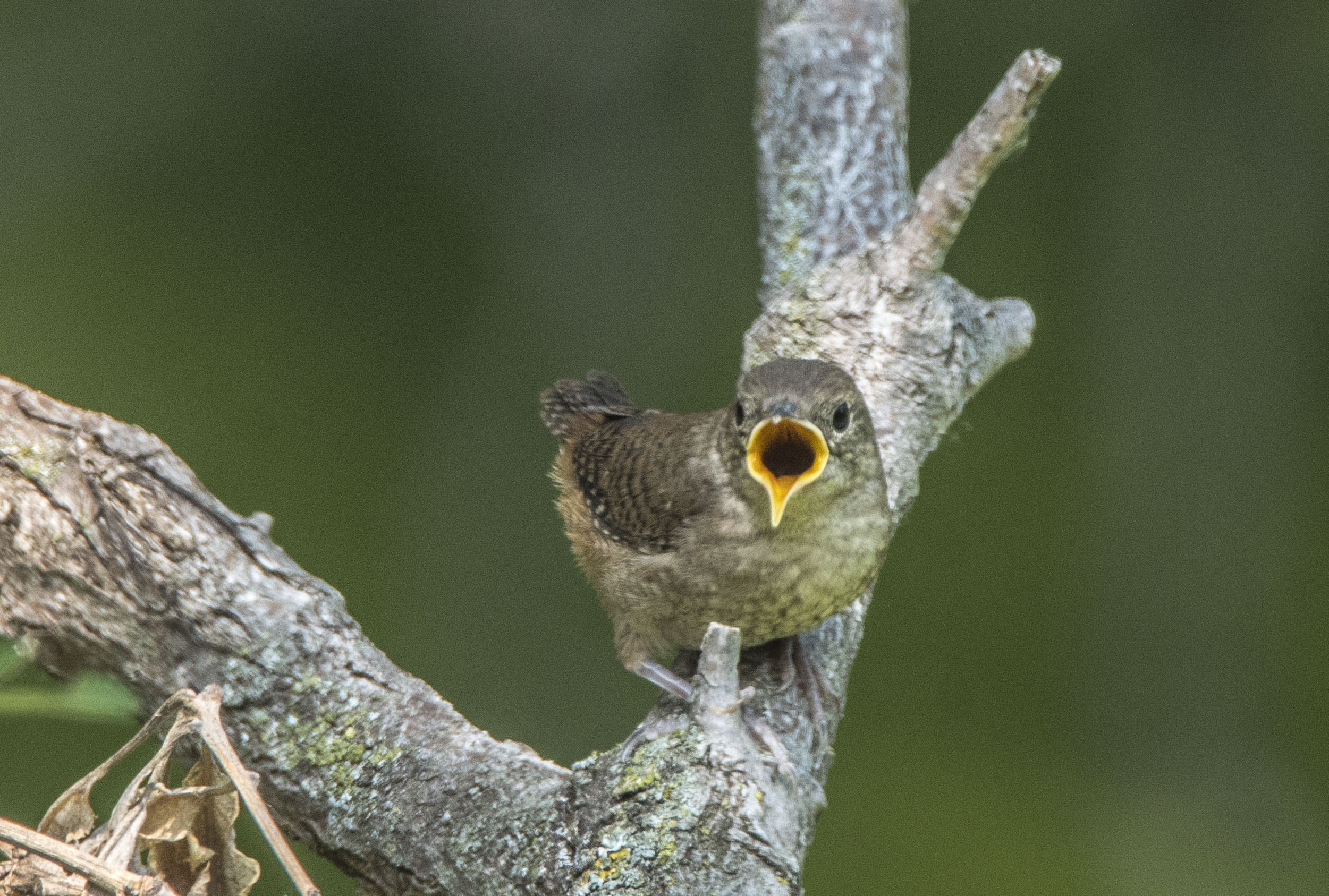
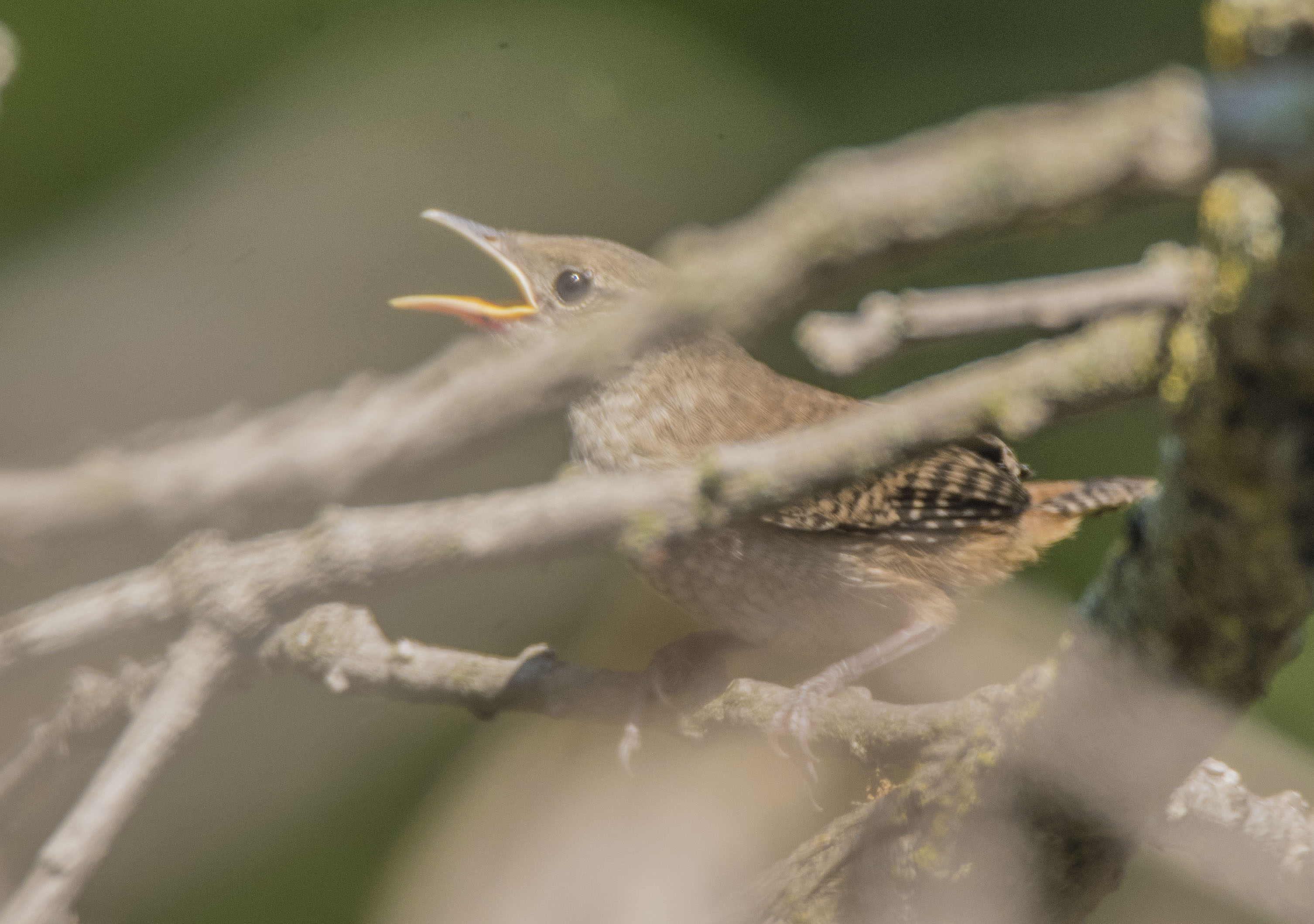
This pair was making sure that we recognized and respected what they now deemed as their own. After all, even Shakespeare was enamored by the diminutive and fearless birds as he penned: “ … wrens make prey where eagles dare not perch.” Here on the battered oak along the Bonanza trail they leapt from one broken limb to another, to the broken and gnarled stump to what remained of the prone trunk. Although the Latin translation of their family name, Troglodytidae, is of “cave dwellers,” wrens are seemingly anything but. They’re expert foragers in tight spaces including thickets, tangles, tree-falls and rocky crevices … all sites that supports an abundance of insects, millipedes, spiders and their eggs.
These wrens offered no ground without a fight, and you know you’re in one when their shrill “tseett” warnings come in such a rapid cadence, and when you have both the male and female defending their broken tree, it’s nearly deafening. Years ago an old friend sat on his deck on the edge of the Driftless with a cocktail as we watched a male wren chat at us as it bounced from the small birdhouse to a trellis to an overhanging limb. “I really respect that bird,” said Harland. “A few weeks ago the female was still feeding the last of the first batch, by then fully grown, with captured insects. The old guy, there, wasn’t having none of that. Eventually when she left for more food he got into the face of the youngster and wouldn’t let up until it finally had enough and flew away. Order was restored.”
“Do you mean that it was suddenly peaceful?”
“It’s hard to put ‘wrens’ and ‘peace’ into the same sentence,” he quipped before taking a sip.
I suspect there is a lot of truth to that, and it certainly seemed that way on the trail with Jakob and Roberta. As we sauntered on down the trail you could still hear the chatter as we moved away.
This trail is a beauty for birdwatchers, with the piles of chips beneath long dead trees thanks to the work of Pileated woodpeckers, or the bouncing treetop branches as warblers and cedar waxwings scamper through the canopy. Those birds are reasons why I so thoroughly enjoy “forest bathing” here, for once you have meditated to that point of magical bliss the sounds of birds becomes the overall dominate sense even before the more recent move in by the wrens. Meditative calmness, however, isn’t something I’d equate with roused wrens!
Actually, until the damage caused by the derecho I can’t recall ever seeing a wren along the lakeside trail. That damage is in keeping with the philosophy of maintaining the workings of the wild within its own natural time. Those damaged trees will most likely remain for eternity, and now that the wrens have dropped in to grab this particular piece of real estate on the trail, we saunterers had best be prepared for these bombastic blasts when we near their claimed space.

I’m reminded of what Wendell Berry so eloquently wrote of the tiny battler: “The question before me, now that I am old, is not how to be dead, which I know from enough practice, but how to be alive, as these worn hills still tell, and some paintings of Paul Cezanne, and this mere singing wren, who thinks he’s alive forever, this instant, and may be.”
Indeed. As we learned on our short saunter along the lakeside trail of Bonanza, some of those songs of wrens are not of pleasure but of warnings; and wrens are not shy nor in fear of eagle, hawk, man nor perhaps, as Berry expresses, even death! Bless the little pugilists!
 Listening Stones Farm
Thanks for the lovely story.